Search results
Search for "protecting group" in Full Text gives 472 result(s) in Beilstein Journal of Organic Chemistry. Showing first 200.
Synthesis of the polyketide section of seragamide A and related cyclodepsipeptides via Negishi cross coupling
Beilstein J. Org. Chem. 2019, 15, 577–583, doi:10.3762/bjoc.15.53
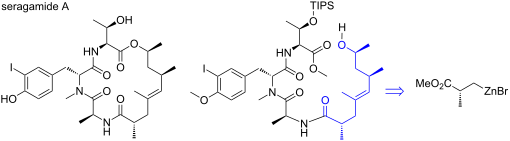
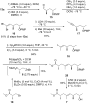
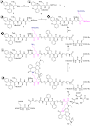
- separate the diastereomers of product 13 by column chromatography. The use of DMEAD (di-2-methoxyethyl azodicarboxylate) [38] was inferior (33%). The PMP protecting group was envisioned to be stable during the following steps and to be selectively cleavable with ceric ammonium nitrate (CAN). Reduction of
- ). For the synthesis of organozinc homoenolate 8, the MnBr2/CuCl-catalyzed reaction of diethylzinc with β-bromopropionic acid ester 19 in DMPU proved to be the best choice [42]. Racemization was avoided. The PMP protecting group was removed (CAN) affording methyl ester 7 (82%, Scheme 3). For comparison




Synthesis and biological investigation of (+)-3-hydroxymethylartemisinin
Beilstein J. Org. Chem. 2019, 15, 567–570, doi:10.3762/bjoc.15.51
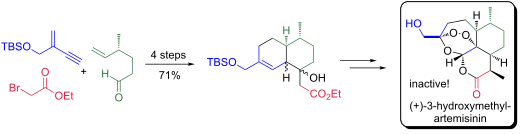
- 24% and 16% yield, respectively. Protection of the free hydroxy group of 16 as a silyl ether and methylation of the obtained lactone in α-position (LDA/MeI/HMPA) afforded derivative 17. After removal of the TES protecting group (+)-3-hydroxymethyl-9-epi-artemisinin (18, Scheme 3) was obtained


Selectivity in multiple multicomponent reactions: types and synthetic applications
Beilstein J. Org. Chem. 2019, 15, 521–534, doi:10.3762/bjoc.15.46
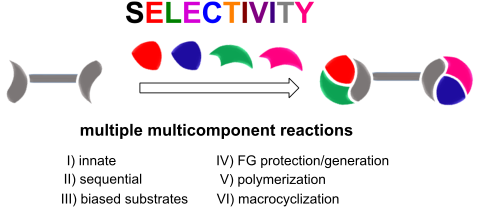
- antitumor peptidomimetics (Scheme 16) [53]. The convergent approach employs three different isocyanide-MCRs, efficiently prepares the building blocks and combines them, intercalating protecting group cleavages. Conclusion The MMCRs approach represents the most efficient way to build chemical complexity and


Syntheses and chemical properties of β-nicotinamide riboside and its analogues and derivatives
Beilstein J. Org. Chem. 2019, 15, 401–430, doi:10.3762/bjoc.15.36
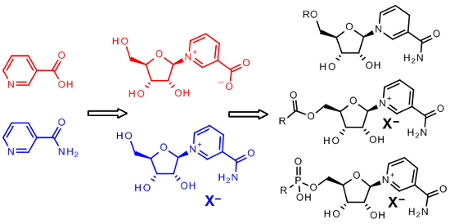
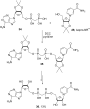
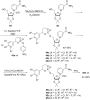
- the corresponding protected derivative 30 was low (Scheme 15). Yet, this particular protecting group is easily removed under mild acidic conditions, such as diluted HCl in organic solvents (THF/MeOH) or 90% aqueous trifluoroacetic acid or hydrogenolysis. 3.3. Reduction of the pyridinium core of NR






Sigmatropic rearrangements of cyclopropenylcarbinol derivatives. Access to diversely substituted alkylidenecyclopropanes
Beilstein J. Org. Chem. 2019, 15, 333–350, doi:10.3762/bjoc.15.29
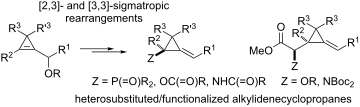
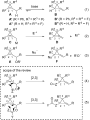
- (TBS) ether of propargyl alcohol by a rhodium-catalyzed cyclopropanation with an aryldiazoacetate followed by reduction of the ester moiety and protecting group manipulation. Phosphinite 6a, generated from alcohol 5a under standard conditions, did not undergo a [2,3]-sigmatropic rearrangement into the
- (7d/7’d = 52:48) were present. An inversion of the face selectivity was detected in favor of diastereomer 7’e (7e/7’e = 43:57) arising from the rearrangement of phosphinite 6e possessing a p-trifluoromethylphenyl substituent. Replacement of the acetal protecting group of the hydroxymethyl substituent







Synthesis of nonracemic hydroxyglutamic acids
Beilstein J. Org. Chem. 2019, 15, 236–255, doi:10.3762/bjoc.15.22
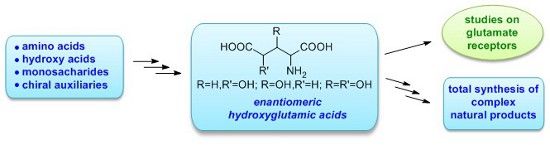
- or tributyltin cyanides and the stereochemical outcome of these reactions strongly depends on the protecting group. Diastereoisomeric excesses of 60–80% were observed in the cyanation of tert-butyldimethylsilyl ether 107a and 108a was the major product, while for the acetate 107b the selectivity was
- groups were removed by concentrated acid. A very efficient synthesis of (2S,3S,4S)-4 starts from another serine-derived chiron, namely O-benzyl-N-Boc-D-serine [111], which was readily transformed to the Z-olefin 120 containing a benzophenone imine residue as a nitrogen protecting group (Scheme 29
- -phenylfluorenyl protecting group was installed to prevent racemization and oxidation allowed to introduce the C=C bond leading to 3,4-didehydroglutamate (S)-126. Asymmetric dihydroxylation of (S)-126 (ee 96%) gave (2S,3S,4R)-127 (de 94%). Synthetic applications of enantiomeric hydroxy-L-glutamic acids Besides


Unexpected loss of stereoselectivity in glycosylation reactions during the synthesis of chondroitin sulfate oligosaccharides
Beilstein J. Org. Chem. 2019, 15, 137–144, doi:10.3762/bjoc.15.14
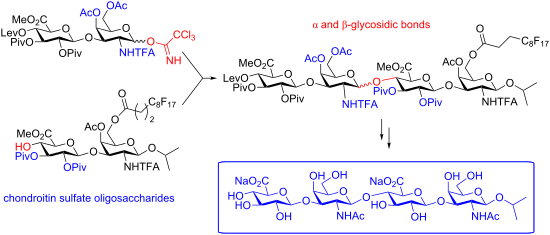
- positions 4 and 6 of GalNAc units favor the formation of 1,2-cis glycosidic bonds, even in the presence of 2-participating groups [43][44]. Treatment with (HF)n·Py complex in THF followed by standard acetylation provided compound 7. This derivative displayed a suitable protecting group distribution for the
- the glycosylation outcome, we decided to prepare 2,3-di-O-pivaloyl compound 26 with the GlcA protecting group distribution used in this study. For this purpose, donor 3 was glycosylated with 4-methoxyphenol and then treated with hydrazine monohydrate in a pyridine/acetic acid/CH2Cl2 mixture to afford


6’-Fluoro[4.3.0]bicyclo nucleic acid: synthesis, biophysical properties and molecular dynamics simulations
Beilstein J. Org. Chem. 2018, 14, 3088–3097, doi:10.3762/bjoc.14.288
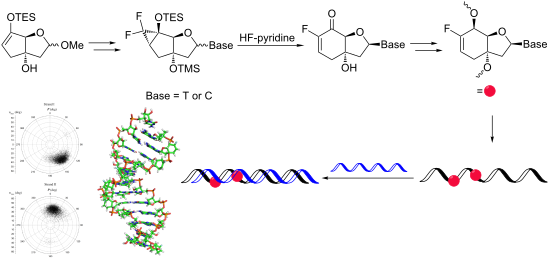
- -ROESY experiments (Supporting Information File 1). The gem-difluorinated tricyclic nucleoside 12β was then converted into the bicyclic fluoroenone 13 via desilylation and ring-enlargement by short exposure to HF-pyridine. During the following Luche reduction of derivative 13 the benzoyl protecting group


Synthesis of pyrrolidine-based hamamelitannin analogues as quorum sensing inhibitors in Staphylococcus aureus
Beilstein J. Org. Chem. 2018, 14, 2822–2828, doi:10.3762/bjoc.14.260
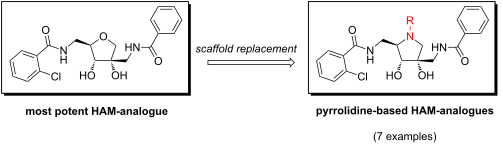
- -propanediol (16), which was selectively monoprotected in high yield as TBS ether (Scheme 3) [25]. The remaining alcohol was then substituted for a phthalimide via Mitsunobu reaction. Phthalimide deprotection, acylation with benzoic acid, and removal of the silyl protecting group furnished 10. Fragments 9 and
- only in an elimination product. This led us to replace the electron-withdrawing nosyl protecting group with a Boc group. After removal of the TBS ether and mesylation of the resulting alcohol, substitution with NaN3 now smoothly provided azide 29. The azide was then reduced under classical Staudinger


Synthesis of α-D-GalpN3-(1-3)-D-GalpN3: α- and 3-O-selectivity using 3,4-diol acceptors
Beilstein J. Org. Chem. 2018, 14, 2805–2811, doi:10.3762/bjoc.14.258
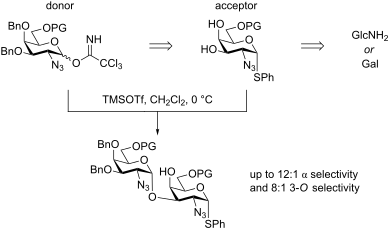
- be synthesized in 4 less steps than otherwise required. These results show, how the desired protecting group pattern can direct which glycosylation strategy to choose: In the less sterically hindered cases, a 4-O-protecting group, such as the benzoyl or benzyl, can be preferable. However, when a
- and readily available building block. Challenging the α,3-O-selectivity with the different 6-O-protecting group variants. Representative glycosylations with closely related systems [34][44]. Capping the free 4-OH, allowing for easier separation of mixtures obtained during glycosylation


Novel solid-phase strategy for the synthesis of ligand-targeted fluorescent-labelled chelating peptide conjugates as a theranostic tool for cancer
Beilstein J. Org. Chem. 2018, 14, 2665–2679, doi:10.3762/bjoc.14.244
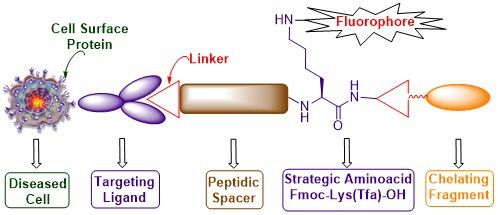
- ) amino protecting group before attachment of fluorescent tag with the peptidic spacer. This results in premature cleavage of the peptide chain and loss of chemical yield during the bioconjugate synthesis. Further, attaching a radiotracer chelating core containing acid sensitive functional groups and the
- acid attached to chlorotrityl resin via dipeptide intermediate 6 to give the tripeptide intermediate 7. The tripeptide 7 was then attached to strategic lysine amino acid, Fmoc-Lys-(Pg)-OH, whose ε-amino group is protected as either an Mtt (4-methyltrityl) or an Mmt (4-methoxytrityl) protecting group
- the Mtt protecting group was achieved when 9a was treated with either 1% TFA in dichloromethane or a mixture of acetic acid/trifluoroethanol/DCM in 1:2:7 ratio for 1 h at room temperature [43]. Unfortunately, the polypeptide chain 9a cleaved off too from the resin beads (Scheme 2). Therefore, it




The design and synthesis of an antibacterial phenothiazine–siderophore conjugate
Beilstein J. Org. Chem. 2018, 14, 2646–2650, doi:10.3762/bjoc.14.242
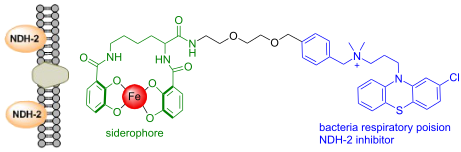
- phenothiazine 5 was isolated after removal of the Boc protecting group in TFA. Initial attempts at aqueous work-up conditions to isolate the free base resulted in lower isolated yields of 5 due to its high water solubility, and it was decided 5 would be progressed further as the TFA salt avoiding aqueous work
- . However, as our final conjugate contains an aromatic halide we wanted to avoid hydrogenation as the final step and we instead chose to use the para-methoxybenzyl (PMB) protecting group which can be removed under acidic conditions. PMB-protected benzoic acid building block 7 was prepared following a


Comparative cell biological study of in vitro antitumor and antimetastatic activity on melanoma cells of GnRH-III-containing conjugates modified with short-chain fatty acids
Beilstein J. Org. Chem. 2018, 14, 2495–2509, doi:10.3762/bjoc.14.226
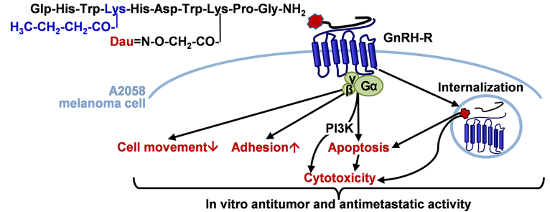
- peptide synthesis (SPPS) using Fmoc/t-Bu strategy with the orthogonal protecting scheme as described before [17][19] and presented in detail in Supporting Information File 1. In all cases, a Mtt (methyltrityl) protecting group was applied to block the side chain of Lys in position 8. For the development
- higher hydrazine concentration (4% in DMF) and longer treatment (12 × 5 min) for the complete removal of the protecting group. However, ivDde is more stable in circumstances (2% DBU, 2% piperidine in DMF) used for the Fmoc removal. To avoid the unwanted Dde removal during the synthesis ivDde was applied
- in this study. After acylation of the free amino group on the side chain of 4Lys using either acetic or butyric anhydride, the Mtt protecting group was detached. Though the application of bis-Boc-aminooxyacetic acid to incorporate the Aoa moiety provided better results (10–15% better yield according


Synthesis of a leopolic acid-inspired tetramic acid with antimicrobial activity against multidrug-resistant bacteria
Beilstein J. Org. Chem. 2018, 14, 2482–2487, doi:10.3762/bjoc.14.224
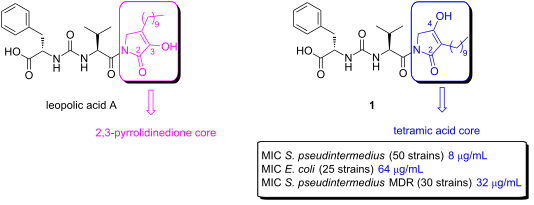
- protect the oxygen at C-4 [15]. We selected a benzyl protecting group, as it could be cleaved by catalytic hydrogenation together with the benzyl ester of L-phenylalanine in the ureidodipeptide fragment (see synthesis of compound 20) by a one-pot reaction. To increase the reaction rate toward O-alkylation


Efficient catalytic alkyne metathesis with a fluoroalkoxy-supported ditungsten(III) complex
Beilstein J. Org. Chem. 2018, 14, 2425–2434, doi:10.3762/bjoc.14.220
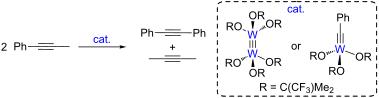
- the ACM are summarized in Table 3. The depicted reactions selectively afforded the unsymmetrical alkynes, corroborating that the bimetallic tungsten complex W2F3 is able to introduce a trimethylsilyl protecting group to alkynes. Conclusion Previously, we have reported the optimum level of fluorination


Semi-synthesis and insecticidal activity of spinetoram J and its D-forosamine replacement analogues
Beilstein J. Org. Chem. 2018, 14, 2321–2330, doi:10.3762/bjoc.14.207
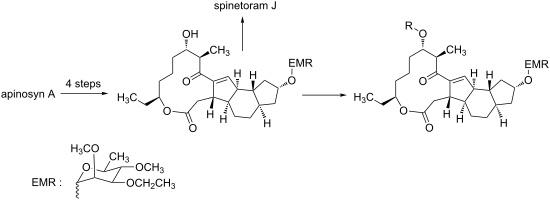
- experimental steps, and the operations were troublesome. So an improved synthesis based on a self-protection strategy was designed and discussed. In this work, 3-O-ethyl-2,4-di-O-methylrhamnose was used as both the reaction substrate of C9–OH and the protecting group of C17–OH. The number of synthetic steps
- as the glycosylation donor of C9–OH, but also the protecting group of C17–OH, greatly reducing the synthetic steps and costs. Macrolide compounds are a new kind of insecticides and fungicides which have also been widely applied in medicine [14][15]. Currently, research on structural modification of




Synthesis of 1,4-imino-L-lyxitols modified at C-5 and their evaluation as inhibitors of GH38 α-mannosidases
Beilstein J. Org. Chem. 2018, 14, 2156–2162, doi:10.3762/bjoc.14.189
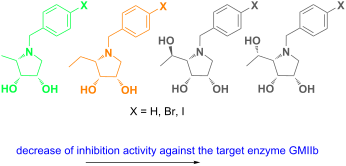
- be achieved via nucleophilic addition of MeMgBr to an aldehyde obtained by the oxidation of alcohol 7. Despite this fact, we did not manage the preparation of the aldehyde by the oxidation of alcohol 7 probably due to its instability [33]. However, similar aldehyde 17 bearing a Cbz protecting group
- chromatography on silica gel, the sensitive aldehyde 17 was used in the next step without further purification and characterization. Diastereoselective addition of MeMgBr to the aldehyde group of 17 gave alcohol 18 as single diastereoisomer in 69% yield. Removal of the Cbz protecting group of 18 under catalytic
- hydrogenolysis conditions furnished the free amine which was subsequently subjected to N-benzylation with the corresponding (4-halo)benzyl bromide to afford N-(4-halo)benzylpyrrolidines 19a–c. Acidic hydrolysis of the acetonide protecting group in 19a–c provided target compounds 4a–c in good yields (Scheme 3


Asymmetric Michael addition reactions catalyzed by calix[4]thiourea cyclohexanediamine derivatives
Beilstein J. Org. Chem. 2018, 14, 1901–1907, doi:10.3762/bjoc.14.164
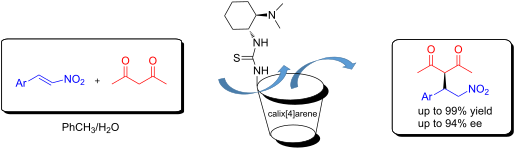
- , were obtained. Of note, for the preparation of compound 1 the chiral mono-Boc-protected cyclohexanediamine was used for the coupling reaction. The protecting group was removed by treatment with CF3COOH to afford 1. Moreover, in order to comparatively study the role of the cavity of calix[4]arene, we



Diazirine-functionalized mannosides for photoaffinity labeling: trouble with FimH
Beilstein J. Org. Chem. 2018, 14, 1890–1900, doi:10.3762/bjoc.14.163
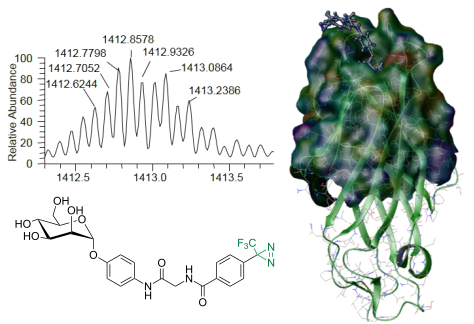
- from p-nitrophenyl α-D-mannopyranoside (1), which was first reduced to the corresponding amine 6 [26][27] by catalytic hydrogenation (Scheme 1). HATU-mediated peptide coupling with Boc-protected glycine under basic conditions led to 7. After removal of the Boc protecting group using trifluoroacetic
- the squaric acid monoester 10 employing squaric acid diester 9. The monoester 10 was reacted with N-Boc-ethylendiamine to obtain the squaric acid diamide 11. Then removal of the Boc protecting group with trifluoroacetic acid followed by peptide coupling with the diazirine 8 led to target molecule 4




Recent advances in hypervalent iodine(III)-catalyzed functionalization of alkenes
Beilstein J. Org. Chem. 2018, 14, 1813–1825, doi:10.3762/bjoc.14.154
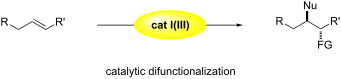
- , the selected protecting group can be removed easily under reducing conditions, providing the free diamine derivatives. However, the substrate scope was limited to alkenes bearing phenyl substituents on the backbone. On the contrary, the intermolecular diamination of alkenes presented a big challenge


An amine protecting group deprotectable under nearly neutral oxidative conditions
Beilstein J. Org. Chem. 2018, 14, 1750–1757, doi:10.3762/bjoc.14.149
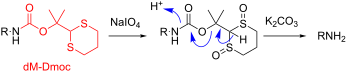
- . Deprotection was performed by oxidation followed by treating with a weak base. The yields were good to excellent. The new amino protecting group offers a different dimension of orthogonality in reference to the commonly used amino protecting groups in terms of deprotection conditions. It is expected to allow a
- collection of transformations to be carried out on the protected substrates that are unattainable using any known protecting groups. Keywords: amine; carbamate; dM-Dmoc; oxidation; protecting group; Introduction In multistep organic synthesis, amino groups usually have to be protected [1]. Protecting
- carboxylic acid protection [19]. To further explore the use of the 1,3-dithiane function as protecting group in organic synthesis, here we report the results of our studies on the use of the dimethyl-1,3-dithian-2-ylmethoxycarbonyl (dM-Dmoc) group for amine protection (Scheme 1). Compared with the Dmoc group


Anomeric modification of carbohydrates using the Mitsunobu reaction
Beilstein J. Org. Chem. 2018, 14, 1619–1636, doi:10.3762/bjoc.14.138
- the reaction outcome, favoring nucleophilic attack from a preferred face of the sugar ring [22][23]. Grynkiewicz and colleagues have discussed anchimeric assistance even when no protecting group is present at C-2, assuming a Brigl’s anhydride type intermediate [24]. In the absence of a substituent at
- bulky DTBS protecting group to enforce α-stereoselection despite of the anchimeric effect of the vicinal N-Troc protecting group to achieve the α-glycoside 80 in high yield. Nevertheless, this reaction needed optimization, such as an unusually high reaction temperature. Also weakly acidic phenols were
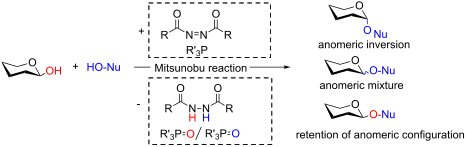
- ]. Synthesis of phenyl glycosides 44 and 45 from unprotected sugars [24]. Synthesis of azobenzene mannosides 47 and 48 without protecting group chemistry [46]. Synthesis of various aryl sialosides using Mitsunobu glycosylation [25]. Mitsunobu synthesis of different jadomycins [54][55]. BOM: benzyloxymethyl


Glycosylation reactions mediated by hypervalent iodine: application to the synthesis of nucleosides and carbohydrates
Beilstein J. Org. Chem. 2018, 14, 1595–1618, doi:10.3762/bjoc.14.137
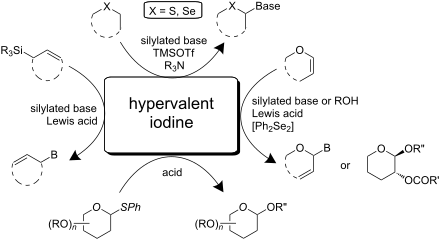
- adjacent to a sulfur atom, which affects the regioselectivity of the reaction. To study the effects of a protecting group on the reaction, the regioselectivity of the reaction was examined using 42 and 43, which were obtained from 27. When the 5-hydroxy group was protected with a benzoyl group, the
- coupling reaction of 42 occurred at the 4-position, as in the case mentioned above, to give 46 in 44% yield along with the desired product and its N7 isomer. In contrast, switching the protecting group of 27 at the 5-position to TBS resulted in the exclusive formation of 45 reacted at the 1-position (28


Oligonucleotide analogues with cationic backbone linkages
Beilstein J. Org. Chem. 2018, 14, 1293–1308, doi:10.3762/bjoc.14.111
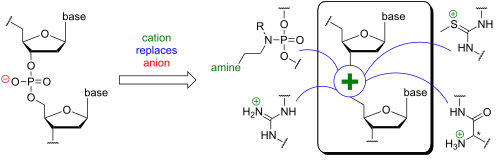
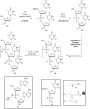
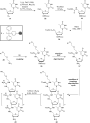
- protecting group to yield the free 5'-amine 34. Subsequent iterative coupling–deprotection cycles resulted in the formation of the guanidinium-linked oligomer 35. After basic guanidine and purine deprotection and concomitant cleavage from the solid support, final acidic deprotection furnished A5T





Stereoselective nucleophilic addition reactions to cyclic N-acyliminium ions using the indirect cation pool method: Elucidation of stereoselectivity by spectroscopic conformational analysis and DFT calculations
Beilstein J. Org. Chem. 2018, 14, 1192–1202, doi:10.3762/bjoc.14.100
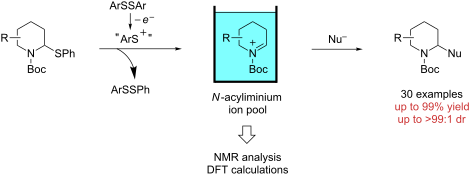
- protocol [12] (see Supporting Information File 1). As observed in our previous studies, the Boc protecting group was found not suitable for the direct cation pool method due to its cleavage by protic acid generated during the electrolysis of the cation precursor. However, it can be utilized in the indirect