Search results
Search for "nitrile oxides" in Full Text gives 24 result(s) in Beilstein Journal of Organic Chemistry.
Synthesis of novel 1,2,4-oxadiazole-isoxazoline hybrids and their in silico potential with adenosine receptors
Beilstein J. Org. Chem. 2026, 22, 1033–1047, doi:10.3762/bjoc.22.82
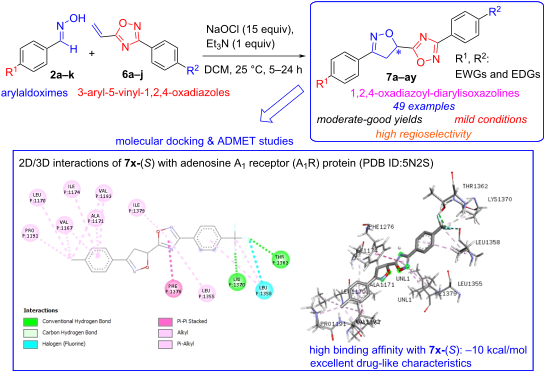
- efficient synthetic route to novel 1,2,4-oxadiazole-isoxazoline hybrids 7 has been developed via regioselective 1,3-dipolar cycloaddition of in situ-generated nitrile oxides with 3-(p-substituted-aryl)-5-vinyl-1,2,4-oxadiazoles 6. The target compounds 7a–ay were obtained in moderate to excellent yields (16
- , palladium-catalyzed reactions, anodic oxidations, transformations from other heterocycles or 1,3-dipolar cycloaddition [29][30][31][32][33][34][35][36][37][38][39][40][41][42][43][44]. For isoxazoline derivatives, the 1,3-dipolar cycloaddition (1,3-DC) of nitrile oxides serves as a fundamental synthetic
- electronic factors. 5-Substituted isoxazolines (2-isoxazolines) have been synthesized in high to excellent yields (75–98%) through nitrile oxide cycloaddition reactions. These nitrile oxides are generated either from aldoximes using various oxidizing agents – such as NaOCl, t-BuOCl, NCS, oxone/NaCl, triflic


Regioselective approach to 5-arylsulfonylisoxazoles and their antimicrobial activity
Beilstein J. Org. Chem. 2026, 22, 592–602, doi:10.3762/bjoc.22.45
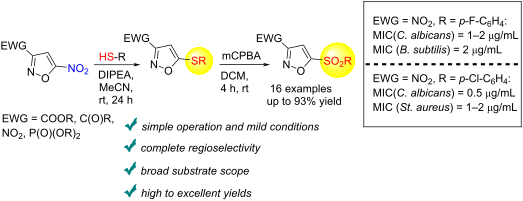
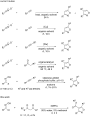
- 5-sulfonylisoxazoles (Scheme 1, approaches A, B, C). As shown in Scheme 1, nitrile oxides are generated in situ by oxidation of aldoximes with chloramine T (approach A) or by dehydrohalogenation of the corresponding oxime halide under basic conditions (approaches B and C). Subsequently, the nitrile
- nitrile oxides in cycloaddition reactions, complete control of regioselectivity without metal catalysis is not always achievable. Another problem with this method is the tendency of nitrile oxides to form dimers (furoxanes), which entails a decrease in the yield of isoxazoles. Due to dimerization, nitrile
- oxides are generally limited to aryl-substituted derivatives, making the abovementioned approaches inapplicable for the synthesis of 5-sulfoisoxazoles with an additional functional group. To circumvent these limitations, we proposed a novel chemo- and regioselective synthetic approach to 5


Facile synthesis of hydantoin/1,2,4-oxadiazoline spiro-compounds via 1,3-dipolar cycloaddition of nitrile oxides to 5-iminohydantoins
Beilstein J. Org. Chem. 2025, 21, 1552–1560, doi:10.3762/bjoc.21.118

- -oxadiazoline spiro-compounds using a 1,3-dipolar cycloaddition of nitrile oxides to C=N bonds of 5-iminohydantoins. The efficiency of the approach was demonstrated by varying the substituents at four positions of the resulting spirocyclic molecules. Cytotoxicity of the target hydantoin/1,2,4-oxadiazolines was
- shown to exceed previously known spiro-compounds bearing only hydantoins or 1,2,4-oxadiazolines (IC50 values were 30–50 μM, HCT116 cell lines). Keywords: 1,3-dipolar cycloaddition; hydantoins; nitrile oxides; Shiff bases; spiro-compounds; Introduction The 1,2,4-oxadiazole fragment is a common
- cycloaddition (32CA) of nitrile oxides with 5-iminohydantoins (Figure 1). The proposed method involves the use of readily available starting materials, avoids chromatographic purification of the final products which are obtained in good yields. We have also tested the cytotoxicity of some synthesized spiro



Oxetanes: formation, reactivity and total syntheses of natural products
Beilstein J. Org. Chem. 2025, 21, 1324–1373, doi:10.3762/bjoc.21.101
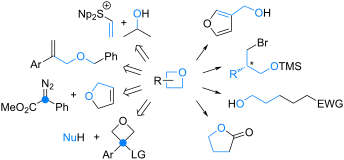
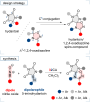
- -, particularly 2-methylideneoxetanes have become valuable intermediates in oxetane chemistry as they readily undergo a variety of chemical transformations, including ring-opening reactions with nucleophiles, epoxidations, cyclopropanations and [3 + 2] cycloadditions with nitrile oxides [51][52]. In addition








Three-component reactions of conjugated dienes, CH acids and formaldehyde under diffusion mixing conditions
Beilstein J. Org. Chem. 2025, 21, 262–269, doi:10.3762/bjoc.21.18
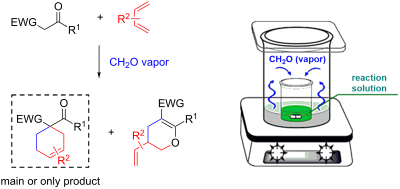
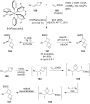
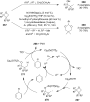
- method was successfully used to generate highly active nitrile oxides and nitrilimines for 1,3-dipolar cycloaddition reactions [19][20][21]. Based on our previous experience with diffusion mixing, we assumed that formaldehyde vapor diffusion into the reaction would lead to an extremely low concentration


Multicomponent syntheses of pyrazoles via (3 + 2)-cyclocondensation and (3 + 2)-cycloaddition key steps
Beilstein J. Org. Chem. 2024, 20, 2024–2077, doi:10.3762/bjoc.20.178

- )-cycloaddition of nitrile oxides 137, generated in situ from hydroxyiminoyl chloride 135 and terminal alkynes, was proposed by Kovacs and Novak. Copper supported on iron serves as a catalyst and as a reagent for the reductive ring opening and leads to β-aminoenones 139, which react in the consecutive one-pot




An isoxazole strategy for the synthesis of 4-oxo-1,4-dihydropyridine-3-carboxylates
Beilstein J. Org. Chem. 2022, 18, 738–745, doi:10.3762/bjoc.18.74
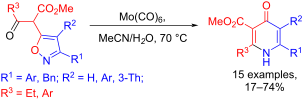
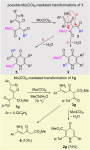
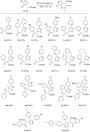
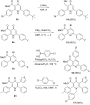
- processes. To evaluate the scope of the disclosed reaction a set of isoxazoles 1 was prepared using approaches shown in the Scheme 3 and Scheme 4. Isoxazoles 11a–f were prepared by cycloaddition of nitrile oxides, generated from N-hydroxyimidoyl chlorides 7a–f, to propargyl halides [29], followed by the




Synthesis of 3,4,5-trisubstituted isoxazoles in water via a [3 + 2]-cycloaddition of nitrile oxides and 1,3-diketones, β-ketoesters, or β-ketoamides
Beilstein J. Org. Chem. 2022, 18, 446–458, doi:10.3762/bjoc.18.47

- Agriculture, Agricultural Research Service, University of Mississippi, Mississippi 38677, USA 10.3762/bjoc.18.47 Abstract Herein we report a method for the synthesis of 3,4,5-trisubstituted isoxazoles in water under mild basic conditions at room temperature via a [3 + 2]-cycloaddition of nitrile oxides and
- cycloaddition of alkynes and nitrile oxides performed in organic solvents at elevated temperatures (Figure 1) [11][12][13][14][15][16]. In this method, while 3,5-disubstituted isoxazoles can be accessed from terminal alkynes, 3,4,5-trisubstituted isoxazoles require a high degree of substitution on non-terminal
- needed to be synthesized independently [23]. While ruthenium(II) and palladium catalysts are useful, they are expensive and environmentally unfriendly. The dehalogenation of hydroximoyl chlorides in the presence of a strong base to generate nitrile oxides and a follow-up cycloaddition with 1,3-diketones



Regioselective synthesis of methyl 5-(N-Boc-cycloaminyl)-1,2-oxazole-4-carboxylates as new amino acid-like building blocks
Beilstein J. Org. Chem. 2022, 18, 102–109, doi:10.3762/bjoc.18.11
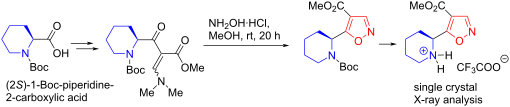
- -oxazoles are: the 1,3-dipolar cycloaddition of alkenes and alkynes with nitrile oxides, and the reaction of a three-carbon atom component, such as a α,β-unsaturated ketone or a 1,3-diketone with hydroxylamine hydrochloride [33]. Recently, Rosa et al. reported a useful procedure for the synthesis of various


A straightforward conversion of 1,4-quinones into polycyclic pyrazoles via [3 + 2]-cycloaddition with fluorinated nitrile imines
Beilstein J. Org. Chem. 2021, 17, 1509–1517, doi:10.3762/bjoc.17.108
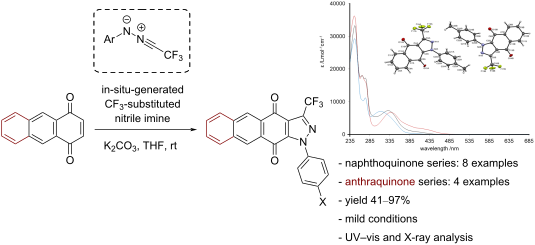
- , [3 + 2]-cycloadditions leading to five-membered heterocycles are less often employed in spite of the high dipolarophilicity of the α,β-unsaturated diketone system [6][7][8][9]. Notably, in the already reported reactions of propargylic 1,3-dipoles, such as nitrile oxides or nitrile ylides, with 1,4


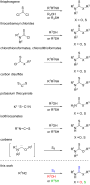
A novel three-component reaction between isocyanides, alcohols or thiols and elemental sulfur: a mild, catalyst-free approach towards O-thiocarbamates and dithiocarbamates
Beilstein J. Org. Chem. 2019, 15, 1523–1533, doi:10.3762/bjoc.15.155
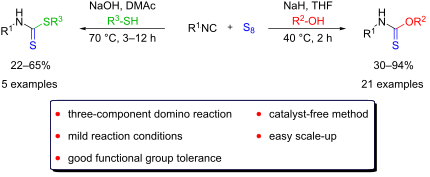
- -diimidazole or di-2-pyridyl thionocarbonate [57][58]. Decomposition of dithiocarbamate salts or thiocarbamates with various reagents offers a good alternative [59][60][61][62] as well, however, this approach first requires the synthesis of the appropriate precursor. Nitrile oxides react with thiourea to
- afford isothiocyanate and harmless urea [63][64][65], but one should note that the instability of the nitrile oxides leads to many byproducts, turning this approach less attractive. The synthesis of isothiocyanates starting from isonitriles involves sulfur-containing reagents such as thallium


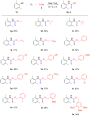


Introduction of an isoxazoline unit to the β-position of porphyrin via regioselective 1,3-dipolar cycloaddition reaction
Beilstein J. Org. Chem. 2019, 15, 1434–1440, doi:10.3762/bjoc.15.143
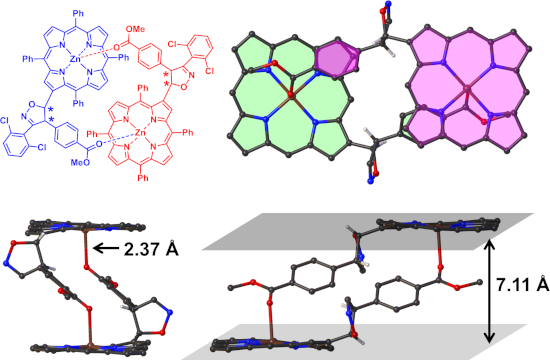
- Collaborative Innovation Center of Chemical Science and Engineering, Tianjin 300072, China 10.3762/bjoc.15.143 Abstract Isoxazoline-linked porphyrins have been synthesized by a regioselective 1,3-dipolar cycloaddition reaction between vinylporphyrin 2 and nitrile oxides. The steric interaction directed the
- the β-position, a Wittig reaction was performed, in which the porphyrin phosphonium salt 1 reacted with 4-MeCO2-benzaldehyde in the presence of DBU to furnish the double bond, followed by insertion of Zn ions into the porphyrin cavity to give compound 2. Nitrile oxides [45] as one of the most reactive
- dipoles not only react with various dipolarophiles but also undergo spontaneous dimerization to form furoxans. To avoid or minimize this drawback, the substitutents (e.g., Cl or Me) around the CNO group were introduced to stabilize the nitrile oxides even at room temperature [46][47]. Here, the 2,6


Oxidative cycloaddition of hydroxamic acids with dienes or guaiacols mediated by iodine(III) reagents
Beilstein J. Org. Chem. 2018, 14, 531–536, doi:10.3762/bjoc.14.39
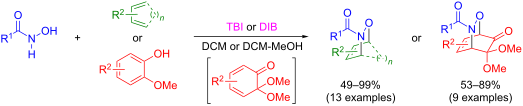
- research on the syntheses of heterocycles by iodine(III)-mediated/catalyzed oxidative cycloaddition reactions [17][18][19], we have found that iodine(III) reagents are effective in the oxidation of N–O bonds of oximes in the cycloaddition reaction of in situ formed nitrile oxides [20][21]. Although Adam


Acid-catalyzed ring-opening reactions of a cyclopropanated 3-aza-2-oxabicyclo[2.2.1]hept-5-ene with alcohols
Beilstein J. Org. Chem. 2017, 13, 2888–2894, doi:10.3762/bjoc.13.281
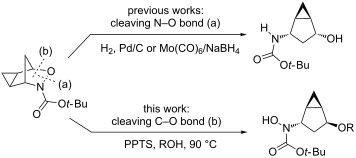
- ], and cycloadditions using nitrile oxides to provide 15 and 16 [7]. In the literature, there are also many examples of the cleavage of the C–O bond of 3-aza-2-oxabicyclic alkenes 1 (Scheme 3). This includes the use of protic acid [8], using metal catalysts such as Pd [9], Fe or Cu [10], In [11


Isoxazole derivatives as new nitric oxide elicitors in plants
Beilstein J. Org. Chem. 2017, 13, 659–664, doi:10.3762/bjoc.13.65
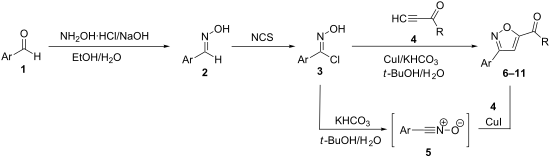
- were obtained in good yields by regiospecific 1,3-dipolar cycloaddition reactions between aromatic nitrile oxides, generated in situ from the corresponding hydroxyimidoyl chlorides, with non-symmetrical activated alkynes in the presence of catalytic amounts of copper(I) iodide. Effects of 3,5
- synthetic approaches towards the isoxazole core include the reactions of hydroxylamine with aryl-β-diketones [20], α,β-unsaturated carbonyl compounds [21], or α,β-unsaturated nitriles [22], and 1,3-dipolar cycloaddition reactions between alkenes or alkynes and nitrile oxides [23][24][25]. Nitrile oxides are
- known as reactive 1,3-dipoles involved in 1,3-dipolar cycloaddition reactions with various dipolarophiles generating five-membered heterocyclic compounds, such as isoxazoles, isoxazolines, oxadiazoles, oxadiazolines, dioxazolidines etc. [23][24][25]. Intermediate nitrile oxides are usually generated in


Dimerization reactions of aryl selenophen-2-yl-substituted thiocarbonyl S-methanides as diradical processes: a computational study
Beilstein J. Org. Chem. 2017, 13, 410–416, doi:10.3762/bjoc.13.44

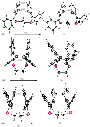
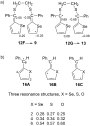
- mechanisms in [3 + 2]-cycloadditions have intensively been studied [16] and recently, a computational study on their appearance in reactions of substituted acetylenes with nitrile oxides has been published [17]. Experimental The Gaussian 09 program system was used for all calculations [18]. The M06-2X


Combined experimental and theoretical studies of regio- and stereoselectivity in reactions of β-isoxazolyl- and β-imidazolyl enamines with nitrile oxides
Beilstein J. Org. Chem. 2016, 12, 2390–2401, doi:10.3762/bjoc.12.233

- Lazarettgasse, 1090 Vienna, Austria I. Ya. Postovsky Institute of Organic Synthesis, Ural Branch of Russian Academy of Sciences, 20 S. Kovalevskaya str., 620990 Yekaterinburg, Russia 10.3762/bjoc.12.233 Abstract Reactions of β-azolyl enamines and nitrile oxides were studied by both experimental and theoretical
- -azolyl-1,3-dicarbonyl compounds with hydroxylamine and cyanomethylazoles with hydroxamoyl chlorides are used for the synthesis of a few representatives of 4-(azol-5-yl)isoxazoles [1][4][12][13][14][15][16]. Cycloaddition reactions of azolylacetylenes with nitrile oxides are an alternative method for the
- challenge. We turned our attention to the reaction of enamines with nitrile oxides (or their precursors, hydroxamoyl chlorides). The reaction has been shown to take place regioselectively to form only one of two possible regioisomers [18][19][20][21][22][23][24][25][26]. Therefore, this holds some promise




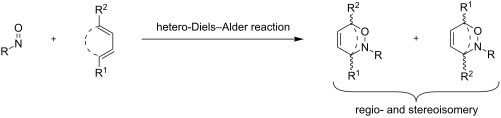
Stereo- and regioselectivity of the hetero-Diels–Alder reaction of nitroso derivatives with conjugated dienes
Beilstein J. Org. Chem. 2016, 12, 1949–1980, doi:10.3762/bjoc.12.184
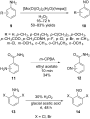
- treatment of a nitronate anion with oxalyl chloride were recently published [61][62] (Scheme 6). Acylnitroso compounds are generally prepared and used in situ due to their extremely reactive nature and the conditions have been summarized previously [16]. These include the oxidation of nitrile oxides [63] or




Development of variously functionalized nitrile oxides
Beilstein J. Org. Chem. 2015, 11, 1241–1245, doi:10.3762/bjoc.11.138
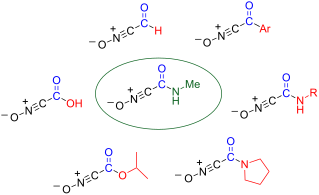
- -functionalized isoxazole derivatives. Since the amide was prepared by the cycloaddition reaction of ethynylbenzene and N-methylcarbamoylnitrile oxide, the nitrile oxide served as the equivalent of the nitrile oxides bearing a variety of functional groups such as carboxy, alkoxycarbonyl, carbamoyl, acyl and
- formyl moieties. Keywords: acylnitrile oxide; amide; formylnitrile oxide; functionalized nitrile oxide; Weinreb amide; Introduction Nitrile oxides are valuable synthetic synthons for the construction of heterocyclic compounds by cycloaddition reactions, which lead to the formation of two bonds in a
- single experimental step [1][2]. In addition, cycloadducts serve as precursors of polyfunctionalized compounds by ring opening reaction followed by N–O bond fission [2][3]. Hence, functionalized nitrile oxides are clearly useful for the preparation of more complex systems. However, because the precursors


A one-pot synthesis of 3-trifluoromethyl-2-isoxazolines from trifluoromethyl aldoxime
Beilstein J. Org. Chem. 2013, 9, 2387–2394, doi:10.3762/bjoc.9.275
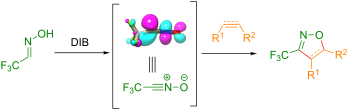
- revealed the presence of a side product and despite the total consumption of the aldoxime, a small amount of allylbenzene remained. It is known that nitrile oxides can dimerize or isomerize to yield different products, such as furoxans, isocyanates, 1,2,4-oxadiazoles and 1,4,2,5-dioxadiazines (Figure 2
- different fluorinated building blocks was demonstrated by the easy ring opening of these intermediates with NaBH4 and NiCl2, yielding the corresponding trifluoromethylated γ-amino alcohol. Example of bioactive molecules bearing the 2-isoxazoline nucleus. Dimerization and isomerization products from nitrile
- oxides. Dimerization of 4 yielding bis(trifluoromethyl)furoxan 6. Depiction of the geometry (left column) and isodensity surface of the reacting frontier molecular orbitals (FMO) at 50% probability (right column) of trifluoroacetonitrile oxide 4 (top row) and protected aminoalkene 5c (bottom row


Synthesis and characterization of novel bioactive 1,2,4-oxadiazole natural product analogs bearing the N-phenylmaleimide and N-phenylsuccinimide moieties
Beilstein J. Org. Chem. 2013, 9, 2202–2215, doi:10.3762/bjoc.9.259
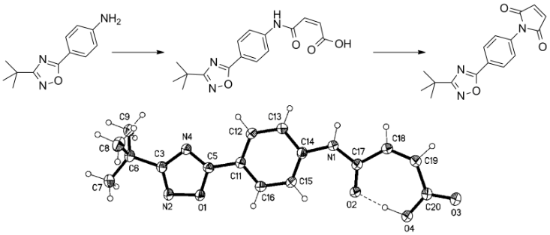
- reviewed the synthesis of 1,2,4-oxadiazoles [33]. He pointed out that two general methods dominate the practical preparation (≈95%): (a) The condensation of amidoximes with carboxylic acid derivatives. (b) The dipolar cycloaddition of nitrile oxides to nitriles. The general approach for the synthesis of



The rapid generation of isothiocyanates in flow
Beilstein J. Org. Chem. 2013, 9, 1613–1619, doi:10.3762/bjoc.9.184
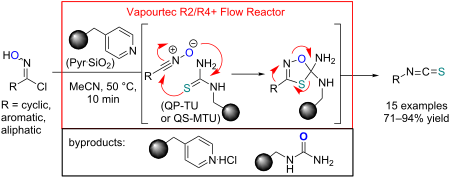
- purification of reaction sequences [40][41][42][43][44]. In addition they have been successfully utilised in order to render dipolar cycloaddition reactions involving azomethine ylides [45][46] as well as nitrile oxides [47][48] more practical for generating important heterocyclic scaffolds such as
- species as simple metal scavengers and will likely lead to their further application as a convenient source of sulfur. Strategies towards isothiocyanates. Flow approach towards isothiocyanates. Screening of different bases for the formation and conversion of nitrile oxides in batch: Isothiocyanates


Aryl nitrile oxide cycloaddition reactions in the presence of pinacol boronic acid ester
Beilstein J. Org. Chem. 2012, 8, 606–612, doi:10.3762/bjoc.8.67
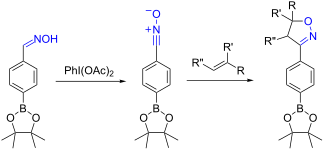
- other 1,3-disubstituted compounds, through N–O bond cleavage [20]. Nitrile oxides are reactive intermediates that are usually generated in situ and react immediately with the dipolarophile. There have been many methods reported for the generation of nitrile oxides, but the most common one for alkyl
- nitrile oxides involves the dehydration of primary nitro compounds [21]. Aryl nitrile oxides are more commonly prepared by chlorination of aldoximes followed by dehydrohalogenation of the resulting hydroximoyl chlorides, or by direct oxidative dehydrogenation of the aldoximes (Scheme 2) [17]. While the
- 1,3-dipolar cycloaddition reactions of nitrile oxides to vinylboronate esters [28][29] and alkynylboronate esters [30][31] have recently appeared. In each case the nitrile oxide was either isolated first (this procedure is limited to hindered nitrile oxides, such as 2,4,6-trimethylbenzonitrile oxide


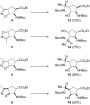
Synthesis of highly functionalized β-aminocyclopentanecarboxylate stereoisomers by reductive ring opening reaction of isoxazolines
Beilstein J. Org. Chem. 2012, 8, 100–106, doi:10.3762/bjoc.8.10
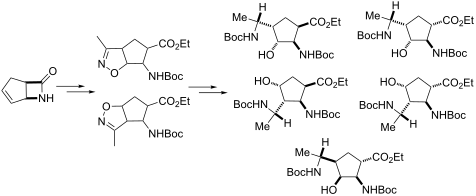
- , University of Szeged, Eötvös u. 6, H-6720 Szeged, Hungary 10.3762/bjoc.8.10 Abstract A rapid and simple procedure was devised for the synthesis of multifunctionalized cyclic β-amino esters and γ-amino alcohols via the 1,3-dipolar cycloaddition of nitrile oxides to β-aminocyclopentenecarboxylates. The