


Search results
Search for "RCM" in Full Text gives 106 result(s) in Beilstein Journal of Organic Chemistry.
Combination of multicomponent KA2 and Pauson–Khand reactions: short synthesis of spirocyclic pyrrolocyclopentenones
Beilstein J. Org. Chem. 2020, 16, 200–211, doi:10.3762/bjoc.16.23
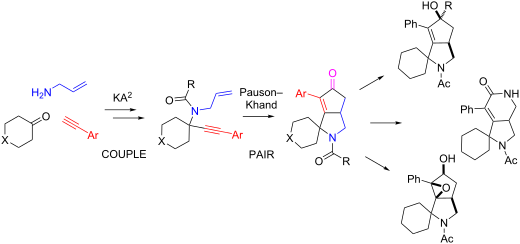
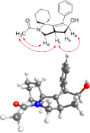
- [39][40], consisting of a [2 + 2 + 1] cycloaddition between an olefin, alkyne, and carbon monoxide. This reaction has been also applied in cascade approaches [41], and in combination with RCM [42], Diels–Alder [43] and Staudinger [44] reactions to produce novel structurally complex chemical entities




1,2,3-Triazolium macrocycles in supramolecular chemistry
Beilstein J. Org. Chem. 2019, 15, 2142–2155, doi:10.3762/bjoc.15.211
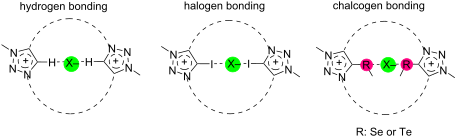
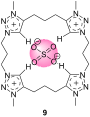
- -catalyzed RCM clipping mechanical bond forming methodology [48]. The 1H NMR spectroscopy in CDCl3 (293 K, 500 MHz) and the fluorescence titration experiments which were done in acetonitrile have demonstrated that the synthesized 1,2,3-triazolium macrocycle 6 was able to bind and sense several anions but the




Hoveyda–Grubbs catalysts with an N→Ru coordinate bond in a six-membered ring. Synthesis of stable, industrially scalable, highly efficient ruthenium metathesis catalysts and 2-vinylbenzylamine ligands as their precursors
Beilstein J. Org. Chem. 2019, 15, 769–779, doi:10.3762/bjoc.15.73
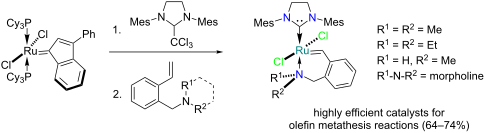
- by NMR, ESIMS, and X-ray crystallography. The utility of this chemistry is further demonstrated by the tests of the novel catalysts (up to 10−2 mol %) in different metathesis reactions such as cross metathesis (CM), ring-closing metathesis (RCM) and ring-opening cross metathesis (ROCM). Keywords: CM
- ; cross metathesis; Hoveyda–Grubbs catalyst; olefin metathesis; RCM; ring-closing metathesis; ring-opening cross metathesis; ROCM; ruthenium metathesis catalyst; styrene; 2-vinylbenzylamine; Introduction Ruthenium-catalysed olefin metathesis reactions have been playing an important role in various fields
- ][9][10][11][12], including most popular recent books [13][14]. Obviously, the application of various catalysts is required to achieve the best results in each of the many directions of metathesis reactions such as cross metathesis – CM, ring-opening metathesis – ROM, ring-closing metathesis – RCM


Design of indole- and MCR-based macrocycles as p53-MDM2 antagonists
Beilstein J. Org. Chem. 2019, 15, 513–520, doi:10.3762/bjoc.15.45
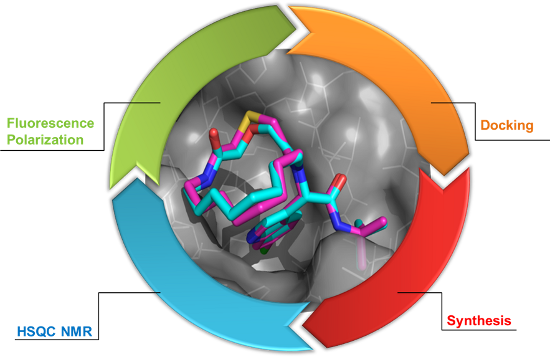
- -pot procedure with one purification step), much better yields, no need of expensive catalysts as in ring-closing metathesis (RCM) reaction and higher complexity/diversity on the macrocyclic ring, e.g., insertion of heteroatoms that could improve the ADMET properties (Scheme 1) [4]. Results and


Aqueous olefin metathesis: recent developments and applications
Beilstein J. Org. Chem. 2019, 15, 445–468, doi:10.3762/bjoc.15.39
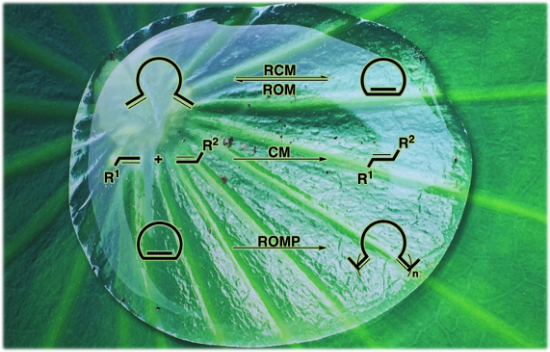
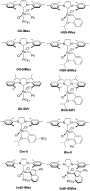
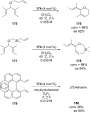
- decarbonylation of the ruthenium hydride 16. In 2015, Cazin and co-workers showed that the detrimental effect of H2O also occurs with the more innovative catalysts Caz-I, Ind-II and HG-II (Table 1) [32]. The authors performed the RCM of the challenging substrate 17 in toluene at 110 °C, reporting excellent yields
- Raines reported examples of RCM, CM and ROMP in heterogeneous conditions with hydrophobic catalysts [21][33]. Blechert prepared alkoxy- and cyano-substituted catalysts 19 and 20 from G-II (Scheme 5) [34], while Raines and co-workers employed the conventional catalysts G-II and HG-II [35]. Blechert and
- Raines both performed RCM reactions with the benchmark substrate 21 in mixtures of water/organic solvent at room temperature in air (Table 2). Table 2 summarizes the activities of the different ruthenium catalysts in protic media. The ratio water/co-solvent affects the RCM of substrate 21 catalyzed by G




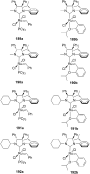
Catalysis of linear alkene metathesis by Grubbs-type ruthenium alkylidene complexes containing hemilabile α,α-diphenyl-(monosubstituted-pyridin-2-yl)methanolato ligands
Beilstein J. Org. Chem. 2019, 15, 194–209, doi:10.3762/bjoc.15.19
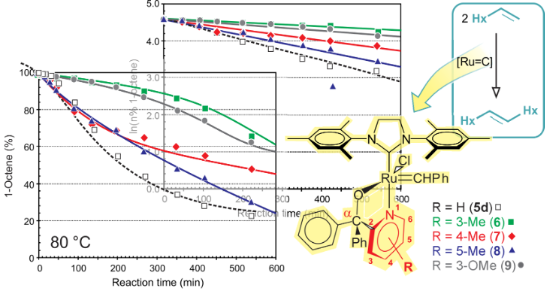
- (RCM) of dialkenes, ring-opening metathesis polymerisation (ROMP), isomerisation of alkenes and cross-metathesis (CM) of alkenes [7]. The complexes were synthesized by reacting the lithium salts of the corresponding pyridinyl alcohols with [RuCl2(=CHC6H5)(P(iPr3))2]. These complexes catalysed inter
- alia the cyclisation of hex-5-enyl undec-10-enoate to oxacyclohexadec-11-en-2-one (50% at 60 °C in toluene) and the ROMP of dicyclopentadiene. They were also able to immobilise these Grubbs 1-type precatalysts using dendritic pyridinyl alcohols [8]. These complexes catalysed the RCM reaction (at 80 °C
- -enyl acetate with dec-5-ene and the RCM of hex-5-en-1-yl undec-10-enoate. Superior (CM, RCM) to moderate (ROMP) activities were observed for most of these precatalysts. An interesting result was the very high affinity (“stickiness”) to untreated, unmodified and commercially available chromatography


Ammonium-tagged ruthenium-based catalysts for olefin metathesis in aqueous media under ultrasound and microwave irradiation
Beilstein J. Org. Chem. 2019, 15, 160–166, doi:10.3762/bjoc.15.16
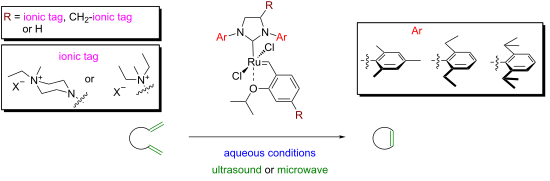
- ionic tag attached to the benzylidene ligand, with that of catalyst 1a, bearing an ionic tag placed on the N-heterocyclic carbene (NHC) fragment. As model reactions we have selected the ring-closing metathesis (RCM) of the water-soluble substrate 6, the homometathesis of alcohol 8, and more challenging
- the RCM (Table 1, entries 1 and 2) both tested catalysts (1 mol %) under classical conditions exhibited similar activities with 4b being slightly less active (52 vs 48%, respectively). The reaction performed under ultrasound irradiation proved to be ca. 10% more productive with both catalysts compared
- –d) and also included catalysts having differently sized NHC ligands (2a,c). For testing the catalysts performances, we selected the RCM of the water-soluble substrate 12 (Table 2). Under the reaction conditions the classical catalyst 5 (0.25 mol %) was not soluble resulting in poor yields and


Ruthenium-based olefin metathesis catalysts with monodentate unsymmetrical NHC ligands
Beilstein J. Org. Chem. 2018, 14, 3122–3149, doi:10.3762/bjoc.14.292
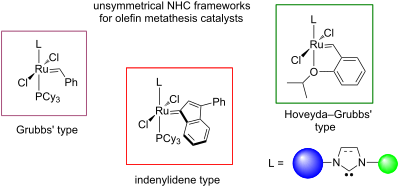
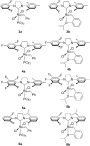
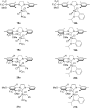
- the synthesis of a family of corresponding ortho-substituted N-fluorophenyl, N’-aryl NHC Ru complexes (Figure 4) [13][14]. The behavior of this catalyst family was tested in the RCM of diethyl diallylmalonate (7, Scheme 1) and compared with that of GII-SIMes and HGII-SIMes. Interestingly, catalysts 3a
- observed in the RCM of the more hindered diethyl allylmethallylmalonate (9, Scheme 2), where 3a and 4a behaved as the most efficient catalysts. Even in the challenging formation of tetrasubstituted olefin 12 via RCM (Scheme 3), catalysts 3a and 4a gave the best performances leading to 30% and 21
- comparable to GII-SIMes and HGII-SIMes in the RCM of substrate 7 (Scheme 1), giving full conversion within 30 minutes, whereas the corresponding Hoveyda-type complexes 18b and 19b presented a more pronounced initiation period, giving good conversions in much longer reaction time (2–4 h) [16]. A similar trend











A tutorial review of stereoretentive olefin metathesis based on ruthenium dithiolate catalysts
Beilstein J. Org. Chem. 2018, 14, 2999–3010, doi:10.3762/bjoc.14.279
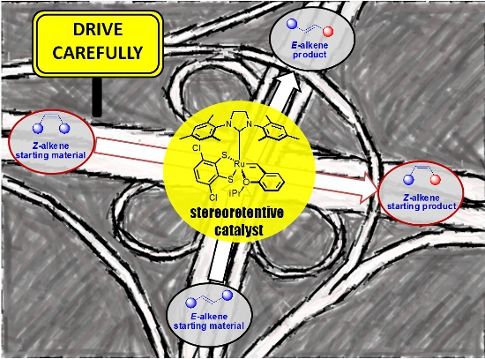
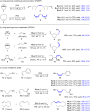
- ), ring-opening/cross metathesis (ROCM), cross metathesis (CM), self-metathesis and ring-closing metathesis (RCM) reactions. Scheme 2 and Scheme 3 display selected examples for each of these reactions [1]. ROMP is one of the most facile metathesis reactions, thus allowing for very low catalyst loadings
- also studied the stereoretentive RCM reaction for the synthesis of Z- and E-configured macrocycles (e.g., 24) [14][15]. As predicted from the working model, bulky catalyst Ru-4 performed very well for the RCM reaction with Z-alkene 23, whereas the smaller catalyst Ru-9 performed best for E-alkene 25
- styrene 32 the protonation and loss of the catechothiolate ligand by Brønsted acid 34 is a faster process leading to catalyst degradation. It should be noted that stereoretentive CM and RCM with (E)-2-butene (E-25) as capping reagent were also reported, however, these reactions required a significantly




Ring-closing-metathesis-based synthesis of annellated coumarins from 8-allylcoumarins
Beilstein J. Org. Chem. 2018, 14, 2991–2998, doi:10.3762/bjoc.14.278
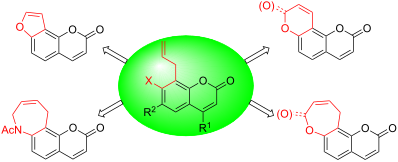
- /cyclization sequence. They serve as a versatile platform for the annellation of five- to seven-membered rings using ring-closing olefin metathesis (RCM). Furano-, pyrano-, oxepino- and azepinocoumarins were synthesized from the same set of precursors using Ru-catalyzed double bond isomerizations and RCM in a
- defined order. One class of products, pyrano[2,3-f]chromene-2,8-diones, were inaccessible through direct RCM of an acrylate, but became available from the analogous allyl ether via an assisted tandem catalytic RCM/allylic oxidation sequence. Keywords: coumarins; heterocycles; isomerization; olefin
- contribution we report how 8-allylcoumarins obtained through the microwave-promoted tandem sequence can be elaborated into heteroannellated coumarins that are either natural products or close ring-expanded analogues, using ring-closing olefin metathesis (RCM) reactions. Precedence for the use of RCM [40] in


Stereodivergent approach in the protected glycal synthesis of L-vancosamine, L-saccharosamine, L-daunosamine and L-ristosamine involving a ring-closing metathesis step
Beilstein J. Org. Chem. 2018, 14, 2949–2955, doi:10.3762/bjoc.14.274
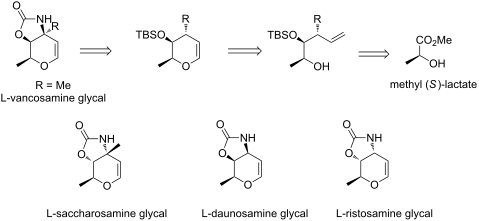
- corresponding alkynyl alcohols requires the handling of toxic tin reagents [8][9]. During these last years, ring-closing metathesis (RCM) of vinyl ethers have proved to be an efficient method for the preparation of chiral glycal scaffolds [11][12][13][14][15][16][17][18] as demonstrated in some total syntheses


MoO3 on zeolites MCM-22, MCM-56 and 2D-MFI as catalysts for 1-octene metathesis
Beilstein J. Org. Chem. 2018, 14, 2931–2939, doi:10.3762/bjoc.14.272
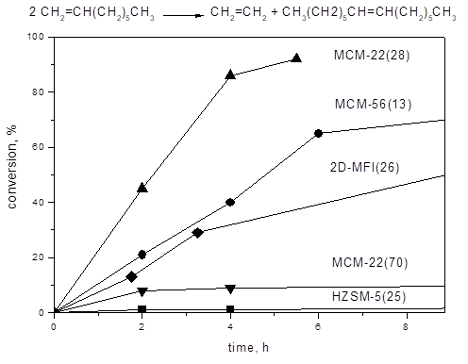
- explain the lower activity of 6MoO3/MCM-56(13) compared with 6MoO3/MCM-22(28). Similarly, a higher activity of MCM-22 in comparison with MCM-56 has been observed in toluene disproportionation [18] and also for RCM of citronellene over immobilized Ru catalysts the activity of catalyst based on MCM-56 was


Olefin metathesis catalysts embedded in β-barrel proteins: creating artificial metalloproteins for olefin metathesis
Beilstein J. Org. Chem. 2018, 14, 2861–2871, doi:10.3762/bjoc.14.265
- . These transformations include all three fundamental olefin metathesis reactions: ring-opening metathesis polymerization (ROMP), ring-closing metathesis (RCM) as well as cross metathesis (CM) (Scheme 2). Review Artificial metatheases – anchoring approaches Metalloproteins that contain one or more metal
- -based catalyst was tested in the RCM reaction of N,N-diallyl-4-toluenesulfonamide (1) in aqueous buffer solution [46]. Conversions up to 95% with Avi as a protein scaffold were achieved (catalyst loading of 5 mol %). This was the first example describing olefin metathesis performed within a protein
- slightly out of the protein cavity led to improved conversion (Scheme 3) [46]. The combination of the GH-type catalyst and (strept)avidin was further developed in a system that performs RCM reactions within a whole cell [47][48]. The scaffold protein Sav was produced into the periplasm of Escherichia coli


Domino ring-opening–ring-closing enyne metathesis vs enyne metathesis of norbornene derivatives with alkynyl side chains. Construction of condensed polycarbocycles
Beilstein J. Org. Chem. 2018, 14, 2708–2714, doi:10.3762/bjoc.14.248
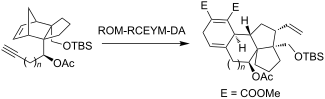
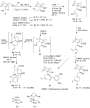
- ether 7a in 92% yield. Two different paths can be invoked for metathesis of compound 7a. Metathesis initiation may occur by attack of the ruthenium alkylidene at the alkyne unit to produce the more substituted vinyl alkylidine intermediate 8a which may undergo concomitant ROM–RCM with the norbornene
- OAc group. It forms intramolecularly the ruthena cyclobutane 22 which undergoes ring opening to give rise to the triene 9b. That the metathesis does not proceed through path 2 (Scheme 3) involving ROM–RCM is indicated by failure of the norbornene derivative 17 to undergo ROM. Steric shielding of the




Design and synthesis of C3-symmetric molecules bearing propellane moieties via cyclotrimerization and a ring-closing metathesis sequence
Beilstein J. Org. Chem. 2018, 14, 2537–2544, doi:10.3762/bjoc.14.230
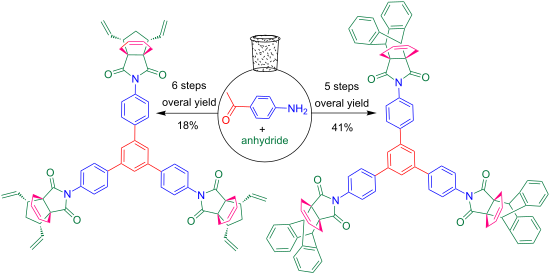
- developed simple synthetic approaches to propellanes via ring-closing metathesis (RCM) as a key step [17][18]. The development of new synthetic strategies to C3-symmetric molecules bearing propellane moieties from commercially available starting materials is worthy of systematic investigation. To this end
- transistors (OFETs) [35][36], and other optoelectronic devices. Our approach to C3-symmetric molecules containing propellane moieties involve DA reaction [37], cyclotrimerization [19] and RCM [38][39][40][41] as key steps. Results and Discussion The synthesis of propellane-bearing C3-symmetric derivatives
- product 11 (64%). Having the trimerized product 11, we attempted to open the norbornene system due to the fact that not all norbornene rings open up during RCM to generate propellane derivative. After allylation, RCM is not a clean reaction and it gave a mixture of the C3-symmetrical compounds. Therefore


Synergistic approach to polycycles through Suzuki–Miyaura cross coupling and metathesis as key steps
Beilstein J. Org. Chem. 2018, 14, 2468–2481, doi:10.3762/bjoc.14.223
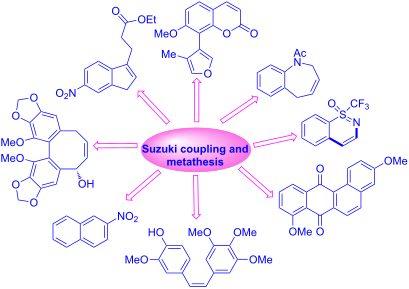
- reaction occurs under mild reaction conditions. Among different metathetic processes, ring-closing metathesis (RCM) [1][2][3][4][5][6] is of a greater interest than cross-metathesis (CM). It is a widely used protocol for the synthesis of unsaturated cyclic systems [7]. Palladium-catalyzed Suzuki–Miyaura
- useful protocol to build indene derivatives by employing SM coupling and RCM in sequence. To this end, the SM coupling of triflate 7 was accomplished by using pinacol boronic ester 8 in the presence of a palladium catalyst to give the cross-coupling product 9 (75%). Later on, exposure of the diolefinic
- precursor 9 to [Ru-2] catalyst 5 gave the ring-closure product 10 in quantitative yield (Scheme 1). A sequential usage of SM cross coupling and RCM was responsible to construct various naphthalene derivatives such as 15 [31]. The SM coupling product 3,4-diallylbenzene derivative 13 (90%) was obtained from


Glycosylation reactions mediated by hypervalent iodine: application to the synthesis of nucleosides and carbohydrates
Beilstein J. Org. Chem. 2018, 14, 1595–1618, doi:10.3762/bjoc.14.137
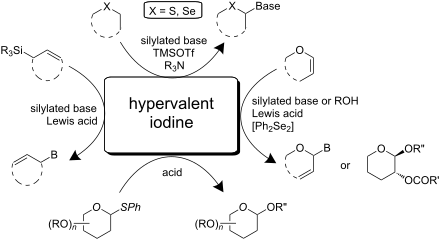
- , the PMB-protected epoxide 121 was converted to diene 122. The dihydropyran ring of 123 was constructed by RCM of 122 catalyzed by a Grubbs 1st generation catalyst. The isomerization of the double bond in 123 by treatment with a Wilkinson catalyst under basic conditions afforded glycal 124 (Scheme 16


Synthesis of a sucrose-based macrocycle with unsymmetrical monosaccharides "arms"
Beilstein J. Org. Chem. 2018, 14, 634–641, doi:10.3762/bjoc.14.50
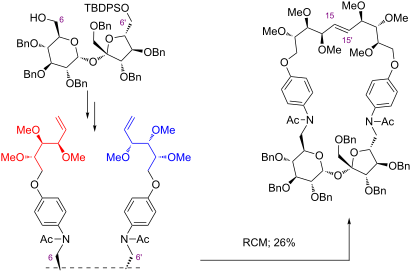
- -O-benzylsucrose with different unsaturated monosaccharide units is presented. Such a highly functionalized intermediate was cyclized under RCM conditions to afford a macrocyclic derivative containing a 31-membered ring in 26% yield. Keywords: chiral macrocycles; ring-closing metathesis; sucrose
- positions in 6,6’-diamino-1’,2,3,3’,4,4’-hexa-O-benzyl-6,6’-dideoxysucrose (2) were elongated with the same polyhydroxylated unit 1 providing diamide 3, which subsequently underwent cyclization under the chosen ring-closing metathesis (RCM) conditions [29][30] to give the 21-membered macrocycle 4 (Scheme 1
- macrocycle with sucrose scaffold. The proposed methodology allows for the regioselective introduction of various polyhydroxylated unsaturated fragments (derived from different sugars) at either terminal position of sucrose which undergo an efficient cyclization under the RCM conditions. Although, for


Synthesis of substituted Z-styrenes by Hiyama-type coupling of oxasilacycloalkenes: application to the synthesis of a 1-benzoxocane
Beilstein J. Org. Chem. 2017, 13, 2122–2127, doi:10.3762/bjoc.13.209
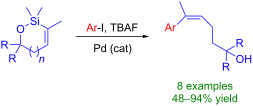
- ] and oxasilacycloalkenes (cyclic siloxanes, cf. Figure 1) [6][7][8] is an excellent method to prepare stereodefined alkenes. The cyclic siloxanes can be prepared in a number of ways: hydrosilylation of alkynes [11][12][13], semihydrogenation of silyl alkynes [14], ring-closing metathesis (RCM) [15][16


The chemistry and biology of mycolactones
Beilstein J. Org. Chem. 2017, 13, 1596–1660, doi:10.3762/bjoc.13.159
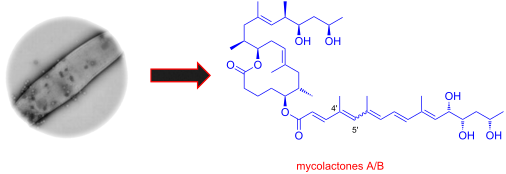
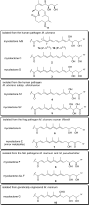
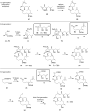
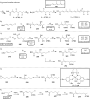
- principal approaches have been used to establish the 12-membered macrolactone ring, namely (1) ring-closure by macrolactonization, the approach followed by Kishi, Negishi and Aggarwal, or (2) ring-closing olefin metathesis (RCM) to form the C8–C9 double bond, which is part of Burkart’s and Altmann’s









An eco-compatible strategy for the diversity-oriented synthesis of macrocycles exploiting carbohydrate-derived building blocks
Beilstein J. Org. Chem. 2017, 13, 1106–1118, doi:10.3762/bjoc.13.110
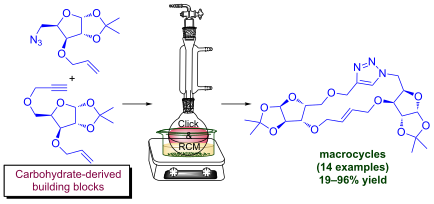
- transition-metal-catalyzed coupling reactions [19]. Recently, ring-closing alkyne metathesis (RCAM) [20][21] and ring closing metathesis (RCM) [22][23][24][25][26][27][28][29][30][31] have emerged as very powerful tools for macrocyclization including for the preparation of peptidomimetic [17][18][32
- ][47][48]. There are several reports wherein different strategies have been developed and used for the synthesis of glycoconjugates [9][49][50][51], however, the combination of a CuAAC and a RCM reaction has been used very little and rarely combinations of these reactions have been used for the
- carbohydrate conjugates in which the heterocyclic triazolyl ring serves as a shackle for joining the carbohydrate building blocks. Further, these carbohydrate conjugates decorated with appropriate coupling partner can be paired through ring closing metathesis (RCM) reaction. Carrying out the metathesis


Total syntheses of the archazolids: an emerging class of novel anticancer drugs
Beilstein J. Org. Chem. 2017, 13, 1085–1098, doi:10.3762/bjoc.13.108
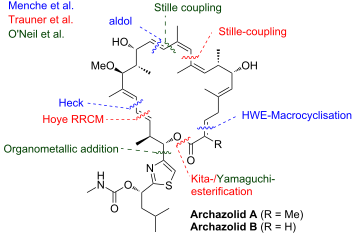
- -catalysis to get the final fragment 54 in 32% yield [85][86]. The envisioned Hoye relay RCM was catalyzed by Grubbs’ second generation catalyst to close the macrocycle in 27% yield. The final acid-mediated deprotection liberated finally archazolid B (2). Notably, no cyclization was observed in an analogous
- RCM reaction with a substrate without the relay tether, which underscores the usefulness of this relay tactic. It is important to mention, that the three main fragments were coupled in only four steps, showing the highly modular approach from Trauner and co-workers. With this strategy it was possible
- archazolid A. Synthesis of archazolid B (2) by a ring closing Heck reaction of 38. Retrosynthetic analysis of archazolid B by the Trauner group. Synthesis of acid 40 from Roche ester 41 involving a highly efficient Trost–Alder ene reaction. Synthesis of precursor 39 for the projected relay RCM reaction


The reductive decyanation reaction: an overview and recent developments
Beilstein J. Org. Chem. 2017, 13, 267–284, doi:10.3762/bjoc.13.30
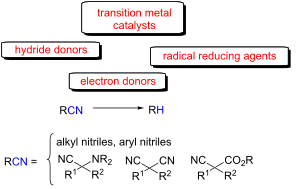
- . Rojas et al. proposed a convenient two-step pathway for the preparation of alkyl α,ω-dienes 3. These dienes are well-known precursors in ring-closing metathesis (RCM) and acyclic diene metathesis (ADMET) chemistry [32]. They first reported the quantitative α-alkylation of primary nitriles 1 [33]. In a


Identification, synthesis and mass spectrometry of a macrolide from the African reed frog Hyperolius cinnamomeoventris
Beilstein J. Org. Chem. 2016, 12, 2731–2738, doi:10.3762/bjoc.12.269
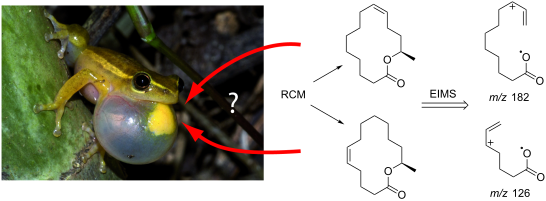
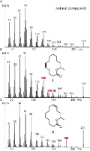
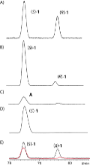
- opted to synthesize 2 as well. To allow later enantiomer determination of A, an enantioselective synthetic strategy was followed. Several synthetic routes for the synthesis of 1 have been reported [16][17][18][19][20]. These syntheses were performed before the advent of ring-closing metathesis (RCM
- ), requiring more than 10 steps each. RCM can shorten the synthesis remarkably, but requires careful selection of the RCM catalyst to control the double bond configuration. For example, Fürstner and Langemann obtained rac-1 in 31:69 (E/Z)-mixture using a Ru-carbene type catalyst similar to a Grubbs I catalyst
- [21]. The synthesis of (R)-2 using RCM as key step is shown in Scheme 1. Enantiomerically pure 1,2-epoxyhex-5-ene (6) was obtained by Jacobsen hydrolytic kinetic resolution on commercially available 6 (Scheme 1) [22][23]. Surprisingly, the yield of 69% of the (R)-enantiomer was higher than the



Synthesis of polyhydroxylated decalins via two consecutive one-pot reactions: 1,4-addition/aldol reaction followed by RCM/syn-dihydroxylation
Beilstein J. Org. Chem. 2016, 12, 2602–2608, doi:10.3762/bjoc.12.255
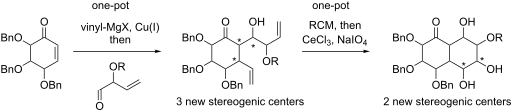
- ]. Although this approach is challenging in terms of diastereoselectivity (up to eight possible diastereoisomers), it enables a rapid increase of molecular complexity. The major diastereoisomer of 11 can be then subjected to the assisted tandem catalytic sequence: RCM reaction, followed by the reuse of the
- Snapper [41][42]. Both groups described a methodology, in which the ring-closing metathesis (RCM) reaction is followed by the reuse of the Ru catalyst in the syn-dihydroxylation step. In our recent papers [43][44], we extended this concise and effective approach to the synthesis of bicyclic iminosugars
- . To our knowledge, a sequence of a one-pot 1,4-addition/aldol reaction and RCM/syn-dihydroxylation has not been used yet (in such a consecutive manner) for the preparation of highly functionalized bicyclic structures. Results and Discussion The synthesis of polyhydroxylated cyclohexenones was





