Search results
Search for "hydrogenolysis" in Full Text gives 172 result(s) in Beilstein Journal of Organic Chemistry.
Total synthesis of the O-antigen repeating unit of Providencia stuartii O49 serotype through linear and one-pot assemblies
Beilstein J. Org. Chem. 2021, 17, 2915–2921, doi:10.3762/bjoc.17.199
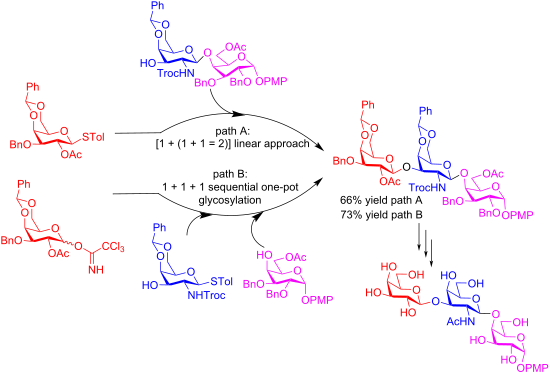
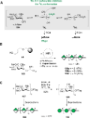
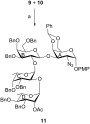
- and the benzyl groups were removed by hydrogenolysis using 10% Pd(OH)2/C in methanol at ambient temperature with a H2 balloon, which afforded the target trisaccharide 1 in 68% yield over three steps (Scheme 6). The structure of 1 was confirmed by several NMR spectroscopic techniques such as 1H NMR


Highly stereocontrolled total synthesis of racemic codonopsinol B through isoxazolidine-4,5-diol vinylation
Beilstein J. Org. Chem. 2021, 17, 2781–2786, doi:10.3762/bjoc.17.188
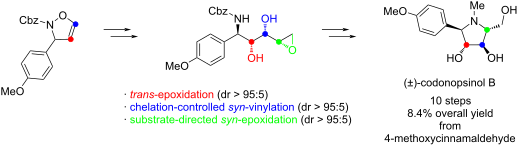
- hydrogenolysis conditions led only to the formation of several undesired byproducts. To our satisfaction when compound 12 was subjected to catalytic hydrogenation using Pd(OH)2/C in methanol [39], 2 was formed in 71% yield. Finally, (±)-codonopsinol B (1) was directly obtained from 12 in the yield of 58% (over


Progress and challenges in the synthesis of sequence controlled polysaccharides
Beilstein J. Org. Chem. 2021, 17, 1981–2025, doi:10.3762/bjoc.17.129
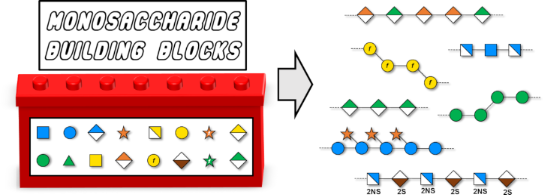
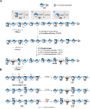
- could be converted into N-acetates upon reduction with tributyltin hydride and azobisisobutyronitrile (AIBN), and the N-Cbz groups were removed to liberate the free amino groups during hydrogenolysis over Pd/C [259]. A collection of well-defined COS with defined DP and PA was prepared by AGA [93][157










Chemical synthesis of C6-tetrazole ᴅ-mannose building blocks and access to a bioisostere of mannuronic acid 1-phosphate
Beilstein J. Org. Chem. 2021, 17, 1527–1532, doi:10.3762/bjoc.17.110
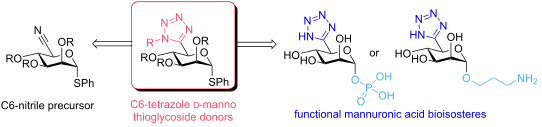
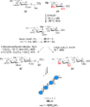
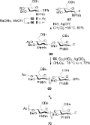
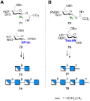
- % and exclusively β-selective [11]. Isomeric separation of this complex mixture was not completed at this stage and the material was next deprotected using hydrogenolysis to remove the benzyl groups. This furnished 20 in excellent yield (96%) as a 3:1 α/β mixture (δ 100.5 ppm [1JC1-H1 = 172 Hz, for the
- α-anomer]). Additionally, glycosylation of dibenzyl phosphate using the mixture 18/19 was successful and furnished the expected mixture of tetrazole N-regioisomers in 72% yield. These materials were not separated and instead exposed to hydrogenolysis conditions to deliver free ᴅ-manno C6-tetrazole 1


One-step synthesis of imidazoles from Asmic (anisylsulfanylmethyl isocyanide)
Beilstein J. Org. Chem. 2021, 17, 1499–1502, doi:10.3762/bjoc.17.106
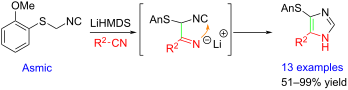
- to substituted imidazoles. Raney nickel hydrogenolysis was effective in interchanging the C4 anisylsulfanyl group for hydrogen (Scheme 3); attempted lithium–anisylsulfanyl exchange [19] or palladium- [22] or nickel- [23] anisylsulfanyl cross coupling was not successful. Raney nickel reduction of 7f


Double-headed nucleosides: Synthesis and applications
Beilstein J. Org. Chem. 2021, 17, 1392–1439, doi:10.3762/bjoc.17.98
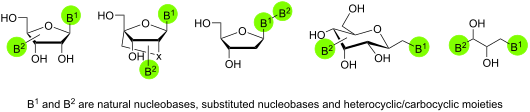
- with either uracil or N6-benzoyladenine via Vorbrüggen’s method of nucleobase coupling to produce the double-headed nucleosides 85 and 86. Catalytic hydrogenolysis of the iodinated double-headed nucleoside 85 gave the nucleoside 87 (Scheme 19) [59]. Horton and Tsai [13] synthesized double-headed





Synthesis of multiply fluorinated N-acetyl-D-glucosamine and D-galactosamine analogs via the corresponding deoxyfluorinated glucosazide and galactosazide phenyl thioglycosides
Beilstein J. Org. Chem. 2021, 17, 1086–1095, doi:10.3762/bjoc.17.85
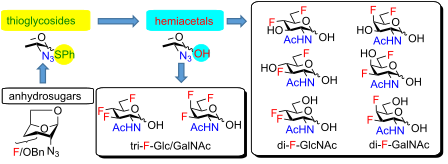
- -catalyzed hydrogenolysis in ethanol/acetic anhydride appeared to be a logical deprotection step [26], the desired fluoro sugars were contaminated with varying quantities of unidentified byproducts. However, clean debenzylation was achieved by first converting the azide to an acetamide on reaction with



β-Lactamase inhibition profile of new amidine-substituted diazabicyclooctanes
Beilstein J. Org. Chem. 2021, 17, 711–718, doi:10.3762/bjoc.17.60
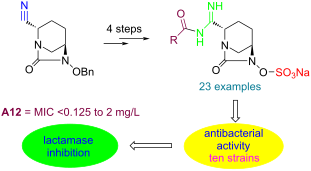
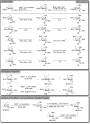
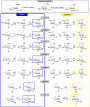
- -dimethylaminopyridine (DMAP) as the base. Then, the palladium-catalyzed hydrogenation of compounds B1–21 in THF or EtOAc led to the hydroxy derivatives C1–21. It has been observed that a catalytic amount of triethylamine (TEA) in EtOAc enhances the rate of the hydrogenolysis of benzyl ethers. Compounds C1–21 were then




Valorisation of plastic waste via metal-catalysed depolymerisation
Beilstein J. Org. Chem. 2021, 17, 589–621, doi:10.3762/bjoc.17.53
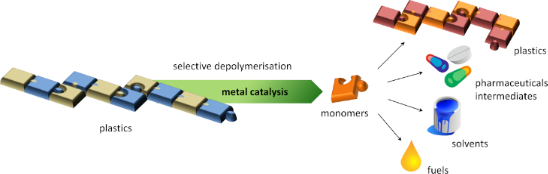
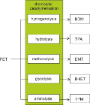
- (a solvent is the reagent and solvolyses include hydrolysis, glycolysis, alcoholysis and aminolysis) and hydrogenolysis reactions (H2 as reagent). Hydrolysis (sometimes called hydrocracking) is in between thermochemical and chemolytic processing, basically consisting of depolymerisation by the
- conditions. For instance, for polyesters, alcoholysis may provide mixed monomers formally derived from transesterification reactions [89][90], while aminolysis provides amides and alcohols [91][92]. In the search of “greener” technologies for plastic recycling, catalytic hydrogenolysis processes have been
- ), bis(2-hydroxyethyl)terephthalate (BHET), terephthalamides (TPM [171]) and EG (Figure 3). Catalytic hydrogenolysis, hydrolysis, methanolysis and glycolysis reactions of (postconsumer) PET have been reviewed, each showing their own advantages and disadvantages [172][173]. For instance, glycolysis






Synthetic strategies of phosphonodepsipeptides
Beilstein J. Org. Chem. 2021, 17, 461–484, doi:10.3762/bjoc.17.41
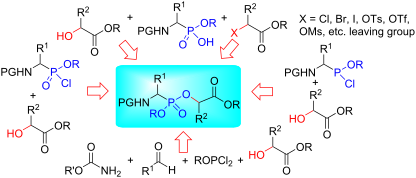
- 17 was synthesized via the coupling of methyl N-Cbz-1-aminoethylphosphonochloridate (13b) generated from phosphonic monomethyl ester 12b and methyl (S)-2-hydroxy-3-phenylpropanoate (18) followed by hydrogenolysis. It was further coupled to cyclen to afford various cyclen-containing
- methyl N-Cbz-protected 1-aminoethylphosphonochloridate 13b with methyl ᴅ-lactate (22a) and methyl mercaptoacetate (22b), respectively, followed by a basic hydrolysis and hydrogenolysis. The bioassay results indicated that the phosphonothiodepsidipeptide 20b did not inhibit VanX (Scheme 3) [21]. It was
- -aminoethylphosphonochloridate (13b) with different benzyl 1-hydroxyalkanoates 26 followed by hydrogenolysis and hydrolysis. The bioassay results indicated that six out of the seven synthetic phosphonodepsipeptides 25 inhibited VanX with IC50 values ranging from 0.48 to 8.21 mM (Scheme 4) [7]. Two optically active


The preparation and properties of 1,1-difluorocyclopropane derivatives
Beilstein J. Org. Chem. 2021, 17, 245–272, doi:10.3762/bjoc.17.25
- hydrogenolysis of benzyl ethers (H2, Pd) [72], DIBAL-H reduction of esters to form alcohols [73], oxidative cleavage of vinyl groups to form carboxylic acids (KMnO4) [74], and the conversion of the acids into amines using the Curtius rearrangement (SOCl2, followed by Me3SiN3, thermolysis, and acid hydrolysis of
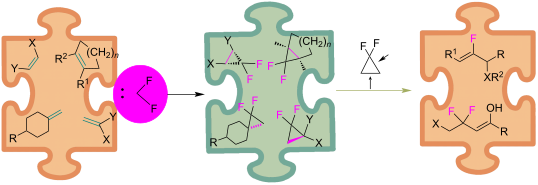
- -difluorocyclopropanes in the synthesis of fluoroalkenyl-substituted compounds (monofluoroalkenes) have been actively studied. Great opportunities exist for the use of transition metal catalysis. The catalytic hydrogenolysis of 1,1-difluoro-3-methyl-2-phenylcyclopropane (151) led to the regioselective C2–C3 distal bond




Progress in the total synthesis of inthomycins
Beilstein J. Org. Chem. 2021, 17, 58–82, doi:10.3762/bjoc.17.7
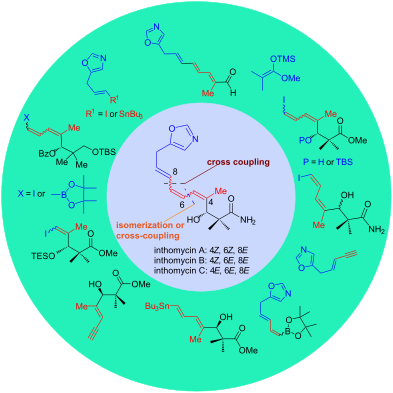
- , it was transformed into (E)-vinylboronate (+)-145b in perfect stereoselectivity by using the recently developed boron-Wittig reaction with bis[(pinacolato)boryl]methane (144) [79]. By applying the Corey–Fuchs dibromoolefination and followed by Pd-catalyzed hydrogenolysis under Uenishi's conditions









Recent progress in the synthesis of homotropane alkaloids adaline, euphococcinine and N-methyleuphococcinine
Beilstein J. Org. Chem. 2021, 17, 28–41, doi:10.3762/bjoc.17.4
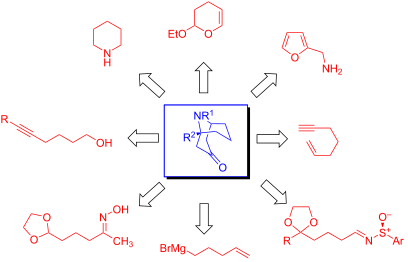
- subjected to simultaneous catalytic hydrogenation and hydrogenolysis of the protecting group Cbz to give (−)-adaline (1) in 90% yield. The asymmetric synthesis achieved by Liebeskind et al. presented a high enantiomeric excess and good yields. Also, the proposed route differed from the previously mentioned


Vicinal difluorination as a C=C surrogate: an analog of piperine with enhanced solubility, photostability, and acetylcholinesterase inhibitory activity
Beilstein J. Org. Chem. 2020, 16, 2663–2670, doi:10.3762/bjoc.16.216
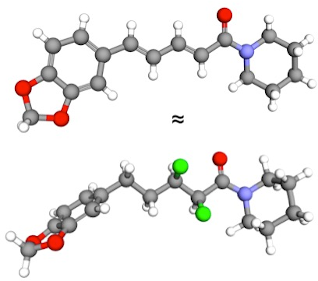
- formation of this side-product but did not lead to an overall increase in the yield of 11. Despite the modest optimised yield of the difluoroalkane 11, a sufficient quantity of this material was secured to continue with the synthesis. The hydrogenolysis of the benzyl ether of 11 provided the primary alcohol


Regioselective cobalt(II)-catalyzed [2 + 3] cycloaddition reaction of fluoroalkylated alkynes with 2-formylphenylboronic acids: easy access to 2-fluoroalkylated indenols
Beilstein J. Org. Chem. 2020, 16, 2193–2200, doi:10.3762/bjoc.16.184
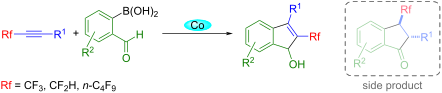
- -fluoroalkylated indenone 6 in 98% yield. Subsequently, a hydrogenolysis with 1 mol % of Pd/C under a hydrogen atmosphere in methanol at room temperature for 15 h produced the desired 2-fluoroalkylated indanone 7 as the trans-isomer in 69% yield [33][34][35]. The stereochemical assignment of 5aA and 7 was carried




Synthesis of monophosphorylated lipid A precursors using 2-naphthylmethyl ether as a protecting group
Beilstein J. Org. Chem. 2020, 16, 1955–1962, doi:10.3762/bjoc.16.162
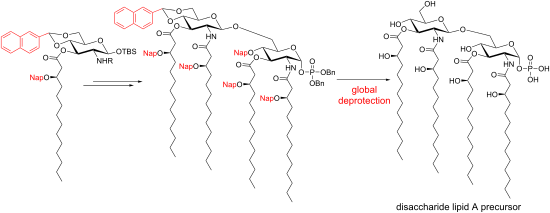
- catalytic hydrogenolysis over Pd/C under 15 kg/cm2 of H2 to give the target lipid X monosaccharide 1 (as triethylammonium salt) in good yield. Having the glycosyl donor 20 and acceptor 18 at hand (Scheme 2), in order to prepare the disaccharide precursor, the glycosylation reaction was performed first


One-pot synthesis of isosorbide from cellulose or lignocellulosic biomass: a challenge?
Beilstein J. Org. Chem. 2020, 16, 1713–1721, doi:10.3762/bjoc.16.143
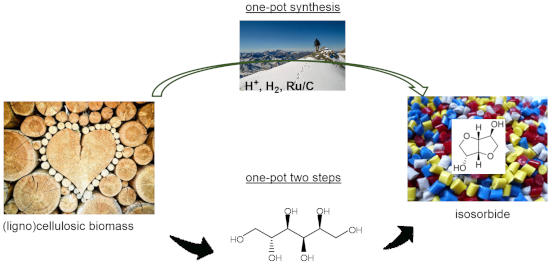
- conversion of cellulose and even spruce in a one-step hydrogenolysis reactions to form C4 to C6 sugar alcohols [20]. For the C6 sugar alcohols including the isosorbide formation, the yield was below 6% whatever catalyst was used at 160 °C, under 50 bar of H2 in a 36 mL stainless steel autoclave equipped with
- experiments were made in a batch reactor containing 500 mg of α-cellulose, 100 mg of 5 wt % Ru/C catalyst and 10 mL of water with an acid concentration from 3.47 to 55.1 mmol·L−1 at 160 °C under 50 bar of H2 (25 °C). It was reported that the rate of cellulose hydrogenolysis reaction depends on the acid
- g of 4 wt % Ru/C, 3 g of Amberlyst 70, isosorbide yield of 56% at 180 °C under 50 bar of H2 after 16 h of reaction. A comparison between these results and sequential reactions leading in the first step (hydrogenolysis of cellulose) to 51% of sorbitol and in the second step (dehydration of sorbitol


Synthesis of 3-substituted isoxazolidin-4-ols using hydroboration–oxidation reactions of 4,5-unsubstituted 2,3-dihydroisoxazoles
Beilstein J. Org. Chem. 2020, 16, 1313–1319, doi:10.3762/bjoc.16.112
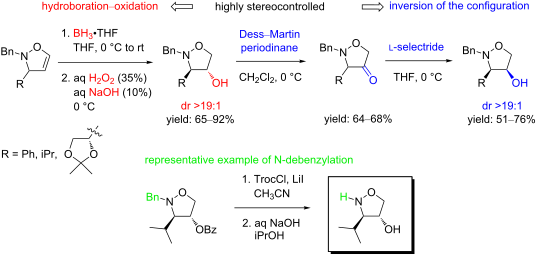
- (Scheme 4). According to the literature, the N-debenzylation by a Pd-catalyzed hydrogenolysis in methanol with formic acid as the hydrogen source [37][38] should allow the access to N-deprotected isoxazolidines. Unfortunately, all attempts to remove the benzyl group directly from the model isoxazolidine


Fluorinated phenylalanines: synthesis and pharmaceutical applications
Beilstein J. Org. Chem. 2020, 16, 1022–1050, doi:10.3762/bjoc.16.91
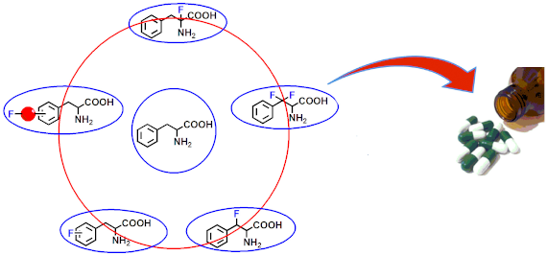
- high diastereoisomeric purity (Scheme 36). The subsequent deprotection of 151 had to be achieved with BrO3−, because hydrogenolysis resulted in defluorination [74]. Alternatively, a series of substituted anti-β-fluorophenylalanine derivatives 154a–d was obtained from the corresponding enantiopure α


Efficient synthesis of dipeptide analogues of α-fluorinated β-aminophosphonates
Beilstein J. Org. Chem. 2020, 16, 756–762, doi:10.3762/bjoc.16.69
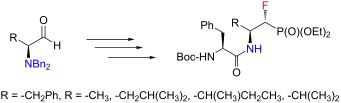
- into the salts 14 was applied. The salts 14 could be then crystallized and subjected to X-ray studies. A standard N−debenzylation protocol was employed to remove the benzyl protecting group. The hydrogenolysis reaction was catalyzed by palladium on carbon (Pd/C), and was carried out in trifluoroethanol


Rhodium-catalyzed reductive carbonylation of aryl iodides to arylaldehydes with syngas
Beilstein J. Org. Chem. 2020, 16, 645–656, doi:10.3762/bjoc.16.61
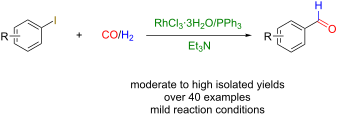
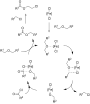
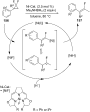
- reacts with PPh3 to form RhCl(PPh3)3, which is able to activate C–I bonds in aryl iodides realizing the insertion of CO and hydrogenolysis with H2. The final trapping of HI by the base Et3N regenerates the catalyst to complete the reaction cycle. As far as we know, this is the first time that




Convenient synthesis of the pentasaccharide repeating unit corresponding to the cell wall O-antigen of Escherichia albertii O4
Beilstein J. Org. Chem. 2020, 16, 106–110, doi:10.3762/bjoc.16.12
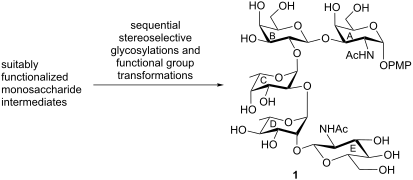
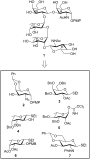
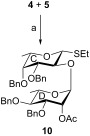
- ) hydrogenolysis of benzyl ethers and benzylidene acetals over Pearlman’s catalyst [36] to furnish the desired pentasaccharide 1 in 49% overall yield (Scheme 4). The structure of compound 1 was unambiguously characterized by its NMR spectral analysis [signals at δ 5.37 (d, J = 2.0 Hz, H-1A), 5.29 (d, J = 3.5 Hz, H



Synthesis of C-glycosyl phosphonate derivatives of 4-amino-4-deoxy-α-ʟ-arabinose
Beilstein J. Org. Chem. 2020, 16, 9–14, doi:10.3762/bjoc.16.2
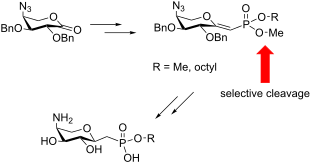
- lactone with the lithium salt of dimethyl methylphosphonate followed by an elimination step of the resulting hemiketal, leading to the corresponding exo- and endo-glycal derivatives. The ensuing selective monodemethylation and hydrogenolysis of the benzyl groups and reduction of the 4-azido group gave the


Automated glycan assembly of arabinomannan oligosaccharides from Mycobacterium tuberculosis
Beilstein J. Org. Chem. 2019, 15, 2936–2940, doi:10.3762/bjoc.15.288
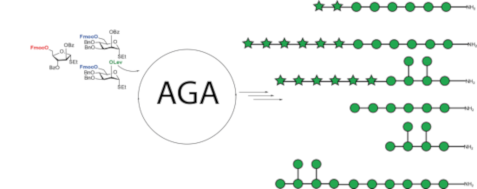
- methanolysis, followed by Pd/C-catalyzed hydrogenolysis of the carboxybenzyl group and the benzyl ethers. Mannosides 4–6 were deprotected and purified using reversed-phase HPLC to obtain fully deprotected mannosides 10–12 (Figure 2). For the arabinomannosides 7–9, the acid-labile arabinose chain was cleaved
- during hydrogenation, giving a complex mixture of deletion sequences lacking one to six arabinose moieties. To overcome this challenge, hydrogenolysis with Pd(OH)2 was performed to access the fully deprotected arabinomannosides 13–15 (Figure 2). Conclusion A collection of AM oligosaccharides containing α


A review of asymmetric synthetic organic electrochemistry and electrocatalysis: concepts, applications, recent developments and future directions
Beilstein J. Org. Chem. 2019, 15, 2710–2746, doi:10.3762/bjoc.15.264
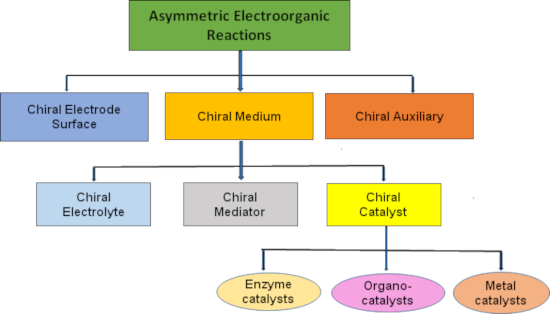
- alkylation, reduction and catalytic hydrogenolysis, (+)-199 was converted to desired product (−)-200 with 80% ee (Scheme 62). An electrochemical method for the asymmetric oxidative dimerization of cinnamic acid derivatives was developed by Watanabe in 2016 [109]. The substrates for the electrochemical