Search for "tertiary alcohol" in Full Text gives 89 result(s) in Beilstein Journal of Organic Chemistry.
Beilstein J. Org. Chem. 2021, 17, 2385–2389, doi:10.3762/bjoc.17.155

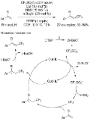
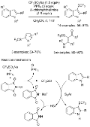
Graphical Abstract
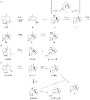
Scheme 1: Dimerisation of α-lithio epoxides or aziridines [3-5].
Scheme 2: Proposed eliminative cross-coupling of carbenoids to allylic alcohols (X = O) or allylic amines (X ...
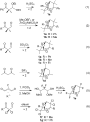
Scheme 3: Allylic alcohol 6 by one-carbon homologation from epoxide 5.
Scheme 4: Internal allylic alcohols from epoxides and stannane 7.
Scheme 5: Cyclopropylidene synthesis from epoxide 5.
Scheme 6: Synthesis of vinylsilane 14.
Scheme 7: Allylic alcohol 8 from epoxide 5 and sulfone 15.
Scheme 8: Allylic amines from aziridine 17.
Scheme 9: Cyclopropylidene synthesis from aziridine 20.
Scheme 10: Cinnamylamine 23 synthesis from aziridine 17.
Scheme 11: Cinnamylamine 23 synthesis from isopropyl or neopentyl benzylic ethers 26 and 27.
Beilstein J. Org. Chem. 2020, 16, 691–737, doi:10.3762/bjoc.16.67
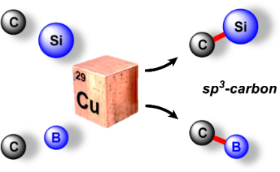
Graphical Abstract
Scheme 1: Pharmaceuticals possessing a silicon or boron atom.
Scheme 2: The first Cu-catalyzed C(sp3)–Si bond formation.
Scheme 3: Conversion of benzylic phosphate 6 to the corresponding silane.
Scheme 4: Conversion of alkyl triflates to alkylsilanes.
Scheme 5: Conversion of secondary alkyl triflates to alkylsilanes.
Scheme 6: Conversion of alkyl iodides to alkylsilanes.
Scheme 7: Trapping of intermediate radical through cascade reaction.
Scheme 8: Radical pathway for conversion of alkyl iodides to alkylsilanes.
Scheme 9: Conversion of alkyl ester of N-hydroxyphthalimide to alkylsilanes.
Scheme 10: Conversion of gem-dibromides to bis-silylalkanes.
Scheme 11: Conversion of imines to α-silylated amines (A) and the reaction pathway (B).
Scheme 12: Conversion of N-tosylimines to α-silylated amines.
Scheme 13: Screening of diamine ligands.
Scheme 14: Conversion of N-tert-butylsulfonylimines to α-silylated amines.
Scheme 15: Conversion of aldimines to nonracemic α-silylated amines.
Scheme 16: Conversion of N-tosylimines to α-silylated amines.
Scheme 17: Reaction pathway [A] and conversion of aldehydes to α-silylated alcohols [B].
Scheme 18: Conversion of aldehydes to benzhydryl silyl ethers.
Scheme 19: Conversion of ketones to 1,2-diols (A) and conversion of imines to 1,2-amino alcohols (B).
Scheme 20: Ligand screening (A) and conversion of aldehydes to α-silylated alcohols (B).
Scheme 21: Conversion of aldehydes to α-silylated alcohols.
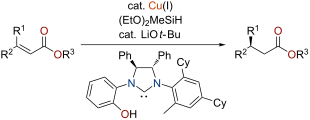
Scheme 22: 1,4-Additions to α,β-unsaturated ketones.
Scheme 23: 1,4-Additions to unsaturated ketones to give β-silylated derivatives.
Scheme 24: Additions onto α,β-unsaturated lactones to give β-silylated lactones.
Scheme 25: Conversion of α,β-unsaturated to β-silylated lactams.
Scheme 26: Conversion of N-arylacrylamides to silylated oxindoles.
Scheme 27: Conversion of α,β-unsaturated carbonyl compounds to silylated tert-butylperoxides.
Scheme 28: Catalytic cycle for Cu(I) catalyzed α,β-unsaturated compounds.
Scheme 29: Conversion of p-quinone methides to benzylic silanes.
Scheme 30: Conversion of α,β-unsaturated ketimines to regio- and stereocontrolled allylic silanes.
Scheme 31: Conversion of α,β-unsaturated ketimines to enantioenriched allylic silanes.
Scheme 32: Regioselective conversion of dienedioates to allylic silanes.
Scheme 33: Conversion of alkenyl-substituted azaarenes to β-silylated adducts.
Scheme 34: Conversion of conjugated benzoxazoles to enantioenriched β-silylated adducts.
Scheme 35: Conversion of α,β-unsaturated carbonyl indoles to α-silylated N-alkylated indoles.
Scheme 36: Conversion of β-amidoacrylates to α-aminosilanes.
Scheme 37: Conversion of α,β-unsaturated ketones to enantioenriched β-silylated ketones, nitriles, and nitro d...
Scheme 38: Regio-divergent silacarboxylation of allenes.
Scheme 39: Silylation of diazocarbonyl compounds, (A) asymmetric and (B) racemic.
Scheme 40: Enantioselective hydrosilylation of alkenes.
Scheme 41: Conversion of 3-acylindoles to indolino-silanes.
Scheme 42: Proposed mechanism for the silylation of 3-acylindoles.
Scheme 43: Silyation of N-chlorosulfonamides.
Scheme 44: Conversion of acyl silanes to α-silyl alcohols.
Scheme 45: Conversion of N-tosylaziridines to β-silylated N-tosylamines.
Scheme 46: Conversion of N-tosylaziridines to silylated N-tosylamines.
Scheme 47: Conversion of 3,3-disubstituted cyclopropenes to silylated cyclopropanes.
Scheme 48: Conversion of conjugated enynes to 1,3-bis(silyl)propenes.
Scheme 49: Proposed sequence for the Cu-catalyzed borylation of substituted alkenes.
Scheme 50: Cu-catalyzed synthesis of nonracemic allylic boronates.
Scheme 51: Cu–NHC catalyzed synthesis of α-substituted allylboronates.
Scheme 52: Synthesis of α-chiral (γ-alkoxyallyl)boronates.
Scheme 53: Cu-mediated formation of nonracemic cis- or trans- 2-substituted cyclopropylboronates.
Scheme 54: Cu-catalyzed synthesis of γ,γ-gem-difluoroallylboronates.
Scheme 55: Cu-catalyzed hydrofunctionalization of internal alkenes and vinylarenes.
Scheme 56: Cu-catalyzed Markovnikov and anti-Markovnikov borylation of alkenes.
Scheme 57: Cu-catalyzed borylation/ortho-cyanation/Cope rearrangement.
Scheme 58: Borylfluoromethylation of alkenes.
Scheme 59: Cu-catalyzed synthesis of tertiary nonracemic alcohols.
Scheme 60: Synthesis of densely functionalized and synthetically versatile 1,2- or 4,3-borocyanated 1,3-butadi...
Scheme 61: Cu-catalyzed trifunctionalization of allenes.
Scheme 62: Cu-catalyzed selective arylborylation of arenes.
Scheme 63: Asymmetric borylative coupling between styrenes and imines.
Scheme 64: Regio-divergent aminoboration of unactivated terminal alkenes.
Scheme 65: Cu-catalyzed 1,4-borylation of α,β-unsaturated ketones.
Scheme 66: Cu-catalyzed protodeboronation of α,β-unsaturated ketones.
Scheme 67: Cu-catalyzed β-borylation of α,β-unsaturated imines.
Scheme 68: Cu-catalyzed synthesis of β-trifluoroborato carbonyl compounds.
Scheme 69: Asymmetric 1,4-borylation of α,β-unsaturated carbonyl compounds.
Scheme 70: Cu-catalyzed ACB and ACA reactions of α,β-unsaturated 2-acyl-N-methylimidazoles.
Scheme 71: Cu-catalyzed diborylation of aldehydes.
Scheme 72: Umpolung pathway for chiral, nonracemic tertiary alcohol synthesis (top) and proposed mechanism for...
Scheme 73: Cu-catalyzed synthesis of α-hydroxyboronates.
Scheme 74: Cu-catalyzed borylation of ketones.
Scheme 75: Cu-catalyzed borylation of unactivated alkyl halides.
Scheme 76: Cu-catalyzed borylation of allylic difluorides.
Scheme 77: Cu-catalyzed borylation of cyclic and acyclic alkyl halides.
Scheme 78: Cu-catalyzed borylation of unactivated alkyl chlorides and bromides.
Scheme 79: Cu-catalyzed decarboxylative borylation of carboxylic acids.
Scheme 80: Cu-catalyzed borylation of benzylic, allylic, and propargylic alcohols.
Beilstein J. Org. Chem. 2020, 16, 537–543, doi:10.3762/bjoc.16.50
Beilstein J. Org. Chem. 2020, 16, 200–211, doi:10.3762/bjoc.16.23
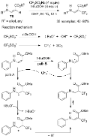
Graphical Abstract
Figure 1: Chemical structure of representative approved drugs containing a spirocyclic moiety.
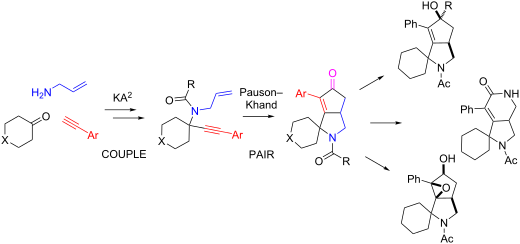
Scheme 1: Synthetic strategies for accessing pyrrolocyclopentenone derivatives, including the novel couple/pa...
Scheme 2: Couple/pair approach using combined KA2 and Pauson–Khand multicomponent reactions.
Scheme 3: Follow-up chemistry on compound 5 taking advantage of the enone chemistry. Reaction conditions. (i)...
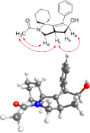
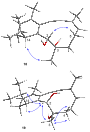
Figure 2: Top: Selected NOE contacts from NOESY 1D spectra of compound 36; bottom: low energy conformer of 36...
Figure 3: PCA plot resulting from the correlation between PC1 vs PC2, showing the positioning in the chemical...
Figure 4: PMI plot showing the skeletal diversity of compounds 3–39 (blue diamonds) with respect to the refer...
Beilstein J. Org. Chem. 2020, 16, 88–105, doi:10.3762/bjoc.16.11
Graphical Abstract
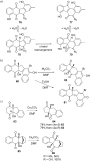
Scheme 1: Arbusov, phospha-Fries, and phospha-Brook rearrangements.
Scheme 2: Cyclization of 1a and 1b under acidic conditions.
Scheme 3: The synthesis of P-stereogenic β-hydroxyalkylphosphine sulfides.
Scheme 4: Cyclization of 8 and 19 in the presence of H3PO4.
Scheme 5: Cyclization of (SP)-19 in the presence of H3PO4.
Figure 1: 1H NMR spectra of compounds 12 and 29.
Figure 2: 13C NMR spectra of compounds 12 and 29.
Scheme 6: Synthesis of the alkenylphosphine sulfides used in study.
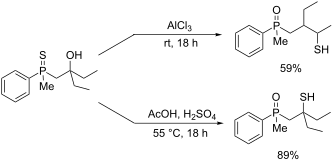
Scheme 7: The reaction of mesylate compounds with Lewis-acidic AlCl3.
Scheme 8: The reaction of alkenylphosphine sulfides with AlCl3.
Scheme 9: Rearrangement of 20 in the presence of Brønsted acid. The calculated energies next to the arrows ar...
Scheme 10: Rearrangement of 20 in the presence of Lewis acid. The calculated energies next to the arrows are r...
Scheme 11: The synthesis of chiral substrates for rearrangement reactions.
Scheme 12: The reaction of (SP)-60 and (SP)-65 with AlCl3.
Scheme 13: Reaction of chiral β-hydroxyalkylphosphine sulfides with Brønsted acid.
Scheme 14: Attempted cyclization of enantiomerically enriched 53 and 46.
Beilstein J. Org. Chem. 2019, 15, 2003–2012, doi:10.3762/bjoc.15.196
Graphical Abstract
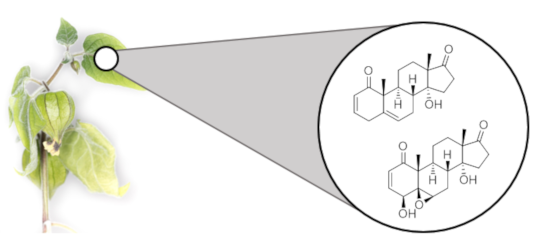
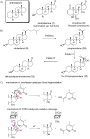
Figure 1: Withanolides from Physalis peruviana. A) Structures of the newly characterised truncated withanolid...
Figure 2: Key NMR correlations. (A) COSY and HMBC correlations for irinan A (2). (B) COSY and HMBC correlatio...
Figure 3: Structures and biosynthesis of androstanes. (A) Androstane backbone and androsterone (7) as a typic...
Figure 4: Intrinsic reactivity of 4ß-hydroxywithanolide E (1) under acidic/basic and oxidative conditions, re...
Beilstein J. Org. Chem. 2019, 15, 1523–1533, doi:10.3762/bjoc.15.155
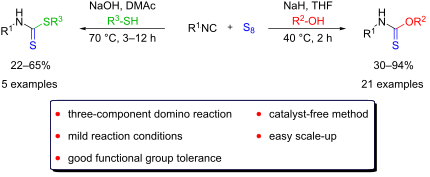
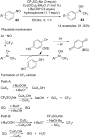
Graphical Abstract
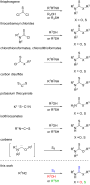
Scheme 1: Synthetic routes to O-thiocarbamates and dithiocarbamates.
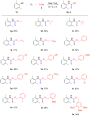
Scheme 2: Substrate scope of isocyanides. aReaction conditions: 1 (1 mmol), S8 (2 mmol), 2a (2mmol), NaH (2 m...
Scheme 3: Substrate scope of alcohols. Reaction conditions: 1a (1 mmol), S8 (2 mmol), 2 (2mmol), NaH (2 mmol)...
Scheme 4: Substrate scope of thiols. Reaction conditions: 1a (1 mmol), S8 (1.2 mmol), 4 (2 mmol), NaOH (2 mmo...
Scheme 5: Scaled-up synthesis for 3a.
Scheme 6: Multicomponent domino synthesis of quinazolinone 7.
Scheme 7: Control experiments.
Scheme 8: Proposed mechanism.
Beilstein J. Org. Chem. 2019, 15, 1194–1202, doi:10.3762/bjoc.15.116
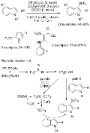
Graphical Abstract
Figure 1: Squalestatin S1/zaragozic acid A (1) and DDSQ (2).
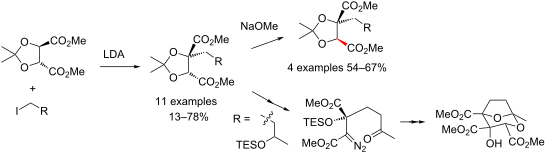
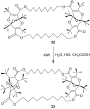
Scheme 1: Carbonyl ylide cycloaddition–rearrangement to the squalestatin core [12,13].
Scheme 2: Tartrate alkylation strategy to cycloaddition substrate.
Scheme 3: Conversion of α-ketoester to α-diazoester.
Scheme 4: Seebach’s tartrate alkylation and rationalisation of stereoselectivity [17-19].
Scheme 5: Tartrate alkylation with a non-activated alkyl iodide.
Scheme 6: Alkylated tartrate to diazoester sequence.
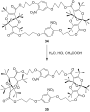
Scheme 7: TES protection approach to the squalestatin core.
Scheme 8: Tartrate acetonide methylation.
Scheme 9: Tartrate alkylation with various alkyl halides.
Scheme 10: Rationalisation of dialkylation observations.
Scheme 11: Tartrate alkylation chemistry with more complex alkyl iodides [12,13].
Figure 2: Natural product examples containing the monoalkylated tartaric acid motif.
Scheme 12: Epimerisation of monoalkylated tartrates.
Beilstein J. Org. Chem. 2018, 14, 2461–2467, doi:10.3762/bjoc.14.222
Graphical Abstract
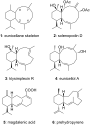
Figure 1: Bicyclic eunicellane-type diterpenes.
Figure 2: Synthetic eunicellane-type compounds with benzene partial structure.
Scheme 1: Access to ketoester 14 that did not cyclize to the ethyl vinyl ether under McMurry conditions.
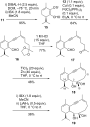
Scheme 2: Synthesis of the 1,3-cyclohexadiene-containing eunicellane-type [8.4.0]bicycle 18 by McMurry coupli...
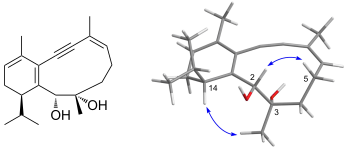
Figure 3: Preferred conformations of diastereomeric diols 18 and 19 including decisive NOESY correlations.
Scheme 3: Assembly of the envisaged cyclization precursor 27.
Scheme 4: Structure analysis of diastereomeric cyanohydrins 29 and 30.
Scheme 5: Formation of allenes 32 and 34 from sterically crowded propargylic alcohol 31.
Beilstein J. Org. Chem. 2018, 14, 2435–2460, doi:10.3762/bjoc.14.221
Graphical Abstract
Scheme 1: Optimization of the Co-catalyzed carboxylation of 1a.
Scheme 2: Co-catalyzed carboxylation of propargyl acetates 1.
Scheme 3: Plausible reaction mechanism for the Co-catalyzed carboxylation of propargyl acetates 1.
Scheme 4: Optimization of the Co-catalyzed carboxylation of 3a.
Scheme 5: Co-catalyzed carboxylation of vinyl triflates 3.
Scheme 6: Co-catalyzed carboxylation of a sterically hindered aryl triflate 5.
Scheme 7: Optimization of the Co-catalyzed carboxylation of 7a.
Scheme 8: Scope of the reductive carboxylation of α,β-unsaturated nitriles 7.
Scheme 9: Scope of the carboxylation of α,β-unsaturated carboxamides 9.
Scheme 10: Optimization of the Co-catalyzed carboxylation of 11a.
Scheme 11: Scope of the carboxylation of allylarenes 11.
Scheme 12: Scope of the carboxylation of 1,4-diene derivatives 14.
Scheme 13: Plausible reaction mechanism for the Co-catalyzed C(sp3)–H carboxylation of allylarenes.
Scheme 14: Optimization of the Co-catalyzed carboxyzincation of 16a.
Scheme 15: Derivatization of the carboxyzincated product.
Scheme 16: Co-catalyzed carboxyzincation of alkynes 16.
Scheme 17: Plausible reaction mechanism for the Co-catalyzed carboxyzincation of alkynes 16.
Scheme 18: Co-catalyzed four-component coupling of alkynes 16, acrylates 18, CO2, and zinc.
Scheme 19: Proposed reaction mechanism for the Co-catalyzed four-component coupling.
Scheme 20: Visible-light-driven hydrocarboxylation of alkynes.
Scheme 21: Visible-light-driven synthesis of γ-hydroxybutenolides from ortho-ester-substituted aryl alkynes.
Scheme 22: One-pot synthesis of coumarines and 2-quinolones via hydrocarboxylation/alkyne isomerization/cycliz...
Scheme 23: Proposed reaction mechanism for the Co-catalyzed carboxylative cyclization of ortho-substituted aro...
Scheme 24: Rh-catalyzed carboxylation of arylboronic esters 25.
Scheme 25: Rh-catalyzed carboxylation of alkenylboronic esters 27.
Scheme 26: Plausible reaction mechanism for the Rh-catalyzed carboxylation of arylboronic esters 25.
Scheme 27: Ligand effect on the Rh-catalyzed carboxylation of 2-phenylpyridine 29a.
Scheme 28: Rh-catalyzed chelation-assisted C(sp2)–H bond carboxylation with CO2.
Scheme 29: Reaction mechanism for the Rh-catalyzed C(sp2)–H carboxylation of 2-pyridylarenes 29.
Scheme 30: Carboxylation of C(sp2)–H bond with CO2.
Scheme 31: Carboxylation of C(sp2)–H bond with CO2.
Scheme 32: Reaction mechanism for the Rh-catalyzed C(sp2)–H carboxylation of 2-arylphenols 34.
Scheme 33: Hydrocarboxylation of styrene derivatives with CO2.
Scheme 34: Hydrocarboxylation of α,β-unsaturated esters with CO2.
Scheme 35: Asymmetric hydrocarboxylation of α,β-unsaturated esters with CO2.
Scheme 36: Proposed reaction mechanism for the Rh-catalyzed hydrocarboxylation of C–C double bonds with CO2.
Scheme 37: Visible-light-driven hydrocarboxylation with CO2.
Scheme 38: Visible-light-driven Rh-catalyzed hydrocarboxylation of C–C double bonds with CO2.
Scheme 39: Optimization of reaction conditions on the Rh-catalyzed [2 + 2 + 2] cycloaddition of diyne 42a and ...
Scheme 40: [2 + 2 + 2] Cycloaddition of diyne and CO2.
Scheme 41: Proposed reaction pathways for the Rh-catalyzed [2 + 2 + 2] cycloaddition of diyne and CO2.
Beilstein J. Org. Chem. 2018, 14, 2259–2265, doi:10.3762/bjoc.14.201
Graphical Abstract
Scheme 1: General mechanism of alkene hydrofunctionalization via HAT.
Scheme 2: Reduction of the alkenyl chloride 1 by HAT.
Scheme 3: Substrate scope of alkyl-aryl azo compound synthesis via HAT. Conditions: alkene (0.250 mmol), diaz...
Beilstein J. Org. Chem. 2018, 14, 1655–1659, doi:10.3762/bjoc.14.141
Graphical Abstract
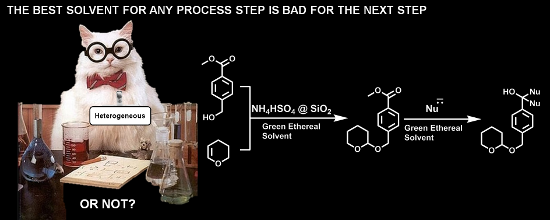
Scheme 1: Synthesis of THP ether 3a.
Scheme 2: Synthesis of THP ethers 3b–l in the presence of NH4HSO4@SiO2. All reactions were run at rt, in the ...
Scheme 3: Deprotection of THP ether 3i.
Scheme 4: One-pot synthesis of 3-[4-(tetrahydro-2H-pyran-2-yl)oxymethylphenyl]-3-pentanol (4fa).
Scheme 5: One-pot synthesis of 4-(tetrahydro-2H-pyran-2-yloxymethyl)benzyl alcohol (4fb).
Beilstein J. Org. Chem. 2018, 14, 1215–1221, doi:10.3762/bjoc.14.103
Graphical Abstract
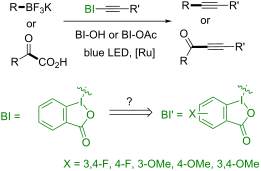
Scheme 1: Investigation of alkynylbenziodoxole derivatives for radical alkynylations.
Scheme 2: Synthesis and characterization of BI-alkyne derivatives 3a–f.
Scheme 3: Reaction of alkynylbenziodoxole derivatives for deboronative alkynylation in photoredox catalysis. ...
Scheme 4: Reaction of alkynylbenziodoxole derivatives for radical alkynylations in photoredox catalysis. Reac...
Scheme 5: Reaction of alkynylbenziodoxole derivatives for acyl radical alkynylation in photoredox catalysis. ...
Scheme 6: Mechanistic investigations of alkynylbenziodoxole for radical acceptor and oxidative quenching reac...
Scheme 7: The role of alkynylbenziodoxole derivatives for radical alkynylation in photoredox catalysis.
Beilstein J. Org. Chem. 2018, 14, 576–582, doi:10.3762/bjoc.14.44
Graphical Abstract
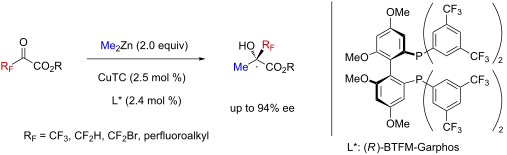
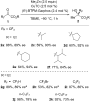
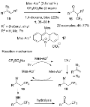
Scheme 1: Synthesis of chiral α-fluoroalkylated tertiary alcohols.
Scheme 2: Scope of fluoroalkylated pyruvates. Yields were determined by 19F NMR analysis using benzotrifluori...
Scheme 3: Catalytic asymmetric methylation of the simple perfluoroalkylated ketone 3a. Yields were determined...
Beilstein J. Org. Chem. 2018, 14, 1–10, doi:10.3762/bjoc.14.1
Graphical Abstract
Scheme 1: Synthetic routes to 2,4,6,8-tetraoxaadamantanes.
Scheme 2: Conversion of dipivaloylketene (2) to bisdioxines (2,6,9-trioxabicyclo[3.3.1]nona-3,7-dienes) 4 and...
Scheme 3: 2,6,9-Trioxabicyclo[3.3.1]nonadienes (bisdioxines, 9–13) derived from dipivaloylketene (2).
Scheme 4: Mechanisms of formation of bisdioxine acid derivatives from dimer 3.
Scheme 5: Recently reported synthesis of chromenobisdioxines.
Scheme 6: Formation of tetraoxaadamantanes.
Scheme 7: Decarboxylative hydrolysis and oxa-Michael-type ring closure.
Scheme 8: Oxime and hydrazine derivatives of bisdioxines and tetraoxaadamantanes.
Figure 1: Bistetraoxaadamantane derivatives.
Scheme 9: Inward-pointing isocyanate, urethane and carbamate groups in bisdioxines. The diisocyanate is obtai...
Scheme 10: Microwave-assisted tetraoxaadamantane formation.
Scheme 11: Cyclic bisdioxine ester derivative 34 forming a single mono-tetraoxaadamantane.
Figure 2: Cyclic bisdioxine derivative not forming a tetraoxaadamantane due to reduced cavity size.
Figure 3: The bisdioxine-calix[6]arene derivative 37 complexes Cs+ but does not form a tetraoxaadamantane der...
Beilstein J. Org. Chem. 2017, 13, 2888–2894, doi:10.3762/bjoc.13.281
Graphical Abstract
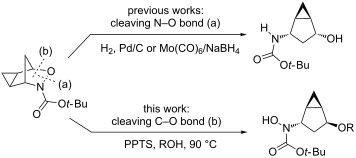
Scheme 1: General reaction pathways for 3-aza-2-oxabicyclic alkenes.
Scheme 2: Various reactions involving modification of the alkene component of 3-aza-2-oxabicyclic alkenes.
Scheme 3: Various reactions involving cleavage of the C–O bond of 3-aza-2-oxabicyclic alkenes.
Scheme 4: Ring-opening reactions of cyclopropanated 3-aza-2-oxabicyclic alkenes.
Scheme 5: Different possible ring-opening pathways of cyclopropanated 3-aza-2-oxabicyclic alkenes.
Scheme 6: Possible mechanisms for the nucleophilic ring-opening of cyclopropanated 3-aza-2-oxabicyclic alkene ...
Beilstein J. Org. Chem. 2017, 13, 2833–2841, doi:10.3762/bjoc.13.275
Graphical Abstract
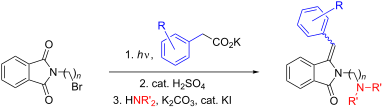
Figure 1: Molecular structures of AL-12, AL-12B and AL-5.
Scheme 1: Retrosynthetic analysis of AL-12, AL-12B and AL-5 (in their neutral forms) and their derivatives.
Scheme 2: Optimization study using phenylacetate 2a.
Scheme 3: Photodecarboxylative additions to N-(bromoalkyl)phthalimides.
Figure 2: Crystal structures of photoaddition products 3a (left) and 3b (right).
Scheme 4: Formation of 5 by photodecarboxylative additions.
Scheme 5: Acid-catalyzed dehydration of 3a–q.
Figure 3: Crystal structure of (E)-7a. Side view and front view.
Scheme 6: Amination of dehydrated products 7a–q.
Figure 4: Crystal structure of (Z)-8a. Side view and front view.
Scheme 7: Mechanistic scenario for the photodecarboxylative addition.
Scheme 8: Possible scenarios for nucleophilic cyclization to 4.
Scheme 9: Possible E/Z isomerization for compounds 8a–y.
Beilstein J. Org. Chem. 2017, 13, 2764–2799, doi:10.3762/bjoc.13.272
Graphical Abstract
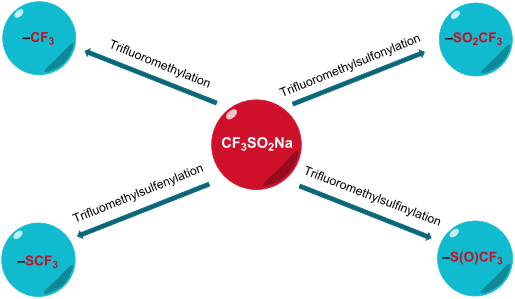
Scheme 1: Trifluoromethylation of enol acetates by Langlois.
Scheme 2: Trifluoromethylation of (het)aryl enol acetates.
Scheme 3: Mechanism for the trifluoromethylation of enol acetates.
Scheme 4: Oxidative trifluoromethylation of unactivated olefins and mechanistic pathway.
Scheme 5: Oxidative trifluoromethylation of acetylenic substrates.
Scheme 6: Metal free trifluoromethylation of styrenes.
Scheme 7: Synthesis of α-trifluoromethylated ketones by oxytrifluoromethylation of heteroatom-functionalised ...
Scheme 8: Catalysed photoredox trifluoromethylation of vinyl azides.
Scheme 9: Oxidative difunctionalisation of alkenyl MIDA boronates.
Scheme 10: Synthesis of β-trifluoromethyl ketones from cyclopropanols.
Scheme 11: Aryltrifluoromethylation of allylic alcohols.
Scheme 12: Cascade multicomponent synthesis of nitrogen heterocycles via azotrifluoromethylation of alkenes.
Scheme 13: Photocatalytic azotrifluoromethylation of alkenes with aryldiazonium salts and CF3SO2Na.
Scheme 14: Copper-promoted intramolecular aminotrifluoromethylation of alkenes with CF3SO2Na.
Scheme 15: Oxytrifluoromethylation of alkenes with CF3SO2Na and hydroxamic acid.
Scheme 16: Manganese-catalysed oxytrifluoromethylation of styrene derivatives.
Scheme 17: Oxytrifluoromethylation of alkenes with NMP/O2 and CF3SO2Na.
Scheme 18: Intramolecular oxytrifluoromethylation of alkenes.
Scheme 19: Hydrotrifluoromethylation of styrenyl alkenes and unactivated aliphatic alkenes.
Scheme 20: Hydrotrifluoromethylation of electron-deficient alkenes.
Scheme 21: Hydrotrifluoromethylation of alkenes by iridium photoredox catalysis.
Scheme 22: Iodo- and bromotrifluoromethylation of alkenes by CF3SO2Na/I2O5 or CF3SO2Na / NaBrO3.
Scheme 23: N-methyl-9-mesityl acridinium and visible-light-induced chloro-, bromo- and SCF3 trifluoromethylati...
Scheme 24: Carbotrifluoromethylation of N-arylacrylamides with CF3SO2Na / TBHP by Lipshutz.
Scheme 25: Carbotrifluoromethylation of N-arylacrylamides with CF3SO2Na/TBHP reported by Lei.
Scheme 26: Carbotrifluoromethylation of N-arylacrylamides with CF3SO2Na/(NH4)2S2O8.
Scheme 27: Metal-free carbotrifluoromethylation of N-arylacrylamides with CF3SO2Na/K2S2O8 reported by Wang.
Scheme 28: Metal-free carbotrifluoromethylation of N-arylacrylamides with CF3SO2Na/PIDA reported by Fu.
Scheme 29: Metal-free cascade trifluoromethylation/cyclisation of N-arylmethacrylamides (a) and enynes (b) wit...
Scheme 30: Trifluoromethylation/cyclisation of N-arylcinnamamides: Synthesis of 3,4-disubstituted dihydroquino...
Scheme 31: Trifluoromethylation/cyclisation of aromatic-containing unsaturated ketones.
Scheme 32: Chemo- and regioselective cascade trifluoromethylation/heteroaryl ipso-migration of unactivated alk...
Scheme 33: Copper-mediated 1,2-bis(trifluoromethylation) of alkenes.
Scheme 34: Trifluoromethylation of aromatics with CF3SO2Na reported by Langlois.
Scheme 35: Baran’s oxidative C–H trifluoromethylation of heterocycles.
Scheme 36: Trifluoromethylation of acetanilides and anilines.
Scheme 37: Trifluoromethylation of heterocycles in water.
Scheme 38: Trifluoromethylation of coumarins in a continuous-flow reactor.
Scheme 39: Oxidative trifluoromethylation of coumarins, quinolines and pyrimidinones.
Scheme 40: Oxidative trifluoromethylation of pyrimidinones and pyridinones.
Scheme 41: Phosphovanadomolybdic acid-catalysed direct C−H trifluoromethylation.
Scheme 42: Oxidative trifluoromethylation of imidazopyridines and imidazoheterocycles.
Scheme 43: Oxidative trifluoromethylation of imidazoheterocycles and imidazoles in ionic liquid/water.
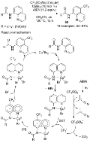
Scheme 44: Oxidative trifluoromethylation of 8-aminoquinolines.
Scheme 45: Oxidative trifluoromethylation of various 8-aminoquinolines using the supported catalyst CS@Cu(OAc)2...
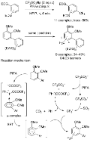
Scheme 46: Oxidative trifluoromethylation of the naphthylamide 70.
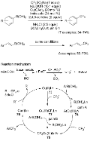
Scheme 47: Oxidative trifluoromethylation of various arenes in the presence of CF3SO2Na and sodium persulfate.
Scheme 48: Trifluoromethylation of electron-rich arenes and unsymmetrical biaryls with CF3SO2Na in the presenc...
Figure 1: Trifluoromethylated coumarin and flavone.
Scheme 49: Metal-free trifluoromethylation catalysed by a photoredox organocatalyst.
Scheme 50: Quinone-mediated trifluoromethylation of arenes and heteroarenes.
Scheme 51: Metal- and oxidant-free photochemical trifluoromethylation of arenes.
Scheme 52: Copper-mediated trifluoromethylation of arenediazonium tetrafluoroborates.
Scheme 53: Oxidative trifluoromethylation of aryl- and heteroarylboronic acids.
Scheme 54: Oxidative trifluoromethylation of aryl- and vinylboronic acids.
Scheme 55: Oxidative trifluoromethylation of unsaturated potassium organotrifluoroborates.
Scheme 56: Oxidative trifluoromethylation of (hetero)aryl- and vinyltrifluoroborates.
Scheme 57: Copper−catalysed decarboxylative trifluoromethylation of cinnamic acids.
Scheme 58: Iron-mediated decarboxylative trifluoromethylation of α,β-unsaturated carboxylic acids.
Scheme 59: Cu/Ag-catalysed decarboxylative trifluoromethylation of cinnamic acids.
Scheme 60: I2O5-Promoted decarboxylative trifluoromethylation of cinnamic acids.
Scheme 61: Silver(I)-catalysed denitrative trifluoromethylation of β-nitrostyrenes.
Scheme 62: Copper-catalysed direct trifluoromethylation of styrene derivatives.
Scheme 63: Transition-metal-free synthesis of β-trifluoromethylated enamines.
Scheme 64: I2O5-mediated iodotrifluoromethylation of alkynes.
Scheme 65: Silver-catalysed tandem trifluoromethylation/cyclisation of aryl isonitriles.
Scheme 66: Photoredox trifluoromethylation of 2-isocyanobiphenyls.
Scheme 67: Trifluoromethylation of potassium alkynyltrifluoroborates with CF3SO2Na.
Scheme 68: N-trifluoromethylation of nitrosoarenes with CF3SO2Na (SQ: semiquinone).
Scheme 69: Trifluoromethylation of disulfides with CF3SO2Na.
Scheme 70: Trifluoromethylation of thiols with CF3SO2Na/I2O5.
Scheme 71: Electrophilic trifluoromethylsulfenylation by means of CF3SO2Na/(EtO)2P(O)H/CuCl/DMSO.
Scheme 72: Electrophilic trifluoromethylsulfenylation by means of CF3SO2Na/(EtO)2P(O)H/TMSCl.
Scheme 73: Electrophilic trifluoromethylsulfenylation by means of CF3SO2Na/PPh3/N-chlorophthalimide.
Scheme 74: Electrophilic trifluoromethylsulfenylation by means of CF3SO2Na/PCl3.
Scheme 75: Electrophilic trifluoromethylsulfenylation by means of CF3SO2Na/PCl3.
Scheme 76: Trifluoromethylsulfenylation of aryl iodides with in situ generated CuSCF3 (DMI: 1,3-dimethyl-2-imi...
Scheme 77: Pioneering trifluoromethylsulfinylation of N, O, and C-nucleophiles.
Scheme 78: Trifluoromethylsulfinylation of (1R,2S)-ephedrine (Im: imidazole; DIEA: N,N-diisopropylethylamine).
Scheme 79: Trifluoromethylsulfinylation of substituted benzenes with CF3SO2Na/CF3SO3H.
Scheme 80: Trifluoromethylsulfinylation of indoles with CF3SO2Na/P(O)Cl3.
Scheme 81: Trifluoromethylsulfinylation of indoles with CF3SO2Na/PCl3.
Scheme 82: Formation of triflones from benzyl bromides (DMA: dimethylacetamide).
Scheme 83: Formation of α-trifluoromethylsulfonyl ketones, esters, and amides.
Scheme 84: Allylic trifluoromethanesulfonylation of aromatic allylic alcohols.
Scheme 85: Copper-catalysed couplings of aryl iodonium salts with CF3SO2Na.
Scheme 86: Palladium-catalysed trifluoromethanesulfonylation of aryl triflates and chlorides with CF3SO2Na.
Scheme 87: Copper-catalysed coupling of arenediazonium tetrafluoroborates with CF3SO2Na.
Scheme 88: Synthesis of phenyltriflone via coupling of benzyne with CF3SO2Na.
Scheme 89: Synthesis of 1-trifluoromethanesulfonylcyclopentenes from 1-alkynyl-λ3-bromanes and CF3SO2Na.
Scheme 90: One-pot synthesis of functionalised vinyl triflones.
Scheme 91: Regioselective synthesis of vinyltriflones from styrenes.
Scheme 92: Trifluoromethanesulfonylation of alkynyl(phenyl) iodonium tosylates by CF3SO2Na.
Scheme 93: Synthesis of thio- and selenotrifluoromethanesulfonates.
Beilstein J. Org. Chem. 2017, 13, 1907–1931, doi:10.3762/bjoc.13.186
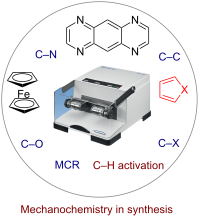
Graphical Abstract
Scheme 1: Mechanochemical aldol condensation reactions [48].
Scheme 2: Enantioselective organocatalyzed aldol reactions under mechanomilling. a) Based on binam-(S)-prolin...
Scheme 3: Mechanochemical Michael reaction [51].
Scheme 4: Mechanochemical organocatalytic asymmetric Michael reaction [52].
Scheme 5: Mechanochemical Morita–Baylis–Hillman (MBH) reaction [53].
Scheme 6: Mechanochemical Wittig reactions [55].
Scheme 7: Mechanochemical Suzuki reaction [56].
Scheme 8: Mechanochemical Suzuki–Miyaura coupling by LAG [57].
Scheme 9: Mechanochemical Heck reaction [59].
Scheme 10: a) Sonogashira coupling under milling conditions. b) The representative example of a double Sonogas...
Scheme 11: Copper-catalyzed CDC reaction under mechanomilling [67].
Scheme 12: Asymmetric alkynylation of prochiral sp3 C–H bonds via CDC [68].
Scheme 13: Fe(III)-catalyzed CDC coupling of 3-benzylindoles [69].
Scheme 14: Mechanochemical synthesis of 3-vinylindoles and β,β-diindolylpropionates [70].
Scheme 15: Mechanochemical C–N bond construction using anilines and arylboronic acids [78].
Scheme 16: Mechanochemical amidation reaction from aromatic aldehydes and N-chloramine [79].
Scheme 17: Mechanochemical CDC between benzaldehydes and benzyl amines [81].
Scheme 18: Mechanochemical protection of -NH2 and -COOH group of amino acids [85].
Scheme 19: Mechanochemical Ritter reaction [87].
Scheme 20: Mechanochemical synthesis of dialkyl carbonates [90].
Scheme 21: Mechanochemical transesterification reaction using basic Al2O3 [91].
Scheme 22: Mechanochemical carbamate synthesis [92].
Scheme 23: Mechanochemical bromination reaction using NaBr and oxone [96].
Scheme 24: Mechanochemical aryl halogenation reactions using NaX and oxone [97].
Scheme 25: Mechanochemical halogenation reaction of electron-rich arenes [88,98].
Scheme 26: Mechanochemical aryl halogenation reaction using trihaloisocyanuric acids [100].
Scheme 27: Mechanochemical fluorination reaction by LAG method [102].
Scheme 28: Mechanochemical Ugi reaction [116].
Scheme 29: Mechanochemical Passerine reaction [116].
Scheme 30: Mechanochemical synthesis of α-aminonitriles [120].
Scheme 31: Mechanochemical Hantzsch pyrrole synthesis [121].
Scheme 32: Mechanochemical Biginelli reaction by subcomponent synthesis approach [133].
Scheme 33: Mechanochemical asymmetric multicomponent reaction[134].
Scheme 34: Mechanochemical Paal–Knorr pyrrole synthesis [142].
Scheme 35: Mechanochemical synthesis of benzothiazole using ZnO nano particles [146].
Scheme 36: Mechanochemical synthesis of 1,2-di-substituted benzimidazoles [149].
Scheme 37: Mechanochemical click reaction using an alumina-supported Cu-catalyst [152].
Scheme 38: Mechanochemical click reaction using copper vial [155].
Scheme 39: Mechanochemical indole synthesis [157].
Scheme 40: Mechanochemical synthesis of chromene [158].
Scheme 41: Mechanochemical synthesis of azacenes [169].
Scheme 42: Mechanochemical oxidative C-P bond formation [170].
Scheme 43: Mechanochemical C–chalcogen bond formation [171].
Scheme 44: Solvent-free synthesis of an organometallic complex.
Scheme 45: Selective examples of mechano-synthesis of organometallic complexes. a) Halogenation reaction of Re...
Scheme 46: Mechanochemical activation of C–H bond of unsymmetrical azobenzene [178].
Scheme 47: Mechanochemical synthesis of organometallic pincer complex [179].
Scheme 48: Mechanochemical synthesis of tris(allyl)aluminum complex [180].
Scheme 49: Mechanochemical Ru-catalyzed olefin metathesis reaction [181].
Scheme 50: Rhodium(III)-catalyzed C–H bond functionalization under mechanochemical conditions [182].
Scheme 51: Mechanochemical Csp2–H bond amidation using Ir(III) catalyst [183].
Scheme 52: Mechanochemical Rh-catalyzed Csp2–X bond formation [184].
Scheme 53: Mechanochemical Pd-catalyzed C–H activation [185].
Scheme 54: Mechanochemical Csp2–H bond amidation using Rh catalyst.
Scheme 55: Mechanochemical synthesis of indoles using Rh catalyst [187].
Scheme 56: Mizoroki–Heck reaction of aminoacrylates with aryl halide in a ball-mill [58].
Scheme 57: IBX under mechanomilling conditions [8].
Scheme 58: Thiocarbamoylation of anilines; trapping of reactive aryl-N-thiocarbamoylbenzotriazole intermediate...
Beilstein J. Org. Chem. 2017, 13, 1230–1238, doi:10.3762/bjoc.13.122
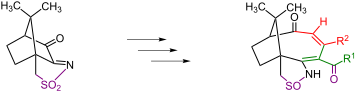
Graphical Abstract
Scheme 1: Synthesis of 3-oxo-camphorsulfonylimine (3) [13,15] and its bis-alkynyl derivatives 4 from camphor-10-sulf...
Scheme 2: Reactions of bis-alkynyl camphor derivative 4a with TiCl4 and with Br2, respectively.
Scheme 3: Reactions of bis-alkynylcamphor derivatives 4a–e with catalytic amounts of PtCl2(PhCN)2.
Scheme 4: Attempted selective synthesis of 3-alkynyl derivatives via sulfonylimine reduction of oxoimide 3.
Scheme 5: Selective synthesis of 2-alkynyl derivatives by protection of the 3-oxo group as an acetal.
Scheme 6: Selective synthesis of 2-alkynyl derivatives by protection of the 3-oxo group as an imine.
Scheme 7: Synthesis of the bis-alkynyl derivatives bearing different alkyne substituents and their platinum-c...
Scheme 8: Proposed mechanism of the platinum-catalysed cycloisomerisation.
Beilstein J. Org. Chem. 2017, 13, 251–256, doi:10.3762/bjoc.13.28
Graphical Abstract
Figure 1: Retrosynthetic pathway for the synthesis of the target carbocyclic nucleoside methylphosphonates.
Scheme 1: Reagents and conditions: (a) (CH3O)2P(O)CH3, n-BuLi, THF, −78 °C/rt, 2 h, 63%; (b) H2, Pd/C, MeOH, ...
Scheme 2: Reagents and conditions: (a) N6-bis-Boc-adenine or 2-amino-6-chloropurine, PPh3, DIAD, THF, 0 °C to...
Scheme 3: Reagents and conditions: (a) N6-bis-Boc-adenine, PPh3, DIAD, THF, rt, 56%; (b) TFA, Cl(CH2)2Cl, rt,...
Figure 2: Numbering for 14 and 16.
Figure 3: Selected NOESY correlations for compound (+/−)-16.
Scheme 4: Reagents and conditions: (a) i) Boc2O, DMAP, THF, rt; ii) K2CO3, MeOH, 75%; (b) PPh3, DIAD, THF, rt...
Scheme 5: Reagents and conditions: (a) N6-Bz-adenine or 2-amino-6-chloropurine, PPh3, DIAD, THF, 0 °C to rt, ...
Beilstein J. Org. Chem. 2016, 12, 2771–2775, doi:10.3762/bjoc.12.275
Graphical Abstract
Scheme 1: Scope of the catalytic enantioselective Cr-mediated arylation of ketones.
Beilstein J. Org. Chem. 2016, 12, 2189–2196, doi:10.3762/bjoc.12.209
Graphical Abstract
Scheme 1: Various chemical transformations of 7-oxabenzonorbornadiene 1.
Scheme 2: Nucleophilic ring-opening reactions of 7-oxabenzonorbornadiene 1.
Scheme 3: Preparation of cyclopropanated 8 and its proposed ring-opening mechanisms.
Scheme 4: Formation of the possible regioisomers for the ring opening of asymmetric C1-substituted cyclopropa...
Beilstein J. Org. Chem. 2016, 12, 1851–1862, doi:10.3762/bjoc.12.174
Graphical Abstract
Figure 1: Tetrahydroquinoline (THQ) and dihydroquinoline (DHQ) scaffolds to be synthesised.
Scheme 1: Proposed retrosynthesis scheme to access N-isopropyl-THQ 2.
Scheme 2: Synthesis of THQ 3 by initial N-alkylations, followed by PPA-mediated cyclisation.
Scheme 3: Bromination of 3 and attempted halogen exchange of the intermediate 7.
Scheme 4: Synthesis of THQ 10, by initial aza-Michael addition, followed by formation of the tertiary alcohol ...
Scheme 5: Synthesis of THQ 14 by initial acylation, cyclisation with H2SO4 and reduction with borane·dimethyl...
Scheme 6: N-Alkylation of 13 and 14.
Scheme 7: Facile route for the synthesis of 20a.
Scheme 8: Synthesis of THQ 21 and DHQ 22 using borane·dimethyl sulphide complex or DIBAL, respectively.
Figure 2: Simulated structure of 22 indicates a flattened quinoline-like structure. Hartree–Fock calculations...
Scheme 9: Postulated mechanism for the formation of 22 using DIBAL.
Figure 3: Combined, normalised absorption and emission spectra of 28 in chloroform. Absorption spectrum was r...
Scheme 10: Miyaura borylation of 21 and 22 to give crystalline boronic esters 29 and 30.
Figure 4: Comparison of the crystal structures of 29 (left) and 30 (right) as viewed along the plane of the a...
Figure 5: Combined, normalised absorption and emission spectra of 30 in diethyl ether. Absorption spectrum wa...
Beilstein J. Org. Chem. 2016, 12, 1647–1748, doi:10.3762/bjoc.12.162
Graphical Abstract
Figure 1: The named transformations considered in this review.
Scheme 1: The Baeyer–Villiger oxidation.
Scheme 2: The general mechanism of the peracid-promoted Baeyer–Villiger oxidation.
Scheme 3: General mechanism of the Lewis acid-catalyzed Baeyer–Villiger rearrangement.
Scheme 4: The theoretically studied mechanism of the BV oxidation reaction promoted by H2O2 and the Lewis aci...
Scheme 5: Proton movements in the transition states of the Baeyer–Villiger oxidation.
Scheme 6: The dependence of the course of the Baeyer–Villiger oxidation on the type of O–O-bond cleavage in t...
Scheme 7: The acid-catalyzed Baeyer–Villiger oxidation of cyclic epoxy ketones 22.
Scheme 8: Oxidation of isophorone oxide 29.
Scheme 9: Synthesis of acyl phosphate 32 from acyl phosphonate 31.
Scheme 10: Synthesis of aflatoxin B2 (36).
Scheme 11: The Baeyer–Villiger rearrangement of ketones 37 to lactones 38.
Scheme 12: Synthesis of 3,4-dimethoxybenzoic acid (40) via Baeyer–Villiger oxidation.
Scheme 13: Oxone transforms α,β-unsaturated ketones 43 into vinyl acetates 44.
Scheme 14: The Baeyer–Villiger oxidation of ketones 45 using diaryl diselenide and hydrogen peroxide.
Scheme 15: Baeyer–Villiger oxidation of (E)-2-methylenecyclobutanones.
Scheme 16: Oxidation of β-ionone (56) by H2O2/(BnSe)2 with formation of (E)-2-(2,6,6-trimethylcyclohex-1-en-1-...
Scheme 17: The mechanism of oxidation of ketones 58a–f by hydrogen peroxide in the presence of arsonated polys...
Scheme 18: Oxidation of ketone (58b) by H2O2 to 6-methylcaprolactone (59b) catalyzed by Pt complex 66·BF4.
Scheme 19: Oxidation of ketones 67 with H2O2 in the presence of [(dppb}Pt(µ-OH)]22+.
Scheme 20: The mechanism of oxidation of ketones 67 in the presence of [(dppb}Pt(µ-OH)]22+ and H2O2.
Scheme 21: Oxidation of benzaldehydes 69 in the presence of the H2O2/MeReO3 system.
Scheme 22: Oxidation of acetophenones 72 in the presence of the H2O2/MeReO3 system.
Scheme 23: Baeyer–Villiger oxidation of 2-adamantanone (45c) in the presence of Sn-containing mesoporous silic...
Scheme 24: Aerobic Baeyer–Villiger oxidation of ketones 76 using metal-free carbon.
Scheme 25: A regioselective Baeyer-Villiger oxidation of functionalized cyclohexenones 78 into a dihydrooxepin...
Scheme 26: The oxidation of aldehydes and ketones 80 by H2O2 catalyzed by Co4HP2Mo15V3O62.
Scheme 27: The cleavage of ketones 82 with hydrogen peroxide in alkaline solution.
Scheme 28: Oxidation of ketones 85 to esters 86 with H2O2–urea in the presence of KHCO3.
Scheme 29: Mechanism of the asymmetric oxidation of cyclopentane-1,2-dione 87a with the Ti(OiPr)4/(+)DET/t-BuO...
Scheme 30: The oxidation of cis-4-tert-butyl-2-fluorocyclohexanone (93) with m-chloroperbenzoic acid.
Scheme 31: The mechanism of the asymmetric oxidation of 3-substituted cyclobutanone 96a in the presence of chi...
Scheme 32: Enantioselective Baeyer–Villiger oxidation of cyclic ketones 98.
Scheme 33: Regio- and enantioselective Baeyer–Villiger oxidation of cyclic ketones 101.
Scheme 34: The proposed mechanism of the Baeyer–Villiger oxidation of acetal 105f.
Scheme 35: Synthesis of hydroxy-10H-acridin-9-one 117 from tetramethoxyanthracene 114.
Scheme 36: The Baeyer–Villiger oxidation of the fully substituted pyrrole 120.
Scheme 37: The Criegee rearrangement.
Scheme 38: The mechanism of the Criegee reaction of a peracid with a tertiary alcohol 122.
Scheme 39: Criegee rearrangement of decaline ethylperoxoate 127 into ketal 128.
Scheme 40: The ionic cleavage of 2-methoxy-2-propyl perester 129.
Scheme 41: The Criegee rearrangement of α-methoxy hydroperoxide 136.
Scheme 42: Synthesis of enol esters and acetals via the Criegee rearrangement.
Scheme 43: Proposed mechanism of the transformation of 1-hydroperoxy-2-oxabicycloalkanones 147a–d.
Scheme 44: Transformation of 3-hydroxy-1,2-dioxolanes 151 into diketone derivatives 152.
Scheme 45: Criegee rearrangement of peroxide 153 with the mono-, di-, and tri-O-insertion.
Scheme 46: The sequential Criegee rearrangements of adamantanes 157a,b.
Scheme 47: Synthesis of diaryl carbonates 160a–d from triarylmethanols 159a–d through successive oxygen insert...
Scheme 48: The synthesis of sesquiterpenes 162 from ketone 161 with a Criegee rearrangement as one key step.
Scheme 49: Synthesis of trans-hydrindan derivatives 164, 165.
Scheme 50: The Hock rearrangement.
Scheme 51: The general scheme of the cumene process.
Scheme 52: The Hock rearrangement of aliphatic hydroperoxides.
Scheme 53: The mechanism of solvolysis of brosylates 174a–c and spiro cyclopropyl carbinols 175a–c in THF/H2O2....
Scheme 54: The fragmentation mechanism of hydroperoxy acetals 178 to esters 179.
Scheme 55: The acid-catalyzed rearrangement of phenylcyclopentyl hydroperoxide 181.
Scheme 56: The peroxidation of tertiary alcohols in the presence of a catalytic amount of acid.
Scheme 57: The acid-catalyzed reaction of bicyclic secondary alcohols 192 with hydrogen peroxide.
Scheme 58: The photooxidation of 5,6-disubstituted 3,4-dihydro-2H-pyrans 196.
Scheme 59: The oxidation of tertiary alcohols 200a–g, 203a,b, and 206.
Scheme 60: Transformation of functional peroxide 209 leading to 2,3-disubstitued furans 210 in one step.
Scheme 61: The synthesis of carbazoles 213 via peroxide rearrangement.
Scheme 62: The construction of C–N bonds using the Hock rearrangement.
Scheme 63: The synthesis of moiety 218 from 217 which is a structural motif in the antitumor–antibiotic of CC-...
Scheme 64: The in vivo oxidation steps of cholesterol (219) by singlet oxygen.
Scheme 65: The proposed mechanism of the rearrangement of cholesterol-5α-OOH 220.
Scheme 66: Photochemical route to artemisinin via Hock rearrangement of 223.
Scheme 67: The Kornblum–DeLaMare rearrangement.
Scheme 68: Kornblum–DeLaMare transformation of 1-phenylethyl tert-butyl peroxide (225).
Scheme 69: The synthesis 4-hydroxyenones 230 from peroxide 229.
Scheme 70: The Kornblum–DeLaMare rearrangement of peroxide 232.
Scheme 71: The reduction of peroxide 234.
Scheme 72: The Kornblum–DeLaMare rearrangement of endoperoxide 236.
Scheme 73: The rearrangement of peroxide 238 under Kornblum–DeLaMare conditions.
Scheme 74: The proposed mechanism of rearrangement of peroxide 238.
Scheme 75: The Kornblum–DeLaMare rearrangement of peroxides 242a,b.
Scheme 76: The base-catalyzed rearrangements of bicyclic endoperoxides having electron-withdrawing substituent...
Scheme 77: The base-catalyzed rearrangements of bicyclic endoperoxides 249a,b having electron-donating substit...
Scheme 78: The base-catalyzed rearrangements of bridge-head substituted bicyclic endoperoxides 251a,b.
Scheme 79: The Kornblum–DeLaMare rearrangement of hydroperoxide 253.
Scheme 80: Synthesis of β-hydroxy hydroperoxide 254 from endoperoxide 253.
Scheme 81: The amine-catalyzed rearrangement of bicyclic endoperoxide 263.
Scheme 82: The base-catalyzed rearrangement of meso-endoperoxide 268 into 269.
Scheme 83: The photooxidation of 271 and subsequent Kornblum–DeLaMare reaction.
Scheme 84: The Kornblum–DeLaMare rearrangement as one step in the oxidation reaction of enamines.
Scheme 85: The Kornblum–DeLaMare rearrangement of 3,5-dihydro-1,2-dioxenes 284, 1,2-dioxanes 286, and tert-but...
Scheme 86: The Kornblum–DeLaMare rearrangement of epoxy dioxanes 290a–d.
Scheme 87: Rearrangement of prostaglandin H2 292.
Scheme 88: The synthesis of epicoccin G (297).
Scheme 89: The Kornblum–DeLaMare rearrangement used in the synthesis of phomactin A.
Scheme 90: The Kornblum–DeLaMare rearrangement in the synthesis of 3H-quinazolin-4-one 303.
Scheme 91: The Kornblum–DeLaMare rearrangement in the synthesis of dolabriferol (308).
Scheme 92: Sequential transformation of 3-substituted 2-pyridones 309 into 3-hydroxypyridine-2,6-diones 311 in...
Scheme 93: The Kornblum–DeLaMare rearrangement of peroxide 312 into hydroxy enone 313.
Scheme 94: The Kornblum–DeLaMare rearrangement in the synthesis of polyfunctionalized carbonyl compounds 317.
Scheme 95: The Kornblum–DeLaMare rearrangement in the synthesis of (Z)-β-perfluoroalkylenaminones 320.
Scheme 96: The Kornblum–DeLaMare rearrangement in the synthesis of γ-ketoester 322.
Scheme 97: The Kornblum–DeLaMare rearrangement in the synthesis of diterpenoids 326 and 328.
Scheme 98: The synthesis of natural products hainanolidol (331) and harringtonolide (332) from peroxide 329.
Scheme 99: The synthesis of trans-fused butyrolactones 339 and 340.
Scheme 100: The synthesis of leucosceptroid C (343) and leucosceptroid P (344) via the Kornblum–DeLaMare rearra...
Scheme 101: The Dakin oxidation of arylaldehydes or acetophenones.
Scheme 102: The mechanism of the Dakin oxidation.
Scheme 103: A solvent-free Dakin reaction of aromatic aldehydes 356.
Scheme 104: The organocatalytic Dakin oxidation of electron-rich arylaldehydes 358.
Scheme 105: The Dakin oxidation of electron-rich arylaldehydes 361.
Scheme 106: The Dakin oxidation of arylaldehydes 358 in water extract of banana (WEB).
Scheme 107: A one-pot approach towards indolo[2,1-b]quinazolines 364 from indole-3-carbaldehydes 363 through th...
Scheme 108: The synthesis of phenols 367a–c from benzaldehydes 366a-c via acid-catalyzed Dakin oxidation.
Scheme 109: Possible transformation paths of the highly polarized boric acid coordinated H2O2–aldehyde adduct 3...
Scheme 110: The Elbs oxidation of phenols 375 to hydroquinones.
Scheme 111: The mechanism of the Elbs persulfate oxidation of phenols 375 affording p-hydroquinones 376.
Scheme 112: Oxidation of 2-pyridones 380 under Elbs persulfate oxidation conditions.
Scheme 113: Synthesis of 3-hydroxy-4-pyridone (384) via an Elbs oxidation of 4-pyridone (382).
Scheme 114: The Schenck rearrangement.
Scheme 115: The Smith rearrangement.
Scheme 116: Three main pathways of the Schenck rearrangement.
Scheme 117: The isomerization of hydroperoxides 388 and 389.
Scheme 118: Trapping of dioxacyclopentyl radical 392 by oxygen.
Scheme 119: The hypothetical mechanism of the Schenck rearrangement of peroxide 394.
Scheme 120: The autoxidation of oleic acid (397) with the use of labeled isotope 18O2.
Scheme 121: The rearrangement of 18O-labeled hydroperoxide 400 under an atmosphere of 16O2.
Scheme 122: The rearrangement of the oleate-derived allylic hydroperoxides (S)-421 and (R)-425.
Scheme 123: Mechanisms of Schenck and Smith rearrangements.
Scheme 124: The rearrangement and cyclization of 433.
Scheme 125: The Wieland rearrangement.
Scheme 126: The rearrangement of bis(triphenylsilyl) 439 or bis(triphenylgermyl) 441 peroxides.
Scheme 127: The oxidative transformation of cyclic ketones.
Scheme 128: The hydroxylation of cyclohexene (447) in the presence of tungstic acid.
Scheme 129: The oxidation of cyclohexene (447) under the action of hydrogen peroxide.
Scheme 130: The reaction of butenylacetylacetone 455 with hydrogen peroxide.
Scheme 131: The oxidation of bridged 1,2,4,5-tetraoxanes.
Scheme 132: The proposed mechanism for the oxidation of bridged 1,2,4,5-tetraoxanes.
Scheme 133: The rearrangement of ozonides.
Scheme 134: The acid-catalyzed oxidative rearrangement of malondialdehydes 462 under the action of H2O2.
Scheme 135: Pathways of the Lewis acid-catalyzed cleavage of dialkyl peroxides 465 and ozonides 466.
Scheme 136: The mechanism of the transformation of (tert-butyldioxy)cyclohexanedienones 472.
Scheme 137: The synthesis of Vitamin K3 from 472a.
Scheme 138: Proposed mechanism for the transformation of 478d into silylated endoperoxide 479d.
Scheme 139: The rearrangement of hydroperoxide 485 to form diketone 486.
Scheme 140: The base-catalyzed rearrangement of cyclic peroxides 488a–g.
Scheme 141: Synthesis of chiral epoxides and aldols from peroxy hemiketals 491.
Scheme 142: The multistep transformation of (R)-carvone (494) to endoperoxides 496a–e.
Scheme 143: The decomposition of anthracene endoperoxide 499.
Scheme 144: Synthesis of esters 503 from aldehydes 501 via rearrangement of peroxides 502.
Scheme 145: Two possible paths for the base-promoted decomposition of α-azidoperoxides 502.
Scheme 146: The Story decomposition of cyclic diperoxide 506a.
Scheme 147: The Story decomposition of cyclic triperoxide 506b.
Scheme 148: The thermal rearrangement of endoperoxides A into diepoxides B.
Scheme 149: The transformation of peroxide 510 in the synthesis of stemolide (511).
Scheme 150: The possible mechanism of the rearrangement of endoperoxide 261g.
Scheme 151: The photooxidation of indene 517.
Scheme 152: The isomerization of ascaridole (523).
Scheme 153: The isomerization of peroxide 525.
Scheme 154: The thermal transformation of endoperoxide 355.
Scheme 155: The photooxidation of cyclopentadiene (529) at a temperature higher than 0 °C.
Scheme 156: The thermal rearrangement of endoperoxides 538a,b.
Scheme 157: The transformation of peroxides 541.
Scheme 158: The thermal rearrangements of strained cyclic peroxides.
Scheme 159: The thermal rearrangement of diacyl peroxide 551 in the synthesis of C4-epi-lomaiviticin B core 553....
Scheme 160: The 1O2 oxidation of tryptophan (554) and rearrangement of dioxetane intermediate 555.
Scheme 161: The Fe(II)-promoted cleavage of aryl-substituted bicyclic peroxides.
Scheme 162: The proposed mechanism of the Fe(II)-promoted rearrangement of 557a–c.
Scheme 163: The reaction of dioxolane 563 with Fe(II) sulfate.
Scheme 164: Fe(II)-promoted rearrangement of 1,2-dioxane 565.
Scheme 165: Fe(II) cysteinate-promoted rearrangement of 1,2-dioxolane 568.
Scheme 166: The transformation of 1,2-dioxanes 572a–c under the action of FeCl2.
Scheme 167: Fe(II) cysteinate-promoted transformation of tetraoxane 574.
Scheme 168: The CoTPP-catalyzed transformation of bicyclic endoperoxides 600a–d.
Scheme 169: The CoTPP-catalyzed transformation of epoxy-1,2-dioxanes.
Scheme 170: The Ru(II)-catalyzed reactions of 1,4-endoperoxide 261g.
Scheme 171: The Ru(II)-catalyzed transformation as a key step in the synthesis of elyiapyrone A (610) from 1,4-...
Scheme 172: Peroxides with antimalarial activity.
Scheme 173: The interaction of iron ions with artemisinin (616).
Scheme 174: The interaction of FeCl2 with 1,2-dioxanes 623, 624.
Scheme 175: The mechanism of reaction 623 and 624 with Fe(II)Cl2.
Scheme 176: The reaction of bicyclic natural endoperoxides G3-factors 631–633 with FeSO4.
Scheme 177: The transformation of terpene cardamom peroxide 639.
Scheme 178: The different ways of the cleavage of tetraoxane 643.
Scheme 179: The LC–MS analysis of interaction of tetraoxane 646 with iron(II)heme 647.
Scheme 180: The rearrangement of 3,6-epidioxy-1,10-bisaboladiene (EDBD, 649).
Scheme 181: Easily oxidized substrates.
Scheme 182: Biopathway of synthesis of prostaglandins.
Scheme 183: The reduction and rearrangements of isoprostanes.
Scheme 184: The partial mechanism for linoleate 658 oxidation.
Scheme 185: The transformation of lipid hydroperoxide.
Scheme 186: The acid-catalyzed cleavage of the product from free-radical oxidation of cholesterol (667).
Scheme 187: Two pathways of catechols oxidation.
Scheme 188: Criegee-like or Hock-like rearrangement of the intermediate hydroperoxide 675 in dioxygenase enzyme...
Scheme 189: Carotinoides 679 cleavage by carotenoid cleavage dioxygenases.