Search results
Search for "oxidants" in Full Text gives 228 result(s) in Beilstein Journal of Organic Chemistry. Showing first 200.
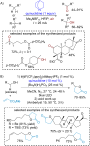
Non-noble metal-catalyzed cross-dehydrogenation coupling (CDC) involving ether α-C(sp3)–H to construct C–C bonds
Beilstein J. Org. Chem. 2023, 19, 1259–1288, doi:10.3762/bjoc.19.94
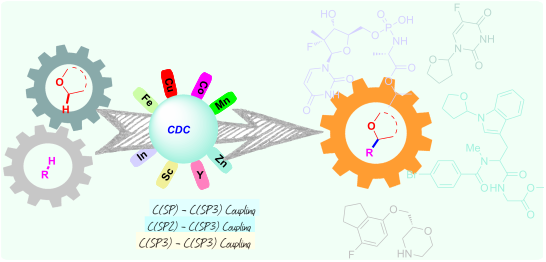
- the reaction mechanism supported by DFT calculations and concluded that FeF2 plays an important redox role in assisting the cleavage of oxidants and the oxidation of carbon radicals to cationic intermediates of oxygen. CDC reactions between C(sp3)–H/C(sp)–H bonds catalyzed by iron have been reported
- be seen that the reaction almost always requires a large amount of oxidant to achieve radical formation of the substrate. Therefore, most of them need to sacrifice excessive chemical oxidants and stoichiometric metals, which cause environmental pollution and energy consumption, making the large-scale





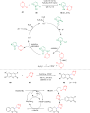

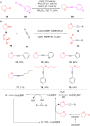


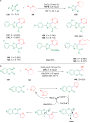


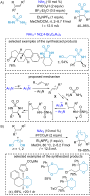
Selective and scalable oxygenation of heteroatoms using the elements of nature: air, water, and light
Beilstein J. Org. Chem. 2023, 19, 1146–1154, doi:10.3762/bjoc.19.82
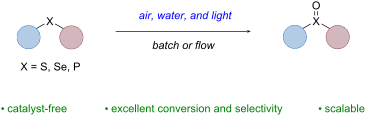
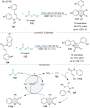
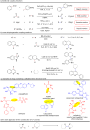
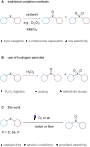
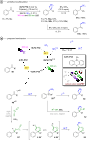
- selectivity and safety. Traditional oxidants, such as Oxone, CrO3, NaIO4, or KMnO4, produce significant amounts of toxic waste, exacerbating these issues (Scheme 1A) [1]. As environmental concerns and economic factors increasingly affect chemical processes, hydrogen peroxide and oxygen (or air) are becoming
- more popular as oxidants due to their low cost and minimal side products. However, these reagents have practical limitations. Hydrogen peroxide is typically produced off-site and requires transportation and storage, and is commonly obtained through the non-sustainable anthraquinone process (Scheme 1B
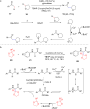
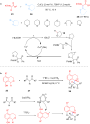
- oxidants, but gas–liquid mass transfer limitations can reduce productivity. Additionally, in-depth safety studies are necessary to avoid the risk of explosion in batch reactors where an oxygen-rich head space is present along with flammable organic solvents. These risks can be significantly mitigated by





Photoredox catalysis harvesting multiple photon or electrochemical energies
Beilstein J. Org. Chem. 2023, 19, 1055–1145, doi:10.3762/bjoc.19.81
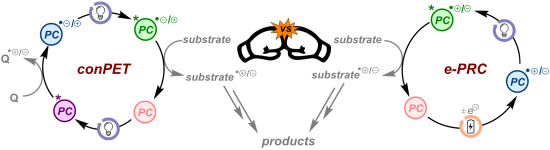
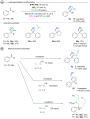
- (PEC). Herein, we review the most recent contributions to these fields in both oxidative and reductive activations of organic functional groups. New opportunities for organic chemists are captured, such as selective reactions employing super-oxidants and super-reductants to engage unactivated chemical
- generation of super-reductants [15] and by Wagenknecht in 2018 for the generation of super-oxidants [16]. Herein, initial excitation of the photocatalyst by a single photon is followed by reduction or oxidation by a sacrificial SET donor (e.g., Et3N [15]) or acceptor (e.g., SF6 [16]) to yield the catalyst
- doublet states which are photoexcited to yield super-oxidants or super-reductants while recycling e-PRC involves the turnover of a ‘standard’ (typically closed-shell) photoredox catalyst (PC) by means of anodic oxidation or cathodic reduction [28][29]. Furthermore, a series of new protocols using

























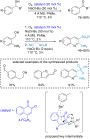
Pyridine C(sp2)–H bond functionalization under transition-metal and rare earth metal catalysis
Beilstein J. Org. Chem. 2023, 19, 820–863, doi:10.3762/bjoc.19.62
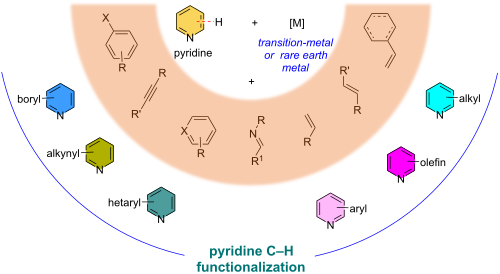
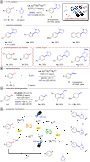
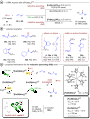
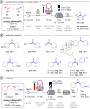
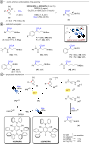
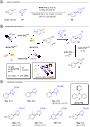
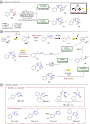
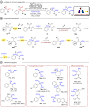
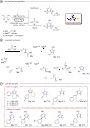
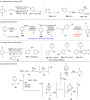
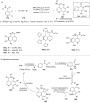
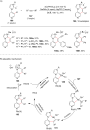
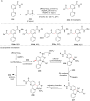
- intact under the reaction conditions without any further oxidation. Different oxidants resulted in different products such as the monoarylated product 118 formed in the presence of TBHP as oxidant and the benzylated product 119 was obtained when potassium persulfate was used. Interestingly, aza-fluorene
















Honeycomb reactor: a promising device for streamlining aerobic oxidation under continuous-flow conditions
Beilstein J. Org. Chem. 2023, 19, 752–763, doi:10.3762/bjoc.19.55
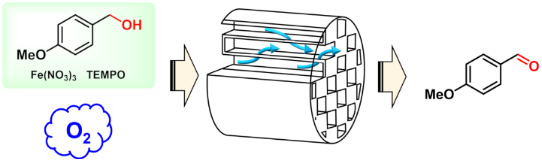
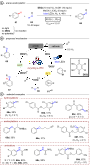
- -oxyl (TEMPO) oxidation [8]. TEMPO oxidation, in particular, has been successfully applied on a manufacturing scale as a low-cost and green oxidation method [9]. However, these oxidation processes generally require stoichiometric oxidants, and reduced byproducts must be purged in a purification step


Synthesis and reactivity of azole-based iodazinium salts
Beilstein J. Org. Chem. 2023, 19, 317–324, doi:10.3762/bjoc.19.27
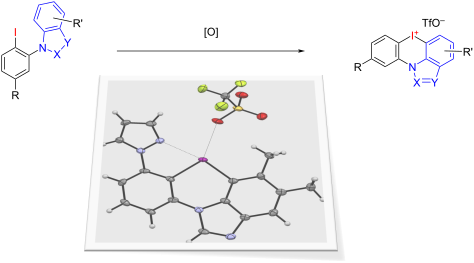
- highly versatile, and a wide range of applications is meanwhile established in organic synthesis [1][2][3][4][5]. They can be applied as mild oxidants [6][7][8], in phenol dearomatizations [9] or in α-oxygenation reactions [10]. In a complemental reactivity, diaryliodonium salts are potent electrophilic




Practical synthesis of isocoumarins via Rh(III)-catalyzed C–H activation/annulation cascade
Beilstein J. Org. Chem. 2023, 19, 100–106, doi:10.3762/bjoc.19.10
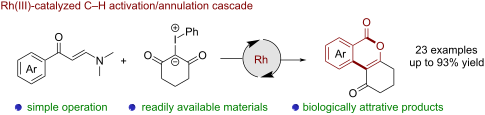
- achievements, established methods often require the use of stoichiometric oxidants or harsh conditions, thus limiting their broad applicability. Consequently, it is still highly desirable to exploit innovative and convenient methods for the rapid construction of isocoumarins. Enaminones are bench stable and


Two-step continuous-flow synthesis of 6-membered cyclic iodonium salts via anodic oxidation
Beilstein J. Org. Chem. 2023, 19, 27–32, doi:10.3762/bjoc.19.2
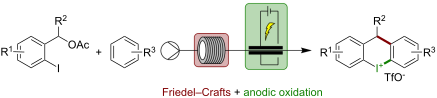
- otherwise tedious to synthesize CDIS robustly in short reaction times. A significant drawback still is the use of stoichiometric amounts of chemical oxidants, which decreases the atom economy and necessitates additional workup procedures. A possible solution is the anodic oxidation of iodoarenes as
- electrochemistry is a highly economical tool that avoids chemical oxidants for synthesizing hypervalent iodine reagents [30]. Iodoarenes are suitable and well-established mediators in either in- or ex-cell electrochemical processes [31][32][33][34][35][36]. Nonetheless, HVIs, DIS and CDIS have been generated by


Combining the best of both worlds: radical-based divergent total synthesis
Beilstein J. Org. Chem. 2023, 19, 1–26, doi:10.3762/bjoc.19.1
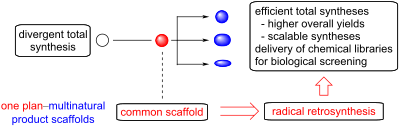
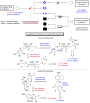
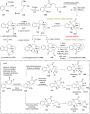
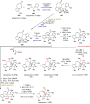
- determinant factor for either 8,8’-cis- or 8,8’-trans-cyclization to furan heterocycle cation 218, which serves as the hypothetical common scaffold of the plan. Diverting this mechanistic route to different lignans is possible by introducing nucleophilic additives (e.g., MeOH), oxidants (e.g., Cu(OTFA)2), or








Redox-active molecules as organocatalysts for selective oxidative transformations – an unperceived organocatalysis field
Beilstein J. Org. Chem. 2022, 18, 1672–1695, doi:10.3762/bjoc.18.179
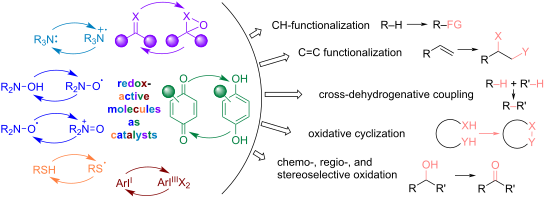
- stoichiometric oxidants. The development of organic chemistry is strongly affected by rising “green” demands to synthetic methodologies, including reduction of waste formation, low trace-metal content in drug compounds, high energy-efficiency and selectivity of processes. In the last decade researchers proposed
- active oxidative agent. Asymmetric quaternary ammonium phase-transfer catalysts proved to be effective in the asymmetric nucleophilic epoxidation of electron-poor alkenes by hydroperoxides [70] and the asymmetric hydroxylation of enolizable carbonyl compounds employing O2 or H2O2 as terminal oxidants [71
- amounts of strong oxidants ((NH4)2Ce(NO3)6 [91], PhI(OAc)2 [92], t-BuOOt-Bu [93], etc.) are needed to generate a sufficient concentration of PINO radicals for the effective trapping of C-centered radicals and excess amounts of a CH-reagent are necessary for high selectivity. The electrochemical oxidative











A one-pot electrochemical synthesis of 2-aminothiazoles from active methylene ketones and thioureas mediated by NH4I
Beilstein J. Org. Chem. 2022, 18, 1249–1255, doi:10.3762/bjoc.18.130
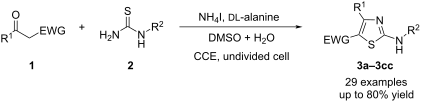
- ketones and thiourea via an oxidative cyclization initiated by a radical process and a following condensation reaction (Scheme 1c) [29]. Although these methods are practical, most of these strategies require stoichiometric or excess amounts of halogenating reagents or oxidants, which are toxic, hazardous
- . Organic electrosynthesis has been recognized as a green, modern, and safe technique, since electrons can be used as an alternative for oxidants or reductants [30][31][32][33][34][35][36][37][38]. During our continuous interests in halide-mediated indirect electrolysis [39][40][41][42], we have achieved
- performed in an undivided cell with NH4I as the mediator and cheap graphite plate as the working electrode. Various active methylene ketones, including β-keto ester, β-keto amide, β-keto nitrile, β-keto sulfone and 1,3-diones proved to be compatible with the protocol. Since external oxidants and




Synthesis of N-phenyl- and N-thiazolyl-1H-indazoles by copper-catalyzed intramolecular N-arylation of ortho-chlorinated arylhydrazones
Beilstein J. Org. Chem. 2022, 18, 1079–1087, doi:10.3762/bjoc.18.110
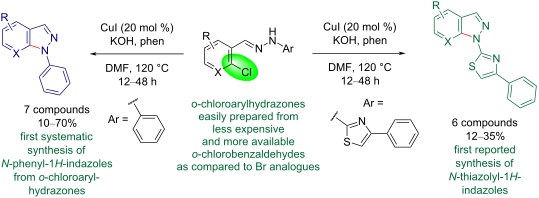
- reaction of hydrazones and p-benzoquinones [16], and Co3+/Cu2+-catalyzed C−N/N−N coupling of imidates with anthranils as both aminating reagents and organic oxidants [17]. Additional established routes to 1H-indazoles comprise transition metal‐catalyzed [18][19][20] and metal-free [21][22] intramolecular


Electrochemical formal homocoupling of sec-alcohols
Beilstein J. Org. Chem. 2022, 18, 1062–1069, doi:10.3762/bjoc.18.108
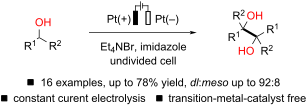
- alcohol derivatives. The present transformations smoothly proceed in a simple undivided cell under constant current conditions without the use of external chemical oxidants/reductants, and transition-metal catalysts. Keywords: alcohols; dimerization; electrooxidation; electroreduction; paired
- direct oxidation of sec-alcohol 1 to ketone 3 could also proceed under the present reaction conditions. Conclusion In conclusion, we have developed the sacrificial anode-free electrochemical protocol for the synthesis of vic-1,2-diols from sec-alcohols without external chemical oxidants or reductants


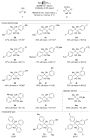


Electrochemical Friedel–Crafts-type amidomethylation of arenes by a novel electrochemical oxidation system using a quasi-divided cell and trialkylammonium tetrafluoroborate
Beilstein J. Org. Chem. 2022, 18, 1040–1046, doi:10.3762/bjoc.18.105
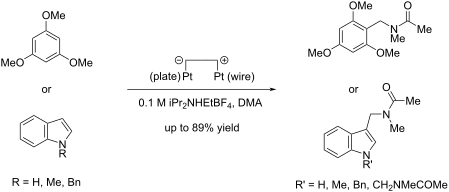
- -acyliminium ions in chemical methods has been generally accomplished by the reaction of amides with chemical oxidants, such as peroxides and persulfates at high temperature (path a in Scheme 1) [10][11][12][13]. A metal catalyst or a photocatalyst consisting of metals, such as ruthenium or iridium, is also


Electrochemical vicinal oxyazidation of α-arylvinyl acetates
Beilstein J. Org. Chem. 2022, 18, 1026–1031, doi:10.3762/bjoc.18.103
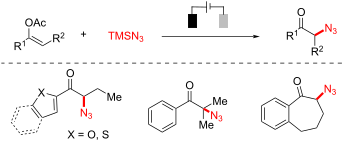
- ][18][19][20][21][22] not only because it employs the passage of charge instead of chemical oxidants or reductants but also offers opportunities for the precise control of reactivity by "dialing-in" the specific potential on demand [23][24][25]. Specifically, the electrochemical oxyfunctionalization of




Synthesis of α-(perfluoroalkylsulfonyl)propiophenones: a new set of reagents for the light-mediated perfluoroalkylation of aromatics
Beilstein J. Org. Chem. 2022, 18, 788–795, doi:10.3762/bjoc.18.79
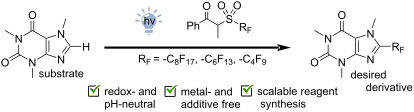
- sophisticated platforms such as metal nanoparticles, all of which have been reviewed thoroughly in the literature [4][5][6][7][8]. However, the methods referenced so far display one or more of the following setbacks: involvement of harsh oxidants or reductants, use of expensive metal catalysts, need for


Synthesis of odorants in flow and their applications in perfumery
Beilstein J. Org. Chem. 2022, 18, 754–768, doi:10.3762/bjoc.18.76
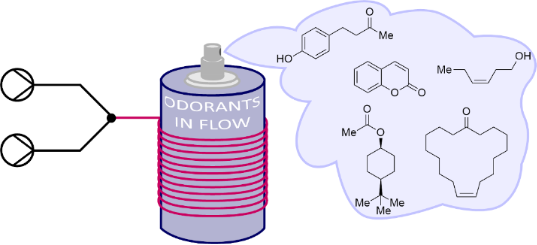
- odor”. Alternatively, the reaction mixture is pumped to an oxidation module in which the pinacol boronates are mixed with a solution of sodium perborate in water/tetrahydrofuran to perform oxidation to the corresponding alcohols 20 at 40 °C in 60 s. In order to quench remaining oxidants, the reaction


Inductive heating and flow chemistry – a perfect synergy of emerging enabling technologies
Beilstein J. Org. Chem. 2022, 18, 688–706, doi:10.3762/bjoc.18.70
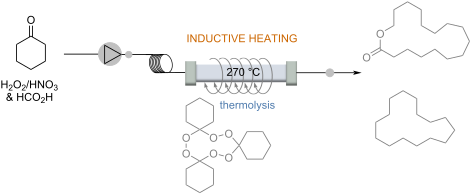
- continuous process could be established by oxidation with molecular oxygen introduced into the reaction stream via a tube-in-tube membrane reactor, a process which should be very attractive for industrial applications, as oxygen or air act as cheap and environmentally friendly oxidants [82]. An interesting




Mechanochemical halogenation of unsymmetrically substituted azobenzenes
Beilstein J. Org. Chem. 2022, 18, 680–687, doi:10.3762/bjoc.18.69
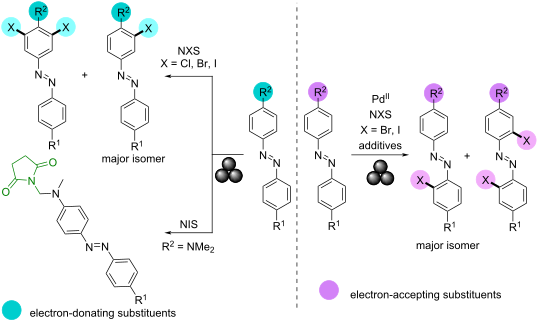
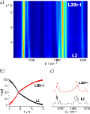
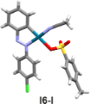
- spectroscopy (Figures S40–S76 in Supporting Information File 1). All experiments were performed without additional oxidants and solid or liquid additives. The presence of the PdII-catalyst in the reactions of L2–5 with NXS resulted predominantly in LnX-I products or a mixture of products that were mono- or





Rapid gas–liquid reaction in flow. Continuous synthesis and production of cyclohexene oxide
Beilstein J. Org. Chem. 2022, 18, 660–668, doi:10.3762/bjoc.18.67
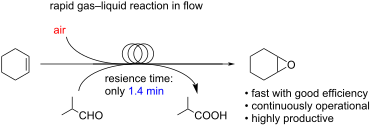
- system using oxidants other than air [28][29][30] encouraged us to develop a highly productive flow system with air. Herein, we report that rapid gas–liquid oxidation of cyclohexene with air in the presence of isobutyraldehyde as a sacrificial agent to synthesize cyclohexene oxide is successfully
- oxidation and decomposition of oxidants generated from air and aldehyde. Furthermore, the fast epoxidation is applicable for the continuous production process of cyclohexene oxide for 1 hour maintaining stable operation. Results and Discussion Batch experiment of epoxidation of cyclohexene with air As an


DDQ in mechanochemical C–N coupling reactions
Beilstein J. Org. Chem. 2022, 18, 639–646, doi:10.3762/bjoc.18.64
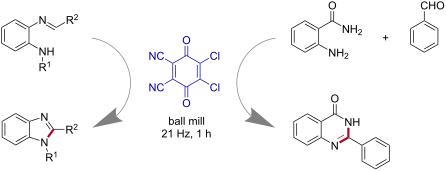
- the other hand, increasing the amount of DDQ to 1.2 equiv resulted in 98% yield of the product (Supporting Information File 1, Table S1, entries 1 and 3). Further studies revealed that other commonly used oxidants such as PIDA and oxone gave 30% and 61% the desired product, respectively (Supporting
- Information File 1, Table S1, entries 4 and 5). When molecular iodine or NIS were used as oxidants, product 5a was obtained in 83% and 80% yield, respectively (Supporting Information File 1, Table S1, entries 6 and 7). However, the yield of the desired product 5a slightly decreased to 92% with lowering of the


Menadione: a platform and a target to valuable compounds synthesis
Beilstein J. Org. Chem. 2022, 18, 381–419, doi:10.3762/bjoc.18.43
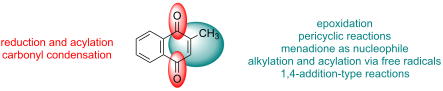
- menadione. Oxidation of 2-methylnaphthalene Menadione synthesis through the oxidation of 2-methylnaphthalene (16) includes the use of oxygen-rich oxidants using various reaction conditions and a broad range of well-succeeding methodologies has been reported. A summary is presented in Table 1 and will be
- one of the most studied and used oxidants has been H2O2. Yamaguchi and co-workers described the oxidation of 16 with aqueous H2O2 in the presence of a palladium(II)-polystyrene sulfonic acid resin (Table 1, entry 4) [50]. According to the authors, in the absence of the catalysts, the oxidation took
- heteropoly acids [71], molecular oxygen [72][73], and organic peroxides [74]. Matveev and co-workers studied phosphomolybdovanadium heteropoly acids of Keggin-type with the general structure H3+nPMo12-nVnO40 (HPA-n) and their acidic salts as reversibly acting oxidants to convert 17 to 10 (Table 2, entry 8


Flow synthesis of oxadiazoles coupled with sequential in-line extraction and chromatography
Beilstein J. Org. Chem. 2022, 18, 232–239, doi:10.3762/bjoc.18.27
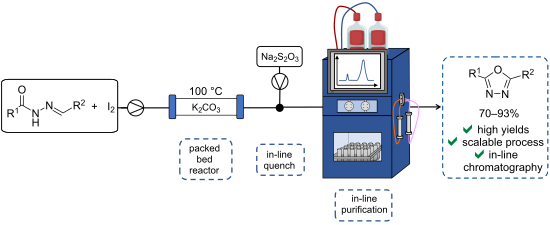
- iodine-mediated cyclisation with other oxidative conditions. A range of oxidants was investigated (Table 1), with only N-chlorosuccinimide (NCS) [34] and iodine resulting in the formation of product (entries 1 and 2, Table 1). As iodine yielded superior results, we opted to transfer this reaction from
- of complex oxadiazoles. Continuous flow scale-up reaction with in-line quench and extraction. Continuous flow setup equipped with in-line extraction and purification. Screening of oxidants for cyclisation of acyl hydrazone. Optimisation of iodine-mediated cyclisation in continuous flow mode


Recent advances and perspectives in ruthenium-catalyzed cyanation reactions
Beilstein J. Org. Chem. 2022, 18, 37–52, doi:10.3762/bjoc.18.4
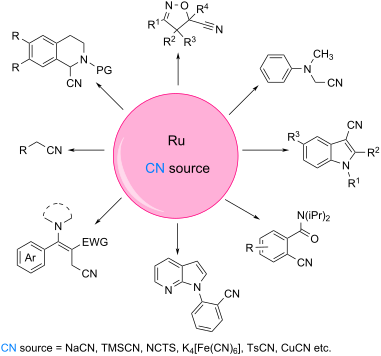
- etc. Our studies disclosed that many of the reports were mainly focusing on the oxidative cyanation of tertiary amines. Extensive research was carried out in the cyanation of tertiary amines using different oxidants such as O2, H2O2, and TBHP. Ruthenium was also found to be effective in the cyanation


Iron-catalyzed domino coupling reactions of π-systems
Beilstein J. Org. Chem. 2021, 17, 2848–2893, doi:10.3762/bjoc.17.196
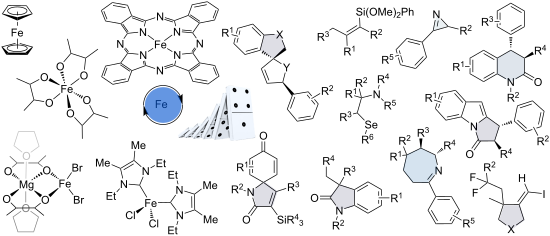
- ) [94]. Interestingly, the protocol used air as the oxidant, avoiding the use of stoichiometric oxidants like previous radical cyclization cascades. Generally, substrates with an electron-withdrawing group afforded the product in greater yield. The reaction proceeds through the formation of a sulfonyl
- 106 (Scheme 21) [104]. The use of Ag2CO3 as a SET oxidant was shown to be key for the success of the reaction, as typical organic oxidants, like peroxides, displayed low activity. No clear trend was observed for the difference in efficiency between the Fe catalysts used. It was noted the use of the Fe
- operate in the absence of any external oxidants under an inert atmosphere. Although not investigated, Loh’s transformation most likely begins with the generation of an aryl radical from the reduction of the diaryliodonium salt with Fe(II) which subsequently abstracts a hydrogen from CH2Cl2 to generate an