Search results
Search for "aldol reaction" in Full Text gives 138 result(s) in Beilstein Journal of Organic Chemistry.
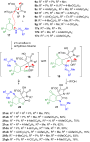
Regiodivergent condensation of 5-alkoxycarbonyl-1H-pyrrol-2,3-diones with cyclic ketazinones en route to spirocyclic scaffolds
Beilstein J. Org. Chem. 2017, 13, 2179–2185, doi:10.3762/bjoc.13.218
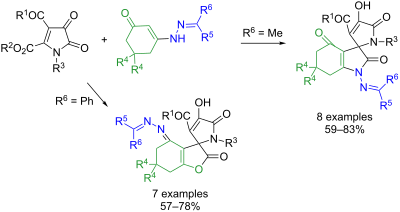
- , bridged 1,3-oxazepine products 12 were formed in marginal yields, resulting from an initial aldol reaction involving the carbonyl group at C-3 of pyrroledione 9 and a subsequent intramolecular 6-endo-trig O-nucleophilic attack of the enol species at a conjugate unsaturated ketone moiety in the five

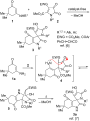




Mechanochemical synthesis of small organic molecules
Beilstein J. Org. Chem. 2017, 13, 1907–1931, doi:10.3762/bjoc.13.186
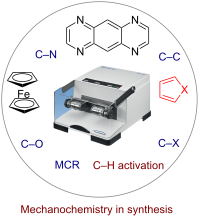
- ]. In this section some of the most important C–C bond forming reactions and their advantages are discussed. Aldol reaction In 2000, Raston and Scott first reported the aldol condensation reaction using veratraldehyde, 4-phenylcyclohexanone and 1-indanone in the presence of NaOH in a vibrating ball mill
- -free conditions were performed using a combination of (S)-binam-L-Pro (A, 5 mol %) and benzoic acid (10 mol %) as organocatalyst [49]. Juaristi and co-workers investigated the mechanistic aspects of α,α-dipeptide derivatives of a (S)-proline- (A′)-catalyzed asymmetric aldol reaction (Scheme 2b) under


Solvent-free sonochemistry: Sonochemical organic synthesis in the absence of a liquid medium
Beilstein J. Org. Chem. 2017, 13, 1850–1856, doi:10.3762/bjoc.13.179
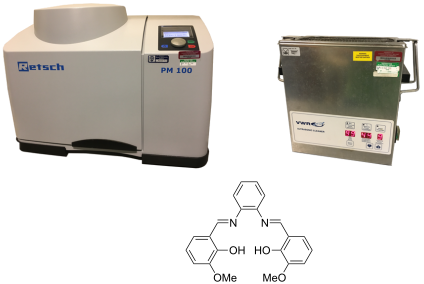
- ninhydrin and dimedone. Both systems were investigated in the complete absence of solvent and without the presence of any grinding media (such as inert silica beads) to help mediate the reaction. The aldol reaction was successfully carried out by twin screw extrusion, as I have reported previously [6]. The
- ultrasonic irradiation at room temperature that is instigating and accelerating this chemical reaction. Further confirmation that sonochemistry is a viable method to carry out solid state organic synthesis was obtained by carrying out an aldol reaction between ninhydrin and dimedone (Scheme 2). The optimised
- . Reaction mixture before and after ultrasonic irradiation for 60 minutes. 1H NMR spectrum of diimine 1 in CDCl3/EtOD. 1H NMR spectrum of 1,3-indandione 2 in DMSO-d6. Reaction between o-vanillin and 1,2-phenylenediamine by ultrasonic irradiation for 60 minutes. Aldol reaction between ninhydrin and dimedone


NHC-catalyzed cleavage of vicinal diketones and triketones followed by insertion of enones and ynones
Beilstein J. Org. Chem. 2017, 13, 1816–1822, doi:10.3762/bjoc.13.176
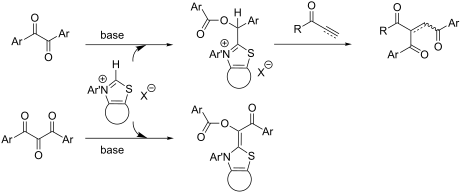
- , the reaction efficiency was much lower than that of benzil (1a) (Scheme 4). The only isolated by-product in the reaction of 5a was bicyclo[3.2.1]octanone 8 (ca. 10%), which was formed by competitive tandem Michael–aldol reaction [21]. Cycloheptane-1,2-dione (5b) and cyclododecane-1,2-dione (5c) gave




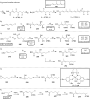
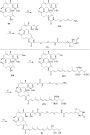
The chemistry and biology of mycolactones
Beilstein J. Org. Chem. 2017, 13, 1596–1660, doi:10.3762/bjoc.13.159









Total syntheses of the archazolids: an emerging class of novel anticancer drugs
Beilstein J. Org. Chem. 2017, 13, 1085–1098, doi:10.3762/bjoc.13.108
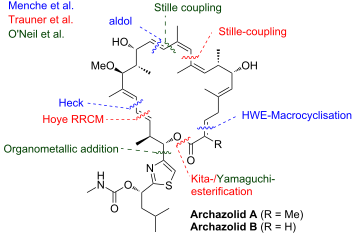
- a boron-mediated anti-aldol reaction [67] of lactate-derived ethyl ketone 13 with aldehyde 12, which in turn was available from aldehyde 9 by HWE olefination. This Paterson aldol reaction and related aldol reactions, which have been amply used by the Menche group [68][69][70], proceeded with


Synthesis of D-manno-heptulose via a cascade aldol/hemiketalization reaction
Beilstein J. Org. Chem. 2017, 13, 795–799, doi:10.3762/bjoc.13.79

- aldol/hemiketalization reaction of a C4 aldehyde with a C3 ketone provides the differentially protected ketoheptose building block, which can be further reacted to furnish target D-manno-heptulose. Keywords: aldol reaction; cascade reaction; D-manno-heptulose; higher-carbon sugar; ketoheptose
- chain elongations of aldoses employing the Henry reaction, the aldol reaction, and the Wittig reaction for the preparation of ketoheptoses [20][21][22], sugar lactones were also often utilized for the synthesis of D-manno-heptulose via reactions with C-nucleophiles or conversion into exocyclic glycals
- on TLC monitoring. Given that the C4 aldehyde 3 was unstable upon purification by silica gel column chromatography, it was immediately used for the subsequent coupling after the extraction procedure. The aldol reaction of aldehyde 3 with the readily available ketone 4 [42][43] under the catalysis of


Formose reaction controlled by boronic acid compounds
Beilstein J. Org. Chem. 2016, 12, 2668–2672, doi:10.3762/bjoc.12.263
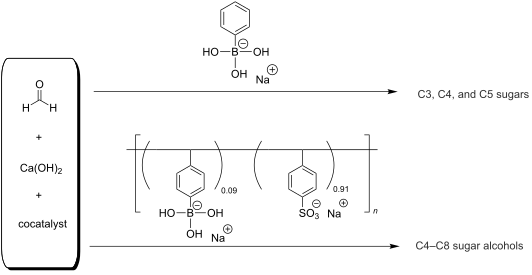
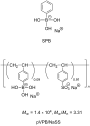
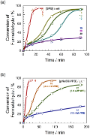
- formose reaction consists of several elemental reaction steps, e.g., acyloin condensation, aldol reaction, retro-aldol reaction, aldose–ketose isomerization, and Cannizzaro reaction, and the product, formose, is a complicated mixture of more than thirty species of sugars and sugar alcohols including non



Formose reaction accelerated in aerosol-OT reverse micelles
Beilstein J. Org. Chem. 2016, 12, 2663–2667, doi:10.3762/bjoc.12.262
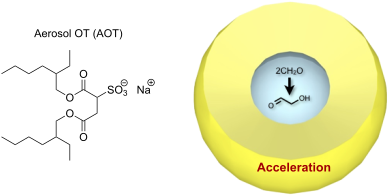
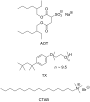
- rate-determining step of the formose reaction. It is known that glycolaldehyde acts as a cocatalyst. Thus, when the concentration of glycolaldehyde reaches a certain level, formaldehyde is consumed rapidly to form a complicated mixture of sugars predominantly via aldol reaction and aldose–ketose
- transformation in the sugar formation period. When formaldehyde is consumed quantitatively, the reaction mixture turns yellow. In the sugar degradation period, the sugars formed are decomposed dominantly through cross-Cannizzaro reaction and retro-aldol reaction to form a more complicated reaction mixture. The


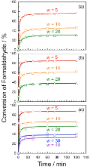
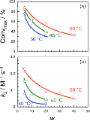
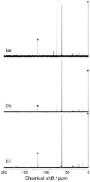
Towards the development of continuous, organocatalytic, and stereoselective reactions in deep eutectic solvents
Beilstein J. Org. Chem. 2016, 12, 2620–2626, doi:10.3762/bjoc.12.258
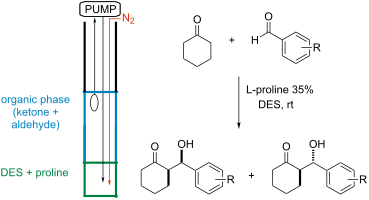
- . Keywords: continuous process; DES; organocatalysis; proline; stereoselective aldol reaction; Introduction The aldol reaction is a powerful synthetic tool to create new C–C bonds [1]. It offers several possibilities to control the stereochemical outcome of the process and to afford stereochemically defined
- chiral products [2]. Among all the possible options, the L-proline-catalysed stereoselective cross-aldol reaction remains the greener choice. After the pioneering works by List and Barbas [3], a huge effort was made by the scientific community to improve both the yield and the stereoselectivity of the
- eutectic mixtures as reaction media (Table 1) [40]. The behaviour of DES mixtures A–E in the proline-catalysed model aldol reaction between cyclohexanone and 4-nitrobenzaldehyde was preliminarily investigated under standard batch conditions (Scheme 1). In our hands, the reaction proceeded completely in 20


Synthesis of polyhydroxylated decalins via two consecutive one-pot reactions: 1,4-addition/aldol reaction followed by RCM/syn-dihydroxylation
Beilstein J. Org. Chem. 2016, 12, 2602–2608, doi:10.3762/bjoc.12.255
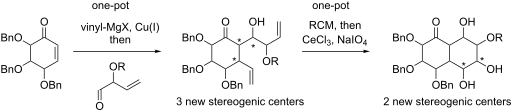
- 1,4-addition of vinylmagnesium bromide to sugar-derived cyclohexenone, followed by an aldol reaction with a derivative of but-3-enal. The obtained diene is then subjected to an assisted tandem catalytic sequence: ring-closing metathesis with the subsequent reuse of the Ru-catalyst in the syn
- possibility of using a copper-catalyzed one-pot 1,4-addition of vinylmagnesium bromide to sugar-derived cyclic α,β-unsaturated ketones (such as 9), followed by an aldol reaction with an optically pure derivative of but-2-enal 10 to obtain a mixture of diastereomeric dienes, such as 11 (Scheme 2). As a result
- of this transformation, three new stereogenic centers are generated. A copper-catalyzed 1,4-addition of organometallic reagents to cyclic α,β-unsaturated ketones, followed by an aldol reaction has been already used in the synthesis of complex natural products [26][27][28][29][30][31][32][33


Enduracididine, a rare amino acid component of peptide antibiotics: Natural products and synthesis
Beilstein J. Org. Chem. 2016, 12, 2325–2342, doi:10.3762/bjoc.12.226
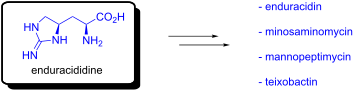
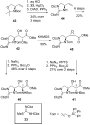
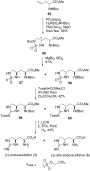
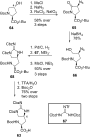
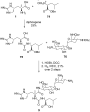
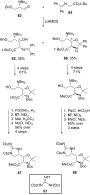
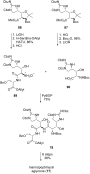
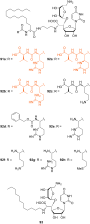
- synthetically broken down into tripeptides 78 and 79 (Scheme 15). Tripeptide 78 was further disconnected into protected serine 80 and protected β-hydroxyenduracididine residues 81 and 82. The synthesis of key amino acids 81 and 82 was based on an aldol reaction between protected aldehyde 83 and glycine 84












A chiral analog of the bicyclic guanidine TBD: synthesis, structure and Brønsted base catalysis
Beilstein J. Org. Chem. 2016, 12, 1870–1876, doi:10.3762/bjoc.12.176
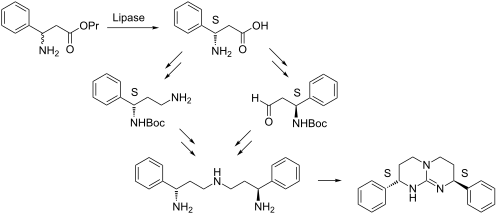
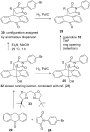
- base the retro-aldol reaction of some cycloadducts with kinetic resolution of the enantiomers. In three cases, the retro-aldol products (48–83% ee) could be recrystallized to high enantiopurity (≥95% ee). The absolute configuration of several compounds is supported by anomalous X-ray diffraction and by
- base-catalyzed retro-aldol reaction and they are not converted backwards into Diels–Alder adducts under such conditions [19][25][26]. Our results shown below give further support to this view. Riant, Kagan and Ricard have demonstrated for the first time that deprotonated anthrones may coordinate to
- moderate stereoselectivity is superimposed with a kinetic resolution of enantiomers in the subsequent retro-aldol reaction. Both are catalyzed by the chiral guanidine 10. As a result, the numbers shown in Table 1 are not constant but depend on the relative turnover of each reaction. When rac-25 reacted


Catalytic asymmetric synthesis of biologically important 3-hydroxyoxindoles: an update
Beilstein J. Org. Chem. 2016, 12, 1000–1039, doi:10.3762/bjoc.12.98
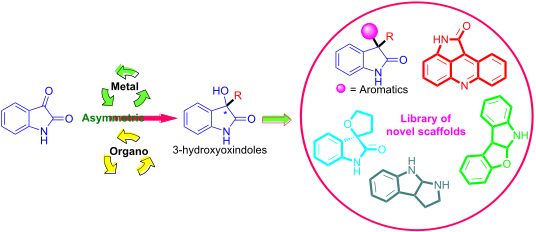
- products in good yields and with excellent enantioselectivities (Scheme 16). In 2013, Ishimaru and co-workers developed a N-aryl-L-valinamide (cat. 5)-catalyzed asymmetric aldol reaction of isatins with ketones, affording the products in excellent yields and with up to >99% ee (Scheme 17) [33]. The
- reaction was performed under mild conditions using PTSA·H2O as the additive. Subsequently, the asymmetric aldol reaction of aliphatic aldehydes with isatins was achieved by the same group by using a structurally slightly modified organocatalyst (cat. 5, Scheme 18) [34]. Malonic acid as the additive and
- hydrogen bonds with organocatalyst (cat. 5) and isatin substrate. A novel N-prolinylanthranilamide-based pseudopeptide organocatalyst (cat. 6) was designed by Bunge et al. for the enantioselective aldol reaction of 2,2-dimethyl-1,3-dioxan-5-one with isatins, affording the products in good yield and with




Scope and mechanism of the highly stereoselective metal-mediated domino aldol reactions of enolates with aldehydes
Beilstein J. Org. Chem. 2016, 12, 813–824, doi:10.3762/bjoc.12.80
- ; domino aldol; metal enolate; tetrahydropyran; Introduction Since its discovery in the late nineteenth century the aldol reaction has become one of the most powerful tools in the field of carbon–carbon bond formation [1][2][3][4][5]. It is widely used in the formation of many natural products [6][7][8][9
- ][10][11], stereoselective syntheses [12][13][14][15][16], and tandem reactions [17][18][19]. While the latter processes usually comprise only one aldol reaction, tandem reaction sequences containing two consecutive aldol steps are mostly limited to the trimerization of enolates [20][21][22]. Metal
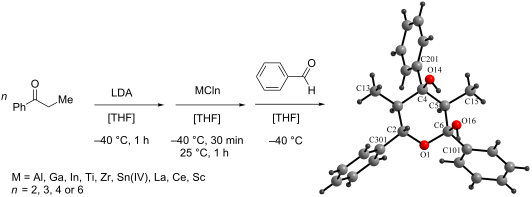
- , Ga, In, Ti, Zr, Sn), and various aldehydes and ketones is studied experimentally and computationally. Results Metal effect The experiments were performed to screen suitable metal fragments for their ability to promote the domino aldol reaction by studying the reaction between propiophenone (1a) and


Muraymycin nucleoside-peptide antibiotics: uridine-derived natural products as lead structures for the development of novel antibacterial agents
Beilstein J. Org. Chem. 2016, 12, 769–795, doi:10.3762/bjoc.12.77
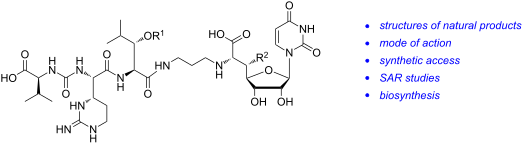
- steps (Scheme 1) [87][88]. This was followed by an aldol reaction of aldehyde 2 with N,N-dibenzylglycine tert-butyl ester (3) [89] and LDA as a key step of the synthesis (Scheme 1). The resultant products were the two 5'-epimers 4 (5'R,6'S) in 31% yield and 5 (5'S,6'S) in 14% yield, which could be
- glycine (100). Hence, LipK was revealed to be a transaldolase mediating a retro-aldol reaction of L-threonine (119) towards the enol(ate) and acetaldehyde (120), followed by a stereoselective aldol addition of the former to uridine-5'-aldehyde 99 (Scheme 12). Using synthetic reference compounds, it could









Stereoselective amine-thiourea-catalysed sulfa-Michael/nitroaldol cascade approach to 3,4,5-substituted tetrahydrothiophenes bearing a quaternary stereocenter
Beilstein J. Org. Chem. 2016, 12, 643–647, doi:10.3762/bjoc.12.63
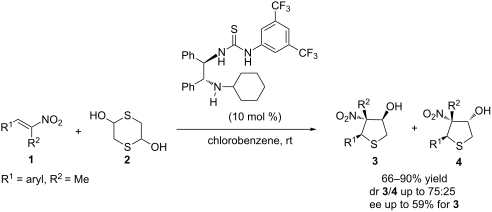
- Sara Meninno Chiara Volpe Giorgio Della Sala Amedeo Capobianco Alessandra Lattanzi Dipartimento di Chimica e Biologia “A. Zambelli”, Via Giovanni Paolo II, 84084, Fisciano, Italy 10.3762/bjoc.12.63 Abstract An investigation on the stereoselective cascade sulfa-Michael/aldol reaction of


(Thio)urea-mediated synthesis of functionalized six-membered rings with multiple chiral centers
Beilstein J. Org. Chem. 2016, 12, 462–495, doi:10.3762/bjoc.12.48
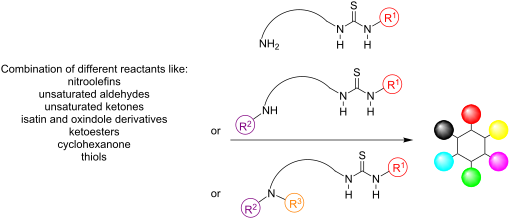
- , Enders and co-workers described the three-component domino Michael–Michael aldol reaction between β-ketoesters 153, nitroalkenes 77 and α,β-unsaturated aldehydes 154, producing heavily substituted cyclohexanes 155 containing six contiguous stereocenters with excellent stereocontrol (Scheme 49) [70]. In
- -mercaptobenzaldehyde 163 to the exo-α,β-unsaturated ketone 177 and subsequent aldol reaction between the newly-formed enolate and the aldehyde moiety. The desired products were obtained utilizing low catalytic loading (5 mol %) in excellent yields (up to 98%) and enantioselectivities (up to 99% ee), but low to
- enolate of cyclohexanone. Two subsequent aldol reactions furnished the desired product. Miscellaneous thiourea-catalysts and catalytic systems promoting asymmetric transformations that lead to a six-membered ring The discovery of L-proline as an organocatalyst for the aldol reaction was of major


Recent advances in N-heterocyclic carbene (NHC)-catalysed benzoin reactions
Beilstein J. Org. Chem. 2016, 12, 444–461, doi:10.3762/bjoc.12.47
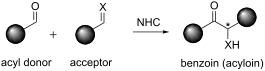
- -2-amino3-hydroxyindanones is catalysed by NHC 31. The imine electrophile is generated in situ from α-sulfonyl-N-Boc amine 33 (Scheme 19). Initial cross-aza-benzoin reaction of one of the aldehyde functionalities with the imine is followed by an intramolecular aldol reaction to furnish the indanone



Organocatalytic asymmetric Henry reaction of 1H-pyrrole-2,3-diones with bifunctional amine-thiourea catalysts bearing multiple hydrogen-bond donors
Beilstein J. Org. Chem. 2016, 12, 295–300, doi:10.3762/bjoc.12.31
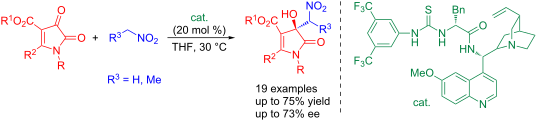
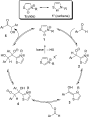
- -diones is mainly focused on three-component spiro-heterocyclization reactions [30][31][32]. However, for the catalytic asymmetric transformation, only one example of an aldol reaction of 1H-pyrrole-2,3-diones with ketones has been reported so far (Scheme 1) [33]. Recently, our group developed a chiral


A quadruple cascade protocol for the one-pot synthesis of fully-substituted hexahydroisoindolinones from simple substrates
Beilstein J. Org. Chem. 2016, 12, 253–259, doi:10.3762/bjoc.12.27
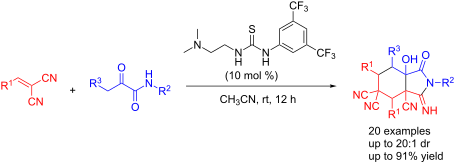
- trifluoroacetic anhydride in DCM (Scheme 2). Finally, we propose a mechanism for the reaction. Initially, substrate 1 is activated by catalyst (I), which reacts with substrate 2 via two Michael addition reactions to sequentially produce II and III. Then, IV is generated from III by an aldol reaction. Finally, the


A novel and practical asymmetric synthesis of dapoxetine hydrochloride
Beilstein J. Org. Chem. 2015, 11, 2641–2645, doi:10.3762/bjoc.11.283
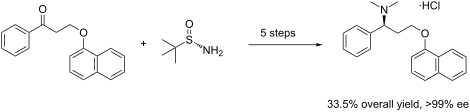
- acetate aldol reaction [10]. However, these methods are undermined by poor yield, low enantioselectivity, and complex synthetic procedure. Chiral tert-butanesulfinamide, developed by García Ruano and Ellman, has been proven to be a broadly useful reagent for the preparation of chiral amines via the chiral


Synthesis of Xenia diterpenoids and related metabolites isolated from marine organisms
Beilstein J. Org. Chem. 2015, 11, 2521–2539, doi:10.3762/bjoc.11.273
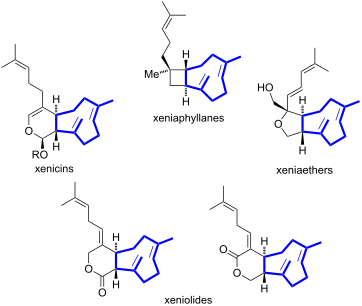
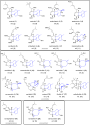
- [7.2.0]undecane ring system 31 as found in xeniaphyllanes [3]. Finally, double C–H oxidation furnishes the β-hydroxy aldehyde 32 which can undergo a retro-aldol reaction with concomitant opening of the cyclobutane ring to form dialdehyde 33 as the common biogenetic precursor of xenicins, xeniolides and
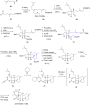
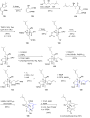
- construction of the cyclononene unit [49]. The synthesis started with a diastereoselective Evans syn-aldol reaction between substituted propanal 86 and E-crotonyl-oxazolidinone 85 (Scheme 9). The resulting secondary alcohol was silylated and the chiral auxiliary was cleaved with lithium borohydride. Acylation
- function in bicycle 93. The side chain of blumiolide C was introduced by an aldol reaction between lactone 93 and aldehyde 94. In the final sequence, blumiolide C (11) was obtained via stereospecific dehydration, removal of the para-methoxybenzyl ether and oxidation. In summary, the total synthesis of







Recent highlights in biosynthesis research using stable isotopes
Beilstein J. Org. Chem. 2015, 11, 2493–2508, doi:10.3762/bjoc.11.271
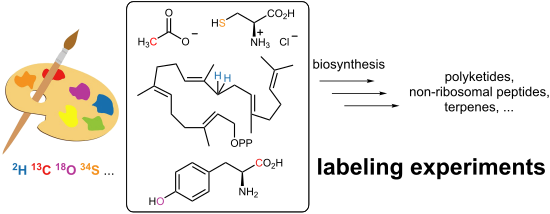
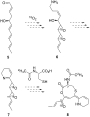
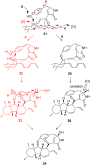
- incorporation of labeled Gly into the methyl group was rationalized by glycine degradation, directing the labeling via tetrahydrofolate and SAM into aspirochlorine biosynthesis. The conversion of the Phe residue to Gly may proceed through either oxidative C–C bond cleavage or a retro-aldol reaction in 18, in











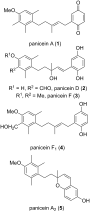
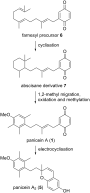
Total synthesis of panicein A2
Beilstein J. Org. Chem. 2015, 11, 1991–1996, doi:10.3762/bjoc.11.215
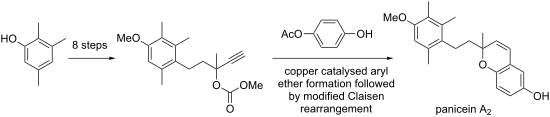
- of panicein A2 Firstly, aldehyde 10 was required; it was prepared through methylation followed by Vilsmeier–Haack reaction of 2,3,5-trimethylphenol (11), giving 10 in 51% yield over two steps (Scheme 1) [7]. Aldehyde 10 then underwent an aldol reaction according to the procedures of Samokhvalov et al