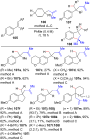
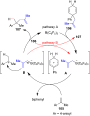
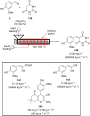
Search for "Michael addition" in Full Text gives 313 result(s) in Beilstein Journal of Organic Chemistry. Showing first 200.
Beilstein J. Org. Chem. 2021, 17, 2295–2301, doi:10.3762/bjoc.17.147
Graphical Abstract
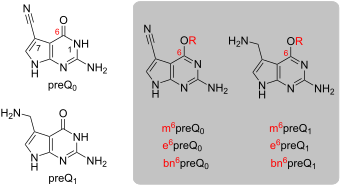
Scheme 1: Chemical structures of queuine (Q base) and the hypermodified nucleoside queuosine (Q), the natural...
Scheme 2: Synthesis of compound 1 (m6preQ0) by cyclocondensation using a 4-methoxypyrimidine derivative resul...
Scheme 3: Synthesis of compound 3 following known procedures [31-33].
Scheme 4: The five-step synthesis of m6preQ1 2 from compound 3 required derivatization to make the intermedia...
Scheme 5: The synthesis of e6preQ1 (2a) and bn6preQ1 (2b) was performed in analogy to the route outlined in Scheme 4 ...
Beilstein J. Org. Chem. 2021, 17, 2085–2094, doi:10.3762/bjoc.17.135
Graphical Abstract
Scheme 1: Main routes to SMAHOs.
Scheme 2: Preparation of α-halo-MAHOs.
Scheme 3: Preparation of SMAHOs from Meldrum's acid.
Scheme 4: Saponification of substituted malonates.
Scheme 5: Scope of the mono-esterification of substituted malonic acids. adr = 1:1.
Beilstein J. Org. Chem. 2021, 17, 2077–2084, doi:10.3762/bjoc.17.134
Graphical Abstract
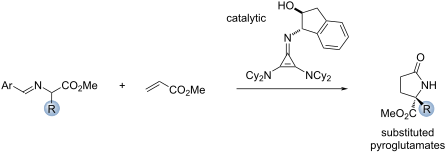
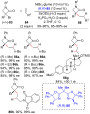
Figure 1: Strategy for the synthesis of glutamate and pyroglutamate derivatives and several natural products ...
Figure 2: Effect of the aryl substituent on reaction efficiency and selectivity.
Figure 3: Proposed transition state model.
Beilstein J. Org. Chem. 2021, 17, 1952–1980, doi:10.3762/bjoc.17.128
Graphical Abstract
Figure 1: Coumarin-derived commercially available drugs.
Figure 2: Inhibition of acetylcholinesterase by coumarin derivatives.
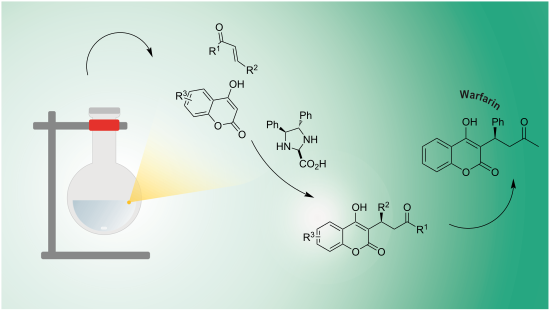
Scheme 1: Michael addition of 4-hydroxycoumarins 1 to α,β‐unsaturated enones 2.
Scheme 2: Organocatalytic conjugate addition of 4-hydroxycoumarin 1 to α,β-unsaturated aldehydes 2 followed b...
Scheme 3: Synthesis of 3,4-dihydrocoumarin derivatives 10 through decarboxylative and dearomatizative cascade...
Scheme 4: Total synthesis of (+)-smyrindiol (17).
Scheme 5: Michael addition of 4-hydroxycoumarin (1) to enones 2 through a bifunctional modified binaphthyl or...
Scheme 6: Michael addition of ketones 20 to 3-aroylcoumarins 19 using a cinchona alkaloid-derived primary ami...
Scheme 7: Enantioselective reaction of cyclopent-2-enone-derived MBH alcohols 24 with 4-hydroxycoumarins 1.
Scheme 8: Sequential Michael addition/hydroalkoxylation one-pot approach to annulated coumarins 28 and 30.
Scheme 9: Michael addition of 4-hydroxycoumarins 1 to enones 2 using a binaphthyl diamine catalyst 31.
Scheme 10: Asymmetric Michael addition of 4-hydroxycoumarin 1 with α,β-unsaturated ketones 2 catalyzed by a ch...
Scheme 11: Catalytic asymmetric β-C–H functionalization of ketones via enamine oxidation.
Scheme 12: Enantioselective synthesis of polycyclic coumarin derivatives 37 catalyzed by an primary amine-imin...
Scheme 13: Allylic alkylation reaction between 3-cyano-4-methylcoumarins 39 and MBH carbonates 40.
Scheme 14: Enantioselective synthesis of cyclopropa[c]coumarins 45.
Scheme 15: NHC-catalyzed lactonization of 2-bromoenals 46 with 4-hydroxycoumarin (1).
Scheme 16: NHC-catalyzed enantioselective synthesis of dihydrocoumarins 51.
Scheme 17: Domino reaction of enals 2 with hydroxylated malonate 53 catalyzed by NHC 55.
Scheme 18: Oxidative [4 + 2] cycloaddition of enals 57 to coumarins 56 catalyzed by NHC 59.
Scheme 19: Asymmetric [3 + 2] cycloaddition of coumarins 43 to azomethine ylides 60 organocatalyzed by quinidi...
Scheme 20: Synthesis of α-benzylaminocoumarins 64 through Mannich reaction between 4-hydroxycoumarins (1) and ...
Scheme 21: Asymmetric addition of malonic acid half-thioesters 67 to coumarins 66 using the sulphonamide organ...
Scheme 22: Enantioselective 1,4-addition of azadienes 71 to 3-homoacyl coumarins 70.
Scheme 23: Michael addition/intramolecular cyclization of 3-acylcoumarins 43 to 3-halooxindoles 74.
Scheme 24: Enantioselective synthesis of 3,4-dihydrocoumarins 78 catalyzed by squaramide 73.
Scheme 25: Organocatalyzed [4 + 2] cycloaddition between 2,4-dienals 79 and 3-coumarincarboxylates 43.
Scheme 26: Enantioselective one-pot Michael addition/intramolecular cyclization for the synthesis of spiro[dih...
Scheme 27: Michael/hemiketalization addition enantioselective of hydroxycoumarins (1) to: (a) enones 2 and (b)...
Scheme 28: Synthesis of 2,3-dihydrofurocoumarins 89 through Michael addition of 4-hydroxycoumarins 1 to β-nitr...
Scheme 29: Synthesis of pyrano[3,2-c]chromene derivatives 93 via domino reaction between 4-hydroxycoumarins (1...
Scheme 30: Conjugated addition of 4-hydroxycoumarins 1 to nitroolefins 95.
Scheme 31: Michael addition of 4-hydroxycoumarin 1 to α,β-unsaturated ketones 2 promoted by primary amine thio...
Scheme 32: Enantioselective synthesis of functionalized pyranocoumarins 99.
Scheme 33: 3-Homoacylcoumarin 70 as 1,3-dipole for enantioselective concerted [3 + 2] cycloaddition.
Scheme 34: Synthesis of warfarin derivatives 107 through addition of 4-hydroxycoumarins 1 to β,γ-unsaturated α...
Scheme 35: Asymmetric multicatalytic reaction sequence of 2-hydroxycinnamaldehydes 109 with 4-hydroxycoumarins ...
Scheme 36: Mannich asymmetric addition of cyanocoumarins 39 to isatin imines 112 catalyzed by the amide-phosph...
Scheme 37: Enantioselective total synthesis of (+)-scuteflorin A (119).
Beilstein J. Org. Chem. 2021, 17, 1689–1697, doi:10.3762/bjoc.17.117
Graphical Abstract
Scheme 1: Mechanism for the phosphine-initiated oxa-Michael addition.
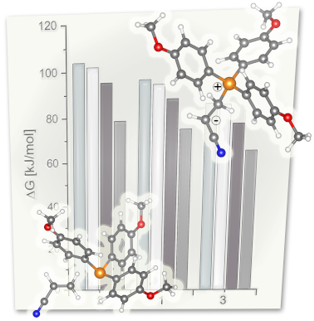
Figure 1: Above: Michael acceptors, Michael donors and catalysts used in this study; pKa (respectively pKa of...
Figure 2: Left: double-bond conversion of the polymerization of 4 initiated by 5 mol % TPP, MMTPP or TMTPP af...
Figure 3: Left: Oxidation stability of the phosphines. Phosphine oxide content in % as determined by 31P NMR ...
Beilstein J. Org. Chem. 2021, 17, 1641–1688, doi:10.3762/bjoc.17.116
Graphical Abstract
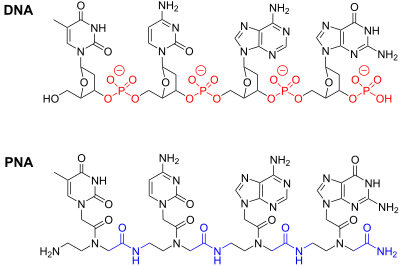
Figure 1: Structure of DNA and PNA.
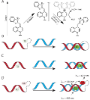
Figure 2: PNA binding modes: (A) PNA–dsDNA 1:1 triplex; (B) PNA–DNA–PNA strand-invasion triplex; (C) the Hoog...
Figure 3: Structure of P-form PNA–DNA–PNA triplex from reference [41]. (A) view in the major groove and (B) view ...
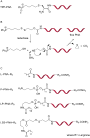
Figure 4: Structures of backbone-modified PNA.
Figure 5: Structures of PNA having α- and γ-substituted backbones.
Figure 6: Structures of modified nucleobases in PNA to improve Hoogsteen hydrogen bonding to guanine and aden...
Figure 7: Proposed hydrogen bonding schemes for modified PNA nucleobases designed to recognize pyrimidines or...
Figure 8: Modified nucleobases to modulate Watson–Crick base pairing and chemically reactive crosslinking PNA...
Figure 9: Examples of triplets formed by Janus-wedge PNA nucleobases (blue). R1 denotes DNA, RNA, or PNA back...
Figure 10: Examples of fluorescent PNA nucleobases. R1 denotes DNA, RNA, or PNA backbones.
Figure 11: Endosomal entrapment and escape pathways of PNA and PNA conjugates.
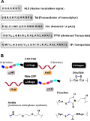
Figure 12: (A) representative cell-penetrating peptides (CPPs), (B) conjugation designs and linker chemistries....
Figure 13: Proposed delivery mode by pHLIP-PNA conjugates (A) the transmembrane section of pHLIP interacting w...
Figure 14: Structures of modified penetratin CPP conjugates with PNA linked through either disulfide (for stud...
Figure 15: Chemical structure of C9–PNA, a stable amphipathic (cyclic-peptide)–PNA conjugate.
Figure 16: Structures of PNA conjugates with a lipophilic triphenylphosphonium cation (TPP–PNA) through (A) th...
Figure 17: Structures of (A) chloesteryl–PNA, (B) cholate–PNA and (C) cholate–PNA(cholate)3.
Figure 18: Structures of PNA–GalNAc conjugates (A) (GalNAc)2K, (B) triantennary (GalNAc)3, and (C) trivalent (...
Figure 19: Vitamin B12–PNA conjugates with different linkages.
Figure 20: Structures of (A) neomycin B, (B) PNA–neamine conjugate, and (C) PNA–neosamine conjugate.
Figure 21: PNA clamp (red) binding to target DNA containing a mixture of sequences (A) PNA binds with higher a...
Figure 22: Rolling circle amplification using PNA openers (red) to invade a dsDNA target forming a P-loop. A p...
Figure 23: Molecular beacons containing generic fluorophores (Fl) and quenchers (Q) recognizing a complementar...
Figure 24: (A) Light-up fluorophores such as thiazole orange display fluorescence enhancement upon binding to ...
Figure 25: Templated fluorogenic detection of oligonucleotides using two PNAs. (A) Templated FRET depends on h...
Figure 26: Lateral flow devices use a streptavidin labeled strip on nitrocellulose paper to anchor a capture P...
Beilstein J. Org. Chem. 2021, 17, 1565–1590, doi:10.3762/bjoc.17.112
Graphical Abstract
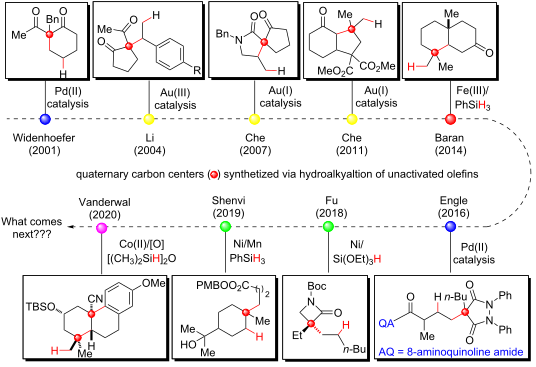
Figure 1: Some examples of natural products and drugs containing quaternary carbon centers.
Scheme 1: Simplified mechanism for olefin hydrofunctionalization using an electrophilic transition metal as a...
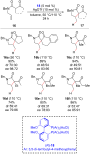
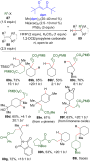
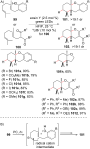
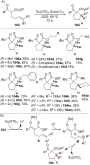
Scheme 2: Selected examples of quaternary carbon centers formed by the intramolecular hydroalkylation of β-di...
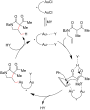
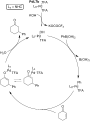
Scheme 3: Control experiments and the proposed mechanism for the Pd(II)-catalyzed intermolecular hydroalkylat...
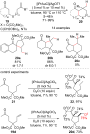
Scheme 4: Intermolecular olefin hydroalkylation of less reactive ketones under Pd(II) catalysis using HCl as ...
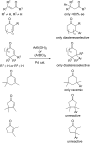
Scheme 5: A) Selected examples of Pd(II)-mediated quaternary carbon center synthesis by intermolecular hydroa...
Scheme 6: Selected examples of quaternary carbon center synthesis by gold(III) catalysis. This is the first r...
Scheme 7: Selected examples of inter- (A) and intramolecular (B) olefin hydroalkylations promoted by a silver...
Scheme 8: A) Intermolecular hydroalkylation of N-alkenyl β-ketoamides under Au(I) catalysis in the synthesis ...
Scheme 9: Asymmetric pyrrolidine synthesis through intramolecular hydroalkylation of α-substituted N-alkenyl ...
Scheme 10: Proposed mechanism for the chiral gold(I) complex promotion of the intermolecular olefin hydroalkyl...
Scheme 11: Selected examples of carbon quaternary center synthesis by gold and evidence of catalytic system pa...
Scheme 12: Synthesis of a spiro compound via an aza-Michael addition/olefin hydroalkylation cascade promoted b...
Scheme 13: A selected example of quaternary carbon center synthesis using an Fe(III) salt as a catalyst for th...
Scheme 14: Intermolecular hydroalkylation catalyzed by a cationic iridium complex (Fuji (2019) [47]).
Scheme 15: Generic example of an olefin hydrofunctionalization via MHAT (Shenvi (2016) [51]).
Scheme 16: The first examples of olefin hydrofunctionalization run under neutral conditions (Mukaiyama (1989) [56]...
Scheme 17: A) Aryl olefin dimerization catalyzed by vitamin B12 and triggered by HAT. B) Control experiment to...
Scheme 18: Generic example of MHAT diolefin cycloisomerization and possible competitive pathways. Shenvi (2014...
Scheme 19: Selected examples of the MHAT-promoted cycloisomerization reaction of unactivated olefins leading t...
Scheme 20: Regioselective carbocyclizations promoted by an MHAT process (Norton (2008) [76]).
Scheme 21: Selected examples of quaternary carbon centers synthetized via intra- (A) and intermolecular (B) MH...
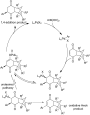
Scheme 22: A) Proposed mechanism for the Fe(III)/PhSiH3-promoted radical conjugate addition between olefins an...
Scheme 23: Examples of cascade reactions triggered by HAT for the construction of trans-decalin backbone uniti...
Scheme 24: A) Selected examples of the MHAT-promoted radical conjugate addition between olefins and p-quinone ...
Scheme 25: A) MHAT triggered radical conjugate addition/E1cB/lactonization (in some cases) cascade between ole...
Scheme 26: A) Spirocyclization promoted by Fe(III) hydroalkylation of unactivated olefins. B) Simplified mecha...
Scheme 27: A) Selected examples of the construction of a carbon quaternary center by the MHAT-triggered radica...
Scheme 28: Hydromethylation of unactivated olefins under iron-mediated MHAT (Baran (2015) [95]).
Scheme 29: The hydroalkylation of unactivated olefins via iron-mediated reductive coupling with hydrazones (Br...
Scheme 30: Selected examples of the Co(II)-catalyzed bicyclization of dialkenylarenes through the olefin hydro...
Scheme 31: Proposed mechanism for the bicyclization of dialkenylarenes triggered by a MHAT process (Vanderwal ...
Scheme 32: Enantioconvergent cross-coupling between olefins and tertiary halides (Fu (2018) [108]).
Scheme 33: Proposed mechanism for the Ni-catalyzed cross-coupling reaction between olefins and tertiary halide...
Scheme 34: Proposed catalytic cycles for a MHAT/Ni cross-coupling reaction between olefins and halides (Shenvi...
Scheme 35: Selected examples of the hydroalkylation of olefins by a dual catalytic Mn/Ni system (Shenvi (2019) ...
Scheme 36: A) Selected examples of quaternary carbon center synthesis by reductive atom transfer; TBC: 4-tert-...
Scheme 37: A) Selected examples of quaternary carbon centers synthetized by radical addition to unactivated ol...
Scheme 38: A) Selected examples of organophotocatalysis-mediated radical polyene cyclization via a PET process...
Scheme 39: A) Sc(OTf)3-mediated carbocyclization approach for the synthesis of vicinal quaternary carbon cente...
Scheme 40: Scope of the Lewis acid-catalyzed methallylation of electron-rich styrenes. Method A: B(C6F5)3 (5.0...
Scheme 41: The proposed mechanism for styrene methallylation (Oestreich (2019) [123]).
Beilstein J. Org. Chem. 2021, 17, 1181–1312, doi:10.3762/bjoc.17.90
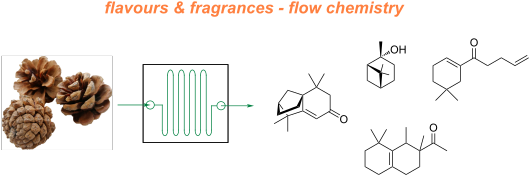
Graphical Abstract
Figure 1: Representative shares of the global F&F market (2018) segmented on their applications [1].
Figure 2: General structure of an international fragrance company [2].
Figure 3: The Michael Edwards fragrance wheel.
Figure 4: Examples of oriental (1–3), woody (4–7), fresh (8–10), and floral (11 and 12) notes.
Figure 5: A basic depiction of batch vs flow.
Scheme 1: Examples of reactions for which flow processing outperforms batch.
Scheme 2: Some industrially important aldol-based transformations.
Scheme 3: Biphasic continuous aldol reactions of acetone and various aldehydes.
Scheme 4: Aldol synthesis of 43 in flow using LiHMDS as the base.
Scheme 5: A semi-continuous synthesis of doravirine (49) involving a key aldol reaction.
Scheme 6: Enantioselective aldol reaction using 5-(pyrrolidin-2-yl)tetrazole (51) as catalyst in a microreact...
Scheme 7: Gröger's example of asymmetric aldol reaction in aqueous media.
Figure 6: Immobilised reagent column reactor types.
Scheme 8: Photoinduced thiol–ene coupling preparation of silica-supported 5-(pyrrolidin-2-yl)tetrazole 63 and...
Scheme 9: Continuous-flow approach for enantioselective aldol reactions using the supported catalyst 67.
Scheme 10: Ötvös’ employment of a solid-supported peptide aldol catalyst in flow.
Scheme 11: The use of proline tetrazole packed in a column for aldol reaction between cyclohexanone (65) and 2...
Scheme 12: Schematic diagram of an aminosilane-grafted Si-Zr-Ti/PAI-HF reactor for continuous-flow aldol and n...
Scheme 13: Continuous-flow condensation for the synthesis of the intermediate 76 to nabumetone (77) and Microi...
Scheme 14: Synthesis of ψ-Ionone (80) in continuous-flow via aldol condensation between citral (79) and aceton...
Scheme 15: Synthesis of β-methyl-ionones (83) from citral (79) in flow. The steps are separately described, an...
Scheme 16: Continuous-flow synthesis of 85 from 84 described by Gavriilidis et al.
Scheme 17: Continuous-flow scCO2 apparatus for the synthesis of 2-methylpentanal (87) and the self-condensed u...
Scheme 18: Chen’s two-step flow synthesis of coumarin (90).
Scheme 19: Pechmann condensation for the synthesis of 7-hydroxyxcoumarin (93) in flow. The setup extended to c...
Scheme 20: Synthesis of the dihydrojasmonate 35 exploiting nitro derivative proposed by Ballini et al.
Scheme 21: Silica-supported amines as heterogeneous catalyst for nitroaldol condensation in flow.
Scheme 22: Flow apparatus for the nitroaldol condensation of p-hydroxybenzaldehyde (102) to nitrostyrene 103 a...
Scheme 23: Nitroaldol reaction of 64 to 105 employing a quaternary ammonium functionalised PANF.
Scheme 24: Enantioselective nitroaldol condensation for the synthesis of 108 under flow conditions.
Scheme 25: Enatioselective synthesis of 1,2-aminoalcohol 110 via a copper-catalysed nitroaldol condensation.
Scheme 26: Examples of Knoevenagel condensations applied for fragrance components.
Scheme 27: Flow apparatus for Knoevenagel condensation described in 1989 by Venturello et al.
Scheme 28: Knoevenagel reaction using a coated multichannel membrane microreactor.
Scheme 29: Continuous-flow apparatus for Knoevenagel condensation employing sugar cane bagasse as support deve...
Scheme 30: Knoevenagel reaction for the synthesis of 131–135 in flow using an amine-functionalised silica gel. ...
Scheme 31: Continuous-flow synthesis of compound 137, a key intermediate for the synthesis of pregabalin (138)...
Scheme 32: Continuous solvent-free apparatus applied for the synthesis of compounds 140–143 using a TSE. Throu...
Scheme 33: Lewis et al. developed a spinning disc reactor for Darzens condensation of 144 and a ketone to furn...
Scheme 34: Some key industrial applications of conjugate additions in the F&F industry.
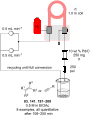
Scheme 35: Continuous-flow synthesis of 4-(2-hydroxyethyl)thiomorpholine 1,1-dioxide (156) via double conjugat...
Scheme 36: Continuous-flow system for Michael addition using CsF on alumina as the catalyst.
Scheme 37: Calcium chloride-catalysed asymmetric Michael addition using an immobilised chiral ligand.
Scheme 38: Continuous multistep synthesis for the preparation of (R)-rolipram (173). Si-NH2: primary amine-fun...
Scheme 39: Continuous-flow Michael addition using ion exchange resin Amberlyst® A26.
Scheme 40: Preparation of the heterogeneous catalyst 181 developed by Paixão et al. exploiting Ugi multicompon...
Scheme 41: Continuous-flow system developed by the Paixão’s group for the preparation of Michael asymmetric ad...
Scheme 42: Continuous-flow synthesis of nitroaldols catalysed by supported catalyst 184 developed by Wennemers...
Scheme 43: Heterogenous polystyrene-supported catalysts developed by Pericàs and co-workers.
Scheme 44: PANF-supported pyrrolidine catalyst for the conjugate addition of cyclohexanone (65) and trans-β-ni...
Scheme 45: Synthesis of (−)-paroxetine precursor 195 developed by Ötvös, Pericàs, and Kappe.
Scheme 46: Continuous-flow approach for the 5-step synthesis of (−)-oseltamivir (201) as devised by Hayashi an...
Scheme 47: Continuous-flow enzyme-catalysed Michael addition.
Scheme 48: Continuous-flow copper-catalysed 1,4 conjugate addition of Grignard reagents to enones. Reprinted w...
Scheme 49: A collection of commonly encountered hydrogenation reactions.
Figure 7: The ThalesNano H-Cube® continuous-flow hydrogenator.
Scheme 50: Chemoselective reduction of an α,β-unsaturated ketone using the H-Cube® reactor.
Scheme 51: Incorporation of Lindlar’s catalyst into the H-Cube® reactor for the reduction of an alkyne.
Scheme 52: Continuous-flow semi-hydrogenation of alkyne 208 to 209 using SACs with H-Cube® system.
Figure 8: The standard setups for tube-in-tube gas–liquid reactor units.
Scheme 53: Homogeneous hydrogenation of olefins using a tube-in-tube reactor setup.
Scheme 54: Recyclable heterogeneous flow hydrogenation system.
Scheme 55: Leadbeater’s reverse tube-in-tube hydrogenation system for olefin reductions.
Scheme 56: a) Hydrogenation using a Pd-immobilised microchannel reactor (MCR) and b) a representation of the i...
Scheme 57: Hydrogenation of alkyne 238 exploiting segmented flow in a Pd-immobilised capillary reactor.
Scheme 58: Continuous hydrogenation system for the preparation of cyrene (241) from (−)-levoglucosenone (240).
Scheme 59: Continuous hydrogenation system based on CSMs developed by Hornung et al.
Scheme 60: Chemoselective reduction of carbonyls (ketones over aldehydes) in flow.
Scheme 61: Continuous system for the semi-hydrogenation of 256 and 258, developed by Galarneau et al.
Scheme 62: Continuous synthesis of biodiesel fuel 261 from lignin-derived furfural acetone (260).
Scheme 63: Continuous synthesis of γ-valerolacetone (263) via CTH developed by Pineda et al.
Scheme 64: Continuous hydrogenation of lignin-derived biomass (products 265, 266, and 267) using a sustainable...
Scheme 65: Ru/C or Rh/C-catalysed hydrogenation of arene in flow as developed by Sajiki et al.
Scheme 66: Polysilane-immobilized Rh–Pt-catalysed hydrogenation of arenes in flow by Kobayashi et al.
Scheme 67: High-pressure in-line mixing of H2 for the asymmetric reduction of 278 at pilot scale with a 73 L p...
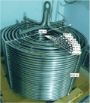
Figure 9: Picture of the PFR employed at Eli Lilly & Co. for the continuous hydrogenation of 278 [287]. Reprinted ...
Scheme 68: Continuous-flow asymmetric hydrogenation using Oppolzer's sultam 280 as chiral auxiliary.
Scheme 69: Some examples of industrially important oxidation reactions in the F&F industry. CFL: compact fluor...
Scheme 70: Gold-catalysed heterogeneous oxidation of alcohols in flow.
Scheme 71: Uozumi’s ARP-Pt flow oxidation protocol.
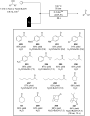
Scheme 72: High-throughput screening of aldehyde oxidation in flow using an in-line GC.
Scheme 73: Permanganate-mediated Nef oxidation of nitroalkanes in flow with the use of in-line sonication to p...
Scheme 74: Continuous-flow aerobic anti-Markovnikov Wacker oxidation.
Scheme 75: Continuous-flow oxidation of 2-benzylpyridine (312) using air as the oxidant.
Scheme 76: Continuous-flow photo-oxygenation of monoterpenes.
Scheme 77: A tubular reactor design for flow photo-oxygenation.
Scheme 78: Glucose oxidase (GOx)-mediated continuous oxidation of glucose using compressed air and the FFMR re...
Scheme 79: Schematic continuous-flow sodium hypochlorite/TEMPO oxidation of alcohols.
Scheme 80: Oxidation using immobilised TEMPO (344) was developed by McQuade et al.
Scheme 81: General protocol for the bleach/catalytic TBAB oxidation of aldehydes and alcohols.
Scheme 82: Continuous-flow PTC-assisted oxidation using hydrogen peroxide. The process was easily scaled up by...
Scheme 83: Continuous-flow epoxidation of cyclohexene (348) and in situ preparation of m-CPBA.
Scheme 84: Continuous-flow epoxidation using DMDO as oxidant.
Scheme 85: Mukayama aerobic epoxidation optimised in flow mode by the Favre-Réguillon group.
Scheme 86: Continuous-flow asymmetric epoxidation of derivatives of 359 exploiting a biomimetic iron catalyst.
Scheme 87: Continuous-flow enzymatic epoxidation of alkenes developed by Watts et al.
Scheme 88: Engineered multichannel microreactor for continuous-flow ozonolysis of 366.
Scheme 89: Continuous-flow synthesis of the vitamin D precursor 368 using multichannel microreactors. MFC: mas...
Scheme 90: Continuous ozonolysis setup used by Kappe et al. for the synthesis of various substrates employing ...
Scheme 91: Continuous-flow apparatus for ozonolysis as developed by Ley et al.
Scheme 92: Continuous-flow ozonolysis for synthesis of vanillin (2) using a film-shear flow reactor.
Scheme 93: Examples of preparative methods for ajoene (386) and allicin (388).
Scheme 94: Continuous-flow oxidation of thioanisole (389) using styrene-based polymer-supported peroxytungstat...
Scheme 95: Continuous oxidation of thiosulfinates using Oxone®-packed reactor.
Scheme 96: Continuous-flow electrochemical oxidation of thioethers.
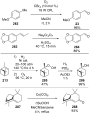
Scheme 97: Continuous-flow oxidation of 400 to cinnamophenone (235).
Scheme 98: Continuous-flow synthesis of dehydrated material 401 via oxidation of methyl dihydrojasmonate (33).
Scheme 99: Some industrially important transformations involving Grignard reagents.
Scheme 100: Grachev et al. apparatus for continuous preparation of Grignard reagents.
Scheme 101: Example of fluidized Mg bed reactor with NMR spectrometer as on-line monitoring system.
Scheme 102: Continuous-flow synthesis of Grignard reagents and subsequent quenching reaction.
Figure 10: Membrane-based, liquid–liquid separator with integrated pressure control [52]. Adapted with permission ...
Scheme 103: Continuous-flow synthesis of 458, an intermediate to fluconazole (459).
Scheme 104: Continuous-flow synthesis of ketones starting from benzoyl chlorides.
Scheme 105: A Grignard alkylation combining CSTR and PFR technologies with in-line infrared reaction monitoring....
Scheme 106: Continuous-flow preparation of 469 from Grignard addition of methylmagnesium bromide.
Scheme 107: Continuous-flow synthesis of Grignard reagents 471.
Scheme 108: Preparation of the Grignard reagent 471 using CSTR and the continuous process for synthesis of the ...
Scheme 109: Continuous process for carboxylation of Grignard reagents in flow using tube-in-tube technology.
Scheme 110: Continuous synthesis of propargylic alcohols via ethynyl-Grignard reagent.
Scheme 111: Silica-supported catalysed enantioselective arylation of aldehydes using Grignard reagents in flow ...
Scheme 112: Acid-catalysed rearrangement of citral and dehydrolinalool derivatives.
Scheme 113: Continuous stilbene isomerisation with continuous recycling of photoredox catalyst.
Scheme 114: Continuous-flow synthesis of compound 494 as developed by Ley et al.
Scheme 115: Selected industrial applications of DA reaction.
Scheme 116: Multistep flow synthesis of the spirocyclic structure 505 via employing DA cycloaddition.
Scheme 117: Continuous-flow DA reaction developed in a plater flow reactor for the preparation of the adduct 508...
Scheme 118: Continuous-flow DA reaction using a silica-supported imidazolidinone organocatalyst.
Scheme 119: Batch vs flow for the DA reaction of (cyclohexa-1,5-dien-1-yloxy)trimethylsilane (513) with acrylon...
Scheme 120: Continuous-flow DA reaction between 510 and 515 using a shell-core droplet system.
Scheme 121: Continuous-flow synthesis of bicyclic systems from benzyne precursors.
Scheme 122: Continuous-flow synthesis of bicyclic scaffolds 527 and 528 for further development of potential ph...
Scheme 123: Continuous-flow inverse-electron hetero-DA reaction to pyridine derivatives such as 531.
Scheme 124: Comparison between batch and flow for the synthesis of pyrimidinones 532–536 via retro-DA reaction ...
Scheme 125: Continuous-flow coupled with ultrasonic system for preparation of ʟ-ascorbic acid derivatives 539 d...
Scheme 126: Two-step continuous-flow synthesis of triazole 543.
Scheme 127: Continuous-flow preparation of triazoles via CuAAC employing 546-based heterogeneous catalyst.
Scheme 128: Continuous-flow synthesis of compounds 558 through A3-coupling and 560 via AgAAC both employing the...
Scheme 129: Continuous-flow photoinduced [2 + 2] cycloaddition for the preparation of bicyclic derivatives of 5...
Scheme 130: Continuous-flow [2 + 2] and [5 + 2] cycloaddition on large scale employing a flow reactor developed...
Scheme 131: Continuous-flow preparation of the tricyclic structures 573 and 574 starting from pyrrole 570 via [...
Scheme 132: Continuous-flow [2 + 2] photocyclization of cinnamates.
Scheme 133: Continuous-flow preparation of cyclobutane 580 on a 5-plates photoreactor.
Scheme 134: Continuous-flow [2 + 2] photocycloaddition under white LED lamp using heterogeneous PCN as photocat...
Figure 11: Picture of the parallel tube flow reactor (PTFR) "The Firefly" developed by Booker-Milburn et al. a...
Scheme 135: Continuous-flow acid-catalysed [2 + 2] cycloaddition between silyl enol ethers and acrylic esters.
Scheme 136: Continuous synthesis of lactam 602 using glass column reactors.
Scheme 137: In situ generation of ketenes for the Staudinger lactam synthesis developed by Ley and Hafner.
Scheme 138: Application of [2 + 2 + 2] cycloadditions in flow employed by Ley et al.
Scheme 139: Examples of FC reactions applied in F&F industry.
Scheme 140: Continuous-flow synthesis of ibuprofen developed by McQuade et al.
Scheme 141: The FC acylation step of Jamison’s three-step ibuprofen synthesis.
Scheme 142: Synthesis of naphthalene derivative 629 via FC acylation in microreactors.
Scheme 143: Flow system for rapid screening of catalysts and reaction conditions developed by Weber et al.
Scheme 144: Continuous-flow system developed by Buorne, Muller et al. for DSD optimisation of the FC acylation ...
Scheme 145: Continuous-flow FC acylation of alkynes to yield β-chlorovinyl ketones such as 638.
Scheme 146: Continuous-flow synthesis of tonalide (619) developed by Wang et al.
Scheme 147: Continuous-flow preparation of acylated arene such as 290 employing Zr4+-β-zeolite developed by Kob...
Scheme 148: Flow system applied on an Aza-FC reaction catalysed by the thiourea catalyst 648.
Scheme 149: Continuous hydroformylation in scCO2.
Scheme 150: Two-step flow synthesis of aldehyde 655 through a sequential Heck reaction and subsequent hydroform...
Scheme 151: Single-droplet (above) and continuous (below) flow reactors developed by Abolhasani et al. for the ...
Scheme 152: Continuous hydroformylation of 1-dodecene (655) using a PFR-CSTR system developed by Sundmacher et ...
Scheme 153: Continuous-flow synthesis of the aldehyde 660 developed by Eli Lilly & Co. [32]. Adapted with permissio...
Scheme 154: Continuous asymmetric hydroformylation employing heterogenous catalst supported on carbon-based sup...
Scheme 155: Examples of acetylation in F&F industry: synthesis of bornyl (S,R,S-664) and isobornyl (S,S,S-664) ...
Scheme 156: Continuous-flow preparation of bornyl acetate (S,R,S-664) employing the oscillating flow reactor.
Scheme 157: Continuous-flow synthesis of geranyl acetate (666) from acetylation of geraniol (343) developed by ...
Scheme 158: 12-Ttungstosilicic acid-supported silica monolith-catalysed acetylation in flow.
Scheme 159: Continuous-flow preparation of cyclopentenone 676.
Scheme 160: Two-stage synthesis of coumarin (90) via acetylation of salicylaldehyde (88).
Scheme 161: Intensification process for acetylation of 5-methoxytryptamine (677) to melatonin (678) developed b...
Scheme 162: Examples of macrocyclic musky odorants both natural (679–681) and synthetic (682 and 683).
Scheme 163: Flow setup combined with microwave for the synthesis of macrocycle 686 via RCM.
Scheme 164: Continuous synthesis of 2,5-dihydro-1H-pyrroles via ring-closing metathesis.
Scheme 165: Continuous-flow metathesis of 485 developed by Leadbeater et al.
Figure 12: Comparison between RCM performed using different routes for the preparation of 696. On the left the...
Scheme 166: Continuous-flow RCM of 697 employed the solid-supported catalyst 698 developed by Grela, Kirschning...
Scheme 167: Continuous-flow RORCM of cyclooctene employing the silica-absorbed catalyst 700.
Scheme 168: Continuous-flow self-metathesis of methyl oleate (703) employing SILP catalyst 704.
Scheme 169: Flow apparatus for the RCM of 697 using a nanofiltration membrane for the recovery and reuse of the...
Scheme 170: Comparison of loadings between RCMs performed with different routes for the synthesis of 709.
Beilstein J. Org. Chem. 2021, 17, 1141–1148, doi:10.3762/bjoc.17.87
Graphical Abstract
Figure 1: Biologically active compounds having thiazolidin-4-one and thiazolo-1,2,4-triazine units.
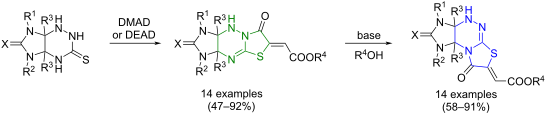
Scheme 1: Regioselectivity of the cyclization of 3-thioxo-1,2,4-triazin-5-ones 1 with DMAD (A) and general co...
Scheme 2: Synthesis of imidazo[4,5-e]thiazolo[3,2-b]triazine derivatives 4a–n by the reaction of imidazo[4,5-...
Scheme 3: Reaction of imidazo[4,5-e]thiazolo[3,2-b]triazine 4h with aqueous KOH.
Scheme 4: Rearrangement of imidazo[4,5-e]thiazolo[3,2-b]triazines 4a–n into imidazo[4,5-e]thiazolo[2,3-c]tria...
Scheme 5: One-pot synthesis of compounds 5a,b,h,i from imidazo[4,5-e]triazines 3a,b.
Scheme 6: Plausible mechanism of the formation and the rearrangement of compounds 4 into isomers 5.
Figure 2: 1H NMR spectra of compounds 4h and 5h in DMSO-d6 in the region of 3.5–8.8 ppm.
Figure 3: X-ray crystal structure of compound 5i.
Beilstein J. Org. Chem. 2021, 17, 1096–1140, doi:10.3762/bjoc.17.86
Graphical Abstract
Scheme 1: General strategy for the enantioselective synthesis of N-containing heterocycles from N-tert-butane...
Scheme 2: Methodologies for condensation of aldehydes and ketones with tert-butanesulfinamides (1).
Scheme 3: Transition models for cis-aziridines and trans-aziridines.
Scheme 4: Mechanism for the reduction of N-tert-butanesulfinyl imines.
Scheme 5: Transition models for the addition of organomagnesium and organolithium compounds to N-tert-butanes...
Scheme 6: Synthesis of 2,2-dibromoaziridines 15 from aldimines 14 and bromoform, and proposed non-chelation-c...
Scheme 7: Diastereoselective synthesis of aziridines from tert-butanesulfinyl imines.
Scheme 8: Synthesis of vinylaziridines 22 from aldimines 14 and 1,3-dibromopropene 23, and proposed chelation...
Scheme 9: Synthesis of vinylaziridines 27 from aldimines 14 and α-bromoesters 26, and proposed transition sta...
Scheme 10: Synthesis of 2-chloroaziridines 28 from aldimines 14 and dichloromethane, and proposed transition s...
Scheme 11: Synthesis of cis-vinylaziridines 30 and 31 from aldimines 14 and bromomethylbutenolide 29.
Scheme 12: Synthesis of 2-chloro-2-aroylaziridines 36 and 32 from aldimines 14, arylnitriles 34, and silyldich...
Scheme 13: Synthesis of trifluoromethylaziridines 39 and proposed transition state of the aziridination.
Scheme 14: Synthesis of aziridines 42 and proposed state transition.
Scheme 15: Synthesis of 1-substituted 2-azaspiro[3.3]heptanes, 1-phenyl-2-azaspiro[3.4]octane and 1-phenyl-2-a...
Scheme 16: Synthesis of 1-substituted 2,6-diazaspiro[3.3]heptanes 48 from chiral imines 14 and 1-Boc-azetidine...
Scheme 17: Synthesis of β-lactams 52 from chiral imines 14 and dimethyl malonate (49).
Scheme 18: Synthesis of spiro-β-lactam 57 from chiral (RS)-N-tert-butanesulfinyl isatin ketimine 53 and ethyl ...
Scheme 19: Synthesis of β-lactam 60, a precursor of (−)-batzelladine D (61) and (−)-13-epi-batzelladine D (62)...
Scheme 20: Rhodium-catalyzed asymmetric synthesis of 3-substituted pyrrolidines 66 from chiral imine (RS)-63 a...
Scheme 21: Asymmetric synthesis of 1,3-disubstituted isoindolines 69 and 70 from chiral imine 67.
Scheme 22: Asymmetric synthesis of cis-2,5-disubstituted pyrrolidines 73 from chiral imine (RS)-71.
Scheme 23: Asymmetric synthesis of 3-hydroxy-5-substituted pyrrolidin-2-ones 77 from chiral imine (RS)-74.
Scheme 24: Asymmetric synthesis of 4-hydroxy-5-substituted pyrrolidin-2-ones 80 from chiral imines 79.
Scheme 25: Asymmetric synthesis of 3-pyrrolines 82 from chiral imines 14 and ethyl 4-bromocrotonate (81).
Scheme 26: Asymmetric synthesis of γ-amino esters 84, and tetramic acid derivative 86 from chiral imines (RS)-...
Scheme 27: Asymmetric synthesis of α-methylene-γ-butyrolactams 90 from chiral imines (Z,SS)-87 and ethyl 2-bro...
Scheme 28: Asymmetric synthesis of methylenepyrrolidines 92 from chiral imines (RS)-14 and 2-(trimethysilylmet...
Scheme 29: Synthesis of dibenzoazaspirodecanes from cyclic N-tert-butanesulfinyl imines.
Scheme 30: Stereoselective synthesis of cyclopenta[c]proline derivatives 103 from β,γ-unsaturated α-amino acid...
Scheme 31: Stereoselective synthesis of alkaloids (−)-angustureine (107) and (−)-cuspareine (108).
Scheme 32: Stereoselective synthesis of alkaloids (−)-pelletierine (112) and (+)-coniine (117).
Scheme 33: Synthesis of piperidine alkaloids (+)-dihydropinidine (122a), (+)-isosolenopsin (122b) and (+)-isos...
Scheme 34: Stereoselective synthesis of the alkaloids(+)-sedamine (125) from chiral imine (SS)-119.
Scheme 35: Stereoselective synthesis of trans-5-hydroxy-6-substituted-2-piperidinones 127 and 129 from chiral ...
Scheme 36: Stereoselective synthesis of trans-5-hydroxy-6-substituted ethanone-2-piperidinones 132 from chiral...
Scheme 37: Stereoselective synthesis of trans-3-benzyl-5-hydroxy-6-substituted-2-piperidinones 136 from chiral...
Scheme 38: Stereoselective synthesis of trans-5-hydroxy-6-substituted 2-piperidinones 139 from chiral imine 138...
Scheme 39: Stereoselective synthesis of ʟ-hydroxypipecolic acid 145 from chiral imine 144.
Scheme 40: Synthesis of 1-substituted isoquinolones 147, 149 and 151.
Scheme 41: Stereoselective synthesis of 3-substituted dihydrobenzo[de]isoquinolinones 154.
Scheme 42: Enantioselective synthesis of alkaloids (S)-1-benzyl-6,7-dimethoxy-1,2,3,4-tetrahydroisoquinoline (...
Scheme 43: Enantioselective synthesis of alkaloids (−)-cermizine B (171) and (+)-serratezomine E (172) develop...
Scheme 44: Stereoselective synthesis of (+)-isosolepnosin (177) and (+)-solepnosin (178) from homoallylamine d...
Scheme 45: Stereoselective synthesis of tetrahydroquinoline derivatives 184, 185 and 187 from chiral imines (RS...
Scheme 46: Stereoselective synthesis of pyridobenzofuran and pyridoindole derivatives 193 from homopropargylam...
Scheme 47: Stereoselective synthesis of 2-substituted 1,2,5,6-tetrahydropyridines 196 from chiral imines (RS)-...
Scheme 48: Stereoselective synthesis of 2-substituted trans-2,6-disubstituted piperidine 199 from chiral imine...
Scheme 49: Stereoselective synthesis of cis-2,6-disubstituted piperidines 200, and alkaloid (+)-241D, from chi...
Scheme 50: Stereoselective synthesis of 6-substituted piperidines-2,5-diones 206 and 1,7-diazaspiro[4.5]decane...
Scheme 51: Stereoselective synthesis of spirocyclic oxindoles 210 from chiral imines (RS)-53.
Scheme 52: Stereoselective synthesis of azaspiro compound 213 from chiral imine 211.
Scheme 53: Stereoselective synthesis of tetrahydroisoquinoline derivatives from chiral imines (RS)-214.
Scheme 54: Stereoselective synthesis of (−)-crispine A 223 from chiral imine (RS)-214.
Scheme 55: Synthesis of (−)-harmicine (228) using tert-butanesulfinamide through haloamide cyclization.
Scheme 56: Stereoselective synthesis of tetraponerines T1–T8.
Scheme 57: Stereoselective synthesis of phenanthroindolizidines 246a and (−)-tylophorine (246b), and phenanthr...
Scheme 58: Stereoselective synthesis of indoline, tetrahydroquinoline and tetrahydrobenzazepine derivatives 253...
Scheme 59: Stereoselective synthesis of (+)-epohelmin A (258) and (+)-epohelmin B (260) from aldimine (RS)-79.
Scheme 60: Stereoselective synthesis of (−)-epiquinamide (266) from chiral aldimine (SS)-261.
Scheme 61: Synthesis synthesis of (–)-hippodamine (273) and (+)-epi-hippodamine (272) using chiral sulfinyl am...
Scheme 62: Stereoselective synthesis of (+)-grandisine D (279) and (+)-amabiline (283).
Scheme 63: Stereoselective synthesis of (−)-epiquinamide (266) and (+)-swaisonine (291) from aldimine (SS)-126....
Scheme 64: Stereoselective synthesis of (+)-C(9a)-epi-epiquinamide (294).
Scheme 65: Stereoselective synthesis of (+)-lasubine II (298) from chiral aldimine (SS)-109.
Scheme 66: Stereoselective synthesis of (−)-epimyrtine (300a) and (−)-lasubine II (ent-302) from β-amino keton...
Scheme 67: Stereoselective synthesis of (−)-tabersonine (310), (−)-vincadifformine (311), and (−)-aspidospermi...
Scheme 68: Stereoselective synthesis of (+)-epohelmin A (258) and (+)-epohelmin B (260) from aldehyde 313 and ...
Scheme 69: Total synthesis of (+)-lysergic acid (323) from N-tert-butanesulfinamide (RS)-1.
Beilstein J. Org. Chem. 2021, 17, 1048–1085, doi:10.3762/bjoc.17.84
Graphical Abstract
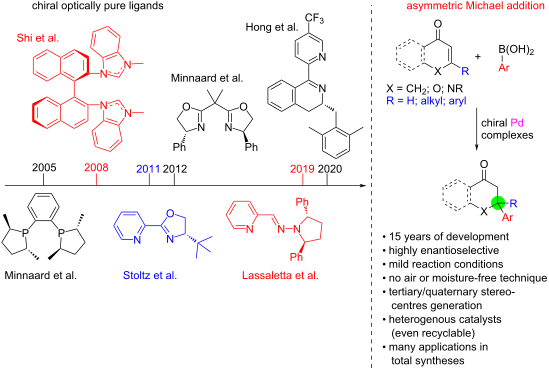
Scheme 1: Synthesis of optically pure 4-phenylchroman-2-one [34].
Scheme 2: Synthesis of (R)-tolterodine [3].
Scheme 3: Catalytic cycle of the Pd(II)-catalysed 1,4-addition of organoboron reagents to enones [3,26,35].
Scheme 4: Enantioselective β-arylation of cyclohexanone [38].
Scheme 5: Application of L2/Pd(OAc)2 in the total synthesis of terpenes [8].
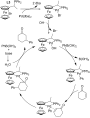
Scheme 6: Plausible catalytic cycle for the addition of phenylboronic acid to 2-cyclohexenone catalysed by L3...
Scheme 7: Microwave-assisted addition of phenylboronic acid to 2-cyclohexenone catalysed by L4/Pd2(dba)3·CHCl3...
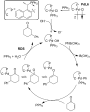
Scheme 8: Plausible catalytic cycle of the addition of phenylboronic acid to 2-cyclohexenone catalysed by pal...
Scheme 9: Proposed catalytic cycle for the addition of phenylboronic acids to 2-cyclohexenone catalysed by Pd...
Scheme 10: Usage of addition reactions of boronic acids to various chromones in the syntheses of potentially a...
Scheme 11: Multigram-scale synthesis of ABBV-2222 [6].
Scheme 12: Application of the asymmetric addition of phenylboronic acid to a chromone derivative for the total...
Scheme 13: Plausible catalytic cycle for the addition of phenylboronic acid to 3-methyl-2-cyclohexenone cataly...
Scheme 14: Total syntheses of naturally occurring terpenoids [10,11].
Scheme 15: Use of the L9/Pd(TFA)2 catalytic system for the synthesis of intermediates of biologically active c...
Scheme 16: Usage of a Michael addition catalysed by L9/Pd(TFA)2 in the total synthesis of (–)-ar-tenuifolene [12].
Scheme 17: Synthesis of terpenoids by Michael addition to 3-methyl-2-cyclopentenone [13].
Scheme 18: Rh-catalysed isomerisation of 3-alkyl-3-arylcyclopentanones to 1-tetralones [53].
Scheme 19: Addition reaction of phenylboronic acid to 3-methyl-2-cyclohexenone catalysed by L9/Pd(TFA)2 in wat...
Scheme 20: Micellar nanoreactor PdL10c for the synthesis of flavanones [58].
Scheme 21: Plausible catalytic cycle for the desymmetrisation of polycyclic cyclohexenediones by the addition ...
Scheme 22: Attempt to use the catalytic system L2/Pd(TFA)2 for the addition of phenylboronic acid to 3-methyl-...
Scheme 23: Ring opening of an enantioenriched tetrahydropyran-2-one derivative as alternative strategy to line...
Scheme 24: Synthesis of biologically active compounds from addition products [14-16].
Scheme 25: Chiral 1,10-phenantroline derivative L15 as ligand for the Pd-catalysed addition reactions of pheny...
Scheme 26: The Rh-catalysed addition reaction of phenylboronic acid to a 3-substituted enone [20].
Scheme 27: Underdeveloped methodologies [14,15,65-67].
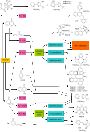
Scheme 28: Flowchart for the selection of the proper catalytic system.
Beilstein J. Org. Chem. 2021, 17, 819–865, doi:10.3762/bjoc.17.71
Graphical Abstract
Figure 1: Marketed drugs with acridine moiety.
Scheme 1: Synthesis of 4-arylacridinediones.
Scheme 2: Proposed mechanism for acridinedione synthesis.
Scheme 3: Synthesis of tetrahydrodibenzoacridinones.
Scheme 4: Synthesis of naphthoacridines.
Scheme 5: Plausible mechanism for naphthoacridines.
Figure 2: Benzoazepines based potent molecules.
Scheme 6: Synthesis of azepinone.
Scheme 7: Proposed mechanism for azepinone formation.
Scheme 8: Synthesis of benzoazulenen-1-one derivatives.
Scheme 9: Proposed mechanism for benzoazulene-1-one synthesis.
Figure 3: Indole-containing pharmacologically active molecules.
Scheme 10: Synthesis of functionalized indoles.
Scheme 11: Plausible mechanism for the synthesis of functionalized indoles.
Scheme 12: Synthesis of spirooxindoles.
Scheme 13: Synthesis of substituted spirooxindoles.
Scheme 14: Plausible mechanism for the synthesis of substituted spirooxindoles.
Scheme 15: Synthesis of pyrrolidinyl spirooxindoles.
Scheme 16: Proposed mechanism for pyrrolidinyl spirooxindoles.
Figure 4: Pyran-containing biologically active molecules.
Scheme 17: Synthesis of functionalized benzopyrans.
Scheme 18: Plausible mechanism for synthesis of benzopyran.
Scheme 19: Synthesis of indoline-spiro-fused pyran derivatives.
Scheme 20: Proposed mechanism for indoline-spiro-fused pyran.
Scheme 21: Synthesis of substituted naphthopyrans.
Figure 5: Marketed drugs with pyrrole ring.
Scheme 22: Synthesis of tetra-substituted pyrroles.
Scheme 23: Mechanism for silica-supported PPA-SiO2-catalyzed pyrrole synthesis.
Scheme 24: Synthesis of pyrrolo[1,10]-phenanthrolines.
Scheme 25: Proposed mechanism for pyrrolo[1,10]-phenanthrolines.
Figure 6: Marketed drugs and molecules containing pyrimidine and pyrimidinones skeletons.
Scheme 26: MWA-MCR pyrimidinone synthesis.
Scheme 27: Two proposed mechanisms for pyrimidinone synthesis.
Scheme 28: MWA multicomponent synthesis of dihydropyrimidinones.
Scheme 29: Proposed mechanism for dihydropyrimidinones.
Figure 7: Biologically active fused pyrimidines.
Scheme 30: MWA- MCR for the synthesis of pyrrolo[2,3-d]pyrimidines.
Scheme 31: Proposed mechanism for pyrrolo[2,3-d]pyrimidines.
Scheme 32: Synthesis of substituted pyrrolo[2,3-d]pyrimidine-2,4-diones.
Scheme 33: Probable pathway for pyrrolo[2,3-d]pyrimidine-2,4-diones.
Scheme 34: Synthesis of pyridopyrimidines.
Scheme 35: Plausible mechanism for the synthesis of pyridopyrimidines.
Scheme 36: Synthesis of dihydropyridopyrimidine and dihydropyrazolopyridine.
Scheme 37: Proposed mechanism for the formation of dihydropyridopyrimidine.
Scheme 38: Synthesis of thiopyrano[4,3-d]pyrimidines.
Scheme 39: Plausible mechanism for the synthesis of thiopyrano[4,3-d]pyrimidines.
Scheme 40: Synthesis of decorated imidazopyrimidines.
Scheme 41: Proposed mechanism for imidazopyrimidine synthesis.
Figure 8: Pharmacologically active molecules containing purine bases.
Scheme 42: Synthesis of aza-adenines.
Scheme 43: Synthesis of 5-aza-7-deazapurines.
Scheme 44: Proposed mechanism for deazapurines synthesis.
Figure 9: Biologically active molecules containing pyridine moiety.
Scheme 45: Synthesis of steroidal pyridines.
Scheme 46: Proposed mechanism for steroidal pyridine.
Scheme 47: Synthesis of N-alkylated 2-pyridones.
Scheme 48: Two possible mechanisms for pyridone synthesis.
Scheme 49: Synthesis of pyridone derivatives.
Scheme 50: Postulated mechanism for synthesis of pyridone.
Figure 10: Biologically active fused pyridines.
Scheme 51: Benzimidazole-imidazo[1,2-a]pyridines synthesis.
Scheme 52: Mechanism for the synthesis of benzimidazole-imidazo[1,2-a]pyridines.
Scheme 53: Synthesis of pyrazolo[3,4-b]pyridine-5-spirocycloalkanedione derivatives.
Scheme 54: Proposed mechanism for spiro-pyridines.
Scheme 55: Functionalized macrocyclane-fused pyrazolo[3,4-b]pyridine derivatives.
Scheme 56: Mechanism postulated for macrocyclane-fused pyrazolo[3,4-b]pyridine.
Scheme 57: Generation of pyrazolo[3,4-b]pyridines.
Scheme 58: Proposed mechanism for the synthesis of pyrazolo[3,4-b]pyridines.
Scheme 59: Proposed mechanism for the synthesis of azepinoindole.
Figure 11: Pharmaceutically important molecules with quinoline moiety.
Scheme 60: Povarov-mediated quinoline synthesis.
Scheme 61: Proposed mechanism for Povarov reaction.
Scheme 62: Synthesis of pyrazoloquinoline.
Scheme 63: Plausible mechanism for pyrazoloquinoline synthesis.
Figure 12: Quinazolinones as pharmacologically significant scaffolds.
Scheme 64: Four-component reaction for dihydroquinazolinone.
Scheme 65: Proposed mechanism for dihydroquinazolinones.
Scheme 66: Synthesis purine quinazolinone and PI3K-δ inhibitor.
Scheme 67: Synthesis of fused benzothiazolo/benzoimidazoloquinazolinones.
Scheme 68: Proposed mechanism for fused benzothiazolo/benzoimidazoloquinazolinones.
Scheme 69: On-water reaction for synthesis of thiazoloquinazolinone.
Scheme 70: Proposed mechanism for the thiazoloquinazolinone synthesis.
Scheme 71: β-Cyclodextrin-mediated synthesis of indoloquinazolinediones.
Scheme 72: Proposed mechanism for synthesis of indoloquinazolinediones.
Figure 13: Triazoles-containing marketted drugs and pharmacologically active molecules.
Scheme 73: Cu(I) DAPTA-catalyzed 1,2,3-triazole formation.
Scheme 74: Mechanism for Cu(I) DAPTA-catalyzed triazole formation.
Scheme 75: Synthesis of β-hydroxy-1,2,3-triazole.
Scheme 76: Proposed mechanism for synthesis of β-hydroxy-1,2,3-triazoles.
Scheme 77: Synthesis of bis-1,2,4-triazoles.
Scheme 78: Proposed mechanism for bis-1,2,4-triazoles synthesis.
Figure 14: Thiazole containing drugs.
Scheme 79: Synthesis of a substituted thiazole ring.
Scheme 80: Synthesis of pyrazolothiazoles.
Figure 15: Chromene containing drugs.
Scheme 81: Magnetic nanocatalyst-mediated aminochromene synthesis.
Scheme 82: Proposed mechanism for the synthesis of chromenes.
Beilstein J. Org. Chem. 2021, 17, 762–770, doi:10.3762/bjoc.17.66
Graphical Abstract
Scheme 1: Synthesis, functionalization and applications of triazoles.
Scheme 2: The reaction was performed using 0.2 mmol N-tosyl-1,2,3-triazole 1 and 0.2 mmol of cyclohexyl-1,3-d...
Scheme 3: Control experiments.
Scheme 4: Mechanistic proposal for the formation of β-triazolylenones.
Figure 1: Nucleophilic addition to 5- and 6-membered cyclic tosyloxyenones.
Beilstein J. Org. Chem. 2021, 17, 494–503, doi:10.3762/bjoc.17.43
Graphical Abstract
Scheme 1: Synthesis of organocatalyst 5.
Figure 1: Structures of the screened organocatalysts.
Scheme 2: Proposed transition state for the SMA of 1-thionaphthol to trans-chalcones.
Figure 2: Comparison of the ee values of SMA in the presence of THF and DCM as solvent.
Beilstein J. Org. Chem. 2021, 17, 420–430, doi:10.3762/bjoc.17.38
Graphical Abstract
Scheme 1: Sulfur metabolism in bacteria from the roseobacter group. A) DMSP demethylation by DmdABCD, B) DMSP...
Figure 1: Total ion chromatograms of headspace extracts from A) C. marinus DSM 100036T, B) C. neptunius DSM 2...
Figure 2: Structures of the identified volatile compounds in the headspace extracts from six Celeribacter typ...
Figure 3: EI mass spectra of A) unlabeled 2-(methyldisulfanyl)benzothiazole (41) and of labeled 41 after feed...
Scheme 2: Synthesis of sulfur-containing compounds detected in the Celeribacter headspace extracts. A) Synthe...
Beilstein J. Org. Chem. 2021, 17, 379–384, doi:10.3762/bjoc.17.33
Graphical Abstract
Scheme 1: The continuous flow set-up used.
Figure 1: Scope of Cbz-carbamate products obtained via flow process (*tRes = 60 min, **T = 80 °C; isolated yi...
Scheme 2: Side reaction during formation of product 3m.
Scheme 3: Flow set-up for the CALB-mediated impurity tagging approach.
Scheme 4: Strategies towards accessing β-amino acid derivatives 8.
Scheme 5: Complementary flow approaches towards the β-amino acid derivatives 8.
Scheme 6: Batch hydrolysis of the ester group in the presence of the carbamate.
Beilstein J. Org. Chem. 2021, 17, 273–282, doi:10.3762/bjoc.17.26
Graphical Abstract
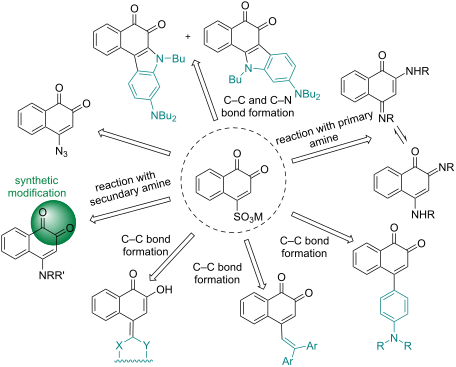
Scheme 1: Synthetic pathways for the preparation of o-quinone derivatives with annulated 1,3-dithiole ring.
Figure 1: Active methylene compounds used for the preparation of gem-dithiolates.
Figure 2: Fragment of coordination polymer chain of adduct 8 in the crystal phase. Hydrogen atoms and CF3 gro...
Scheme 2: The tentative pathway for the formation of o-quinone 7 with annulated thiete ring.
Scheme 3: Reactions of o-quinone 6a.
Scheme 4: Stepwise reduction of o-quinones with metals to semiquinonates and catecholates, respectively.
Beilstein J. Org. Chem. 2021, 17, 245–272, doi:10.3762/bjoc.17.25
Graphical Abstract
Scheme 1: Synthesis of 1,1-difluoro-2,3-dimethylcyclopropane (2).
Scheme 2: Cyclopropanation via dehydrohalogenation of chlorodifluoromethane.
Scheme 3: Difluorocyclopropanation of methylstyrene 7 using dibromodifluoromethane and zinc.
Scheme 4: Synthesis of difluorocyclopropanes from the reaction of dibromodifluoromethane and triphenylphosphi...
Scheme 5: Generation of difluorocarbene in a catalytic two-phase system and its addition to tetramethylethyle...
Scheme 6: The reaction of methylstyrene 7 with chlorodifluoromethane (11) in the presence of a tetraarylarson...
Scheme 7: Pyrolysis of sodium chlorodifluoroacetate (12) in refluxing diglyme in the presence of alkene 13.
Scheme 8: Synthesis of boron-substituted gem-difluorocyclopropanes 16.
Scheme 9: Addition of sodium bromodifluoroacetate (17) to alkenes.
Scheme 10: Addition of sodium bromodifluoroacetate (17) to silyloxy-substituted cyclopropanes 20.
Scheme 11: Synthesis of difluorinated nucleosides.
Scheme 12: Addition of butyl acrylate (26) to difluorocarbene generated from TFDA (25).
Scheme 13: Addition of difluorocarbene to propargyl esters 27 and conversion of the difluorocyclopropenes 28 t...
Scheme 14: The generation of difluorocyclopropanes using MDFA 30.
Scheme 15: gem-Difluorocyclopropanation of styrene (32) using difluorocarbene generated from TMSCF3 (31) under...
Scheme 16: Synthesis of a gem-difluorocyclopropane derivative using HFPO (41) as a source of difluorocarbene.
Scheme 17: Cyclopropanation of (Z)-2-butene in the presence of difluorodiazirine (44).
Scheme 18: The cyclopropanation of 1-octene (46) using Seyferth's reagent (45) as a source of difluorocarbene.
Scheme 19: Alternative approaches for the difluorocarbene synthesis from trimethyl(trifluoromethyl)tin (48).
Scheme 20: Difluorocyclopropanation of cyclohexene (49).
Scheme 21: Synthesis of difluorocyclopropane derivative 53 using bis(trifluoromethyl)cadmium (51) as the diflu...
Scheme 22: Addition of difluorocarbene generated from tris(trifluoromethyl)bismuth (54).
Scheme 23: Addition of a stable (trifluoromethyl)zinc reagent to styrenes.
Scheme 24: The preparation of 2,2-difluorocyclopropanecarboxylic acids of type 58.
Scheme 25: Difluorocyclopropanation via Michael cyclization.
Scheme 26: Difluorocyclopropanation using N-acylimidazolidinone 60.
Scheme 27: Difluorocyclopropanation through the cyclization of phenylacetonitrile (61) and 1,2-dibromo-1,1-dif...
Scheme 28: gem-Difluoroolefins 64 for the synthesis of functionalized cyclopropanes 65.
Scheme 29: Preparation of aminocyclopropanes 70.
Scheme 30: Synthesis of fluorinated methylenecyclopropane 74 via selenoxide elimination.
Scheme 31: Reductive dehalogenation of (1R,3R)-75.
Scheme 32: Synthesis of chiral monoacetates by lipase catalysis.
Scheme 33: Transformation of (±)-trans-81 using Rhodococcus sp. AJ270.
Scheme 34: Transformation of (±)-trans-83 using Rhodococcus sp. AJ270.
Scheme 35: Hydrogenation of difluorocyclopropenes through enantioselective hydrocupration.
Scheme 36: Enantioselective transfer hydrogenation of difluorocyclopropenes with a Ru-based catalyst.
Scheme 37: The thermal transformation of trans-1,2-dichloro-3,3-difluorocyclopropane (84).
Scheme 38: cis–trans-Epimerization of 1,1-difluoro-2,3-dimethylcyclopropane.
Scheme 39: 2,2-Difluorotrimethylene diradical intermediate.
Scheme 40: Ring opening of stereoisomers 88 and 89.
Scheme 41: [1,3]-Rearrangement of alkenylcyclopropanes 90–92.
Scheme 42: Thermolytic rearrangement of 2,2-difluoro-1-vinylcyclopropane (90).
Scheme 43: Thermal rearrangement for ethyl 3-(2,2-difluoro)-3-phenylcyclopropyl)acrylates 93 and 95.
Scheme 44: Possible pathways of the ring opening of 1,1-difluoro-2-vinylcyclopropane.
Scheme 45: Equilibrium between 1,1-difluoro-2-methylenecyclopropane (96) and (difluoromethylene)cyclopropane 97...
Scheme 46: Ring opening of substituted 1,1-difluoro-2,2-dimethyl-3-methylenecyclopropane 98.
Scheme 47: 1,1-Difluorospiropentane rearrangement.
Scheme 48: Acetolysis of (2,2-difluorocyclopropyl)methyl tosylate (104) and (1,1-difluoro-2-methylcyclopropyl)...
Scheme 49: Ring opening of gem-difluorocyclopropyl ketones 106 and 108 by thiolate nucleophiles.
Scheme 50: Hydrolysis of gem-difluorocyclopropyl acetals 110.
Scheme 51: Ring-opening reaction of 2,2-difluorocyclopropyl ketones 113 in the presence of ionic liquid as a s...
Scheme 52: Ring opening of gem-difluorocyclopropyl ketones 113a by MgI2-initiated reaction with diarylimines 1...
Scheme 53: Ring-opening reaction of gem-difluorocyclopropylstannanes 117.
Scheme 54: Preparation of 1-fluorovinyl vinyl ketone 123 and the synthesis of 2-fluorocyclopentenone 124. TBAT...
Scheme 55: Iodine atom-transfer ring opening of 1,1-difluoro-2-(1-iodoalkyl)cyclopropanes 125a–c.
Scheme 56: Ring opening of bromomethyl gem-difluorocyclopropanes 130 and formation of gem-difluoromethylene-co...
Scheme 57: Ring-opening aerobic oxidation reaction of gem-difluorocyclopropanes 132.
Scheme 58: Dibrominative ring-opening functionalization of gem-difluorocyclopropanes 134.
Scheme 59: The selective formation of (E,E)- and (E,Z)-fluorodienals 136 and 137 from difluorocyclopropyl acet...
Scheme 60: Proposed mechanism for the reaction of difluoro(methylene)cyclopropane 139 with Br2.
Scheme 61: Thermal rearrangement of F2MCP 139 and iodine by CuI catalysis.
Scheme 62: Synthesis of 2-fluoropyrroles 142.
Scheme 63: Ring opening of gem-difluorocyclopropyl ketones 143 mediated by BX3.
Scheme 64: Lewis acid-promoted ring-opening reaction of 2,2-difluorocyclopropanecarbonyl chloride (148).
Scheme 65: Ring-opening reaction of the gem-difluorocyclopropyl ketone 106 by methanolic KOH.
Scheme 66: Hydrogenolysis of 1,1-difluoro-3-methyl-2-phenylcyclopropane (151).
Scheme 67: Synthesis of monofluoroalkenes 157.
Scheme 68: The stereoselective Ag-catalyzed defluorinative ring-opening diarylation of 1-trimethylsiloxy-2,2-d...
Scheme 69: Synthesis of 2-fluorinated allylic compounds 162.
Scheme 70: Pd-catalyzed cross-coupling reactions of gem-difluorinated cyclopropanes 161.
Scheme 71: The (Z)-selective Pd-catalyzed ring-opening sulfonylation of 2-(2,2-difluorocyclopropyl)naphthalene...
Figure 1: Structures of zosuquidar hydrochloride and PF-06700841.
Scheme 72: Synthesis of methylene-gem-difluorocyclopropane analogs of nucleosides.
Figure 2: Anthracene-difluorocyclopropane hybrid derivatives.
Figure 3: Further examples of difluorcyclopropanes in modern drug discovery.
Beilstein J. Org. Chem. 2021, 17, 234–244, doi:10.3762/bjoc.17.24
Graphical Abstract
Figure 1: Drugs and agrochemicals containing the α-thiocarbonyl core as a structural motif.
Scheme 1: Methods for the synthesis of α-thiocarbonyl compounds by C–C bond cleavage of 1,3-dicarbonyl compou...
Scheme 2: Formation of the enol 6 from acetylacetone (5).
Scheme 3: Formation of thio-substituted keto–enol tautomers 7 and 8.
Scheme 4: Proposed mechanism for the synthesis of 3.
Scheme 5: A tentative pathway for the synthesis of 4.
Beilstein J. Org. Chem. 2021, 17, 132–138, doi:10.3762/bjoc.17.14
Beilstein J. Org. Chem. 2021, 17, 115–123, doi:10.3762/bjoc.17.12
Graphical Abstract
Scheme 1: Our previous efforts in the field of functionalization of sugar-derived lactams.
Figure 1: Key concepts behind the goal of this work [34].
Scheme 2: Preliminary experiment in search of a procedure for the synthesis of 2-(1H-tetrazol-5-yl)-iminosuga...
Scheme 3: Synthesis of a new class of alkaloid scaffold using the presented methodology.
Scheme 4: Synthesis of a new, chiral 2-(tetrazol-5-yl)-iminosugar based potential organocatalyst.
Scheme 5: Principle behind Woerpel’s model for prediction of the direction of nucleophile addition to oxocarb...
Scheme 6: Difference in conformational stability of glucose- and galactose-derived iminium cations and the maj...
Figure 2: ORTEP structures of compounds 3a and 3e obtained by X-ray analysis. Hydrogen atoms and benzyl group...
Figure 3: Proposed structures of compounds 5a and 2-epi-5a with 1H-1H couplings and NOE effects shown.
Scheme 7: Proposed reaction mechanism for the described Ugi–azide reaction variant.
Scheme 8: Possible pathway for spontaneous imine formation. Values reported are in kcal·mol−1.
Scheme 9: A possible path for tetrazole formation in the described conditions. Values reported are in kcal·mol...
Beilstein J. Org. Chem. 2021, 17, 28–41, doi:10.3762/bjoc.17.4
Graphical Abstract
Figure 1: Homotropane (azabicyclononane) systems.
Figure 2: Alkaloids (−)-adaline (1), (+)-euphococcinine (2) and (+)-N-methyleuphococcinine (3).
Scheme 1: Synthetic strategies before 1995.
Scheme 2: Synthesis (±)-adaline (1) and (±)-euphococcinine (2). Reagents and conditions: i) 1. dihydropyran, ...
Scheme 3: Synthesis (+)-euphococcinine (2). Reagents and conditions: i) H2O2, SeO2 (cat), acetone, rt, 88%; i...
Scheme 4: Synthesis (+)-euphococcinine (2). Reagents and conditions: i) 2,4-bis(4-phenoxyphenyl)-1,3-dithia-2...
Scheme 5: Synthesis of (±)-euphococcinine precursor (±)-42. Reagents and conditions: i) Bu3SnH, AIBN, toluene...
Scheme 6: Synthesis of (−)-adaline (1). Reagents and conditions: i) LiH2NBH3, THF, 40 °C, 88%; ii) TPAP, NMO,...
Scheme 7: Synthesis of (−)-adaline (1) and (−)-euphococcinine (2). Reagents and conditions: i) 1. BuLi, t-BuO...
Scheme 8: Synthesis of (−)-adaline (1). Reagents and conditions: i) Ref. [52]; ii) Et3N, TBDMSOTf, CH2Cl2, 0 °C t...
Scheme 9: Synthesis of (+)-euphococcinine (2). Reagents and conditions: i) 1. Cp2ZrCl2,AlMe3, CH2Cl2; 2. p-me...
Scheme 10: Synthesis of (−)-adaline 1. Reagents and conditions: i) 1. CuBr.DMS, Et2O/DMS, -42 ºC; 2. 1-heptyne...
Scheme 11: Synthesis of (−)-euphococcinine (2) and (−)-adaline (1). Reagents and conditions: i) 102, KHMDS, Et2...
Scheme 12: Synthesis of N-methyleuphococcinine 3. Reagents and conditions: i) 108 (1.5 equiv), 3,5-di-F-C6H3B(...
Beilstein J. Org. Chem. 2020, 16, 3015–3031, doi:10.3762/bjoc.16.251
Graphical Abstract
Figure 1: Highly-substituted five-membered carbocycle in biologically significant natural products.
Figure 2: Natural product synthesis featuring the all-carbon [3 + 2] cycloaddition. (Quaternary carbon center...
Scheme 1: Representative natural product syntheses that feature the all-carbon [3 + 2] cyclization as the key...
Scheme 2: (A) An intramolecular trimethylenemethane diyl [3 + 2] cycloaddition with allenyl diazo compound 38...
Scheme 3: (A) Palladium-catalyzed intermolecular carboxylative TMM cycloaddition [36]. (B) The proposed mechanism....
Scheme 4: Natural product syntheses that make use of palladium-catalyzed intermolecular [3 + 2] cycloaddition...
Scheme 5: (A) Phosphine-catalyzed [3 + 2] cycloaddition [17]. (B) The proposed mechanism.
Scheme 6: Lu’s [3 + 2] cycloaddition in natural product synthesis. (A) Synthesis of longeracinphyllin A (10) [41]...
Scheme 7: (A) Phosphine-catalyzed [3 + 2] annulation of unsymmetric isoindigo 100 with allene in the preparat...
Scheme 8: (A) Rhodium-catalyzed intracmolecular [3 + 2] cycloaddition [49]. (B) The proposed catalytic cycle of t...
Scheme 9: Total synthesis of natural products reported by Yang and co-workers applying rhodium-catalyzed intr...
Scheme 10: (A) Platinum(II)-catalyzed intermolecular [3 + 2] cycloaddition of propargyl ether 139 and n-butyl ...
Scheme 11: (A) Platinum-catalyzed intramolecular [3 + 2] cycloaddition of propargylic ketal derivative 142 to ...
Scheme 12: (A) Synthesis of phyllocladanol (21) features a Lewis acid-catalyzed formal intramolecular [3 + 2] ...
Scheme 13: The recent advances of [3 + 2] annulation in natural product synthesis. (A) The preparation of melo...
Beilstein J. Org. Chem. 2020, 16, 2073–2079, doi:10.3762/bjoc.16.174
Graphical Abstract
Figure 1: Pharmacologically active nonracemic phosphonates with heterocyclic moieties.
Figure 2: Starting nonracemic 4-nitro-2-oxophosphonates.
Scheme 1: Intermolecular N-methylation of reduction product 7.
Scheme 2: Synthesis of pyrrolidinyl phosphonic acids 11a–d.
Figure 3: ORTEP diagram of (2R,3R,4S)-10a.
Scheme 3: Synthesis of tetrahydropyranylphosphonates 13a–f via diastereoselective Henry/acetalyzation reactio...
Figure 4: ORTEP diagram of (2S,3R,4S,5S,6R)-13b.
Scheme 4: Synthesis of (3,4-dihydro-2H-pyran-5-yl)phosphonate 14.
Beilstein J. Org. Chem. 2020, 16, 2064–2072, doi:10.3762/bjoc.16.173
Graphical Abstract
Scheme 1: Diels–Alder reaction of propyn-1-iminium salt 1a compared with the reported [29] reaction of 4-phenyl-1...
Scheme 2: Sequential Diels–Alder/intramolecular SE(Ar) reaction of propyn-1-iminium triflates 1a,b. Condition...
Scheme 3: Diels–Alder reaction of 1a and anthracene followed by an intramolecular SE(Ar) reaction.
Figure 1: Solid-state molecular structure of 11 (ORTEP plot).
Scheme 4: Reactions of propyn-1-iminium salt 1a with styrenes.
Figure 2: Solid-state molecular structure of 12c (ORTEP plot).
Figure 3: Solid-state molecular structure of 12d (ORTEP plot). Both the R and the S enantiomer are present in...
Scheme 5: A mechanistic proposal for the reaction of alkyne 1a with styrenes.
Scheme 6: Reaction of alkyne 1a with 1,2-dihydronaphthalene.
Scheme 7: Synthesis and solid-state molecular structure (ORTEP plot) of pentafulvene 19; selected bond distan...
Scheme 8: Proposed mechanistic pathway leading to fulvene 19.