Search results
Search for "benzene" in Full Text gives 874 result(s) in Beilstein Journal of Organic Chemistry. Showing first 200.
A facile three-component route to powerful 5-aryldeazaalloxazine photocatalysts
Beilstein J. Org. Chem. 2024, 20, 1831–1838, doi:10.3762/bjoc.20.161
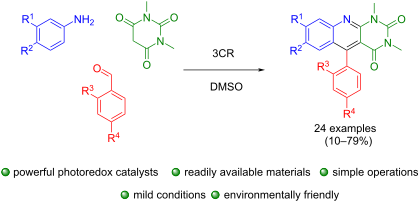
- the benzene ring of the 5-deazaalloxazine core at 7.64 and 7.71 ppm. To support this theory, we conducted a control experiment between 3,4-dimethoxyaniline (3b) and N,N-dimethylbarbituric acid (5) in DMSO. To our delight, 5-deazaalloxazine 6 was formed (Scheme 2B). To prove that DMSO was the methylene




Hetero-polycyclic aromatic systems: A data-driven investigation of structure–property relationships
Beilstein J. Org. Chem. 2024, 20, 1817–1830, doi:10.3762/bjoc.20.160
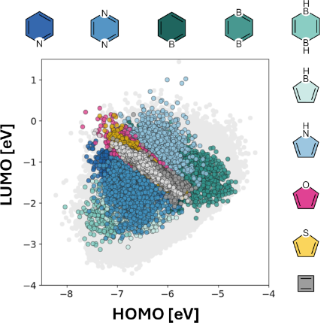
- in size, composition, and aromatic character: benzene, pyridine, pyrazine, borinine, 1,4-diborinine, 1,4-dihydro-1,4-diborinine, borole, pyrrole, furan, thiophene, and cyclobutadiene (Figure 1A). These building blocks encompass 6-, 5-, and 4-membered rings with aromatic and antiaromatic character
- -1 houses PBHs, molecules comprising only one type of ring – the aromatic, six-membered, carbon-based benzene. The principal moments of inertia (PMI) plots in Figure 3A show that the two datasets have similar tendencies to form “rod” and “disc”-like structures (i.e., 1D or 2D, respectively). Because
- shows scatter plots of the HOMO versus LUMO, each colored according to the presence of a specific type of heterocycle. To avoid ambiguity, only molecules that contain benzene and the heterocycle highlighted in the respective plot are colored (i.e., molecules that contain mixtures of heterocycles are not


Synthesis and characterization of 1,2,3,4-naphthalene and anthracene diimides
Beilstein J. Org. Chem. 2024, 20, 1767–1772, doi:10.3762/bjoc.20.155
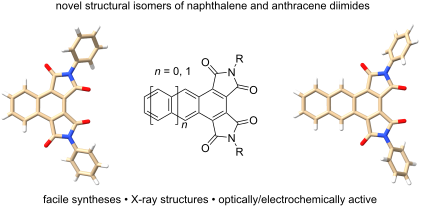
- robust polymers, supramolecular assemblies, and (opto)electronic materials. The vast majority of this research has focused on 1,2,4,5-benzene (pyromellitic), 1,4,5,8-naphthalene, and 3,4,9,10-perylene diimides. Beyond these, researchers have demonstrated that translocating the cyclic imides around the
- periphery of the aromatic core to yield different structural isomers is effective for producing interesting new materials. Ourselves and others have investigated 1,2,3,4-benzene diimide, also known as mellophanic diimide [1], as a building block for heteroacenes [2][3][4][5] and polyimides [6][7][8]. The


Synthesis of polycyclic aromatic quinones by continuous flow electrochemical oxidation: anodic methoxylation of polycyclic aromatic phenols (PAPs)
Beilstein J. Org. Chem. 2024, 20, 1746–1757, doi:10.3762/bjoc.20.153
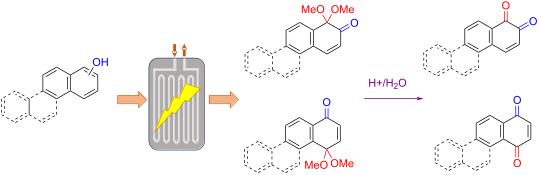
- (PAHs) by cytochrome P450 (CYP) and other metabolic enzymes [7][8]. Main metabolic pathways form quinone isomers of benzo[a]pyrene [8], naphthalene [9][10], and benzene [11]. Numerous methods for the oxidation of phenols or their derivatives to quinones have been described [12]. Oxidation with Fremy’s




Syntheses and medicinal chemistry of spiro heterocyclic steroids
Beilstein J. Org. Chem. 2024, 20, 1713–1745, doi:10.3762/bjoc.20.152
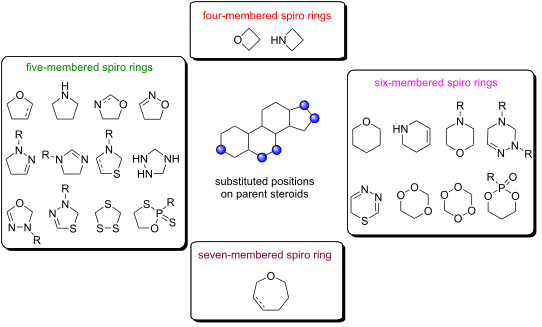
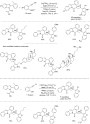
- 2α-bromo-5α-cholestan-3-one (76) with 2-aminoethanethiol in benzene led to the formation of the spiro 1,3-thiazolidine 3-oxosteroid derivative 78 in a stereoselective manner, with a notable 66% yield. The authors proposed that after the formation of the spiro 1,3-thiazolidine 77, an autooxidation
- % by condensing unsaturated ketones 84 with aniline under refluxing ethanol. These intermediates were then subjected to a reaction with excess mercaptoacetic acid (also known as thioglycolic acid) in refluxing benzene, resulting in the formation of spiro 1,3-thiazolidin-4-one derivatives with good


Polymer degrading marine Microbulbifer bacteria: an un(der)utilized source of chemical and biocatalytic novelty
Beilstein J. Org. Chem. 2024, 20, 1635–1651, doi:10.3762/bjoc.20.146
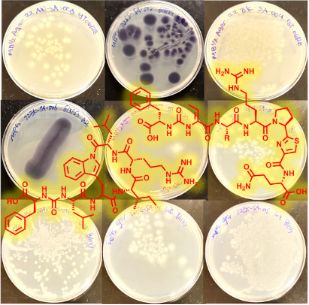
- reclassified as Saccharophagus degradans 2-40 [118]. Two additional GH18 chitinases, MtCh509 [50] and rChi1602 [79] were characterized from Microbulbifer thermotolerans DAU221 and Microbulbifer sp. BN3, respectively. MtCh509 was expressed in E. coli. Some organic solvents (benzene, DMSO, hexane, isoamyl




New triazinephosphonate dopants for Nafion proton exchange membranes (PEM)
Beilstein J. Org. Chem. 2024, 20, 1623–1634, doi:10.3762/bjoc.20.145

- nucleophilic substitution using hydrobromic acid, as a 33% solution in acetic acid, to afford the corresponding bromide derivative 9 [54] (Scheme 2). Subsequently 1-(benzyloxy)-4-(bromomethyl)benzene (9) underwent Michaelis–Arbuzov reaction with triethyl phosphite to afford diethyl [4-(benzyloxy)phenyl




pKalculator: A pKa predictor for C–H bonds
Beilstein J. Org. Chem. 2024, 20, 1614–1622, doi:10.3762/bjoc.20.144
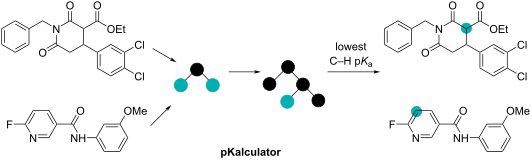
- pKa values. In the case of compound 3, most chemists would expect the pKa of pyrazole C–H sites to be considerably lower than those on the benzene ring, suggesting that factors other than pKa determine the site of borylation for this compound. In the case of compound 5, the most likely explanation is


![[Graphic 9]](/bjoc/content/inline/1860-5397-20-144-i12.svg?max-width=637&scale=1.3000021)


Divergent role of PIDA and PIFA in the AlX3 (X = Cl, Br) halogenation of 2-naphthol: a mechanistic study
Beilstein J. Org. Chem. 2024, 20, 1580–1589, doi:10.3762/bjoc.20.141
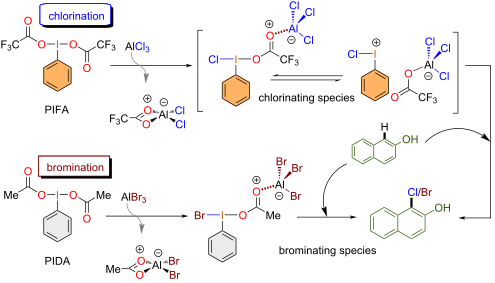
- , Br) [26][27][28][29][30][31]. So far, different protocols for the halogenation of arenes using iodine(III) reagents have been described, mainly using (diacetoxyiodo)benzene (PIDA)/TMSCl, PIDA/TMSBr [32], and [bis(trifluoroacetoxy)iodo]benzene (PIFA)/TMSBr [33]. We have recently developed a new


Electrocatalytic hydrogenation of cyanoarenes, nitroarenes, quinolines, and pyridines under mild conditions with a proton-exchange membrane reactor
Beilstein J. Org. Chem. 2024, 20, 1560–1571, doi:10.3762/bjoc.20.139
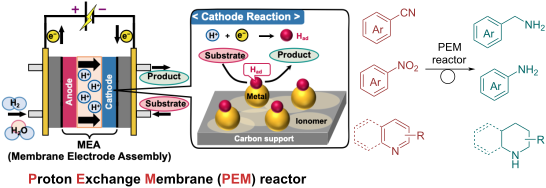
- compound 7r′, in which the benzene ring was hydrogenated. Substrates with chloro groups produced the dechlorinated products (7t and 7u). Unfortunately, during the electrolysis of quinolines with cyano (6v), formyl (6w and 6x), nitro (6y), and amino (6z) groups, the flow path was clogged probably due to the


Primary amine-catalyzed enantioselective 1,4-Michael addition reaction of pyrazolin-5-ones to α,β-unsaturated ketones
Beilstein J. Org. Chem. 2024, 20, 1518–1526, doi:10.3762/bjoc.20.136
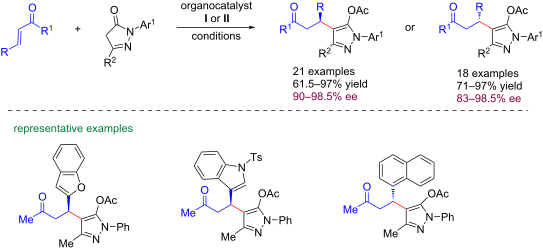
- -withdrawing, or electron-donating group at the para-position of the benzene ring were compatible and led to the corresponding products 3ba–fa in good to excellent yields (72–97%) and enantioselectivities (90–95% ee). The α,β-unsaturated ketone 1f with a strong electron-withdrawing group (cyano) in the para
- -position of the benzene ring, was found to be more reactive as the reaction was completed within 4 h and the desired Michael adduct 3fa was isolated in 89% yield and 92% ee. Notably, the α,β-unsaturated ketone with a substituent in the meta-position of the benzene ring was also tolerated and the desired
- product 3ga was isolated in good yield (82%) and excellent enantioselectivity (95% ee). To our delight, the α,β-unsaturated ketone with a substituent in the ortho-position of the benzene ring, led to the product 3ha in good yield (76.5%) and highest enantioselectivity (98.5% ee). Moreover, 1-naphthyl




Sustainable tandem acylation/Diels–Alder reaction toward versatile tricyclic epoxyisoindole-7-carboxylic acids in renewable green solvents
Beilstein J. Org. Chem. 2024, 20, 1308–1319, doi:10.3762/bjoc.20.114
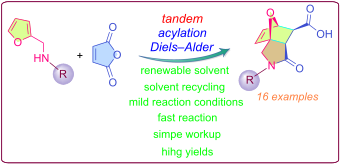
- second step of this reaction, regio- and stereochemically controlled intramolecular cyclization leads to the formation of versatile nitrogen-containing tricyclic systems. However, these useful organic transformations are usually carried out in highly toxic organic solvents such as benzene, toluene
- reaction medium increases, the size of these lamellar units decreases, increasing the ability to dissolve Diels–Alder components and intermediates. It should be noted that the hydrophobicity of triglycerides is much higher than that of aromatic solvents such as benzene and toluene. For comparison with
- vegetable oils, the reaction was also carried out in a conventional organic solvent such as benzene, and the yield of the corresponding product is given in Table 1, entry 8. The epoxyisoindolinone product 2a formed by tandem intramolecular addition was easily separated from the reaction medium by


Oxidative hydrolysis of aliphatic bromoalkenes: scope study and reactivity insights
Beilstein J. Org. Chem. 2024, 20, 1286–1291, doi:10.3762/bjoc.20.111
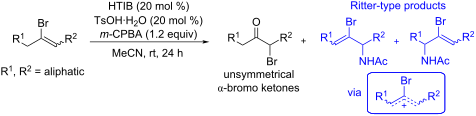
- ], to access α-functionalized ketones. We recently developed the oxidative contraction of 3,4-dihydropyranones to access polysubstituted γ-butyrolactones [17]. In 2015 we demonstrated that [hydroxy(tosyloxy)iodo]benzene (HTIB) could be used to convert chloro- and bromoalkenes into their corresponding α


Synthesis of indano[60]fullerene thioketone and its application in organic solar cells
Beilstein J. Org. Chem. 2024, 20, 1270–1277, doi:10.3762/bjoc.20.109
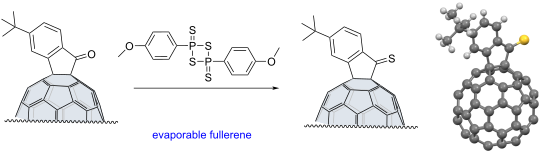
- vibration. Furthermore, the out-of-plane bending vibration of the thiocarbonyl group was also watched, which also affected the vibration of fullerene cage and benzene ring (Figure S2 and Table S1, Supporting Information File 1). This interesting phenomenon may explain the numerous new peaks that formed
- . Considering the lower JSC performance of t-Bu-FIDS with both P3HT and PNTz4T, t-Bu-FIDS might not be suitable for BHJ OPV devices. Conclusion In summary, we successfully synthesized evaporable indano[60]fullerene thioketones with functional groups at the para-position of the benzene ring. Furthermore, we


Kinetically stabilized 1,3-diarylisobenzofurans and the possibility of preparing large, persistent isoacenofurans with unusually small HOMO–LUMO gaps
Beilstein J. Org. Chem. 2024, 20, 1099–1110, doi:10.3762/bjoc.20.97
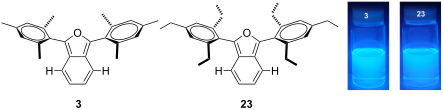
- Acenes are composed of linearly annellated benzene rings. Compared to their non-linearly annellated isomers, acenes possess smaller HOMO–LUMO gaps. This is attributed to their novel electronic structures which manifest that no more than one benzene ring can be drawn with a full aromatic sextet in any
- smaller HOMO–LUMO gaps. Isoacenofurans are composed of linearly annellated benzene rings that terminate with a furan ring. Isoacenofurans and acenes possess isoelectronic π-systems when the total number of rings is the same. Unlike acenes, none of the 6-membered rings in an isoacenofuran possess an






Light on the sustainable preparation of aryl-cored dibromides
Beilstein J. Org. Chem. 2024, 20, 1076–1087, doi:10.3762/bjoc.20.95
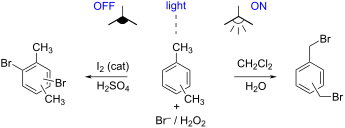
- bromination with NBS in CCl4 yields no more than 30% of the desired 1,3,5-tris(bromomethyl)benzene (4a) [56], due to the concurrent ring bromination [57]. A modified method working in refluxing benzene and benzoyl peroxide initiator was claimed to provide a clean conversion to 4a with very high yields [36][58
- concentrated to dryness to give the crude product. 1,2-Bis(bromomethyl)benzene (1a): white solid, yield: 98%. 1H NMR (400 MHz, 298 K, CDCl3) δ 7.37 (m, 2H), 7.31 (m, 2H), 4.67 (s, 4H) ppm. 1,2-Dibromo-4,5-dimethylbenzene (1b): For the 10-gram scale procedure, see Figure S2 (Supporting Information File 1
- ), brown solid, yield: 93%. Recrystallisation from hot petroleum ether gave the pure product. 1H NMR (400 MHz, 298 K, CDCl3) δ 7.37 (s, 2H), 2.19 (s, 6H) ppm. 1,2-Dibromo-4,5-bis(bromomethyl)benzene (1c): From 1b: chlorobenzene (4.0 mL) was used as the solvent instead of CH2Cl2 (1 mL). Brown solid, yield


Structure–property relationships in dicyanopyrazinoquinoxalines and their hydrogen-bonding-capable dihydropyrazinoquinoxalinedione derivatives
Beilstein J. Org. Chem. 2024, 20, 1037–1052, doi:10.3762/bjoc.20.92
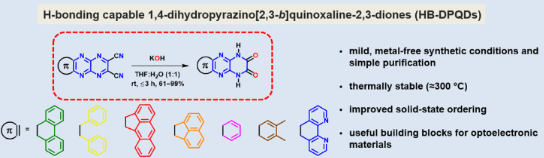
- * level of theory (depicted in Figure 4 and Figure 5). Figure 4 reveals that the HOMOs of 1a–7a are predominantly localized on the π-donor units, such as benzene and naphthalene, with an illustration in the case of 6a. On the contrary, the LUMOs are delocalized across the entire π-systems, while also




Auxiliary strategy for the general and practical synthesis of diaryliodonium(III) salts with diverse organocarboxylate counterions
Beilstein J. Org. Chem. 2024, 20, 1020–1028, doi:10.3762/bjoc.20.90
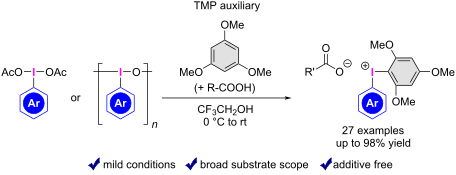
- conditions and the use of an equimolar amount of the metal salt (Scheme 2A). Despite the expected advantage, direct synthesis of these diaryliodonium(III) carboxylates are scarce, and these compounds were synthesized by reacting (diacetoxyiodo)benzene and N-functionalized pyrrole in 2,2,2-trifluoroethanol
- (trifluoroacetoxyiodo)benzene was used instead of 1a. Substrate scope of the carboxylic acids and iodosylarenes. a) The reaction was conducted for 4 h. b) 2.0 mL TFE was used. Representative applications of aryl(TMP)iodonium(III) carboxylates. Supporting Information Supporting Information File 2: Further experimental


Carbonylative synthesis and functionalization of indoles
Beilstein J. Org. Chem. 2024, 20, 973–1000, doi:10.3762/bjoc.20.87
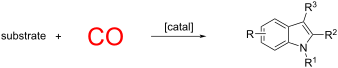
- recent achievements on the synthesis and functionalization of indole derivatives via carbonylative approaches. Keywords: carbonylation; functionalization; indole; metal catalyst; organometallic chemistry; Introduction Indole is a heterocyclic compound consisting of a benzene ring fused with a pyrrole
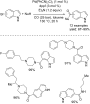
- of amides from 2-alkynylanilines by using TFBen (benzene-1,3,5-triyl triformate) as a CO source, Pd(OAc)2, DPEPhos (bis[(2-diphenylphosphino)phenyl] ether), and DIPEA (N,N-diisopropylethylamine) in MeCN. After 24 h, Pd(OAc)2 and AlCl3 were added to promote a selective cyclization reaction [14]. The
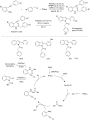
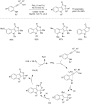
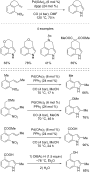
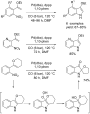
- reaction took place in the presence of Pd(OAc)2 (2 mol %), 1,10-phenantroline (4 mol %) under 1 bar of CO at 110 °C in DMF. After the right time, six products were isolated, while, in three cases, when the benzene ring was meta-substituted, a regioisomeric mixture was obtained. The regioselectivity was












Synthesis and properties of 6-alkynyl-5-aryluracils
Beilstein J. Org. Chem. 2024, 20, 898–911, doi:10.3762/bjoc.20.80
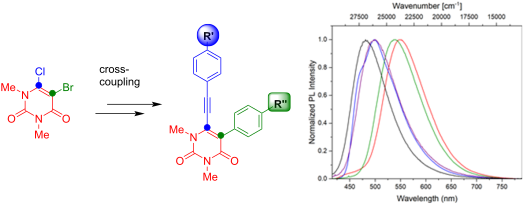
- ring instead of a benzene moiety. This was demonstrated by the introduction of thiophene (5r) and furan (5t) to the uracil structure. The molecules 5n and 5o could not be obtained, due to decomposition during the reaction. The structure of 5a was confirmed by X-ray crystallographic analysis. Crystals




(Bio)isosteres of ortho- and meta-substituted benzenes
Beilstein J. Org. Chem. 2024, 20, 859–890, doi:10.3762/bjoc.20.78
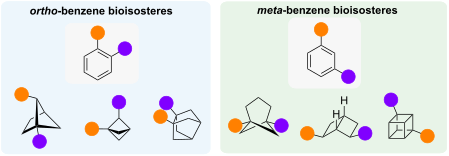
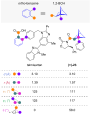
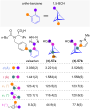
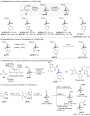
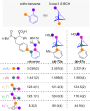
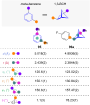
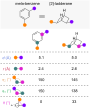
- well as the impact they have on the physiochemical and biological properties of pharmaceuticals and agrochemicals. Keywords: bioisosteres; drug discovery; meta-benzene; ortho-benzene; Introduction The logical and iterative modification of the structure of a drug candidate is a critical part of the
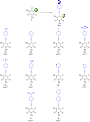
- ]. The direct replacement of substituted benzenes in drug candidates with saturated benzene bioisosteres is a popular approach to this task [11][12][13][14]. Substitution of a mono-substituted benzene (a phenyl group) is relatively straightforward [11][13][15]. More particular attention must be paid to
- benzenes that have more than one substituent; for example, the ortho-, meta-, or para- relative substitution of a disubstituted benzene should ideally be replicated in the saturated bioisostere to ensure ligand–protein binding is conserved through the bioisosteric swap. Bioisosteres of para-substituted














Advancements in hydrochlorination of alkenes
Beilstein J. Org. Chem. 2024, 20, 787–814, doi:10.3762/bjoc.20.72
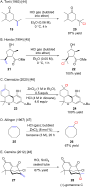
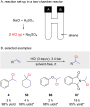
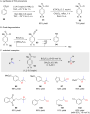
- unfortunately data in the absence of ZnCl2 was not provided by the authors. ZnCl2 has been previously reported as a catalyst for hydrochlorination reactions, notably in the case of cyclooctene (25) with HCl in benzene (Scheme 5D) [47]. The use of ZnCl2 as a catalyst for hydrochlorinations dates back to a patent






Switchable molecular tweezers: design and applications
Beilstein J. Org. Chem. 2024, 20, 504–539, doi:10.3762/bjoc.20.45
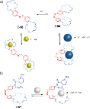
- a parallel direction, as the bulky -OMe groups are located outside the tweezer’s cavity to avoid steric hindrance with each other. When protonated, the pyridinium group acts as a hydrogen-bond donor for the two methoxy groups and triggers the rotation of the respective benzene rings along with the




Mono or double Pd-catalyzed C–H bond functionalization for the annulative π-extension of 1,8-dibromonaphthalene: a one pot access to fluoranthene derivatives
Beilstein J. Org. Chem. 2024, 20, 427–435, doi:10.3762/bjoc.20.37
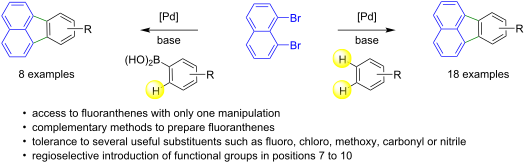
- palladium-catalyzed direct intermolecular arylation, followed by a direct intramolecular arylation step. As the C–H bond activation of several benzene derivatives remains very challenging, the preparation of fluoranthenes from 1,8-dibromonaphthalene via Suzuki coupling followed by intramolecular C–H
- with 1,2-dihalobenzenes. To our knowledge, this reaction has not yet been described, but 9-arylphenanthrenes can be synthesized by reacting 1-bromo-2-(1-phenylthenyl)benzene with bromobenzenes as coupling partners in the presence of a palladium catalyst [41]. We have observed that the reaction of 3
- simplest involves 1,8-dibromonaphthalene with a double C–H bond functionalization of benzene derivatives. This method, which employs Pd-catalyzed intermolecular and then intramolecular activation of arene C–H bonds, tolerates several useful substituents on the arene, such as fluoro, chloro, methoxy


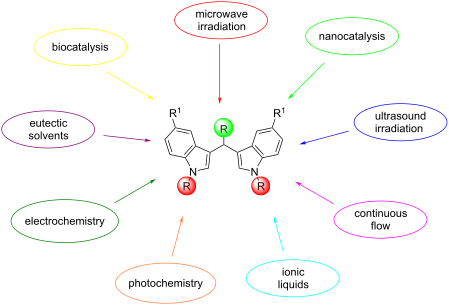
Green and sustainable approaches for the Friedel–Crafts reaction between aldehydes and indoles
Beilstein J. Org. Chem. 2024, 20, 379–426, doi:10.3762/bjoc.20.36
- efficiency would not diminish even after 3 cycles [99]. Several substituted indoles, aldehydes and ketones reacted in good yields (74–98%), with ketones requiring longer reaction rates of 3 hours, due to their lower reactivity. The electron-donating or withdrawing effects of the substituents of the benzene
- two electron-donating substituents on the benzene ring. However, no ketones or aliphatic substrates managed to exhibit sufficient reactivity. The nanoAg-Pt silicate could be easily recovered by a simple filtration with methanol, allowing it to be reused for several catalytic cycles, before it was
- amount further resulted in a lower conversion. Next, the generality of the method was explored by employing several aliphatic and aromatic aldehydes, as well as substituted indoles, in various positions of the benzene ring. N-Substituted indoles displayed the lowest reactivity, providing yields around 75