Search results
Search for "cyclization reaction" in Full Text gives 217 result(s) in Beilstein Journal of Organic Chemistry. Showing first 200.
Mono- and bithiophene-substituted diarylethene photoswitches with emissive open or closed forms
Beilstein J. Org. Chem. 2019, 15, 2344–2354, doi:10.3762/bjoc.15.227
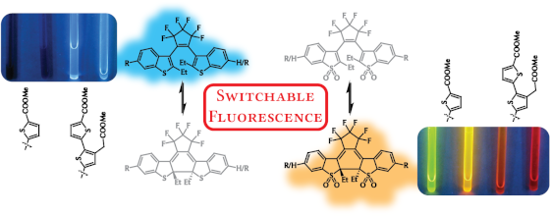
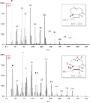
- (A) and emission (B) spectra of SyTh2 in acetonitrile in the course of the cyclization reaction (irradiation at 365 nm). Emission was not fully depleted due to incomplete conversion in the photostationary state (PSS, α = 71%). Absorption spectra of the OFs (A) and CFs (B) of AsTh1 (a), SyTh1 (b


Functionalization of 4-bromobenzo[c][2,7]naphthyridine via regioselective direct ring metalation. A novel approach to analogues of pyridoacridine alkaloids
Beilstein J. Org. Chem. 2019, 15, 2304–2310, doi:10.3762/bjoc.15.222
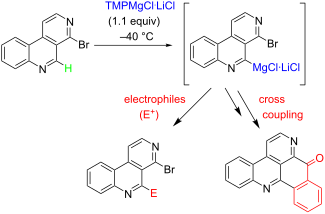
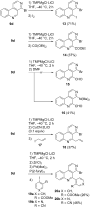
- to a pentacyclic ketone. A similar cyclization reaction was developed by our group some years ago for ester substrates [18], and an analogous cyclization of nitriles was described by Kristensen in ring-closing cascade reactions [34]. The new cyclization method was first tested with ester 20a




Click chemistry towards thermally reversible photochromic 4,5-bisthiazolyl-1,2,3-triazoles
Beilstein J. Org. Chem. 2019, 15, 2161–2169, doi:10.3762/bjoc.15.213
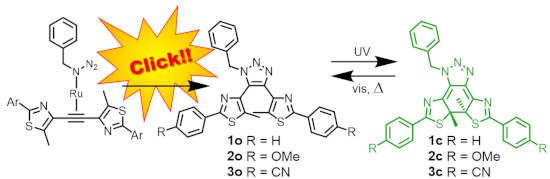
- phenyl groups. The Ru(I)-catalyzed Huisgen cyclization reaction proceeded rather smoothly to give 1o, 2o and 3o in moderate chemical yields of 36%, 53% and 20%, respectively. Since the reported chemical yield of the reaction of tolan, the simplest bisarylethyne, and 2-phenylethyl azide was 63% [19], it


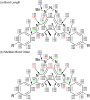

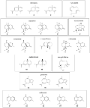
Analysis of sesquiterpene hydrocarbons in grape berry exocarp (Vitis vinifera L.) using in vivo-labeling and comprehensive two-dimensional gas chromatography–mass spectrometry (GC×GC–MS)
Beilstein J. Org. Chem. 2019, 15, 1945–1961, doi:10.3762/bjoc.15.190
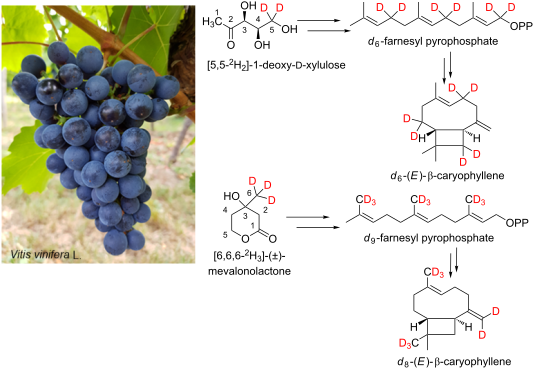
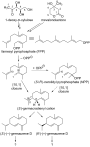
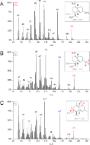
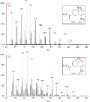
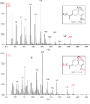
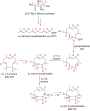
- [5][32]. In 1999 Schmidt et al. were able to show that the enantiomers of germacrene D are formed via two different H-transfer pathways in Solidago canadensis. (S)-(−)-Germacrene D is generated by a cyclization reaction, that includes a 1,3-hydride shift as opposed to the cyclization reaction of (R











Inherent atomic mobility changes in carbocation intermediates during the sesterterpene cyclization cascade
Beilstein J. Org. Chem. 2019, 15, 1890–1897, doi:10.3762/bjoc.15.184
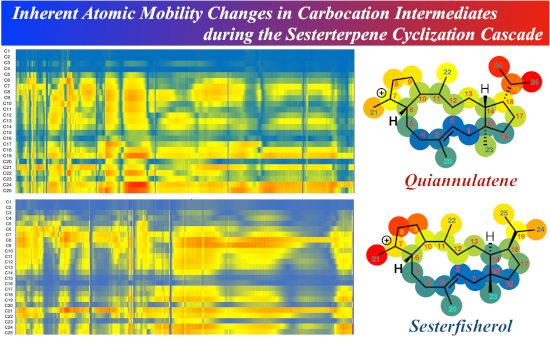
- ], and it appears that inherent reactivity [17] is in good accordance with the experimental outcome. This may mean that terpene cyclases do not tightly regulate the cyclization reaction steps once the carbocation is generated. Therefore, we considered that key regions of GFPP that control the fit of the


Recent advances on the transition-metal-catalyzed synthesis of imidazopyridines: an updated coverage
Beilstein J. Org. Chem. 2019, 15, 1612–1704, doi:10.3762/bjoc.15.165
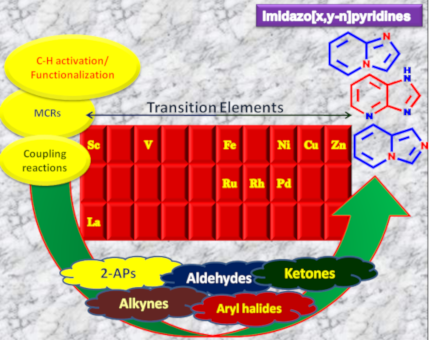
- (III) intermediate 144 which underwent reductive elimination to give the desired product 137 and Cu(I) species (Scheme 49). The mechanism has shown that molecular iodine (I2) used in the reaction was the source of iodine in the final product rather than CuI. A condensation–cyclization reaction between


Selenophene-containing heterotriacenes by a C–Se coupling/cyclization reaction
Beilstein J. Org. Chem. 2019, 15, 1379–1393, doi:10.3762/bjoc.15.138

- DTT 1 in 91% yield (Scheme 1). Triacene dithieno[3,2-b:2’,3’-d]selenophene (DTS, 2) was successfully prepared as well from diiodinated bithiophene 5 in 51% yield after purification in a C–Se cross-coupling/cyclization reaction with selenourea as selenium source, copper oxide nanoparticles as catalyst


One-pot activation–alkynylation–cyclization synthesis of 1,5-diacyl-5-hydroxypyrazolines in a consecutive three-component fashion
Beilstein J. Org. Chem. 2019, 15, 1360–1370, doi:10.3762/bjoc.15.136
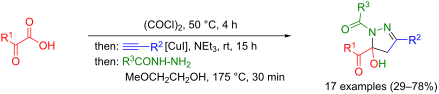
- Chemie und Makromolekulare Chemie, Universitätsstraße 1, D-40225 Düsseldorf, Germany 10.3762/bjoc.15.136 Abstract A consecutive three-component activation–alkynylation–cyclization reaction of (hetero)aryl glyoxylic acids, oxalyl chloride, arylacetylenes, and hydrazides efficiently forms 1,5-diacyl-5


Steroid diversification by multicomponent reactions
Beilstein J. Org. Chem. 2019, 15, 1236–1256, doi:10.3762/bjoc.15.121
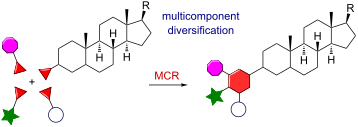
- previously proposed by Marcaccini and co-workers [17]. Here, the route included the Ugi-4CR reaction of varied amines and isocyanides with the androstanic aldehyde 4 and chloroacetic acid followed by a post-cyclization reaction by treating the Ugi products 5 with ethanolic KOH under ultrasonication. This


Multicomponent reactions (MCRs): a useful access to the synthesis of benzo-fused γ-lactams
Beilstein J. Org. Chem. 2019, 15, 1065–1085, doi:10.3762/bjoc.15.104
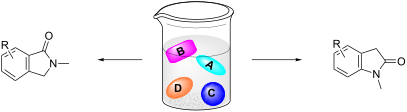
- Heck cyclization reaction between the substituted alkyne and aryl bromide in 133 takes place to form a cyclic palladium intermediate 134 with E-configuration, resulting from a syn-addition mechanism of this step. The addition of a silver salt reduces the probability of isomerization of the double bond






Catalytic asymmetric oxo-Diels–Alder reactions with chiral atropisomeric biphenyl diols
Beilstein J. Org. Chem. 2019, 15, 955–962, doi:10.3762/bjoc.15.92
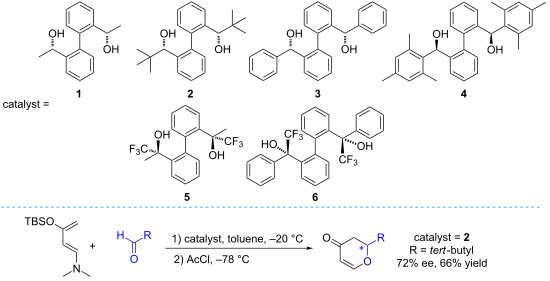
- stereogenic centers in a one-step [4 + 2] cycloaddition or cyclization reaction [6][7][8] and it has become hugely popular in preparing vital intermediates for the syntheses of key structural subunits of natural products with biological activities (e.g., carbohydrates, antibiotics, toxins etc.) [9][10


Efficient synthesis of pyrazolopyridines containing a chromane backbone through domino reaction
Beilstein J. Org. Chem. 2019, 15, 874–880, doi:10.3762/bjoc.15.85
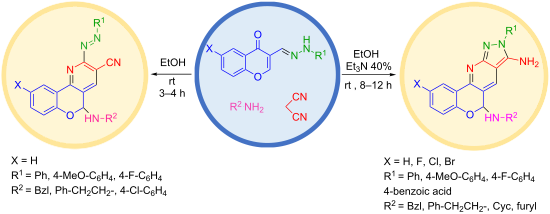
- base-catalyzed cyclization reaction is reported. The synthesis was carried out through a three-component reaction of (arylhydrazono)methyl-4H-chromen-4-one, malononitrile, primary amines in the presence of Et3N at room temperature. However, carrying out the reaction under the same conditions without
- products 5a–d were not formed. The reaction mechanism is shown in Scheme 2. The chemical structures of the products 5a–d are shown in Figure 4. Usually, to activate the nitrile group for cyclization reaction, the existence of Lewis acid, the addition of organolithium reagents or metal
- fused heterocyclic backbones with high selectivity. Conclusion In conclusion, we have successfully established an efficient route toward the synthesis of a diverse array of fused heterocyclic skeletons through a domino reaction. We showed an interesting behavior of the base for the cyclization reaction




Synthesis of functionalized diazocines for application as building blocks in photo- and mechanoresponsive materials
Beilstein J. Org. Chem. 2019, 15, 727–732, doi:10.3762/bjoc.15.68
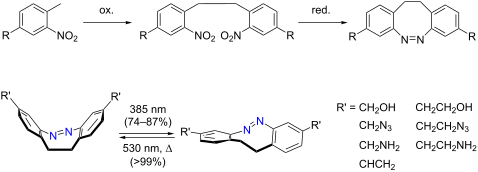
- using oxygen and the yields are increased from 65% to 95% in the parent system [30]. In a recent work we observed that the reduction of 2,2′-dinitrodibenzyl is difficult to stop at the azo stage because further reduction to the hydrazine is faster than the preceding cyclization reaction [27]. The


Synthesis of 2H-furo[2,3-c]pyrazole ring systems through silver(I) ion-mediated ring-closure reaction
Beilstein J. Org. Chem. 2019, 15, 679–684, doi:10.3762/bjoc.15.62

- alkynylation/cyclization reaction between 2-iodophenol and (triethoxysilyl)alkynes [20]. In recent years silver and gold salts have found application as versatile and mild catalysts to access the benzo[b]furan ring system through intramolecular cyclization of 2-alkynylphenol substrates [21], including
- substrates 3a–j, the optimal conditions for the subsequent cyclization reaction were next investigated using 3a as the model compound (Table 1). First, we attempted the desired cyclization of 3a to 2H-furo[2,3-c]pyrazole 4a using the synthetic protocol involving Cs2CO3 in dry DMF at 60 °C, which has been
- Cs2CO3/AgOTf system does not offer any advantages for this cyclization compared to the K2CO3/AgOTf system (Table 1, entry 8). With the optimized conditions for the 5-endo-dig cyclization reaction identified, the scope of this transformation for the preparation of several 2,5-disubstituted 2H-furo[2,3-c


First synthesis of cryptands with sucrose scaffold
Beilstein J. Org. Chem. 2019, 15, 210–217, doi:10.3762/bjoc.15.20
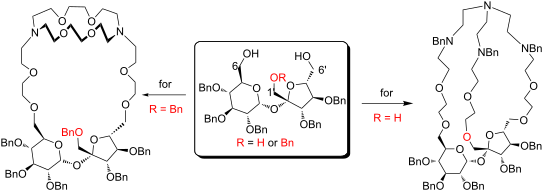
- gave 22 which was subjected to the reaction with tripodal amine 15. The cyclization reaction provided cryptand 23 in very high yield: 45.5% (Scheme 4). The structure of the cryptand was confirmed by HRMS [m/z = 1419.7803 which corresponds to (C86H107N4O14 + Na+)]. Further confirmation came from the 13C


Mn-mediated sequential three-component domino Knoevenagel/cyclization/Michael addition/oxidative cyclization reaction towards annulated imidazo[1,2-a]pyridines
Beilstein J. Org. Chem. 2018, 14, 3078–3087, doi:10.3762/bjoc.14.287
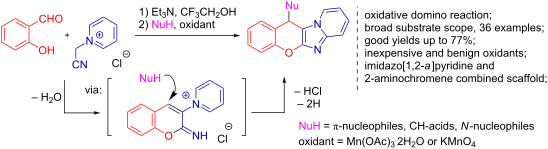
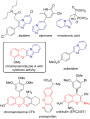
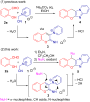
- proceeds through a domino Knoevenagel/cyclization/Michael addition/oxidative cyclization reaction sequence. Keywords: 2-aminochromene; domino reaction; imidazo[1,2-a]pyridine; 2-iminochromene; Michael addition; multicomponent reaction; oxidation; pyridine amination; Introduction Domino reactions are well
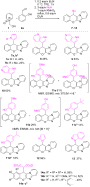
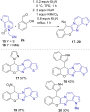
- conclusion, we have developed a practical route towards substituted chromenoimidazopyridines through a sequential three-component domino Knoevenagel/cyclization/Michael addition/oxidative cyclization reaction, employing cheap and abundant oxidants. The discovered process works in a broad substrate scope with





Oxidative and reductive cyclization in stiff dithienylethenes
Beilstein J. Org. Chem. 2018, 14, 2812–2821, doi:10.3762/bjoc.14.259
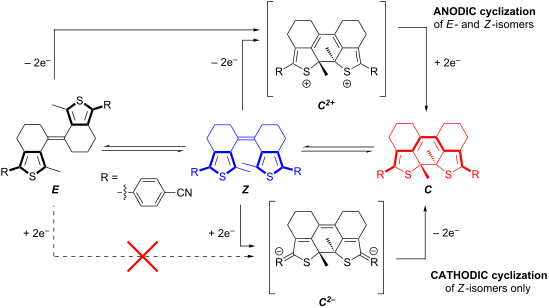
- + takes place upon oxidation. Both, the isomerization of the double bond of the E-isomer as well as the cyclization reaction are instantaneous on the timescale of the experiment. The closed dication C2+ can be reduced stepwise to its neutral form. In addition, when C2+ is not stabilized by donor


Molecular iodine-catalyzed one-pot multicomponent synthesis of 5-amino-4-(arylselanyl)-1H-pyrazoles
Beilstein J. Org. Chem. 2018, 14, 2789–2798, doi:10.3762/bjoc.14.256
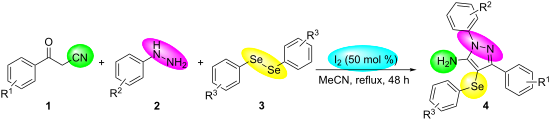
- Lewis acid to generate the hydrazone intermediate A. Then, hydrazone A undergoes a cyclization reaction followed by an oxidative aromatization to yield 1H-pyrazol-5-amine 5. At the same time, the diaryl diselenide 3 reacts with the molecular iodine to generate an electrophilic selenium species B. The


An overview on recent advances in the synthesis of sulfonated organic materials, sulfonated silica materials, and sulfonated carbon materials and their catalytic applications in chemical processes
Beilstein J. Org. Chem. 2018, 14, 2745–2770, doi:10.3762/bjoc.14.253
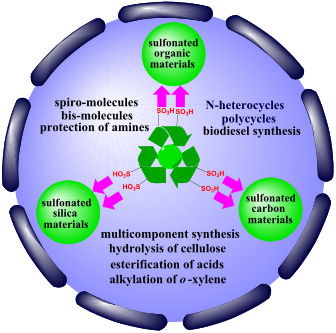
- another published article by this research group, silica-supported sulfonated 1,4-diazabicyclo[2.2.2]octane 71 was used for the one-pot tandem Knoevenagel–Michael cyclization reaction between isatin derivatives 32 or acenaphthenquinone (33), barbituric acid derivatives 73, and 1,3-dicarbonyl compounds 20




Synthesis of dihydroquinazolines from 2-aminobenzylamine: N3-aryl derivatives with electron-withdrawing groups
Beilstein J. Org. Chem. 2018, 14, 2510–2519, doi:10.3762/bjoc.14.227
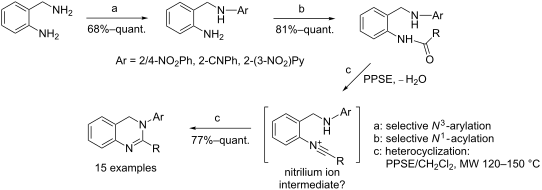
- ’-diacylation products were observed due to the low nucleophilicity of the secondary amino group, bearing a deactivating aromatic ring and all desired compounds were obtained with excellent yields (Table 2). Then, the microwave-assisted cyclization reaction leading to 3,4-dihydroquinazolines 1 was initially


Synthesis of a leopolic acid-inspired tetramic acid with antimicrobial activity against multidrug-resistant bacteria
Beilstein J. Org. Chem. 2018, 14, 2482–2487, doi:10.3762/bjoc.14.224
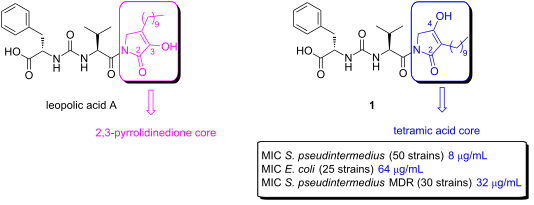
- , is an imperative goal to stay ahead of the evolution of antibiotic resistance. Herein we report the synthesis of a 3-decyltetramic acid analogue of the ureido dipeptide natural antibiotic leopolic acid A. The key step in the synthetic strategy is an intramolecular Lacey–Dieckmann cyclization reaction
- obtain compound 9 in 90% yield. As expected, the cyclization reaction was found to be quite troublesome. Several attempts were made using different conditions (TBAF, Et2O, rt; NaOEt, EtOH, reflux; NaH, THF, reflux; LDA, THF, −78 °C), but they all were unsuccessful. Finally, we succeeded in preparing


Microfluidic light-driven synthesis of tetracyclic molecular architectures
Beilstein J. Org. Chem. 2018, 14, 2418–2424, doi:10.3762/bjoc.14.219
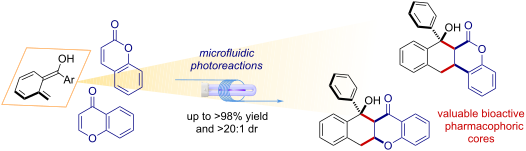
- or 5. Generality and limits of the light-driven [4 + 2] cyclization reaction between 2-MBP 1a–g and coumarins 2a–c under MFP setup. *Residence time was 60 min. Generality and limits of the light-driven [4 + 2] cyclization reaction between 2-MBP 1a–f and chromone (3a) under MFP setup. MFP parallel


Nucleoside macrocycles formed by intramolecular click reaction: efficient cyclization of pyrimidine nucleosides decorated with 5'-azido residues and 5-octadiynyl side chains
Beilstein J. Org. Chem. 2018, 14, 2404–2410, doi:10.3762/bjoc.14.217
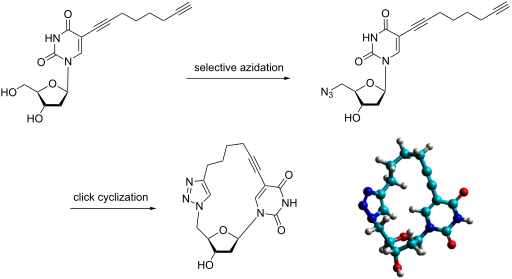
- derivative 4 the dU macrocycle 8 could be isolated in 46% yield even in the absence of TBTA. However, the yield of cyclization was significantly improved when TBTA was added (69%). This demonstrates the influence of the nucleobase on the intramolecular cyclization reaction. All compounds were characterized
- derivatives 4 and 8, resulted in high cyclization yields (around 70%) without formation of dimeric or oligomeric molecules. The speed of the TBTA catalyzed click reaction and dilution (Ruggli–Ziegler dilution principle) [43] can be made responsible for this behavior. For the copper(I)-promoted cyclization
- reaction the use of the TBTA complex was essential for the cyclization of dC precursor 2 but not for dU precursor 7. Protection of precursor molecules is not required and only four steps are necessary to convert a nucleoside in a nucleoside macrocycle. The single crystal X-ray structure confirmed the click


Synthesis of spirocyclic scaffolds using hypervalent iodine reagents
Beilstein J. Org. Chem. 2018, 14, 1778–1805, doi:10.3762/bjoc.14.152
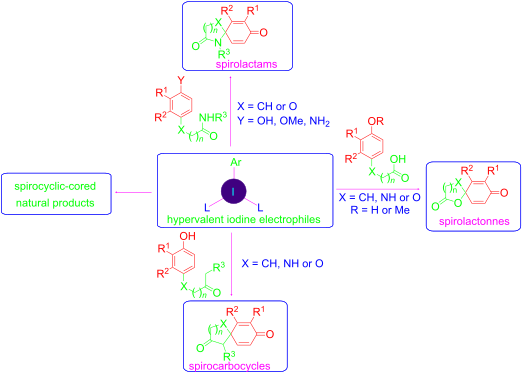
- ) for spirocyclization of N-protected tyrosine 14 to spirolactone 16. The spirocyclization reaction was carried out in methanol using stoichiometric amounts of PIDA (15) and spirolactone 16 was isolated in 35% yield (Scheme 2). Probably, the cyclization reaction proceeded via dearomatizaion of phenolic
- bond formation using 10 mol % of iodotoluene 33 as precatalyst, 1.0 equivalent of CF3COOH as an additive and mCPBA as terminal oxidant in trifluoroethanol (Scheme 26). The spirocyclic compounds 77 were isolated in high yields. The cyclization reaction was probably initiated by in situ generated active
- substrates and polymer-supported hypervalent iodine reagent was used in one step. In this report, p-substituted phenolic compound 131 was cyclized to spirocyclic compound 133 in 50% yield containing a seven membered ring system. The cyclization reaction was carried out using polymer-supported PIFA reagent


Synthesis of chiral 3-substituted 3-amino-2-oxindoles through enantioselective catalytic nucleophilic additions to isatin imines
Beilstein J. Org. Chem. 2018, 14, 1349–1369, doi:10.3762/bjoc.14.114

- cinchona alkaloid-derived thiourea. Aza-Henry reaction of N-Boc-isatin imines with nitromethane catalyzed by a bifunctional guanidine. Domino addition/cyclization reaction of N-Boc-isatin imines with 1,4-dithiane-2,5-diol (53) catalyzed by a tertiary amine-squaramide. Nickel-catalyzed additions of methanol