Search results
Search for "emission" in Full Text gives 495 result(s) in Beilstein Journal of Organic Chemistry. Showing first 200.
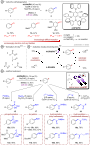
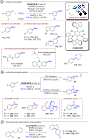
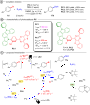
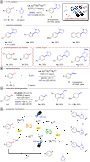
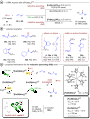
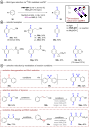
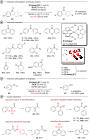
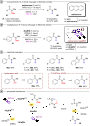
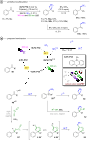
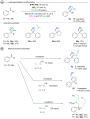
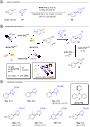
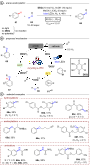
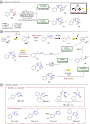
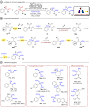
Radical ligand transfer: a general strategy for radical functionalization
Beilstein J. Org. Chem. 2023, 19, 1225–1233, doi:10.3762/bjoc.19.90
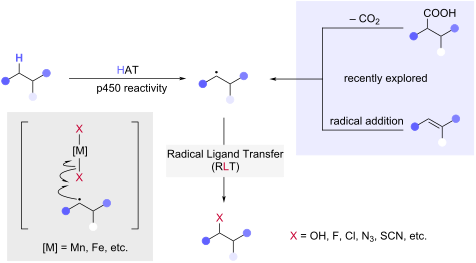
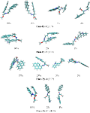
- important medical radioisotope used for positron emission tomography (PET) [43]. Optimized conditions of both isotopes included fast reaction times of under two hours; in the case of the 18F radioisotope, reactions were carried out in 10 minutes and resulted in moderate to high yields, demonstrating the


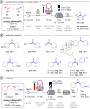
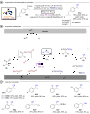
Unravelling a trichloroacetic acid-catalyzed cascade access to benzo[f]chromeno[2,3-h]quinoxalinoporphyrins
Beilstein J. Org. Chem. 2023, 19, 1216–1224, doi:10.3762/bjoc.19.89
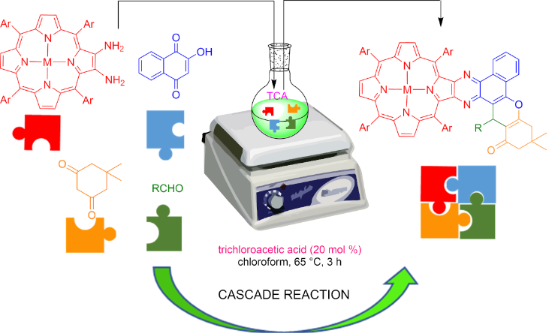
- ) porphyrins were transformed to the corresponding free base and zinc(II) benzo[f]chromeno[2,3-h]quinoxalinoporphyrins under standard demetallation and zinc insertion conditions. The absorption and emission properties of the obtained porphyrins were investigated by using UV–visible and fluorescence
- spectroscopy. The preliminary photophysical results revealed a significant red-shift in their absorption and emission spectra as compared to the meso-tetrakis(4-methylphenyl)porphyrins due to the extended π-conjugation. Keywords: bathochromic shift; benzo[f]chromeno[2,3-h]quinoxalinoporphyrins; catalysis
- other materials applications [4][5][6][7]. Among the previously synthesized synthetically modified porphyrinoids, β,β’-fused meso-tetraphenylporphyrins have gained a considerable importance because of their red-shifted absorption and emission due to the extended π-conjugation. In particular, β,β’-fused


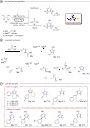
New one-pot synthesis of 4-arylpyrazolo[3,4-b]pyridin-6-ones based on 5-aminopyrazoles and azlactones
Beilstein J. Org. Chem. 2023, 19, 1155–1160, doi:10.3762/bjoc.19.83
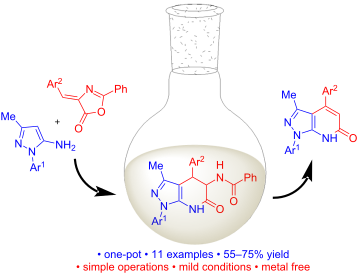
- -trimethoxyphenyl- (4e), 2-furyl- (4h) and 2-thienyl- (4i), the product yields are reduced to 55–60% (Scheme 2). All the compounds obtained are colorless crystalline substances. When dissolved, they produce colorless solutions exhibiting distinct fluorescent properties with blue emission when exposed to UV light
- . We recorded absorption and fluorescence spectra of ethanolic solutions of compounds 4a–i, 9a, and 10a. The emission and absorption spectra of all the compounds differ slightly from each other. Their spectral parameters are presented in Table 2. In the UV spectra of ethanolic solutions of compounds 4a
- –i, 9a, and 10a, a band with a maximum at 260–265 nm is observed, which has a shoulder at 300–305 nm. These signals seem to correspond to π–π* and n–π* transitions. In the luminescence spectra of compounds 4a–i, 9a, and 10a, there is one broadened band with an emission maximum at 409–440 nm (Figure 2


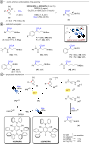
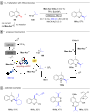
Photoredox catalysis harvesting multiple photon or electrochemical energies
Beilstein J. Org. Chem. 2023, 19, 1055–1145, doi:10.3762/bjoc.19.81
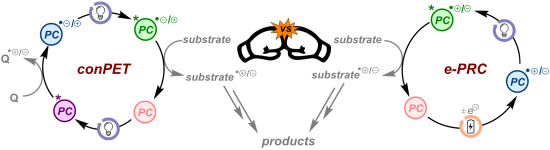
- rule is classically applied only for photophysical phenomena stating that emission events generally occur only from the lowest excited state of a certain multiplicity due to very fast relaxation via internal conversion (IC) and vibronic relaxation [67][68][69], it can also be adapted to photochemical







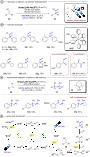












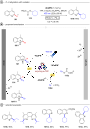
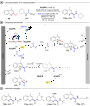
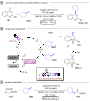


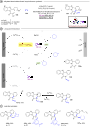


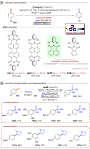


The effect of dark states on the intersystem crossing and thermally activated delayed fluorescence of naphthalimide-phenothiazine dyads
Beilstein J. Org. Chem. 2023, 19, 1028–1046, doi:10.3762/bjoc.19.79
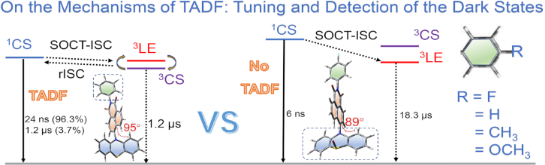
- capability of the PTZ and NI moieties, respectively, by oxidation of the PTZ unit, or by using different aryl substituents attached to the NI unit. This tuning effect was manifested in the UV–vis absorption and fluorescence emission spectra, e.g., in the change of the charge transfer absorption bands. TADF
- harvesting efficiency of both the singlet and triplet excitons and thus a high quantum efficiency for the electroluminescence [13]. The TADF emission process involves the reverse intersystem crossing (rISC) from the triplet (T1) state to the emissive singlet (S1) state. A typical molecular structure motif
- by 1H NMR, 13C NMR, and HRMS spectra (Experimental section). UV–vis absorption and fluorescence emission spectra The UV–vis absorption spectra of the compounds were studied (Figure 1 and Figure S29 in Supporting Information File 1). For the compounds without an oxidized PTZ unit, there are


A fluorescent probe for detection of Hg2+ ions constructed by tetramethyl cucurbit[6]uril and 1,2-bis(4-pyridyl)ethene
Beilstein J. Org. Chem. 2023, 19, 864–872, doi:10.3762/bjoc.19.63
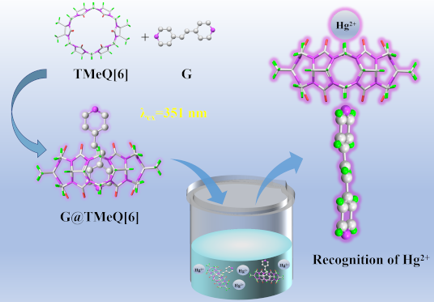
- nature can be converted into organic mercury under the action of microorganisms, which cannot be decomposed or degraded into nontoxic substances in the human body [1][2], which will seriously threaten human health. Therefore, China has formulated water pollutant emission limits [3]. Traditional Hg2+ ion
- detection methods include atomic absorption spectroscopy, mass spectrometry, emission spectroscopy and electrochemical methods [4][5][6][7]. These detection methods are expensive and time-consuming, and the detection of samples becomes extremely difficult. Therefore, it is of great significance to construct
- complex with a molar ratio of 1:1. Fluorescent spectroscopic analysis The interaction between G and TMeQ[6] in aqueous solution was investigated using fluorescence titration experiments. The fluorescence titration curve (Figure 3a) shows that at the excitation wavelength of 351 nm, G has an emission peak


Non-peptide compounds from Kronopolites svenhedini (Verhoeff) and their antitumor and iNOS inhibitory activities
Beilstein J. Org. Chem. 2023, 19, 789–799, doi:10.3762/bjoc.19.59
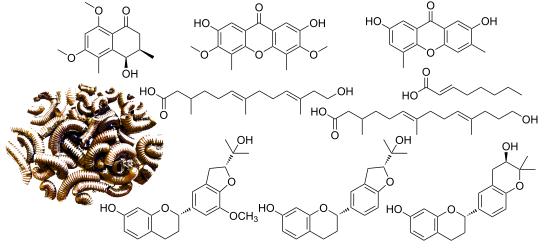
- cytometry (BD, USA). CD8+ T cells and Panc02-h7-GP-GFP cells were co-cultured with the corresponding concentrations of compounds or DMSO for 18 h. Fluorescence intensity was measured using a microplate reader (emission at 476 nm, excitation at 514 nm). Anti-inflammatory assay RAW264.7 (a mouse macrophage


Construction of hexabenzocoronene-based chiral nanographenes
Beilstein J. Org. Chem. 2023, 19, 736–751, doi:10.3762/bjoc.19.54
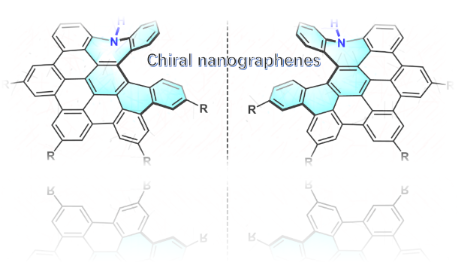
- Gibbs activation energy of enantiomer 53 for the racemization process was determined as 33.0 kcal mol−1 at 298 K. The CPL spectra of M-53 and P-53 showed an emission maximum at 560 nm with glum value of 2.3 × 10⁻⁴. Instead of helicene formation in the final Scholl-type ring formation step, Martín and co
- of 91 was significantly improved. The enantiomers of 91 were proved as NIR-CPL emitters with 600 to 800 nm range of emission and glum values of 3 × 10⁻³ both in solution and in the solid state. Multilayer (e.g., bilayer and trilayer) graphenes that are composed of stacked graphenic layers exhibit
- HPLC. Due to the large conjugated structure, NG 110 exhibited a significantly red-shifted emission in the near-infrared (NIR) region. Furthermore, the structure extension causes significant improvements both in the fluorescence quantum yield and CPL properties. The dissymmetry factors glum of (P)- and


Synthesis, structure, and properties of switchable cross-conjugated 1,4-diaryl-1,3-butadiynes based on 1,8-bis(dimethylamino)naphthalene
Beilstein J. Org. Chem. 2023, 19, 674–686, doi:10.3762/bjoc.19.49
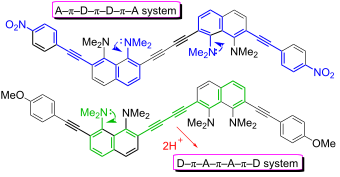
- solution (chloroform and acetonitrile were tested). For comparison, N,N-dimethyl-4-((4-nitrophenyl)ethynyl)aniline demonstrates a weak fluorescence with an emission maximum at 550 nm (EtOH) [37]. The optical band gaps (Egopt), estimated from the onset point of the absorption spectra, ranged within 2.39 eV



pH-Responsive fluorescent supramolecular nanoparticles based on tetraphenylethylene-labelled chitosan and a six-fold carboxylated tribenzotriquinacene
Beilstein J. Org. Chem. 2023, 19, 635–645, doi:10.3762/bjoc.19.45
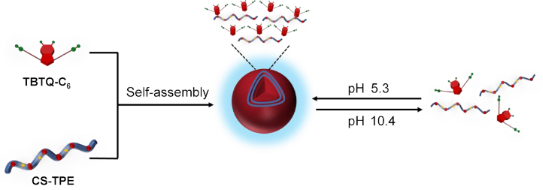
- , PR China 10.3762/bjoc.19.45 Abstract We synthesized a new tetraphenylethylene-modified chitosan bioconjugate, CS-TPE, that shows the aggregation-induced emission effect. It can self-assemble into fluorescent polymeric nanoparticles in an aqueous solution at pH 5.3 either alone or with the water
- fluorescence emission based on CS-TPE or TBTQ-C6/CS-TPE may find applications in various fields, including the development of visual oral drug delivery systems. Keywords: chitosan; nanoparticle; tetraphenylethylene; tribenzotriquinacene; Introduction Stimuli-responsive assemblies in aqueous media have drawn
- -induced emission (AIE) character [20][21]. Chitosan (CS) is a natural cationic polysaccharide, which is considered an ideal material for the construction of drug delivery systems due to its nontoxic, biocompatible, biodegradable, and easily functionalized properties [22]. Herein, we designed and



Phenanthridine–pyrene conjugates as fluorescent probes for DNA/RNA and an inactive mutant of dipeptidyl peptidase enzyme
Beilstein J. Org. Chem. 2023, 19, 550–565, doi:10.3762/bjoc.19.40
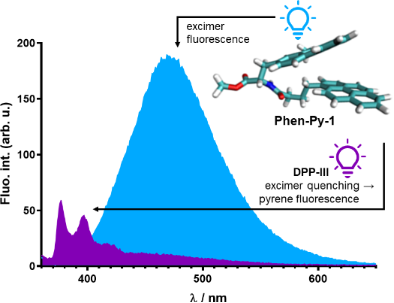
- extinction coefficient and long emission lifetime (>100 ns) [3]. Their large aromatic hydrophobic surface allows the intercalation between DNA/RNA base pairs and binding within the minor groove. Pyrenes are also prominent protein probes that can monitor protein conformational changes because of pyrene
- emission change upon binding to proteins, and a cyanine fluorescence that was selective for polynucleotides. Moreover, the FRET pair of chromophores was activated upon binding to biomolecules [18]. Continuing our previous work, two phenanthridine–pyrene conjugates Phen-Py-1 and Phen-Py-2 (Scheme 1
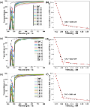
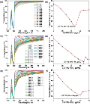
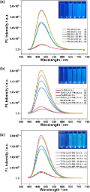
- simulations additionally supported the pronounced hypochromic effect (chapter Computational analysis). Fluorescence spectra Fluorescence emission of Phen-Py-1 and Phen-Py-2 measured at pH 5 and pH 7 (cacodylate buffer, Ic = 0.05 mol dm−3) was linearly dependent on the concentration up to 4 × 10⁻⁶ mol dm−3




CuAAC-inspired synthesis of 1,2,3-triazole-bridged porphyrin conjugates: an overview
Beilstein J. Org. Chem. 2023, 19, 349–379, doi:10.3762/bjoc.19.29
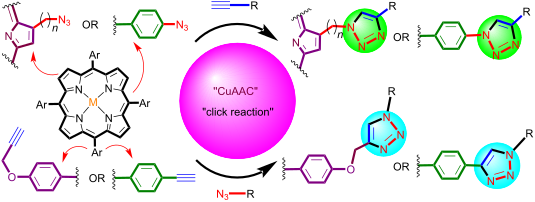
- showed good fluorescence emission; thus, it could be used as a photodynamic therapy application. In 2013, Liu and colleagues [66] used a click chemistry approach to synthesize meso-tetratriazole-bridged Zn(II) porphyrin-boron dipyrromethane conjugates 164 in 85% yield by reacting porphyrin 146 with




Supramolecular approaches to mediate chemical reactivity
Beilstein J. Org. Chem. 2022, 18, 1463–1465, doi:10.3762/bjoc.18.152
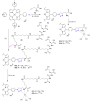
- supramolecular nanostructures, displayed aggregation-induced emission (AIE) due to the restricted phenyl-ring rotation of m-TPEWP5 component. Inspired by natural photosynthesis and following an energy transfer process, the supramolecular nanorod assembly was employed as a nanoreactor for a photocatalytic
Naphthalimide-phenothiazine dyads: effect of conformational flexibility and matching of the energy of the charge-transfer state and the localized triplet excited state on the thermally activated delayed fluorescence
Beilstein J. Org. Chem. 2022, 18, 1435–1453, doi:10.3762/bjoc.18.149
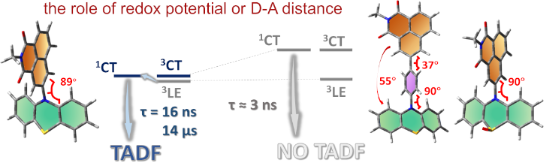
- . The synthesis of the dyads is based on the ordinary derivatization of the NI and PTZ chromophores [20]. The molecular structures were confirmed by 1H NMR, 13C NMR, and HRMS methods (Experimental section). UV–vis absorption and fluorescence emission spectra The UV–vis absorption spectra of the
- solvents with higher polarity. This trend is similar to the one previously reported for the NI-N-PTZ analog [20]. We note that the CT emission band of NI-PTZ is slightly red-shifted as compared to that of the previously reported dyad. Upon oxidation of the PTZ moiety, i.e., for NI-PTZ-O, the fluorescence
- quenching in polar solvents is less significant than that of NI-PTZ (Figure 2b), and the CT emission band is blue-shifted as compared to that of NI-N-PTZ [20], a likely consequence of the reduced electron-donating ability of the PTZ moiety. For NI-PTZ2, a solvent polarity-dependent fluorescence band was
Synthesis of C6-modified mannose 1-phosphates and evaluation of derived sugar nucleotides against GDP-mannose dehydrogenase
Beilstein J. Org. Chem. 2022, 18, 1379–1384, doi:10.3762/bjoc.18.142
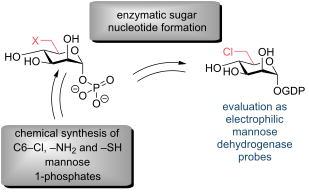
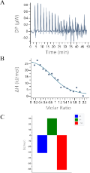
- 355 nm; emission 460 nm). Figure 3 illustrates a reduced rate of NADH production by GMD upon incubation with both probe 19 and the native substrate 1 (blue line). No significant increase in fluorescence was observed upon incubation of probe 19 and GMD (green line). However, a moderate level of NADH


Computational model predicts protein binding sites of a luminescent ligand equipped with guanidiniocarbonyl-pyrrole groups
Beilstein J. Org. Chem. 2022, 18, 1322–1331, doi:10.3762/bjoc.18.137
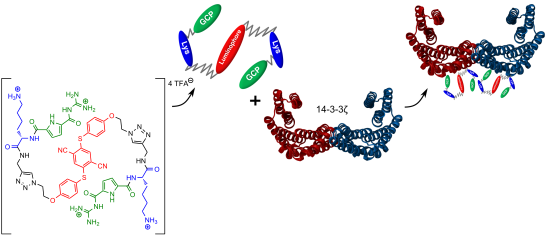
- interactions with other proteins. Here, we use a computational approach to predict the binding sites of the designed hybrid compound featuring aggregation-induced emission luminophores as a potential supramolecular ligand for 14-3-3ζ in the presence and absence of C-Raf peptides. Our results suggest that the
- prediction of two C2 related, dominating binding sites on 14-3-3ζ that may bind to two of the supramolecular ligand molecules. Keywords: AIE luminophores; fluorescence emission; guanidiniocarbonyl-pyrrole; ligand binding; 14-3-3 protein; Introduction The 14-3-3 protein family was one of the first
- overcome this issue is to use fluorescence emission as a read-out tool, such as an emission “on” or “off” behavior [15]. Selective and sensitive fluorescent ligands have been proven to be essential tools for the study of biological systems by biosensing and imaging [16]. There is an increasing demand for




Ionic multiresonant thermally activated delayed fluorescence emitters for light emitting electrochemical cells
Beilstein J. Org. Chem. 2022, 18, 1311–1321, doi:10.3762/bjoc.18.136
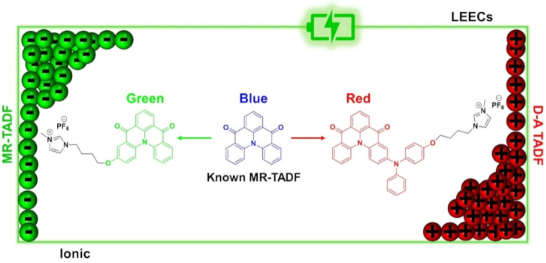
- a known multiresonant TADF (MR-TADF) compound, DiKTa. The emission of the charged derivatives is red-shifted compared to the parent compound. For instance, DiKTa-OBuIm emits in the green (λPL = 499 nm, 1 wt % in mCP) while DiKTa-DPA-OBuIm emits in the red (λPL = 577 nm, 1 wt % in mCP). In 1 wt % mCP
- were prepared using both DiKTa-OBuIm and DiKTa-DPA-OBuIm as active emitters showing green (λmax = 534 nm) and red (λmax = 656 nm) emission, respectively. Keywords: electroluminescence; light-emitting electrochemical cells; multiresonance; purely organic emitters; thermally activated delayed
- and emission takes place within the intrinsic region [2][3][4][5][6]. Two families of widely investigated emitters for LEECs are ionic transition metal complexes (iTMCs) [7][8][9][10] and conjugated polymers (CPs) [4]. From the early use of ruthenium(II) complexes, a significant amount of research has



Thermally activated delayed fluorescence (TADF) emitters: sensing and boosting spin-flipping by aggregation
Beilstein J. Org. Chem. 2022, 18, 1177–1187, doi:10.3762/bjoc.18.122
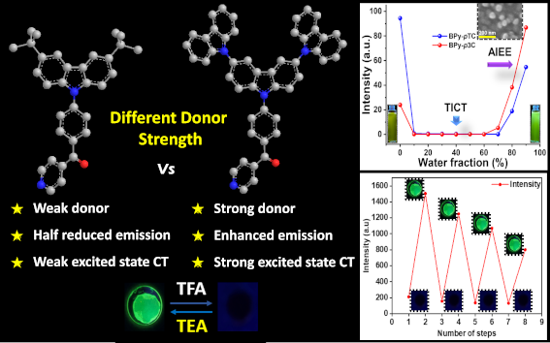
- donor size and strength: the emitter BPy-pTC with tert-butylcarbazole (TC) as the donor and BPy-p3C with bulky tricarbazole (3C) as the donor unit. Both BPy-pTC and BPy-p3C exhibited prominent emission with TADF properties in solution and in the solid phase. The stronger excited-state charge transfer
- was obtained for BPy-p3C due to the bulkier donor, leading to a more twisted D–A geometry than that of BPy-pTC. Hence, BPy-p3C exhibited aggregation-induced enhanced emission (AIEE) in a THF/water mixture. Interestingly, the singlet–triplet energy gap (ΔEST) was reduced for both compounds in the
- metal-based emitters in organic light-emitting diode (OLED) devices [18]. Nevertheless, many TADF emitters suffer from quenching of the emission due to the aggregation-caused quenching effect [19][20]. The strong π–π-stacking interactions in the solid or aggregated state may lead to emission quenching


Synthesis, optical and electrochemical properties of (D–π)2-type and (D–π)2Ph-type fluorescent dyes
Beilstein J. Org. Chem. 2022, 18, 1047–1054, doi:10.3762/bjoc.18.106
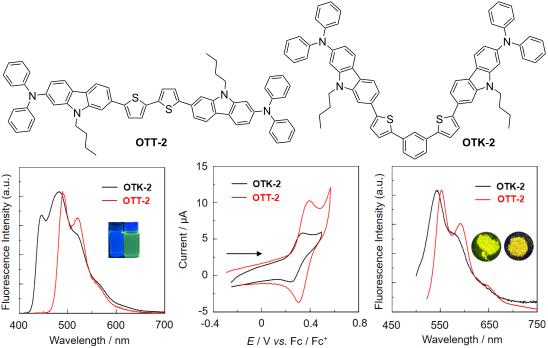
- band, but also intense fluorescence emission both in solution and the solid state. Keywords: (D–π)2 structure; fluorescence; fluorescent dyes; photoabsorption; redox properties; Introduction The design and development of a new type of organic fluorescent dyes have been of considerable scientific and
- fluorescent dyes constructed of an electron-donating moiety (D) and an electron-withdrawing moiety (A), linked by a π-conjugated unit thanks to their intense photoabsorption and fluorescence emission characteristics originating from the intramolecular charge transfer (ICT) excitation from the D to the A
- photoabsorption band but also intense fluorescence emission both in solution and the solid state, compared to the (D–π)2Ph-type structure. The electrochemical properties of OTK-2 and OTT-2 (0.1 mM) were evaluated using CV in DMF containing 0.1 M tetrabutylammonium perchlorate (Bu4NClO4), in which the potentials


Morita–Baylis–Hillman reaction of 3-formyl-9H-pyrido[3,4-b]indoles and fluorescence studies of the products
Beilstein J. Org. Chem. 2022, 18, 926–934, doi:10.3762/bjoc.18.92
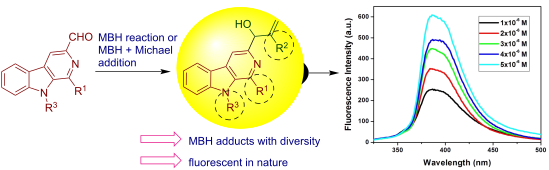
- . Fluorescence studies Fluorescence studies of these C-3-substituted pyrido[3,4-b]indole derivatives were examined and various parameters (contact time, concentration and solvent) were optimized for obtaining the best results using 7dA as a model substrate. Fluorescence emission spectra for optimizing the
- . Further, the fluorescence emission profile of 7dA was recorded in chloroform at different concentrations viz. 1 × 10⁻⁶ M, 2 × 10⁻⁶ M, 3 × 10⁻⁶ M, 4 × 10⁻⁶ M and 5 × 10⁻⁶ M which indicated that fluorescence intensity was found to increase with increase in concentration and fluorescence spectra above this


Post-synthesis from Lewis acid–base interaction: an alternative way to generate light and harvest triplet excitons
Beilstein J. Org. Chem. 2022, 18, 825–836, doi:10.3762/bjoc.18.83
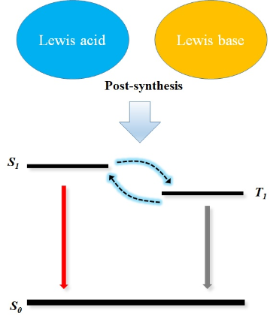
- Guangdong Province, Shantou University, Shantou 518060, People’s Republic of China Wuhan National Laboratory for Optoelectronics, Huazhong University of Science and Technology, Wuhan 430074, People’s Republic of China 10.3762/bjoc.18.83 Abstract The changes in absorption and emission of fluorescent
- and charge-transfer (HLCT) and doublet emission have been designed and demonstrated [9][10]. However, the development of these materials often requires complicated molecular design and synthesis [11][12]. Alternatively, it is also possible to produce light emission by molecular exciplexes composed of
- of nitrogen-containing heterocycles in the fluorescent materials, the addition of a Lewis acid tended to induce red-shifted absorption and emission, shedding light on the fact that the Lewis acid interacts easily with the nitrogen-containing fluorescent materials. This interaction mechanism is the


Heteroleptic metallosupramolecular aggregates/complexation for supramolecular catalysis
Beilstein J. Org. Chem. 2022, 18, 597–630, doi:10.3762/bjoc.18.62
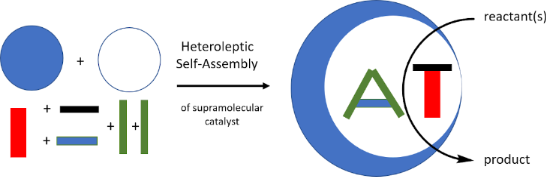
- into the Pt8 cage 25a = (22)4(19)2(NO3)8 [65]. Counter anion exchange from NO3− to PF6− made the cages soluble in acetonitrile. All three cages formed spherical supramolecular nano-aggregates in a water/acetonitrile (9:1) mixture and showed increased emission in the aggregated state [66]. Rhodamine B
- (26) was chosen as a FRET acceptor as there is a considerable overlap in energy of the donor emission and acceptor absorption. Then, artificial LHSs were constructed with aggregates from 24b or 25b at a donor/acceptor ratio of 5:1 (Figure 6). Finally, the light harvesting materials (24b + 26) and (25b


Syntheses of novel pyridine-based low-molecular-weight luminogens possessing aggregation-induced emission enhancement (AIEE) properties
Beilstein J. Org. Chem. 2022, 18, 580–587, doi:10.3762/bjoc.18.60
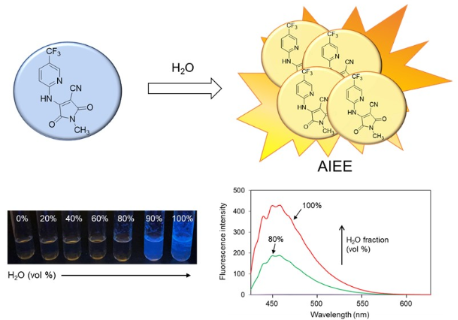
- -induced emission enhancement (AIEE) properties in aqueous media. Compounds 4a and 4e, bearing electron-withdrawing groups (Br and CF3, respectively) showed 7.0 and 15 times fluorescence enhancement. Time-dependent density functional theory (TD-DFT) calculations were performed to gain better insight into
- -concentration solutions, and their emission efficiency, chromogenic properties, and light sensitivity decrease rapidly [5][6]. In recent years, contrary to conventional fluorescent compounds, aggregation-induced emission enhancement (AIEE)-based compounds that exhibit strong fluorescence in aggregate structures
- excitation maxima (Exmax), emission maxima (Emmax), and fluorescence quantum yields (Φ) of the molecules from fluorescence spectroscopic studies. The pyrido[1,2-a]pyrrolo[3,4-d]pyrimidine derivatives 3a,b possessing a highly complex ring-fused system emitted fluorescence at 545–546 nm and 537–538 nm in


Synthesis of a new water-soluble hexacarboxylated tribenzotriquinacene derivative and its competitive host–guest interaction for drug delivery
Beilstein J. Org. Chem. 2022, 18, 539–548, doi:10.3762/bjoc.18.56
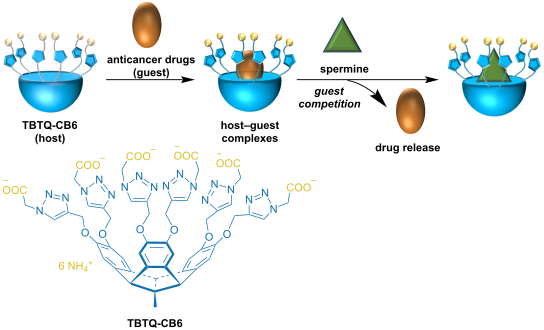
- , fluorescence titration experiments were conducted. As presented in Figure 1c, the emission of TBTQ-CB6 was gradually reduced upon increasing the MV concentration, suggesting charge transfer from the electron-rich host to the electron-deficient guest. According to the fluorescence titration data, the





Substituent effect on TADF properties of 2-modified 4,6-bis(3,6-di-tert-butyl-9-carbazolyl)-5-methylpyrimidines
Beilstein J. Org. Chem. 2022, 18, 497–507, doi:10.3762/bjoc.18.52
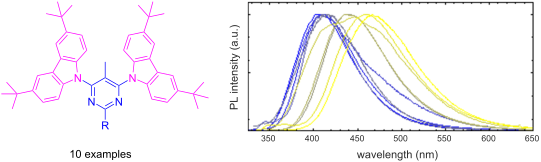
- of TADF compounds through the selection of different electron-donating or accepting fragments opens great possibilities to tune the emission properties and rates. Here we present the synthesis of a series of novel pyrimidine–carbazole emitters and their photophysical characterization in view of
- attached through a phenylene bridge. A modification of the pyrimidine unit with CN, SCH3, and SO2CH3 functional groups at position 2 is shown to enhance the emission yield up to 0.5 with pronounced TADF activity. Keywords: carbazole; pyrimidine; RTP; synthesis; thermally activated delayed fluorescence
- achieving efficient deep-blue emission, we were interested to study the influence of substituents in position 2 of the pyrimidine ring on the TADF properties of pyrimidine–carbazole emitters. For this purpose, we performed the synthesis of novel 4,6-bis(3,6-di-tert-butyl-9H-carbazol-9-yl)pyrimidines