Search results
Search for "equilibrium" in Full Text gives 678 result(s) in Beilstein Journal of Organic Chemistry. Showing first 200.
Elucidating the glycan-binding specificity and structure of Cucumis melo agglutinin, a new R-type lectin
Beilstein J. Org. Chem. 2024, 20, 306–320, doi:10.3762/bjoc.20.31
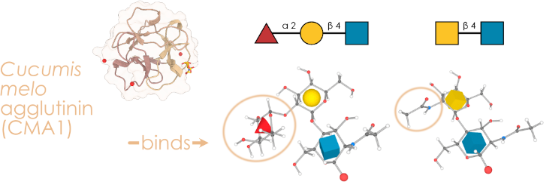
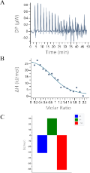
- 10 µL/min. Surfaces were regenerated with 30 s injections of 50 mM NaOH and 1 M NaCl. IC50 was measured using the response at equilibrium for each concentration of competitive sugar that were translated in percentage of inhibition, then plotted against the molar concentration of competitive sugar
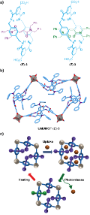
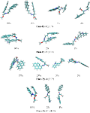
- equilibrium, n = 2. Structural insights into the binding mechanism of CMA1. (a, b) Overall representation of the N-terminal domain of CMA1 in complex with (a) LacNAc (Galβ1-4GlcNAc) [29] or (b) GalNAc [30]. Trefoil repeats are colored differently, and cadmium ions are represented as red spheres. (c, d) Close


Synthesis of π-conjugated polycyclic compounds by late-stage extrusion of chalcogen fragments
Beilstein J. Org. Chem. 2024, 20, 287–305, doi:10.3762/bjoc.20.30
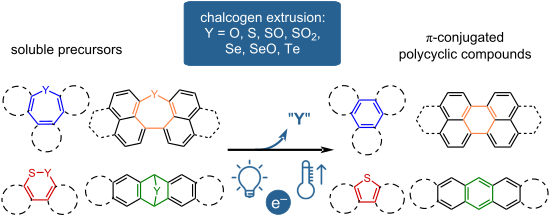
- , this class of compounds is prone to valence isomerization via 6π-electrocyclization leading to the formation of heteroatom-containing norcaradiene, and oxepine has been shown to exist in equilibrium with its valence isomer benzene oxide [37]. In contrast with the parent oxepine, which is isolable at
- room temperature, other group-16 heteropines suffer from thermal instability. Indeed, the low activation barrier for S, Se or Te cheletropic extrusion from the norcaradiene valence isomer, combined with the irreversibility of this process, shifts the tautomerization equilibrium and delivers benzene as




Substitution reactions in the acenaphthene analog of quino[7,8-h]quinoline and an unusual synthesis of the corresponding acenaphthylenes by tele-elimination
Beilstein J. Org. Chem. 2024, 20, 243–253, doi:10.3762/bjoc.20.24
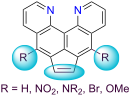
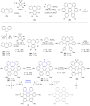
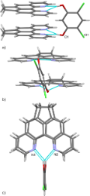
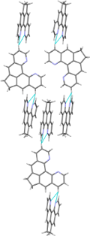
- equilibrium) under the action of an excess of nucleophiles as bases. Such dianions are characteristic of acenaphthene and have been repeatedly detected in subsequent transformations [18][19]. In our case, the CH-acidity of the CH2CH2 bridge should be even higher under the action of pyridine rings, and, if




Metal-catalyzed coupling/carbonylative cyclizations for accessing dibenzodiazepinones: an expedient route to clozapine and other drugs
Beilstein J. Org. Chem. 2024, 20, 193–204, doi:10.3762/bjoc.20.19
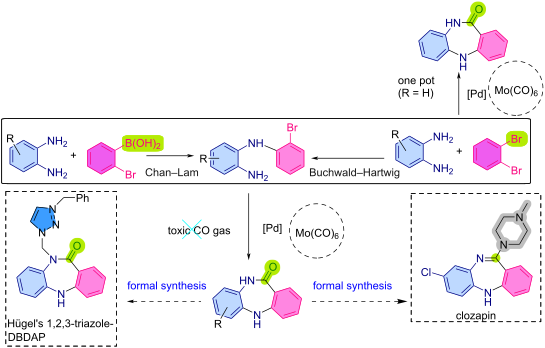
- compound 5 into the keto form 4a by using TFA to shift the equilibrium towards the desired product, but this proved to be futile under these conditions, as only the iminol 5 structure was observed. Attempt at accessing dibenzodiazepinone via step-wise synthesis Due to the difficulty encountered in the one


Perspectives on push–pull chromophores derived from click-type [2 + 2] cycloaddition–retroelectrocyclization reactions of electron-rich alkynes and electron-deficient alkenes
Beilstein J. Org. Chem. 2024, 20, 125–154, doi:10.3762/bjoc.20.13
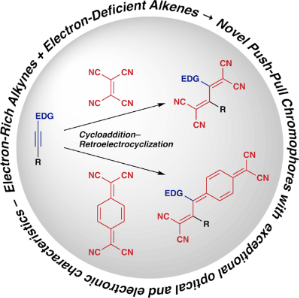
- generalizing the elucidated reaction mechanism to other [2 + 2] CA–RE reactions involving TCNE and TCNQ as electrophiles might be difficult. They emphasized the significance of considering a pre-equilibrium state of the charge-transfer complexes between the alkynes and alkenes and mentioned that the


Synthetic approach to 2-alkyl-4-quinolones and 2-alkyl-4-quinolone-3-carboxamides based on common β-keto amide precursors
Beilstein J. Org. Chem. 2023, 19, 1804–1810, doi:10.3762/bjoc.19.132
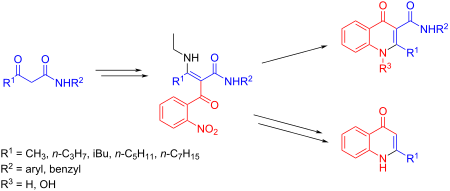
- /E isomers in approximately 85:15 ratio. The same spectra in CDCl3 showed broad coalescent signals for the characteristic vinyl CH protons, which is indicative of a dynamic equilibrium between the isomers. For both types of nitro intermediates 3 and 6 the final ring-forming step required reduction of


Unprecedented synthesis of a 14-membered hexaazamacrocycle
Beilstein J. Org. Chem. 2023, 19, 1728–1740, doi:10.3762/bjoc.19.126
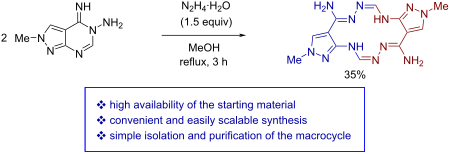
- were extremely broadened. This can be explained by some equilibrium processes including internal rotation of the acetylamino group and/or exchange between C=N bond configurations. As the temperature increases, the width of the signals decreases, however, even at 100 °С, some signals remain broadened


Benzoimidazolium-derived dimeric and hydride n-dopants for organic electron-transport materials: impact of substitution on structures, electrochemistry, and reactivity
Beilstein J. Org. Chem. 2023, 19, 1651–1663, doi:10.3762/bjoc.19.121
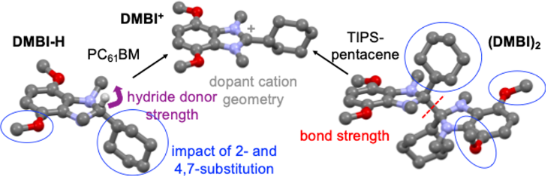
- , whereby the dimer is in equilibrium with a small concentration of the corresponding odd-electron monomer, which can then rapidly react with an acceptor such as an organic semiconductor (SC) through an exergonic electron transfer (ET), has been observed for the reactions of several relatively weakly bonded


Radical chemistry in polymer science: an overview and recent advances
Beilstein J. Org. Chem. 2023, 19, 1580–1603, doi:10.3762/bjoc.19.116
- ATRP relies on the establishment of a reversible activation/deactivation equilibrium reaction between an alkyl halide or halide-like initiator (RX) and a radical species (R·) [43]. During the activation process, the organohalides quickly lose their terminal halogen atoms in the presence of the liganded
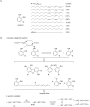
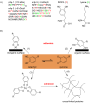
- amino acid sequence of mfp-1, mfp-3, and mfp-5 (Y: DOPA, K: lysine). B) Scheme showing examples of the adhesive and cohesive properties of catechol-containing proteins. R represents the remainder of the mfp’s. Scheme 3 redrawn from [10]. Activation–deactivation equilibrium in nitroxide-mediated




Cyclodextrins permeabilize DPPC liposome membranes: a focus on cholesterol content, cyclodextrin type, and concentration
Beilstein J. Org. Chem. 2023, 19, 1570–1579, doi:10.3762/bjoc.19.115
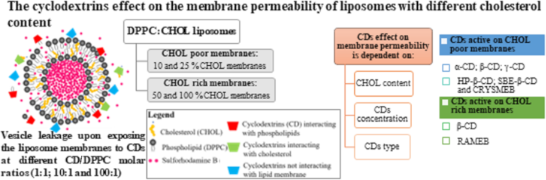
- Information File 1). The instantaneous effect of CDs on other membranes was similarly obtained. This may be due to the rapid equilibrium that could be established at 10% CHOL between the membrane and the CD. In fact, CD can instantly interact with the liposome membrane constituents and the extraction of lipid
- -organized and the equilibrium between the CD and the membrane is established. Our result for 10% CHOL liposomes is in accordance with that of Hatzi et al. showing an instant calcein release from CHOL-free liposomes (PC and H-PC vesicles) exposed to CDs with no further leakage with time [12]. It is worthy to
- note, that the 10% CHOL membranes are less stable than the remaining formulations and evidenced the same SRB release pattern as CHOL-free liposomes [15]. Nonetheless, the rapid equilibrium between the CDs and the membrane cannot alone explain the reason behind the disappearance of the CDs effect with


Unraveling the role of prenyl side-chain interactions in stabilizing the secondary carbocation in the biosynthesis of variexenol B
Beilstein J. Org. Chem. 2023, 19, 1503–1510, doi:10.3762/bjoc.19.107
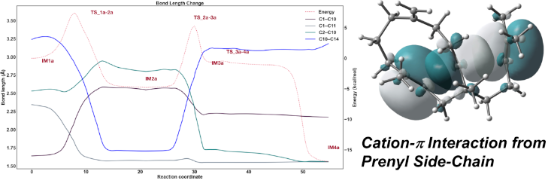
- as the C–H–π interaction between the carbocation intermediate and the Phe residue of terpene cyclase in the biosynthesis of sesterfisherol [21], and the intricated rearrangement reaction mechanism promoted by the equilibrium state of the homoallyl cation and the cyclopropylcarbinyl cation in the


Application of N-heterocyclic carbene–Cu(I) complexes as catalysts in organic synthesis: a review
Beilstein J. Org. Chem. 2023, 19, 1408–1442, doi:10.3762/bjoc.19.102
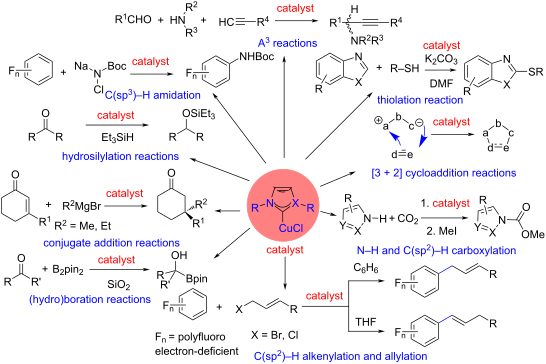
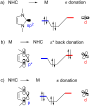
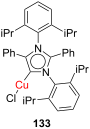
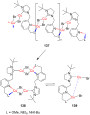
- the nitrogen atoms adjacent to the carbene center result in kinetic stabilization of the NHC suppressing its dimerization to the corresponding olefin (the Wanzlick equilibrium). On the other hand, thermodynamic stabilization results due to donation of lone pair(s) electrons of the adjacent nitrogen








Metal catalyst-free N-allylation/alkylation of imidazole and benzimidazole with Morita–Baylis–Hillman (MBH) alcohols and acetates
Beilstein J. Org. Chem. 2023, 19, 1251–1258, doi:10.3762/bjoc.19.93
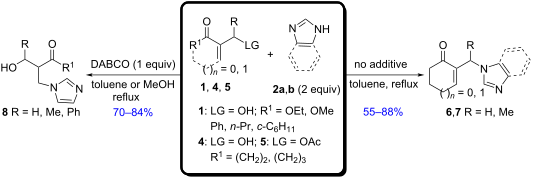
- removal of water formed from the direct amination of alcohol 4a by azeotropic distillation shifted the position of the equilibrium in direction to the formation of the allylated imidazole 6a which was obtained in good 88% yield (Table 1, entry 6). The protocol was also successfully extended to the


Exploring the role of halogen bonding in iodonium ylides: insights into unexpected reactivity and reaction control
Beilstein J. Org. Chem. 2023, 19, 1171–1190, doi:10.3762/bjoc.19.86
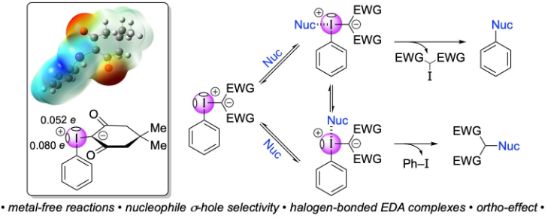
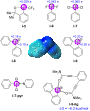
- these ylides (e.g., 75), they surmised that the nitro group was best suited to blocking the proximal σ-hole, thereby preventing non-productive reaction pathways (e.g., thioamide arylation) from occurring. Takemoto and Kobayashi have theorized that an equilibrium should exist between Lewis-basic







The effect of dark states on the intersystem crossing and thermally activated delayed fluorescence of naphthalimide-phenothiazine dyads
Beilstein J. Org. Chem. 2023, 19, 1028–1046, doi:10.3762/bjoc.19.79
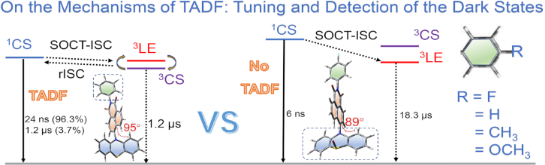
- unlikely to be detected in ns-TA spectra due to its transient character (the lifetime of this state is short, its concentration is too low to be detected by ns-TA spectroscopy) [67][68]. The monoexponential decay kinetics indicate that the 3LE and 3CS state are in good equilibrium, i.e., the spin–vibronic
- native PTZ moiety, the T1 state density is delocalized on the NI and PTZ moieties. Since these two moieties have different T1 state energies (2.25 and 2.45 eV, respectively), the T1 state should be a 3CS state, not an equilibrium of 3PTZ/3NI state. In polar solvents (e.g., ACN), literally the same


CO2 complexation with cyclodextrins
Beilstein J. Org. Chem. 2023, 19, 1021–1027, doi:10.3762/bjoc.19.78
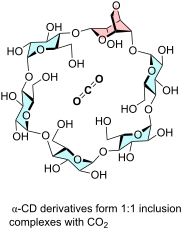
- Table 1. As CO2 is in large excess high crystal yields can be obtained even though the CD cavity is only partially filled, because more CO2 is bound in solution as crystallization proceeds. When equilibrium is reached as in entries 1–3 (Table 1) the concentration of 1·CO2 is 0.04 M which must be the


The unique reactivity of 5,6-unsubstituted 1,4-dihydropyridine in the Huisgen 1,4-diploar cycloaddition and formal [2 + 2] cycloaddition
Beilstein J. Org. Chem. 2023, 19, 982–990, doi:10.3762/bjoc.19.73
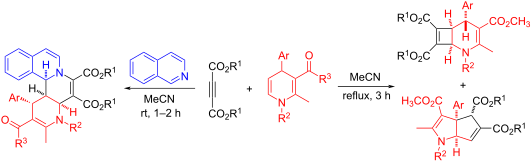
- ]naphthyridines 4. Because all reactions in this process are retro-equilibrium reactions, the most thermodynamically stable diastereomer is preferentially produced in the reaction. In the absence of isoquinoline, the 5,6-unsubstituted 1,4-dihydropyridine acts as an active enamine, which adds to dimethyl


Aromatic C–H bond functionalization through organocatalyzed asymmetric intermolecular aza-Friedel–Crafts reaction: a recent update
Beilstein J. Org. Chem. 2023, 19, 956–981, doi:10.3762/bjoc.19.72

- Brønsted acid to generate (N-acyl)(propargyl)imine 90 as intermediate which added to the deprotonated phosphoric acid to form phosphate ester 91 as the next intermediate through an equilibrium process. Then, 1,2-addition by the C3 position of the heteroarene ring to the acylimine intermediate afforded the


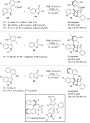


First synthesis of acylated nitrocyclopropanes
Beilstein J. Org. Chem. 2023, 19, 892–900, doi:10.3762/bjoc.19.67
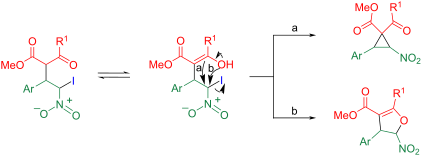
- the graph. In addition, we confirmed that isolated cyclopropane 1e did not change upon treatment with (diacetoxyiodo)benzene and tetrabutylammonium iodide. These findings indicate that no equilibrium existed between cyclopropane 1e and dihydrofuran 8e, and that these products were competitively formed


Light-responsive rotaxane-based materials: inducing motion in the solid state
Beilstein J. Org. Chem. 2023, 19, 873–880, doi:10.3762/bjoc.19.64
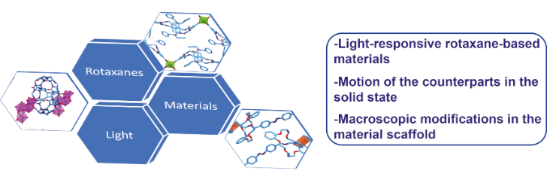
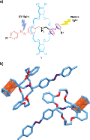
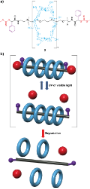
- examples, a light input leads to the observation of motion into condensed phases, both at the level of intertwined components and in terms of macroscopic changes. Despite these promising results reported so far, there are some issues which should be overcome, such as the photostationary equilibrium of some

A fluorescent probe for detection of Hg2+ ions constructed by tetramethyl cucurbit[6]uril and 1,2-bis(4-pyridyl)ethene
Beilstein J. Org. Chem. 2023, 19, 864–872, doi:10.3762/bjoc.19.63
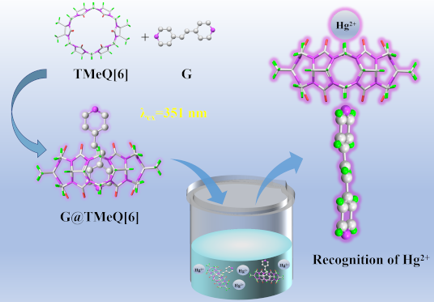
- that TMeQ[6] and G form an inclusion complex with a host–guest ratio of 1:1 and the equilibrium association constant (Ka) was 2.494 × 10⁴ M−1. The G@TMeQ[6] fluorescent probe can sensitively recognize Hg2+ ions by fluorescence enhancement. The linear range is 0.33 × 10⁻⁵–1.65 × 10⁻⁵ mol·L−1, R2
- ] (1.0 × 10⁻⁴ mol·L−1, 1.00 mL) was gradually added to the aqueous solution of G, and the exothermic isotherms (Figure S1 in Supporting Information File 1) and thermodynamic data (Table 1) were obtained. The equilibrium association constant (Ka) of G and TMeQ[6] is 2.494 × 10⁴ M−1, ΔH = −88.43 kJ/mol


Eschenmoser coupling reactions starting from primary thioamides. When do they work and when not?
Beilstein J. Org. Chem. 2023, 19, 808–819, doi:10.3762/bjoc.19.61
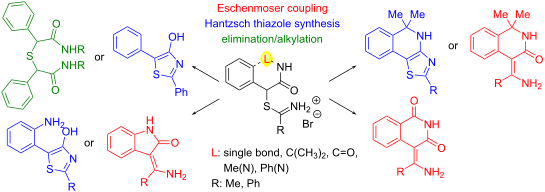
- observed in both MeCN and DMF which was in equilibrium with the starting compounds in a ratio of approximately 1:2. The addition of a base or any thiophile always caused only the decomposition to a complex mixture of products in which no ECR product was detected. Next, we performed modification of the


A new oxidatively stable ligand for the chiral functionalization of amino acids in Ni(II)–Schiff base complexes
Beilstein J. Org. Chem. 2023, 19, 566–574, doi:10.3762/bjoc.19.41
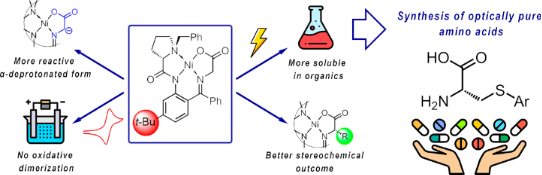
- Michael acceptor. A number of thiols was taken as the model compounds. The reaction was performed under thermodynamic conditions reported in [41], to compare the thermodynamically controlled stereoselectivity of L7 and L1. The use of a 2 molar excess of K2CO3 induces the equilibrium between the isomers



Phenanthridine–pyrene conjugates as fluorescent probes for DNA/RNA and an inactive mutant of dipeptidyl peptidase enzyme
Beilstein J. Org. Chem. 2023, 19, 550–565, doi:10.3762/bjoc.19.40
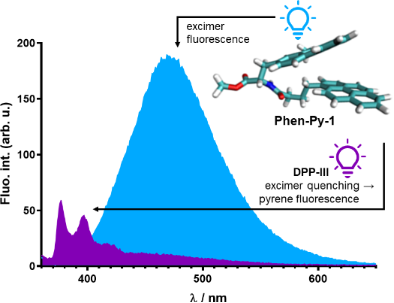
- studied compound. After mixing polynucleotides/protein with studied compounds it was observed that the equilibrium was reached in less than 120 seconds. Compounds Phen-Py-1 and Phen-Py-2 showed a decrease of their excimer fluorescence emission intensity upon time. Therefore, buffer solutions of compounds




Access to cyclopropanes with geminal trifluoromethyl and difluoromethylphosphonate groups
Beilstein J. Org. Chem. 2023, 19, 541–549, doi:10.3762/bjoc.19.39
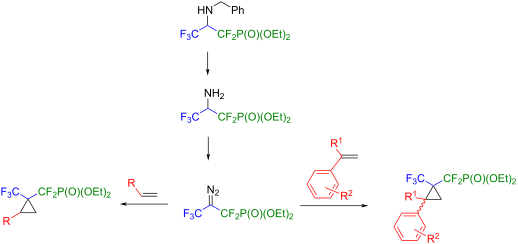
- then involved in the next catalytic cycle and thus removed from the equilibrium between Int4 and Pr + CuI. In addition, since TS2 is an early transition state and the potential is concomitantly very flat, only TS2_2 was found by means of regular optimization towards a first order saddle point. For the