


Search results
Search for "overall yield" in Full Text gives 525 result(s) in Beilstein Journal of Organic Chemistry. Showing first 200.
Complementarity of solution and solid state mechanochemical reaction conditions demonstrated by 1,2-debromination of tricyclic imides
Beilstein J. Org. Chem. 2022, 18, 746–753, doi:10.3762/bjoc.18.75

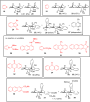
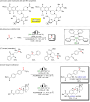
- in a 1:1.3 ratio (inseparable mixture, 32% overall yield). The minor isomer has a linear structure with carbomethoxy groups in the equatorial plane as depicted for 37, whereas in the major isomer 38 the carbomethoxy groups are positioned in axial plane of the molecule. The bent structure of 38 was




BINOL as a chiral element in mechanically interlocked molecules
Beilstein J. Org. Chem. 2022, 18, 508–523, doi:10.3762/bjoc.18.53
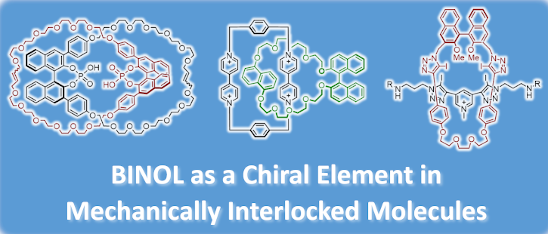
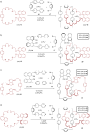
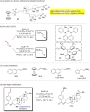
- -capping. The resulting compounds were treated with chloroacetic anhydride and then with thiazole. After anion exchange the chiral thiazolium salts (R)-35a/b, which differ in the chain length of the axle, were obtained in 9%/42% overall yield (see Figure 8a). For comparison, a rotaxane containing a BINOL
- , rotaxane (R)-38 was obtained in 35% overall yield (see Figure 8b). These rotaxanes where then used as catalysts for the asymmetric benzoin condensation of benzaldehyde (39). The best yield (90%) could be generated at 0 °C in methanol with 10 mol % of catalyst (R)-35a, albeit with a low stereoselectivity
- pyridine axle, followed by ion exchange, gave rise to the cationic rotaxanes 64a/b in 23/37% overall yield, both of which feature four iodotriazoles as XB donors. While rotaxane (S)-64a only possesses the BINOL unit as a stereogenic element, the system (S,S,S)-64b features two additional chiral centers on




Menadione: a platform and a target to valuable compounds synthesis
Beilstein J. Org. Chem. 2022, 18, 381–419, doi:10.3762/bjoc.18.43
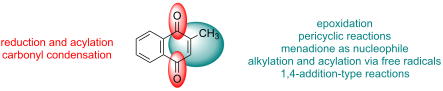
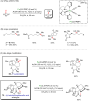
- -naphthoquinone (18) were obtained in 80% yield with a 75:25 ratio, respectively (Scheme 2, method A). In the methylation reaction using methyl radicals generated by the redox decomposition of H2O2 in DMSO solution, compounds 10 and 18 were obtained in an overall yield of 80–90% with a 77:23 ratio, respectively
- 1,3-butadiene, followed by dehydrogenation gave menadione (10). This proved to be a good synthetic route, leading to menadione in approximately 80% overall yield (Scheme 6). Another interesting synthetic approach was reported by Mal and co-workers, who synthetized menadione (10) via a


Borylated norbornadiene derivatives: Synthesis and application in Pd-catalyzed Suzuki–Miyaura coupling reactions
Beilstein J. Org. Chem. 2022, 18, 368–373, doi:10.3762/bjoc.18.41
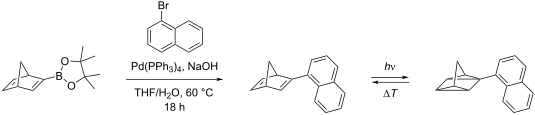
- with t-BuLi and the following reaction with bis(pinacolato)diborone in 15% overall yield (Scheme 1) [27]. The low yield of this reaction as compared with the ones of resembling reactions of the substrate 1b [27] may be caused by the unfavorable clash of the sterically demanding borylating reagent and


New efficient synthesis of polysubstituted 3,4-dihydroquinazolines and 4H-3,1-benzothiazines through a Passerini/Staudinger/aza-Wittig/addition/nucleophilic substitution sequence
Beilstein J. Org. Chem. 2022, 18, 286–292, doi:10.3762/bjoc.18.32
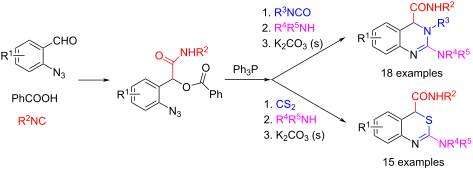
- intermediate 7a. In the presence of K2CO3 in CH3CN at refluxing temperature, the 3,4-dihydroquinazoline 8a was finally obtained in 84% yield (Table 1, entry 1, the overall yield is 73%) by intramolecular nucleophilic substitution. The reaction conditions for the transformation of guanidine intermediate 7a into
- obtained in the presence of K2CO3/CH3CN probably due to the lower reactivity of the -OAc leaving group. In case when R was a 4-NO2C6H4 group, 86% yield of the product 8a was obtained, however, in this case the Passerini product 4a (R = 4-NO2C6H4) was obtained only in 62% yield and the overall yield of




Iridium-catalyzed hydroacylation reactions of C1-substituted oxabenzonorbornadienes with salicylaldehyde: an experimental and computational study
Beilstein J. Org. Chem. 2022, 18, 251–261, doi:10.3762/bjoc.18.30
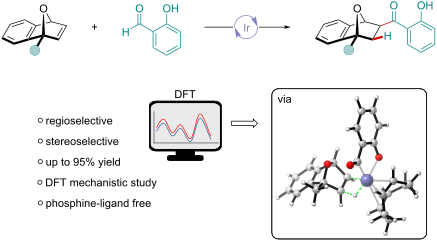
- revolutionized the modern chemist’s synthetic toolbox, prior installation of these functional groups requires a number of steps, leading to undesired side-products and reduced overall yield. An attractive alternative is the catalytic activation and subsequent functionalization of otherwise inert carbon–hydrogen


Anomeric 1,2,3-triazole-linked sialic acid derivatives show selective inhibition towards a bacterial neuraminidase over a trypanosome trans-sialidase
Beilstein J. Org. Chem. 2022, 18, 208–216, doi:10.3762/bjoc.18.24
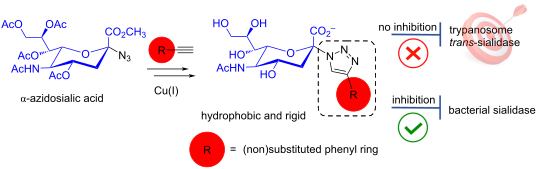
- acid derivatives was synthesised as outlined in Figure 2B. Emulating our previous work with anomeric azide CuAAC click chemistry [17][22][23][24], the well-known α-azidosialic acid 1 [25] was synthesised from N-acetylneuraminic acid in four steps [26] in good overall yield (55%). The assignment of the



Ready access to 7,8-dihydroindolo[2,3-d][1]benzazepine-6(5H)-one scaffold and analogues via early-stage Fischer ring-closure reaction
Beilstein J. Org. Chem. 2022, 18, 143–151, doi:10.3762/bjoc.18.15
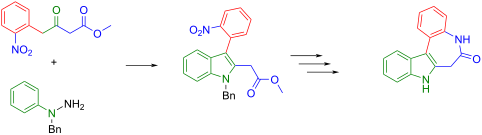
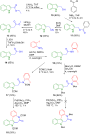
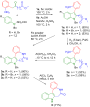
- closely related analogues, one containing a bromo substituent and the other one incorporating an 8-membered instead of a 7-membered ring. The key transformation in this four-step synthesis, with an overall yield of 29%, is the Fischer indole reaction of 2-nitrophenylacetyl acetoacetate with 1-benzyl-1






Chemical and chemoenzymatic routes to bridged homoarabinofuranosylpyrimidines: Bicyclic AZT analogues
Beilstein J. Org. Chem. 2022, 18, 95–101, doi:10.3762/bjoc.18.10
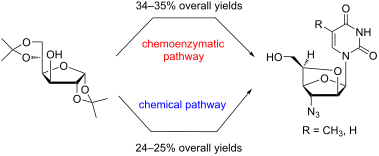
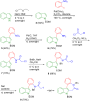
- chemoenzymatic method was found to be superior over the chemical method in respect of the number of synthetic steps and overall yield of the final product. Keywords: bicyclic AZT analogues; bridged homoarabinofuranosylpyrimidine nucleosides; chemical pathway; Lipozyme® TL IM; regioselective enzymatic
- % overall yield starting from compound 11, respectively (Scheme 2). The use of lipase as biocatalyst was employed for the selective acetylation of the primary hydroxy group present in trihydroxy nucleosides 14a,b. This led to the screening of two different lipases, viz Candida antarctica lipase-B (CAL-B



First total synthesis of hoshinoamide A
Beilstein J. Org. Chem. 2021, 17, 2924–2931, doi:10.3762/bjoc.17.201
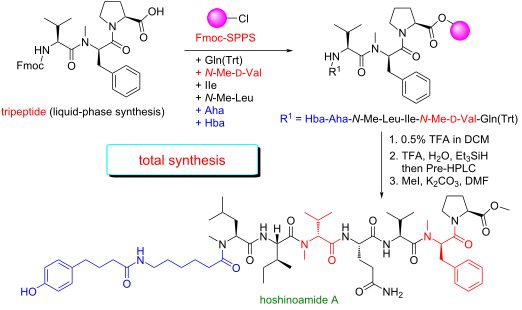
- tripeptide 7 was obtained in 36% yield. Similar conditions were selected by Iwasaki’s group during the total synthesis of hoshinoamide C. To our delight, when HATU was used, the overall yield of tripeptide 7 was rised to more than 70% (Table 1, entries 2 and 3). Tripeptide 7 was produced in 78% isolated


Total synthesis of the O-antigen repeating unit of Providencia stuartii O49 serotype through linear and one-pot assemblies
Beilstein J. Org. Chem. 2021, 17, 2915–2921, doi:10.3762/bjoc.17.199
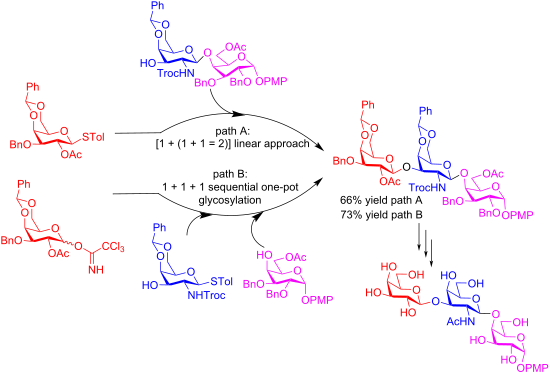
- monosaccharide acceptor 7 was added, followed by the addition of NIS and TMSOTf. After 15 min of reaction, TLC monitoring showed complete consumption of the donor. Work-up of the reaction mixture followed by chromatographic purification afforded the pure trisaccharide 2 as a single isomer in an overall yield of
- target protected trisaccharide was also synthesized through a [1 + 1 + 1] one-pot strategy involving sequential glycosylations from the reducing end to the non-reducing end. The one-pot synthesis provided the final trisaccharide in an overall yield of 73% compared to the overall yield of 66% from the two


Synthetic strategies toward 1,3-oxathiolane nucleoside analogues
Beilstein J. Org. Chem. 2021, 17, 2680–2715, doi:10.3762/bjoc.17.182
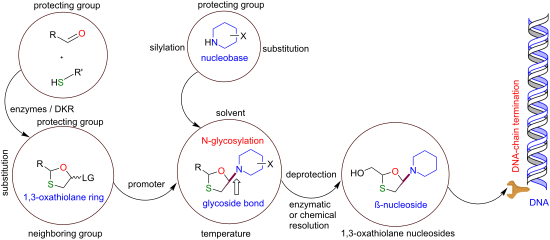
- in the presence of levamisole, which gave an improved overall yield of 52 of up to 67%. In this approach, the required stereochemistry of the thioacetal compound was created, so that the coupling with a nucleobase in a further step determines the stereochemistry of the attaching nucleobase at the


Synthesis of highly substituted fluorenones via metal-free TBHP-promoted oxidative cyclization of 2-(aminomethyl)biphenyls. Application to the total synthesis of nobilone
Beilstein J. Org. Chem. 2021, 17, 2668–2679, doi:10.3762/bjoc.17.181
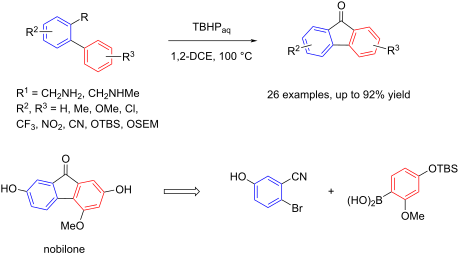
- obtained via TBHP-mediated cyclization of 23 and subsequent TBS-deprotection of intermediate 24 with pyridine and HF·pyridine complex [66] in a total yield of 26% over the two steps. The longest linear sequence was 7 steps, with an overall yield of 5%. Finally, the reaction mechanism of the oxidative
- nobilone (25) in 8 steps in an overall yield of 2%. This protocol allows the synthesis of variously substituted fluorenones, since the required 2-(aminomethyl)biphenyls are readily available from commercially available building blocks (substituted benzonitriles or benzaldehydes, areneboronic acids) via
- varying degree on the overall yield. This new protocol was utilized for the first total synthesis of the natural fluorenone nobilone (1d). Selected fluorenone-type natural products. Overview of published cyclization methodologies for the synthesis of fluorenones starting from functionalized biaryls


N-Sulfinylpyrrolidine-containing ureas and thioureas as bifunctional organocatalysts
Beilstein J. Org. Chem. 2021, 17, 2629–2641, doi:10.3762/bjoc.17.176
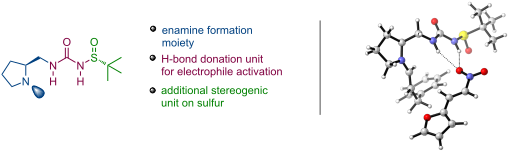
- which the key intermediate, pyrrolidine derivative 2, can be obtained in three steps according to the literature procedure [32]. Using this method, we obtained the product 2 in a yield comparable (56% overall yield) to that described in the literature. However, the difficult chromatographic separation


Synthesis of new bile acid-fused tetrazoles using the Schmidt reaction
Beilstein J. Org. Chem. 2021, 17, 2611–2620, doi:10.3762/bjoc.17.174
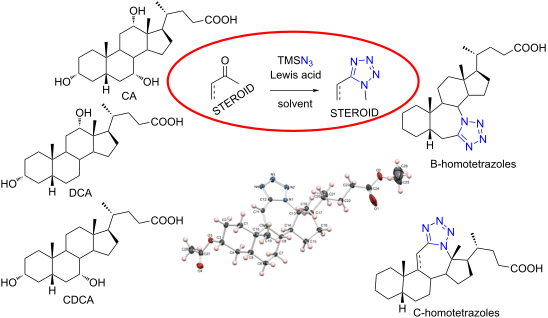
- acid (9) were selectively esterified in refluxing ethyl acetate with a catalytic amount of p-toluenesulfonic acid (pTsOH) [42]. Subsequent oxidation of the free OH groups afforded compounds 3 and 11 in high yields. Similarly, compound 7 was prepared in good overall yield from ethyl cholate (5) by


Silica gel and microwave-promoted synthesis of dihydropyrrolizines and tetrahydroindolizines from enaminones
Beilstein J. Org. Chem. 2021, 17, 2543–2552, doi:10.3762/bjoc.17.170
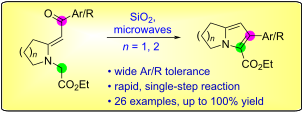
- such enaminones by the route shown in Scheme 4. Alkylation of piperidin-2-one (23) with ethyl bromoacetate followed by treatment of the resulting lactam [66][67] with Lawesson’s reagent in toluene at 80 °C gave the thione 24 in 83% overall yield. Reaction of 24 with phenacyl bromide and its 4-methoxy




Synthesis of new substituted 7,12-dihydro-6,12-methanodibenzo[c,f]azocine-5-carboxylic acids containing a tetracyclic tetrahydroisoquinoline core structure
Beilstein J. Org. Chem. 2021, 17, 2511–2519, doi:10.3762/bjoc.17.168
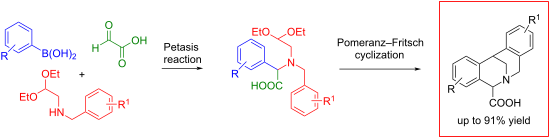
- cyclization reaction was easily performed by treatment of 6a with 20% HCl for 24 h to give dihydromethanodibenzoazocine-5-carboxylic acid (7a, Scheme 5) in 72% yield by extraction of the neutralized reaction mixture. Compound 7a was obtained in two simple steps from 3a with an overall yield of 67%. Then the
- with 67% yield (53% overall yield from 3d), while the reaction carried out in 20% HCl led to a mixture of products, among which 7f was not detected (Scheme 5). It should be also mentioned that the amino acid 6g with a benzyloxy-substituted aromatic ring, obtained in the Petasis reaction of boronic acid


Targeting active site residues and structural anchoring positions in terpene synthases
Beilstein J. Org. Chem. 2021, 17, 2441–2449, doi:10.3762/bjoc.17.161
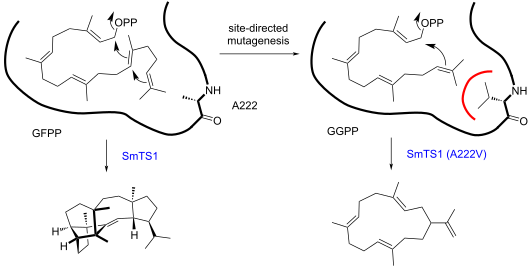
- . Future structural work on SmTS1 and its Q227D derivative is required to clarify this effect. The R242N substitution showed almost no consequences for total production (94 ± 17%) and yields of individual compounds, while for the F307W variant the overall yield dropped to 53 ± 6% with similar product


Synthesis of phenanthridines via a novel photochemically-mediated cyclization and application to the synthesis of triphaeridine
Beilstein J. Org. Chem. 2021, 17, 2340–2347, doi:10.3762/bjoc.17.152
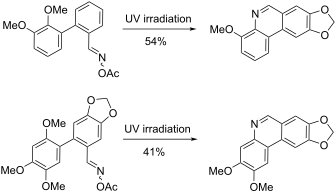
- synthesis of trisphaeridine to afford the product in four linear steps in an overall yield of 6.5% from 1-bromo-2,4,5-trimethoxybenzene. Keywords: aromatic compounds; cyclization; iminyl radical; phenanthridines; radical cation; synthesis; UV irradiation; Introduction Phenanthridine derivatives have
- zinc in acetic acid which resulted in the synthesis of trisphaeridine (3) in five steps in a moderate overall yield of 6.5% commencing from 19. Conclusion In summary, a novel UV light-mediated method for the synthesis of phenanthridines from biaryl oximes has been discovered. A key highlight includes


Synthesis of O6-alkylated preQ1 derivatives
Beilstein J. Org. Chem. 2021, 17, 2295–2301, doi:10.3762/bjoc.17.147
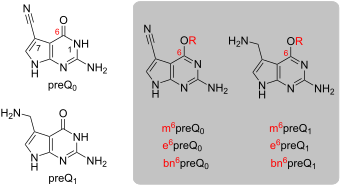
- ; overall yield: 30%. The synthesis of e6preQ1 (2a) and bn6preQ1 (2b) was performed in analogy to the route outlined in Scheme 4 with an overall yield of 23% and 34%, respectively. For details see the Supporting Information File 1. Supporting Information Supporting Information File 360: Synthetic


Chemical syntheses and salient features of azulene-containing homo- and copolymers
Beilstein J. Org. Chem. 2021, 17, 2164–2185, doi:10.3762/bjoc.17.139
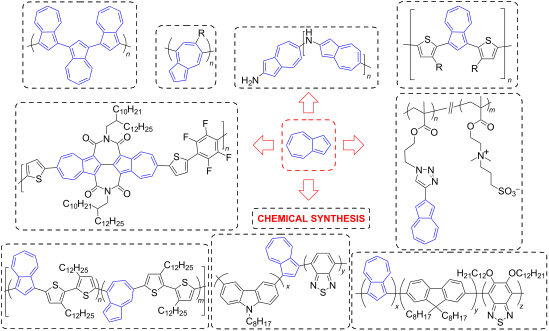
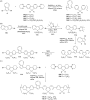
- called polyazulene (Scheme 2). The elemental analysis of this polymer revealed that it existed as a 71:29 mixture of polymer 3 or 3’ bearing a heptafulvene structure (true polyazulene) and cycloheptatrienyl trifluoroacetate 2. The temperature and reaction time determined the overall yield and the Mn of




Asymmetric organocatalyzed synthesis of coumarin derivatives
Beilstein J. Org. Chem. 2021, 17, 1952–1980, doi:10.3762/bjoc.17.128
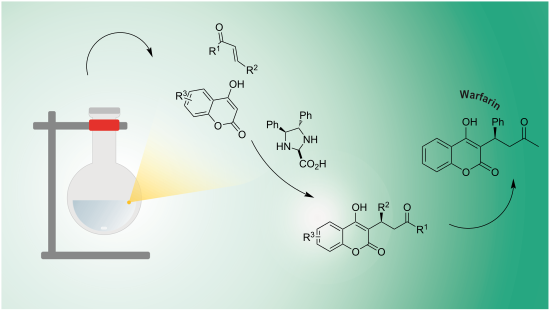
- product 17 was obtained in 15 steps with 6% overall yield. Although chiral secondary amines have proved to be particularly useful catalysts, primary amines as organocatalysts in asymmetric synthesis have also played a significant role [36]. For instance, Kim et al. described the enantioselective Michael
- % ee (Scheme 37). Furthermore, the natural product was synthesized in seven steps with 14% overall yield. Conclusion Coumarin derivatives are important scaffolds for synthetic and medicinal chemistry. These structures have an interesting reactivity and can be used in diverse organic reactions, for




On the application of 3d metals for C–H activation toward bioactive compounds: The key step for the synthesis of silver bullets
Beilstein J. Org. Chem. 2021, 17, 1849–1938, doi:10.3762/bjoc.17.126
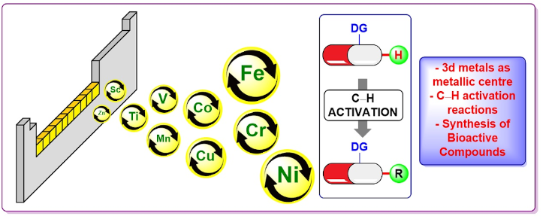
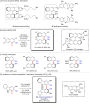
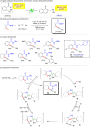
- increasing the overall yield. The resulting eight-step synthesis could be scaled to produce more than 100 kg of compound 41 [109]. Based on what was presented so far, vanadium catalysis is mainly applied as one of the steps involved in a total synthesis that usually leads to the formation of a valuable
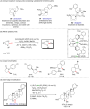
- free amine derivative was produced in 43% overall yield. The 2,8-dioxabicyclo[3.3.1]nonane skeleton is contained in biflavonoids and was shown to exhibit many medicinal activities like antiviral, anti-inflammatory and antitumor properties. The bicyclic compound 49 was aminated at the benzylic position
- oxonium species in the methylation step. Abiraterone acetate (53) is a drug used in cancer treatment [138]. The Mn-catalyzed methylation of an abiraterone analogue was achieved by replacing the fluorination step by mesylation in 15% of overall yield and only a single diastereoisomer was observed (Scheme









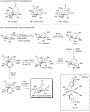


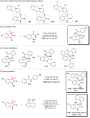
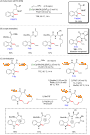
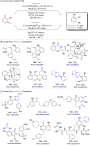

















Development of N-F fluorinating agents and their fluorinations: Historical perspective
Beilstein J. Org. Chem. 2021, 17, 1752–1813, doi:10.3762/bjoc.17.123
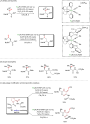
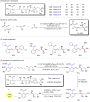
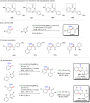
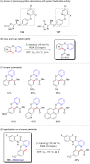
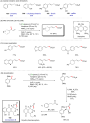
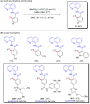
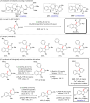
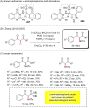
- silyl ether 5-8 to the fluorinated lactone 5-9 in a very satisfactory overall yield [32]. N-Fluoro-2,6-bis(CH2OAc)pyridinium triflate 5-4n [32], N-fluoro-2,6-bis(COOMe)pyridinium triflate 5-4y [30][32], and N-fluoro-2-cyano- and -2,6-dicyanopyridinium tetrafluoroborates [39] were useful reagents, too

























Chemical synthesis of C6-tetrazole ᴅ-mannose building blocks and access to a bioisostere of mannuronic acid 1-phosphate
Beilstein J. Org. Chem. 2021, 17, 1527–1532, doi:10.3762/bjoc.17.110
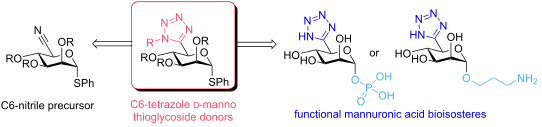
- nitrogen protection (Scheme 3). A first attempt here involved the reaction of 5 with PMBCl in DMF, using K2CO3 alongside KI. Two separable regioisomers 11 and 12 were isolated in an acceptable 53% overall yield and in a ratio of N1-PMB/N2-PMB = 1.1:1 (Scheme 3). HMBC NMR of 11 and 12 clarified the position
- overall yield for the route increased from 9 to 21%. To demonstrate capability for anomeric linker attachment and conversion to a biologically relevant analogue of mannuronic acid 1-phosphate, 3-aminopropyl glycoside 20 and glycosyl 1-phosphate 21 were synthesised (Scheme 4). The mixture 18/19 was used





