


Search results
Search for "retrosynthetic analysis" in Full Text gives 141 result(s) in Beilstein Journal of Organic Chemistry.
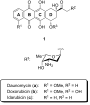
Flexible synthesis of anthracycline aglycone mimics via domino carbopalladation reactions
Beilstein J. Org. Chem. 2013, 9, 2194–2201, doi:10.3762/bjoc.9.258
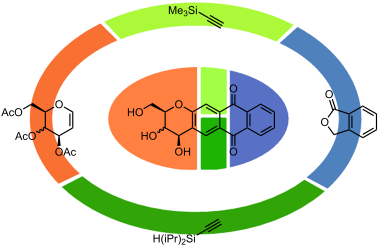
- discovery research. Several natural occurring anthracycline antibiotics. Total synthesis of daunomycinone 6 according to Hansen. Synthesis of simplified anthracycline derivatives. Retrosynthetic analysis of anthracycline aglycone mimics. Si: any silyl group. Synthetic route for the synthesis of various



Total synthesis of (−)-epimyrtine by a gold-catalyzed hydroamination approach
Beilstein J. Org. Chem. 2013, 9, 2042–2047, doi:10.3762/bjoc.9.242
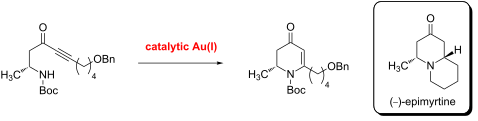
- any racemization and obtaining N-protected compounds which may be useful for further transformations. In order to illustrate the efficiency of our method, we were interested in extending this methodology to quinolizidine privileged structures. Our retrosynthetic analysis is shown in Scheme 2. We
- , 168.1387. Previously reported approach from β-aminoynones for the synthesis of pyridones. Retrosynthetic analysis of (−)-epimyrtine. Synthesis of (−)-epimyrtine. Supporting Information Supporting Information File 542: Spectra of new compounds. Acknowledgements We thank the Program Ciências Sem Fronteiras


A concise enantioselective synthesis of the guaiane sesquiterpene (−)-oxyphyllol
Beilstein J. Org. Chem. 2013, 9, 2028–2032, doi:10.3762/bjoc.9.239
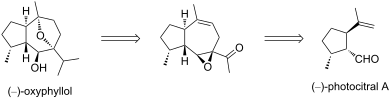
- ). Retrosynthetic analysis for (−)-oxyphyllol (1) and structures of the guaiane sesquiterpenes (+)-orientalol E (2) and (−)-englerin A (5). Attempted selective deoxygenation of diol 7. a) 1 mol % K2OsO4, NMO, acetone, water, THF, rt, 97%, diastereomeric ratio = 2:1 (ref. [6]); b) PhOC(S)Cl, pyridine, CH2Cl2, 0 °C


Stereoselective synthesis of the C79–C97 fragment of symbiodinolide
Beilstein J. Org. Chem. 2013, 9, 1931–1935, doi:10.3762/bjoc.9.228
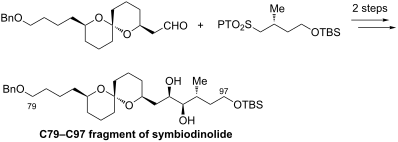
- Julia–Kocienski olefination as the coupling reaction. The new retrosynthetic analysis of the C79–C97 fragment 8 is described in Scheme 2. We envisaged that the diol 8 could be synthesized by the Julia–Kocienski olefination [12][13][14] between aldehyde 9 and 1-phenyl-1H-tetrazol-5-yl (PT)-sulfone 10 and
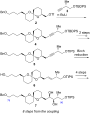
- elucidation is currently underway and will be reported in due course. Structure of symbiodinolide (1). Our previous synthesis of the C79–C96 fragment 7. Retrosynthetic analysis of the C79–C97 fragment 8. Synthesis of aldehyde 20. Synthesis of PT-sulfones 23 and 24. Synthesis of the C79–C97 fragment 27. Julia




Synthesis of the reported structure of piperazirum using a nitro-Mannich reaction as the key stereochemical determining step
Beilstein J. Org. Chem. 2013, 9, 1737–1744, doi:10.3762/bjoc.9.200
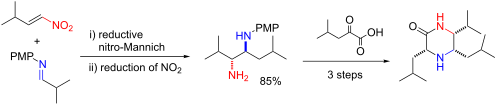
- . Schematic nitro-Mannich reaction. Retrosynthetic analysis of piperazirum. (a) iBuMgCl, Et2O, −78 °C; (b) KOH, EtOH/H2O, 100 °C; (c) (COCl)2. (a) Li(Et3BH), THF, rt then 14, CF3CO2H, −78 °C, dr 70:30; (b) (CF3CO)2O, Py, CH2Cl2, 0 °C to rt; (c) Zn, 6 M HCl, EtOAc/EtOH, rt. (a) Li(Et3BH), CH2Cl2, rt then 19


Exploration of an epoxidation–ring-opening strategy for the synthesis of lyconadin A and discovery of an unexpected Payne rearrangement
Beilstein J. Org. Chem. 2013, 9, 1179–1184, doi:10.3762/bjoc.9.132
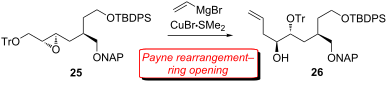
- course of this work, we discovered an unusual Payne-like rearrangement process that occurred in preference to the ring-opening of a hindered epoxide. Results and Discussion Our retrosynthetic analysis of lyconadin A is shown in Scheme 1. We reasoned that 1 could be formed by an alkylation cascade
- , future studies of the scope and limitations of Lewis acid promoted Payne rearrangement–ring-opening cascades could establish their utility in organic synthesis. Lyconadin A. Retrosynthetic analysis of 1. Synthesis of triether 15. Synthesis and attempted ring-opening of epoxide 17. Attempted protection of


Synthesis of 2,3-dihydronaphtho[2,3-d][1,3]thiazole-4,9-diones and 2,3-dihydroanthra[2,3-d][1,3]thiazole-4,11-diones and novel ring contraction and fusion reaction of 3H-spiro[1,3-thiazole-2,1'-cyclohexanes] into 2,3,4,5-tetrahydro-1H-carbazole-6,11-diones
Beilstein J. Org. Chem. 2013, 9, 577–584, doi:10.3762/bjoc.9.62
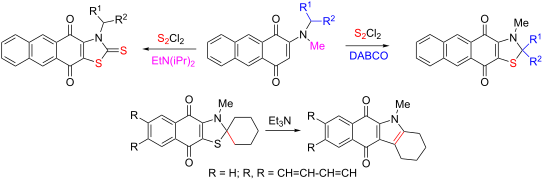
- interested in developing a general method for the synthesis of naphtho- and anthraquinones from readily available 2-aminonaphtho- and anthroquinones as well as in the study of their chemical properties and side reactions. A retrosynthetic analysis of naphtho- and anthraquinones 1 and 2 led us to a conclusion
- solution of spiro compounds 1d or 2d (1 mmol) and triethylamine (0.17 mL, 1.20 mmol) in chlorobenzene (20 mL) was heated under reflux for 12 h. The solvent was evaporated under reduced pressure, and the residue was crystallized from hexane/CH2Cl2 mixture. Retrosynthetic analysis of 2,3-dihydronaphtho[2,3-d


Facile synthesis of benzothiadiazine 1,1-dioxides, a precursor of RSV inhibitors, by tandem amidation/intramolecular aza-Wittig reaction
Beilstein J. Org. Chem. 2013, 9, 503–509, doi:10.3762/bjoc.9.54

- [45][46][47][48][49][50][51], we have undertaken a study to synthesize 1,2,4-benzothiadiazine 1,1-dioxide derivatives using an intramolecular aza-Wittig reaction as the key step. Herein we report our results. Retrosynthetic analysis of the RSV inhibitors 5 and 6 relied on benzothiadiazine-3-one 1,1
- -dioxide 7, which can easily be obtained by simple hydrolysis of the benzothiadiazine 1,1-dioxide derivative 8. Construction of this six-membered sultam 8 was thought to be achieved by intramolecular aza-Wittig reaction of the o-azido derivative 9. The following retrosynthetic analysis led us to the


De novo synthesis of D- and L-fucosamine containing disaccharides
Beilstein J. Org. Chem. 2013, 9, 332–341, doi:10.3762/bjoc.9.38
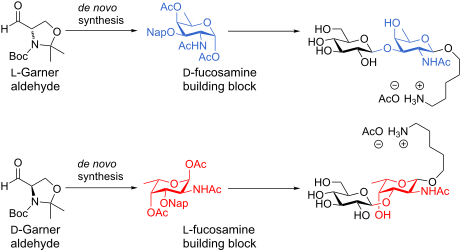
- blocks Our retrosynthetic analysis of D-fucosamine envisioned the installation of the syn-1,2-diol unit by osmium-catalysed dihydroxylation of allylic ether A. It was anticipated that the conformation adopted by the molecule would allow for the formation of the required anti relationship between C3 and
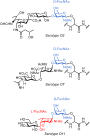
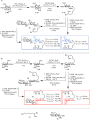
- ), 41.7 (CH2Q), 30.5 (CH2N), 28.8 (CH2P), 24.8 (CH3), 24.5 (CH2O), 24.4 (CH3), 17.8 (CH3); LRMS–ESI (m/z): 453.2 [M + H+]; HRMS–ESI (m/z): [M + H+] calcd for C19H37N2O10, 453.244; found, 453.2468. Structure of some O-linked glycans found on the cell surface of P. aeruginosa. Retrosynthetic analysis of D



From bead to flask: Synthesis of a complex β-amido-amide for probe-development studies
Beilstein J. Org. Chem. 2013, 9, 260–264, doi:10.3762/bjoc.9.31
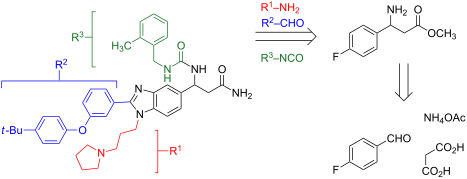
- laser desorption/ionization mass spectrometry [14]. In the current synthesis, we set out to develop a concise and scalable solution-phase route to 1 and provide characterization data for 1 and all intermediate compounds. In our retrosynthetic analysis, we envisioned 1 coming from acylation of
- easily accessible for early stage studies of these compounds in vitro and in vivo using model organisms. p21 determines the fate of DNA-damaged [13] cells. Retrosynthetic analysis of LLW62 (1) from acid 7 (A) or aldehyde 11 (B). Attempted synthesis of aldehyde 4 from nitrile 6. (A) Synthesis of 4 from



Development of peptidomimetic ligands of Pro-Leu-Gly-NH2 as allosteric modulators of the dopamine D2 receptor
Beilstein J. Org. Chem. 2013, 9, 204–214, doi:10.3762/bjoc.9.24
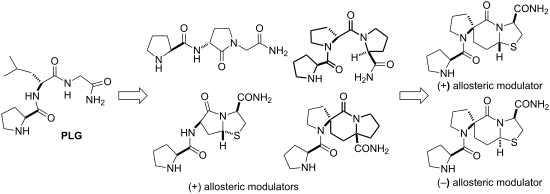
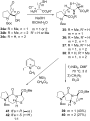
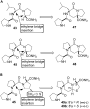
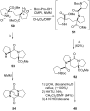
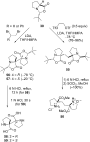
- the retrosynthetic analysis of spiro-bicyclic type VI β-turn mimic 48, a disconnection at the lactam bond in the indolizidinone core was envisioned, which would give rise to a symmetric unit of two prolines linked enantioselectively via a two-carbon linkage at their α-carbons [55]. Such an approach




Reactions of salicylaldehyde and enolates or their equivalents: versatile synthetic routes to chromane derivatives
Beilstein J. Org. Chem. 2012, 8, 2166–2175, doi:10.3762/bjoc.8.244

- on transformation of the products of the discussed reactions of salicylaldehyde with enolates to biologically active compounds and natural products. Retrosynthetic analysis of chromane 1. General reaction of salicylaldehyde (5) and acetophenone (7) in the synthesis of flavan 10 and flavone 11


A new approach toward the total synthesis of (+)-batzellaside B
Beilstein J. Org. Chem. 2012, 8, 1831–1838, doi:10.3762/bjoc.8.210

- class of biologically potent piperidine alkaloids and related analogues. Examples of naturally occurring iminosugars. The chemical structures of (+)-batzellasides A–C (1a–c). Our previous approach to (+)-batzellaside B and retrosynthetic analysis for the new synthetic strategy. Reagents and conditions


Enantioselective total synthesis of (R)-(−)-complanine
Beilstein J. Org. Chem. 2012, 8, 1695–1699, doi:10.3762/bjoc.8.192
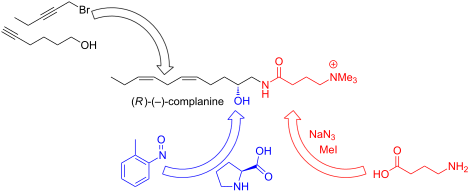
- organocatalytic O-nitrosoaldol as the key step. A retrosynthetic analysis for complanine is depicted in Scheme 1. The synthesis was initiated by preparation of homoconjugated all-Z-diene 1 (Scheme 2). Sequential olefin preparation by using Wittig chemistry, or selective polyyne reduction represent two traditional
- . Retrosynthetic analysis of (R)-(−)-complanine. Reagents and conditions: (a) Cs2CO3, CuI, TBAI, DMF, rt, 24 h, 91%; (b) H2 (1 atm), Lindlar catalyst, EtOAc, pyridine, rt, 24 h; (c) DMSO, (COCl)2, DCM, −78 °C, then; 1, −78 °C, 45 min, then, Et3N, 0 °C, 1.5 h, 86% from 2. Direct approach to amino alcohol 4


Automated synthesis of sialylated oligosaccharides
Beilstein J. Org. Chem. 2012, 8, 1601–1609, doi:10.3762/bjoc.8.183
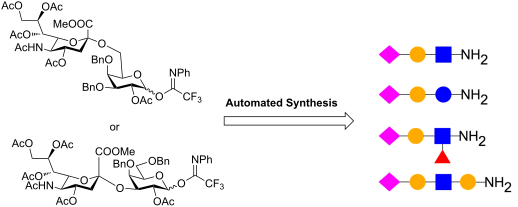
- of sialosides. (a) Synthesis sequence for the preparation of building blocks 4 and 5; (b) Retrosynthetic analysis for the preparation of 1. Reagents and conditions: (i) PhI(OAc)2, BF3·Et2O, CH2Cl2, −40 °C; then Ac2O, pyridine; (ii) N2H4·AcOH, DMF; (iii) CF3C(NPh)Cl, Cs2CO3, CH2Cl2, DCM, 66% over


Regioselective synthesis of 7,8-dihydroimidazo[5,1-c][1,2,4]triazine-3,6(2H,4H)-dione derivatives: A new drug-like heterocyclic scaffold
Beilstein J. Org. Chem. 2012, 8, 1584–1593, doi:10.3762/bjoc.8.181
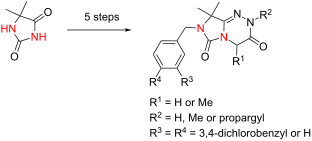
- ) (Scheme 2). According to our retrosynthetic analysis (Scheme 1), and based on an efficient protocol for the regioselective N-alkylation of hydantoins, we applied a four-step procedure for the synthesis of differently substituted 7,8-dihydroimidazo[5,1-c][1,2,4]triazine-3,6-diones 23–29 (Scheme 3). The


Asymmetric total synthesis of smyrindiol employing an organocatalytic aldol key step
Beilstein J. Org. Chem. 2012, 8, 1112–1117, doi:10.3762/bjoc.8.123
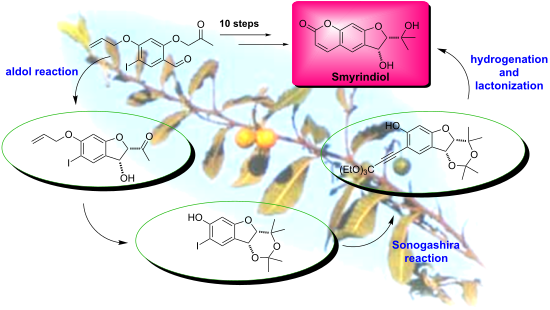
- diastereoselectivity, with a slight preference (18% versus 15%) towards the anti-isomer xanthoarnol (Scheme 2).We now wish to present the first diastereo- and enantioselective, organocatalytic, asymmetric synthesis of smyrindiol. Results and Discussion Retrosynthetic analysis Previously the proline-catalyzed
- retrosynthetic analysis. Attempted proline catalyzed aldol reaction. Second retrosynthetic analysis. Asymmetric total synthesis of smyrindiol (1). Supporting Information Supporting Information File 77: Experimental procedures and characterization of compounds. Supporting Information File 78: NMR-spectra and


Aldol elaboration of 4,5,6,7-tetrahydroisoxazolo[4,3-c]pyridin-4-ones, masked precursors to acylpyridones
Beilstein J. Org. Chem. 2012, 8, 308–312, doi:10.3762/bjoc.8.33
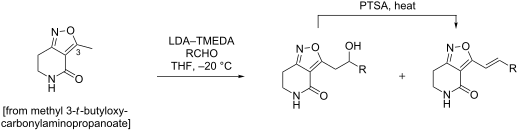
- -tetrahydroisoxazolo[4,3-c]pyridin-4-one (8a) [19]. Ilicicolin H as an example of a 3-decalinoyl-4-hydroxypyridin-2-one metabolite. Aldol reactions of tetrahydroisoxazolopyridone 6. Reagents: (i) LDA–TMEDA, RCHO, THF, −20 °C; (ii) toluene, reflux, PTSA. Retrosynthetic analysis of a model 3-decalinyl-4,5,6,7


Derivatives of phenyl tribromomethyl sulfone as novel compounds with potential pesticidal activity
Beilstein J. Org. Chem. 2012, 8, 259–265, doi:10.3762/bjoc.8.27
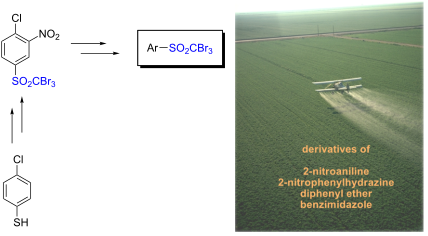
- of the obtained compounds exhibit fungicidal activity. Retrosynthetic analysis of the designed target molecules. Synthetic routes for 4-chlorophenyl tribromomethyl sulfone (1). Halogenation/nitration sequence for 4-halogenphenyl methyl sulfones 4 and 4'. SNAr transformations of sulfone 6. Preparation




Directed aromatic functionalization in natural-product synthesis: Fredericamycin A, nothapodytine B, and topopyrones B and D
Beilstein J. Org. Chem. 2011, 7, 1475–1485, doi:10.3762/bjoc.7.171
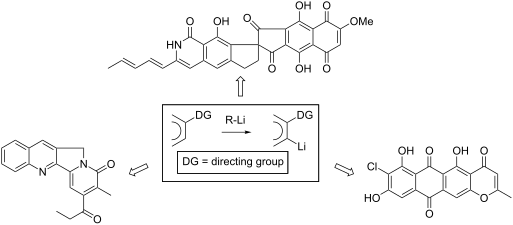
- issue for which no solution existed at that time: The arylation of stabilized enolates. Indeed, the retrosynthetic analysis illustrated in Scheme 1 suggests that 1 could result from the cyclization of 3, which in turn would ensue through the union of fragments 4 and 5. These two subunits were prepared
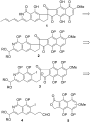
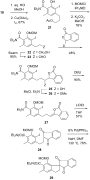
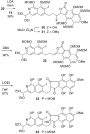
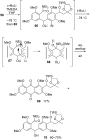
- retrosynthetic analysis of fredericamycin A. Assembly of the isoquinolone segment of fredericamycin. Synthesis of a naphthalide precursor to the quinoid moiety of fredericamycin. Palladium-mediated cyclization of a fredericamycin model system. Synthesis of the precursor of fredericamycin and the facile air







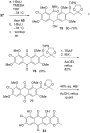
Efficient syntheses of 25,26-dihydrodictyostatin and 25,26-dihydro-6-epi-dictyostatin, two potent new microtubule-stabilizing agents
Beilstein J. Org. Chem. 2011, 7, 1372–1378, doi:10.3762/bjoc.7.161
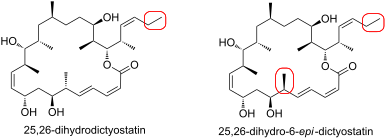
- roughly comparable to those of dictyostatin (1a) and 6-epi-dictyostatin (1b). Here we report the full details of the synthesis of 3a and 3b. Results and Discussion Figure 2 shows key aspects of the retrosynthetic analysis to make analogs 3a and 3b, which follows after the successful streamlined route to
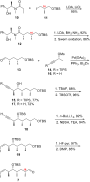
- C25–C26. Retrosynthetic analysis for 3a and 3b. Synthesis of top fragment 8 (C18–C26). Synthesis of middle fragment 7 (C10–C17). Synthesis of bottom fragments 6a,b (C1–C9). Coupling of the top and middle fragments. Coupling with the bottom fragment and end game. Supporting Information Supporting




A new phenylethyl alkyl amide from the Ambrostoma quadriimpressum Motschulsky
Beilstein J. Org. Chem. 2011, 7, 1342–1346, doi:10.3762/bjoc.7.158
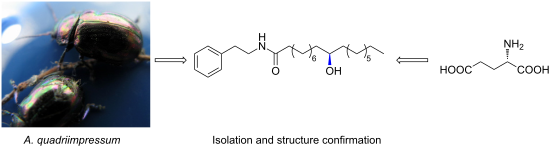
- positive optical rotation ([α]20D +38.5 (c 0.13, CHCl3)). To confirm the absolute configuration at C(10), an asymmetric total synthesis was performed. Synthesis of (10R)-10-hydroxy-N-phenethyloctadecanamide (1) The retrosynthetic analysis of compound 1 is outlined in Scheme 2. The target molecule is
- ; HRMS–ESI (m/z): [M + H]+ calcd for C26H45NO2, 404.3529; found, 404.3529. Chemical structure of compound 1 and mass spectral analysis. Retrosynthetic analysis of (R)-1. (a) BnOH, H2SO4; NaNO2, AcOH; CH2N2, 35% in 3 steps. (b) TBDPSCl, imidazole, 100%. (c) Pd/C, H2; BH3·THF, 95% in 2 steps. (d) TBDMSCl


Combined directed ortho-zincation and palladium-catalyzed strategies: Synthesis of 4,n-dimethoxy-substituted benzo[b]furans
Beilstein J. Org. Chem. 2011, 7, 1255–1260, doi:10.3762/bjoc.7.146

- between the methoxy and the halide groups, irrespective of the nature of the halogen atom (chloro or bromo) (Table 1, entries 3 and 4). Having an efficient protocol for the synthesis of dimethoxyhaloiodobenzene derivatives 4, and with the retrosynthetic analysis outlined in Scheme 1 in mind, we tackled
- B gave rise to better selectivities and yields of the desired alkynes 5–7 (Table 2, entries 4,6,10,12,16 and 18). According to our retrosynthetic analysis (Scheme 1), the final step to achieve the benzofuran derivatives should be the incorporation of the hydroxy group followed by in situ
- dihydroxybenzofuran derived natural products. Retrosynthetic analysis of 4,n-dimethoxy-substituted benzo[b]furans. Deprotonative zincation of 3-haloanisoles 1. Synthesis of methoxy-substituted 3-halo-2-iodoanisoles 4. Synthesis of dimethoxy-substituted o-alkynylhaloarenes 5–7. Synthesis of dimethoxy-substituted benzo


Directed aromatic functionalization
Beilstein J. Org. Chem. 2011, 7, 1215–1218, doi:10.3762/bjoc.7.141
- exception [32][33][34], to rationalize ortho selectivity. The aromatic ring annulative chemistry, which can be achieved by C–H-activation mediated processes, perhaps best exemplified by gold-catalyzed reactions [35][36], is astonishing and defies retrosynthetic analysis. While as yet mostly empirically

One-pot four-component synthesis of pyrimidyl and pyrazolyl substituted azulenes by glyoxylation–decarbonylative alkynylation–cyclocondensation sequences
Beilstein J. Org. Chem. 2011, 7, 1173–1181, doi:10.3762/bjoc.7.136
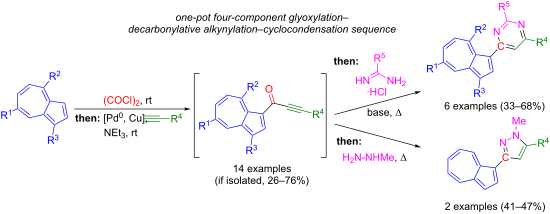
- [48]. Our retrosynthetic analysis (Scheme 3) suggests that a wide range of N-heterocycle-substituted azulenes should be accessible through Michael addition–cyclocondensation of azulenylynones with binucleophiles. Azulenylynones in turn could be simply disconnected by our glyoxylation–decarbonylative
- Sonogashira coupling. Retrosynthetic analysis of N-heterocyclic substituted azulenes by a one-pot four-component approach. Three-component synthesis of azulenyl- and guaiazulenylynones 3 by glyoxylation–decarbonylative Sonogashira coupling sequence. Four-component synthesis of pyrimidylazulenes 5 by





