Search results
Search for "conformations" in Full Text gives 404 result(s) in Beilstein Journal of Organic Chemistry. Showing first 200.
Sugar-derived oxazolone pseudotetrapeptide as γ-turn inducer and anion-selective transporter
Beilstein J. Org. Chem. 2019, 15, 2419–2427, doi:10.3762/bjoc.15.234
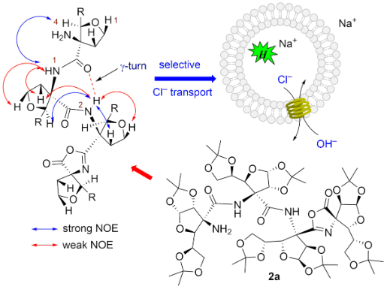
- stereochemically stable quaternary carbon center [1]. For example, TAA-derived peptides containing a cyclopropane ring and ʟ/ᴅ-dimethyl tartrate showed an α-turn and form 310-helical conformations in higher oligomers [2][3][4]. While, TAA-derived peptides having a tetrahydrofuran ring demonstrated a β-turn type
- activity. Oxazolone pseudodipeptide 1 and tetrapeptide 2a. Characteristic NOEs of 2a. DMSO titration study of 2a. 1H NMR temperature study of 2a. Optimized helical conformations of (A) 2a, (B) 2b and (C) 9. Ion transport activity (A) for 1, (B) for 2a, across EYPC-LUVs HPTS. Cation (A) and anion (B


![[Graphic 2]](/bjoc/content/inline/1860-5397-15-234-i4.svg?max-width=637&scale=1.18182) lucigenin (A). Conce...
lucigenin (A). Conce...
Effect of ring size on photoisomerization properties of stiff stilbene macrocycles
Beilstein J. Org. Chem. 2019, 15, 2408–2418, doi:10.3762/bjoc.15.233
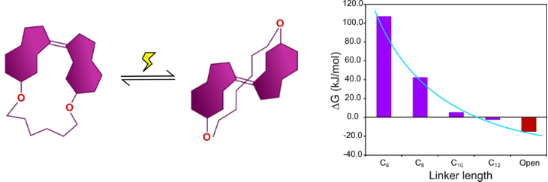
- stiff stilbene segment with decreasing ring size is indicated by the substantial deviation of the dihedral angle from 180°. Furthermore, the alkyl chains adopt more similar conformations in the E-isomers with stretched alkyl chains. In the Z-isomers, the alkyl chains adopt a larger variety of
- conformations. This will add an entropy penalty for the E-isomers. Interatomic distances from NOE buildup rates Interatomic distances, derived from NOE buildup rates, are summarized in Figure 7. Signal overlap prevented an analysis accounting for the presence of an ensemble of conformers such as NAMFIS [39][40
- calculated in MacroModel 9.9 with the OPLS3e force field, CHCl3 as solvent and dielectric constant 9.1 [48][49]. Redundant conformer elimination in MacroModel was used to reduce the number of conformations to 10–20 structures [50]. Synthesis Synthesis of 6-methoxyindan-1-one (3) Compound 2 (2.523 g, 14.0




Reversible switching of arylazopyrazole within a metal–organic cage
Beilstein J. Org. Chem. 2019, 15, 2398–2407, doi:10.3762/bjoc.15.232
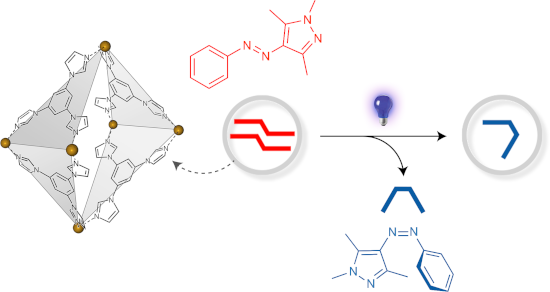
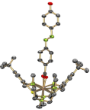
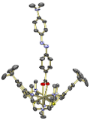
- release of "high-energy" water molecules from the cavity of 2 [50][51]. Determining the X-ray structure was challenging; the difficulty lies in the fact that both the cage and the encapsulated guest dimer exist in the form of two different conformations. Figure 3 shows (E-1)22 that features the main
- conformations of both (E-1)2 and 2, amounting to 59% and 93% of the total population of the guest and the host component, respectively. The remaining 41% of (E-1)2 features the same separation distance between the two guest molecules (d = 3.503 Å vs 3.497 Å in the major isomer; a distance typical of π–π-stacked
- , Supporting Information File 1). Front view (a) and side view (b) of the X-ray crystal structure of (E-1)22 (major conformations of 1 and 2; see also Supporting Information File 1, Figures S15 and S16). The horizontal plane (pink) denotes the positions of eight equatorial imidazole groups; four axial


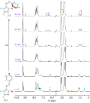
![[Graphic 1]](/bjoc/content/inline/1860-5397-15-232-i3.svg?max-width=637&scale=1.18182) 2 (500 MHz, D2O, 298 K).
2 (500 MHz, D2O, 298 K).




Current understanding and biotechnological application of the bacterial diterpene synthase CotB2
Beilstein J. Org. Chem. 2019, 15, 2355–2368, doi:10.3762/bjoc.15.228
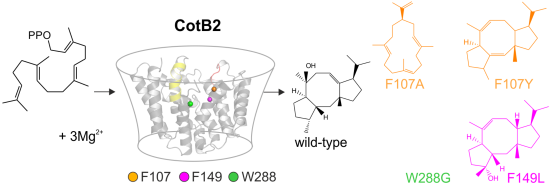
- (Table 2 and Scheme 1). Notably, in the crystal structures of CotB2 (Table 1) [36][37][38], we perceive that the amino acid side chains with an aromatic character in the active site (Figure 7) frequently adopt energetically unfavorable side chain conformations. Moreover, the crystal structures of the
- CotB2F107A [37] and CotB2F149L [38] variants revealed that other aromatic amino acid side chains adopt different side chain conformations compared to the structure of CotB2wt. This hints to long-range effects of the introduced mutation on other amino acid side chains in the active cavity. We are convinced


Perspective isomorphs – a new classification of molecular structures based on artistic and chemical concepts
Beilstein J. Org. Chem. 2019, 15, 2319–2326, doi:10.3762/bjoc.15.224
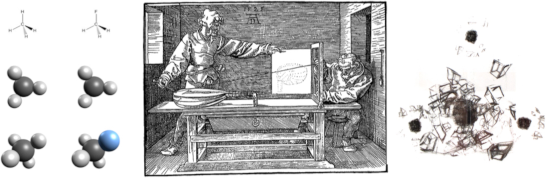
- to van der Waals contacts) All conformations possible at room temperature are considered To translate the atomic dimensions to a viewing process the van der Waals radii and the following scale has been applied: 1 pm 1 mm The hypothetical viewing distance for the mathematic calculation as well as for


Harnessing enzyme plasticity for the synthesis of oxygenated sesquiterpenoids
Beilstein J. Org. Chem. 2019, 15, 2184–2190, doi:10.3762/bjoc.15.215
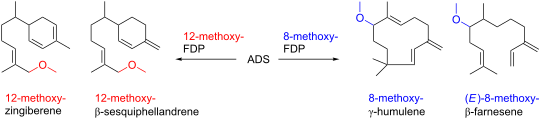
- bisabolyl cation and the amorphane skeleton. Rather the active site conformations of 11 and cation 22 appear to enable a 1,11-cyclisation to 23. A subsequent [1,3]-hydride shift to cation 24 and deprotonation from C15 lead to 8-methoxy-γ-humulene (20, Scheme 3A). Alternatively, the nucleophilic 8-methoxy


1,2,3-Triazolium macrocycles in supramolecular chemistry
Beilstein J. Org. Chem. 2019, 15, 2142–2155, doi:10.3762/bjoc.15.211
- -derived tris(crown ether) host (eTC) via a dynamic covalent chemistry approach involving triple threading and a Grubbs-catalyzed ring-closing metathesis [68]. 1H NMR titration experiments have been used for the identification of co-conformations of the four related stable states of 19. The authors have
- mechanism has been proposed for the MIM macrocycle 19 involving a stepwise co-conformational progression. After the deprotonation of dibenzylammonium (DBA) sites, the rings prefer to move toward the adjacent N-methyl-1,2,3-triazolium (MTA) sites to the thermodynamically stable co-conformations rather than




Synthesis of 1-azaspiro[4.4]nonan-1-oxyls via intramolecular 1,3-dipolar cycloaddition
Beilstein J. Org. Chem. 2019, 15, 2036–2042, doi:10.3762/bjoc.15.200
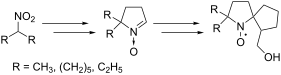
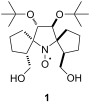
- conformations of neighbouring geminal ethyl groups, thereby preventing averaging. In agreement with this conclusion, there are no large splittings in the EPR spectrum of 12c, and the line width is a bit greater than that in the spectra of similar nonspirocyclic 3,4-unsubstituted 2,2-diethylpyrrolidine



Synthesis and anion binding properties of phthalimide-containing corona[6]arenes
Beilstein J. Org. Chem. 2019, 15, 1976–1983, doi:10.3762/bjoc.15.193
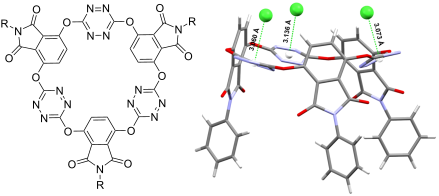
- editing or varying the meta-substitution of arylenes within heteracalixaromatics into the para-substitution. In contrast to heteracalixaromatics which adopt generally 1,3-alternate conformations giving V-shaped cleft structures [17][18][19][20][21], the resulting coronarenes form, however, cylindroid


Inherent atomic mobility changes in carbocation intermediates during the sesterterpene cyclization cascade
Beilstein J. Org. Chem. 2019, 15, 1890–1897, doi:10.3762/bjoc.15.184
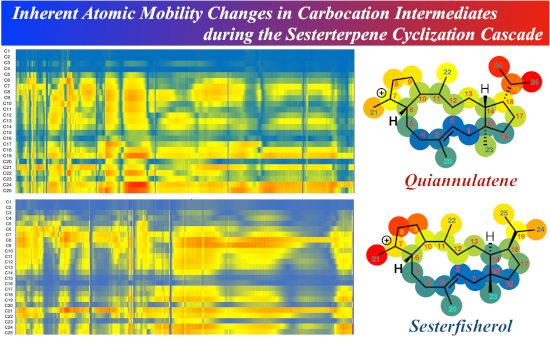
- 351-0198, Japan Graduate School of Pharmaceutical Sciences, University of Tokyo, 7-3-1 Hongo, Bunkyo-ku, Tokyo 113-0033, Japan 10.3762/bjoc.15.184 Abstract We previously showed that the regio- and stereoselectivity in terpene-forming reactions are determined by the conformations of the carbocation
- . Based on this analysis, it appears that the destination of the cyclization cascade is determined by the conformations of the carbocation intermediates, but not by enzymatic constraints. This insight is consistent with our previous findings [1]. Conclusion In order to clarify the influence of the


Identification of optimal fluorescent probes for G-quadruplex nucleic acids through systematic exploration of mono- and distyryl dye libraries
Beilstein J. Org. Chem. 2019, 15, 1872–1889, doi:10.3762/bjoc.15.183
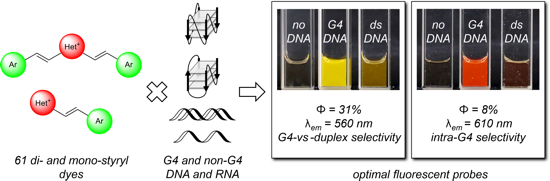
- mirroring their conformations. Specifically, parallel G4s cluster in the upper left part of the plot (red dots), as a result of high fluorescence response with 18a and moderate-to-low response with 1p. Hybrid G4s (green dots) produce moderate light-up values for 18a and high ones for 1p, thus clustering on
- the existence of an equilibrium between a monomolecular antiparallel form and a bimolecular parallel one, affected by K+ and oligonucleotide concentration [86]. As already suggested, this oligonucleotide is probably present as a mixture of conformations in our working conditions [14]. It is thus






The cyclopropylcarbinyl route to γ-silyl carbocations
Beilstein J. Org. Chem. 2019, 15, 1769–1780, doi:10.3762/bjoc.15.170
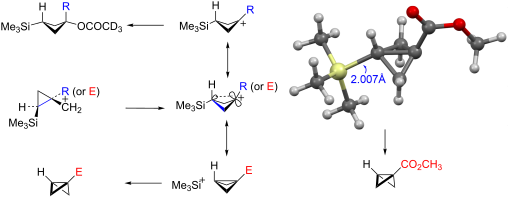
- of cation 37. This study at the B3LYP/6-31G* level suggested that migration of bond a in 43 is not viable since the resultant cation 47 is not an energy minimum at this level, but a transition state. However, a current study at the M062X/6-311+G** level finds that both conformations 47a and 47b are


Synthesis and conformational preferences of short analogues of antifreeze glycopeptides (AFGP)
Beilstein J. Org. Chem. 2019, 15, 1581–1591, doi:10.3762/bjoc.15.162
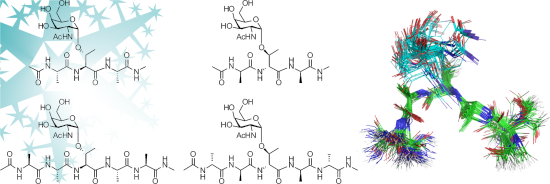
- calculated with the usage of the XPLOR-NIH program [34]. The obtained conformations were clustered based on the main chain backbone dihedral angles (φ and ψ) using the AmberTools package [35]. The first analysis of the number of obtained distance constrains clearly suggested that peptides containing ʟ-amino


An azobenzene container showing a definite folding – synthesis and structural investigation
Beilstein J. Org. Chem. 2019, 15, 1534–1544, doi:10.3762/bjoc.15.156
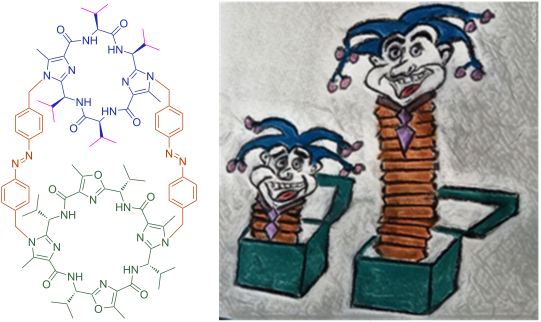
- possible conformations [cis,trans-(M), cis,trans-(P), cis,cis-(M,M), cis,cis-(M,P) and cis,cis-(P,P)]. However, it turned out that the P conformers represent no minima on the potential energy surface. Furthermore, single point calculations by means of the density functionals B3LYP and B3LYP-D3 were


Diazocine-functionalized TATA platforms
Beilstein J. Org. Chem. 2019, 15, 1485–1490, doi:10.3762/bjoc.15.150
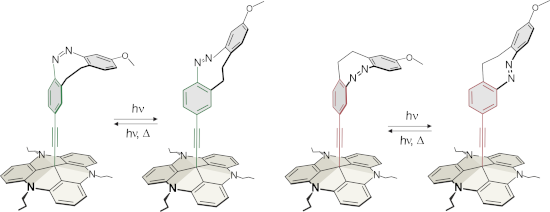
- to measure kinetics on surfaces [15]. The C–O stretching frequencies proved to be ideal reporter signals to determine the configuration and to measure kinetics in monolayers of azo-TATAs on surfaces. Results and Discussion To obtain information on preferred conformations of 1 and 2 in their cis and
- for both compounds as the thermodynamically most stable isomers. For the corresponding trans-configuration two different conformations were found: the twist and the chair structures. The twist conformation is about 2.5 kcal mol−1 more stable than the chair conformation. Our calculations predict



Synthesis and biological evaluation of truncated derivatives of abyssomicin C as antibacterial agents
Beilstein J. Org. Chem. 2019, 15, 1468–1474, doi:10.3762/bjoc.15.147
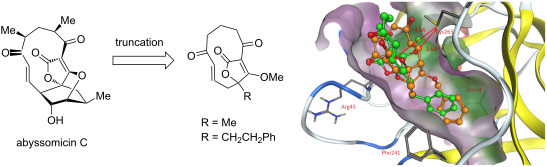
- conformations and with expected interaction points in the binding site, providing suitable docking scores (see Supporting Information File 1). The key interactions include a hydrogen bond to the backbone of Arg-45 and lipophilic interactions in the deep pocket defined by Phe-241 and Leu-34 (Figure 2). Our


2,3-Dibutoxynaphthalene-based tetralactam macrocycles for recognizing precious metal chloride complexes
Beilstein J. Org. Chem. 2019, 15, 1460–1467, doi:10.3762/bjoc.15.146
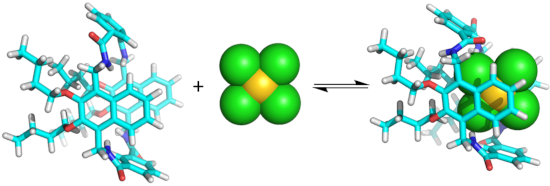
- interesting new binding properties. During the last six years, our group have developed a series of naphthol-based macrocyclic receptors [24][25][26][27][28][29]. Of them, oxatub[4]arene [30][31] and zorb[4]arene [32][33] show multiple conformations due to the flipping of naphthalenes and thus resulted in a
- rather wide guest scope. Therefore, we wondered whether multiple conformations would be observed by incorporating the 2,3-dialkoxynaphthalene units into tetralactam macrocycles as the sidewalls. How would this affect their binding affinity and selectivity of the resulting macrocycles? Herein, we describe
- pre-organized. In addition, there exist two conformations for both macrocycles 1 and 2 because the two 2,3-dibutoxynaphthalene moieties can be aligned either in parallel or antiparallel orientation (Scheme 1). These two conformations have different cavities defined by the parallel or antiparallel


Anomeric sugar boronic acid analogues as potential agents for boron neutron capture therapy
Beilstein J. Org. Chem. 2019, 15, 1355–1359, doi:10.3762/bjoc.15.135
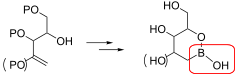
- broadening of the H-2, H-3 and H-4 signals suggest a slow equilibrium between different conformations. After deprotection of the benzylidene group in addition to line broadening, signal superposition is observed, hampering any conclusion on the conformation of compound 11. In order to get more information


Host–guest interactions between p-sulfonatocalix[4]arene and p-sulfonatothiacalix[4]arene and group IA, IIA and f-block metal cations: a DFT/SMD study
Beilstein J. Org. Chem. 2019, 15, 1321–1330, doi:10.3762/bjoc.15.131
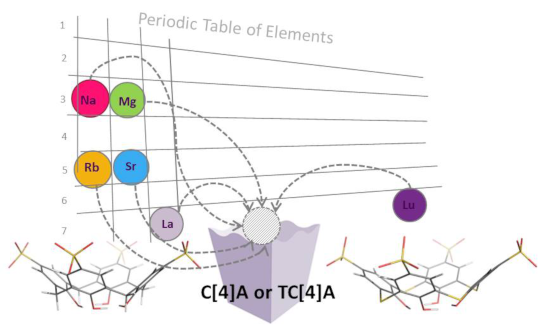
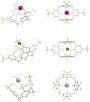
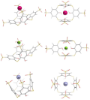
- by a hydrophobic mid-region, and adopts different conformations depending on different factors: the solvent, the nature of the guest molecule, the functionalization of the lower (OH) rim [16]. The 3D cavities and the π-electron-rich sulfonate groups endow them with fascinating affinities and





N-doped carbon dots covalently functionalized with pillar[5]arenes for Fe3+ sensing
Beilstein J. Org. Chem. 2019, 15, 1262–1267, doi:10.3762/bjoc.15.123
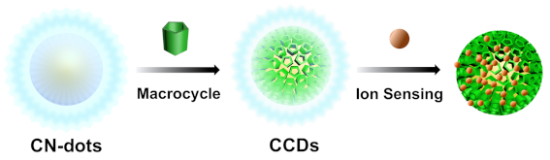
- macrocyclic compounds, especially new macrocyclic arenes, have become one of the research hotspots in supramolecular chemistry [11][12][13][14]. Among them pillarenes as a relatively new family of pillar-shaped members discovered a decade ago have played a key role due to their unique conformations


Steroid diversification by multicomponent reactions
Beilstein J. Org. Chem. 2019, 15, 1236–1256, doi:10.3762/bjoc.15.121
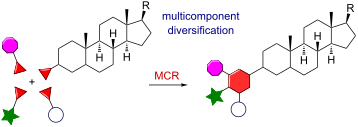
- the natural cationic peptide antibiotics [60] or as a way to constrain peptide sequences in protein epitope conformations [61]. In this regard, the groups of Rivera and Wessjohann have pioneered the utilization of MCRs for the conjugation of oligosaccharides [62] and peptides [63][64] to steroids


Molecular recognition using tetralactam macrocycles with parallel aromatic sidewalls
Beilstein J. Org. Chem. 2019, 15, 1086–1095, doi:10.3762/bjoc.15.105
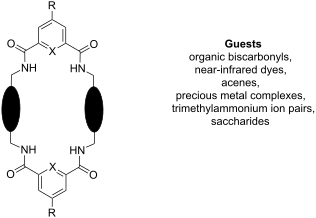
- macrocyclic structure in a stable conformation with all NH residues directed into the cavity. One way is to use 2,6-pyridine dicarboxamides as the bridging units which permits intramolecular hydrogen bonding within the cavity (Figure 1) [30]. This internal hydrogen bonding stabilizes conformations that have
- conformations is an outward directed NH residue. Solution-state NMR data suggests that the surrounding tetralactam in these [2]rotaxanes undergoes rapid exchange between these different conformations, a dynamic process that has been called macrcocyle breathing, and that there is also simultaneous co
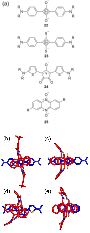
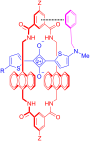
- crystal structures of acene and azaacene guests inside tetralactam B with the surrounding macrocycle in chair or boat conformations [25]. Recent work has shown that water-soluble versions of anthracene tetralactam B can be threaded by water soluble squaraine dyes with very high affinities (Ka ≈ 109 M−1


Stereo- and regioselective hydroboration of 1-exo-methylene pyranoses: discovery of aryltriazolylmethyl C-galactopyranosides as selective galectin-1 inhibitors
Beilstein J. Org. Chem. 2019, 15, 1046–1060, doi:10.3762/bjoc.15.102
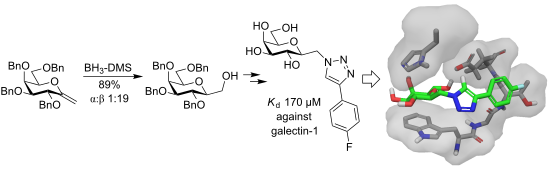
- C-galactoside aglycons, we performed a 200 ns molecular dynamic simulation of 1b in the complex with galectin-1 and galectin-3. Starting conformations were selected with the galactopyranose of 1b positioned overlapping with the positions of the lactose or N-acetyllactosamine galactopyranoses in



Halogen bonding and host–guest chemistry between N-alkylammonium resorcinarene halides, diiodoperfluorobutane and neutral guests
Beilstein J. Org. Chem. 2019, 15, 947–954, doi:10.3762/bjoc.15.91
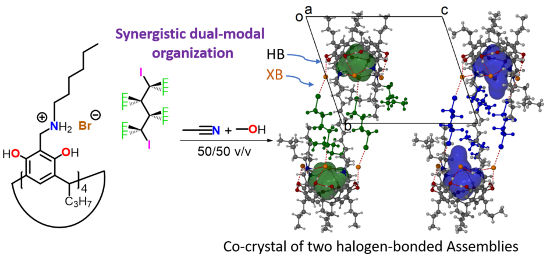
- incredibly effective tool for observing privileged conformations and structures [15][16][17][18][19]. From the crystallographic information we can extract the polymorphism, high Z’-value, twining, and disorder that provide insight into the dynamics of prenucleation assembly, nucleation, and crystal growth
- , and the resulting empty space, induces disorder for both the hexyl groups on the upper-rim of the cavitand, and the DIOFB molecules. Two preferred conformations of these systems were identified with a ratio of ca. 3:1 (Figure 3, Figures S1 and S3 in Supporting Information File 1). Due to the center of
- inversion, the two conformations show different dimerization modes (Supporting Information File 1, Figure S3). In 1&DIOFB_A, the two hex-NARBrs are linked by two DIOFB molecules via four Br···I halogen bonds with average RXB of 0.86. The two participating bromide anions are on adjacent “arms”; the remaining


Coordination chemistry and photoswitching of dinuclear macrocyclic cadmium-, nickel-, and zinc complexes containing azobenzene carboxylato co-ligands
Beilstein J. Org. Chem. 2019, 15, 840–851, doi:10.3762/bjoc.15.81
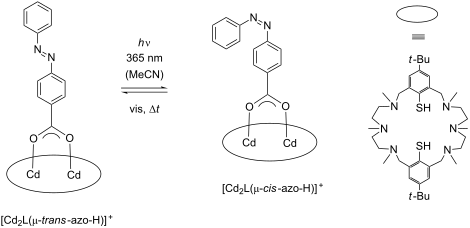
- drastically alter its structural properties and reactivities. Prominent examples are the cis-bromination of α,β-unsaturated carboxylato ligands [2], regioselective Diels–Alder reactions of encapsulated dienoate ligands [3], and the stabilization of unusual co-ligand conformations, respectively [4]. The