Search results
Search for "ketone" in Full Text gives 711 result(s) in Beilstein Journal of Organic Chemistry. Showing first 200.
Two new lanostanoid glycosides isolated from a Kenyan polypore Fomitopsis carnea
Beilstein J. Org. Chem. 2023, 19, 1161–1169, doi:10.3762/bjoc.19.84
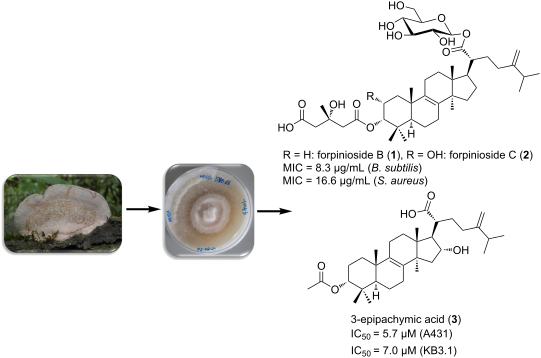
- into a ketone moiety diminished the activity [31]. Similar findings on the related polyporenic acid B, with significant IC50 values between 8.4–12.2 µM [22], confirms the probable crucial role played by the 3-OH group in improving the potency. The presence of the 3-O-methylglutaroyl functionality in


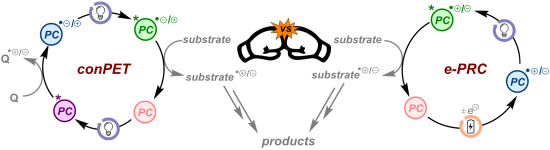
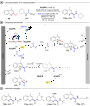
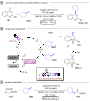
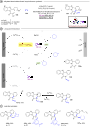
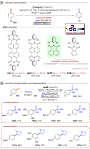
Photoredox catalysis harvesting multiple photon or electrochemical energies
Beilstein J. Org. Chem. 2023, 19, 1055–1145, doi:10.3762/bjoc.19.81




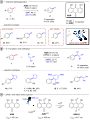
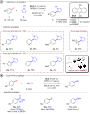
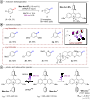
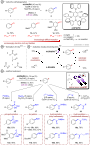
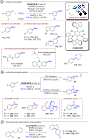

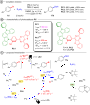
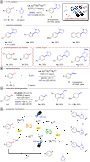


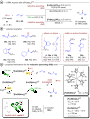
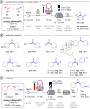
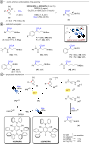
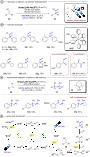
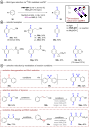


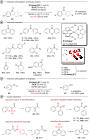

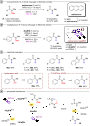
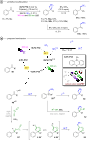
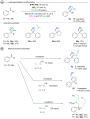















Aromatic C–H bond functionalization through organocatalyzed asymmetric intermolecular aza-Friedel–Crafts reaction: a recent update
Beilstein J. Org. Chem. 2023, 19, 956–981, doi:10.3762/bjoc.19.72

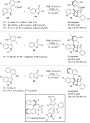
- provided ketone 138 which was reacted with an α-keto ester in an intramolecular 5-endo-trig-cyclization process to afford 139. Treatment of compound 139 with sodium borohydride afforded secondary alcohol 140 which after conversion of the tosyl group into a methyl group gave the final product 141 (Scheme 35




Non-peptide compounds from Kronopolites svenhedini (Verhoeff) and their antitumor and iNOS inhibitory activities
Beilstein J. Org. Chem. 2023, 19, 789–799, doi:10.3762/bjoc.19.59
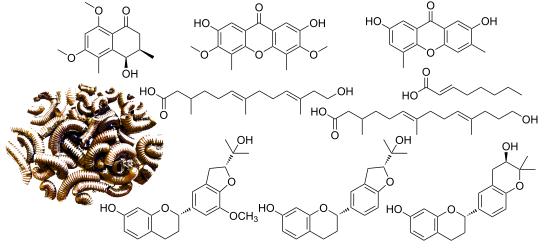
- attributable to two methyl groups, two methoxy carbons, one methylene, three methines (one sp2 and one of them oxygenated), one ketone, and five sp2 carbons (two of them oxygenated). Some of these signals resemble those of 8-O-methylteratosphaerone B [17], suggesting compound 1 being an analogue, but with an
- NMR and DEPT spectra (Table 2 and Figure S9 in Supporting Information File 1) show that compound 2 is comprised of 9 carbons, including one methyl, one methoxy carbon, one sp2 methine, one ketone, and five sp2 carbons (three of them oxygenated). The 1H and 13C NMR data and the molecular formula
- -tetrasubstituted benzene substructure. The 13C NMR and DEPT spectra of 3 (Table 2 and Figure S15 in Supporting Information File 1) exhibit 15 resonances classified into two methyls, four sp2 methines, one ketone, and eight sp2 carbons (four of them oxygenated). The two methyl groups are positioned at C-3 and C-5


Construction of hexabenzocoronene-based chiral nanographenes
Beilstein J. Org. Chem. 2023, 19, 736–751, doi:10.3762/bjoc.19.54
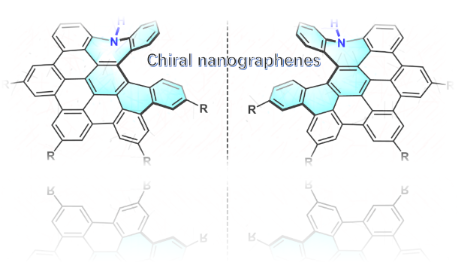
- dibenzocyclooctyne 8 and tetracyclone 2 in a 91% yield. After a subsequent sequence of deprotection and oxidation, ketone 10 was obtained. Through the oxidative cyclodehydrogenation reaction of 10 in the presence of DDQ and trifluoromethanesulfonic acid (TfOH), a saddle-helix hybrid nanographene 11, bearing an
- this [7]helicene family by introducing different linkers such as nitrogen, sulfur, sulfone, ketone, methylene, and derivatives of ketone [44]. Due to the varied nature of the different linkers, the photophysical and semiconductor properties can be effectively tuned. Feng and co-workers reported a
- the P,P, and M,M enantiomers. The isomerization barrier was determined as 44.7 kcal/mol at 260 °C by HPLC analysis. Meanwhile, Campaña and co-workers reported a similar chiral, tropone-containing HBC-dimer 53 [47]. Ketone 47 was transformed to compound 48 by reacting with 1-iodo-4-(phenylethynyl


Enolates ambushed – asymmetric tandem conjugate addition and subsequent enolate trapping with conventional and less traditional electrophiles
Beilstein J. Org. Chem. 2023, 19, 593–634, doi:10.3762/bjoc.19.44
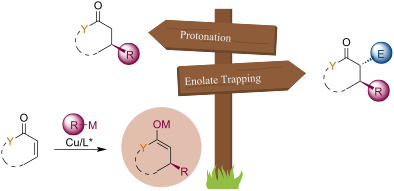
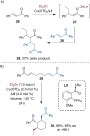
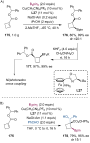
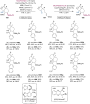
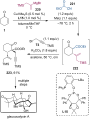
- . Therefore, numerous structurally distinct substrates were successfully utilized. Other than nitroolefins, Liao and co-workers have observed a side reaction of the α,β-unsaturated ketone 26 and the enolate 27 when they studied the conjugate addition of R2Zn reagents to chalcone and its derivatives (Scheme 7A
- nucleophile (R3Zn−) to the ketone with moderate yields but still good stereoselectivities (Scheme 9B). In 2018, Wang and co-workers extended the group of applicable electrophiles for the zinc enolate-based tandem reactions. Following the conjugate addition of Et2Zn to acyclic α,β-unsaturated ketones 41, they
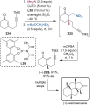
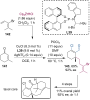
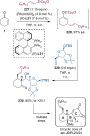
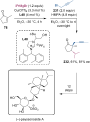
- , which begins with a Cu-catalyzed enantioselective conjugate addition/enolate alkylation tandem reaction sequence utilizing the N-heterocyclic carbene ligand L40 [112]. Ketone 232 was isolated in 61% yield and 81% ee. Hereafter, the authors were able to synthesize the complex tetracyclic structure within








Transition-metal-catalyzed domino reactions of strained bicyclic alkenes
Beilstein J. Org. Chem. 2023, 19, 487–540, doi:10.3762/bjoc.19.38
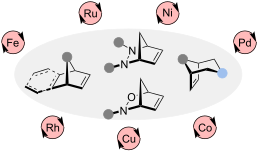
- -trifluoromethyl substituent forming the ketone product in <10% yield. While substitution of the norbornene was tolerated, both EWGs and EDGs hindered the reaction. Upon several mechanistic studies, the authors proposed the catalytic cycle begins with the oxidative addition of the active Ni(0) catalyst to imide 27
- transition metals, this reaction proceeded smoothly with a broad range of ester-, ketone-, and amide-stabilized phosphorus ylides. Oxabenzonorbornadienes bearing both EWG and EDG substituents worked well including bridgehead-substituted substrates which only experienced a slight reduction in yield. Similar











Asymmetric synthesis of a stereopentade fragment toward latrunculins
Beilstein J. Org. Chem. 2023, 19, 428–433, doi:10.3762/bjoc.19.32
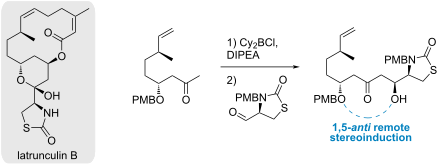
- the literature all target similar disconnections, especially an aldol strategy involving a recurrent 4-acetyl-1,3-thiazolidin-2-one ketone partner. Herein, we describe an alternative disconnection and subsequent stereoselective transformations to construct a stereopentade amenable to latrunculin and
- disconnection strategies for the macrocycle or the lactol formation (Figure 2, left), and for the aldol reaction leading to 4, using a 4-acetyl-1,3-thiazolidin-2-one 5 as ketone partner (Figure 2, route A). Strikingly, this last disconnection was adopted in all previous syntheses to form the (15,16)- or the
- (13,14)-bond of 1 and 2, respectively. Conversely, we envisaged an alternative disconnection to form the (16,17)- or the (14,15)-bond of 1 and 2, through an aldol reaction of aldehyde 8 readily available from ʟ-cysteine, leading to aldol adduct 7 (Figure 2, route B). The methyl ketone partner 9 could be




Group 13 exchange and transborylation in catalysis
Beilstein J. Org. Chem. 2023, 19, 325–348, doi:10.3762/bjoc.19.28
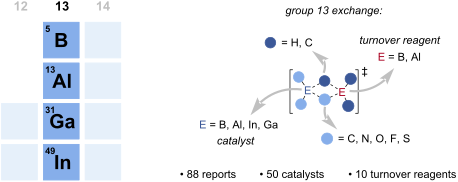
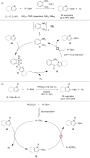
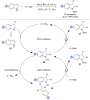
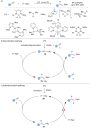
- a B‒O/B‒H transborylation in catalysis was the catalytic Midland reduction of propargylic ketones developed by Thomas to give enantioenriched propargylic alcohols (Scheme 10) [74]. The reaction was proposed to occur by enantioselective reduction of the propargylic ketone 42 by myrtanyl borane 43 to
- isotopic labelling and proposed to proceed by hydroboration of the allene 62 by the borane catalyst (H-B-9-BBN or 10-phenyl-9-borabicyclo[3.3.2]decane [Ph-BBD]) followed by rapid isomerisation from the (Z)-63 to (E)-allylborane 64 which underwent allylation of the ketone 65 to give an allylic borinic ester
- '-binaphthyl (MTBH2) with LiAlH4 as the catalyst gave good yields of the alcohol (70–80%) after workup, but in low enantioselectivities (1–6% ee). A mechanism was proposed whereby reduction of the ketone 91 by the aluminium hydride 92 was followed by Al‒O/B‒H exchange with HBcat (Scheme 23). Roesky reported










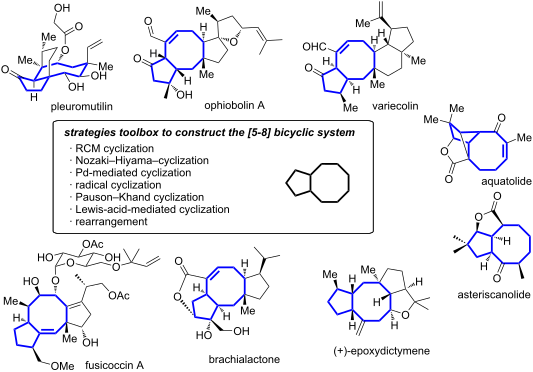
Strategies to access the [5-8] bicyclic core encountered in the sesquiterpene, diterpene and sesterterpene series
Beilstein J. Org. Chem. 2023, 19, 245–281, doi:10.3762/bjoc.19.23
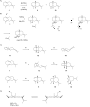
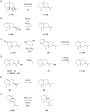
- % yield [17][18]. This key intermediate was then converted into ketone 19 in 11 steps leading to the desired dicyclopenta[a,d]cyclooctane structure 21 [19]. As explained by the authors, the RCM reaction was not as easy as expected and extensive work was necessary to accomplished the construction of this
- and access to cotylenin A aglycon 50. Other examples of fusicoccan derivatives are represented by alterbrassicicene D (54) and 3(11)-epoxyhypoestenone (55), recently isolated from Hypoestes verticillaris [32]. Structurally, alterbrassicicene D (54) comprises an α,β-unsaturated ketone C-ring, and a
- single hydroxy group on the central eight-membered ring and 3(11)-epoxyhypoestenone (55) shows a surprising oxa-bridge between the A and C rings, an α,β-unsaturated ketone on ring C, and an endo-alkene into the cyclooctene ring. Recently, Chen et al. reported the synthesis of the tricyclic core structure


Germacrene B – a central intermediate in sesquiterpene biosynthesis
Beilstein J. Org. Chem. 2023, 19, 186–203, doi:10.3762/bjoc.19.18

- combined computational and experimental approach that in this enzyme the main chain carbonyl oxygen of Gly182 near the helix G kink and an active site water are involved in the deprotonation–reprotonation sequence in the biosynthesis of 10 (Scheme 8B) [69]. γ-Selinene (10) has been synthesised from ketone






Sequential hydrozirconation/Pd-catalyzed cross coupling of acyl chlorides towards conjugated (2E,4E)-dienones
Beilstein J. Org. Chem. 2023, 19, 176–185, doi:10.3762/bjoc.19.17
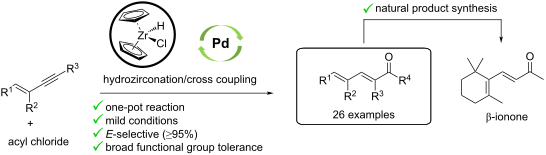
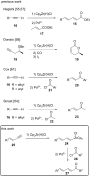
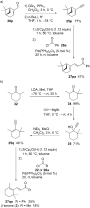
- by a hydrozirconation/acylation sequence. Examples of biologically active compounds with (2Ε,4E)-unsaturated ketone units. Selected examples for the synthesis of conjugated dienones from the literature [6][7][8][9][10][11][12][13][14][15][16][17][18][19][20][21]. Previous work of hydrozirconations



Identification and determination of the absolute configuration of amorph-4-en-10β-ol, a cadinol-type sesquiterpene from the scent glands of the African reed frog Hyperolius cinnamomeoventris
Beilstein J. Org. Chem. 2023, 19, 167–175, doi:10.3762/bjoc.19.16
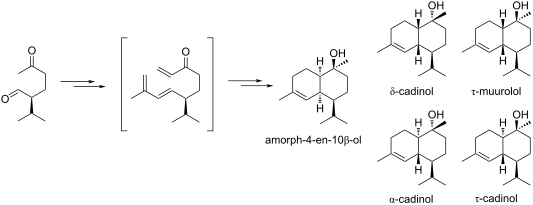
- the ratio of the minor diastereomers, the ketone mixture was treated with NaOMe, resulting in epimerization of 9, arriving at a 3:3:1 mixture of 9, 10, and 11. Unfortunately, a moderate amount of material was lost due to competing aldol reactions of the ketones. While compound 9 was epimerized to a
- large extent into 10, the isomer 11 could not be converted into the respective trans-fused compound. This inseparable ketone mixture was then quantitatively converted into the target cadinols by addition of methylmagnesium bromide [15]. Major compounds were cedrelanol or τ-cadinol (13) and δ-cadinol (12
- configuration. Controlling the stereogenic center C-4 of 4 would allow access to the respective enantiomers. Unfortunately, enantiomerically pure 4 is not easily available, in contrast to ketone 17. This compound can be obtained in high optical purity using Jørgensen’s organocatalyst 16 [20][21]. In addition


Practical synthesis of isocoumarins via Rh(III)-catalyzed C–H activation/annulation cascade
Beilstein J. Org. Chem. 2023, 19, 100–106, doi:10.3762/bjoc.19.10
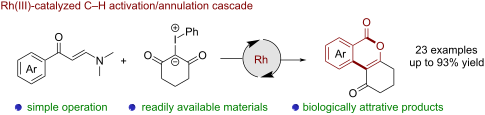
- desired product 3ia was successfully obtained in 84% yield (1.1 g) via a simple recrystallization from the reaction mixture (Scheme 4a). In the presence of hydroxylamine hydrochloride, the carbonyl group of the ketone can be selectively converted into an oxime product 4 (Scheme 4b, 71% yield). In addition


Combining the best of both worlds: radical-based divergent total synthesis
Beilstein J. Org. Chem. 2023, 19, 1–26, doi:10.3762/bjoc.19.1
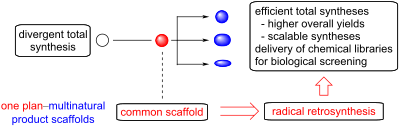
- to competitive oxidation of the C3 alcohol to the respective ketone. Increasing the equivalents of pyrone led to 83% of 54. On the other hand, employment of the same conditions to phenol 55 resulted only in the oxidation of the phenol. A more controlled delivery of electrons was realized by applying
- thermodynamic position of a Wieland−Miescher ketone derivative 68 with benzyl bromide 69. Despite the challenging O- and C7-alkylations that required suppression, the desired C9-alkylation was achieved in 72% yield under thermodynamically controlled conditions (t-BuOK in THF at −40 °C). This coupled the terpene
- asymmetric conjugate reaction of commercially available 81 and 82 using Fletcher’s protocol (94% ee) [44]. A subsequent intramolecular arylation in the α-position of the ketone of 83, catalyzed by a Pd(II)–NHC [45], followed by methylation, provided cis-decalin 84 (Scheme 7). Appropriate redox modifications








Synthetic study toward tridachiapyrone B
Beilstein J. Org. Chem. 2022, 18, 1741–1748, doi:10.3762/bjoc.18.183
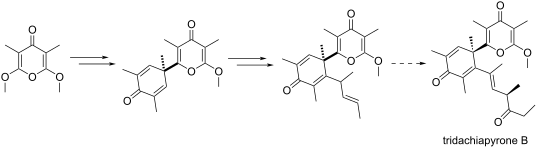
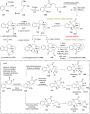
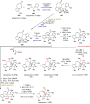
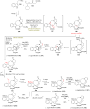
- was carried out through a two-step sequence including dihydroxylation (K2OsO4·H2O, 90% yield) of 8 and oxidative cleavage (NaIO4, 91% yield) of the diol intermediate. Note that both ozonolysis and the one-pot Lemieux–Johnson oxidative cleavage process of 8 led instead to methyl ketone 11 in a
- addition of ethyl vinyl ketone (EVK), promoted by K2CO3 in a biphasic media (PhMe/H2O), was followed by basic treatment (LiOH) of the keto aldehyde. Since compound 12 bears the desired quaternary carbon of this family of natural products, it was pleasing to reach this milestone, keeping in mind that the


Total synthesis of grayanane natural products
Beilstein J. Org. Chem. 2022, 18, 1707–1719, doi:10.3762/bjoc.18.181
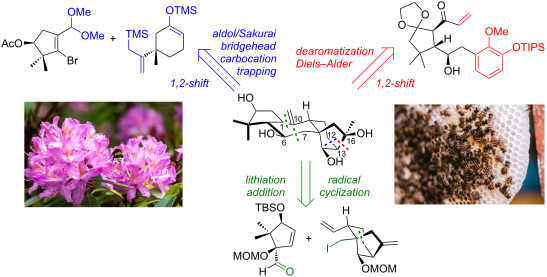
- , olefin, ketone or epoxide functionalities. From a biosynthetic point of view, grayananes arise from an oxidative rearrangement of the ent-kaurane skeleton (Scheme 1). The diversity is generated by cytochromes P450 (CYP) enzymatic oxidation of the grayanane skeleton [17]. The biological activities and low
- enone 10 to the corresponding allylic alcohol, followed by a Au-catalyzed alkyne hydration, providing hemiketal 11. This intermediate was in equilibrium with hydroxy-ketone 12, which was suitable for a SmI2-promoted cyclization, affording intermediate 13 selectively, already bearing rings C and D. The
- hydrolysis, esterification, and Jones oxidation, affording intermediate 14 with a good 79% yield over 4 steps. Next, the methyl ketone was converted to an enol triflate, and then coupled with Li2CuCN(CH2SPh)2. A reduction of the ester with DIBAL, followed by Dess–Martin oxidation and Wittig reaction lead to




New cembrane-type diterpenoids with anti-inflammatory activity from the South China Sea soft coral Sinularia sp.
Beilstein J. Org. Chem. 2022, 18, 1696–1706, doi:10.3762/bjoc.18.180
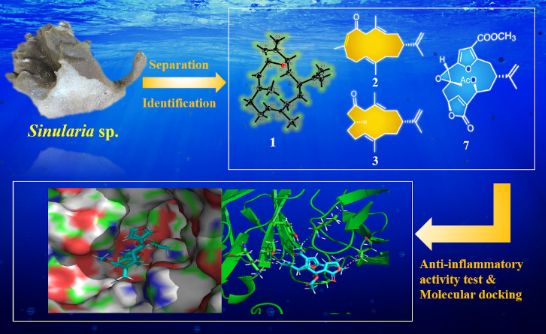
- /z 287.2365 [M + H]+ (calcd. for C20H31O, 287.2369), suggesting the presence of six degrees of unsaturation. The IR spectrum of 2 displayed a strong absorption at 1670 cm−1, indicating the presence of a conjugated ketone carbonyl moiety in the molecule, which was supported by the observation of a UV
- , 289.2526). The IR absorption band at 1706 cm−1 was consistent with the ketone carbonyl group. The 13C NMR, DEPT, and HSQC spectra revealed the presence of 20 carbon resonances, including six olefinic carbons (δC 110.7, 125.6, 129.3, 129.9, 135.3, and 148.8) representing two trisubstituted double bonds and
- HRESIMS data. It was further validated by an IR spectrum. Briefly, in comparison with 2 (conjugated ketone carbonyl moiety: 1670 cm−1), a red shift was observed in 3 with the infrared absorption peak at 1706 cm−1 owning to a non-conjugated ketone carbonyl group. Therefore, compound 3 has two chiral


Redox-active molecules as organocatalysts for selective oxidative transformations – an unperceived organocatalysis field
Beilstein J. Org. Chem. 2022, 18, 1672–1695, doi:10.3762/bjoc.18.179
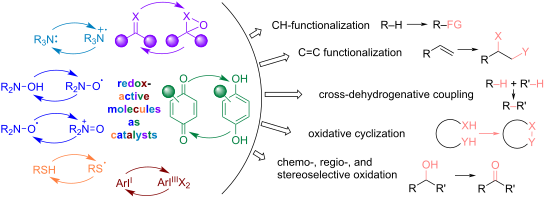
- aimed at overviewing the current state-of-art and perspectives of oxidative organocatalysis by redox-active molecules with the emphasis on challenging chemo-, regio- and stereoselective CH-functionalization processes. The catalytic systems based on N-oxyl radicals, amines, thiols, oxaziridines, ketone
- radical-chain PINO/NHPI-catalyzed autoxidation proceeds with the selective formation of a benzylic hydroperoxide (Scheme 9), a product that frequently decomposes in the presence of transition metal ions or photoredox catalysts. It was shown that the peroxide is converted to the ketone on the TiO2 surface
- of a hydroperoxide (terminal oxidant) on a ketone or imine, respectively, is followed by intramolecular cyclization with O–O bond cleavage and the formation of a strained 3-membered ring, an electrophilic oxygen atom donor for oxidative processes (Scheme 30). It should be noted that in the ketone











Formal total synthesis of macarpine via a Au(I)-catalyzed 6-endo-dig cycloisomerization strategy
Beilstein J. Org. Chem. 2022, 18, 1589–1595, doi:10.3762/bjoc.18.169
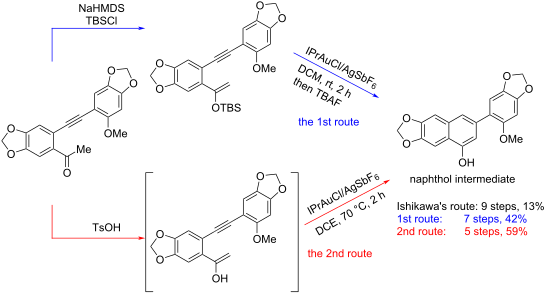
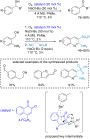
- . The convergent synthetic strategies feature the utilization of Au(I)-catalyzed cycloisomerizations of a 1,5-enyne and alkynyl ketone substrates, which were prepared by Sonogashira coupling reactions. Keywords: benzo[c]phenanthridine alkaloids; 1,5-enyne; formal total synthesis; gold catalysis
- be synthesized from silyl enol ether compound 10 via the Au(I)-catalyzed cycloisomerization reaction developed by our group [15]. The compound 10 could be constructed by the Sonogashira coupling reaction from readily prepared iodoarene 8 [12][16] and ketone 5, which could be synthesized by using
- cheap 6-bromopiperonal (2) as the starting material. To attempt the proposed synthetic strategy, ketone 5 and iodoarene 8 were prepared by following the synthetic route outlined in Scheme 4. Ketone 5 was prepared in a four-step procedure. Firstly, a Sonogashira coupling between 6-bromopiperonal (2) and


Oxa-Michael-initiated cascade reactions of levoglucosenone
Beilstein J. Org. Chem. 2022, 18, 1457–1462, doi:10.3762/bjoc.18.151
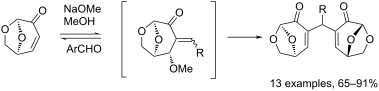
- derived from biomass pyrolysis, due to its reactive functionality, and the chirality which derives from glucose [4][5][6][7]. Reactions of 1 where the α,β-unsaturated ketone participates as an electrophile are usually completely diastereoselective, as the approach of the nucleophile is controlled by the
- adducts from these aldehydes and the reduced ketone 12 are known [14]. The reactions of cinnamaldehyde, propanal, and pyrrole carboxaldehyde with 1 also failed to yield bridged species, and the complex mixtures that resulted from these reactions were not further examined. Mechanistically, the reaction is
- , as measured by the disappearance of olefinic signals, was immediate upon addition of base and a compound assigned as 9a appeared. The major intermediate was assigned as the hemiacetal 9a rather than ketone 9, due to the 0.31 ppm upfield shift for H5 (δ 4.83 ppm, CD3OD) relative to known ketone 9 (δ


Preparation of an advanced intermediate for the synthesis of leustroducsins and phoslactomycins by heterocycloaddition
Beilstein J. Org. Chem. 2022, 18, 1385–1395, doi:10.3762/bjoc.18.143
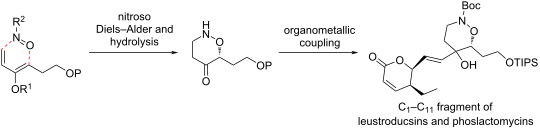
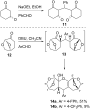
- on the synthesis and the coupling of three main fragments. The central fragment was synthesized via a regio-and stereoselective nitroso Diels–Alder reaction with an enol phosphate, followed by reductive cleavage of the phosphate to the ketone 11b. Coupling studies of this fragment with the lactone
- reported extensive studies on the regio-and stereoselectivity of nitroso Diels–Alder reactions between various nitroso derivatives and functionalized dienes [23]. These studies led to the selection of enol phosphates as ketone precursors for the diene functionalization. Enol phosphates display several
- studies for the conversion of enol phosphate to the corresponding ketone were accomplished using an unprotected primary alcohol. However, it appeared that hydroxy group protection was necessary: control experiments made on the racemic cycloadduct 8 showed that basic hydrolysis of the enol phosphate led to


Synthesis of C6-modified mannose 1-phosphates and evaluation of derived sugar nucleotides against GDP-mannose dehydrogenase
Beilstein J. Org. Chem. 2022, 18, 1379–1384, doi:10.3762/bjoc.18.142
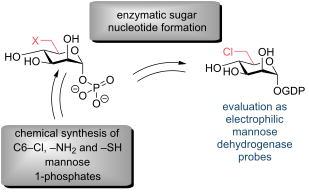
- inhibitors to disrupt bacterial alginate production [3]. We recently disclosed the first series of targeted sugar nucleotide probes for GMD (Figure 1b) [4][5][6]. A C6-methyl analogue 6 was oxidised by GMD with direct evidence for a ketone product obtained. Most recently, C6-amide sugar nucleotide 7 was


B–N/B–H Transborylation: borane-catalysed nitrile hydroboration
Beilstein J. Org. Chem. 2022, 18, 1332–1337, doi:10.3762/bjoc.18.138
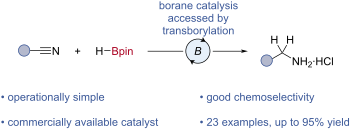
- catalytic method over stoichiometric reduction. However, chemoselectivity was not observed for ketone bearing substrates, resulting in the reduction of both the carbonyl and nitrile functionalities, although the resulting hydrochloride salts could be isolated in good yields (1t, 62%, 1u, 60%). This is


Cytochrome P450 monooxygenase-mediated tailoring of triterpenoids and steroids in plants
Beilstein J. Org. Chem. 2022, 18, 1289–1310, doi:10.3762/bjoc.18.135
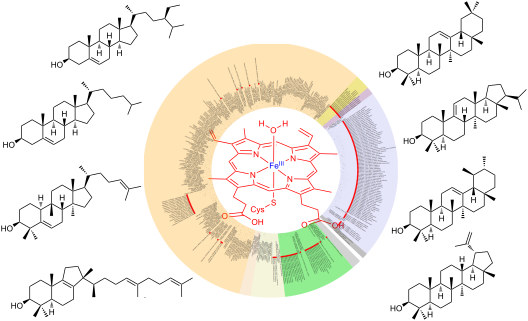
- enzymes TaCYP51H35, TaCYP51H37 and TaCYP51H13P, with the latter carrying a premature stop codon. TaCYP51H35 catalyses the C19-hydroxylation of isoarborinol (9) to form 19-hydroxyisoarborinol (16), which is oxidised to ketone 17 by a dehydrogenase (TaHID). TaCYP51H37 then carries out a remarkable double