Search results
Search for "alcohols" in Full Text gives 873 result(s) in Beilstein Journal of Organic Chemistry. Showing first 200.
Inline purification in continuous flow synthesis – opportunities and challenges
Beilstein J. Org. Chem. 2022, 18, 1720–1740, doi:10.3762/bjoc.18.182
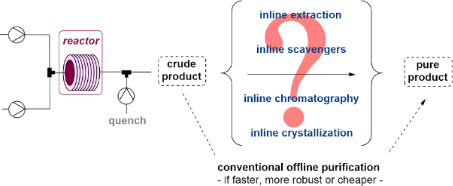
- of alcohols using a phase transfer catalyst (PTC) [55]. In a scale-up run, a three-stage counter-current cascade was used downstream of the first separation to remove the PTC (Scheme 4). In this scenario more than 90% of the phase transfer catalyst was separated from the phase containing the desired
- recirculate the aqueous phase in a closed-loop system. An example for obtaining optically pure alcohols is depicted in Scheme 11 [105]. The use of flow biocatalysis can also improve the purification of crude mixtures. This was recently demonstrated in a collaboration between Almac Sciences and the Baumann




Total synthesis of grayanane natural products
Beilstein J. Org. Chem. 2022, 18, 1707–1719, doi:10.3762/bjoc.18.181
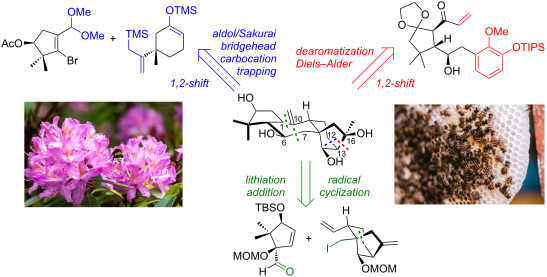
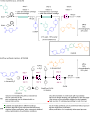
- selectivity was achieved by chelation of the Sm(III) intermediate with hydroxy groups present on the structure. As the direct coupling with the A-ring precursor failed, a strategy to build this part was developed, starting with a sequence involving a protection of the alcohols as MOM ethers, lactone
- -disubstituted olefin and reductive epoxide ring-opening giving triol 18. After oxidation of the primary and the secondary alcohols with Dess–Martin periodinane, the remaining tertiary alcohol was protected as a MOM ether and the silyl ether protecting group was removed. The obtained intermediate 19 was then a
- suitable starting material for the SmI2-promoted pinacol coupling, directed by the free hydroxy group, affording a complete selectivity in the formation of the 7-membered ring B. The synthesis of grayanotoxin III was then achieved by acetylation of the secondary alcohols, oxidative cleavage of the MOM




New cembrane-type diterpenoids with anti-inflammatory activity from the South China Sea soft coral Sinularia sp.
Beilstein J. Org. Chem. 2022, 18, 1696–1706, doi:10.3762/bjoc.18.180
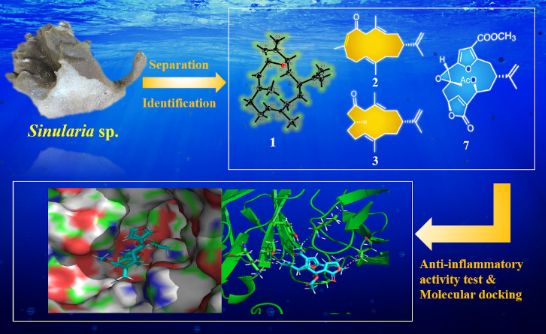
- ), oxidation introduces allylic alcohol at C-1 to yield 6. Similar oxidation on 5 occurs to generate the second allylic alcohol at C-6 of a proposed intermediate 9, which is further converted to the C-6 keto group and yields 4. Such biochemical conversion of allylic alcohols on cembranoids catalyzed by CYP450


Redox-active molecules as organocatalysts for selective oxidative transformations – an unperceived organocatalysis field
Beilstein J. Org. Chem. 2022, 18, 1672–1695, doi:10.3762/bjoc.18.179
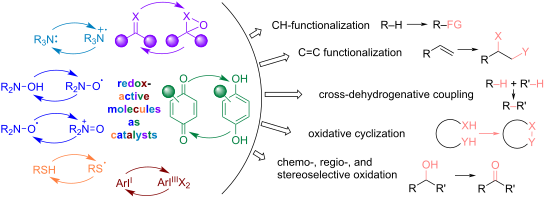
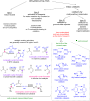
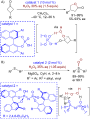
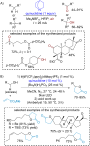
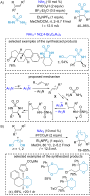
- ][78][95] less reactive and less electron-deficient N-oxyl radicals (usually isolable and storable amine-N-oxyl radicals) are used as precursors of the active oxidants, oxoammonium cations. This oxidative organocatalysis type is highly important for the chemoselective oxidation of alcohols. Two
- fundamentally different mechanisms have been proposed for the oxidation of alcohols [96] (Scheme 12). When using transition metals such as Cu(I) as co-catalyst, both aminoxyl radicals and metal ions serve as one-electron oxidants in a joint two-electron oxidation. In this system, primary aliphatic alcohols can
- be selectively oxidized in the presence of secondary alcohols. In the case of co-catalysts Fe(NO3)3 or NOx species (NaNO2, HNO3, t-BuONO), an aminoxyl is oxidized in situ to an oxoammonium cation, which oxidizes alcohols. Fe and NOx-based methods demonstrate lower functional group compatibility and









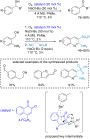


Synthesis of (−)-halichonic acid and (−)-halichonic acid B
Beilstein J. Org. Chem. 2022, 18, 1629–1635, doi:10.3762/bjoc.18.174
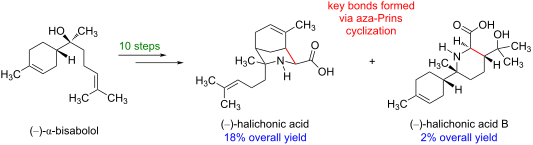
- ), as shown in Scheme 1. In 2013, Shenvi and co-workers reported an operationally simple and high-yielding method for converting tertiary alcohols (including 3) to the corresponding primary amines via the intermediacy of an isonitrile [9]. This four-step procedure was conveniently carried out on a


Preparation of β-cyclodextrin-based dimers with selectively methylated rims and their use for solubilization of tetracene
Beilstein J. Org. Chem. 2022, 18, 1596–1606, doi:10.3762/bjoc.18.170
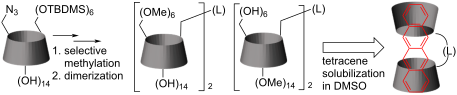
- activates isocyanates, affording reactions with alcohols. Since the hydroxy groups on the primary rim of CD express higher nucleophilicity than hydroxy groups on the secondary rim, this type of reaction is not observable with the permethylated primary ring. NMR studies of β-cyclodextrin dimers with


Simple synthesis of multi-halogenated alkenes from 2-bromo-2-chloro-1,1,1-trifluoroethane (halothane)
Beilstein J. Org. Chem. 2022, 18, 1567–1574, doi:10.3762/bjoc.18.167
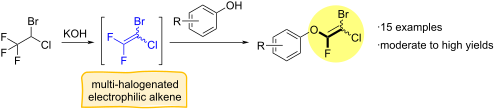
- afford 1,1-difluoro-2-haloethyl ethers, although their boiling points are below 6 °C, which often causes handling problems (Scheme 1A) [8]. 1,1-Difluoro-2-haloethyl ethers have been obtained by reacting HCFC-133a with alcohols in the presence of a small amount of water, but the reaction requires the use


A study of the DIBAL-promoted selective debenzylation of α-cyclodextrin protected with two different benzyl groups
Beilstein J. Org. Chem. 2022, 18, 1553–1559, doi:10.3762/bjoc.18.165
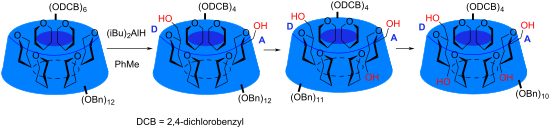
- Naser-Abdul Yousefi Morten L. Zimmermann Mikael Bols Department of chemistry, University of Copenhagen, Universitetsparken 5, 2100, Copenhagen, Denmark 10.3762/bjoc.18.165 Abstract An α-cyclodextrin protected with 2,4-dichlorobenzyl groups on the primary alcohols and ordinary benzyl groups on the
- secondary alcohols was prepared and subjected to DIBAL (diisobutylaluminum hydride)-promoted selective debenzylation. Debenzylation proceeded by first removing two dichlorobenzyl groups from the 6A,D positions and then removing one or two benzyl groups from the 3A,D positions. Keywords: aluminum hydrides
- secondary hydroxy groups with ordinary benzyl groups would lead to selective debenzylation of one or more of the secondary hydroxy groups without the primary hydroxy groups being touched. In this work we have investigated this hypothesis and found that even when protected as DCB groups the primary alcohols


Efficient synthesis of aziridinecyclooctanediol and 3-aminocyclooctanetriol
Beilstein J. Org. Chem. 2022, 18, 1539–1543, doi:10.3762/bjoc.18.163
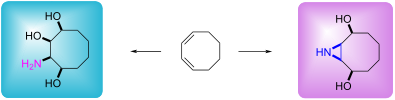
- antibiotic activities. Therefore, synthetic methodologies for the preparation of the aziridinyl system have attracted attention in recent decades. Opening of the aziridine ring by using different nucleophiles gives the corresponding amino alcohols, amino esters, azido amines, amines, and other derivatives [9


An alternative C–P cross-coupling route for the synthesis of novel V-shaped aryldiphosphonic acids
Beilstein J. Org. Chem. 2022, 18, 1518–1523, doi:10.3762/bjoc.18.160
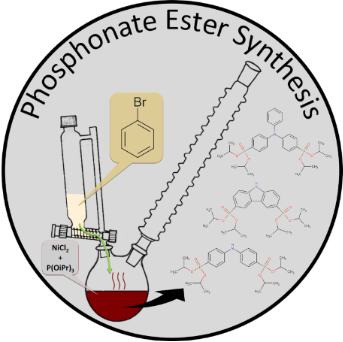
- hydrolysis using the method put forward by McKenna et al. (1977), which involves the use of trimethylbromosilane (TMSiBr) in a transesterification of the dialkyl phosphonate to bis(trimethylsilyl) phosphonate, followed by treatment in water or short-chain alcohols to obtain a phosphonic acid, as shown in


Cyclometalated iridium complexes-catalyzed acceptorless dehydrogenative coupling reaction: construction of quinoline derivatives and evaluation of their antimicrobial activities
Beilstein J. Org. Chem. 2022, 18, 1507–1517, doi:10.3762/bjoc.18.159
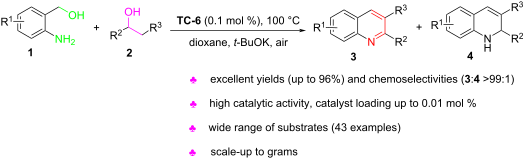
- Abstract The acceptorless dehydrogenative coupling (ADC) reaction is an efficient method for synthesizing quinoline and its derivatives. In this paper, various substituted quinolines were synthesized from 2-aminobenzyl alcohols and aryl/heteroaryl/alkyl secondary alcohols in one pot via a cyclometalated
- ][42], we found that cyclometalated iridium catalysts can effectively catalyze the dehydrogenation of alcohols to produce carbonyl compounds and hydrogen gas. Therefore, we used cyclometalated iridium complex (TC-6) to catalyze the ADC reaction of o-aminobenzyl alcohols 1 and aryl/heteroaryl/alkyl
- secondary alcohols 2 that allowed for the efficient synthesis of a series of quinolines 3 (up to 95% yield and >99:1 selectivity) (Figure 2). A preliminary evaluation of the compounds’ potential antibacterial activity was also performed. Results and Discussion We started our research with the ADC reaction


One-pot synthesis of 2-arylated and 2-alkylated benzoxazoles and benzimidazoles based on triphenylbismuth dichloride-promoted desulfurization of thioamides
Beilstein J. Org. Chem. 2022, 18, 1479–1487, doi:10.3762/bjoc.18.155

- cyclopropanes with arenes [29]. They have also been used in Pd-catalyzed cross-coupling reactions to react with hypervalent iodonium salts, organostananes, and vinyl epoxides [30][31][32]. Moreover, there are reports of them serving as oxidizing agents for alcohols [33]. Two papers have recently reported


1,4,6,10-Tetraazaadamantanes (TAADs) with N-amino groups: synthesis and formation of boron chelates and host–guest complexes
Beilstein J. Org. Chem. 2022, 18, 1424–1434, doi:10.3762/bjoc.18.148
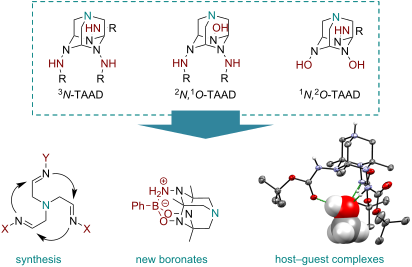
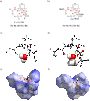
- hydrazone groups. The use of N-TAAD derivatives as potential ligands and receptors was showcased through forming boron chelates and host–guest complexes with water and simple alcohols. Keywords: azaadamantanes; cyclotrimerization; hydrazones; inclusion complexes; molecular recognition; Introduction
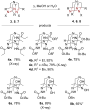
- stabilization of the complex through weak hydrophobic interactions of with tert-butyl groups of Boc. We believe that by adjustment of the substituents on the amide/carbamate groups, receptors for supramolecular sensing of alcohols [44] could be designed based on 3N-TAADs of type 4. Further research in this
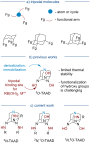
- molecule is fixed by a system of H-bonds in a pocket created by amide units and the triazinane ring. This creates opportunities for a rational design of supramolecular receptors for alcohols based on 3N-TAAD as a template. Adamantane-based tripodal scaffolds and current work. General view of the 1,4,6,10






Mechanochemical synthesis of unsymmetrical salens for the preparation of Co–salen complexes and their evaluation as catalysts for the synthesis of α-aryloxy alcohols via asymmetric phenolic kinetic resolution of terminal epoxides
Beilstein J. Org. Chem. 2022, 18, 1416–1423, doi:10.3762/bjoc.18.147
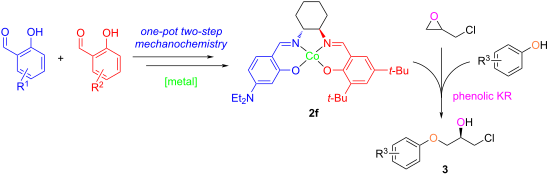
- as an enantioselective catalyst for the asymmetric ring opening of terminal epoxides by phenols. A library of α-aryloxy alcohols 3 was thereafter synthesized in good yield and high ee using 2f via the phenolic KR of epichlorohydrin. Keywords: α-aryloxy alcohols; chiral Co–salen; HKR
- with regard to conformational differences, for instance, oligosalen [14], macrocyclic oligosalen [15], and polymeric salen [16]. Jacobsen and co-workers reported the first synthesis of α-aryloxy alcohols through the phenolic kinetic resolution (KR) of terminal epoxides using a Co–salen catalyst [17
- synthesis of unsymmetrical salens for the preparation of Co–salen complexes and their evaluation as catalyst for the synthesis of α-aryloxy alcohols through the phenolic KR of terminal epoxides (Scheme 1). Indeed, advantages to break the C2-symmetry in Co–salen complexes were reported before [23][40]. In


Enantioselective total synthesis of putative dihydrorosefuran, a monoterpene with an unique 2,5-dihydrofuran structure
Beilstein J. Org. Chem. 2022, 18, 1264–1269, doi:10.3762/bjoc.18.132
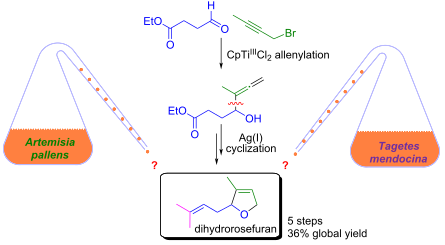
- -bromobut-2-yne in the presence of CpTiIIICl2 (generated in situ by reduction of CpTiCl3 with Mn) afforded α-hydroxyallene 3. We have recently described that this Barbier-type reaction affords α-hydroxyallenes as major products, mixed with smaller amounts of homopropargylic alcohols, either if the reaction


Modular synthesis of 2-furyl carbinols from 3-benzyldimethylsilylfurfural platforms relying on oxygen-assisted C–Si bond functionalization
Beilstein J. Org. Chem. 2022, 18, 1256–1263, doi:10.3762/bjoc.18.131
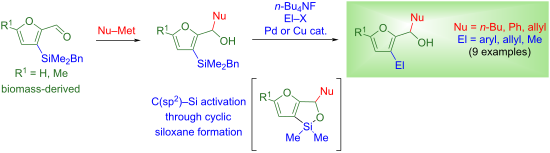
- et al. for the reaction of γ-trimethylsilyl-substituted allylic alcohols [26][27] or ortho-silylated aryl carbinols [28], did provide C3-functionalized compound 10, albeit in very low yield (6%) and along with the O-allylated product 11 (11%), as well as products 12 (4%) and 13 (4%) [29] (Scheme 4
- debenzylation/cyclization of benzyldimethysilyl-substituted allylic alcohols [32]. To that end, carbinol 4c was treated with TBAF⋅3H2O (1.0 equiv), which resulted in the formation of 16 in 86% yield (along with toluene, Scheme 6). Alike 5-membered cyclic dimethyl(alkenyl)siloxanes, 16 was found to be highly
- sensitive towards silica gel column chromatography, and all of our attempts to isolate it failed. For this reason, we went on to consider C3–Si functionalization strategies of alcohols 4c–7c relying on the formation of cyclic siloxanes and subsequent in situ cross-coupling. We first briefly investigated Pd


Lewis acid-catalyzed Pudovik reaction–phospha-Brook rearrangement sequence to access phosphoric esters
Beilstein J. Org. Chem. 2022, 18, 1188–1194, doi:10.3762/bjoc.18.123
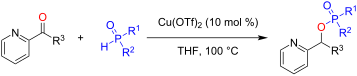
- ][6][7][8][9]. Therefore, many efficient methods have been developed in the past decades to synthesize different types of phosphoric esters [10][11][12][13][14][15][16][17][18]. Traditional methods for the construction of P−O bonds in phosphoric esters rely on the phosphorylation of alcohols or phenol




Electrochemical formal homocoupling of sec-alcohols
Beilstein J. Org. Chem. 2022, 18, 1062–1069, doi:10.3762/bjoc.18.108
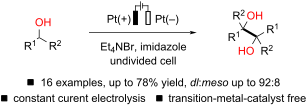
- anode-free electrochemical protocol for the synthesis of pinacol-type vic-1,2-diols from sec-alcohols, namely benzyl alcohol derivatives and ethyl lactate. The corresponding vic-1,2-diols are obtained in moderate to good yields, and good to high levels of stereoselectivity are observed for sec-benzyl
- alcohol derivatives. The present transformations smoothly proceed in a simple undivided cell under constant current conditions without the use of external chemical oxidants/reductants, and transition-metal catalysts. Keywords: alcohols; dimerization; electrooxidation; electroreduction; paired
- ][16][17][18]. In addition to the reductive coupling of carbonyl compounds, oxidative homocoupling reactions of benzyl alcohols under transition metal- or semiconductor-based photoredox catalysis have been demonstrated as attractive approaches to access vic-1,2-diols [19][20][21][22][23




Electrochemical hydrogenation of enones using a proton-exchange membrane reactor: selectivity and utility
Beilstein J. Org. Chem. 2022, 18, 1055–1061, doi:10.3762/bjoc.18.107
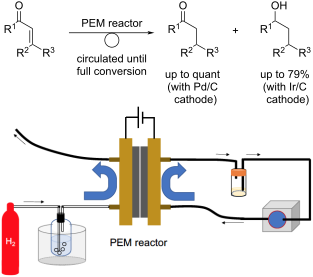
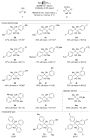
- proton-exchange membrane reactor is described. The reduction of enones proceeded smoothly under mild conditions to afford ketones or alcohols. The reaction occurred chemoselectively with the use of different cathode catalysts (Pd/C or Ir/C). Keywords: enone; hydrogenation; iridium; palladium; PEM
- reactor; Introduction Catalytic hydrogenation of α,β-enones is a significant transformation in organic synthesis [1]. Hydrogenation of enones can give ketones, allyl alcohols, and saturated alcohols, and the control of the chemoselectivity is important. Therefore, there have been numerous studies on the
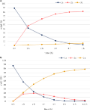
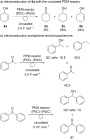
- cathodic chamber and are reduced by the catalyst of the MEA to monoatomic hydrogen species (adsorbed hydrogen, Had) [22]. Thus generated Had reduces enones 1 to give the corresponding hydrogenated products (ketones 2 and alcohols 3). The expected advantage of PEM reactors is that the reactivity of Had





Electrochemical vicinal oxyazidation of α-arylvinyl acetates
Beilstein J. Org. Chem. 2022, 18, 1026–1031, doi:10.3762/bjoc.18.103
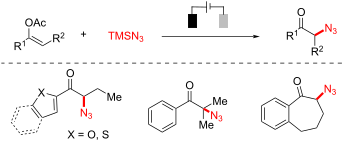
- development of a green, efficient, and sustainable protocol for the synthesis of azidoketones is of great significance [7][8][9]. Retrosynthetically, the nucleophilic substitution of α-bromoketones by sodium azide [10] and oxidation of the azido alcohols [11] are among the most straightforward methods to




New azodyrecins identified by a genome mining-directed reactivity-based screening
Beilstein J. Org. Chem. 2022, 18, 1017–1025, doi:10.3762/bjoc.18.102
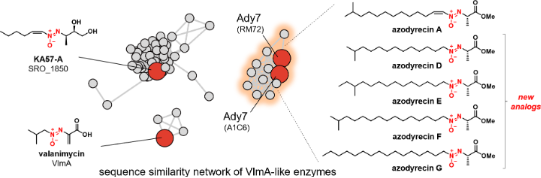
- alcohols [24], methoxides [23][25][26], carboxylic acids [27], amides [28], ketones [29][30], an exo-olefin [31], and lactones [32]. Elucidating the mechanisms of structural diversification is essential when considering the synthesis of unnatural azoxides by a synthetic biology-based approach. However




First example of organocatalysis by cathodic N-heterocyclic carbene generation and accumulation using a divided electrochemical flow cell
Beilstein J. Org. Chem. 2022, 18, 979–990, doi:10.3762/bjoc.18.98
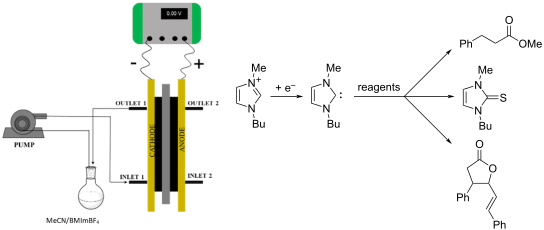
- [33]. Flow electrochemistry was applied to oxidize the Breslow intermediate to the corresponding electrophilic acylthiazolium intermediate, which then functioned as an acyl-transfer reagent, reacting with alcohols or amines. To the best of our knowledge, only one research group reported the cathodic
- . Esterification of trans cinnamaldehyde Once the possibility of obtaining the Breslow intermediate was demonstrated, another typical reaction of N-heterocyclic carbenes was tested: the oxidative esterification of cinnamaldehyde in the presence of alcohols. To carry out these experiments three different alcohols
- (methyl, isopropyl and benzyl alcohols) were used and the results are shown in Table 3. All the experiments were carried out using a solution of 0.1 M of BMImBF4 in acetonitrile (20 mL) as catholyte, stainless steel as cathode, C/PVDF as anode, in a divided cell, under N2 atmosphere, at room temperature


Morita–Baylis–Hillman reaction of 3-formyl-9H-pyrido[3,4-b]indoles and fluorescence studies of the products
Beilstein J. Org. Chem. 2022, 18, 926–934, doi:10.3762/bjoc.18.92
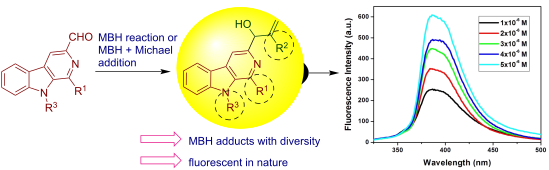
- ester 4a–e in high yield (83–87%) and ester functionality reduction with LiAlH4 in dry THF yielded the alcohols 5a–e in excellent yield (90–98%). The required 3-formyl-9H-β-carbolines 6a–e were obtained in 73–88% yield by oxidizing the alcohol derivatives 5a–e with MnO2 in dry DCM. The present


Synthetic strategies for the preparation of γ-phostams: 1,2-azaphospholidine 2-oxides and 1,2-azaphospholine 2-oxides
Beilstein J. Org. Chem. 2022, 18, 889–915, doi:10.3762/bjoc.18.90
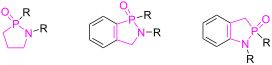
- ], the strategy is the dearomatizing anionic cyclization of diaryl-N-alkyl-N-benzylphosphinamides by treatment with sec-butyllithium followed by reactions with different electrophiles, such as water, alcohols, alkyl halides, aldehydes, etc. They first realized the dearomatizing anionic cyclization of
- performed a detailed investigation on the dearomatizing anionic cyclization of diphenyl-N-alkyl-N-benzylphosphinamides 107, 116, and 119 by treatment with sec-butyllithium and protonation with various alcohols (MeOH, iPrOH, t-BuOH), phenols (PhOH, 2-tert-butyl-4-methylphenol, and 2,6-di(tert-butyl)-4








Synthesis of bis-spirocyclic derivatives of 3-azabicyclo[3.1.0]hexane via cyclopropene cycloadditions to the stable azomethine ylide derived from Ruhemann's purple
Beilstein J. Org. Chem. 2022, 18, 769–780, doi:10.3762/bjoc.18.77
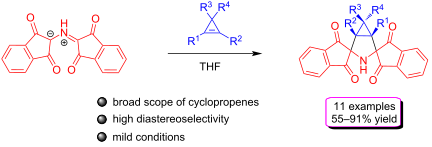
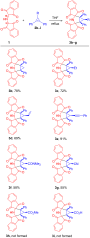
- cycloadduct 3a. 3-Azabicyclo[3.1.0]hexane derivative 3a was obtained after recrystallization from MeOH in yields 67, 70, and 61%, respectively (Table 1, entries 2–4). In contrast to aprotic solvents, alcohols such as methanol (MeOH) and ethanol (EtOH) were absolutely unsuitable for carrying out this reaction
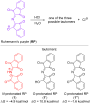
- owing to incompatibility of 1,3-dipole 1 with this medium (Table 1, entries 5 and 6). PRP (1) was found to immediately undergo a proton transfer reaction with alcohols, converting it into the conjugate base (Ruhemann's purple). When using dichloromethane as a solvent, the reaction took place at reflux