Search for "bromine" in Full Text gives 336 result(s) in Beilstein Journal of Organic Chemistry. Showing first 200.
Beilstein J. Org. Chem. 2019, 15, 256–278, doi:10.3762/bjoc.15.23
Graphical Abstract
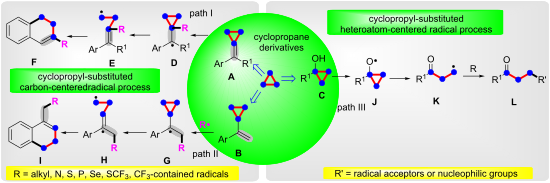
Scheme 1: The oxidative radical ring-opening/cyclization of cyclopropane derivatives.
Scheme 2: Mn(OAc)3-mediated oxidative radical ring-opening and cyclization of MCPs with malonates.
Scheme 3: Mn(III)-mediated oxidative radical ring-opening and cyclization of MCPs with 1,3-dicarbonyl compoun...
Scheme 4: Heat-promoted ring-opening/cyclization of MCPs with elemental chalgogens.
Scheme 5: Copper(II) acetate-mediated oxidative radical ring-opening and cyclization of MCPs with diphenyl di...
Scheme 6: AIBN-promoted oxidative radical ring-opening and cyclization of MCPs with benzenethiol.
Scheme 7: AIBN-mediated oxidative radical ring-opening and cyclization of MCPs with diethyl phosphites.
Scheme 8: Organic-selenium induced radical ring-opening and cyclization of MCPs derivatives (cyclopropylaldeh...
Scheme 9: Copper(I)-catalyzed oxidative radical trifluoromethylation/ring-opening/cyclization of MCPs with To...
Scheme 10: Ag(I)-mediated trifluoromethylthiolation/ring-opening/cyclization of MCPs with AgSCF3.
Scheme 11: oxidative radical ring-opening and cyclization of MCPs with α-C(sp3)-–H of ethers.
Scheme 12: Oxidative radical ring-opening and cyclization of MCPs with aldehydes.
Scheme 13: Cu(I) or Fe(II)-catalyzed oxidative radical trifluoromethylation/ring-opening/cyclization of MCPs d...
Scheme 14: Rh(II)-catalyzed oxidative radical ring-opening and cyclization of MCPs.
Scheme 15: Ag(I)-catalyzed oxidative radical amination/ring-opening/cyclization of MCPs derivatives.
Scheme 16: Heating-promoted radical ring-opening and cyclization of MCP derivatives (arylvinylidenecyclopropan...
Scheme 17: Bromine radical-mediated ring-opening of alkylidenecyclopropanes.
Scheme 18: Fluoroalkyl (Rf) radical-mediated ring-opening of MCPs.
Scheme 19: Visible-light-induced alkylation/ring-opening/cyclization of cyclopropyl olefins with bromides.
Scheme 20: Mn(III)-mediated ring-opening and [3 + 3]-annulation of cyclopropanols and vinyl azides.
Scheme 21: Ag(I)-catalyzed oxidative ring-opening of cyclopropanols with quinones.
Scheme 22: Ag(I)-catalyzed oxidative ring-opening of cyclopropanols with heteroarenes.
Scheme 23: Cu(I)-catalyzed oxidative ring-opening/trifluoromethylation of cyclopropanols.
Scheme 24: Cu(I)-catalyzed oxidative ring-opening and trifluoromethylation/trifluoromethylthiolation of cyclop...
Scheme 25: Ag(I)-mediated oxidative ring-opening/fluorination of cyclopropanols with Selectfluor.
Scheme 26: Photocatalyzed ring-opening/fluorination of cyclopropanols with Selectfluor.
Scheme 27: Na2S2O8-promoted ring-opening/alkynylation of cyclopropanols with EBX.
Scheme 28: Ag(I)-catalyzed ring-opening and chlorination of cyclopropanols with aldehydes.
Scheme 29: Ag(I)-catalyzed ring-opening/alkynylation of cyclopropanols with EBX.
Scheme 30: Na2S2O8-promoted ring-opening/alkylation of cyclopropanols with acrylamides.
Scheme 31: Cyclopropanol ring-opening initiated tandem cyclization with acrylamides or 2-isocyanobiphenyls.
Scheme 32: Ag(II)-mediated oxidative ring-opening/fluorination of cyclopropanols with AgF2.
Scheme 33: Cu(II)-catalyzed ring-opening/fluoromethylation of cyclopropanols with sulfinate salts.
Scheme 34: Cu(II)-catalyzed ring-opening/sulfonylation of cyclopropanols with sulfinate salts.
Scheme 35: Na2S2O8-promoted ring-opening/arylation of cyclopropanols with propiolamides.
Scheme 36: The ring-opening and [3 + 2]-annulation of cyclopropanols with α,β-unsaturated aldehydes.
Scheme 37: Cu(II)-catalyzed ring-opening/arylation of cyclopropanols with aromatic nitrogen heterocyles.
Scheme 38: Ag(I)-catalyzed ring-opening and difluoromethylthiolation of cyclopropanols with PhSO2SCF2H.
Scheme 39: Ag(I)-catalyzed ring-opening and acylation of cyclopropanols with aldehydes.
Scheme 40: Aerobic oxidation ring-opening of cyclopropanols for the synthesis of 2-oxyranyl ketones.
Scheme 41: Aerobic oxidation ring-opening of cyclopropanols for the synthesis of linear enones.
Scheme 42: Aerobic oxidation ring-opening of cyclopropanols for the synthesis of metabolite.
Beilstein J. Org. Chem. 2019, 15, 236–255, doi:10.3762/bjoc.15.22
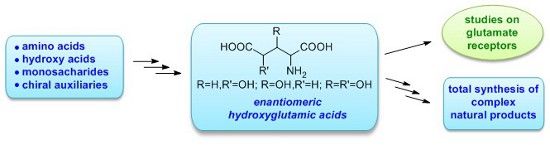
Graphical Abstract
Figure 1: Structure of L-glutamic acid.
Figure 2: 3-Hydroxy- (2), 4-hydroxy- (3) and 3,4-dihydroxyglutamic acids (4).
Figure 3: Enantiomers of 3-hydroxyglutamic acid (2).
Scheme 1: Synthesis of (2S,3R)-2 from (R)-Garner's aldehyde. Reagents and conditions: a) MeOCH=CH–CH(OTMS)=CH2...
Scheme 2: Synthesis of (2S,3R)-2 and (2S,3S)-2 from (R)-Garner’s aldehyde. Reagents and conditions: a) H2C=CH...
Scheme 3: Two-carbon homologation of the protected L-serine. Reagents and conditions: a) Fmoc-succinimide, Na2...
Scheme 4: Synthesis of di-tert-butyl ester of (2R,3S)-2 from L-serine. Reagents and conditions: a) PhSO2Cl, K2...
Scheme 5: Synthesis of (2R,3S)-2 from O-benzyl-L-serine. Reagents and conditions: a) (CF3CH2O)2P(O)CH2COOMe, ...
Scheme 6: Synthesis of (2S,3R)-2 employing a one-pot cis-olefination–conjugate addition sequence. Reagents an...
Scheme 7: Synthesis of the orthogonally protected (2S,3R)-2 from a chiral aziridine. Reagents and conditions:...
Scheme 8: Synthesis of N-Boc-protected (2S,3R)-2 from D-phenylglycine. Reagents and conditions: a) BnMgCl, et...
Scheme 9: Synthesis of (2S,3R)-2 employing ketopinic acid as chiral auxiliary. Reagents and conditions: a) Br2...
Scheme 10: Synthesis of dimethyl ester of (2S,3R)-2 employing (1S)-2-exo-methoxyethoxyapocamphane-1-carboxylic...
Scheme 11: Synthesis of N-Boc-protected dimethyl ester of (2S,3R)-2 from (S)-N-(1-phenylethyl)thioacetamide. R...
Scheme 12: Synthesis of N-Boc-protected dimethyl ester of (2S,3R)-2 via Sharpless epoxidation. Reagents and co...
Scheme 13: Synthesis of (2S,3S)-2 from the imide 51. Reagents and conditions: a) NaBH4, MeOH/CH2Cl2; b) Ac2O, ...
Scheme 14: Synthesis of (2R,3S)-2 and (2S,3S)-2 from the acetolactam 55 (PMB = p-methoxybenzyl). Reagents and ...
Scheme 15: Synthesis of (2S,3R)-2 from D-glucose. Reagents and conditions: a) NaClO2, 30% H2O2, NaH2PO4, MeCN;...
Figure 4: Enantiomers of 3-hydroxyglutamic acid (3).
Scheme 16: Synthesis of (4S)-4-hydroxy-L-glutamic acid [(2S,4S)-3] by electrophilic hydroxylation. Reagents an...
Scheme 17: Synthesis of all stereoisomers of 4-hydroxyglutamic acid (3). Reagents and conditions: a) Br2, PBr5...
Scheme 18: Synthesis of the orthogonally protected 4-hydroxyglutamic acid (2S,4S)-73. Reagents and conditions:...
Scheme 19: Synthesis of (2S,4R)-4-acetyloxyglutamic acid as a component of a dipeptide. Reagents and condition...
Scheme 20: Synthesis of N-Boc-protected dimethyl esters of (2S,4R)- and (2S,4S)-3 from (2S,4R)-4-hydroxyprolin...
Scheme 21: Synthesis of orthogonally protected (2S,4S)-3 from (2S,4R)-4-hydroxyproline. Reagents and condition...
Scheme 22: Synthesis of the protected (4R)-4-hydroxy-L-pyroglutamic acid (2S,4R)-87 by electrophilic hydroxyla...
Figure 5: Enantiomers of 3,4-dihydroxy-L-glutamic acid (4).
Scheme 23: Synthesis of (2S,3S,4R)-4 from the epoxypyrrolidinone 88. Reagents and conditions: a) MeOH, THF, KC...
Scheme 24: Synthesis of (2S,3R,4R)-4 from the orthoester 92. Reagents and conditions: a) OsO4, NMO, acetone/wa...
Scheme 25: Synthesis of (2S,3S,4S)-4 from the aziridinolactone 95. Reagents and conditions: a) BnOH, BF3·OEt2,...
Scheme 26: Synthesis of (2S,3S,4R)-4 and (2R,3S,4R)-4 from cyclic imides 106. Reagents and conditions: a) NaBH4...
Scheme 27: Synthesis of (2R,3R,4R)-4 and (2S,3R,4R)-4 from the cyclic meso-imide 110. Reagents and conditions:...
Scheme 28: Synthesis of (2S,3S,4S)-4 from the protected serinal (R)-23. Reagents and conditions: a) Ph3P=CHCOO...
Scheme 29: Synthesis of (2S,3S,4S)-4 from O-benzyl-N-Boc-D-serine. Reagents and conditions: a) ClCOOiBu, TEA, ...
Scheme 30: Synthesis of (2S,3S,4R)-127 by enantioselective conjugate addition and asymmetric dihydroxylation. ...
Figure 6: Structures of selected compounds containing hydroxyglutamic motives (in blue).
Beilstein J. Org. Chem. 2018, 14, 2897–2906, doi:10.3762/bjoc.14.268
Graphical Abstract
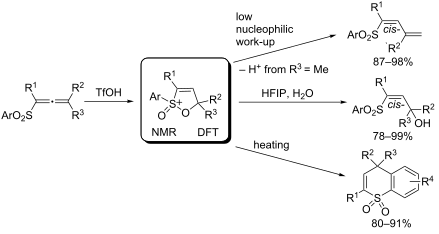
Scheme 1: (Arylsulfinyl)allenes 1 and (arylsulfonyl)allenes 2 used in this study.
Figure 1: X-ray crystal structures of compounds 2h (CCDC 1843276), 3e (CCDC 1843277), 5c (CCDC 1580895), 7b (...
Scheme 2: Plausible reaction mechanisms of transformations of allene 2a in Brønsted acids.
Scheme 3: Selective formation of butadienes 3a–h from allenes 2a–h.
Scheme 4: Reactions of allenes 2 in the system HFIP/TfOH followed by interaction with nucleophiles leading to...
Scheme 5: Formation of thiochromene 1,1-dioxides 5a–c from allenes 2a,c,d.
Scheme 6: Formation of (arylsulfonyl)acetones 6a,b from allenes 2h,j in TfOH (100 °C, 0.5 h) followed by hydr...
Scheme 7: Reactions of (arylsulfinyl)allenes 1a,b under superelectrophilic activation.
Beilstein J. Org. Chem. 2018, 14, 2838–2845, doi:10.3762/bjoc.14.262
Graphical Abstract
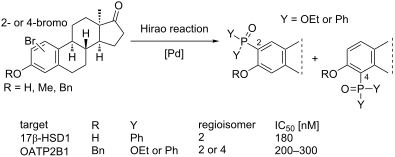
Scheme 1: Pd-catalyzed C(sp2)–P couplings at C-2 or C-4 in the 13α-estrone series.
Beilstein J. Org. Chem. 2018, 14, 2627–2645, doi:10.3762/bjoc.14.241
Graphical Abstract
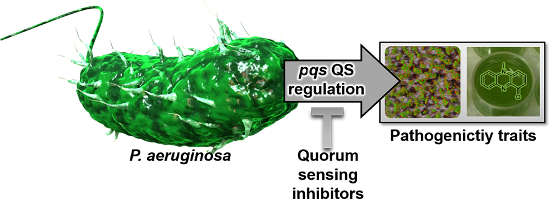
Figure 1: The four quorum sensing systems in P. aeruginosa las, iqs, rhl, and pqs. Abbreviations: OdDHL, N-(3...
Figure 2: Schematic overview of the PQS biosynthesis and involvement of related metabolites and PqsE in virul...
Figure 3: Anthranilic acid (1) and derivatives thereof (2–4).
Figure 4: Crystal structure of 6-FABA-AMP in complex with PqsA.
Figure 5: Structures of substrate mimetic PqsA inhibitors.
Figure 6: Structures and characteristics of prominent classes of PqsD inhibitors.
Figure 7: Comparison of docking poses of three prototypic PqsD inhibitors: benzamidobenzoic acid derivative 12...
Figure 8: Structures and characteristics of hits against PqsD identified through different methods.
Figure 9: HHQ and PQS analogues as PqsD inhibitors and chemical probe used for screening.
Figure 10: Structure of PqsD-targeting biofilm inhibitor derived from linezolid.
Figure 11: Fragment-based PqsE-inhibitors 24–26.
Figure 12: PqsE co-crystal structures. (A) native product 2-ABA; (B–D) hit fragments 24–26.
Figure 13: Structurally diverse PqsBC-inhibitors 27–30.
Figure 14: Native PqsR ligand HHQ (31) which is converted into PQS (32) by PqsH and synthetic inhibitors 33 an...
Figure 15: Quinazolinone inhibitor 36 (QZN).
Figure 16: Crystal structure of QZN (36) in complex with PqsRCBD.
Figure 17: Structures of best fitting compounds 37–40 obtained from docking studies.
Figure 18: Initial hit 21 and optimized compound 42 (M64).
Figure 19: Co-crystal structure of M64 (42) with PqsRLBD.
Figure 20: M64 (42) as the starting point for further optimization leading to 43, which was further modified a...
Figure 21: Hit fragments from the benzamide (47–48) and oxadiazole class (49–51).
Figure 22: Structures of dual inhibitors 52–55.
Figure 23: Sulfonyl pyrimidines 56–58 acting as dual PqsD/PqsR inhibitors.
Beilstein J. Org. Chem. 2018, 14, 2384–2393, doi:10.3762/bjoc.14.214
Graphical Abstract
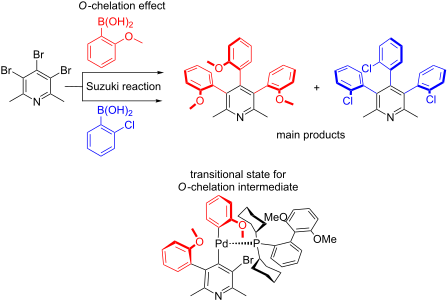
Figure 1: Structures of stereoisomers of 3,4,5-tris(2-methoxyphenyl)-2,6-dimethylpyridines determined by X-ra...
Figure 2: Graphical representation of kinetic, time-dependent 1H NMR analysis of (syn)-7 (100 °C).
Figure 3: Graphical representation of kinetic, time-dependent 1H NMR analysis of (syn)-10 (120 °C).
Figure 4: HT-NMR (300 MHz, DMSO-d6) spectra of A) (syn)-7. B) (syn)-10. Only the upfield (ca. 3.4–4 ppm) regi...
Figure 5: Summary of the results for coupling with ortho-substituted phenylboronic acid for triaryl products.
Figure 6: Summary of results for coupling with ortho-substituted phenylboronic acid for diaryl products.
Figure 7: Proposed intermediates for the 1,2-addition of 5 with methoxy group. A) Oxidative addition step. B)...
Figure 8: Proposed intermediates for the 1,3-addition with methoxy group. A) Oxidative addition step. B) Tran...
Figure 9: Proposed intermediates for the 1,2-addition with chlorine atom. A) Oxidative addition step. B) Tran...
Figure 10: Proposed intermediates for the 1,3-addition with chlorine atom. A) Oxidative addition step. B) Tran...
Beilstein J. Org. Chem. 2018, 14, 2082–2089, doi:10.3762/bjoc.14.182
Graphical Abstract
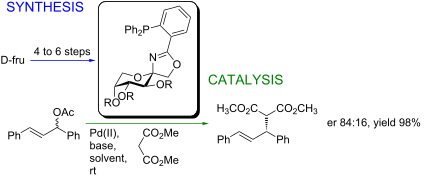
Figure 1: General structure of PHOX ligands 1 and structures of annulated glucosamine-based PHOX and PyOx lig...
Scheme 1: Preparation of 1,2-isopropylidene-protected D-fructose derivatives with different substitution patt...
Scheme 2: Activation of 7 to oxocarbenium ion 9 in the Ritter reaction.
Scheme 3: Zemplén deacetylation of 10i.
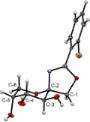
Figure 2: Molecular structure of 10j. Ellipsoids are given at the 50% probability level. Grey = carbon, red =...
Scheme 4: Benzylation of 10j to give 10b.
Scheme 5: Plausible mechanism of the Ritter reaction. For better clarity C-2 is not shown in conformers 9a an...
Scheme 6: Neighboring group participation of ester protective groups. For better clarity C-2 is not shown in ...
Scheme 7: Pd catalyzed Tsuji–Trost reation. BSA: N,O-bis(trimethylsilyl)acetamide, DMM: dimethyl malonate.
Beilstein J. Org. Chem. 2018, 14, 1723–1733, doi:10.3762/bjoc.14.146
Graphical Abstract
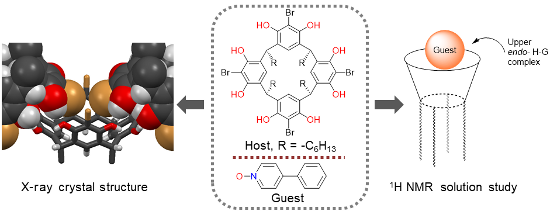
Figure 1: The chemical structures of C-ethyl-2-bromoresorcinarene (BrC2), C-propyl-2-bromoresorcinarene (BrC3...
Figure 2: X-ray crystal structures of (a) 3@BrC6, (b) 4@BrC6, (c) 5@BrC6, (d) 6@BrC6, (e) 7@BrC6, (f) 8@BrC6,...
Figure 3: Comparison of X-ray crystal structures (a) 3@BrC2, (c) 3@BrC3, and (e) 3@BrC6 and their DFT-based o...
Figure 4: (a) The negative potential localised on the N-oxide oxygen in 3@BrC6 and, (b) the positive charge d...
Figure 5: An expansion of the 1H NMR (6.6 mM at 298 K, 500 MHz) of BrC6 complexes with 3. Spectra are produce...
Beilstein J. Org. Chem. 2018, 14, 1704–1722, doi:10.3762/bjoc.14.145
Graphical Abstract
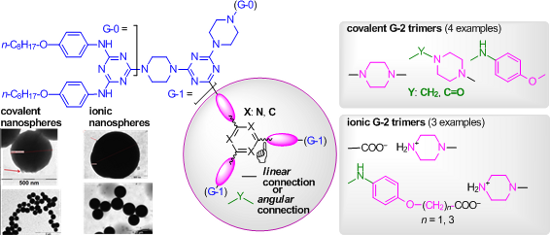
Figure 1: The key elements for design and construction of the targeted G-2 dendrimers.
Scheme 1: Convergent versus divergent three steps (a–c) synthesis of central building blocks C1 and C3.
Scheme 2: Synthesis of G-1 dendrons D-Cl and D-N<P>NH. *As partial conversions of 1 into 2a and 2b based on t...
Scheme 3: Synthesis of G-2 dendrimers 4–6 by m-trimerisations of G-1 dendrons D-Cl and D-N<P>NH.
Scheme 4: Synthesis of G-2 dendrimers 7–9 by m-trimerisations of G-1 dendron D-N<P>NH.
Figure 2: The three terms rotamerism of G-0 dendrons 2a and 3 about the C(s-triazine)–N(exocyclic) partial do...
Figure 3: Comparative details from 1H NMR spectra of G-2 dendrimer 5 (500 MHz, 5.0 mM in DMSO-d6).
Figure 4: Comparative IR spectra (KBr) of compounds 7a vs 7b (a), 7b vs trimesic acid (b), 8 vs C1 (c) and 9 ...
Figure 5: 2D-1H-DOSY NMR charts (DMSO-d6, 500 MHz, 298 K) of compounds 7a, 7b (2.5 mM), 8 and 9 (5.0 mM).
Figure 6: The DFT optimised geometry at M062X/def2-TZVP level of theory of G-2 dendrimer 7a in DMSO (hydrogen...
Figure 7: The DFT optimised geometry at M062X/def2-TZVP level of theory of trimesic tris-carboxylate anion (a...
Figure 8: The DFT optimised geometry at M062X/def2-TZVP level of theory of G-2 dendrimers 8 and 9 in DMSO.
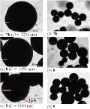
Figure 9: TEM images of homogeneously packed spherical nano-aggregates (a) and their agglomerations (b) in th...
Figure 10: TEM images of homogeneously packed spherical nano-aggregates (a) and their agglomerations (b) in th...
Figure 11: Proposed π-stacking interactions in compounds D-N<P>NH and 5–7a.
Beilstein J. Org. Chem. 2018, 14, 1317–1348, doi:10.3762/bjoc.14.113
Graphical Abstract
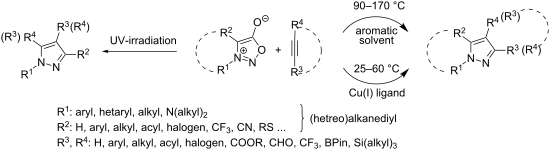
Scheme 1: Thermal reaction of sydnones with symmetrical alkynes.
Scheme 2: Reaction of sydnones with strained cycloalkynes.
Scheme 3: Reaction of sydnones with didehydrobenzenes.
Scheme 4: Formation of isomeric pyrazole dicarboxylates.
Scheme 5: Mechanism of thermal cycloaddition between sydnones and alkynes.
Scheme 6: Mechanism of photochemical reaction of sydnones with symmetrical alkynes.
Scheme 7: HOMO–LUMO diagram for thermal [3 + 2]-cycloaddition of sydnones with alkynes.
Scheme 8: Synthetic strategy leading to 1,2-disubstituted pyrazoles.
Scheme 9: Unsuccessful reaction with phenylpropiolic acid.
Scheme 10: Synthetic strategy leading to 1,4,5-trisubstituted pyrazoles.
Scheme 11: Reaction of sydnones carrying in position 4- six-membered 2-N-heterocyclic ring.
Scheme 12: Strain-promoted sydnone alkyne cycloaddition (SPSAC).
Scheme 13: Synthesis of a key intermediate of niraparib.
Scheme 14: Reaction of sydnones with 1,3-/1,4-benzdiyne equivalents.
Scheme 15: Reaction of sydnones with heterocyclic strained cycloalkynes.
Scheme 16: Mono-copper catalyzed cycloaddition reaction.
Scheme 17: Di-copper catalyzed cycloaddition reaction.
Beilstein J. Org. Chem. 2018, 14, 1120–1180, doi:10.3762/bjoc.14.98
Graphical Abstract
Scheme 1: Tropone (1), tropolone (2) and their resonance structures.
Figure 1: Natural products containing a tropone nucleus.
Figure 2: Possible isomers 11–13 of benzotropone.
Scheme 2: Synthesis of benzotropones 11 and 12.
Scheme 3: Oxidation products of benzotropylium fluoroborate (16).
Scheme 4: Oxidation of 7-bromo-5H-benzo[7]annulene (22).
Scheme 5: Synthesis of 4,5-benzotropone (11) using o-phthalaldehyde (27).
Scheme 6: Synthesis of 4,5-benzotropone (11) starting from oxobenzonorbornadiene 31.
Scheme 7: Acid-catalyzed cleavage of oxo-bridge of 34.
Scheme 8: Synthesis of 4,5-benzotropone (11) from o-xylylene dibromide (38).
Scheme 9: Synthesis of 4,5-benzotropone (11) via the carbene adduct 41.
Scheme 10: Heck coupling strategy for the synthesis of 11.
Scheme 11: Synthesis of benzofulvalenes via carbonyl group of 4,5-benzotropone (11).
Figure 3: Some cycloheptatrienylium cations.
Scheme 12: Synthesis of condensation product 63 and its subsequent oxidative cyclization products.
Figure 4: A novel series of benzo[7]annulenes prepared from 4,5-benzotropone (11).
Scheme 13: Preparation of substituted benzo[7]annulene 72 using the Mukaiyama-Michael reaction.
Figure 5: Possible benzo[7]annulenylidenes 73–75.
Scheme 14: Thermal and photochemical decomposition of 7-diazo-7H-benzo[7]annulene (76) and the trapping of int...
Scheme 15: Synthesis of benzoheptafulvalene 86.
Scheme 16: Synthesis of 7-(diphenylmethylene)-7H-benzo[7]annulene (89).
Scheme 17: Reaction of 4,5-benzotropone (11) with dimethyl diazomethane.
Scheme 18: Synthesis of dihydrobenzomethoxyazocine 103.
Scheme 19: Synthesis and reducibility of benzo-homo-2-methoxyazocines.
Scheme 20: Synthesis of 4,5-benzohomotropones 104 and 115 from 4,5-benzotropones 11 and 113.
Scheme 21: A catalytic deuterogenation of 4,5-benzotropone (11) and synthesis of 5-monosubstituted benzo[7]ann...
Scheme 22: Synthesis of methyl benzo[7]annulenes 131 and 132.
Scheme 23: Ambident reactivity of halobenzo[7]annulenylium cations 133a/b.
Scheme 24: Preparation of benzo[7]annulenylidene–iron complexes 147.
Scheme 25: Synthesis of 1-ethynylbenzotropone (150) and the etheric compound 152 from 4,5-benzotropone (11) wi...
Scheme 26: Thermal decomposition of 4,5-benzotropone (11).
Scheme 27: Reaction of 4,5-benzotropone (11) with 1,2-ethanediol and 1,2-ethanedithiol.
Scheme 28: Conversions of 1-benzosuberone (162) to 2,3-benzotropone (12).
Scheme 29: Synthesis strategies for 2,3-bezotropone (12) using 1-benzosuberones.
Scheme 30: Oxidation-based synthesis of 2,3-benzotropone (12) via 1-benzosuberone (162).
Scheme 31: Synthesis of 2,3-benzotropone (12) from α-tetralone (171) via ring-expansion.
Scheme 32: Preparation of 2,3-benzotropone (12) by using of benzotropolone 174.
Figure 6: Benzoheptafulvenes as condensation products of 2,3-benzotropone (12).
Scheme 33: Conversion of 2,3-benzotropone (12) to tosylhydrazone salt 182 and gem-dichloride 187.
Figure 7: Benzohomoazocines 191–193 and benzoazocines 194–197.
Scheme 34: From 2,3-benzotropone (12) to carbonium ions 198–201.
Scheme 35: Cycloaddition reactions of 2,3-benzotropone (12).
Scheme 36: Reaction of 2,3-benzotropone (12) with various reagents and compounds.
Figure 8: 3,4-Benzotropone (13) and its resonance structure.
Scheme 37: Synthesis of 6,7-benzobicyclo[3.2.0]hepta-3,6-dien-2-one (230).
Figure 9: Photolysis and thermolysis products of 230.
Figure 10: Benzotropolones and their tautomeric structures.
Scheme 38: Synthesis strategies of 4,5-benzotropolone (238).
Scheme 39: Synthesis protocol for 2-hydroxy-4,5-benzotropone (238) using oxazole-benzo[7]annulene 247.
Figure 11: Some quinoxaline and pyrazine derivatives 254–256 prepared from 4,5-benzotropolone (238).
Scheme 40: Nitration product of 4,5-benzotropolone (238) and its isomerization to 1-nitro-naphthoic acid (259)....
Scheme 41: Synthesis protocol for 6-hydroxy-2,3-benzotropone (239) from benzosuberone (162).
Scheme 42: Various reactions via 6-hydroxy-2,3-benzotropone (239).
Scheme 43: Photoreaction of 6-hydroxy-2,3-benzotropone (239).
Scheme 44: Synthesis of 7-hydroxy-2,3-benzotropone (241) from benzosuberone (162).
Scheme 45: Synthesis strategy for 7-hydroxy-2,3-benzotropone (241) from ketone 276.
Scheme 46: Synthesis of 7-hydroxy-2,3-benzotropone (241) from β-naphthoquinone (280).
Scheme 47: Synthesis of 7-hydroxy-2,3-benzotropone (241) from bicyclic endoperoxide 213.
Scheme 48: Synthesis of 7-hydroxy-2,3-benzotropone (241) by ring-closing metathesis.
Figure 12: Various monosubstitution products 289–291 of 7-hydroxy-2,3-benzotropone (241).
Scheme 49: Reaction of 7-hydroxy-2,3-benzotropone (241) with various reagents.
Scheme 50: Synthesis of 4-hydroxy-2,3-benzotropones 174 and 304 from diketones 300/301.
Scheme 51: Catalytic hydrogenation of diketones 300 and 174.
Scheme 52: Synthesis of halo-benzotropones from alkoxy-naphthalenes 306, 307 and 310.
Figure 13: Unexpected byproducts 313–315 during synthesis of chlorobenzotropone 309.
Figure 14: Some halobenzotropones and their cycloadducts.
Scheme 53: Multisep synthesis of 2-chlorobenzotropone 309.
Scheme 54: A multistep synthesis of 2-bromo-benzotropone 26.
Scheme 55: A multistep synthesis of bromo-2,3-benzotropones 311 and 316.
Scheme 56: Oxidation reactions of 8-bromo-5H-benzo[7]annulene (329) with some oxidants.
Scheme 57: Synthesis of 2-bromo-4,5-benzotropone (26).
Scheme 58: Synthesis of 6-chloro-2,3-benzotropone (335) using LiCl and proposed intermediate 336.
Scheme 59: Reaction of 7-bromo-2,3-benzotropone (316) with methylamine.
Scheme 60: Reactions of bromo-2,3-benzotropones 26 and 311 with dimethylamine.
Scheme 61: Reactions of bromobenzotropones 311 and 26 with NaOMe.
Scheme 62: Reactions of bromobenzotropones 26 and 312 with t-BuOK in the presence of DPIBF.
Scheme 63: Cobalt-catalyzed reductive cross-couplings of 7-bromo-2,3-benzotropone (316) with cyclic α-bromo en...
Figure 15: Cycloadduct 357 and its di-π-methane rearrangement product 358.
Scheme 64: Catalytic hydrogenation of 2-chloro-4,5-benzotropone (311).
Scheme 65: Synthesis of dibromo-benzotropones from benzotropones.
Scheme 66: Bromination/dehydrobromination of benzosuberone (162).
Scheme 67: Some transformations of isomeric dibromo-benzotropones 261A/B.
Scheme 68: Transformations of benzotropolone 239B to halobenzotropolones 369–371.
Figure 16: Bromobenzotropolones 372–376 and 290 prepared via bromination/dehydrobromination strategy.
Scheme 69: Synthesis of some halobenzotropolones 289, 377 and 378.
Figure 17: Bromo-chloro-derivatives 379–381 prepared via chlorination.
Scheme 70: Synthesis of 7-iodo-3,4-benzotropolone (382).
Scheme 71: Hydrogenation of bromobenzotropolones 369 and 370.
Scheme 72: Debromination reactions of mono- and dibromides 290 and 375.
Figure 18: Nitratation and oxidation products of some halobenzotropolenes.
Scheme 73: Azo-coupling reactions of some halobenzotropolones 294, 375 and 378.
Figure 19: Four possible isomers of dibenzotropones 396–399.
Figure 20: Resonance structures of tribenzotropone (400).
Scheme 74: Two synthetic pathways for tribenzotropone (400).
Scheme 75: Synthesis of tribenzotropone (400) from dibenzotropone 399.
Scheme 76: Synthesis of tribenzotropone (400) from 9,10-phenanthraquinone (406).
Scheme 77: Synthesis of tribenzotropone (400) from trifluoromethyl-substituted arene 411.
Figure 21: Dibenzosuberone (414).
Figure 22: Reduction products 415 and 416 of tribenzotropone (400).
Figure 23: Structures of tribenzotropone dimethyl ketal 417 and 4-phenylfluorenone (412) and proposed intermed...
Figure 24: Structures of benzylidene- and methylene-9H-tribenzo[a,c,e][7]annulenes 419 and 420 and chiral phos...
Figure 25: Structures of tetracyclic alcohol 422, p-quinone methide 423 and cation 424.
Figure 26: Structures of host molecules 425–427.
Scheme 78: Synthesis of non-helical overcrowded derivatives syn/anti-431.
Figure 27: Hexabenzooctalene 432.
Figure 28: Structures of possible eight isomers 433–440 of naphthotropone.
Scheme 79: Synthesis of naphthotropone 437 starting from 1-phenylcycloheptene (441).
Scheme 80: Synthesis of 10-hydroxy-11H-cyclohepta[a]naphthalen-11-one (448) from diester 445.
Scheme 81: Synthesis of naphthotropone 433.
Scheme 82: Synthesis of naphthotropones 433 and 434 via cycloaddition reaction.
Scheme 83: Synthesis of naphthotropone 434 starting from 452.
Figure 29: Structures of tricarbonyl(tropone)irons 458, and possible cycloadducts 459.
Scheme 84: Synthesis of naphthotropone 436.
Scheme 85: Synthesis of precursor 465 for naphthotropone 435.
Scheme 86: Generation of naphthotropone 435 from 465.
Figure 30: Structures of tropylium cations 469 and 470.
Figure 31: Structures of tropylium ions 471+.BF4−, 472+.BF4−, and 473+.BF4−.
Scheme 87: Synthesis of tropylium ions 471+.BF4− and 479+.ClO4−.
Scheme 88: Synthesis of 1- and 2-methylanthracene (481 and 482) via carbene–carbene rearrangement.
Figure 32: Trapping products 488–490.
Scheme 89: Generation and chemistry of a naphthoannelated cycloheptatrienylidene-cycloheptatetraene intermedia...
Scheme 90: Proposed intermediates and reaction pathways for adduct 498.
Scheme 91: Exited-state intramolecular proton transfer of 505.
Figure 33: Benzoditropones 506 and 507.
Scheme 92: Synthesis of benzoditropone 506e.
Scheme 93: Synthetic approaches for dibenzotropone 507 via tropone (1).
Scheme 94: Formation mechanisms of benzoditropone 507 and 516 via 515.
Scheme 95: Synthesis of benzoditropones 525 and 526 from pyromellitic dianhydride (527).
Figure 34: Possible three benzocyclobutatropones 534–536.
Scheme 96: Synthesis of benzocyclobutatropones 534 and 539.
Scheme 97: Synthesis attempts for benzocyclobutatropone 545.
Scheme 98: Generation and trapping of symmetric benzocyclobutatropone 536.
Scheme 99: Synthesis of chloro-benzocyclobutatropone 552 and proposed mechanism of fluorenone derivatives.
Scheme 100: Synthesis of tropolone analogue 559.
Scheme 101: Synthesis of tropolones 561 and 562.
Figure 35: o/p-Tropoquinone rings (563 and 564) and benzotropoquinones (565–567).
Scheme 102: Synthesis of benzotropoquinone 566.
Scheme 103: Synthesis of benzotropoquinone 567 via a Diels–Alder reaction.
Figure 36: Products 575–577 through 1,2,3-benzotropoquinone hydrate 569.
Scheme 104: Structures 578–582 prepared from tropoquinone 567.
Figure 37: Two possible structures 583 and 584 for dibenzotropoquinone, and precursor compound 585 for 583.
Scheme 105: Synthesis of saddle-shaped ketone 592 using dibenzotropoquinone 584.
Beilstein J. Org. Chem. 2018, 14, 1103–1111, doi:10.3762/bjoc.14.96
Graphical Abstract
Figure 1: Halogenated terpenoids from natural sources.
Scheme 1: Previously developed bromo-functionalizations of polyprenoids using iodine(III) reagents.
Figure 2: Selected monoterpenoids used in this study.
Scheme 2: Dibromination of acyclic monoterpenoids.
Scheme 3: Bromo(trifluoro)acetoxylation of acyclic monoterpenoids.
Scheme 4: Bromohydroxylation of acyclic monoterpenoids.
Scheme 5: Iodo(trifluoro)acetoxylation of acyclic monoterpenoids.
Scheme 6: Chlorination of acyclic monoterpenoids.
Scheme 7: General mechanism proposal for the formation of 2–6 and control experiments.
Beilstein J. Org. Chem. 2018, 14, 1087–1094, doi:10.3762/bjoc.14.94
Graphical Abstract
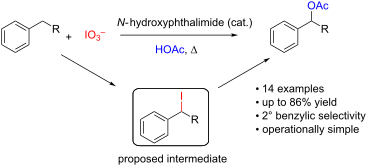
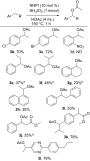
Scheme 1: Hypervalent iodine(III)-induced benzylic C–H functionalization for oxidative coupling with carboxyl...
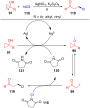
Scheme 2: Radical reactivities of the I(III)–Br bond generated from PIDA.
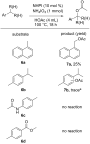
Scheme 3: Benzylic C–H carboxylations by the iodosobenzene/NaBr system.
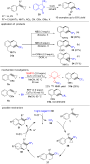
Scheme 4: Outline of the proposed reaction mechanism for the PIDA/NaBr system.
Scheme 5: Reaction of benzyl bromide 2h’ under radical C–H acetoxylation conditions.
Beilstein J. Org. Chem. 2018, 14, 891–899, doi:10.3762/bjoc.14.76
Graphical Abstract
Scheme 1: The Corey–Fuchs reaction.
Scheme 2: Electrochemical reduction of a carbon–halogen bond.
Scheme 3: Electrochemical synthesis of vinyl bromides [25].
Scheme 4: Scope of this work.
Figure 1: Voltammetric curves of 1a 0.020 mol dm−3; Pt, glassy carbon (GC) or Ag cathode. ν = 0.2 V s−1, T = ...
Scheme 5: Possible products from the electrolysis of 2-(2,2-dibromovinyl)naphthalene (1a).
Figure 2: Variation of the amounts of 1a, 2a, and 3a with the number of Faradays of 1a.
Scheme 6: Mechanistic hypothesis for the synthesis of alkyne 2a and bromoalkyne 3a from 2-(2,2-dibromovinyl)n...
Scheme 7: Possible reaction using NaClO4 as supporting electrolyte.
Scheme 8: Electrochemical synthesis of 9-ethyl-3-ethynyl-9H-carbazole (2b).
Scheme 9: Electrochemical synthesis of 1-ethynyl-4-methoxybenzene (2c).
Beilstein J. Org. Chem. 2018, 14, 786–795, doi:10.3762/bjoc.14.66
Graphical Abstract
Scheme 1: Representative pharmaceutically useful indazoles.
Scheme 2: Model Heck reaction of 3-bromo-N-methyl-1H-indazole (1a) and n-butyl acrylate (2a). (173 stainless-...
Figure 1: Investigation of additives in the Heck reaction: 1a (1.5 mmol), 2a (2.25 mmol), Pd(OAc)2 (5 mol %),...
Scheme 3: The control experiments. aTEA (1.8 mmol), silica gel (5.0 g), bPd(OAc)2 (5 mol %), PPh3 (10 mol %),...
Scheme 4: Plausible reaction pathway.
Figure 2: Influence of milling time and rotation speed on the Heck reaction: 1a (1.5 mmol), 2a (2.25 mmol), P...
Figure 3: Influence of the milling ball filling degree with different size on the Heck reaction: 1a (1.5 mmol...
Scheme 5: Examination of the substrate scope. Reaction conditions: 1 (1.5 mmol), 2 (2.25 mmol), Pd(OAc)2 (5 m...
Scheme 6: Synthesis of axitinib by mechanochemical Heck–Migita coupling. Reagents and conditions: (i) NBS, Na...
Beilstein J. Org. Chem. 2018, 14, 688–696, doi:10.3762/bjoc.14.57
Graphical Abstract
Figure 1: Solution-based Wittig reaction mechanism.
Figure 2: 1H NMR spectra of stilbene mixture (a) and benzyl benzoate (b).
Scheme 1: Possible mechanism of benzyl benzoate formation.
Scheme 2: A possible mechanistic explanation for the E selectivity.
Scheme 3: Ball-milled Wittig reaction using excess benzaldehyde.
Figure 3: Comparison of solution based Wittig reaction (a) with polymer-supported mechanochemical Wittig reac...
Scheme 4: Stepwise ball-milled Wittig reaction with ethanol as the LAG solvent.
Scheme 5: Stepwise ball-milled Wittig reaction with ethanol evaporation between the steps.
Beilstein J. Org. Chem. 2018, 14, 523–530, doi:10.3762/bjoc.14.38
Graphical Abstract
Figure 1: Acid strength (pKa) of various organic acids in acetonitrile or water (nr = not reported) [12-14].
Figure 2: Examples of functional molecules containing an N-triflylbenzamide.
Scheme 1: Synthesis of the strongly acidic benzamide derivatives.
Scheme 2: SNAr reactions of fluoro-substituted benzamide derivatives.
Scheme 3: Cross-coupling reactions of N-triflylbenzoic acid derivatives.
Scheme 4: Hydrolysis rates of the 4-bromobenzoic acid derivatives.
Figure 3: Content (percent) of super acids (0.5 mg/mL) over time (hours) in H3PO4/H2O/MeOH 17:3:20 at 50 °C.
Beilstein J. Org. Chem. 2018, 14, 345–353, doi:10.3762/bjoc.14.22
Graphical Abstract
Scheme 1: One-pot preparation of 4-aryl-3-bromocoumarins 3 from 3-aryl-2-propynoic acids 1 with diphenyliodon...
Scheme 2: One-pot preparation of 3-bromo-4-phenylcoumarins 3a from 3-phenyl-2-propynoic acid (1a) with daryli...
Scheme 3: Derivatization of 3-bromo-4-phenylcoumarin.
Figure 1: ORTEP of 3-bromo-7-chloro-4-phenylcoumarin (3Da).
Scheme 4: Possible reaction pathway.
Beilstein J. Org. Chem. 2017, 13, 2915–2921, doi:10.3762/bjoc.13.284
Graphical Abstract
Scheme 1: Relative reactivity of α-fluoroacetophenone to α-chloroacetophenone and α-bromoacetophenone.
Scheme 2: Competitive reduction of haloacetophenones and acetophenone.
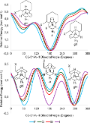
Figure 1: Conformational energy profiles of halogenated acetophenones (a) in gas phase; (b) in EtOH; (c) over...
Figure 2: Optimised gas phase geometries of (a) α-fluoroacetophenone and (b) α-chloroacetophenone emphasising...
Figure 3: Most stable conformations of (a) α-fluoroacetophenone and (b) α-chloroacetophenone in ethanol.
Figure 4: Expected reactive conformation of halo-acetophenones.
Figure 5: Orbital interactions in gauche- and cis-conformations of haloacetophenones.
Figure 6: Variation of dipole moment with angle for haloacetophenones.
Figure 7: Highest energy conformation of fluoroacetophenone, emphasizing the closeness of approach of fluorin...
Scheme 3: Competitive reduction of fluoroacetone and chloroacetone.
Figure 8: Conformational energy profiles of halogenated acetones in gas phase and in MeOH.
Figure 9: Overlay of conformational energy profiles of fluoroacetone and fluoroacetophenone.
Beilstein J. Org. Chem. 2017, 13, 2764–2799, doi:10.3762/bjoc.13.272
Graphical Abstract
Scheme 1: Trifluoromethylation of enol acetates by Langlois.
Scheme 2: Trifluoromethylation of (het)aryl enol acetates.
Scheme 3: Mechanism for the trifluoromethylation of enol acetates.
Scheme 4: Oxidative trifluoromethylation of unactivated olefins and mechanistic pathway.
Scheme 5: Oxidative trifluoromethylation of acetylenic substrates.
Scheme 6: Metal free trifluoromethylation of styrenes.
Scheme 7: Synthesis of α-trifluoromethylated ketones by oxytrifluoromethylation of heteroatom-functionalised ...
Scheme 8: Catalysed photoredox trifluoromethylation of vinyl azides.
Scheme 9: Oxidative difunctionalisation of alkenyl MIDA boronates.
Scheme 10: Synthesis of β-trifluoromethyl ketones from cyclopropanols.
Scheme 11: Aryltrifluoromethylation of allylic alcohols.
Scheme 12: Cascade multicomponent synthesis of nitrogen heterocycles via azotrifluoromethylation of alkenes.
Scheme 13: Photocatalytic azotrifluoromethylation of alkenes with aryldiazonium salts and CF3SO2Na.
Scheme 14: Copper-promoted intramolecular aminotrifluoromethylation of alkenes with CF3SO2Na.
Scheme 15: Oxytrifluoromethylation of alkenes with CF3SO2Na and hydroxamic acid.
Scheme 16: Manganese-catalysed oxytrifluoromethylation of styrene derivatives.
Scheme 17: Oxytrifluoromethylation of alkenes with NMP/O2 and CF3SO2Na.
Scheme 18: Intramolecular oxytrifluoromethylation of alkenes.
Scheme 19: Hydrotrifluoromethylation of styrenyl alkenes and unactivated aliphatic alkenes.
Scheme 20: Hydrotrifluoromethylation of electron-deficient alkenes.
Scheme 21: Hydrotrifluoromethylation of alkenes by iridium photoredox catalysis.
Scheme 22: Iodo- and bromotrifluoromethylation of alkenes by CF3SO2Na/I2O5 or CF3SO2Na / NaBrO3.
Scheme 23: N-methyl-9-mesityl acridinium and visible-light-induced chloro-, bromo- and SCF3 trifluoromethylati...
Scheme 24: Carbotrifluoromethylation of N-arylacrylamides with CF3SO2Na / TBHP by Lipshutz.
Scheme 25: Carbotrifluoromethylation of N-arylacrylamides with CF3SO2Na/TBHP reported by Lei.
Scheme 26: Carbotrifluoromethylation of N-arylacrylamides with CF3SO2Na/(NH4)2S2O8.
Scheme 27: Metal-free carbotrifluoromethylation of N-arylacrylamides with CF3SO2Na/K2S2O8 reported by Wang.
Scheme 28: Metal-free carbotrifluoromethylation of N-arylacrylamides with CF3SO2Na/PIDA reported by Fu.
Scheme 29: Metal-free cascade trifluoromethylation/cyclisation of N-arylmethacrylamides (a) and enynes (b) wit...
Scheme 30: Trifluoromethylation/cyclisation of N-arylcinnamamides: Synthesis of 3,4-disubstituted dihydroquino...
Scheme 31: Trifluoromethylation/cyclisation of aromatic-containing unsaturated ketones.
Scheme 32: Chemo- and regioselective cascade trifluoromethylation/heteroaryl ipso-migration of unactivated alk...
Scheme 33: Copper-mediated 1,2-bis(trifluoromethylation) of alkenes.
Scheme 34: Trifluoromethylation of aromatics with CF3SO2Na reported by Langlois.
Scheme 35: Baran’s oxidative C–H trifluoromethylation of heterocycles.
Scheme 36: Trifluoromethylation of acetanilides and anilines.
Scheme 37: Trifluoromethylation of heterocycles in water.
Scheme 38: Trifluoromethylation of coumarins in a continuous-flow reactor.
Scheme 39: Oxidative trifluoromethylation of coumarins, quinolines and pyrimidinones.
Scheme 40: Oxidative trifluoromethylation of pyrimidinones and pyridinones.
Scheme 41: Phosphovanadomolybdic acid-catalysed direct C−H trifluoromethylation.
Scheme 42: Oxidative trifluoromethylation of imidazopyridines and imidazoheterocycles.
Scheme 43: Oxidative trifluoromethylation of imidazoheterocycles and imidazoles in ionic liquid/water.
Scheme 44: Oxidative trifluoromethylation of 8-aminoquinolines.
Scheme 45: Oxidative trifluoromethylation of various 8-aminoquinolines using the supported catalyst CS@Cu(OAc)2...
Scheme 46: Oxidative trifluoromethylation of the naphthylamide 70.
Scheme 47: Oxidative trifluoromethylation of various arenes in the presence of CF3SO2Na and sodium persulfate.
Scheme 48: Trifluoromethylation of electron-rich arenes and unsymmetrical biaryls with CF3SO2Na in the presenc...
Figure 1: Trifluoromethylated coumarin and flavone.
Scheme 49: Metal-free trifluoromethylation catalysed by a photoredox organocatalyst.
Scheme 50: Quinone-mediated trifluoromethylation of arenes and heteroarenes.
Scheme 51: Metal- and oxidant-free photochemical trifluoromethylation of arenes.
Scheme 52: Copper-mediated trifluoromethylation of arenediazonium tetrafluoroborates.
Scheme 53: Oxidative trifluoromethylation of aryl- and heteroarylboronic acids.
Scheme 54: Oxidative trifluoromethylation of aryl- and vinylboronic acids.
Scheme 55: Oxidative trifluoromethylation of unsaturated potassium organotrifluoroborates.
Scheme 56: Oxidative trifluoromethylation of (hetero)aryl- and vinyltrifluoroborates.
Scheme 57: Copper−catalysed decarboxylative trifluoromethylation of cinnamic acids.
Scheme 58: Iron-mediated decarboxylative trifluoromethylation of α,β-unsaturated carboxylic acids.
Scheme 59: Cu/Ag-catalysed decarboxylative trifluoromethylation of cinnamic acids.
Scheme 60: I2O5-Promoted decarboxylative trifluoromethylation of cinnamic acids.
Scheme 61: Silver(I)-catalysed denitrative trifluoromethylation of β-nitrostyrenes.
Scheme 62: Copper-catalysed direct trifluoromethylation of styrene derivatives.
Scheme 63: Transition-metal-free synthesis of β-trifluoromethylated enamines.
Scheme 64: I2O5-mediated iodotrifluoromethylation of alkynes.
Scheme 65: Silver-catalysed tandem trifluoromethylation/cyclisation of aryl isonitriles.
Scheme 66: Photoredox trifluoromethylation of 2-isocyanobiphenyls.
Scheme 67: Trifluoromethylation of potassium alkynyltrifluoroborates with CF3SO2Na.
Scheme 68: N-trifluoromethylation of nitrosoarenes with CF3SO2Na (SQ: semiquinone).
Scheme 69: Trifluoromethylation of disulfides with CF3SO2Na.
Scheme 70: Trifluoromethylation of thiols with CF3SO2Na/I2O5.
Scheme 71: Electrophilic trifluoromethylsulfenylation by means of CF3SO2Na/(EtO)2P(O)H/CuCl/DMSO.
Scheme 72: Electrophilic trifluoromethylsulfenylation by means of CF3SO2Na/(EtO)2P(O)H/TMSCl.
Scheme 73: Electrophilic trifluoromethylsulfenylation by means of CF3SO2Na/PPh3/N-chlorophthalimide.
Scheme 74: Electrophilic trifluoromethylsulfenylation by means of CF3SO2Na/PCl3.
Scheme 75: Electrophilic trifluoromethylsulfenylation by means of CF3SO2Na/PCl3.
Scheme 76: Trifluoromethylsulfenylation of aryl iodides with in situ generated CuSCF3 (DMI: 1,3-dimethyl-2-imi...
Scheme 77: Pioneering trifluoromethylsulfinylation of N, O, and C-nucleophiles.
Scheme 78: Trifluoromethylsulfinylation of (1R,2S)-ephedrine (Im: imidazole; DIEA: N,N-diisopropylethylamine).
Scheme 79: Trifluoromethylsulfinylation of substituted benzenes with CF3SO2Na/CF3SO3H.
Scheme 80: Trifluoromethylsulfinylation of indoles with CF3SO2Na/P(O)Cl3.
Scheme 81: Trifluoromethylsulfinylation of indoles with CF3SO2Na/PCl3.
Scheme 82: Formation of triflones from benzyl bromides (DMA: dimethylacetamide).
Scheme 83: Formation of α-trifluoromethylsulfonyl ketones, esters, and amides.
Scheme 84: Allylic trifluoromethanesulfonylation of aromatic allylic alcohols.
Scheme 85: Copper-catalysed couplings of aryl iodonium salts with CF3SO2Na.
Scheme 86: Palladium-catalysed trifluoromethanesulfonylation of aryl triflates and chlorides with CF3SO2Na.
Scheme 87: Copper-catalysed coupling of arenediazonium tetrafluoroborates with CF3SO2Na.
Scheme 88: Synthesis of phenyltriflone via coupling of benzyne with CF3SO2Na.
Scheme 89: Synthesis of 1-trifluoromethanesulfonylcyclopentenes from 1-alkynyl-λ3-bromanes and CF3SO2Na.
Scheme 90: One-pot synthesis of functionalised vinyl triflones.
Scheme 91: Regioselective synthesis of vinyltriflones from styrenes.
Scheme 92: Trifluoromethanesulfonylation of alkynyl(phenyl) iodonium tosylates by CF3SO2Na.
Scheme 93: Synthesis of thio- and selenotrifluoromethanesulfonates.
Beilstein J. Org. Chem. 2017, 13, 2486–2501, doi:10.3762/bjoc.13.246
Graphical Abstract
Scheme 1: Some previously reported iodine(III) dichlorides relevant to this work.
Scheme 2: Syntheses of fluorous compounds of the formula RfnCH2X.
Scheme 3: Syntheses of fluorous compounds of the formula CF3CF2CF2O(CF(CF3)CF2O)xCF(CF3)CH2X'.
Scheme 4: Attempted syntheses of aliphatic fluorous iodine(III) dichlorides RfnICl2.
Scheme 5: Syntheses of aromatic fluorous compounds with one perfluoroalkyl group.
Scheme 6: Syntheses of aromatic fluorous compounds with two perfluoroalkyl groups.
Figure 1: Partial 1H NMR spectra (sp2 CH, 500 MHz, CDCl3) relating to the reaction of 1,3,5-(Rf6)2C6H3I and Cl...
Figure 2: Two views of the molecular structure of 1,3,5-(Rf6)2C6H3I with thermal ellipsoids at the 50% probab...
Figure 3: Ball-and-stick and space filling representations of the unit cell of 1,3,5-(Rf6)2C6H3I.
Figure 4: Free energies of chlorination of relevant aryl and alkyl iodides to the corresponding iodine(III) d...
Scheme 7: Other relevant fluorous compounds and reactions.
Figure 5: Views of the helical motif of the perfluorohexyl segments in crystalline 1,3,5-(Rf6)2C6H3I (left) a...
Beilstein J. Org. Chem. 2017, 13, 2352–2363, doi:10.3762/bjoc.13.232
Graphical Abstract
Scheme 1: Synthetic procedures for preparation of p-halogen-substituted and non-substituted phenyl-1,2,3-tria...
Figure 1: Experimental Raman spectra of the alkyne 4 and triazole products 5–8. Bands attributed to the vibra...
Figure 2: In situ Raman monitoring of a) mechanochemical formation of triazole 5 using copper(II) acetate mon...
Figure 3: a) In situ Raman monitoring for mechanochemical synthesis of 5 using brass balls and PMMA reaction ...
Figure 4: ESR spectra of samples obtained after milling by methods 2a (black), 2b (red) and 2c (blue). The in...
Figure 5: X-ray structure of the triazole compounds. (a) Molecular structure of 5, with the atom-numbering sc...
Beilstein J. Org. Chem. 2017, 13, 2310–2315, doi:10.3762/bjoc.13.227
Graphical Abstract
Scheme 1: Synthesis of diosgenyl 2-amino-2-deoxy-β-D-galactopyranoside (4).
Figure 1: Derivatives of diosgenyl glycosides 5–13.
Beilstein J. Org. Chem. 2017, 13, 2186–2213, doi:10.3762/bjoc.13.219
Graphical Abstract
Figure 1: Summary of the synthetic routes to prepare phosphonic acids detailed in this review. The numbers in...
Figure 2: Chemical structure of dialkyl phosphonate, phosphonic acid and illustration of the simplest phospho...
Figure 3: Illustration of some phosphonic acid exhibiting bioactive properties. A) Phosphonic acids for biome...
Figure 4: Illustration of the use of phosphonic acids for their coordination properties and their ability to ...
Figure 5: Hydrolysis of dialkyl phosphonate to phosphonic acid under acidic conditions.
Figure 6: Examples of phosphonic acids prepared by hydrolysis of dialkylphosphonate with HCl 35% at reflux (16...
Figure 7: A) and B) Observation of P–C bond breaking during the hydrolysis of phosphonate with concentrated H...
Figure 8: Mechanism of the hydrolysis of dialkyl phosphonate with HCl in water.
Figure 9: Hydrolysis of bis-tert-butyl phosphonate 28 into phosphonic acid 29 [137].
Figure 10: A) Hydrolysis of diphenyl phosphonate into phosphonic acid in acidic media. B) Examples of phosphon...
Figure 11: Suggested mechanism occurring for the first step of the hydrolysis of diphenyl phosphonate into pho...
Figure 12: A) Hydrogenolysis of dibenzyl phosphonate to phosphonic acid. B) Compounds 33, 34 and 35 were prepa...
Figure 13: A) Preparation of phosphonic acid from diphenyl phosphonate with the Adam’s catalyst. B) Compounds ...
Figure 14: Suggested mechanism for the preparation of phosphonic acid from dialkyl phosphonate using bromotrim...
Figure 15: A) Reaction of the phosphonate-thiophosphonate 37 with iodotrimethylsilane followed by methanolysis...
Figure 16: Synthesis of hydroxymethylenebisphosphonic acid by reaction of tris(trimethylsilyl) phosphite with ...
Figure 17: Synthesis of the phosphonic acid disodium salt 48 by reaction of mono-hydrolysed phosphonate 47 wit...
Figure 18: Phosphonic acid synthesized by the sequence 1) bromotrimethylsilane 2) methanolysis or hydrolysis. ...
Figure 19: Polyphosphonic acids and macromolecular compounds prepared by the hydrolysis of dialkyl phosphonate...
Figure 20: Examples of organometallic complexes functionalized with phosphonic acids that were prepared by the...
Figure 21: Side reaction observed during the hydrolysis of methacrylate monomer functionalized with phosphonic...
Figure 22: Influence of the reaction time during the hydrolysis of compound 76.
Figure 23: Dealkylation of dialkyl phosphonates with boron tribromide.
Figure 24: Dealkylation of diethylphosphonate 81 with TMS-OTf.
Figure 25: Synthesis of substituted phenylphosphonic acid 85 from the phenyldichlorophosphine 83.
Figure 26: Hydrolysis of substituted phenyldichlorophosphine oxide 86 under basic conditions.
Figure 27: A) Illustration of the synthesis of chiral phosphonic acids from phosphonodiamides. B) Examples of ...
Figure 28: A) Illustration of the synthesis of the phosphonic acid 98 from phosphonodiamide 97. B) Use of cycl...
Figure 29: Synthesis of tris(phosphonophenyl)phosphine 109.
Figure 30: Moedritzer–Irani reaction starting from A) primary amine or B) secondary amine. C) Examples of phos...
Figure 31: Phosphonic acid-functionalized polymers prepared by Moedritzer–Irani reaction.
Figure 32: Reaction of phosphorous acid with imine in the absence of solvent.
Figure 33: A) Reaction of phosphorous acid with nitrile and examples of aminomethylene bis-phosphonic acids. B...
Figure 34: Reaction of carboxylic acid with phosphorous acid and examples of compounds prepared by this way.
Figure 35: Synthesis of phosphonic acid by oxidation of phosphinic acid (also identified as phosphonous acid).
Figure 36: Selection of reaction conditions to prepare phosphonic acids from phosphinic acids.
Figure 37: Synthesis of phosphonic acid from carboxylic acid and white phosphorus.
Figure 38: Synthesis of benzylphosphonic acid 136 from benzaldehyde and red phosphorus.
Figure 39: Synthesis of graphene phosphonic acid 137 from graphite and red phosphorus.
Beilstein J. Org. Chem. 2017, 13, 2094–2114, doi:10.3762/bjoc.13.207
Graphical Abstract
Scheme 1: a) Traditional glycosylation typically employs the premixed approach with both the donor and the ac...
Scheme 2: Glycosylation of an unreactive substrate. Reagents and conditions: (a) Tf2O, −78 °C, CH2Cl2 (DCM), ...
Scheme 3: Bromoglycoside-mediated glycosylation.
Scheme 4: Glycosyl bromide-mediated selenoglycosyl donor-based iterative glycosylation. Reagents and conditio...
Scheme 5: Preactivation-based glycosylation using 2-pyridyl glycosyl donors.
Scheme 6: Chemoselective dehydrative glycosylation. Reagents and conditions: (a) Ph2SO, Tf2O, 2-chloropyridin...
Figure 1: Representative structures of products formed by the preactivation-based dehydrative glycosylation o...
Scheme 7: Possible mechanism for the dehydrative glycosylation. (a) Formation of diphenyl sulfide bis(triflat...
Scheme 8: Chemoselective iterative dehydrative glycosylation. Reagents and conditions: (a) Ph2SO, Tf2O, 2,4,6...
Scheme 9: Chemoselective iterative dehydrative glycosylation. Reagents and conditions: (a) Ph2SO, Tf2O, −40 °...
Scheme 10: Chemical synthesis of a hyaluronic acid (HA) trimer 47. Reagents and conditions: (a) Ph2SO, TTBP, CH...
Figure 2: Retrosynthetic analysis of pentasaccharide 48.
Scheme 11: Effects of anomeric leaving groups on glycosylation outcomes. Reagents and conditions: (a) Ph2SO, Tf...
Scheme 12: Reactivity-based one-pot chemoselective glycosylation.
Scheme 13: Preactivation-based iterative glycosylation of thioglycosides.
Scheme 14: BSP/Tf2O promoted synthesis of 75.
Scheme 15: Proposed mechanism for preactivation-based glycosylation strategy.
Figure 3: The preactivations of glycosyl donors 83, 85 and 87 were investigated by low temperature NMR, which...
Scheme 16: The more electron-rich glycosyl donor 91 gave a higher glycosylation yield than the glycosyl donor ...
Scheme 17: Comparison of the BSP/Tf2O and p-TolSCl/AgOTf promoter systems in facilitating the preactivation-ba...
Scheme 18: One-pot synthesis of Globo-H hexasaccharide 105 using building blocks 101, 102, 103 and 104.
Scheme 19: Synthesis of (a) oligosaccharides 109–113 towards (b) 30-mer galactan 115. Reagents and conditions:...
Figure 4: Structure of mycobacterial arabinogalactan 116.
Figure 5: Representative complex glycans from glycolipid family synthesized by the preactivation-based thiogl...
Figure 6: Representative microbial and mammalian oligosaccharides synthesized by the preactivation-based thio...
Figure 7: Some representative mammalian oligosaccharides synthesized by the preactivation-based thioglycoside...
Figure 8: Preparation of a heparan sulfate oligosaccharides library.
Scheme 20: Synthesis of oligo-glucosamines through electrochemical promoted preactivation-based thioglycoside ...
Scheme 21: Synthesis of 2-deoxyglucosides through preactivation. Reagents and conditions: a) AgOTf, p-TolSCl, ...
Scheme 22: Synthesis of tetrasaccharide 153. Reagents and conditions: (a) AgOTf, p-TolSCl, CH2Cl2, −78 °C; the...
Scheme 23: Aglycon transfer from a thioglycosyl acceptor to an activated donor can occur during preactivation-...