Search results
Search for "crystals" in Full Text gives 668 result(s) in Beilstein Journal of Organic Chemistry. Showing first 200.
Cascade intramolecular Prins/Friedel–Crafts cyclization for the synthesis of 4-aryltetralin-2-ols and 5-aryltetrahydro-5H-benzo[7]annulen-7-ols
Beilstein J. Org. Chem. 2021, 17, 1481–1489, doi:10.3762/bjoc.17.104
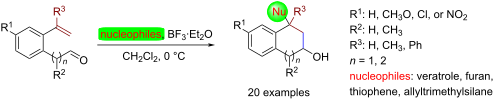
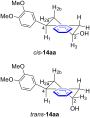
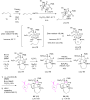
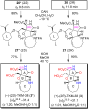
- configuration assignment made by NMR analysis, the sulfonate derivative 21 from 14af was prepared by reaction with tosyl chloride. For compound 21, we were able to obtain single crystals suitable for X-ray analysis and the X-ray diffraction studies on 21 confirmed undoubtedly its trans-configuration. The ORTEP




Co-crystallization of an organic solid and a tetraaryladamantane at room temperature
Beilstein J. Org. Chem. 2021, 17, 1476–1480, doi:10.3762/bjoc.17.103
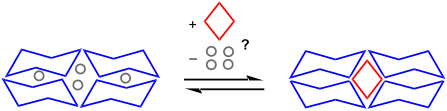
- that do not readily crystallize by themselves. The co-crystals are often useful for structure elucidation. Usually, the small molecules are encapsulated in the crystal lattice of the aryladamantane that forms during rapid thermal crystallization. Thus far, co-crystallization has been limited to liquids
- as guest molecules. Here we report the co-crystal structures of phenol, which is solid at room temperature, with both 1,3,5,7-tetrakis(2,4-dimethoxyphenyl)adamantane (TDA) and 1,3,5,7-tetrakis(2,4-diethoxyphenyl)adamantane (TEO). The co-crystals were obtained from solutions in dichloromethane by slow
- evaporation or diffusion. The implications for generating other co-crystals of two solids are briefly discussed. Keywords: adamantanes; crystallization; organic solids; structure elucidation; X-ray crystallography; Introduction Obtaining a crystal suitable for X-ray crystallography can be a challenge for


Total synthesis of ent-pavettamine
Beilstein J. Org. Chem. 2021, 17, 1440–1446, doi:10.3762/bjoc.17.99
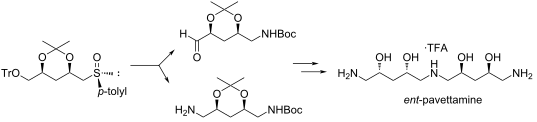
- close to the OTBS center. At this point, it was crucial to conclusively characterize the unexpected product 9. Fortuitously, we were able to obtain crystals for this compound after several recrystallization attempts. The crystal structure for 9 (Figure 2) very surprisingly showed the OTBS group on the


A new glance at the chemosphere of macroalgal–bacterial interactions: In situ profiling of metabolites in symbiosis by mass spectrometry
Beilstein J. Org. Chem. 2021, 17, 1313–1322, doi:10.3762/bjoc.17.91
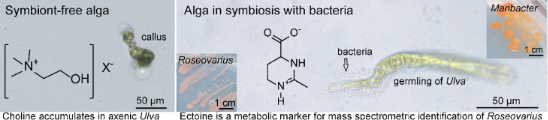
- Information File 1). Even though most of the seawater media was removed from the Ulva samples during sample preparation, crystallisation of seawater salts on the sample surface occurred. The size of the crystals and their distribution within an imaged area were examined using a digital microscope and found to
- be homogeneous and consistent across the samples and experiments. As a result, the ion suppression effect caused by the presence of seawater crystals on the Ulva samples and surroundings was consistent across all measurements (Supporting Information File 1, Figures S1 and S2). Ectoine was detected in


Structural effects of meso-halogenation on porphyrins
Beilstein J. Org. Chem. 2021, 17, 1149–1170, doi:10.3762/bjoc.17.88
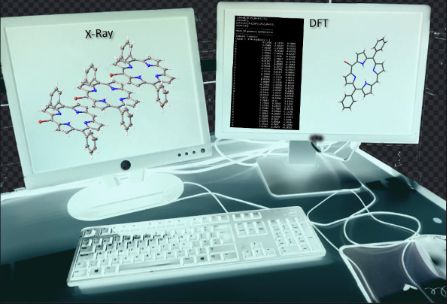
- formation of the crystal networks. This is complemented with the use of density functional theory (DFT) calculation of structures that have currently not been determined due to difficulties of obtained crystals of sufficient quality for X-ray determination. Additionally, DFT calculations were conducted for
- pressure. The residue was filtered through silica gel using DCM. Column chromatography was performed through silica gel (hexane/DCM, 15:1–2:1, v/v). Further column chromatography was carried out on silica gel (hexane/DCM, 15:1–1:1, v/v) yielding the purple solid 4 (51 mg, 51%). To obtain single crystals
- , recrystallization from DCM and methanol was performed and gave purple crystals of the title compound. Mp > 300 °C; Rf = 0.48 (SiO2, hexane/DCM, 2:1, v/ v); 1H NMR (400 MHz, CDCl3) δ −2.69 (s, 2H, NH), −2.72 (s, 6H, CH3), 7.57 (d, 3J = 7.7 Hz, 4H, Hm-tolyl), 7.72–7.79 (m, 3H, Hm-phenyl and Hp-phenyl), 8.08 (d, 3J


Beyond ribose and phosphate: Selected nucleic acid modifications for structure–function investigations and therapeutic applications
Beilstein J. Org. Chem. 2021, 17, 908–931, doi:10.3762/bjoc.17.76




Effective microwave-assisted approach to 1,2,3-triazolobenzodiazepinones via tandem Ugi reaction/catalyst-free intramolecular azide–alkyne cycloaddition
Beilstein J. Org. Chem. 2021, 17, 678–687, doi:10.3762/bjoc.17.57
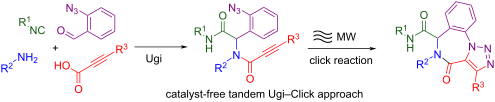
- Maryna O. Mazur Oleksii S. Zhelavskyi Eugene M. Zviagin Svitlana V. Shishkina Vladimir I. Musatov Maksim A. Kolosov Elena H. Shvets Anna Yu. Andryushchenko Valentyn A. Chebanov Division of Chemistry of Functional Materials, State Scientific Institution “Institute for Single Crystals” of National


Synthesis, structural characterization, and optical properties of benzo[f]naphtho[2,3-b]phosphoindoles
Beilstein J. Org. Chem. 2021, 17, 671–677, doi:10.3762/bjoc.17.56
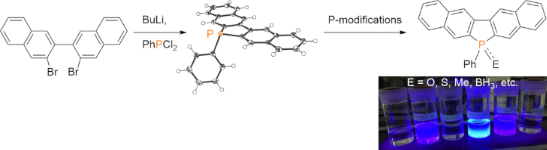
- shift for P-modified phospholes 3–7 (δ = 22.5−39.3 ppm) relative to that of the parent compound 2 (δ = −13.27 ppm). These results suggest that the electron densities of the latter were reduced in comparison to that of 2. Single crystals of 2 suitable for X-ray analysis were obtained by repeated


Menthyl esterification allows chiral resolution for the synthesis of artificial glutamate analogs
Beilstein J. Org. Chem. 2021, 17, 540–550, doi:10.3762/bjoc.17.48
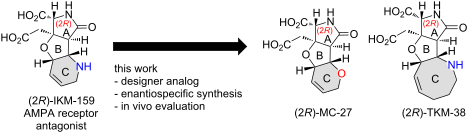
- ) [10][11][12]. Since 10 was obtained as crystals, the configurational analysis was thereafter confirmed by single-crystal X-ray analysis, as shown in Figure 4. The conformational differences for 10 between the results of the calculations and the analysis of the NMR data compared to the situation in the
- crystal are arising from the four contiguous single bonds between the heterocycle and the menthyl group. These take a stable extended conformation in the calculations and in the NMR experiment, whereas a rather folded conformation is taken in the crystals. Such a discrepancy is often observed and reported








Synthesis and physicochemical evaluation of fluorinated lipopeptide precursors of ligands for microbubble targeting
Beilstein J. Org. Chem. 2021, 17, 511–518, doi:10.3762/bjoc.17.45
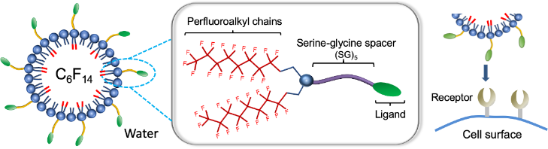
- less effective for emulsifying liquid crystals than those with an even number of carbons [44]. The behavior of the hydrocarbon lipopeptide 4 was markedly different, with a decrease of the surface pressure over time, and a much lower πeq. This not only means that the hydrocarbon analog is not recruited


Biochemistry of fluoroprolines: the prospect of making fluorine a bioelement
Beilstein J. Org. Chem. 2021, 17, 439–460, doi:10.3762/bjoc.17.40
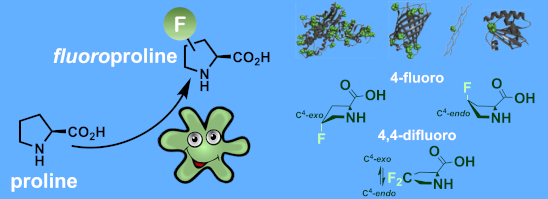
- ten proline positions [117]. The incorporation of R-Flp resulted in an insoluble protein, indicating associated folding issues. In contrast, the protein containing S-Flp produced a well-structured fluorescent protein, exhibiting faster folding kinetics and producing crystals suitable for diffraction


Annulation of a 1,3-dithiole ring to a sterically hindered o-quinone core. Novel ditopic redox-active ligands
Beilstein J. Org. Chem. 2021, 17, 273–282, doi:10.3762/bjoc.17.26
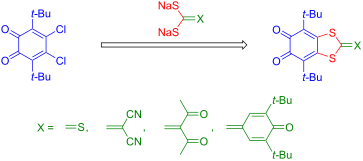
- -2-thione species 6a in a high yield (Scheme 1, route 2). The red color of the reaction mixture belonging to the parent o-quinone rapidly turns into a brown color of o-quinone 6a. o-Quinone 6a was isolated as red-brown crystals by cooling the acetone/ether mixture. It is a structural analogue of o
- was discussed previously [29]. The reaction of 4 with malononitrile-derived gem-dithiolate (5b, Scheme 1, route 2) also proceeded under mild conditions in DMF and bicyclic o-quinone 6b was obtained in a good yield. The brown crystals suitable for X-ray analysis were grown from an acetone/diethyl ether
- . Heating the mixture at 60 °C for 4 h does not result in any change of the color from that characteristic of o-quinone 4. After cooling of the solution red crystals of adduct 8 were isolated (see Figure 2 and Figure S6 in Supporting Information File 1). The X-ray diffraction study reveals that adduct 8 is


1,2,3-Triazoles as leaving groups in SNAr–Arbuzov reactions: synthesis of C6-phosphonated purine derivatives
Beilstein J. Org. Chem. 2021, 17, 193–202, doi:10.3762/bjoc.17.19
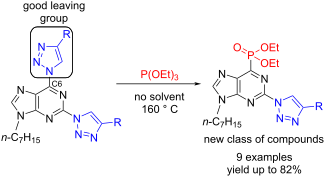
- , the solution was cooled to room temperature, hexane (40 mL) was added, and the mixture was left in the freezer (−20 °C) for 10 h. The precipitated colorless crystals of 2a were filtered and washed with cold hexane (4 × 5 mL). Colorless crystals (1.15 g, 82%). mp 57–59 °C; IR ν̃max (cm−1): 2924, 2858


Au(III) complexes with tetradentate-cyclam-based ligands
Beilstein J. Org. Chem. 2021, 17, 186–192, doi:10.3762/bjoc.17.18
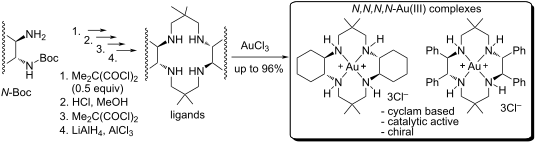
- , due to sample decomposition. Attempts to obtain crystals for X-ray analysis by slow diffusion of n-pentane into a DCM solution of the complexes were unsuccessful. Catalytic activity For evaluation of the catalytic ability of the new Au(III) complexes, alkyne carboalkoxylation [47][48] and


Tuning the solid-state emission of liquid crystalline nitro-cyanostilbene by halogen bonding
Beilstein J. Org. Chem. 2021, 17, 124–131, doi:10.3762/bjoc.17.13
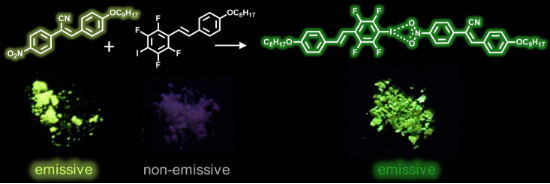
- Subrata Nath Alexander Kappelt Matthias Spengler Bibhisan Roy Jens Voskuhl Michael Giese Organic Chemistry, University of Duisburg Essen, Universitätsstraße 7, 45141 Essen, Germany 10.3762/bjoc.17.13 Abstract The first example of halogen-bonded fluorescent liquid crystals based on the interaction
- supramolecular liquid crystals, especially hydrogen bonding and halogen bonding have gained considerable attention [3][4][5][6][7]. In 2004, Bruce and co-workers reported the first example of a halogen-bonded liquid crystal based on pentafluoroiodobenzene and 4-alkoxystilbazole [5]. Ever since, several other
- fluorine substitution of the aromatic halogen bond donor on the liquid crystallinity and the photo-response of halogen-bonded liquid crystals [12]. However, all reported halogen-bonded liquid crystals rely on the halogen-bond-acceptor capability of pyridyl units and so far, no study on the fluorescence






Control over size, shape, and photonics of self-assembled organic nanocrystals
Beilstein J. Org. Chem. 2021, 17, 42–51, doi:10.3762/bjoc.17.5
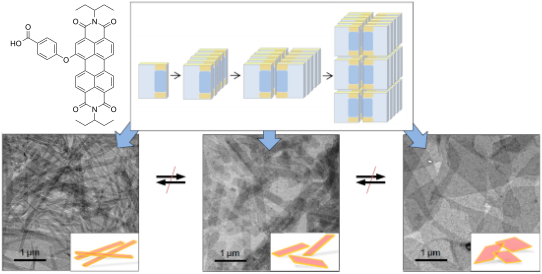
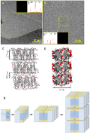
- ]. These crystals found use in optoelectronic materials [14][15][16], as markers for imaging applications [12][13], and demonstrated anticancer properties [17]. However, control over the size and shape in such systems is challenging [8][9][10][11][12][13][14][15][16][17][18][19]. Surface chemistry
- mobility [20], but no control over the crystal size and morphology was demonstrated. Using self-assembled monolayers as templates for the seeding and growth of molecular crystals may offer control over structure and polymorphism [21]. However, in this method, the crystal formation is limited by the
- solutions can be manipulated to result in different polymorphs [35], 3D crystals with dissimilar structures and morphologies. We envisaged that the crystallization of 1 in a basic aqueous medium can lead to 2D arrays (bilayers) due to the higher solubility of the assemblies as a result of the charged




Molecular basis for protein–protein interactions
Beilstein J. Org. Chem. 2021, 17, 1–10, doi:10.3762/bjoc.17.1
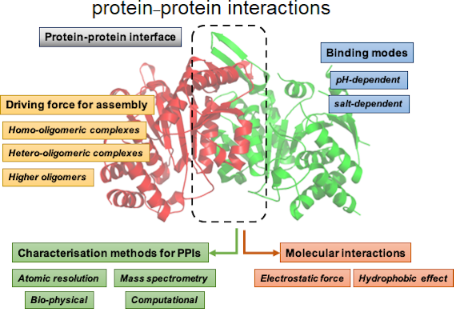
- Data Bank [16]. The main advantage that cryo-EM has compared to X-ray crystallography is that the former does not require crystals, thus making it easier or sometimes even possible at all to study flexible protein assemblies that do not crystallise. Albeit this, the main limitations of cryo-EM included
- subtilis 50S subunit-nascent chain-tRNA complex, EMD-4799, no available PDB [18]) were solved. Protein crystals can also be used in conjunction with cryo-EM, employing a technique known as microcrystal electron diffraction (MicroED). With this method, thin 3D crystal slices are used to obtain the protein


Ultrasound-assisted Strecker synthesis of novel 2-(hetero)aryl-2-(arylamino)acetonitrile derivatives
Beilstein J. Org. Chem. 2020, 16, 2929–2936, doi:10.3762/bjoc.16.242
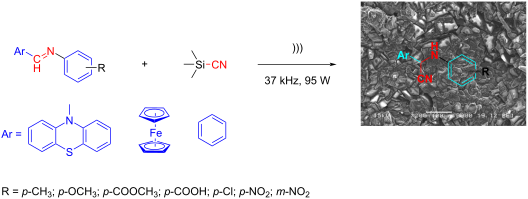
- molecules of the synthesized α-(arylamino)acetonitrile derivatives in the aggregated crystalline state, single crystals suitable for X-ray analysis were obtained by crystallization from isopropanol. The crystallographic data for the structure 2a reported in this paper have been deposited at the Cambridge
- 2b). In Figure 3a, the magnification at 200× indicates sharp rod-like natured crystals of the amino-acetonitrile 2c obtained by the ultrasound-assisted reaction conditions in comparison with the crystallite aggregates obtained by the classical procedure (Figure 3b). Biological assay We chose the well


Synthesis of imidazo[1,5-a]pyridines via cyclocondensation of 2-(aminomethyl)pyridines with electrophilically activated nitroalkanes
Beilstein J. Org. Chem. 2020, 16, 2903–2910, doi:10.3762/bjoc.16.239
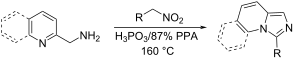
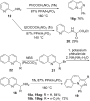
- colorless crystals of intermediate 2-((6-bromoquinolin-2-yl)methyl)isoindoline-1,3-dione. This material (3.05 g, 8.3 mmol) was suspended in ethanol, and hydrazine hydrate (50%, 1.0 g, 10 mmol) was added. The reaction mixture was refluxed for 5 h and then cooled down to 0 °C. The precipitated phthalyl
- mL). The combined organic extracts were concentrated, the residue dried in vacuum, and then purified by preparative column chromatography on silica gel, eluting with a mixture of petroleum ether and ethyl acetate. The titled compound was obtained as yellow solid (lit. [53] yellow crystals), yield 77
- bath preheated to 160 °C, and stirred for 2 h. Upon reaction completion, the aqueous work-up, isolation, and purification of the product was performed in the same way as described in the typical procedure 1. The titled compound was obtained as yellow solid (lit. [54] yellow crystals), yield 66% (96 mg


One-pot multicomponent green Hantzsch synthesis of 1,2-dihydropyridine derivatives with antiproliferative activity
Beilstein J. Org. Chem. 2020, 16, 2862–2869, doi:10.3762/bjoc.16.235
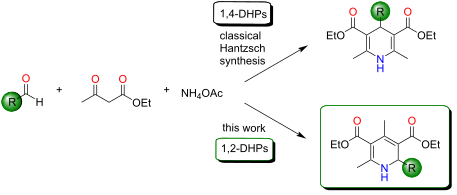
- change from colorless to yellow, which darkened or brightened to orange or yellow and thickened with the occurrence of crystals on the sides of the flask. Once the spot or the peak corresponding to the benzaldehyde disappeared on the TLC plate or in the gas chromatogram, the time was taken as the
- reaction was finished. The reaction mixture, obtained as a viscous oil, was filtered through a sinter funnel to remove any catalyst and washed using acetone, which was then evaporated in a rotary evaporator. The resultant crystals were then recrystallized using hot ethanol. The products were then



Easy access to a carbohydrate-based template for stimuli-responsive surfactants
Beilstein J. Org. Chem. 2020, 16, 2788–2794, doi:10.3762/bjoc.16.229
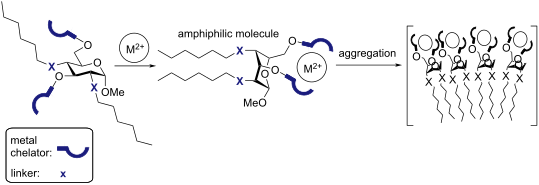
- recrystallization, it was possible to isolate the β-anomer (5β) of the compound 5 as this anomer formed crystals in dichloromethane. Next, the diazide 5β was treated with different electrophiles (iodomethane, 1-bromopropane or 1-bromododecane) under basic conditions in DMF. By this synthesis, the three new methyl


A heterobimetallic tetrahedron from a linear platinum(II)-bis(acetylide) metalloligand
Beilstein J. Org. Chem. 2020, 16, 2701–2708, doi:10.3762/bjoc.16.220
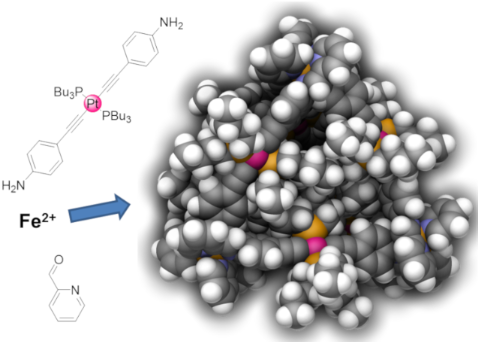
- succeed to obtain single crystals of our metallosupramolecular assemblies that were suitable for single-crystal X-ray diffraction experiments. Therefore, we generated energy-minimized gas phase structures of 4, employing a force-field approach using the GFN2-xTB approach recently established to model


Synthesis and characterization of S,N-heterotetracenes
Beilstein J. Org. Chem. 2020, 16, 2636–2644, doi:10.3762/bjoc.16.214

- quantitative yield [47]. Single crystals of intermediate thienopyrrole 25 were obtained by slow evaporation of a chloroform solution and an X-ray structure analysis was performed. Structural details and packing motifs of the molecule are described in Supporting Information File 1. Alkylation to N-propyl


Particle size effect in the mechanically assisted synthesis of β-cyclodextrin mesitylene sulfonate
Beilstein J. Org. Chem. 2020, 16, 2598–2606, doi:10.3762/bjoc.16.211
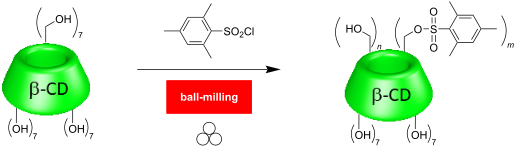
- diffraction patterns recorded after various grinding times, and establish the extent of the amorphization of the reaction mixture during mechanochemical milling. The peaks corresponding to pure β-CD crystals decrease over time. Clearly, the polycrystalline β-CD powder becomes amorphous over time. The




Thermodynamic and electrochemical study of tailor-made crown ethers for redox-switchable (pseudo)rotaxanes
Beilstein J. Org. Chem. 2020, 16, 2576–2588, doi:10.3762/bjoc.16.209

- synthesized in moderate yields of 24% and 26%, respectively, over three steps from the same two building blocks, the ditosylate 5 and the monobutyl-protected NDI precursor 7 (Scheme 1). The connectivity and conformation of exTTFC7 was observed in the crystal structure obtained from crystals generated through
- Information File 1). Slow diffusion of CH3CN into a concentrated solution of NDIC7 in CH2Cl2 yielded single crystals suitable for X-ray diffraction (Figure 2b). The macrocycle displays a folded conformation in the solid state due to the flexible linker, featuring an intramolecular NDI/naphthalene stacking
- with a typical π-stacking distance of 3.58 Å and a tilt angle of 5.8°. The free electron pair of the tertiary amine points towards the inside of the crown ether. In contrast, single crystals of NDIC8 (Figure 2c), obtained by slow evaporation of a concentrated dimethylformamide (DMF) solution, exhibit a