Search results
Search for "linker" in Full Text gives 414 result(s) in Beilstein Journal of Organic Chemistry. Showing first 200.
A chemically contiguous hapten approach for a heroin–fentanyl vaccine
Beilstein J. Org. Chem. 2019, 15, 1020–1031, doi:10.3762/bjoc.15.100
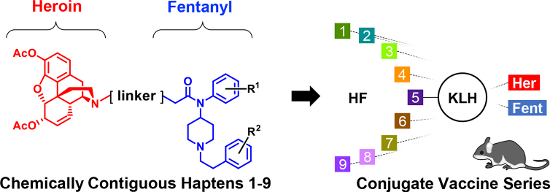
- fentanyl-like domains. Analysis of the results obtained by SPR and ELISA revealed trends in antibody affinity and titers for heroin and fentanyl based on epitope size and linker location. In antinociception studies, the best performing vaccines offered comparable protection against heroin as our benchmark
- of chemically contiguous drug–hapten conjugates, we envisioned generating a series of structurally diverse heroin–fentanyl haptens with a focus on linker placement and bond distance between each drug’s chemical connections in order to probe the effect of the drug-epitope structure on eliciting an
- hoped to be silent spacers. In sum, the feasibility of a singular heroin–fentanyl vaccine would be evaluated through five spatial presentations, differentiated in Figure 2 by background color. The second consideration in our chemically contiguous hapten design was the location of the linker to the




Diaminoterephthalate–α-lipoic acid conjugates with fluorinated residues
Beilstein J. Org. Chem. 2019, 15, 981–991, doi:10.3762/bjoc.15.96
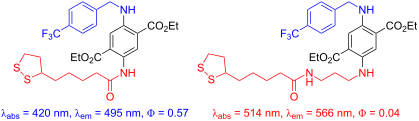
- bathochromic shift is observed towards the absorption at 451–473 nm (514 nm for compound 7, which is exceptionally high) and emission at 547–567 nm. The quantum yields of compounds 1–4 range between 0.21 and 0.57, for compounds 5–8 with propylene linker, the quantum yields are between 0.04–0.13. Interestingly
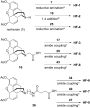
- . Bifunctional DAT as a cross-linker for proteins. The compound is a turn-on-probe, i.e., the fluorescence quantum yield Φ = 2% increased upon reaction with the target to Φ = 41%. High-resolution XPS of SAM 3. High-resolution XPS of SAM 7. Preparation of DAT–ALA conjugate 3 with fluorinated benzyl residue
- . Preparation of conjugate 7 consisting of fluorinated DAT and ALA moieties with an additional propylene linker unit. Spectroscopic properties of diaminoterephthalates 1–8; solvent CH2Cl2. Binding energies of the C 1s, O 1s, S 2p, N 1s, and F 1s photoemission lines of SAM 3 and SAM 7. Supporting Information


New α- and β-cyclodextrin derivatives with cinchona alkaloids used in asymmetric organocatalytic reactions
Beilstein J. Org. Chem. 2019, 15, 830–839, doi:10.3762/bjoc.15.80
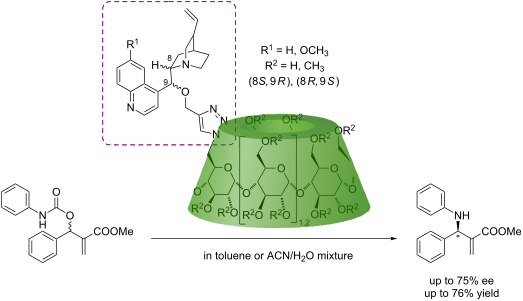
- as the promoter (not in a catalytic amount) of a Henry reaction and obtained the product with 99% ee. Subsequently, Doyagüez et al. [17] attached L-proline to β-CD via different linkers (including a triazole linker) and used the resulting organocatalysts in an aldol reaction in water, albeit with a


Polyaminoazide mixtures for the synthesis of pH-responsive calixarene nanosponges
Beilstein J. Org. Chem. 2019, 15, 633–641, doi:10.3762/bjoc.15.59
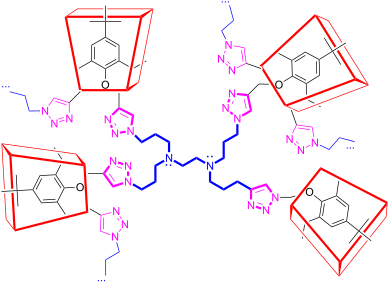
- obtained material critically depend on the host monomer and the linker used, on their molar ratio and, in the case of copolymers, on the molar ratio between the parent comonomers. Therefore, by a proper choice of the components, tunability in the properties of the materials obtained can be achieved. In
- and 1031 cm−1, which can be attributed to neither the calixarene scaffold nor the polyaminoazide, whereas fingerprint signals at 1377, 1364, 1189 and 994 cm−1 can be attributed to the calixarene, and the signals at 1289 and 1116 cm−1 can be recognized as due to the linker groups In the solid state 13C


Synthesis and SAR of the antistaphylococcal natural product nematophin from Xenorhabdus nematophila
Beilstein J. Org. Chem. 2019, 15, 535–541, doi:10.3762/bjoc.15.47
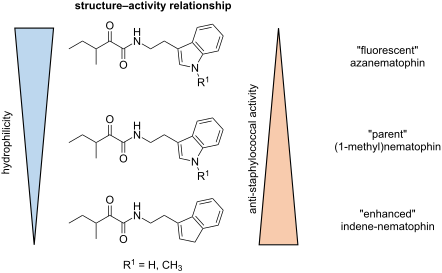
- have already used azatryptophans to study proteins with intrinsic green and blue fluorescence [27][28]. The azaindole moiety allows a linker-less incorporation of a fluorescent label with minimal disturbance. Therefore, four fluorescent derivatives of nematophin were designed and their synthesis


Design of indole- and MCR-based macrocycles as p53-MDM2 antagonists
Beilstein J. Org. Chem. 2019, 15, 513–520, doi:10.3762/bjoc.15.45
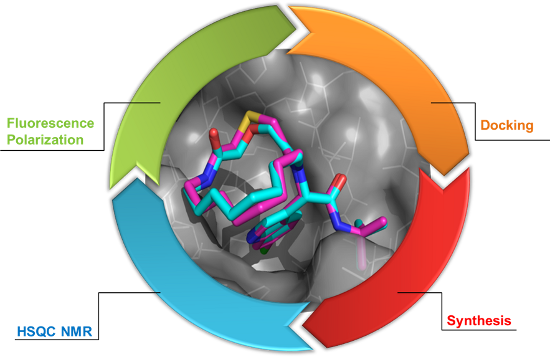
- influence of the chlorine atom in the 6-position of the indole ring (Figure 1C) was examined. Macrocycles 2a–j consist of an oxygen linker whereas 2g–j bear also a chlorine atom in the 6-position in the indole ring. Macrocycles 2k–p incorporate both a sulfur linker and the chlorine on the indole ring
- size of 15–17 atoms and an oxygen as the heteroatom linker improves the binding affinity. All the active macrocycles have a 6-chloro-substituted indole core. It is well established that at the bottom of the Try23 pocket a hydrophobic small subpocket exists which is formed by Phe86, Ile103, Leu82 and


LCST phase behavior of benzo-21-crown-7 with different alkyl chains
Beilstein J. Org. Chem. 2019, 15, 437–444, doi:10.3762/bjoc.15.38
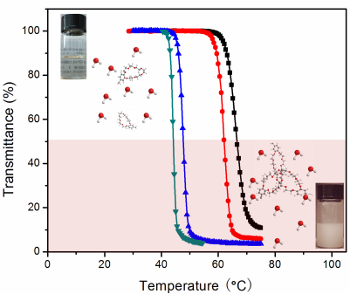
- solubility. When the alkyl chains contain seven CH2 units, the crown ethers become poorly soluble in water (the solubility is lower than 0.5 mg/mL for 3e), indicating the hydrophobic effect of long alkyl chains. The nature of the linker unit is also closely related to the water solubility: in general, crown
- ) during the heating and following cooling cycle. Based on these results, it is concluded that the nature of the linker unit is very important in realizing LCST behavior. Even minor changes in the linker (from NH to O) can result in remarkable differences of thermo-responsiveness. Once the hydrophilicity


Application of olefin metathesis in the synthesis of functionalized polyhedral oligomeric silsesquioxanes (POSS) and POSS-containing polymeric materials
Beilstein J. Org. Chem. 2019, 15, 310–332, doi:10.3762/bjoc.15.28
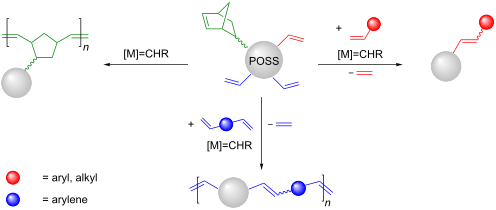
- the type of olefin metathesis chain-growth polymerization that uses metathesis catalysts to generate polymers from cyclic olefins [38][39][40][41]. To obtain polymers functionalized with POSS in the side chain, a susceptible to the ROMP monomer connected via a suitable linker to the silsesquioxane
- the range of 1.3–1.9. The surface morphology and thermal properties of hybrids were found to be affected by the POSS macromer. TEM analysis of copolymer films revealed the presence of POSS agglomerates. An analogous macromer bearing POSS-bound via phenylene linker was used in the synthesis of a series
- a tremendous effect on the liquid crystalline behavior of the polymer. Wang has reported living ROMP of a series of monomers bearing a polymerizable norbornene dicarboxyimide group attached via an appropriate linker to 1–4 POSS units [53]. Copolymerization of POSS-bearing monomers with norbornene


First synthesis of cryptands with sucrose scaffold
Beilstein J. Org. Chem. 2019, 15, 210–217, doi:10.3762/bjoc.15.20
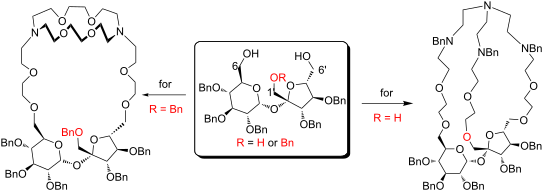
- . This goal can be realized starting from sucrose triol 2 as shown in Figure 3. The first approach consists of a connection of the C1’-position of an intermediate aza-crown ether 12 with the secondary nitrogen atom present in a linker (route a in Figure 3). Another one (route b in Figure 3) involves a
- of derivative 12 in which the C1’ and the ring nitrogen atom might be connected to form cryptand 13 (route a; Figure 3). However, we have found that the preparation of a suitable aza-crown intermediate 12 with the secondary amine function in the linker and the properly modified C1’-position caused
- Scheme 3 can be also applied to prepare cryptands with larger cavities. This required an elongation of all three terminal positions (at C1’,C6,C6’) by a longer linker. Thus, reaction of triol 2 with bis(chloroethyl) ether provided derivative 21 in good yield. Replacement of the chlorine atoms for iodine


Unexpected loss of stereoselectivity in glycosylation reactions during the synthesis of chondroitin sulfate oligosaccharides
Beilstein J. Org. Chem. 2019, 15, 137–144, doi:10.3762/bjoc.15.14
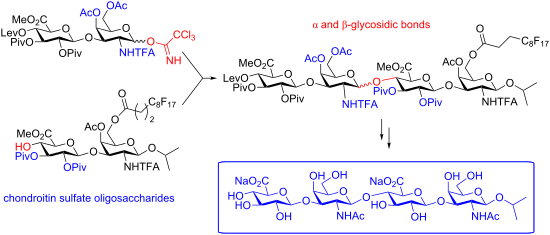
- . Therefore, alternative methodologies are still demanded in order to facilitate and accelerate intermediate purifications [23][24][25]. In this context, Seeberger and co-workers developed an automated solid-phase synthesis of CS derivatives using a photolabile linker [26]. Here, we describe the exploration


Synthesis of a tubugi-1-toxin conjugate by a modulizable disulfide linker system with a neuropeptide Y analogue showing selectivity for hY1R-overexpressing tumor cells
Beilstein J. Org. Chem. 2019, 15, 96–105, doi:10.3762/bjoc.15.11
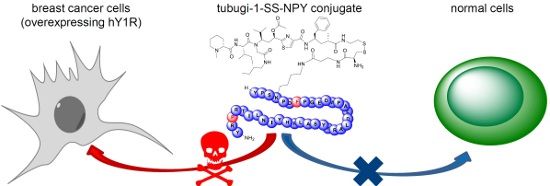
- (Ewing`s sarcoma), MDA-MB-468, MDA-MB-231 (both breast cancer) and 184B5 (normal breast; chemically transformed) were investigated. As hoped, the toxicity of tubugi-1 was masked, with IC50 values decreased by ca. 1,000-fold compared to the free toxin. Due to intracellular linker cleavage, the cytotoxic
- ; (3) a fast and efficient but target-dependent binding, or better internalization, of the PDC into targeted cells; and (4) the efficient cleavage of the linker structure and, thereby, efficient liberation of the drug molecule from the conjugate at or within the diseased cell, resulting in an efficient
- doxorubicin as cytotoxic drugs to native NPY by using various linker chemistries. However, due to missing hY1R-selectivity and relatively weak antitumor efficacy these conjugates were found unsuitable as PDCs [38]. More recently, further approaches of hY1R-addressing PDCs for therapeutic applications have




Selective ring-opening metathesis polymerization (ROMP) of cyclobutenes. Unsymmetrical ladderphane containing polycyclobutene and polynorbornene strands
Beilstein J. Org. Chem. 2019, 15, 44–51, doi:10.3762/bjoc.15.4
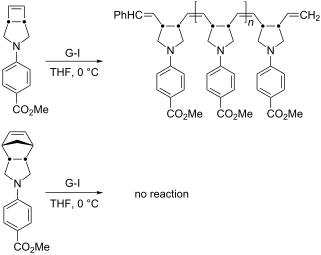
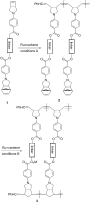
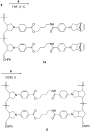
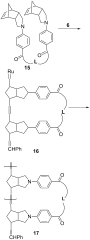
- strand is 8:1. Keywords: cyclobutene; hydrolysis; linker; metathesis; norbornene; ROMP; selectivity; unsymmetrical ladderphane; Introduction Ring-opening metathesis polymerizations (ROMP) of strained cycloalkenes offer a powerful arsenal for the synthesis of polymers having a variety of fascinating
- ][8][9][10][11][12][13][14][15] or from biscyclobutene [16] linked with a range of different rigid linkers. When a flexible linker is used, bisnorbornene derivatives undergo cascade metathetical cyclopolymerization giving the corresponding polynorbornenes with hammock-like pendants [17][18
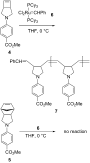
- report sequential ROMP of monomers containing both cyclobutene and norbornene moieties tethered by a linker. Results and Discussion A comparison of the reactivity of cyclobutene versus norbornene derivatives 4 and 5 in ROMP catalyzed by Grubbs I catalyst (6) In the beginning of this study, we have




The influence of the cationic carbenes on the initiation kinetics of ruthenium-based metathesis catalysts; a DFT study
Beilstein J. Org. Chem. 2018, 14, 2872–2880, doi:10.3762/bjoc.14.266
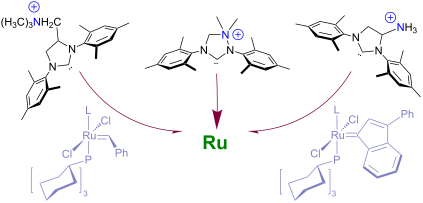
- catalyst as well as the ease of synthesis. In 2013 Kośnik and Grela performed a study to check the influence of the length of the spacer between the NHC ligand and the onium tag, by synthesizing the tag with an eight –(CH2)– linker [26]. The authors concluded that the extension of the linker does not



Olefin metathesis catalysts embedded in β-barrel proteins: creating artificial metalloproteins for olefin metathesis
Beilstein J. Org. Chem. 2018, 14, 2861–2871, doi:10.3762/bjoc.14.265
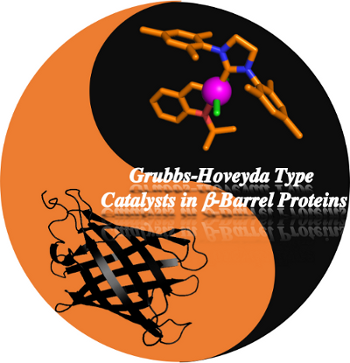
- decreased (Table 2, entries 5–8) [59][60]. This may be related to the steric demand of the refolded β-barrel structure that fully surrounds the metal site. Additionally, the activity of catalyst Ru-6@FhuA with the shorter linker increased (Table 2, entry 6 compared to entries 7 and 8) [60]. The restricted
- the catalyst Ru-4 with the short linker, the activity of Ru-4@NB4exp dropped to TON = 3,000, even though the conjugation was almost quantitative [62]. However, this “influence” on the activity could not be transferred to the regio- and stereoselectivity of the polymer microstructure. Apart from ROMP


Copolymerization of epoxides with cyclic anhydrides catalyzed by dinuclear cobalt complexes
Beilstein J. Org. Chem. 2018, 14, 2779–2788, doi:10.3762/bjoc.14.255
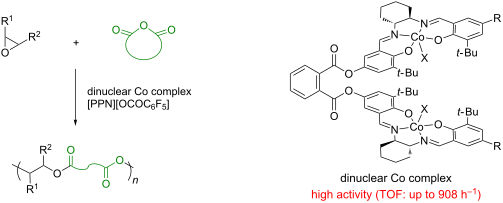
- benzene ring as a linker and their activities in copolymerization reactions. The dinuclear cobalt complexes showed a higher catalytic activity for the copolymerization of propylene oxide with phthalic anhydride than the corresponding mononuclear cobalt–salen complex and achieved one of the highest
- alternating copolymerization of epoxides with cyclic anhydrides using dinuclear cobalt–salen complexes with a benzene linker. The substituents on the salen moieties, an axial ligand on the cobalt center, and a combination of the absolute configuration of the two cobalt–salen moieties were found to have a
- catalytic activity than the corresponding mononuclear cobalt–salen complex. These results indicate that the design based on di- or multinuclear metal complexes is a promising strategy for the development of highly active catalysts. Our future studies will focus on the optimization of linker structures as


An overview on recent advances in the synthesis of sulfonated organic materials, sulfonated silica materials, and sulfonated carbon materials and their catalytic applications in chemical processes
Beilstein J. Org. Chem. 2018, 14, 2745–2770, doi:10.3762/bjoc.14.253
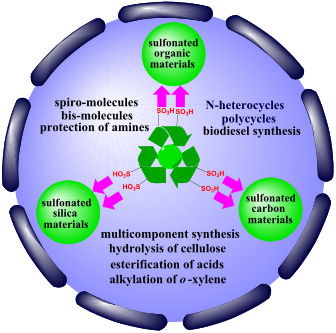
- . The α,α′-dibromo-p-xylene (112) was chosen as a linker because of containing the benzene rings for post-synthetic functionalization. HMP-1 (113) and HMP-1-SO3H (114) were confirmed by IR spectroscopy. The peak corresponding to the C–Br bond was not detected in the FTIR spectrum of HMP-1. The peaks at




Novel solid-phase strategy for the synthesis of ligand-targeted fluorescent-labelled chelating peptide conjugates as a theranostic tool for cancer
Beilstein J. Org. Chem. 2018, 14, 2665–2679, doi:10.3762/bjoc.14.244
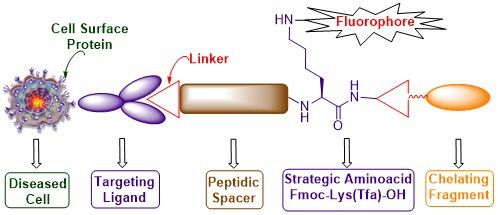
- ) and CHO-β (FR +ve) cell lines and their respective competition experiments demonstrate the specificity of the newly synthesized bioconstructs for future application in fluorescent guided intra-operative imaging. Keywords: chelating linker; confocal studies; continuous synthetic process; fluorescent




Non-native autoinducer analogs capable of modulating the SdiA quorum sensing receptor in Salmonella enterica serovar Typhimurium
Beilstein J. Org. Chem. 2018, 14, 2651–2664, doi:10.3762/bjoc.14.243
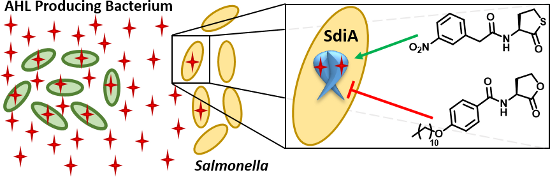
- -libraries were designed to test the effects of lactone stereochemistry, substitution of a variety of more structurally diverse and non-native functional groups on the acyl tail (e.g., alkyl, cycloalkyl, and aryl), and alkyl linker length between the head group and these functional groups [51]. The C and E
- , is a potent inhibitor of QscR [64]. A set of other compounds containing aryl tails with large substituents (such as Br, I, and SCH3) also partially inhibit SdiA; specifically, thiolactone 16 (mBTL), which has a long (4 atom) linker between the amide and phenyl, inhibited SdiA activity by 89% with an



The design and synthesis of an antibacterial phenothiazine–siderophore conjugate
Beilstein J. Org. Chem. 2018, 14, 2646–2650, doi:10.3762/bjoc.14.242
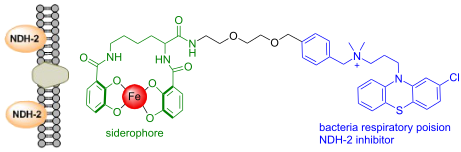
- may be an interesting candidate for siderophore conjugation. Results and Discussion Typically siderophore–antibiotic conjugates consist of a linker joining the siderophore and antibiotic components. As the target is membrane-associated NDH-2 we decided to functionalise our conjugate with a non
- -cleavable linker. A polyethylene glycol (PEG) linker was selected as PEG linkers demonstrate enhanced water solubility in comparison to alkyl chain linkers. We then had to make a decision on the position of attachment for the PEG linker to compound 1. For siderophore conjugates, it is crucial that the
- linker is attached to a position in 1 such that the antibacterial activity is not compromised. Based on previous structure–activity studies of 1 by Bate et al., whereby a methoxy group was positioned on the para-position of the phenyl ring of 1 without loss of activity, we hypothesised this may be a


Targeting the Pseudomonas quinolone signal quorum sensing system for the discovery of novel anti-infective pathoblockers
Beilstein J. Org. Chem. 2018, 14, 2627–2645, doi:10.3762/bjoc.14.241
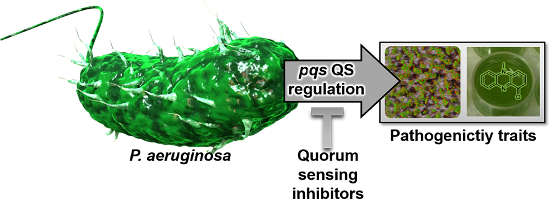
- protein [79]. Indicated key interactions are π-stacking of Y258 with the phenoxy moiety in the tail region and a hydrogen bond formed between the Q194 side chain and the carboxamide in the linker area. Furthermore the benzimidazole core shows hydrophobic contacts with isoleucins 149 and 236. More


Synthesis of 3-aminocoumarin-N-benzylpyridinium conjugates with nanomolar inhibitory activity against acetylcholinesterase
Beilstein J. Org. Chem. 2018, 14, 2545–2552, doi:10.3762/bjoc.14.231
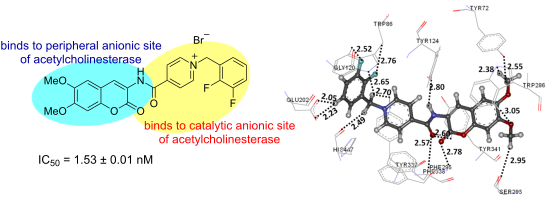
- on the chromene ring, the length of the amide linker, as well as the type and position of substituents on the benzyl group all contributed significantly to the AChE inhibitory activity. The 6,7-dimethoxy-substituted chromene ring significantly enhances the activity. An additional methylene unit of
- the linker between the amide carbonyl group and the pyridine ring led to a diminished activity. The fluorine substituent at the ortho-position on the benzyl ring provided a remarkable increase in AChE inhibition. Among the derivatives, the 2,3-difluorobenzylpyridinium compound was the most potent with



Comparative cell biological study of in vitro antitumor and antimetastatic activity on melanoma cells of GnRH-III-containing conjugates modified with short-chain fatty acids
Beilstein J. Org. Chem. 2018, 14, 2495–2509, doi:10.3762/bjoc.14.226
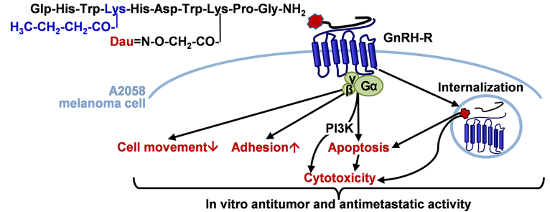
- covalently linked directly or through a suitable linker [1][2]. The gonadotropin-releasing hormone receptor (GnRH-R) is one of the receptors overexpressed on a wide range of tumors, and has limited expression in normal peripheral tissues [3]. The GnRH itself is a decapeptide hormone, which is responsible for
- oxime bond through an aminooxyacetyl (Aoa) linker to form different drug-containing conjugates [15][16]. Based on the enzymatic stability and capability of different Dau–GnRH-III conjugates to providing appropriate intracellular drug release [15], the oxime bond was used for coupling Dau to GnRH-III or


Synthesis of 1,4-imino-L-lyxitols modified at C-5 and their evaluation as inhibitors of GH38 α-mannosidases
Beilstein J. Org. Chem. 2018, 14, 2156–2162, doi:10.3762/bjoc.14.189
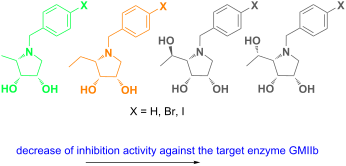
- ) and hydrophobic linker (benzyl, phenethyl) has an impact on the inhibition efficiency of the tested synthetic compound against the target GMIIb enzyme. Evaluation of these derivatives revealed that benzyl is a suitable hydrophobic linker. Some of them showed a weak inhibitory activity and selectivity


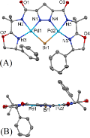
Chiral bisoxazoline ligands designed to stabilize bimetallic complexes
Beilstein J. Org. Chem. 2018, 14, 2002–2011, doi:10.3762/bjoc.14.175

- obtained, preliminary experiments have shown that ligand 22-H2 undergoes complex formation with various nickel and palladium salts [58]. Pyrazole-bridged bisoxazoline ligands. The synthesis of an analog of bisoxazoline ligand 16-H2 in which the naphthyridine bridge is replaced with a pyrazole linker is
- distances tend to be relatively long. Ligand 34-H3 was designed to explore the effect of a single atom linker, namely a phenoxy bridge. The tert-butyl group in the para-position was incorporated as it would likely increase the overall solubility of the ligand as well as its associated complexes. DCC


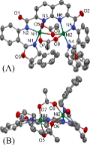





A pyridinium/anilinium [2]catenane that operates as an acid–base driven optical switch
Beilstein J. Org. Chem. 2018, 14, 1908–1916, doi:10.3762/bjoc.14.165

- . Overall, the synthesis of [2]catenane [8DB24C8]6+ required multiple steps and is outlined in Scheme 1. Two literature preparations were used to construct each of the known compounds, terphenyl linker 6 [18] and bis(pyridinium)ethane axle [5][OTf]2 [19][20], while the new benzylaniline axle 4 was prepared
- as shown from 3 [21]. Once the precursor components were synthesized, the [2]catenane was assembled in two steps. Firstly, [5][OTf]2 was reacted with ten equivalents of the bis(bromomethyl)terphenyl linker 6 in CH3CN to afford [7][OTf]4 in moderate yield. Secondly, the [2]pseudorotaxane [7DB24C8]4


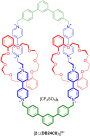

![[Graphic 3]](/bjoc/content/inline/1860-5397-14-165-i4.svg?max-width=637&scale=0.827274) DB24C8]6+ containing benzylanilinium and bis(pyridinium)ethane...
DB24C8]6+ containing benzylanilinium and bis(pyridinium)ethane...