Search results
Search for "tert-butyl" in Full Text gives 711 result(s) in Beilstein Journal of Organic Chemistry. Showing first 200.
First series of N-alkylamino peptoid homooligomers: solution phase synthesis and conformational investigation
Beilstein J. Org. Chem. 2022, 18, 845–854, doi:10.3762/bjoc.18.85
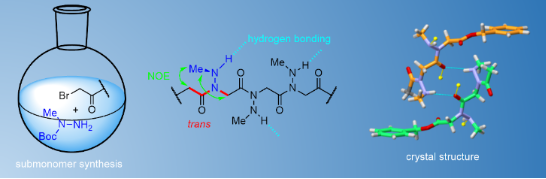
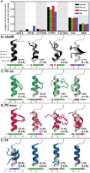
- ], tert-butyl/α,α-gem-dimethyl [29], or fluorinated groups [30] will preferentially form cis-amides (Figure 1A). Peptoid helicity modulation has also been investigated through specific placement of chiral and achiral monomers [31][32]. Comparatively fewer N-functional monomers capable of promoting trans
- -methylhydrazine as a submonomer was adopted in this work (Figure 2). Benzyl bromoacetate, rather than tert-butyl bromoacetate, successfully used in the past for the synthesis of peptoids in solution [22], was chosen as the starting substrate to ensure orthogonality of the C-terminal protecting group with respect


Synthesis of odorants in flow and their applications in perfumery
Beilstein J. Org. Chem. 2022, 18, 754–768, doi:10.3762/bjoc.18.76
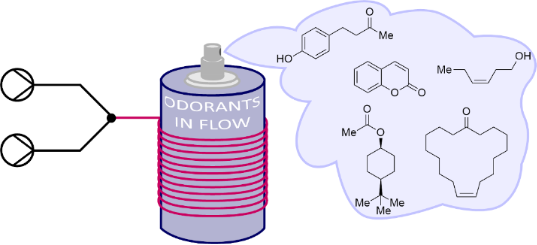
- be extracted from grapefruits or prepared by, e.g., oxidation of (+)-valencene (7) (using toxic di-tert-butyl chromates), which is isolated from the essential oil of oranges [9]. In 2014, Neuenschwander and Jensen reported a flow setup for the catalyst and solvent-free oxidation of (+)-valencene (7


Substituent effect on TADF properties of 2-modified 4,6-bis(3,6-di-tert-butyl-9-carbazolyl)-5-methylpyrimidines
Beilstein J. Org. Chem. 2022, 18, 497–507, doi:10.3762/bjoc.18.52
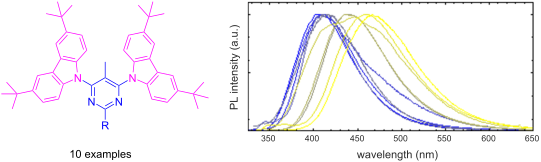
- achieving efficient deep-blue emission, we were interested to study the influence of substituents in position 2 of the pyrimidine ring on the TADF properties of pyrimidine–carbazole emitters. For this purpose, we performed the synthesis of novel 4,6-bis(3,6-di-tert-butyl-9H-carbazol-9-yl)pyrimidines
- -withdrawing groups, namely cyano, bromo or sulfonyl groups were introduced directly or through a phenylene bridge into position 2 of the pyrimidine ring. Results and Discussion Synthesis Due to the versatile reactivity of a methylthio group in the pyrimidine nucleus [34][35] we used 4,6-bis(3,6-di-tert-butyl
- (I) 3-methylsalicylate (CuMeSal), and Cs2CO3 as a catalyst system furnished the corresponding 2-substituted pyrimidines 2a–d. For the introduction of cyano and 4-(tert-butyl)phenylthio groups into position 2 of the pyrimidine, the conversion of the methylthio group to the better leaving




Bioinspired tetraamino-bisthiourea chiral macrocycles in catalyzing decarboxylative Mannich reactions
Beilstein J. Org. Chem. 2022, 18, 486–496, doi:10.3762/bjoc.18.51
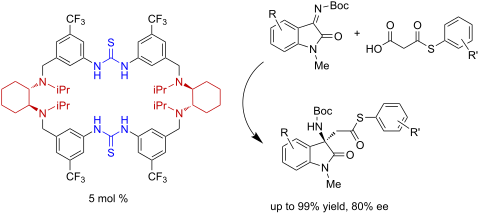
- product in 65% yield with 68% ee (8al). The reactions for S-benzyl and S-ethyl substrates became sluggish and afforded the products in 34–48% yields in 96 h with very low selectivity (8am and 8an). For the S-tert-butyl substrate, only trace conversion was observed. Macrocyclic effect and catalytic




The asymmetric Henry reaction as synthetic tool for the preparation of the drugs linezolid and rivaroxaban
Beilstein J. Org. Chem. 2022, 18, 438–445, doi:10.3762/bjoc.18.46
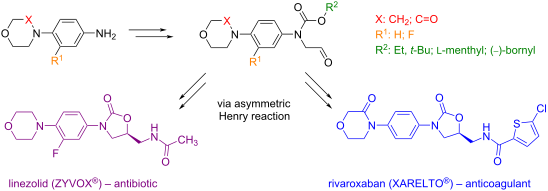
- chiral alkyl groups we considered tert-butyl, ʟ-menthyl, and (−)-bornyl in this study. Results and Discussion The aldehydes 15–20 were prepared by analogous methods, which were described previously [12][13]. The starting ʟ-menthyl (7) and (−)-bornyl chloroformate (8) were obtained according to the


Cs2CO3-Promoted reaction of tertiary bromopropargylic alcohols and phenols in DMF: a novel approach to α-phenoxyketones
Beilstein J. Org. Chem. 2022, 18, 420–428, doi:10.3762/bjoc.18.44
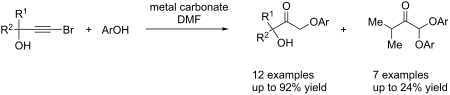
- 1b with p-nitrophenol (2d, DMF/H2O, 50–55 °C, 3 h) furnished product 8b (14% yield) along with phenoxyhydroxyketone 4k (78% isolated yield). Bromopropargylic alcohol 1c having a tert-butyl group reacted with phenol (2a) in DMF for 3 h to give phenoxyhydroxyketone 4l in only 34% yield, 5


Menadione: a platform and a target to valuable compounds synthesis
Beilstein J. Org. Chem. 2022, 18, 381–419, doi:10.3762/bjoc.18.43
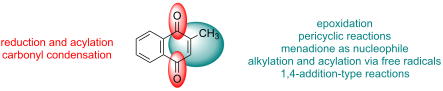
- -methylnaphthol (17) to menadione (10) are quite similar to those employed for the oxidation of 2-methylnaphthalene (16) using H2O2, molecular oxygen, and tert-butyl hydroperoxide as oxidizing agents. Similar to the oxidation of compound 16, it is possible to oxidize 2-methylnaphthol (17) with H2O2 to produce
- the predominant path depends mainly on the dioxygen pressure and the solvent nature [73]. Another approach was reported by Zalomaeva and co-workers, which used an iron tetrasulfophthalocyanine (FePcS) supported catalyst (FePcS-SiO2) in combination with the oxidizing agent tert-butyl hydroperoxide for
- dichloromethane and tert-butyl hydroperoxide at 80 °C (Table 2, entry 12). Methylation of 1,4-naphthoquinone Another route to prepare menadione (10) involves the methylation of 1,4-naphthoquinone. Because of their electron-deficient character, quinones are highly reactive with nucleophilic radicals [75]. The most


New efficient synthesis of polysubstituted 3,4-dihydroquinazolines and 4H-3,1-benzothiazines through a Passerini/Staudinger/aza-Wittig/addition/nucleophilic substitution sequence
Beilstein J. Org. Chem. 2022, 18, 286–292, doi:10.3762/bjoc.18.32
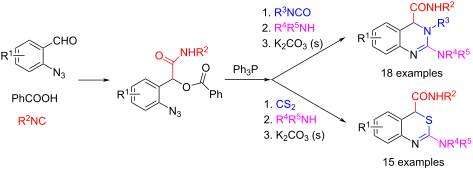
- -azidobenzaldehyde (1a), benzoic acid (2a) and tert-butyl isocyanide (3a) as the reactants (Scheme 2). When a mixture of 1a, 2a, and 3a in CH2Cl2 was stirred at room temperature for 48 h, the three-component Passerini reaction was carried out smoothly and the azide 4a (R = Ph) was finally obtained in 87% yield
- ). In cases when aliphatic isocyanates (compounds 8o–q, R3 = n-Bu, cyclohexyl and PhCH2) were used, 65–74% yields of the products were obtained. Even as the steric tert-butyl isocyanate was applied, the 3,4-dihydroquinazoline 8r was obtained in 42% yield, but when diphenylamine was used, no product was




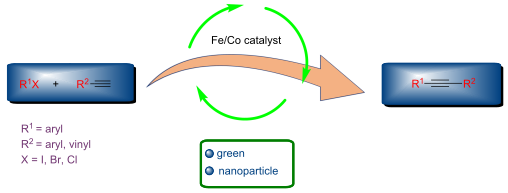
Recent developments and trends in the iron- and cobalt-catalyzed Sonogashira reactions
Beilstein J. Org. Chem. 2022, 18, 262–285, doi:10.3762/bjoc.18.31
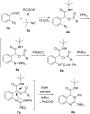
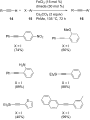
- -supported heterogeneous Fe(III) catalyst. Suggested catalytic cycle for the Sonogashira coupling using a silica-supported heterogeneous Fe(III) catalyst. Chemoselective iron-catalyzed cross coupling of 4-bromo-1-cyclohexen-1-yltrifluromethane sulfonate with (tert-butyl dimethylsilyl)ethynylmagnesium bromide




Organocatalytic asymmetric nitroso aldol reaction of α-substituted malonamates
Beilstein J. Org. Chem. 2022, 18, 217–224, doi:10.3762/bjoc.18.25

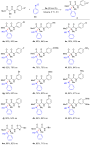
- smoothly with ethyl, tert-butyl, and p-methoxybenzyl esters of malonamate to furnish the oxyaminated products in good yields and moderate to good enantioselectivities (4o–u). Pleasingly, the reactions carried out using m-methoxybenzyl and 3,4,5-trimethoxybenzyl esters of malonamate afforded the




Mechanistic studies of the solvolysis of alkanesulfonyl and arenesulfonyl halides
Beilstein J. Org. Chem. 2022, 18, 120–132, doi:10.3762/bjoc.18.13
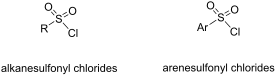
- ]. Accordingly, we will be somewhat brief in the introduction to this treatment before discussing its application to a study of solvolyses taking place at the sulfur atom of sulfonyl chlorides. The original scale of solvent ionizing power (Y) values was based on a study of the solvolyses of tert-butyl chloride
- X), the moderate to weak nucleophilic participation with tert-butyl derivatives [35] can be avoided. The more reactive 3° compound is used to set up scales of Y values for the relatively poor leaving groups and the less reactive 2° compound is used for the relatively good leaving groups [25]. In the
- majority of solvolysis reactions, one also needs to evaluate the nucleophilic attack by the solvent which contributes modestly to the overall scheme for tert-butyl chloride solvolyses but appreciably for the solvolyses of methyl and primary alkyl halides. The original Grunwald–Winstein equation can be


Regioselective synthesis of methyl 5-(N-Boc-cycloaminyl)-1,2-oxazole-4-carboxylates as new amino acid-like building blocks
Beilstein J. Org. Chem. 2022, 18, 102–109, doi:10.3762/bjoc.18.11
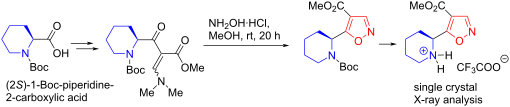
- exchange NMR experiments such as saturation transfer have been widely used in such cases (e.g., 1D selective NOESY). In this case, the 1H NMR spectrum of 4b revealed singlets of tert-butyl protons at δ 1.24 ppm (major rotamer) and δ 1.44 ppm (minor rotamer). When the signal at δ 1.44 ppm was irradiated


Recent advances and perspectives in ruthenium-catalyzed cyanation reactions
Beilstein J. Org. Chem. 2022, 18, 37–52, doi:10.3762/bjoc.18.4
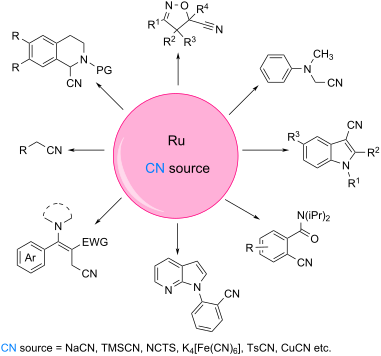
- nitriles in moderate to good yields. Zhang and co-workers developed an efficient methodology for the synthesis of cyanated isoxazolines from the corresponding alkenyl oximes under mild reaction conditions (Scheme 25) [48]. The dual role of tert-butyl nitrite as oxidant and as a nitrogen source further
- catalyst. Synthesis of cyanated isoxazolines from alkenyl oximes catalyzed by [RuCl2(p-cymene)]2 in the presence of tert-butyl nitrite. Proposed mechanism for the synthesis of cyanated isoxazolines from alkenyl oximes. Oxidative cyanation of differently substituted alcohols. Cyanation of tertiary amines


Peptide stapling by late-stage Suzuki–Miyaura cross-coupling
Beilstein J. Org. Chem. 2022, 18, 1–12, doi:10.3762/bjoc.18.1
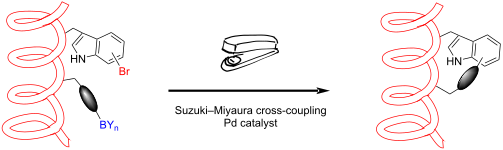
- bond in the staple (cis and trans, respectively). Synthesis of SMC stapled axin CBD peptides. Reaction conditions: (a) Pd2(dba)3, sSPhos, KF, DME/EtOH/H2O 9:9:2, 120 °C, µwave, 30 min; (b) TFA/TIS/H2O 95:2.5:2.5, DTT, phenol, 2 × 2 h. B(OR)2 = B(OH)2, B(pin), pin = pinacolato, t-Bu = tert-butyl, Trt


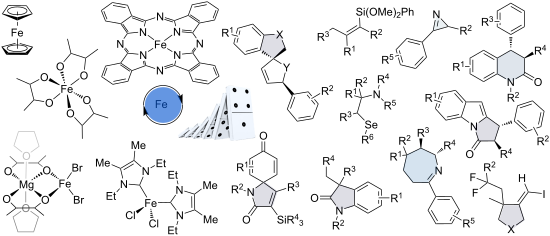
Iron-catalyzed domino coupling reactions of π-systems
Beilstein J. Org. Chem. 2021, 17, 2848–2893, doi:10.3762/bjoc.17.196
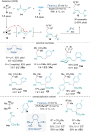
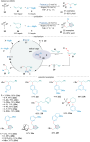
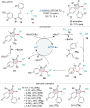
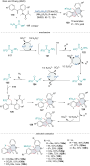
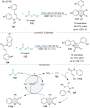
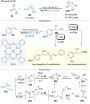
- aromatic and cyano groups. The oxidation of species 80 would reduce the Fe catalyst back to its reduced form, while a tert-butyl alkoxide can furnish the final product through acid-base catalysis. In 2019, Li and co-workers investigated a three-component dialkylation of alkenes 82 with common alkanes 83
- a four-component radical dual difunctionalization and ordered assembly of two chemically distinct alkenes 114/115, aldehyde 65, and tert-butyl peroxide (Scheme 23) [108]. In order to selectively couple one alkene to another, without the formation of oligomers, the authors utilized the different
- and carbazates 117 (Scheme 24) [112][113]. Both protocols utilized a catalytic loading of FeCl2·4H2O mediated by tert-butyl hydroperoxide. The scopes of both reactions were broad and tolerated a variety of functional groups; however, both groups noted unsubstituted terminal alkenes and N




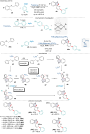
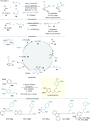
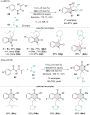

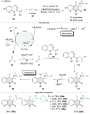






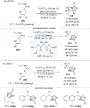


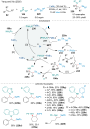
Selective sulfonylation and isonitrilation of para-quinone methides employing TosMIC as a source of sulfonyl group or isonitrile group
Beilstein J. Org. Chem. 2021, 17, 2822–2831, doi:10.3762/bjoc.17.193
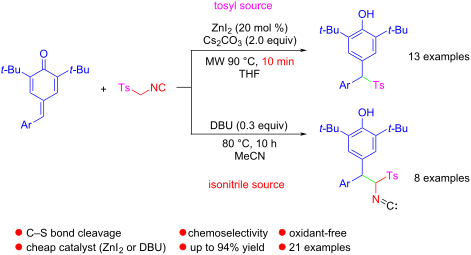
- good yields (81–94% yields). It was noteworthy that p-QMs bearing functional groups, such as methyl, methoxy, tert-butyl, fluoro, chloro, bromo, and trifluoromethyl were well compatible under the optimal reaction conditions. The efficiency of this method was not affected by the pattern of substituents


Synthetic strategies toward 1,3-oxathiolane nucleoside analogues
Beilstein J. Org. Chem. 2021, 17, 2680–2715, doi:10.3762/bjoc.17.182
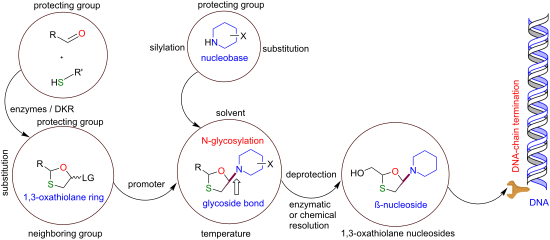
- diastereomers by silica gel column chromatography and reaction with lead tetraacetate provided the key oxathiolane derivative 31. In 1995, Jin et al. [46] carried out the reaction of 1,4-dithiane-2,5-diol (3q) with glyoxylic acid (3g) hydrate at reflux temperature in tert-butyl methyl ether, which provided the


Synthesis of highly substituted fluorenones via metal-free TBHP-promoted oxidative cyclization of 2-(aminomethyl)biphenyls. Application to the total synthesis of nobilone
Beilstein J. Org. Chem. 2021, 17, 2668–2679, doi:10.3762/bjoc.17.181
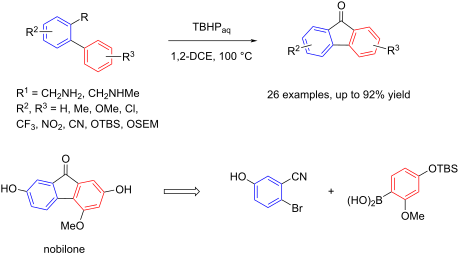
- ], CBr4 [22], or peroxides like tert-butyl hydroperoxide (TBHP) [35]. Other oxidative cyclizations have been developed starting from biarylglyoxylic acids (using Na2S2O8) [36], and even 2-methylbiphenyls and 2-(hydroxymethyl)biphenyls can be converted into fluorenones by means of TBHP oxidation [37]. In
- [22], and tert-butyl hydroperoxide [37] (TBHP). Formation of postulated intermediate aminofluorenes of type 5 could not be observed for any of the reactions performed during the initial screening process, and cyclization to the target compound fluorenone (3) was confirmed for only two of the substrate


Solvent-free synthesis of enantioenriched β-silyl nitroalkanes under organocatalytic conditions
Beilstein J. Org. Chem. 2021, 17, 2642–2649, doi:10.3762/bjoc.17.177
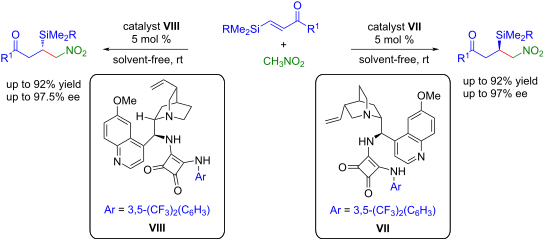
- conditions. The same set of β-silylenones was explored and an almost similar trend in reactivities, yields as well as enantioselectivities was observed. To probe the role of the β-silyl group, the reaction of tert-butyl-substituted enone 3o and nitromethane (2) was conducted under the standard reaction



N-Sulfinylpyrrolidine-containing ureas and thioureas as bifunctional organocatalysts
Beilstein J. Org. Chem. 2021, 17, 2629–2641, doi:10.3762/bjoc.17.176
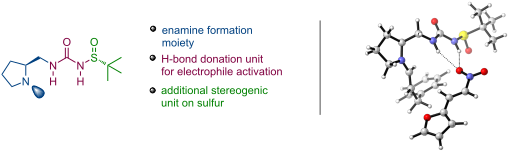
- /mismatched combination of chirality, we employed both enantiomers of tert-butyl sulfinamide with the (S)-enantiomer of the pyrrolidine building block. The introduction of green chemistry principles into chemical transformations is an important goal toward sustainable production and manufacturing. Asymmetric
- of the catalysts in organocatalytic Michael addition and suggested the possibilities of further improvement in catalyst design. Experimental Synthesis of catalysts (S)-tert-Butyl 2-(aminomethyl)pyrrolidine-1-carboxylate (2) The solution of PPh3 (1.64 g, 6.3 mmol) and N-Boc-(S)-prolinol (1, 1.0 g, 5.0
- the literature [32]. (S)-tert-Butyl 2-(isothiocyanatomethyl)pyrrolidine-1-carboxylate (3a) The solution of Et3N (0.13 g, 1.3 mmol) and (S)-tert-butyl 2-(aminomethyl)pyrrolidine-1-carboxylate (2, 0.08 g, 0.4 mmol) in dry THF (4 mL) was cooled in an ice–water bath and next it was added dropwise into


Silica gel and microwave-promoted synthesis of dihydropyrrolizines and tetrahydroindolizines from enaminones
Beilstein J. Org. Chem. 2021, 17, 2543–2552, doi:10.3762/bjoc.17.170
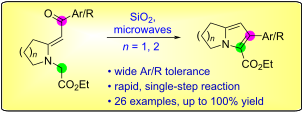
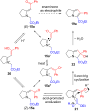
- well as tert-butyl as precursors for the silica gel-mediated cyclization reaction to form pyrrolizine products. The bromomethyl ketones required for the initial sulfide contraction were either purchased from commercial suppliers or prepared from the corresponding methyl ketones by reported procedures




Synthesis of phenanthridines via a novel photochemically-mediated cyclization and application to the synthesis of triphaeridine
Beilstein J. Org. Chem. 2021, 17, 2340–2347, doi:10.3762/bjoc.17.152
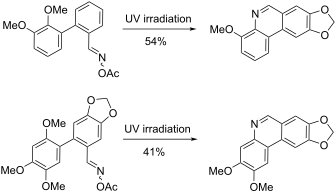
- of compounds 14a–f can be found in Supporting Information File 1. UV cyclization of oxime ester derivatives: general procedure A quartz UV reactor was charged with oxime ester and tert-butyl alcohol (5 mL) and the solution was degassed for 30 min. The solution was then subjected to UV irradiation


A visible-light-induced, metal-free bis-arylation of 2,5-dichlorobenzoquinone
Beilstein J. Org. Chem. 2021, 17, 2315–2320, doi:10.3762/bjoc.17.149
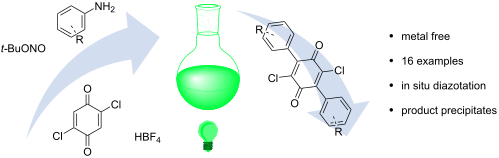
- therefore greatly benefit our procedure. The in situ formation of the aryldiazonium salt from the corresponding aniline and tert-butyl nitrite in methanol and subsequent exposure to green light in the presence of 2,5-dichlorobenzoquinone (1) proved to generate the desired product in yields that were similar


Base-free enantioselective SN2 alkylation of 2-oxindoles via bifunctional phase-transfer catalysis
Beilstein J. Org. Chem. 2021, 17, 2287–2294, doi:10.3762/bjoc.17.146
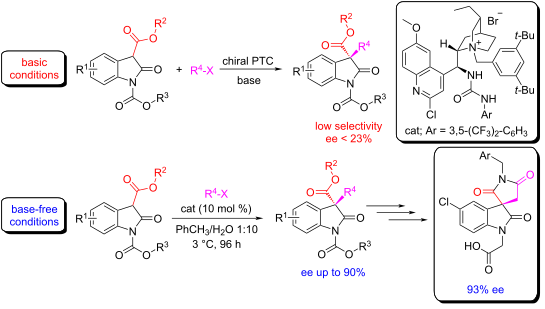
- investigating the behaviour of different alkylating agents (Table 2). Reactions with alkylating agents with increased steric demand provided products in higher ee (compare Table 2, entries 1, 2 and 3); with 3,5-bis(tert-butyl)benzyl bromide allowing the isolation of oxindole 10Ac in 92% yield and 84% ee. The
- -alkylated with bromo ester 13. The formed product (i.e., 14) was first amidated and then cyclised using benzylamine 11 to generate spirooxindole 15 in 54% yield and 94% ee. Chlorination with NCS, followed by tert-butyl ester cleavage in TFA/CH2Cl2 provided the final bioactive compound 6 in 93% ee



Photoredox catalysis in nickel-catalyzed C–H functionalization
Beilstein J. Org. Chem. 2021, 17, 2209–2259, doi:10.3762/bjoc.17.143
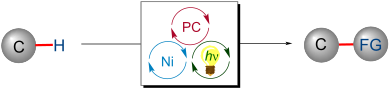
- -amino C(sp3)–H bonds using di-tert-butyl peroxide (DTBP) or dicumyl peroxide (DCP) as the methyl source under mild conditions [93]. Based on the substrate structure and peroxide choice, the authors developed four sets of reaction conditions (Scheme 29) [93]. In these reaction conditions, photocatalyst