Search results
Search for "NMR data" in Full Text gives 500 result(s) in Beilstein Journal of Organic Chemistry. Showing first 200.
Two new aromatic polyketides from a sponge-derived Fusarium
Beilstein J. Org. Chem. 2019, 15, 2941–2947, doi:10.3762/bjoc.15.289
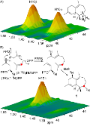
- chemical shifts were used for comparison. The theoretical 13C NMR data of structure a showed better agreement with the experimental 13C NMR data of 1. Specifically, the chemical shift difference between the experimental and theoretical values for the carbons spatially close to the methoxy group (C5, C6, C7
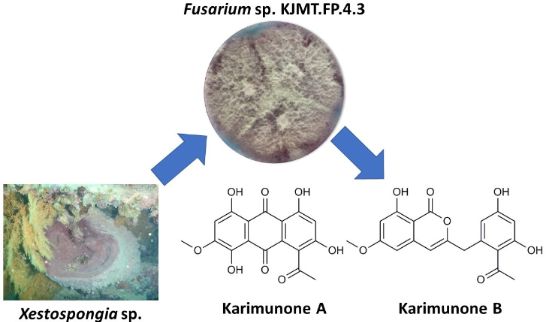
- in good accordance with those described in the literatures [19][20][21][22][23]. Karimunone A (1): red powder; UV (MeOH) λmax (log ε) 234 (3.44), 266 (3.28), 313 (3.04), 499 (2.81), 533 (2.68) nm; IR νmax 3111, 2926, 1712, 1679, 1601 cm−1; see Table 1 for 1H NMR and 13C NMR data; TOF-HRESIMS [M − H
- ]− m/z 343.0452 (calcd for C17H11O8, 343.0459). Karimunone B (2): red powder; UV (MeOH) λmax (log ε) 244 (3.49), 277 (2.97), 324 (2.85) nm; IR νmax 3100, 1683, 1615 cm−1; see Table 3 for 1H NMR and 13C NMR data; TOF-HRESIMS [M − H]− m/z 355.0823 (calcd for C19H15O7, 355.0818). Computational procedure


Design, synthesis and investigation of water-soluble hemi-indigo photoswitches for bioapplications
Beilstein J. Org. Chem. 2019, 15, 2822–2829, doi:10.3762/bjoc.15.275
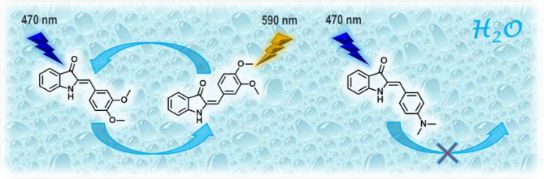
- the phenyl ring was performed through the aldol condensation of indoxyl-3-acetate with the corresponding benzaldehydes under alkaline conditions (Scheme 1) [13]. All compounds 1a–c were obtained in good yields as pure Z-isomers as supported by the NMR data (Figures S5–S13 in Supporting Information


An improved, scalable synthesis of Notum inhibitor LP-922056 using 1-chloro-1,2-benziodoxol-3-one as a superior electrophilic chlorinating agent
Beilstein J. Org. Chem. 2019, 15, 2790–2797, doi:10.3762/bjoc.15.271
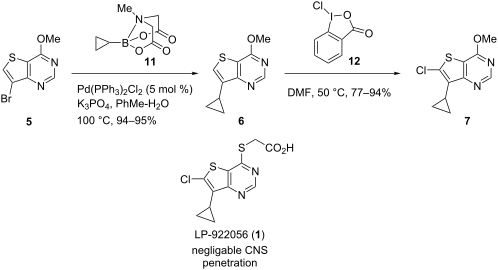
- pharmacokinetics and profiles of amides. Supporting Information File 591: Profiles of amides. Supporting Information File 592: Raw NMR data files for compound LP-922056. Acknowledgements This work was supported by Alzheimer’s Research UK (ARUK) and The Francis Crick Institute. The ARUK UCL Drug Discovery




Skeletocutins M–Q: biologically active compounds from the fruiting bodies of the basidiomycete Skeletocutis sp. collected in Africa
Beilstein J. Org. Chem. 2019, 15, 2782–2789, doi:10.3762/bjoc.15.270

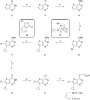
- . Compound 2 (skeletocutin N, Table 1 and Figure 2) was obtained as a white solid, with the molecular formula C30H46O6 and eight degrees of unsaturation determined from HRESIMS data. The 1D and 2D NMR data for 2 revealed a similar structure to 1, with the difference being the size of the carbon chain in the
- singlet (δ = 3.37 ppm, H2-2), a quintet (δ = 1.58 ppm, H2-21), a triplet (δ = 2.45 ppm, H2-22) for three methylene groups, and a triplet for a methine unit (δ = 7.13 ppm, H-4) were observed in the 1H NMR spectrum of 3. Analysis of 1D and 2D NMR data for 3 indicated a similar structure to 1, with a
- . Peaks for m/z = 537.3058 ([M + H]+), 559.2877 ([M + Na]+), 519.2953 ([M + H − H2O])+, and 1095.5860 ([2M + Na]+) were observed in the mass spectrum. The 1D and 2D NMR data of 4 were similar to those of 3, with the difference being the presence of a tricarboxylic acid moiety instead of a dicarboxylic


Nanangenines: drimane sesquiterpenoids as the dominant metabolite cohort of a novel Australian fungus, Aspergillus nanangensis
Beilstein J. Org. Chem. 2019, 15, 2631–2643, doi:10.3762/bjoc.15.256
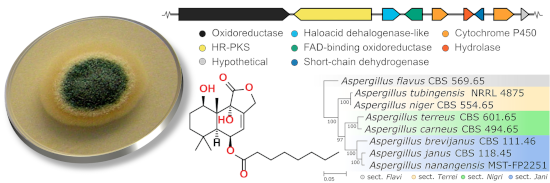
- spectrum, while absorptions at 3354 and 1738 cm−1 in the IR spectrum were indicative of hydroxy and carbonyl groups, respectively. The 13C NMR data for 1 (Table 1) indicated the presence of one carbonyl carbon (δC 179.3, C-11) and two olefinic carbons (δC 128.2, C-7 and δC 131.1, C-8), accounting for two
- DBE and thus requiring 1 to be tricyclic. The 1H and 13C NMR data also revealed the presence of one hydroxylated quaternary carbon (C-9), two aliphatic quaternary carbons (C-4, C-10), two oxymethines (C-1, C-6), one aliphatic methine (C-5), one oxymethylene (C-12), two aliphatic methylenes (C-2, C-3
- ), three methyl groups (C-13, C-14, C-15) and three hydroxy groups (1-OH, 6-OH, 9-OH). Detailed analysis of the 2D NMR data for 1 (Table S3 in Supporting Information File 1) confirmed the presence of a drimane sesquiterpenoid lactone scaffold. A search of the literature revealed 1 to be almost identical to


1,5-Phosphonium betaines from N-triflylpropiolamides, triphenylphosphane, and active methylene compounds
Beilstein J. Org. Chem. 2019, 15, 2603–2611, doi:10.3762/bjoc.15.253

- shift (δ = 23.53 ppm) further confirms the presence of a tetracovalent phosphorus atom (see [28]). NMR data of betaines 3 The 1H, 13C and 31P data of the P–C3–C2–C1 chain in betaines 3 are listed in Table 2. Based on the spectra of those betaines, for which the molecular geometry has been established by
- acid chlorides. Two mechanistic scenarios for the formation of betaines 3. Resonance structures describing the bonding in 1,2-oxaphospholes/1,5-betaines 8. Bond distances and torsion angles in betaines E-3a, E-3b, E-3e, and Z-3e based on XRD data.a Selected NMR data of betaines 3a. Supporting


Formation of alkyne-bridged ferrocenophanes using ring-closing alkyne metathesis on 1,1’-diacetylenic ferrocenes
Beilstein J. Org. Chem. 2019, 15, 2534–2543, doi:10.3762/bjoc.15.246
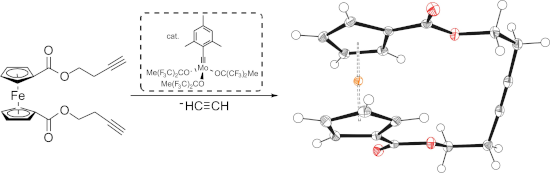
- acetylenic sidechains show the characteristic triplet with a small coupling constant for the terminal alkyne proton at chemical shifts of 2.05 ppm and 2.01 ppm, respectively. The NMR data for the butynyl compound 1a fit the results of Suitor et al. that were published only recently [93]. From saturated DCM
- propargylic compound was synthesized as well in high yield. The NMR data fit the results of Suitor et al. that were published only recently [93]. Unfortunately, the propargylic compound could not be characterised crystallographically as it only gave an orange powder upon different crystallisation techniques


Self-assembled coordination thioether silver(I) macrocyclic complexes for homogeneous catalysis
Beilstein J. Org. Chem. 2019, 15, 2465–2472, doi:10.3762/bjoc.15.239
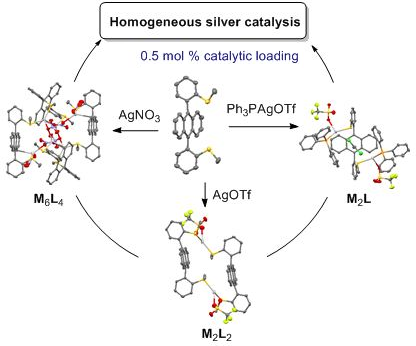
- diastereoisomers by coordination which had different geometries. Thereafter, the silver(I) complexes are discussed with the proposed stoichiometry from X-ray and NMR data, without accounting for stereochemistry: M2L2 for AgOTf and AgOTFA complexes (1a,b), M6L4 for AgNO3 one (1c) and M2L complex with PPh3AgOTf (1d


Sugar-derived oxazolone pseudotetrapeptide as γ-turn inducer and anion-selective transporter
Beilstein J. Org. Chem. 2019, 15, 2419–2427, doi:10.3762/bjoc.15.234
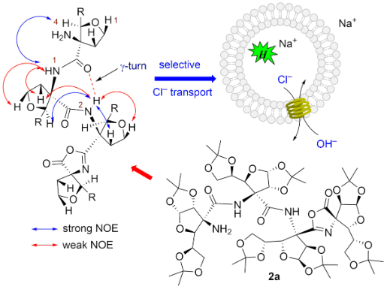
- presence and absence of valinomycin (1 µM) across EYPC-LUVslucigenin (D). Synthesis of linear azido ester dipeptide 5 and tetrapeptide 7. Synthesis of oxazolone pseudopeptides 1, 2a and 2b. Supporting Information Supporting Information File 200: Experimental procedures, 1H and 13C NMR data, HRMS and 2D


![[Graphic 2]](/bjoc/content/inline/1860-5397-15-234-i4.svg?max-width=637&scale=1.18182) lucigenin (A). Conce...
lucigenin (A). Conce...
In water multicomponent synthesis of low-molecular-mass 4,7-dihydrotetrazolo[1,5-a]pyrimidines
Beilstein J. Org. Chem. 2019, 15, 2390–2397, doi:10.3762/bjoc.15.231
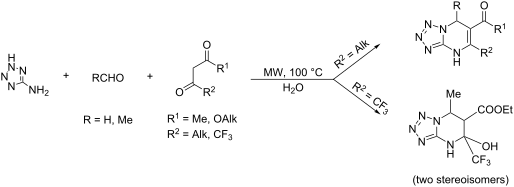
- the NMR data corresponded quite well to the proposed structure 9, they did not allow the complete rejection of the isomeric structure 9' for the reaction product. The final confirmation of structures 9a–g was achieved by X-ray analysis of 9a (Figure 1). A specific behavior of acetylacetone (10) as the


Isolation and biosynthesis of an unsaturated fatty acid with unusual methylation pattern from a coral-associated bacterium Microbulbifer sp.
Beilstein J. Org. Chem. 2019, 15, 2327–2332, doi:10.3762/bjoc.15.225
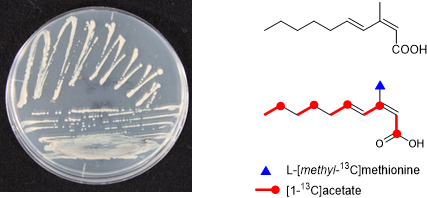
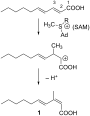
- unsaturation on the basis of its NMR and HR-ESI-TOFMS (m/z 181.1230 [M − H]−; calcd for C11H17O2, 181.1229) data. The UV spectrum of 1 in methanol exhibited an absorption maximum at 262 nm. The IR absorption bands at 1678 and 2800–3200 cm−1 suggested the presence of carboxyl group. The 1H and 13C NMR data of 1
- (50:50) to yield (2Z,4E)-3-methyl-2,4-decadienoic acid (1, 8.0 mg, tR 20.5 min). (2Z,4E)-3-Methyl-2,4-decadienoic acid (1): colorless amorphous solid; UV (MeOH) λmax (log ε) 262 (4.16) nm; IR (ATR) νmax 2952, 2923, 2852, 2585, 1678, 1662 cm−1; 1H and 13C NMR data, see Table 1; HR-ESI-TOFMS m/z
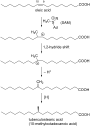
- of tuberculostearic acid in Mycobacterium. Possible methylation mechanism for compound 1. 1H and 13C NMR data for compound 1 in CDCl3. Incorporation of 13C-labeled precursors into 1. Supporting Information Supporting Information File 466: 1D and 2D NMR spectra of 1; 13C NMR spectra of 13C-labeled 1.


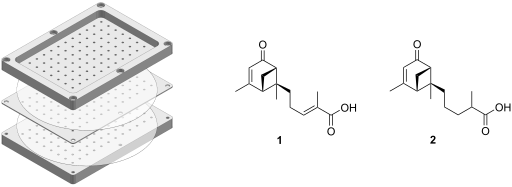
Isolation of fungi using the diffusion chamber device FIND technology
Beilstein J. Org. Chem. 2019, 15, 2191–2203, doi:10.3762/bjoc.15.216
- ]+; calcd. for C15H23O3, 251.1642) implying only 5 DOU as compared to 1. 1H and 13C NMR data (Table S5, Supporting Information File 1) of 2 were similar to those of 1, except for the chemical shifts of CH2-9 (δH 1.37; δC 23.4), CH2-10 (δH 1.49, 1.73; δC 35.5), and CH3-13 (δH 1.21; δC 17.8). Additional
- and 13C NMR data see Supporting Information File 1, Table S4. Heydenoic acid B (2): yellow oil; [α]D25 −34.9 (c 0.33, MeOH); UV (MeOH) λmax (log ε): 203 (3.8), 258 (3.5) nm; CD (c 4.0 × 10⁻³ M, MeOH) λmax (Δ ε) 208 (0.57), 218 (0.45), 321 (−0.38); IR νmax: 3346, 2927, 1670, 1558, 1540, 1507, 1436
- , 1376, 1237, 1037, 634 cm−1; HRESI-TOF-MS m/z: [M + H]+ calcd for C15H23O3 251.1641; found, 251.1642. For 1H and 13C NMR data see Supporting Information File 1, Table S5. Agar diffusion assay Culture plates (5% sheep blood Columbia agar, BD) were overlaid with 3 mL tryptic soy soft agar, inoculated with


Characterization of two new degradation products of atorvastatin calcium formed upon treatment with strong acids
Beilstein J. Org. Chem. 2019, 15, 2085–2091, doi:10.3762/bjoc.15.206
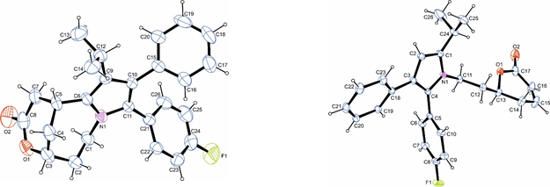
- hydroxylactone 2 (55% yield). This outcome was confirmed by comparison with published NMR data [18][19]. At elevated temperature (reflux, 4 h; Table 1, entry 2) a mixture of lactone 2 and known unsaturated lactone 3 [15] (arising from acid-catalyzed dehydration of 2) was obtained. Under even more drastic acidic
- , no signal was observed which could be attributed to a C–H group at the pyrrole ring. The 13C NMR data showed one carbonyl resonance at 170.3 ppm, assignable to a lactone moiety. The HMBC experiment showed a cross peak between the proposed lactone carbonyl carbon and a neighboring CH-O group


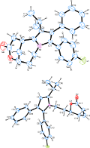


1,2,3,4-Tetrahydro-1,4,5,8-tetraazaanthracene revisited: properties and structural evidence of aromaticity loss
Beilstein J. Org. Chem. 2019, 15, 2059–2068, doi:10.3762/bjoc.15.203
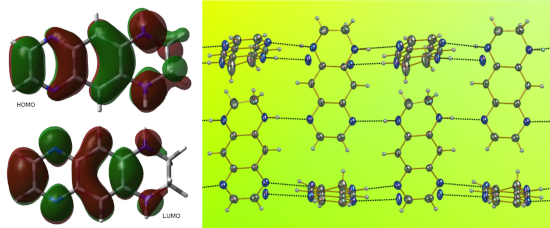
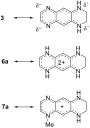
- 1,2,3,4-tetrahydro isomer has been assigned considering only indirect evidences so that the structure corresponding to the 1,2,6,7-tetrahydro isomer cannot be excluded (no NMR data have been reported so far). A well related known example involves the correct structure of fluorindine (5,14-dihydro




Genome mining in Trichoderma viride J1-030: discovery and identification of novel sesquiterpene synthase and its products
Beilstein J. Org. Chem. 2019, 15, 2052–2058, doi:10.3762/bjoc.15.202
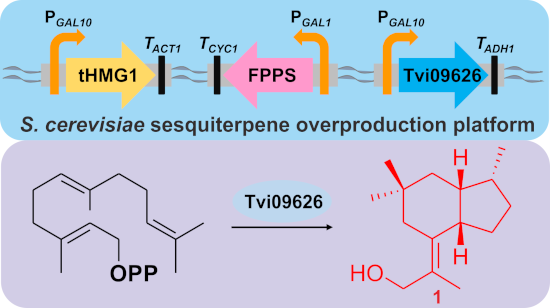
- and 2D NMR spectroscopy (Table 1, Table S4, and Figures S4–S15, Supporting Information File 1). Compound 1 was a new compound with a known skeleton [35], isolated as a white powder. 1H and 13C NMR data showed four methyl groups at δH 1.87 (t, J = 1.2 Hz, 3H,), δH 0.96 (s, 3H), δH 0.83 (s, 3H), and δH
- 0.80 (d, J = 7.0 Hz, 3H). Five methylenes were detected, including an oxygenated one at δH 4.18 (d, J = 11.6 Hz, 1H), 3.97 (d, J = 9.8 Hz, 1H), as well as three methines and three quaternary carbons including a double bond at δC 137.4 (C-5), 126.5 (C-10). The 2D NMR data indicated that compound 1 is a
- and 13C NMR data showed chemical shifts of five methyl groups at δH 1.83 (t, J = 1.2 Hz, 3H), δH 0.96 (s, 3H), δH 0.82 (s, 3H), δH 0.80 (d, J = 7.0 Hz, 3H), and δH 2.06 (s, 3H). Five methylenes were identified, including an esterified group at C-11 with a resonance of δH 4.64 (d, J = 11.6 Hz 1H), 4.46



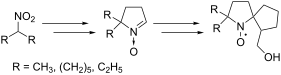
Synthesis of 1-azaspiro[4.4]nonan-1-oxyls via intramolecular 1,3-dipolar cycloaddition
Beilstein J. Org. Chem. 2019, 15, 2036–2042, doi:10.3762/bjoc.15.200
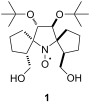
- enabled the assignment of these signals to the 1,2-disubstituted alkene moiety. Thus, the NMR data presented above indicate the presence of an isolated spin system, O–CH2–CH–CH2–CH=CH. A similar analysis of the remaining complex multiplets at 1.56, 1.77, and 1.93 ppm as well as their correlation with the



Bipolenins K–N: New sesquiterpenoids from the fungal plant pathogen Bipolaris sorokiniana
Beilstein J. Org. Chem. 2019, 15, 2020–2028, doi:10.3762/bjoc.15.198
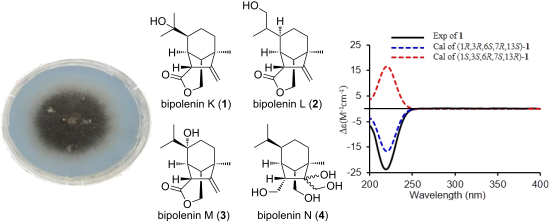
- ) showed 15 distinct carbon signals, while 13C and 1H NMR data (Table 1) indicated an isopropyl unit (δC 28.3, 29.2 and 73.1; δH 1.20 and 1.24), one tertiary methyl (δC 20.1; δH 1.25), a disubstituted olefin (δC 105.7 and 155.2; δH 5.12 and 4.89) and four methines (δC 39.6, 51.1, 51.6 and 54.0; δH 1.73
- , 1.88, 2.65 and 3.77), which are typical resonances for sativene-type sesquiterpenoids. The NMR data for 1 were very similar to those for prehelminthosporol lactone (5) except for the replacement of a methine group (δC 32.1; δH 1.42) at C-9 in 5 with a hydroxylated quaternary carbon (δC 73.1) in 1. This
- ). Bipolenin L (2) was isolated as a colourless oil. The HRESIMS [M + H]+ ion at m/z 251.1649 corresponded to a molecular formula C15H22O3 (calcd for C15H23O3+, 251.1642), which is isomeric with 1. The 1H and 13C NMR data for 2 (Table 1) were also very similar to those for 5, with the only significant


Isolation and characterisation of irinans, androstane-type withanolides from Physalis peruviana L.
Beilstein J. Org. Chem. 2019, 15, 2003–2012, doi:10.3762/bjoc.15.196
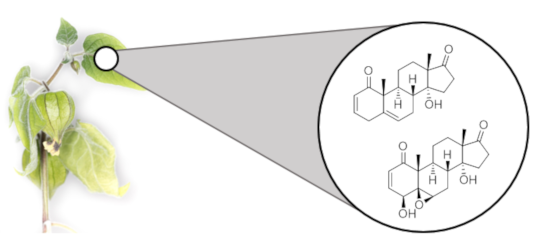
- C19H24O5 for the first compound, which was supported by the 13C spectrum (Table 1). By comparing the spectrum to NMR data of other withanolides, we quickly identified the Michael system in ring A based on two olefinic protons (δH 6.94 and 6.22 ppm), a secondary alcohol at C-4 (δH 3.79 ppm), a 5,6-epoxide
- –7.6 min, 6 mg), perulactone H (6) (tR = 7.6–7.8 min, 9 mg) and withanolide F (5) (tR = 7.8–8.5 min, 9 mg) which were identified by NMR [20]. Analytical data 4β-Hydroxywithanolide E (1) was isolated as a white crystalline powder. NMR data of 1 is listed in Table 1. All spectroscopic properties matched
- NaIO4 reaction was confirmed by NMR analysis. See also Figure S21 in Supporting Information File 1 for extracted ion chromatograms (EICs). 13C and 1H NMR data (CDCl3, 500 MHz, 298 K) of irinans A (2) and B (3) in comparison to the known compound 4β-hydroxywithanolide E (1, CDCl3, 400 MHz, 298 K, δ in



Reactions of 2-carbonyl- and 2-hydroxy(or methoxy)alkyl-substituted benzimidazoles with arenes in the superacid CF3SO3H. NMR and DFT studies of dicationic electrophilic species
Beilstein J. Org. Chem. 2019, 15, 1962–1973, doi:10.3762/bjoc.15.191
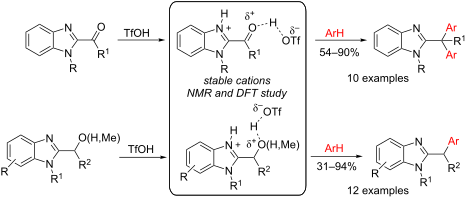
- benzimidazole system. The same applies to the reactivity of the carbon C2 in dications I and II. Then we studied the protonation of benzimidazoles in the superacid TfOH by means of NMR. Selected 1H, 13C and 15N NMR data for starting neutral benzimidazoles 1, 3a, and 7 (in CDCl3, (CD3)2CO, CD3OD) and their
- Information File 1). However, the signals of the proton bound to the oxygen of the formyl or the hydroxy groups is not observed due to the fast proton exchange for these groups in TfOH at room temperature. The obtained NMR data demonstrate the formation of N-protonated-O-protosolvated species I', III', and
- –11. Reaction mechanism of the formation of compounds 12. Selected calculated [DFT, 6-311+G(2d,2p) basis set] electronic characteristics of the protonated forms of benzimidazoles. 1H, 13C and 15N NMR data of benzimidazoles 1, 3a, 7 in the corresponding deuterated solvent and species I', III', VIII' in


An azobenzene container showing a definite folding – synthesis and structural investigation
Beilstein J. Org. Chem. 2019, 15, 1534–1544, doi:10.3762/bjoc.15.156
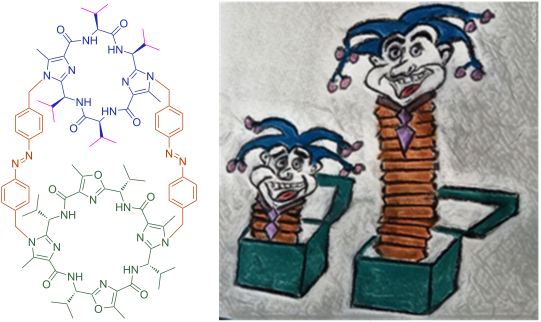
- solution, the larger are the changes caused by the LED lamps. This effect is already known for this kind of switches [49][50]. The trans,trans/cis,trans/cis,cis ratio of the solution after synthesis amounts to 63:35:2 and resemble the 1H NMR data (68:31:<1). After irradiation with light of the wavelength λ


Different reactivity of phosphorylallenes under the action of Brønsted or Lewis acids: a crucial role of involvement of the P=O group in intra- or intermolecular interactions at the formation of cationic intermediates
Beilstein J. Org. Chem. 2019, 15, 1491–1504, doi:10.3762/bjoc.15.151
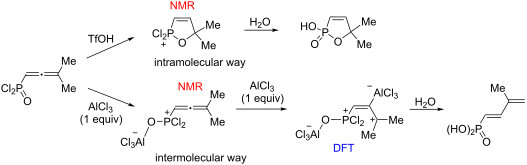
- –H (Table 1). These species are formed by protonation of the central carbon atom of the allene system that gives the corresponding allyl cations, which undergo cyclization onto the oxygen of the P=O group. These ions have similar NMR data: the signal of the new proton H4 is located in the range 6.30
- compounds 9, 10, 11, 12 from aillene 1a involving AlCl3 attack on the central atom of allenic complex 13. Plausible reaction mechanism B of formation of compounds 11, 12 from allene 1a involving HCl–AlCl3 attack on the central atom of allenic complex 13. Selected 1H, 13C and 31P NMR data for cations A–H




Genomics-inspired discovery of massiliachelin, an agrochelin epimer from Massilia sp. NR 4-1
Beilstein J. Org. Chem. 2019, 15, 1298–1303, doi:10.3762/bjoc.15.128
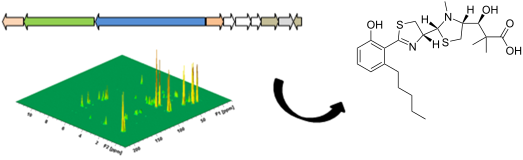
- H-15, which is only possible if the latter two protons are syn-oriented. We thus propose (14R,15R,17R,19S) configuration for 1. It is noteworthy that the same conclusion can also be drawn from a comparison of the 1H NMR data of the thiazoline-thiazolidine moieties in pyochelin and agrochelin (Table


Synthesis of non-racemic 4-nitro-2-sulfonylbutan-1-ones via Ni(II)-catalyzed asymmetric Michael reaction of β-ketosulfones
Beilstein J. Org. Chem. 2019, 15, 1289–1297, doi:10.3762/bjoc.15.127
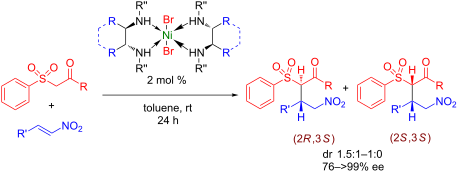
- in Figure 5. The relative configurations of other Michael adducts 8 and 9 were determined by comparing their NMR data with those of compound 8d. For (2R,3S)-isomers the value of 3JHH for proton at 2-C was 5 Hz, while for (2S,3S)-isomers this value was 11 Hz. It is possible to use the previously




Molecular recognition using tetralactam macrocycles with parallel aromatic sidewalls
Beilstein J. Org. Chem. 2019, 15, 1086–1095, doi:10.3762/bjoc.15.105
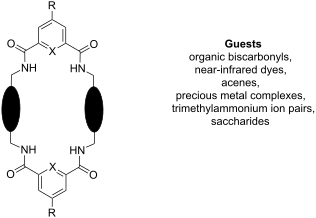
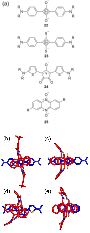
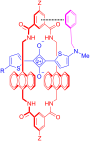
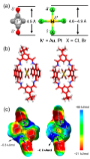
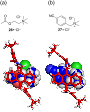
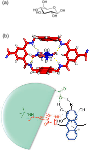
- conformations is an outward directed NH residue. Solution-state NMR data suggests that the surrounding tetralactam in these [2]rotaxanes undergoes rapid exchange between these different conformations, a dynamic process that has been called macrcocyle breathing, and that there is also simultaneous co


Mechanistic investigations on multiproduct β-himachalene synthase from Cryptosporangium arvum
Beilstein J. Org. Chem. 2019, 15, 1008–1019, doi:10.3762/bjoc.15.99
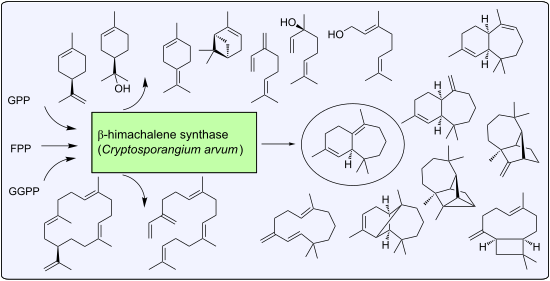
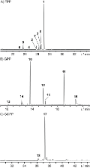
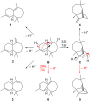
- with (E)- and (Z)-(4-13C,4-2H)IPP, DMAPP, FPPS and HcS targeting the positions C-3 and C-7 (Figure S11, Supporting Information File 1), using published NMR data for 7 [44]. The stereochemical fate for the hydrogens at C-1 was then targeted by the incubation of (1R)- and (1S)-(1-13C,1-2H)FPP [28] with
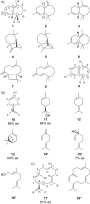
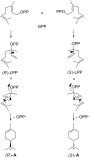
- situation like a 1,11-cyclisation. Intriguingly, the stereochemical course of the initial cyclisation step can even be substrate dependent. The 1,6-cyclisation towards the monoterpenes 10, 11 and 13 as investigated by the incubation of (1S)- and (1R)-(1-13C,1-2H)GPP with HcS and comparison to the NMR data
- expression, protein purification, incubation experiments with isotopically labelled precursors, preparative scale incubation and synthesis of (2-13C)DMAPP. The amino acid sequence of HcS, a phylogenetic tree of bacterial terpene synthases, SDS-PAGE analysis of the recombinant protein, listed NMR data for 1