Search results
Search for "alkyne" in Full Text gives 635 result(s) in Beilstein Journal of Organic Chemistry. Showing first 200.
Progress in the total synthesis of inthomycins
Beilstein J. Org. Chem. 2021, 17, 58–82, doi:10.3762/bjoc.17.7
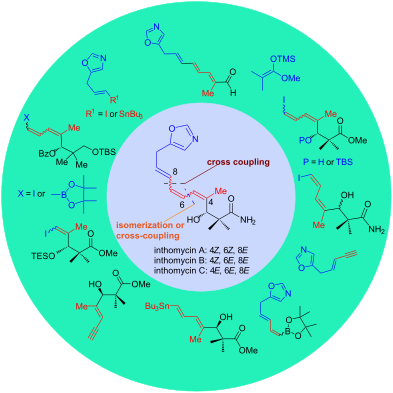
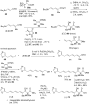
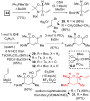
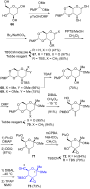
- evidence [60]. The synthetic route was designed in such a way that intercept both Ryu’s intermediate (+)-69 [50] and Hatakeyama’s intermediate (+)-82b [22] (Scheme 12 and Scheme 13). In this approach, the asymmetric alkylation of 96 with alkyne 95 under Carreira’s conditions [61][62][63] afforded (−)-98 in
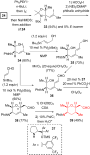
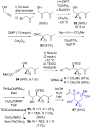
- using a four-step sequence such as Negishi’s (Z) and (E)-stereoselective isomerization of the terminal alkyne followed by iodinolysis [19][70][71], oxidation to the corresponding aldehydes and enantioselective Kiyooka–Mukaiyama aldol reaction followed by TES protection of the resulting alcohols (Scheme
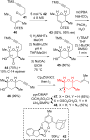
- -catalyzed nucleophilic alkyne addition of methyl propiolate, provided ynone 139 in 86% yield over two steps. When, compound 139 was treated with (+)-diisopinocampheylchloroborane (DIPCl) [75][76] at room temperature and the resulting mixture was processed as in the usual manner using diethanolamine, the









Recent progress in the synthesis of homotropane alkaloids adaline, euphococcinine and N-methyleuphococcinine
Beilstein J. Org. Chem. 2021, 17, 28–41, doi:10.3762/bjoc.17.4
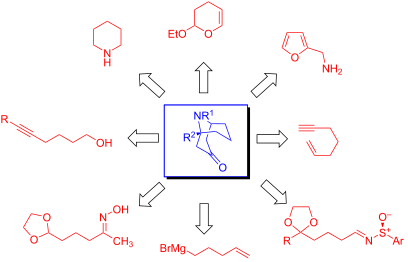
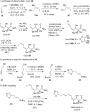
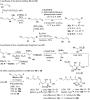
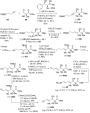
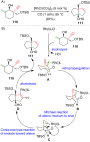
- (2) was synthesized from terminal alkyne 76 (Scheme 9). This alkyne was prepared from 5-bromopentene, according to the procedure described by Negishi [54]. Zr-catalyzed carboalumination furnished vinylalane, treated with p-menthane-3-carboxaldehyde providing the allylic alcohols (−)-77a and (−)-77b


Synthesis, crystal structures and properties of carbazole-based [6]helicenes fused with an azine ring
Beilstein J. Org. Chem. 2021, 17, 11–21, doi:10.3762/bjoc.17.2
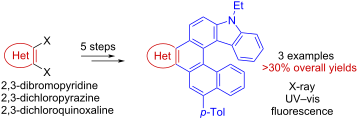
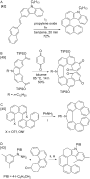
- without THF solvent producing alkyne 9b in 82% yield (Table 4, entry 2). The structure of 9c was unambiguously proved by X-ray structural analysis (see Supporting Information File 1, Figure S34). Earlier, at the final step of a similar synthesis of the azine-fused [5]helicenes, we used trifluoroacetic



Silver-catalyzed synthesis of β-fluorovinylphosphonates by phosphonofluorination of aromatic alkynes
Beilstein J. Org. Chem. 2020, 16, 3086–3092, doi:10.3762/bjoc.16.258
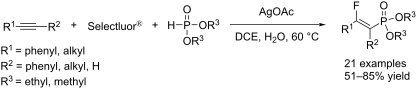
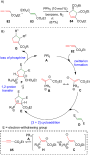
- is the most rapid and convenient one (Scheme 1). Although studies on alkyne difunctionalization are ongoing [23], the successful attachment of a fluorine atom to the resulting alkene through transition metal catalysis remains a challenge. In particular, the phosphonofluorination of alkynes for the
- -rich and electron-deficient moieties at the para- and meta-positions generally reacted smoothly to afford the desired products 2a–o in moderate to good yield. An aromatic alkyne possessing a Cl substituent at the ortho-position also reacted smoothly to provide the corresponding product 2k in 56% yield
- determine whether diethyl fluorophosphonate is a key intermediate in the reaction with aromatic alkynes. Based on a method by Gupta et al. [29], we obtained diethyl fluorophosphonate. Subsequently, the diethyl fluorophosphonate did not react with an aromatic alkyne in the desired phosphonofluorination so



Amine–borane complex-initiated SF5Cl radical addition on alkenes and alkynes
Beilstein J. Org. Chem. 2020, 16, 3069–3077, doi:10.3762/bjoc.16.256
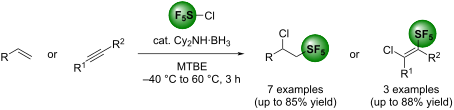
- three alkyne derivatives were tested in the reaction, with yields ranging from 3% to 85%. Keywords: amine-borane complex; pentafluorosulfanyl chloride; pentafluorosulfanyl substituent; radical addition; radical initiation; Introduction The pentafluorosulfanyl (SF5) substituent has been attracting its
- was performed on the internal alkyne 6-dodecyne, and the Dolbier’s protocol led to the moderate yield of 65% of the desired compound 2l, while only a 17% NMR yield was obtained in the reaction using DICAB as the radical initiator. Conclusion In conclusion, we have shown that amine–borane complexes can
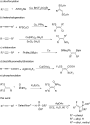
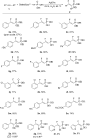
- total of 7 examples of alkene derivatives and 3 examples of alkyne derivatives were evaluated in the reaction, with yields ranging from 3% to 85%. Overall, this reaction represents a complementary method to the Et3B-mediated SF5Cl addition on unsaturated compounds. Structures and acronyms of the amine


Pentannulation of N-heterocycles by a tandem gold-catalyzed [3,3]-rearrangement/Nazarov reaction of propargyl ester derivatives: a computational study on the crucial role of the nitrogen atom
Beilstein J. Org. Chem. 2020, 16, 3059–3068, doi:10.3762/bjoc.16.255
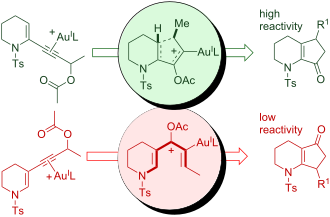
- species to the alkyne 5, as in I (Figure 2). The first step TS1 has a low activation energy (ΔG‡ = 12.2 kcal⋅mol−1) to form the unstable cyclic intermediate II. This short-lived species rapidly reopens through TS2 (ΔΔG‡ = 8.1 kcal⋅mol−1) to give the pentadienyl cation III, which presents a high stability


All-carbon [3 + 2] cycloaddition in natural product synthesis
Beilstein J. Org. Chem. 2020, 16, 3015–3031, doi:10.3762/bjoc.16.251
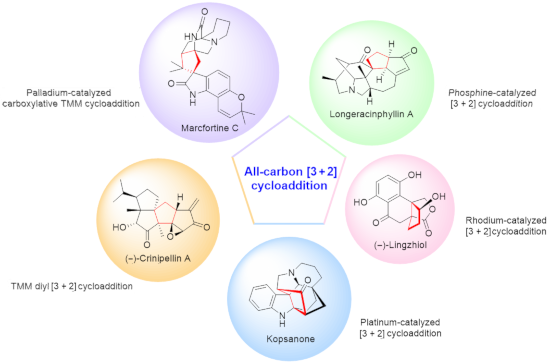
- subsequent treatment with Waser’s reagent 116 [61] afforded alkyne 117 in 62% yield over two steps. Enyne 118, which was prepared in two steps from 117, was subjected to rhodium-catalyzed intramolecular [3 + 2] cycloaddition in the presence of carbon monoxide to give tricycle 119 bearing the desired vicinal
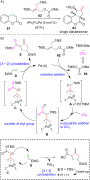
- carbene complex intermediate and a mechanism was proposed (Scheme 10B). An nucleophilic attack of the amine nitrogen onto the alkyne 139 under the effect of activated Pt(II) A produces zwitterionic intermediate B. Elimination of the methoxy group from zwitterion B generates the α,β-unsaturated carbene







Changed reactivity of secondary hydroxy groups in C8-modified adenosine – lessons learned from silylation
Beilstein J. Org. Chem. 2020, 16, 2854–2861, doi:10.3762/bjoc.16.234
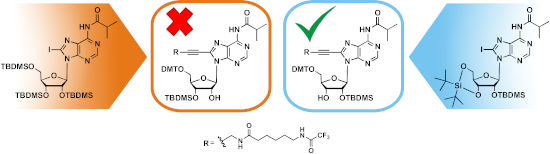
- RNA in a highly selective and efficient way. The more traditional strategies rely on reaction of isothiocyanates or NHS esters with aliphatic amines [13][14], or on addition of thiols to the α,β-unsaturated carbonyl face of maleimides [15]. Over the past years, the copper catalyzed alkyne–azide
- cycloaddition (CuAAC) became very popular [16]. A variant of this, the strain-promoted alkyne–azide cycloaddition (SPAAC) even offers the possibility of in cell application, as applies also to the inverse electron-demand Diels–Alder reaction (IEDDA) [17][18]. In vitro, often a combination of orthogonal methods


Ring-closing metathesis of prochiral oxaenediynes to racemic 4-alkenyl-2-alkynyl-3,6-dihydro-2H-pyrans
Beilstein J. Org. Chem. 2020, 16, 2757–2768, doi:10.3762/bjoc.16.226
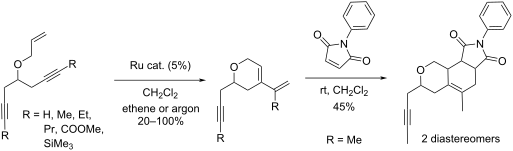
- alkenyl dialkynylphosphinates (Scheme 4) [31]. Thus, the possibility to perform a desymmetrizing RCEYM of oxaenediynes, which should lead to chiral compounds bearing both alkyne and conjugated diene systems, seemed highly appealing to us. Before addressing the enantioselective RCEYM, we report in this
- article the scope and limitations of the racemic metathesis with the emphasis on catalysts used, optional application of Mori conditions, and substitution in both the alkyne and the allyloxy part of the enediynes studied. Results and Discussion Choice and synthesis of starting substrates In our research
- (Scheme 9). With the aim to enable the further functionalization of the products of the oxaenediyne metathesis, we also synthesized substrates modified at the terminal alkyne positions with silyl or ester groups. Because these substrates were inaccessible by the above described methods, we obtained the




Palladium nanoparticles supported on chitin-based nanomaterials as heterogeneous catalysts for the Heck coupling reaction
Beilstein J. Org. Chem. 2020, 16, 2477–2483, doi:10.3762/bjoc.16.201
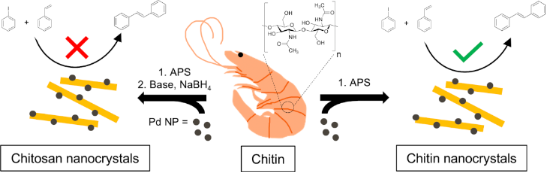
- and aldehyde–amine–alkyne (A3) coupling reactions [16]. Off this discovery, in this letter, we further expand the scope of using both ChNCs and ChsNCs as a catalyst support for Pd NPs to allow access towards other highly relevant C–C bond-forming reactions. A one-pot fabrication method is used to


Design and synthesis of a bis-macrocyclic host and guests as building blocks for small molecular knots
Beilstein J. Org. Chem. 2020, 16, 2314–2321, doi:10.3762/bjoc.16.192
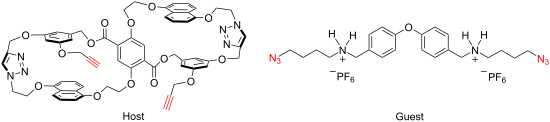
- alkyne–azide click cycloaddition as the linking step, and ester saponification as the cutting step [13][21] (Supporting Information File 1). The target trefoil knot using host 1 and guest 2 is shown in Figure 2c. The binding event during the double-threading step was modeled after previous literature
- more than twice as high and this route is more amenable to multigram scale reactions. Azido-bromide 6 can undergo both alkyne–azide click cycloaddition and etherification and the effect of the reaction order on the overall yield was explored next. The click cycloaddition was pursued first and reaction


Regioselective cobalt(II)-catalyzed [2 + 3] cycloaddition reaction of fluoroalkylated alkynes with 2-formylphenylboronic acids: easy access to 2-fluoroalkylated indenols
Beilstein J. Org. Chem. 2020, 16, 2193–2200, doi:10.3762/bjoc.16.184
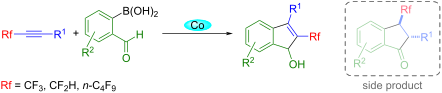
- corresponding trimer of the fluoroalkylated alkyne, as reported by our group [27]. Finally, only 2-iodoaryl ketones (R3 = Me, Cy, Ph) were applicable in this catalytic reaction, whereas the cycloaddition using 2-iodobenzaldehyde (R3 = H) did not work at all. Therefore, the development of practical protocols for
- cobalt(II) species as a catalyst to suppress the trimerization products (Scheme 1d). Results and Discussion Initially, we carried out the screening of the reaction conditions for the cobalt-catalyzed [2 + 3] cycloaddition using fluoroalkylated alkyne 1a and 2-formylphenylboronic acid (2A) [28]. The
- results are summarized in Table 1. The cycloaddition of the fluoroalkylated alkyne 1a with 2.0 equiv of 2-formylphenylboronic acid (2A) in the presence of 10 mol % each of Co(acac)2·2H2O and 1,2- bis(diphenylphosphino)ethane (dppe) in CH3CN at 80 °C for 18 h proceeded to afford the corresponding cyclic




Efficient [(NHC)Au(NTf2)]-catalyzed hydrohydrazidation of terminal and internal alkynes
Beilstein J. Org. Chem. 2020, 16, 2080–2086, doi:10.3762/bjoc.16.175
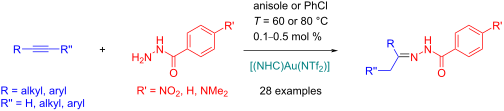
- alkynes (7a–j, 10 examples, 0.2–0.5 mol % [(NHC)Au(NTf2)], T = 60–80 °C) utilizing a complex with a sterically demanding bispentiptycenyl-substituted NHC ligand and the benign reaction solvent anisole, is reported. Keywords: alkyne; gold; homogeneous catalysis; hydrohydrazidation; NHC ligand
- oxygen and nitrogen-containing molecules, which tend to be more difficult for catalytic transformations utilizing other transition metals [32][33][34][35][36]. The [LAu(NTf2)]-catalyzed reaction can be described by a general mechanism (Scheme 1), in which the coordination of LAu+ by the alkyne [37][38
- activating the alkyne. Consequently, even at 0.05 mol % catalyst loading virtually quantitative substrate conversion was observed after extending the reaction time to 96 h (Table 2, entry 3). In the absence of the Au catalyst, no product was formed. Hydrohydrazidation reactions of terminal alkynes: Following


Reactions of 3-aryl-1-(trifluoromethyl)prop-2-yn-1-iminium salts with 1,3-dienes and styrenes
Beilstein J. Org. Chem. 2020, 16, 2064–2072, doi:10.3762/bjoc.16.173
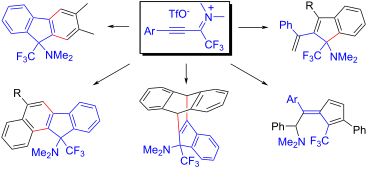
- effect of the iminium activation. The Diels–Alder reaction of alkyne 1a with 2,3-dimethylbutadiene also occurred under very mild conditions and yielded the iminium-substituted 1,4-cyclohexadiene 4-Ch (Scheme 2), which, due to its high sensitivity toward moisture, was not purified but was further
- , 22 h; 3. o-chloranil, CH2Cl2, rt, 12 h. Diels–Alder reaction of 1a and anthracene followed by an intramolecular SE(Ar) reaction. Reactions of propyn-1-iminium salt 1a with styrenes. A mechanistic proposal for the reaction of alkyne 1a with styrenes. Reaction of alkyne 1a with 1,2-dihydronaphthalene


Syntheses of spliceostatins and thailanstatins: a review
Beilstein J. Org. Chem. 2020, 16, 1991–2006, doi:10.3762/bjoc.16.166

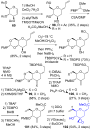
- in a high yield and enantioselectivity (Scheme 5) [17][18]. The Rubottom oxidation [28] of 43 gave a separable mixture of the desired 44 and its C-14 epimer (≈7:1 ratio). The reductive deoxygenation of 44 proceeded via the tosylhydrazone to afford 45, which upon desilylation and alkyne isomerization








Metal-free synthesis of phosphinoylchroman-4-ones via a radical phosphinoylation–cyclization cascade mediated by K2S2O8
Beilstein J. Org. Chem. 2020, 16, 1974–1982, doi:10.3762/bjoc.16.164

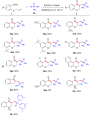
- synthesize a series of phosphine oxide and phosphonate-functionalized chroman-4-ones. Unfortunately, the preparation of the substrates involved a Rh-catalyzed hydrophosphinylation of a protected functional alkyne, and the subsequent deprotection with Hg(O2CCF3)2, which is not environmentally benign (Scheme




When metal-catalyzed C–H functionalization meets visible-light photocatalysis
Beilstein J. Org. Chem. 2020, 16, 1754–1804, doi:10.3762/bjoc.16.147

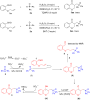
- undergoes cyclometalation via a concerted metalation–deprotonation (CMD) process furnishing a cyclometalated intermediate. Thereafter, coordination and subsequent insertion of the alkyne into the Co–C bond delivers a seven-membered cobaltacycle. The desired coupling product is then liberated by reductive
- et al., allowing the synthesis of N-heterocycles such as indoles and pyrroles. The targeted heterocyclic products were obtained by cyclization of acetanilides with alkyne derivatives via a direct ortho-metalation pathway (Figure 17) [79]. Acetyl substituents acted as DG in this transformation
- , followed by the insertion of an alkyne into the C–M bond. The key step of the dual catalysis is the reductive quenching of the photoexcited catalyst by Rh(I), a low-valent metal obtained after C–N reductive elimination. Hence, the Rh(III) active catalyst is regenerated and the resulting reduced


Clickable azide-functionalized bromoarylaldehydes – synthesis and photophysical characterization
Beilstein J. Org. Chem. 2020, 16, 1683–1692, doi:10.3762/bjoc.16.139
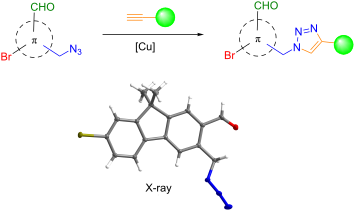
- cycloadditions with model alkynes. Besides two ortho- and para-bromo-substituted benzaldehydes, the azide functionalization of a fluorene-based structure will be presented. The copper(I)-catalyzed azide–alkyne cycloaddition (CuAAC) of the so-synthesized azide-functionalized bromocarbaldehydes with terminal
- oxazoline 24, oxazolidine 27 cyclized already during the reaction, caused by the increased basicity of the ring nitrogen. CuAAC reactions of bromocarbaldehydes We further investigated the reactivity of azide-functionalized bromocarbaldehydes 3, 4, and 5 in copper(I)-catalyzed azide–alkyne cycloaddition
- triazoles 33–44. General reaction conditions for CuAAC reactions: Azide (1.00 equiv), terminal alkyne (1.05 equiv), CuSO4·5H2O (0.1 equiv), sodium ascorbate (0.50 equiv), CHCl3, (0.1 M) and water (12.5 mM) at 25 °C for 48 h. b) Methylation reaction of adamantly-substituted triazole 42 with Meerwein′s salt


Pauson–Khand reaction of fluorinated compounds
Beilstein J. Org. Chem. 2020, 16, 1662–1682, doi:10.3762/bjoc.16.138
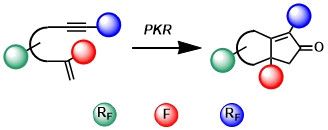
- the PKR of enynes containing a fluoride moiety. Keywords: alkene; alkyne; enyne; fluorine; Pauson–Khand; Introduction The prevalence of fluorine-containing molecules in drug-discovery programs is nowadays unquestionable [1][2][3]. The presence of fluorine atoms or fluorine-containing units at
- between an alkyne, an olefin and carbon monoxide, resulting in the regioselective formation of a cyclopentenone derivative (Scheme 1) [18][19][20][21][22]. This cobalt-mediated reaction was initially discovered by Pauson and Khand in the early 70s [23][24][25] and has since become a powerful
- transformation widely used in the synthesis of polycyclic complex molecules. The intermolecular variant shows a wide alkyne scope, but in terms of the olefin counterpart is limited to the use of ethylene or strained alkenes, such as norbornene and norbornadiene. The high prevalence of five-membered ring systems




Fluorohydration of alkynes via I(I)/I(III) catalysis
Beilstein J. Org. Chem. 2020, 16, 1627–1635, doi:10.3762/bjoc.16.135
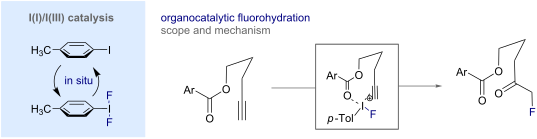
- suppressed catalysis. The prerequisite for this substructure was established by molecular editing and was complemented with a physical organic investigation of possible determinants. Keywords: α-fluoroketone; alkyne; fluorination; hypervalent iodine; organocatalysis; Introduction The venerable role of
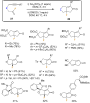
- these species in inhibiting aconitase [22] must be reconciled with synthetic utility. To that end, catalysis-based strategies to unmask the venerable α-fluorocarbonyl motif [23] from a terminal alkyne were considered (Figure 1). This general strategy was appealing given the commercial availability of
- exposure of a model internal alkyne to the standard conditions proved also successful affording 6 in 46% yield. Finally, replacement of the benzoate unit by a phthalimide moiety was possible and led to the protected amine derivative 7 (64% yield). The structure of α-fluoroketone 2 was unequivocally


Photocatalyzed syntheses of phenanthrenes and their aza-analogues. A review
Beilstein J. Org. Chem. 2020, 16, 1476–1488, doi:10.3762/bjoc.16.123
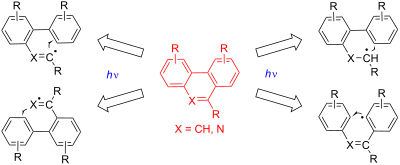
- approach was based on the one-electron reduction of diazonium salts (see the case of 13.3+ in Scheme 13), formed in situ by the reaction of the chosen 2-heteroaryl aniline (e.g., 13.1) with tert-butyl nitrite (1.5 equiv). Formation of the aryl radical 13.4· and following addition onto an alkyne moiety (e.g


The McKenna reaction – avoiding side reactions in phosphonate deprotection
Beilstein J. Org. Chem. 2020, 16, 1436–1446, doi:10.3762/bjoc.16.119
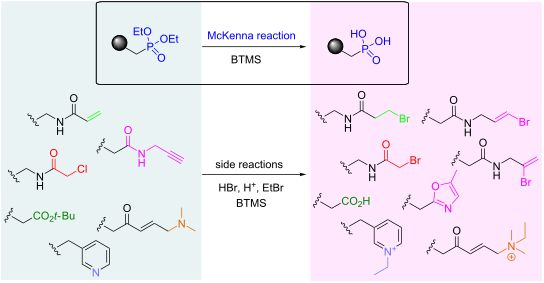
- , which should have remained intact under the conditions applied (Table 1, entry 1). The disappearance of the alkyne proton signals in the 1H NMR spectrum (δ 2.32 ppm (t, 4JHH = 2.6 Hz) and δ 4.28 ppm (dd, 3JHH = 5.2 Hz; 4JHH = 2.5 Hz)) and, instead, the appearance of signals at δ 2.44 ppm (d, 4JHH = 3.5


Photocatalysis with organic dyes: facile access to reactive intermediates for synthesis
Beilstein J. Org. Chem. 2020, 16, 1163–1187, doi:10.3762/bjoc.16.103
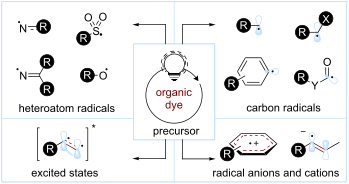
- oxidized to the corresponding sulfonyl radical by the excited state of eosin Y (OD13). The resulting reduced eosin Y•− could then perform a reduction of the alkyne to generate a radical anionic species. The latter would be subsequently protonated before recombining with the sulfonyl radical to afford the
- oxidation of 29.1 was achieved using Mes-Acr-Me+ (OD2) and a cobalt cocatalyst, ensuring an efficient dehydrogenation. Various N-heterocycles 29.3 were accessed via a radical cyclization cascade with the alkyne derivatives 29.2. Amidyl radical generation The oxidation of amides is more difficult compared to
- -butyl peroxide (40.1), generating a hydroxy radical and a tert-butoxy radical. The latter promotes an H abstraction from the substrate tetrahydrofuran (8.1), giving access to an α-oxy C(sp3) radical, which is trapped by an alkyne 40.2, providing the desired vinylation product 40.3. Sulfur-centered





Development of fluorinated benzils and bisbenzils as room-temperature phosphorescent molecules
Beilstein J. Org. Chem. 2020, 16, 1154–1162, doi:10.3762/bjoc.16.102
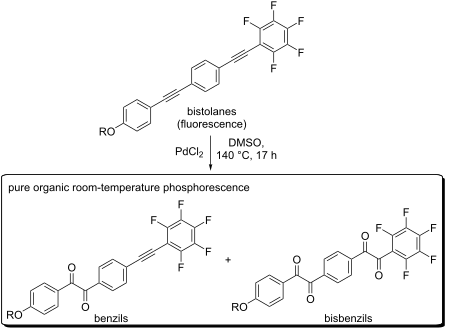
- materials. Keywords: alkyne oxidation; benzils; bistolanes; fluorinated compounds; phosphorescence; Introduction The development of organic light-emitting molecules is recognized as one of the most important studies because of the broad application of these compounds as fluorescence probes, bio-imaging
- corresponding bis-oxidized bisbenzil derivatives. Based on theoretical calculations, the selective formation of the fluorinated analogues stemmed from the slight modulation of the charge distribution at the alkyne moiety of the reactant induced by the electron-withdrawing fluorine atoms. Evaluation of the
- pathway for fluorinated benzil (2) and bisbenzil (3) derivatives. Proposed mechanism of Pd(II)-catalyzed alkyne oxidation by dimethyl sulfoxide (DMSO). Photophysical data from ultraviolet (UV)-visible absorption and steady-state photoluminescence (PL) measurementsa. Supporting Information Experimental



Palladium-catalyzed regio- and stereoselective synthesis of aryl and 3-indolyl-substituted 4-methylene-3,4-dihydroisoquinolin-1(2H)-ones
Beilstein J. Org. Chem. 2020, 16, 1084–1091, doi:10.3762/bjoc.16.95
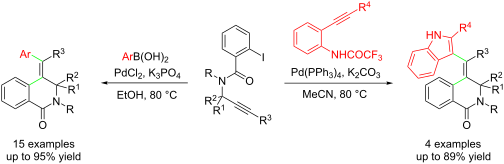
- intramolecular alkyne insertion in the initially formed arylpalladium iodide A (leading to B) occured faster than the direct reaction of A with arylboronic acids or with 2-alkynyltrifluoroacetanilides. Experimental General methods Melting points are uncorrected. IR spectra were recorded with a Perkin Elmer