Search results
Search for "benzene" in Full Text gives 874 result(s) in Beilstein Journal of Organic Chemistry. Showing first 200.
Post-synthesis from Lewis acid–base interaction: an alternative way to generate light and harvest triplet excitons
Beilstein J. Org. Chem. 2022, 18, 825–836, doi:10.3762/bjoc.18.83
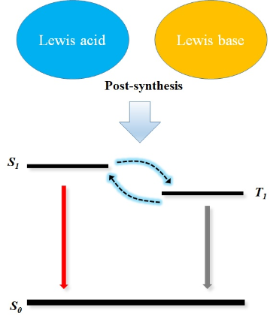
- substituents on the benzene rings of B(C6F5)3 is responsible for its stronger Lewis acidity compared to B(C6H5)3, and reacted efficiently with the basic fluorescent materials. In 2011, Hayashi investigated the modification of pyridyl-conjugated polymer films with the Lewis acid BF3 [31]. Through repeated acid


Thiophene/selenophene-based S-shaped double helicenes: regioselective synthesis and structures
Beilstein J. Org. Chem. 2022, 18, 809–817, doi:10.3762/bjoc.18.81
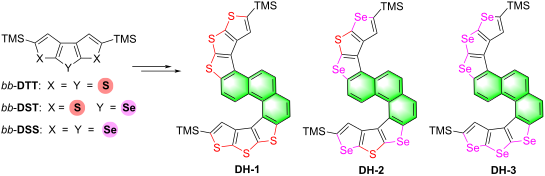
- Synthesis of 5a–c and DH-1–3 The synthetic route of 1,3-bis(2-(5-(trimethylsilyl)dithieno-[2,3-b:3',2'-d]thiophen-2-yl)vinyl)benzene (5a), 1,3-bis(2-(5-(trimethylsilyl)diselenopheno[2,3-b:3',2'-d]thiophen-2-yl)vinyl)benzene (5b), 1,3-bis(2-(5-(trimethylsilyl)diselenopheno[2,3-b:3',2'-d]selenophen-2-yl)vinyl
- )benzene (5c), and S-shaped double helicenes DH-1–3 is shown in Scheme 1. The double oxidative photocyclization of 5a–c is the key step in the synthesis of DH-1–3 because oxidative photocyclization induces double radicals on a double bond, which led to the C=C bond rotation along the resulting single C
- 5c with the total yield of 50%. According to the results of 1H NMR the ratio of cis and trans isomers was approximately 1:0.25 (Scheme 1). Compounds 5 had five isomers and three reaction sites (2, 4, and 6-positions in the benzene moiety) during oxidative photocyclization. Irradiation of 5a–c


Synthesis of α-(perfluoroalkylsulfonyl)propiophenones: a new set of reagents for the light-mediated perfluoroalkylation of aromatics
Beilstein J. Org. Chem. 2022, 18, 788–795, doi:10.3762/bjoc.18.79
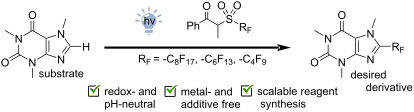
- ), both in less than 6 hours (Scheme 5). Unsubstituted arenes such as naphthalene were well tolerated in this methodology and produced 72% isolated yield of the perfluorohexylated product 11b. The radical addition to unsubstituted benzene was also found to be possible affording perfluorooctylated product
- 12c in 68% isolated yield, but as tends to be the case for inactivated substrates, excess quantities of benzene (50% v/v) were required. Compounds containing esters such as methyl 3,4,5-trimethoxybenzoate and naproxen methyl ester were also tolerated and the desired products 13b and 14b were isolated


An isoxazole strategy for the synthesis of 4-oxo-1,4-dihydropyridine-3-carboxylates
Beilstein J. Org. Chem. 2022, 18, 738–745, doi:10.3762/bjoc.18.74
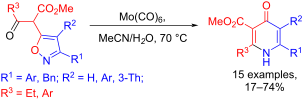
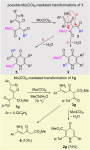
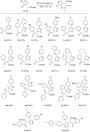
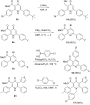
- due to their specific characteristics such as basicity, hydrogen bond forming ability, water solubility, and especially because of pyridine rings are bioisosteres of amines, amides, N-heterocyclic rings and benzene rings [1][2][3][4][5]. A special type of pyridine, the 4-pyridones, is also fairly well




Direct C–H amination reactions of arenes with N-hydroxyphthalimides catalyzed by cuprous bromide
Beilstein J. Org. Chem. 2022, 18, 647–652, doi:10.3762/bjoc.18.65
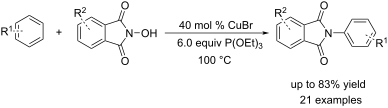
- (reaction 3) [27]. Herein, we report a method for the construction of aromatic amines via the copper-catalyzed intermolecular radical amination of arenes with N-hydroxyphthalimide (NHPI) under air. Results and Discussion Initially, N-hydroxyphthalimide (NHPI, 2a) was reacted with benzene, catalyzed by CuBr
- and 3). Different copper salts were tested and the reactions proved to be less efficient (Table 1, entries 4 and 5). Except for triethyl phosphite, the reaction could not be carried out with other phosphorus species (Table 1, entries 6–8). The optimum result was obtained when benzene was employed as
- )benzene was treated with 2a. Moreover, benzyl chloride and benzyl bromide tolerated the reaction conditions, affording the aryl-phthalimidated products of which the ortho and para products were the major isomers. It is also shown that disubstituted and trisubstituted arenes successfully reacted to give




Heteroleptic metallosupramolecular aggregates/complexation for supramolecular catalysis
Beilstein J. Org. Chem. 2022, 18, 597–630, doi:10.3762/bjoc.18.62
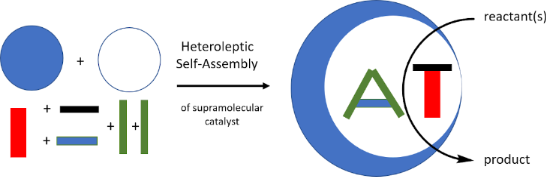
- -yloxy)benzene (66) at 55 °C (4 h) [94]. Notably, the fastest nanorotor [Cu2(55)(60)(64)]2+ afforded the highest yield of the click product 67 (62%) followed by nanorotors [Cu2(55)(60)(63)]2+ (44%) and [Cu2(55)(60)(62)]2+ (20%) (Figure 15). The analogous tendency was recognized in a second click reaction


A study of the photochemical behavior of terarylenes containing allomaltol and pyrazole fragments
Beilstein J. Org. Chem. 2022, 18, 588–596, doi:10.3762/bjoc.18.61
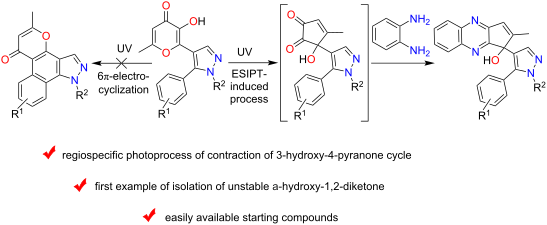
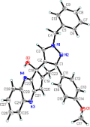
- two stages: 6π-electrocyclization of 1,3,5-hexatriene systems and subsequent aromatization of the central benzene ring. Among the significant diversity of terarylenes, compounds containing a 5-hydroxy-2-methyl-4H-pyran-4-one (allomaltol) fragment are of particular interest. For such systems two types




Synthesis of 3,4,5-trisubstituted isoxazoles in water via a [3 + 2]-cycloaddition of nitrile oxides and 1,3-diketones, β-ketoesters, or β-ketoamides
Beilstein J. Org. Chem. 2022, 18, 446–458, doi:10.3762/bjoc.18.47

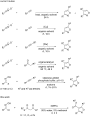
- -withdrawing or electron-donating substituents on the benzene rings. The results showed smooth and complete reactions that produced the 3,4,5-trisubstituted isoxazoles 3b–m in good to excellent yields. The overall trend was that electron-donating substituents on the phenyl hydroximoyl chlorides or the phenyl
- as the base, the reaction produced 3x in 40% yield (Table 2, entry 9). When benzene, dichloromethane, or a 5% water, 95% methanol mixture was used as the solvent and TEA was used as the base, the reaction gave a yield from 5% to 22% (Table 2, entries 6–8). Overall, the best results, i.e., 40% yield



Cs2CO3-Promoted reaction of tertiary bromopropargylic alcohols and phenols in DMF: a novel approach to α-phenoxyketones
Beilstein J. Org. Chem. 2022, 18, 420–428, doi:10.3762/bjoc.18.44
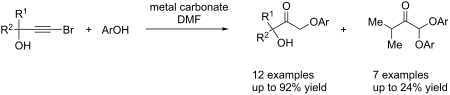
- outcome. α-Naphthol (2b) and β-naphthol (2c) reacted with bromopropargylic alcohol 1a in DMF or DMF/H2O to furnish naphthoxyhydroxyketones 4b,c in preparative yields (up to 81%) comparable to those of 4a. The introduction of an electron-withdrawing substituent (p-NO2) at the benzene ring gave a better


Menadione: a platform and a target to valuable compounds synthesis
Beilstein J. Org. Chem. 2022, 18, 381–419, doi:10.3762/bjoc.18.43
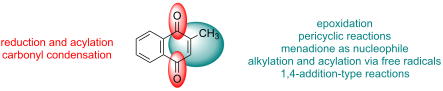
- ]. Chang’s group reported the use of 3D crystalline polyoxometalate-based coordination polymers (POMCPs) as heterogeneous catalysts, with H2O2, to synthesize 10 and the best result was obtained using H[CuII(ttb)(H2O)3]2[CuII(ttb)Cl]2[PW12O40]·4H2O (Httb = 1-(tetrazol-5-yl)-4-(triazol-1-yl)benzene) as the


Amamistatins isolated from Nocardia altamirensis
Beilstein J. Org. Chem. 2022, 18, 360–367, doi:10.3762/bjoc.18.40
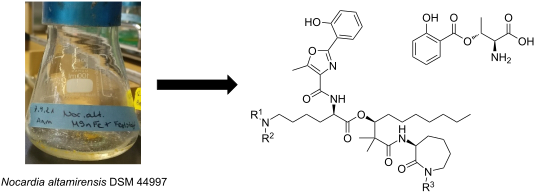
- ). HMBC correlations indicated the presence of a formyl group at the ε-amino group of this residue. The fourth spin system belongs to a 1,2-disubstituted benzene moiety, featuring proton signals at δH 7.03 (dd, J = 8.3, 1.2 Hz, H-33), 7.38 (ddd, J = 8.3, 7.3, 1.7 Hz, H-34), 6.97 (ddd, J = 7.9, 7.3, 1.2 Hz
- shifts of the remaining carbon atoms (C-26 to C-30) as well as HMBC correlations, we concluded the presence of a 5-methyloxazole-4-carboxylate-derived residue adjacent to the benzene ring. This partial structure is a known motif in some siderophores and is referred to as asteroidic acid [7][10][11]. Due


A resorcin[4]arene hexameric capsule as a supramolecular catalyst in elimination and isomerization reactions
Beilstein J. Org. Chem. 2022, 18, 337–349, doi:10.3762/bjoc.18.38
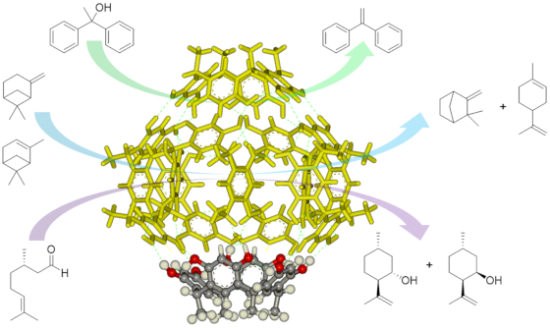
- [20] or hydrogen bonding units. In the latter case, a key role is played by the resorcin[4]arene 1 as a one-step multigram synthesis product, that spontaneously self-assembles in wet apolar solvents like chloroform or benzene forming a hexameric structure [21] thanks to the formation of a seam of


Regioselectivity of the SEAr-based cyclizations and SEAr-terminated annulations of 3,5-unsubstituted, 4-substituted indoles
Beilstein J. Org. Chem. 2022, 18, 293–302, doi:10.3762/bjoc.18.33
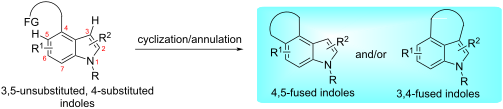
- , some trends in the prediction of site of ring-closure can be derived. In general, absence of an electron-donating group in the indole benzene ring promotes C3 regioselective cyclization, provided the size of the newly formed ring is greater than six. Under the opposite scenario, C5 regioselective


Recent developments and trends in the iron- and cobalt-catalyzed Sonogashira reactions
Beilstein J. Org. Chem. 2022, 18, 262–285, doi:10.3762/bjoc.18.31
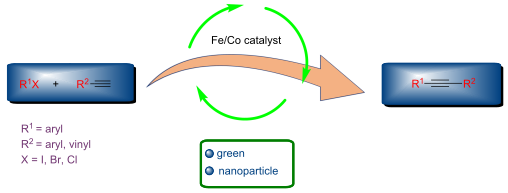
- products, pharmaceuticals of biological activity, and materials science [3]. In a Sonogashira reaction, the reaction conditions are mild and many reactions can be performed at room temperature [4]. However, the reaction is usually carried out in organic solvents like amines, benzene, THF, and DMF along
- )benzene is obtained by reductive elimination in the presence of ethylene glycol and regeneration of the cobalt(I)N complex to recommence the catalytic cycle (Scheme 35). Ley and co-workers disclosed the utility of a cobalt-containing perovskite, LaFe0.57Co0.38Pd0.05O3 [LaPd*] as a good catalyst (Scheme 36


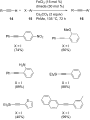


Synthesis of novel [1,2,4]triazolo[1,5-b][1,2,4,5]tetrazines and investigation of their fungistatic activity
Beilstein J. Org. Chem. 2022, 18, 243–250, doi:10.3762/bjoc.18.29
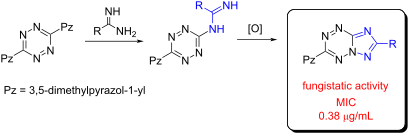
- cyclization of products 2a–i (Scheme 2). It has been shown that the oxidative cyclization of 1,2,4,5-tetrazines 2a–i into triazolo[1,5-b][1,2,4,5]tetrazines 3a–i takes place by action of (diacetoxyiodo)benzene on heating in trifluoroethanol. The target products were obtained in 10–86% yield. According to TLC
- (10%), but did not afford the products 3a,g. The reactions of 2 with (diacetoxyiodo)benzene in acetonitrile gave the target products 3a,b,g, however, both yields and purities of these compounds proved to be higher when trifluoroethanol was used as a solvent. It has been shown that new triazolo[1,5-b


Glycosylated coumarins, flavonoids, lignans and phenylpropanoids from Wikstroemia nutans and their biological activities
Beilstein J. Org. Chem. 2022, 18, 200–207, doi:10.3762/bjoc.18.23
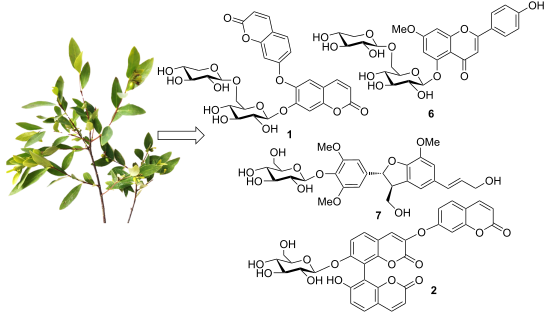
- , H-5'), 7.01 (dd, J = 8.5, 2.4 Hz, H-6'), 7.02 (d, J = 2.4 Hz, H-8'), suggesting the presence of a 1,2,3-trisubstituted benzene ring, and two meta-coupling protons at δH 7.81 (s, H-8) and 7.40 (s, H-5), indicating a 1,3,4,6-tetrasubstituted benzene ring. Additionally, the 1H NMR spectrum revealed



Ready access to 7,8-dihydroindolo[2,3-d][1]benzazepine-6(5H)-one scaffold and analogues via early-stage Fischer ring-closure reaction
Beilstein J. Org. Chem. 2022, 18, 143–151, doi:10.3762/bjoc.18.15
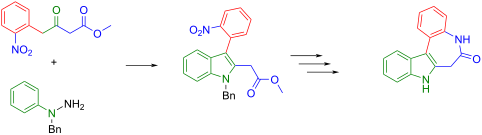
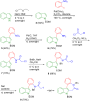
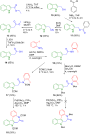
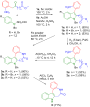
- the lactam ring of 3a. Gratifyingly, we obtained scaffold C in 71% yield by refluxing 3a with aluminum chloride in benzene (Scheme 6) [43]. For comparison, debenzylation of paullone with sodium in liquid ammonia gave A in 40% yield [23]. In addition, the generality of synthetic pathway (c) (Scheme 1






Bifunctional thiourea-catalyzed asymmetric [3 + 2] annulation reactions of 2-isothiocyanato-1-indanones with barbiturate-based olefins
Beilstein J. Org. Chem. 2022, 18, 25–36, doi:10.3762/bjoc.18.3
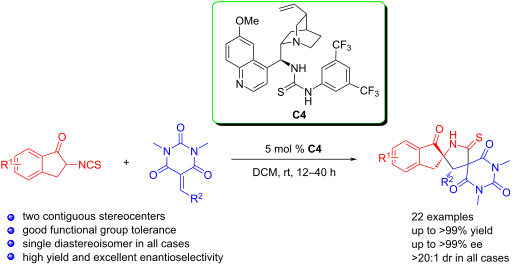
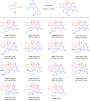
- 3, in addition to substrates 3ae and 3al, it appeared that the reaction could well tolerated the presence of electron-donating and electron-withdrawing groups on the benzene ring of substrates 2, and afforded most of the products 3 in excellent chemical yields (90 to >99%) and stereoselectivities
- (>20:1 dr, 84–>99% ee). Possibly due to the influence of steric hindrance, reactions involving substrate 2 with ortho-substitution on the benzene ring has lower yields and worse enantioselectivities than those with meta-substitution and para-substitution. Meanwhile, the enantioselectivities of the




The enzyme mechanism of patchoulol synthase
Beilstein J. Org. Chem. 2022, 18, 13–24, doi:10.3762/bjoc.18.2
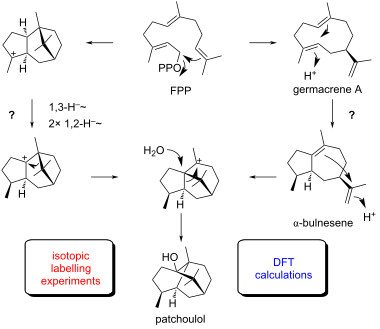
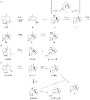
- natural product 17 [HRMS–ESI (m/z): 221.1904 [M + H]+, calculated for C15H25O+ 221.1900 and [α]D25 = −7.7, (c 0.26, benzene)] whose structure was elucidated by NMR spectroscopy (Table 1 and Figures S29–S35 in Supporting Information File 1). The 13C NMR spectrum showed signals for 15 carbons, including




Study on the interactions between melamine-cored Schiff bases with cucurbit[n]urils of different sizes and its application in detecting silver ions
Beilstein J. Org. Chem. 2021, 17, 2950–2958, doi:10.3762/bjoc.17.204
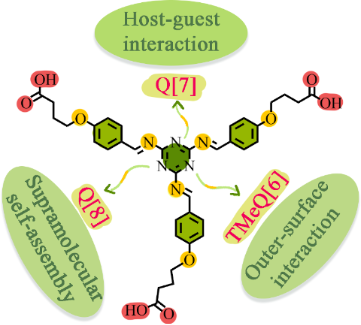
- TBT through outer-surface interaction than the host–guest interaction between the benzene ring or the melamine group of TBT. The host–guest interaction of Q[7]-TBT Using the same method of 1H NMR titration as above. The interaction between Q[7] and TBT is studied and is proved to be different from
- coordination ability of Schiff base, providing a theoretical study for the Q[n]-Schiff base complex. Experimental The synthesis of 1: Compound 1 is synthesized according to the literature (Scheme 2) [34]. Melamine (10 mmol, 1.26 g) was suspended in benzene (20 mL) and a suspension of 4-hydroxybenzaldehyde (30
- mmol, 3.66 g) in benzene (30 mL) was added under stirring, then reflux overnight. The pink powder was formed and washed with warm water to get the pure compound 1. 1H NMR (DMSO-d6) δ 12.1 (s, 3H), 9.76 (s, 3H), 7.80 (d, 6H), 7.08 (d, 6H), 4.06 (t, 6H), 2.40 (t, 6H), 1.93 (m, 6H) ppm. The synthesis of 2


Effect of a twin-emitter design strategy on a previously reported thermally activated delayed fluorescence organic light-emitting diode
Beilstein J. Org. Chem. 2021, 17, 2894–2905, doi:10.3762/bjoc.17.197
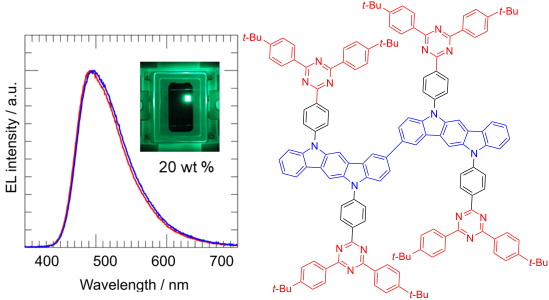
- )) (10 nm)/X wt % DICzTRZ or ICzTRZ: CzSi (20 nm)/PPF (2,8-bis(diphenylphosphoryl)dibenzo[b,d]furan) (5 nm)/TPBi (1,3,5-tris(1-phenyl-1H-benzo[d]imidazol-2-yl)benzene) (50 nm)/Liq (lithium quinolin-8-olate) (1 nm)/Al (80 nm), where X is 20 or 30. The PVK layer is applied to facilitate hole injection from


Host–guest interaction and properties of cucurbit[8]uril with chloramphenicol
Beilstein J. Org. Chem. 2021, 17, 2832–2839, doi:10.3762/bjoc.17.194
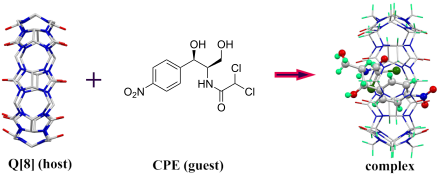
- superposition of the spectra recorded for Q[8] (a) and CPE (b), and there was no interaction. When comparing (c) and (d), the C–H stretching vibration peak was observed at 3100 cm−1 and the C=C skeleton vibration peaks of the benzene ring of CPE were observed at 1603, 1520 and 1413 cm−1; the bending vibration
- peaks of the O–H bonds were observed at 1106 and 1066 cm−1. The nitro-symmetric tensile vibration peak observed at 1503 cm−1 and the nitro-asymmetric tensile vibration peak at 1320 cm−1 disappeared in the spectrum (d). At the same time, the fingerprint region peak of the benzene ring observed from 500


The PIFA-initiated oxidative cyclization of 2-(3-butenyl)quinazolin-4(3H)-ones – an efficient approach to 1-(hydroxymethyl)-2,3-dihydropyrrolo[1,2-a]quinazolin-5(1H)-ones
Beilstein J. Org. Chem. 2021, 17, 2787–2794, doi:10.3762/bjoc.17.189
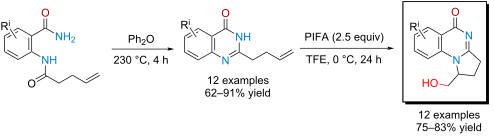
- of natural product-like compound libraries. Keywords: [bis(trifluoroacetoxy)iodo]benzene PIFA; nitrogen heterocycles; oxidative cyclization; pyrrolo[1,2-a]quinazolines; Introduction An important design concept in current drug discovery includes structural modifications of naturally occurring


Me3Al-mediated domino nucleophilic addition/intramolecular cyclisation of 2-(2-oxo-2-phenylethyl)benzonitriles with amines; a convenient approach for the synthesis of substituted 1-aminoisoquinolines
Beilstein J. Org. Chem. 2021, 17, 2765–2772, doi:10.3762/bjoc.17.186
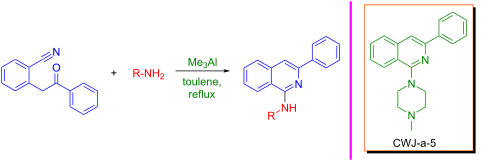
- -oxo-2-phenylethyl)benzonitriles substituted with various groups (Br, Cl and methyl) on both the benzene rings were treated with different anilines to yield respective products (5a–m) in good yields (Scheme 3). Examination of the effect of the substituents on the reaction revealed that the substituents
- on both the benzene rings of 2-(2-oxo-2-phenylethyl)benzonitriles have no significant impact on the yields of the reaction delivering the corresponding products in almost similar yields (3b–e, Scheme 3). Interestingly, different alkylamines such as methylamine, ethylamine and piperazines were also




Recent advances in the asymmetric phosphoric acid-catalyzed synthesis of axially chiral compounds
Beilstein J. Org. Chem. 2021, 17, 2729–2764, doi:10.3762/bjoc.17.185
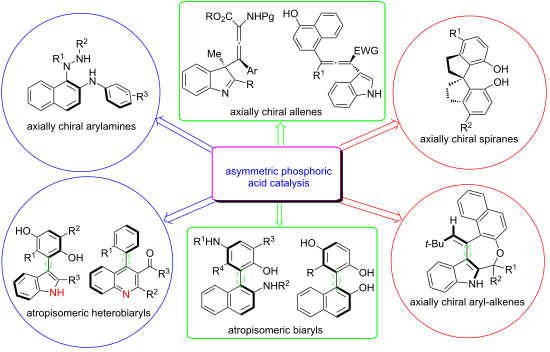
- chiral N-arylbenzimidazoles involving a carbon–carbon bond cleavage under optimal reaction conditions. In the presence of CPA 2, N1-(aryl)benzene-1,2-diamines 66 were used in the reaction with multicarbonyl compounds 67 and 68 and afforded the corresponding products, axially chiral N-arylbenzimidazoles
- 69 and 70 in high yields (up to 89%) with excellent enantioselectivity (up to 98% ee, Scheme 22) [78]. The primary amino group in the N1-(aryl)benzene-1,2-diamines reacts with the carbonyl group in 67 to give imine intermediate I-15 mediated by the chiral phosphoric acid. Meanwhile, isomerization of