


Search results
Search for "carbene" in Full Text gives 348 result(s) in Beilstein Journal of Organic Chemistry. Showing first 200.
Synthesis of 1-indanones with a broad range of biological activity
Beilstein J. Org. Chem. 2017, 13, 451–494, doi:10.3762/bjoc.13.48
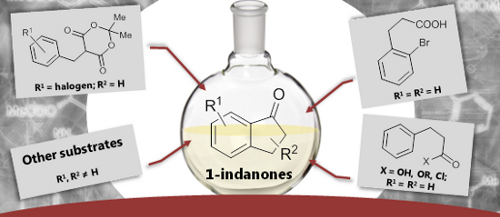
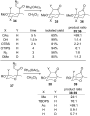
- carbene is an outstanding protocol for the synthesis of polyhydroxylated spiro- or fused 1-indanones [49]. Thus, the imidazole-based carbene catalyzed the conversion of phthalaldehydes 72 to dihydroxyspiro[indane-2,1′-isobenzofuran]-3-ones 73, whereas triazole-based carbene catalyzed the conversion of 72
- quaternary center with high diastereoselectivity as a consequence of the Stetter–Aldol–Aldol (SAA) reaction sequence. The Stetter–Aldol–Aldol conversion of the phthaldialdehyde derivatives 75 and o-formyl substituted chalcones 76 using the thiazole based carbene 78 as a precatalyst allowed to obtain spiro
- formation of a variety of 1-indanones and 1-tetralones has been proposed by Ogoshi et al. [53]. Thus, hydroacylation of o-allylbenzaldehyde derivatives 89 in the presence of [Ni(cod)2] and the N-heterocyclic carbene with an It-Bu substituent gave 1-indanones 90a–i in high yields (Scheme 29). In the case of


The reductive decyanation reaction: an overview and recent developments
Beilstein J. Org. Chem. 2017, 13, 267–284, doi:10.3762/bjoc.13.30
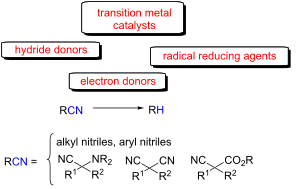
- developments using these compounds. Bu3SnH and N-heterocyclic carbene boranes The reductive decyanation of malononitriles to mononitriles using tributyltin hydride/AIBN in benzene was unexpectedly discovered by Curran and Seong [114]. Later, they made a full study and successfully reduced to mononitriles a
- monodecyanated products 69a,b. Bicyclic lactones 70a,b are then obtained in 3 steps in 41% and 51% yields, respectively, from 69a,b. Later Curran’s group discovered that NHC-boryl radicals, generated from NHC-boranes (N-heterocyclic carbene boranes), abstracted the cyano group from various organic nitriles and
- -heterocyclic carbene boranes and super electron donors provide new procedures for the reduction of malononitriles or α-cyanoesters. This opens the possibility to synthetic applications by using these intermediates in the future. Mechanism for the reduction under metal dissolving conditions. Example of


Highly bulky and stable geometry-constrained iminopyridines: Synthesis, structure and application in Pd-catalyzed Suzuki coupling of aryl chlorides
Beilstein J. Org. Chem. 2017, 13, 213–221, doi:10.3762/bjoc.13.24
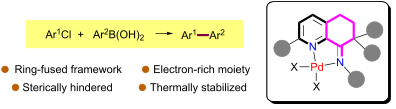
- aryl or alkyl halides include phosphine ligands independently developed by, for example, Buchwald [13][14][15], Hartwig [16][17], Fu [18][19][20], Kwong [21][22][23], Tang [24][25][26][27] and Lundgren [28], and N-heterocyclic carbene ligands due to the inherent strong sigma-donating property [29


Identification, synthesis and mass spectrometry of a macrolide from the African reed frog Hyperolius cinnamomeoventris
Beilstein J. Org. Chem. 2016, 12, 2731–2738, doi:10.3762/bjoc.12.269
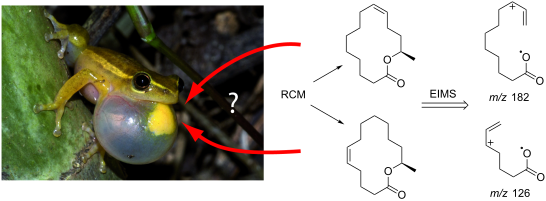
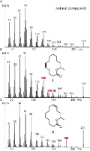
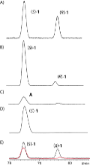
- ), requiring more than 10 steps each. RCM can shorten the synthesis remarkably, but requires careful selection of the RCM catalyst to control the double bond configuration. For example, Fürstner and Langemann obtained rac-1 in 31:69 (E/Z)-mixture using a Ru-carbene type catalyst similar to a Grubbs I catalyst



Electron-transfer-initiated benzoin- and Stetter-like reactions in packed-bed reactors for process intensification
Beilstein J. Org. Chem. 2016, 12, 2719–2730, doi:10.3762/bjoc.12.268
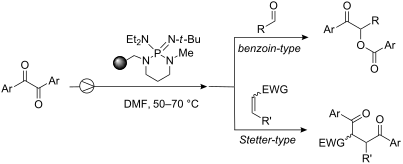
- ). Keywords: C–C coupling; continuos-flow; diketone; electron-transfer; umpolung; Introduction The polarity reversal (umpolung) of carbonyl compounds by N-heterocyclic carbene (NHC) or cyanide catalysis represents a straightforward strategy for the synthesis of valuable molecules such as, among the many


From betaines to anionic N-heterocyclic carbenes. Borane, gold, rhodium, and nickel complexes starting from an imidazoliumphenolate and its carbene tautomer
Beilstein J. Org. Chem. 2016, 12, 2673–2681, doi:10.3762/bjoc.12.264
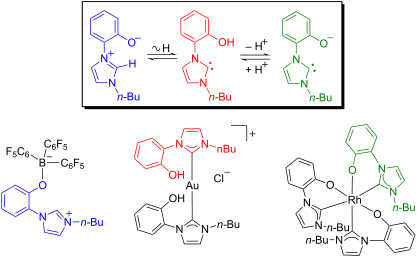
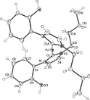
- (NHC)2][Cl] by coordination with the carbene carbon atom. The anionic N-heterocyclic carbene 1-(2-phenolate)imidazol-2-ylidene gives the complexes [K][Au(NHC−)2], [Rh(NHC−)3] and [Ni(NHC−)2], respectively. Results of four single crystal analyses are presented. Keywords: anionic ligand; carbene
- tautomer; imidazol-2-ylidene; mesoionic compound; mesomeric betaine; Introduction Since the first isolation of a stable N-heterocyclic carbene (NHC) [1] in 1991 this compound class has provided numerous highly efficient ligands of NHC-metal catalysts for cross-coupling reactions [2][3][4][5][6][7
- tautomer under these conditions; unfortunately the addition of less polar solvents induces a precipitation from solution so that detection of the NHC tautomer by NMR spectroscopy is not possible under these conditions. Base screening revealed that the anionic N-heterocyclic carbene 7 can be generated in




A direct method for the N-tetraalkylation of azamacrocycles
Beilstein J. Org. Chem. 2016, 12, 2457–2461, doi:10.3762/bjoc.12.239
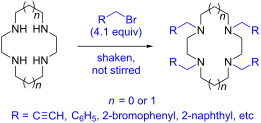
- -pyridylmethyl substituted cyclam [38]. In a related approach, Jeong and co-workers have developed an effective heterogenous system that combines a chloroform solution of cyclam and the alkyl halide with solid potassium carbonate (acknowledging the risk of competing carbene formation under these conditions), to


Organometallic chemistry
Beilstein J. Org. Chem. 2016, 12, 2216–2221, doi:10.3762/bjoc.12.213
- mechanism of the Dötz reaction, he found that chromacyclobutene structures were unrealistic intermediates and instead proposed vinylcarbene complexes as much more stable isomers [64][68][88]. Other research projects of his group included the synthesis of ruthenium–carbene complexes with cis-dichloro ligands
- for olefin metathesis catalysis [86][87][90][91][98][99][100][108][132][138][147], the characterization of copper–carbene complexes as intermediates in the cyclopropanation of alkenes [102][106][113][119][120], as well as detailed studies into the mechanism of the hydroformylation of alkenes. An

Correction: Recent advances in N-heterocyclic carbene (NHC)-catalysed benzoin reactions
Beilstein J. Org. Chem. 2016, 12, 2124–2124, doi:10.3762/bjoc.12.201
Ionic liquids as transesterification catalysts: applications for the synthesis of linear and cyclic organic carbonates
Beilstein J. Org. Chem. 2016, 12, 1911–1924, doi:10.3762/bjoc.12.181
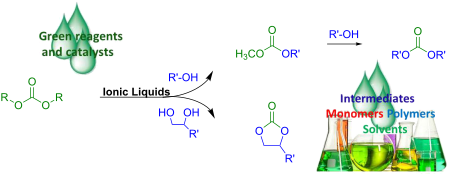
- to recover and recycled by physical separation, washing and drying. A similar approach has been implemented through the design of polymeric ionic liquid (PILs) based systems, such as poly(N-heterocyclic carbene)s and ordered mesoporous resol (OMR) polymers (OMR based on hexamethylenetetramine


Unusual reactions of diazocarbonyl compounds with α,β-unsaturated δ-amino esters: Rh(II)-catalyzed Wolff rearrangement and oxidative cleavage of N–H-insertion products
Beilstein J. Org. Chem. 2016, 12, 1904–1910, doi:10.3762/bjoc.12.180
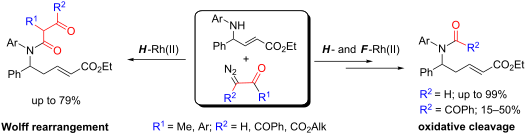
- a diversity of multicomponent reactions, which includes trapping of onium ylides by different electrophiles, such as activated С=С, С=O, C=N and other bonds [9]. A plethora of works aimed at realization of this “metal–carbene” methodology appeared in the last few years. Thus a diastereoselective
- provides a good way for the synthesis of multi-functionalized N-arylpyrrolidines by the same “metal–carbene” methodology with yields of up to 82% [15]. The reactions occur as a domino process involving an initial formation of N-ylides A followed by the intramolecular Michael addition with the conjugated


Experimental and theoretical investigations on the high-electron donor character of pyrido-annelated N-heterocyclic carbenes
Beilstein J. Org. Chem. 2016, 12, 1884–1896, doi:10.3762/bjoc.12.178
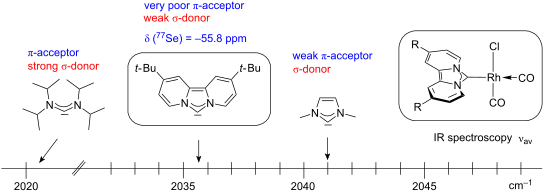
- (current address of corresponding author) 10.3762/bjoc.12.178 Abstract Rh(CO)2Cl(NHC) complexes of dipyrido-annelated N-heterocyclic carbenes were prepared. From the C–H coupling constant of the respective imidazolium salts and the N–C–N angle of the N-heterocyclic carbene (NHC), a weaker σ-donor
- the free carbene confirm the low σ-donor character by the fact that the σ-orbital of the carbene is the HOMO−1 that lies 0.58 eV below the HOMO which is located at the π-system. Natural population analysis reveals the lowest occupation of the pπ-orbital for the saturated carbene carbon atom and the
- highest for the pyrido-annelated carbene. Going from the free carbene to the Rh(CO)2Cl(NHC) complexes, the increase in occupancy of the complete π-system of the carbene ligand upon coordination is lowest for the pyrido-annelated carbene and highest for the saturated carbene. Keywords: carbonyl complexes


On the cause of low thermal stability of ethyl halodiazoacetates
Beilstein J. Org. Chem. 2016, 12, 1590–1597, doi:10.3762/bjoc.12.155

- are usually two orders of magnitude higher and the reaction times longer in comparison to the decomposition rate of 2b. There are in principle three pathways for the thermal decomposition of the halo diazoacetates [3]: 1) a unimolecular extrusion of dinitrogen giving N2 (g) and a carbene; 2) a
- pathway 1 is most likely. Pathway 1 is illustrated in Scheme 2. The proposed decomposition pathway is a unimolecular reaction where the rate determining step is the release of N2 to form the corresponding free carbene. This is in line with what has been reported for the thermal decomposition of other
- diazo compounds [3]. DFT calculations The proposed unimolecular extrusion of N2 to form the free carbene (Scheme 2) was investigated further by DFT calculations for compounds 1 and 2 and the results are summarized in Figure 3. In order to expande the calculation to fluorine, ethyl fluorodiazoacetate (2d


Dinuclear thiazolylidene copper complex as highly active catalyst for azid–alkyne cycloadditions
Beilstein J. Org. Chem. 2016, 12, 1566–1572, doi:10.3762/bjoc.12.151
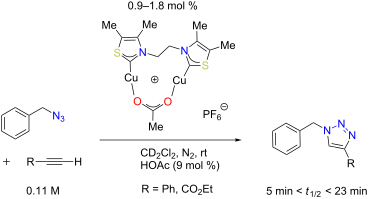
- Anne L. Schoffler Ata Makarem Frank Rominger Bernd F. Straub Organisch-Chemisches Institut, Universität Heidelberg, Im Neuenheimer Feld 270, D-69120 Heidelberg, Germany 10.3762/bjoc.12.151 Abstract A dinuclear N-heterocyclic carbene (NHC) copper complex efficiently catalyzes azide–alkyne
- -heterocyclic carbene, linker, sacrificial ligand, and counter ion. Keywords: catalysis; click; copper; CuAAC; N-heterocyclic carbene; thiazole; Introduction The copper-catalyzed azide–alkyne cycloaddition (CuAAC) is one of the most important “click” reactions for the facile covalent linking of two molecules
- conditions. Our research group has already established molecularly defined dicopper catalysts with unprecedented activity under diluted conditions with low catalyst loading [37][40]. Thus, we aimed at an even more facile synthesis of dicopper complexes with bis-N-heterocyclic carbene ancillary ligands


Methylpalladium complexes with pyrimidine-functionalized N-heterocyclic carbene ligands
Beilstein J. Org. Chem. 2016, 12, 1557–1565, doi:10.3762/bjoc.12.150
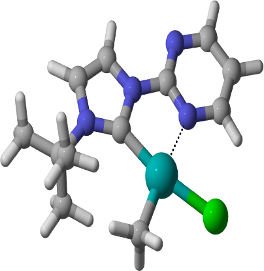
- = Cl, CF3COO, CH3) has been prepared by transmetalation reactions from the corresponding silver complexes and chloro(methyl)(cyclooctadiene)palladium(II). The dimethyl(1-(2-pyrimidyl)-3-(2,6-diisopropylphenyl)imidazolin-2-ylidene)palladium(II) complex was synthesized via the free carbene route. All
- byproduct of the methanol synthesis. Sen reported the activity of palladium(II) catalysts for the oxidation of methane [21] and several groups contributed to the progress in the field which is summarized in recent reviews [22][23]. The system based on N-heterocyclic carbene (NHC) ligands developed in our
- silver complexes 5–8 by transmetalation with chloro(methyl)(cyclooctadiene)palladium(II) [(COD)PdII(CH3)Cl] either in dichloromethane (A) or acetonitrile (B, Scheme 1). Although two isomers could be formed we only observed the isomer B, where the methyl group is located cis to the carbene carbon atom


Reactivity studies of pincer bis-protic N-heterocyclic carbene complexes of platinum and palladium under basic conditions
Beilstein J. Org. Chem. 2016, 12, 1334–1339, doi:10.3762/bjoc.12.126
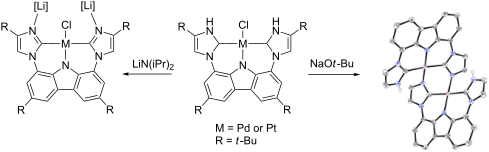
- .12.126 Abstract Bis-protic N-heterocyclic carbene complexes of platinum and palladium (4) yield dimeric structures 6 when treated with sodium tert-butoxide in CH2Cl2. The use of a more polar solvent (THF) and a strong base (LiN(iPr)2) gave the lithium chloride adducts monobasic complex 7 or analogous
- dibasic complex 8. Keywords: NHC; 15N NMR spectroscopy; palladium; platinum; protic N-heterocyclic carbene; Introduction N-Heterocyclic carbenes (NHCs) have been extensively researched for a number of purposes since 1991 when Arduengo first isolated free NHCs [1][2][3]. NHCs as ligands have been known
- for the NM nitrogen. The ∆∆ values for both nitrogens are relatively unchanged as the carbene character of the ligand is still intact. Interestingly, 6-Pd shows a similar small ∆∆ value for the NH (2.6) but a greater ∆∆ for the NM of 17.4 ppm. This is possibly a result of the differing ring strain in


On the mechanism of imine elimination from Fischer tungsten carbene complexes
Beilstein J. Org. Chem. 2016, 12, 1322–1333, doi:10.3762/bjoc.12.125
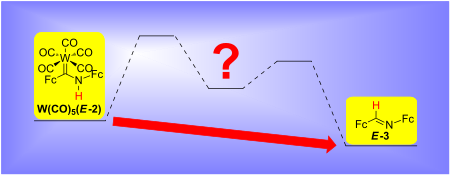
- Philipp Veit Christoph Forster Katja Heinze Institute of Inorganic and Analytical Chemistry, Johannes Gutenberg-University, Duesbergweg 10-14, 55128 Mainz, Germany 10.3762/bjoc.12.125 Abstract (Aminoferrocenyl)(ferrocenyl)carbene(pentacarbonyl)tungsten(0) (CO)5W=C(NHFc)Fc (W(CO)5(E-2)) is
- synthesized by nucleophilic substitution of the ethoxy group of (CO)5W=C(OEt)Fc (M(CO)5(1Et)) by ferrocenyl amide Fc-NH– (Fc = ferrocenyl). W(CO)5(E-2) thermally and photochemically eliminates bulky E-1,2-diferrocenylimine (E-3) via a formal 1,2-H shift from the N to the carbene C atom. Kinetic and
- dissociation, followed by an oxidative addition/pseudorotation/reductive elimination pathway with short-lived, elusive seven-coordinate hydrido tungsten(II) intermediates cis(N,H)-W(CO)4(H)(Z-15) and cis(C,H)-W(CO)4(H)(Z-15). Keywords: carbene complexes; ferrocene; imine; mechanism; tungsten; Introduction




Artificial Diels–Alderase based on the transmembrane protein FhuA
Beilstein J. Org. Chem. 2016, 12, 1314–1321, doi:10.3762/bjoc.12.124
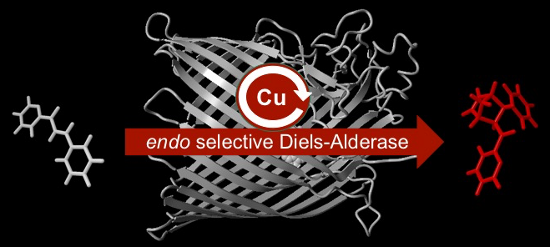
- copper(II) complexes were covalently linked to an engineered variant of the transmembrane protein Ferric hydroxamate uptake protein component A (FhuA ΔCVFtev). Copper(I) was incorporated using an N-heterocyclic carbene (NHC) ligand equipped with a maleimide group on the side arm at the imidazole nitrogen


Conjugate addition–enantioselective protonation reactions
Beilstein J. Org. Chem. 2016, 12, 1203–1228, doi:10.3762/bjoc.12.116
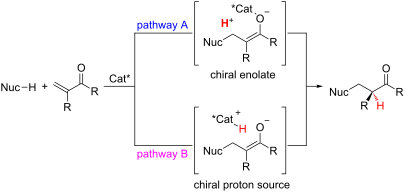
- without significantly affecting the reaction (93–97% yield, 92:8 to 96:4 er). The authors also explored further elaboration of the products to access enantioenriched cysteine analogues. The Glorius lab has made use of N-heterocyclic carbene (NHC) catalysts for intermolecular Stetter reactions between


Synthesis of 2-oxindoles via 'transition-metal-free' intramolecular dehydrogenative coupling (IDC) of sp2 C–H and sp3 C–H bonds
Beilstein J. Org. Chem. 2016, 12, 1153–1169, doi:10.3762/bjoc.12.111
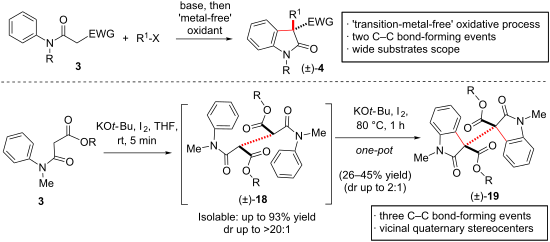
- -oxindoles while working on asymmetric synthesis of 3,3-disubstituted-2-oxindoles via a Pd-catalyzed (chiral N-heterocyclic carbene as ligands) intramolecular α-arylation of an amide [35][36][37]. For this 'intramolecular dehydrogenative coupling' (IDC) of Csp2-H and Csp3-H they used 2.2 equiv of CuCl2 and 5





Chiral cyclopentadienylruthenium sulfoxide catalysts for asymmetric redox bicycloisomerization
Beilstein J. Org. Chem. 2016, 12, 1136–1152, doi:10.3762/bjoc.12.110
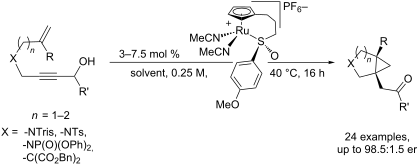
- ) fragment in a bidentate fashion and undergoes a redox isomerization reaction wherein the carbinol proton performs a 1,2-hydride shift. The resulting vinylruthenium intermediate can be seen as a resonance structure of a ruthenium carbene, which coordinates to a pendant alkene, performs a [2 + 2
- coordination. The pendant olefin prefers to approach the carbene anti to the aforementioned sulfoxide, resulting in the observed enantiomer of 53. In THF, the rate of epimerization is significantly slower than the [2 + 2] cycloaddition, which means that the enantiomeric ratios observed in the products are




The synthesis of functionalized bridged polycycles via C–H bond insertion
Beilstein J. Org. Chem. 2016, 12, 985–999, doi:10.3762/bjoc.12.97
- systems rapidly and efficiently, though additional catalyst development is needed. Keywords: bridged rings; carbene; cascade reaction; C–H bond insertion; nitrene; Introduction Bridged polycyclic natural products are an inviting challenge to the synthetic chemist for their rich display of functional
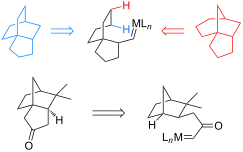
- access to multiple targets from a single intermediate produced on large scale that may be stored until needed [17]. The C–H bond insertion has great potential as a method to access different polycyclic isomers (e.g., 1 or 3) through C–C or C–N bond formation from a carbene or nitrene, respectively
- have organized this review by the catalyst used, with free carbenes first, followed by Cu, Rh, Au, Pt, and then W-catalyzed reactions. Review Metal-free reactions While transition metal catalysis has seen widespread adoption for carbene and nitrene reactions, it is not necessary for a controlled




Enantioselective carbenoid insertion into C(sp3)–H bonds
Beilstein J. Org. Chem. 2016, 12, 882–902, doi:10.3762/bjoc.12.87
- enantioselective insertion of these organometallic species into these non-polarized bonds is a recent topic in the chemical literature, when compared to the first reports of carbenoid chemistry around the 1950s. Carbene is a molecule bearing a functional group with a divalent neutral carbon. This structural
- framework results in the presence of a nonbonding electron pair that may adopt two electronic configurations: singlet and triplet (Figure 1). A carbenoid is an organometallic complex where the carbene acts as a neutral ligand to a metal center. This ensures a greater stability of the carbene, allows the
- carbene carbon atom, the insertion reaction can be more or less selective. Very electrophilic carbenoid intermediates, for example, display little regio- and stereoselectivity, favoring the occurrence of side reactions. A less electrophilic carbenoid intermediate, on the other hand, has a lower reactivity


Bi- and trinuclear copper(I) complexes of 1,2,3-triazole-tethered NHC ligands: synthesis, structure, and catalytic properties
Beilstein J. Org. Chem. 2016, 12, 863–873, doi:10.3762/bjoc.12.85
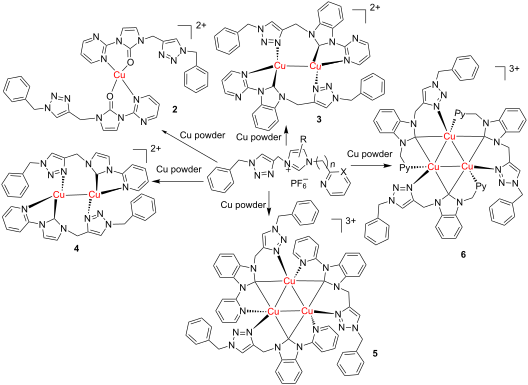
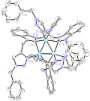
- Republic of China 10.3762/bjoc.12.85 Abstract A series of copper complexes (3–6) stabilized by 1,2,3-triazole-tethered N-heterocyclic carbene ligands have been prepared via simple reaction of imidazolium salts with copper powder in good yields. The structures of bi- and trinuclear copper complexes were
- atmosphere at room temperature. Keywords: copper; CuAAC reaction; : N-heterocylic carbene; 1,2,3-triazole; Introduction N-Heterocyclic carbene (NHC) have interesting electronic and structural properties. This resulted in their use as versatile ligands in organometallic chemistry and homogeneous catalysis
- , reports concerning their preparation and use of 1,4-disubstituted-1,2,3-triazoles bearing NHC ligands are rare [22][23]. Elsevier et al. [23] reported several of palladium(II) complexes containing a heterobidentate N-heterocyclic carbene-triazolyl ligand. These palladium(II) complexes are active



Recent advances in C(sp3)–H bond functionalization via metal–carbene insertions
Beilstein J. Org. Chem. 2016, 12, 796–804, doi:10.3762/bjoc.12.78

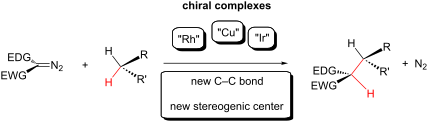
- –carbene; site-selectivity; Introduction Direct functionalization of inactivated C–H bonds, especially C(sp3)–H bonds, have attracted significant attentions in recent years. The C(sp3)–H bond activation strategies based on radical reactions and transition metal catalysis have been explored, alongside the
- simple aliphatic C(sp3)–H bonds. In this context, catalytic metal–carbene C(sp3)–H bond insertion represents an alternative and unique approach for this purpose. Metal–carbene insertion into a C(sp3)–H bond, well-recognized as one of the typical reactions of carbene species, have been studied extensively
- catalysts, the carbenic carbon of the metal–carbene species is positively charged in general, as shown by the resonance structure. Consequently, when the electron-deficient carbenic carbon approaches the C(sp3)–H bonds, the C–H bonds with high electron density will react preferentially [9]. However, the





