


Search results
Search for "functionalization" in Full Text gives 800 result(s) in Beilstein Journal of Organic Chemistry. Showing first 200.
Direct C2–H alkylation of indoles driven by the photochemical activity of halogen-bonded complexes
Beilstein J. Org. Chem. 2023, 19, 575–581, doi:10.3762/bjoc.19.42
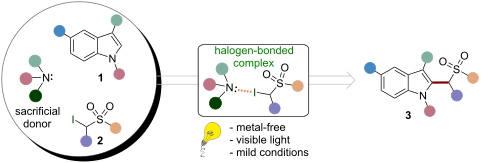
- ) and carbon–heteroatom (C–X) bonds has been and still is a central topic in organic synthesis [1][2]. Historically, organic chemists have extensively relied on the use of noble-metal-based catalysts (e.g., Pd, Rh, Ir, among others) to achieve such type of functionalization [3][4][5]. However, reliance
- tool to guide the development of greener and more convenient synthetic protocols [7][8][9][10][11][12]. In this context, photochemical approaches based on electron donor–acceptor (EDA) complexes have been successfully exploited to drive the direct C–H functionalization of a large number of organic
- to photochemically generate electrophilic radicals that can drive the functionalization of suitable electron-rich substrates [23]. Exploiting this strategy, here we report a novel metal-free methodology for the direct homolytic aromatic substitution (HAS) reaction of indoles 1 with α-iodosulfones 2


A new oxidatively stable ligand for the chiral functionalization of amino acids in Ni(II)–Schiff base complexes
Beilstein J. Org. Chem. 2023, 19, 566–574, doi:10.3762/bjoc.19.41
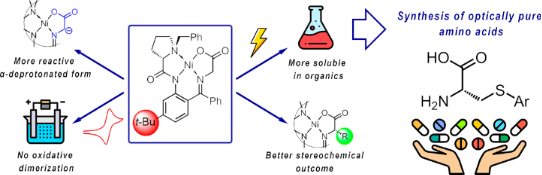
- thermodynamically controlled stereoselectivity as compared to the parent Belokon complex. Additionally, functionalization with the tert-butyl group significantly enhances the reactivity of the deprotonated glycine complex towards electrophiles as compared to the anionic species formed from the original Belokon
- ]. Functionalization of the phenyl ring in the benzophenone gives rise to an additional axial chirality (L3), thus improving stereoselectivity observed at the removed stereocenter [24][25]. Replacing N-benzylproline for 2,7-dihydro-1H-azepine (L5) allowed obtaining a new tridentate ligand with chemically stable axial
- base chiral template is a fairly versatile “tool” that can be adapted to a specific task. A relatively new approach to functionalization of amino acids is a combination of a stereoselective synthesis in a metal-coordination environment with electrochemical activation [31]. It increases the reactivity



Transition-metal-catalyzed domino reactions of strained bicyclic alkenes
Beilstein J. Org. Chem. 2023, 19, 487–540, doi:10.3762/bjoc.19.38
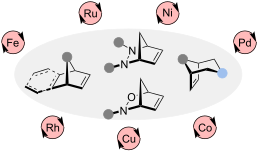
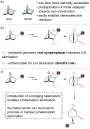
- bridging heteroatom increases the ring-strain energy of the system, conceptualized by the decrease in bond distances. Typically, there are two modes for ring-strain release. First, functionalization of the double bond mildly alleviates the ring strain by relieving nonoptimal bond angles enforced by the
- metal catalysts towards coordination on the exo face biases the reaction outcome towards exo-selective functionalization. Upon exo coordination of a metal catalyst with the π system and subsequent migratory insertion, the resulting alkyl metal intermediate is quite limited in how it can propagate. In
- on the functionalization of the bicyclic framework itself rather than its use as a transient mediator for domino reactions [13][14][15][16][17]; however, we point the reader to several excellent reviews. The “trapped” alkyl metal intermediate can undergo subsequent migratory insertion steps with









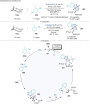


Transition-metal-catalyzed C–H bond activation as a sustainable strategy for the synthesis of fluorinated molecules: an overview
Beilstein J. Org. Chem. 2023, 19, 448–473, doi:10.3762/bjoc.19.35
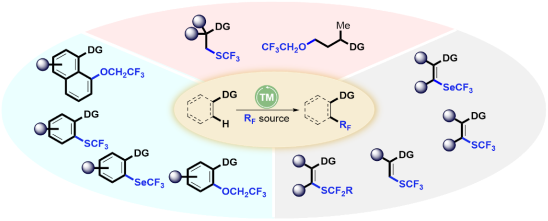
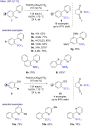
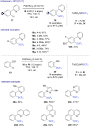
- approaches, the transition-metal-catalyzed functionalization of various scaffolds with a panel of fluorinated groups (XRF, X = S, Se, O) offered straightforward access to high value-added compounds. This review will highlight the main advances made in the field with the transition-metal-catalyzed
- functionalization of C(sp2) and C(sp3) centers with SCF3, SeCF3, or OCH2CF3 groups among others, by C–H bond activation. The scope and limitations of these transformations are discussed in this review. Keywords: C–H bond activation; emergent fluorinated groups; homogeneous catalysis; organofluorine chemistry
- [6][7][8][9][10][11]. Among them [2][5][12][13][14][15][16][17][18], the direct functionalization of a simple C–H bond by transition-metal catalysis [19][20][21][22][23][24][25][26][27][28][29][30][31][32][33][34][35][36][37][38][39][40][41][42][43] became an important tool offering new








Asymmetric synthesis of a stereopentade fragment toward latrunculins
Beilstein J. Org. Chem. 2023, 19, 428–433, doi:10.3762/bjoc.19.32
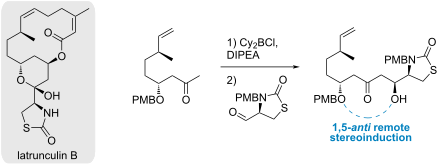
- secured by the NMR analysis of Mosher's esters made from (R)-(+)- and (S)-(−)-α-methoxy-α-trifluoromethylphenylacetic acid (MTPA) (see Supporting Information File 1) [23][24][25], confirming the installation of the C-11 stereocenter of latrunculins. The next steps consisted in the functionalization of 12




CuAAC-inspired synthesis of 1,2,3-triazole-bridged porphyrin conjugates: an overview
Beilstein J. Org. Chem. 2023, 19, 349–379, doi:10.3762/bjoc.19.29
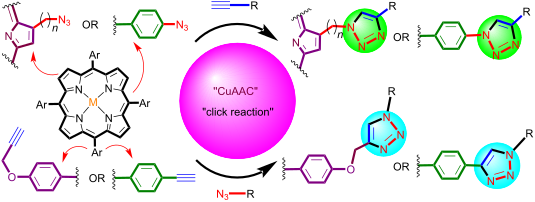
- carbohydrate sequences suitable for tumor-binding-associated lectins on the porphyrin periphery. Continuing our work on the functionalization of porphyrin at the meso-position [32][33], we used the CuAAC click protocol to synthesize meso-phenyltriazole-linked porphyrin-coumarin dyads 44–48 in good to excellent




Synthesis and reactivity of azole-based iodazinium salts
Beilstein J. Org. Chem. 2023, 19, 317–324, doi:10.3762/bjoc.19.27
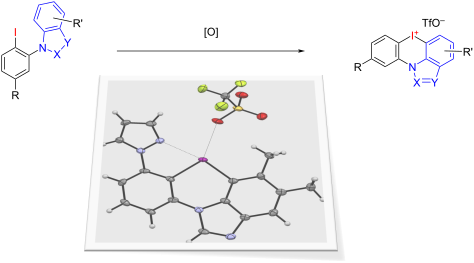
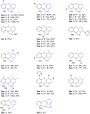
- compounds based on azol-based iodazinium as reactive intermediates. Most interestingly, functionalization of the heteroarene salts was achieved without an undesired attack of the delicate C–I bond at the hypervalent iodine center. Experimental General procedure for the synthesis of azoiodazinium salts
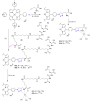
- ; c) I: PhNH2, Cu(OAc)2·H2O, Na2CO3, iPrOH, 40 °C, 17 h, II: CuI, Cs2CO3, DMF, 120 °C, 40 h; d) TsNH2, (CH2OH)2, iPrOH, Na2CO3, 100 °C, 24 h, e) KX, H2O, EtOH, reflux; f) CuI, DMEDA, 1,4-dioxane, TBAI, rt, 24 h; g) MeOTf, DMF, 40 °C, 24 h. Post-functionalization of mono- and dicationic iodonium salts




Strategies to access the [5-8] bicyclic core encountered in the sesquiterpene, diterpene and sesterterpene series
Beilstein J. Org. Chem. 2023, 19, 245–281, doi:10.3762/bjoc.19.23
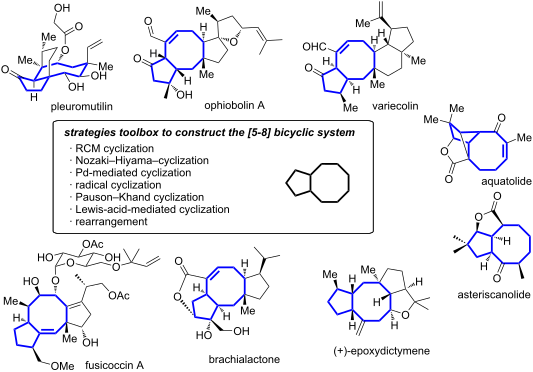
- iterative addition of geranyl (C10) or farnesyl (C15) building blocks derived from isoprene as starting unit and further structure rearrangement and functionalization [1]. This ubiquitous distribution highlights their pivotal role in living systems such as cell wall structural agent or ecological mediator
- following criteria: position/stage of the key cyclooctane ring formation in the synthesis plan, the selectivity, and the opportunity for late-stage functionalization. Review 1 Metathesis: ring-closing metathesis and related methods The metathesis reaction, first discovered by serendipity in the 1950s, has
- . Further functionalization steps finally furnished (+)-ophiobolin A (8). In the fusicoccanes family, cotylenol (50), the aglycon of cotylenin A (131) (see section 3.1), is a fungal metabolite which displays various interesting biological activities [28]. For example, it expresses a moderate cytotoxicity


Total synthesis of insect sex pheromones: recent improvements based on iron-mediated cross-coupling chemistry
Beilstein J. Org. Chem. 2023, 19, 158–166, doi:10.3762/bjoc.19.15

- transmetallation step, and not in the coordination of the iron-containing intermediates [36][37]. The use of magnesium alkoxide salts, either as an ω-functionalization of the nucleophilic partner (Scheme 4) or as an external molecular additive such as EtOMgCl (Scheme 5), also likely proceeds similarly to the NMP


1,4-Dithianes: attractive C2-building blocks for the synthesis of complex molecular architectures
Beilstein J. Org. Chem. 2023, 19, 115–132, doi:10.3762/bjoc.19.12
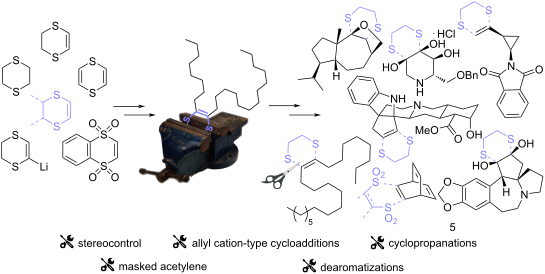
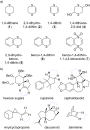
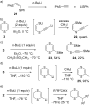
- derivatives are relatively limited (see Scheme 4, top frame), but many of these heterocycles can be easily prepared from simple and widely available organic building blocks. The parent fully saturated 1,4-dithiane (1) is commercially available, but has limited synthetic application, as the functionalization
- Downstream chemistry and further applications: deprotection, cleavage or further functionalization of 1,4-dithianes In organic synthesis, the deprotection of 1,3-dithianes has a reputation of being a troublesome reaction. In the chemical literature, there are probably well over a hundred distinct procedures
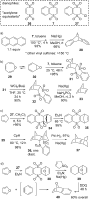
- ][57]. Stereoselective 5,6-dihydro-1,4-dithiin-based synthesis of cis-olefins [42][58]. Addition to aldehydes and applications in stereoselective synthesis. Direct C–H functionalization methods for 1,4-dithianes [82][83]. Known cycloaddition reactivity modes of allyl cations [84][85][86][87][88][89][90










Practical synthesis of isocoumarins via Rh(III)-catalyzed C–H activation/annulation cascade
Beilstein J. Org. Chem. 2023, 19, 100–106, doi:10.3762/bjoc.19.10
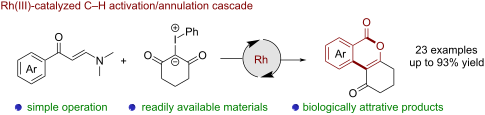
- . The success of gram-scale reaction and diverse functionalization of isocoumarins demonstrated the synthetic utility of this protocol. Keywords: C–H activation; enaminone; iodonium ylide; isocoumarin; rhodium catalysis; Introduction Isocoumarins are an important structural motif in many naturally
- easily available, which have been established as versatile synthetic building blocks for the synthesis of cyclic scaffolds [25]. In 2016, Zhu et al. reported the first example of a Rh-catalyzed C–H functionalization of enaminones with alkynes and α-diazo-β-ketoesters to access naphthalenes [26]. Very
- and diverse functionalization of the isocoumarin products highlight the tremendous synthetic potential of this methodology in chemical synthesis and drug discovery. Experimental A 10 mL screw-cap vial was charged with enaminone 1 (0.2 mmol), iodonium ylide 2 (0.6 mmol), [Cp*RhCl2]2 (6.2 mg, 5 mol


NaI/PPh3-catalyzed visible-light-mediated decarboxylative radical cascade cyclization of N-arylacrylamides for the efficient synthesis of quaternary oxindoles
Beilstein J. Org. Chem. 2023, 19, 57–65, doi:10.3762/bjoc.19.5
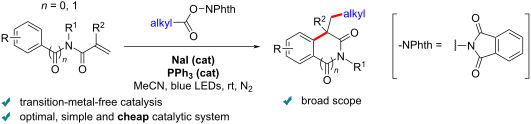
- future synthetic developments [61][62][63][64][65][66][67]. The NaI/PPh3 system has been further broadly applied to the functionalization of alkenes [68][69][70], as well as to decarboxylative C(sp3)–X bond formation [71], cyclization of 1,7-enynes [72][73] and other reactions [74][75][76][77]. Inspired
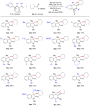
- -active ester derived from methionine could be converted effectively to α-aminoalkylation product 3al in overall 70% yield, which thus provides a mild method for the functionalization and derivation of abundant natural or unnatural amino acids. Some functional groups such as a terminal alkene in 3am, a




Modern flow chemistry – prospect and advantage
Beilstein J. Org. Chem. 2023, 19, 33–35, doi:10.3762/bjoc.19.3
- diameter can both accelerate the transformations as well as lead to significantly less side products by continuously removing the products from the irradiation source. As an example, Noël and co-workers performed efficient irradiation in flow for the C(sp3)–H functionalization of gaseous hydrocarbons [8
Redox-active molecules as organocatalysts for selective oxidative transformations – an unperceived organocatalysis field
Beilstein J. Org. Chem. 2022, 18, 1672–1695, doi:10.3762/bjoc.18.179
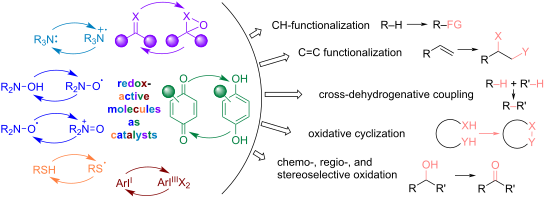
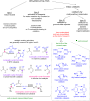
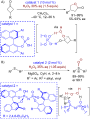
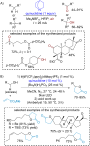
- aimed at overviewing the current state-of-art and perspectives of oxidative organocatalysis by redox-active molecules with the emphasis on challenging chemo-, regio- and stereoselective CH-functionalization processes. The catalytic systems based on N-oxyl radicals, amines, thiols, oxaziridines, ketone
- /peroxide, quinones, and iodine(I/III) compounds are the most developed catalyst types which are covered here. Keywords: CH-functionalization; free radicals; hypervalent iodine; N-oxyl radicals; redox-active molecules; Introduction Organocatalysis can be defined as catalysis by small organic molecules
- organic syntheses [5][6][7][8][9] and offer rich opportunities for the adaptation of organocatalysis. The diversity of such transformations spans from the functionalization of hydrocarbon raw materials to the fine organic synthesis, including functional group transformations, oxidative cyclizations, and











Functionalization of imidazole N-oxide: a recent discovery in organic transformations
Beilstein J. Org. Chem. 2022, 18, 1575–1588, doi:10.3762/bjoc.18.168
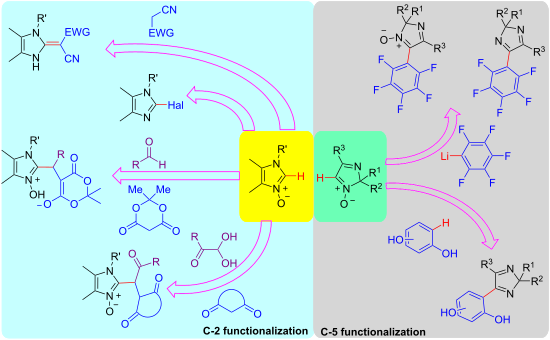
- summarized so that the chemists, researchers, and pharmaceutical industries find its effectiveness in near future for the synthesis of potent, novel, and non-toxic drug molecules. Keywords: functionalization; imidazole N-oxide; mechanistic insights; multicomponent reaction; nucleophilic substitution
- review paper exploring several procedures of C–H bond activation for the functionalization of N-oxides [12] and in 2019, Dongli Li and co-workers analyzed heterocyclic N-oxides with regard to their usefulness in synthesis of organic drug molecules and catalysis [13]. Many review papers have been
- position of the imidazole moiety was captured by triethylamine as base to provide the expected product 23. Multicomponent reactions In 2016, Vitaly S. Mityanov and co-workers unfolded a multicomponent condensation reaction methodology for the C-2 functionalization of 2-unsubstituted imidazole N-oxides







Simple synthesis of multi-halogenated alkenes from 2-bromo-2-chloro-1,1,1-trifluoroethane (halothane)
Beilstein J. Org. Chem. 2022, 18, 1567–1574, doi:10.3762/bjoc.18.167
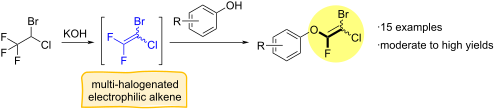
- fluorine atoms were prepared in moderate to good yields via the reactions of phenols and 2-bromo-2-chloro-1,1,1-trifluoroethane (halothane) in the presence of KOH. This simple reaction enabled the construction of highly halogenated compounds with the potential for further functionalization. The reaction


Microelectrode arrays, electrosynthesis, and the optimization of signaling on an inert, stable surface
Beilstein J. Org. Chem. 2022, 18, 1488–1498, doi:10.3762/bjoc.18.156
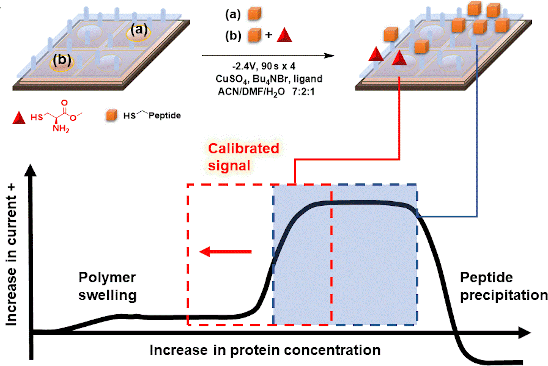
- of the molecules placed at those sites. In the majority of such studies, the molecules to be added to the electrodes in an array are attached directly to the array either through the use of a self-assembled monolayer or direct functionalization of a carbon electrode [12][13]. Following the synthetic


Design, synthesis, and evaluation of chiral thiophosphorus acids as organocatalysts
Beilstein J. Org. Chem. 2022, 18, 1471–1478, doi:10.3762/bjoc.18.154
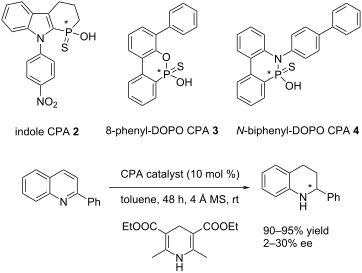
- hydroxyphosphoryl (P(=O)OH) moiety which renders the phosphorus atom achiral. Substituents can be introduced on the ring system by ortho-functionalization with R groups on each ring. This functionalization helps introduce steric bulk and a range of electron densities extending the C2-symmetry of the BINOL, creating
- duplicative functionalization of the backbone. Moreover, commercially available CPAs are extremely expensive (>> 500,000 $/mol) and immobilizing the CPAs on a solid support is not straightforward [19][20]. In order to avoid this, a significant investment in time must be made to complete the multistep


1,4,6,10-Tetraazaadamantanes (TAADs) with N-amino groups: synthesis and formation of boron chelates and host–guest complexes
Beilstein J. Org. Chem. 2022, 18, 1424–1434, doi:10.3762/bjoc.18.148
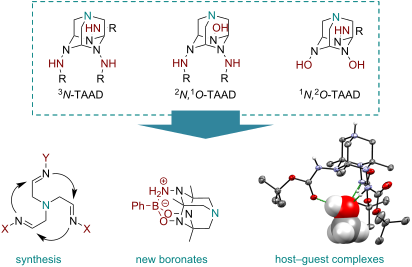
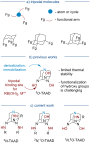
- , the preparation of trisubstituted adamantanes is challenging because multiple functionalization of the parent hydrocarbon is not selective, while the synthesis from acyclic precursors requires multistep synthetic routes [10][14]. The use of azaadamantanes is more advantageous as they are prepared via
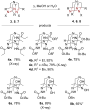
- corresponding linear tris-oximes) and difficulties in the functionalization of N-hydroxy groups [21]. Currently, our research is focusing on TAAD derivatives bearing protected and free amino groups at the bridge nitrogen atoms (N-TAADs, Figure 1c). Our main interest in these products was due to their potential





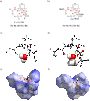

Preparation of an advanced intermediate for the synthesis of leustroducsins and phoslactomycins by heterocycloaddition
Beilstein J. Org. Chem. 2022, 18, 1385–1395, doi:10.3762/bjoc.18.143
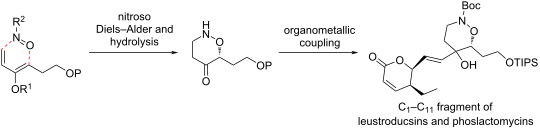
- reported extensive studies on the regio-and stereoselectivity of nitroso Diels–Alder reactions between various nitroso derivatives and functionalized dienes [23]. These studies led to the selection of enol phosphates as ketone precursors for the diene functionalization. Enol phosphates display several


On drug discovery against infectious diseases and academic medicinal chemistry contributions
Beilstein J. Org. Chem. 2022, 18, 1355–1378, doi:10.3762/bjoc.18.141

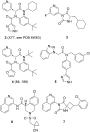
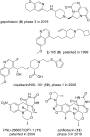
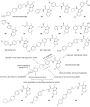
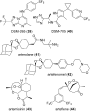
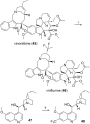
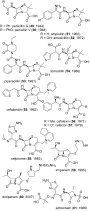
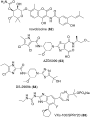
- example of a very late stage functionalization of molecule would be the use of zinc sulfinate chemistry [297] which, as depicted here, allowed to introduce in one step a trifluoromethyl group on the hydroquinidine 47 and access the otherwise rather hard-to-get compound 48. In fact, CH functionalization is







Modular synthesis of 2-furyl carbinols from 3-benzyldimethylsilylfurfural platforms relying on oxygen-assisted C–Si bond functionalization
Beilstein J. Org. Chem. 2022, 18, 1256–1263, doi:10.3762/bjoc.18.131
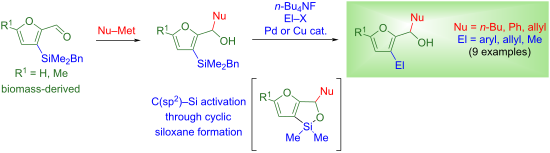
- biomass-derived furfural and 5-methylfurfural, are converted into 3-silylated 2-furyl carbinols upon condensation with organomagnesium or organolithium reagents. The hydroxy unit of the carbinol adducts can be exploited to promote C3(sp2)–Si bond functionalization through intramolecular activation. Two
- -based protocol for the catalytic C3–H silylation of furfurylimines [15]. This method allows to install a C–Si bond poised for further functionalization on the furfural unit, and thereby leads to synthetic platforms useful to access elaborated furans. This prospect was demonstrated with platforms relying
- ). With the 3-silylated 2-furyl carbinol substrates at hand, we then considered C–Si bond activation strategies relying on the assistance of the oxygen atom to promote electrophilic substitution reactions with carbon electrophiles. C3–Si bond functionalization through intramolecular activation by


A one-pot electrochemical synthesis of 2-aminothiazoles from active methylene ketones and thioureas mediated by NH4I
Beilstein J. Org. Chem. 2022, 18, 1249–1255, doi:10.3762/bjoc.18.130
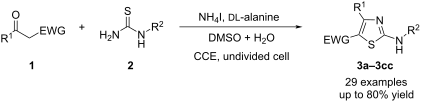
- the in situ generation of α-iodocarbonyl ketones from constant current electrolysis (CCE) of ketones in the presence of iodide ions. It is worth noting that we have also reported an electrochemical method for the synthesis of 2-aminothiazoles via the one-pot direct α-C–H functionalization of ketones
- demonstrate the feasibility of our idea, ethyl acetoacetate (1a) and thiourea (2a) were chosen as model substrates for the optimization of reaction conditions. Based on our previous studies on the halide-mediated α-C–H functionalization of carbonyl compounds [32][33][34][35], graphite was chosen as the


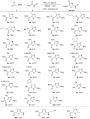


Reductive opening of a cyclopropane ring in the Ni(II) coordination environment: a route to functionalized dehydroalanine and cysteine derivatives
Beilstein J. Org. Chem. 2022, 18, 1166–1176, doi:10.3762/bjoc.18.121
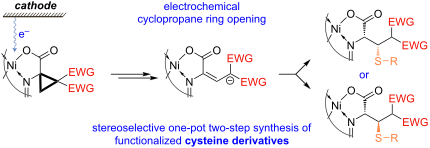
- construction of complex multifunctional molecules [3][4][5][6][7][8]. Recently, we elaborated a versatile electrochemical approach for the stereoselective functionalization of a side chain of amino acids involved in the Ni(II) chiral coordination environment [9][10][11][12][13][14][15]. A combination of redox
- provides targeted pharmacophoric properties of the bio-active molecule [23] but also opens a route to its further functionalization, being a building block with wide variety of reactivity. A donor–acceptor cyclopropane concept suggested in the 1980s [24] became extremely popular in the recent decade [25
- recently, two publications from the Werz group appeared concerning anodic activation of donor–acceptor cyclopropanes followed by their functionalization with arenes [43] or yielding oxy-ketones or 1,2-dioxanes [44]; the latter process was inspired by a previous report of Buriez [45]. The anodic



Morita–Baylis–Hillman reaction of 3-formyl-9H-pyrido[3,4-b]indoles and fluorescence studies of the products
Beilstein J. Org. Chem. 2022, 18, 926–934, doi:10.3762/bjoc.18.92
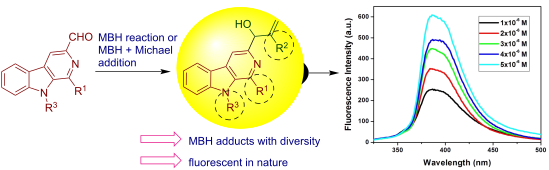
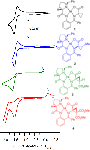
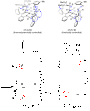
- functionalization of the β-carboline framework. Accordingly, 3-formyl-9H-β-carbolines 6a–e were subjected to MBH reaction with acrylonitrile A and various acrylates B–E under neat conditions in the presence of DABCO as depicted in Scheme 2. All the products were furnished smoothly in 27–72% yield. During this study
- -pyrido[3,4-b]indole derivatives for the C-3 functionalization by application of the MBH reaction to generate C-3-substituted β-carboline MBH adducts. It was revealed from spectroscopic analysis that few derivatives underwent MBH reaction as well as Michael addition reaction to form type 8 compounds





