Search results
Search for "mass spectrometry" in Full Text gives 682 result(s) in Beilstein Journal of Organic Chemistry. Showing first 200.
[2 + 1] Cycloaddition reactions of fullerene C60 based on diazo compounds
Beilstein J. Org. Chem. 2021, 17, 630–670, doi:10.3762/bjoc.17.55
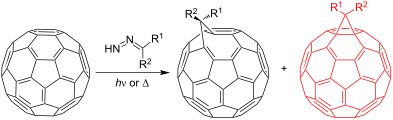
- 35 [92] and 36–38 (Figure 4) [93]. A synthesis based on benzo-18-crown-6 to give 39 showed that attachment of the crown ether to the surfaces of fullerene molecules makes it easier to detect them by mass spectrometry [94]. This method was used to incorporate benzocrown ether residues in order to
Synthesis and properties of oligonucleotides modified with an N-methylguanidine-bridged nucleic acid (GuNA[Me]) bearing adenine, guanine, or 5-methylcytosine nucleobases
Beilstein J. Org. Chem. 2021, 17, 622–629, doi:10.3762/bjoc.17.54
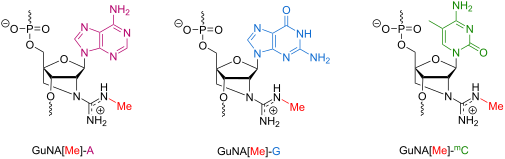
- acetate buffer (pH 7.0). The purity and structure of the oligonucleotides were confirmed by HPLC and MALDI–TOF mass spectrometry, respectively. UV melting experiments and melting profiles The UV melting experiments were carried out using SHIMADZU UV-1650PC and SHIMADZU UV-1800 spectrometers equipped with
Breakdown of 3-(allylsulfonio)propanoates in bacteria from the Roseobacter group yields garlic oil constituents
Beilstein J. Org. Chem. 2021, 17, 569–580, doi:10.3762/bjoc.17.51
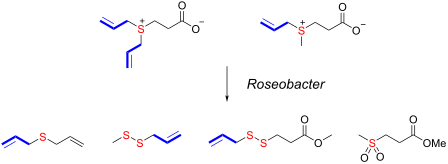
- stripping apparatus (CLSA) [33], followed by the extraction of the filters with CH2Cl2 and analysis by gas chromatography–mass spectrometry (GC–MS) of the resulting extracts. Most of the compounds were readily identified by the comparison of their mass spectra and retention indices to published data. Every


Amino- and polyaminophthalazin-1(2H)-ones: synthesis, coordination properties, and biological activity
Beilstein J. Org. Chem. 2021, 17, 558–568, doi:10.3762/bjoc.17.50
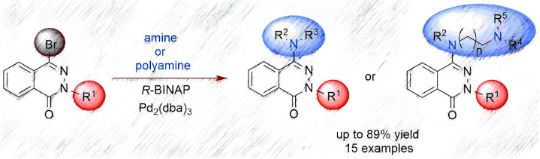
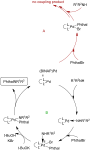
- with a donor nitrogen atom could result in the formation of complexes following a different way of coordination with the metal ion than described in the literature [41]. The complexing properties of compounds 5i, 6d, and 7 were investigated by mass spectrometry (ESIMS). The spectra were recorded after





Synthesis and physicochemical evaluation of fluorinated lipopeptide precursors of ligands for microbubble targeting
Beilstein J. Org. Chem. 2021, 17, 511–518, doi:10.3762/bjoc.17.45
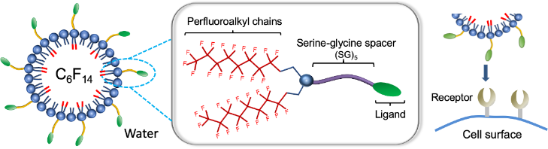
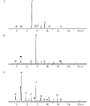
- was stepwisely elongated, and eventually conjugated with the (perfluoroalkyl)ethyl acids (Scheme 2). After the cleavage from the resin, the Fmoc groups of the amino acids were removed, and the F-lipopeptides were purified using a dialysis membrane. According to mass spectrometry, FTIR, and HPLC
- Information Supporting Information File 46: Mass spectrometry and FTIR data as well as RP-HPLC chromatograms of lipopeptides 1–4. Funding The work was supported by JSPS KAKENHI Grant Number JP18KK0439 and JP20K08139. We also acknowledge CONACYT (Mexico) for a Ph.D. fellowship (E.E.M.O., grant #459199).


Unexpected rearrangements and a novel synthesis of 1,1-dichloro-1-alkenones from 1,1,1-trifluoroalkanones with aluminium trichloride
Beilstein J. Org. Chem. 2021, 17, 404–409, doi:10.3762/bjoc.17.36
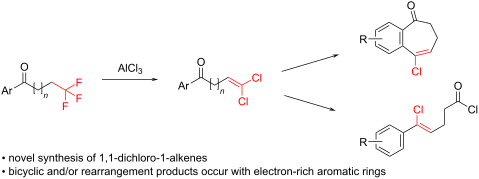
- mass spectrometry and so it was converted to carboxylic acids 14 and 15 by the treatment with silica gel and NaOH, respectively, in order to confirm its identity. A possible mechanism for the formation of 13 from 5n could involve the formation of a terminal carbocation from trichloroalkanone 8n
- Supporting Information File 58: Detailed experimental procedures and NMR spectra for all compounds referenced. Acknowledgements We thank Mr Martin Annau for his valuable assistance in NMR interpretation and structure elucidation, Mrs Susanne Ries for performing the mass spectrometry measurements and Dr




Synthesis of legonmycins A and B, C(7a)-hydroxylated bacterial pyrrolizidines
Beilstein J. Org. Chem. 2021, 17, 334–342, doi:10.3762/bjoc.17.31

- diamond ATR module, and νmax values are expressed in cm−1. HRMS measurements were performed by the Mass Spectrometry Service at the Chemistry Research Laboratory, University of Oxford, using a Bruker microTOF spectrometer. Values of m/z are calculated to 0.0001 Daltons from the chemical formula, and all


Regioselective chemoenzymatic syntheses of ferulate conjugates as chromogenic substrates for feruloyl esterases
Beilstein J. Org. Chem. 2021, 17, 325–333, doi:10.3762/bjoc.17.30
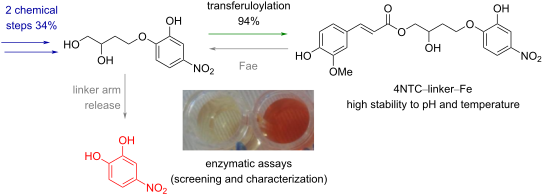
- (t), doublet of doublets (dd), doublet of doublets of doublets (ddd), broad (br), and quadruplet of triplets (qt) as abbreviations. Analyses and assignments were made using 1D (1H, 13C, and J-modulated spin–echo (Jmod)) and 2D NMR experiments (COSY and HSQC). High-resolution mass spectrometry (HRMS


19F NMR as a tool in chemical biology
Beilstein J. Org. Chem. 2021, 17, 293–318, doi:10.3762/bjoc.17.28
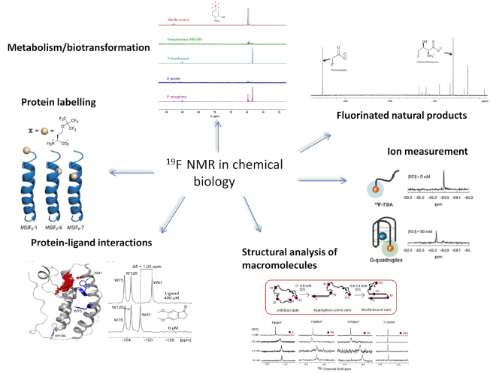
- ). Each independent intermediate was characterized on the basis of its 19F NMR chemical shift and the kinetics by which each species formed or decayed were evaluated in real-time. By combining the 19F NMR data with that provided by complementary analytical techniques, mass spectrometry (electrospray
- widely used by those investigating the biodegradation of fluorinated xenobiotics, with researchers more commonly relying on liquid or gas chromatography–mass spectrometry methods. Objectively, these techniques are much more sensitive than 19F NMR, provide more structural information and are probably more


Direct synthesis of anomeric tetrazolyl iminosugars from sugar-derived lactams
Beilstein J. Org. Chem. 2021, 17, 115–123, doi:10.3762/bjoc.17.12
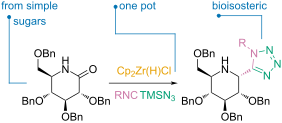
- -5-yl)-iminosugars, using 2,3,5-tri-O-benzyl-ᴅ-ribofuranose- and -arabinofuranose-derived lactams as substrates were made. Very unexpectedly, we failed to isolate such products although we did observe their formation via mass spectrometry of the reaction mixtures. Employing alternative procedures did




Control over size, shape, and photonics of self-assembled organic nanocrystals
Beilstein J. Org. Chem. 2021, 17, 42–51, doi:10.3762/bjoc.17.5
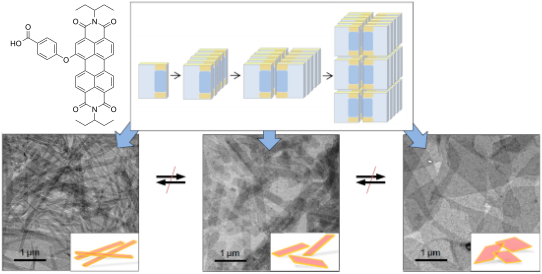
- applicability of organic nanocrystals. Experimental General information The 1H and 13C NMR spectra were recorded at 20 °C on a 300 MHz NMR spectrometer (Bruker). Electrospray ionization (ESI) mass spectrometry was performed using a Micromass Platform instrument. UV–vis absorption and fluorescence measurements




The fluorescence of a mercury probe based on osthol
Beilstein J. Org. Chem. 2021, 17, 22–27, doi:10.3762/bjoc.17.3
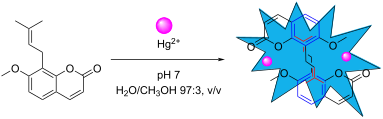
- fluorescence, UV–vis spectrophotometry, mass spectrometry, and 1H NMR spectroscopy, and the recognition mechanism is discussed. The results showed that OST and Hg2+ can form a complex with a stoichiometric ratio of 1:1. The binding constant was 1.552 × 10⁵ L∙mol−1, having a highly efficient and specific
- irreversible nerve damage. Therefore, it is very important to develop a highly sensitive and selective method for mercury detection. At present, the detection of mercury mainly includes atomic absorption and atomic emission spectrometry [4], inductively coupled plasma mass spectrometry [5][6], and capillary
- UV absorption intensity was achieved at n(Hg2+)/n((OST) + (Hg2+)) = 0.5 at 325 nm, indicating that the binding ratio of the OST probe to Hg2+ was 1:1. Combined with mass spectrometry data (Figure 5), the fragment peak of ESIMS at m/z 892.5422 corresponded to [OST2–Hg2]+ (calculated as 892.5429


Molecular basis for protein–protein interactions
Beilstein J. Org. Chem. 2021, 17, 1–10, doi:10.3762/bjoc.17.1
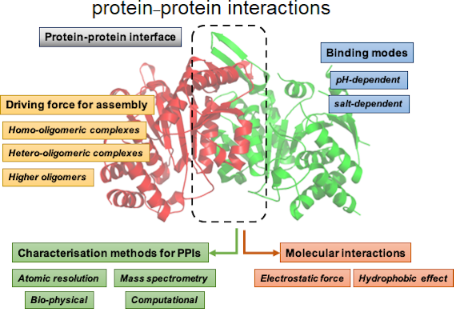
- proteins and other biological molecules, all of which have their own biological role and chemical interactions. Characterisation methods that can be employed to study PPIs can be divided into four categories: atomic resolution methods, mass spectrometry methods, biophysical methods, and computational
- (or any other organic molecule [19]) structure. A resolution of up to 0.6 Å (RNA-binding protein FUS, residues 37–42, EMD-0699, PDB: 6KJ4 [20]) were obtained when using this method. Nannenga and Gonen gave a detailed account on MicroED [21]. As another category, mass spectrometry methods are used to
- determine the amino acid sequences at the PPIs site. Examples include protein painting [22] and chemical cross-linking [23], hydrogen–deuterium exchange mass spectrometry (HDXMS) [24], and fast photochemical oxidation of proteins [25]. In protein painting, small-molecular dyes are introduced to protein


Semiautomated glycoproteomics data analysis workflow for maximized glycopeptide identification and reliable quantification
Beilstein J. Org. Chem. 2020, 16, 3038–3051, doi:10.3762/bjoc.16.253
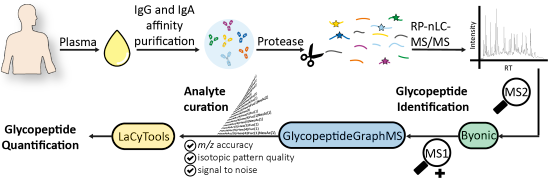
- complex, reflecting the high structural diversity of peptide and glycan portions. The use of glycopeptide-centered glycoproteomics by mass spectrometry is rapidly evolving in many research areas, leading to a demand in reliable data analysis tools. In recent years, several bioinformatic tools were
- digest from affinity-purified immunoglobulins G and A was analyzed on a nano-reversed-phase liquid chromatography–tandem mass spectrometry platform with a high-resolution mass analyzer and higher-energy collisional dissociation fragmentation. Initial glycopeptide identification based on MS/MS data was
- quantification. Keywords: bioinformatics; cysteine oxidation; glycoproteomics; immunoglobulins; mass spectrometry; Introduction Protein glycosylation mainly occurs in the form of N- and O-glycosylation. N-Glycans are attached to Asn within an amino acid consensus sequence (Asn-Xxx-Ser/Thr, Xxx ≠ Pro) and O



Naphthalonitriles featuring efficient emission in solution and in the solid state
Beilstein J. Org. Chem. 2020, 16, 2960–2970, doi:10.3762/bjoc.16.246
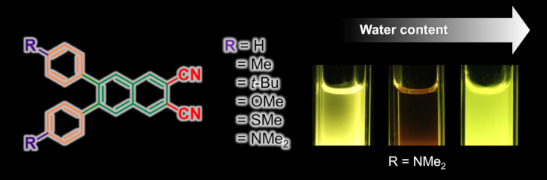
- characterized by nuclear magnetic resonance spectroscopy (NMR, Supporting Information File 1, Figures S1–S24) as well as exact electrospray mass spectrometry (EM–ESIMS, Supporting Information File 1, Figures S25–S30) and appear as white to faint yellow solids. Only the dimethylamino-substituted product shows a



Construction of pillar[4]arene[1]quinone–1,10-dibromodecane pseudorotaxanes in solution and in the solid state
Beilstein J. Org. Chem. 2020, 16, 2954–2959, doi:10.3762/bjoc.16.245
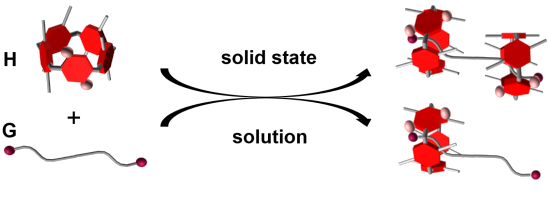
- . Matrix-assisted laser desorption/ionization time-of-flight mass spectrometry (MALDI–TOF MS) was conducted to investigate the complexation properties. However, no signal related to the complex but only peaks of H were found, implying weak host–guest interactions between H and G (Figures S3 and S4
- , Supporting Information File 1). A Job plot based on the proton NMR data was made to determine the complexation stoichiometry between H and G. The formation signified a 1:1 binding stoichiometry in chloroform-d at room temperature (Figures S5 and S6, Supporting Information File 1). Combined with the mass
- spectrometry results, we believed that the differences between the stoichiometric ratio of the complexation in the solid state and in solution could be owing to the competitive role of solvent molecules in the combination of H and G. The association constant (Ka) calculated by the nonlinear curve fitting


On the mass spectrometric fragmentations of the bacterial sesterterpenes sestermobaraenes A–C
Beilstein J. Org. Chem. 2020, 16, 2807–2819, doi:10.3762/bjoc.16.231
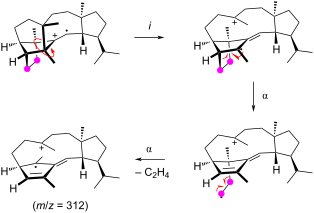
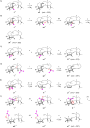
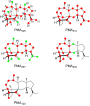
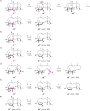
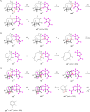
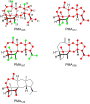
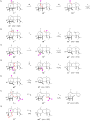
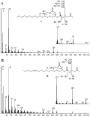
- enzymatic conversion of the correspondingly 13C-labelled isoprenyl diphosphate precursors with the sestermobaraene synthase from Streptomyces mobaraensis. The main compounds sestermobaraenes A, B, and C were analysed by gas chromatography–mass spectrometry (GC–MS), allowing for a deep mechanistic
- investigation of the electron impact mass spectrometry (EIMS) fragmentation reactions of these sesterterpene hydrocarbons. Keywords: isotopes; mass spectrometry; reaction mechanisms; sesterterpenes; Streptomyces mobaraensis; Introduction The sestermobaraenes A–F (1–6) and sestermobaraol (7) are a series of
- water, simple alcohols. These volatile compounds can efficiently be trapped by specialised methods including the closed-loop stripping apparatus (CLSA) [4] technique or solid-phase microextraction (SPME) [5][6], and then analysed by gas chromatography–mass spectrometry (GC–MS) [7]. Through these and




Synthesis and investigation of quadruplex-DNA-binding, 9-O-substituted berberine derivatives
Beilstein J. Org. Chem. 2020, 16, 2795–2806, doi:10.3762/bjoc.16.230
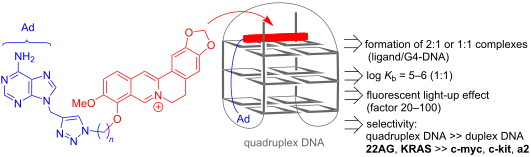
- moderate yields (16–38%), mainly because of severe difficulties to completely remove the copper ions that apparently bind tightly to the compounds. The new compounds 4a–e were identified and fully characterized with NMR spectroscopy (1H, 13C, COSY, HSQC, HMBC), mass spectrometry, and elemental analysis


3-Acetoxy-fatty acid isoprenyl esters from androconia of the ithomiine butterfly Ithomia salapia
Beilstein J. Org. Chem. 2020, 16, 2776–2787, doi:10.3762/bjoc.16.228
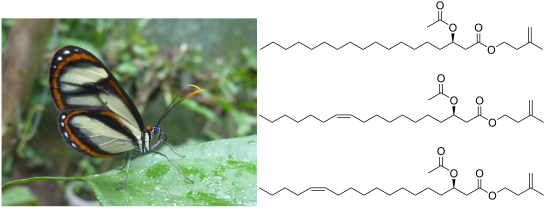
- species in regions where they co-occur. Furthermore, the occurrence of positional isomers of unsaturated fatty acid derivatives indicates activity of two different desaturases within these butterflies, Δ9 and Δ11, which has not been reported before in male Lepidoptera. Keywords: fatty acid esters; mass
- spectrometry; mimicry; pheromones; pyrrolizidine alkaloids; Introduction The Neotropical butterfly tribe Ithomiini (Nymphalidae: Danainae) is very diverse and species-rich, with over 390 species and 50 genera [1][2] and extensively involved in Müllerian mimetic interactions [3]. Ithomiines are well suited for





Synthesis of purines and adenines containing the hexafluoroisopropyl group
Beilstein J. Org. Chem. 2020, 16, 2739–2748, doi:10.3762/bjoc.16.224
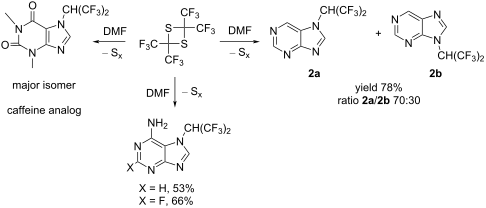
- mixture of 2a,b was washed with cold hexane on a ceramic filter to give a material with a 2a,b ratio of 95:5. Recrystallization of this sample from hexane gave the isomer 2b (purity 99%, by NMR), and this sample was used for an X-ray diffraction experiment. The reaction conditions, mass spectrometry, and
- reaction conditions, mass spectrometry, and NMR data are given in Table 1 and Table 3. Reaction of 5-azabenzimidazole (4) and 1 A mixture of 1.2 g (0.01 mol) of 5-azabenzimidazole (4), 2 g (0.06 mol) of 1, and 15 mL of DMSO was agitated at ambient temperature for 24 h. The precipitated sulfur was filtered
- acetate gradient, 100 mL/min, cartridge SNAP 340 g). The structure of each isomer was determined by X-ray diffraction. The reaction conditions, mass spectrometry, and NMR data are given in Table 1 and Table 3. Reaction of adenine (5) and 2-fluoroadenine (6), respectively, and 1 A mixture of 0.01 mol of



Selective recognition of ATP by multivalent nano-assemblies of bisimidazolium amphiphiles through “turn-on” fluorescence response
Beilstein J. Org. Chem. 2020, 16, 2728–2738, doi:10.3762/bjoc.16.223
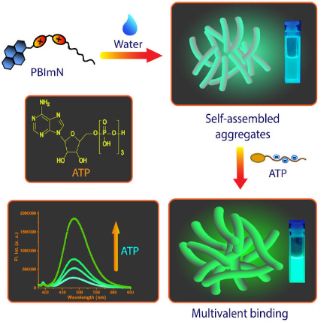
- obtained through nucleophilic substitution reactions between BImNs (N = 4, 10, 12, 14) and 3. All synthesized compounds were characterized by NMR spectroscopy and high-resolution mass spectrometry. Self-assembly properties of PBImNs in aqueous buffer The self-assembly properties of the four PBImN


A heterobimetallic tetrahedron from a linear platinum(II)-bis(acetylide) metalloligand
Beilstein J. Org. Chem. 2020, 16, 2701–2708, doi:10.3762/bjoc.16.220
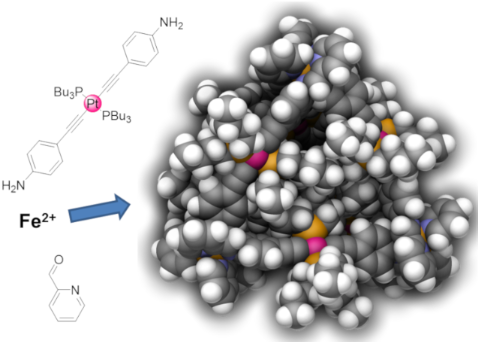
- diastereomers. The new complexes were characterized by NMR and UV–vis spectroscopy and ESI mass spectrometry. Using GFN2-xTB we generated energy-minimized models of the diastereomers of this cage that further corroborated the results from analytical findings. Keywords: cage compounds; heterobimetallic
- , correlation of the proton. Low- and high-resolution electrospray ionization mass spectrometry (ESIMS) spectra were recorded on a Bruker Daltonic LTQ Orbitrap XL. The UV–vis spectrum was recorded on a Specord 200 spectrometer (Analytik Jena AG) at ambient temperature. 4-Ethynylaniline (1) [50], trans-[Pt(PBu3


A consensus-based and readable extension of Linear Code for Reaction Rules (LiCoRR)
Beilstein J. Org. Chem. 2020, 16, 2645–2662, doi:10.3762/bjoc.16.215

- Rules Linear Code was first used to represent reaction rules in 2009. A reaction network, specifying glycans with condensed IUPAC and Linear Code, was trained on mass spectrometry abundance to learn biosynthetic enzyme activities [10]. Their reaction rules table contained four features: enzyme, reactant


Synthesis and characterization of S,N-heterotetracenes
Beilstein J. Org. Chem. 2020, 16, 2636–2644, doi:10.3762/bjoc.16.214

- -heterotetracenes and -hexacene were clearly identified, fully characterized, and their structures confirmed by 1H and 13C NMR spectroscopy and high-resolution mass spectrometry (HRMS) via matrix-assisted laser desorption/ionization (MALDI) (Supporting Information File 1, Figures S1–S5). In the 1H NMR spectra, the


Particle size effect in the mechanically assisted synthesis of β-cyclodextrin mesitylene sulfonate
Beilstein J. Org. Chem. 2020, 16, 2598–2606, doi:10.3762/bjoc.16.211
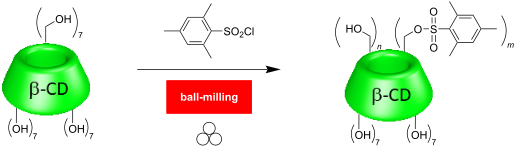
- preparation of the investigated compound. Acknowledgements We thank N. Kania for BET analysis, J. Ternel for NMR experiments and J. Hachani for MALDI–TOF mass spectrometry. We are grateful to Dr. A. Fadel and Dr. A. Addad for their contribution in setting up the SEM measurements. Funding The SEM facility in