


Search results
Search for "nucleophilic substitution" in Full Text gives 361 result(s) in Beilstein Journal of Organic Chemistry. Showing first 200.
Synthesis and post-functionalization of alternate-linked-meta-para-[2n.1n]thiacyclophanes
Beilstein J. Org. Chem. 2018, 14, 2190–2197, doi:10.3762/bjoc.14.192
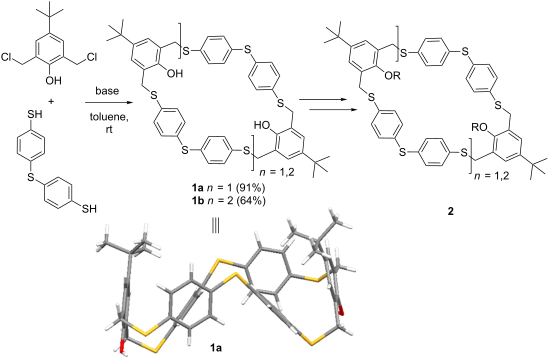
- ][6][7][8][9]. Our group has experience in the synthesis of homothiacalix[n]arenes, a subclass of the thiacalix[n]arenes that has so far received little attention compared to other homoheteracalix[n]arenes [10][11]. Homothiacalix[4]arenes were successfully synthesized via nucleophilic substitution and


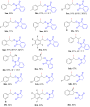
Hypervalent iodine compounds for anti-Markovnikov-type iodo-oxyimidation of vinylarenes
Beilstein J. Org. Chem. 2018, 14, 2146–2155, doi:10.3762/bjoc.14.188
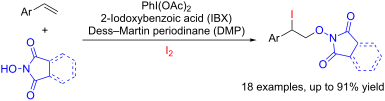
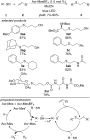
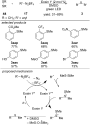
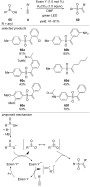
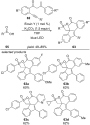
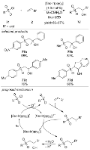
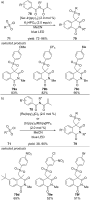
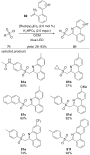
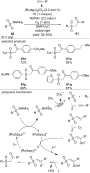
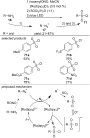
- benzenesulfinate results in the nucleophilic substitution of both the iodine atom and the oxyphthalimide moiety to form a vicinal disulfone 4b. Conclusion Iodo-oxyimidation of vinylarenes using N-hydroxyphthalimide and N-hydroxysuccinimide was developed. PhI(OAc)2 was the best oxidant for the synthesis of the




Synthesis of new p-tert-butylcalix[4]arene-based polyammonium triazolyl amphiphiles and their binding with nucleoside phosphates
Beilstein J. Org. Chem. 2018, 14, 1980–1993, doi:10.3762/bjoc.14.173
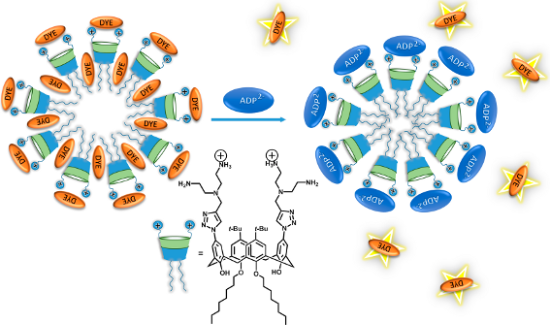
- highly explosive [29]. Usually azide groups are installed in the upper rim of the macrocycle by a chloromethylation reaction and subsequent nucleophilic substitution by azide anions [30][31] forming rather flexible azidomethyl fragments. In this investigation more rigid arylazide calixarene derivatives


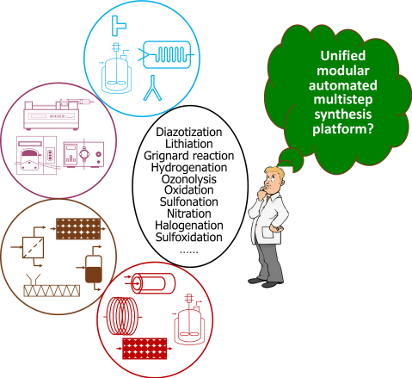
Assessing the possibilities of designing a unified multistep continuous flow synthesis platform
Beilstein J. Org. Chem. 2018, 14, 1917–1936, doi:10.3762/bjoc.14.166
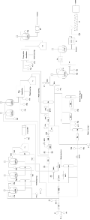
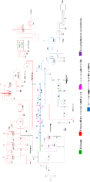
- ) condensation b) aromatic nucleophilic substitution reaction, c) deprotection and d) formation of lactate salt. Details of the same are given below: Condensation: Condensation takes place in a first reactor TR1 between the nitrile and hydrazine at high temperature and under pressure. Here, the nitrile was
- using pump P13. Aromatic nucleophilic substitution: The nucleophilic substitution reaction takes place between the pyrazole and N-ethylmorpholine. Pyrazole of step 1 in the extractor was pumped through P13 and N-ethylmorpholine through P3 into the reactor TR2 to form the arylated product of the pyrazole



Recent advances in hypervalent iodine(III)-catalyzed functionalization of alkenes
Beilstein J. Org. Chem. 2018, 14, 1813–1825, doi:10.3762/bjoc.14.154
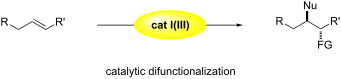
- . Compared to the diverse reactivity profiles of transition metal-catalyzed functionalization of alkenes, hypervalent iodine (III)-mediated reactions are limited to nucleophilic substitution processes. Recently, Liu and co-workers reported a novel cooperative strategy by combining palladium catalysis and


Synthesis and photophysical studies of a multivalent photoreactive RuII-calix[4]arene complex bearing RGD-containing cyclopentapeptides
Beilstein J. Org. Chem. 2018, 14, 1758–1768, doi:10.3762/bjoc.14.150
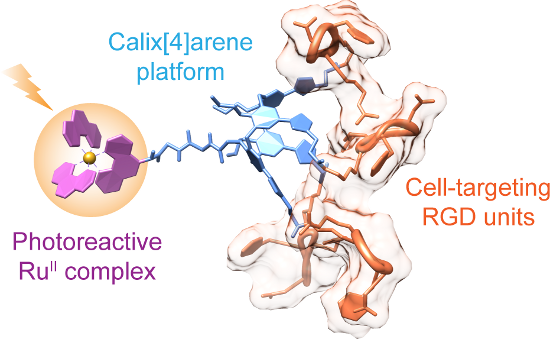
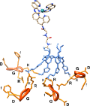
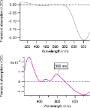
- % yield. Diazotation followed by nucleophilic substitution with sodium azide gave the desired tetra-azido compound 4 in 56% overall yield from 3. It is noteworthy that the introduction of the azido groups on the calix[4]arene scaffold was clearly confirmed by the presence of an intense band at 2108 cm−1





An amine protecting group deprotectable under nearly neutral oxidative conditions
Beilstein J. Org. Chem. 2018, 14, 1750–1757, doi:10.3762/bjoc.14.149
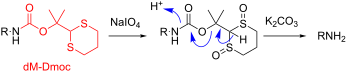
- , the dM-Dmoc group is expected to be more stable under nucleophilic conditions, which will allow many transformations including base hydrolysis of esters and amides, hydride reduction of carbonyl compounds, and a wide range of nucleophilic substitution reactions to be carried out without losing the


Anomeric modification of carbohydrates using the Mitsunobu reaction
Beilstein J. Org. Chem. 2018, 14, 1619–1636, doi:10.3762/bjoc.14.138
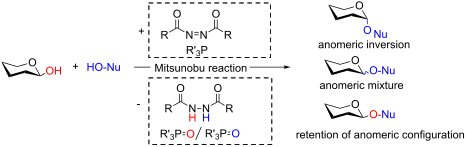
- important method in the synthetic toolbox for anomeric modification of sugars and glycoconjugate preparation. Left: The Mitsunobu reaction is essentially a nucleophilic substitution of alcohols occurring with inversion of configuration at the alcohol stereocenter. The auxiliary reagents are involved in a


A three-armed cryptand with triazine and pyridine units: synthesis, structure and complexation with polycyclic aromatic compounds
Beilstein J. Org. Chem. 2018, 14, 1370–1377, doi:10.3762/bjoc.14.115
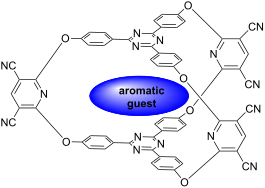
- , Slovakia 10.3762/bjoc.14.115 Abstract The aromatic nucleophilic substitution reaction based synthesis of a three-armed cryptand displaying 2,4,6-triphenyl-1,3,5-triazine units as caps and pyridine rings in the bridges, along with NMR, MS and molecular modelling-based structural analysis of this compound
- are reported. Appropriate NMR and molecular modelling investigations proved the formation of 1:1 host–guest assemblies between the investigated cryptand and some polynuclear aromatic hydrocarbons or their derivatives. Keywords: aromatic guests; aromatic nucleophilic substitution; cryptand; NMR




Selective carboxylation of reactive benzylic C–H bonds by a hypervalent iodine(III)/inorganic bromide oxidation system
Beilstein J. Org. Chem. 2018, 14, 1087–1094, doi:10.3762/bjoc.14.94
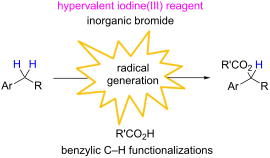
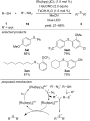
- intermediate (path A). Alternatively, the benzyl radical formed in situ couples with the iodanyl radical to give the pseudo halide, benzyl-λ3-iodane, which is more reactive to nucleophilic substitution by a carboxylic acid [77][78]. Another possible course of the reaction mechanism assumes the formation of a


Hypervalent iodine-mediated Ritter-type amidation of terminal alkenes: The synthesis of isoxazoline and pyrazoline cores
Beilstein J. Org. Chem. 2018, 14, 1028–1033, doi:10.3762/bjoc.14.89
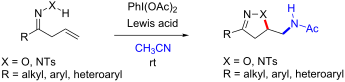
- subsequent 5-exo-type cyclization by nucleophilic attack on the iodonium then leads to the isoxazoline or pyrazoline cores (C) bearing the hypervalent iodine(III) group. Following iodine activation by the Lewis acid, the iodonium ion D undergoes nucleophilic substitution with excess acetonitrile to form


A stereoselective and flexible synthesis to access both enantiomers of N-acetylgalactosamine and peracetylated N-acetylidosamine
Beilstein J. Org. Chem. 2018, 14, 856–860, doi:10.3762/bjoc.14.71
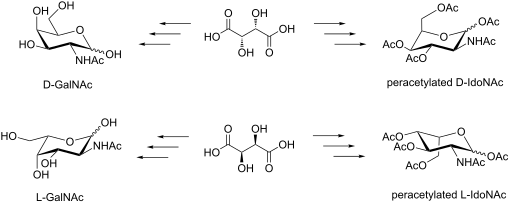
- -catalyzed, stereo- and regioselective epoxide opening and subsequent nucleophilic substitution of an azide functionality. This approach enables the synthesis of the naturally D- and unnaturally L-configured GalNAc, as well as both enantiomers of the largely unknown N-acetylidosamine (IdoNAc). Keywords
- -diethyl tartrate (L-DET) directing the reaction towards the D-galacto-configured epoxythreitol 5a. Alternatively, epoxidation of 4b with D-DET was used to access L-galacto-configured epoxythreitol 5b. A procedure by Miyashita et al. [19] for nucleophilic substitution of epoxides by an azide functionality


Recent advances in synthetic approaches for medicinal chemistry of C-nucleosides
Beilstein J. Org. Chem. 2018, 14, 772–785, doi:10.3762/bjoc.14.65
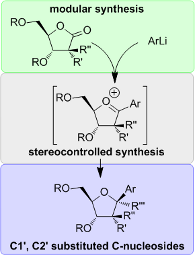
- syntheses have contributed to structural diversity and drug discovery efforts. Convergent and modular approaches to synthesis have garnered much attention in this regard. Among them nucleophilic substitution at C1' has seen wide applications providing flexibility in synthesis, good yields, the ability to
- that is also based on the nucleophilic substitution of ribonolactone. Review Nucleophilic addition to D-ribonolactone and its stereochemistry Two prominent methods of C-nucleoside syntheses involve either i) the linear construction of a (hetero)aryl moiety on a C1'-functionalized ribose or ii) coupling
- ascribed to the modular nature of syntheses that allows for simultaneous alterations in the sugar and the nucleobase to generate diverse analogues in a facile manner. Within this approach, nucleophilic substitution of ribonolactone (Figure 6A) has garnered much attention [61][62][63][69][70][71][72][73][74


Sequential Ugi reaction/base-induced ring closing/IAAC protocol toward triazolobenzodiazepine-fused diketopiperazines and hydantoins
Beilstein J. Org. Chem. 2018, 14, 626–633, doi:10.3762/bjoc.14.49
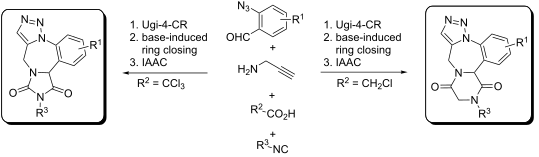
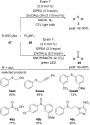
- intermediate. The functionalities required for the secondary transformations like the leaving group (-Cl) for nucleophilic substitution, alkyne and azide for IAAC can be assembled via the Ugi reaction (Scheme 1). Results and Discussion We initiated our studies with the Ugi 4-component reaction of o





Synthetic and semi-synthetic approaches to unprotected N-glycan oxazolines
Beilstein J. Org. Chem. 2018, 14, 416–429, doi:10.3762/bjoc.14.30
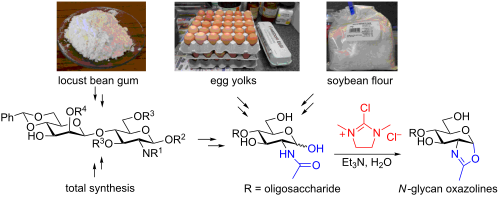
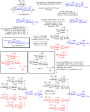
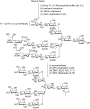
- epimerisation. Amongst the many syntheses [53][54][55][56][57][58] of N-glycan oxazolines using this approach, the use of Lev protection on the donor, first developed by Boons [59], and then triflation and nucleophilic substitution by acetate aided by sonication, first developed by Fürstner [60][61], appear to




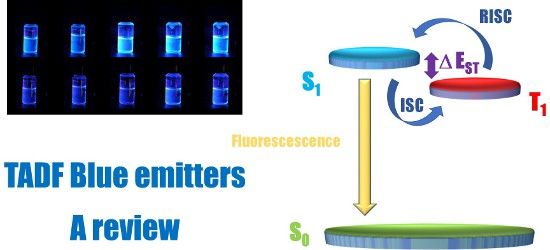
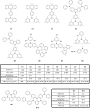
Recent advances on organic blue thermally activated delayed fluorescence (TADF) emitters for organic light-emitting diodes (OLEDs)
Beilstein J. Org. Chem. 2018, 14, 282–308, doi:10.3762/bjoc.14.18




Fluorogenic PNA probes
Beilstein J. Org. Chem. 2018, 14, 253–281, doi:10.3762/bjoc.14.17
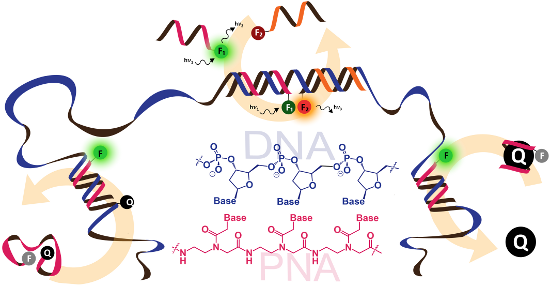
- the unmasking of quenched or caged fluorophores by chemical reactions, such as the Staudinger reaction [98][99][100][101], hydrolysis [102] and group transfer mediated by nucleophilic substitution [103][104]. Optimizing the conditions requires a good balance between the affinity of the probe to the


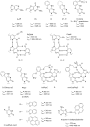


Transition-metal-free [3 + 3] annulation of indol-2-ylmethyl carbanions to nitroarenes. A novel synthesis of indolo[3,2-b]quinolines (quindolines)
Beilstein J. Org. Chem. 2018, 14, 194–202, doi:10.3762/bjoc.14.14
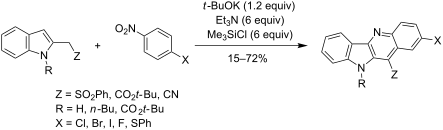
- , which in the presence of base (triethylamine or DBU) and trimethylchlorosilane transform into indolo[3,2-b]quinoline derivatives in moderate to good yields. Keywords: carbanions; cyclization; heterocycles; nitroarenes; nucleophilic substitution; silylation; Introduction The indolo[3,2-b]quinoline


Stereochemical outcomes of C–F activation reactions of benzyl fluoride
Beilstein J. Org. Chem. 2018, 14, 106–113, doi:10.3762/bjoc.14.6
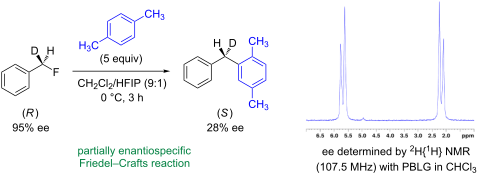
- reactions using a mixture of nucleophiles (for direct substitutions) and aryls (for Friedel–Crafts reactions) to give products 5–9. The nucleophilic substitution reactions of 1 are shown in Table 1 and Table 2, and were all conducted using either a mixture of water/isopropanol, or tris(hydroxymethyl)propane
- that some nucleophiles (such as N-methylbenzylamine and morpholine [not shown]) were unsuitable for this study, as the resulting products 7 could not be resolved in the 2H NMR with PBLG assay. Two different activator systems were investigated for the nucleophilic substitution of 1: a mixture of water
- by 2H NMR. Overall, the nucleophilic substitution of 1, using either of the described hydrogen bond activating systems, afforded enantioenriched benzylated products with little erosion in stereointegrity. In contrast to the above nucleophilic substitutions, which all proceeded with good


Photocatalytic formation of carbon–sulfur bonds
Beilstein J. Org. Chem. 2018, 14, 54–83, doi:10.3762/bjoc.14.4
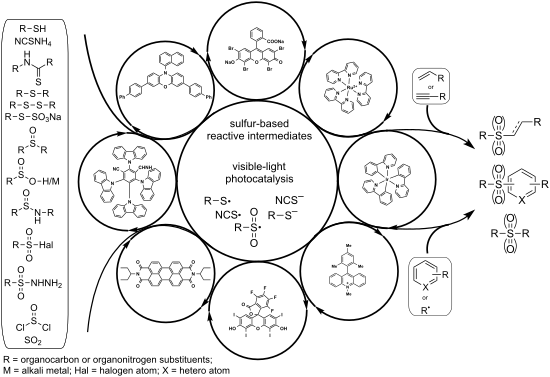
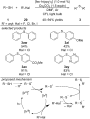
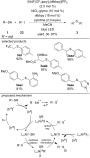
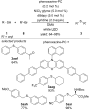
- –S bonds were developed and already excellently reviewed, including nucleophilic substitution reactions between S-nucleophiles and organic electrophiles, metal-catalyzed C–S bond formations and organocatalytic or enzymatic approaches [15][16][18][20][21][22]. This review provides a brief overview





























Recent applications of click chemistry for the functionalization of gold nanoparticles and their conversion to glyco-gold nanoparticles
Beilstein J. Org. Chem. 2018, 14, 11–24, doi:10.3762/bjoc.14.2
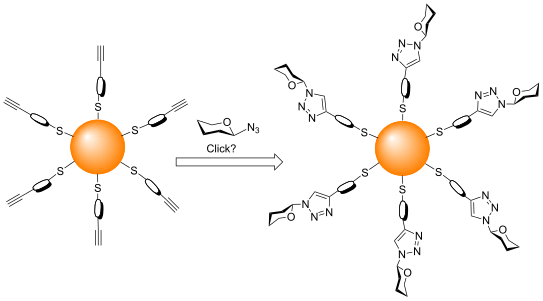
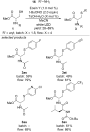
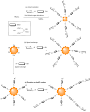
- ligand exchange properties. A two-phase Brust–Schiffrin method (BSM) [49] was first used to synthesize decanethiol-stabilized AuNPs. These particles were then reacted with 11-bromo-1-undecanethiol to replace some of the decanethiol ligands with Br-terminated undecanethiol ligands (Scheme 2). Nucleophilic
- substitution by reaction with NaN3 then resulted in AuNPs with mixed monolayers containing 52% N3- and 44% CH3-terminated alkanethiol ligands. A series of alkynes were synthesised, including derivatives of nitrobenzene (1), ferrocene (2), anthracene (3), pyrene (4), aniline (5), and polyethylene glycol (6) all



The photodecarboxylative addition of carboxylates to phthalimides as a key-step in the synthesis of biologically active 3-arylmethylene-2,3-dihydro-1H-isoindolin-1-ones
Beilstein J. Org. Chem. 2017, 13, 2833–2841, doi:10.3762/bjoc.13.275
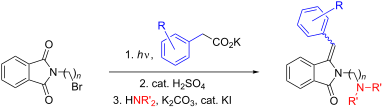
- -dihydro-1H-isoindolin-1-ones via acid-catalyzed dehydration and subsequent nucleophilic substitution with the corresponding secondary amines. The procedure was successfully applied to the synthesis of known local anesthetics (AL-12, AL-12B and AL-5) in their neutral forms. Keywords: anesthetics
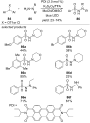
- compound 4, originating from intramolecular nucleophilic substitution, was obtained as a byproduct in 25–30%. Noteworthy, compound 4 is formed as the only product when 1a is treated with organometallic reagents [48][49][50]. When the photoreaction was repeated in a 1:1 mixture of acetone and pH 7 buffer at
- File 1). Notably, irradiation of N-(bromomethyl)phthalimide (1c) in the presence of phenylacetate (2a) did not furnish the desired addition product, but the benzylated ester 5 in 37% yield instead (Scheme 4). The electron-withdrawing character of the phthalimide group favored thermal nucleophilic


Vinylphosphonium and 2-aminovinylphosphonium salts – preparation and applications in organic synthesis
Beilstein J. Org. Chem. 2017, 13, 2710–2738, doi:10.3762/bjoc.13.269

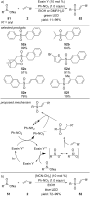
- described (Scheme 41). Depending on the structure of the nucleophile used, the salts either convert into resonance-stabilized, relatively stable ylides 62 or undergo intramolecular nucleophilic substitution with the triphenylphosphine departure to form products 63. The latter usually undergo further
- , generated easily in situ from acetylenedicarboxylic acid diester, triarylphosphine and a nucleophile. Depending on the structure of the nucleophile used, the salts convert into the corresponding resonance-stabilized, relatively stable ylides or undergo intramolecular nucleophilic substitution with


Syntheses, structures, and stabilities of aliphatic and aromatic fluorous iodine(I) and iodine(III) compounds: the role of iodine Lewis basicity
Beilstein J. Org. Chem. 2017, 13, 2486–2501, doi:10.3762/bjoc.13.246
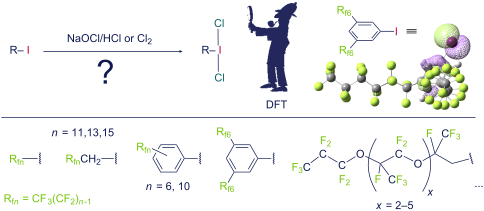
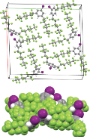
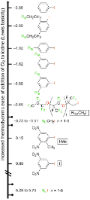
- probed by DFT calculations. Keywords: chlorination; copper mediated perfluoroalkylation; crystal structure; DFT calculations; fluorous; hypervalent iodine; nucleophilic substitution; polar space group; Introduction A number of fluorous alkyl iodides, usually of the formula RfnCH2CH2I or RfnI (Rfn = CF3


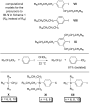

Asymmetric synthesis of propargylamines as amino acid surrogates in peptidomimetics
Beilstein J. Org. Chem. 2017, 13, 2428–2441, doi:10.3762/bjoc.13.240
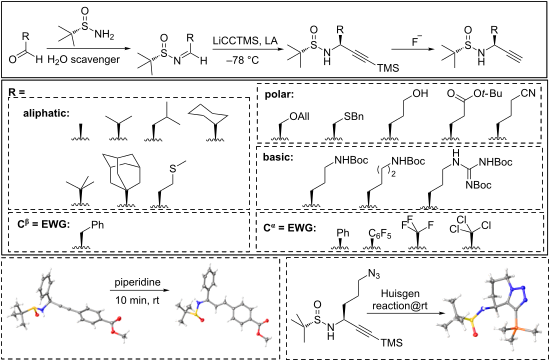
- as colorless crystalline solids. It is assumed, that the undesired side products 9k and 10k were formed by a ligand transfer from the Lewis acids to imine 5k. Nucleophilic substitution of N/O-acetal 9k with two equivalents of (trimethylsilyl)ethynyllithium, in analogy to the conversions reported by
- to avoid nucleophilic substitution of the halide at a late stage, we decided to start the synthesis with 4-azidobutanal, which was prepared by opening THF with iodine and NaBH4, nucleophilic substitution by sodium azide and Swern oxidation of the alcohol. 4-Azidobutanal was converted with chiral





