Search results
Search for "absorption" in Full Text gives 957 result(s) in Beilstein Journal of Organic Chemistry. Showing first 200.
Electrochemical reduction of unsaturated carbon–carbon bonds via 3d transition-metal catalysis
Beilstein J. Org. Chem. 2026, 22, 955–981, doi:10.3762/bjoc.22.75
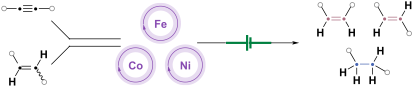
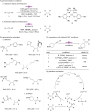
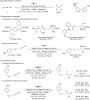
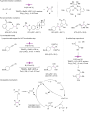
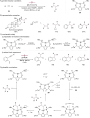
- revealed the emergence of new absorption features upon alkyne addition, consistent with the formation of a vinyl–Co(III) intermediate. DFT calculations further demonstrated that variation of the salen ligand framework modulates the Co–C bond-dissociation energy (BDE) of the vinyl–cobalt intermediate








Synthesis of sterically shielded piperidine nitroxides via acid-catalyzed heterocyclization of β-aminoketone derivatives with ketones
Beilstein J. Org. Chem. 2026, 22, 948–954, doi:10.3762/bjoc.22.74
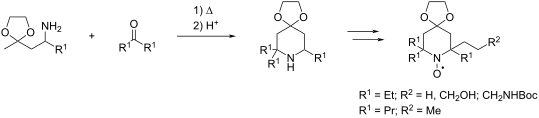
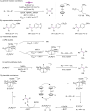
- spectrum of the nitroxide 9a (TEEPONE) was identical to that reported in the literature [21], and the IR spectrum of 9d was similar, with a strong absorption band at 1716 cm−1, characteristic of the carbonyl (C=O) stretching vibrations. The 1H NMR spectra of the reduced derivatives of 9a,d showed no


A practical CO2-mediated synthesis of 5,6-carboxylated silicon-rhodamines for targeted probe development
Beilstein J. Org. Chem. 2026, 22, 915–924, doi:10.3762/bjoc.22.72
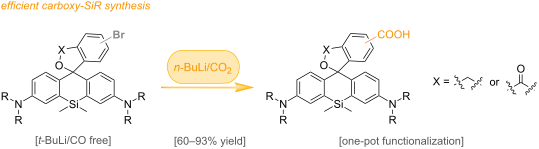
- HaloTag amine using HATU/DIPEA as the activation system. This strategy afforded three high-performance fluorescent probes 4a, 4b, and 4c, in overall yields of 62%, 37%, and 46%, respectively. The absorption and emission spectra of 4a, 4b, and 4c (Figures S1–S3 in Supporting Information File 1) showed



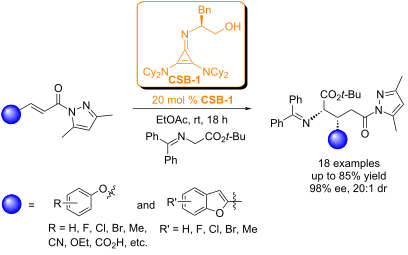
Chiral cyclopropenimine-catalyzed enantioselective Michael reactions of phenol and benzofuran-derived α,β-unsaturated pyrazolamides with benzophenone-imine of glycine esters
Beilstein J. Org. Chem. 2026, 22, 888–896, doi:10.3762/bjoc.22.69
- synthesis, neurotransmitter function, and regulation of acid-base balance, metabolic intermediates, and promotion of nutrient absorption [4]. Therefore, the synthesis of substituted glutamic and pyroglutamic acid derivatives is vital to medicinal chemistry. In our previous reports, we have synthesized a


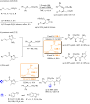

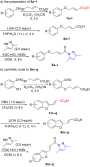

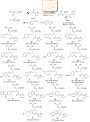


Unsymmetrical sulfoxides with sterically hindered catechol fragment: synthesis, structure, electrochemical properties, and antiradical activity
Beilstein J. Org. Chem. 2026, 22, 828–837, doi:10.3762/bjoc.22.65
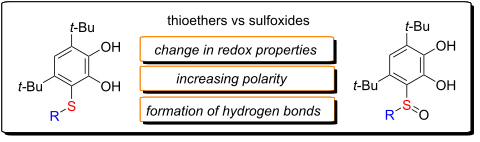
- color of the solution changes to pale yellow. This is confirmed by the appearance of an absorption maximum in the UV–visible spectrum at λmax = 402 nm (Figure S33 in Supporting Information File 1). This absorption band corresponds to a π→π* transition and is close to the λmax value characteristic of


Knoevenagel condensation of 4,5- and 1,8-diazafluorenes
Beilstein J. Org. Chem. 2026, 22, 803–812, doi:10.3762/bjoc.22.62
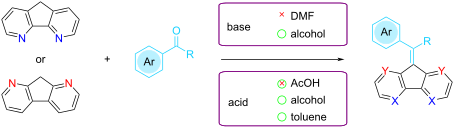
- very similar electron-accepting effect of 4,5- and 1,8-diazafluorenes. Figure 1b demonstrates the optical absorption spectra of 4,5-DPDAF and 1,8-DPDAF in THF solution. The spectra have similar absorption maxima at 304 nm and 297 nm for 4,5-DPDAF and 1,8-DPDAF, respectively. However, the absorption
- spectrum edge demonstrated a bathochromic shift for 1,8-DPDAF (400 nm) as compared to that of 4,5-DPDAF (380 nm) what we assigned to the slightly higher planarity for 1,8-DPDAF due to its lower sterical hindrance. Based on the energies of absorption edges we estimated Eg to be 3.3 eV and 3.1 eV for 4,5
- and Tongda TD-5000 diffractometer with Mo Kα radiation (λ = 0.71073 Å), equipped with a hybrid photon-counting detector (Supporting Information File 1, Table S1). Integration and scaling of the intensity data for Bruker were accomplished with SAINT [26]. Absorption corrections were applied using




Halogenated azobenzene acrylates: from efficient solution photoswitching to stable solid-state photochromic materials
Beilstein J. Org. Chem. 2026, 22, 782–794, doi:10.3762/bjoc.22.60
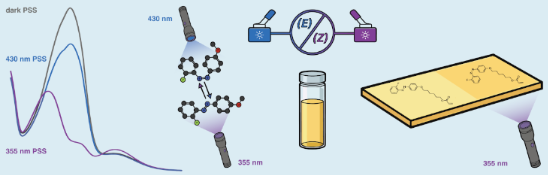
- calorimetry (DSC), thermogravimetric analysis (TGA), cyclic voltammetry (CV), UV–vis absorption spectroscopy, 1H and 13C NMR, and theoretical DFT calculations were employed. Furthermore, the target compounds are designed for incorporation as photoactive copolymers into the structure of functionalized
- the E-isomers as compared to the Z-isomers. Linear optical properties Fundamental optical properties of the target azobenzenes 1a–f in solution were investigated by electronic absorption spectra at 20 °C in DCE at a concentration of 4 × 10⁻⁵ M. The absorption maxima for both isomers (λE/Zmax) and the
- corresponding molar absorption coefficients (εE/Z) along with the TD-DFT calculated absorption maxima (λE/Zmax(CAM-)B3LYP) are summarized in Table 3. Representative spectra of compounds 1a, c and e corresponding to their dark-adapted photostationary state (PSS; pure E-isomers) are shown in Figure 4A, while the


Harnessing light energy with molecules
Beilstein J. Org. Chem. 2026, 22, 680–682, doi:10.3762/bjoc.22.52
- and can be potentially used at a later stage. A strong emphasis is on molecular photoswitches (photochromic molecules) that upon irradiation undergo cis/trans isomerization, intramolecular photocycloaddition, or an electrocyclic reaction. In addition, several articles describe absorption tuning by
- structural modifications of the chromophores, aiming for example at moving their absorption from the ultraviolet spectral region to the visible region. This is of importance for efficient exploitation of solar energy, i.e., matching molecular absorption with the solar emission spectrum, or for photodynamic
- trisNBD-benzene, overcoming the signal overlap that limits conventional 1H NMR analysis. Further, the consequences on the absorption properties, photoisomerization, and QC lifetime were studied. In another article by Krappmann and Hirsch [6], the implications of replacing the methylene bridge of the NBD
Get a better glimpse on sequential photoreactions of trisnorbornadienes with 19F NMR spectroscopy
Beilstein J. Org. Chem. 2026, 22, 527–534, doi:10.3762/bjoc.22.38
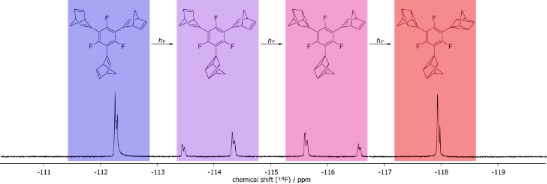
- of the more than 14 h [24]. At the same time, however, norbornadiene (1a) has also some major drawbacks with regard to a real MOST application, namely minimal overlap of the absorption spectrum (λonset < 300 nm) [25][26][27][28] with the solar emission spectrum as well as a low quantum yield (Ф = 5
- ][31][32][33]. Furthermore, to shift the absorption towards lower-energy light in such compounds – and for that matter to the solar spectrum – push–pull systems [29][31], enlarged π systems [30][33], and heteroaromatic chromophores [32][34][35] have been introduced (Figure 1). Although this structural
- variation often leads to a red-shifted absorption, the half-lives of the corresponding quadricyclanes are often decreased at the same time. In particular, the addition of an acetylene unit between the linking aromatic part and the norbornadiene often leads to short half-lives [29][30][31]. As arene-linked


Synthesis and anti-cancer activity of naphthalimide–organylselanyl conjugates
Beilstein J. Org. Chem. 2026, 22, 416–435, doi:10.3762/bjoc.22.29
- and 8 have similar electronic structure and stability. The computed HOMO–LUMO gaps for the compounds are in good agreement with the experimentally measured HOMO–LUMO gaps measured using UV–visible spectroscopy. The UV–visible absorption spectra of compounds 7 and 8 were recorded in chloroform at a
- concentration of 2 × 10⁻⁵ M, as shown in Supporting Information File 1, Figure S21. Both compounds have slightly similar absorption bands. Compound 7 shows an absorption maximum at 395 nm as a broad band peak. In comparison to compound 7, compound 8 displays a slight bathochromic (red) shift, with absorption
- and 3.084 eV for compound 8 based on their experimental absorption wavelengths. Compound 7 (3.098 eV) and compound 8 (3.048 eV) DFT-calculated HOMO–LUMO energy gaps agree well with the energy values obtained through experimentation. Mulliken charge analysis (MCA) of the compounds 7 and 8 The MCA of




Design, synthesis and biological evaluation of 2,5-diaryloxazolo[4,5-d]pyrimidin-7-ylamines as selective cytotoxic agents against HeLa cells
Beilstein J. Org. Chem. 2026, 22, 390–398, doi:10.3762/bjoc.22.27
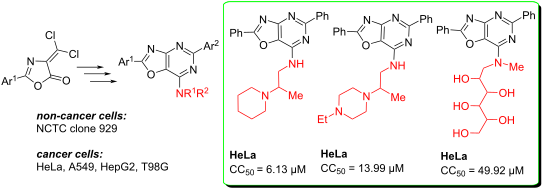
- spectroscopy, LC–MS and elemental analysis (Supporting Information File 1, Figures S1–S36). The IR spectra of compounds 1–5 showed the presence of NH absorption bands in the range 3381–2936 cm−1, OH at 3396 cm−1 (compound 9), and C=O at 1601–1610 cm−1 (compounds 6-8). Cytotoxic potency of the compounds 1–9
- compounds was anywhere near the activity of paclitaxel against HeLa cells (SI = 2733.50). ADMET analysis ADMET (absorption, distribution, metabolism, excretion, toxicity) analysis performed among active in vitro anticancer compounds allows to identify the most promising agents to be sent to further stages
- platforms. Pharmacokinetic properties ADMET analysis enables the prediction of a compound's pharmacokinetic profile, which is crucial for assessing its pharmacodynamic activity. The predicted pharmacokinetic properties of compounds 1, 7 and 9 are given in Table 2. For human intestinal absorption, the


Electrosynthetic access to unsymmetrical oxaza[8]helicenes with high chiral stability and strong circularly polarized luminescence (CPL)
Beilstein J. Org. Chem. 2026, 22, 372–382, doi:10.3762/bjoc.22.25
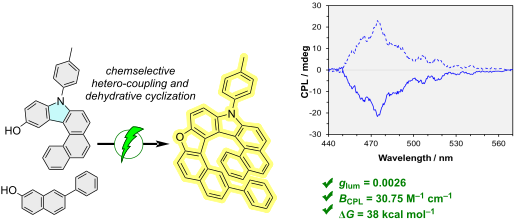
- barriers of 5a and 5b translate into excellent configurational robustness, as demonstrated by the absence of detectable enantiomerization when solutions of (M)-5a were heated at 130 °C for 2.5 h. Optical properties of oxaza[8]helicenes Photophysical features The absorption and emission spectra of oxaza[8
- ]helicenes 5a and 5b in chloroform (1 × 10⁻⁵ M) were recorded and compared with those of the corresponding oxaza[7]helicenes 6a and 6b (Figure 4A and 4B). As expected, extension of the helical π-systems in 5 leads to enhanced conjugation relative to 6, manifested in red-shifted absorption and emission bands
- . In chloroform, 5a shows a pronounced higher absorption peak at 426 nm (ε = 8.23 × 10⁴ M−1 cm−1) with an optical indirect bandgap (Eg) of 2.78 eV. Similarly, 5b, 6a, and 6b exhibit their higher absorption peaks at 433 nm (ε = 5.59 × 10⁴ M−1 cm−1), 407 nm (ε = 6.43 × 10⁴ M−1 cm−1), and 414 nm (ε = 9.02




Synthesis of tricyclic fused pyrrolidine nitroxides from 2-alkynylpyrrolidine-1-oxyls
Beilstein J. Org. Chem. 2026, 22, 344–351, doi:10.3762/bjoc.22.22

- presence of DIPEA in chloroform under reflux (Scheme 2). These conditions ensured complete conversion in 30 minutes. The IR spectra of nitroxides 3a–f exhibit intense absorption bands in the ranges of 1354–1358 cm−1 and 1174–1178 cm−1, corresponding to the asymmetric and symmetric vibrations of the
- isolated from the reaction mixtures in each case. The IR spectra of the isolated compounds 4a–f showed characteristic absorption bands to the azido group vibrations at 2100–2116 cm−1. Absorption bands in the ranges of 1410–1420 cm−1 and 1170–1190 cm−1 were also observed, which can be assigned to the out-of


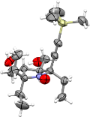


Spirobarbiturates with a pyrrolizidine moiety: synthesis, structure and biological evaluation
Beilstein J. Org. Chem. 2026, 22, 274–288, doi:10.3762/bjoc.22.20
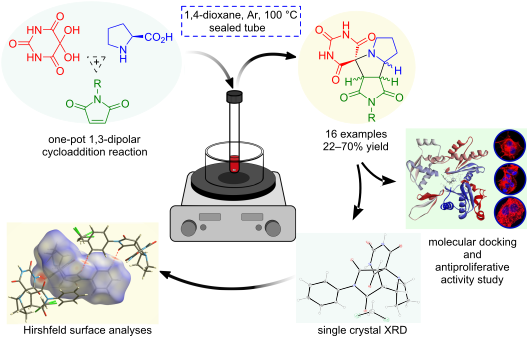
- properties: absorption, distribution, metabolism, excretion, and toxicity. In this paper, these were evaluated in silico using an online resource accessible via https://preadmet.webservice.bmdrc.org/. The following ADME descriptors were selected: blood-brain barrier permeability (BBB), human intestinal
- absorption (HIA), in vitro permeability to Caco-2 cells (Caco2), in vitro binding to plasma proteins (PPB), solubility, and inhibition of CYP2D6. The following were selected as descriptors of toxicity: carcinogenicity for rats and mice, mutagenicity according to the Ames test, and cardiotoxicity by
- inhibition of hERG in vitro. The results are shown in Supporting Information File 1, Table S5. As can be seen from the table, the obtained results suggest that the compounds have a good intestinal absorption and medium permeability. However they are expected to have low plasma protein binding and permeation




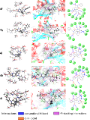
Configuration–packing synergy enabling integrated crystalline-state RTP and amorphous-state TADF
Beilstein J. Org. Chem. 2026, 22, 224–236, doi:10.3762/bjoc.22.16
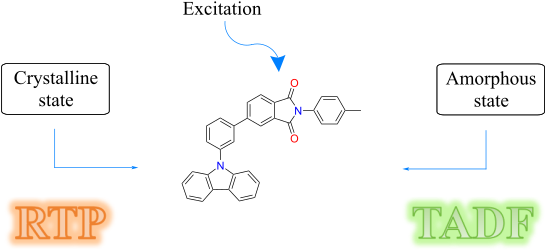
- , making it a suitable candidate for use in advanced optoelectronic devices, such as organic light-emitting diodes (OLEDs), where efficient triplet-state management and delayed fluorescence are highly desired. In different solvents, the UV–vis absorption maxima and band profiles of the compound remain
- essentially unchanged, whereas its fluorescence emission undergoes a monotonic red shift with increasing solvent polarity (or polarizability), accompanied by an enlarged Stokes shift – a typical solvatochromic behavior. The weak solvent dependence of the absorption spectra indicates that the difference in
- emission energy. Consistent with these trends (Figure 2), compound 1 exhibits nearly identical UV–vis absorption across solvents, while its emission shifts bathochromically with increasing polarity, indicating that the luminescence of 1 arises predominantly from intramolecular charge transfer. In a dilute


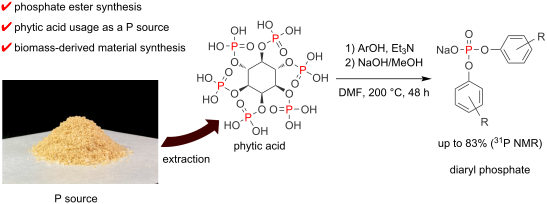
Synthesis of diaryl phosphates using phytic acid as a phosphorus source
Beilstein J. Org. Chem. 2026, 22, 213–223, doi:10.3762/bjoc.22.15
- total P concentration was measured via absorption spectrophotometry. The coloring agent (2 mL) was added to the diluted samples (25 mL), thoroughly mixed, and left for 15 min. After 15 min, the absorbance of each sample was measured at 880 nm using a V-650 spectrophotometer (JASCO, Tokyo, Japan). A




Base-promoted deacylation of 2-acetyl-2,5-dihydrothiophenes and their oxygen-mediated hydroxylation
Beilstein J. Org. Chem. 2026, 22, 192–204, doi:10.3762/bjoc.22.13
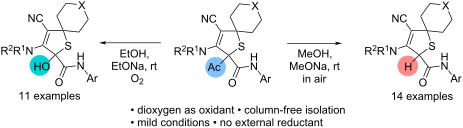
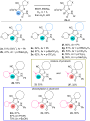
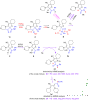
- and Scheme 6). The analysis also suggests the formation of product 2a before water and acid were added. This also indicates that the reaction proceeded through an oxidation/reduction step. UV absorption measurements of the same reaction mixture (a) and pure product 2a (b) dissolved in methanol are
- presented in Figure 2. The formation of product 2a before water and acid were added also follows from the comparison of UV–vis spectra of crude mixture (a) and product 2a (b). According to the previously reported data [51], the absorption maximum in spectrum (a) at 220 nm is caused by the presence of




Streptoquinolines A and B, new antibacterial meroterpenoids produced by Streptomyces sp. TMPU-A0679
Beilstein J. Org. Chem. 2026, 22, 185–191, doi:10.3762/bjoc.22.12
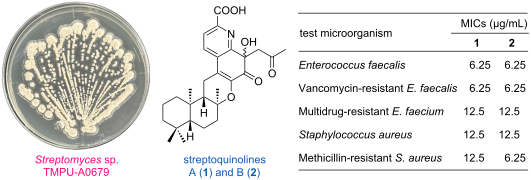
- preparative HPLC, yielding streptoquinolines A (1, 7.50 mg) and B (2, 8.05 mg). The physicochemical properties of 1 and 2 are summarized in Table 1. Compounds 1 and 2 showed characteristic absorption maxima at 200–202, 214, 231–234, 312, and 349–350 nm in UV spectra. Common IR absorption bands at 3414–3427


Improved synthesis and physicochemical characterization of the selective serotonin 2A receptor agonist 25CN-NBOH
Beilstein J. Org. Chem. 2026, 22, 175–184, doi:10.3762/bjoc.22.11
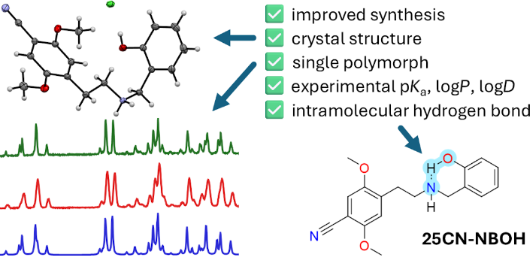
- . Data processing (reduction, merging, and integration) using SAINT and multiscan correction for absorption using SADABS-2016-2 were performed within the Apex4 Suite [25][26][27]. Mercury 4.0 was used to prepare Figure 2a [28]. The crystal data, data collection, and data processing results are given in
- and organic phase, respectively. Each experiment was conducted in triplicate. Molar absorption coefficient and pKa The molar absorption coefficients and apparent pKa values of 1 were determined by spectrophotometry using an inForm instrument from Sirius Analytical (Forest Row, UK). Molar absorption


A new synthesis of Tyrian purple (6,6’-dibromoindigo) and its corresponding sulfonate salts
Beilstein J. Org. Chem. 2026, 22, 167–174, doi:10.3762/bjoc.22.10
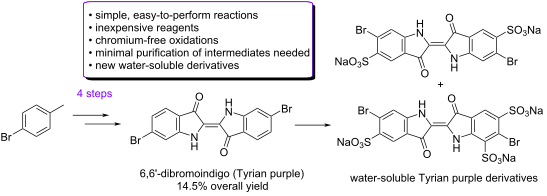
- ) [26]. The UV–vis spectra of both 9 and 10 are similar to those of 5,5’-indigodisulfonic acid disodium salt (indigo carmine) and 5,5’,7-indigotrisulfonic acid trisodium salt, as shown in Table 1 [27][28]. When compared to the absorption maximum of 6,6’-dibromoindigo (1), di- and trisulfonation causes a


Design and synthesis of an axially chiral platinum(II) complex and its CPL properties in PMMA matrix
Beilstein J. Org. Chem. 2026, 22, 143–150, doi:10.3762/bjoc.22.7
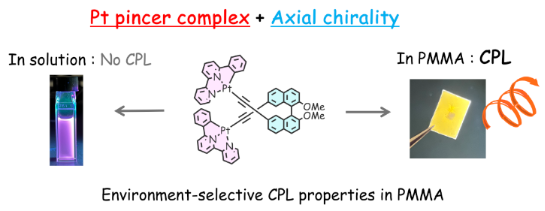
- chiral platinum(II) complex was synthesized via Sonogashira coupling and subsequent coordination of a pincer ligand to a precursor. The complex exhibited a broad absorption band ranging from 250 to 550 nm in the UV–vis spectrum, with TD-DFT calculations indicating mixed ligand-to-ligand charge transfer
- spectroscopy, as well as high-resolution mass spectrometry (HRMS). Due to its low solubility, single crystals suitable for X-ray crystallographic analysis could not be obtained. Spectroscopic analysis and DFT calculations To elucidate the electronic structure of the platinum(II) complex, UV–vis absorption
- spectroscopy was performed in dilute solution of dichloromethane (1.0 × 10⁻⁵ M) (Figure 2a). The absorption spectrum displayed wide range absorption character from 250 to 700 nm with maxima at 430, 331, and 276 nm. To gain deeper insight into the nature of these electronic transitions, density functional


Symmetrical D–π–A–π–D indanone dyes: a new design for nonlinear optics and cyanide detection
Beilstein J. Org. Chem. 2026, 22, 131–142, doi:10.3762/bjoc.22.6
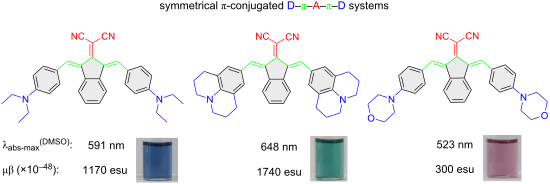
- ) efficiency [14][15][16]. Indanones are highly conjugated with a planar structure, which favors overlap between the molecules. They are building blocks for many compounds, such as organic materials for optoelectronic and NLO applications [17][18]. Research shows that the absorption wavelength of the region
- the absorption bands towards the NIR region. Syntheses of dyes were carried out using the conventional method and the microwave irradiation (MWI) method, and the results were compared with yields and reaction times. Absorption spectra in solvents of different polarities were examined to determine the
- photophysical properties of the dyes. The sensitivity/selectivity properties of the dyes to anions were investigated in DMSO and aqueous media, revealing that the dyes were selectively responsive only to cyanide anions. Changes after interactions were determined through absorption spectra and color changes


Competitive cyclization of ethyl trifluoroacetoacetate and methyl ketones with 1,3-diamino-2-propanol into hydrogenated oxazolo- and pyrimido-condensed pyridones
Beilstein J. Org. Chem. 2025, 21, 2716–2729, doi:10.3762/bjoc.21.209
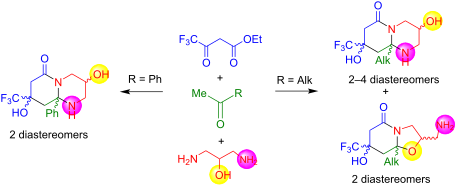
- frequencies of the carbonyl function (ν 1633–1593 cm−1) and N–H, O–H groups (ν 3435–3126 cm−1), which indicates their participation in the hydrogen bond formation [67]. On the other hand, the IR spectra of hexahydrooxazolo[3,2-a]pyridones 5a–c contain intense absorption bands of the C=O function at ν 1652


Chemoenzymatic synthesis of the cardenolide rhodexin A and its aglycone sarmentogenin
Beilstein J. Org. Chem. 2025, 21, 2637–2644, doi:10.3762/bjoc.21.204
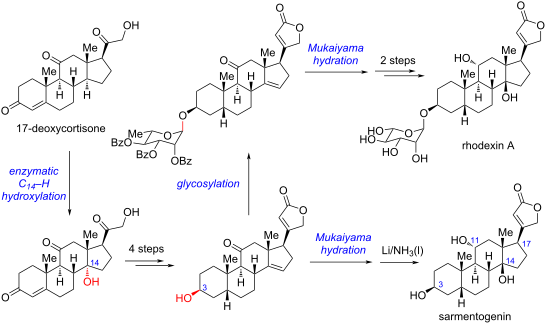
- absorption and metabolism, and specific moieties like rhamnose can enhance CG potency markedly by more than 25 times [1][7]. In addition, the -OH groups on the steroids’ structure also play an important role on their activity. However, these compounds are mainly isolated from plants or animals, which not



Thiazolidinones: novel insights from microwave synthesis, computational studies, and potentially bioactive hybrids
Beilstein J. Org. Chem. 2025, 21, 2618–2636, doi:10.3762/bjoc.21.203
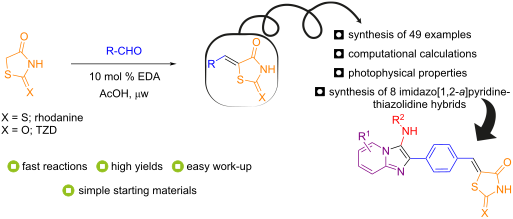
- = 0.546), with an excitation wavelength of 366 nm [83][84][85]. Nevertheless, no measurable quantum yield was observed for the fluorescence process. A solvatochromic study was conducted by measuring the UV–vis absorption and fluorescence spectra of compounds 3n (Figure 7) and 4n (Supporting Information
- from rhodanine (3n) exhibited an intense absorption band in the range of 462–481 nm, related to the π→π*-type transitions. Additionally, weaker, broad absorption bands were observed below 350 nm. In contrast, the thiazolidine-2,4-dione derivative 4n displayed a blue shift, with maximum absorption band
- (Scheme 8) [92]. Finally, an investigation of the influence of pH on the absorption and fluorescence spectra in aqueous solution was carried out under various pH values for compounds 3n (Figure 8) and 4n (Figure S252 in Supporting Information File 1), as changes in pH are known to significantly affect