Search results
Search for "chiral HPLC" in Full Text gives 125 result(s) in Beilstein Journal of Organic Chemistry.
A new oxidatively stable ligand for the chiral functionalization of amino acids in Ni(II)–Schiff base complexes
Beilstein J. Org. Chem. 2023, 19, 566–574, doi:10.3762/bjoc.19.41
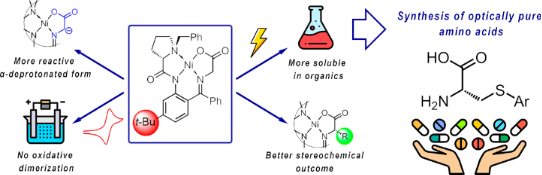
- Information File 24: Experimental details, characterization, and copies of spectra. Acknowledgements Prof. Dr. Denis Chusov is acknowledged for chiral HPLC analyses performed in the A.N. Nesmeyanov Institute of Organoelement Compounds of RAS. Funding This work was supported by the Russian Foundation for



An accelerated Rauhut–Currier dimerization enabled the synthesis of (±)-incarvilleatone and anticancer studies
Beilstein J. Org. Chem. 2023, 19, 204–211, doi:10.3762/bjoc.19.19
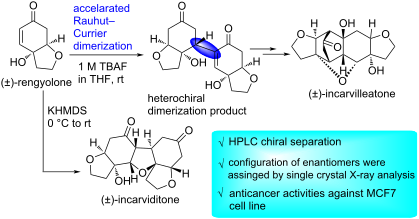
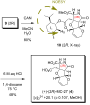
- The total synthesis of racemic incarvilleatone has been achieved by utilizing unexplored accelerated Rauhut–Currier (RC) dimerization. The other key steps of the synthesis are oxa-Michael and aldol reactions in a tandem sequence. Racemic incarvilleatone was separated by chiral HPLC and the
- Incarvillea younghusbandii (Figure 1). This plant is used in Chinese folk medicine to treat dizziness and anemia [1]. Zhang and co-workers [1] separated the racemic incarvilleatone in two individual enantiomers, (−)-incarvilleatone [(−)-1] and (+)-incarvilleatone [(+)-1] by performing chiral HPLC. The


Enantioselective total synthesis of putative dihydrorosefuran, a monoterpene with an unique 2,5-dihydrofuran structure
Beilstein J. Org. Chem. 2022, 18, 1264–1269, doi:10.3762/bjoc.18.132
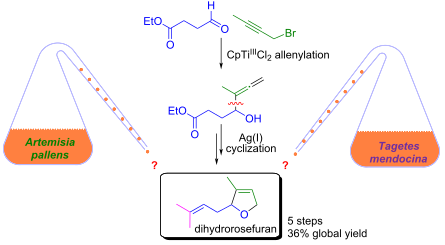
- stereoselective kinetic resolution of allenol 3 via lipase AK-catalyzed acetylation [15]. In this way, unaltered, (−)-hydroxyallene 3 could be separated from (+)-acetyl derivative 9 through standard column chromatography (Scheme 3). Enantiomeric excesses of (−)-3 and (+)-9 were determined by chiral HPLC analyses


A Streptomyces P450 enzyme dimerizes isoflavones from plants
Beilstein J. Org. Chem. 2022, 18, 1107–1115, doi:10.3762/bjoc.18.113
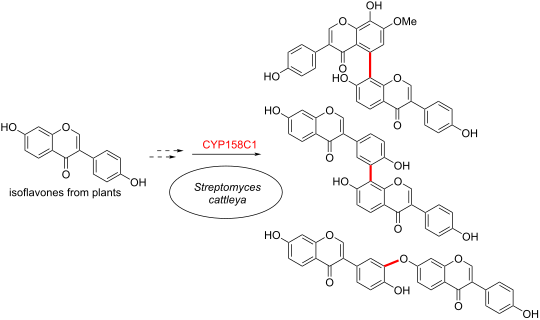
- and 2 with respect to atropisomerism was assessed by chiral HPLC analysis and the comparison of experimental and calculated ECD spectra. While 1 showed a ≈3:1 atropisomer ratio, with the M-atropisomer being the major form, 2 did not exhibit a Cotton effect in the ECD measurement, suggesting that it is


Anti-inflammatory aromadendrane- and cadinane-type sesquiterpenoids from the South China Sea sponge Acanthella cavernosa
Beilstein J. Org. Chem. 2022, 18, 916–925, doi:10.3762/bjoc.18.91
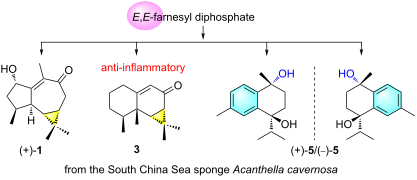
- equipped with a DAD G1315D detector and an Agilent Eclipse XDB-C18 column (5 μm, 9.4 × 250 mm). In contrast, chiral HPLC separation was operated on the chromatography equipped with CHIRALPAK IB N-3 column (5 μm, 4.6 × 250 mm). All solvents used for CC and HPLC were analytical grade (Shanghai Chemical
- successively separated by Sephadex LH-20 CC (PE/CH2Cl2/MeOH, 2:1:1) and RP-HPLC (55% MeCN in H2O, 3.0 mL/min) to afford compound 6 (1.3 mg, tR = 12.4 min). The separation of racemic mixtures (4 and 5) was performed on chiral HPLC equipped with a CHIRALPAK IB N-3 column eluted with MeCN/H2O [4: 25:75, 5: 15:85






The asymmetric Henry reaction as synthetic tool for the preparation of the drugs linezolid and rivaroxaban
Beilstein J. Org. Chem. 2022, 18, 438–445, doi:10.3762/bjoc.18.46
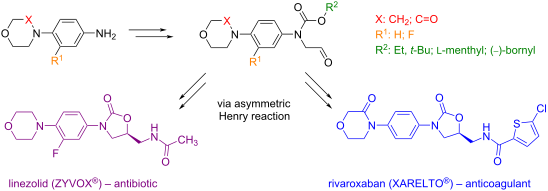
- de were observed and the presence of the major S-enantiomer in the products 1 and 2 was confirmed by chiral HPLC analysis. Moreover, an enhancement of the abundance of the major epimer in the nitroaldols 22, 24, and 26 as well as the amides 27 and 28 was examined. Generally, epimers represent pairs


Organocatalytic asymmetric nitroso aldol reaction of α-substituted malonamates
Beilstein J. Org. Chem. 2022, 18, 217–224, doi:10.3762/bjoc.18.25

- silica gel column chromatography. Enantioselectivities were determined by chiral HPLC analysis. Variation of ester moiety of malonamates and nitrosoarenes. General conditions: 1 (0.20 mmol), 2a (0.24 mmol), 3a (0.04 mmol), toluene (3.0 mL). Yields refer to isolated yields after silica gel column
- chromatography. Enantioselectivities were determined by chiral HPLC analysis. aReaction run for 6 h. Synthetic transformation. Optimization of the reaction conditions.a Supporting Information Supporting Information File 202: Detailed experimental procedures, complete characterization data for all compounds




Asymmetric organocatalytic Michael addition of cyclopentane-1,2-dione to alkylidene oxindole
Beilstein J. Org. Chem. 2022, 18, 167–173, doi:10.3762/bjoc.18.18
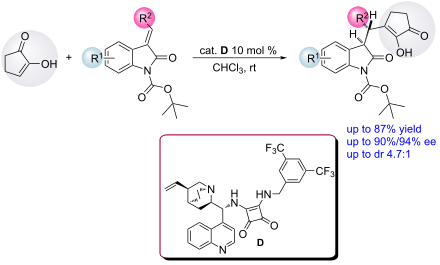
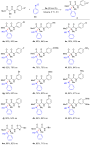
- -protecting groups. Reaction conditions: 0.2 M solution of 1 (1 equiv), 2 (1 equiv), of catalyst D (0.1 equiv), chloroform, at room temperature; isolated yields after column chromatography; ee determined by chiral HPLC. Scope of the reaction (the relative configuration of the major diastereoisomer is depicted
- ). Reaction conditions: 0.2 M solution of 1 equiv of 1, 2 equiv of 2, 0.1 equiv of catalyst D, chloroform, at room temperature; isolated yields after column chromatography; ee determined by chiral HPLC. Comparison reactions of E- and Z-isomers (the relative configurations of the major diastereoisomers are
- depicted). Reaction conditions: 0.2 M solution of 1 equiv of 1, 2 equiv of 2, 0.1 equiv of catalyst D, chloroform, at room temperature; isolated yields after column chromatography; ee determined by chiral HPLC. Screening conditions for the reactiona. Epimerisation of 3a. Supporting Information Supporting


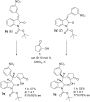
Regioselective synthesis of methyl 5-(N-Boc-cycloaminyl)-1,2-oxazole-4-carboxylates as new amino acid-like building blocks
Beilstein J. Org. Chem. 2022, 18, 102–109, doi:10.3762/bjoc.18.11
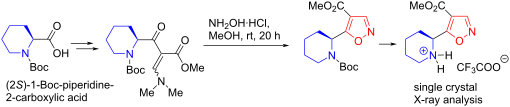
- blocks was developed. Regioisomeric methyl 5-(N-Boc-cycloaminyl)-1,2-oxazole-4-carboxylates were prepared by the reaction of β-enamino ketoesters (including azetidine, pyrrolidine or piperidine enamines) with hydroxylamine hydrochloride. Unambiguous structural assignments were based on chiral HPLC
- hydroxylamine hydrochloride in methanol (Scheme 1). Synthesized compounds 4b–g exhibited optical activity, and the corresponding (R)- or (S)-enantiomers rotated the plane of plane-polarized light in opposite directions. The enantiomeric purity of chiral compounds 4b–g was assessed via chiral HPLC analysis of


Bifunctional thiourea-catalyzed asymmetric [3 + 2] annulation reactions of 2-isothiocyanato-1-indanones with barbiturate-based olefins
Beilstein J. Org. Chem. 2022, 18, 25–36, doi:10.3762/bjoc.18.3
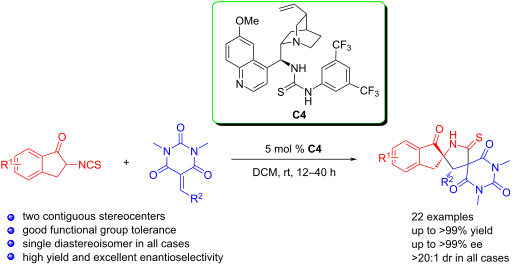
- an Agilent 6520 Accurate-Mass Q-TOF MS system equipped with an electrospray ionization (ESI) source. Optical rotations were measured with a Krüss P8000 polarimeter at the indicated concentration with the units of g/100 mL. Enantiomeric excesses were determined by chiral HPLC analysis using an Agilent




Unsaturated fatty acids and a prenylated tryptophan derivative from a rare actinomycete of the genus Couchioplanes
Beilstein J. Org. Chem. 2021, 17, 2939–2949, doi:10.3762/bjoc.17.203
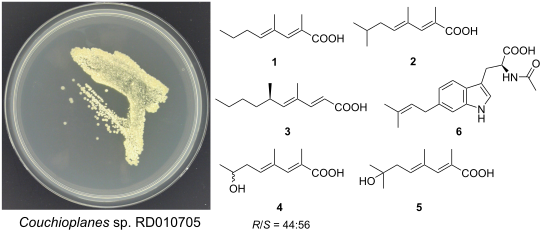
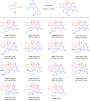
- -octadienoic acid (5), and one prenylated tryptophan derivative, 6-(3,3-dimethylallyl)-N-acetyl-ʟ-tryptophan (6). The enantiomer ratio of 4 was determined to be approximately S/R = 56:44 by a recursive application of Trost’s chiral anisotropy analysis and chiral HPLC analysis of its methyl ester. Compounds 1–5
- . (S)-MPA ester of 7R enantiomer 4'd: 1H NMR data was identical to those of 4'a. Chiral HPLC analysis A 0.2 μL-portion of 4', dissolved in iPrOH, was injected into a cellulose tribenzoate-coated silica gel column (CHIRALCEL OB-H, 4.6 mm × 250 mm, Daicel Co.) eluted with n-hexane/iPrOH (4:1) at 0.5 mL
- recorded on a Bruker micrOTOF spectrometer. Silica gel 60 (spherical) (Kanto Chemical Co., Inc.) was used for silica gel column chromatography. Cosmosil 75C18-PREP (Nacalai Tesque, Inc.) was used for ODS column chromatography. Routine HPLC separations were performed on an Agilent HP1200 system, and chiral


Synthetic strategies toward 1,3-oxathiolane nucleoside analogues
Beilstein J. Org. Chem. 2021, 17, 2680–2715, doi:10.3762/bjoc.17.182
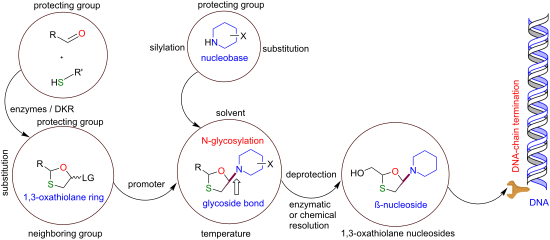
- THF and phosphate-buffered saline (PBS). The reaction used 64 and 3q as starting materials and was stereocontrolled efficiently, providing an enantiomeric excess of about >99%. The subsequent N-glycosylation further provided enantiopure lamivudine (1). Hu et al. [60] explained that chiral HPLC and
- a cis/trans ratio of 1.3:1 for the nucleoside intermediate 79a. Further, the nucleoside intermediate 79a was deprotected using a type of basic resin. This gave the cis-diastereomer 3TC (1), which was purified by chiral HPLC, resulting in an ee value of 70% (Scheme 28). Further developments in the


Organocatalytic asymmetric Michael/acyl transfer reaction between α-nitroketones and 4-arylidenepyrrolidine-2,3-diones
Beilstein J. Org. Chem. 2021, 17, 1447–1452, doi:10.3762/bjoc.17.100
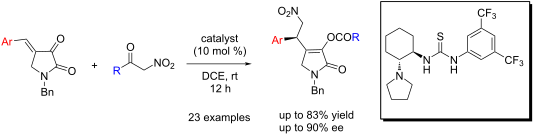
- 2 (0.1 mmol), 10 mol % VII in 0.6 mL 1,2-dichloroethane were reacted at 25 °C for 12 hours. Yields correspond to isolated yields after silica gel column chromatography and ees were determined by chiral HPLC. Catalyst screening and optimization of the reaction conditions. Scope of α-nitroketones 2 in


N-tert-Butanesulfinyl imines in the asymmetric synthesis of nitrogen-containing heterocycles
Beilstein J. Org. Chem. 2021, 17, 1096–1140, doi:10.3762/bjoc.17.86



Menthyl esterification allows chiral resolution for the synthesis of artificial glutamate analogs
Beilstein J. Org. Chem. 2021, 17, 540–550, doi:10.3762/bjoc.17.48
- ]. Chiral HPLC profiles for the separation of menthyl ester diastereomers 20* and 20. Conditions: 4.6 × 250 mm CHIRALPAK IC column, EtOH/hexane 1:19, 1 mL/min, 40 °C, 254 nm, tR 9.6, 11.8 min. Superimposed structures of the top 5 stable conformers (89.9% total population) generated by CONFLEX (MMFF94S) for








The synthesis of chiral β-naphthyl-β-sulfanyl ketones via enantioselective sulfa-Michael reaction in the presence of a bifunctional cinchona/sulfonamide organocatalyst
Beilstein J. Org. Chem. 2021, 17, 494–503, doi:10.3762/bjoc.17.43
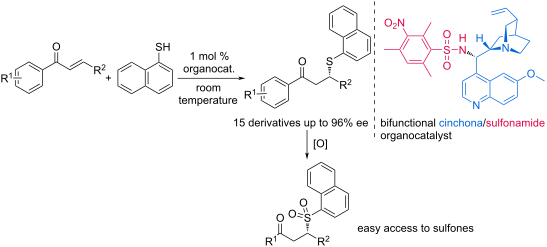
- by chiral HPLC chromatography using Agilent instrument. All new products were further analyzed by LC/MS–HRMS–TOF or MALDI–ESI–TOFMS. Synthesis of organocatalyst 5 A solution of quinineamine 2 (226.40 mg, 0.70 mmol) and triethylamine (107 μL, 0.77 mmol) in CH2Cl2 was added to a screw-capped reaction


Synthesis of legonmycins A and B, C(7a)-hydroxylated bacterial pyrrolizidines
Beilstein J. Org. Chem. 2021, 17, 334–342, doi:10.3762/bjoc.17.31

- configurationally unstable in aqueous solution. Chiral HPLC analysis of samples of pyrrolizixenamide A isolated from culture clearly indicated racemic specimens but also revealed the presence of the two C(7a)-hydroxylated derivatives whose presence in the mixture became enriched during purification. Taken together


Vicinal difluorination as a C=C surrogate: an analog of piperine with enhanced solubility, photostability, and acetylcholinesterase inhibitory activity
Beilstein J. Org. Chem. 2020, 16, 2663–2670, doi:10.3762/bjoc.16.216
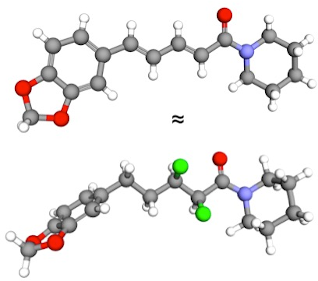
- difluorinated acid 20. Finally, coupling of the acid 20 with piperidine afforded the target compound 2 in moderate yield (Scheme 3). The enantiopurity of 2 was investigated using chiral HPLC. From a spectroscopically pure sample of 2, two HPLC peaks were observed, with an integral ratio of 99:1. It is assumed


Synthesis of monophosphorylated lipid A precursors using 2-naphthylmethyl ether as a protecting group
Beilstein J. Org. Chem. 2020, 16, 1955–1962, doi:10.3762/bjoc.16.162
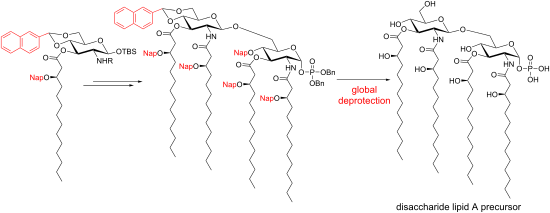
- )-3-hydroxytetradecanoate (5) in 98% yield. The same hydrogenation reaction was carried out using the (S)-Ru(OAc)2(BINAP) catalyst. Then both the R and S products were compared using chiral HPLC to confirm the absolute configuration and enantiomeric purity (Figure S1, Supporting Information File 1


Bipyrrole boomerangs via Pd-mediated tandem cyclization–oxygenation. Controlling reaction selectivity and electronic properties
Beilstein J. Org. Chem. 2020, 16, 895–903, doi:10.3762/bjoc.16.81
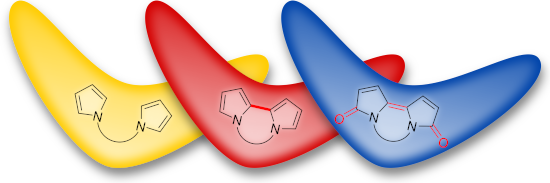
- by means of chiral HPLC with CD detection, leading to enantioenriched samples of some boomerangs. The enantiomers of cR2O were found to racemize very fast, thus it was not possible to separate them. The cR3X systems, which contain a 7-membered ring, showed a remarkably diverse behavior. Enantiomers




Asymmetric synthesis of CF2-functionalized aziridines by combined strong Brønsted acid catalysis
Beilstein J. Org. Chem. 2020, 16, 638–644, doi:10.3762/bjoc.16.60
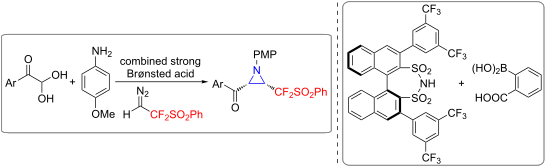
- dichloromethane/petroleum ether) to give CF2-substituted aziridine 4. The enantiomeric excess was determined by chiral HPLC analysis. See Supporting Information File 1 for the dissolution–filtration procedure for each compound. Preparation of chiral aziridines from fluorinated diazo reagents. Substrate scope of


Arylisoquinoline-derived organoboron dyes with a triaryl skeleton show dual fluorescence
Beilstein J. Org. Chem. 2019, 15, 2612–2622, doi:10.3762/bjoc.15.254
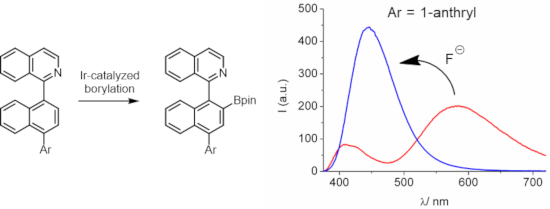
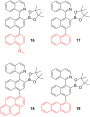
- undertaken at 80 °C in C6D6 using a screw-cap NMR tube. Although significant changes were registered, a complete coalescence of the signals was not observed. The chiral HPLC analysis (see HPLC traces in Supporting Information File 1) demonstrated the high purity of compounds 16–19. The sharp peaks and



Synthesis, enantioseparation and photophysical properties of planar-chiral pillar[5]arene derivatives bearing fluorophore fragments
Beilstein J. Org. Chem. 2019, 15, 1601–1611, doi:10.3762/bjoc.15.164
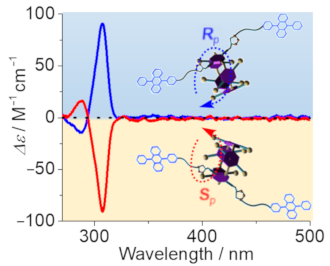
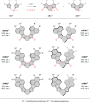
- derivatives. The racemic mixtures of P5A-DPA and P5A-Py were respectively separated by chiral high-performance liquid chromatography (HPLC). As shown in Figure 3a, injection of a P5A-DPA solution onto a DAICEL CHIRALPAK IA chiral HPLC column afforded two well-separated peaks of almost equal areas at 8.8 min
- absorption at 385–460 nm and a quantum yield of 46.4%. The rotation of phenolic units was inhibited by introducing two bulky fluorophores in one of the phenolic units of pillar[5]arene, and the enantiomers were isolated by chiral HPLC. The absolute configurations of each fraction were determined by circular
- curves of DPA-6 and P5A-DPA at 420 nm, excited at 390 nm nanosecond LED, c = 1.0 × 10⁻⁵ M in CHCl3, 25 °C. (a) Chiral HPLC traces of P5A-DPA, (b), (c) the first and second fractions of P5A-DPA, detected by UV at 295 nm. Conditions: column, DAICEL CHIRALPAK IA; mobile phase: hexane/dichloromethane 35:65



Fluorine-containing substituents: metabolism of the α,α-difluoroethyl thioether motif
Beilstein J. Org. Chem. 2019, 15, 1441–1447, doi:10.3762/bjoc.15.144
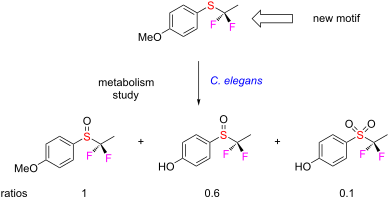
- . Sulfone 8 was a relatively minor metabolite, at only 10% of sulfoxide 6. A chiral HPLC (IC column, solvent: 5% isopropanol in hexane; 1 mL/min) enantiomeric assay was conducted for sulfoxide 6 and the outcome compared with a racemic sample of 6, prepared by chemical oxidation of thioether 4 [22]. Although
- with very similar outcomes. In order to explore the stereoselectivity of this sulfoxidation, sulfoxide 11 isolated from the C. elegans incubation was analysed by chiral HPLC (IC column, solvent: 5% isopropanol in hexane; 1 mL/min). This was compared to a racemic reference sample of 11 prepared by


Ugi reaction-derived prolyl peptide catalysts grafted on the renewable polymer polyfurfuryl alcohol for applications in heterogeneous enamine catalysis
Beilstein J. Org. Chem. 2019, 15, 1210–1216, doi:10.3762/bjoc.15.118
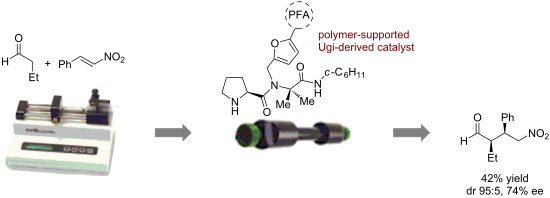
- chromatography on silica gel using n-hexane/EtOAc as eluent. Enantiomeric excess (ee) was determined by chiral HPLC analysis through comparison with the authentic racemic material. Assignment of the stereoisomers was performed by comparison with literature data. Synthesis and characterization Prolyl pseudo