


Search results
Search for "enyne" in Full Text gives 98 result(s) in Beilstein Journal of Organic Chemistry.
Ring-closing metathesis of prochiral oxaenediynes to racemic 4-alkenyl-2-alkynyl-3,6-dihydro-2H-pyrans
Beilstein J. Org. Chem. 2020, 16, 2757–2768, doi:10.3762/bjoc.16.226
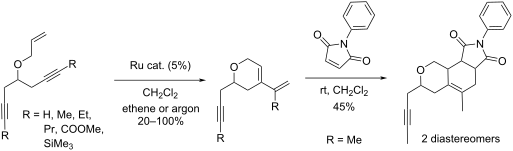
- ., Flemingovo nám. 2, 166 10 Prague 6, Czech Republic 10.3762/bjoc.16.226 Abstract The prochiral 4-(allyloxy)hepta-1,6-diynes, optionally modified in the positions 1 and 7 with an alkyl or ester group, undergo a chemoselective ring-closing enyne metathesis yielding racemic 4-alkenyl-2-alkynyl-3,6-dihydro-2H
- -pyrans. Among the catalysts tested, Grubbs 1st generation precatalyst in the presence of ethene (Mori conditions) gave superior results compared to the more stable Grubbs or Hoveyda–Grubbs 2nd generation precatalysts. This is probably caused by a suppression of the subsequent side-reactions of the enyne
- enantioselective enyne metathesis yielding chiral building blocks for compounds with potential biological activity, e.g., norsalvinorin or cacospongionolide B. Keywords: Diels–Alder reaction; enediyne; enyne metathesis; ring-closing metathesis; ruthenium precatalyst; Introduction Among the plethora of metathetic




Syntheses of spliceostatins and thailanstatins: a review
Beilstein J. Org. Chem. 2020, 16, 1991–2006, doi:10.3762/bjoc.16.166

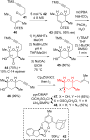
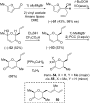
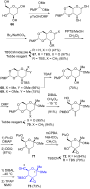
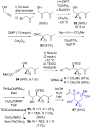
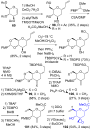
- silyl ether-protected 2-hydroxypropanals 15a and 15b via literature procedures [10], followed by the application of the Still–Gennari Z-selective Horner–Wadsworth–Emmons olefination [11]. Koide’s group [12][13] reported that the asymmetric addition of the enyne 16 to acetaldehyde in the presence of zinc








Pauson–Khand reaction of fluorinated compounds
Beilstein J. Org. Chem. 2020, 16, 1662–1682, doi:10.3762/bjoc.16.138
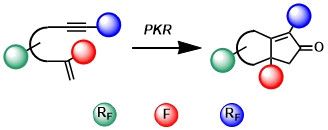
- the PKR of enynes containing a fluoride moiety. Keywords: alkene; alkyne; enyne; fluorine; Pauson–Khand; Introduction The prevalence of fluorine-containing molecules in drug-discovery programs is nowadays unquestionable [1][2][3]. The presence of fluorine atoms or fluorine-containing units at
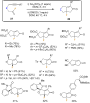
- presence of fluorinated groups on the alkenyl moiety of the 1,6-enyne resulted in low yields (lower than 35%) of the corresponding cyclized products, due to the poor reactivity of the fluorinated olefin (Scheme 6). For example, difluoroalkene-containing compound 1 decomposed and no cyclized product was
- formed. In this NMO-promoted PKR, monofluoroolefinic enyne 2 afforded the defluorinated cyclopentenone 7 in 37% yield. Similarly, trifluoromethyl-substituted olefin 3 also lost the chlorine atom upon cyclization to give 8 as a single diastereoisomer, albeit in a low 14% yield. The reaction of




Photocatalyzed syntheses of phenanthrenes and their aza-analogues. A review
Beilstein J. Org. Chem. 2020, 16, 1476–1488, doi:10.3762/bjoc.16.123
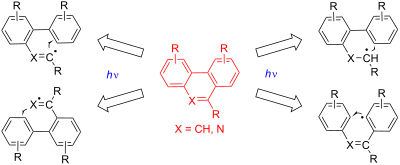
- (trifluoromethyl)thiyl radical, which added onto the double bond of 17.1a–d, and finally delivered the desired products 17.5a–d in good yields, through the intermediacy of radicals 17.3·a–d and iminyl radicals 17.4·a–d [85]. The double bond of acrylamides embedded into a 1,7-enyne framework likewise allowed the


Diversity-oriented synthesis of 17-spirosteroids
Beilstein J. Org. Chem. 2020, 16, 880–887, doi:10.3762/bjoc.16.79
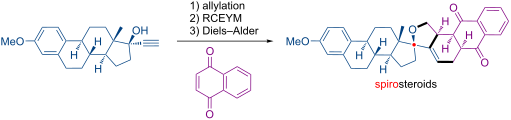
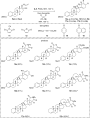
- Paris, Palaiseau Cedex, France 10.3762/bjoc.16.79 Abstract A diversity-oriented synthesis (DOS) approach has been used to functionalize 17-ethynyl-17-hydroxysteroids through a one-pot procedure involving a ring-closing enyne metathesis (RCEYM) and a Diels–Alder reaction on the resulting diene, under
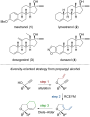
- ; ring-closing enyne metathesis; spirosteroids; steroids; Introduction Diversity-oriented synthesis (DOS) is a powerful approach to access collections of structurally diverse compounds in a few synthetic steps [1][2][3][4][5][6][7]. It can be more relevant when the chemical diversity is centred on
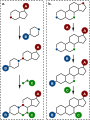
- the propargylic alcohol, the resulting enyne is a good substrate for ring closing enyne metathesis (RCEYM) towards new diene substrates [40][41][42], which can be employed in Diels–Alder reactions with a variety of dienophiles (Figure 1) [43][44][45][46][47][48][49][50][51][52][53][54]. This strategy




Combining enyne metathesis with long-established organic transformations: a powerful strategy for the sustainable synthesis of bioactive molecules
Beilstein J. Org. Chem. 2020, 16, 738–755, doi:10.3762/bjoc.16.68
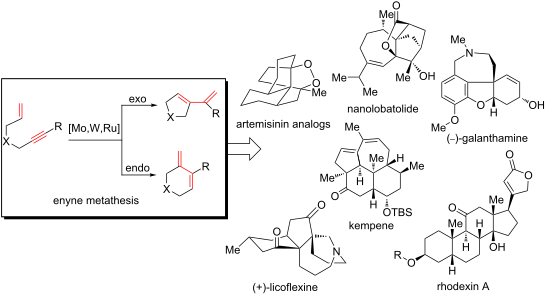
- account surveys the current progress on the application of intra- and intermolecular enyne metathesis as main key steps in the synthesis of challenging structural motifs and stereochemistries found in bioactive compounds. Special emphasis is placed on ruthenium catalysts as promoters of enyne metathesis
- of known, in vivo effective substances but also for designing chemically modified analogs as valid alternatives for further therapeutic agents. Keywords: bioactive compounds; enyne metathesis; ring-closing metathesis; ruthenium catalysts; tandem reactions; Introduction Alkene and alkyne metathesis
- [44]. Among the various embodiments of olefin metathesis, the highly chemoselective enyne metathesis reaction [45][46][47][48][49] has led to some of the most striking advances in the development of modern, efficient synthetic protocols [50][51]. Thus, the present account focuses on the impressive




Controlling alkyne reactivity by means of a copper-catalyzed radical reaction system for the synthesis of functionalized quaternary carbons
Beilstein J. Org. Chem. 2020, 16, 502–508, doi:10.3762/bjoc.16.45
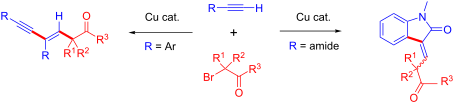
- reaction of 3 equivalents of terminal alkyne 1 (aryl substituted alkyne) and an α-bromocarbonyl compound 2 (tertiary alkyl radical precursor) undergoes tandem alkyl radical addition/Sonogashira coupling to produce 1,3-enyne compound 3 possessing a quaternary carbon in the presence of a copper catalyst
- . Moreover, the reaction of α-bromocarbonyl compound 2 and an alkyne 4 possessing a carboxamide moiety undergoes tandem alkyl radical addition/C–H coupling to produce indolinone derivative 5. Keywords: copper catalyst; 1,3-enyne; functionalized quaternary carbon; indolinone; tandem alkyl radical addition
- addition (ATRA) [21] (Scheme 1, i–iii). Therefore, we postulated that if we could control the reactivities of the alkynyl–Cu and ATRA adducts, a tandem tertiary alkylation followed by an alkynylation could occur to produce a 1,3-enyne possessing a quaternary carbon center with good regio- and


Combination of multicomponent KA2 and Pauson–Khand reactions: short synthesis of spirocyclic pyrrolocyclopentenones
Beilstein J. Org. Chem. 2020, 16, 200–211, doi:10.3762/bjoc.16.23
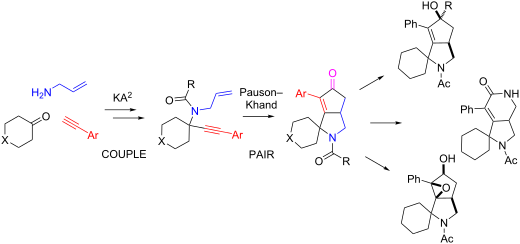
- reaction to achieve spirocyclic pyrrolocyclopentenone derivatives. Specifically, the KA2 reaction was envisaged taking into account cyclic ketones, to install a quaternary carbon atom carrying the required 1,6-enyne moiety for the subsequent Pauson–Khand reaction, thus achieving the corresponding tricylic
- Pauson–Khand (C) reaction. In a dry round bottom flask under a nitrogen flow Co2(CO)8 (0.1 equiv), N,N,N’,N’-tetramethylthiourea (0.6 equiv) and a solution of the enyne compound (1 equiv) were successively added in dry toluene (20 mL/mmol). Then, the reaction mixture was kept under a CO atmosphere and




Borylation and rearrangement of alkynyloxiranes: a stereospecific route to substituted α-enynes
Beilstein J. Org. Chem. 2019, 15, 1416–1424, doi:10.3762/bjoc.15.141
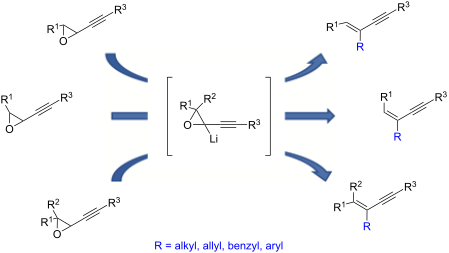
- rearrangement of the so-formed alkynyloxiranyl borates. This stereospecific process overall transfers the cis or trans-stereochemistry of the starting alkynyloxiranes to the resulting 1,3-enynes. Keywords: boron; enyne; lithium; oxirane; rearrangement; Introduction Lithiated oxiranes are useful intermediates
- (see below) to be trapped by various phenylboronic esters 2. The resulting borate intermediate afforded the tetrasubstituted enyne 3 in good to moderate yields, depending on the boronic ester’s nature (Table 1). The catechol ester 2a only provided a modest yield of 3 (Table 1, entry 1), while the
- isomers. The cis-configured compound cis-1b readily reacted with pinacol phenylboronate 2c under the conditions set up above, providing enyne 4 as the sole product in high yield (Table 2, entry 1). NMR analysis revealed the Z-stereochemistry of this enyne [31]. In contrast, the trans-isomer trans-1b


Domino ring-opening–ring-closing enyne metathesis vs enyne metathesis of norbornene derivatives with alkynyl side chains. Construction of condensed polycarbocycles
Beilstein J. Org. Chem. 2018, 14, 2708–2714, doi:10.3762/bjoc.14.248
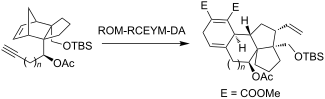
- investigated with the objective of constructing condensed polycyclic structures. This investigation demonstrated that the generally observed domino reaction course involving a ring-opening metathesis of the norbornene unit and a ring-closing enyne metathesis is influenced to a great extent by the nature of the
- functional group and the substrate structure and may follow a different reaction course than what is usually observed. In cases where ROM–RCEYM occurred, the resulting 1,3-diene reacts in situ with the dienophile to provide condensed tetracyclic systems. Keywords: Diels–Alder reaction; domino process; enyne
- ][28][29][30][31][32][33] for the synthesis of a variety of complex ring systems such as condensed, bridged and spirocycles difficult to obtain otherwise. On the contrary, the domino process involving a ring-opening metathesis (ROM) followed by a ring-closing enyne metathesis (RCEYM) [34][35][36][37




Synthesis of cis-hydrindan-2,4-diones bearing an all-carbon quaternary center by a Danheiser annulation
Beilstein J. Org. Chem. 2018, 14, 2597–2601, doi:10.3762/bjoc.14.237

- through ring-expanding cyclopentane annulations based on a Prins–pinacol rearrangement [17][18] and Au(I)-catalyzed pinacol-terminated 1,6-enyne cyclizations [19][20], the C3a–C7a bond formation occurring in the last step of both procedures. Finally, Snyder gained access to the type A hydrindane nucleus


Synergistic approach to polycycles through Suzuki–Miyaura cross coupling and metathesis as key steps
Beilstein J. Org. Chem. 2018, 14, 2468–2481, doi:10.3762/bjoc.14.223
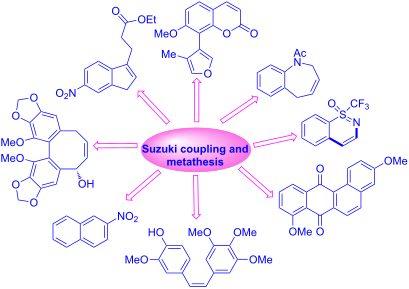
- Diels–Alder reaction, Claisen rearrangement, cross-metathesis, and cross-enyne metathesis are used. The synergistic combination of these powerful reactions is found to be useful for the construction of complex targets and fulfill synthetic brevity. Keywords: Claisen rearrangement; Diels–Alder reaction
- a CM in an efficient manner. Biaryl derivatives In view of the interesting properties of biaryl derivatives, we have identified a three-step sequence, which involve cross-enyne metathesis (CEM), DA reaction followed by SM coupling [46]. To this end, acetylene derivatives 96a,b were subjected to CEM


Hydroarylations by cobalt-catalyzed C–H activation
Beilstein J. Org. Chem. 2018, 14, 2266–2288, doi:10.3762/bjoc.14.202
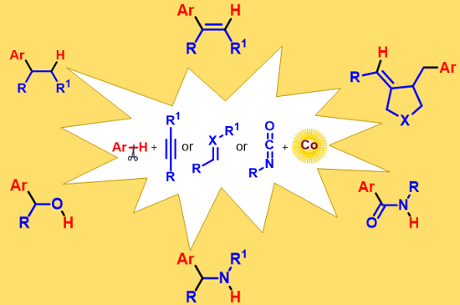
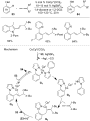
- mild electron-rich ligand resulted in hydroacylation product (Scheme 33b) [94]. A plausible mechanism for the hydroarylative cyclization of enynes was shown in Scheme 34. The reaction begins with the reduction of Co(II) to Co(I) by Zn dust. The enyne compound underwent oxidative addition with Co(I) to








Cobalt-catalyzed nucleophilic addition of the allylic C(sp3)–H bond of simple alkenes to ketones
Beilstein J. Org. Chem. 2018, 14, 2012–2017, doi:10.3762/bjoc.14.176
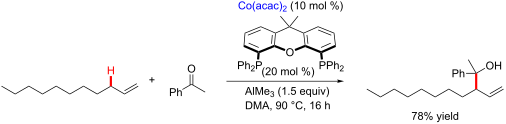
- species (Figure 1). However, the substrates employed have been restricted to allylarenes and 1,4-enyne, and 1,4-diene derivatives and α-olefins were totally unexplored. Therefore, the next challenge would be to use less reactive α-olefins (pKa value of 1-propene = 43). In this paper, we describe an


Photocatalytic formation of carbon–sulfur bonds
Beilstein J. Org. Chem. 2018, 14, 54–83, doi:10.3762/bjoc.14.4
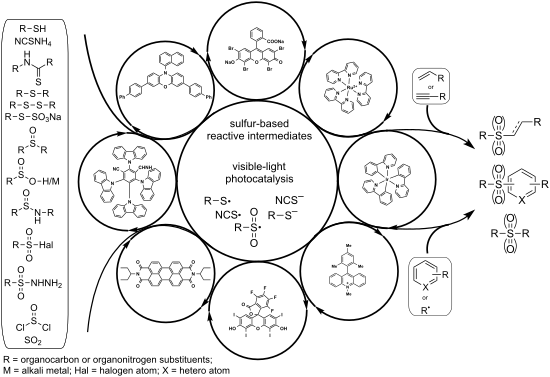
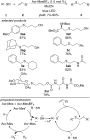
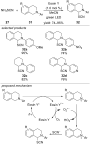
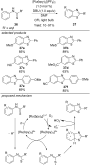
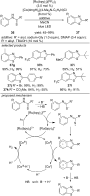
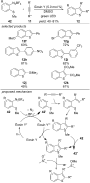
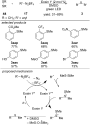
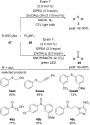
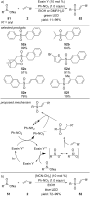
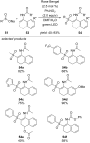
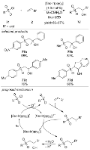
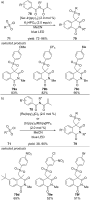
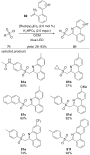
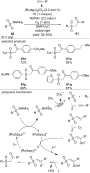
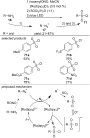
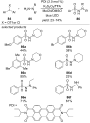
- the alkene moiety of the 1,7-enyne, two consecutive cyclizations lead to the final sulfonylated benzo[α]fluoren-5-one. Electron and proton transfer and subsequent formation of dihydrogen close the catalytic cycle and regenerate the photocatalyst. Sulfinamides Formation of sulfoxides A new method for









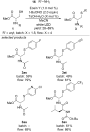
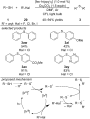

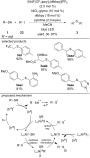
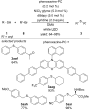











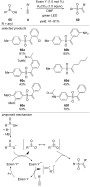

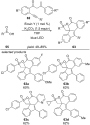

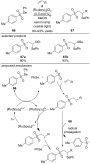

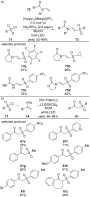





Synthesis of substituted Z-styrenes by Hiyama-type coupling of oxasilacycloalkenes: application to the synthesis of a 1-benzoxocane
Beilstein J. Org. Chem. 2017, 13, 2122–2127, doi:10.3762/bjoc.13.209
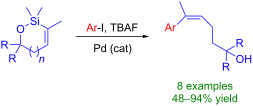
- ][17][18][19][20][21] and enyne metathesis [22][23]. We became interested in the cross-coupling of cyclic siloxanes in the context of preparing trisubstituted Z-styrenes for the synthesis of natural product targets [24]. Heliannuol A was the first member of a family of allelopathic [25][26][27


The chemistry and biology of mycolactones
Beilstein J. Org. Chem. 2017, 13, 1596–1660, doi:10.3762/bjoc.13.159


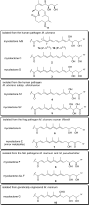


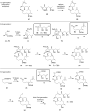


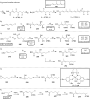


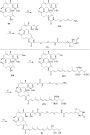

Unpredictable cycloisomerization of 1,11-dien-6-ynes by a common cobalt catalyst
Beilstein J. Org. Chem. 2017, 13, 639–643, doi:10.3762/bjoc.13.62
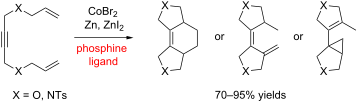
- the diene compounds 3a,b in 90–95% yields. These compounds were also obtained using a 1,2-bis(diphenylphosphino)benzene (dppbz) ligand. Despite the extensive studies of enyne transformations, this type of cyclization has been achieved only recently, using a cyclobutadiene rhodium complex as a catalyst




Chiral cyclopentadienylruthenium sulfoxide catalysts for asymmetric redox bicycloisomerization
Beilstein J. Org. Chem. 2016, 12, 1136–1152, doi:10.3762/bjoc.12.110
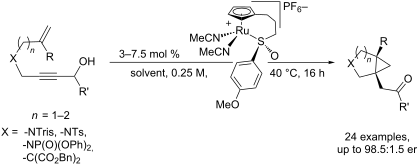
- alcohols revealed a matched/mismatched effect that was strongly dependent on the nature of the solvent. Keywords: asymmetric catalysis; [3.1.0] bicycles; [4.1.0] bicycles; cycloisomerization; 1,6-enyne; 1,7-enyne; ruthenium catalysis; sulfoxide; Introduction Due to their prevalence in natural products [1
- ], medicinal targets [2], and materials [3], organic chemists have made the construction of cyclic, organic molecules one of the most important areas of research in their discipline. Of the available methods to affect cyclization, transition metal-catalyzed enyne cycloisomerizations [4] have been recognized as
- an atom- [5], step- [6], and redox-economical [7] class of reactions that are able to stitch together cyclic molecules quickly and efficiently. The very first enyne cycloisomerization reactions were reported by the Trost group while they were synthesizing substrates intended for thermal Alder–ene




Solving the puzzling competition of the thermal C2–C6 vs Myers–Saito cyclization of enyne-carbodiimides
Beilstein J. Org. Chem. 2016, 12, 43–49, doi:10.3762/bjoc.12.6
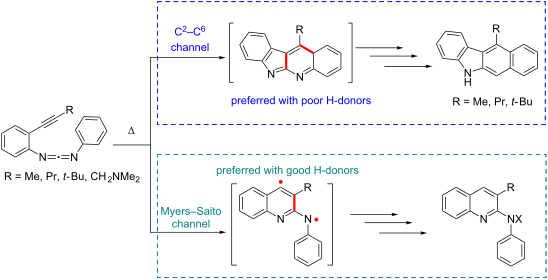
- Anup Rana Mehmet Emin Cinar Debabrata Samanta Michael Schmittel Department of Chemistry and Biology, Universität Siegen, Adolf-Reichwein-Str. 2, D-57068 Siegen, Germany 10.3762/bjoc.12.6 Abstract The mechanism of the thermal cyclization of enyne-carbodiimides 7a–c has been studied computationally
- by applying the DFT method. The results indicate that enyne-carbodiimides preferentially follow the C2–C6 (Schmittel) cyclization pathway in a concerted fashion although the Myers–Saito diradical formation is kinetically preferred. The experimentally verified preference of the C2–C6 over the Myers
- –Saito pathway is guided by the inability of the Myers–Saito diradical to kinetically compete in the rate-determining trapping reactions, either inter- or intramolecular, with the concerted C2–C6 cyclization. As demonstrated with enyne-carbodiimide 11, the Myers–Saito channel can be made the preferred


Copper-catalyzed stereoselective conjugate addition of alkylboranes to alkynoates
Beilstein J. Org. Chem. 2015, 11, 2444–2450, doi:10.3762/bjoc.11.265

- aldehyde groups were acceptable as para or meta-substituents on the aromatic ring at the β-positions (Table 2, entries 6–9). The alkynoate 3f bearing a 2-thienyl group at the β-position is also compatible with the conjugate addition and gave 94% syn selectivity (Table 2, entry 10). The 1,3-enyne derivative


Beyond catalyst deactivation: cross-metathesis involving olefins containing N-heteroaromatics
Beilstein J. Org. Chem. 2015, 11, 2223–2241, doi:10.3762/bjoc.11.241
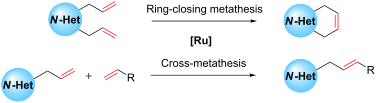
- temperature (Scheme 11) [48]. This method was used to prepare polycyclic scaffolds that can be encountered in diverse alkaloid natural products such as coralyne and berberine (Scheme 12) [49]. Similarly, enyne ring-closing metathesis reactions were performed to access a variety of vinyl-3,4
- . Enyne ring-closing metathesis. Synthesis of (R)-(+)-muscopyridine using a RCM strategy. Synthesis of a tris-pyrrole macrocycle. Synthesis of a bicyclic imidazole. RCM using Schrock’s catalyst 44. Synthesis of 1,6-pyrido-diazocine 46 by using a RCM. Synthesis of fused pyrimido-azepines through RCM. RCM


Ru complexes of Hoveyda–Grubbs type immobilized on lamellar zeolites: activity in olefin metathesis reactions
Beilstein J. Org. Chem. 2015, 11, 2087–2096, doi:10.3762/bjoc.11.225
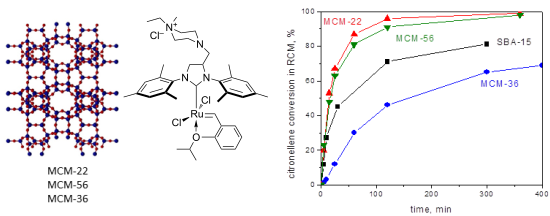
- of 1,7-octadiene and (−)-β-citronellene; HGIIN+Cl− on SBA-15 (HGIIN+Cl−/SBA-15) was the most active (TON up to 16000 in RCM of citronellene). HGIIN+Cl−/SBA-15 proved its versatility in RCM, enyne metathesis, metathesis of methyl oleate, and cross-metathesis of electron deficient methyl acrylate with


Recent applications of ring-rearrangement metathesis in organic synthesis
Beilstein J. Org. Chem. 2015, 11, 1833–1864, doi:10.3762/bjoc.11.199
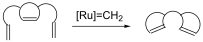
- decades have changed the landscape of organic synthesis. Armed with these advances, olefin metathesis has become a staple in retrosynthesis. Metathesis protocols such as ring-closing metathesis (RCM), cross-metathesis (CM), and enyne metathesis (EM) have gained popularity in the synthesis of complex
- related to the RRM readers may refer to excellent reviews available in the literature [3][4][5][6]. Review Cyclopropene systems Cyclopropene derivatives are highly strained systems and they are ideal candidates for the RRM process. In this context, Zhu and Shi [7] have reported the ring-closing enyne
- catalyst 2 to generate the expected RRM product 97 in 68% yield. Further, this approach is useful for the preparation of polyunsaturated trisaccharides (Scheme 19). Mori and co-workers [24] have used the RRM protocol starting with enyne 98 using catalyst 2 in the presence of ethylene (24) to generate the




Preparation of conjugated dienoates with Bestmann ylide: Towards the synthesis of zampanolide and dactylolide using a facile linchpin approach
Beilstein J. Org. Chem. 2015, 11, 1815–1822, doi:10.3762/bjoc.11.197
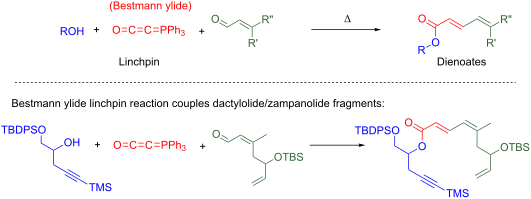
- the C3–C8 fragment of zampanolide, was synthesised from acrolein (12) (Scheme 2). Firstly, Barbier reaction of acrolein with propargyl bromide followed by silyl protection of the resulting alcohol afforded enyne 13. Treatment of the lithium alkynylide derived from 13 with methyl chloroformate produced





