Search results
Search for "regioisomers" in Full Text gives 253 result(s) in Beilstein Journal of Organic Chemistry. Showing first 200.
Synthesis and properties of 6-alkynyl-5-aryluracils
Beilstein J. Org. Chem. 2024, 20, 898–911, doi:10.3762/bjoc.20.80
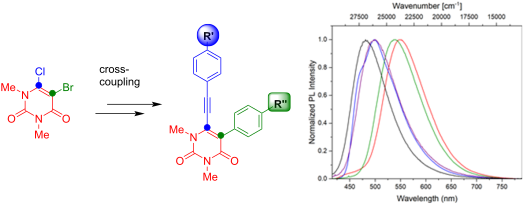
- could be observed with an absorption band at 273 nm and a shoulder at 306 nm. The second highest peak was observed for 5f, followed by 5m. Only one broadened peak was observed in both cases. The influence of the substitution pattern could be revealed by comparing the two regioisomers 5d and 5k. As a




Advancements in hydrochlorination of alkenes
Beilstein J. Org. Chem. 2024, 20, 787–814, doi:10.3762/bjoc.20.72
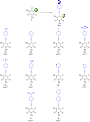
- a mixture of E- and Z-octene (67) (Scheme 10). They also mentioned in a footnote that 2-chlorooctane (41) was contaminated by "some 3-chlorooctane” (68). The formation of regioisomers through hydride or alkyl shifts is a common occurrence in hydrochlorination reactions involving secondary cations
- regioisomers 41 and 68. The formation thereof was previously discussed in Scheme 10. Reactions with polar substrates such as 6-methylhept-5-en-2-one resulted in homogenous reaction conditions and did not require vigorous stirring (product 128). As previously observed by Paquin and co-workers citronellol gave






Regioselective quinazoline C2 modifications through the azide–tetrazole tautomeric equilibrium
Beilstein J. Org. Chem. 2024, 20, 675–683, doi:10.3762/bjoc.20.61
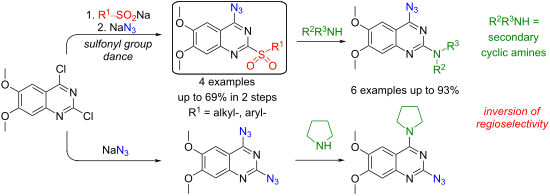
- of 4-azido-6,7-dimethoxy-2-sulfonylquinazoline derivatives 12 were proven by chemical synthesis of the regioisomers 15 (Scheme 7) and X-ray analysis of 12a (Scheme 6). 6,7-Dimethoxy-2,4-diazidoquinazoline (13) was synthesized from commercially available dichloroquinazoline 7 in 93% yield. Further
- was washed with pH 7.4 phosphate buffer to reach 96% purity [26]) yielded the regioisomers 15 of the sulfonyl group dance products at a lower yield than the previously mentioned oxidation step, which was most likely caused by the high reactivity of product 14, but the reaction conditions were not


Synthesis of π-conjugated polycyclic compounds by late-stage extrusion of chalcogen fragments
Beilstein J. Org. Chem. 2024, 20, 287–305, doi:10.3762/bjoc.20.30
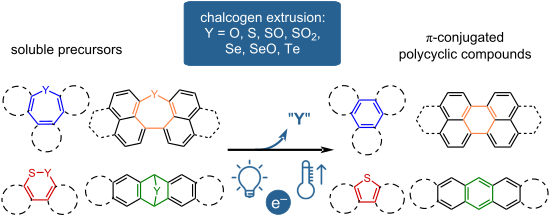
- –Alder reaction of naphthodiyne precursor 55 with isobenzofuran 61 to give monoepoxide 62 as a mixture of regioisomers. Further treatment of the latter with one equivalent of cesium fluoride allowed the regioselective Diels–Alder with the previous diene 61, to afford 63 as another mixture of position




Unveiling the regioselectivity of rhodium(I)-catalyzed [2 + 2 + 2] cycloaddition reactions for open-cage C70 production
Beilstein J. Org. Chem. 2024, 20, 272–279, doi:10.3762/bjoc.20.28
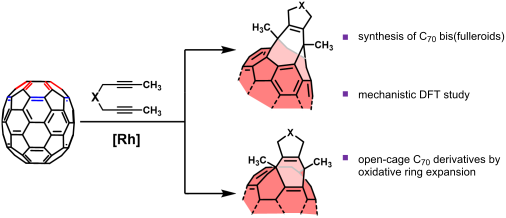
- the number of possible regioisomers. Indeed, C70 has eight different bonds, half of which are different types of [6,6]-bonds, namely the α-, β-, γ-, and δ-bonds (Figure 1, right) [46]. The α- and β-bonds of C70 are the most reactive ones [47]. With this in mind, the main goal of the present work is to
- , leading to β-site isomers as minor products. Taking this into account, we carefully analyzed the NMR spectra of compound 2a. Analysis of 1H NMR spectra of 2a provided valuable information that confirmed the generation of two regioisomers in a 71:29 ratio (Figure 2). Comparable proportions of reactions at
- groups corresponding to the two methyls derived from bisalkyne 1a and the methyl in the tosyl group in the spectrum (Figure 4). These results indicate that there are three regioisomers found in a ratio of 56:29:15. Two of them result from the oxidation of α-2a, whose lack of symmetry results in two


Biphenylene-containing polycyclic conjugated compounds
Beilstein J. Org. Chem. 2023, 19, 1895–1911, doi:10.3762/bjoc.19.141
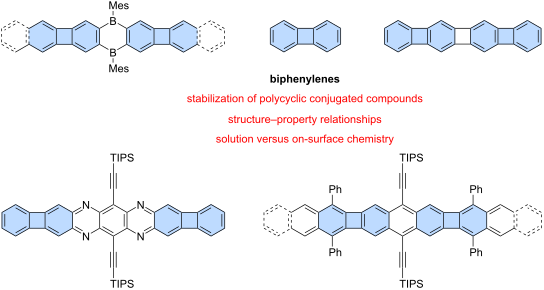
- conducted a synthesis of [3]naphthylene regioisomers through Pd-catalyzed annulation reactions, employing 2,7-, 1,5-, and 1,7-dibromonaphthalenes (Scheme 9) [43]. These annulation reactions involving 2,7-, 1,5-, and 1,7-dibromonaphthalene with different benzoxanorbornadienes (R = (a) TIPSA, (b) 2,6-(CH3
- )2C6H3, (c) H), followed by aromatization in acidic conditions, resulted in the formation of three [3]naphthalene regioisomers 43a–c, 44a–c, and 45a–c with excellent yields of up to 94%. The synthesized PAHs 43a, 44a, and 45a with diverse geometries exhibited interesting absorption and emission
- characteristics, making them highly intriguing for further study and potential applications. Among the regioisomers in the series, the linear isomer 43a displayed the highest quantum yield (Φem = 0.64). Additionally, its absorption and emission max values (λmax and λmax,em) were determined to be 476 and 477 nm



N-Boc-α-diazo glutarimide as efficient reagent for assembling N-heterocycle-glutarimide diads via Rh(II)-catalyzed N–H insertion reaction
Beilstein J. Org. Chem. 2023, 19, 1841–1848, doi:10.3762/bjoc.19.136
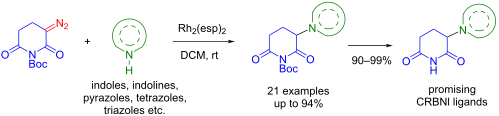
- decrease in the yield of the target compound 6h. The structures of the obtained regioisomers 6g and 6h were confirmed by the NOESY spectra, in which cross-peaks between the protons of the glutarimide ring and the singlet of the proton of the pyrazole cycle are observed. Reactions with benzotriazoles are
- characterized by high regioselectivity. We obtained tetrazol-2-yl glutarimides 6p and 6q in moderate yields. Alternative regioisomers (tetrazol-1-yl glutarimides) were observed only in trace amounts (according to NMR data). It should be noted that in this work the insertion of the diazocarbonyl reagent into the


Morpholine-mediated defluorinative cycloaddition of gem-difluoroalkenes and organic azides
Beilstein J. Org. Chem. 2023, 19, 1545–1554, doi:10.3762/bjoc.19.111
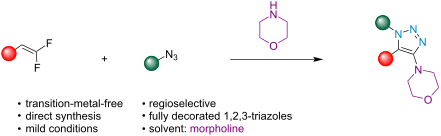
- -difluoroalkenes that subsequently undergoes a cycloaddition reaction. Results and Discussion While investigating 1,3-dipolar cycloaddition reactions between organic azides and gem-difluoroalkenes to obtain the 4-fluoro-1,4-disubstituted 1,2,3-triazole regioisomers, we observed an interesting reactivity while


Synthesis of ether lipids: natural compounds and analogues
Beilstein J. Org. Chem. 2023, 19, 1299–1369, doi:10.3762/bjoc.19.96
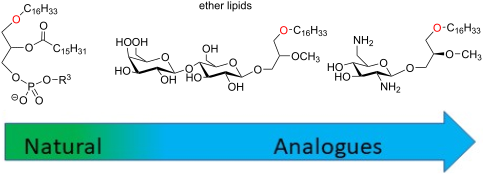
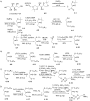
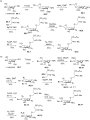
- whereas heating it in 75% acetic acid solution produced the deprotected compound but migration of the acyl group from the sn-2 to the sn-3 position lead to an inseparable mixture of regioisomers. A selective desilylation of 12.5 was finally achieved with BF3·Et2O producing 12.6 without migration of the






Photoredox catalysis harvesting multiple photon or electrochemical energies
Beilstein J. Org. Chem. 2023, 19, 1055–1145, doi:10.3762/bjoc.19.81




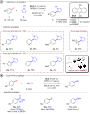
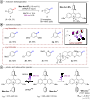
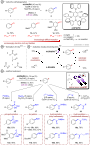
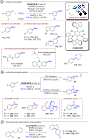

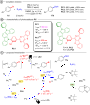
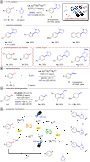


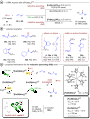
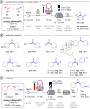





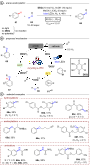

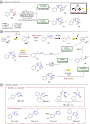
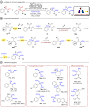


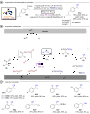


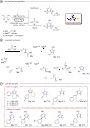
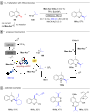


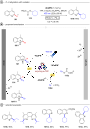
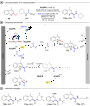
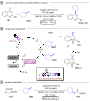


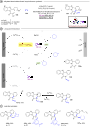


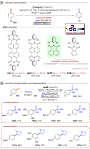


Photoredox catalysis enabling decarboxylative radical cyclization of γ,γ-dimethylallyltryptophan (DMAT) derivatives: formal synthesis of 6,7-secoagroclavine
Beilstein J. Org. Chem. 2023, 19, 918–927, doi:10.3762/bjoc.19.70
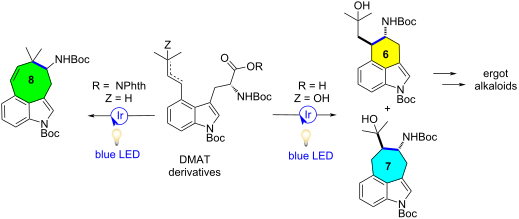
- preliminary conditions, albeit in low yield (35% yield) and low regioselectivity (1:1) (Table 1, entry 1). No regiocontrol was observed; but remarkably, the regioisomers exhibited distinct retention factors on silica gel, allowing 11 and 12 to be isolated separately in good yield as single trans diastereomers


Continuous flow synthesis of 6-monoamino-6-monodeoxy-β-cyclodextrin
Beilstein J. Org. Chem. 2023, 19, 294–302, doi:10.3762/bjoc.19.25
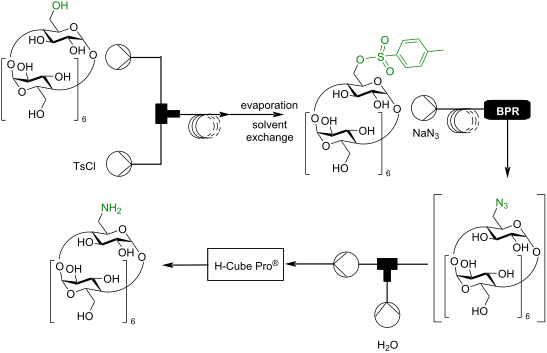
- the CD molecule where the monofunctionalization can occur. Consequently, monosubstituted CDs can be mixtures of three regioisomers. The number of known monosubstituted CD derivatives is enormous, since monosubstitution was the almost exclusive reaction for the practical production of selectively


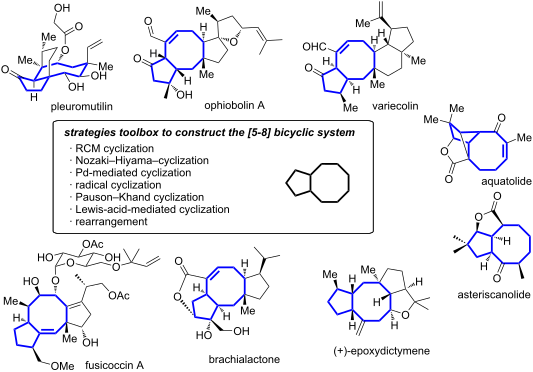
Strategies to access the [5-8] bicyclic core encountered in the sesquiterpene, diterpene and sesterterpene series
Beilstein J. Org. Chem. 2023, 19, 245–281, doi:10.3762/bjoc.19.23


Total synthesis of grayanane natural products
Beilstein J. Org. Chem. 2022, 18, 1707–1719, doi:10.3762/bjoc.18.181
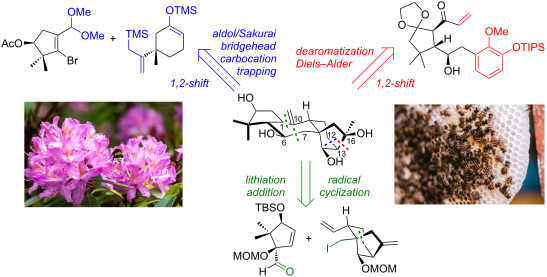
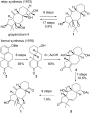
- promoted by EtAlCl2. Two separable alkene regioisomers 54 and 55 were obtained in 19% and 50% yield, respectively. A metal-catalyzed hydrogen atom transfer (MHAT) allowed 54 to be partially converted to 55 via Shenvi’s isomerization [37]. Selective TBS protection on the bicyclo[3.2.1]octane moiety and




A new route for the synthesis of 1-deazaguanine and 1-deazahypoxanthine
Beilstein J. Org. Chem. 2022, 18, 1617–1624, doi:10.3762/bjoc.18.172
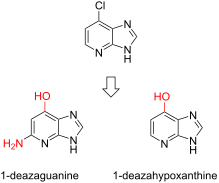
- -deazahypoxanthine To the best of our knowledge, only one synthesis of 1-deazahypoxanthine has been described so far [29]. Kubo and Hirao started their synthesis from 2,3-diaminopyridine (23) which was converted into benzyl-protected 1-deazaadenine 28 (as a mixture of N7 and N9 regioisomers) in five steps, followed


Ferrocenoyl-adenines: substituent effects on regioselective acylation
Beilstein J. Org. Chem. 2022, 18, 1270–1277, doi:10.3762/bjoc.18.133
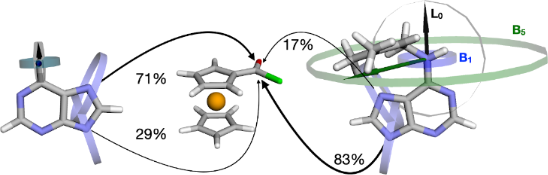
- analogous reaction is regioselective and resulted in the formation of two products, i.e., N7- and N9-regioisomers (Scheme 1). In no case, the N1-, N3-, or N6-products were formed, which is comparable to the results reported for the reaction between benzoyl chloride (BzCl) and purine anions [25]. The two
- different regioisomers, 1-N7 and 1-N9, were formed simultaneously in the course of the reaction between adenine anion 1 and FcCOCl in DMF (Scheme 1). According to the 1H NMR spectrum (Figure 1) of a reaction aliquot, the ratio of N9/N7 isomers is 1.5:1, i.e. 60% regioselectivity is reached. The formation of
- , within the group of N7-regioisomers, the calculated %VBur increases with more bulkier groups at the C6-position (as going from 1 to 6), whereas no significant effects are observed in the series of N9-isomers (Table S3 in Supporting Information File 1). These results nicely complement the trend measured



Facile and diastereoselective arylation of the privileged 1,4-dihydroisoquinolin-3(2H)-one scaffold
Beilstein J. Org. Chem. 2022, 18, 1070–1078, doi:10.3762/bjoc.18.109
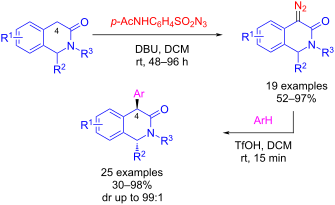
- anticancer cytotoxic agents. Diverse bioactive compounds based on the privileged 1,4-DHIQ scaffold. Strategy investigated in this work. Preparation of 3(2H)-isoquinolones 11. aObtained as a 10:1 mixture of regioisomers; purified by crystallization. bEmployed in the next step without purification (not


Synthesis of odorants in flow and their applications in perfumery
Beilstein J. Org. Chem. 2022, 18, 754–768, doi:10.3762/bjoc.18.76
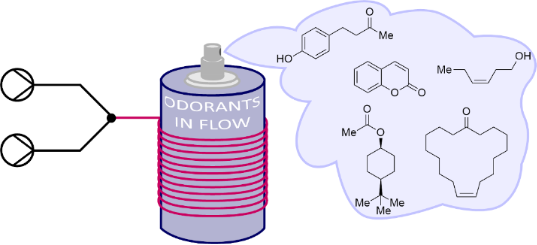
- rearrangement resulting in the formation of thymol (41) along with its regioisomers 42 and 43. However, using an excess of isopropanol and a relatively low concentration of the organic substrates in scCO2 (5% w/w), thymol (41) is produced in a good yield (72%) and selectivity (92.2%) as shown by GC


Mechanochemical halogenation of unsymmetrically substituted azobenzenes
Beilstein J. Org. Chem. 2022, 18, 680–687, doi:10.3762/bjoc.18.69
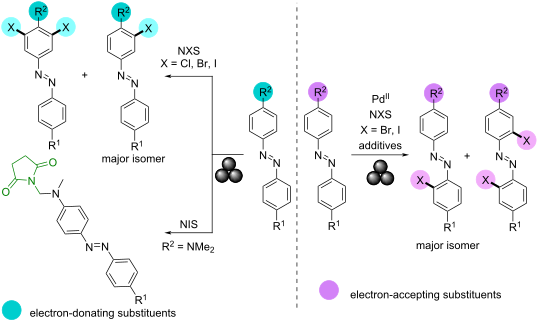
- dichlorinated regioisomers (L5Cl-I and L5Cl-II) (Scheme 1 and Table 1, entry 4). The chlorination of L3 substrate with a primary amine as substituent gave the monochlorinated product L3Cl-I in 46% yield, while the yields of L4Cl-I and L5Cl-I were 85% and 83%, respectively (Table 1, entries 2–4). Although both





Synthesis of 3,4,5-trisubstituted isoxazoles in water via a [3 + 2]-cycloaddition of nitrile oxides and 1,3-diketones, β-ketoesters, or β-ketoamides
Beilstein J. Org. Chem. 2022, 18, 446–458, doi:10.3762/bjoc.18.47

- , entry 16). Notably, no other regioisomers of isoxazole 3a were overserved in any of these reaction conditions. With the optimized reaction conditions for the formation of 3,4,5-trisubstituted isoxazoles 3a (DIPEA, 95% water, 5% methanol, room temperature, Table 1, entry 12) at hands, we explored the



Iridium-catalyzed hydroacylation reactions of C1-substituted oxabenzonorbornadienes with salicylaldehyde: an experimental and computational study
Beilstein J. Org. Chem. 2022, 18, 251–261, doi:10.3762/bjoc.18.30
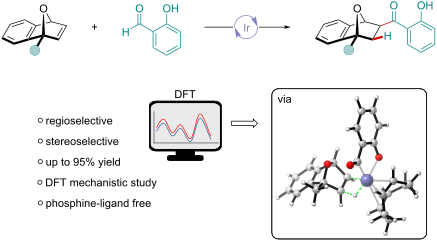
- -stereocontrolled ring-opening reactions of oxa- and azabicyclic olefins with dialkylzinc reagents catalyzed by a nickel compound (Scheme 1) [60]. The reaction was entirely stereoselective; however, unsymmetrical OBDs 5 produced mixtures of regioisomers 6 and 7. In the same year, Hill and co-workers published a


Synthesis of new pyrazolo[1,2,3]triazines by cyclative cleavage of pyrazolyltriazenes
Beilstein J. Org. Chem. 2021, 17, 2773–2780, doi:10.3762/bjoc.17.187
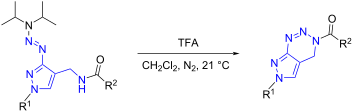
- [3,4-d][1,2,3]triazine core with commercially available building blocks, enabling the extension of the protocol to gain other derivatives straightforwardly. Attempts to synthesize 3,7-substituted-4,7-dihydro-3H-pyrazolo[3,4-d][1,2,3]triazines, the regioisomers of the successfully gained 3,6-substituted
- 1, the alkylation protocol did not give a selective conversion in favor of one of the generated isomers. The protocol was not changed or adapted to gain a higher selectivity of one of the isomers, as both regioisomers were used in the subsequent syntheses. For the derivatives 12h and 13c, we were
- viability of HeLa cells, their regioisomers 13a and 13d–h decreased the viability at high micromolar concentrations. A slightly increased cytotoxicity of some derivatives of compound class 12 compared to 13 was observed for 12b and 12c. The amides 9 had no influence on the viability except for derivate 9b


Synthesis of highly substituted fluorenones via metal-free TBHP-promoted oxidative cyclization of 2-(aminomethyl)biphenyls. Application to the total synthesis of nobilone
Beilstein J. Org. Chem. 2021, 17, 2668–2679, doi:10.3762/bjoc.17.181
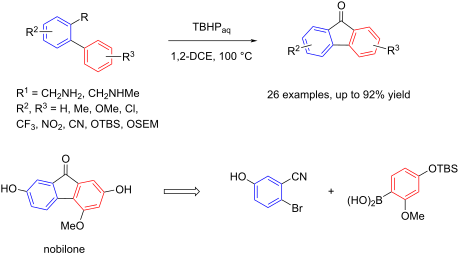
- regioisomers. Methoxyfluorenone 10f was afforded in 15% yield and methoxyfluorenone 10d starting from amine 15f in 42% yield. Notably, only 10d was obtained upon cyclization of amine 9d (Scheme 4). Interestingly, the combined yield of the two regioisomers (57%), stemming from one educt exceeds the yields of
- both 10e and 10b starting from amine 15b2. The same trend concerning relative yields between regioisomers can be observed for fluorenones bearing the electron-withdrawing trifluoromethyl group in the same positions (see 10g, 10h, 10i1, and 10i2). This is rather surprising, as electronic effects exerted


AlBr3-Promoted stereoselective anti-hydroarylation of the acetylene bond in 3-arylpropynenitriles by electron-rich arenes: synthesis of 3,3-diarylpropenenitriles
Beilstein J. Org. Chem. 2021, 17, 2663–2667, doi:10.3762/bjoc.17.180
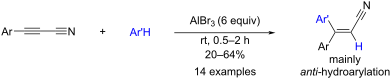
- hydroarylation of nitriles 1. Reactions of nitriles 1a–c with o-xylene led to the formation of regioisomers derived from the electrophilic substitution at different positions of this arene. Thus, nitrile 1a gave two types of regioisomers 2n and 2o. After reactions of nitriles 1b,c with o-xylene, compounds 2l and
- 2m correspondingly were obtained; other regioisomers were not isolated in amounts that were high enough for their identification. This transformation was also tested with another strong Lewis acid, aluminum chloride (AlCl3), for the reaction of nitrile 1a with benzene. However, in this case, mainly


α-Ketol and α-iminol rearrangements in synthetic organic and biosynthetic reactions
Beilstein J. Org. Chem. 2021, 17, 2570–2584, doi:10.3762/bjoc.17.172
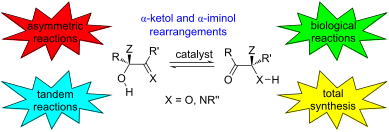
- % yield), para-alkoxy and para-halogen substituents (45–69%), ortho-methyl (74%), and meta-methyl (80% as a 65:35 mixture of regioisomers). Electron-withdrawing groups (nitro, cyano, and methyl ester) stopped at the ketone intermediate. Interestingly, another tandem sequence that exploits the relief of