


Search results
Search for "alkaloid" in Full Text gives 241 result(s) in Beilstein Journal of Organic Chemistry. Showing first 200.
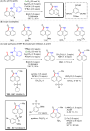
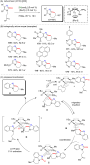
Synthesis of (−)-halichonic acid and (−)-halichonic acid B
Beilstein J. Org. Chem. 2022, 18, 1629–1635, doi:10.3762/bjoc.18.174
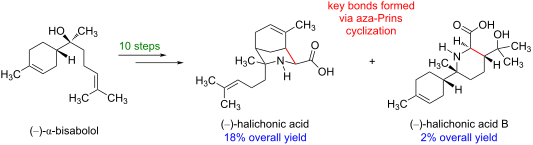
- acids. Keywords: alkaloid; amino acid; aza-Prins reaction; cascade reaction; natural product; Introduction Marine sponges produce a large number of structurally diverse natural products, including many that exhibit biological activity [1][2][3]. In 2019, Tsukamoto and co-workers isolated the


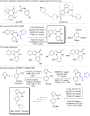
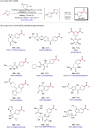
Formal total synthesis of macarpine via a Au(I)-catalyzed 6-endo-dig cycloisomerization strategy
Beilstein J. Org. Chem. 2022, 18, 1589–1595, doi:10.3762/bjoc.18.169
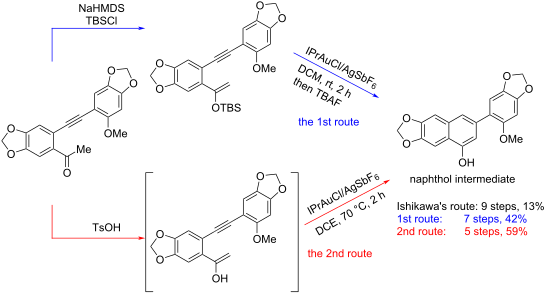
- hydrogenated base and fully aromatized base, in which natural fully aromatic alkaloids can be further classified into three subclasses: O4-base, O5-base, and O6-base [3]. Among these alkaloids macarpine is the most oxidized tetracyclic alkaloid with many bioactivities, including anesthesia, anticancer, anti


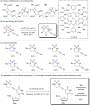
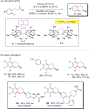
Using UHPLC–MS profiling for the discovery of new sponge-derived metabolites and anthelmintic screening of the NatureBank bromotyrosine library
Beilstein J. Org. Chem. 2022, 18, 1544–1552, doi:10.3762/bjoc.18.164
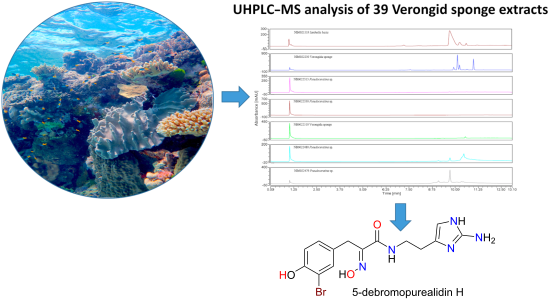
- UHPLC–MS analysis of the extract from this sponge indicated the presence of a new alkaloid. Large-scale extraction and mass-directed isolation studies on the CH2Cl2/MeOH I. basta extract resulted in the purification of a new bromotyrosine-derived alkaloid, 5-debromopurealidin H (1), along with the known
- (6), hexadellin A (9) and bastadin 4 (5) showed inhibition towards larval motility after 72 h of exposure with IC50 values of 1.6 µM, 10.0 µM and 33.3 µM, respectively. Keywords: alkaloid; anthelmintic; biodiscovery; bromotyrosine; 5-debromopurealidin H; Ianthella; NatureBank; sponge; Introduction
- identify samples containing abundant or potentially new natural products. A sample from the Australian marine sponge Ianthella basta was chosen for large-scale isolation work after analysis of the UHPLC–MS data and the MarinLit database [1] suggested the presence of a new alkaloid. Herein, we describe the


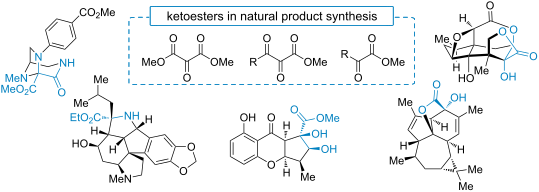
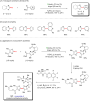
Vicinal ketoesters – key intermediates in the total synthesis of natural products
Beilstein J. Org. Chem. 2022, 18, 1236–1248, doi:10.3762/bjoc.18.129
- Palau’amine (45), a dimeric pyrrole-imidazole-bisguanidine alkaloid, was first isolated from the marine sponge Stylotella aurantium in 1993 [16][17]. It received considerable attention from the synthetic community because of its broad range of biological activities and complex structure. In an early endeavour
- pentacyclic, antiproliferative quinoline alkaloid camptothecin (65), Peters et al. used an α-ketoester moiety in an auxiliary controlled approach towards the only stereogenic center present in the natural product (Scheme 10) [25]. First, the ketoacid 60 was esterified with 8-phenylmenthol (61) to yield the α
- also be used in photochemical reactions, as shown by Gramain et al. in the synthesis of the pyrrolizidine alkaloid (rac)-isoretronecanol (69, Scheme 11) [26]. A Claisen condensation of the lithium enolate of N-acetylpyrrolidine (66) with diethyl oxalate gave the ketoester 67. Irradiation of compound 67


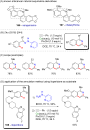
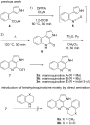
Morita–Baylis–Hillman reaction of 3-formyl-9H-pyrido[3,4-b]indoles and fluorescence studies of the products
Beilstein J. Org. Chem. 2022, 18, 926–934, doi:10.3762/bjoc.18.92
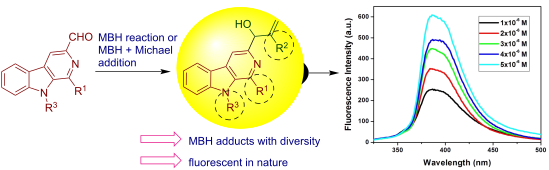
- Nisha Devi Virender Singh Department of Chemistry, DAV University, Jalandhar-Pathankot National Highway (NH 44), Jalandhar, 144012, Punjab, India Department of Chemistry, Central University of Punjab, Bathinda, India 10.3762/bjoc.18.92 Abstract β-Carboline is a privileged class of the alkaloid


The asymmetric Henry reaction as synthetic tool for the preparation of the drugs linezolid and rivaroxaban
Beilstein J. Org. Chem. 2022, 18, 438–445, doi:10.3762/bjoc.18.46
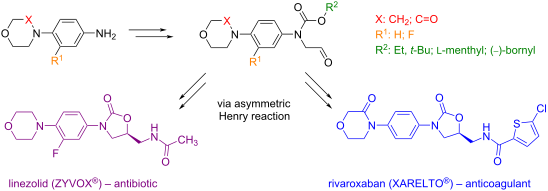
- -one derivative. Here, we extended the series of catalysts to include copper complexes with another six 2-(pyridin-2-yl)imidazolidin-4-ones Ia,b–IIIa,b [20][21][22], four bisoxazolines IV–VII [23][24], and as chiral diamine, the alkaloid (+)-sparteine VIII [25] (Figure 2). All Henry reactions were


Menadione: a platform and a target to valuable compounds synthesis
Beilstein J. Org. Chem. 2022, 18, 381–419, doi:10.3762/bjoc.18.43
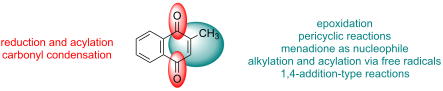
- from cinchonine PTC 44 as catalyst. Despite of good yields, the method did not demonstrate good enantioselectivity results [104]. Berkessel and co-workers, in turn, described the use of asymmetric Weitz–Scheffer-type epoxidation of menadione (10), mediated by cinchona alkaloid PTC 45, showing high


Iridium-catalyzed hydroacylation reactions of C1-substituted oxabenzonorbornadienes with salicylaldehyde: an experimental and computational study
Beilstein J. Org. Chem. 2022, 18, 251–261, doi:10.3762/bjoc.18.30
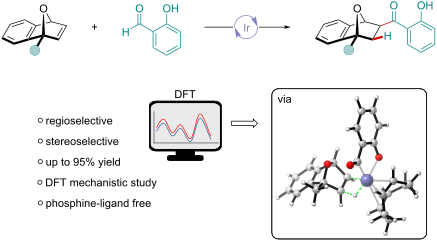
- intermediates have found use in the total synthesis of (+)-norchelidonine (an isoquinoline alkaloid) [55], sertraline (an antidepressant) [56], and arnottin I (an anti-inflammatory) [57]. Although OBD 1 has been shown to undergo many different modes of reactivity in both a stereo- and enantioselective manner


Bifunctional thiourea-catalyzed asymmetric [3 + 2] annulation reactions of 2-isothiocyanato-1-indanones with barbiturate-based olefins
Beilstein J. Org. Chem. 2022, 18, 25–36, doi:10.3762/bjoc.18.3
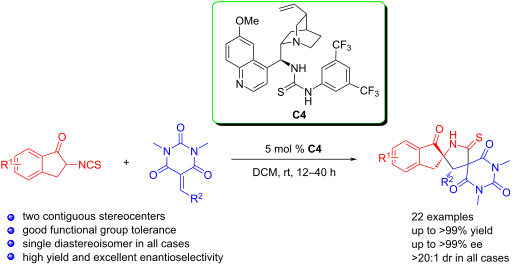
- results, it was found that the yield of product did not increase significantly with the cinchona alkaloid-derived squaramide catalysts (Table 1, entries 2 and 3). Consequently, we decided to explore the effects of different types of catalysts on the reaction. Through experiments, it can be found that




Highly stereocontrolled total synthesis of racemic codonopsinol B through isoxazolidine-4,5-diol vinylation
Beilstein J. Org. Chem. 2021, 17, 2781–2786, doi:10.3762/bjoc.17.188
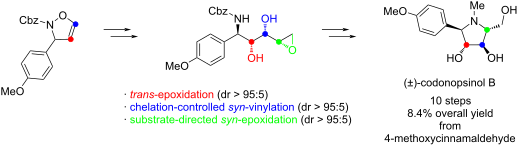
- Bratislava, Radlinského 9, 81237 Bratislava, Slovak Republic 10.3762/bjoc.17.188 Abstract A new highly diastereoselective synthesis of the polyhydroxylated pyrrolidine alkaloid (±)-codonopsinol B and its N-nor-methyl analogue, starting from achiral materials, is presented. The strategy relies on the trans
- evaluated using several cell line models. Keywords: alkaloids; antiproliferative effect; codonopsinol B; diastereoselectivity; pyrrolidines; Introduction Codonopsinol B (1) is a polyhydroxylated pyrrolidine alkaloid isolated from the roots of the plant Codonopsis pilosula (Figure 1) [1]. This compound was


The ethoxycarbonyl group as both activating and protective group in N-acyl-Pictet–Spengler reactions using methoxystyrenes. A short approach to racemic 1-benzyltetrahydroisoquinoline alkaloids
Beilstein J. Org. Chem. 2021, 17, 2716–2725, doi:10.3762/bjoc.17.183
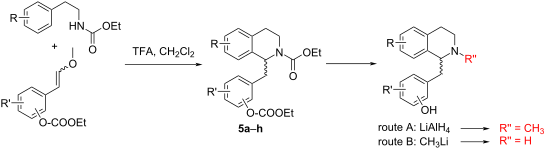
- ][4][5]. In continuation of our recent work on the chemistry and pharmacology of benzylisoquinolines and related compounds [6][7][8][9][10][11][12][13][14] we investigated truncated analogues of the bisbenzylisoquinoline alkaloid tetrandrine as blockers of the calcium channel two-pore channel 2 (TPC2
- by lithium alanate reduction [18][19]. In a novel total synthesis of the racemic alkaloid N-methylcoclaurine (1) performed in this course we also used the ethoxycarbonyl group successfully for protection of two phenolic groups at two different rings during the N-acyl-Pictet–Spengler reaction [15
- comparison to tetrandrine and cepharanthine, we performed Ca2+ measurements in multiwell plates. Therefore, heterologously TPC2-expressing HEK293 cells were loaded with calcium indicator fluo-4/AM and Ca2+ entry was measured for 5 min after injection of various alkaloid concentrations (0.1–100 µM). None of


Recent advances in organocatalytic asymmetric aza-Michael reactions of amines and amides
Beilstein J. Org. Chem. 2021, 17, 2585–2610, doi:10.3762/bjoc.17.173
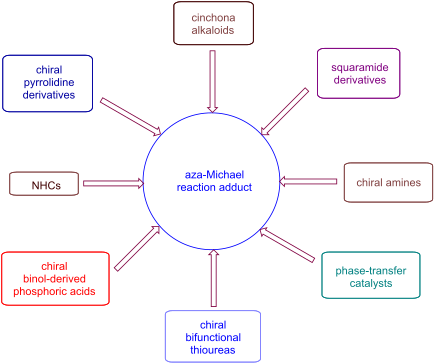
- derivatives, phase-transfer catalysts and bifunctional thiourea derivatives. 1.1 Reactions catalyzed by chiral cinchona alkaloid derivatives Cai et al. prepared and used a number of organocatalysts from Cinchona alkaloids for the aza-MR of aniline (1) with chalcone (2) to obtain the adducts 4 in poor to very
- derivatives. It was perceived that the MDO self-assembled in situ from amino acids and cinchona alkaloid derivatives. For example, on reacting (E)-2-[2-(3-aryl-3-oxoprop-1-en-1-yl)phenyl]acetaldehydes 21 with ethyl or benzyl (E)-2-[(4-methoxyphenyl)imino]acetates 22 in the presence of the MDO 23/24
- cinchona alkaloid-derived quaternary ammonium salts (cat. 55) as the phase-transfer catalyst. The products were obtained in high yields (53–93%) with high enantioselectivities (40–76% ee) (Table 12) [46]. Lebrun et al. developed a new method to synthesize optically active isoindolinones via asymmetric


α-Ketol and α-iminol rearrangements in synthetic organic and biosynthetic reactions
Beilstein J. Org. Chem. 2021, 17, 2570–2584, doi:10.3762/bjoc.17.172
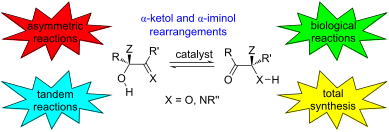
- cyclobutane derivatives (Figure 21b), highlighting the importance of the relief of ring strain in driving the rearrangement [31]. Like their α‑ketol counterparts, rearrangements of α‑iminols have also been used in total syntheses. In their total synthesis of four eburnane-type alkaloid natural products 122
- produces 119. b) Cyclopentanone-based substrates (120) do not react under the same conditions. Four eburnane-type alkaloid natural products 122–125 were synthesized from common intermediate 127, which was produced from known precursor 126 by an α-iminol rearrangement.




Silica gel and microwave-promoted synthesis of dihydropyrrolizines and tetrahydroindolizines from enaminones
Beilstein J. Org. Chem. 2021, 17, 2543–2552, doi:10.3762/bjoc.17.170
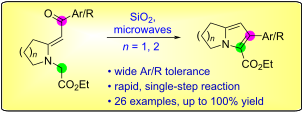
- pomegranate alkaloid punicagranine (5) (Figure 1) [5]. The 2,3-dihydro-1H-pyrrolizine motif is also a structural component of potential drugs with a variety of pharmacological effects [6], including anticancer activity [7]. Relevant examples include (−)-ketorolac (6) [8], which has reached the market as a
- natural products, there is considerable synthetic potential in the transformation. Application of the methods described herein to the synthesis of lamellarin alkaloid analogues will be reported in due course. Examples of 2,3-dihydro-1H-pyrrolizines (1–7) and 5,6,7,8-tetrahydroindolizines (8–10). Previous




Base-free enantioselective SN2 alkylation of 2-oxindoles via bifunctional phase-transfer catalysis
Beilstein J. Org. Chem. 2021, 17, 2287–2294, doi:10.3762/bjoc.17.146
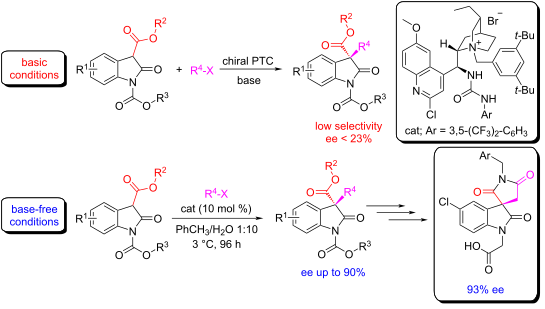
- investigation by evaluating, as a model alkylation, the phase-transfer-catalysed benzylation of substrate 5 under ‘classical’ basic reaction conditions using cinchona alkaloid-based catalysts capable of hydrogen-bonding as a control element [33][34][35][36][37][38][39][40]. As expected, the ester group α to the



Catalyzed and uncatalyzed procedures for the syntheses of isomeric covalent multi-indolyl hetero non-metallides: an account
Beilstein J. Org. Chem. 2021, 17, 2102–2122, doi:10.3762/bjoc.17.137
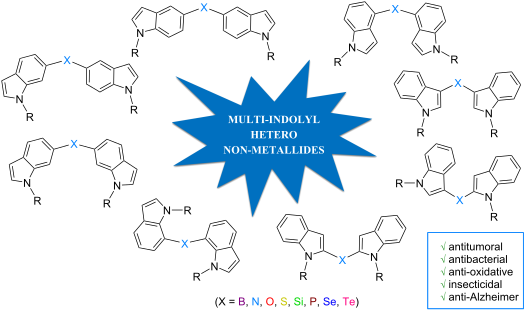
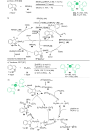
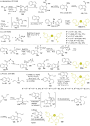
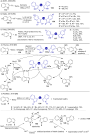
- the indoles are less studied compared to the same through their pyrrole counterpart. The corresponding compounds are investigated for boron, nitrogen, oxygen, sulfur, and selenium as the central connecting atom. Boranes The indole alkaloid dragmacidin D is a marine secondary metabolite which was







Asymmetric organocatalyzed synthesis of coumarin derivatives
Beilstein J. Org. Chem. 2021, 17, 1952–1980, doi:10.3762/bjoc.17.128
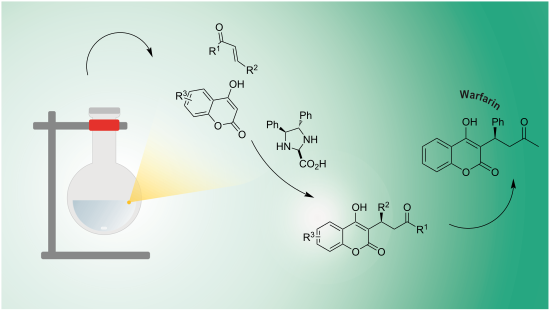
- enantioselective Michael addition of ketones 20 to 3-aroylcoumarins 19 [38]. For this transformation, the authors used a cinchona alkaloid-derived primary amine catalyst 22 (Scheme 6a). The study was performed with cyclic and acyclic ketones 20 and various 3-aroylcoumarins 19 and the desired products 21 were
- discussed above, the organocatalysts may also proceed by noncovalent activation, in which a hydrogen bond or an ion pair is formed. A broad variety of mono- and bifunctional chiral hydrogen-bonding organocatalysts has been developed, in special using cinchona alkaloid derivatives [52]. In this sense, Lin
- reaction between 4-hydroxycoumarins 1 and aromatic imines 63 for the synthesis of α-benzylaminocoumarins 64 [54]. Among the cinchona alkaloid derivatives evaluated in this reaction, cupreine (65) was found to be the best option in terms of yields and enantioselectivities (Scheme 20). Both electron




On the application of 3d metals for C–H activation toward bioactive compounds: The key step for the synthesis of silver bullets
Beilstein J. Org. Chem. 2021, 17, 1849–1938, doi:10.3762/bjoc.17.126
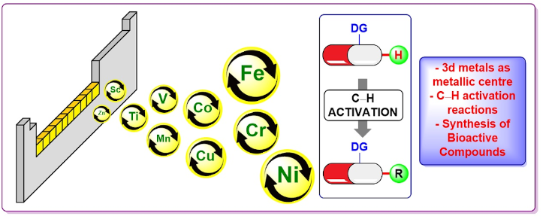
- phenanthroindolizidine alkaloid boehmeriasin A (31) (Scheme 12A) [98], and phenanthroindolizidines through an intramolecular oxidative aryl–alkene coupling (Scheme 12B) [99], which is a far less common transformation in organic synthesis. This approach was employed to synthesize eight phenanthroindolizidines, including
- present in the natural product bismurrayafoline E (36) [105], an alkaloid found in the leaves of Murraya koeniggi (Scheme 13D) [106]. The oxidative formation of carbon–carbon bonds mediated by vanadium has been reported as a method for the aminomethylation of arenes and heteroarenes. The so far described




























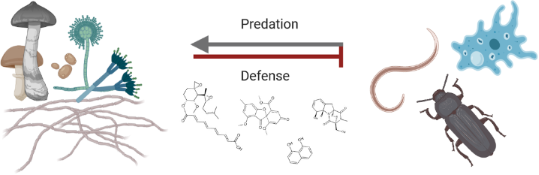
Natural products in the predatory defence of the filamentous fungal pathogen Aspergillus fumigatus
Beilstein J. Org. Chem. 2021, 17, 1814–1827, doi:10.3762/bjoc.17.124
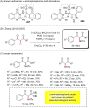
- (19) is a tryptophan-derived indole alkaloid which was so far only shown to be produced by A. fumigatus while other fumigaclavines can for example also be found in Penicillium ssp. (fumigaclavine A (18) and B (17)) [66][158]. In all fungi, alkaloid biosynthetic pathways share a common basis, starting


Development of N-F fluorinating agents and their fluorinations: Historical perspective
Beilstein J. Org. Chem. 2021, 17, 1752–1813, doi:10.3762/bjoc.17.123
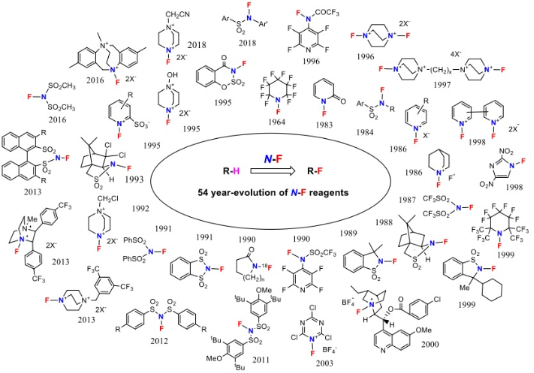
- ’-difluorobipyridinium salts and N,N’-difluoro-1,4-diazoniabicyclo[2.2.2]octane salts, and their many derivatives and analogs, including chiral N-F reagents such as optically active N-fluoro-sultam derivatives, N-fluoro-alkaloid derivatives, DABCO-based N-F derivatives, and N-F binaphthyldisulfonimides. The synthesis
- (entry 6, Figure 9), it was less than that obtained (74% ee) by N-fluorosultam (R)-27-6 with the same substrate (see the previous section 1-27). 1-29. N-Fluorinated cinchona alkaloid derivatives by combination with Selectfluor In 2000, Shibata and Takeuchi reported a far more practical enantioselective
- fluorination method. They discovered that the fluorination of carbanions with Selectfluor occurred in a highly enantioselective manner when carried out in the presence of cinchona alkaloid derivatives [95]. This method consisted of two simple steps. Firstly, the cinchona alkaloid is reacted with Selectfluor in

























Synthesis of 1-indolyl-3,5,8-substituted γ-carbolines: one-pot solvent-free protocol and biological evaluation
Beilstein J. Org. Chem. 2021, 17, 1453–1463, doi:10.3762/bjoc.17.101
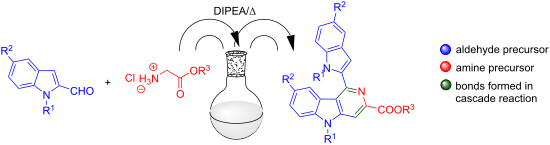
- -pyrido[3,4-b]indole (β-carboline) is the most naturally abundant, present for instance, in the alkaloid harmine, a well-known selective inhibitor of monoamine oxidase-A (MAO-A) [1]. On the contrary, 5H-pyrido[4,3-b]indoles (γ-carbolines) are comparatively less examined, although these heterocycles have
- shown promising biological activities in preclinical and clinical studies (Figure 1) [2][3][4][5][6]. The pyrimidine-γ-carboline alkaloid ingenine B (isolated from an Indonesian sponge) exhibits a pronounced cytotoxicity against a murine lymphoma cell line [7] and several isocanthine analogs are
- alkaloid ingenine B [20]. The iodine-catalyzed [3 + 3] cycloaddition of indolyl alcohol to enaminones [21] and the thiourea-catalyzed iso-Pictet–Spengler reaction of isotryptamine with aldehydes [22], are some noteworthy contributions to the field. A cascade or domino reaction is an interesting approach


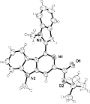


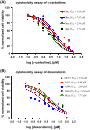


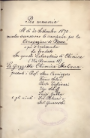
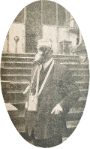
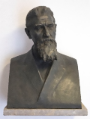
Icilio Guareschi and his amazing “1897 reaction”
Beilstein J. Org. Chem. 2021, 17, 1335–1351, doi:10.3762/bjoc.17.93
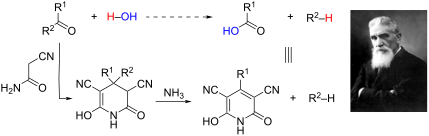
- , his Introduzione allo Studio degli Alcaloidi con special riguardo agli alcaloidi vegetali ed alle ptomaine (An Introduction to Alkaloid Chemistry, and especially on those of plant origin and on ptomaines), first published in 1892, was translated four years later into German, and the popularity of this
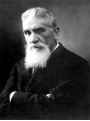
- work is testified by Willstätter, who in his memoirs refers to Guareschi as “alkaloid chemist” [28]. Ptomaines (from the Greek πτωμα, cadaver) are anaerobic bacterial degradation products of proteins and choline-containing phospholipids. The formation of these is associated with putrefaction of animal





N-tert-Butanesulfinyl imines in the asymmetric synthesis of nitrogen-containing heterocycles
Beilstein J. Org. Chem. 2021, 17, 1096–1140, doi:10.3762/bjoc.17.86

- derivative 57 in 72% combined yield (Scheme 18) [88]. In 2020, Pierce and co-workers developed a method for the synthesis of guanidinium alkaloid batzelladine D in enantiomeric and racemic form, along with a series of stereochemical analogues. The batzelladines are a family of polycyclic guanidinium
- )2] in DMF was the best to produce lactams 77. The synthetic interest of these functionalized lactams was demonstrated in the synthesis of alkaloid (−)-preussin (78) from the appropriate precursor 77 in three steps (Scheme 23). Similar strategies were employed to obtain similar heterocycles [99
- straightforward synthesis of the alkaloid (−)-pelletierine (112) was accomplished by the diastereoselectivity coupling of 3-oxobutanoic acid (110) and the N-tert-butanesulfinyl imine (RS)-109 derived from 5-bromopentanal (114). The base-promoted decarboxylative-Mannich coupling of these reagents led to β-amino


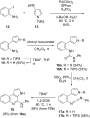
Total synthesis of pyrrolo[2,3-c]quinoline alkaloid: trigonoine B
Beilstein J. Org. Chem. 2021, 17, 730–736, doi:10.3762/bjoc.17.62
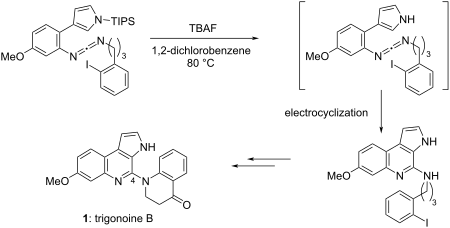
- , Yokohama University of Pharmacy, 601 Matano, Totsuka-ku, Yokohama 245-0066, Japan 10.3762/bjoc.17.62 Abstract The first total synthesis of the pyrrolo[2,3-c]quinoline alkaloid trigonoine B (1) was accomplished via a six-step sequence involving the construction of an N-substituted 4-aminopyrrolo[2,3-c
- structures of the compounds were elucidated through 1D and 2D NMR spectroscopy. It was determined that trigonoine A was a β-carboline alkaloid containing a 2,8-diazabicyclo[3.3.1]nonane ring system, while trigonoine B (1) was formed by a combination of 2,3-dihydroquinolin-4-one and 3H-pyrrolo[2,3-c]quinoline
- acquired physical and spectroscopic data of the herein synthesized compound 1 were consistent with those of the natural trigonoine B [1]. Thus, in this study, we successfully achieved the first total synthesis of trigonoine B (1). Conclusion The total synthesis of a pyrrolo[2,3-c]quinoline alkaloid





The synthesis of chiral β-naphthyl-β-sulfanyl ketones via enantioselective sulfa-Michael reaction in the presence of a bifunctional cinchona/sulfonamide organocatalyst
Beilstein J. Org. Chem. 2021, 17, 494–503, doi:10.3762/bjoc.17.43
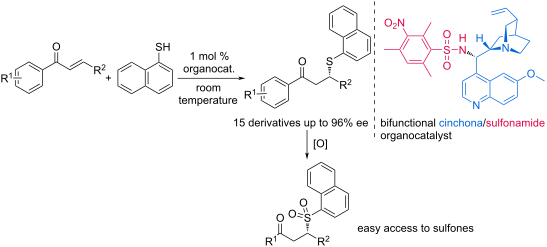
- Deniz Tozendemir Cihangir Tanyeli Department of Chemistry, Middle East Technical University, 06800 Ankara, Turkey 10.3762/bjoc.17.43 Abstract Cinchona alkaloid-derived organocatalysts are widely employed in various asymmetric transformations, yielding products with high enantiopurity. In this
- transition state model to explain the origin of the stereoinduction was proposed (Scheme 2), according to the Houk’s Brønsted acid hydrogen bonding model. Guo’s computational work in 2017 on the sulfa-Michael addition of thiols to enones in the presence of cinchona alkaloid-type organocatalysts showed that





