


Search results
Search for "fluoride" in Full Text gives 362 result(s) in Beilstein Journal of Organic Chemistry. Showing first 200.
Multi-redox indenofluorene chromophores incorporating dithiafulvene donor and ene/enediyne acceptor units
Beilstein J. Org. Chem. 2024, 20, 59–73, doi:10.3762/bjoc.20.8
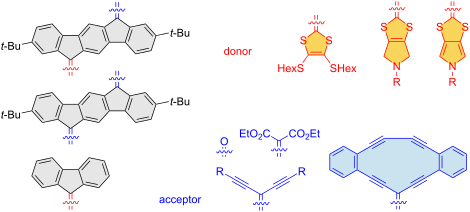
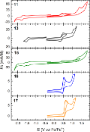
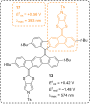
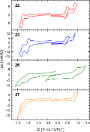
- , ethynylbenzene, or 4-ethynylbenzonitrile yielded compounds 19–21, while two-fold Sonogashira coupling with ((2-ethynylphenyl)ethynyl)triisopropylsilane resulted in compound 22. Desilylation of the alkynes of compound 22 with tetrabutylammonium fluoride (TBAF) and subsequent intramolecular Glaser–Hay coupling of





1-Butyl-3-methylimidazolium tetrafluoroborate as suitable solvent for BF3: the case of alkyne hydration. Chemistry vs electrochemistry
Beilstein J. Org. Chem. 2023, 19, 1966–1981, doi:10.3762/bjoc.19.147
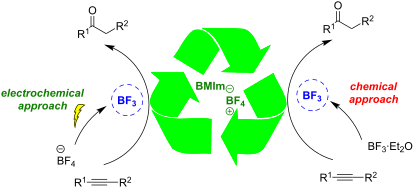
- diethyl ether traces and then analysed by NMR to check for BMIm-F presence, whereas the fluoride ion could originate from IL decomposition in the presence of water or from the evolution of electrogenerated F2. However, the 19F NMR spectrum showed no detectable peak around −122 ppm, reported in the


Thienothiophene-based organic light-emitting diode: synthesis, photophysical properties and application
Beilstein J. Org. Chem. 2023, 19, 1849–1857, doi:10.3762/bjoc.19.137
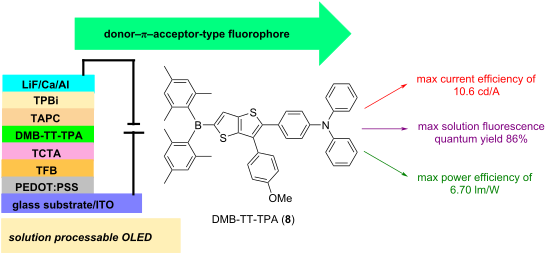
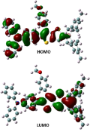
- lithiation of 7 and following reaction with dimesitylboron fluoride in 85% yield (Scheme 1). Photophysical properties The UV–vis absorption and fluorescence spectra of DMB-TT-TPA (8) were recorded in THF (Figure 1 and Table 1) [38]. It showed maximum absorption and emission wavelengths of 411 and 520 nm


A deep-red fluorophore based on naphthothiadiazole as emitter with hybridized local and charge transfer and ambipolar transporting properties for electroluminescent devices
Beilstein J. Org. Chem. 2023, 19, 1664–1676, doi:10.3762/bjoc.19.122
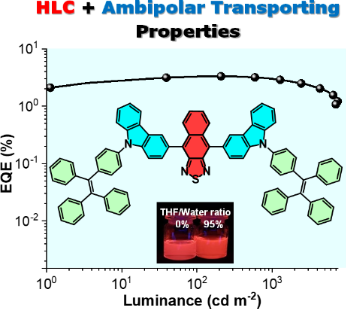
- increasing voltage (CELIV) or MIS-CELIV technique [59][60][61]. Electron- and hole-only MIS devices were fabricated with the structures of indium tin oxide (ITO)/magnesium fluoride (MgF2) (20 nm)/TPECNz (100 nm)/lithium fluoride (LiF) (1 nm)/aluminum (Al) (100 nm) and ITO/MgF2 (20 nm)/TPECNz (100 nm


Tying a knot between crown ethers and porphyrins
Beilstein J. Org. Chem. 2023, 19, 1630–1650, doi:10.3762/bjoc.19.120
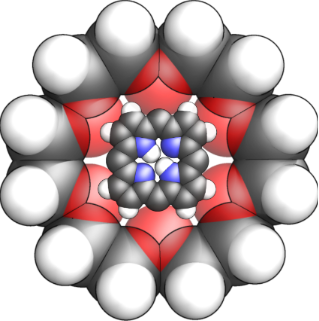
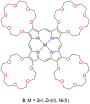
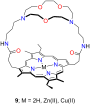
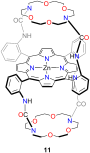
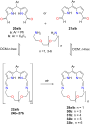
- -capped calix[4]pyrrole cavitand 4. The heteroditopic receptor had multiple binding sites, proving efficient in encapsulating a CsF ion pair. The calix[4]arene-crown-6-capped pocket was exploited as an excellent binding site for the Cs+ cation, whereas the calix[4]pyrrole was aligned to trap the fluoride
- included the binding of caesium cation in the oxygen-rich crown ether segment, with the fluoride interacting with NH of calix[4]pyrrole. Additionally, receptor 5 formed an unprecedented 2:2 complex with CsCl, which included two different ion-pair binding sites, whereas with the addition of CsNO3, a 1:1
- ]. The CsF binding led to a supramolecular self-assembly process, inducing a sandwich host–guest complex formation in the solid state (Scheme 2). It was established that fluoride is preferred over any other halide anions. The binding of the ion pairs was observed in highly polar solvent media, but in the







Morpholine-mediated defluorinative cycloaddition of gem-difluoroalkenes and organic azides
Beilstein J. Org. Chem. 2023, 19, 1545–1554, doi:10.3762/bjoc.19.111
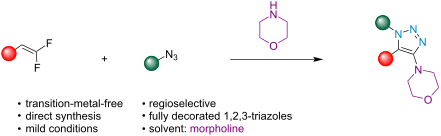
- cycloaddition or addition–elimination reactions with 1,3-dipoles and gem-difluoroalkenes is largely unexplored and the only report of a cycloaddition is with 2-fluoroindolizines (Figure 1A) via a β-fluoride elimination in an SNV (nucleophilic vinylic substitution)-like transformation [9]. Nucleophilic addition
- -trisubstituted-1,2,3-triazoles, with a pendant morpholine at the C-4 position are formed with complete regiocontrol via β-fluoride elimination in an SNV-like transformation (Figure 1C). 1,2,3-Triazoles are a privileged scaffold in medicinal chemistry with a myriad of pharmacological activities against cancer [11
- , organic azides, and morpholine. Terminal gem-difluoroalkenes exhibit unique reactivity toward nucleophiles. The two σ-withdrawing fluorine atoms at the α-position and the strong polar nature of the double bond make gem-difluoroalkenes susceptible to a nucleophilic attack that is followed by a β-fluoride


Synthesis of ether lipids: natural compounds and analogues
Beilstein J. Org. Chem. 2023, 19, 1299–1369, doi:10.3762/bjoc.19.96
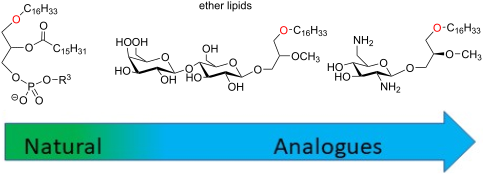
- cesium cation with the halogen atom and the activation of the Sn–O bond of the stannylene acetal via a pentacoordinated intermediate with the fluoride anion [110]. The acetylation of the secondary alcohol and the deprotection of the primary alcohol with 2,3-dichloro-5,6-dicyano-1,4-benzoquinone (DDQ






Radical ligand transfer: a general strategy for radical functionalization
Beilstein J. Org. Chem. 2023, 19, 1225–1233, doi:10.3762/bjoc.19.90
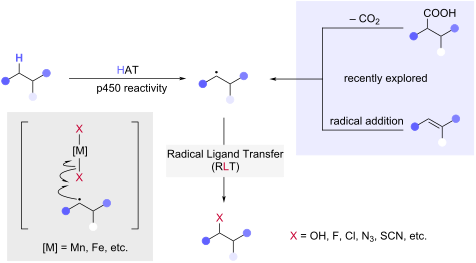
- radical and Mn(IV) species which can exchange its hydroxo ligand for a fluoride from triethylamine tris(hydrofluoride) (Scheme 4). Rapid decarboxylation of this intermediate produces the alkyl radical species which could be fluorinated via RLT from the Mn(IV)–F complex, generating a Mn(III) intermediate


Exploring the role of halogen bonding in iodonium ylides: insights into unexpected reactivity and reaction control
Beilstein J. Org. Chem. 2023, 19, 1171–1190, doi:10.3762/bjoc.19.86
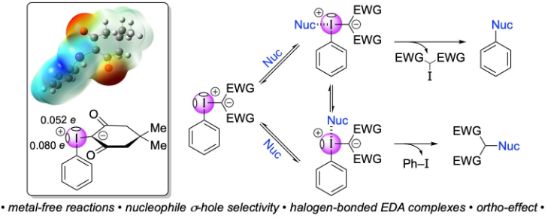
- literature to-date has shown that the vast majority of reactions follow the reductive elimination pathway to produce 4. However, a clear exception to this is in reactions with nucleophilic fluoride or [18F]fluoride, which reductively eliminate to exclusively generate fluoroarenes (e.g., 5). The rationale for
- elimination (e.g., with the β-dicarbonyl or arene) could occur (see Scheme 1). A prominent example of the coupling occurring between the Lewis base and the arene is in reactions with fluoride, which has been translated to enable the radiofluorination of non-activated arenes. While this fluorination reaction
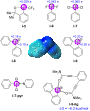
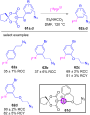
- -derived iodonium ylide (60/I-13) (Figure 12, inset), which showed a 5.1 kcal/mol energy difference between rapidly equilibrating halogen-bonded fluoride adducts. The lower energy adduct IntA had fluoride residing in the stronger σ-hole opposite the β-dicarbonyl (syn to the arene), whereas the higher







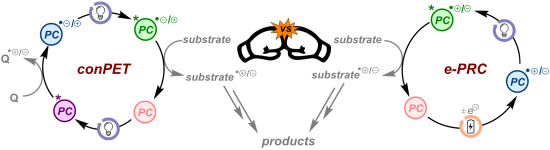
Photoredox catalysis harvesting multiple photon or electrochemical energies
Beilstein J. Org. Chem. 2023, 19, 1055–1145, doi:10.3762/bjoc.19.81





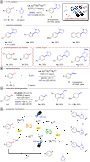


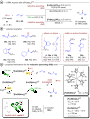
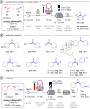
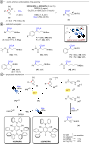
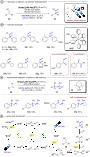



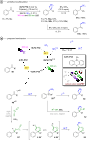
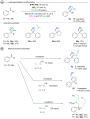
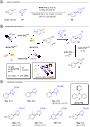


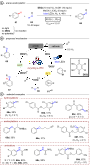





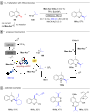


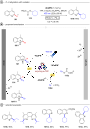
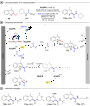
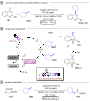


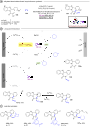


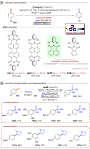


Synthesis of aliphatic nitriles from cyclobutanone oxime mediated by sulfuryl fluoride (SO2F2)
Beilstein J. Org. Chem. 2023, 19, 901–908, doi:10.3762/bjoc.19.68
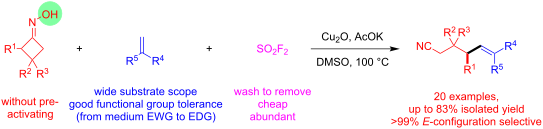
- fluoride; SO2F2; Introduction As an important functional group in organic molecules, the nitrile group is commonly present in functional materials [1][2], nanoscale drug carriers [3][4][5], biologically valuable molecules and drugs (Scheme 1) [6][7]. There are over 70 nitrile-containing drugs approved by
- esters and adopted the pre-acylation activation strategies [39][40][41]. Up to now, only one report employed an oxime for the generation of iminyl radicals to obtain the similar products, in which, substrates were limited to the electron-rich alkenes (Scheme 2b) [42]. On the other hand, sulfuryl fluoride
- (SO2F2) [43], a kind of inexpensive (about 1 $/kg), abundant, and relatively inert electrophile and one of the major sulfur fluoride exchange (SuFEx) click chemistry reagents [44][45], has been successfully applied as an electrophile to react with hydroxy groups to generate fluorosulfonate esters, being


Construction of hexabenzocoronene-based chiral nanographenes
Beilstein J. Org. Chem. 2023, 19, 736–751, doi:10.3762/bjoc.19.54
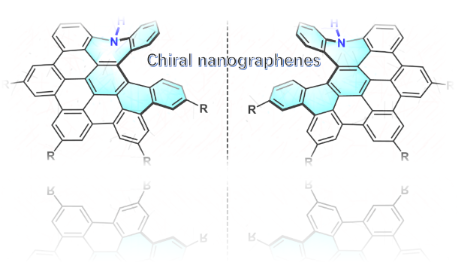
- between compound 106 and tetracyclone 80, followed by removing the triisopropylsilane protective group using tetrabutylammonium fluoride (TBAF) provided compound 107. Then, a second Sonogashira coupling between 107 and 104 produced compound 108, followed by a second Diels–Alder reaction between 108 and 80


Palladium-catalyzed enantioselective three-component synthesis of α-arylglycine derivatives from glyoxylic acid, sulfonamides and aryltrifluoroborates
Beilstein J. Org. Chem. 2023, 19, 719–726, doi:10.3762/bjoc.19.52
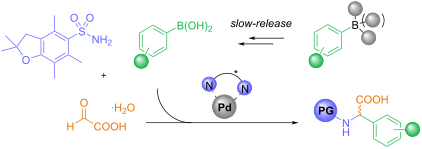
- investigate the influence of various fluoride scavengers as additives in the three-component process [25][26]. An extensive study (not shown), revealed that most common scavengers either led to a decreased yield, a decreased stereoselectivity or a combination of both. Yet a combination of CaCO3, tartaric acid




CuAAC-inspired synthesis of 1,2,3-triazole-bridged porphyrin conjugates: an overview
Beilstein J. Org. Chem. 2023, 19, 349–379, doi:10.3762/bjoc.19.29
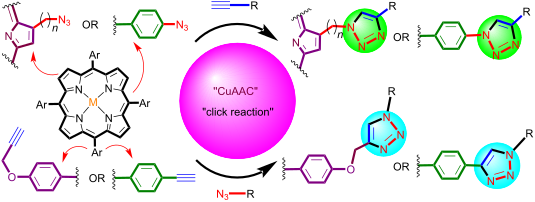
- reaction and was subjected to deprotection of the triisopropylsilyl group with tetra-n-butylammonium fluoride (Bu4NF). Similarly triad 121 was prepared by the click reaction between dyads 119 and azido-ferrocene 120 in a 40% overall yield. The photophysical investigation revealed that dyad 119 exhibited


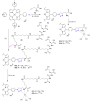


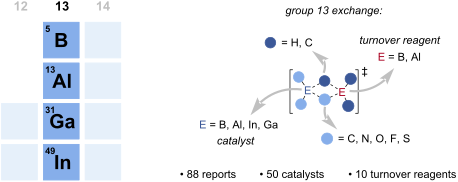
Group 13 exchange and transborylation in catalysis
Beilstein J. Org. Chem. 2023, 19, 325–348, doi:10.3762/bjoc.19.28
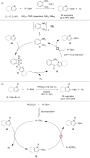
- fluoride 50 to give the ester 51 and FBpin (Scheme 11). The H-B-9-BBN-catalysed 1,4-hydroboration of enones with HBpin was shown by Thomas, including the subsequent functionalisation of the intermediate Bpin-enolate 52 (Scheme 12) [76]. The proposed mechanism began by 1,4-hydroboration of the enone 29 with
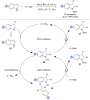
- (Scheme 16) [75]. The reaction was proposed to occur through activation of the alkyl fluoride 68 with H-B-9-BBN, followed by electrophilic substitution of the arene 69 to give a Wheland intermediate and a fluoroborohydride 70 (Scheme 16). Loss of H2 gave the arylated product 71, dihydrogen, and F-B-9-BBN










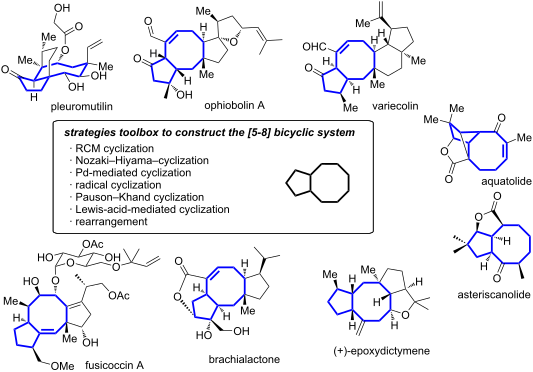
Strategies to access the [5-8] bicyclic core encountered in the sesquiterpene, diterpene and sesterterpene series
Beilstein J. Org. Chem. 2023, 19, 245–281, doi:10.3762/bjoc.19.23
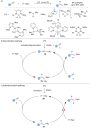
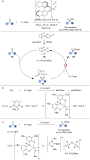
- electrophilic desilylation agents which can be used, a large diversity of compounds can be accessible through this method [51][52]. Oxidation followed by desilylation with fluoride source produces the natural product poitediol (118) in overall good yield. 2 Nozaki–Hiyama–Kishi (NHK) cyclization The Nozaki


Total synthesis of insect sex pheromones: recent improvements based on iron-mediated cross-coupling chemistry
Beilstein J. Org. Chem. 2023, 19, 158–166, doi:10.3762/bjoc.19.15
- described an elegant aryl–aryl cross-coupling procedure suppressing the formation of Grignard homocoupling byproducts relying on the use of FeF3 as catalyst, associated with strong N-heterocyclic carbenes (NHCs) and a source of fluoride anions [28]. A similar procedure involving sodium alkoxide additives


Formal total synthesis of macarpine via a Au(I)-catalyzed 6-endo-dig cycloisomerization strategy
Beilstein J. Org. Chem. 2022, 18, 1589–1595, doi:10.3762/bjoc.18.169
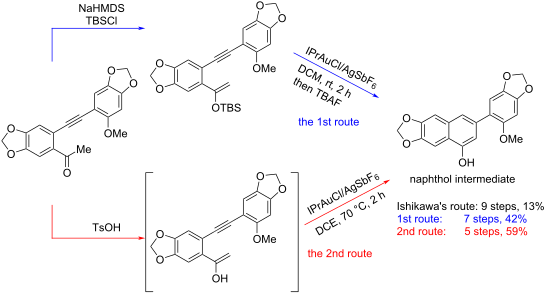
- the electron-donating phenyl ring enabled the coordination of the alkyne with the Au+ complex in the α-position, which promoted the silyl ether to attack the β-position of the alkyne to promote a 6-endo-dig cyclization. Next, compound 11 was subjected to a solution of tetrabutylammonium fluoride (TBAF


Preparation of an advanced intermediate for the synthesis of leustroducsins and phoslactomycins by heterocycloaddition
Beilstein J. Org. Chem. 2022, 18, 1385–1395, doi:10.3762/bjoc.18.143
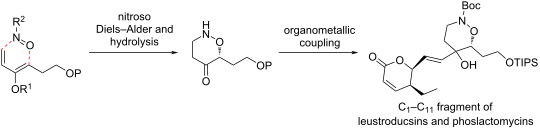
- 206.6, 154.9, 85.1, 82.3, 59.0, 45.0, 36.5, 32.2, 28.4, 18.1, 12.1 ppm; HRMS (m/z): [M + Na]+ calcd 424.2490; found, 424.2480; [α]D20 +37.4 (c 0.5, CH2Cl2). (5S,6R)-5-Ethyl-6-ethynyl-5,6-dihydro-2H-pyran-2-one (21): Caesium fluoride (290 mg, 1.91 mmol, 1.3 equiv) was added to a solution of the lactone


Ferrocenoyl-adenines: substituent effects on regioselective acylation
Beilstein J. Org. Chem. 2022, 18, 1270–1277, doi:10.3762/bjoc.18.133
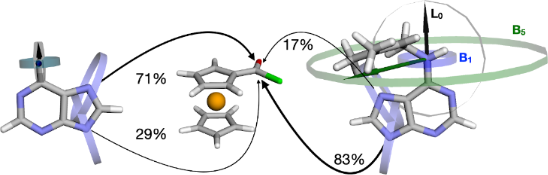
- , temperature) [32], and introduces various effects of microwaves [33], cyclodextrines [34], or tetrabutylammonium fluoride on the N7/N9-product ratio [35]. It is therefore of interest to collect complementary data on analogous acylation reactions, which are required for a future comparative study. Intrinsic



Modular synthesis of 2-furyl carbinols from 3-benzyldimethylsilylfurfural platforms relying on oxygen-assisted C–Si bond functionalization
Beilstein J. Org. Chem. 2022, 18, 1256–1263, doi:10.3762/bjoc.18.131
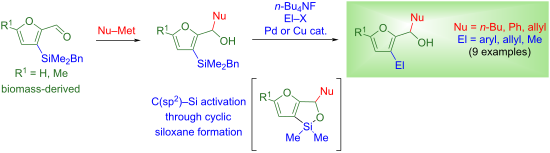
- approaches were contemplated for this purpose. Activation by alkoxides of the C3–SiEt3 or C3–SiMe2t-Bu bonds was ineffective. Conversely, treatment of the C3-benzyldimethylsilyl-appended derivatives with tetrabutylammonium fluoride led to cyclic siloxanes, which revealed to be competent donors for copper
- -catalyzed arylation reactions (Scheme 7). Fluoride-promoted arylation reactions of benzyldimethyl(alkenyl)silanes have been reported, and it is established that they proceed through the cleavage of the benzyl moiety from the benzyldimethylsilyl groups, leading to either dimethylsilanols or cyclic siloxanes
- activation by alkoxides did not prove useful, C3–Si bond functionalization is achieved from benzyldimethylsilyl units upon siloxane formation in the presence of TBAF. Protocols for fluoride-promoted Pd/Cu-catalyzed arylation, as well as Cu-catalyzed allylation and methylation, have been developed. Overall


Molecular diversity of the base-promoted reaction of phenacylmalononitriles with dialkyl but-2-ynedioates
Beilstein J. Org. Chem. 2022, 18, 991–998, doi:10.3762/bjoc.18.99

- ][29][30]. For example, Han and co-workers successfully developed a tetrabutylammonium fluoride-catalyzed cycloaddition of phenacylmalononitriles and nitroolefins for the diastereoselective synthesis of multifunctionalized cyclopent-2-ene-1-carboxamides [31] (reaction 1 in Scheme 1). Liu and Ban


First example of organocatalysis by cathodic N-heterocyclic carbene generation and accumulation using a divided electrochemical flow cell
Beilstein J. Org. Chem. 2022, 18, 979–990, doi:10.3762/bjoc.18.98
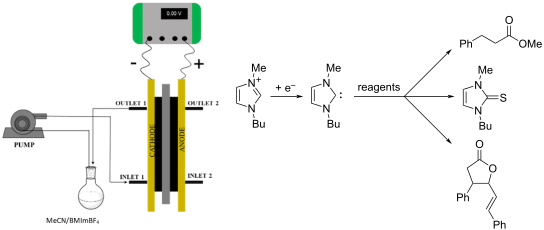
- and a carbon-filled polyvinylidene fluoride (C/PVDF) plate as anode. BMImBF4 0.1 M in acetonitrile was the catholyte, while the anolyte was a solution of tetraethylammonium tetrafluoroborate (Et4NBF4) in acetonitrile; after only 12 minutes of electrolysis the current flow stopped. Moreover, a
- carbon-filled polyvinylidene fluoride (C/PVDF) and the cathode material is described in Table 1. Electrolyzes were carried out at room temperature, under nitrogen atmosphere, using a solution of 0.1 M of BMImBF4 in acetonitrile as catholyte. Anolyte solution is given in Table 1. Electrolyte solutions
- cell. Anolyte (20 mL) and catholyte (20 mL) were separated through a Nafion® 438 membrane. The anode material was carbon-filled polyvinylidene fluoride C/PVDF and stainless steel for the cathode material. Electrolyzes were carried out at room temperature, under nitrogen atmosphere, using a solution 0.1


Cathodic generation of reactive (phenylthio)difluoromethyl species and its reactions: mechanistic aspects and synthetic applications
Beilstein J. Org. Chem. 2022, 18, 872–880, doi:10.3762/bjoc.18.88
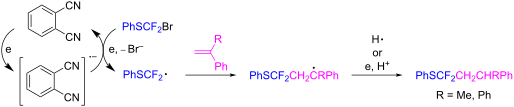
- olefins in moderate yields [5]. Prakash et al. also achieved fluoride-induced nucleophilic (phenylthio)difluoromethylation of carbonyl compounds using PhSCF2SiMe3 [6]. Quite recently, Shen et al., developed various nucleophilic, electrophilic, and radical difluoromethylthiolating reagents [1]. However


Synthesis of α-(perfluoroalkylsulfonyl)propiophenones: a new set of reagents for the light-mediated perfluoroalkylation of aromatics
Beilstein J. Org. Chem. 2022, 18, 788–795, doi:10.3762/bjoc.18.79
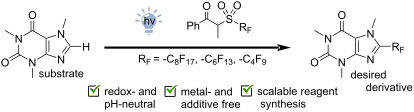
- , while other synthetic approaches were explored to obtain these reagents, the SN2 strategy described in this work was the most efficient. Such synthetic alternatives included: first, a sulfur(VI) fluoride exchange (SuFEx) between perfluoroalkylsulfonyl fluorides and the corresponding silyl enol ether





