Search for "pyrroles" in Full Text gives 146 result(s) in Beilstein Journal of Organic Chemistry.
Beilstein J. Org. Chem. 2020, 16, 2108–2118, doi:10.3762/bjoc.16.178
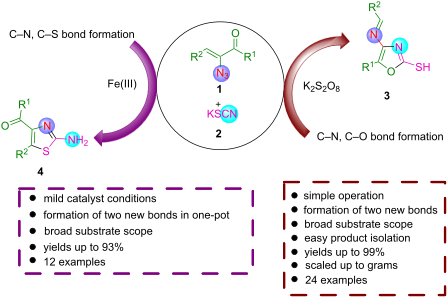
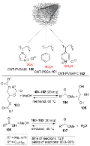
Graphical Abstract
Figure 1: Examples of biologically active oxazole and aminothiazole scaffolds.
Scheme 1: Strategies for the synthesis of 2,4,5-trisubstituted oxazole from azirine. a) I2, PPh3; b) NaH, 1H-...
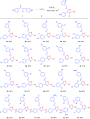
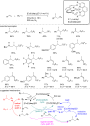
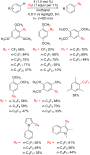
Scheme 2: Scope of the α-azidochalcones. The reactions were carried out at reflux temperature, using 1 (1 mmo...
Scheme 3: Large-scale synthesis of 3i.
Figure 2: Large-scale synthesis of 3i. a) At the start of the reaction, b) after the reaction.
Scheme 4: Acetyl derivative of 3d.
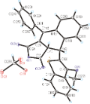
Figure 3: ORTEP diagram of compound 5.
Scheme 5: Synthesis of S-methyl/benzylated products 6 and 7.
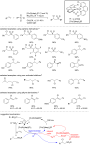
Scheme 6: Control experiments.
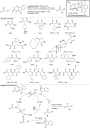
Scheme 7: Plausible mechanism proposed for the formation of 2,4,5-trisubstituted oxazoles 3.
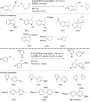
Scheme 8: Reaction of vinyl azide 1 and 3 with ferric nitrate. Reactions were carried out at reflux temperatu...
Figure 4: X-ray crystal structure of 4h.
Beilstein J. Org. Chem. 2020, 16, 2064–2072, doi:10.3762/bjoc.16.173
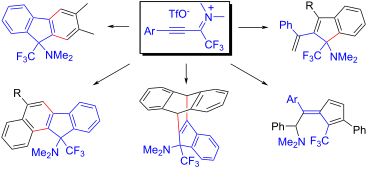
Graphical Abstract
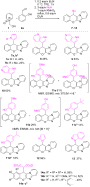
Scheme 1: Diels–Alder reaction of propyn-1-iminium salt 1a compared with the reported [29] reaction of 4-phenyl-1...
Scheme 2: Sequential Diels–Alder/intramolecular SE(Ar) reaction of propyn-1-iminium triflates 1a,b. Condition...
Scheme 3: Diels–Alder reaction of 1a and anthracene followed by an intramolecular SE(Ar) reaction.
Figure 1: Solid-state molecular structure of 11 (ORTEP plot).
Scheme 4: Reactions of propyn-1-iminium salt 1a with styrenes.
Figure 2: Solid-state molecular structure of 12c (ORTEP plot).
Figure 3: Solid-state molecular structure of 12d (ORTEP plot). Both the R and the S enantiomer are present in...
Scheme 5: A mechanistic proposal for the reaction of alkyne 1a with styrenes.
Scheme 6: Reaction of alkyne 1a with 1,2-dihydronaphthalene.
Scheme 7: Synthesis and solid-state molecular structure (ORTEP plot) of pentafulvene 19; selected bond distan...
Scheme 8: Proposed mechanistic pathway leading to fulvene 19.
Beilstein J. Org. Chem. 2020, 16, 1820–1829, doi:10.3762/bjoc.16.149
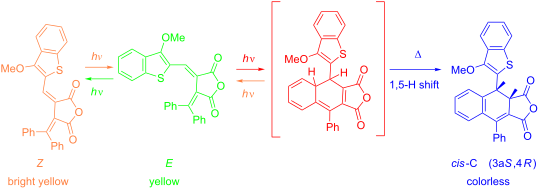
Graphical Abstract
Scheme 1: Photoisomerization of 2-benzo[b]thienyl fulgides.
Scheme 2: Synthesis of fulgides 3E, 3Z and fulgimides 4E, 4Z.
Scheme 3: Synthesis of fulgide 7E and fulgimide 8E.
Figure 1: Molecular structure of 3Z. Thermal ellipsoids are drawn on the 30% probability level. Selected bond...
Figure 2: Molecular structure of 3E. Thermal ellipsoids are drawn on the 30% probability level. Selected bond...
Scheme 4: Photochemical rearrangements of fulgide 3E followed by1,5-H shift.
Figure 3: Electronic absorption spectra of fulgide 3E in acetonitrile solution before (1) and after irradiati...
Figure 4: Electronic absorption spectra of fulgide 3Z in acetonitrile solution before (1) and after irradiati...
Figure 5: Molecular structure of photoproduct cis-9C’. Thermal ellipsoids are drawn on the 30% probability le...
Scheme 5: Photochemical rearrangements of fulgide 7E followed by1,5-H shift.
Figure 6: Electronic absorption spectra of fulgide 7E in acetonitrile solution before (1) and after irradiati...
Scheme 6: Photochemical rearrangements of fulgimides 4E and 8E followed by1,5-H shift.
Figure 7: Electronic absorption spectra of fulgimide 8E in acetonitrile solution before (1) and after irradia...
Beilstein J. Org. Chem. 2020, 16, 1754–1804, doi:10.3762/bjoc.16.147
Graphical Abstract
Figure 1: Concept of dual synergistic catalysis.
Figure 2: Classification of catalytic systems involving two catalysts.
Figure 3: General mechanism for the dual nickel/photoredox catalytic system.
Figure 4: General mechanisms for C–H activation catalysis involving different reoxidation strategies.
Figure 5: Indole synthesis via dual C–H activation/photoredox catalysis.
Figure 6: Proposed mechanism for the indole synthesis via dual catalysis.
Figure 7: Oxidative Heck reaction on arenes via the dual catalysis.
Figure 8: Proposed mechanism for the Heck reaction on arenes via dual catalysis.
Figure 9: Oxidative Heck reaction on phenols via the dual catalysis.
Figure 10: Proposed mechanism for the Heck reaction on phenols via dual catalysis.
Figure 11: Carbazole synthesis via dual C–H activation/photoredox catalysis.
Figure 12: Proposed mechanism for the carbazole synthesis via dual catalysis.
Figure 13: Carbonylation of enamides via the dual C–H activation/photoredox catalysis.
Figure 14: Proposed mechanism for carbonylation of enamides via dual catalysis.
Figure 15: Annulation of benzamides via the dual C–H activation/photoredox catalysis.
Figure 16: Proposed mechanism for the annulation of benzamides via dual catalysis.
Figure 17: Synthesis of indoles via the dual C–H activation/photoredox catalysis.
Figure 18: Proposed mechanism for the indole synthesis via dual catalysis.
Figure 19: General concept of dual catalysis merging C–H activation and photoredox catalysis.
Figure 20: The first example of dual catalysis merging C–H activation and photoredox catalysis.
Figure 21: Proposed mechanism for the C–H arylation with diazonium salts via dual catalysis.
Figure 22: Dual catalysis merging C–H activation/photoredox using diaryliodonium salts.
Figure 23: Direct arylation via the dual catalytic system reported by Xu.
Figure 24: Direct arylation via dual catalytic system reported by Balaraman.
Figure 25: Direct arylation via dual catalytic system reported by Guo.
Figure 26: C(sp3)–H bond arylation via the dual Pd/photoredox catalytic system.
Figure 27: Acetanilide derivatives acylation via the dual C–H activation/photoredox catalysis.
Figure 28: Proposed mechanism for the C–H acylation with α-ketoacids via dual catalysis.
Figure 29: Acylation of azobenzenes via the dual catalysis C–H activation/photoredox.
Figure 30: C2-acylation of indoles via the dual C–H activation/photoredox catalysis.
Figure 31: Proposed mechanism for the C2-acylation of indoles with aldehydes via dual catalysis.
Figure 32: C2-acylation of indoles via the dual C–H activation/photoredox catalysis.
Figure 33: Perfluoroalkylation of arenes via the dual C–H activation/photoredox catalysis.
Figure 34: Proposed mechanism for perfluoroalkylation of arenes via dual catalysis.
Figure 35: Sulfonylation of 1-naphthylamides via the dual C–H activation/photoredox catalysis.
Figure 36: Proposed mechanism for sulfonylation of 1-naphthylamides via dual catalysis.
Figure 37: meta-C–H Alkylation of arenes via visible-light metallaphotocatalysis.
Figure 38: Alternative procedure for meta-C–H alkylation of arenes via metallaphotocatalysis.
Figure 39: Proposed mechanism for meta-C–H alkylation of arenes via metallaphotocatalysis.
Figure 40: C–H borylation of arenes via visible-light metallaphotocatalysis.
Figure 41: Proposed mechanism for C–H borylation of arenes via visible-light metallaphotocatalysis.
Figure 42: Undirected C–H aryl–aryl cross coupling via dual gold/photoredox catalysis.
Figure 43: Proposed mechanism for the undirected C–H aryl–aryl cross-coupling via dual catalysis.
Figure 44: Undirected C–H arylation of (hetero)arenes via dual manganese/photoredox catalysis.
Figure 45: Proposed mechanism for the undirected arylation of (hetero)arenes via dual catalysis.
Figure 46: Photoinduced C–H arylation of azoles via copper catalysis.
Figure 47: Photo-induced C–H chalcogenation of azoles via copper catalysis.
Figure 48: Decarboxylative C–H adamantylation of azoles via dual cobalt/photoredox catalysis.
Figure 49: Proposed mechanism for the C–H adamantylation of azoles via dual catalysis.
Figure 50: General mechanisms for the “classical” (left) and Cu-free variant (right) Sonogoshira reaction.
Figure 51: First example of a dual palladium/photoredox catalysis for Sonogashira-type couplings.
Figure 52: Arylation of terminal alkynes with diazonium salts via dual gold/photoredox catalysis.
Figure 53: Proposed mechanism for the arylation of terminal alkynes via dual catalysis.
Figure 54: C–H Alkylation of alcohols promoted by H-atom transfer (HAT).
Figure 55: Proposed mechanism for the C–H alkylation of alcohols promoted by HAT.
Figure 56: C(sp3)–H arylation of latent nucleophiles promoted by H-atom transfer.
Figure 57: Proposed mechanism for the C(sp3)–H arylation of latent nucleophiles promoted by HAT.
Figure 58: Direct α-arylation of alcohols promoted by H-atom transfer.
Figure 59: Proposed mechanism for the direct α-arylation of alcohols promoted by HAT.
Figure 60: C–H arylation of amines via dual Ni/photoredox catalysis.
Figure 61: Proposed mechanism for the C–H arylation of amines via dual Ni/photoredox catalysis.
Figure 62: C–H functionalization of nucleophiles via excited ketone/nickel dual catalysis.
Figure 63: Proposed mechanism for the C–H functionalization enabled by excited ketones.
Figure 64: Selective sp3–sp3 cross-coupling promoted by H-atom transfer.
Figure 65: Proposed mechanism for the selective sp3–sp3 cross-coupling promoted by HAT.
Figure 66: Direct C(sp3)–H acylation of amines via dual Ni/photoredox catalysis.
Figure 67: Proposed mechanism for the C–H acylation of amines via dual Ni/photoredox catalysis.
Figure 68: C–H hydroalkylation of internal alkynes via dual Ni/photoredox catalysis.
Figure 69: Proposed mechanism for the C–H hydroalkylation of internal alkynes.
Figure 70: Alternative procedure for the C–H hydroalkylation of ynones, ynoates, and ynamides.
Figure 71: Allylic C(sp3)–H activation via dual Ni/photoredox catalysis.
Figure 72: Proposed mechanism for the allylic C(sp3)–H activation via dual Ni/photoredox catalysis.
Figure 73: Asymmetric allylation of aldehydes via dual Cr/photoredox catalysis.
Figure 74: Proposed mechanism for the asymmetric allylation of aldehydes via dual catalysis.
Figure 75: Aldehyde C–H functionalization promoted by H-atom transfer.
Figure 76: Proposed mechanism for the C–H functionalization of aldehydes promoted by HAT.
Figure 77: Direct C–H arylation of strong aliphatic bonds promoted by HAT.
Figure 78: Proposed mechanism for the C–H arylation of strong aliphatic bonds promoted by HAT.
Figure 79: Direct C–H trifluoromethylation of strong aliphatic bonds promoted by HAT.
Figure 80: Proposed mechanism for the C–H trifluoromethylation of strong aliphatic bonds.
Beilstein J. Org. Chem. 2020, 16, 1579–1587, doi:10.3762/bjoc.16.130
Graphical Abstract
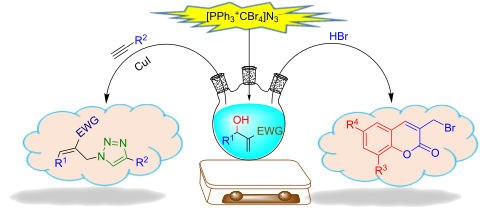
Scheme 1: Literature-reported cycloaddition reactions of MBH acetates involving azides and alkynes [24-28].
Scheme 2: Synthetic methodologies for triazolations of MBH adducts. a) Literature-reported indirect triazolat...
Scheme 3: Scope of the one-pot cascade reaction of the unprotected Morita–Baylis–Hillman adducts 3a–q.
Figure 1: Proposed mechanism for the synthesis of 1,4-disubstituted triazoles.
Scheme 4: Comparative analysis of the sequential one-pot reaction.
Figure 2: Proposed mechanism for the synthesis of 3-(bromomethyl)coumarins.
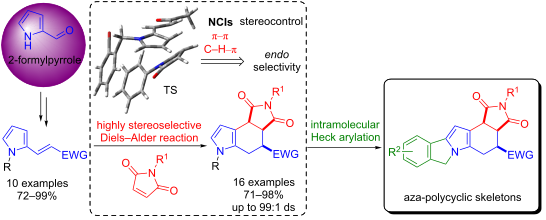
Beilstein J. Org. Chem. 2020, 16, 1320–1334, doi:10.3762/bjoc.16.113
Graphical Abstract
Figure 1: Fused aza-hetero polycyclic frames and natural pyrrolizine- and isoindole-containing alkaloids.
Scheme 1: Synthetic approaches for the preparation of pyrrolo-fused aza-hetero polycyclic frames.
Scheme 2: Preparation of 1,2-substituted pyrroles 8a–f and 8i,j.
Scheme 3: Diels–Alder cycloadditions of pyrroles 8a–j and 16a–b with maleimides 7b–c.
Figure 2: Structures of 9m (a) and 10m (b) as determined by single-crystal X-ray diffraction crystallography ...
Scheme 4: Pd(0)-catalyzed intramolecular Heck cross-coupling reaction of 2-vinylpyrroles 8c,d and 8g.
Scheme 5: Synthesis of 2-vinylpyrroles 8k,l and their Pd(0)-catalyzed intramolecular Heck cross-coupling to p...
Scheme 6: Diastereoselective Diels–Alder reaction of pyrrolo[2,1-a]isoindole 18a with 7c.
Scheme 7: Synthetic approach to the fused aza-heterocyclic pentacycle 12.
Figure 3: M06-2X/6-31+G(d,p) Optimized geometry for each of the SCs (a and d), TSs (b and e) and ADs (c and f...
Figure 4: M06-2X/6-31+G(d,p) Optimized geometry for each of the TSs of the Diels–Alder reactions of dienes 8b...
Figure 5: M06-2X/6-31+G(d,p) Optimized geometry of the endo SCs (a) and TSs (b) for the Diels–Alder reaction ...
Beilstein J. Org. Chem. 2020, 16, 1163–1187, doi:10.3762/bjoc.16.103
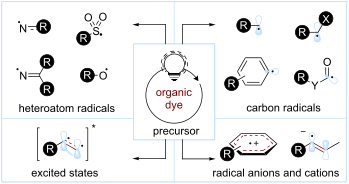
Graphical Abstract
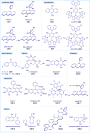
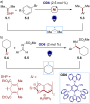
Figure 1: Selected examples of organic dyes. Mes-Acr+: 9-mesityl-10-methylacridinium, DCA: 9,10-dicyanoanthra...
Scheme 1: Activation modes in photocatalysis.
Scheme 2: Main strategies for the formation of C(sp3) radicals used in organophotocatalysis.
Scheme 3: Illustrative example for the photocatalytic oxidative generation of radicals from carboxylic acids:...
Scheme 4: Illustrative example for the photocatalytic reductive generation of C(sp3) radicals from redoxactiv...
Figure 2: Common substrates for the photocatalytic oxidative generation of C(sp3) radicals.
Scheme 5: Illustrative example for the photocatalytic oxidative generation of radicals from dihydropyridines ...
Scheme 6: Illustrative example for the photocatalytic oxidative generation of C(sp3) radicals from trifluorob...
Scheme 7: Illustrative example for the photocatalytic reductive generation of C(sp3) radicals from benzylic h...
Scheme 8: Illustrative example for the photocatalytic generation of C(sp3) radicals via direct HAT: the cross...
Scheme 9: Illustrative example for the photocatalytic generation of C(sp3) radicals via indirect HAT: the deu...
Scheme 10: Selected precursors for the generation of aryl radicals using organophotocatalysis.
Scheme 11: Illustrative example for the photocatalytic reductive generation of aryl radicals from aryl diazoni...
Scheme 12: Illustrative examples for the photocatalytic reductive generation of aryl radicals from haloarenes:...
Scheme 13: Illustrative example for the photocatalytic reductive generation of aryl radicals from aryl halides...
Scheme 14: Illustrative example for the photocatalytic reductive generation of aryl radicals from arylsulfonyl...
Scheme 15: Illustrative example for the reductive photocatalytic generation of aryl radicals from triaryl sulf...
Scheme 16: Main strategies towards acyl radicals used in organophotocatalysis.
Scheme 17: Illustrative example for the decarboxylative photocatalytic generation of acyl radicals from α-keto...
Scheme 18: Illustrative example for the oxidative photocatalytic generation of acyl radicals from acyl silanes...
Scheme 19: Illustrative example for the oxidative photocatalytic generation of carbamoyl radicals from 4-carba...
Scheme 20: Illustrative example of the photocatalytic HAT approach for the generation of acyl radicals from al...
Scheme 21: General reactivity of a) radical cations; b) radical anions; c) the main strategies towards aryl an...
Scheme 22: Illustrative example for the oxidative photocatalytic generation of alkene radical cations from alk...
Scheme 23: Illustrative example for the reductive photocatalytic generation of an alkene radical anion from al...
Figure 3: Structure of C–X radical anions and their neutral derivatives.
Scheme 24: Illustrative example for the photocatalytic reduction of imines and the generation of an α-amino C(...
Scheme 25: Illustrative example for the oxidative photocatalytic generation of aryl radical cations from arene...
Scheme 26: NCR classifications and generation.
Scheme 27: Illustrative example for the photocatalytic reductive generation of iminyl radicals from O-aryl oxi...
Scheme 28: Illustrative example for the photocatalytic oxidative generation of iminyl radicals from α-N-oxy ac...
Scheme 29: Illustrative example for the photocatalytic oxidative generation of iminyl radicals via an N–H bond...
Scheme 30: Illustrative example for the photocatalytic oxidative generation of amidyl radicals from Weinreb am...
Scheme 31: Illustrative example for the photocatalytic reductive generation of amidyl radicals from hydroxylam...
Scheme 32: Illustrative example for the photocatalytic reductive generation of amidyl radicals from N-aminopyr...
Scheme 33: Illustrative example for the photocatalytic oxidative generation of amidyl radicals from α-amido-ox...
Scheme 34: Illustrative example for the photocatalytic oxidative generation of aminium radicals: the N-aryltet...
Scheme 35: Illustrative example for the photocatalytic oxidative generation of nitrogen-centered radical catio...
Scheme 36: Illustrative example for the photocatalytic oxidative generation of nitrogen-centered radical catio...
Scheme 37: Illustrative example for the photocatalytic oxidative generation of hydrazonyl radical from hydrazo...
Scheme 38: Generation of O-radicals.
Scheme 39: Illustrative examples for the photocatalytic generation of O-radicals from N-alkoxypyridinium salts...
Scheme 40: Illustrative examples for the photocatalytic generation of O-radicals from alkyl hydroperoxides: th...
Scheme 41: Illustrative example for the oxidative photocatalytic generation of thiyl radicals from thiols: the...
Scheme 42: Main strategies and reagents for the generation of sulfonyl radicals used in organophotocatalysis.
Scheme 43: Illustrative example for the reductive photocatalytic generation of sulfonyl radicals from arylsulf...
Scheme 44: Illustrative example of a Cl atom abstraction strategy for the photocatalytic generation of sulfamo...
Scheme 45: Illustrative example for the oxidative photocatalytic generation of sulfonyl radicals from sulfinic...
Scheme 46: Illustrative example for the photocatalytic generation of electronically excited triplet states: th...
Scheme 47: Illustrative example for the photocatalytic generation of electronically excited triplet states: th...
Beilstein J. Org. Chem. 2020, 16, 895–903, doi:10.3762/bjoc.16.81
Graphical Abstract
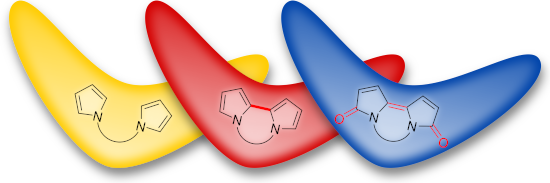
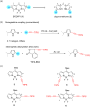
Scheme 1: The previously reported family of the boomerang bipyrroles obtained by Pd-induced double C–H bond a...
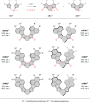
Scheme 2: Synthesis and structures of α-free and α-oxygenated bipyrrole boomerangs. Reagents and conditions: ...
Figure 1: DFT-Optimized structures (B3LYP/6-31G(d,p)) of cNDA2O and cNMI3H.
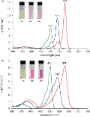
Figure 2: Absorption and emission spectra of cNMI2H (top) and cNMI3H (bottom) measured in toluene, dichlorome...
Beilstein J. Org. Chem. 2020, 16, 587–595, doi:10.3762/bjoc.16.53
Graphical Abstract
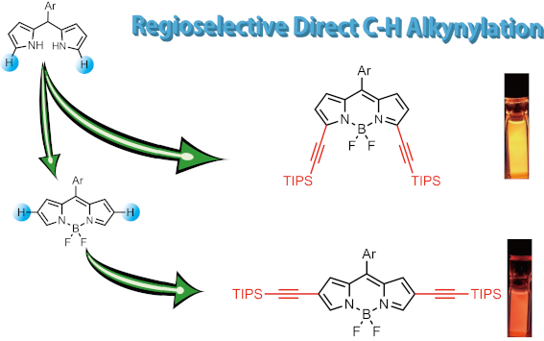
Figure 1: (a) Chemical structures of BODIPY (1) and dipyrromethane (2). (b) C–C bond forming alkynylations of...
Scheme 1: Synthesis of α-ethynyl-substituted BODIPY derivatives 3a and 4a.
Scheme 2: Synthesis of β-ethynyl-substituted BODIPY derivatives 5a and 5b and β,β'-diethynyl-substituted comp...
Figure 2: Top and front views of the crystal structures of (a) 4a and (b) 6b with 50% thermal ellipsoid proba...
Figure 3: Partial 1H NMR spectra of (a) 1a, (b) 3a, (c) 4a, (d) 5a, and (e) 6a recorded in CDCl3 at 298 K. As...
Figure 4: UV–vis absorption spectra of the BODIPY derivatives, (a) 1a (green), 3a (blue), 4a (red), and (b) 1a...
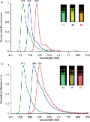
Figure 5: Fluorescence spectra of BODIPY derivatives. (a) 1a (green), 3a (blue), 4a (red) and (b) 1a (green), ...
Beilstein J. Org. Chem. 2020, 16, 451–481, doi:10.3762/bjoc.16.42
Graphical Abstract
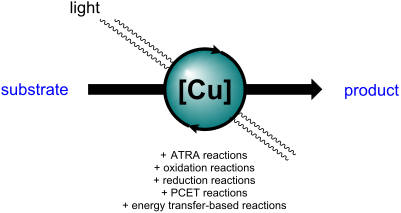
Scheme 1: [Cu(I)(dap)2]Cl-catalyzed ATRA reaction under green light irradiation.
Scheme 2: Photocatalytic allylation of α-haloketones.
Scheme 3: [Cu(I)(dap)2]Cl-photocatalyzed chlorosulfonylation and chlorotrifluoromethylation of alkenes.
Scheme 4: Photocatalytic perfluoroalkylchlorination of electron-deficient alkenes using the Sauvage catalyst.
Scheme 5: Photocatalytic synthesis of fluorinated sultones.
Scheme 6: Photocatalyzed haloperfluoroalkylation of alkenes and alkynes.
Scheme 7: Chlorosulfonylation of alkenes catalyzed by [Cu(I)(dap)2]Cl. aNo Na2CO3 was added. b1 equiv of Na2CO...
Scheme 8: Copper-photocatalyzed reductive allylation of diaryliodonium salts.
Scheme 9: Copper-photocatalyzed azidomethoxylation of olefins.
Scheme 10: Benzylic azidation initiated by [Cu(I)(dap)2]Cl.
Scheme 11: Trifluoromethyl methoxylation of styryl derivatives using [Cu(I)(dap)2]PF6. All redox potentials ar...
Scheme 12: Trifluoromethylation of silyl enol ethers.
Scheme 13: Synthesis of annulated heterocycles upon oxidation with the Sauvage catalyst.
Scheme 14: Oxoazidation of styrene derivatives using [Cu(dap)2]Cl as a precatalyst.
Scheme 15: [Cu(I)(dpp)(binc)]PF6-catalyzed ATRA reaction.
Scheme 16: Allylation reaction of α-bromomalonate catalyzed by [Cu(I)(dpp)(binc)]PF6 following an ATRA mechani...
Scheme 17: Bromo/tribromomethylation reaction using [Cu(I)(dmp)(BINAP)]PF6.
Scheme 18: Chlorotrifluoromethylation of alkenes catalyzed by [Cu(I)(N^N)(xantphos)]PF6.
Scheme 19: Chlorosulfonylation of styrene and alkyne derivatives by ATRA reactions.
Scheme 20: Reduction of aryl and alkyl halides with the complex [Cu(I)(bcp)(DPEPhos)]PF6. aIrradiation was car...
Scheme 21: Meerwein arylation of electron-rich aromatic derivatives and 5-exo-trig cyclization catalyzed by th...
Scheme 22: [Cu(I)(bcp)(DPEPhos)]PF6-photocatalyzed synthesis of alkaloids. aYield over two steps (cyclization ...
Scheme 23: Copper-photocatalyzed decarboxylative amination of NHP esters.
Scheme 24: Photocatalytic decarboxylative alkynylation using [Cu(I)(dq)(binap)]BF4.
Scheme 25: Copper-photocatalyzed alkylation of glycine esters.
Scheme 26: Copper-photocatalyzed borylation of organic halides. aUnder continuous flow conditions.
Scheme 27: Copper-photocatalyzed α-functionalization of alcohols with glycine ester derivatives.
Scheme 28: δ-Functionalization of alcohols using [Cu(I)(dmp)(xantphos)]BF4.
Scheme 29: Photocatalytic synthesis of [5]helicene and phenanthrene.
Scheme 30: Oxidative carbazole synthesis using in situ-formed [Cu(I)(dmp)(xantphos)]BF4.
Scheme 31: Copper-photocatalyzed functionalization of N-aryl tetrahydroisoquinolines.
Scheme 32: Bicyclic lactone synthesis using a copper-photocatalyzed PCET reaction.
Scheme 33: Photocatalytic Pinacol coupling reaction catalyzed by [Cu(I)(pypzs)(BINAP)]BF4. The ligands of the ...
Scheme 34: Azide photosensitization using a Cu-based photocatalyst.
Beilstein J. Org. Chem. 2019, 15, 2623–2630, doi:10.3762/bjoc.15.255
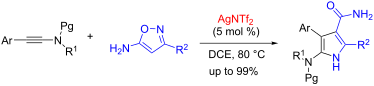
Graphical Abstract
Scheme 1: Two modes of reactions of alkynes by silver catalysis.
Scheme 2: Reactions of ynamides or ynol ethers with isoxazoles by transition metal catalysis.
Figure 1: Selected bioactive molecules containing the 5-amino-1H-pyrrole-3-carboxamide motif.
Scheme 3: Reactions of ynamide 4a with different isoxazoles 5, 7 and 8a.
Figure 2: Scope with regard to ynamide 4. All reactions were carried out with ynamide 4 (0.2 mmol), isoxazole ...
Figure 3: Scope with regard to the 5-aminoisoxazole 8 (see Figure 2). aReaction conditions: 2.0 equiv of 8e, 100 °C.
Figure 4: Molecular structure in the solid state of compound 10ad.
Scheme 4: A gram-scale experiment.
Scheme 5: Mechanistic hypotheses for Ag-catalyzed reaction of ynamide 4a with aminoisoxazole 8a.
Scheme 6: Possible reaction routes of intermediate C.
Beilstein J. Org. Chem. 2019, 15, 2213–2270, doi:10.3762/bjoc.15.218
Graphical Abstract
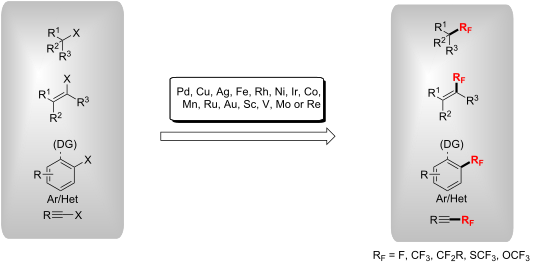
Scheme 1: The main three strategies of fluorination: nucleophilic, electrophilic and radical fluorination.
Scheme 2: Doyle’s Pd-catalyzed fluorination of allylic chlorides.
Scheme 3: Allylic fluorination of 2- and 3-substituted propenyl esters.
Scheme 4: Regioselective allylic fluorination of cinnamyl phosphorothioate esters.
Scheme 5: Palladium-catalyzed aliphatic C–H fluorination reported by Doyle.
Scheme 6: Pd-catalyzed enantioselective fluorination of α-ketoesters followed by stereoselective reduction to...
Scheme 7: Pd-catalyzed C(sp3)–H fluorination of oxindoles.
Scheme 8: C–H fluorination of 8-methylquinoline derivatives with F− reagents.
Scheme 9: Fluorination of α-cyano acetates reported by van Leeuwen.
Scheme 10: The catalytic enantioselective electrophilic C–H fluorination of α-chloro-β-keto phosphonates.
Scheme 11: Fluorination of unactivated C(sp3)–H bonds directed by the bidentate PIP auxiliary.
Scheme 12: Fluorination of C(sp3)–H bonds at the β-position of carboxylic acids.
Scheme 13: Enantioselective benzylic C–H fluorination with a chiral transient directing group.
Scheme 14: Microwave-heated Pd-catalyzed fluorination of aryl alcohols.
Scheme 15: Fluorination of aryl potassium trifluoroborates.
Scheme 16: C(sp2)–F bond formation using precatalyst [L·Pd]2(cod).
Scheme 17: Pd-catalyzed fluorination of (hetero)aryl triflates and bromides.
Scheme 18: The Pd-catalyzed C–H fluorination of arenes with Selectfluor/NFSI.
Scheme 19: Pd(II)-catalyzed ortho-monofluorination protocol for benzoic acids.
Scheme 20: Pd-catalyzed C(sp2)–H bond fluorination of 2-arylbenzothiazoles.
Scheme 21: Nitrate-promoted fluorination of aromatic and olefinic C(sp2)–H bonds and proposed mechanism.
Scheme 22: Fluorination of oxalyl amide-protected benzylamine derivatives.
Scheme 23: C–H fluorination of benzaldehydes with orthanilic acids as transient directing group.
Scheme 24: Pd(II)-catalyzed aryl C–H fluorination with various directing groups.
Scheme 25: Cu-catalyzed aliphatic, allylic, and benzylic fluorination.
Scheme 26: Cu-catalyzed SN2 fluorination of primary and secondary alkyl bromides.
Scheme 27: Copper-catalyzed fluorination of alkyl triflates.
Scheme 28: Cu-catalyzed fluorination of allylic bromides and chlorides.
Scheme 29: Synthetic strategy for the fluorination of active methylene compounds.
Scheme 30: Fluorination of β-ketoesters using a tartrate-derived bidentate bisoxazoline-Cu(II) complex.
Scheme 31: Highly enantioselective fluorination of β-ketoesters and N-Boc-oxindoles.
Scheme 32: Amide group-assisted site-selective fluorination of α-bromocarbonyl compounds.
Scheme 33: Cu-mediated aryl fluorination reported by Sanford [77].
Scheme 34: Mono- or difluorination reactions of benzoic acid derivatives.
Scheme 35: Cu-catalyzed fluorination of diaryliodonium salts with KF.
Scheme 36: Copper(I)-catalyzed cross-coupling of 2-pyridylaryl bromides.
Scheme 37: AgNO3-catalyzed decarboxylative fluorination of aliphatic carboxylic acids.
Scheme 38: The Mn-catalyzed aliphatic and benzylic C–H fluorination.
Scheme 39: Iron(II)-promoted C–H fluorination of benzylic substrates.
Scheme 40: Ag-catalyzed fluorodecarboxylation of carboxylic acids.
Scheme 41: Vanadium-catalyzed C(sp3)–H fluorination.
Scheme 42: AgNO3-catalyzed radical deboronofluorination of alkylboronates and boronic acids.
Scheme 43: Selective heterobenzylic C–H fluorination with Selectfluor reported by Van Humbeck.
Scheme 44: Fe(II)-catalyzed site-selective fluorination guided by an alkoxyl radical.
Scheme 45: Fluorination of allylic trichloroacetimidates reported by Nguyen et al.
Scheme 46: Iridium-catalyzed fluorination of allylic carbonates with TBAF(t-BuOH)4.
Scheme 47: Iridium-catalyzed asymmetric fluorination of allylic trichloroacetimidates.
Scheme 48: Cobalt-catalyzed α-fluorination of β-ketoesters.
Scheme 49: Nickel-catalyzed α-fluorination of various α-chloro-β-ketoesters.
Scheme 50: Ni(II)-catalyzed enantioselective fluorination of oxindoles and β-ketoesters.
Scheme 51: Scandium(III)-catalyzed asymmetric C–H fluorination of unprotected 3-substituted oxindoles.
Scheme 52: Iron-catalyzed directed C–H fluorination.
Scheme 53: Electrophilic silver-catalyzed Ar–F bond-forming reaction from arylstannanes.
Figure 1: Nucleophilic, electrophilic and radical CF3 sources.
Scheme 54: Cu(I)-catalyzed allylic trifluoromethylation of unactivated terminal olefins.
Scheme 55: Direct copper-catalyzed trifluoromethylation of allylsilanes.
Scheme 56: Cupper-catalyzed enantioselective trifluoromethylation of five and six-membered ring β-ketoesters.
Scheme 57: Cu-catalyzed highly stereoselective trifluoromethylation of secondary propargyl sulfonates.
Scheme 58: Remote C(sp3)–H trifluoromethylation of carboxamides and sulfonamides.
Scheme 59: Trifluoromethylation of allylsilanes with photoredox catalysis.
Scheme 60: Ag-catalyzed decarboxylative trifluoromethylation of aliphatic carboxylic acids in aqueous CH3CN.
Scheme 61: Decarboxylative trifluoromethylation of aliphatic carboxylic acids via combined photoredox and copp...
Scheme 62: Palladium-catalyzed Ar–CF3 bond-forming reaction.
Scheme 63: Palladium-catalyzed trifluoromethylation of arenes with diverse heterocyclic directing groups.
Scheme 64: Pd-catalyzed trifluoromethylation of indoles as reported by Liu.
Scheme 65: Pd-catalyzed trifluoromethylation of vinyl triflates and vinyl nonaflates.
Scheme 66: Pd(II)-catalyzed ortho-trifluoromethylation of aromatic C–H bonds.
Scheme 67: Visible-light-induced Pd(OAc)2-catalyzed ortho-trifluoromethylation of acetanilides with CF3SO2Na.
Scheme 68: CuI-catalyzed trifluoromethylation of aryl- and alkenylboronic acids.
Scheme 69: Cu-catalyzed trifluoromethylation of aryl- and vinylboronic acids.
Scheme 70: Copper-catalyzed trifluoromethylation of α,β-unsaturated carboxylic acids.
Scheme 71: Formation of C(sp2)–CF3 bond catalyzed by copper(I) complex.
Scheme 72: Loh’s Cu(I)-catalyzed trifluoromethylation of enamides and electron-deficient alkenes.
Scheme 73: Copper and iron-catalyzed decarboxylative tri- and difluoromethylation.
Scheme 74: Cu-catalyzed trifluoromethylation of hydrazones developed by Bouyssi.
Scheme 75: Cu(I)-catalyzed trifluoromethylation of terminal alkenes.
Scheme 76: Cu/Ag-catalyzed decarboxylative trifluoromethylation of cinnamic acids.
Scheme 77: Copper-catalyzed direct alkenyl C–H trifluoromethylation.
Scheme 78: Copper(I/II)-catalyzed direct trifluoromethylation of styrene derivatives.
Scheme 79: Regioselective trifluoromethylation of pivalamido arenes and heteroarenes.
Scheme 80: Synthesis of trifluoromethylquinones in the presence of copper(I).
Scheme 81: Oxidative trifluoromethylation of imidazoheterocycles in ionic liquid/water.
Scheme 82: A mild and fast continuous-flow trifluoromethylation of coumarins using a CuI/CF3SO2Na/TBHP system.
Scheme 83: Copper-catalyzed oxidative trifluoromethylation of various 8-aminoquinolines.
Scheme 84: PA-directed copper-catalyzed trifluoromethylation of anilines.
Scheme 85: Trifluoromethylation of potassium vinyltrifluoroborates catalyzed by Fe(II).
Scheme 86: Alkenyl trifluoromethylation catalyzed by Ru(phen)3Cl2 as photocatalyst.
Scheme 87: Ru-catalyzed trifluoromethylation of alkenes by Akita’s group.
Scheme 88: Ir-catalyzed Cvinyl–CF3 bond formation of α,β-unsaturated carboxylic acids.
Scheme 89: Ag(I)-catalyzed denitrative trifluoromethylation of β-nitrostyrenes.
Scheme 90: Photocatalyzed direct trifluoromethylation of aryl and heteroaryl C–H bonds.
Scheme 91: Rhenium (MTO)-catalyzed direct trifluoromethylation of aromatic substrates.
Scheme 92: Trifluoromethylation of unprotected anilines under [Ir(ppy)3] catalyst.
Scheme 93: Oxidative trifluoromethylation of imidazopyridines and imidazoheterocycles.
Scheme 94: Ruthenium-catalyzed trifluoromethylation of (hetero)arenes with trifluoroacetic anhydride.
Scheme 95: Phosphovanadomolybdic acid-catalyzed direct C–H trifluoromethylation.
Scheme 96: Picolinamide-assisted ortho-trifluoromethylation of arylamines.
Scheme 97: A nickel-catalyzed C–H trifluoromethylation of free anilines.
Scheme 98: Cu-mediated trifluoromethylation of terminal alkynes reported by Qing.
Scheme 99: Huang’s C(sp)–H trifluoromethylation using Togni’s reagent.
Scheme 100: Cu-catalyzed methods for trifluoromethylation with Umemoto’s reagent.
Scheme 101: The synthesis of alkynyl-CF3 compounds in the presence of fac-[Ir(ppy)3] under visible-light irradi...
Scheme 102: Pd-catalyzed Heck reaction reported by Reutrakul.
Scheme 103: Difluoromethylation of enamides and ene-carbamates.
Scheme 104: Difluoromethylation of α,β-unsaturated carboxylic acids.
Scheme 105: Copper-catalyzed direct C(sp2)–H difluoroacetylation reported by Pannecoucke and co-workers.
Scheme 106: Difluoroalkylation of aldehyde-derived hydrazones with functionalized difluoromethyl bromides.
Scheme 107: Photoredox-catalyzed C–H difluoroalkylation of aldehyde-derived hydrazones.
Scheme 108: Synergistic ruthenium(II)-catalyzed C–H difluoromethylation reported by Ackermann.
Scheme 109: Visible-light photocatalytic decarboxylation of α,β-unsaturated carboxylic acids.
Scheme 110: Synthesis of difluorinated ketones via S-alkyl dithiocarbamates obtained from acyl chlorides and po...
Scheme 111: Synthesis of aryl and heteroaryl difluoromethylated phosphonates.
Scheme 112: Difluoroalkylation of secondary propargyl sulfonates using Cu as the catalyst.
Scheme 113: Ru(II)-mediated para-selective difluoromethylation of anilides and their derivatives.
Scheme 114: Bulky diamine ligand promoted cross-coupling of difluoroalkyl bromides.
Scheme 115: Copper-catalyzed C3–H difluoroacetylation of quinoxalinones.
Scheme 116: Copper(I) chloride-catalyzed trifluoromethylthiolation of enamines, indoles and β-ketoesters.
Scheme 117: Copper-boxmi-catalyzed asymmetric trifluoromethylthiolation of β-ketoesters.
Scheme 118: Direct Cu-catalyzed trifluoromethylthiolation of boronic acids and alkynes.
Scheme 119: Cu-catalyzed synthesis of α-trifluoromethylthio-substituted ketones.
Scheme 120: Trifluoromethylthiolation reactions promoted by diazotriflone and copper.
Scheme 121: Halide activation of N-(trifluoromethylthio)phthalimide.
Scheme 122: The visible light-promoted trifluoromethylthiolation reported by Glorius.
Scheme 123: Synthesis of α-trifluoromethylthioesters via Goossen’s approach.
Scheme 124: Photoinduced trifluoromethylthiolation of diazonium salts.
Scheme 125: Ag-mediated trifluoromethoxylation of aryl stannanes and arylboronic acids.
Scheme 126: Catalytic (hetero)aryl C–H trifluoromethoxylation under visible light.
Scheme 127: Photoinduced C–H-bond trifluromethoxylation of (hetero)arenes.
Beilstein J. Org. Chem. 2019, 15, 2085–2091, doi:10.3762/bjoc.15.206
Graphical Abstract
Figure 1: Atorvastatin calcium trihydrate (1) and previously published decomposition products arising from tr...
Scheme 1: Formation of novel artefacts 6 and 7 under extremely strong acidic conditions.
Figure 2: Top: Molecular structure of artefact 6. Shown here is the molecular structure of one of three indep...
Figure 3: Separation of atorvastatin (1; retention time: 5.8 min) from the four decomposition products 2 (ret...
Scheme 2: Proposed mechanism for the formation of desamidated product 7.
Scheme 3: Proposed mechanism for the formation of bridged product 6 under cyclization, isopropyl migration an...
Beilstein J. Org. Chem. 2019, 15, 2069–2075, doi:10.3762/bjoc.15.204
Graphical Abstract
Figure 1: Structures of lilolidine, tivantinib and tarazepide.
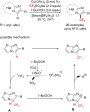
Scheme 1: Access to α- and β-arylated lilolidine derivatives.
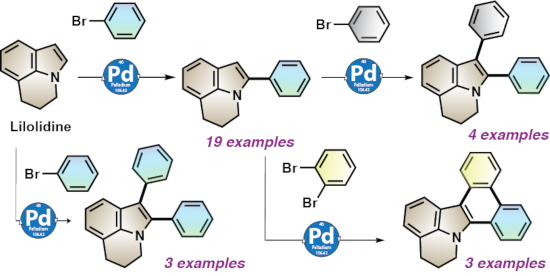
Scheme 2: Synthesis of α-arylated lilolidine derivatives.
Scheme 3: Synthesis of α,β-di(hetero)arylated lilolidine derivatives.
Scheme 4: Synthesis of α,β-diarylated lilolidine derivatives via successive direct arylations.
Scheme 5: Synthesis of 5,6-dihydrodibenzo[a,c]pyrido[3,2,1-jk]carbazoles via successive direct arylations.
Beilstein J. Org. Chem. 2019, 15, 364–370, doi:10.3762/bjoc.15.32
Graphical Abstract
Scheme 1: Approaches to the synthesis of the 5-azaisatin core.
Scheme 2: Our previous work on the interaction of PBTs 2 with thioamides.
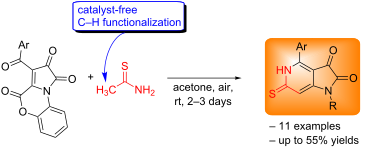
Scheme 3: Interaction of PBTs 2 with thioacetamide.
Scheme 4: Plausible pathways for the formation of compound 4.
Scheme 5: Experiments on the intermolecular trapping of spiro[thiazolo-5,2'-pyrrole] 3a.
Scheme 6: Exploration of the substrate scope.
Scheme 7: Interaction of PBT 2a with N-phenylthioacetamide.
Beilstein J. Org. Chem. 2018, 14, 3078–3087, doi:10.3762/bjoc.14.287
Graphical Abstract
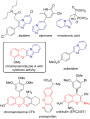
Figure 1: Biologically relevant imidazo[1,2-a]pyridines and chromenes.
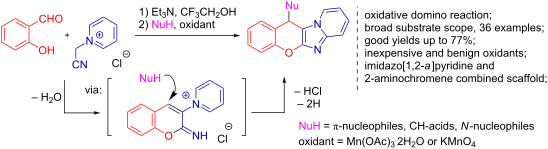
Scheme 1: Domino formation of imidazopyridines and current work.
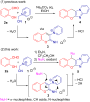
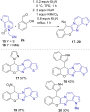
Scheme 2: Scope of the reaction between N-(cyanomethyl)pyridinium chloride, o-hydroxybenzaldehydes, and nitro...
Scheme 3: Scope of the reaction of o-hydroxybenzaldehydes with N-(cyanomethyl)pyridinium chloride and indoles...
Scheme 4: Scope of the nucleophiles in the reaction of o-hydroxyarylaldehydes with N-(cyanomethyl)pyridinium ...
Scheme 5: N-(Cyanomethyl)thieno[2,3-c]pyridinium chloride (15) and 6-(cyanomethyl)-1-methyl-1H-pyrrolo[2,3-c]...
Figure 2: General view of the molecule 7b in the crystal state (CCDC 1849215). Anisotropic displacement param...
Scheme 6: The presumed mechanism for the formation of target chromenoimidazopyridines (reaction 1) and additi...
Beilstein J. Org. Chem. 2018, 14, 2897–2906, doi:10.3762/bjoc.14.268
Graphical Abstract
Scheme 1: (Arylsulfinyl)allenes 1 and (arylsulfonyl)allenes 2 used in this study.
Figure 1: X-ray crystal structures of compounds 2h (CCDC 1843276), 3e (CCDC 1843277), 5c (CCDC 1580895), 7b (...
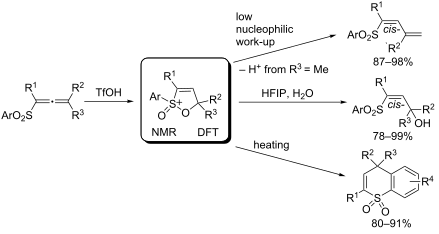
Scheme 2: Plausible reaction mechanisms of transformations of allene 2a in Brønsted acids.
Scheme 3: Selective formation of butadienes 3a–h from allenes 2a–h.
Scheme 4: Reactions of allenes 2 in the system HFIP/TfOH followed by interaction with nucleophiles leading to...
Scheme 5: Formation of thiochromene 1,1-dioxides 5a–c from allenes 2a,c,d.
Scheme 6: Formation of (arylsulfonyl)acetones 6a,b from allenes 2h,j in TfOH (100 °C, 0.5 h) followed by hydr...
Scheme 7: Reactions of (arylsulfinyl)allenes 1a,b under superelectrophilic activation.
Beilstein J. Org. Chem. 2018, 14, 2745–2770, doi:10.3762/bjoc.14.253
Graphical Abstract
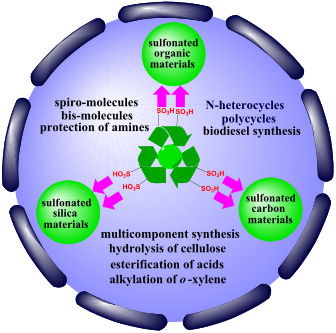
Figure 1: Different types of sulfonated materials as acid catalysts.
Scheme 1: Synthetic route of 3-methyl-1-sulfo-1H-imidazolium metal chloride ILs and their catalytic applicati...
Scheme 2: Synthetic route of 1,3-disulfo-1H-imidazolium transition metal chloride ILs and their catalytic app...
Scheme 3: Synthetic route of 1,3-disulfoimidazolium carboxylate ILs and their catalytic applications in the s...
Scheme 4: Synthetic route of [BiPy](HSO3)2Cl2 and [Dsim]HSO4 ILs and their catalytic applications for the syn...
Scheme 5: The catalytic applications of (C4(DABCO-SO3H)2·4Cl) IL for the synthesis of spiro-isatin derivative...
Scheme 6: The catalytic applications of (C4(DABCO-SO3H)2·4Cl) IL for the synthesis of bis 2-amino-4H-pyran de...
Scheme 7: The synthetic route of N,N-disulfo-1,1,3,3-tetramethylguanidinium carboxylate ILs and their catalyt...
Scheme 8: The catalytic application of 1-methyl-3-sulfo-1H-imidazolium tetrachloroferrate IL in the synthesis...
Scheme 9: The synthetic route of 3-sulfo-1H-imidazolopyrimidinium hydrogen sulfate IL and its catalytic appli...
Scheme 10: The results for the synthesis of bis(indolyl)methanes and di(bis(indolyl)methyl)benzenes in the pre...
Scheme 11: The catalytic applications of 1-(1-sulfoalkyl)-3-methylimidazolium chloride acidic ILs for the hydr...
Scheme 12: The synthetic route of immobilized 1,4-diazabicyclo[2.2.2]octanesulfonic acid chloride on SiO2 and ...
Scheme 13: The catalytic application of a silica-bonded sulfoimidazolium chloride for the synthesis of 12-aryl...
Scheme 14: The synthetic route of the SBA-15-Ph-SO3H and its catalytic applications for the synthesis of 2H-in...
Scheme 15: The synthetic route for heteropolyanion-based ionic liquids immobilized on mesoporous silica SBA-15...
Scheme 16: Some mechanism aspects of SSA catalyst for the protection of amine derivatives.
Scheme 17: The synthetic route for MWCNT-SO3H and its catalytic application for the synthesis of N-substituted...
Scheme 18: The sulfonic acid-functionalized polymers (P-SO3H) covalently grafted on multi-walled carbon nanotu...
Scheme 19: The transesterification reaction in the presence of S-MWCNTs.
Scheme 20: The synthetic route for the new hypercrosslinked supermicroporous polymer via the Friedel–Crafts al...
Scheme 21: The synthetic route for a new microporous copolymer via the Friedel–Crafts alkylation reaction of t...
Scheme 22: The synthetic route for sulfonated polynaphthalene and its catalytic application for the amidoalkyl...
Scheme 23: The synthetic route of the acidic carbon material and its catalytic application in the etherificatio...
Scheme 24: The synthetic route of the acidic carbon materials and their catalytic applications for the esterif...
Scheme 25: The sulfonated MWCNTs.
Scheme 26: The sulfonated nanoscaled diamond powder for the dehydration of D-xylose into furfural.
Scheme 27: The synthetic route and catalytic application of the GR-SO3H.
Beilstein J. Org. Chem. 2018, 14, 2722–2729, doi:10.3762/bjoc.14.250
Graphical Abstract
Scheme 1: Our synthetic plan for pyrrolo[3,2-c]azepines.
Scheme 2: Preparation of precursors for the Pummerer reactions.
Scheme 3: Substrate scope of 1,7-S and 1,7-Se shift reactions.
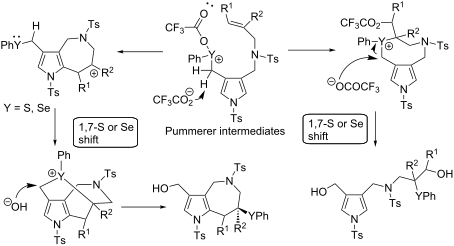
Scheme 4: Proposed mechanism.
Scheme 5: Crossover experiment.
Scheme 6: Lewis acid-catalysed cyclization of diols.
Scheme 7: Sequential process of sulfanyl-1,6-diyne 1 to 4H-pyrrolo[3,4-g]oxazine 25g.
Beilstein J. Org. Chem. 2018, 14, 2553–2567, doi:10.3762/bjoc.14.232
Graphical Abstract
Figure 1: (a) Structure and (b) reactivity of B12.
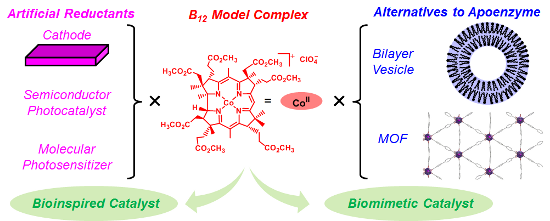
Figure 2: (a) Schematic representation of B12 enzyme-involving systems. (b) Construction of biomimetic and bi...
Scheme 1: (a) Carbon-skeleton rearrangement mediated by a coenzyme B12-depenedent enzyme. (b) Electrochemical...
Scheme 2: Electrochemical carbon-skeleton arrangements mediated by B12 model complexes.
Figure 3: Key electrochemical reactivity of 1 and 2 in methylated forms.
Scheme 3: Carbon-skeleton arrangements mediated by B12-vesicle artificial enzymes.
Scheme 4: Carbon-skeleton arrangements mediated by B12-HSA artificial enzymes.
Scheme 5: Photochemical carbon-skeleton arrangements mediated by B12-Ru@MOF.
Scheme 6: (a) Methyl transfer reaction mediated by B12-dependent methionine synthase. (b) Methyl transfer rea...
Scheme 7: Methyl transfer reaction for the detoxification of inorganic arsenics.
Scheme 8: (a) Dechlorination of 1,1,2,2-tetrarchloroethene mediated by a reductive dehalogenase. (b) Electroc...
Scheme 9: Visible-light-driven dechlorination of DDT using 1 in the presence of photosensitizers.
Scheme 10: 1,2-Migration of a phenyl group mediated by the visible-light-driven catalytic system composed of 1...
Scheme 11: Ring-expansion reactions mediated by the B12-TiO2 hybrid catalyst with UV-light irradiation.
Scheme 12: Trifluoromethylation and perfluoroalkylation of aromatic compounds achieved through electrolysis wi...
Beilstein J. Org. Chem. 2018, 14, 2266–2288, doi:10.3762/bjoc.14.202
Graphical Abstract
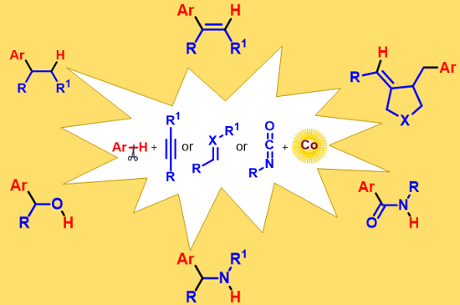
Scheme 1: Cobalt-catalyzed C–H carbonylation.
Scheme 2: Hydroarylation by C–H activation.
Scheme 3: Pathways for cobalt-catalyzed hydroarylations.
Scheme 4: Co-catalyzed hydroarylation of alkynes with azobenzenes.
Scheme 5: Co-catalyzed hydroarylation of alkynes with 2-arylpyridines.
Scheme 6: Co-catalyzed addition of azoles to alkynes.
Scheme 7: Co-catalyzed addition of indoles to alkynes.
Scheme 8: Co-catalyzed hydroarylation of alkynes with imines.
Scheme 9: A plausible pathway for Co-catalyzed hydroarylation of alkynes.
Scheme 10: Co-catalyzed anti-selective C–H addition to alkynes.
Scheme 11: Co(III)-catalyzed hydroarylation of alkynes with indoles.
Scheme 12: Co(III)-catalyzed branch-selective hydroarylation of alkynes.
Scheme 13: Co(III)-catalyzed hydroarylation of terminal alkynes with arenes.
Scheme 14: Co(III)-catalyzed hydroarylation of alkynes with amides.
Scheme 15: Co(III)-catalyzed C–H alkenylation of arenes.
Scheme 16: Co-catalyzed alkylation of substituted benzamides with alkenes.
Scheme 17: Co-catalyzed switchable hydroarylation of styrenes with 2-aryl pyridines.
Scheme 18: Co-catalyzed linear-selective hydroarylation of alkenes with imines.
Scheme 19: Co-catalyzed linearly-selective hydroarylation of alkenes with N–H imines.
Scheme 20: Co-catalyzed branched-selective hydroarylation of alkenes with imines.
Scheme 21: Mechanism of Co-catalyzed hydroarylation of alkenes.
Scheme 22: Co-catalyzed intramolecular hydroarylation of indoles.
Scheme 23: Co-catalyzed asymmetric hydroarylation of alkenes with indoles.
Scheme 24: Co-catalyzed hydroarylation of alkenes with heteroarenes.
Scheme 25: Co(III)-catalyzed hydroarylation of activated alkenes with 2-phenyl pyridines.
Scheme 26: Co(III)-catalyzed C–H alkylation of arenes.
Scheme 27: Co(III)-catalyzed C2-alkylation of indoles.
Scheme 28: Co(III)-catalyzed switchable hydroarylation of alkyl alkenes with indoles.
Scheme 29: Co(III)-catalyzed C2-allylation of indoles.
Scheme 30: Co(III)-catalyzed ortho C–H alkylation of arenes with maleimides.
Scheme 31: Co(III)-catalyzed hydroarylation of maleimides with arenes.
Scheme 32: Co(III)-catalyzed hydroarylation of allenes with arenes.
Scheme 33: Co-catalyzed hydroarylative cyclization of enynes with carbonyl compounds.
Scheme 34: Mechanism for the Co-catalyzed hydroarylative cyclization of enynes with carbonyl compounds.
Scheme 35: Co-catalyzed addition of 2-arylpyridines to aromatic aldimines.
Scheme 36: Co-catalyzed addition of 2-arylpyridines to aziridines.
Scheme 37: Co(III)-catalyzed hydroarylation of imines with arenes.
Scheme 38: Co(III)-catalyzed addition of arenes to ketenimines.
Scheme 39: Co(III)-catalyzed three-component coupling.
Scheme 40: Co(III)-catalyzed hydroarylation of aldehydes.
Scheme 41: Co(III)-catalyzed addition of arenes to isocyanates.
Beilstein J. Org. Chem. 2018, 14, 2229–2235, doi:10.3762/bjoc.14.197
Graphical Abstract
Figure 1: Masked and unmasked 1,4-dialdehyde natural products 1–6.
Scheme 1: Products of the reaction of onchidal (6) with 1-pentylamine. Reagents and conditions: 1-pentylamine...
Scheme 2: Proposed mechanism for formation of onchidal diaminated adducts.
Figure 2: Target onchidal model compounds 11–18.
Scheme 3: Synthesis of n-pentyl dialdehydes 11 and 12 and enol acetate 13. Reagents and conditions: a) n-hexa...
Scheme 4: Synthesis of cyclohexylmethyl dialdehydes 15 and 16 and enol acetate 17. Reagents and conditions: a...
Figure 3: Pyrrole product 29 and salt 30 obtained from the reaction of dialdehyde 11 with n-pentylamine.
Scheme 5: Reaction of dialdehyde 11 with excess 1-pentylamine to form 29. Reagents and conditions: (a) 1-pent...
Figure 4: Pyrrole product 31 and salt 32 obtained from reaction of dialdehyde 15 with n-pentylamine.
Figure 5: Lysine adducts arising from the reaction of onchidal (6) with lysozyme.
Figure 6: SDS-PAGE separation of lysozyme after modification with 11 (left), 13 (middle), 15 (right).
Beilstein J. Org. Chem. 2018, 14, 2035–2064, doi:10.3762/bjoc.14.179
Graphical Abstract
Figure 1: Depiction of the energy levels of a typical organic molecule and the photophysical processes it can...
Figure 2: General catalytic cycle of a photocatalyst in a photoredox organocatalysed reaction. [cat] – photoc...
Figure 3: Structures and names of the most common photocatalysts encountered in the reviewed literature.
Figure 4: General example of a reductive quenching catalytic cycle. [cat] – photocatalyst, [cat]* – photocata...
Figure 5: General example of an oxidative quenching catalytic cycle. [cat] – photocatalyst, [cat]* – photocat...
Scheme 1: Oxidative coupling of aldehydes and amines to amides using acridinium salt photocatalysis.
Figure 6: Biologically active molecules containing a benzamide linkage.
Scheme 2: The photocatalytic reduction of amino acids to produce the corresponding free or protected amines.
Scheme 3: The organocatalysed photoredox base-mediated oxidation of thiols to disulfides.
Scheme 4: C-Terminal modification of peptides and proteins using organophotoredox catalysis.
Scheme 5: The reduction and aryl coupling of aryl halides using a doubly excited photocatalyst (PDI).
Figure 7: Mechanism for the coupling of aryl halides using PDI, which is excited sequentially by two photons.
Scheme 6: The arylation of five-membered heteroarenes using arenediazonium salts under organophotoredox condi...
Scheme 7: The C–H (hetero)arylation of five-membered heterocycles under Eosin Y photocatalysis.
Scheme 8: The C–H sulfurisation of imidazoheterocycles using Eosin B-catalyzed photochemical methods.
Scheme 9: The introduction of the thiocyanate group using Eosin Y photocatalysis.
Scheme 10: Sulfonamidation of pyrroles using oxygen as the terminal oxidant.
Scheme 11: DDQ-catalysed C–H amination of arenes and heteroarenes.
Scheme 12: Photoredox-promoted radical Michael addition reactions of allylic or benzylic carbons.
Figure 8: Proposed mechanistic rationale for the observed chemoselectivities.
Scheme 13: The photocatalytic manipulation of C–H bonds adjacent to amine groups.
Scheme 14: The perylene-catalysed organophotoredox tandem difluoromethylation–acetamidation of styrene-type al...
Figure 9: Examples of biologically active molecules containing highly functionalised five membered heterocycl...
Scheme 15: The [3 + 2]-cycloaddition leading to the formation of pyrroles, through the reaction of 2H-azirines...
Figure 10: Proposed intermediate that determines the regioselectivity of the reaction.
Figure 11: Comparison of possible pathways of reaction and various intermediates involved.
Scheme 16: The acridinium salt-catalysed formation of oxazoles from aldehydes and 2H-azirines.
Scheme 17: The synthesis of oxazolines and thiazolines from amides and thioamides using organocatalysed photor...
Figure 12: Biologically active molecules on the market containing 1,3,4-oxadiazole moieties.
Scheme 18: The synthesis of 1,3,4-oxadiazoles from aldehyde semicarbazones using Eosin Y organophotocatalysis.
Scheme 19: The dimerization of primary thioamides to 1,2,4-thiadiazoles catalysed by the presence of Eosin Y a...
Scheme 20: The radical cycloaddition of o-methylthioarenediazonium salts and substituted alkynes towards the f...
Scheme 21: The dehydrogenative cascade reaction for the synthesis of 5,6-benzofused heterocyclic systems.
Figure 13: Trifluoromethylated version of compounds which have known biological activities.
Scheme 22: Eosin Y-catalysed photoredox formation of 3-substituted benzimidazoles.
Scheme 23: Oxidation of dihydropyrimidines by atmospheric oxygen using photoredox catalysis.
Scheme 24: Photoredox-organocatalysed transformation of 2-substituted phenolic imines to benzoxazoles.
Scheme 25: Visible light-driven oxidative annulation of arylamidines.
Scheme 26: Methylene blue-photocatalysed direct C–H trifluoromethylation of heterocycles.
Scheme 27: Photoredox hydrotrifluoromethylation of terminal alkenes and alkynes.
Scheme 28: Trifluoromethylation and perfluoroalkylation of aromatics and heteroaromatics.
Scheme 29: The cooperative asymmetric and photoredox catalysis towards the functionalisation of α-amino sp3 C–...
Scheme 30: Organophotoredox-catalysed direct C–H amidation of aromatics.
Scheme 31: Direct C–H alkylation of heterocycles using BF3K salts. CFL – compact fluorescent lamp.
Figure 14: The modification of camptothecin, demonstrating the use of the Molander protocol in LSF.
Scheme 32: Direct C–H amination of aromatics using acridinium salts.
Scheme 33: Photoredox-catalysed nucleophilic aromatic substitution of nucleophiles onto methoxybenzene derivat...
Scheme 34: The direct C–H cyanation of aromatics with a focus on its use for LSF.
Beilstein J. Org. Chem. 2018, 14, 1508–1528, doi:10.3762/bjoc.14.128
Graphical Abstract
Scheme 1: Strategies to address the issue of sustainability with polyvalent organoiodine reagents.
Scheme 2: Functionalization of ketones and alkenes with IBX.
Scheme 3: Functionalization of pyrroles with DMP.
Scheme 4: Catalytic benzoyloxy-trifluoromethylation reported by Szabó.
Scheme 5: Catalytic benzoyloxy-trifluoromethylation reported by Mideoka.
Scheme 6: Catalytic 1,4-benzoyloxy-trifluoromethylation of dienes.
Scheme 7: Catalytic benzoyloxy-trifluoromethylation of allylamines.
Scheme 8: Catalytic benzoyloxy-trifluoromethylation of enynes.
Scheme 9: Catalytic benzoyloxy-trifluoromethylation of allenes.
Scheme 10: Alkynylation of N-(aryl)imines with EBX for the formation of furans.
Scheme 11: Catalytic benzoyloxy-alkynylation of diazo compounds.
Scheme 12: Catalytic asymmetric benzoyloxy-alkynylation of diazo compounds.
Scheme 13: Catalytic 1,2-benzoyloxy-azidation of alkenes.
Scheme 14: Catalytic 1,2-benzoyloxy-azidation of enamides.
Scheme 15: Catalytic 1,2-benzoyloxy-iodination of alkenes.
Scheme 16: Seminal study with cyclic diaryl-λ3-iodane.
Scheme 17: Synthesis of alkylidenefluorenes from cyclic diaryl-λ3-iodanes.
Scheme 18: Synthesis of alkyne-substituted alkylidenefluorenes.
Scheme 19: Synthesis of phenanthrenes from cyclic diaryl-λ3-iodanes.
Scheme 20: Synthesis of dibenzocarbazoles from cyclic diaryl-λ3-iodanes.
Scheme 21: Synthesis of triazolophenantridines from cyclic diaryl-λ3-iodanes.
Scheme 22: Synthesis of functionalized benzoxazoles from cyclic diaryl-λ3-iodanes.
Scheme 23: Sequential difunctionalization of cyclic diaryl-λ3-iodanes.
Scheme 24: Double Suzuki–Miyaura coupling reaction of cyclic diaryl-λ3-iodanes.
Scheme 25: Synthesis of a δ-carboline from cyclic diaryl-λ3-iodane.
Scheme 26: Synthesis of N-(aryl)carbazoles from cyclic diaryl-λ3-iodanes.
Scheme 27: Synthesis of carbazoles from cyclic diaryl-λ3-iodanes.
Scheme 28: Synthesis of carbazoles and acridines from cyclic diaryl-λ3-iodanes.
Scheme 29: Synthesis of dibenzothiophenes from cyclic diaryl-λ3-iodanes.
Scheme 30: Synthesis of various sulfur heterocycles from cyclic diaryl-λ3-iodanes.
Scheme 31: Synthesis of dibenzothioheterocycles from cyclic diaryl-λ3-iodanes.
Scheme 32: Synthesis of dibenzosulfides and dibenzoselenides from cyclic diaryl-λ3-iodanes.
Scheme 33: Synthesis of dibenzosulfones from cyclic diaryl-λ3-iodanes.
Scheme 34: Seminal study with linear diaryl-λ3-iodanes.
Scheme 35: N-Arylation of benzotriazole with symmetrical diaryl-λ3-iodanes.
Scheme 36: Tandem catalytic C–H/N–H arylation of indoles with diaryl-λ3-iodanes.
Scheme 37: Tandem N-arylation/C(sp2)–H arylation with diaryl-λ3-iodanes.
Scheme 38: Catalytic intermolecular diarylation of anilines with diaryl-λ3-iodanes.
Scheme 39: Catalytic synthesis of diarylsulfides with diaryl-λ3-iodanes.
Scheme 40: α-Arylation of enolates using [bis(trifluoroacetoxy)iodo]arenes.
Scheme 41: Mechanism of the α-arylation using [bis(trifluoroacetoxy)iodo]arene.
Scheme 42: Catalytic nitrene additions mediated by [bis(acyloxy)iodo]arenes.
Scheme 43: Tandem of C(sp3)–H amination/sila-Sonogashira–Hagihara coupling.
Scheme 44: Tandem reaction using a λ3-iodane as an oxidant, a substrate and a coupling partner.
Scheme 45: Synthesis of 1,2-diarylated acrylamidines with ArI(OAc)2.
Beilstein J. Org. Chem. 2018, 14, 992–997, doi:10.3762/bjoc.14.84
Graphical Abstract
Scheme 1: Oxidative intermolecular cross-coupling of dissimilar enolates.
Scheme 2: Scope of the homo- and heterocoupling of enolates. The purple bond indicates the bond formed. The b...
Scheme 3: Study of diastereoselectivity of the cross-coupling reaction.