


Search results
Search for "reductive elimination" in Full Text gives 184 result(s) in Beilstein Journal of Organic Chemistry.
Recent advancements in iodide/phosphine-mediated photoredox radical reactions
- Tinglan Liu,
- Yu Zhou,
- Junhong Tang and
- Chengming Wang
Beilstein J. Org. Chem. 2023, 19, 1785–1803, doi:10.3762/bjoc.19.131
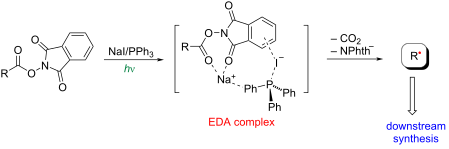
- facilitated by the process of photoexcited radical decarboxylation. On the other hand, the copper catalytic cycle involved the capture of alkyl radicals by the copper complex B, the activation of heteroatom-containing substrates 30 by a base-mediated proton transfer, and the subsequent reductive elimination
- process. This reductive elimination led to the formation of C(sp3)–X (X = O or N) cross-coupling products 31. Cyclization Radical-involved selective C–H functionalizations [25][26], particularly annulation reactions [26], have emerged as highly effective and powerful techniques in synthesis, possessing

Graphical Abstract

Scheme 1: Photocatalytic decarboxylative transformations mediated by the NaI/PPh3 catalyst system.

Scheme 2: Proposed catalytic cycle of NaI/PPh3 photoredox catalysis.

Scheme 3: Decarboxylative alkenylation of redox-active esters by NaI/PPh3 catalysis.

Scheme 4: Decarboxylative alkenylation mediated by NaI/PPh3 catalysis.

Scheme 5: NaI-mediated photoinduced α-alkenylation of Katritzky salts 7.

Scheme 6: n-Bu4NI-mediated photoinduced decarboxylative olefination.

Scheme 7: Proposed mechanism of the n-Bu4NI-mediated photoinduced decarboxylative olefination.

Scheme 8: Photodecarboxylative alkylation of redox-active esters with diazirines.

Scheme 9: Photoinduced iodine-anion-catalyzed decarboxylative/deaminative C–H alkylation of enamides.

Scheme 10: Photocatalytic C–H alkylation of coumarins mediated by NaI/PPh3 catalysis.

Scheme 11: Photoredox alkylation of aldimines by NaI/PPh3 catalysis.

Scheme 12: Photoredox C–H alkylation employing ammonium iodide.

Scheme 13: NaI/PPh3/CuBr cooperative catalysis for photocatalytic C(sp3)–O/N cross-coupling reactions.
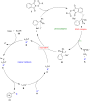
Scheme 14: Proposed mechanism of NaI/PPh3/CuBr cooperative catalysis for photocatalytic C(sp3)–O/N cross-coupl...

Scheme 15: Photocatalytic decarboxylative [3 + 2]/[4 + 2] annulation between enynals and γ,σ-unsaturated N-(ac...

Scheme 16: Proposed mechanism for the decarboxylative [3 + 2]/[4 + 2] annulation.

Scheme 17: Decarboxylative cascade annulation of alkenes/1,6-enynes with N-hydroxyphthalimide esters.

Scheme 18: Decarboxylative radical cascade cyclization of N-arylacrylamides.

Scheme 19: NaI/PPh3-driven photocatalytic decarboxylative radical cascade alkylarylation.

Scheme 20: Proposed mechanism of the NaI/PPh3-driven photocatalytic decarboxylative radical cascade cyclizatio...

Scheme 21: Visible-light-promoted decarboxylative cyclization of vinylcycloalkanes.

Scheme 22: NaI/PPh3-mediated photochemical reduction and amination of nitroarenes.

Scheme 23: PPh3-catalyzed alkylative iododecarboxylation with LiI.

Scheme 24: Visible-light-triggered iodination facilitated by N-heterocyclic carbenes.

Scheme 25: Visible-light-induced photolysis of phosphonium iodide salts for monofluoromethylation.
N-Sulfenylsuccinimide/phthalimide: an alternative sulfenylating reagent in organic transformations
- Fatemeh Doraghi,
- Seyedeh Pegah Aledavoud,
- Mehdi Ghanbarlou,
- Bagher Larijani and
- Mohammad Mahdavi
Beilstein J. Org. Chem. 2023, 19, 1471–1502, doi:10.3762/bjoc.19.106
- intermediate III. Reductive elimination of Pd from III gave product 5 and species IV. Finaly, Pd(II) species were reproduced by ligand exchange to restart the next cycle (Scheme 4). In 2014, Fu and co-workers described a facile method for the C–H thiolation of phenols 7 with 1-(substituted phenylthio
- activated the N–S bond in II, which reacted with I to obtain IV, followed by C–S reductive elimination to give the thiolated product 30 or 31. On the other hand, the interaction of I with Cu(OAc)2 activated the N–S bond in III to afford IV, which was subjected to C–N reductive elimination to deliver the
- reductive elimination to yield ketone 78. In the acylthiolation cycle, the azaphilic ZnCl2 activated NTSE 1’’’ via N–Zn coordination to facilitate the leaving ability of succinimide. Then, nucleophilic substitution of arylmagnesium bromide 75 to intermediate IV provided thioester 79. In 2022, Gao and co

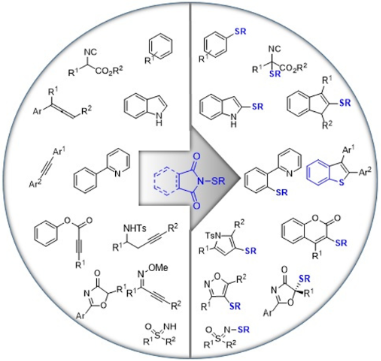
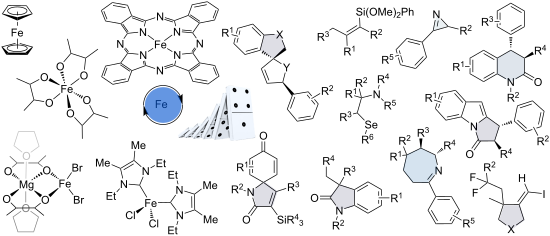
Graphical Abstract

Scheme 1: Sulfur-containing bioactive molecules.

Scheme 2: Scandium-catalyzed synthesis of thiosulfonates.

Scheme 3: Palladium-catalyzed aryl(alkyl)thiolation of unactivated arenes.

Scheme 4: Catalytic cycle for Pd-catalyzed aryl(alkyl)thiolation of unactivated arenes.

Scheme 5: Iron- or boron-catalyzed C–H arylthiation of substituted phenols.

Scheme 6: Iron-catalyzed azidoalkylthiation of alkenes.

Scheme 7: Plausible mechanism for iron-catalyzed azidoalkylthiation of alkenes.

Scheme 8: BF3·Et2O‑mediated electrophilic cyclization of aryl alkynoates.

Scheme 9: Tentative mechanism for BF3·Et2O‑mediated electrophilic cyclization of aryl alkynoates.

Scheme 10: Construction of 6-substituted benzo[b]thiophenes.

Scheme 11: Plausible mechanism for construction of 6-substituted benzo[b]thiophenes.

Scheme 12: AlCl3‑catalyzed cyclization of N‑arylpropynamides with N‑sulfanylsuccinimides.

Scheme 13: Synthetic utility of AlCl3‑catalyzed cyclization of N‑arylpropynamides with N‑sulfanylsuccinimides.

Scheme 14: Sulfenoamination of alkenes with sulfonamides and N-sulfanylsuccinimides.

Scheme 15: Lewis acid/Brønsted acid controlled Pd-catalyzed functionalization of aryl C(sp2)–H bonds.

Scheme 16: Possible mechanism for Lewis acid/Brønsted acid controlled Pd-catalyzed functionalization of aryl C...

Scheme 17: FeCl3-catalyzed carbosulfenylation of unactivated alkenes.

Scheme 18: Copper-catalyzed electrophilic thiolation of organozinc halides.

Scheme 19: h-BN@Copper(II) nanomaterial catalyzed cross-coupling reaction of sulfoximines and N‑(arylthio)succ...

Scheme 20: AlCl3‑mediated cyclization and sulfenylation of 2‑alkyn-1-one O‑methyloximes.

Scheme 21: Lewis acid-promoted 2-substituted cyclopropane 1,1-dicarboxylates with sulfonamides and N-(arylthio...

Scheme 22: Lewis acid-mediated cyclization of β,γ-unsaturated oximes and hydrazones with N-(arylthio/seleno)su...

Scheme 23: Credible pathway for Lewis acid-mediated cyclization of β,γ-unsaturated oximes with N-(arylthio)suc...

Scheme 24: Synthesis of 4-chalcogenyl pyrazoles via chalcogenation/cyclization of α,β-alkynic hydrazones.

Scheme 25: Controllable synthesis of 3-thiolated pyrroles and pyrrolines.

Scheme 26: Possible mechanism for controllable synthesis of 3-thiolated pyrroles and pyrrolines.

Scheme 27: Co-catalyzed C2-sulfenylation and C2,C3-disulfenylation of indole derivatives.

Scheme 28: Plausible catalytic cycle for Co-catalyzed C2-sulfenylation and C2,C3-disulfenylation of indoles.

Scheme 29: C–H thioarylation of electron-rich arenes by iron(III) triflimide catalysis.

Scheme 30: Difunctionalization of alkynyl bromides with thiosulfonates and N-arylthio succinimides.·

Scheme 31: Suggested mechanism for difunctionalization of alkynyl bromides with thiosulfonates and N-arylthio ...

Scheme 32: Synthesis of thioesters, acyl disulfides, ketones, and amides by N-thiohydroxy succinimide esters.

Scheme 33: Proposed mechanism for metal-catalyzed selective acylation and acylthiolation.

Scheme 34: AlCl3-catalyzed synthesis of 3,4-bisthiolated pyrroles.

Scheme 35: α-Sulfenylation of aldehydes and ketones.

Scheme 36: Acid-catalyzed sulfetherification of unsaturated alcohols.

Scheme 37: Enantioselective sulfenylation of β-keto phosphonates.

Scheme 38: Organocatalyzed sulfenylation of 3‑substituted oxindoles.

Scheme 39: Sulfenylation and chlorination of β-ketoesters.

Scheme 40: Intramolecular sulfenoamination of olefins.

Scheme 41: Plausible mechanism for intramolecular sulfenoamination of olefins.

Scheme 42: α-Sulfenylation of 5H-oxazol-4-ones.

Scheme 43: Metal-free C–H sulfenylation of electron-rich arenes.

Scheme 44: TFA-promoted C–H sulfenylation indoles.
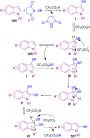
Scheme 45: Proposed mechanism for TFA-promoted C–H sulfenylation indoles.

Scheme 46: Organocatalyzed sulfenylation and selenenylation of 3-pyrrolyloxindoles.

Scheme 47: Organocatalyzed sulfenylation of S-based nucleophiles.

Scheme 48: Conjugate Lewis base Brønsted acid-catalyzed sulfenylation of N-heterocycles.

Scheme 49: Mechanism for activation of N-sulfanylsuccinimide by conjugate Lewis base Brønsted acid catalyst.

Scheme 50: Sulfenylation of deconjugated butyrolactams.

Scheme 51: Intramolecular sulfenofunctionalization of alkenes with phenols.

Scheme 52: Organocatalytic 1,3-difunctionalizations of Morita–Baylis–Hillman carbonates.

Scheme 53: Organocatalytic sulfenylation of β‑naphthols.

Scheme 54: Acid-promoted oxychalcogenation of o‑vinylanilides with N‑(arylthio/arylseleno)succinimides.

Scheme 55: Lewis base/Brønsted acid dual-catalytic C–H sulfenylation of aryls.

Scheme 56: Lewis base-catalyzed sulfenoamidation of alkenes.

Scheme 57: Cyclization of allylic amide using a Brønsted acid and tetrabutylammonium chloride.

Scheme 58: Catalytic electrophilic thiocarbocyclization of allenes with N-thiosuccinimides.

Scheme 59: Suggested mechanism for electrophilic thiocarbocyclization of allenes with N-thiosuccinimides.

Scheme 60: Chiral chalcogenide-catalyzed enantioselective hydrothiolation of alkenes.

Scheme 61: Proposed mechanism for chalcogenide-catalyzed enantioselective hydrothiolation of alkenes.

Scheme 62: Organocatalytic sulfenylation for synthesis a diheteroatom-bearing tetrasubstituted carbon centre.

Scheme 63: Thiolative cyclization of yne-ynamides.

Scheme 64: Synthesis of alkynyl and acyl disulfides from reaction of thiols with N-alkynylthio phthalimides.

Scheme 65: Oxysulfenylation of alkenes with 1-(arylthio)pyrrolidine-2,5-diones and alcohols.

Scheme 66: Arylthiolation of arylamines with (arylthio)-pyrrolidine-2,5-diones.

Scheme 67: Catalyst-free isothiocyanatoalkylthiation of styrenes.

Scheme 68: Sulfenylation of (E)-β-chlorovinyl ketones toward 3,4-dimercaptofurans.

Scheme 69: HCl-promoted intermolecular 1, 2-thiofunctionalization of aromatic alkenes.

Scheme 70: Possible mechanism for HCl-promoted 1,2-thiofunctionalization of aromatic alkenes.

Scheme 71: Coupling reaction of diazo compounds with N-sulfenylsuccinimides.

Scheme 72: Multicomponent reactions of disulfides with isocyanides and other nucleophiles.

Scheme 73: α-Sulfenylation and β-sulfenylation of α,β-unsaturated carbonyl compounds.
Application of N-heterocyclic carbene–Cu(I) complexes as catalysts in organic synthesis: a review
- Nosheen Beig,
- Varsha Goyal and
- Raj K. Bansal
Beilstein J. Org. Chem. 2023, 19, 1408–1442, doi:10.3762/bjoc.19.102
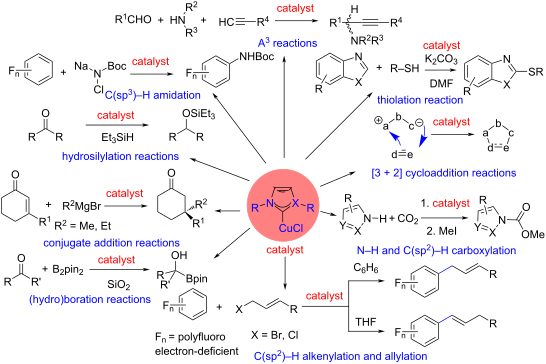
- activation to generate an aryl–Cu–NHC species. This is followed by the reaction with NHC–Pd to produce an Ar–Pd(NHC)Cl intermediate through the oxidative addition to Pd(0)NHC. Finally, transmetallation of [(It-Bu)Cu(Ar)] with [(SIPr)Pd(Ar)Cl] followed by reductive elimination leads to biaryl product. No

Graphical Abstract

Scheme 1: In situ generation of imidazolylidene carbene.

Scheme 2: Hg(II) complex of NHC.

Scheme 3: Isolable and bottlable carbene reported by Arduengo [3].

Scheme 4: First air-stable carbene synthesized by Arduengo in 1992 [5].

Figure 1: General structure of an NHC.

Figure 2: Stabilization of an NHC by donation of the lone pair electrons into the vacant p-orbital (LUMO) at ...

Figure 3: Abnormal NHC reported by Bertrand [8,9].

Figure 4: Cu(d) orbital to σ*C-N(NHC) interactions in NHC–CuX complexes computed at the B3LYP/def2-SVP level ...
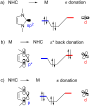
Figure 5: Molecular orbital contributions to the NHC–metal bond.

Scheme 5: Synthesis of NHC–Cu(I) complexes by deprotonation of NHC precursors with a base.

Scheme 6: Synthesis of [NHC–CuX] complexes.

Scheme 7: Synthesis of [(ICy)CuX] and [(It-Bu)CuX] complexes.

Scheme 8: Synthesis of iodido-bridged copper–NHC complexes by deprotonation of benzimidazolium salts reported...

Scheme 9: Synthesis of copper complexes by deprotonation of triazolium salts.

Scheme 10: Synthesis of thiazolylidene–Cu(I) complex by deprotonation with KOt-Bu.

Scheme 11: Preparation of NHC–Cu(I) complexes.

Scheme 12: Synthesis of methylmalonic acid-derived anionic [(26a,b)CuCl]Li(THF)2 and zwitterionic (28) heterol...

Scheme 13: Synthesis of diaminocarbene and diamidocarbene (DAC)–Cu(I) complexes.

Scheme 14: Synthesis of the cationic (NHC)2Cu(I) complex 39 from benzimidazolium salts 38 with tetrakis(aceton...

Scheme 15: Synthesis of NHC and ADC (acyclic diamino carbenes) Cu(I) hexamethyldisilazide complexes reported b...

Scheme 16: Synthesis of NHC–copper(I) complexes using an acetylacetonate-functionalized imidazolium zwitterion...

Scheme 17: Synthesis of NHC–Cu(I) complexes through deprotonation of azolium salts with Cu2O.

Scheme 18: Synthesis of NHC–CuBr complex through deprotonation with Cu2O reported by Kolychev [31].

Scheme 19: Synthesis of chiral NHC–CuBr complexes from phenoxyimine-imidazolium salts reported by Douthwaite a...

Scheme 20: Preparation of linear neutral NHC–CuCl complexes through the use of Cu2O. For abbreviations, please...

Scheme 21: Synthesis of abnormal-NHC–copper(I) complexes by Bertrand, Cazin and co-workers [35].

Scheme 22: Microwave-assisted synthesis of thiazolylidene/benzothiazolylidene–CuBr complexes by Bansal and co-...

Scheme 23: Synthesis of NHC–CuX complexes through transmetallation.

Scheme 24: Preparation of six- or seven-membered NHC–Cu(I) complexes through transmetalation from Ag(I) comple...

Scheme 25: Synthesis of 1,2,3-triazolylidene–CuCl complexes through transmetallation of Ag(I) complexes genera...

Scheme 26: Synthesis of NHC–copper complexes having both Cu(I) and Cu(II) units through transmetalation report...

Scheme 27: Synthesis of new [(IPr(CH2)3Si(OiPr)3)CuX] complexes and anchoring on MCM-41.

Scheme 28: Synthesis of bis(trimethylsilyl)phosphide–Cu(I)–NHC complexes through ligand displacement.

Scheme 29: Synthesis of silyl- and stannyl [(NHC)Cu−ER3] complexes.

Scheme 30: Synthesis of amido-, phenolato-, thiophenolato–Cu(NHC) complexes.

Scheme 31: Synthesis of first isolable NHC–Cu–difluoromethyl complexes reported by Sanford et al. [44].

Scheme 32: Synthesis of NHC–Cu(I)–bifluoride complexes reported by Riant, Leyssens and co-workers [45].

Scheme 33: Conjugate addition of Et2Zn to enones catalyzed by an NHC–Cu(I) complex reported by Woodward in 200...

Scheme 34: Hydrosilylation of a carbonyl group.

Scheme 35: NHC–Cu(I)-catalyzed hydrosilylation of ketones reported by Nolan et al. [48,49].

Scheme 36: Application of chiral NHC–CuCl complex 104 for the enantioselective hydrosilylation of ketones.

Scheme 37: Hydrosilylation reactions catalyzed by NHC–Cu(Ot-Bu) complexes.

Scheme 38: NHC–CuCl catalyzed carbonylative silylation of alkyl halides.

Scheme 39: Nucleophilic conjugate addition to an activated C=C bond.

Figure 6: Molecular electrostatic potential maps (MESP) of two NHC–CuX complexes computed at the B3LYP/def2-S...

Scheme 40: Conjugate addition of Grignard reagents to 3-alkyl-substituted cyclohexenones catalyzed by a chiral...

Scheme 41: NHC–copper complex-catalyzed conjugate addition of Grignard reagent to 3-substituted hexenone repor...

Scheme 42: Conjugate addition or organoaluminum reagents to β-substituted cyclic enones.

Scheme 43: Conjugate addition of boronates to acyclic α,β-unsaturated carboxylic esters, ketones, and thioeste...

Scheme 44: NHC–Cu(I)-catalyzed hydroboration of an allene reported by Hoveyda [63].

Scheme 45: Conjugate addition of Et2Zn to cyclohexenone catalyzed by NHC–Cu(I) complex derived from benzimidaz...

Scheme 46: Asymmetric conjugate addition of diethylzinc to 3-nonen-2-one catalyzed by NHC–Cu complexes derived...

Scheme 47: General scheme of a [3 + 2] cycloaddition reaction.

Scheme 48: [3 + 2] Cycloaddition of azides with alkynes catalyzed by NHC–Cu(I) complexes reported by Diez-Gonz...

Scheme 49: Application of NHC–CuCl/N-donor combination to catalyze the [3 + 2] cycloaddition of benzyl azide w...

Scheme 50: [3 + 2] Cycloaddition of azides with acetylenes catalyzed by bis(NHC)–Cu complex 131 and mixed NHC–...
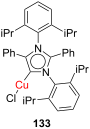
Figure 7: NHC–CuCl complex 133 as catalyst for the [3 + 2] cycloaddition of alkynes with azides at room tempe...

Scheme 51: [3 + 2] Cycloaddition of a bulky azide with an alkynylpyridine using [(NHC)Cu(μ-I)2Cu(NHC)] copper ...

Scheme 52: [3 + 2] Cycloaddition of benzyl azide with phenylacetylene under homogeneous and heterogeneous cata...

Scheme 53: [3 + 2] Cycloaddition of benzyl azide with acetylenes catalyzed by bisthiazolylidene dicopper(I) co...
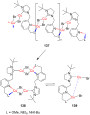
Figure 8: Copper (I)–NHC linear coordination polymer 137 and its conversion into tetranuclear (138) and dinuc...

Scheme 54: An A3 reaction.

Scheme 55: Synthesis of SiO2-immobilized NHC–Cu(I) catalyst 141 and its application in the A3-coupling reactio...

Scheme 56: Preparation of dual-purpose Ru@SiO2–[(NHC)CuCl] catalyst system 142 developed by Bordet, Leitner an...

Scheme 57: Application of the catalyst system Ru@SiO2–[Cu(NHC)] 142 to the one-pot tandem A3 reaction and hydr...

Scheme 58: A3 reaction of phenylacetylene with secondary amines and aldehydes catalyzed by benzothiazolylidene...

Figure 9: Kohn–Sham HOMOs of phenylacetylene and NHC–Cu(I)–phenylacetylene complex computed at the B3LYP/def2...

Figure 10: Energies of the FMOs of phenylacetylene, iminium ion, and NHC–Cu(I)–phenylacetylene complex compute...

Scheme 59: NHC–Cu(I) catalyzed diboration of ketones 147 by reacting with bis(pinacolato)diboron (148) reporte...

Scheme 60: Protoboration of terminal allenes catalyzed by NHC–Cu(I) complexes reported by Hoveyda and co-worke...

Scheme 61: NHC–CuCl-catalyzed borylation of α-alkoxyallenes to give 2-boryl-1,3-butadienes.

Scheme 62: Regioselective hydroborylation of propargylic alcohols and ethers catalyzed by NHC–CuCl complexes 1...

Scheme 63: NHC–CuOt-Bu-catalyzed semihydrogenation and hydroborylation of alkynes.

Scheme 64: Enantioselective NHC–Cu(I)-catalyzed hydroborations of 1,1-disubstituted aryl olefins reported by H...

Scheme 65: Enantioselective NHC–Cu(I)-catalyzed hydroboration of exocyclic 1,1-disubstituted alkenes reported ...

Scheme 66: Markovnikov-selective NHC–CuOH-catalyzed hydroboration of alkenes and alkynes reported by Jones et ...

Scheme 67: Dehydrogenative borylation and silylation of styrenes catalyzed by NHC–CuOt-Bu complexes developed ...

Scheme 68: N–H/C(sp2)–H carboxylation catalyzed by NHC–CuOH complexes.

Scheme 69: C–H Carboxylation of benzoxazole and benzothiazole derivatives with CO2 using a 1,2,3-triazol-5-yli...

Scheme 70: Use of Cu(I) complex derived from diethylene glycol-functionalized imidazo[1,5,a] pyridin-3-ylidene...

Scheme 71: Allylation and alkenylation of polyfluoroarenes and heteroarenes catalyzed by NHC–Cu(I) complexes r...

Scheme 72: Enantioselective C(sp2)–H allylation of (benz)oxazoles and benzothiazoles with γ,γ-disubstituted pr...

Scheme 73: C(sp2)–H arylation of arenes catalyzed by dual NHC–Cu/NHC–Pd catalytic system.

Scheme 74: C(sp2)–H Amidation of (hetero)arenes with N-chlorocarbamates/N-chloro-N-sodiocarbamates catalyzed b...

Scheme 75: NHC–CuI catalyzed thiolation of benzothiazoles and benzoxazoles.
Visible-light-induced nickel-catalyzed α-hydroxytrifluoroethylation of alkyl carboxylic acids: Access to trifluoromethyl alkyl acyloins
- Feng Chen,
- Xiu-Hua Xu,
- Zeng-Hao Chen,
- Yue Chen and
- Feng-Ling Qing
Beilstein J. Org. Chem. 2023, 19, 1372–1378, doi:10.3762/bjoc.19.98
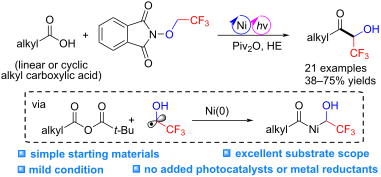
- pivalic anhydride as activator to afford Ni(II) intermediate F. Subsequently, trapping of the alkyl radical C generates high-valent Ni(III) intermediate G, which undergoes facile reductive elimination to furnish the final coupling product 3 and Ni(I) intermediate H. The single-electron transfer (SET

Graphical Abstract

Figure 1: Selected natural products and pharmaceuticals bearing acyloins.

Scheme 1: Strategies for the synthesis of α-trifluoromethyl acyloins.

Scheme 2: Substrate scope. Standard conditions: a solution of alkyl carboxylic acid 1 (0.4 mmol), 2 (0.6 mmol...

Figure 2: Proposed reaction mechanism.
Radical ligand transfer: a general strategy for radical functionalization
- David T. Nemoto Jr,
- Kang-Jie Bian,
- Shih-Chieh Kao and
- Julian G. West
Beilstein J. Org. Chem. 2023, 19, 1225–1233, doi:10.3762/bjoc.19.90
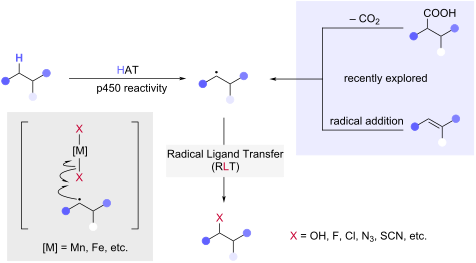
- functionalization via the canonical organometallic steps of oxidative addition/reductive elimination was ruled out via catalytic reaction of the macrocyclic Groves-type porphyrin catalyst V, a species that is unable to accommodate the mutual cis-orientation of ligands for metal-centered reductive elimination. The

Graphical Abstract

Scheme 1: Overview of the RLT mechanism in nature and in literature. I: The radical rebound mechanism in cyto...

Scheme 2: Areas of recent work on RLT development and application in catalysis. I: Reported RLT pathways ofte...

Scheme 3: The incorporation of RLT catalysis in ATRA photocatalysis. I: The reported method is compatible wit...

Scheme 4: Pioneering and recent work on decarboxylative functionalization involving a posited RLT pathway. I:...

Scheme 5: Our lab reported decarboxylative azidation of aliphatic and benzylic acids. I: The reaction proceed...
Exploring the role of halogen bonding in iodonium ylides: insights into unexpected reactivity and reaction control
- Carlee A. Montgomery and
- Graham K. Murphy
Beilstein J. Org. Chem. 2023, 19, 1171–1190, doi:10.3762/bjoc.19.86
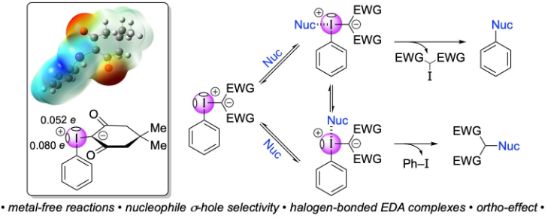
- literature to-date has shown that the vast majority of reactions follow the reductive elimination pathway to produce 4. However, a clear exception to this is in reactions with nucleophilic fluoride or [18F]fluoride, which reductively eliminate to exclusively generate fluoroarenes (e.g., 5). The rationale for
- reductive elimination of iodobenzene to give 11 (Figure 5, left). This was also the pathway subsequently suggested by Gallos et al. [116] for the synthesis of 13/14 from 12. In 2003, Hadjiarapoglou further investigated the intermolecular reaction between 8 and cyclopentene under thermal, metal-free
- , they believed that the reaction was likely initiated by either single electron transfer between the reagents (not shown), or by electrophilic addition of the olefin onto the ylide, forming intermediate adduct 17. This was followed by formation of iodocycle 18, from which reductive elimination of

Graphical Abstract

Figure 1: Generic representation of halogen bonding.

Figure 2: Quantitative evaluation of σ-holes in monovalent iodine-containing compounds; and, qualitative mole...
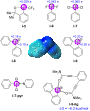
Figure 3: Quantitative evaluation of σ-holes in hypervalent iodine-containing molecules; and, qualitative MEP...

Figure 4: Quantitative evaluation of σ-holes in iodonium ylides; and, qualitative MEP map of I-12 from −0.083...

Scheme 1: Outline of possible reaction pathways between iodonium ylides and Lewis basic nucleophiles (top); a...

Scheme 2: Metal-free cyclopropanations of iodonium ylides, either as intermolecular (a) or intramolecular pro...

Figure 5: Zwitterionic mechanism for intramolecular cyclopropanation of iodonium ylides (left); and, stepwise...

Scheme 3: Metal-free intramolecular cyclopropanation of iodonium ylides.

Figure 6: Concerted cycloaddition pathway for the metal-free, intramolecular cyclopropanation of iodonium yli...

Scheme 4: Reaction of ylide 6 with diphenylketene to form lactone 24 and 25.

Figure 7: Nucleophilic (top) and electrophilic (bottom) addition pathways proposed by Koser and Hadjiarapoglo...

Scheme 5: Indoline synthesis from acyclic iodonium ylide 31 and tertiary amines.

Scheme 6: N-Heterocycle synthesis from acyclic iodonium ylide 31 and secondary amines.

Figure 8: Proposed mechanism for the formation of 33a from iodonium ylides and amines, involving an initial h...

Scheme 7: Indoline synthesis from acyclic iodonium ylides 39 and tertiary amines under blue light photocataly...

Scheme 8: Metal-free cycloproponation of iodonium ylides under blue LED irradiation. aUsing trans-β-methylsty...

Figure 9: Proposed mechanism of the cyclopropanation between iodonium ylides and alkenes under blue LED irrad...

Scheme 9: Formal C–H alkylation of iodonium ylides by nucleophilic heterocycles under blue LED irradiation.

Figure 10: Proposed mechanism of the formal C–H insertion of pyrrole under blue LED irradiation.

Scheme 10: X–H insertions between iodonium ylides and carboxylic acids, phenols and thiophenols.

Figure 11: Mechanistic proposal for the X–H insertion reactions of iodonium ylides.

Scheme 11: Radiofluorination of biphenyl using iodonium ylides 54a–e derived from various β-dicarbonyl auxilia...

Scheme 12: Radiofluorination of arenes using spirocycle-derived iodonium ylides 56.

Scheme 13: Radiofluorination of arenes using SPIAd-derived iodonium ylides 58.

Figure 12: Calculated reaction coordinate for the radiofluorination of iodonium ylide 60.
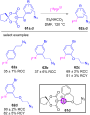
Scheme 14: Radiofluorination of iodonium ylides possessing various ortho- and para-substituents on the iodoare...

Figure 13: Difference in Gibbs activation energy for ortho- or para-anisyl derived iodonium ylides 63a and 63b....

Figure 14: Proposed equilibration of intermediates to transit between 64a (the initial adduct formed between 6...

Scheme 15: Comparison of 31 and ortho-methoxy iodonium ylide 39 in rhodium-catalyzed cyclopropanation and cycl...

Figure 15: X-ray crystal structure of dimeric 39 [6], (CCDC# 893474) [143,144].

Scheme 16: Enaminone synthesis using diazonium and iodonium ylides.
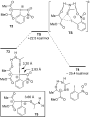
Figure 16: Transition state calculations for enaminone synthesis from iodonium ylides and thioamides.
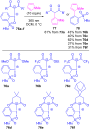
Scheme 17: The reaction between ylides 73a–f and N-methylpyrrole under 365 nm UV irradiation.

Figure 17: Crystal structures of 76c (top) and 76e (bottom) [101], (CCDC# 2104180 & 2104181) [143,144].
Photoredox catalysis harvesting multiple photon or electrochemical energies
- Mattia Lepori,
- Simon Schmid and
- Joshua P. Barham
Beilstein J. Org. Chem. 2023, 19, 1055–1145, doi:10.3762/bjoc.19.81

Graphical Abstract

Figure 1: Oxidative and reductive activations of organic compounds harvesting photoredox catalysis.

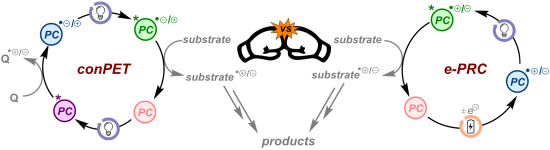
Figure 2: General catalytic cycles of radical ion conPET (left) and radical ion e-PRC (right).
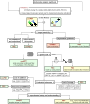
Figure 3: “Beginner’s guide”: comparison between advantages, capacities, and prospectives of conPET and PEC.
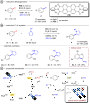
Figure 4: A) conPET reductive dehalogenation of aryl halides with PDI. B) Reductive C–H arylation with pyrrol...
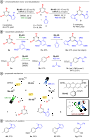
Figure 5: A) Chromoselective mono- and disubstitution or polybrominated pyrimidines with pyrroles. B) Sequent...

Figure 6: A) Synthesis of pyrrolo[1,2-a]quinolines. B) Synthesis of ullazines.

Figure 7: A) Reductive phosphorylation of aryl halides via conPET. B) Selected examples from the substrate sc...
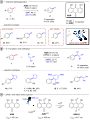
Figure 8: A) Reductive dehalogenation of aryl halides via conPET and selected examples from the substrate sco...
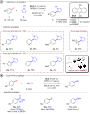
Figure 9: A) Reductive C–H arylation of aryl halides via conPET (top) and selected examples from the substrat...
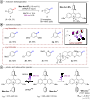
Figure 10: A) Reductive hydrodehalogenation of aryl halides with Mes-Acr-BF4. B) Selected examples from the su...
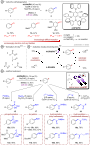
Figure 11: A) Reductive hydrodechlorination of aryl chlorides with 4-DPAIPN. B) Proposed formation of CO2•−. C...
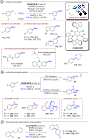
Figure 12: A) Reductive conPET borylation with 3CzEPAIPN (top) and selected examples from the substrate scope ...

Figure 13: Scale-up of conPET phosphorylation with 3CzEPAIPN.
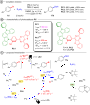
Figure 14: A) Borylation of 1d. B) Characteristics and structure of PC1 with green and red parts showing the l...
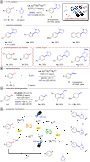
Figure 15: A) Reductive C–H arylation scope with polysulfide conPET (top) and selected examples from the subst...

Figure 16: Scale-up of A) C–H arylation and B) dehaloborylation with polysulfide photocatalysis in continuous-...

Figure 17: A) Formation of [Ir1]0 and [Ir2]0 upon PET between [Ir1]+ and Et3N. B) Mechanism of multi-photon ta...

Figure 18: A) Reductive hydrodehalogenation of aryl halides via multi-photon tandem photocatalysis. B) Selecte...

Figure 19: A) Carbonylative amidation of aryl halides in continuous flow. B) Selected examples from the substr...
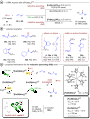
Figure 20: A) General scheme for reductive (RQ) and oxidative quenching (OQ) protocols using [FeIII(btz)3](PF6)...
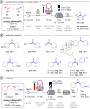
Figure 21: A) Carbonylative amidation of alkyl iodides with [IrIII(ppy)2(dtbbpy)]PF6. B) Selected examples fro...
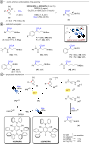
Figure 22: A) Carboxylative C–N bond cleavage in cyclic amines. B) Selected examples from the substrate scope....
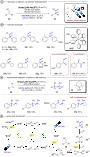
Figure 23: A) Formal reduction of alkenes to alkanes via transfer hydrogenation. B) Selected examples from the...
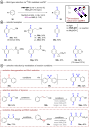
Figure 24: A) Birch-type reduction of benzenes with PMP-BPI. B) Selected examples from the substrate scope (sc...

Figure 25: Proposed mechanism of the OH− mediated conPET Birch-type reduction of benzene via generation of sol...

Figure 26: Reductive detosylation of N-tosylated amides with Mes-Acr-BF4. B) Selected examples from the substr...
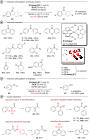
Figure 27: A) Reductive detosylation of N-tosyl amides by dual PRC. B) Selected examples from the substrate sc...

Figure 28: A) Mechanism of the dual PRC based on PET between [Cu(dap)2]+ and DCA. B) Mechanism of the dual PRC...
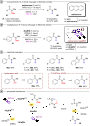
Figure 29: A) N–O bond cleavage in Weinreb amides with anthracene. B) N–O bond cleavage in Weinreb amides rely...
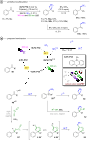
Figure 30: A) Pentafluorosulfanylation and fluoride elimination. B) Mechanism of the pentafluorosulfanylation ...
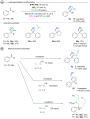
Figure 31: A) α-Alkoxypentafluorosulfanylation (top) and selected examples from the substrate scope (bottom). ...
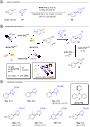
Figure 32: A) Oxidative amination of arenes with azoles catalyzed by N-Ph PTZ. B) Selected examples from the s...

Figure 33: A) C(sp3)–H bond activation by HAT via chloride oxidation by *N-Ph PTZ•+. B) Proposed mechanism for...

Figure 34: A) Recycling e-PRC C–H azolation of electron-rich arenes with pyrazoles using Mes-Acr+ as a photoca...

Figure 35: A) Radical ion e-PRC direct oxidation of unactivated arenes using TAC+ as an electro-activated phot...

Figure 36: A) Radical ion e-PRC direct oxidation of unactivated arenes using TPA as an electro-activated photo...

Figure 37: Proposed mechanism (top) and mode of preassembly (bottom).

Figure 38: A) Possible preassemblies of reactive (left) vs unreactive (right) arenes. B) Calculated spin densi...
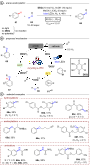
Figure 39: A) Recycling e-PRC C(sp2 )–H acetoxylation of arenes using DDQ as a photocatalyst. B) Proposed cata...

Figure 40: Gram scale hydroxylation of benzene in a recirculated flow setup.
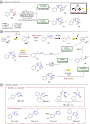
Figure 41: A) Radical ion e-PRC vicinal diamination of alkylarenes using TAC+ as an electro-activated photocat...
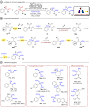
Figure 42: A) Sequential oxygenation of multiple adjacent C–H bonds under radical ion e-PRC using TAC+ as an e...

Figure 43: A) Enantioselective recycling e-PRC cyanation of benzylic C–H bonds using ADQS as photocatalyst. B)...

Figure 44: Proposed tandem mechanism by Xu and co-workers.
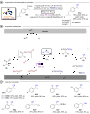
Figure 45: A) Enantioselective recycling e-PRC decarboxylative cyanation using Cu(acac)2, Ce(OTf)3 and a box l...

Figure 46: A) Enantioselective recycling e-PRC benzylic cyanation using Cu(MeCN)4BF4, box ligand and anthraqui...

Figure 47: A) Radical ion e-PRC acetoxyhydroxylation of aryl olefins using TAC+ as an electro-activated photoc...

Figure 48: Selected examples from the substrate scope.

Figure 49: Photoelectrochemical acetoxyhydroxylation in a recirculated flow setup.
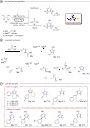
Figure 50: A) Radical ion e-PRC aminooxygenation of aryl olefins using TAC+ as an electro-activated photocatal...
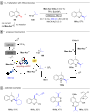
Figure 51: A) Recycling e-PRC C–H alkylation of heteroarenes with organic trifluoroborates using Mes-Acr+ as p...

Figure 52: A) Recycling e-PRC decarboxylative C–H alkylation of heteroarenes using CeCl3·7H2O as catalyst. B) ...

Figure 53: A) Recycling e-PRC decarboxylative C–H alkylation of heteroarenes using Fe(NH4)2(SO4)2·6H2O as cata...
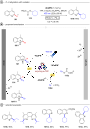
Figure 54: A) Recycling e-PRC C–H alkylation of heteroarenes with alkyl oxalates and 4CzIPN as photocatalyst. ...
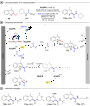
Figure 55: A) Recycling e-PRC decarboxylative C–H carbamoylation of heteroarenes using 4CzIPN as photocatalyst...
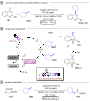
Figure 56: A) Photoelectrochemical HAT-mediated hydrocarbon activation via the chlorine radical. B) Proposed m...

Figure 57: A) Selected examples from the substrate scope. B) Gram and decagram scale semi-continuous flow PEC ...

Figure 58: A) Photoelectrochemical HAT-mediated dehydrogenative coupling of benzothiazoles with aliphatic C–H ...

Figure 59: A) Photoelectrochemical HAT activation of ethers using electro-activated TAC+ as photocatalyst. B) ...

Figure 60: Selected examples from the substrate scope.
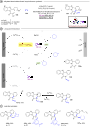
Figure 61: A) Photoelectrochemical HAT-mediated synthesis of alkylated benzimidazo-fused isoquinolinones using...

Figure 62: A) Decoupled photoelectrochemical cerium-catalyzed oxydichlorination of alkynes using CeCl3 as cata...

Figure 63: Proposed decoupled photoelectrochemical mechanism.

Figure 64: A) Decoupled photoelectrochemical ring-opening bromination of tertiary cycloalkanols using MgBr2 as...

Figure 65: A) Recycling e-PRC ring-opening functionalization of cycloalkanols using CeCl3 as catalyst. B) Prop...

Figure 66: Selected examples from the substrate scope of the PEC ring-opening functionalization.

Figure 67: A) Radical ion e-PRC reduction of chloro- and bromoarenes using DCA as catalyst and various accepto...
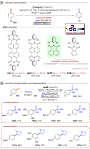
Figure 68: A) Screening of different phthalimide derivatives as catalyst for the e-PRC reduction of aryl halid...

Figure 69: Screening of different organic catalysts for the e-PRC reduction of trialkylanilium salts.

Figure 70: A) e-PRC reduction of phosphonated phenols and anilinium salts. B) Selected examples from the subst...

Figure 71: A) ConPET and e-PRC reduction of 4-bromobenzonitrile using a naphthalene diimide (NDI) precatalyst ...

Figure 72: A) Radical ion e-PRC reduction of phosphinated aliphatic alcohols with n-BuO-NpMI as catalyst. B) C...

Figure 73: Selected examples from the substrate scope.

Figure 74: A) Recycling e-PRC reductive dimerization of benzylic chlorides using a [Cu2] catalyst. B) Proposed...

Figure 75: A) Decoupled photoelectrochemical C–H alkylation of heteroarenes through deamination of Katritzky s...

Figure 76: Proposed mechanism by Chen and co-workers.
Pyridine C(sp2)–H bond functionalization under transition-metal and rare earth metal catalysis
- Haritha Sindhe,
- Malladi Mounika Reddy,
- Karthikeyan Rajkumar,
- Akshay Kamble,
- Amardeep Singh,
- Anand Kumar and
- Satyasheel Sharma
Beilstein J. Org. Chem. 2023, 19, 820–863, doi:10.3762/bjoc.19.62
- elimination delivers the desired product 44 via the intermediate 49 (Scheme 10b). It was proposed that the enantioselectivity was mainly due to the C–C reductive elimination of the R-pathway, which is lower in energy than the S-pathway. Remote C–H alkylation Several remarkable studies have been reported for
- addition of 1 gives the silyl-iridium complex 52. The insertion of aldehyde 50 into the Ir–Si bond of 52 provides the pyridyl alkyl iridium species 53 that finally by C–C formation via reductive elimination furnishes the desired products 51 along with the formation of an iridium hydride species (Scheme 11b
- of the alkene provides the intermediate 57 which on subsequent reductive elimination furnishes the C4-alkylated products 55. Based on the deuterium exchange experiment, the author suggested that the steps involved in the catalytic cycle from 56A to 57 are reversible in nature, which may activate the

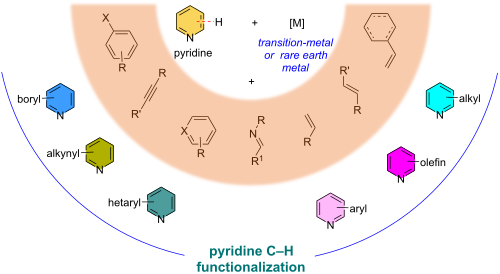
Graphical Abstract

Figure 1: Representative examples of bioactive natural products and FDA-approved drugs containing a pyridine ...

Scheme 1: Classical and traditional methods for the synthesis of functionalized pyridines.

Scheme 2: Rare earth metal (Ln)-catalyzed pyridine C–H alkylation.

Scheme 3: Pd-catalyzed C–H alkylation of pyridine N-oxide.

Scheme 4: CuI-catalyzed C–H alkylation of N-iminopyridinium ylides with tosylhydrazones (A) and a plausible r...
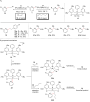
Scheme 5: Zirconium complex-catalyzed pyridine C–H alkylation.

Scheme 6: Rare earth metal-catalyzed pyridine C–H alkylation with nonpolar unsaturated substrates.

Scheme 7: Heterobimetallic Rh–Al complex-catalyzed ortho-C–H monoalkylation of pyridines.

Scheme 8: Mono(phosphinoamido)-rare earth complex-catalyzed pyridine C–H alkylation.

Scheme 9: Rhodium-catalyzed pyridine C–H alkylation with acrylates and acrylamides.

Scheme 10: Ni–Al bimetallic system-catalyzed pyridine C–H alkylation.

Scheme 11: Iridium-catalyzed pyridine C–H alkylation.
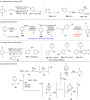
Scheme 12: para-C(sp2)–H Alkylation of pyridines with alkenes.

Scheme 13: Enantioselective pyridine C–H alkylation.

Scheme 14: Pd-catalyzed C2-olefination of pyridines.

Scheme 15: Ru-catalyzed C-6 (C-2)-propenylation of 2-arylated pyridines.
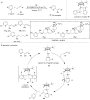
Scheme 16: C–H addition of allenes to pyridines catalyzed by half-sandwich Sc metal complex.

Scheme 17: Pd-catalyzed stereodivergent synthesis of alkenylated pyridines.

Scheme 18: Pd-catalyzed ligand-promoted selective C3-olefination of pyridines.

Scheme 19: Mono-N-protected amino acids in Pd-catalyzed C3-alkenylation of pyridines.

Scheme 20: Amide-directed and rhodium-catalyzed C3-alkenylation of pyridines.

Scheme 21: Bimetallic Ni–Al-catalyzed para-selective alkenylation of pyridine.

Scheme 22: Arylboronic ester-assisted pyridine direct C–H arylation.
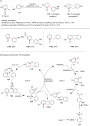
Scheme 23: Pd-catalyzed C–H arylation/benzylation with toluene.

Scheme 24: Pd-catalyzed pyridine C–H arylation with potassium aryl- and heteroaryltrifluoroborates.

Scheme 25: Transient activator strategy in pyridine C–H biarylation.
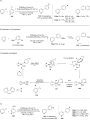
Scheme 26: Ligand-promoted C3-arylation of pyridine.

Scheme 27: Pd-catalyzed arylation of nicotinic and isonicotinic acids.

Scheme 28: Iron-catalyzed and imine-directed C–H arylation of pyridines.

Scheme 29: Pd–(bipy-6-OH) cooperative system-mediated direct pyridine C3-arylation.

Scheme 30: Pd-catalyzed pyridine N-oxide C–H arylation with heteroarylcarboxylic acids.

Scheme 31: Pd-catalyzed C–H cross-coupling of pyridine N-oxides with five-membered heterocycles.

Scheme 32: Cu-catalyzed dehydrative biaryl coupling of azine(pyridine) N-oxides and oxazoles.

Scheme 33: Rh(III)-catalyzed cross dehydrogenative C3-heteroarylation of pyridines.

Scheme 34: Pd-catalyzed C3-selective arylation of pyridines.
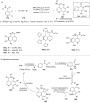
Scheme 35: Rhodium-catalyzed oxidative C–H annulation of pyridines to quinolines.
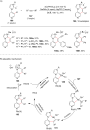
Scheme 36: Rhodium-catalyzed and NHC-directed C–H annulation of pyridine.

Scheme 37: Ni/NHC-catalyzed regio- and enantioselective C–H cyclization of pyridines.

Scheme 38: Rare earth metal-catalyzed intramolecular C–H cyclization of pyridine to azaindolines.

Scheme 39: Rh-catalyzed alkenylation of bipyridine with terminal silylacetylenes.

Scheme 40: Rollover cyclometallation in Rh-catalyzed pyridine C–H functionalization.

Scheme 41: Rollover pathway in Rh-catalyzed C–H functionalization of N,N,N-tridentate chelating compounds.

Scheme 42: Pd-catalyzed rollover pathway in bipyridine-6-carboxamides C–H arylation.
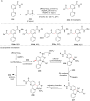
Scheme 43: Rh-catalyzed C3-acylmethylation of bipyridine-6-carboxamides with sulfoxonium ylides.

Scheme 44: Rh-catalyzed C–H functionalization of bipyridines with alkynes.

Scheme 45: Rh-catalyzed C–H acylmethylation and annulation of bipyridine with sulfoxonium ylides.

Scheme 46: Iridium-catalyzed C4-borylation of pyridines.

Scheme 47: C3-Borylation of pyridines.

Scheme 48: Pd-catalyzed regioselective synthesis of silylated dihydropyridines.
Transition-metal-catalyzed domino reactions of strained bicyclic alkenes
- Austin Pounder,
- Eric Neufeld,
- Peter Myler and
- William Tam
Beilstein J. Org. Chem. 2023, 19, 487–540, doi:10.3762/bjoc.19.38
- undergoing reductive elimination to afford to [2 + 2] adduct, β-oxygen elimination followed by E/Z isomerization and intramolecular lactonization generates the annulated coumarin scaffold. In 2003, the Cheng lab extended on this Ni-catalyzed ring-opening strategy [31]. It was noted the addition of 1.5
- 25. Transmetalation of 25 with the organoboronic acid gives intermediate 26, which upon reductive elimination affords the difunctionalized product 21 and regenerates the Ni(0) catalyst. In 2019, the Stanley laboratory explored the Ni-catalyzed intermolecular three-component carboacylation of
- to afford the acyl–Ni(II)–amido intermediate 30. Side-on coordination followed by migratory insertion of the bicyclic alkene selectively generates the exo-alkyl–Ni(II)–amido complex 31. Transmetalation with triarylborane affords 32 which undergoes reductive elimination to form the carboacylated

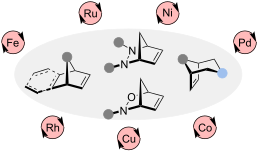
Graphical Abstract

Figure 1: Ring-strain energies of homobicyclic and heterobicyclic alkenes in kcal mol−1. a) [2.2.1]-Bicyclic ...
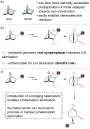
Figure 2: a) Exo and endo face descriptions of bicyclic alkenes. b) Reactivity comparisons for different β-at...

Scheme 1: Ni-catalyzed ring-opening/cyclization cascade of heterobicyclic alkenes 1 with alkyl propiolates 2 ...
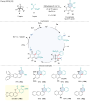
Scheme 2: Ni-catalyzed ring-opening/cyclization cascade of heterobicyclic alkenes 8 with β-iodo-(Z)-propenoat...

Scheme 3: Ni-catalyzed two- and three-component difunctionalizations of norbornene derivatives 15 with alkyne...

Scheme 4: Ni-catalyzed intermolecular three-component difunctionalization of oxabicyclic alkenes 1 with alkyn...

Scheme 5: Ni-catalyzed intermolecular three-component carboacylation of norbornene derivatives 15.

Scheme 6: Photoredox/Ni dual-catalyzed coupling of 4-alkyl-1,4-dihydropyridines 31 with heterobicyclic alkene...

Scheme 7: Photoredox/Ni dual-catalyzed coupling of α-amino radicals with heterobicyclic alkenes 30.

Scheme 8: Cu-catalyzed rearrangement/allylic alkylation of 2,3-diazabicyclo[2.2.1]heptenes 47 with Grignard r...
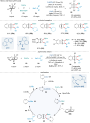
Scheme 9: Cu-catalyzed aminoboration of bicyclic alkenes 1 with bis(pinacolato)diboron (B2pin2) (53) and O-be...

Scheme 10: Cu-catalyzed borylalkynylation of oxabenzonorbornadiene (30b) with B2pin2 (53) and bromoalkynes 62.

Scheme 11: Cu-catalyzed borylacylation of bicyclic alkenes 1.

Scheme 12: Cu-catalyzed diastereoselective 1,2-difunctionalization of oxabenzonorbornadienes 30 for the synthe...

Scheme 13: Fe-catalyzed carbozincation of heterobicyclic alkenes 1 with arylzinc reagents 74.

Scheme 14: Co-catalyzed addition of arylzinc reagents of norbornene derivatives 15.

Scheme 15: Co-catalyzed ring-opening/dehydration of oxabicyclic alkenes 30 via C–H activation of arenes.

Scheme 16: Co-catalyzed [3 + 2] annulation/ring-opening/dehydration domino reaction of oxabicyclic alkenes 1 w...

Scheme 17: Co-catalyzed enantioselective carboamination of bicyclic alkenes 1 via C–H functionalization.

Scheme 18: Ru-catalyzed cyclization of oxabenzonorbornene derivatives with propargylic alcohols for the synthe...

Scheme 19: Ru-catalyzed coupling of oxabenzonorbornene derivatives 30 with propargylic alcohols and ethers 106...

Scheme 20: Ru-catalyzed ring-opening/dehydration of oxabicyclic alkenes via the C–H activation of anilides.

Scheme 21: Ru-catalyzed of azabenzonorbornadiene derivatives with arylamides.

Scheme 22: Rh-catalyzed cyclization of bicyclic alkenes with arylboronate esters 118.

Scheme 23: Rh-catalyzed cyclization of bicyclic alkenes with dienyl- and heteroaromatic boronate esters.

Scheme 24: Rh-catalyzed domino lactonization of doubly bridgehead-substituted oxabicyclic alkenes with seconda...

Scheme 25: Rh-catalyzed domino carboannulation of diazabicyclic alkenes with 2-cyanophenylboronic acid and 2-f...

Scheme 26: Rh-catalyzed synthesis of oxazolidinone scaffolds 147 through a domino ARO/cyclization of oxabicycl...

Scheme 27: Rh-catalyzed oxidative coupling of salicylaldehyde derivatives 151 with diazabicyclic alkenes 130a.

Scheme 28: Rh-catalyzed reaction of O-acetyl ketoximes with bicyclic alkenes for the synthesis of isoquinoline...

Scheme 29: Rh-catalyzed domino coupling reaction of 2-phenylpyridines 165 with oxa- and azabicyclic alkenes 30....

Scheme 30: Rh-catalyzed domino dehydrative naphthylation of oxabenzonorbornadienes 30 with N-sulfonyl 2-aminob...

Scheme 31: Rh-catalyzed domino dehydrative naphthylation of oxabenzonorbornadienes 30 with arylphosphine deriv...

Scheme 32: Rh-catalyzed domino ring-opening coupling reaction of azaspirotricyclic alkenes using arylboronic a...

Scheme 33: Tandem Rh(III)/Sc(III)-catalyzed domino reaction of oxabenzonorbornadienes 30 with alkynols 184 dir...

Scheme 34: Rh-catalyzed asymmetric domino cyclization and addition reaction of 1,6-enynes 194 and oxa/azabenzo...

Scheme 35: Rh/Zn-catalyzed domino ARO/cyclization of oxabenzonorbornadienes 30 with phosphorus ylides 201.

Scheme 36: Rh-catalyzed domino ring opening/lactonization of oxabenzonorbornadienes 30 with 2-nitrobenzenesulf...

Scheme 37: Rh-catalyzed domino C–C/C–N bond formation of azabenzonorbornadienes 30 with aryl-2H-indazoles 210.

Scheme 38: Rh/Pd-catalyzed domino synthesis of indole derivatives with 2-(phenylethynyl)anilines 212 and oxabe...

Scheme 39: Rh-catalyzed domino carborhodation of heterobicyclic alkenes 30 with B2pin2 (53).

Scheme 40: Rh-catalyzed three-component 1,2-carboamidation reaction of bicyclic alkenes 30 with aromatic and h...

Scheme 41: Pd-catalyzed diarylation and dialkenylation reactions of norbornene derivatives.

Scheme 42: Three-component Pd-catalyzed arylalkynylation reactions of bicyclic alkenes.

Scheme 43: Three-component Pd-catalyzed arylalkynylation reactions of norbornene and DFT mechanistic study.

Scheme 44: Pd-catalyzed three-component coupling N-tosylhydrazones 236, aryl halides 66, and norbornene (15a).

Scheme 45: Pd-catalyzed arylboration and allylboration of bicyclic alkenes.

Scheme 46: Pd-catalyzed, three-component annulation of aryl iodides 66, alkenyl bromides 241, and bicyclic alk...

Scheme 47: Pd-catalyzed double insertion/annulation reaction for synthesizing tetrasubstituted olefins.

Scheme 48: Pd-catalyzed aminocyclopropanation of bicyclic alkenes 1 with 5-iodopent-4-enylamine derivatives 249...

Scheme 49: Pd-catalyzed, three-component coupling of alkynyl bromides 62 and norbornene derivatives 15 with el...
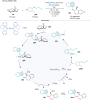
Scheme 50: Pd-catalyzed intramolecular cyclization/ring-opening reaction of heterobicyclic alkenes 30 with 2-i...

Scheme 51: Pd-catalyzed dimer- and trimerization of oxabenzonorbornadiene derivatives 30 with anhydrides 268.

Scheme 52: Pd-catalyzed Catellani-type annulation and retro-Diels–Alder of norbornadiene 15b yielding fused xa...

Scheme 53: Pd-catalyzed hydroarylation and heteroannulation of urea-derived bicyclic alkenes 158 and aryl iodi...

Scheme 54: Access to fused 8-membered sulfoximine heterocycles 284/285 via Pd-catalyzed Catellani annulation c...

Scheme 55: Pd-catalyzed 2,2-bifunctionalization of bicyclic alkenes 1 generating spirobicyclic xanthone deriva...

Scheme 56: Pd-catalyzed Catellani-type annulation and retro-Diels–Alder of norbornadiene (15b) producing subst...

Scheme 57: Pd-catalyzed [2 + 2 + 1] annulation furnishing bicyclic-fused indanes 281 and 283.
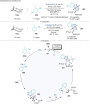
Scheme 58: Pd-catalyzed ring-opening/ring-closing cascade of diazabicyclic alkenes 130a.

Scheme 59: Pd-NHC-catalyzed cyclopentannulation of diazabicyclic alkenes 130a.

Scheme 60: Pd-catalyzed annulation cascade generating diazabicyclic-fused indanones 292 and indanols 294.

Scheme 61: Pd-catalyzed skeletal rearrangement of spirotricyclic alkenes 176 towards large polycyclic benzofur...

Scheme 62: Pd-catalyzed oxidative annulation of aromatic enamides 298 and diazabicyclic alkenes 130a.

Scheme 63: Accessing 3,4,5-trisubstituted cyclopentenes 300, 301, 302 via the Pd-catalyzed domino reaction of ...

Scheme 64: Palladacycle-catalyzed ring-expansion/cyclization domino reactions of terminal alkynes and bicyclic...

Scheme 65: Pd-catalyzed carboesterification of norbornene (15a) with alkynes, furnishing α-methylene γ-lactone...
Transition-metal-catalyzed C–H bond activation as a sustainable strategy for the synthesis of fluorinated molecules: an overview
- Louis Monsigny,
- Floriane Doche and
- Tatiana Besset
Beilstein J. Org. Chem. 2023, 19, 448–473, doi:10.3762/bjoc.19.35
- the presence of an electrophilic source or an oxidation/ligand exchange in the presence of a nucleophilic source (i.e., AgSCF3) and an oxidant (B in Scheme 4). Finally, after a reductive elimination step, the expected functionalized product 6 is obtained and the palladium catalyst is regenerated. In
- (KIE = 2.7). Subsequently palladacycle C is oxidized by Selectfluor® to form a palladium(IV) complex D. After a ligand exchange with AgSCF3, the intermediate E is obtained, which, after reductive elimination, releases the desired product 12 and regenerates the catalyst. Alternatively, a ligand exchange
- with AgSCF3 occurs before the oxidation step, generating the palladium(II) complex F. After an oxidative addition in the presence of Selectfluor®, the palladium(IV) intermediate E is generated. Finally, after reductive elimination step, the desired product 12 is released and the catalyst regenerated

Graphical Abstract

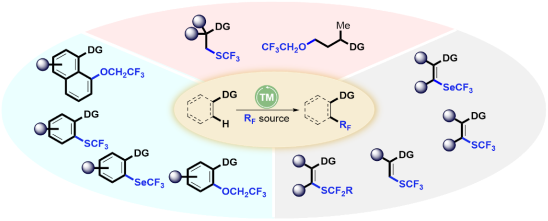
Scheme 1: Transition-metal-catalyzed C–XRF bond formation by C–H bond activation: an overview.

Scheme 2: Cu(OAc)2-promoted mono- and ditrifluoromethylthiolation of benzamide derivatives derived from 8-ami...

Scheme 3: Trifluoromethylthiolation of azacalix[1]arene[3]pyridines using copper salts and a nucleophilic SCF3...

Scheme 4: Working hypothesis for the palladium-catalyzed C–H trifluoromethylthiolation reaction.
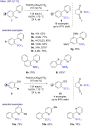
Scheme 5: Trifluoromethylthiolation of 2-arylpyridine derivatives and analogs by means of palladium-catalyzed...

Scheme 6: C(sp2)–SCF3 bond formation by Pd-catalyzed C–H bond activation using AgSCF3 and Selectfluor® as rep...

Scheme 7: Palladium-catalyzed ortho-trifluoromethylthiolation of 2-arylpyridine derivatives reported by the g...
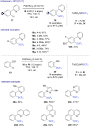
Scheme 8: Palladium-catalyzed ortho-trifluoromethylthiolation of 2-arylpyridine and analogs reported by Anbar...

Scheme 9: Mono- and ditrifluoromethylthiolation of benzamide derivatives derived from 8-aminoquinoline using ...

Scheme 10: Regioselective Cp*Rh(III)-catalyzed directed trifluoromethylthiolation reported by the group of Li [123]...

Scheme 11: Cp*Co(III)-catalyzed ortho-trifluoromethylthiolation of 2-phenylpyridine and 2-phenylpyrimidine der...

Scheme 12: Cp*Co(III)-catalyzed ortho-trifluoromethylthiolation of 2-phenylpyridine and 6-phenylpurine derivat...

Scheme 13: Diastereoselective trifluoromethylthiolation of acrylamide derivatives derived from 8-aminoquinolin...

Scheme 14: C(sp3)–SCF3 bond formation on aliphatic amide derivatives derived from 8-aminoquinoline by palladiu...

Scheme 15: Regio- and diastereoselective difluoromethylthiolation of acrylamides under palladium catalysis rep...

Scheme 16: Palladium-catalyzed (ethoxycarbonyl)difluoromethylthiolation reaction of 2-(hetero)aryl and 2-(α-ar...

Scheme 17: Pd(II)-catalyzed trifluoromethylselenolation of benzamides derived from 5-methoxy-8-aminoquinoline ...

Scheme 18: Pd(II)-catalyzed trifluoromethylselenolation of acrylamide derivatives derived from 5-methoxy-8-ami...

Scheme 19: Transition-metal-catalyzed dehydrogenative 2,2,2-trifluoroethoxylation of (hetero)aromatic derivati...

Scheme 20: Pd(II)-catalyzed ortho-2,2,2-trifluoroethoxylation of N-sulfonylbenzamides reported by the group of...

Scheme 21: Pd(II)-catalyzed selective 2,2,2-trifluoroethoxylation and other fluoroalkoxylations of naphthalene...
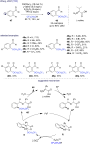
Scheme 22: Pd(II)-catalyzed selective ortho-2,2,2-trifluoroethoxylation of benzaldehyde derivatives by means o...

Scheme 23: Pd(II)-catalyzed selective ortho-2,2,2-trifluoroethoxylation (and other fluoroalkoxylations) of ben...

Scheme 24: Pd(II)-catalyzed selective 2,2,2-trifluoroethoxylation of aliphatic amides using a bidentate direct...
Strategies to access the [5-8] bicyclic core encountered in the sesquiterpene, diterpene and sesterterpene series
- Cécile Alleman,
- Charlène Gadais,
- Laurent Legentil and
- François-Hugues Porée
Beilstein J. Org. Chem. 2023, 19, 245–281, doi:10.3762/bjoc.19.23
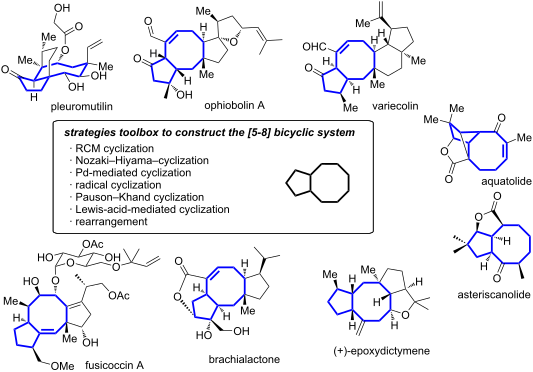

Graphical Abstract

Figure 1: Examples of terpenes containing a bicyclo[3.6.0]undecane motif.

Figure 2: Commercially available first and second generation Grubbs and Hoveyda–Grubbs catalysts.

Figure 3: Examples of strategies to access the fusicoccan and ophiobolin tricyclic core structure by RCM.

Scheme 1: Synthesis of bicyclic core structure 12 of ophiobolin M (13) and cycloaraneosene (14).

Scheme 2: Synthesis of the core structure 21 of ophiobolins and fusicoccanes.

Scheme 3: Ring-closing metathesis attempts starting from thioester 22.

Scheme 4: Total synthesis of ent-fusicoauritone (28).

Figure 4: General structure of ophiobolins and congeners.

Scheme 5: Total synthesis of (+)-ophiobolin A (8).

Scheme 6: Investigation of RCM for the synthesis of ophiobolin A (8). Path A) RCM with TBDPS-protected alcoho...

Scheme 7: Synthesis of the core structure of cotylenin A aglycon, cotylenol (50).

Scheme 8: Synthesis of tricyclic core structure of fusicoccans.

Scheme 9: Total synthesis of (−)-teubrevin G (59).

Scheme 10: Synthesis of the core skeleton 63 of the basmane family.

Scheme 11: Total synthesis of (±)-schindilactone A (68).

Scheme 12: Total synthesis of dactylol (72).

Scheme 13: Ring-closing metathesis for the total synthesis of (±)-asteriscanolide (2).

Scheme 14: Synthesis of the simplified skeleton of pleuromutilin (1).

Scheme 15: Total synthesis of (−)-nitidasin (93) using a ring-closing metathesis to construct the eight-member...

Scheme 16: Total synthesis of (±)-naupliolide (97).

Scheme 17: Synthesis of the A-B ring structure of fusicoccane (101).

Scheme 18: First attempts of TRCM of dienyne substrates.

Scheme 19: TRCM on optimized substrates towards the synthesis of ophiobolin A (8).

Scheme 20: Tandem ring-closing metathesis for the synthesis of variecolin intermediates 114 and 115.

Scheme 21: Synthesis of poitediol (118) using the allylsilane ring-closing metathesis.

Scheme 22: Access to scaffold 122 by a NHK coupling reaction.

Scheme 23: Key step to construct the [5-8] bicyclooctanone core of aquatolide (4).

Scheme 24: Initial strategy to access aquatolide (4).

Scheme 25: Synthetic plan to cotylenin A (130).

Scheme 26: [5-8] Bicyclic structure of brachialactone (7) constructed by a Mizoroki–Heck reaction.

Scheme 27: Influence of the replacement of the allylic alcohol moiety.

Scheme 28: Formation of variecolin intermediate 140 through a SmI2-mediated Barbier-type reaction.

Scheme 29: SmI2-mediated ketyl addition. Pleuromutilin (1) eight-membered ring closure via C5–C14 bond formati...

Scheme 30: SmI2-mediated dialdehyde cyclization cascade of [5-8-6] pleuromutilin scaffold 149.

Scheme 31: A) Modular synthetic route to mutilin and pleuromutilin family members by Herzon’s group. B) Scaffo...

Scheme 32: Photocatalyzed oxidative ring expansion in pleuromutilin (1) total synthesis.

Scheme 33: Reductive radical cascade cyclization route towards (−)-6-epi-ophiobolin N (168).

Scheme 34: Reductive radical cascade cyclization route towards (+)-6-epi-ophiobolin A (173).

Scheme 35: Radical 8-endo-trig-cyclization of a xanthate precursor.

Figure 5: Structural representations of hypoestin A (177), albolic acid (178), and ceroplastol II (179) beari...

Scheme 36: Synthesis of the common [5-8-5] tricyclic intermediate of hypoestin A (177), albolic acid (178), an...

Scheme 37: Asymmetric synthesis of hypoestin A (177), albolic acid (178), and ceroplastol II (179).

Figure 6: Scope of the Pauson–Khand reaction.

Scheme 38: Nazarov cyclization revealing the fusicoauritone core structure 192.

Scheme 39: Synthesis of fusicoauritone (28) through Nazarov cyclization.

Scheme 40: (+)-Epoxydictymene (5) synthesis through a Nicholas cyclization followed by a Pauson–Khand reaction...

Scheme 41: Synthesis of aquatolide (4) by a Mukaiyama-type aldolisation.

Scheme 42: Tandem Wolff/Cope rearrangement furnishing the A-B bicyclic moiety 204 of variecolin.

Scheme 43: Asymmetric synthesis of the A-B bicyclic core 205 and 206 of variecolin.

Scheme 44: Formation of [5-8]-fused rings by cyclization under thermal activation.

Scheme 45: Construction of the [5-8-6] tricyclic core structure of variecolin (3) by Diels–Alder reaction.

Scheme 46: Synthesis of the [6-4-8-5]-tetracyclic skeleton by palladium-mediated cyclization.

Scheme 47: Access to the [5-8] bicyclic core structure of asteriscanolide (227) through rhodium-catalyzed cycl...

Scheme 48: Total syntheses of asterisca-3(15),6-diene (230) and asteriscanolide (2) with a Rh-catalyzed cycliz...

Scheme 49: Photocyclization of 2-pyridones to access the [5-8-5] backbone of fusicoccanes.

Scheme 50: Total synthesis of (+)-asteriscunolide D (245) and (+)-aquatolide (4) through photocyclization.

Scheme 51: Biocatalysis pathway to construct the [5-8-5] tricyclic scaffold of brassicicenes.

Scheme 52: Influence of the CotB2 mutant over the cyclization’s outcome of GGDP.
Combining the best of both worlds: radical-based divergent total synthesis
- Kyriaki Gennaiou,
- Antonios Kelesidis,
- Maria Kourgiantaki and
- Alexandros L. Zografos
Beilstein J. Org. Chem. 2023, 19, 1–26, doi:10.3762/bjoc.19.1
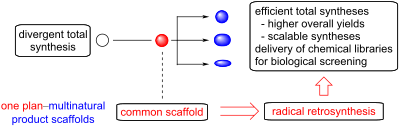
- platforms [66], the group considered a system in which a photoexcited catalyst oxidatively cleaves a siloxycyclopropane with endo selectivity [67], leading to aryl–nickel capture and reductive elimination. Thus, when substrates 121 and 122 were photoirradiated with blue LED light at 45 °C in the presence of

Graphical Abstract
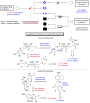
Scheme 1: The power of radical retrosynthesis and the tactic of divergent total synthesis.

Figure 1: Evolution of radical chemistry for organic synthesis.

Scheme 2: Divergent total synthesis of α-pyrone-diterpenoids (Baran).

Scheme 3: Divergent synthesis of pyrone diterpenoids by merged chemoenzymatic and radical synthesis (part I, ...

Scheme 4: Divergent synthesis of pyrone diterpenoids by merged chemoenzymatic and radical synthesis (part II,...

Scheme 5: Divergent synthesis of drimane-type hydroquinone meroterpenoids (Li).

Scheme 6: Divergent synthesis of natural products isolated from Dysidea avara (Lu).

Scheme 7: Divergent synthesis of kaurene-type terpenoids (Lei).

Scheme 8: Divergent synthesis of 6-oxabicyclo[3.2.1]octane meroterpenoids (Lou).

Scheme 9: Divergent synthesis of crinipellins by radical-mediated Dowd–Backwith rearrangement (Xie and Ding).

Scheme 10: Divergent total synthesis of Galbulimima alkaloids (Shenvi).
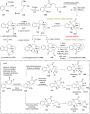
Scheme 11: Divergent synthesis of eburnane alkaloids (Qin).

Scheme 12: Divergent synthesis of Aspidosperma alkaloids (Boger).

Scheme 13: Photoredox based synthesis of (−)-FR901483 (160) and (+)-TAN1251C (162, Gaunt).
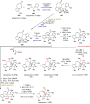
Scheme 14: Divergent synthesis of bipolamines (Maimone).

Scheme 15: Flow chemistry divergency between aporphine and morphinandione alkaloids (Felpin).
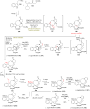
Scheme 16: Divergent synthesis of pyrroloazocine natural products (Echavarren).

Scheme 17: Using TEMPO to stabilize radicals for the divergent synthesis of pyrroloindoline natural products (...

Scheme 18: Radical pathway for preparation of lignans (Zhu).

Scheme 19: Divergent synthesis of DBCOD lignans (Lumb).
Synthesis of novel alkynyl imidazopyridinyl selenides: copper-catalyzed tandem selenation of selenium with 2-arylimidazo[1,2-a]pyridines and terminal alkynes
- Mio Matsumura,
- Kaho Tsukada,
- Kiwa Sugimoto,
- Yuki Murata and
- Shuji Yasuike
Beilstein J. Org. Chem. 2022, 18, 863–871, doi:10.3762/bjoc.18.87
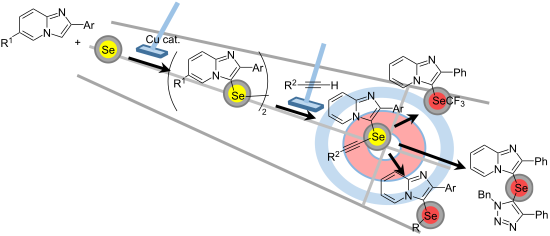
- intermediate A to form a π-complex B, and a ligand exchange reaction from B occurs to produce intermediate D, together with the elimination of selenol C. The selenol C is oxidized to diselenide 2. Finally, the intermediate D undergoes a reductive elimination to form the desired product 4, with the regeneration

Graphical Abstract

Figure 1: Biologically active selenides having alkynyl or imidazopyridinyl groups.

Figure 2: (a) ORTEP drawing of 4aa and (b) its stacking structure.

Scheme 1: Control reactions.

Figure 3: Proposed mechanism.

Scheme 2: Transformation from 4aa.
Mechanochemical halogenation of unsymmetrically substituted azobenzenes
- Dajana Barišić,
- Mario Pajić,
- Ivan Halasz,
- Darko Babić and
- Manda Ćurić
Beilstein J. Org. Chem. 2022, 18, 680–687, doi:10.3762/bjoc.18.69
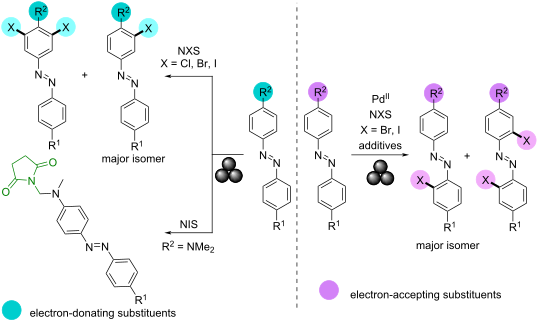
- four mechanistic pathways could be involved in this reaction [51]. Three of them involve oxidative addition followed by reductive elimination. Neutral NBS or the hydrogen bond complex NBS∙∙∙TsOH are bromine donors in two of them, while protonated NBS is engaged in the third. The fourth mechanism

Graphical Abstract

Figure 1: Molecular structures of the monomeric cyclopalladated intermediate and brominated product observed ...

Scheme 1: Halogenation of azobenzenes with strong electron-donating substituents.
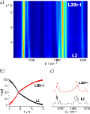
Figure 2: a) Two-dimensional (2D) plot of the time-resolved Raman monitoring of NG of L2 (0.50 mmol) with NBS...

Figure 3: Experimental X-ray molecular structure of succinimide product L4-III.

Scheme 2: PdII-catalyzed halogenation of azobenzene and its para-halogenated derivatives.
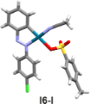
Figure 4: Experimental X-ray molecular structure of the intermediate I6-I.

Figure 5: a) In situ observation of I6-I during the time-resolved Raman monitoring of LAG of L6 (0.50 mmol) w...
Recent developments and trends in the iron- and cobalt-catalyzed Sonogashira reactions
- Surendran Amrutha,
- Sankaran Radhika and
- Gopinathan Anilkumar
Beilstein J. Org. Chem. 2022, 18, 262–285, doi:10.3762/bjoc.18.31
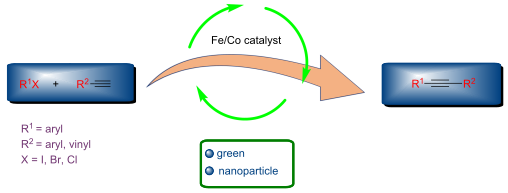
- iodides showed good to excellent yields when coupled with phenylacetylene. The proposed mechanism is similar to the standard palladium-catalyzed Sonogashira reaction with the steps involving oxidative addition of the aryl/vinyl halide followed by transmetallation, and reductive elimination. The mechanism
- -phenanthroline as ligand resulted in a shorter reaction time and better yield in comparison with the other ligands tested. Mechanistically, the iron is oxidized from Fe(II) to Fe(III) in the reaction step by the addition of 2-iodophenol which is further followed by transmetallation and reductive elimination
- product of reductive elimination regenerates the catalyst. Javidi and co-workers reported a sequence of magnetically separable catalysts which consisted of Schiff base complexes of metal ions supported on superparamagnetic Fe3O4 nanoparticles (Scheme 16) [32]. To examine their catalytic activity, a

Graphical Abstract

Scheme 1: One pot Sonogashira coupling of aryl iodides with arylynols in the presence of iron(III) chloride h...

Scheme 2: The iron-catalyzed Sonogashira coupling of aryl iodides with terminal acetylenes in water under aer...

Scheme 3: Sonogashira coupling of aryl halides and phenylacetylene in the presence of iron nanoparticles.

Scheme 4: Sonogashira coupling catalyzed by a silica-supported heterogeneous Fe(III) catalyst.

Scheme 5: Suggested catalytic cycle for the Sonogashira coupling using a silica-supported heterogeneous Fe(II...

Scheme 6: Chemoselective iron-catalyzed cross coupling of 4-bromo-1-cyclohexen-1-yltrifluromethane sulfonate ...
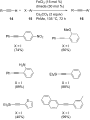
Scheme 7: Fe-catalyzed Sonogashira coupling between terminal alkynes and aryl iodides.

Scheme 8: Iron-catalyzed domino Sonogashira coupling and hydroalkoxylation.

Scheme 9: Sonogashira coupling of aryl halides and phenylacetylene in the presence of Fe(III) acetylacetonate...

Scheme 10: Sonogashira coupling of aryl iodides and alkynes with Fe(acac)3/2,2-bipyridine catalyst.

Scheme 11: Sonogashira cross-coupling of terminal alkynes with aryl iodides in the presence of Fe powder/ PPh3...

Scheme 12: α-Fe2O3 nanoparticles-catalyzed coupling of phenylacetylene with aryl iodides.

Scheme 13: Sonogashira cross-coupling reaction between phenylacetylene and 4-substituted iodobenzenes catalyze...

Scheme 14: One-pot synthesis of 2-arylbenzo[b]furans via tandem Sonogashira coupling–cyclization protocol.

Scheme 15: Suggested mechanism of the Fe(III) catalyzed coupling of o-iodophenol with acetylene derivatives.

Scheme 16: Fe3O4@SiO2/Schiff base/Fe(II)-catalyzed Sonogashira–Hagihara coupling reaction.

Scheme 17: Sonogashira coupling using the Fe(II)(bdmd) catalyst in DMF/1,4-dioxane.

Scheme 18: Synthesis of 7-azaindoles using Fe(acac)3 as catalyst.

Scheme 19: Plausible mechanistic pathway for the synthesis of 7-azaindoles.

Scheme 20: Synthesis of Co@imine-POP catalyst.

Scheme 21: Sonogashira coupling of various arylhalides and phenylacetylene in the presence of Co@imine-POP cat...

Scheme 22: Sonogashira coupling of aryl halides and phenylacetylene using Co-DMM@MNPs/chitosan.

Scheme 23: Sonogashira cross-coupling of aryl halides with terminal acetylenes in the presence of Co-NHC@MWCNT...

Scheme 24: Sonogashira cross-coupling of aryl halides with terminal acetylenes in the presence of Co nanoparti...

Scheme 25: Sonogashira coupling reaction of aryl halides with phenylacetylene in the presence of Co nanopartic...

Scheme 26: PdCoNPs-3DG nanocomposite-catalyzed Sonogashira cross coupling of aryl halide and terminal alkynes.

Scheme 27: Sonogashira cross-coupling of aryl halides and phenylacetylene in the presence of graphene-supporte...

Scheme 28: Sonogashira cross-coupling with Pd/Co ANP-PPI-graphene.

Scheme 29: Pd-Co-1(H)-catalyzed Sonogashira coupling reaction.

Scheme 30: The coupling of aryl halides with terminal alkynes using cobalt hollow nanospheres as catalyst.

Scheme 31: A plausible mechanism for the cobalt-catalyzed Sonogashira coupling reaction.

Scheme 32: Sonogashira cross-coupling reaction of arylhalides with phenylacetylene catalyzed by Fe3O4@PEG/Cu-C...

Scheme 33: Plausible mechanism of Sonogashira cross-coupling reaction catalyzed by Fe3O4@PEG/Cu-Co.

Scheme 34: Sonogashira coupling reaction of para-substituted bromobenzenes with phenylacetylene in the presenc...

Scheme 35: Possible mechanism for the visible light-assisted cobalt complex-catalyzed Sonogashira coupling. (R...

Scheme 36: Sonogashira cross-coupling of aryl halides and phenylacetylene using cobalt as additive.

Scheme 37: Plausible mechanism of Sonogashira cross-coupling reaction over [LaPd*]. (Reproduced with permissio...
Iridium-catalyzed hydroacylation reactions of C1-substituted oxabenzonorbornadienes with salicylaldehyde: an experimental and computational study
- Angel Ho,
- Austin Pounder,
- Krish Valluru,
- Leanne D. Chen and
- William Tam
Beilstein J. Org. Chem. 2022, 18, 251–261, doi:10.3762/bjoc.18.30
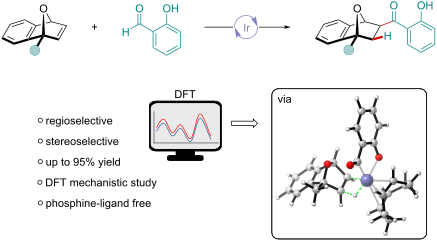
- hydride, and C–C bond-forming reductive elimination. Computational results indicate the origin of regioselectivity is involved in the reductive elimination step. Keywords: C–H activation; density functional theory; hydroacylation; iridium catalysis; regioselectivity; Introduction Organic synthesis is
- hydroacylation reactions [74][75][76][77][78], we propose a catalytic cycle utilizing iridium that proceeds with three key steps: (1) iridium(I) oxidative addition into the aldehyde C–H bond, (2) insertion of the olefin into the iridium hydride, and (3) C–C bond-forming reductive elimination. The hydroacylation
- last key step in the catalytic cycle involves the C–C bond-forming reductive elimination to form the final ketone intermediate IN3a or IN3b (Figure 1). Two possible transition states, 2aTS3a and 2bTS3b, can be located. The concerning free energy barrier about IN2a to IN3a, via 2aTS3a is 10.8 kcal/mol

Graphical Abstract

Scheme 1: Previously reported metal-catalyzed reactions of heterobicyclic alkenes and applications towards th...

Scheme 2: Iridium-catalyzed hydroacylation of C1-substituted OBDs 13a–k with salicylaldehyde 14.

Scheme 3: Competition reaction of different C1-substituted OBDs.

Figure 1: Potential energy profile of the PCM solvation model for the hydrometalation/reductive elimination p...

Figure 2: Potential energy profile of the PCM solvation model for the carbometalation/reductive elimination p...

Figure 3: Potential energy profile of the PCM solvation model for the endo hydrometalation/reductive eliminat...

Figure 4: Potential energy profile of the PCM solvation model for the Ir/diene-catalyzed hydroacylation of Me...
Ready access to 7,8-dihydroindolo[2,3-d][1]benzazepine-6(5H)-one scaffold and analogues via early-stage Fischer ring-closure reaction
- Irina Kuznetcova,
- Felix Bacher,
- Daniel Vegh,
- Hsiang-Yu Chuang and
- Vladimir B. Arion
Beilstein J. Org. Chem. 2022, 18, 143–151, doi:10.3762/bjoc.18.15
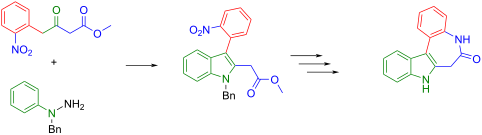
- the nitro group but also to cyclization and the reductive elimination of bromine to afford 3a. The synthesis of 3b could be realized in 58% yield by using iron powder under acidic conditions. Reaction of methyl 5-(2-nitrophenyl)-4-oxopentanoate [44] and 1-benzyl-1-phenylhydrazine [36] hydrochloride in

Graphical Abstract

Figure 1: Paullone related indolobenzazepinone isomers. 7,12-Dihydroindolo[3,2-d][1]benzazepin-6(5H)-one or p...

Scheme 1: Investigated retrosynthetic pathways to scaffold C.
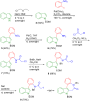
Scheme 2: Attempted synthesis of scaffold C by route (a).
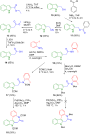
Scheme 3: Attempted synthesis of C by route (b).

Scheme 4: Attempted synthesis of N-benzylated indole-2-acetic acid.

Scheme 5: Attempt to obtain open-chain precursor N-(2-bromophenyl)-2-(1H-indol-2-yl)acetamide.
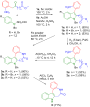
Scheme 6: Synthesis of scaffold C and analogues by route (c).

Figure 2: ORTEP view of 1a with thermal ellipsoids drawn at the 50% probability level.

Figure 3: ORTEP view of 3a with thermal ellipsoids drawn at the 50% probability level.

Scheme 7: Attempted Ullmann cross-coupling of 23 with o-bromo-nitrobenzene.
DABCO-promoted photocatalytic C–H functionalization of aldehydes
- Bruno Maia da Silva Santos,
- Mariana dos Santos Dupim,
- Cauê Paula de Souza,
- Thiago Messias Cardozo and
- Fernanda Gadini Finelli
Beilstein J. Org. Chem. 2021, 17, 2959–2967, doi:10.3762/bjoc.17.205
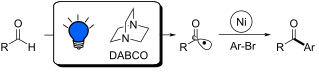
- aldehydes to generate acyl radicals. The coupling of this radical to the Ni(0) complex furnishes the acyl−Ni(I) complex, which then proceeds oxidative addition to aryl bromide to generate the pentavalent Ni(III) complex. Lastly, reductive elimination affords the desired ketone and the Ni(I) complex, which

Graphical Abstract

Figure 1: Redox potentials of representative nitrogenated HAT catalysts and photocatalysts [9-12,21-23].

Figure 2: Previous reports of DABCO as hydrogen abstractor in HAT reactions and this work.

Scheme 1: Aryl bromide and aldehyde scope. Isolated yields. aYield determined by 1H NMR analysis with 1,3-ben...

Scheme 2: Mechanistic investigations of the HAT reaction using DABCO.

Scheme 3: Proposed mechanism for aldehyde arylation. PC = photocatalyst Ir[dF(CF3)ppy]2(dtbbpy)PF6. SET = sin...

Figure 3: Free energy profile for the HAT step reactions between isovaleraldehyde with (top) DABCO and (botto...

Figure 4: TS structure for the HAT reaction between the DABCO radical cation and isovaleraldehyde obtained at...
Iron-catalyzed domino coupling reactions of π-systems
- Austin Pounder and
- William Tam
Beilstein J. Org. Chem. 2021, 17, 2848–2893, doi:10.3762/bjoc.17.196
- oxidative addition, transmetallation, and reductive elimination processes. On the other hand, iron may act as a Lewis acid, activating carbon–carbon multiple bonds via π-binding or heteroatoms via σ-complexes. This can either generate the organoiron complex after nucleophilic attack or produce a carbocation
- is the termination of the reaction through the trapping of the reactive intermediate. Organoiron complexes have been shown to undergo electrophilic trapping with external species or proceed through cross-coupling eventually undergoing reductive elimination. Radical addition will typically conclude
- produce the pyrrolidinyl methyl radical 10 which may add to the iron center to form the Fe(III) complex 11. Reductive elimination would give rise to the final product, and transmetallation with a Grignard reagent regenerates the active Fe species. Alternatively, release of the aryl radical via ipso-attack

Graphical Abstract

Figure 1: Price comparison among iron and other transition metals used in catalysis.

Scheme 1: Typical modes of C–C bond formation.

Scheme 2: The components of an iron-catalyzed domino reaction.

Scheme 3: Iron-catalyzed tandem cyclization and cross-coupling reactions of iodoalkanes 1 with aryl Grignard ...
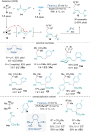
Scheme 4: Three component iron-catalyzed dicarbofunctionalization of vinyl cyclopropanes 14.
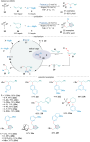
Scheme 5: Three-component iron-catalyzed dicarbofunctionalization of alkenes 21.

Scheme 6: Double carbomagnesiation of internal alkynes 31 with alkyl Grignard reagents 32.

Scheme 7: Iron-catalyzed cycloisomerization/cross-coupling of enyne derivatives 35 with alkyl Grignard reagen...
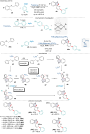
Scheme 8: Iron-catalyzed spirocyclization/cross-coupling cascade.
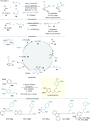
Scheme 9: Iron-catalyzed alkenylboration of alkenes 50.
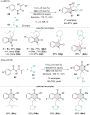
Scheme 10: N-Alkyl–N-aryl acrylamide 60 CDC cyclization with C(sp3)–H bonds adjacent to a heteroatom.

Scheme 11: 1,2-Carboacylation of activated alkenes 60 with aldehydes 65 and alcohols 67.
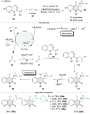
Scheme 12: Iron-catalyzed dicarbonylation of activated alkenes 68 with alcohols 67.
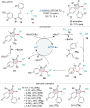
Scheme 13: Iron-catalyzed cyanoalkylation/radical dearomatization of acrylamides 75.

Scheme 14: Synergistic photoredox/iron-catalyzed 1,2-dialkylation of alkenes 82 with common alkanes 83 and 1,3...

Scheme 15: Iron-catalyzed oxidative coupling/cyclization of phenol derivatives 86 and alkenes 87.

Scheme 16: Iron-catalyzed carbosulfonylation of activated alkenes 60.

Scheme 17: Iron-catalyzed oxidative spirocyclization of N-arylpropiolamides 91 with silanes 92 and tert-butyl ...

Scheme 18: Iron-catalyzed free radical cascade difunctionalization of unsaturated benzamides 94 with silanes 92...

Scheme 19: Iron-catalyzed cyclization of olefinic dicarbonyl compounds 97 and 100 with C(sp3)–H bonds.

Scheme 20: Radical difunctionalization of o-vinylanilides 102 with ketones and esters 103.

Scheme 21: Dehydrogenative 1,2-carboamination of alkenes 82 with alkyl nitriles 76 and amines 105.

Scheme 22: Iron-catalyzed intermolecular 1,2-difunctionalization of conjugated alkenes 107 with silanes 92 and...

Scheme 23: Four-component radical difunctionalization of chemically distinct alkenes 114/115 with aldehydes 65...

Scheme 24: Iron-catalyzed carbocarbonylation of activated alkenes 60 with carbazates 117.
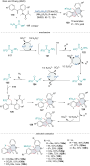
Scheme 25: Iron-catalyzed radical 6-endo cyclization of dienes 119 with carbazates 117.

Scheme 26: Iron-catalyzed decarboxylative synthesis of functionalized oxindoles 130 with tert-butyl peresters ...
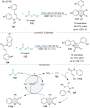
Scheme 27: Iron‑catalyzed decarboxylative alkylation/cyclization of cinnamamides 131/134.

Scheme 28: Iron-catalyzed carbochloromethylation of activated alkenes 60.

Scheme 29: Iron-catalyzed trifluoromethylation of dienes 142.

Scheme 30: Iron-catalyzed, silver-mediated arylalkylation of conjugated alkenes 115.

Scheme 31: Iron-catalyzed three-component carboazidation of conjugated alkenes 115 with alkanes 101/139b and t...

Scheme 32: Iron-catalyzed carboazidation of alkenes 82 and alkynes 160 with iodoalkanes 20 and trimethylsilyl ...

Scheme 33: Iron-catalyzed asymmetric carboazidation of styrene derivatives 115.

Scheme 34: Iron-catalyzed carboamination of conjugated alkenes 115 with alkyl diacyl peroxides 163 and acetoni...

Scheme 35: Iron-catalyzed carboamination using oxime esters 165 and arenes 166.

Scheme 36: Iron-catalyzed iminyl radical-triggered [5 + 2] and [5 + 1] annulation reactions with oxime esters ...

Scheme 37: Iron-catalyzed decarboxylative alkyl etherification of alkenes 108 with alcohols 67 and aliphatic a...

Scheme 38: Iron-catalyzed inter-/intramolecular alkylative cyclization of carboxylic acid and alcohol-tethered...

Scheme 39: Iron-catalyzed intermolecular trifluoromethyl-acyloxylation of styrene derivatives 115.

Scheme 40: Iron-catalyzed carboiodination of terminal alkenes and alkynes 180.

Scheme 41: Copper/iron-cocatalyzed cascade perfluoroalkylation/cyclization of 1,6-enynes 183/185.

Scheme 42: Iron-catalyzed stereoselective carbosilylation of internal alkynes 187.

Scheme 43: Synergistic photoredox/iron catalyzed difluoroalkylation–thiolation of alkenes 82.

Scheme 44: Iron-catalyzed three-component aminoazidation of alkenes 82.

Scheme 45: Iron-catalyzed intra-/intermolecular aminoazidation of alkenes 194.

Scheme 46: Stereoselective iron-catalyzed oxyazidation of enamides 196 using hypervalent iodine reagents 197.
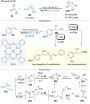
Scheme 47: Iron-catalyzed aminooxygenation for the synthesis of unprotected amino alcohols 200.

Scheme 48: Iron-catalyzed intramolecular aminofluorination of alkenes 209.
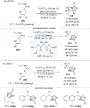
Scheme 49: Iron-catalyzed intramolecular aminochlorination and aminobromination of alkenes 209.

Scheme 50: Iron-catalyzed intermolecular aminofluorination of alkenes 82.

Scheme 51: Iron-catalyzed aminochlorination of alkenes 82.

Scheme 52: Iron-catalyzed phosphinoylazidation of alkenes 108.
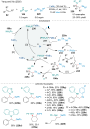
Scheme 53: Synergistic photoredox/iron-catalyzed three-component aminoselenation of trisubstituted alkenes 82.
Ligand-dependent stereoselective Suzuki–Miyaura cross-coupling reactions of β-enamido triflates
- Tomáš Chvojka,
- Athanasios Markos,
- Svatava Voltrová,
- Radek Pohl and
- Petr Beier
Beilstein J. Org. Chem. 2021, 17, 2657–2662, doi:10.3762/bjoc.17.179
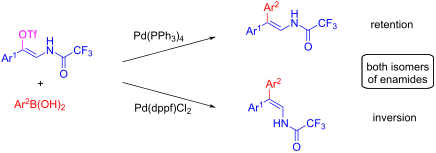
- first step, vinyl triflate undergoes oxidative addition to give complex 4, which subsequently transmetalates with arylboronic acid to form palladium complex 5. In the case of Pd(PPh3)4, reductive elimination occurs to give enamide 2. However, using catalysts with very bulky ligands, such as Pd(dppf)Cl2
- causes the tautomerization of complex 5 [30] to zwitterionic carbene 6 which can now isomerize through the C–C bond rotation to the thermodynamically more stable palladium complex 7, followed by reductive elimination to enamide 3. A possible isomerization of enamides 2 or 3 in the presence of a catalyst

Graphical Abstract

Scheme 1: A: Synthesis of (Z)-β-enamido triflates and subsequent stereoselective cross-coupling reactions. B:...
Scheme 2: Substrate scope of the Suzuki coupling leading to enamides 2 and 3. aRatio determined by 19F NMR; b...

Scheme 3: Proposed mechanisms for the formed Suzuki coupling retention products 2 and inversion products 3.
Visible-light-mediated copper photocatalysis for organic syntheses
- Yajing Zhang,
- Qian Wang,
- Zongsheng Yan,
- Donglai Ma and
- Yuguang Zheng
Beilstein J. Org. Chem. 2021, 17, 2520–2542, doi:10.3762/bjoc.17.169
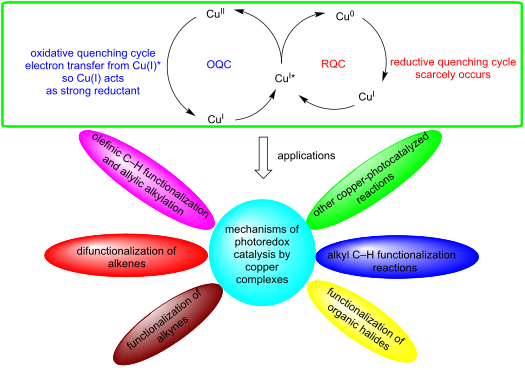
- , in path b (a rebound cycle), CuI* is trapped after a SET by the radical intermediate to generate a CuIII species, which undergoes ligand exchange with the nucleophile and reductive elimination to produce the target product and the regenerated CuI catalyst [37][38][40]. 2.2 Visible-light-mediated Cu(I
- to its triplet state CuICN*, in which the fluoroalkyl iodides were reduced to Rf• and I−. Subsequently, the radical Rf• attacks the alkene forming a new alkyl radical species. This radical species is then trapped by CuII(CN)n to generate a CuIII intermediate, which undergoes reductive elimination to
- resulting cyanoalkyl radical then adds to the alkene to form a new alkyl radical. This radical is captured by a high-valent CuIII complex, which undergoes a reductive elimination to give the target product (Scheme 12). In 2018, Reiser and co-worker [63] established a CuII-catalyzed oxo-azidation of vinyl

Graphical Abstract

Scheme 1: Photoredox catalysis mechanism of [Ru(bpy)3]2+.

Scheme 2: Photoredox catalysis mechanism of CuI.

Scheme 3: Ligands and CuI complexes.

Scheme 4: Mechanism of CuI-based photocatalysis.
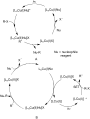
Scheme 5: Mechanisms of CuI–substrate complexes.

Scheme 6: Mechanism of CuII-base photocatalysis.

Scheme 7: Olefinic C–H functionalization and allylic alkylation.
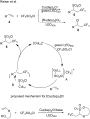
Scheme 8: Cross-coupling of unactivated alkenes and CF3SO2Cl.

Scheme 9: Chlorosulfonylation/cyanofluoroalkylation of alkenes.

Scheme 10: Hydroamination of alkenes.

Scheme 11: Cross-coupling reaction of alkenes, alkyl halides with nucleophiles.

Scheme 12: Cross-coupling of alkenes with oxime esters.

Scheme 13: Oxo-azidation of vinyl arenes.

Scheme 14: Azidation/difunctionalization of vinyl arenes.

Scheme 15: Photoinitiated copper-catalyzed Sonogashira reaction.

Scheme 16: Alkyne functionalization reactions.

Scheme 17: Alkynylation of dihydroquinoxalin-2-ones with terminal alkynes.

Scheme 18: Decarboxylative alkynylation of redox-active esters.

Scheme 19: Aerobic oxidative C(sp)–S coupling reaction.

Scheme 20: Copper-catalyzed alkylation of carbazoles with alkyl halides.

Scheme 21: C–N coupling of organic halides with amides and aliphatic amines.

Scheme 22: Copper-catalyzed C–X (N, S, O) bond formation reactions.

Scheme 23: Arylation of C(sp2)–H bonds of azoles.

Scheme 24: C–C cross-coupling of aryl halides and heteroarenes.

Scheme 25: Benzylic or α-amino C–H functionalization.

Scheme 26: α-Amino C–H functionalization of aromatic amines.

Scheme 27: C–H functionalization of aromatic amines.

Scheme 28: α-Amino-C–H and alkyl C–H functionalization reactions.

Scheme 29: Other copper-photocatalyzed reactions.

Scheme 30: Cross-coupling of oxime esters with phenols or amines.

Scheme 31: Alkylation of heteroarene N-oxides.
Recent advances in the tandem annulation of 1,3-enynes to functionalized pyridine and pyrrole derivatives
- Yi Liu,
- Puying Luo,
- Yang Fu,
- Tianxin Hao,
- Xuan Liu,
- Qiuping Ding and
- Yiyuan Peng
Beilstein J. Org. Chem. 2021, 17, 2462–2476, doi:10.3762/bjoc.17.163
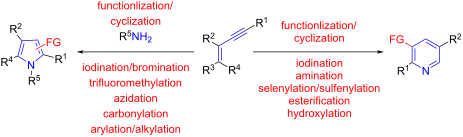
- trapped by Cu(II) to deliver the Cu(III) species 12, which undergoes intramolecular annulation and reductive elimination to afford the desired product 8 and regenerate the Cu(I) catalyst. Path b: vinyl radical intermediate 11 is oxidized by Cu(II) to give the cationic vinyl species 14. Finally, the

Graphical Abstract

Scheme 1: Ag/I2-mediated electrophilic annulation of 2-en-4-ynyl azides 1.

Scheme 2: The proposed mechanism of Ag-catalyzed aza-annulation.

Scheme 3: The proposed mechanism of I2-mediated aza-annulation.

Scheme 4: Copper-catalyzed amination of (E)-2-en-4-ynyl azides 1.
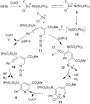
Scheme 5: The proposed mechanism of copper-catalyzed amination.

Scheme 6: The derivatization of sulfonated aminonicotinates.

Scheme 7: Copper-catalyzed chalcogenoamination of (E)-2-en-4-ynyl azides 1.

Scheme 8: The possible mechanism of chalcogenoamination.

Scheme 9: The derivatization of 5‑selenyl- and 5-sulfenyl-substituted nicotinates.

Scheme 10: The tandem reaction of nitriles, Reformatsky reagents, and 1,3-enynes.

Scheme 11: Nickel-catalyzed [4 + 2]-cycloaddition of 3-azetidinones with 1,3-enynes.

Scheme 12: Electrophilic iodocyclization of 2-nitro-1,3-enynes to pyrroles.

Scheme 13: Electrophilic halogenation of 2-trifluoromethyl-1,3-enynes to pyrroles.

Scheme 14: Copper-catalyzed cascade cyclization of 2-nitro-1,3-enynes with amines.

Scheme 15: Tandem cyclization of 2-nitro-1,3-enynes, Togni reagent II, and amines.

Scheme 16: Tandem cyclization of 2-nitro-1,3-enynes, TMSN3, and amines.

Scheme 17: Cascade cyclization of 6-hydroxyhex-2-en-4-ynals to pyrroles.

Scheme 18: Au/Ag-catalyzed oxidative aza-annulation of 1,3-enynyl azides.

Scheme 19: The plausible mechanism of Au/Ag-catalyzed oxidative aza-annulation.

Scheme 20: Synthesis of 2-tetrazolyl-substituted 3-acylpyrroles from enynals.

Scheme 21: CuH-catalyzed coupling reaction of 1,3-enynes and nitriles to pyrroles.

Scheme 22: The mechanism of CuH-catalyzed coupling of 1,3-enynes and nitriles to pyrroles.
Advances in mercury(II)-salt-mediated cyclization reactions of unsaturated bonds
- Sumana Mandal,
- Raju D. Chaudhari and
- Goutam Biswas
Beilstein J. Org. Chem. 2021, 17, 2348–2376, doi:10.3762/bjoc.17.153
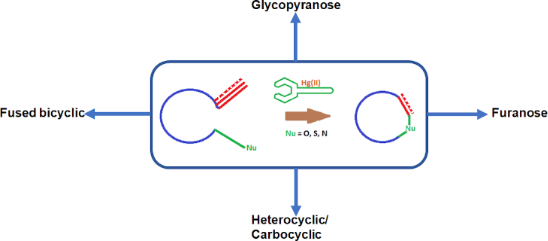
- manner as reductive elimination forms during the mercury removal process (Scheme 6). Mercury(II) salts had been effectively used to synthesize five-membered furanose derivatives with high stereoselectivity. Nicotra et al. developed Hg(OAc)2-mediated cyclization of hydroxy-alkene derivative 15 to form α-ᴅ

Graphical Abstract

Scheme 1: Schematic representation of Hg(II)-mediated addition to an unsaturated bond.

Scheme 2: First report of Hg(II)-mediated synthesis of 2,5-dioxane derivatives from allyl alcohol.

Scheme 3: Stepwise synthesis of 2,6-distubstituted dioxane derivatives.

Scheme 4: Cyclization of carbohydrate alkene precursor.

Scheme 5: Hg(II)-mediated synthesis of C-glucopyranosyl derivatives.

Scheme 6: Synthesis of C-glycosyl amino acid derivative using Hg(TFA)2.

Scheme 7: Hg(OAc)2-mediated synthesis of α-ᴅ-ribose derivative.

Scheme 8: Synthesis of β-ᴅ-arabinose derivative 18.

Scheme 9: Hg(OAc)2-mediated synthesis of tetrahydrofuran derivatives.

Scheme 10: Synthesis of Hg(TFA)2-mediated bicyclic nucleoside derivative.

Scheme 11: Synthesis of pyrrolidine and piperidine derivatives.

Scheme 12: HgCl2-mediated synthesis of diastereomeric pyrrolidine derivatives.

Scheme 13: HgCl2-mediated cyclization of alkenyl α-aminophosphonates.

Scheme 14: Cyclization of 4-cycloocten-1-ol with Hg(OAc)2 forming fused bicyclic products.

Scheme 15: trans-Amino alcohol formation through Hg(II)-salt-mediated cyclization.

Scheme 16: Hg(OAc)2-mediated 2-aza- or 2-oxa-bicyclic ring formations.

Scheme 17: Hg(II)-salt-induced cyclic peroxide formation.

Scheme 18: Hg(OAc)2-mediated formation of 1,2,4-trioxanes.

Scheme 19: Endocyclic enol ether derivative formation through Hg(II) salts.

Scheme 20: Synthesis of optically active cyclic alanine derivatives.

Scheme 21: Hg(II)-salt-mediated formation of tetrahydropyrimidin-4(1H)-one derivatives.

Scheme 22: Cyclization of ether derivatives to form stereoselective oxazolidine derivatives.

Scheme 23: Cyclization of amide derivatives induced by Hg(OAc)2.

Scheme 24: Hg(OAc)2/Hg(TFA)2-promoted cyclization of salicylamide-derived amidal auxiliary derivatives.

Scheme 25: Hg(II)-salt-mediated cyclization to form dihydrobenzopyrans.

Scheme 26: HgCl2-induced cyclization of acetylenic silyl enol ether derivatives.

Scheme 27: Synthesis of exocyclic and endocyclic enol ether derivatives.

Scheme 28: Cyclization of trans-acetylenic alcohol by treatment with HgCl2.

Scheme 29: Synthesis of benzofuran derivatives in presence of HgCl2.

Scheme 30: a) Hg(II)-salt-mediated cyclization of 4-hydroxy-2-alkyn-1-ones to furan derivatives and b) its mec...
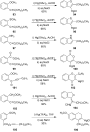
Scheme 31: Cyclization of arylacetylenes to synthesize carbocyclic and heterocyclic derivatives.

Scheme 32: Hg(II)-salt-promoted cyclization–rearrangement to form heterocyclic compounds.

Scheme 33: a) HgCl2-mediated cyclization reaction of tethered alkyne dithioacetals; and b) proposed mechanism.

Scheme 34: Cyclization of aryl allenic ethers on treatment with Hg(OTf)2.

Scheme 35: Hg(TFA)2-mediated cyclization of allene.

Scheme 36: Hg(II)-catalyzed intramolecular trans-etherification reaction of 2-hydroxy-1-(γ-methoxyallyl)tetrah...
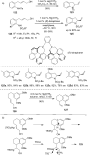
Scheme 37: a) Cyclization of alkene derivatives by catalytic Hg(OTf)2 salts and b) mechanism of cyclization.

Scheme 38: a) Synthesis of 1,4-dihydroquinoline derivatives by Hg(OTf)2 and b) plausible mechanism of formatio...

Scheme 39: Synthesis of Hg(II)-salt-catalyzed heteroaromatic derivatives.

Scheme 40: Hg(II)-salt-catalyzed synthesis of dihydropyranone derivatives.

Scheme 41: Hg(II)-salt-catalyzed cyclization of alkynoic acids.

Scheme 42: Hg(II)-salt-mediated cyclization of alkyne carboxylic acids and alcohol to furan, pyran, and spiroc...

Scheme 43: Hg(II)-salt-mediated cyclization of 1,4-dihydroxy-5-alkyne derivatives.

Scheme 44: Six-membered morpholine derivative formation by catalytic Hg(II)-salt-induced cyclization.

Scheme 45: Hg(OTf)2-catalyzed hydroxylative carbocyclization of 1,6-enyne.
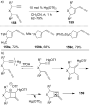
Scheme 46: a) Hg(OTf)2-catalyzed hydroxylative carbocyclization of 1,6-enyne. b) Proposed mechanism.

Scheme 47: a) Synthesis of carbocyclic derivatives using a catalytic amount of Hg(II) salt. b) Proposed mechan...

Scheme 48: Cyclization of 1-alkyn-5-ones to 2-methylfuran derivatives.

Scheme 49: Hg(NO3)2-catalyzed synthesis of 2-methylenepiperidine.

Scheme 50: a) Preparation of indole derivatives through cycloisomerization of 2-ethynylaniline and b) its mech...
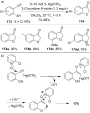
Scheme 51: a) Hg(OTf)2-catalyzed synthesis of 3-indolinones and 3-coumaranones and b) simplified mechanism.

Scheme 52: a) Hg(OTf)2-catalyzed one pot cyclization of nitroalkyne and b) its plausible mechanism.

Scheme 53: Synthesis of tricyclic heterocyclic scaffolds.

Scheme 54: HgCl2-mediated cyclization of 2-alkynylphenyl alkyl sulfoxide.

Scheme 55: a) Hg(OTf)2-catalyzed cyclization of allenes and alkynes. b) Proposed mechanism of cyclization.

Scheme 56: Stereoselective synthesis of tetrahydropyran derivatives.
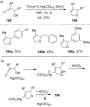
Scheme 57: a) Hg(ClO4)2-catalyzed cyclization of α-allenol derivatives. b) Simplified mechanism.

Scheme 58: Hg(TFA)2-promoted cyclization of a γ-hydroxy alkene derivative.

Scheme 59: Synthesis Hg(II)-salt-mediated cyclization of allyl alcohol for the construction of ventiloquinone ...

Scheme 60: Hg(OAc)2-mediated cyclization as a key step for the synthesis of hongconin.

Scheme 61: Examples of Hg(II)-salt-mediated cyclized ring formation in the syntheses of (±)-fastigilin C and (...

Scheme 62: Formal synthesis of (±)-thallusin.

Scheme 63: Total synthesis of hippuristanol and its analog.

Scheme 64: Total synthesis of solanoeclepin A.

Scheme 65: a) Synthesis of Hg(OTf)2-catalyzed azaspiro structure for the formation of natural products. b) Pro...
Photoredox catalysis in nickel-catalyzed C–H functionalization
- Lusina Mantry,
- Rajaram Maayuri,
- Vikash Kumar and
- Parthasarathy Gandeepan
Beilstein J. Org. Chem. 2021, 17, 2209–2259, doi:10.3762/bjoc.17.143
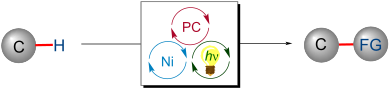
- nickel(II) species 2-VI and radical species 2-IV forms a nickel(III) intermediate 2-VII, which undergoes a reductive elimination to afford the desired product 7 and the nickel(I) species 2-VIII. The SET reduction of 2-VIII by the iridium(II) species 2-III regenerates the nickel(0) catalyst 2-V and the
- nickel(III) intermediate 3-VI, which results in the cross-coupled product 7 upon reductive elimination. The SET event between the reduced photocatalyst 3-III and the nickel(0) species 3-IV regenerates both catalysts simultaneously. Further studies by the Doyle group established the α-oxy C(sp3)−H
- (III) species 4-IX, which undergoes reductive elimination to release the desired product 10a. Concurrently, Molander and co-workers also reported a related nickel-catalyzed arylation of α-heteroatom-substituted or benzylic C(sp3)‒H bonds by aryl bromides 3 at room temperature using an iridium

Graphical Abstract

Scheme 1: Nickel-catalyzed cross-coupling versus C‒H activation.

Figure 1: Oxidative and reductive quenching cycles of a photocatalyst. [PC] = photocatalyst, A = acceptor, D ...

Scheme 2: Photoredox nickel-catalyzed C(sp3)–H arylation of dimethylaniline (1a).
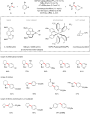
Scheme 3: Photoredox nickel-catalyzed arylation of α-amino, α-oxy and benzylic C(sp3)‒H bonds with aryl bromi...

Figure 2: Proposed catalytic cycle for the photoredox-mediated HAT and nickel catalysis enabled C(sp3)‒H aryl...

Scheme 4: Photoredox arylation of α-amino C(sp3)‒H bonds with aryl iodides.

Figure 3: Proposed mechanism for photoredox nickel-catalyzed α-amino C‒H arylation with aryl iodides.

Scheme 5: Nickel-catalyzed α-oxy C(sp3)−H arylation of cyclic and acyclic ethers.

Figure 4: Proposed catalytic cycle for the C(sp3)−H arylation of cyclic and acyclic ethers.

Scheme 6: Photochemical nickel-catalyzed C–H arylation of ethers.

Figure 5: Proposed catalytic cycle for the nickel-catalyzed arylation of ethers with aryl bromides.

Scheme 7: Nickel-catalyzed α-amino C(sp3)‒H arylation with aryl tosylates.
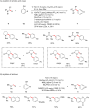
Scheme 8: Arylation of α-amino C(sp3)‒H bonds by in situ generated aryl tosylates from phenols.

Scheme 9: Formylation of aryl chlorides through redox-neutral 2-functionalization of 1,3-dioxolane (13).

Scheme 10: Photochemical C(sp3)–H arylation via a dual polyoxometalate HAT and nickel catalytic manifold.
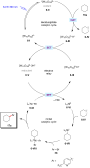
Figure 6: Proposed mechanism for C(sp3)–H arylation through dual polyoxometalate HAT and nickel catalytic man...

Scheme 11: Photochemical nickel-catalyzed α-hydroxy C‒H arylation.

Scheme 12: Photochemical synthesis of fluoxetine (21).

Scheme 13: Photochemical nickel-catalyzed allylic C(sp3)‒H arylation with aryl bromides.

Figure 7: Proposed mechanism for the photochemical nickel-catalyzed allylic C(sp3)‒H arylation with aryl brom...

Scheme 14: Photochemical C(sp3)‒H arylation by the synergy of ketone HAT catalysis and nickel catalysis.

Figure 8: Proposed mechanism for photochemical C(sp3)‒H arylation by the synergy of ketone HAT catalysis and ...

Scheme 15: Benzophenone- and nickel-catalyzed photoredox benzylic C–H arylation.

Scheme 16: Benzaldehyde- and nickel-catalyzed photoredox C(sp3)–H arylation.

Scheme 17: Photoredox and nickel-catalyzed enantioselective benzylic C–H arylation.

Figure 9: Proposed mechanism for the photoredox and nickel-catalyzed enantioselective benzylic C–H arylation.

Scheme 18: Photoredox nickel-catalyzed α-(sp3)‒H arylation of secondary benzamides with aryl bromides.

Scheme 19: Enantioselective sp3 α-arylation of benzamides.

Scheme 20: Nickel-catalyzed decarboxylative vinylation/C‒H arylation of cyclic oxalates.

Figure 10: Proposed mechanism for the nickel-catalyzed decarboxylative vinylation/C‒H arylation of cyclic oxal...

Scheme 21: C(sp3)−H arylation of bioactive molecules using mpg-CN photocatalysis and nickel catalysis.

Figure 11: Proposed mechanism for the mpg-CN/nickel photocatalytic C(sp3)–H arylation.

Scheme 22: Nickel-catalyzed synthesis of 1,1-diarylalkanes from alkyl bromides and aryl bromides.

Figure 12: Proposed mechanism for photoredox nickel-catalyzed C(sp3)–H alkylation via polarity-matched HAT.

Scheme 23: Photoredox nickel-catalyzed C(sp3)‒H alkylation via polarity-matched HAT.

Scheme 24: Benzaldehyde- and nickel-catalyzed photoredox C(sp3)‒H alkylation of ethers.

Scheme 25: Benzaldehyde- and nickel-catalyzed photoredox C(sp3)‒H alkylation of amides and thioethers.

Scheme 26: Photoredox and nickel-catalyzed C(sp3)‒H alkylation of benzamides with alkyl bromides.

Scheme 27: CzIPN and nickel-catalyzed C(sp3)‒H alkylation of ethers with alkyl bromides.

Figure 13: Proposed mechanism for the CzIPN and nickel-catalyzed C(sp3)‒H alkylation of ethers.

Scheme 28: Nickel/photoredox-catalyzed methylation of (hetero)aryl chlorides and acid chlorides using trimethy...

Figure 14: Proposed catalytic cycle for the nickel/photoredox-catalyzed methylation of (hetero)aryl chlorides ...
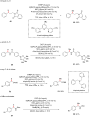
Scheme 29: Photochemical nickel-catalyzed C(sp3)–H methylations.

Scheme 30: Photoredox nickel catalysis-enabled alkylation of unactivated C(sp3)–H bonds with alkyl bromides.

Scheme 31: Photochemical C(sp3)–H alkenylation with alkenyl tosylates.

Scheme 32: Photoredox nickel-catalyzed hydroalkylation of internal alkynes.

Figure 15: Proposed mechanism for the photoredox nickel-catalyzed hydroalkylation of internal alkynes.

Scheme 33: Photoredox nickel-catalyzed hydroalkylation of activated alkynes with C(sp3)−H bonds.

Scheme 34: Allylation of unactivated C(sp3)−H bonds with allylic chlorides.

Scheme 35: Photochemical nickel-catalyzed α-amino C(sp3)–H allylation of secondary amides with trifluoromethyl...

Scheme 36: Photoredox δ C(sp3)‒H allylation of secondary amides with trifluoromethylated alkenes.

Scheme 37: Photoredox nickel-catalyzed acylation of α-amino C(sp3)‒H bonds of N-arylamines.

Figure 16: Proposed mechanism for the photoredox nickel-catalyzed acylation of α-amino C(sp3)–H bonds of N-ary...

Scheme 38: Photocatalytic α‑acylation of ethers with acid chlorides.

Figure 17: Proposed mechanism for the photocatalytic α‑acylation of ethers with acid chlorides.

Scheme 39: Photoredox and nickel-catalyzed C(sp3)‒H esterification with chloroformates.

Scheme 40: Photoredox nickel-catalyzed dehydrogenative coupling of benzylic and aldehydic C–H bonds.

Figure 18: Proposed reaction pathway for the photoredox nickel-catalyzed dehydrogenative coupling of benzylic ...

Scheme 41: Photoredox nickel-catalyzed enantioselective acylation of α-amino C(sp3)–H bonds with carboxylic ac...

Scheme 42: Nickel-catalyzed C(sp3)‒H acylation with N-acylsuccinimides.

Figure 19: Proposed mechanism for the nickel-catalyzed C(sp3)–H acylation with N-acylsuccinimides.

Scheme 43: Nickel-catalyzed benzylic C–H functionalization with acid chlorides 45.

Scheme 44: Photoredox nickel-catalyzed benzylic C–H acylation with N-acylsuccinimides 84.

Scheme 45: Photoredox nickel-catalyzed acylation of indoles 86 with α-oxoacids 87.

Scheme 46: Nickel-catalyzed aldehyde C–H functionalization.

Figure 20: Proposed catalytic cycle for the photoredox nickel-catalyzed aldehyde C–H functionalization.

Scheme 47: Photoredox carboxylation of methylbenzenes with CO2.

Figure 21: Proposed mechanism for the photoredox carboxylation of methylbenzenes with CO2.

Scheme 48: Decatungstate photo-HAT and nickel catalysis enabled alkene difunctionalization.

Figure 22: Proposed catalytic cycle for the decatungstate photo-HAT and nickel catalysis enabled alkene difunc...

Scheme 49: Diaryl ketone HAT catalysis and nickel catalysis enabled dicarbofunctionalization of alkenes.

Figure 23: Proposed catalytic mechanism for the diaryl ketone HAT catalysis and nickel catalysis enabled dicar...

Scheme 50: Overview of photoredox nickel-catalyzed C–H functionalizations.
Catalyzed and uncatalyzed procedures for the syntheses of isomeric covalent multi-indolyl hetero non-metallides: an account
- Ranadeep Talukdar
Beilstein J. Org. Chem. 2021, 17, 2102–2122, doi:10.3762/bjoc.17.137
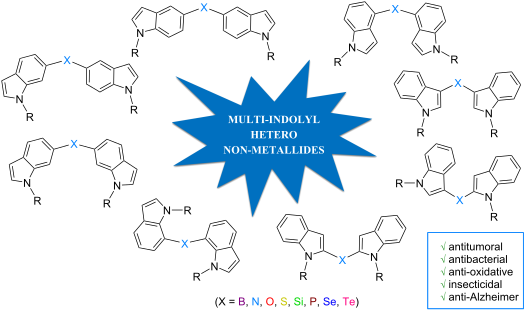
- KI formed ferrous iodide, which reacts with indole to form the iron bis-indolide 107, followed by reaction with N,N-dimethylmethanethioamide to get the S atom inserted (108). A reductive elimination then generated the bis(indol-3-yl)sulfides 105 along with Fe0, which was re-oxidized by aerial oxygen

Graphical Abstract

Scheme 1: Synthesis of 2,2’-bis(indole)borinic ester 3.

Scheme 2: Synthesis of 2,2’-bisindole NHC·boranes by an SEAr mechanism.

Scheme 3: Syntheses of indolyl amines through Buchwald–Hartwig cross coupling.

Scheme 4: Synthesis of 3,3’-bis(indolyl) ethers.

Scheme 5: C–H silylation of indoles.

Scheme 6: n-BuLi-mediated syntheses of bis(indol-3-yl)silanes.
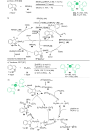
Scheme 7: Acid-catalyzed syntheses of bis(indol-3-yl)silanes and mechanisms.

Scheme 8: B(C6F5)3 and Al(C6F5)3-catalyzed syntheses of bis(indol-3-yl)silanes reported by Han.

Scheme 9: Base-mediated syntheses of bis and tris(indol-2-yl)phosphines.

Scheme 10: Synthesis of bis(indol-2-yl)sulfides using SL2-type reagents.

Scheme 11: Synthesis of 2,3’- and 2,2’-bis(indolyl)sulfides using disulfides as substrates.

Scheme 12: Synthesis of diindol-2-ylsulfide (84) from 2-iodoindole (92) and thiourea.

Scheme 13: Synthesis of bis(indol-3-yl)sulfides using N-silylated 3-bromoindole 93.

Scheme 14: Fischer indole synthesis of bis(indol-3-yl)sulfides using thio diketones.

Scheme 15: Oxidative synthesis of bis(indol-3-yl)sulfides using indoles and elemental sulfur.
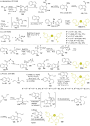
Scheme 16: Synthesis of bis(indol-3-yl)sulfides using sulfoxides as sulfur source.

Scheme 17: Syntheses of bis(indol-2-yl)selanes.
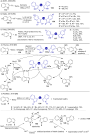
Scheme 18: Syntheses of bis(indol-3-yl)selanes.

Scheme 19: Synthesis of bis(indol-2-yl)tellane 147.

Scheme 20: Synthesis of tris(indolyl)borane 154.

Scheme 21: Synthesis of bis(indol-4-yl)amines 159.

Scheme 22: Synthesis of bis(indol-5-yl)amines.

Scheme 23: Synthesis of 6,5’/6,6’-bis(indolyl)amines.

Scheme 24: Synthesis of potent HIV-inhibitors 6,6’-bis(indolyl) ethers.

Scheme 25: Synthesis of bis(indol-7-yl) ether.

Scheme 26: Synthesis of di(indol-5-yl)sulfide (183).

Scheme 27: Syntheses of 2,2’-diformyl-7,7’-bis(indolyl)selenides.



