Search results
Search for "stereogenic centers" in Full Text gives 135 result(s) in Beilstein Journal of Organic Chemistry.
Pigmentosins from Gibellula sp. as antibiofilm agents and a new glycosylated asperfuran from Cordyceps javanica
Beilstein J. Org. Chem. 2019, 15, 2968–2981, doi:10.3762/bjoc.15.293
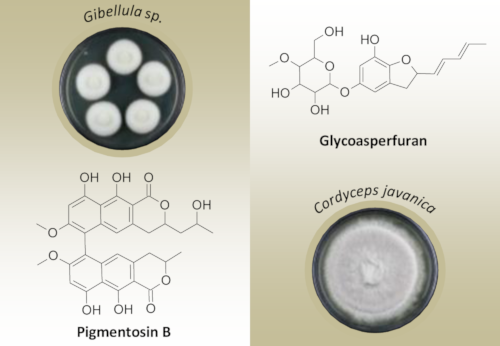
- with pigmentosin A, a 3,4-dihydro-α-naphthopyrone dimer with a 7,7′-dimethoxy pattern, by comparing its spectroscopic data with the published data for pigmentosin A [12]. Nevertheless, the chirality of the stereogenic centers C-3/C-3′ as well as the atropisomerism at the 6,6′ axis of pigmentosin A (1
- . Thus, the atropisomerism at the 6-6′ axis of pigmentosin A (1) was determined to be aR, while the absolute configuration of the stereogenic centers C-3/C-3′ remains unsolved. Compound 2 was obtained as pale green powder. The molecular formula of 2 was determined as C32H30O11 based on HRMS data. The 13C


N-(1-Phenylethyl)aziridine-2-carboxylate esters in the synthesis of biologically relevant compounds
Beilstein J. Org. Chem. 2019, 15, 1722–1757, doi:10.3762/bjoc.15.168

- MeBmt are rather challenging endeavor since these amino acids in addition to an E-configured C=C bond has three neighboring stereogenic centers. The starting aziridine aldehyde (2R,1'R)-6 already introduces the required configuration at C2 and the two other centers of chirality were created by the
- obtained as hydrochloride salts. Since the pyrrolidine (2S,3S,4R)-182 has three stereogenic centers of the same configuration as in (2S,3S,4S)-159 its synthesis started from the common intermediate diol 160 (Scheme 41) with the aziridine ring opening to produce the pyrrolidin-2-one (3S,4S,5S,1'R)-183a


Synthesis of non-racemic 4-nitro-2-sulfonylbutan-1-ones via Ni(II)-catalyzed asymmetric Michael reaction of β-ketosulfones
Beilstein J. Org. Chem. 2019, 15, 1289–1297, doi:10.3762/bjoc.15.127
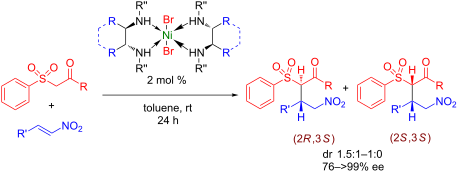
- University, Leninskie Gory, 1, 119991, Mosсow, Russian Federation 10.3762/bjoc.15.127 Abstract Functionally substituted sulfones with stereogenic centers are valuable reagents in organic synthesis and key motifs in some bioactive compounds. The asymmetric Michael addition of β-ketosulfones to conjugated
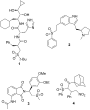
- enantioselectivity are also known [13][14][15][16][17][18]. The studied methods for obtaining acyclic sulfones with stereogenic centers in the side chain are more limited. One of the most significant approaches to obtaining both cyclic and acyclic chiral sulfones is asymmetric hydrogenation in the presence of




Catalytic asymmetric oxo-Diels–Alder reactions with chiral atropisomeric biphenyl diols
Beilstein J. Org. Chem. 2019, 15, 955–962, doi:10.3762/bjoc.15.92
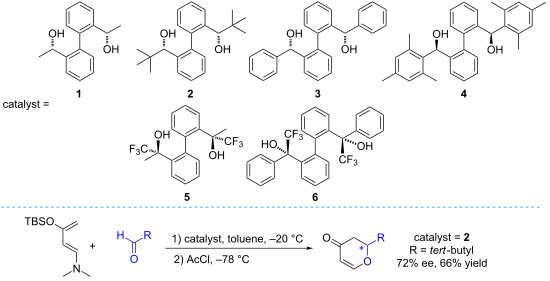
- stereogenic centers in a one-step [4 + 2] cycloaddition or cyclization reaction [6][7][8] and it has become hugely popular in preparing vital intermediates for the syntheses of key structural subunits of natural products with biological activities (e.g., carbohydrates, antibiotics, toxins etc.) [9][10


An anomalous addition of chlorosulfonyl isocyanate to a carbonyl group: the synthesis of ((3aS,7aR,E)-2-ethyl-3-oxo-2,3,3a,4,7,7a-hexahydro-1H-isoindol-1-ylidene)sulfamoyl chloride
Beilstein J. Org. Chem. 2019, 15, 931–936, doi:10.3762/bjoc.15.89
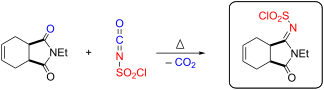
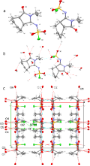
- , the cyclohexene ring has a twist-boat conformation and the pyrrolidine rings are in half-chair conformation. The structures contain four asymmetric carbon atoms and the stereogenic centers are as follows: C1(R), C6(S), C11(R), and C16(S), where the N-chlorosulfonyl group attached to the carbonyl atom




Diastereo- and enantioselective preparation of cyclopropanol derivatives
Beilstein J. Org. Chem. 2019, 15, 752–760, doi:10.3762/bjoc.15.71
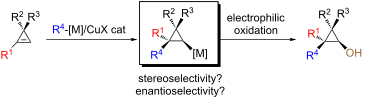
- afford polysubstituted cyclopropanols (or cyclopropylamines) potentially bearing several diastereo- and enantiomerically enriched adjacent stereogenic centers, including quaternary carbon stereocenters, as single diastereo- and enantiomer from a simple precursor, it would certainly provide an additional
- bearing two adjacent quaternary stereogenic centers in a single pot operation. The simple preparation of enantiomerically enriched cyclopropene afforded the corresponding cyclopropanols in high enantiomeric excess. This transformation was then applied to unfunctionalized diversely substituted




The LANCA three-component reaction to highly substituted β-ketoenamides – versatile intermediates for the synthesis of functionalized pyridine, pyrimidine, oxazole and quinoxaline derivatives
Beilstein J. Org. Chem. 2019, 15, 655–678, doi:10.3762/bjoc.15.61
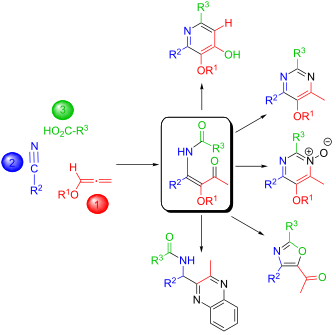
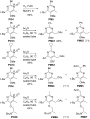
- 25) showing that the electrophilicity of the amide carbonyl group is lower in these substrates. Stereogenic centers could also successfully be introduced into the β-ketoenamides as shown by the examples collected in Scheme 5. All three possibilities to use enantiopure starting materials were examined
- additional examples PM31–34 having stereogenic centers are presented, that were obtained from β-ketoenamides KE37, KE38, KE40 and KE41 (see Scheme 5) [43]. The pyrimidine PM35 is derived from β-ketoenamide KE78 (see Scheme 7) and bears a benzyl group at C-4 instead of the standard methyl group [33]. The bis
- compatible with all kinds of substituents R2 and R3 and several functional groups within these substituents. Enantiopure components efficiently lead to products with stereogenic centers. Dinitriles or dicarboxylic acids provide the expected bis-β-ketoenamides in moderate yield. The prepared β-ketoenamides KE




A chemoenzymatic synthesis of ceramide trafficking inhibitor HPA-12
Beilstein J. Org. Chem. 2019, 15, 490–496, doi:10.3762/bjoc.15.42
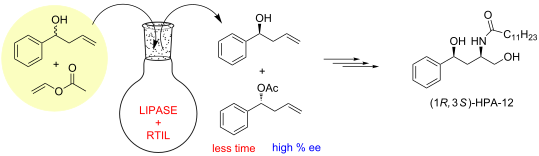
- synthesis of the title compound has been developed using an efficient and highly enantioselective lipase-catalyzed acylation in a hydrophobic ionic liquid, [bmim][PF6], followed by a diastereoselective asymmetric dihydroxylation as the key steps for incorporating the stereogenic centers. The further


Synthesis of nonracemic hydroxyglutamic acids
Beilstein J. Org. Chem. 2019, 15, 236–255, doi:10.3762/bjoc.15.22
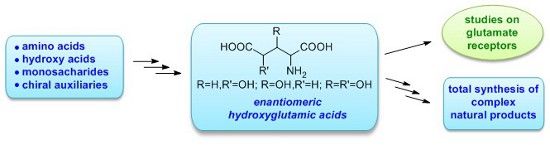
- ][44]. Natural occurrence as well as possibilities of glutamate-like biological activity modulated by additional hydrogen bonding with hydroxy groups inspired the interest in the synthesis of stereoisomers of hydroxyglutamic acids 2–4 (Figure 2). Since they contain two or three stereogenic centers
- ) also appeared attractive providing two or three predefined stereogenic centers. In more sophisticated approaches application of chiral auxiliaries allowed to generate vicinal or 1,3-aminoalcohol units of the required stereochemistries. Currently available synthetic methodologies towards hydroxyglutamic


Stereodivergent approach in the protected glycal synthesis of L-vancosamine, L-saccharosamine, L-daunosamine and L-ristosamine involving a ring-closing metathesis step
Beilstein J. Org. Chem. 2018, 14, 2949–2955, doi:10.3762/bjoc.14.274
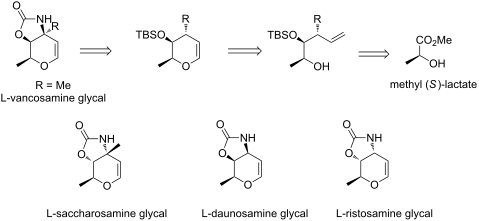
- speculated that the cyclic vinyl ether derivative I, with the prerequisite configuration of all stereogenic centers of the carbamate-protected glycal of L-vancosamine 1, could be obtained from the alcohol derivative II using an O-vinylation–ring-closing metathesis sequence (Figure 3). Afterwards, the


Ring-opening metathesis of some strained bicyclic systems; stereocontrolled access to diolefinated saturated heterocycles with multiple stereogenic centers
Beilstein J. Org. Chem. 2018, 14, 2698–2707, doi:10.3762/bjoc.14.247
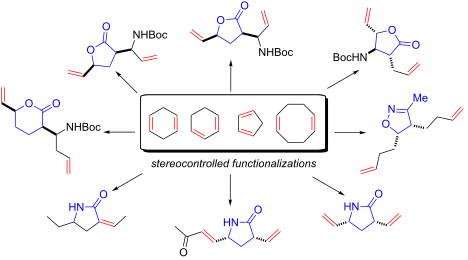
- stereocontrol, through the conservation of the configuration of the stereogenic centers of the starting compounds. Keywords: functionalization; heterocycles; metathesis; ring opening; stereogenic centers; Introduction Metathesis reactions, among them ring-opening metathesis (ROM), have received a great deal
- of attention in synthetic organic chemistry, affording access to various highly functionalized, alkenylated molecular entities [1][2][3][4][5][6][7][8][9][10]. Highly functionalized three-dimensional organic scaffolds with multiple stereogenic centers as small molecular entities represent an
- powerful and widely applied methodology for the synthesis of such derivatives, including alkenylated molecular scaffolds with multiple stereogenic centers [14][15][16] and references cited therein. Diversity-oriented synthesis (DOS), with the aim of the preparation of structurally diverse elements of small


Chiral bisoxazoline ligands designed to stabilize bimetallic complexes
Beilstein J. Org. Chem. 2018, 14, 2002–2011, doi:10.3762/bjoc.14.175

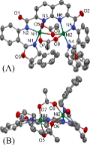
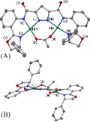
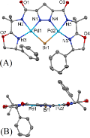
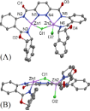
- backbone of complex 16·Ni2(OAc)2 shows a helical arrangement. This helicity is facilitated by the innate stereogenic centers of the oxazoline moieties which is further extended by the flexibility afforded by the amide connections. Naphthyridine ligand 22-H2 was designed as an analogue of ligand 16-H2 that







An efficient and facile access to highly functionalized pyrrole derivatives
Beilstein J. Org. Chem. 2018, 14, 884–890, doi:10.3762/bjoc.14.75
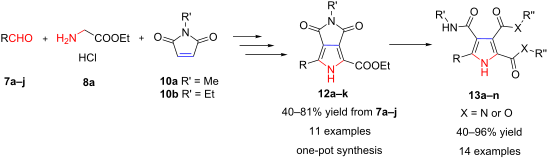
- considerable efforts have been expended to build stereogenic centers of pyrrolidine derivatives using chiral catalysts [7]. As our aim was to construct a small library of polysubstituted pyrroles for antibacterial screening, it prompted us to develop a concise and efficient synthesis of pyrrolo[3,4-c]pyrrole


A stereoselective and flexible synthesis to access both enantiomers of N-acetylgalactosamine and peracetylated N-acetylidosamine
Beilstein J. Org. Chem. 2018, 14, 856–860, doi:10.3762/bjoc.14.71
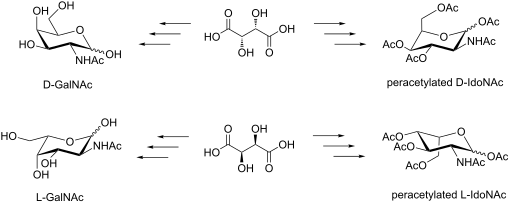
- pivotal role in cell–cell interaction and receptor induced cell signaling. Herein, we present a synthetic route in which two of the four stereogenic centers present in the target compound are derived from enantiopure tartaric acid being selectively converted to epoxy alcohols. The key step is the Pd
- of the four desired stereogenic centers. By extending compound 5 via a Horner–Wadsworth–Emmons (HWE) reaction [15] and subsequent stereoselective introduction of the corresponding nitrogen functionality, a route to four different 2-amino sugar stereoisomers has been elaborated. Results and Discussion


A Brønsted base-promoted diastereoselective dimerization of azlactones
Beilstein J. Org. Chem. 2017, 13, 2663–2670, doi:10.3762/bjoc.13.264
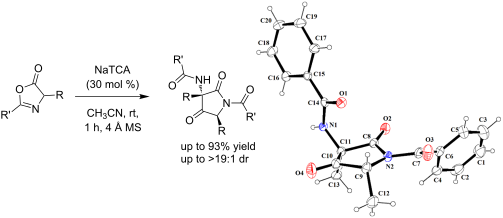
- azlactone dimer, which is a versatile heterocycle containing two stereogenic centers (Figure 1). Kobayashi and co-workers demonstrated the rich reactivity of azlactones conducting the dimerization reaction using strong bases as catalysts; however, higher temperatures and long reaction times were required
- NMR spectroscopic monitoring and revealed that the diastereoselectivity was determined during C–C bond formation step. A diastereoselective streptopyrrolidine analogue, containing three contiguous stereogenic centers, was smoothly obtained as a sole diastereomer in 70% yield. Structure of an azlactone





![[Graphic 5]](/bjoc/content/inline/1860-5397-13-264-i10.svg?max-width=637&scale=1.18182) vs time for the dimerization of azlactone 1a.
vs time for the dimerization of azlactone 1a.

Regioselective decarboxylative addition of malonic acid and its mono(thio)esters to 4-trifluoromethylpyrimidin-2(1H)-ones
Beilstein J. Org. Chem. 2017, 13, 2617–2625, doi:10.3762/bjoc.13.259
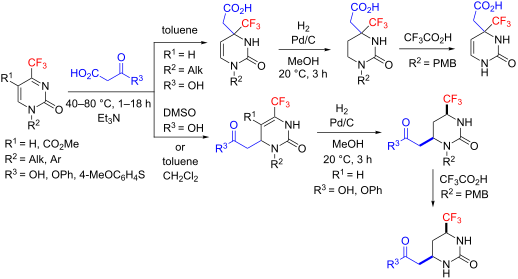
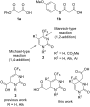
- that the 3,4-dihydropyrimidin-2(1H)-one ring in both Mannich- and Michael-type products 4 and 5, 6 can be readily hydrogenated under mild catalytic conditions to furnish saturated compounds 9 and 10, 11, respectively. Products 10 and 11 featuring two stereogenic centers were obtained only as cis



Diastereoselective Mannich reactions of pseudo-C2-symmetric glutarimide with activated imines
Beilstein J. Org. Chem. 2017, 13, 2473–2477, doi:10.3762/bjoc.13.244
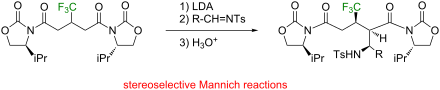
- , based on its inherent pseudo-C2 symmetric structure [6][7][8] which enables the formation of plural stereogenic centers by a single operation. These promising results prompted us to extend this aldol protocol to its relative, Mannich reactions [9][10][11][12][13] whose details are reported in this


Conjugated nitrosoalkenes as Michael acceptors in carbon–carbon bond forming reactions: a review and perspective
Beilstein J. Org. Chem. 2017, 13, 2214–2234, doi:10.3762/bjoc.13.220
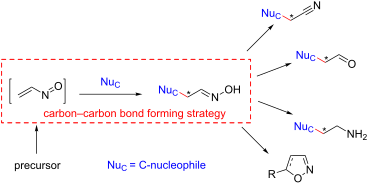
- stereogenic centers. In this review, we attempted to summarize up-to-date data on the successful coupling of α-nitrosoalkenes with C-nucleophiles (classified according to a nucleophile type) emphasizing on examples from target-oriented synthesis as well as to analyze growing points in this methodology. The
- hydrolysis of the oximino group gave target steroid 25 with the desired configuration of all stereogenic centers. In the attempted route to (+/−)-isocomene, Oppolzer and co-workers suggested pentalenone 29, accessible by an intramolecular aldol condensation/elimination of diketone 30, as a key precursor


Synthesis of the heterocyclic core of the D-series GE2270
Beilstein J. Org. Chem. 2017, 13, 1407–1412, doi:10.3762/bjoc.13.137
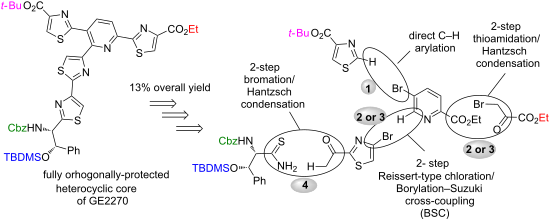
- an additional bromination reaction followed by Bagley’s modified Hantzsch condensation with the adequate thioamide to deliver the fully orthogonally-protected heterocyclic core of GE2270 along with avoiding racemization of stereogenic centers (Figure 1). Successfully applied last year by Yamagushi's



Total syntheses of the archazolids: an emerging class of novel anticancer drugs
Beilstein J. Org. Chem. 2017, 13, 1085–1098, doi:10.3762/bjoc.13.108
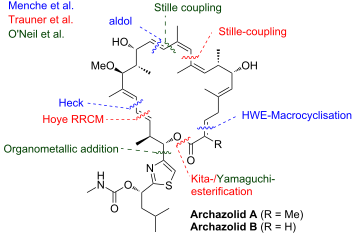
- the aldehyde 32 with DIBALH. Finally, a Brown crotylation [77] set the two vicinal stereogenic centers of 6 with high stereoselectivity. In total this route enabled an efficient and reliable access to this key fragment. However, one drawback of this sequence was a tendency of epimerisation at C1
- Scheme 9. After reduction the alcohol was protected with TIPS and the TBS ether was cleaved by acetic acid to get to the primary alcohol 43. The reduction with (S)-alpine borane was highly diastereoselective (dr > 20:1). Following this sequence over 6 steps the two stereogenic centers at C7 and C8 were
- with sodium borohydride to generate all three required stereogenic centers for this fragment with excellent diasteroselectivity. Final methylation of the free alcohol was followed by conversion of the vinyl iodide into the desired stannane to get fragment 39 which was used directly for coupling


Secondary metabolome and its defensive role in the aeolidoidean Phyllodesmium longicirrum, (Gastropoda, Heterobranchia, Nudibranchia)
Beilstein J. Org. Chem. 2017, 13, 502–519, doi:10.3762/bjoc.13.50
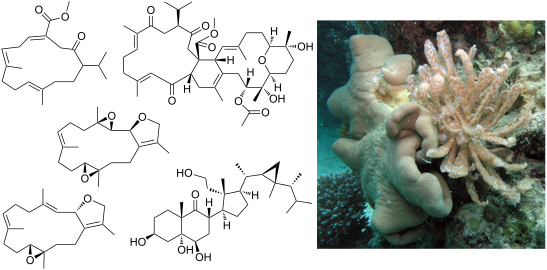
- and NOESY; all NMR spectral data in Supporting Information File 1, Figures S32–36 and Table S4) experiments and propose the absolute configuration of bisepoxide 12. Bisepoxide 12 has five stereogenic centers, found at the epoxide moieties between C-3 and C-4, and C-11 and C-12, as well as C-2 of the



Diastereoselective anodic hetero- and homo-coupling of menthol-, 8-methylmenthol- and 8-phenylmenthol-2-alkylmalonates
Beilstein J. Org. Chem. 2017, 13, 33–42, doi:10.3762/bjoc.13.5
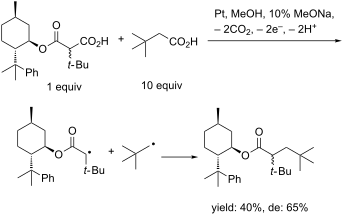
- diastereoselectivity ranging from 5 to 65% de. Electrolyses without a coacid led to diastereomeric homo-coupling products in 21–50% yield with ratios of diastereomers being 1.17:2.00:0.81 to 7.03:2.00. The stereochemistry of the new stereogenic centers was confirmed by X-ray structure analysis and 13C NMR data
- diastereomers of 23–25 were obtained from crystal structure analyses and the correlation of the 13C NMR data. According to an X-ray analysis the minor diastereomer 23b has the configuration (S) at the new formed stereogenic center (Figure 2) [23]. The configuration of the new stereogenic centers in compounds 24
- –29a/b/c were afforded in 50–21% yield (Scheme 4). In the homo-coupling reaction two identical radicals combine to form two stereogenic centers. Three diastereomers can be formed by re,re-, re,si- and si,si-coupling of the prostereogenic radical centers. Without facial selectivity they will be formed




Synthesis of polyhydroxylated decalins via two consecutive one-pot reactions: 1,4-addition/aldol reaction followed by RCM/syn-dihydroxylation
Beilstein J. Org. Chem. 2016, 12, 2602–2608, doi:10.3762/bjoc.12.255
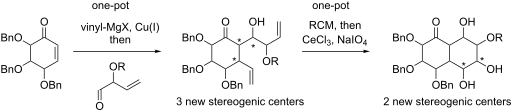
- of this transformation, three new stereogenic centers are generated. A copper-catalyzed 1,4-addition of organometallic reagents to cyclic α,β-unsaturated ketones, followed by an aldol reaction has been already used in the synthesis of complex natural products [26][27][28][29][30][31][32][33


An effective one-pot access to polynuclear dispiroheterocyclic structures comprising pyrrolidinyloxindole and imidazothiazolotriazine moieties via a 1,3-dipolar cycloaddition strategy
Beilstein J. Org. Chem. 2016, 12, 2240–2249, doi:10.3762/bjoc.12.216

- regio- and diastereoselective one-pot method for the synthesis of new polynuclear dispiroheterocyclic systems with five stereogenic centers (dispiro[imidazo[4,5-e]thiazolo[3,2-b]-1,2,4-triazine-6,3′-pyrrolidine-2′,3′′-indoles]) comprising pyrrolidinyloxindole and imidazo[4,5-e]thiazolo[3,2-b]-1,2,4


The direct oxidative diene cyclization and related reactions in natural product synthesis
Beilstein J. Org. Chem. 2016, 12, 2104–2123, doi:10.3762/bjoc.12.200
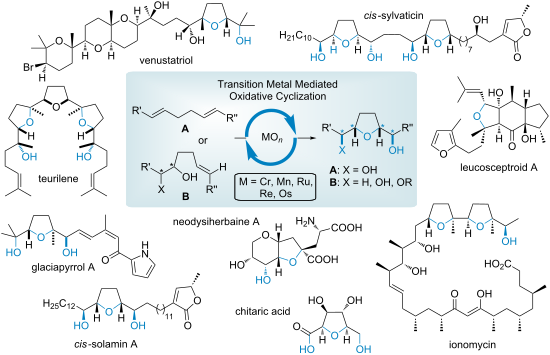
- from a simple 1,5-diene precursor or up to two stereogenic centers when starting from 5,6- or 5-(di)hydroxyalkenes has progressively drawn the attention of synthetic organic chemists. These efforts have so far yielded some beautiful and persuasive results in the synthesis of natural products. The aim
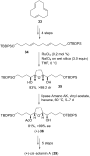
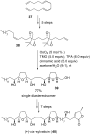
- -mediated oxidative cyclization to introduce the THF ring A and four of its stereogenic centers in a single step (Scheme 6) [59]. A related approach had previously been featured as a key step in their synthesis of salinomycin, a commercially significant coccidiostat [2]. The required (Z,Z)-diene 16 was
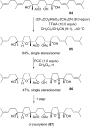
- -solamin A (29) and B using the diastereoselective, auxiliary-controlled, permanganate-promoted type A oxidative cyclization of 1,5-dienes to create the THF diol backbone and to introduce four of the five stereogenic centers present in these mono-THF acetogenins (left, Scheme 8) [76][78]. Starting from