


Search results
Search for "triazole" in Full Text gives 305 result(s) in Beilstein Journal of Organic Chemistry. Showing first 200.
Synthesis of novel [1,2,4]triazolo[1,5-b][1,2,4,5]tetrazines and investigation of their fungistatic activity
Beilstein J. Org. Chem. 2022, 18, 243–250, doi:10.3762/bjoc.18.29
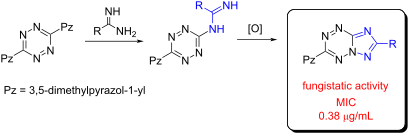
- for their fungistatic activities against mycelial anthropophilic and zooanthropophilic dermatophytes (Trichophyton, Microsporum and Epidermophyton), which cause diseases of the skin and its appendages (hair, nails) (Table 1). In the series of compounds 3a–i, in which substituents in the triazole ring


Anomeric 1,2,3-triazole-linked sialic acid derivatives show selective inhibition towards a bacterial neuraminidase over a trypanosome trans-sialidase
Beilstein J. Org. Chem. 2022, 18, 208–216, doi:10.3762/bjoc.18.24
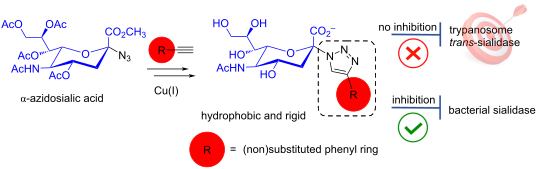
- natural substrate for sialidases and its chemical modification has been a useful approach to generate potent and selective inhibitors. Aiming at advancing the discovery of selective Trypanosoma cruzi trans-sialidase (TcTS) inhibitors, we have synthesised a small series of anomeric 1,2,3-triazole-linked
- differences in sialidases that need to be addressed in order to achieve selective inhibition. Keywords: inhibition; neuraminidase; sialic acid; trans-sialidase; 1,2,3-triazole; Introduction Amongst the diversity of glycans present in living organisms, N-acetylneuraminic acid (Neu5Ac, sialic acid) is
- series of C-2-modified sialic acid bearing a monosaccharide tethered via 1,2,3-triazole ring (sialylmimetic neoglycoconjugates) [19] that showed 67–91% inhibitory activity at 1 mM. We now envisaged replacing the monosaccharide moiety by (hetero)aromatic substituents (Figure 2A) expecting better



Peptide stapling by late-stage Suzuki–Miyaura cross-coupling
Beilstein J. Org. Chem. 2022, 18, 1–12, doi:10.3762/bjoc.18.1
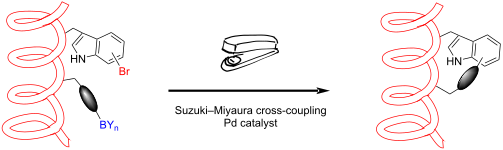
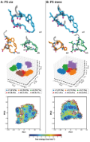
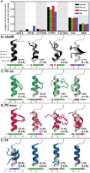
- ], disulfide- [13], thioether- [14][15][16][17][18][19][20], triazole- [21][22], oxime- [23] and hydrazone formation [24] as well as multicomponent reactions such as the Ugi- or Petasis reaction [25][26][27][28][29][30][31][32]. The content of helicity can moreover be changed by the introduction of a photo


Exfoliated black phosphorous-mediated CuAAC chemistry for organic and macromolecular synthesis under white LED and near-IR irradiation
Beilstein J. Org. Chem. 2021, 17, 2477–2487, doi:10.3762/bjoc.17.164
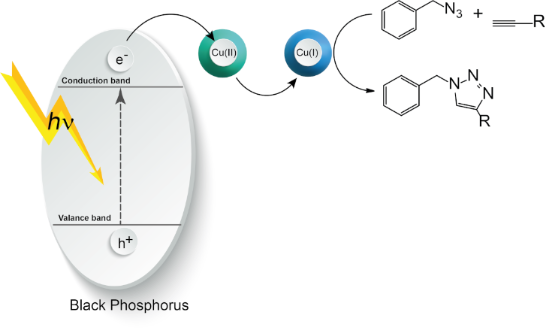
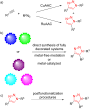
- at 4.42 ppm and appearance of the new signal at 8.67 ppm corresponding to the triazole moiety confirmed successful click reaction under white LED exposure conditions after 4 h (Figure 3a). Kinetic studies conducted by 1H NMR analysis confirmed that the click reaction between benzyl azide and
- -Alk) and 9-(azidomethyl)anthracene (Az-2) as click components was investigated. The detailed 1H NMR spectrum of the resulting anthracene functional polymer (PCL-Anth) exhibited the characteristic signals of triazole and benzylic protons at 5.5 ppm and 8.70 ppm, respectively (Figure 4a). The obtained
- molecular weight region without contamination of the precursor polymers. The 1H NMR spectrum of the block copolymer displayed the characteristic peaks of both macromolecular segments. Additionally, the methylene protons adjacent to the triazole ring at 7.48 ppm were noted (Figure 5b). These results


Synthesis and antimicrobial activity of 1H-1,2,3-triazole and carboxylate analogues of metronidazole
Beilstein J. Org. Chem. 2021, 17, 2377–2384, doi:10.3762/bjoc.17.154
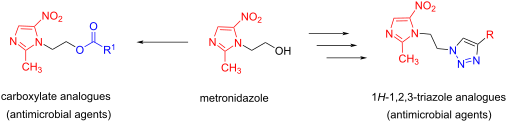
- -Wittenberg, Kurt-Mothes-Str. 2, d-06120, Halle (Saale), Germany 10.3762/bjoc.17.154 Abstract Herein, a series of novel 1H-1,2,3-triazole and carboxylate derivatives of metronidazole (5a–i and 7a–e) were synthesized and evaluated for their antimicrobial activity in vitro. All the newly synthesized compounds
- inhibiting effects compared to the activity of the parent compound. Amongst the tested compounds 5b, 5c, 5e, 7b and 7e displayed excellent potent antimicrobial activity. The current study has demonstrated the usefulness of the 1H-1,2,3-triazole moiety in the metronidazole skeleton. Keywords: antimicrobial
- agents; carboxylate analogues; 1H-1,2,3-triazole analogues; metronidazole; synthesis; Introduction Metronidazole (1) is an important antimicrobial agent which has been clinically used successfully for a long time. It was originally used for the treatment of infections caused by Trichomonas varginalis


Halides as versatile anions in asymmetric anion-binding organocatalysis
Beilstein J. Org. Chem. 2021, 17, 2270–2286, doi:10.3762/bjoc.17.145
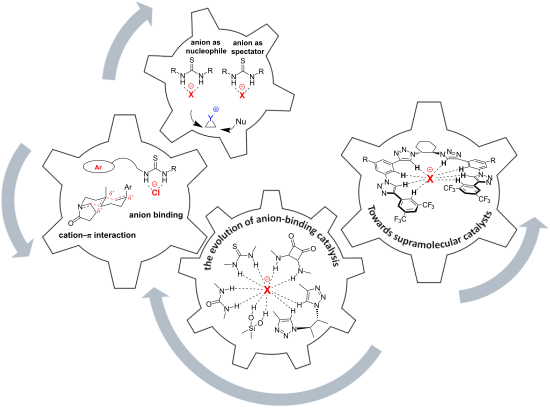
- , but also to cation–H or π–π interactions. Some of the advantages of multidentate, supramolecular anion-binding catalysis were recently exploited by the Feringa group, who designed an anion-binding catalyst 86 that fuses the known triazole binding properties with a light-switchable molecular motor. In
- this way, they were not only able to control the folding of the triazole units through successive irradiation and thermal excitation, but they could also selectively control the stereochemical outcome of the benchmark reaction of 1-chloroisochromane (73) with silylketene acetals (Scheme 19) [92]. Such



(Phenylamino)pyrimidine-1,2,3-triazole derivatives as analogs of imatinib: searching for novel compounds against chronic myeloid leukemia
Beilstein J. Org. Chem. 2021, 17, 2260–2269, doi:10.3762/bjoc.17.144
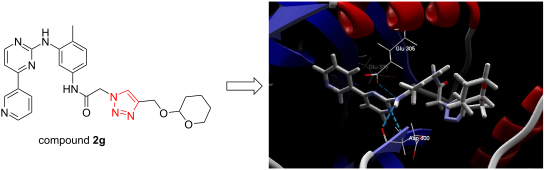
- )pyrimidine-pyridine (PAPP) group as a pharmacophoric fragment, and these compounds were biologically evaluated. The synthesis of twelve new compounds was performed in three steps and assisted by microwave irradiation in a 1,3-dipolar cycloaddition to obtain 1,2,3-triazole derivatives substituted on carbon C
- -4 of the triazole nucleus. All compounds were evaluated for their inhibitory activities against a chronic myeloid leukemia cell line (K562) that expresses the enzyme tyrosine kinase BCR-Abl-1 and against healthy cells (WSS-1) to observe their selectivity. Three compounds showed promising results
- in the docking studies. Keywords: chronic myeloid leukemia; 1,3-dipolar cycloaddition; imatinib; (phenylamino)pyrimidine-pyridine; 1,2,3-triazole; Introduction Changes in tyrosine kinase proteins (TKPs), either by mutation or chromosomal translocation, can turn them into potent oncogenes


Chemical syntheses and salient features of azulene-containing homo- and copolymers
Beilstein J. Org. Chem. 2021, 17, 2164–2185, doi:10.3762/bjoc.17.139
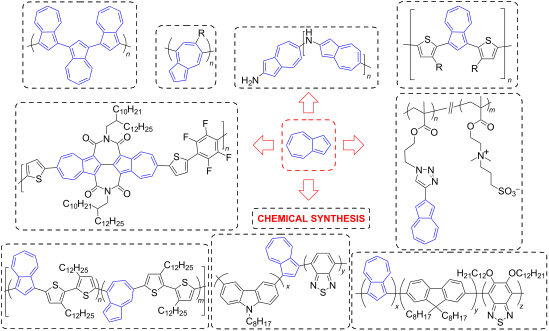
- (146) and triazole-containing azulene methacrylate 150, whose synthesis is outlined in Scheme 25. The azulene-2-yl methacrylate (146) was synthesized in 75% yield from 2-hydroxyazulene (145) by treating it with methacryloyl chloride in chloroform (Scheme 25A). The 2-hydroxyazulene (145) was converted
- to 2-bromoazulene (147) and subsequently to the TMS acetylene derivative 148 suitable for the ‘click’ reaction [46] to obtain the triazole 149, which was eventually transformed into the triazole-containing azulene methacrylate monomer 150 (Scheme 25B). The monomers 146 and 150 were then subjected to
- -2-yl methacrylate (146) and (B) the triazole-containing azulene methacrylate 150. Synthesis of (A) azulene methacrylate polymer 151 and (B) triazole-containing azulene methacrylate polymer 152. Synthesis of azulene methyl methacrylate polymers 154, 155 (A and B) and azulene-sulfobetaine methacrylate




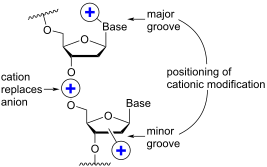
Cationic oligonucleotide derivatives and conjugates: A favorable approach for enhanced DNA and RNA targeting oligonucleotides
Beilstein J. Org. Chem. 2021, 17, 1828–1848, doi:10.3762/bjoc.17.125
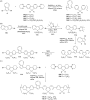
- commercially available 3’-phosphoramidite derivative of 5’-O-dimethoxytrityl-2’-O-methyluridine could be converted into an N4-triazole-modified 2’-OMe-cytidine phosphoramidite [60]. This concept was later used to prepare spermine-functionalized 2’-OMe and 2’-O-((2-methoxy)ethyl) (MOE)cytidine phosphoramidites
- complementary RNA [61]. In general, the study showed that the modifications had a positive effect on Tm for the formed ON/RNA duplex for all ONs substituted with cytidine monomers 26 or 27. These findings were also in agreement with an earlier study where the conjugation of a spermine-substituted triazole group
- -toluenesulfonyl-5’-O-dimethoxytrityl-2’-deoxycytidine followed by ON synthesis [63]. A less investigated strategy is the anchoring of amine functionalities onto purines. Beginning with adenine, the N6 position has been the most explored attachment point. For example, a 2’-deoxy-N6-triazole-substituted adenosine


A recent overview on the synthesis of 1,4,5-trisubstituted 1,2,3-triazoles
Beilstein J. Org. Chem. 2021, 17, 1600–1628, doi:10.3762/bjoc.17.114
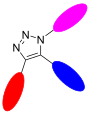
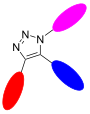
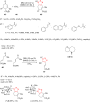
- synthesis of a wide variety of relevant 1,4,5-trisubstituted 1,2,3-triazole molecules are reported. The synthesis of this category of diverse fully functionalized 1,2,3-triazoles has become a necessary and unique research subject in modern synthetic organic key transformations in academia, pharmacy, and
- -triazoles; N-containing heterocycles; 1,4,5-trisubstituted 1,2,3-triazoles; Introduction A high number of N-heterocycles [1][2][3][4] are identified, and this number is increasing very quickly [5][6][7][8]. Among them, the small heterocyclic ring of the 1,2,3-triazole is present in a broad variety of
- compounds with not only biological but also industrial significance [9][10][11]. It possesses a cyclic scaffold with carbon and three nitrogen elements in the ring [12][13][14][15]. An immense versatility of biological properties is possessed by 1,2,3‐triazole heterocyclic systems, and many strategies are













Double-headed nucleosides: Synthesis and applications
Beilstein J. Org. Chem. 2021, 17, 1392–1439, doi:10.3762/bjoc.17.98
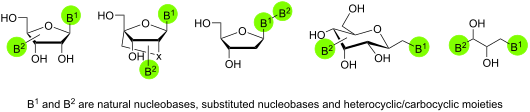
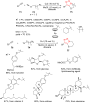
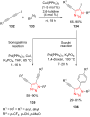
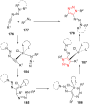
- . The heterocyclic structures which were found to be attached to these double-headed nucleosides include triazolophthalazine [11], 4,6-di-tert-butylbenzoxazole [12], mesitylisoxazole [13], 5-trimethylsilyl-1,2,3-triazole [14], 1-pivaloyloxymethyl-1H-1,2,3-triazole [15], 1,3,4-oxadiazino[6,5-b]indole [16
- ], 6,7-dihydro-6-oxo-5H-1,2,4-triazolo[3,4-b][1,3,4]thiadiazine [17], 1,2,4-triazino[5,6-b]indole [18], 1,3,4-thiadiazoline [19], 1,3,4-oxadiazoline [19], 1,2,4-triazoline [19], 3-mercapto-1H-1,2,4-triazole [20], 1,3,4-oxadiazole-2(3H)-thione [20], 4-amino-5-mercapto-4H-1,2,4-triazole [20], and 1,2,4
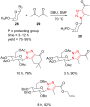
- ]. Nielsen and co-workers [43] synthesized 2′-(4-(thymin-1-ylmethyl)-1,2,3-triazole-1-yl)- and 2′-(4-(N6-benzoyladenine-9-ylmethyl)-1,2,3-triazole-1-yl)-substituted double-headed nucleosides of 2′-deoxy-5′-O-(4,4′-dimethoxytrityl)uridine (14 and 15) from the nucleoside azide 12 which in turn was obtained by





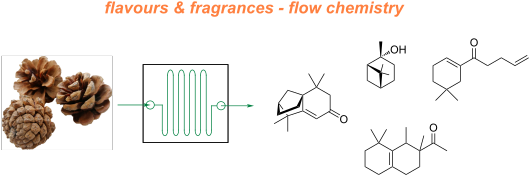
A comprehensive review of flow chemistry techniques tailored to the flavours and fragrances industries
Beilstein J. Org. Chem. 2021, 17, 1181–1312, doi:10.3762/bjoc.17.90




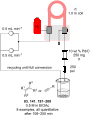




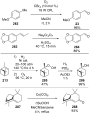

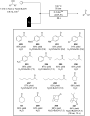


Synthetic accesses to biguanide compounds
Beilstein J. Org. Chem. 2021, 17, 1001–1040, doi:10.3762/bjoc.17.82
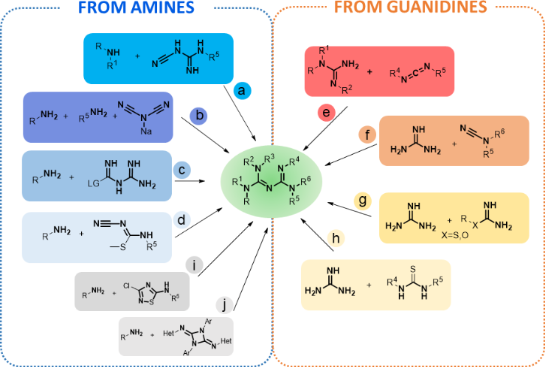
- ). It is interesting to note that heterocyclic nitrogen atoms can also react with cyanoguanidine. For example, Zeng et al. reported the conversion of 1,2,4-triazole derivatives into their related biguanide products in good 70% yield by simple reflux heating in ethanol (Scheme 10). The resulting


Beyond ribose and phosphate: Selected nucleic acid modifications for structure–function investigations and therapeutic applications
Beilstein J. Org. Chem. 2021, 17, 908–931, doi:10.3762/bjoc.17.76
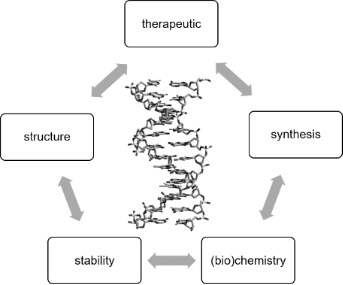
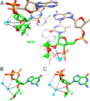
- (suNA) (Figure 7J) [167], 2'-Me LNAs (Figure 7K) [168][169], 6'-Me-2'-O,4'-C-ethylene-bridged (6'-Me-ENA) (Figure 7L) [170], and various triazole-linked LNA (Figure 7M) [171][172] that have all shown the ability to modulate LNA properties. Arabinose and fluoroarabinose nucleic acids Arabino nucleic




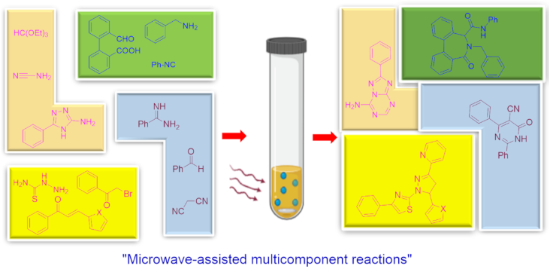
Microwave-assisted multicomponent reactions in heterocyclic chemistry and mechanistic aspects
Beilstein J. Org. Chem. 2021, 17, 819–865, doi:10.3762/bjoc.17.71




Synthesis of β-triazolylenones via metal-free desulfonylative alkylation of N-tosyl-1,2,3-triazoles
Beilstein J. Org. Chem. 2021, 17, 762–770, doi:10.3762/bjoc.17.66
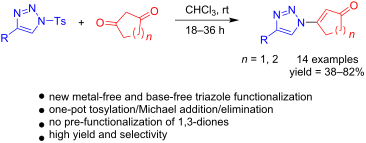
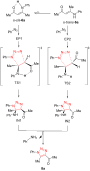
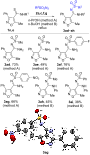
- compounds and N-tosyl triazole in moderate to high yields. Our synthesis takes place with complete regioselectivity as confirmed by crystallographic analysis which is rationalized by a suitable mechanistic proposal. This method provides an efficient, versatile and straightforward strategy towards the
- precursors in denitrogenative transannulation reactions under metal-catalysed conditions to form other heterocycles such as functionalized pyrroles, imidazoles and pyridines (Scheme 1b) [11][12][13]. The traditional method for the synthesis of triazole unit is the Huisgen 1,3-dipolar cycloaddition between
- -arylation [32], NIS-mediated N2-arylation [33], etc. Although these are significant advances towards metal-free functionalization of triazoles, many of them suffer from poor regioselectivity. Therefore, a new method for N1-selective alkylation of the triazole moiety under simple, mild and metal-free


Effective microwave-assisted approach to 1,2,3-triazolobenzodiazepinones via tandem Ugi reaction/catalyst-free intramolecular azide–alkyne cycloaddition
Beilstein J. Org. Chem. 2021, 17, 678–687, doi:10.3762/bjoc.17.57
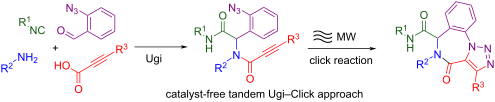
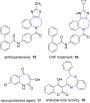
- molecular frameworks in medicinal chemistry. Of these, 1,4-benzodiazepines fused with pyrazole or triazole cycles are the base for many drugs (Figure 1) [1]. The spectrum of their biological activity includes tranquilizing, muscular relaxant, anticonvulsant, and sedative effects [2]. The general application
- receptor (CCK1R) located in the gastrointestinal tract. It is a potential target for treating obesity and diabetes [5]. Although derivatives of 1,2,3-triazolobenzodiazepines are less studied as to their 1,2,4-triazole fused analogs, 1,2,3-triazolobenzodiazepinone A (Figure 2) has already reached clinical
- signal rising at 8.45 ppm (chemical shift is close to triazole proton value), that can indicate the transformation of the alkyne moiety to the triazole ring. The signals of the aromatic ring also significantly change: the aromatic multiplets observed in the 1H NMR spectrum of the starting material turn


Synthesis of N-perfluoroalkyl-3,4-disubstituted pyrroles by rhodium-catalyzed transannulation of N-fluoroalkyl-1,2,3-triazoles with terminal alkynes
Beilstein J. Org. Chem. 2021, 17, 504–510, doi:10.3762/bjoc.17.44
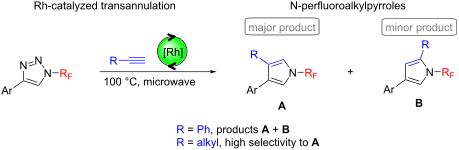
- -disubstituted pyrroles (minor products). The observed selectivities in the case of the reactions with aliphatic alkynes were high. Keywords: pyrrole; transannulation; rhodium carbene; triazole; Introduction Pyrroles are known to be important structural moieties appearing in natural products, synthetic drugs
- , conveniently prepared by [3 + 2] cycloadditions of terminal alkynes with sulfonyl azides, have been used as the precursors to N-sulfonylindoles by transition-metal-catalyzed transannulation reactions. In the presence of Rh(II) or Ni(0) catalysts the triazole ring-opening takes place and intermediate highly
- incomplete conversion. Reducing the reaction temperature to 80 °C afforded a full conversion of the starting triazole, but no reaction took place at 60 °C. The optimized conditions are presented in Table 1, entry 8; however, for the following reaction scope study, a temperature of 100 °C and 20 min reaction


Deoxygenative C2-heteroarylation of quinoline N-oxides: facile access to α-triazolylquinolines
Beilstein J. Org. Chem. 2021, 17, 485–493, doi:10.3762/bjoc.17.42
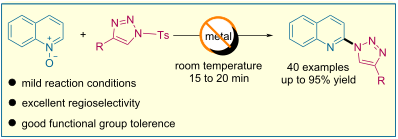
- triazolylation of various heterocyclic N-oxides using sulfuryldiimidazole and 1,2,4-triazole, respectively. However, their protocol affords a mixture of C2- and C4-heteroarylated products [52][53]. More recently, Muthusubramanian and co-workers further expanded the scope of Keith’s protocol to a variety of
- reaction conditions (Scheme 1b) [58][59][60][61][62]. Results and Discussion We initiated our trials employing easily accessible quinoline N-oxide (1a) and 1-tosyl-4-phenyl-1,2,3-triazole (2a) as model substrates. Subjecting the reaction mixture to 100 °C in the presence of DIPEA in 1,2-dichloroetane (DCE
- and observed that triazoles bearing electron-donating groups on the aromatic ring, such as alkyl or methoxy moieties, were well tolerated, furnishing the corresponding products 3b–h in 83–95% yield. For electron-poor substituents (CF3 and F) on the aryl ring of the triazole, the corresponding products




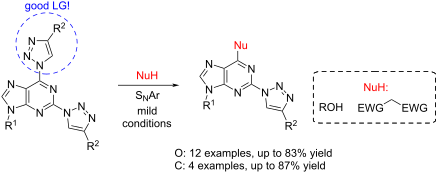
1,2,3-Triazoles as leaving groups: SNAr reactions of 2,6-bistriazolylpurines with O- and C-nucleophiles
Beilstein J. Org. Chem. 2021, 17, 410–419, doi:10.3762/bjoc.17.37
- (triazole)), 7.93 (s, 1H, H-C(8)), 7.91 (d, 3J = 7.6 Hz, 2H, Ar), 7.39 (t, 3J = 7.6 Hz, 2H, Ar), 7.30 (t, 3J = 7.6 Hz, 1H, Ar), 4.65 (t, 3J1’’,2’’ = 6.7 Hz, 2H, H2C(1’’)), 4.26 (t, 3J1’,2’ = 7.2 Hz, 2H, H2C(1’)), 1.96 (tq, 3J1’’,2’’= 6.7 Hz, 3J2’’-3’’= 7.4 Hz, 2H, H2C(2’’)), 1.93‒1.82 (m, 2H, H2C(2’)), 1.35
- 9.38 (s, 1H, H-C(triazole)), 8.70 (s, 1H, H-C(8)), 8.02 (d, 3J = 7.6 Hz, 2H, Ar), 7.50 (t, 3J = 7.6 Hz, 2H, Ar), 7.39 (t, 3J = 7.6 Hz, 1H, Ar), 6.06 (d, 3J1’,2’ = 5.8 Hz, 1H, H-C(1’)), 4.65 (dd, 3J1’,2’ = 5.8 Hz, 3J2’,3’ = 4.8 Hz, 1H, H-C(2’)), 4.29 (s, 3H, (-OCH3)), 4.22 (dd, 3J2’,3’ = 4.8 Hz, 3J3’,4
- , 1H, H-C(triazole)), 8.02 (s, 1H, H-C(8)), 7.94 (d, 3J = 7.5 Hz, 2H, Ar), 7.47 (d, 3J = 7.5 Hz, 2H, Ar), 7.37 (t, 3J = 7.5 Hz, 1H, Ar), 4.28 (t, 3J1’,2’ = 7.2 Hz, 2H, H2C(1’)), 1.96‒1.83 (m, 2H, H2C(2’)), 1.40‒1.32 (m, 4H, H2C(3’), H2C(4’)), 1.31‒1.23 (m, 4H, H2C(5’), H2C(6’)), 0.86 (t, 3J6’,7’ = 6.9


1,2,3-Triazoles as leaving groups in SNAr–Arbuzov reactions: synthesis of C6-phosphonated purine derivatives
Beilstein J. Org. Chem. 2021, 17, 193–202, doi:10.3762/bjoc.17.19
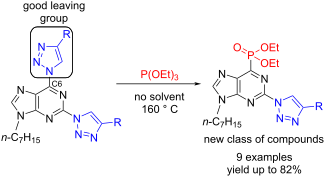
- leaving group in SNAr reactions with S- and N-nucleophiles [19][20][21]. It is worth to note that 2/6-amino-6/2-triazolylpurines possess high levels of fluorescence [19][22][23][24]. Herein, we describe an extension for SNAr reactions that makes use of the 1,2,3-triazole leaving group of 2,6
- -bistriazolylpurines. This led to a discovery of novel C–P bond formations from C–N bonds in SNAr–Arbuzov reactions (I→J, Scheme 1). The obtained series of compounds combines three structural motifs that are important in terms of medicinal chemistry in one molecule: purine, triazole, and phosphonate. Results and
- crude reaction mixtures revealed the presence of the products 7a and 8a (Scheme 3). When the latter mixture was submitted to CuAAC with phenylacetylene (CuI/Et3N/AcOH/EtOH (or DCM), CuSO4∙5H2O/sodium ascorbate/EtOH (or DMF)), no triazole formation at the purine C2 position was observed. We briefly tried


Novel library synthesis of 3,4-disubstituted pyridin-2(1H)-ones via cleavage of pyridine-2-oxy-7-azabenzotriazole ethers under ionic hydrogenation conditions at room temperature
Beilstein J. Org. Chem. 2021, 17, 156–165, doi:10.3762/bjoc.17.16
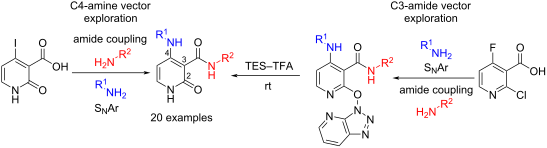
- -opening of the triazole moiety through a Dimroth rearrangement process affording 20 (reaction becomes instantly bright red); c) reduction of diazonium species to afford intermediate 21, observed by UV-LC–MS; and finally d) reductive cleavage of the -O–NH- bond, usually carried out under catalytic


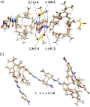
Chiral anion recognition using calix[4]arene-based ureido receptors in a 1,3-alternate conformation
Beilstein J. Org. Chem. 2020, 16, 2999–3007, doi:10.3762/bjoc.16.249
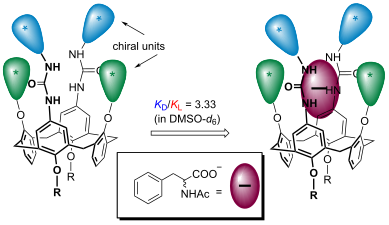
- triazole functional groups (to name at least some of them) has appeared during the last two decades [19][20][21]. Due to well-established functionalisation approaches, calix[4]arenes [22][23][24] are frequently used as molecular platform in the design of more complex receptor systems. The existence of four




Regioselective synthesis of heterocyclic N-sulfonyl amidines from heteroaromatic thioamides and sulfonyl azides
Beilstein J. Org. Chem. 2020, 16, 2937–2947, doi:10.3762/bjoc.16.243
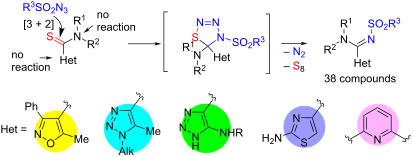
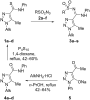
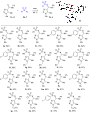
- , Department of Chemistry, KU Leuven, Celestijnenlaan 200F, 3001 Leuven, Belgium 10.3762/bjoc.16.243 Abstract N-Sulfonyl amidines bearing 1,2,3-triazole, isoxazole, thiazole and pyridine substituents were successfully prepared for the first time by reactions of primary, secondary and tertiary heterocyclic
- thioamides with alkyl- and arylsulfonyl azides. For each type of thioamides a reliable procedure to prepare N-sulfonyl amidines in good yields was found. Reactions of 1-aryl-1,2,3-triazole-4-carbothioamides with azides were shown to be accompanied with a Dimroth rearrangement to form 1-unsubstituted 5
- -arylamino-1,2,3-triazole-4-N-sulfonylcarbimidamides. 2,5-Dithiocarbamoylpyridine reacts with sulfonyl azides to form a pyridine bearing two sulfonyl amidine groups. Keywords: amidines; Dimroth rearrangement; isoxazoles; sulfonyl thiazoles; thioamides; 1,2,3-triazoles; Introduction The biological activity







Synthesis and investigation of quadruplex-DNA-binding, 9-O-substituted berberine derivatives
Beilstein J. Org. Chem. 2020, 16, 2795–2806, doi:10.3762/bjoc.16.230
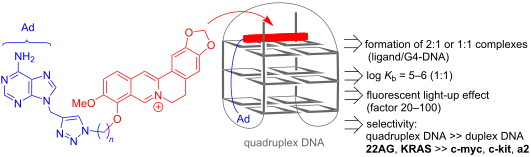
- not provide evidence for a significant effect of the adenine unit on the binding affinity of the ligands, for example, by additional association with the loops, presumably because the adenine residue is sterically shielded by the neighboring triazole unit. Keywords: berberine alkaloids; DNA ligands
- contributed significantly to the binding affinity depending on their spacing from the π-stacking unit. In the case of 4a–e, however, the position of the triazole and adenine unit relative to the berberine does not appear to be highly relevant for the overall binding affinity. It may be concluded that the
- binding constants, selectivities or optical responses should have been observed with the variation of the linker length. It may be concluded that the triazole ring, used as a synthetically convenient connection unit, imposes too much steric hindrance and restricted conformational flexibility in the





