


Search results
Search for "Organocatalysis" in Full Text gives 205 result(s) in Beilstein Journal of Organic Chemistry. Showing first 200.
Novel amide-functionalized chloramphenicol base bifunctional organocatalysts for enantioselective alcoholysis of meso-cyclic anhydrides
Beilstein J. Org. Chem. 2018, 14, 309–317, doi:10.3762/bjoc.14.19
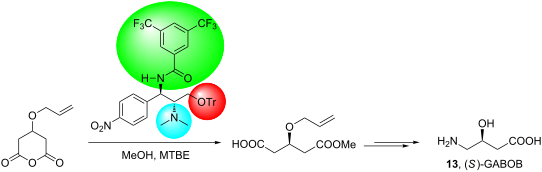
- )-GABOB. Keywords: alcoholysis desymmetrization; bifunctional organocatalysis; chloramphenicol base; Introduction Over the past decade, remarkable advances in the utilization of natural products as chiral structural motifs for the design of bifunctional organocatalysts have been achieved. A high
- moiety as monodentate hydrogen bond donor to activate the electrophile (anhydride), whilst retaining the tertiary amine functionality to activate the nucleophile (alcohol, Figure 2). As part of our ongoing research program on chloramphenicol base organocatalysis, herein, we report a new class of
- different alcohols (Table 3). Excellent yields with high enantioselectivities were obtained in all cases. The sterically more bulky 2-propanol worked well in this reaction. Allylic alcohol, benzyl alcohol and cinnamyl alcohol were also well compatible in this bifunctional organocatalysis conditions to


Quinone-catalyzed oxidative deformylation: synthesis of imines from amino alcohols
Beilstein J. Org. Chem. 2017, 13, 2895–2901, doi:10.3762/bjoc.13.282
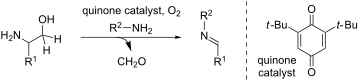
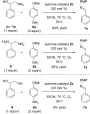
- synthetic versatility of quinone-catalyzed oxidative C–C bond cleavage. Keywords: catalysis; deformylation; organic synthesis; organocatalysis; Introduction Imines are extremely versatile intermediates in organic chemistry [1][2][3]. Consequently, many synthetic methods have been developed for the
- derivatives [49][50] from 1,2-amino alcohols. Conclusion In conclusion, we have developed a novel method for the synthesis of imines from 1,2-amino alcohols. This chemistry features an unprecedented application of quinone organocatalysis to enable oxidative deformylation under aerobic conditions. Future work



Synthesis of 1,3-cis-disubstituted sterically encumbered imidazolidinone organocatalysts
Beilstein J. Org. Chem. 2017, 13, 2577–2583, doi:10.3762/bjoc.13.254
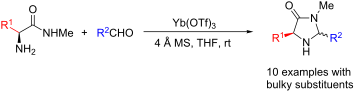
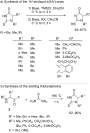
- ; MacMillan catalyst; organocatalysis; Introduction Organocatalytic iminium and enamine activation has attracted organic chemists for more than one century [1]. Until today a wide and constantly increasing number of different organocatalytic transformations with various substrates have been accomplished [2
- ][3][4][5][6][7]. Initially, proline and proline-derived catalysts have been widely used in asymmetric iminium and enamine organocatalysis [8][9][10][11][12]. Since the beginning of the 21th century imidazolidinone-based organocatalysts developed by MacMillan and co-workers, which are easily


Electron-deficient pyridinium salts/thiourea cooperative catalyzed O-glycosylation via activation of O-glycosyl trichloroacetimidate donors
Beilstein J. Org. Chem. 2017, 13, 2385–2395, doi:10.3762/bjoc.13.236
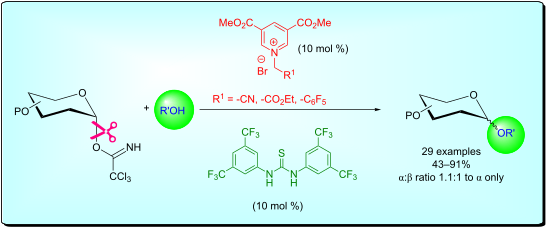
- transformations [14][15][16][17]. One of the major applications of organocatalysis lies in the field of enantioselective synthesis, where organocatalysts are considered as fundamental tools in the catalysis toolbox [18][19][20][21][22]. Moreover, the reactivity and selectivity of organocatalysts can be further


A mechanochemical approach to access the proline–proline diketopiperazine framework
Beilstein J. Org. Chem. 2017, 13, 2169–2178, doi:10.3762/bjoc.13.217
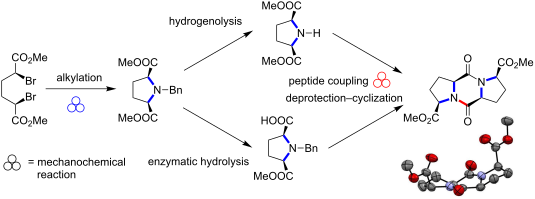
- feature, used for the preparation of biologically active peptides and peptidomimetics [7], for applications in organocatalysis [8][9][10], and for the preparation of novel materials [11][12]. An interesting sub-family of these compounds are DKPs derived from the amino acid proline and its analogues, which


Chiral phase-transfer catalysis in the asymmetric α-heterofunctionalization of prochiral nucleophiles
Beilstein J. Org. Chem. 2017, 13, 1753–1769, doi:10.3762/bjoc.13.170
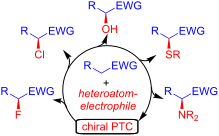
- strategy. Hereby both, approaches relying on either asymmetric metal- or organocatalysis, have been well-investigated already [105][106][107][108][109][110][111][112][113][114][115][116][117][118][119][120][121][122]. In the field of non-covalent asymmetric organocatalysis, chiral H-bonding catalysis [37
- -transfer reactions is hydrogen peroxide (H2O2). Unfortunately, the direct use of this base-chemical under asymmetric organocatalysis turned out to be rather tricky for α-hydroxylation reactions. One recent report by the Ooi group overcame some of the limitations by using H2O2 in combination with


Mechanochemical enzymatic resolution of N-benzylated-β3-amino esters
Beilstein J. Org. Chem. 2017, 13, 1728–1734, doi:10.3762/bjoc.13.167

- ][18][19][20][21][22] including strategies based on organocatalysis [23][24][25][26] and kinetic resolution using enzymes such as Candida antarctica lipase B, which was shown to be efficient in the resolution of racemic β-amino acids under various conditions [27][28][29][30]. Among recent developments


Phosphazene-catalyzed desymmetrization of cyclohexadienones by dithiane addition
Beilstein J. Org. Chem. 2017, 13, 762–767, doi:10.3762/bjoc.13.75
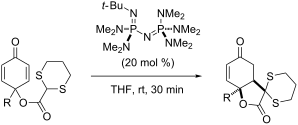
- ; desymmetrization; dithiane; iminophosphoranes; organocatalysis; phosphazenes; Findings Desymmetrization has become a well-developed strategy for the construction of complex molecular frameworks [1][2][3][4][5][6]. Cyclohexadienones are multipurpose synthetic building blocks that have found a central role in


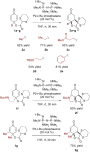


Ultrasound-promoted organocatalytic enamine–azide [3 + 2] cycloaddition reactions for the synthesis of ((arylselanyl)phenyl-1H-1,2,3-triazol-4-yl)ketones
Beilstein J. Org. Chem. 2017, 13, 694–702, doi:10.3762/bjoc.13.68
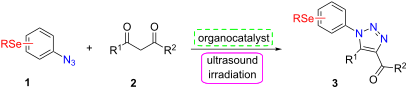
- ; organocatalysis; organoselenium compounds; sonochemistry; 1,2,3-triazoles; Introduction Substituted 1,2,3-triazoles are an interesting class of heterocyclic compounds distinguished by their biological activities [1][2][3] as well as in various fields of chemistry [4][5][6][7][8][9][10][11][12][13][14][15]. The


Synthesis of new pyrrolidine-based organocatalysts and study of their use in the asymmetric Michael addition of aldehydes to nitroolefins
Beilstein J. Org. Chem. 2017, 13, 612–619, doi:10.3762/bjoc.13.59
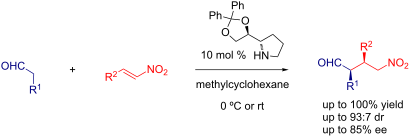
- aldehydes to nitroolefins and enantioselectivities up to 85% ee were achieved. Keywords: enantioselective synthesis; Michael addition; organocatalysis; pyrrolidines; synthetic methods; Introduction In the first decades of the 21st century, the enantioselective organocatalysis has witnessed a tremendous
- development [1][2][3][4] and it is now considered to be the third pillar of enantioselective catalyses together with metal complex-mediated catalysis and biocatalysis. Among the different structures usually found in organocatalysis, the five-membered secondary amine structure of pyrrolidine has proven to be a
- tuneable catalytic motifs to be used in organocatalysis starting from the chiral pool. Highly modular chiral aminodiol derivatives were obtained by the addition of organometallic reagents to chiral imines derived from (R)-glyceraldehyde – which is easily accessible from D-mannitol – and these were


Contribution of microreactor technology and flow chemistry to the development of green and sustainable synthesis
Beilstein J. Org. Chem. 2017, 13, 520–542, doi:10.3762/bjoc.13.51
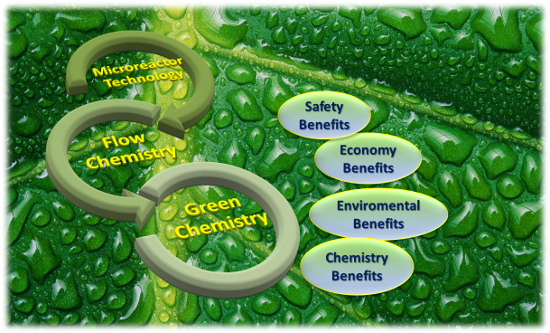
- . The optimized conditions were suitable for the functionalization of 2-fluoropyridine, 2,6- difluoropyridine and 4-(trifluoromethyl)pyridine leading to products 7a–g reported in Scheme 10. Another promising field is the sustainable flow organocatalysis, and recently Pericàs reported an interesting






New approaches to organocatalysis based on C–H and C–X bonding for electrophilic substrate activation
Beilstein J. Org. Chem. 2016, 12, 2834–2848, doi:10.3762/bjoc.12.283
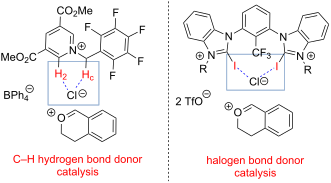
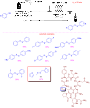
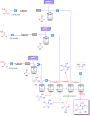
- of organocatalysis. While traditional hydrogen bond donors containing N–H and O–H moieties have been effectively used for electrophile activation, activation based on other types of non-covalent interactions is less common. This mini review highlights recent progress in developing and exploring new
- organic catalysts for electrophile activation through the formation of C–H hydrogen bonds and C–X halogen bonds. Keywords: C–H hydrogen bond; counteranion activation; electrophile activation; halogen bond donor; hydrogen bond donor; organocatalysis; Review Introduction Over the past century chemists
- design of small molecule-based catalysts mimicking enzymatic function. A significant number of such efforts has been dedicated to designing new catalysts to enhance the electrophilicity of organic molecules through non-covalent interactions, and many important areas of organocatalysis have emerged from


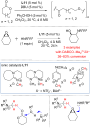


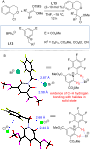
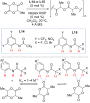


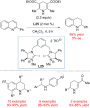


Copper-catalyzed asymmetric sp3 C–H arylation of tetrahydroisoquinoline mediated by a visible light photoredox catalyst
Beilstein J. Org. Chem. 2016, 12, 2636–2643, doi:10.3762/bjoc.12.260
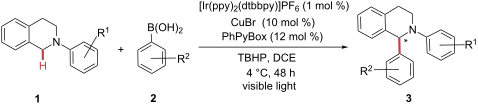
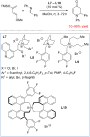
- of THIQs with arylboronic esters via asymmetric organocatalysis methodology [25][28]. The use of chiral tartaric acid derivatives, 2,3-dichloro-5,6-dicyano-1,4-benzoquinone (DDQ) and high temperature (70 °C) were found to be the optimal conditions to obtain the desired arylated product with




Towards the development of continuous, organocatalytic, and stereoselective reactions in deep eutectic solvents
Beilstein J. Org. Chem. 2016, 12, 2620–2626, doi:10.3762/bjoc.12.258
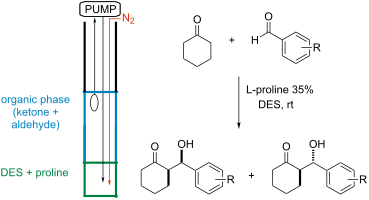
- . Keywords: continuous process; DES; organocatalysis; proline; stereoselective aldol reaction; Introduction The aldol reaction is a powerful synthetic tool to create new C–C bonds [1]. It offers several possibilities to control the stereochemical outcome of the process and to afford stereochemically defined
- when using an apparently simple organocatalyst such as L-proline. These observations have important implications in the future design of chiral catalysts, thereby opening the floodgates to new intriguing opportunities for organocatalysis in unconventional reaction media. Experimental set-up I: test


Highly chemo-, enantio-, and diastereoselective [4 + 2] cycloaddition of 5H-thiazol-4-ones with N-itaconimides
Beilstein J. Org. Chem. 2016, 12, 2293–2297, doi:10.3762/bjoc.12.222
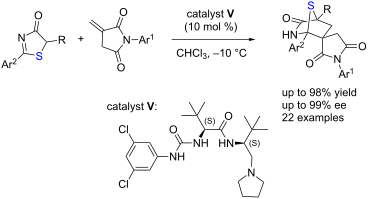
- ) were obtained for a series of spirocyclic 1,4-sulfur-bridged piperidinone-based succinimides. Keywords: [4 + 2] annulation; asymmetric organocatalysis; dipeptide-based Brønsted bases; 5H-thiazol-4-ones; N-itaconimides; Introduction Sulfur-containing tetrasubstituted carbon stereocenters are widely


Correction: Recent advances in N-heterocyclic carbene (NHC)-catalysed benzoin reactions
Beilstein J. Org. Chem. 2016, 12, 2124–2124, doi:10.3762/bjoc.12.201
- Interdisciplinary Science and Technology,Trivandrum 695 019, India.; Fax: +91 471 2491712; Tel: +91 471 2490406 10.3762/bjoc.12.201 Keywords: acyloin reaction; benzoin reaction; N-heterocyclic carbenes; organocatalysis; umpolung; On page 446, column 2, the sentence “Inoue and co-workers found that it promotes
Chiral ammonium betaine-catalyzed asymmetric Mannich-type reaction of oxindoles
Beilstein J. Org. Chem. 2016, 12, 2099–2103, doi:10.3762/bjoc.12.199
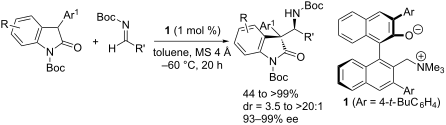
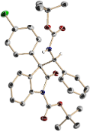
- quaternary and tertiary stereogenic carbon centers on biologically intriguing molecular frameworks with high fidelity. Keywords: ammonium betaine; asymmetric catalysis; Mannich reaction; organocatalysis; oxindole; Introduction Chiral indole alkaloids possessing C-3 quaternary indoline frameworks are an


Economical and scalable synthesis of 6-amino-2-cyanobenzothiazole
Beilstein J. Org. Chem. 2016, 12, 2019–2025, doi:10.3762/bjoc.12.189

- -cyanobenzothiazoles; DABCO; luciferins; organocatalysis; Introduction Functionalised 2-cyanobenzothiazoles (CBTs, 1) are key building blocks for the synthesis of luciferins 3 [1][2][3], substrates of natural and engineered firefly luciferases that are widely used for bioluminescence imaging (BLI) [4][5]. The typical



Ionic liquids as transesterification catalysts: applications for the synthesis of linear and cyclic organic carbonates
Beilstein J. Org. Chem. 2016, 12, 1911–1924, doi:10.3762/bjoc.12.181
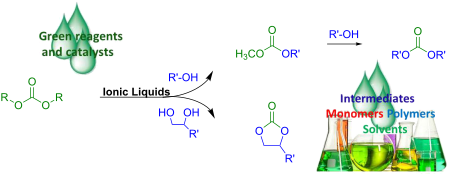
- therapeutics, imaging agents and packaging films and coatings [77]. Conclusion The literature survey illustrated in this review highlights three main facts. Firstly, organocatalysis by ionic liquids can be an efficient tool for base and even acid-catalyzed transesterification reactions in place of traditional


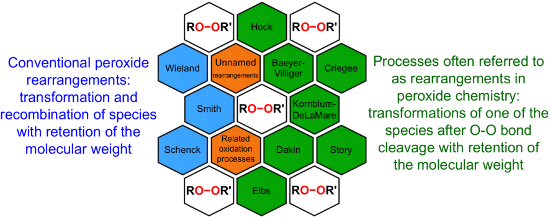
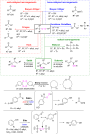
Rearrangements of organic peroxides and related processes
Beilstein J. Org. Chem. 2016, 12, 1647–1748, doi:10.3762/bjoc.12.162



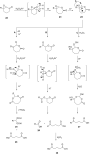


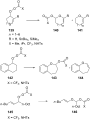


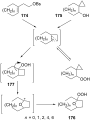


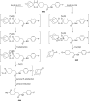


Enantioselective addition of diphenyl phosphonate to ketimines derived from isatins catalyzed by binaphthyl-modified organocatalysts
Beilstein J. Org. Chem. 2016, 12, 1551–1556, doi:10.3762/bjoc.12.149
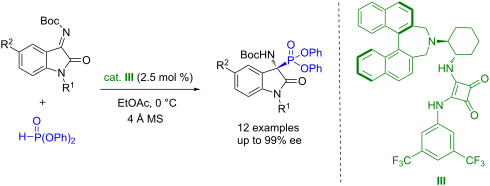
- organocatalyst; ketimines; organocatalysis; squaramide; Introduction α-Aminophosphonate derivatives are important compounds as structural mimics of natural α-amino acids [1][2][3]. Chiral α-aminophosphonates have been shown a wide range of biological activities including antibacterial [4] and anticancer


Catalytic asymmetric synthesis of biologically important 3-hydroxyoxindoles: an update
Beilstein J. Org. Chem. 2016, 12, 1000–1039, doi:10.3762/bjoc.12.98
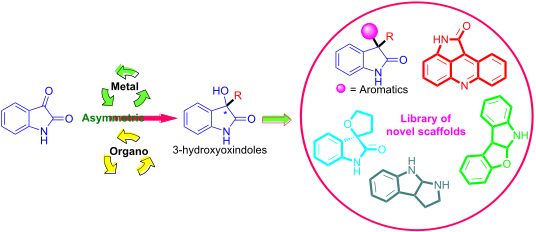
- , enantioenriched 3-hydroxyoxindole scaffolds also exist in natural products and have proven to possess promising biological activities. A large number of catalytic asymmetric strategies toward the construction of 3-hydroxyoxindoles based on transition metal catalysis and organocatalysis have been reported in the
- -substituted 3-hydroxyoxindoles and 3-hydroxyoxindole-based further transformations. Keywords: 3-hydroxyoxindoles; oxindoles; organocatalysis; spirooxindoles; transition metal catalysis; Introduction Chiral oxindoles are an important class of compounds, which widely exist in nature and have exhibited diverse
- excellent ee values (up to 97% ee) from DMTr (Di(p-methoxyphenyl)phenylmethyl)-N-protected isatins in one-pot under modified conditions. Organocatalyzed synthesis of 3-substituted 3-hydroxyoxindoles Organocatalysis has witnessed significant progress in the last decades, a large number of new organocatalysts




1H-Imidazol-4(5H)-ones and thiazol-4(5H)-ones as emerging pronucleophiles in asymmetric catalysis
Beilstein J. Org. Chem. 2016, 12, 918–936, doi:10.3762/bjoc.12.90
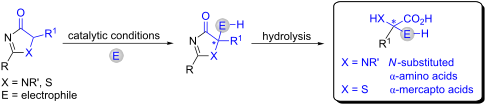
- efficient platforms for bidentate coordination in metal catalysis and good precursors of carboxylic acids, ketones and aldehydes upon oxidative cleavage of the keto/diol moiety [72]. More recently, a comprehensive study on the first evidence of the utility of these acceptors in organocatalysis has been








Asymmetric α-amination of 3-substituted oxindoles using chiral bifunctional phosphine catalysts
Beilstein J. Org. Chem. 2016, 12, 725–731, doi:10.3762/bjoc.12.72
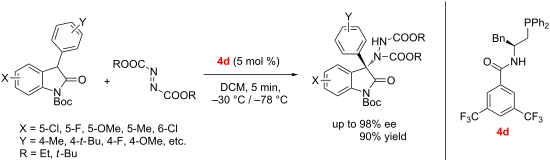
- organocatalysis and metal catalysis for the construction of this type of structures. For example, Chen et al. reported the first organocatalytic enantioselective amination reaction of 2-oxindoles catalyzed by biscinchona alkaloid catalysts [8]. Zhou [9][10] and Barbas [11][12], have independently reported similar


Stereoselective amine-thiourea-catalysed sulfa-Michael/nitroaldol cascade approach to 3,4,5-substituted tetrahydrothiophenes bearing a quaternary stereocenter
Beilstein J. Org. Chem. 2016, 12, 643–647, doi:10.3762/bjoc.12.63
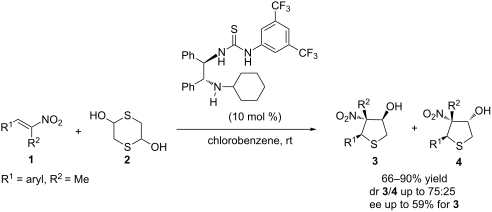
- affording the heterocyclic products in good yields and moderate stereoselectivities. Keywords: cascade reaction; tetrahydrothiophenes; aymmetric synthesis; amine thioureas; organocatalysis; Introduction The interest toward the development of stereoselective methodologies to prepare tetrahydrothiophenes





