


Search results
Search for "adduct" in Full Text gives 611 result(s) in Beilstein Journal of Organic Chemistry. Showing first 200.
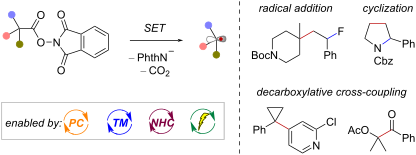
Mechanisms for radical reactions initiating from N-hydroxyphthalimide esters
Beilstein J. Org. Chem. 2024, 20, 346–378, doi:10.3762/bjoc.20.35
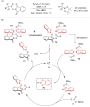
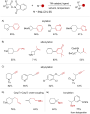
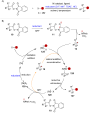
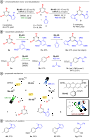
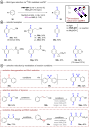
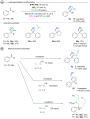
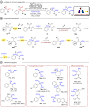
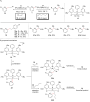
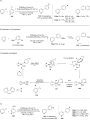
- ester 10, regenerating pyridine 137 while forming alkyl radical 12, CO2 and phthalimide–B(pin) adduct 139. Subsequently, radical–radical coupling between 12 and one equivalent of 138 affords dihydropyridine 140, which upon re-aromatization, facilitated by ZnCl2 acting as a Lewis acid, yields product 141








Synthesis of π-conjugated polycyclic compounds by late-stage extrusion of chalcogen fragments
Beilstein J. Org. Chem. 2024, 20, 287–305, doi:10.3762/bjoc.20.30
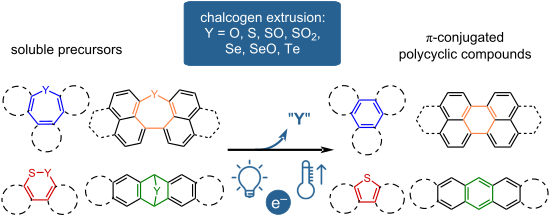
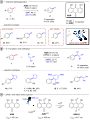
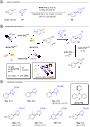
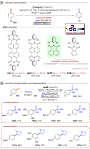
- introduced by Herwig and Müllen as early as in 1996 for pentacene, which was ultimately obtained in a thin-film by a thermally-activated retro-Diels–Alder reaction from a tailor-made tetrachlorobenzene-pentacene soluble adduct (Scheme 1, top left) [13][14]. Over the years, thermally-induced




Unveiling the regioselectivity of rhodium(I)-catalyzed [2 + 2 + 2] cycloaddition reactions for open-cage C70 production
Beilstein J. Org. Chem. 2024, 20, 272–279, doi:10.3762/bjoc.20.28
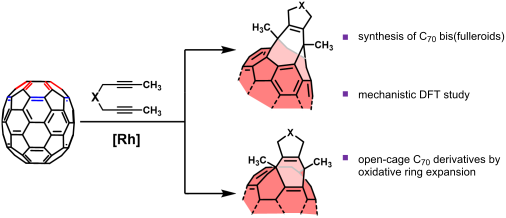
- was also observed in the HPLC chromatogram, whose UV–vis has a pattern that is similar to a previously reported α-adduct [49]. We reasoned that this minor compound was the cyclohexadiene-fused C70 intermediate, analogous to cyclohexadiene-fused C60 I (see Scheme 1), which had not completely evolved
- 1 readily coordinates with a C70 molecule to generate INT 2, with this step being exergonic by 16.7 kcal·mol−1. From INT 2, the reaction can follow two distinct pathways, culminating in either an α-adduct or a β-adduct. In the α-adduct pathway (black line), a formal [2 + 2] cycloaddition occurs
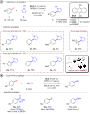
- study, we have explored the regioselectivity of the rhodium(I)-catalyzed [2 + 2 + 2] cycloaddition reaction between two different diynes and C70 with the objective of producing C70 bis(fulleroids). Mixtures of α- and β-site isomers were obtained, with the α-adduct being the major product of the reaction


Perspectives on push–pull chromophores derived from click-type [2 + 2] cycloaddition–retroelectrocyclization reactions of electron-rich alkynes and electron-deficient alkenes
Beilstein J. Org. Chem. 2024, 20, 125–154, doi:10.3762/bjoc.20.13
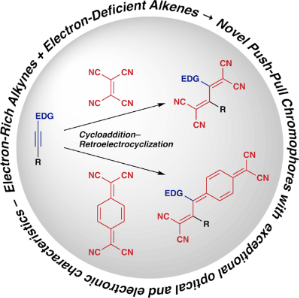
- -dichloro-5,6-dicyano-1,4-benzoquinone, and its homologous compounds have been employed in chemical transformation reactions involving electron-rich alkynes. In particular, a [2 + 2] CA adduct was prepared through the [2 + 2] CA–RE reaction. Studies have shown that the thermal treatment of the [2 + 2] CA
- adduct leads to the formation of a spiro compound [89][90][91][92][93][94]. Ester-substituted, electron-deficient alkenes have also been employed in [2 + 2] CA–RE reactions involving electron-rich alkynes. Alkenes featuring either one or two ester substitutions exclusively catalyze [2 + 2] CA–RE
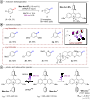
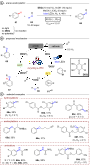
- the DCF molecule [83][84], as shown in Scheme 3. In the reaction between 4-ethynyl-N,N-dimethylaniline (1) and triisopropylsilylethynyl-substituted DCF 2a, heating at 80 °C in acetonitrile selectively yields the corresponding adduct 3a with 64% yield. In 3a, the anilino group forms a covalent linkage


Using the phospha-Michael reaction for making phosphonium phenolate zwitterions
Beilstein J. Org. Chem. 2024, 20, 41–51, doi:10.3762/bjoc.20.6
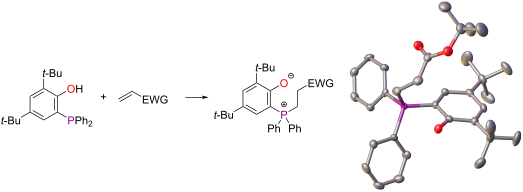
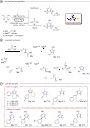
- product of interest 2a. Compound 2a was identified by a combination of NMR spectroscopic methods and single-crystal X-ray structure analysis (vide infra) as the zwitterionic phospha-Michael adduct of 1 and acrylonitrile, formally stabilized by proton transfer from the phenol group to the initially formed
- position 3 (4JHH ≈ 2.5 Hz) as well as coupling with the phosphonium center (3JPH ≈ 14 Hz). In comparison to phosphine 1, in which the same proton displays a resonance at 6.88 ppm (4JHH = 2.5 Hz, 3JPH = 5.8 Hz [35]), this signal is characteristically up-field shifted in every adduct 2a–j (Table 1). The
- = 3.9 Hz) [30]. Compared to the parent phosphine 1 (155.9 ppm, 2JPC = 19.3 Hz) [35] a pronounced down-field shift occurred upon adduct formation, which suggests a considerable contribution of a quinonic resonance structure as benzoquinones exhibit 13C NMR shifts of about 188 ppm and hydroquinones of


1-Butyl-3-methylimidazolium tetrafluoroborate as suitable solvent for BF3: the case of alkyne hydration. Chemistry vs electrochemistry
Beilstein J. Org. Chem. 2023, 19, 1966–1981, doi:10.3762/bjoc.19.147
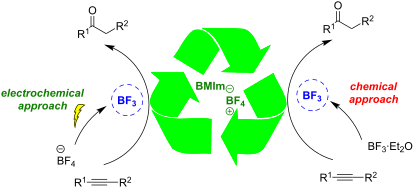
- carried out in an undivided cell (see Supporting Information File 1, Figure S1d). In this last case, in fact, the NHC-BF3 adduct is formed between anodically electrogenerated BF3 and cathodically electrogenerated NHC [103]. Evaluation of the current efficiency in the electrogeneration of BF3 in BMIm-BF4
- base and the base–BF3 adduct, we should obtain an approximate current yield. Our first choice was N,N-diisopropylethylamine (DIPEA), as the DIPEA-BF3 adduct is reported in the literature and fully characterized by NMR in CDCl3 [113]. To be consistent with literature data, the BF4− peak in neat BMIm-BF4
- adduct in CDCl3 (53.8, 41.6, 19.5, 18.9, 9.9), inducing us to think to have the DIPEA-BF3 adduct in the solution. To confirm this assumption, we prepared a DIPEA solution in BMIm-BF4 to record the 13C NMR spectrum, but unfortunately DIPEA is not soluble enough in BMIm-BF4 to obtain a decent spectrum


Controlling the reactivity of La@C82 by reduction: reaction of the La@C82 anion with alkyl halide with high regioselectivity
Beilstein J. Org. Chem. 2023, 19, 1858–1866, doi:10.3762/bjoc.19.138

- analysis of the single-bonded adduct 3a revealed the addition site of the p-methoxybenzyl group on La@C2v-C82. Theoretical calculations indicated that the addition site carbons in neutral La@C2v-C82 have high spin density, whereas those in the La@C2v-C82 anion do not have high charge densities. Thus, the


A novel recyclable organocatalyst for the gram-scale enantioselective synthesis of (S)-baclofen
Beilstein J. Org. Chem. 2023, 19, 1811–1824, doi:10.3762/bjoc.19.133

- polar solvent, i.e., methanol, to its solution. The main requirement for the polar solvent is that it should not dissolve the catalyst while it should completely dissolve the product. Therefore, we investigated the solubility of the Michael adduct 14 in methanol, ethanol, propan-2-ol, Patosolv® (a


Active-metal template clipping synthesis of novel [2]rotaxanes
Beilstein J. Org. Chem. 2023, 19, 1776–1784, doi:10.3762/bjoc.19.130
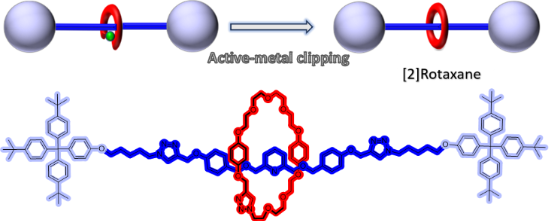
- = 2280.2642 corresponding to the [R1 + Na]+ adduct and at m/z = 2320.2021 assigned to the [R1+Cu]+ ion (Figure 1, top, left and Figure S17 in Supporting Information File 1), while the HRESI(+)-MS of R2 displayed the base peak at m/z = 2233.2883 corresponding to the protonated molecular ion. Formation of the


Selectivity control towards CO versus H2 for photo-driven CO2 reduction with a novel Co(II) catalyst
Beilstein J. Org. Chem. 2023, 19, 1766–1775, doi:10.3762/bjoc.19.129
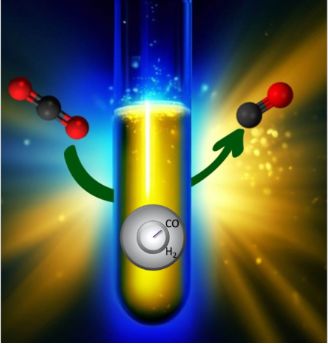
- ) intermediate could be favored concerning the formation of the CO2 adduct with the reduced metal center. Thus, besides the development of novel efficient catalysts, different strategies have been pursued to switch the catalyst selectivity towards carbon products [4][5]. Generally, scientists can interplay by
- catalytic current was observed at the onset potential of −1.4 V. Although a direct comparison between Co(II) and Fe(II) ions cannot be made, it is reasonable to suggest that after the first reduction a −NCS ligand detaches and an adduct with CO2 is formed, as it was calculated for a similar thiocyanate
- also serve as a reductant [47]. The reduced species PS− can be oxidized back to PS by a molecule of 1, which could detach a −NCS anion and offer a vacant site to coordinate a proton (then following an H2 evolution path) or a molecule of CO2 [46]. The adduct with CO2 is further reduced (by PS− or BI


Unprecedented synthesis of a 14-membered hexaazamacrocycle
Beilstein J. Org. Chem. 2023, 19, 1728–1740, doi:10.3762/bjoc.19.126
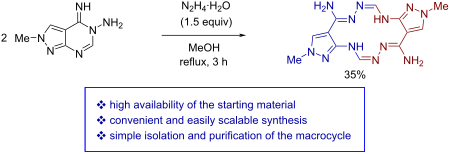
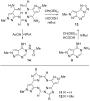
- the most electrophilic C2 carbon of the pyrimidine ring in 8 to give intermediate A. Cleavage of the C2–N3 bond in the latter followed by proton transfer in the formed zwitterion B affords bis-amidrazone C. Next, two molecules of bis-amidrazone C react with each other forming adduct D, which either
- geometry of this structure favors the formation of adduct D and then macrocycle 5. All these data explain the formation of macrocycle 5 from pyrazolopyrimidine 8 in acceptable yields (see Table 1), despite the multistep transformation (Scheme 6), rather harsh reaction conditions (>1.5 equivalents of N2H4


Sulfur-containing spiroketals from Breynia disticha and evaluations of their anti-inflammatory effect
Beilstein J. Org. Chem. 2023, 19, 1604–1614, doi:10.3762/bjoc.19.117
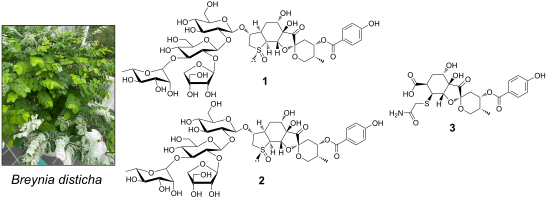
- the ethyl acetate fraction (Figure 1). The structures of known compounds 5–7 were identified based on 1H and 13C NMR data [2][3][10]. Breynin J (1) was isolated as an amorphous, colorless powder. The HRESIMS spectrum exhibited a sodium adduct ion peak at m/z 1107.3177, consistent with a molecular
- isolated as an amorphous, colorless powder. Because the sodium adduct ion peak at m/z 1107.3178 in the HRESIMS spectrum gave the same molecular formula as that of 1 (C45H64O28SNa, calcd 1107.3197), compounds 1 and 2 were determined to be isomers. The 1D and 2D NMR spectroscopic data indicated that the
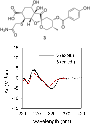
- compounds 2 and 7 were determined to be 1S,3R,4R,6S,7R,9S,11S,12R,16S,17S (Figure 3c). Probreynogenin (3) was isolated as an amorphous, colorless solid. The molecular formula of 3 was determined to be C23H27NO11S based on the sodium adduct ion peak at m/z 548.1197 [M + Na]+ (calcd 548.1197) observed by



Morpholine-mediated defluorinative cycloaddition of gem-difluoroalkenes and organic azides
Beilstein J. Org. Chem. 2023, 19, 1545–1554, doi:10.3762/bjoc.19.111
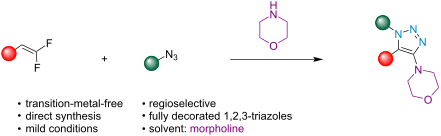
- their 3JH−F coupling constants in the 1H NMR spectra, circa 32.0 Hz for Z-isomers and 8.0 Hz for E-isomers [33]. A peak was observed at −158.2 ppm in the 19F NMR spectrum after 2 h of the reaction, which could be the fluoride salt of the dimorpholine adduct. This peak was also found when the reaction


Synthesis and biological evaluation of Argemone mexicana-inspired antimicrobials
Beilstein J. Org. Chem. 2023, 19, 1511–1524, doi:10.3762/bjoc.19.108
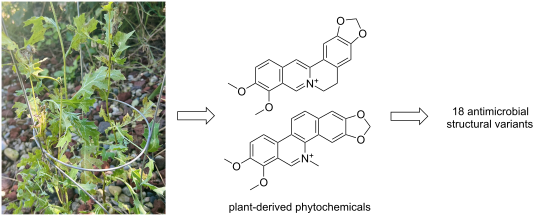
- effects of each modification. It was found that the acetone adduct B9 and the partially reduced variant B10 were more potent, while the fully reduced variant B11 was significantly less active (Table 2). These results suggested the activity of B1 could be similarly altered by the same modifications to the


α-(Aminomethyl)acrylates as acceptors in radical–polar crossover 1,4-additions of dialkylzincs: insights into enolate formation and trapping
Beilstein J. Org. Chem. 2023, 19, 1443–1451, doi:10.3762/bjoc.19.103
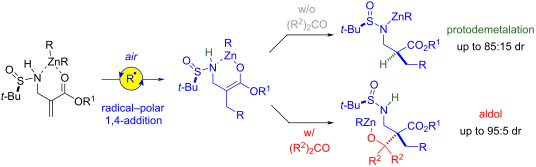
- protodemetalation to provide ultimately the 1,4-addition adduct. In the presence of carbonyl acceptors, aldol condensation occurs providing overall a tandem 1,4-addition–aldol process. When a tert-butanesulfinyl moiety is present on the nitrogen atom, these electrophilic substitution reactions occur with good
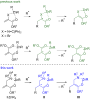
- )acrylates in hands, we carried out an initial survey of their reaction with Et2Zn in CH2Cl2 at −33 °C on addition of air. In these conditions, acrylate 10 led to the recovery (following aqueous work-up) of sulfinamide 9 without traces of formation of the 1,4-adduct (Scheme 4). By contrast, 1,4-addition
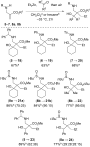
- without subsequent fragmentation was observed starting from α-(aminomethyl)acrylates having free N–H bonds (Table 2). The reaction of Et2Zn with acrylates 5–7 afforded the desired 1,4-addition products 11–13 in 42–55% yield. Better results were obtained starting from 8a, which delivered adduct 14a in 79






Metal catalyst-free N-allylation/alkylation of imidazole and benzimidazole with Morita–Baylis–Hillman (MBH) alcohols and acetates
Beilstein J. Org. Chem. 2023, 19, 1251–1258, doi:10.3762/bjoc.19.93
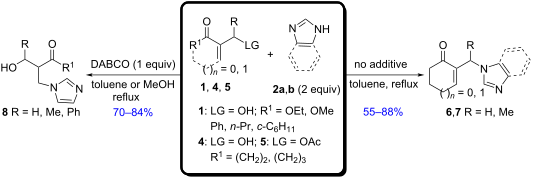
- , the use of DABCO, commonly used as a powerful catalyst or a nucleophilic additive in the reaction of acyclic MBH adducts with various nucleophiles [21][34][35][36][37], did not afford the SN2/SN2’ products but provided the 1,4-adduct 8a in 84% yield (Table 2, entry 4). Alternatively, we also


Selective construction of dispiro[indoline-3,2'-quinoline-3',3''-indoline] and dispiro[indoline-3,2'-pyrrole-3',3''-indoline] via three-component reaction
Beilstein J. Org. Chem. 2023, 19, 1234–1242, doi:10.3762/bjoc.19.91
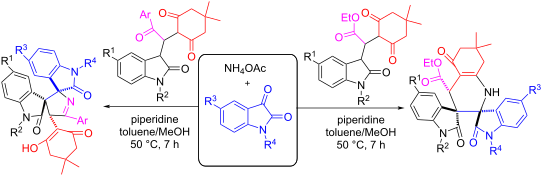
- as Michael acceptors, 1,3-dipolarophiles, 1,4-dienophiles and other multiple substrates. They have been widely employed as key component to finish many multicomponent and domino reactions [26][27][28][29][30][31][32][33][34][35]. Recently, the Michael adduct of 3-methyleneoxindoles with various
- nucleophiles, especially active methylene compounds, have attracted much attentions [36][37][38][39][40][41]. This kind of Michael adduct has more than one reactive site and could proceed domino reactions with various electrophiles [42][43][44][45][46][47][48][49]. In this respect, several elegant domino or
- spirooxindoles, in which the in situ-generated Michael adduct of 3-ethoxycarbonylmethyleneoxindole underwent a Mannich reaction and annulation reaction with in situ-generated aldimines (reaction 1 in Scheme 1) [50][51]. Tanaka reported chiral quinidine derivative-catalyzed Michael–Henry cascade reactions of



Exploring the role of halogen bonding in iodonium ylides: insights into unexpected reactivity and reaction control
Beilstein J. Org. Chem. 2023, 19, 1171–1190, doi:10.3762/bjoc.19.86
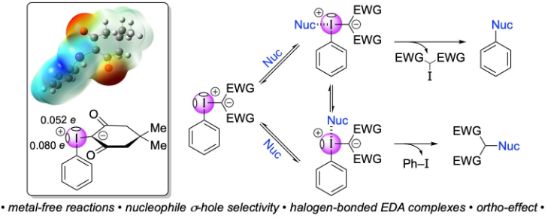
- , they believed that the reaction was likely initiated by either single electron transfer between the reagents (not shown), or by electrophilic addition of the olefin onto the ylide, forming intermediate adduct 17. This was followed by formation of iodocycle 18, from which reductive elimination of
- direct cycloaddition between the ylide and alkene. Murphy’s report of formal X–H insertions with iodonium ylides was similarly proposed to initiate upon complex formation with a Lewis base. Adduct formation was believed to both increase the acidity of halogen bond acceptor’s attached protons, as well as
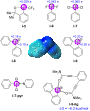
- -derived iodonium ylide (60/I-13) (Figure 12, inset), which showed a 5.1 kcal/mol energy difference between rapidly equilibrating halogen-bonded fluoride adducts. The lower energy adduct IntA had fluoride residing in the stronger σ-hole opposite the β-dicarbonyl (syn to the arene), whereas the higher







Two new lanostanoid glycosides isolated from a Kenyan polypore Fomitopsis carnea
Beilstein J. Org. Chem. 2023, 19, 1161–1169, doi:10.3762/bjoc.19.84
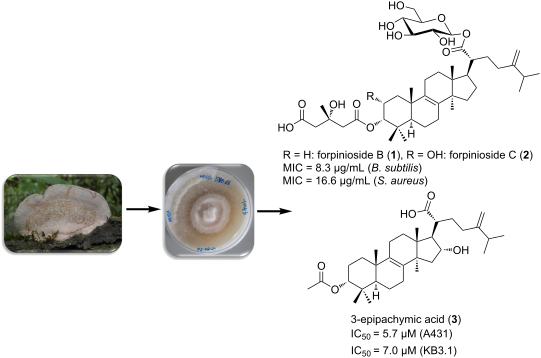
- ]. Results Structure elucidation Compound 1 was isolated as an off-white solid powder. Its molecular formula was determined to be C43H68O12 based on HRESIMS results that revealed a sodium adduct ion peak at m/z 799.4604 ([M + Na]+ calcd for C43H68O12Na+, 799.4603) indicating the presence of ten degrees of
- trivially named as forpinioside B. Compound 2 was obtained as a colourless oil and its molecular formula was determined to be C43H68O13 according to its HRESIMS spectrum that revealed a sodium adduct ion peak at m/z 815.4550 ([M + Na]+ calcd for C43H68O13Na+, 815.4552) indicating the presence of an


Photoredox catalysis harvesting multiple photon or electrochemical energies
Beilstein J. Org. Chem. 2023, 19, 1055–1145, doi:10.3762/bjoc.19.81







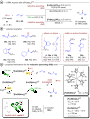
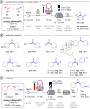
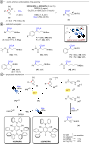
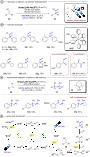












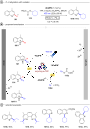
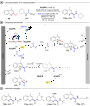
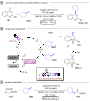


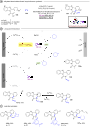




The unique reactivity of 5,6-unsubstituted 1,4-dihydropyridine in the Huisgen 1,4-diploar cycloaddition and formal [2 + 2] cycloaddition
Beilstein J. Org. Chem. 2023, 19, 982–990, doi:10.3762/bjoc.19.73
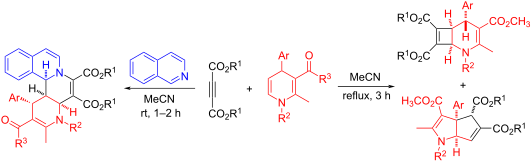
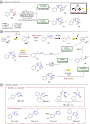
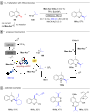
- gives the well-known Huisgen 1,4-dipole A. Secondly, Michael addition of the 1,4-dipole A to 5,6-unsubstituted 1,4-dihydropyridine gives the adduct intermediate B. At last, the intramolecular coupling of the negative and the positive charges in intermediate B directly affords isoquinolino[1,2-f][1,6
- acetylenedicarboxylate to give the adduct C. Then, the direct coupling of the positive charge and the negative charge affords the 2-azabicyclo[4.2.0]octa-3,7-diene 5. On the other hand, a carbenium ion D can be formed by migration of a hydrogen atom in intermediate C, which in turn converts into a fused bicyclic


First synthesis of acylated nitrocyclopropanes
Beilstein J. Org. Chem. 2023, 19, 892–900, doi:10.3762/bjoc.19.67
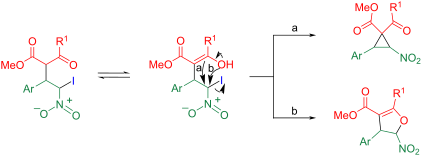
- ) halogenation, and 3) ring closure (Scheme 2). β-Nitrostyrene 2 serves as an appropriate acceptor for conjugate addition by diethyl malonate (3a) to afford adduct 4a, in which the methine group flanked by two carbonyl groups is readily halogenated, and the subsequent intramolecular nucleophilic substitution by
- substrates, almost equal amounts of diastereomers were formed. Whereas 4b was isolated by recrystallization of the reaction mixture from ethanol, the other adducts 4c–g were easily isolated by column chromatography. For comparison with previously reported results, adduct 4b, derived from acetylacetone (3b
- ), was subjected to cyclopropanation according to a method described in the literature [13]. To a solution of adduct 4b in toluene, (diacetoxyiodo)benzene and tetrabutylammonium iodide were added, and the resulting mixture was stirred at room temperature for 14 h. Unexpectedly, from the reaction mixture


Pyridine C(sp2)–H bond functionalization under transition-metal and rare earth metal catalysis
Beilstein J. Org. Chem. 2023, 19, 820–863, doi:10.3762/bjoc.19.62
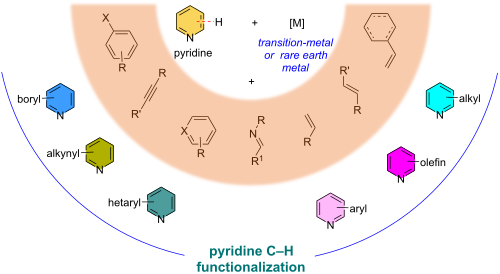
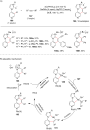
- regioselectively at the C4 position of the organoborate intermediate 60 delivering the σH-adduct intermediates 62 and 63. Subsequently, hydride elimination with the help of the organoborane gave the desired alkylated product 59 and regenerates the hydride catalyst. Further enantioselective pyridine C–H alkylation
















Photocatalytic sequential C–H functionalization expediting acetoxymalonylation of imidazo heterocycles
Beilstein J. Org. Chem. 2023, 19, 666–673, doi:10.3762/bjoc.19.48
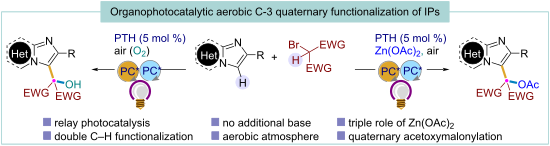
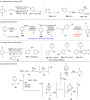
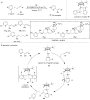
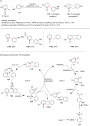
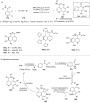
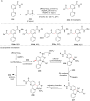
- (Scheme 3A). Upon analyzing the reaction mixture of 1a and 2a under standard conditions in the presence of TEMPO, we found only a trace of the desired product 4a. At the same time, a TEMPO-DEM adduct 7 and TEMPO-OAc adduct 8 were identified by the HRMS analysis of the crude reaction mixture, indicating




Cassane diterpenoids with α-glucosidase inhibitory activity from the fruits of Pterolobium macropterum
Beilstein J. Org. Chem. 2023, 19, 658–665, doi:10.3762/bjoc.19.47
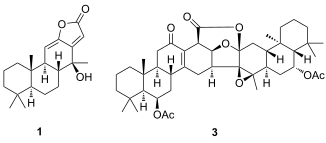
- a Diels–Alder adduct, thus displaying the same relative configuration found in pterolobirin B [11]. The absolute configuration of 3 was thus elucidated as 5S,6R,8R,9S,10R,15R,5′S,6′R,8′R,9′S,10′R,12′S,13′R,14′R,15′S,16′S and the measured ECD spectrum (Figure 4b) with the positive at 243 nm and





