Search results
Search for "tricyclic" in Full Text gives 278 result(s) in Beilstein Journal of Organic Chemistry. Showing first 200.
Combination of multicomponent KA2 and Pauson–Khand reactions: short synthesis of spirocyclic pyrrolocyclopentenones
Beilstein J. Org. Chem. 2020, 16, 200–211, doi:10.3762/bjoc.16.23
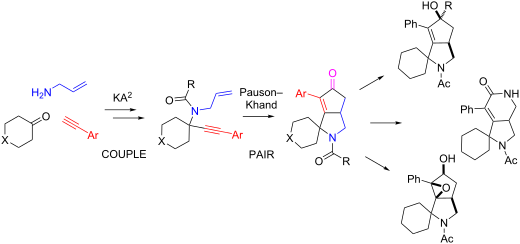
- that shows good overlap with drugs like levaquin, which is characterized by a complex tricyclic skeleton. The addition of a second aromatic ring, as the benzoyl or tosyl group of compounds 30–32, 34 and 35, increased the aromatic- and conjugation-related character of the structure, thus resulting in
- even more efficient in increasing the three-dimensional character of these compounds, as spiro tricyclic products were found to be more shifted towards the sphere-disc region of this chemical space, especially if compared to their corresponding starting materials (see Figure 4, compounds 5 and 26 with




Bacterial terpene biosynthesis: challenges and opportunities for pathway engineering
Beilstein J. Org. Chem. 2019, 15, 2889–2906, doi:10.3762/bjoc.15.283
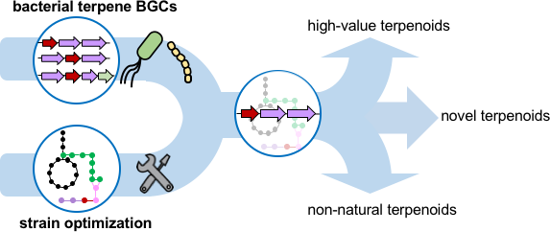
- cationic species. For instance, remodeling the hydrophobic pocket of the active site by single-point mutation, epi-isozizaene (33) synthase was engineered to produce various linear, monocyclic, bicyclic, and tricyclic terpene skeletons (Figure 9b) [119][120][121]. Another prominent example is cyclooctat-9


Nanangenines: drimane sesquiterpenoids as the dominant metabolite cohort of a novel Australian fungus, Aspergillus nanangensis
Beilstein J. Org. Chem. 2019, 15, 2631–2643, doi:10.3762/bjoc.15.256
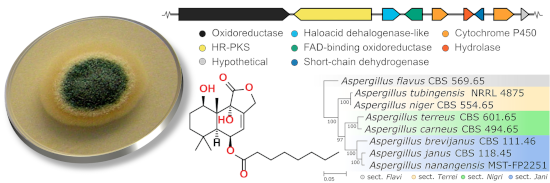
- DBE and thus requiring 1 to be tricyclic. The 1H and 13C NMR data also revealed the presence of one hydroxylated quaternary carbon (C-9), two aliphatic quaternary carbons (C-4, C-10), two oxymethines (C-1, C-6), one aliphatic methine (C-5), one oxymethylene (C-12), two aliphatic methylenes (C-2, C-3


Synthetic terpenoids in the world of fragrances: Iso E Super® is the showcase
Beilstein J. Org. Chem. 2019, 15, 2590–2602, doi:10.3762/bjoc.15.252
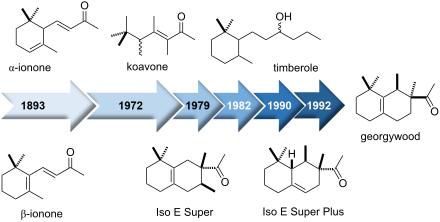
- backbones. Thus, in the presence of presilphiperfolan-8-β-ol synthase (Bot2) a novel tricyclic product 70 was obtained from unnatural farnesyldiphosphate ether 69. The olfactory analysis revealed an ethereal, peppery and camphoric scent (Scheme 10) [39]. Future prospects of the fragrance industry will be


A new approach to silicon rhodamines by Suzuki–Miyaura coupling – scope and limitations
Beilstein J. Org. Chem. 2019, 15, 2569–2576, doi:10.3762/bjoc.15.250
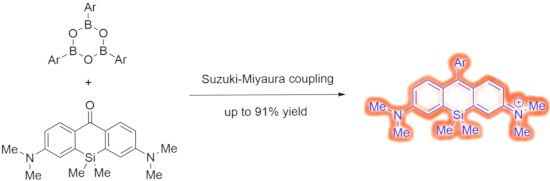
- xanthone 6 [8]. A related strategy, adding lithium compound 7 to a preformed tricyclic system 8, was used by Nagano et al. to synthesize the Ge and Sn rhodamine analogues [14]. In a recent publication, Urano et al. synthesized the rhodamines 13–15 by coupling the triflate of xanthone 12 with boroxines 9b


Current understanding and biotechnological application of the bacterial diterpene synthase CotB2
Beilstein J. Org. Chem. 2019, 15, 2355–2368, doi:10.3762/bjoc.15.228
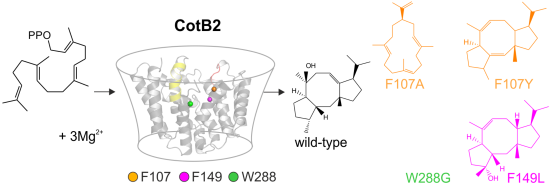
- deuterium labeling [33][34][35], to form the carbocation located at position C8 of dolabellatrienyl (B). By ring closure and formation of a novel C–C bond the tricyclic 5–8–5 ring system (C) is established. F107, F149, and the pyrophosphate moiety stabilize the carbocation at position C3 (Scheme 2 and


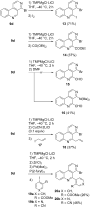
Functionalization of 4-bromobenzo[c][2,7]naphthyridine via regioselective direct ring metalation. A novel approach to analogues of pyridoacridine alkaloids
Beilstein J. Org. Chem. 2019, 15, 2304–2310, doi:10.3762/bjoc.15.222
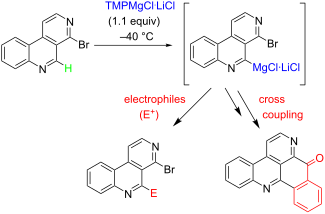
- biosyntheses of known alkaloids, a “pyridoacridine family tree” which is claimed to be useful for designing total synthesis, but also for predicting yet undiscovered alkaloids from this chemotype [6]. Only two tricyclic benzo[c][2,7]naphthyridine alkaloids, perlolidine (6; from rye grass, Lolium perenne) [7
- natural products and analogues thereof. In combination with a Parham-type cyclization a novel approach to pyrido[4,3,2-mn]acridones could be shown. Marine pyridoacridine alkaloids amphimedine (1), ascididemin (2), kuanoniamine A (3), styelsamine D (4) and eilatin (5), as well as the two known tricyclic




Characterization of two new degradation products of atorvastatin calcium formed upon treatment with strong acids
Beilstein J. Org. Chem. 2019, 15, 2085–2091, doi:10.3762/bjoc.15.206
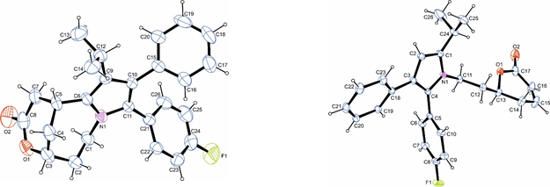
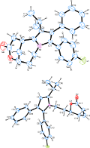
- (see Figure 2 and Supporting Information File 1) disclosed the structure of 6, bearing a novel, bridged tricyclic 1,5-methanopyrrolo[1,2-e][1,5]oxazonin-3-one ring system (Scheme 1). In contrast, submission of atorvastatin calcium trihydrate (1) to concentrated sulfuric acid for two hours at 60 °C
- elucidated by NMR and crystal structure analysis. The bridged tricyclic product 6 was formed with concentrated hydrochloric acid, whereas lactone 7 resulted from treatment with concentrated sulfuric acid. We propose mechanisms for the formation of the novel artefacts 6 and 7 here. But it has to be mentioned




Synthesis of benzo[d]imidazo[2,1-b]benzoselenoazoles: Cs2CO3-mediated cyclization of 1-(2-bromoaryl)benzimidazoles with selenium
Beilstein J. Org. Chem. 2019, 15, 2029–2035, doi:10.3762/bjoc.15.199
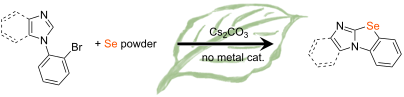
- -bromophenyl)imidazole (1i) with Se powder gave the corresponding tricyclic product 10 in low yield. Since the reaction conditions for the synthesis of the starting material 1 and the cyclization of 1 with Se powder are similar, we carried out a three-component reaction of benzimidazole, 1-bromo-2
- to be 304 nm, which is red-shifted by 21 nm compared with that of 11. The tricyclic compound 10 has a shorter λmax (297 nm). These results indicate the λmax is dependent on the number of rings. In 2-substituted derivatives (4–9), the maximum absorptions were very similar to each other (Table 2 and


A review of the total syntheses of triptolide
Beilstein J. Org. Chem. 2019, 15, 1984–1995, doi:10.3762/bjoc.15.194
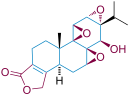
- -phenylethylamine (49) to generate key tricyclic intermediates 51 and 52, a Pd(II)-catalyzed carbonylation–lactonization reaction of 9 to construct the butenolide (D-ring), and a Friedel–Crafts isopropylation to install the C-13 isopropyl group. Still, the construction of the C-5 trans junction A-/B-ring was
- mixture of 51 and 52, subsequent Pd/C-catalyzed hydrogenation and tetrabutylammonium fluoride (TBAF)-mediated desilylation yielding the desired tricyclic 54 (83% yield, 98% ee). Overall, the known intermediate 7-oxotriptophenlide 59 was obtained in an efficient, elegant and scalable way in 10 steps with
- key cyclization precursor ketoester 15, which was cyclized in the presence of SnCl4 to give tricyclic intermediate 83, followed by steps of functional group modification to install the butenolide (D-ring), and to finish the racemic synthesis of the key intermediate triptophenolide methyl ether (8) in


Analysis of sesquiterpene hydrocarbons in grape berry exocarp (Vitis vinifera L.) using in vivo-labeling and comprehensive two-dimensional gas chromatography–mass spectrometry (GC×GC–MS)
Beilstein J. Org. Chem. 2019, 15, 1945–1961, doi:10.3762/bjoc.15.190
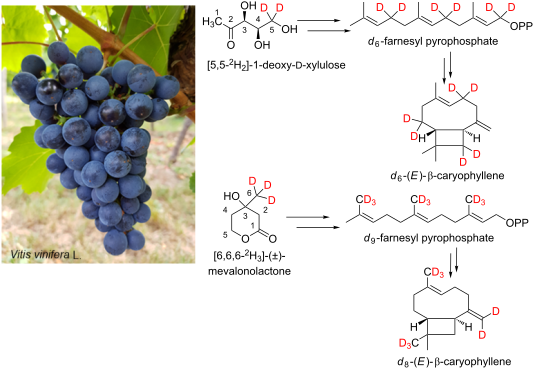
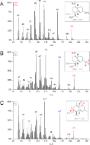
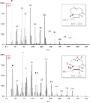
- the unlabeled and deuterated compounds, mechanisms for sesquiterpene formation in V. vinifera could be proposed and already known pathways could be confirmed or disproved. For example, the HS-SPME–GC×GC–TOF–MS measurements of fed sample material showed that the tricyclic sesquiterpene hydrocarbons α
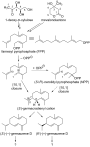
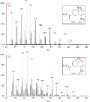
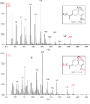
- isopropyl group leads to the fragment with m/z = 166. At this point it becomes obvious why it can be assumed that the tricyclic sesquiterpene hydrocarbon α-cubebene is synthesized via (S)-(−)-germacrene D and not via (R)-(+)-germacrene D. Assuming the biosynthesis of α-cubebene takes place via (R
- ]. Tantillo and co-workers showed that germacrene D does not have to be involved in the formation of α-ylangene due to carbocation energetics. However, according to our results the formation of this tricyclic sesquiterpene hydrocarbon and its isomer β-ylangene occurs via the intermediate (R)-(+)-germacrene D











Inherent atomic mobility changes in carbocation intermediates during the sesterterpene cyclization cascade
Beilstein J. Org. Chem. 2019, 15, 1890–1897, doi:10.3762/bjoc.15.184

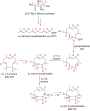
- previously established the importance of conformation in the carbocation cyclization cascade [1], focusing on two sesterterpenes, i.e., quiannulatene [1][2] and sesterfisherol [3][4][5], as representative examples. These two sesterterpenes are synthesized via a 5/12/5 tricyclic intermediate, which leads to a
- coordinate. Highly mobile carbons are shown in red, moderately mobile carbons in yellow, and static carbons in blue. Phase I: 5/12/5 tricycle formation Based on our inherent mobility analysis, C1–C5, C15, C16, C20, C21 and C23 are static during 5/12/5 tricyclic formation in the biosynthesis of both
- biosynthetic outcomes in other terpene-forming reactions. We are currently applying this approach to sesterterpenes that are synthesized through a 5/6/11 tricyclic intermediate. Experimental All calculations were carried out using GRRM11 [21][22][23][24][25] with Gaussian 09 [26]. All TS structures were


Synthesis of pyrrolo[1,2-a]quinolines by formal 1,3-dipolar cycloaddition reactions of quinolinium salts
Beilstein J. Org. Chem. 2019, 15, 1480–1484, doi:10.3762/bjoc.15.149
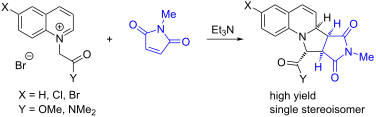
- with electron-poor alkenes occurs through a stepwise conjugate addition–cyclization process [23]. We were interested in the related quinolinium ylides that, on (formal) cycloaddition would provide pyrrolo[1,2-a]quinolines as products. These are tricyclic compounds consisting of a pyrrole ring fused
- tricyclic products 3 (Scheme 1) [41][49]. Similar examples with phenanthridinium and related ylides make use of ketones to stabilise the ylide [50][51][52][53][54]. The only exception (as far as we are aware) to the use of quinolinium ylides with ketones as stabilising groups are isolated reports with a


Selenophene-containing heterotriacenes by a C–Se coupling/cyclization reaction
Beilstein J. Org. Chem. 2019, 15, 1379–1393, doi:10.3762/bjoc.15.138

- -Wolff-Straße 13, 29699 Bomlitz, Germany 10.3762/bjoc.15.138 Abstract A new novel family of tricyclic sulfur and/or selenium-containing heterotriacenes 2–4 with an increasing number of selenium (Se) atoms is presented. The heterotriacene derivatives were synthesized in multistep synthetic routes and the
- heteroacenes via trimethylsilyl (TMS)-substituted selenolotriacenes, which served as intermediate building blocks [27]. In continuation of our work on heteroacenes, we now report synthesis and characterization of fused tricyclic selenium or selenophene-containing heteroacenes 2–4, which represent the so far


Phylogenomic analyses and distribution of terpene synthases among Streptomyces
Beilstein J. Org. Chem. 2019, 15, 1181–1193, doi:10.3762/bjoc.15.115
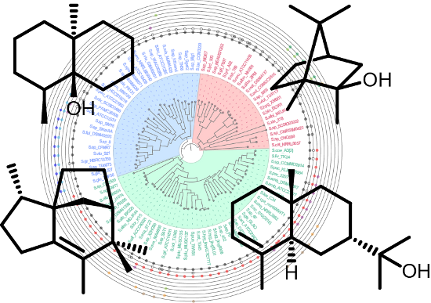
- crystal structure of 2-MIB synthase. The function of this domain is unknown, but it is conserved in most 2-MIB synthases and not present in any other terpene synthase [20][28]. epi-Isozizaene (3) is a tricyclic sesquiterpene precursor of the antibiotic albaflavenone (17) (Scheme 3) [29]. Furthermore, both



Switchable selectivity in Pd-catalyzed [3 + 2] annulations of γ-oxy-2-cycloalkenones with 3-oxoglutarates: C–C/C–C vs C–C/O–C bond formation
Beilstein J. Org. Chem. 2019, 15, 1107–1115, doi:10.3762/bjoc.15.107
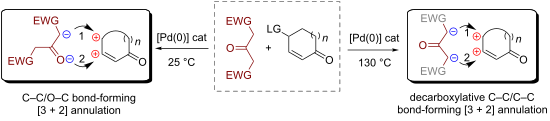
- long-term project dedicated to domino sequences [16][17][18][19][20][21][22] and Pd-catalyzed transformations [23][24][25][26][27][28][29][30], we recently reported a Pd(0)-catalyzed synthesis of bi- and tricyclic structures incorporating pyrrolidone rings (Scheme 1) [31]. In this transformation


Intramolecular cascade annulation triggered by rhodium(III)-catalyzed sequential C(sp2)–H activation and C(sp3)–H amination
Beilstein J. Org. Chem. 2019, 15, 571–576, doi:10.3762/bjoc.15.52
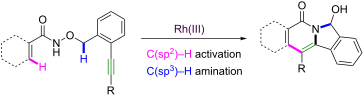
- in one operational step. The tricyclic indolizinone scaffold is abundantly present in natural products, as, e.g., in the pharmacologically relevant mappicine [23][24], camptothecin [25][26], 10-hydroxycamptothecin and topotecan [27][28] (Figure 1). In 2012, Park and co-workers reported a RhIII
- (Scheme 1b) [29][30][31]. Inspired by this work, we envisaged that tricyclic indolizinones could be built through rhodium(III)-catalyzed sequential C(sp2)–H activation and C(sp3)–H amination of O-substituted N-hydroxyacrylamides (Scheme 1c). Results and Discussion We selected N-hydroxyacrylamide 1a as our
- molecules for further studies. Selected examples of natural products with a tricyclic indolizinone scaffold. Previous work and this approach. Reaction scope. Reaction conditions: 1 (0.3 mmol), [RhCp*Cl2]2 (0.015 mmol), CsOAc (0.6 mmol), 1,4-dioxane (3.0 mL), the ratio of isolated 3:2 was shown in




Synthesis of 1,2-divinylcyclopropanes by metal-catalyzed cyclopropanation of 1,3-dienes with cyclopropenes as vinyl carbene precursors
Beilstein J. Org. Chem. 2019, 15, 285–290, doi:10.3762/bjoc.15.25

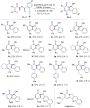
- feasibility of an analogous reaction with 1,3-dienes preparing dienylcyclopropene 4. While treatment of 4 with ZnCl2 led to complex mixtures, likely due to the Lewis acid sensitivity of the benzylic cyclopropenylcarbinol moiety, the use of [Rh2(OAc)4] (1.0 mol %, CH2Cl2, rt) led to the tricyclic compound 5 in


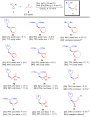


Computational characterization of enzyme-bound thiamin diphosphate reveals a surprisingly stable tricyclic state: implications for catalysis
Beilstein J. Org. Chem. 2019, 15, 145–159, doi:10.3762/bjoc.15.15
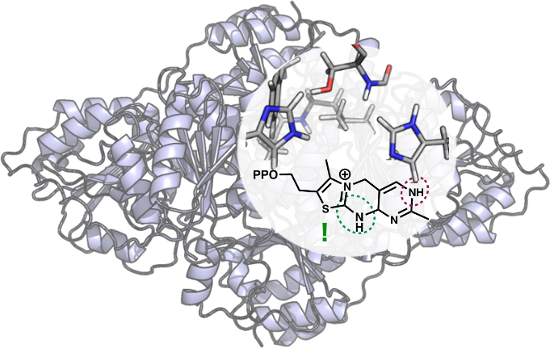
- catalytically inactive tricyclic state. Conversely, the inhibitor binding greatly destabilized the ylide formation. Together, these observations have significant implications for the reaction kinetics of the ThDP-dependent enzymes, and, potentially, for the use of unnatural substrates in such reactions
- ], cyclohexane dione hydrolase [38], oxalyl-CoA decarboxylase [39], DXP synthase [40] and transketolase [41][42]. It is surprising that almost none of these studies acknowledged that there is a second, albeit less well discussed, path for the ThDP cofactor, i.e., the formation of a tricyclic, dihydrothiachromine
- species from the AP form [43][44][45]. Nucleophilic attack of N4′ on C2 results in the formation of a C2–N4′ bond, giving rise to the tricyclic intermediate TCH+. Loss of the N1′ proton TCH+ will result in the TC form of the cofactor [45]. While admittedly not common, the tricyclic form of the cofactor




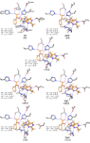
Synthesis, biophysical properties, and RNase H activity of 6’-difluoro[4.3.0]bicyclo-DNA
Beilstein J. Org. Chem. 2019, 15, 79–88, doi:10.3762/bjoc.15.9
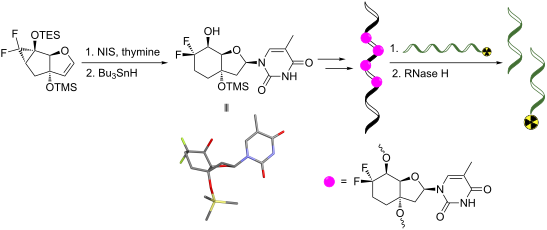
- -DNA (6’-diF-bc4,3-DNA). The difluorinated thymidine phosphoramidite building block was synthesized starting from an already known gem-difluorinated tricyclic glycal. This tricyclic siloxydifluorocyclopropane was converted into the [4.3.0]bicyclic nucleoside via cyclopropane ring-opening through the
- the presence of persilylated thymine to produce the iodine intermediates 2α/β (Scheme 1, Table 1, entry 1). These instable intermediates were then directly reduced with tributyltin hydride (Bu3SnH) to yield the tricyclic nucleosides 5α/β as main compounds. However, we observed the occurrence of the
- mechanism came from the outcome of the reaction where a tricyclic sugar was first treated with NIS and then with Bu3SnH resulting as expected in a gem-difluorinated bicyclic sugar (Scheme S1, Supporting Information File 1). This reaction also ruled out the involvement of the nucleobase or the iodine at the


6’-Fluoro[4.3.0]bicyclo nucleic acid: synthesis, biophysical properties and molecular dynamics simulations
Beilstein J. Org. Chem. 2018, 14, 3088–3097, doi:10.3762/bjoc.14.288
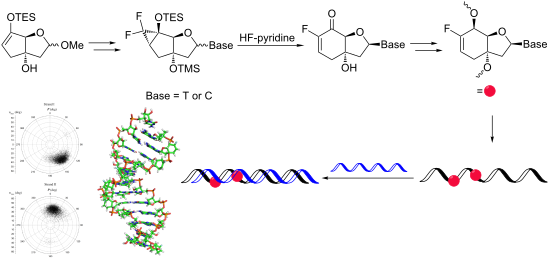
- unsaturated 6’-fluoro[4.3.0]bicyclo nucleotides (6’F-bc4,3-DNA). Two 6’F-bc4,3 phosphoramidite building blocks (T and C) were synthesized starting from a previously described [3.3.0]bicyclic sugar. The conversion of this sugar to a gem-difluorinated tricyclic intermediate via difluorocarbene addition followed
- either by a NIS-mediated or Vorbrüggen nucleosidation yielded in both cases the β-tricyclic nucleoside as major anomer. Subsequent desilylation and cyclopropane ring opening of these tricyclic intermediates afforded the unsaturated 6’F-bc4,3 nucleosides. The successful incorporation of the corresponding
- duplexes. Results and Discussion Synthesis of the phosphoramidite building blocks Our strategy for the construction of the two phosphoramidite building blocks 10 and 16 envisaged as a key step the formation of a [4.3.0]bicyclic fluoroenone from a tricyclic siloxydifluorocyclopropane through a ring


Organometallic vs organic photoredox catalysts for photocuring reactions in the visible region
Beilstein J. Org. Chem. 2018, 14, 3025–3046, doi:10.3762/bjoc.14.282
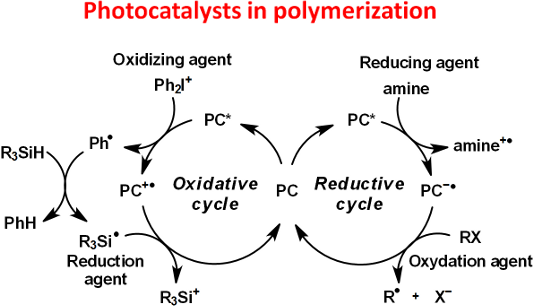
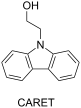
- example of organophotoredox catalysts. A carbazole is an aromatic tricyclic organic compound with two six-membered benzene rings fused on either side of a five-membered nitrogen-containing ring. They exhibit unusual optical and electronic properties such as photoconductivity and photorefractivity [77



Green synthesis of new chiral 1-(arylamino)imidazo[2,1-a]isoindole-2,5-diones from the corresponding α-amino acid arylhydrazides in aqueous medium
Beilstein J. Org. Chem. 2018, 14, 2923–2930, doi:10.3762/bjoc.14.271
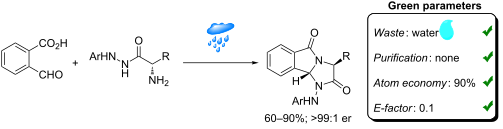
- . The reaction is totally diastereoselective and gives access to the nitrogenated tricyclic core with a relative trans stereochemistry. Keywords: sodium dodecyl sulfate; totally diastereoselective; trans-stereochemistry; Introduction Tricyclic compounds, such as imidazo[2,1-a]isoindol-5-ones, are
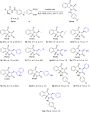
- optimized conditions. A variety of the 1-(arylamino)imidazo[2,1-a]isoindole-2,5-diones 5b–m were prepared and the obtained results are summarized in Scheme 4. The mild conditions of the reaction gave access to the tricyclic compounds 5a–m providing similar yields, regardless the amino acid residue is. A
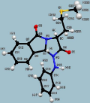
- aspect. Once more, the processing includes this eco-friendly way up to have the compounds in hand since simple precipitation allows to isolate the nitrogenated tricyclic compounds; no purification is needed. The model for the key step of the cyclization clearly explains the stereochemistries, which are




DABCO- and DBU-promoted one-pot reaction of N-sulfonyl ketimines with Morita–Baylis–Hillman carbonates: a sequential approach to (2-hydroxyaryl)nicotinate derivatives
Beilstein J. Org. Chem. 2018, 14, 2771–2778, doi:10.3762/bjoc.14.254
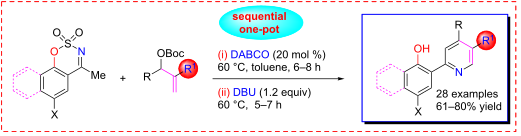
- ' fashion to make a very reactive allyl ammonium intermediate 6. The latter further involves in the SN2' reaction with in situ generated carbanion intermediate 1a' forming SN2-adduct 3a. It undergoes an intramolecular aza-Michael reaction in the presence of DABCO, leading to tricyclic product 4a. For the



Domino ring-opening–ring-closing enyne metathesis vs enyne metathesis of norbornene derivatives with alkynyl side chains. Construction of condensed polycarbocycles
Beilstein J. Org. Chem. 2018, 14, 2708–2714, doi:10.3762/bjoc.14.248
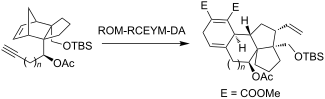
- derivative 2 would provide the tricyclic 1,3-diene 3 which on Diels–Alder reaction with a dienophile would enable access to condensed polycyclic structures 4 (Scheme 2). Thus an appropriately chosen norbornene derivative and a dienophile may provide the B/C/D/E ring system of retigeranic acids. Herein we