


Search results
Search for "trifluoromethyl" in Full Text gives 401 result(s) in Beilstein Journal of Organic Chemistry. Showing first 200.
Synthesis of α-(perfluoroalkylsulfonyl)propiophenones: a new set of reagents for the light-mediated perfluoroalkylation of aromatics
Beilstein J. Org. Chem. 2022, 18, 788–795, doi:10.3762/bjoc.18.79
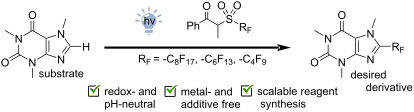
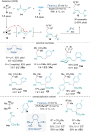
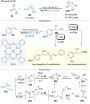
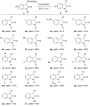
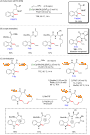
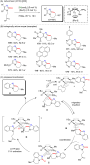
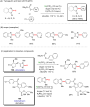
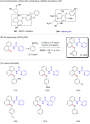
- , trifluoromethyl radicals and its longer-chain analogues, share a common electrophilic character and a stabilizing stereoelectronic effect [14], we envisioned that the “dummy group” methodology could be translated into the formation of sought after perfluoroalkyl radicals (Scheme 1). In this work, we report the


Direct C–H amination reactions of arenes with N-hydroxyphthalimides catalyzed by cuprous bromide
Beilstein J. Org. Chem. 2022, 18, 647–652, doi:10.3762/bjoc.18.65
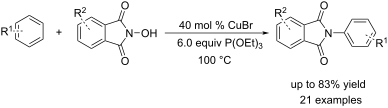
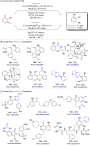
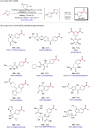
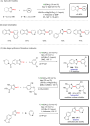
- % yield. At the same time, arenes containing electron-withdrawing groups (such as halogen and trifluoromethyl) also give the corresponding products 3e–h in moderate yields with the meta substituted isomers as the major products. Interestingly, only the meta product was detected when (trifluoromethyl




Heteroleptic metallosupramolecular aggregates/complexation for supramolecular catalysis
Beilstein J. Org. Chem. 2022, 18, 597–630, doi:10.3762/bjoc.18.62
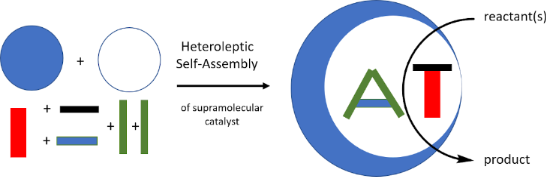
- catalytic polymerization of ε-caprolactone (123) was turned ON. The chloride was readily removed by adding sodium tetrakis[(3,5-trifluoromethyl)phenyl]borate (NaBArF) and as result catalysis was turned OFF again. Along this protocol, Mirkin et al. have developed a variety of allosterically modulated


Unusual highly diastereoselective Rh(II)-catalyzed dimerization of 3-diazo-2-arylidenesuccinimides provides access to a new dibenzazulene scaffold
Beilstein J. Org. Chem. 2022, 18, 533–538, doi:10.3762/bjoc.18.55
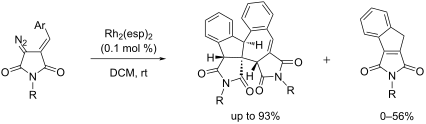
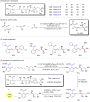
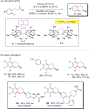
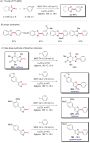
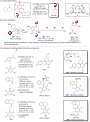
- of DAS 1i containing a trifluoromethyl group in the arylidene ring (Table 1, entry 9). In the latter case, the negative effect of the presence of the electron-withdrawing group also manifested itself in a significant decrease in the yield of the target dimer 2 due to the formation of unidentified


Chemistry of polyhalogenated nitrobutadienes, 17: Efficient synthesis of persubstituted chloroquinolinyl-1H-pyrazoles and evaluation of their antimalarial, anti-SARS-CoV-2, antibacterial, and cytotoxic activities
Beilstein J. Org. Chem. 2022, 18, 524–532, doi:10.3762/bjoc.18.54
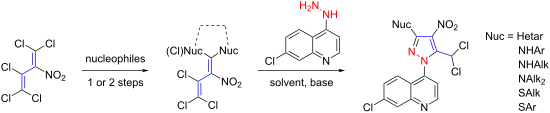
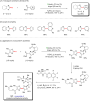
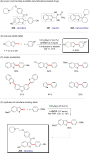
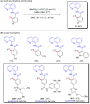
- , such as 7-chloro-4-(4-trimethylsilylethynyl-1-pyrazolyl)quinoline at 100 ppm which gave a 100% curative effect in barley infected with barley powdery mildew [23]. A statistical model to predict the structural requirement of 4-(5-trifluoromethyl-1H-pyrazol-1-yl)chloroquine derivatives to inhibit


Bioinspired tetraamino-bisthiourea chiral macrocycles in catalyzing decarboxylative Mannich reactions
Beilstein J. Org. Chem. 2022, 18, 486–496, doi:10.3762/bjoc.18.51
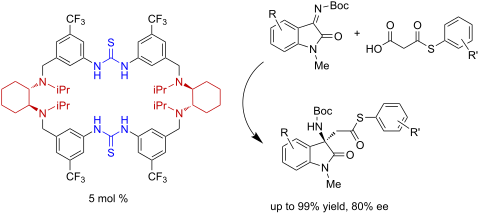
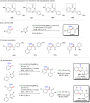
- reacted with two equiv 3-nitro-5-(trifluoromethyl)benzyl bromide (2) in the presence of a base to afford the dinitro compounds 3a–f in moderate to excellent yields (Scheme 1a). The diminished yield for product 3d was probably caused by the large steric hindrance of the 3-pentyl substituent. Reduction of
- 5-methyl (8i), 5-methoxy (8k), 6- or 7-fluoro (8l,m), 5,6-difluoro (8n), 5-, 6- or 7-chloro (8p–r), 5-, 6-, or 7-bromo (8t–v), and 7-trifluoromethyl (8w), all reactions completed within 36–48 h and afforded the products in good to excellent yields with 60–75% ee. In contrast, the reaction was




Synthesis of 3,4,5-trisubstituted isoxazoles in water via a [3 + 2]-cycloaddition of nitrile oxides and 1,3-diketones, β-ketoesters, or β-ketoamides
Beilstein J. Org. Chem. 2022, 18, 446–458, doi:10.3762/bjoc.18.47

- hours, which provides an environmentally friendly access to 3,4,5-trisubstituted isoxazoles, an important class of structures found in numerous bioactive natural products and pharmaceuticals. Additionally, we optimized the reaction conditions to produce trifluoromethyl-substituted isoxazoles, a
- chlorides to form furoxans also known as 1,2,5-oxadiazole 2-oxides, a class of structures with important biological activities due to their unique electronic nature and coordination ability. Keywords: environmentally friendly; furoxans; 1,2,5-oxadiazole 2-oxides; trifluoromethyl-substituted isoxazoles
- the nucleophilic addition and successive cyclization to happen. In addition, we further explored the scope of substrates with a trifluoromethyl group, a strong electron-withdrawing substituent, instead of methyl, an electron-donating group, in the 1,3-diketone starting materials (Table 2). The



Tetraphenylethylene-embedded pillar[5]arene-based orthogonal self-assembly for efficient photocatalysis in water
Beilstein J. Org. Chem. 2022, 18, 429–437, doi:10.3762/bjoc.18.45
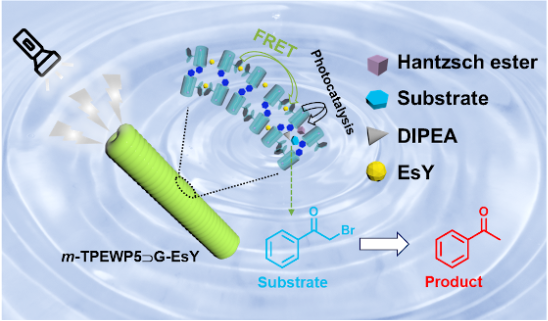
- collected in Supporting Information File 1): good yields were observed for 4-methylacetophenone (2b, 97%, Figure S9), 3-methoxyacetophenone (2c, 87%, Figure S10), 4-chloroacetophenone (2d, 76%, Figure S11), and 4-(trifluoromethyl)acetophenone (2e, 86%, Figure S12) and a moderate yield was obtained for 2


![[Graphic 5]](/bjoc/content/inline/1860-5397-18-45-i7.svg?max-width=637&scale=1.18182) G-EsY self-assembled photocat...
G-EsY self-assembled photocat...


![[Graphic 15]](/bjoc/content/inline/1860-5397-18-45-i17.svg?max-width=637&scale=1.18182) G; (b) m-TPEWP5
G; (b) m-TPEWP5![[Graphic 16]](/bjoc/content/inline/1860-5397-18-45-i18.svg?max-width=637&scale=1.18182) G-EsY. [m-TPEWP5] = 1 × 10⁻⁴ M, [G] = 1 × 10⁻⁴ M, [EsY] = ...
G-EsY. [m-TPEWP5] = 1 × 10⁻⁴ M, [G] = 1 × 10⁻⁴ M, [EsY] = ...

![[Graphic 25]](/bjoc/content/inline/1860-5397-18-45-i27.svg?max-width=637&scale=1.18182) G donor assembly...
G donor assembly...

![[Graphic 43]](/bjoc/content/inline/1860-5397-18-45-i45.svg?max-width=637&scale=1.18182) G-EsY na...
G-EsY na...

![[Graphic 48]](/bjoc/content/inline/1860-5397-18-45-i50.svg?max-width=637&scale=1.18182) G-E...
G-E...
Iron-catalyzed domino coupling reactions of π-systems
Beilstein J. Org. Chem. 2021, 17, 2848–2893, doi:10.3762/bjoc.17.196
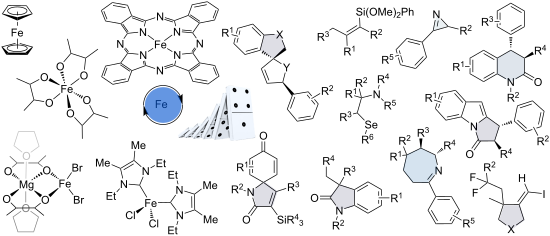
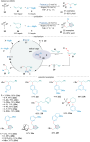
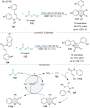
- -lactones [146]. In 2020, Cai and co-workers reported a three-component intermolecular trifluoromethyl-esterification of activated alkenes 115 with NaOTf and aryl carboxylic acids 178 (Scheme 39) [147]. Notably, the use of NaOTf as a CF3 source, compared to pre-prepared trifluoromethylating agents like













Selective sulfonylation and isonitrilation of para-quinone methides employing TosMIC as a source of sulfonyl group or isonitrile group
Beilstein J. Org. Chem. 2021, 17, 2822–2831, doi:10.3762/bjoc.17.193
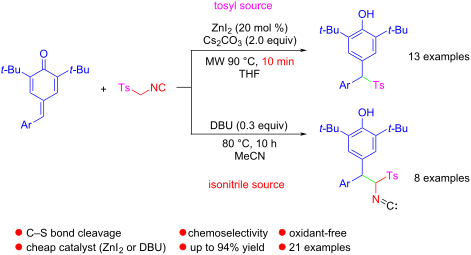
- good yields (81–94% yields). It was noteworthy that p-QMs bearing functional groups, such as methyl, methoxy, tert-butyl, fluoro, chloro, bromo, and trifluoromethyl were well compatible under the optimal reaction conditions. The efficiency of this method was not affected by the pattern of substituents
- ring of p-QMs 1 with functional groups such as alkyl, fluoro, bromo, trifluoromethyl, and thiophenyl was generally well tolerated (4a–g). Further, it should be noted that other activated methylene isonitriles such as methyl isocyanoacetate (2b) were also compatible with the reaction conditions


Photophysical, photostability, and ROS generation properties of new trifluoromethylated quinoline-phenol Schiff bases
Beilstein J. Org. Chem. 2021, 17, 2799–2811, doi:10.3762/bjoc.17.191
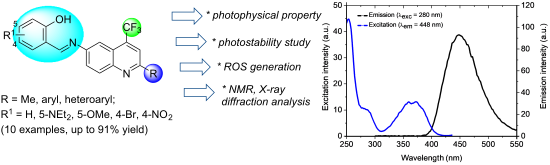
- , Brazil Laboratório de Bioinorgânica e Materiais Porfirínicos, Departamento de Química, Universidade Federal de Santa Maria, Santa Maria, RS, 97105-900, Brazil 10.3762/bjoc.17.191 Abstract A new series of ten examples of Schiff bases, namely (E)-2-(((2-alkyl(aryl/heteroaryl)-4-(trifluoromethyl)quinolin-6
- -yl)imino)methyl)phenols 3, was easily synthesized with yields of up to 91% from the reactions involving a series of 2-(R-substituted) 6-amino-4-(trifluoromethyl)quinolines 1 and 4(5)-R1-substituted salicylaldehydes 2 – in which alkyl/aryl/heteroaryl for 2-R-substituents are Me, Ph, 4-MeC6H4, 4-FC6H4
- interesting luminescent properties [14] that have attracted great interest because of their potential applicability in the composition of organic light-emitting diodes (OLED), organic solar cells (OSC), and biomolecular markers [15][16]. Moreover, the trifluoromethyl substituent (CF3) is an interesting




Synthesis of highly substituted fluorenones via metal-free TBHP-promoted oxidative cyclization of 2-(aminomethyl)biphenyls. Application to the total synthesis of nobilone
Beilstein J. Org. Chem. 2021, 17, 2668–2679, doi:10.3762/bjoc.17.181
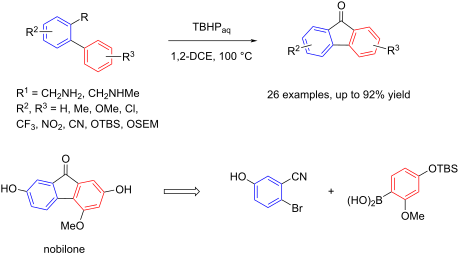
- both 10e and 10b starting from amine 15b2. The same trend concerning relative yields between regioisomers can be observed for fluorenones bearing the electron-withdrawing trifluoromethyl group in the same positions (see 10g, 10h, 10i1, and 10i2). This is rather surprising, as electronic effects exerted
- % combined yield) and 10q1/2 (57% combined yield) further illustrates, how electron-withdrawing substituents negatively impact the yield of the reaction. As evident from Scheme 5, the cyclization protocol is compatible with several functional groups (chloro, nitro, cyano, trifluoromethyl). In contrast, the


N-Sulfinylpyrrolidine-containing ureas and thioureas as bifunctional organocatalysts
Beilstein J. Org. Chem. 2021, 17, 2629–2641, doi:10.3762/bjoc.17.176
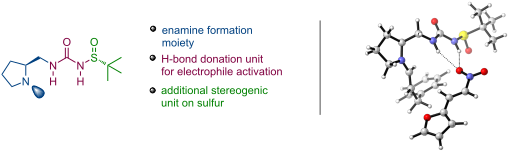
- acidity of the hydrogen-bond donating unit. This notion has often been realized with substituted aryls such as 3,5-bis(trifluoromethyl)phenyl. Ellman introduced a different approach and developed N-sulfinylureas. An additional potentially useful feature is the stereogenic center on sulfur. tert


Recent advances in organocatalytic asymmetric aza-Michael reactions of amines and amides
Beilstein J. Org. Chem. 2021, 17, 2585–2610, doi:10.3762/bjoc.17.173
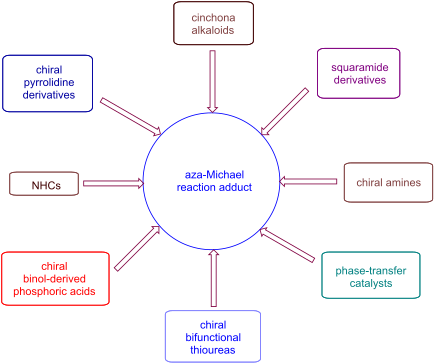
- carbenes (NHC) In recent years, NHCs have been used as organocatalysts for a wide variety of reactions [62]. Wang et al. investigated the use of several 1,2,4-triazolo-annelated chiral NHCs as organocatalysts to catalyze enantioselective aza-MR between primary amines (100) and β-trifluoromethyl-β
- 104 to Bz-protected (E)-4-hydroxybut-2-enal 105 in the presence of (S)-α,α-bis[3,5-bis(trifluoromethyl)phenyl]-2-pyrrolidinemethanol trimethylsilyl ether as the organocatalyst (cat. 106) and using PhCO2H as the acid additive. Desired products were obtained in good yields ≈78% with excellent
- formation of HOMO raised dearomative aza-dienamine-type intermediates, which undergo direct aza-Michael addition to β-trifluoromethyl enones to afford N-functionalized heteroarenes 121 efficiently in moderate to excellent yields, albeit with low to fair enantioselectivity. However, asymmetric aza-Michael


α-Ketol and α-iminol rearrangements in synthetic organic and biosynthetic reactions
Beilstein J. Org. Chem. 2021, 17, 2570–2584, doi:10.3762/bjoc.17.172
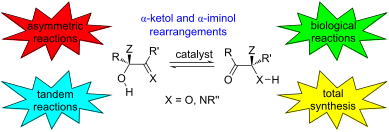
- giving 96% yield of (S)-98 with 97% ee. Impressively, raising the temperature to 160 °C for only 30 s gave 95% yield with 89% ee. The substrate scope revealed broad tolerance for aryl (except for p-trifluoromethyl) and aliphatic R groups, with yields and ee in excess of 90% in most cases. The Wulff group
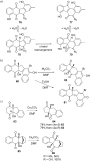
- cyclohexyl R groups in the presence of silica gel at 80 °C (Figure 19b). The rearrangements proceeded well with electron-rich aryl groups, regardless of the position of substitution, but the reaction was especially slow for the electron-withdrawing para-trifluoromethyl derivative. A major advantage of the




Silica gel and microwave-promoted synthesis of dihydropyrrolizines and tetrahydroindolizines from enaminones
Beilstein J. Org. Chem. 2021, 17, 2543–2552, doi:10.3762/bjoc.17.170
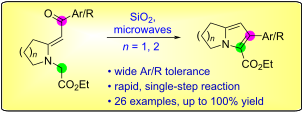
- 19y in 81% yield, albeit in a markedly slow time of 19 minutes. Both the electron-donating nature and the size of this alkyl group probably slow down the reaction. We were unfortunately not successful with other nonaromatic substituents, including trifluoromethyl and ethoxycarbonyl groups, since the




Visible-light-mediated copper photocatalysis for organic syntheses
Beilstein J. Org. Chem. 2021, 17, 2520–2542, doi:10.3762/bjoc.17.169
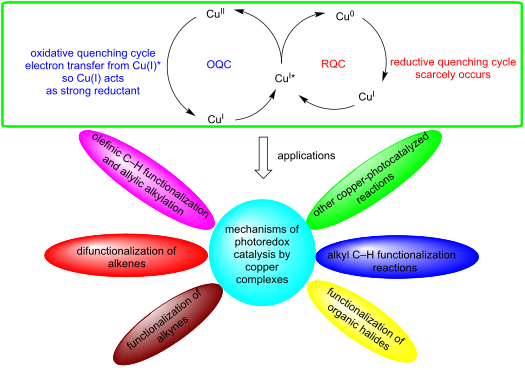
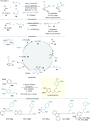
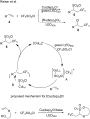
- generate a trifluoromethyl radical and LnCuIISO2Cl (intermediate A in Scheme 8). The formed trifluoromethyl radical adds to the alkene moiety to deliver a new alkyl radical, which is trapped by the LnCuII-SO2Cl species. Free SO2Cl– decomposes rapidly to SO2 and Cl–. However, in this transformation, SO2Cl






Recent advances in the tandem annulation of 1,3-enynes to functionalized pyridine and pyrrole derivatives
Beilstein J. Org. Chem. 2021, 17, 2462–2476, doi:10.3762/bjoc.17.163
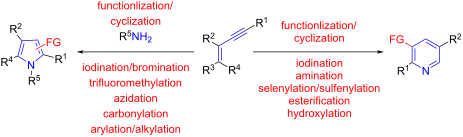
- (such as n-propyl and n-hexyl) groups under the standard conditions. 2-En-4-ynyl azides 1 bearing electron-donating substituents (such as methyl and methoxy groups) obviously worked better than those with electron-withdrawing (such as nitro, cyano, acetyl, and trifluoromethyl) groups. Meanwhile, they
- tandem reaction of 2-trifluoromethyl-1,3-enynes 36 with primary amines, affording various trifluoromethyl-substituted 3-pyrrolines [56]. Subsequently, they also developed a novel route for the synthesis of halogenated trifluoromethylated pyrroles 37 and 38 by sequential intermolecular hydroamination
- reaction of 2-trifluoromethyl-1,3-enynes 36 with aliphatic primary amines and the following NXS-mediated oxidative cyclization (Scheme 13) [57]. The method tolerated various substituted benzylamines, 2-phenylethanamines, isopropylamine, and other aliphatic chain-like amines. Furthermore, both furan-2




A novel methodology for the efficient synthesis of 3-monohalooxindoles by acidolysis of 3-phosphate-substituted oxindoles with haloid acids
Beilstein J. Org. Chem. 2021, 17, 2321–2328, doi:10.3762/bjoc.17.150
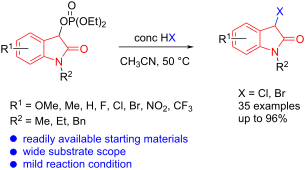
- , i.e., benzyl and ethyl, slightly decreased the yields of the products (see 4n and 4o). Regrettably, when a substrate 2 bearing a strong electron-withdrawing nitro or trifluoromethyl group on the phenyl ring was employed, the reaction gave very complex side products under the standard conditions, and




Photoredox catalysis in nickel-catalyzed C–H functionalization
Beilstein J. Org. Chem. 2021, 17, 2209–2259, doi:10.3762/bjoc.17.143
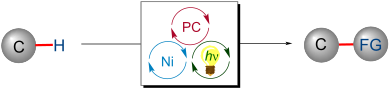
- catalysis and ketone HAT photocatalyst [66]. Here, the catalytic system composed of the ketone photocatalyst (4-methoxyphenyl)(4-(trifluoromethyl)phenyl)methanone (24), Ni(acac)2, 5,5’-dimethyl-2,2’-bipyridine (5,5’-diMe-bpy), Na2CO3 under visible light (CFL) irradiation was found to be optimal to provide
- and co-workers (Scheme 35) [113]. This defluorinative functionalization protocol set the stage for the introduction of gem-difluoroalkene motifs into α-amino C(sp3)–H sites. Interestingly, substrates having a trifluoromethyl group on the amide backbone enabled the functionalization of δ C(sp3)–H bonds




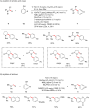


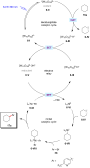




A study on selective transformation of norbornadiene into fluorinated cyclopentane-fused isoxazolines
Beilstein J. Org. Chem. 2021, 17, 2051–2066, doi:10.3762/bjoc.17.132
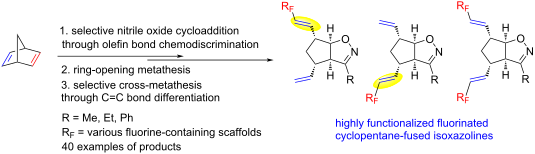
- are considered as to be of type II, only a handful of literature data are available on the behavior of fluorine-containing olefins or perfluorinated alkenes. The incorporation of fluoroalkyl moieties (such as difluoromethyl, trifluoromethyl and perfluoroalkyl groups) into an organic molecule can often
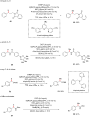
- -trifluoro-2-(trifluoromethyl)pent-4-en-2-ol (7f). Cross-metathesis of divinylated isoxazoline (±)-4 with 8-(allyloxy)-1,1,1,2,2,3,3,4,4,5,5,6,6-tridecafluorooctane (7g). Cross-metathesis of divinylated isoxazoline (±)-4 with 4-fluorostyrene (7h). Selective CM of divinylated isoxazoline (±)-5 with
- -trifluoro-2-(trifluoromethyl)pent-4-en-2-ol (7f). Cross-metathesis of divinylated isoxazoline (±)-5 with 8-(allyloxy)-1,1,1,2,2,3,3,4,4,5,5,6,6-tridecafluorooctane (7g). Cross-metathesis of divinylated isoxazoline (±)-5 with 4-fluorostyrene (7h). Cross-metathesis of divinylated isoxazoline (±)-6 with




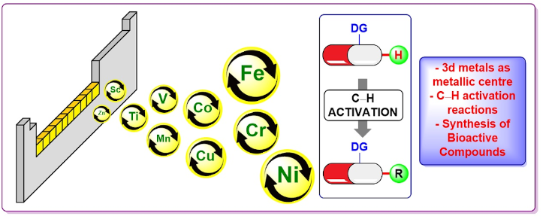
On the application of 3d metals for C–H activation toward bioactive compounds: The key step for the synthesis of silver bullets
Beilstein J. Org. Chem. 2021, 17, 1849–1938, doi:10.3762/bjoc.17.126
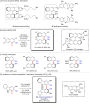
- hydroxylation of positions next to heteroatoms leads to hemiaminals and hemiacetals which typically promotes an overoxidation to the corresponding carbonyl compound. The sterically hindered catalyst Mn(CF3PDP)(MeCN)2(SbF6)2 (where CF3PDP is 1,1′-bis((5-(2,6-bis(trifluoromethyl)phenyl)pyridin-2-yl)methyl)-2,2




























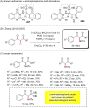
Development of N-F fluorinating agents and their fluorinations: Historical perspective
Beilstein J. Org. Chem. 2021, 17, 1752–1813, doi:10.3762/bjoc.17.123
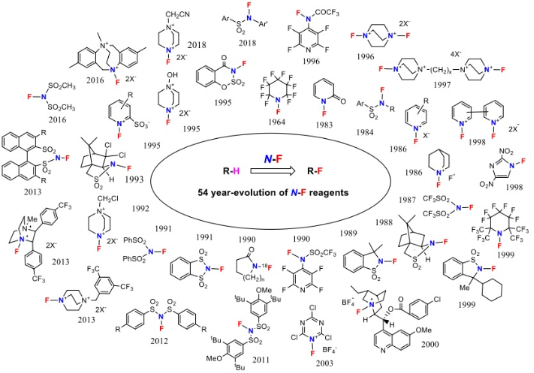
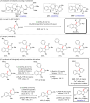
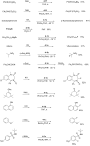
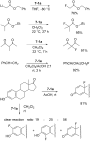
- . Notably, attempts to prepare N-fluorosuccinimide from succinimide, or one of its salts by reaction with fluorine (F2), trifluoromethyl hypofluorite, or perchloryl fluoride in a variety of solvents, and at temperatures ranging from −78 °C to room temperature, all but failed, as reported in the margin of
- stable crystalline solids. The nature of the lipophilic alkyl or trifluoromethyl substituents had a significant effect on the reactivity. Previously, N-fluoropyridinium-2-sulfonate and its 6-chloro derivative had been synthesized and shown to have excellent selectivity in fluorination reactions, but
- the fluorination of reactive carbanions and easily oxidizable sulfides, whereas the most powerful 18-2h was suitable for less-reactive substrates such as olefins, aromatics, and neutral active methylene compounds. N-Fluoro-6-(trifluoromethyl)pyridinium-2-sulfonate (18-2f’) was prepared later [77]. As

























Chemical approaches to discover the full potential of peptide nucleic acids in biomedical applications
Beilstein J. Org. Chem. 2021, 17, 1641–1688, doi:10.3762/bjoc.17.116
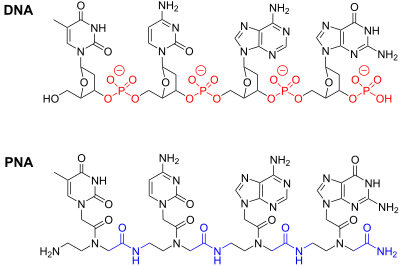
- uracil with fluorine or trifluoromethyl improved PNA binding affinity for complementary DNA and RNA [127]. Moreover, fluorination increased the cellular uptake of PNAs [127]. Fluorinated uracil derivatives are also useful probes for studying different binding modes of PNA using 19F NMR [128]. PNA








2,4-Bis(arylethynyl)-9-chloro-5,6,7,8-tetrahydroacridines: synthesis and photophysical properties
Beilstein J. Org. Chem. 2021, 17, 1629–1640, doi:10.3762/bjoc.17.115
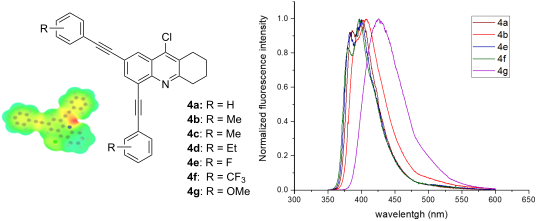
- containing electron-donating substituents. For example, arylacetylene 3g, bearing a methoxy group, gave the best chemical yield of 93%. However, in case of the electron-attracting trifluoromethyl group (3e), we obtained a somewhat lower, but still good yield of 75%. Photophysical properties As a prominent
- , derivatives 4e and 4f bearing an electron-deficient fluoro or trifluoromethyl group show a hyperchromic shift of their bands located between 340 and 380 nm. In case of the electron-donating methoxy substituent (4g), a bathochromic shift was observed. Besides, a new band appeared at 321 nm which may be
- profile with two transitions located at 386 and 400 nm. Methyl-substituted derivative 4b gave a slight red shift of 10 nm as compared to 4a. In contrast, fluorine and trifluoromethyl-substituted derivatives 4e and 4f show nearly the same emission. However, derivative 4g containing an electron-donating





