Search for "Cleavage" in Full Text gives 961 result(s) in Beilstein Journal of Organic Chemistry. Showing first 200.
Beilstein J. Org. Chem. 2023, 19, 1399–1407, doi:10.3762/bjoc.19.101
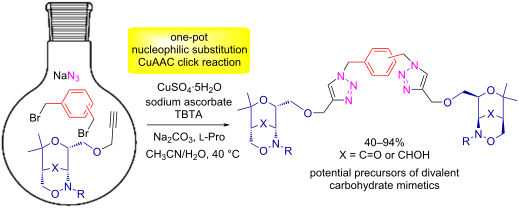
Graphical Abstract
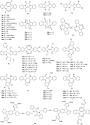
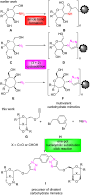
Scheme 1: Earlier approaches to multivalent carbohydrate mimetics B, D or F based on enantiopure aminopyran a...
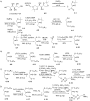
Scheme 2: Synthesis of model compound 3 under conventional conditions and as a one-pot process employing benz...
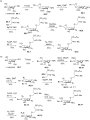
Scheme 3: One-pot reaction employing enantiopure alkynyl-substituted 1,2-oxazin-4-one derivative 6 leading to...
Scheme 4: One-pot reactions of dihalides 8 and 11 with sodium azide and alkyne 2 leading to symmetric divalen...
Scheme 5: One-pot reactions employing enantiopure alkynyl-substituted 1,2-oxazin-4-one derivative 6 leading t...
Scheme 6: One-pot reaction employing enantiopure alkynyl-substituted 1,2-oxazin-4-ol derivative 19 leading to...
Scheme 7: Reductive ring-openings of 1,2-oxazine derivatives 19 and 23 as simple model compounds by hydrogeno...
Scheme 8: Attempted reductive ring-openings of compound 21 by hydrogenolysis or by samarium diiodide leading ...
Beilstein J. Org. Chem. 2023, 19, 1299–1369, doi:10.3762/bjoc.19.96
Graphical Abstract
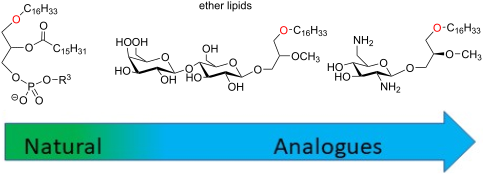
Figure 1: Chemical structure of some natural ether lipids (ELs).
Figure 2: Synthesis of lyso-PAF and PAF from 1-O-alkylglycerol [64].
Figure 3: Synthesis of lyso-PAF from 1,3-benzylideneglycerol 3.1 [69].
Figure 4: A) Synthesis of the two enantiomers of octadecylglycerol (4.6 and 4.10) from ᴅ-mannitol (4.1); B) s...
Figure 5: Four-step synthesis of PAF 5.6 from (S)-glycidol [73].
Figure 6: Synthesis of 1-O-alkylglycerol A) from solketal, B) from ᴅ- or ʟ-tartaric acid and the intermediate ...
Figure 7: Synthesis of EL building blocks starting from substituted glycidol 7.1a–c [82].
Figure 8: Synthesis of PAF 8.5 by using phosphoramidite 8.2 [86].
Figure 9: Synthesis of oleyl-PAF 9.7 from ʟ-serine [88].
Figure 10: Synthesis of racemic analogues of lyso-PAF 10.8 and PAF 10.9 featuring a phenyl group between the g...
Figure 11: Synthesis of racemic deoxy-lyso-PAF 11.7 and deoxy-PAF 11.8 [91].
Figure 12: Synthesis of racemic thio-PAF 12.8 [93].
Figure 13: Racemic synthesis of 13.6 to illustrate the modification of the glycerol backbone by adding a methy...
Figure 14: Racemic synthesis of 14.5 as an illustration of the introduction of methyl substituents on the glyc...
Figure 15: Synthesis of functionalized sn-2-acyl chains of PC-EL; A) Steglich esterification or acylation reac...
Figure 16: Synthesis of racemic mc-PAF (16.3), a carbamate analogue of PAF [102].
Figure 17: A) Synthesis of (R)-17.2 and (S)-17.6 starting from (S)-solketal (17.1); B) synthesis of N3-PAF (17...
Figure 18: Modification of the phosphocholine polar head to produce PAF analogues [81].
Figure 19: Racemic PAF analogues 19.3 and 19.5 characterized by the absence of the phosphate group [107].
Figure 20: Synthesis of PIP3-PAF (20.7) [108].
Figure 21: Large-scale synthesis of C18-edelfosine (21.8) [116].
Figure 22: Synthesis of C16-edelfosine (22.10) starting from isopropylidene-ʟ-glyceric acid methyl ester (22.1...
Figure 23: Phosphocholine moiety installation by the use of chlorophosphite 23.2 as key reagent [119].
Figure 24: Synthesis of rac-1-alkyl-2-O-methylglycerol (AMG) [120].
Figure 25: Synthesis of stereocontrolled 1-alkyl-2-O-methyl glycerol 25.9 (AMG) from dimethyl ᴅ-tartrate [81].
Figure 26: A) Racemic synthesis of thioether 26.4 [129,130], B) structure of sulfone analogue 26.5 [129].
Figure 27: Stereocontrolled synthesis of C18-edelfosine thioether analogue 27.8 [118].
Figure 28: Synthesis of thioether 28.4 that include a thiophosphate function [134].
Figure 29: Synthesis of ammonium thioether 29.4 and 29.6 [135].
Figure 30: Synthesis of the N-methylamino analogue of edelfosine 30.6 (BN52211) [138].
Figure 31: Synthesis of 1-desoxy analogues of edelfosine; A) with a saturated alkyl chain; B) synthesis of the...
Figure 32: Stereocontrolled synthesis of edelfosine analogue (S)-32.8 featuring a C18:1 lipid chain [142].
Figure 33: Synthesis of edelfosine analogues with modulation of the lipid chain; A) illustration with the synt...
Figure 34: Synthesis of phospholipid featuring a carbamate function to link the lipid chain to the glycerol un...
Figure 35: Synthesis of sesquiterpene conjugates of phospho glycero ether lipids [148].
Figure 36: Racemic synthesis of methyl-substituted glycerol analogues 36.7 and 36.10: A) synthesis of diether ...
Figure 37: Racemic synthesis of ilmofosine (37.6) [155,156].
Figure 38: A) Stereoselective synthesis of 38.5 via a stereoselective hydroboration reaction; B) synthesis of ...
Figure 39: Racemic synthesis of SRI62-834 (39.6) featuring a spiro-tetrahydrofurane heterocycle in position 2 ...
Figure 40: Racemic synthesis of edelfosine analogue 40.5 featuring an imidazole moiety in sn-2 position [160].
Figure 41: Racemic synthesis of fluorine-functionalized EL: A) Synthesis of 41.6 and B) synthesis of 41.8 [161-163].
Figure 42: A) Synthesis of the β-keto-ester 42.6 that also features a decyl linker between the phosphate and t...
Figure 43: Synthesis of phosphonate-based ether lipids; A) edelfosine phosphonate analogue 43.7 and B) thioeth...
Figure 44: Enantioselective synthesis of phosphonates 44.3 and 44.4 [171].
Figure 45: Racemic synthesis of phosphinate-based ether lipid 45.10 [172].
Figure 46: Racemic synthesis of edelfosine arsonium analogue 46.5 [173].
Figure 47: Synthesis of edelfosine dimethylammonium analogue 47.2 [118].
Figure 48: Synthesis of rac-C18-edelfosine methylammonium analogue 48.4 [176].
Figure 49: A) Synthesis of edelfosine N-methylpyrrolidinium analogue 49.2 or N-methylmorpholinium analogue 49.3...
Figure 50: A) Synthesis of edelfosine’s analogue 50.4 with a PE polar group; B) illustration of a pyridinium d...
Figure 51: A) Synthesis of 51.4 featuring a thiazolium cationic moiety; B) synthesis of thiazolium-based EL 51...
Figure 52: Synthesis of cationic ether lipids 52.3, 52.4 and 52.6 [135,183].
Figure 53: Synthesis of cationic carbamate ether lipid 53.5 [184].
Figure 54: Synthesis of cationic sulfonamide 54.5 [185].
Figure 55: Chemical structure of ONO-6240 (55.1) and SRI-63-119 (55.2).
Figure 56: Synthesis of non-ionic ether lipids 56.2–56.9 [188].
Figure 57: Synthesis of ether lipid conjugated to foscarnet 57.6 [189].
Figure 58: A) Synthesis of ether lipid conjugated to arabinofuranosylcytosine; B) synthesis of AZT conjugated ...
Figure 59: Synthesis of quercetin conjugate to edelfosine [191].
Figure 60: Synthesis of 60.8 (Glc-PAF) [194].
Figure 61: A) Synthesis of amino ether lipid 61.7 functionalized with a rhamnose unit and its amide analogue 6...
Figure 62: A) Synthesis of glucose ether lipid 62.4; B) structure of ether lipid 62.5 possessing a maltose uni...
Figure 63: A) Synthesis of glucuronic methyl ester 63.8; B) structure of cellobiose 63.9 and maltose 63.10 ana...
Figure 64: A) Synthesis of maltosyl glycerolipid 64.7; B) structure of lactose analogue 64.8 prepared followin...
Figure 65: A) Asymmetric synthesis of the aglycone moiety starting from allyl 4-methoxyphenyl ether; B) glycos...
Figure 66: A) Synthesis of ohmline possessing a lactose moiety. B) Structure of other glyco glycero lipids pre...
Figure 67: A) Synthesis of lactose-glycerol ether lipid 67.5; B) analogues possessing a maltose (67.6) or meli...
Figure 68: Synthesis of digalactosyl EL 68.6, A) by using trityl, benzyl and acetyl protecting groups, B) by u...
Figure 69: A) Synthesis of α-ohmline; B) structure of disaccharide ether lipids prepared by using similar meth...
Figure 70: Synthesis of lactose ether lipid 70.3 and its analogue 70.6 featuring a carbamate function as linke...
Figure 71: Synthesis of rhamnopyranoside diether 71.4 [196].
Figure 72: Synthesis of 1-O-hexadecyl-2-O-methyl-3-S-(α-ᴅ-1'-thioglucopyranosyl)-sn-glycerol (72.5) [225].
Figure 73: A) Preparation of lipid intermediate 73.4; B) synthesis of 2-desoxy-C-glycoside 73.10 [226].
Figure 74: Synthesis of galactose-pyridinium salt 74.3 [228].
Figure 75: Synthesis of myo-inositol derivative Ino-C2-PAF (75.10) [230].
Figure 76: A) Synthesis of myo-inositol phosphate building block 76.7; B) synthesis of myo-inositolphosphate d...
Figure 77: A) Synthesis of phosphatidyl-3-desoxy-inositol 77.4; B) synthesis of phosphono-3-desoxyinositol 77.9...
Figure 78: A) Structure of diether phosphatidyl-myo-inositol-3,4-diphosphate 78.1; B) synthesis of phosphatidy...
Figure 79: A) Synthesis of diether-phosphatidyl derivative 79.4 featuring a hydroxymethyl group in place of a ...
Figure 80: Synthesis of Glc-amine-PAF [78].
Figure 81: Synthesis of glucosamine ether lipid 81.4 and its analogues functionalized in position 3 of the ami...
Figure 82: Synthesis of fully deprotected aminoglucoside ether lipid 82.5 [246].
Figure 83: Synthesis of C-aminoglycoside 83.12 using Ramberg–Bäcklund rearrangement as a key step [250].
Figure 84: A) List of the most important glyco lipids and amino glyco lipids included in the study of Arthur a...
Figure 85: Synthesis of mannosamine ether lipid 85.6 [254].
Figure 86: A) Synthesis of glucosamine ether lipids with a non-natural ʟ-glucosamine moiety; B) synthesis of e...
Figure 87: A) Structure of the most efficient anticancer agents 87.1–87.4 featuring a diamino glyco ether lipi...
Figure 88: A) Synthesis of diamino glyco ether lipid 87.4; B) synthesis of bis-glycosylated ether lipid 88.10 [256]....
Figure 89: Synthesis of triamino ether lipid 89.4 [260].
Figure 90: Synthesis of chlorambucil conjugate 90.7 [261].
Figure 91: Three main methods for the preparation of glycerol ether lipid 91.3; A) from solketal and via a tri...
Figure 92: Four different methods for the installation of the phosphocholine polar head group; A) method using...
Figure 93: Illustration of two methods for the installation of saccharides or aminosaccharides; A) O-glycosyla...
Beilstein J. Org. Chem. 2023, 19, 1259–1288, doi:10.3762/bjoc.19.94
Graphical Abstract
Scheme 1: Research progress of coupling reactions and active compounds containing α-C(sp3)-functionalized eth...
Scheme 2: Transition-metal-catalyzed CDC pathways.
Scheme 3: CDC of active methylene compounds in the α-C(sp3) position of ethers.
Scheme 4: InCl3/Cu(OTf)2/NHPI co-catalyzed CDC reaction.
Scheme 5: CDC of cyclic benzyl ethers with aldehydes.
Scheme 6: Cu-catalyzed CDC of (a) unactivated C(sp3)–H ethers with simple ketones and (b) double C(sp3)−H fun...
Scheme 7: Cu-catalyzed CDC of C(sp3)–H/C(sp3)–H bonds.
Scheme 8: Cu-catalyzed synthesis of chiral 2-substituted tetrahydropyrans.
Scheme 9: CDC of thiazole with cyclic ethers.
Scheme 10: Cu(I)-catalyzed oxidative alkenylation of simple ethers.
Scheme 11: Cross-dehydrogenation coupling of isochroman C(sp3)–H bonds with anisole C(sp2)–H bonds.
Scheme 12: Pd(OAc)2/Cu(OTf)2-catalyzed arylation of α-C(sp3)–H bonds of ethers.
Scheme 13: Cu-catalyzed C(sp3)–H/C(sp2)–H activation strategies to construct C(sp3)–C(sp2) bonds.
Scheme 14: Cu(I)-catalyzed C(sp2)–H alkylation.
Scheme 15: Cu-catalyzed C(sp3)–H/C(sp)–H activation to construct C(sp3)–C(sp) bonds (H2BIP: 2,6-bis(benzimidaz...
Scheme 16: Fe-catalyzed CDC reaction pathways.
Scheme 17: Fe2(CO)9-catalyzed functionalization of C–H bonds.
Scheme 18: Ligand-promoted Fe-catalyzed CDC reaction of N-methylaniline with ethers.
Scheme 19: Fe-catalyzed CDC of C(sp3)–H/C(sp3)–H bonds.
Scheme 20: Fe-catalyzed hydroalkylation of α,β-unsaturated ketones with ethers.
Scheme 21: Solvent-free Fe(NO3)3-catalyzed CDC of C(sp3)–H/C(sp2)–H bonds.
Scheme 22: Alkylation of disulfide compounds to afford tetrasubstituted alkenes.
Scheme 23: Fe-catalyzed formation of 1,1-bis-indolylmethane derivatives.
Scheme 24: Alkylation of coumarins and flavonoids.
Scheme 25: Direct CDC α-arylation of azoles with ethers.
Scheme 26: CDC of terminal alkynes with C(sp3)–H bonds adjacent to oxygen, sulfur or nitrogen atoms.
Scheme 27: Alkylation of terminal alkynes.
Scheme 28: Co-catalyzed functionalization of glycine esters.
Scheme 29: Co-catalyzed construction of C(sp2)–C(sp3) bonds.
Scheme 30: Co-catalyzed CDC of imidazo[1,2-a]pyridines with isochroman.
Scheme 31: Co-catalyzed C–H alkylation of (benz)oxazoles with ethers.
Scheme 32: Cobalt-catalyzed CDC between unactivated C(sp2)–H and C(sp3)–H bonds.
Scheme 33: MnO2-catalyzed CDC of the inactive C(sp3)-H.
Scheme 34: Oxidative cross-coupling of ethers with enamides.
Scheme 35: Ni(II)-catalyzed CDC of indoles with 1,4-dioxane.
Scheme 36: Chemo- and regioselective ortho- or para-alkylation of pyridines.
Scheme 37: Asymmetric CDC of 3,6-dihydro-2H-pyrans with aldehydes.
Scheme 38: CDC of heterocyclic aromatics with ethers.
Scheme 39: Indium-catalyzed alkylation of DHPs with 1,3-dicarbonyl compounds.
Scheme 40: Rare earth-metal-catalyzed CDC reaction.
Scheme 41: Visible-light-driven CDC of cycloalkanes with benzazoles.
Scheme 42: Photoinduced alkylation of quinoline with cyclic ethers.
Scheme 43: Photocatalyzed CDC reactions between α-C(sp3)–H bonds of ethers and C(sp2)–H bonds of aromatics.
Beilstein J. Org. Chem. 2023, 19, 1055–1145, doi:10.3762/bjoc.19.81
Graphical Abstract
Figure 1: Oxidative and reductive activations of organic compounds harvesting photoredox catalysis.
Figure 2: General catalytic cycles of radical ion conPET (left) and radical ion e-PRC (right).
Figure 3: “Beginner’s guide”: comparison between advantages, capacities, and prospectives of conPET and PEC.
Figure 4: A) conPET reductive dehalogenation of aryl halides with PDI. B) Reductive C–H arylation with pyrrol...
Figure 5: A) Chromoselective mono- and disubstitution or polybrominated pyrimidines with pyrroles. B) Sequent...
Figure 6: A) Synthesis of pyrrolo[1,2-a]quinolines. B) Synthesis of ullazines.
Figure 7: A) Reductive phosphorylation of aryl halides via conPET. B) Selected examples from the substrate sc...
Figure 8: A) Reductive dehalogenation of aryl halides via conPET and selected examples from the substrate sco...
Figure 9: A) Reductive C–H arylation of aryl halides via conPET (top) and selected examples from the substrat...
Figure 10: A) Reductive hydrodehalogenation of aryl halides with Mes-Acr-BF4. B) Selected examples from the su...
Figure 11: A) Reductive hydrodechlorination of aryl chlorides with 4-DPAIPN. B) Proposed formation of CO2•−. C...
Figure 12: A) Reductive conPET borylation with 3CzEPAIPN (top) and selected examples from the substrate scope ...
Figure 13: Scale-up of conPET phosphorylation with 3CzEPAIPN.
Figure 14: A) Borylation of 1d. B) Characteristics and structure of PC1 with green and red parts showing the l...
Figure 15: A) Reductive C–H arylation scope with polysulfide conPET (top) and selected examples from the subst...
Figure 16: Scale-up of A) C–H arylation and B) dehaloborylation with polysulfide photocatalysis in continuous-...
Figure 17: A) Formation of [Ir1]0 and [Ir2]0 upon PET between [Ir1]+ and Et3N. B) Mechanism of multi-photon ta...
Figure 18: A) Reductive hydrodehalogenation of aryl halides via multi-photon tandem photocatalysis. B) Selecte...
Figure 19: A) Carbonylative amidation of aryl halides in continuous flow. B) Selected examples from the substr...
Figure 20: A) General scheme for reductive (RQ) and oxidative quenching (OQ) protocols using [FeIII(btz)3](PF6)...
Figure 21: A) Carbonylative amidation of alkyl iodides with [IrIII(ppy)2(dtbbpy)]PF6. B) Selected examples fro...
Figure 22: A) Carboxylative C–N bond cleavage in cyclic amines. B) Selected examples from the substrate scope....
Figure 23: A) Formal reduction of alkenes to alkanes via transfer hydrogenation. B) Selected examples from the...
Figure 24: A) Birch-type reduction of benzenes with PMP-BPI. B) Selected examples from the substrate scope (sc...
Figure 25: Proposed mechanism of the OH− mediated conPET Birch-type reduction of benzene via generation of sol...
Figure 26: Reductive detosylation of N-tosylated amides with Mes-Acr-BF4. B) Selected examples from the substr...
Figure 27: A) Reductive detosylation of N-tosyl amides by dual PRC. B) Selected examples from the substrate sc...
Figure 28: A) Mechanism of the dual PRC based on PET between [Cu(dap)2]+ and DCA. B) Mechanism of the dual PRC...
Figure 29: A) N–O bond cleavage in Weinreb amides with anthracene. B) N–O bond cleavage in Weinreb amides rely...
Figure 30: A) Pentafluorosulfanylation and fluoride elimination. B) Mechanism of the pentafluorosulfanylation ...
Figure 31: A) α-Alkoxypentafluorosulfanylation (top) and selected examples from the substrate scope (bottom). ...
Figure 32: A) Oxidative amination of arenes with azoles catalyzed by N-Ph PTZ. B) Selected examples from the s...
Figure 33: A) C(sp3)–H bond activation by HAT via chloride oxidation by *N-Ph PTZ•+. B) Proposed mechanism for...
Figure 34: A) Recycling e-PRC C–H azolation of electron-rich arenes with pyrazoles using Mes-Acr+ as a photoca...
Figure 35: A) Radical ion e-PRC direct oxidation of unactivated arenes using TAC+ as an electro-activated phot...
Figure 36: A) Radical ion e-PRC direct oxidation of unactivated arenes using TPA as an electro-activated photo...
Figure 37: Proposed mechanism (top) and mode of preassembly (bottom).
Figure 38: A) Possible preassemblies of reactive (left) vs unreactive (right) arenes. B) Calculated spin densi...
Figure 39: A) Recycling e-PRC C(sp2 )–H acetoxylation of arenes using DDQ as a photocatalyst. B) Proposed cata...
Figure 40: Gram scale hydroxylation of benzene in a recirculated flow setup.
Figure 41: A) Radical ion e-PRC vicinal diamination of alkylarenes using TAC+ as an electro-activated photocat...
Figure 42: A) Sequential oxygenation of multiple adjacent C–H bonds under radical ion e-PRC using TAC+ as an e...
Figure 43: A) Enantioselective recycling e-PRC cyanation of benzylic C–H bonds using ADQS as photocatalyst. B)...
Figure 44: Proposed tandem mechanism by Xu and co-workers.
Figure 45: A) Enantioselective recycling e-PRC decarboxylative cyanation using Cu(acac)2, Ce(OTf)3 and a box l...
Figure 46: A) Enantioselective recycling e-PRC benzylic cyanation using Cu(MeCN)4BF4, box ligand and anthraqui...
Figure 47: A) Radical ion e-PRC acetoxyhydroxylation of aryl olefins using TAC+ as an electro-activated photoc...
Figure 48: Selected examples from the substrate scope.
Figure 49: Photoelectrochemical acetoxyhydroxylation in a recirculated flow setup.
Figure 50: A) Radical ion e-PRC aminooxygenation of aryl olefins using TAC+ as an electro-activated photocatal...
Figure 51: A) Recycling e-PRC C–H alkylation of heteroarenes with organic trifluoroborates using Mes-Acr+ as p...
Figure 52: A) Recycling e-PRC decarboxylative C–H alkylation of heteroarenes using CeCl3·7H2O as catalyst. B) ...
Figure 53: A) Recycling e-PRC decarboxylative C–H alkylation of heteroarenes using Fe(NH4)2(SO4)2·6H2O as cata...
Figure 54: A) Recycling e-PRC C–H alkylation of heteroarenes with alkyl oxalates and 4CzIPN as photocatalyst. ...
Figure 55: A) Recycling e-PRC decarboxylative C–H carbamoylation of heteroarenes using 4CzIPN as photocatalyst...
Figure 56: A) Photoelectrochemical HAT-mediated hydrocarbon activation via the chlorine radical. B) Proposed m...
Figure 57: A) Selected examples from the substrate scope. B) Gram and decagram scale semi-continuous flow PEC ...
Figure 58: A) Photoelectrochemical HAT-mediated dehydrogenative coupling of benzothiazoles with aliphatic C–H ...
Figure 59: A) Photoelectrochemical HAT activation of ethers using electro-activated TAC+ as photocatalyst. B) ...
Figure 60: Selected examples from the substrate scope.
Figure 61: A) Photoelectrochemical HAT-mediated synthesis of alkylated benzimidazo-fused isoquinolinones using...
Figure 62: A) Decoupled photoelectrochemical cerium-catalyzed oxydichlorination of alkynes using CeCl3 as cata...
Figure 63: Proposed decoupled photoelectrochemical mechanism.
Figure 64: A) Decoupled photoelectrochemical ring-opening bromination of tertiary cycloalkanols using MgBr2 as...
Figure 65: A) Recycling e-PRC ring-opening functionalization of cycloalkanols using CeCl3 as catalyst. B) Prop...
Figure 66: Selected examples from the substrate scope of the PEC ring-opening functionalization.
Figure 67: A) Radical ion e-PRC reduction of chloro- and bromoarenes using DCA as catalyst and various accepto...
Figure 68: A) Screening of different phthalimide derivatives as catalyst for the e-PRC reduction of aryl halid...
Figure 69: Screening of different organic catalysts for the e-PRC reduction of trialkylanilium salts.
Figure 70: A) e-PRC reduction of phosphonated phenols and anilinium salts. B) Selected examples from the subst...
Figure 71: A) ConPET and e-PRC reduction of 4-bromobenzonitrile using a naphthalene diimide (NDI) precatalyst ...
Figure 72: A) Radical ion e-PRC reduction of phosphinated aliphatic alcohols with n-BuO-NpMI as catalyst. B) C...
Figure 73: Selected examples from the substrate scope.
Figure 74: A) Recycling e-PRC reductive dimerization of benzylic chlorides using a [Cu2] catalyst. B) Proposed...
Figure 75: A) Decoupled photoelectrochemical C–H alkylation of heteroarenes through deamination of Katritzky s...
Figure 76: Proposed mechanism by Chen and co-workers.
Beilstein J. Org. Chem. 2023, 19, 1047–1054, doi:10.3762/bjoc.19.80
Graphical Abstract
Figure 1: Examples of natural and synthetic bioactive 1,3-thiazine and imidazothiazolotriazine derivatives wi...
Scheme 1: Base-induced transformations and rearrangements of functionalized imidazo[4,5-e]thiazolo[3,2-b]-1,2...
Scheme 2: Alkaline hydrolysis of esters 1a,b. aDetermined by 1H NMR spectroscopy; bisolated yields.
Scheme 3: Synthesis of potassium imidazo[4,5-e][1,3]thiazino[2,3-c][1,2,4]triazine-7-carboxylates.
Scheme 4: Plausible rearrangement mechanism of imidazo[4,5-e]thiazolo[2,3-c][1,2,4]triazine 1d into imidazo[4...
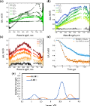
Figure 2: 1H NMR spectra of the starting compound 1d (a) and the reaction mixture after 1.5 (b) and 4 (c) hou...
Scheme 5: Synthetic approaches to imidazo[4,5-e][1,3]thiazino[2,3-c][1,2,4]triazines 3a–d,j.
Scheme 6: Synthesis of imidazo[4,5-e][1,3]thiazino[2,3-c][1,2,4]triazine-7-carboxylic acids 5a–j.
Scheme 7: Synthesis of imidazo[4,5-e][1,3]thiazino[2,3-c][1,2,4]triazine-7-carboxylic acids 5k,m.
Scheme 8: Plausible path for the formation of products 9.
Figure 3: 1H NMR spectra of compounds 4a and 5a in DMSO-d6 in the region of 4.3–9.0 ppm.
Figure 4: 13C NMR GATED spectra of compounds 4a and 5a in DMSO-d6 in the region of 156.0–168.0 ppm.
Figure 5: General view of 5a in the crystal in thermal ellipsoid representation (p = 80%).
Beilstein J. Org. Chem. 2023, 19, 1015–1020, doi:10.3762/bjoc.19.77
Graphical Abstract
Figure 1: Schematic representation of the AGA process (A). Variables that can affect the AGA outcome investig...
Figure 2: AGA of model glycan sequences analyzed in this study: α-1,6-linked dimannosides 1, 2 (A), branched ...
Figure 3: Representative HPLC traces for the crude compounds 1 (A), 3 (B), and 5a (C) after cleavage from the...
Beilstein J. Org. Chem. 2023, 19, 956–981, doi:10.3762/bjoc.19.72
Graphical Abstract
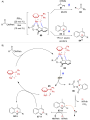
Scheme 1: First organocatalyzed asymmetric aza-Friedel–Crafts reaction.
Scheme 2: Aza-Friedel–Crafts reaction between indoles and cyclic ketimines.
Scheme 3: Aza-Friedel–Crafts reaction utilizing trifluoromethyldihydrobenzoazepinoindoles as electrophiles.
Scheme 4: Aza-Friedel–Crafts reaction utilizing cyclic N-sulfimines as electrophiles.
Scheme 5: Aza-Friedel–Crafts reaction involving N-unprotected imino ester as electrophile.
Scheme 6: Aza-Friedel–Crafts and lactonization cascade.
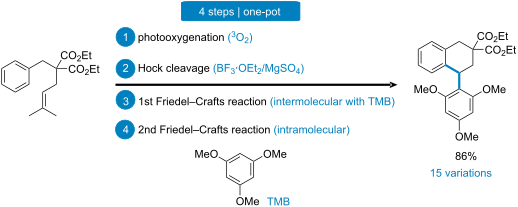
Scheme 7: One-pot oxidation and aza-Friedel–Crafts reaction.
Scheme 8: C1 and C2-symmetric phosphoric acids as catalysts.
Scheme 9: Aza-Friedel–Crafts reaction using Nps-iminophosphonates as electrophiles.
Scheme 10: Aza-Friedel–Crafts reaction between indole and α-iminophosphonate.
Scheme 11: [2.2]-Paracyclophane-derived chiral phosphoric acids as catalyst.
Scheme 12: Aza-Friedel–Crafts reaction through ring opening of sulfamidates.
Scheme 13: Isoquinoline-1,3(2H,4H)-dione scaffolds as electrophiles.
Scheme 14: Functionalization of the carbocyclic ring of substituted indoles.
Scheme 15: Aza-Friedel–Crafts reaction between unprotected imines and aza-heterocycles.
Scheme 16: Anilines and α-naphthols as potential nucleophiles.
Scheme 17: Solvent-controlled regioselective aza-Friedel–Crafts reaction.
Scheme 18: Generating central and axial chirality via aza-Friedel–Crafts reaction.
Scheme 19: Reaction between indoles and racemic 2,3-dihydroisoxazol-3-ol derivatives.
Scheme 20: Exploiting 5-aminoisoxazoles as nucleophiles.
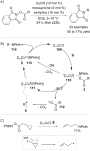
Scheme 21: Reaction between unsubstituted indoles and 3-alkynylated 3-hydroxy-1-oxoisoindolines.
Scheme 22: Synthesis of unnatural amino acids bearing an aza-quaternary stereocenter.
Scheme 23: Atroposelective aza-Friedel–Crafts reaction.
Scheme 24: Coupling of 5-aminopyrazole and 3H-indol-3-ones.
Scheme 25: Pyrophosphoric acid-catalyzed aza-Friedel–Crafts reaction on phenols.
Scheme 26: Squaramide-assisted aza-Friedel–Crafts reaction.
Scheme 27: Thiourea-catalyzed aza-Friedel–Crafts reaction.
Scheme 28: Squaramide-catalyzed reaction between β-naphthols and benzothiazolimines.
Scheme 29: Thiourea-catalyzed reaction between β-naphthol and isatin-derived ketamine.
Scheme 30: Quinine-derived molecule as catalyst.
Scheme 31: Cinchona alkaloid as catalyst.
Scheme 32: aza-Friedel–Crafts reaction by phase transfer catalyst.
Scheme 33: Disulfonamide-catalyzed reaction.
Scheme 34: Heterogenous thiourea-catalyzed aza-Friedel–Crafts reaction.
Scheme 35: Total synthesis of (+)-gracilamine.
Scheme 36: Total synthesis of (−)-fumimycin.
Beilstein J. Org. Chem. 2023, 19, 918–927, doi:10.3762/bjoc.19.70
Graphical Abstract
Figure 1: (a) Transformations of DMAT to different classes of ergot alkaloids. (b) and (c) Strategies for the...
Scheme 1: Synthesis of compound 5.
Scheme 2: Photoredox-catalyzed radical decarboxylative cyclization of 5.
Figure 2: Proposed reaction mechanism for photoredox-catalyzed radical decarboxylative cyclization.
Scheme 3: Synthesis of tryptophan derivatives 8 and 10.
Figure 3: Proposed reaction mechanism for photoredox-catalyzed radical decarboxylative cyclization.
Scheme 4: Methylation of 11 and the formal total synthesis of (±)-6,7-secoagroclavine.
Beilstein J. Org. Chem. 2023, 19, 909–917, doi:10.3762/bjoc.19.69
Graphical Abstract
Figure 1: Selected siderophores from β-proteobacteria.
Figure 2: Chemical structures of compounds 1–6 isolated in this study and of the structurally related siderop...
Figure 3: 1H,1H-COSY and selected 1H,13C-HMBC correlations in 1.
Figure 4: Proposed origin of the isolated compounds 1–6 as well as massiliachelin (7). Domain notation of the...
Beilstein J. Org. Chem. 2023, 19, 901–908, doi:10.3762/bjoc.19.68
Graphical Abstract
Scheme 1: Representative nitrile-containing functional materials, drug carriers, and medicines.
Scheme 2: Activating protocol of cyclobutanone oximes.
Scheme 3: Substrate scope of δ-olefin-containing aliphatic nitriles. Reaction conditions: A mixture of cyclob...
Scheme 4: Competition between two reactions caused by the reduction of base equivalent.
Scheme 5: Mechanistic investigations.
Scheme 6: A proposed plausible mechanism.
Beilstein J. Org. Chem. 2023, 19, 892–900, doi:10.3762/bjoc.19.67
Graphical Abstract
Scheme 1: Versatile reactivities of cyclopropanes 1a.
Scheme 2: Preparative methods for cyclopropanedicarboxylates 1a.
Scheme 3: Bromination of ethyl acetoacetate (3c) and reaction with nitrostyrene 2a.
Scheme 4: Reaction of 4b with (diacetoxyiodo)benzene (top); structural determination of product 9 (bottom).
Figure 1: Monitoring the cyclization reaction using 4e by 1H NMR.
Scheme 5: A plausible mechanism for formation of cyclopropane 1 and dihydrofuran 8.
Scheme 6: Tin(II)-mediated ring expansion of nitrocyclopropane 1e.
Beilstein J. Org. Chem. 2023, 19, 873–880, doi:10.3762/bjoc.19.64
Graphical Abstract
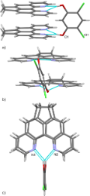
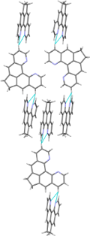
Figure 1: a) Chemical structure of pseudorotaxanes 1; and (b) single-crystal X-ray structure of rotaxane 1a (R...
Figure 2: (a) Chemical structure of polyrotaxane 2; and (b) cartoon representation of the light-triggered deg...
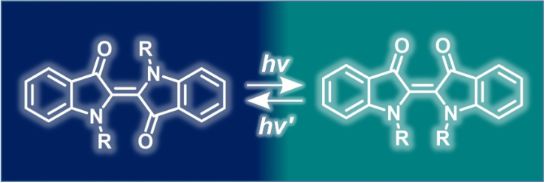
Figure 3: a) Chemical structures of rotaxanes (E)-3 and (Z)-3; b) stick representation of the solid structure...
Figure 4: Stick representations of the solid structures of: (a) U-CB[8]-MPyVB showing an interlocked ligand c...
Beilstein J. Org. Chem. 2023, 19, 820–863, doi:10.3762/bjoc.19.62
Graphical Abstract
Figure 1: Representative examples of bioactive natural products and FDA-approved drugs containing a pyridine ...
Scheme 1: Classical and traditional methods for the synthesis of functionalized pyridines.
Scheme 2: Rare earth metal (Ln)-catalyzed pyridine C–H alkylation.
Scheme 3: Pd-catalyzed C–H alkylation of pyridine N-oxide.
Scheme 4: CuI-catalyzed C–H alkylation of N-iminopyridinium ylides with tosylhydrazones (A) and a plausible r...
Scheme 5: Zirconium complex-catalyzed pyridine C–H alkylation.
Scheme 6: Rare earth metal-catalyzed pyridine C–H alkylation with nonpolar unsaturated substrates.
Scheme 7: Heterobimetallic Rh–Al complex-catalyzed ortho-C–H monoalkylation of pyridines.
Scheme 8: Mono(phosphinoamido)-rare earth complex-catalyzed pyridine C–H alkylation.
Scheme 9: Rhodium-catalyzed pyridine C–H alkylation with acrylates and acrylamides.
Scheme 10: Ni–Al bimetallic system-catalyzed pyridine C–H alkylation.
Scheme 11: Iridium-catalyzed pyridine C–H alkylation.
Scheme 12: para-C(sp2)–H Alkylation of pyridines with alkenes.
Scheme 13: Enantioselective pyridine C–H alkylation.
Scheme 14: Pd-catalyzed C2-olefination of pyridines.
Scheme 15: Ru-catalyzed C-6 (C-2)-propenylation of 2-arylated pyridines.
Scheme 16: C–H addition of allenes to pyridines catalyzed by half-sandwich Sc metal complex.
Scheme 17: Pd-catalyzed stereodivergent synthesis of alkenylated pyridines.
Scheme 18: Pd-catalyzed ligand-promoted selective C3-olefination of pyridines.
Scheme 19: Mono-N-protected amino acids in Pd-catalyzed C3-alkenylation of pyridines.
Scheme 20: Amide-directed and rhodium-catalyzed C3-alkenylation of pyridines.
Scheme 21: Bimetallic Ni–Al-catalyzed para-selective alkenylation of pyridine.
Scheme 22: Arylboronic ester-assisted pyridine direct C–H arylation.
Scheme 23: Pd-catalyzed C–H arylation/benzylation with toluene.
Scheme 24: Pd-catalyzed pyridine C–H arylation with potassium aryl- and heteroaryltrifluoroborates.
Scheme 25: Transient activator strategy in pyridine C–H biarylation.
Scheme 26: Ligand-promoted C3-arylation of pyridine.
Scheme 27: Pd-catalyzed arylation of nicotinic and isonicotinic acids.
Scheme 28: Iron-catalyzed and imine-directed C–H arylation of pyridines.
Scheme 29: Pd–(bipy-6-OH) cooperative system-mediated direct pyridine C3-arylation.
Scheme 30: Pd-catalyzed pyridine N-oxide C–H arylation with heteroarylcarboxylic acids.
Scheme 31: Pd-catalyzed C–H cross-coupling of pyridine N-oxides with five-membered heterocycles.
Scheme 32: Cu-catalyzed dehydrative biaryl coupling of azine(pyridine) N-oxides and oxazoles.
Scheme 33: Rh(III)-catalyzed cross dehydrogenative C3-heteroarylation of pyridines.
Scheme 34: Pd-catalyzed C3-selective arylation of pyridines.
Scheme 35: Rhodium-catalyzed oxidative C–H annulation of pyridines to quinolines.
Scheme 36: Rhodium-catalyzed and NHC-directed C–H annulation of pyridine.
Scheme 37: Ni/NHC-catalyzed regio- and enantioselective C–H cyclization of pyridines.
Scheme 38: Rare earth metal-catalyzed intramolecular C–H cyclization of pyridine to azaindolines.
Scheme 39: Rh-catalyzed alkenylation of bipyridine with terminal silylacetylenes.
Scheme 40: Rollover cyclometallation in Rh-catalyzed pyridine C–H functionalization.
Scheme 41: Rollover pathway in Rh-catalyzed C–H functionalization of N,N,N-tridentate chelating compounds.
Scheme 42: Pd-catalyzed rollover pathway in bipyridine-6-carboxamides C–H arylation.
Scheme 43: Rh-catalyzed C3-acylmethylation of bipyridine-6-carboxamides with sulfoxonium ylides.
Scheme 44: Rh-catalyzed C–H functionalization of bipyridines with alkynes.
Scheme 45: Rh-catalyzed C–H acylmethylation and annulation of bipyridine with sulfoxonium ylides.
Scheme 46: Iridium-catalyzed C4-borylation of pyridines.
Scheme 47: C3-Borylation of pyridines.
Scheme 48: Pd-catalyzed regioselective synthesis of silylated dihydropyridines.
Beilstein J. Org. Chem. 2023, 19, 808–819, doi:10.3762/bjoc.19.61
Graphical Abstract
Scheme 1: Eschenmoser coupling reaction between 3-substituted oxindoles and thioamides.
Scheme 2: Possible reactions of α-haloketones, esters and amides with primary thioamides.
Figure 1: Studied α-bromoamides and α-bromolactams.
Scheme 3: Reaction of 4-bromo-1,1-dimethyl-1,4-dihydroisoquinolin-3(2H)-one (2b) with thiobenzamide and thioa...
Scheme 4: Reaction of 4-bromo-1,1-dimethyl-1,4-dihydroisoquinolin-3(2H)-one (2b) with 4’-substituted thiobenz...
Scheme 5: Reaction of 4-bromoisoquinoline-1,3(2H,4H)-dione (3) with thiobenzamide, thioacetamide, and thioben...
Scheme 6: Reaction of N-phenyl- and N-methyl-2-bromo(phenyl)acetamide (4a,b) with thiobenzamide in acetonitri...
Scheme 7: Transformation of salt 15 under kinetic and thermodynamic control conditions [1].
Figure 2: Comparison of energy profiles (relative Gibbs energies at 298 K in kJ·mol−1 for the ECR (right) and...
Beilstein J. Org. Chem. 2023, 19, 771–777, doi:10.3762/bjoc.19.57
Graphical Abstract
Scheme 1: Various synthetic approaches to N-arylsulfonylimines.
Scheme 2: Substrate scope for the synthesis of N-arylsulfonylimines. Reaction conditions: 1a (0.25 mmol), K2S2...
Scheme 3: Tandem “one-pot” synthesis of N-heterocycles. Reaction conditions: 1a (0.25 mmol), K2S2O8 (0.5 mmol...
Scheme 4: Control experiment with TEMPO.
Scheme 5: Plausible mechanism for the K2S2O8-induced oxidation of N-(arylsulfonyl)benzylamines.
Scheme 6: Plausible mechanism for one-pot synthesis of N-heterocycles.
Beilstein J. Org. Chem. 2023, 19, 687–699, doi:10.3762/bjoc.19.50
Graphical Abstract
Figure 1: Biologically active agents and chiral ligands containing medium and large phostams, phostones, and ...
Figure 2: Synthetic strategies for the preparation of medium and large phostams, phostones, and phostines.
Scheme 1: Synthesis of 1,2-azaphosphepine 2-oxide, 1,2-azaphosphocine 2-oxide, 1,2-azaphosphepane 2-oxide, an...
Scheme 2: Synthesis of bis[1,2]oxaphosphepine 2-oxide from tert-butyl 2-(bis(allyloxy)phosphoryl)pent-4-enoat...
Scheme 3: Synthesis of 2-ethoxy-5H-benzo[f][1,2]oxaphosphepine 2-oxides from 2-allylphenyl ethyl vinylphospho...
Scheme 4: Synthesis of 2-ethoxy-3,6-dihydrobenzo[g][1,2]oxaphosphocine 2-oxides from 2-allylphenyl ethyl ally...
Scheme 5: Synthesis of benzothiophene-fused 2-hydroxy-1,2-oxaphosphecane 2-oxide from (4-allyl-2-(4-methylphe...
Scheme 6: Synthesis of benzothiophene-fused 2-hydroxy-1,2-oxaphosphecane 2-oxide from benzyl hydrogen ((4-all...
Scheme 7: Synthesis of benzothiophene-fused 2-hydroxy-1-oxa-2-phosphacycloundecane 2-oxide from benzyl hydrog...
Scheme 8: Synthesis of 5,6,7-trihydro-1,2-oxaphosphepine 2-oxide and its benzo derivatives from 3-bromobut-3-...
Scheme 9: Synthesis of thieno[2,3-d]pyrimidine-fused 2-hydroxy-1,2-oxaphosphonane 2-oxide from benzyl hydroge...
Scheme 10: Synthesis of 3-phenoxybenzo[f]pyreno[1,10-cd][1,2]oxaphosphepine 3-oxide from diphenyl pyren-1-ylph...
Scheme 11: Synthesis of 1,2-oxaphosphepane 2-oxides and 1,2-oxaphosphocane 2-oxide from hydrogen methyl hex-5-...
Scheme 12: Synthesis of 2-methoxy-1,2-oxaphosphinane 2-oxides, 1,2-oxaphosphepine 2-oxides, 1,2-oxaphosphepane...
Scheme 13: Synthesis of 1,2-azaphosphepane 2-oxide and its benzo derivatives from 5-bromohex-5-en-1-yl methylp...
Scheme 14: Synthesis of 4-phenyl-1,2-dihydronaphtho[2,1-c][1,2]oxaphosphinine 4-oxide and 1-phenyl-3,4-dihydro...
Scheme 15: Synthesis of 2-alkoxy-3,5-dimethylene-1,2-oxaphosphepane 2-oxides from dialkyl 2-bromo-1-methylethy...
Scheme 16: Synthesis of 14-methyl-2-phenoxy-1-oxa-2-phosphacyclotetradecane 2-oxide from phenyl hydrogen (12-h...
Scheme 17: Synthesis of 5-oxo-1,3,5-trihydrobenzo[f][1,2]azaphosphepine 2-oxides from 1,2-dihydro-4H-benzo[d][...
Scheme 18: Synthesis of 3-hydrobenzo[f][1,2]oxaphosphepin-5(4H)-one 2-oxides from 2-phenyl/alkoxy-4H-benzo[d][...
Scheme 19: Synthesis of bicyclic seven- and eight-membered phosphotones from cycloalk-2-enones and dimethyl ph...
Scheme 20: Synthesis of binaphthylene-fused phosphotones from (M)-2'-methyl-[1,1'-binaphthalen]-2-ol and pheny...
Scheme 21: Synthesis of bicyclic phosphotone from (1S,2R)-2-methyl-3-(phenylsulfonyl)cyclohept-3-en-1-ol and d...
Beilstein J. Org. Chem. 2023, 19, 666–673, doi:10.3762/bjoc.19.48
Graphical Abstract
Scheme 1: Strategies of C-3 functionalizations of IPs and present work.
Scheme 2: Substrate scope. Conditions: unless otherwise noted, all reactions were carried out with 1 (0.2 mmo...
Scheme 3: Mechanistic investigations.
Scheme 4: Plausible reaction mechanism.
Beilstein J. Org. Chem. 2023, 19, 646–657, doi:10.3762/bjoc.19.46
Graphical Abstract
Figure 1: Biologically active PBTAs.
Scheme 1: Approaches to PBTAs via annulation of benzothiazoles.
Scheme 2: Approaches to PBTAs via annulation of o-aminothiophenols.
Scheme 3: Approach to PBTAs via radical substitution reaction in 1-(2-bromophenyl)-5-(butylsulfanyl)pyrrolidi...
Scheme 4: Approach to PBTAs via intramolecular cyclizations of 1-(2-thiophenyl)pyrroles.
Scheme 5: A new approach to PBTAs via nucleophile-induced ring contraction in pyrrolo[2,1-c][1,4]benzothiazin...
Figure 2: Electrophilic centers in FPDs.
Scheme 6: Reaction of APBTT 1a with methanol (2a).
Scheme 7: Derivatization of PBTA 3aa.
Scheme 8: Reaction of APBTTs 1a–h with alcohols 2a–c. Isolated yields are given; reaction scale: a mixture of ...
Scheme 9: Side-reaction of APBTTs 1 with alcohols 2.
Scheme 10: Transformations of compounds 5 in solutions.
Scheme 11: Reaction of APBTT 1a with benzylamine.
Scheme 12: Derivatization of PBTA 7a.
Scheme 13: Reaction of APBTTs 1a–h and benzylamine. Isolated yields are given; reaction scale: a mixture of 1 ...
Scheme 14: Reaction of APBTT 1a with an excess of benzylamine.
Scheme 15: Reaction of APBTT 1a with morpholine.
Scheme 16: Reaction of APBTT 1a with aniline (11a).
Scheme 17: Derivatization of PBTA 12aa.
Scheme 18: Reaction of APBTTs 1a–h and arylamines 11a–d. Isolated yields are given; reaction scale: a mixture ...
Scheme 19: Side-reaction of APBTT 1a with arylamine 11b.
Scheme 20: Reaction of APBTT 1a with compounds 16a–d.
Scheme 21: Formation of compounds 17 as an undesired process during the synthesis of APBTTs 1.
Beilstein J. Org. Chem. 2023, 19, 593–634, doi:10.3762/bjoc.19.44
Graphical Abstract
Scheme 1: General scheme depicting tandem reactions based on an asymmetric conjugate addition followed by an ...
Scheme 2: Cu-catalyzed tandem conjugate addition of R2Zn/aldol reaction with chiral acetals.
Scheme 3: Cu-catalyzed asymmetric desymmetrization of cyclopentene-1,3-diones using a tandem conjugate additi...
Scheme 4: Stereocontrolled assembly of dialkylzincs, cyclic enones, and sulfinylimines utilizing a Cu-catalyz...
Scheme 5: Cu-catalyzed tandem conjugate addition/Mannich reaction (A). Access to chiral isoindolinones and tr...
Scheme 6: Cu-catalyzed tandem conjugate addition/nitro-Mannich reaction (A) with syn–anti or syn–syn selectiv...
Figure 1: Various chiral ligands utilized for the tandem conjugate addition/Michael reaction sequences.
Scheme 7: Cu-catalyzed tandem conjugate addition/Michael reaction: side-product formation with chalcone (A) a...
Scheme 8: Zn enolate trapping using allyl iodides (A), Stork–Jung vinylsilane reagents (B), and allyl bromide...
Scheme 9: Cu-catalyzed tandem conjugate addition/acylation through Li R2Zn enolate (A). A four-component coup...
Scheme 10: Selected examples for the Cu-catalyzed tandem conjugate addition/trifluoromethylthiolation sequence....
Scheme 11: Zn enolates trapped by vinyloxiranes: synthesis of allylic alcohols.
Scheme 12: Stereoselective cyclopropanation of Mg enolates formed by ACA of Grignard reagents to chlorocrotona...
Scheme 13: Domino aldol reactions of Mg enolates formed from coumarin and chromone.
Scheme 14: Oxidative coupling of ACA-produced Mg enolates.
Scheme 15: Tandem ACA of Grignard reagents to enones and Mannich reaction.
Scheme 16: Diastereodivergent Mannich reaction of Mg enolates with differently N-protected imines.
Scheme 17: Tandem Grignard–ACA–Mannich using Taddol-based phosphine-phosphite ligands.
Scheme 18: Tandem reaction of Mg enolates with aminomethylating reagents.
Scheme 19: Tandem reaction composed of Grignard ACA to alkynyl enones.
Scheme 20: Rh/Cu-catalyzed tandem reaction of diazo enoates leading to cyclobutanes.
Scheme 21: Tandem Grignard-ACA of cyclopentenones and alkylation of enolates.
Scheme 22: Tandem ACA of Grignard reagents followed by enolate trapping reaction with onium compounds.
Scheme 23: Mg enolates generated from unsaturated lactones in reaction with activated alkenes.
Scheme 24: Lewis acid mediated ACA to amides and SN2 cyclization of a Br-appended enolate.
Scheme 25: Trapping reactions of aza-enolates with Michael acceptors.
Scheme 26: Si enolates generated by TMSOTf-mediated ACA of Grignard reagents and enolate trapping reaction wit...
Scheme 27: Trapping reactions of enolates generated from alkenyl heterocycles (A) and carboxylic acids (B) wit...
Scheme 28: Reactions of heterocyclic Mg enolates with onium compounds.
Scheme 29: Synthetic transformations of cycloheptatrienyl and benzodithiolyl substituents.
Scheme 30: Aminomethylation of Al enolates generated by ACA of trialkylaluminum reagents.
Scheme 31: Trapping reactions of enolates with activated alkenes.
Scheme 32: Alkynylation of racemic aluminum or magnesium enolates.
Scheme 33: Trapping reactions of Zr enolates generated by Cu-ACA of organozirconium reagents.
Scheme 34: Chloromethylation of Zr enolates using the Vilsmeier–Haack reagent.
Scheme 35: Tandem conjugate borylation with subsequent protonation or enolate trapping by an electrophile.
Scheme 36: Tandem conjugate borylation/aldol reaction of cyclohexenones.
Scheme 37: Selected examples for the tandem asymmetric borylation/intramolecular aldol reaction; synthesis of ...
Scheme 38: Cu-catalyzed tandem methylborylation of α,β-unsaturated phosphine oxide in the presence of (R,Sp)-J...
Scheme 39: Cu-catalyzed tandem transannular conjugated borylation/aldol cyclization of macrocycles containing ...
Scheme 40: Stereoselective tandem conjugate borylation/Mannich cyclization: selected examples (A) and a multi-...
Scheme 41: Some examples of Cu-catalyzed asymmetric tandem borylation/aldol cyclization (A). Application to di...
Scheme 42: Atropisomeric P,N-ligands used in tandem conjugate borylation/aldol cyclization sequence.
Scheme 43: Selected examples for the enantioselective Cu-catalyzed borylation/intramolecular Michael addition ...
Scheme 44: Selected examples for the preparation of enantioenriched spiroindanes using a Cu-catalyzed tandem c...
Scheme 45: Enantioselective conjugate borylation of cyclobutene-1-carboxylic acid diphenylmethyl ester 175 wit...
Scheme 46: Cu-catalyzed enantioselective tandem conjugate silylation of α,β-unsaturated ketones with subsequen...
Scheme 47: Cu-catalyzed enantioselective tandem conjugate silylation of α,β-unsaturated ketones with subsequen...
Scheme 48: Cu-catalyzed tandem conjugate silylation/aldol condensation. The diastereoselectivity is controlled...
Scheme 49: Chiral Ru-catalyzed three-component coupling reaction.
Scheme 50: Rh-Phebox complex-catalyzed reductive cyclization and subsequent reaction with Michael acceptors th...
Scheme 51: Rh-catalyzed tandem asymmetric conjugate alkynylation/aldol reaction (A) and subsequent spiro-cycli...
Scheme 52: Rh-bod complex-catalyzed tandem asymmetric conjugate arylation/intramolecular aldol addition (A). S...
Scheme 53: Co-catalyzed C–H-bond activation/asymmetric conjugate addition/aldol reaction.
Scheme 54: (Diisopinocampheyl)borane-promoted 1,4-hydroboration of α,β-unsaturated morpholine carboxamides and...
Figure 2: Some examples of total syntheses that have been recently reviewed.
Scheme 55: Stereoselective synthesis of antimalarial prodrug (+)-artemisinin utilizing a tandem conjugate addi...
Scheme 56: Amphilectane and serrulatane diterpenoids: preparation of chiral starting material via asymmetric t...
Scheme 57: Various asymmetric syntheses of pleuromutilin and related compounds based on a tandem conjugate add...
Scheme 58: Total synthesis of glaucocalyxin A utilizing a tandem conjugate addition/acylation reaction sequenc...
Scheme 59: Installation of the exocyclic double bond using a tandem conjugate addition/aminomethylation sequen...
Scheme 60: Synthesis of the taxol core using a tandem conjugate addition/enolate trapping sequence with Vilsme...
Scheme 61: Synthesis of the tricyclic core of 12-epi-JBIR-23/24 utilizing a Rh-catalyzed asymmetric conjugate ...
Scheme 62: Total synthesis of (−)-peyssonoside A utilizing a Cu-catalyzed enantioselective tandem conjugate ad...
Beilstein J. Org. Chem. 2023, 19, 487–540, doi:10.3762/bjoc.19.38
Graphical Abstract
Figure 1: Ring-strain energies of homobicyclic and heterobicyclic alkenes in kcal mol−1. a) [2.2.1]-Bicyclic ...
Figure 2: a) Exo and endo face descriptions of bicyclic alkenes. b) Reactivity comparisons for different β-at...
Scheme 1: Ni-catalyzed ring-opening/cyclization cascade of heterobicyclic alkenes 1 with alkyl propiolates 2 ...
Scheme 2: Ni-catalyzed ring-opening/cyclization cascade of heterobicyclic alkenes 8 with β-iodo-(Z)-propenoat...
Scheme 3: Ni-catalyzed two- and three-component difunctionalizations of norbornene derivatives 15 with alkyne...
Scheme 4: Ni-catalyzed intermolecular three-component difunctionalization of oxabicyclic alkenes 1 with alkyn...
Scheme 5: Ni-catalyzed intermolecular three-component carboacylation of norbornene derivatives 15.
Scheme 6: Photoredox/Ni dual-catalyzed coupling of 4-alkyl-1,4-dihydropyridines 31 with heterobicyclic alkene...
Scheme 7: Photoredox/Ni dual-catalyzed coupling of α-amino radicals with heterobicyclic alkenes 30.
Scheme 8: Cu-catalyzed rearrangement/allylic alkylation of 2,3-diazabicyclo[2.2.1]heptenes 47 with Grignard r...
Scheme 9: Cu-catalyzed aminoboration of bicyclic alkenes 1 with bis(pinacolato)diboron (B2pin2) (53) and O-be...
Scheme 10: Cu-catalyzed borylalkynylation of oxabenzonorbornadiene (30b) with B2pin2 (53) and bromoalkynes 62.
Scheme 11: Cu-catalyzed borylacylation of bicyclic alkenes 1.
Scheme 12: Cu-catalyzed diastereoselective 1,2-difunctionalization of oxabenzonorbornadienes 30 for the synthe...
Scheme 13: Fe-catalyzed carbozincation of heterobicyclic alkenes 1 with arylzinc reagents 74.
Scheme 14: Co-catalyzed addition of arylzinc reagents of norbornene derivatives 15.
Scheme 15: Co-catalyzed ring-opening/dehydration of oxabicyclic alkenes 30 via C–H activation of arenes.
Scheme 16: Co-catalyzed [3 + 2] annulation/ring-opening/dehydration domino reaction of oxabicyclic alkenes 1 w...
Scheme 17: Co-catalyzed enantioselective carboamination of bicyclic alkenes 1 via C–H functionalization.
Scheme 18: Ru-catalyzed cyclization of oxabenzonorbornene derivatives with propargylic alcohols for the synthe...
Scheme 19: Ru-catalyzed coupling of oxabenzonorbornene derivatives 30 with propargylic alcohols and ethers 106...
Scheme 20: Ru-catalyzed ring-opening/dehydration of oxabicyclic alkenes via the C–H activation of anilides.
Scheme 21: Ru-catalyzed of azabenzonorbornadiene derivatives with arylamides.
Scheme 22: Rh-catalyzed cyclization of bicyclic alkenes with arylboronate esters 118.
Scheme 23: Rh-catalyzed cyclization of bicyclic alkenes with dienyl- and heteroaromatic boronate esters.
Scheme 24: Rh-catalyzed domino lactonization of doubly bridgehead-substituted oxabicyclic alkenes with seconda...
Scheme 25: Rh-catalyzed domino carboannulation of diazabicyclic alkenes with 2-cyanophenylboronic acid and 2-f...
Scheme 26: Rh-catalyzed synthesis of oxazolidinone scaffolds 147 through a domino ARO/cyclization of oxabicycl...
Scheme 27: Rh-catalyzed oxidative coupling of salicylaldehyde derivatives 151 with diazabicyclic alkenes 130a.
Scheme 28: Rh-catalyzed reaction of O-acetyl ketoximes with bicyclic alkenes for the synthesis of isoquinoline...
Scheme 29: Rh-catalyzed domino coupling reaction of 2-phenylpyridines 165 with oxa- and azabicyclic alkenes 30....
Scheme 30: Rh-catalyzed domino dehydrative naphthylation of oxabenzonorbornadienes 30 with N-sulfonyl 2-aminob...
Scheme 31: Rh-catalyzed domino dehydrative naphthylation of oxabenzonorbornadienes 30 with arylphosphine deriv...
Scheme 32: Rh-catalyzed domino ring-opening coupling reaction of azaspirotricyclic alkenes using arylboronic a...
Scheme 33: Tandem Rh(III)/Sc(III)-catalyzed domino reaction of oxabenzonorbornadienes 30 with alkynols 184 dir...
Scheme 34: Rh-catalyzed asymmetric domino cyclization and addition reaction of 1,6-enynes 194 and oxa/azabenzo...
Scheme 35: Rh/Zn-catalyzed domino ARO/cyclization of oxabenzonorbornadienes 30 with phosphorus ylides 201.
Scheme 36: Rh-catalyzed domino ring opening/lactonization of oxabenzonorbornadienes 30 with 2-nitrobenzenesulf...
Scheme 37: Rh-catalyzed domino C–C/C–N bond formation of azabenzonorbornadienes 30 with aryl-2H-indazoles 210.
Scheme 38: Rh/Pd-catalyzed domino synthesis of indole derivatives with 2-(phenylethynyl)anilines 212 and oxabe...
Scheme 39: Rh-catalyzed domino carborhodation of heterobicyclic alkenes 30 with B2pin2 (53).
Scheme 40: Rh-catalyzed three-component 1,2-carboamidation reaction of bicyclic alkenes 30 with aromatic and h...
Scheme 41: Pd-catalyzed diarylation and dialkenylation reactions of norbornene derivatives.
Scheme 42: Three-component Pd-catalyzed arylalkynylation reactions of bicyclic alkenes.
Scheme 43: Three-component Pd-catalyzed arylalkynylation reactions of norbornene and DFT mechanistic study.
Scheme 44: Pd-catalyzed three-component coupling N-tosylhydrazones 236, aryl halides 66, and norbornene (15a).
Scheme 45: Pd-catalyzed arylboration and allylboration of bicyclic alkenes.
Scheme 46: Pd-catalyzed, three-component annulation of aryl iodides 66, alkenyl bromides 241, and bicyclic alk...
Scheme 47: Pd-catalyzed double insertion/annulation reaction for synthesizing tetrasubstituted olefins.
Scheme 48: Pd-catalyzed aminocyclopropanation of bicyclic alkenes 1 with 5-iodopent-4-enylamine derivatives 249...
Scheme 49: Pd-catalyzed, three-component coupling of alkynyl bromides 62 and norbornene derivatives 15 with el...
Scheme 50: Pd-catalyzed intramolecular cyclization/ring-opening reaction of heterobicyclic alkenes 30 with 2-i...
Scheme 51: Pd-catalyzed dimer- and trimerization of oxabenzonorbornadiene derivatives 30 with anhydrides 268.
Scheme 52: Pd-catalyzed Catellani-type annulation and retro-Diels–Alder of norbornadiene 15b yielding fused xa...
Scheme 53: Pd-catalyzed hydroarylation and heteroannulation of urea-derived bicyclic alkenes 158 and aryl iodi...
Scheme 54: Access to fused 8-membered sulfoximine heterocycles 284/285 via Pd-catalyzed Catellani annulation c...
Scheme 55: Pd-catalyzed 2,2-bifunctionalization of bicyclic alkenes 1 generating spirobicyclic xanthone deriva...
Scheme 56: Pd-catalyzed Catellani-type annulation and retro-Diels–Alder of norbornadiene (15b) producing subst...
Scheme 57: Pd-catalyzed [2 + 2 + 1] annulation furnishing bicyclic-fused indanes 281 and 283.
Scheme 58: Pd-catalyzed ring-opening/ring-closing cascade of diazabicyclic alkenes 130a.
Scheme 59: Pd-NHC-catalyzed cyclopentannulation of diazabicyclic alkenes 130a.
Scheme 60: Pd-catalyzed annulation cascade generating diazabicyclic-fused indanones 292 and indanols 294.
Scheme 61: Pd-catalyzed skeletal rearrangement of spirotricyclic alkenes 176 towards large polycyclic benzofur...
Scheme 62: Pd-catalyzed oxidative annulation of aromatic enamides 298 and diazabicyclic alkenes 130a.
Scheme 63: Accessing 3,4,5-trisubstituted cyclopentenes 300, 301, 302 via the Pd-catalyzed domino reaction of ...
Scheme 64: Palladacycle-catalyzed ring-expansion/cyclization domino reactions of terminal alkynes and bicyclic...
Scheme 65: Pd-catalyzed carboesterification of norbornene (15a) with alkynes, furnishing α-methylene γ-lactone...
Beilstein J. Org. Chem. 2023, 19, 399–427, doi:10.3762/bjoc.19.31
Graphical Abstract
Figure 1: Structures of some members of the combretastatin D series, corniculatolides, and isocorniculatolide...
Scheme 1: Biosynthetic pathway proposed by Pettit and co-workers.
Scheme 2: Biosynthetic pathway towards corniculatolides or isocorniculatolides proposed by Ponnapalli and co-...
Scheme 3: Retrosynthetic approaches.
Scheme 4: Attempt of total synthesis of 2 by Boger and co-workers employing the Mitsunobu approach [27].
Scheme 5: Total synthesis of combretastatin D-2 (2) reported by Boger and co-workers employing an intramolecu...
Scheme 6: Formal synthesis of combretastatin D-2 (2) by Deshpande and co-workers using the Mitsunobu conditio...
Scheme 7: Total synthesis of combretastatin D-2 (2) by Rychnovsky and Hwang [36].
Scheme 8: Divergent synthesis of (±)-1 form combretastatin D-2 (2) by Rychnovsky and Hwang [36].
Scheme 9: Enantioselective synthesis of 1 by Rychnovsky and Hwang employing Jacobsen catalyst [41].
Scheme 10: Synthesis of fragment 57 by Couladouros and co-workers [43,45].
Scheme 11: Formal synthesis of compound 2 by Couladouros and co-workers [43,45].
Scheme 12: Synthesis of fragment 66 by Couladouros and co-workers [44,45].
Scheme 13: Synthesis of fragment 70 by Couladouros and co-workers [44,45].
Scheme 14: Synthesis of fragment 77 by Couladouros and co-workers [44,45].
Scheme 15: Synthesis of combretastatins 1 and 2 by Couladouros and co-workers [44,45].
Scheme 16: Formal synthesis of compound 2 by Gangakhedkar and co-workers [48].
Scheme 17: Synthesis of fragment 14 by Cousin and co-workers [50].
Scheme 18: Synthesis of fragment 91 by Cousin and co-workers [50].
Scheme 19: Formal synthesis of compound 2 by Cousin and co-workers [50].
Scheme 20: Synthesis of 2 diolide by Cousin and co-workers [50].
Scheme 21: Synthesis of combretastatin D-4 (4) by Nishiyama and co-workers [54].
Scheme 22: Synthesis of fragment 112 by Pettit and co-workers [55].
Scheme 23: Synthesis of fragment 114 by Pettit and co-workers [55].
Scheme 24: Attempt to the synthesis of compound 2 by Pettit and co-workers [55].
Scheme 25: Synthesis of combretastatin-D2 (2) starting from isovanilin (80) by Pettit and co-workers [55].
Scheme 26: Attempted synthesis of combretastatin-D2 (2) derivatives through an SNAr approach [55].
Scheme 27: Synthesis of combretastatin D-4 (4) by Pettit and co-workers [55].
Scheme 28: Synthesis of combretastatin D-2 (2) by Harras and co-workers [57].
Scheme 29: Synthesis of combretastatin D-4 (4) by Harras and co-workers [57].
Scheme 30: Formal synthesis of combretastatin D-1 (1) by Harras and co-workers [57].
Scheme 31: Synthesis of 11-O-methylcorniculatolide A (5) by Raut and co-workers [69].
Scheme 32: Synthesis of isocorniculatolide A (7) and O-methylated isocorniculatolide A 8 by Raut and co-worker...
Scheme 33: Synthesis of isocorniculatolide B (10) and hydroxyisocorniculatolide B 175 by Kim and co-workers [71].
Scheme 34: Synthesis of compound 9, 178, and 11 by Kim and co-workers [71].
Scheme 35: Synthesis of combretastatin D-2 prodrug salts [55].
Figure 2: ED50 values of the combretastatin D family against murine P388 lymphocytic leukemia cell line (appr...
Figure 3: IC50 of compounds against α-glucosidase [19].
Beilstein J. Org. Chem. 2023, 19, 349–379, doi:10.3762/bjoc.19.29
Graphical Abstract
Figure 1: Alkyne–azide "click reaction".
Figure 2: β- and meso-triazole-linked porphyrin.
Scheme 1: Synthesis of β-triazole-linked porphyrins 3a–c.
Scheme 2: Synthesis of β-triazole-bridged porphyrin-coumarin conjugates 11–20.
Scheme 3: Synthesis of β-triazole-bridged porphyrin-xanthone conjugates 23–27 and xanthone-bridged β-triazolo...
Scheme 4: Synthesis of meso-triazoloporphyrins 32a–c and triazole-bridged diporphyrins 34.
Scheme 5: Synthesis of meso-triazole-linked porphyrin-ferrocene conjugates 37a–d.
Scheme 6: Synthesis of meso-triazole-linked porphyrin conjugates 40a,b and 41a,b.
Scheme 7: Synthesis of meso-triazole-linked glycoporphyrins 43a–c.
Scheme 8: Synthesis of meso-triazole-linked porphyrin-coumarin conjugates 44–48.
Scheme 9: Synthesis of meso-triazole-bridged porphyrin-DNA conjugate 50.
Scheme 10: Synthesis of meso-linked porphyrin-triazole conjugates 53 and 57.
Scheme 11: Synthesis of meso-triazole-linked porphyrin-corrole conjugate 60.
Scheme 12: Synthesis of porphyrin conjugates 64a,b and 67a,b. Reaction conditions: (i) CuSO4, sodium ascorbate...
Scheme 13: Synthesis of meso-triazole-bridged porphyrin-quinolone conjugates 70a–e.
Scheme 14: Synthesis of meso-triazole-linked porphyrin-fluorescein dyad 73.
Scheme 15: Synthesis of meso-triazole-linked porphyrin-carborane conjugates 76a,b.
Scheme 16: Synthesis of meso-triazole-bridged porphyrin-BODIPY conjugates 78 and 80.
Scheme 17: Synthesis of meso-triazole-linked cationic porphyrin conjugates 85 and 87. Reaction conditions: (i)...
Scheme 18: Synthesis of meso-triazole-cobalt-porphyrin diimine-dioxime conjugate 91. Reactions conditions: (i)...
Scheme 19: Synthesis of triazole-linked porphyrin-bearing N-doped graphene hybrid 96.
Scheme 20: Synthesis of meso-triazole-linked porphyrin-fullerene dyads 100a–d and 104a,b.
Scheme 21: Synthesis of meso-triazole-bridged diporphyrin conjugates 107 and 108.
Scheme 22: Synthesis of porphyrin-ruthenium (II) conjugates 112a,b and 116a,b. Reaction conditions: (i) Zn(OAc)...
Scheme 23: Synthesis of meso-triazole-linked porphyrin dyad 119 and triad 121.
Scheme 24: Synthesis of di-triazole-bridged porphyrin-β-CD conjugate 126.
Scheme 25: Synthesis of meso-triazole-bridged porphyrin star trimer 129.
Scheme 26: Synthesis of 1,2,3-triazole-linked porphyrin-β-CD conjugates 131a,b.
Scheme 27: Synthesis of tritriazole-bridged porphyrin-lantern-DNA sequence 134.
Scheme 28: Synthesis of meso-triazole-linked porphyrin-polymer conjugates 137 and 139.
Scheme 29: Synthesis of triazole-linked capped porphyrin 142; Reaction conditions: method A: 10% H2O in THF, C...
Scheme 30: Synthesis of meso-tetratriazole-linked porphyrin-maleimine conjugates 145a–c.
Scheme 31: Synthesis of meso-tetratriazole-linked porphyrin-cholic acid complex 148a,b.
Scheme 32: Synthesis of meso-tetratriazole-linked porphyrin conjugates 151–153.
Scheme 33: Synthesis of meso-tetratrizole-porphyrin-carborane conjugates 155, 156 and 158a–c.
Scheme 34: Synthesis of meso-tetratriazole-porphyrin-cardanol conjugates 160 and 162.
Scheme 35: Synthesis of meso-tetratriazole-linked porphyrin-BODIPY conjugate 164.
Scheme 36: Synthesis of meso-tetratriazole-linked porphyrin-β-CD conjugates 166a,b.
Scheme 37: Synthesis of tetratriazole-bridged meso-arylporphyrins 171a–c and 172a–c.
Scheme 38: Synthesis of octatriazole-bridged porphyrin-β-CD conjugate 174 and porphyrin-adamantane conjugates ...
Beilstein J. Org. Chem. 2023, 19, 317–324, doi:10.3762/bjoc.19.27
Graphical Abstract
Figure 1: Nitrogen-containing iodolium and iodonium salts.
Figure 2: Synthesis of a set of azoiodazinium salts 5. Method A: Iodoarene 4 (200 µmol) and mCPBA (1.1 equiv)...
Figure 3: Single crystal structures (ORTEP drawing with 50% probability) of the pyrazole-coordinated salt 5bb...
Scheme 1: Derivatizations of the iodonium salt 5aa. a) Ac2O, CuSO4·5H2O, NaOAc, AcOH, 120 °C, 5 h; b) S8/Se/T...
Scheme 2: Post-functionalization of mono- and dicationic iodonium salts under preservation of the hypervalent...
Beilstein J. Org. Chem. 2023, 19, 282–293, doi:10.3762/bjoc.19.24
Graphical Abstract
Figure 1: Natural iminosugars (1,4-dideoxy-1,4-imino-ᴅ-mannitol (DIM) and swainsonine) and selected examples ...
Scheme 1: Synthesis of the key pyrrolidine 3 and the target pyrrolidines 7–10. Reagents and conditions: (a) M...
Scheme 2: Synthesis of the intermediate 13 and the target pyrrolidines 17–20. Reagents and conditions: (a) 1....
Scheme 3: Synthesis of the target pyrrolidines 26–29. Reagents and conditions: (a) Tf2O, pyridine, CH2Cl2, 0 ...
Figure 2: Superposition of the inhibitor 29 (green), docked into dGMII, with X-ray complexes of swainsonine (...
Figure 3: FMO-PIEDA total pair interaction energies (ΔElinker-E) (in kcal mol−1) between the structural moiet...
Figure 4: QM/MM optimized complexes 28:dGMII (top) and 31:dGMII (bottom) [22]. N-2-naphthylmethyl group (grey) an...
Figure 5: FMO-PIEDA total pair interaction energies (ΔElinker-E) (in kcal mol−1) between the N-2-naphthylmeth...
Beilstein J. Org. Chem. 2023, 19, 115–132, doi:10.3762/bjoc.19.12
Graphical Abstract
Scheme 1: 1,3-Dithianes as useful synthetic building blocks: a) general synthetic utility (in Corey–Seebach-t...
Scheme 2: Metalation of other saturated heterocycles is often problematic due to β-elimination [16,17].
Scheme 3: Thianes as synthetic building blocks in the construction of complex molecules [18].
Figure 1: a) 1,4-Dithiane-type building blocks that can serve as C2-synthons and b) examples of complex targe...
Scheme 4: Synthetic availability of 1,4-dithiane-type building blocks.
Scheme 5: Dithiins and dihydrodithiins as pseudoaryl groups [36-39].
Scheme 6: Metalation of other saturated heterocycles is often problematic due to β-elimination [40-42].
Figure 2: Reactive conformations leading to β-fragmentation for lithiated 1,4-dithianes and 1,4-dithiin.
Scheme 7: Mild metalation of 1,4-dithiins affords stable heteroaryl-magnesium and heteroaryl-zinc-like reagen...
Scheme 8: Dithiin-based dienophiles and their use in synthesis [33,49-54].
Scheme 9: Dithiin-based dienes and their use in synthesis [55-57].
Scheme 10: Stereoselective 5,6-dihydro-1,4-dithiin-based synthesis of cis-olefins [42,58].
Scheme 11: Addition to aldehydes and applications in stereoselective synthesis.
Figure 3: Applications in the total synthesis of complex target products with original attachment place of 1,...
Scheme 12: Direct C–H functionalization methods for 1,4-dithianes [82,83].
Scheme 13: Known cycloaddition reactivity modes of allyl cations [84-100].
Scheme 14: Cycloadditions of 1,4-dithiane-fused allyl cations derived from dihydrodithiin-methanol 90 [101-107].
Scheme 15: Dearomative [3 + 2] cycloadditions of unprotected indoles with 1,4-dithiane-fused allyl alcohol 90 [30]....
Scheme 16: Comparison of reactivity of dithiin-fused allyl alcohols and similar non-cyclic sulfur-substituted ...
Scheme 17: Applications of dihydrodithiins in the rapid assembly of polycyclic terpenoid scaffolds [108,109].
Scheme 18: Dihydrodithiin-mediated allyl cation and vinyl carbene cycloadditions via a gold(I)-catalyzed 1,2-s...
Scheme 19: Activation mode of ethynyldithiolanes towards gold-coordinated 1,4-dithiane-fused allyl cation and ...
Scheme 20: Desulfurization problems.
Scheme 21: oxidative decoration strategies for 1,4-dithiane scaffolds.