


Search results
Search for "lithium" in Full Text gives 454 result(s) in Beilstein Journal of Organic Chemistry. Showing first 200.
Selective preparation of tetrasubstituted fluoroalkenes by fluorine-directed oxetane ring-opening reactions
Beilstein J. Org. Chem. 2020, 16, 1936–1946, doi:10.3762/bjoc.16.160
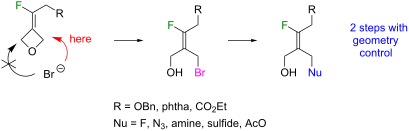
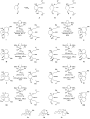
- lactone product 15 (containing 10% of ester Z-13) and proved successful with phosphonolactone 21 being isolated in 77% yield after column chromatography (Scheme 7). To access tetrasubstituted alkenes, reduction of 21 to generate diol 22 was explored with lithium borohydride in Et2O. However, the reaction


Pauson–Khand reaction of fluorinated compounds
Beilstein J. Org. Chem. 2020, 16, 1662–1682, doi:10.3762/bjoc.16.138
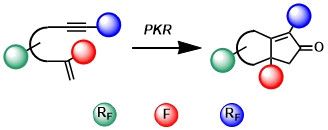
- this sense, while the addition of hard organometallic nucleophiles, such as lithium dialkylcuprates or Grignard reagents, failed, softer nucleophiles such as nitroalkanes cleanly added to the β-position, providing the Michael adduct 61. Unexpectedly, the conjugate addition reaction resulted in




Facile synthesis of 7-alkyl-1,2,3,4-tetrahydro-1,8-naphthyridines as arginine mimetics using a Horner–Wadsworth–Emmons-based approach
Beilstein J. Org. Chem. 2020, 16, 1617–1626, doi:10.3762/bjoc.16.134
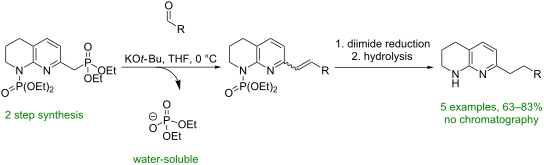
- to account for the deprotonation of the more acidic phosphonate product 7 versus the starting material 13, and potential lithium sequestration by chelation between an oxygen atom of the phosphonate and the nitrogen atom of the unsaturated ring. Monitoring of the deprotonation followed by quenching
- %, representing a significant loss of enantiopurity. It is believed that racemisation occurred during the olefination step, caused by a base mediated keto–enol tautomerisation. It was proposed that the use of lithium hydroxide would promote hydrate formation, mitigating racemisation of the aldehyde. However, this



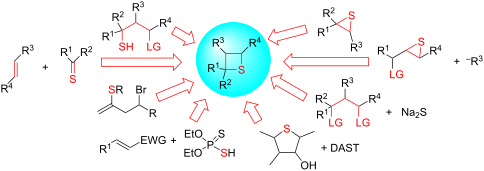
Recent synthesis of thietanes
Beilstein J. Org. Chem. 2020, 16, 1357–1410, doi:10.3762/bjoc.16.116
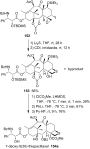
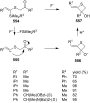
- with lithium sulfide followed by reaction with carbonyldiimazole (CDI), yielding the thietane derivative 153 and byproduct. The thietane derivative 153 was then converted into 7-deoxy-5(20)-thiapaclitaxel 154a in a three steps sequence [59] (Scheme 31). Another member of taxoids, 10-deacetylbaccatin
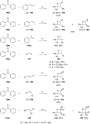
- nucleophiles undergo a further intramolecular addition to form iminothietanes 418. 2-Iminothiiranes 416 underwent a nucleophilic ring expansion with isocyanoalkanes 415 as nucleophiles to give rise to 2,4-diiminothietanes 418 in 33 to 52% yields [101] (Scheme 91). 3-Chloroallyl lithium (420) was also applied
- as a nucleophile to synthesize 2-vinylthietanes 421 in the electrophilic ring expansion of thiiranes 419. The corresponding thiiranes 419 reacted with 3-chloroallyl lithium (420), yielding vinylthietanes 421 in 10–73% yields. This was a general route towards the synthesis of 2-vinylthietanes 422














Disposable cartridge concept for the on-demand synthesis of turbo Grignards, Knochel–Hauser amides, and magnesium alkoxides
Beilstein J. Org. Chem. 2020, 16, 1343–1356, doi:10.3762/bjoc.16.115
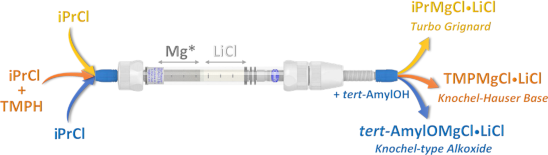
- batch-to-batch variability. Tubular reactors of solid reagents combined with solution-phase reagents enable the continuous-flow preparation of organomagnesium reagents. The use of stratified packed-bed columns of magnesium metal and lithium chloride for the synthesis of highly concentrated turbo
- fresh organomagnesium reagents on a discovery scale and will do so independent from the operator’s experience in flow and/or organometallic chemistry. Keywords: Knochel–Hauser base; lithium chloride; magnesium; on-demand; packed-bed reactors; plug and flow reactor; synthesizer; turbo Grignard reagent
- chloride–lithium chloride complex (iPrMgCl⋅LiCl), known as turbo Grignard [45]. In addition to being widely cited, turbo Grignard is a popular discovery-scale tool in the pharmaceutical industry [32] and has shown an excellent selectivity on a large scale [46]. Halomagnesium amide LiCl adducts, e.g., the


Synthesis of 3-substituted isoxazolidin-4-ols using hydroboration–oxidation reactions of 4,5-unsubstituted 2,3-dihydroisoxazoles
Beilstein J. Org. Chem. 2020, 16, 1313–1319, doi:10.3762/bjoc.16.112
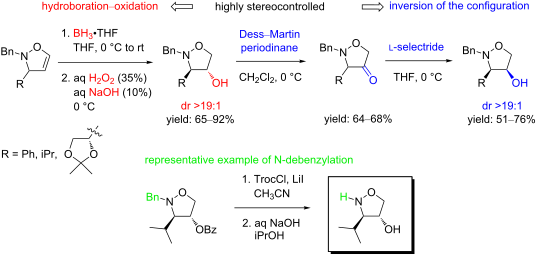
- the intended stereoselective reduction of cyclic ketones with the aim to obtain the 4-hydroxyisoxazolidines with a relative C-3/4-cis configuration. Whereas the initial attempts of the reduction of 9a with lithium borohydride resulted in a poor stereoselectivity (70:30 in favor of the desired cis
- Information File 1). The consecutive reaction of the O-benzoylated isoxazolidine 7b with TrocCl in the presence of lithium iodide [39][40] gave the protected N-Troc isoxazolidine 11 in 70% yield (Scheme 5). It is worth mentioning that considering suitable solvents, acetonitrile was superior to 1,2
- was successfully used for the inversion of the C-3/4-trans relative configuration of the isoxazolidine ring. The bulkier ʟ-selectride showed an excellent selectivity toward the C-3/4-cis isomer compared to lithium borohydride. The final N-debenzylation by a two-step procedure involving a basic


Activated carbon as catalyst support: precursors, preparation, modification and characterization
Beilstein J. Org. Chem. 2020, 16, 1188–1202, doi:10.3762/bjoc.16.104
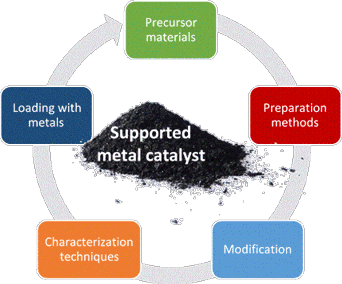
- solutions Xu et al. used energy-rich carbon precursors for the spherical carbon preparation via ultrasonic spray pyrolysis. Lithium, sodium or potassium propiolates are one class of such energy rich materials and exhibit leaving groups such as CO, CO2 or C2H2 eliminated by decarbonylation or decarboxylation


Fluorinated phenylalanines: synthesis and pharmaceutical applications
Beilstein J. Org. Chem. 2020, 16, 1022–1050, doi:10.3762/bjoc.16.91
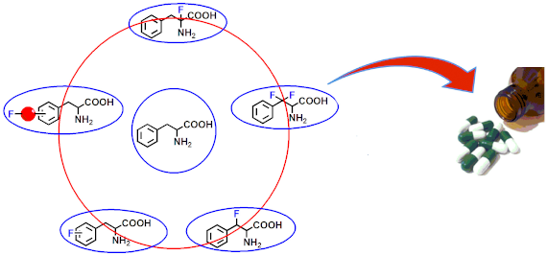
- with zincate 11 using a variety of catalysts and different reaction conditions, was unsuccessful. However, coupling of 4-[bis(dimethoxybenzyl)difluoromethyl]benzyl bromide (14) with the lithium enolate of William`s lactone 15 gave the protected amino acid 16 in 80% yield. The desired protected amino


Combining enyne metathesis with long-established organic transformations: a powerful strategy for the sustainable synthesis of bioactive molecules
Beilstein J. Org. Chem. 2020, 16, 738–755, doi:10.3762/bjoc.16.68
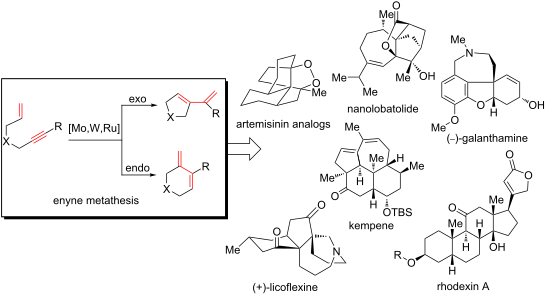
- affording a protected tetracyclic kempane derivative. The latter was further converted into (+)-kempene-2 (14a) in 91% yield by deprotection and acetylation (Scheme 17). A reduction of the intermediate ketone with lithium aluminum hydride followed by an acetylation finally led to (+)-kempene-1 (14b) and




Synthesis of disparlure and monachalure enantiomers from 2,3-butanediacetals
Beilstein J. Org. Chem. 2020, 16, 616–620, doi:10.3762/bjoc.16.57
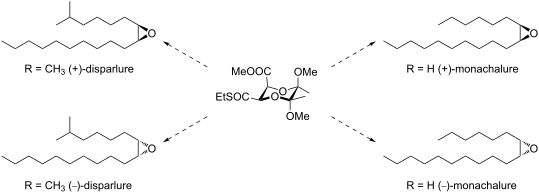
- 19 instead. This compound was obtained from both aldehyde 15 and its precursor ethyl thioester methyl ester 14, respectively (Scheme 3). Both substrates 14 and 15 were reduced to the corresponding diol 17 with lithium aluminum hydride with 73% or 83% yield, respectively. Next, the selective


Architecture and synthesis of P,N-heterocyclic phosphine ligands
Beilstein J. Org. Chem. 2020, 16, 362–383, doi:10.3762/bjoc.16.35
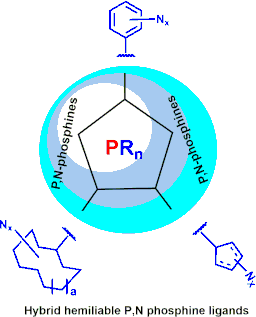
- ] were the phosphine boranes were prepared by reacting phosphines with sodium borohydride. Alternatively, the reduction of phosphine oxide byproducts with lithium tetrahydridoaluminate, calcium aluminum hydride, and hydrosilanes can also be used to regenerate the phosphine ligands. Hydrosilane reagents
- usually lead to stereoselective reduction products, hence, they are used for the synthesis of chiral phosphines from chiral oxides [53]. Lithium tetrahydridoaluminate is used for the reduction of achiral phosphines because its action on optically active phosphine oxides leads mainly to the optically
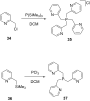
- lithium halogen elimination, halide migration, and ring-opening reactions [56][57]. Butylphosphines are also formed alongside the main product, and in most cases pure phosphine pyridines are obtained using column chromatography followed by extractions adding to the number of synthesis steps. This method




Potent hemithioindigo-based antimitotics photocontrol the microtubule cytoskeleton in cellulo
Beilstein J. Org. Chem. 2020, 16, 125–134, doi:10.3762/bjoc.16.14
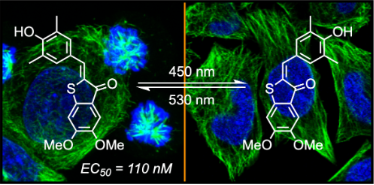
- , lithium diisopropylamide (LDA)-mediated cyclisation of 2-(methylthio)benzamides, which were obtained by directed ortho-metalation of the respective benzamides followed by quenching with dimethyl disulfide [27] (Supporting Information File 1, Scheme S1). In general, we found the LDA-mediated cyclisation




Synthesis of C-glycosyl phosphonate derivatives of 4-amino-4-deoxy-α-ʟ-arabinose
Beilstein J. Org. Chem. 2020, 16, 9–14, doi:10.3762/bjoc.16.2
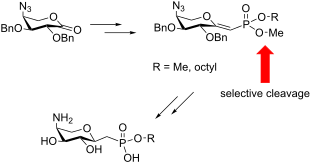
- lactone with the lithium salt of dimethyl methylphosphonate followed by an elimination step of the resulting hemiketal, leading to the corresponding exo- and endo-glycal derivatives. The ensuing selective monodemethylation and hydrogenolysis of the benzyl groups and reduction of the 4-azido group gave the
- lactone 4, which, however, was unstable towards chromatographic purification and used as crude material after lyophilization to remove the solvent. Coupling of 4 with the lithium salt of dimethyl methylphosphonate (5) in THF afforded the β-anomeric ketol phosphonate derivative 6 in 57% yield. The axial


Why do thioureas and squaramides slow down the Ireland–Claisen rearrangement?
Beilstein J. Org. Chem. 2019, 15, 2948–2957, doi:10.3762/bjoc.15.290
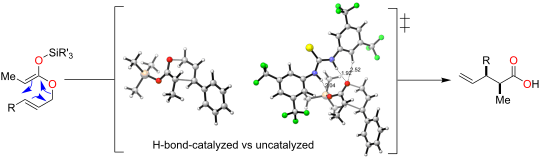
- stereospecificity make this transformation synthetically appealing [12][13]. Allyl esters of various carboxylic acids undergo rearrangement as their lithium enolates or silyl ketene acetals and the corresponding acids were isolated in 75–80% yields. Accordingly, the Ireland–Claisen rearrangement of lithium enolates
- the corresponding acid 3a in 63% yield at rt (Table 1, entry 1). At a higher temperature, the product yield decreased (Table 1, entry 2). The reaction of the related (E)-but-2-en-1-yl propionate (1b) gave acid 3b under similar conditions with slightly lower yields. The rearrangement of lithium enolate


A green, economical synthesis of β-ketonitriles and trifunctionalized building blocks from esters and lactones
Beilstein J. Org. Chem. 2019, 15, 2930–2935, doi:10.3762/bjoc.15.287
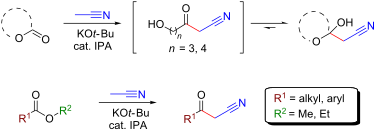
- (and nitrile) were necessary to drive the reactions to completion as the acylated product is more acidic than the nitrile starting material. More recently, ester or Weinreb amide reactions with acetonitrile using lithium bases at low temperature [7], or similarly NaH at high temperatures [8], have been


Chemical synthesis of tripeptide thioesters for the biotechnological incorporation into the myxobacterial secondary metabolite argyrin via mutasynthesis
Beilstein J. Org. Chem. 2019, 15, 2922–2929, doi:10.3762/bjoc.15.286
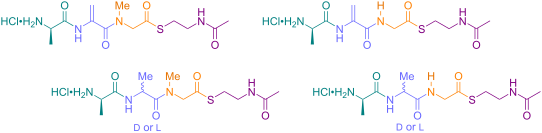
- -ᴅ-Ala (16) was coupled to O-benzylserine ethyl ester 37 to give dipeptide 38, hydrogenolytic debenzylation gave the substrate 39 for the copper(I)-mediated elimination of the carbodiimide formed in situ using EDC, and then yielded the dipeptide Boc-ᴅ-Ala-Dha ester 40 in good yields. Lithium



A new approach to silicon rhodamines by Suzuki–Miyaura coupling – scope and limitations
Beilstein J. Org. Chem. 2019, 15, 2569–2576, doi:10.3762/bjoc.15.250
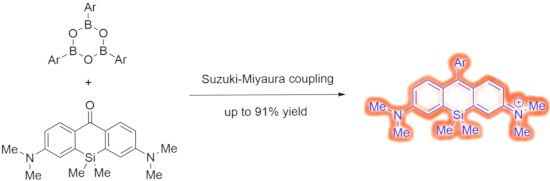
- added the double Grignard reagent 4 to methyl esters 5 [26]. A similar approach was established by Lavis, herein electrophiles (anhydrides or esters) were added to lithium or magnesium organyls 4 [27]. Johnsson and co-workers could establish dye formation by addition of aryllithium 7 to the silicon
- xanthone 6 [8]. A related strategy, adding lithium compound 7 to a preformed tricyclic system 8, was used by Nagano et al. to synthesize the Ge and Sn rhodamine analogues [14]. In a recent publication, Urano et al. synthesized the rhodamines 13–15 by coupling the triflate of xanthone 12 with boroxines 9b


Targeted photoswitchable imaging of intracellular glutathione by a photochromic glycosheet sensor
Beilstein J. Org. Chem. 2019, 15, 2380–2389, doi:10.3762/bjoc.15.230
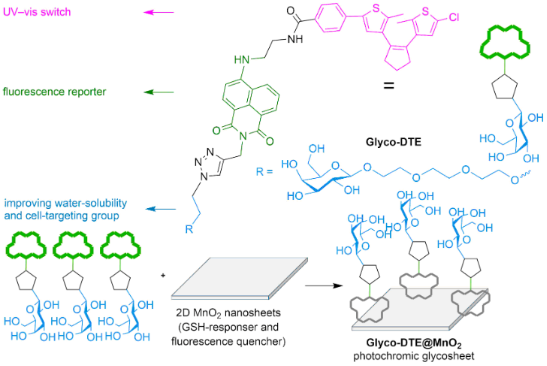
- synthesis of dithienylethene fluorescence reporter Glyco-DTE is shown in Scheme 2. The dithienylethene derivative 3 was prepared by Suzuki coupling of dithienylethene 1 with methyl 4-bromobenzoate followed by hydrolysis with lithium hydroxide. The naphthalimide fluorophore 6 was synthesized through bromide



Synthesis of a dihalogenated pyridinyl silicon rhodamine for mitochondrial imaging by a halogen dance rearrangement
Beilstein J. Org. Chem. 2019, 15, 2333–2343, doi:10.3762/bjoc.15.226
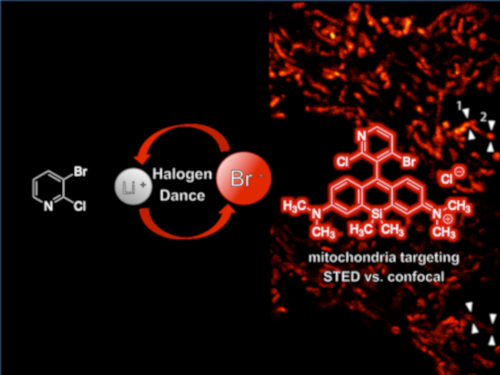
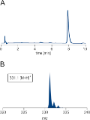
- )lithium reacts again with starting material 19 resulting, after several steps (the so called halogen dance), in the lithiated pyridine intermediate 18 that can add to the silicon xanthone 17. Low temperatures for the HD reaction are required when more equivalents of the base are used to maintain a



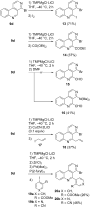
Functionalization of 4-bromobenzo[c][2,7]naphthyridine via regioselective direct ring metalation. A novel approach to analogues of pyridoacridine alkaloids
Beilstein J. Org. Chem. 2019, 15, 2304–2310, doi:10.3762/bjoc.15.222
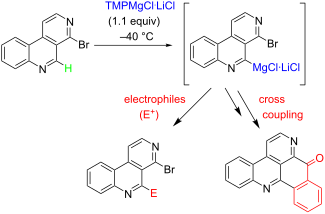
- –nitrogen double bond [13] (see Figure 2B), further undesired bromo–lithium exchange is possible at C-4. Since halogen substituents at C-4 are further readily substituted by nucleophiles, we considered bulky, non-nucleophilic amide bases as most promising for the metalation at C-5. Inspired by reports of




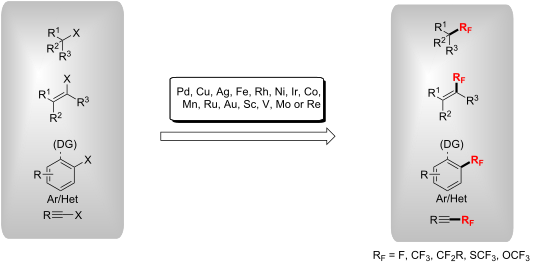
Recent advances in transition-metal-catalyzed incorporation of fluorine-containing groups
Beilstein J. Org. Chem. 2019, 15, 2213–2270, doi:10.3762/bjoc.15.218
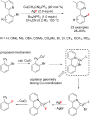
- Sodeoka [40] reported the first example of an enantioselective monofluorination of α-keto esters catalyzed by Pd-μ-hydroxo complexes with cyclopentyl methyl ether (CPME) as the best solvent (Scheme 6). Also, they achieved the diastereoselective reduction of the remaining keto group with lithium tri(sec




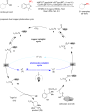




A review of the total syntheses of triptolide
Beilstein J. Org. Chem. 2019, 15, 1984–1995, doi:10.3762/bjoc.15.194
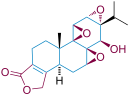
- butenolide 70. The second one is the reaction of alicyclic alcohol 73 with dimethylformamide dimethylacetal to give an allylic amide by means of a [2,3]-sigmatropic rearrangement of a carbene intermediate. Epoxidation the allylic amide with m-CPBA gave 74, followed by lithium hexamethyldisilazide-induced β


Halide metathesis in overdrive: mechanochemical synthesis of a heterometallic group 1 allyl complex
Beilstein J. Org. Chem. 2019, 15, 1856–1863, doi:10.3762/bjoc.15.181
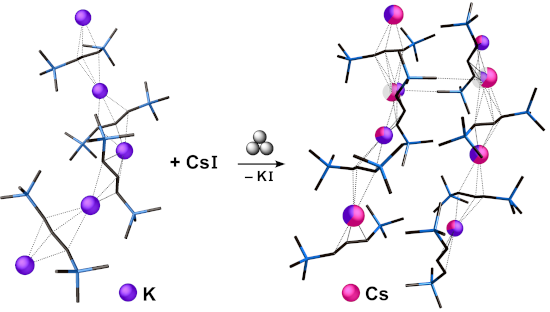
- reduced further by choosing M to be potassium rather than lithium; as an added benefit, the resulting potassium halides are less likely to contaminate the desired product. Without a solvent present and if M and M' are both univalent metals with similar electronegativity, complete exchange becomes


Complexation of 2,6-helic[6]arene and its derivatives with 1,1′-dimethyl-4,4′-bipyridinium salts and protonated 4,4'-bipyridinium salts: an acid–base controllable complexation
Beilstein J. Org. Chem. 2019, 15, 1795–1804, doi:10.3762/bjoc.15.173
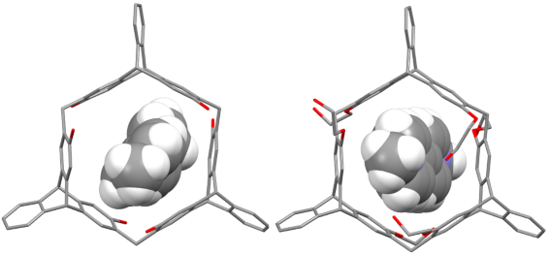
- presence of sodium hydride. Helic[6]arene derivative H5 was synthesized by treatment of H1 with methyl bromoacetate followed by reduction with lithium aluminium hydride (Scheme 1). The guests G1–3 were prepared according to previously reported procedures [37][38][39]. Guest G4 was synthesized through


The cyclopropylcarbinyl route to γ-silyl carbocations
Beilstein J. Org. Chem. 2019, 15, 1769–1780, doi:10.3762/bjoc.15.170
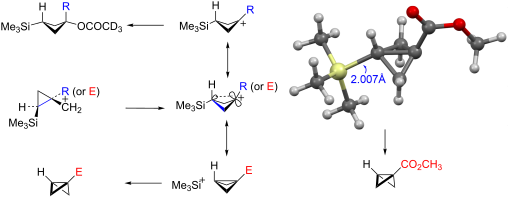
- isomeric mixture of esters 16. Subsequent reduction with lithium aluminum hydride gave a mixture of alcohols 17 and 18, which could be readily separated by silica gel chromatography. The assignment of stereochemistry of these isomers was based on shielding effects in both 1H and 13C NMR spectra. For
- trifluoromethyl-substituted cyclopropylcarbinyl systems were prepared by addition of the carbene derived from the diazoester 56 to vinyltrimethylsilane as shown in Scheme 12. Reduction of the ester mixture 57 with lithium aluminum hydride gave a chromatographically separable mixture of alcohols 58 and 59
- CF3 group is trans to the TMS group in the isomer 59. Additional cyclopropylcarbinyl systems containing the electron-withdrawing cyano and carbomethoxy groups were prepared in an analogous fashion as shown in Scheme 13. Carbomethoxycyano carbene addition to vinyltrimethylsilane followed by lithium





