


Search results
Search for "nucleophiles" in Full Text gives 608 result(s) in Beilstein Journal of Organic Chemistry. Showing first 200.
Synthesis and reactivity of azole-based iodazinium salts
Beilstein J. Org. Chem. 2023, 19, 317–324, doi:10.3762/bjoc.19.27
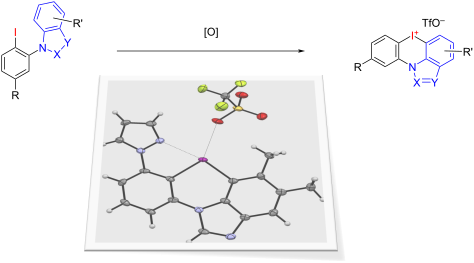
- phenotellurazine 7c were isolated in lower yields of 16% and 6%, likely due to undesired oxidations of selenium and tellurium [38]. Substitutions with nitrogen nucleophiles were performed, giving the N-phenylphenazine 8 in 26% yield [39][40] and the N-tosyl derivative 9 in 18% yield [41]. Anion exchange reactions




Continuous flow synthesis of 6-monoamino-6-monodeoxy-β-cyclodextrin
Beilstein J. Org. Chem. 2023, 19, 294–302, doi:10.3762/bjoc.19.25
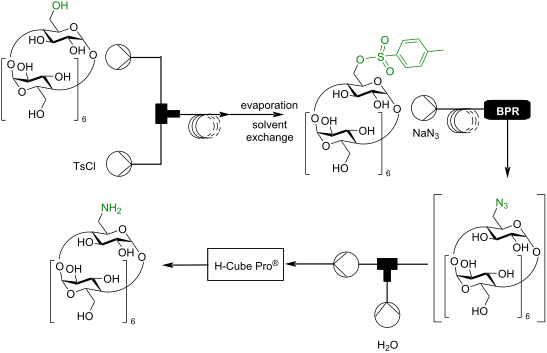
- in 69% yield and 98% purity according to the authors. Many nucleophiles can react with tosylated CDs to give the corresponding C-6-monofunctionalized CDs. However, alkaline bases cannot be used as nucleophiles due to the intramolecular substitution, resulting in a mono-3,6-anhydro product [13]. On
- readily reduced to mono(6-amino-6-deoxy)-CDs (NH2-CDs) opening the way for the preparation of amine, thioureido or amide-linked CD scaffolds [14]. Several other nucleophiles can react with mono-6-O-tosyl-CDs, such as iodide, dithiol, hydroxylamine, alkylamine or polyalkylamine to give iodo- [15], thio


Total synthesis of insect sex pheromones: recent improvements based on iron-mediated cross-coupling chemistry
Beilstein J. Org. Chem. 2023, 19, 158–166, doi:10.3762/bjoc.19.15
- reactions, which witnessed considerable development in the last two decades [14], several cross-coupling methodologies involving soft nucleophiles, such as iron-mediated Suzuki–Miyaura cross-couplings, being reported [15]. The introduction of alkyl–alkenyl linkage by means of iron-catalyzed cross-coupling
- -coupling reactions between alkylmanganese nucleophiles AlkylMnX and thioesters RC(O)SEt using Fe(acac)3 as catalyst could act as a ligand to on-cycle organoiron(II) intermediates (Table 2, entry 3) [39]. This behaviour opens the door to interesting synthetic perspectives, since it suggests that leaving


1,4-Dithianes: attractive C2-building blocks for the synthesis of complex molecular architectures
Beilstein J. Org. Chem. 2023, 19, 115–132, doi:10.3762/bjoc.19.12
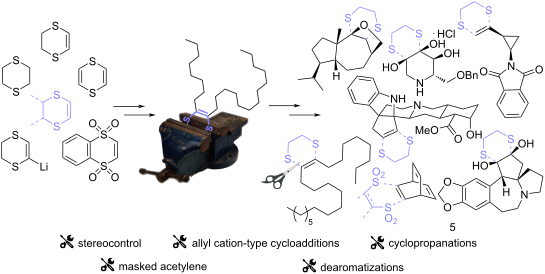
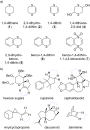
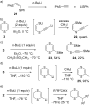
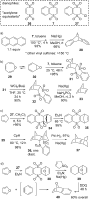
- cation in (3 + 2) cycloadditions: 5,6-dihydro-1,4-dithiin-2-methanol as a stabilized allyl cation Allyl cations are versatile electrophiles for the allylation of various nucleophiles, but can also act as C3-π-systems in a range of cycloaddition reactions (Scheme 13) [84][85][86][87][88]. When combined
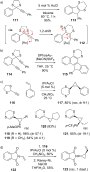
- nucleophile to the putative sulfonium-type dithiin intermediates such as 134. It is noteworthy that these Pummerer rearrangement-generated sulfonium intermediates do not give the expected fully unsaturated dithiin rings, but can be captured by nucleophiles before elimination of a proton happens. Conclusion In










Revisiting the bromination of 3β-hydroxycholest-5-ene with CBr4/PPh3 and the subsequent azidolysis of the resulting bromide, disparity in stereochemical behavior
Beilstein J. Org. Chem. 2023, 19, 91–99, doi:10.3762/bjoc.19.9
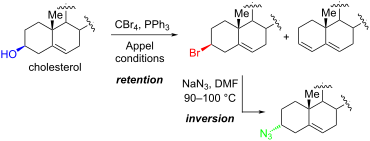
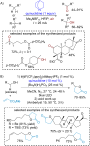
- nucleophiles were trimethylsilyl-based nucleophiles. TiCl4 and BF3·OEt2 served as activators. No reaction was observed with the 3α-mesyl analog and the cholestane congener. The 3β-azido derivative could also be obtained from 6β-azido-3α,5-cyclo-5α-cholestane [14] by treatment with a mixture of TMSN3 and BF3




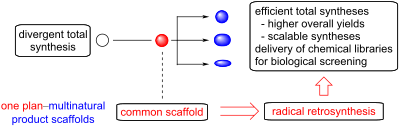
Combining the best of both worlds: radical-based divergent total synthesis
Beilstein J. Org. Chem. 2023, 19, 1–26, doi:10.3762/bjoc.19.1
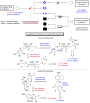
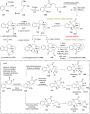
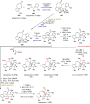
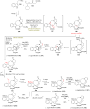
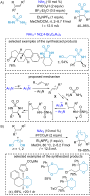
- to the intermediate trans-218. In the presence of external nucleophiles (e.g., MeOH), the cation can be trapped, leading to substitution in the 7-position, while the radical is postulated to be oxidized to a cation, followed by a Friedel–Crafts reaction to the final product 222. When an excess of
- nucleophile is employed, radical 223 is favored, leading to either monosubstitution or disubstitution with external nucleophiles, depending on the presence of oxidant or reductant in the reaction mixture. Based on this plan, Zhu’s group managed to synthesize a rich number of lignans and congeners, such as








Synthetic study toward tridachiapyrone B
Beilstein J. Org. Chem. 2022, 18, 1741–1748, doi:10.3762/bjoc.18.183
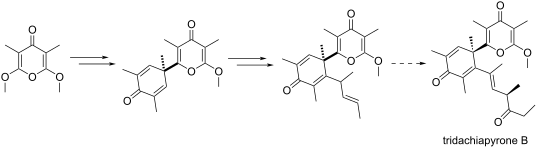
- -pyrone by desymmetrization of α,α’-dimethoxy-γ-pyrone 2 through the addition of hindered nucleophiles to construct the vicinal quaternary carbon. In a subsequent and potentially enantioselective desymmetrization step, compound 5 would be converted into trichiachiapyrone B by 1,4-addition of the side
- AlMe3 to 4,4-dimethyl-2,5-cyclohexadienone in the presence of a copper salt/chiral ligand and silylating reagent [37][38]. The racemic conjugate addition of nucleophiles to 5 was first investigated, starting with the Gilman reagent which was used in Takemoto and Iwata study (Scheme 6). In addition, a
- -cyclohexadienone followed by an oxidative anionic oxy-Cope rearrangement promoted by hydroxide of quaternary ammonium salt. Moreover, the coupling of lithiocyclopentadiene to α,α’-dimethoxy-γ-pyrone was demonstrated, enlarging the scope of nucleophiles grafted to the pharmaceutically relevant α’-methoxy-γ-pyrone


Redox-active molecules as organocatalysts for selective oxidative transformations – an unperceived organocatalysis field
Beilstein J. Org. Chem. 2022, 18, 1672–1695, doi:10.3762/bjoc.18.179
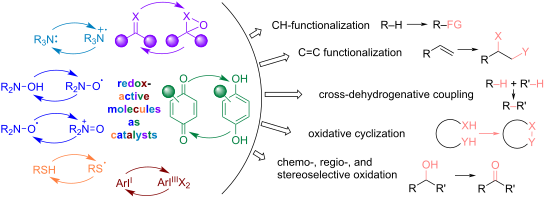
- , organocatalysis by the modulation of redox properties of reagents has much in common with redox-neutral organocatalysis. With the exception of free-radical processes, the distinguishing feature of these organocatalyzed oxidations frequently lies in the involvement of peroxides as O-nucleophiles or O-electrophiles
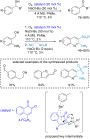
- instead of corresponding C-nucleophiles or C-electrophiles in redox-neutral organocatalyzed reactions. Organocatalysis by redox-active organic molecules N-Oxyl radical catalysis Reactive N-oxyl radicals generated in situ from the corresponding N-hydroxy compounds have found numerous applications in CH











Preparation of β-cyclodextrin-based dimers with selectively methylated rims and their use for solubilization of tetracene
Beilstein J. Org. Chem. 2022, 18, 1596–1606, doi:10.3762/bjoc.18.170
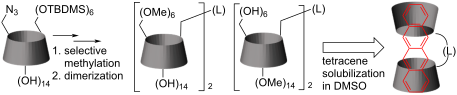
- same conditions lead to a different product in CD chemistry [30]. In the absence of strong nucleophiles such as amines, the CD gives a dimer with a urea bridge instead of providing the isocyanate. The compound 5 was synthesized from 3 according to the standard procedure [30]. The synthesis of dimers


Functionalization of imidazole N-oxide: a recent discovery in organic transformations
Beilstein J. Org. Chem. 2022, 18, 1575–1588, doi:10.3762/bjoc.18.168
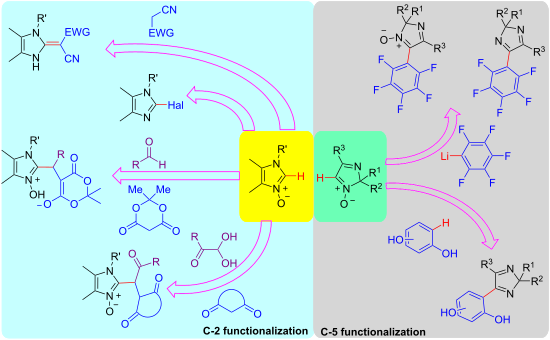
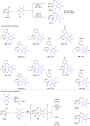
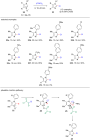
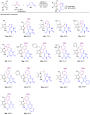
- cyanoacetate to generate ethyl 2-cyano-2-(1,3-dihydro-2H-imidazole-2-ylidene)acetates in the presence of aldehyde catalyst through a [3 + 2] cycloaddition [16]. Here, imidazole N-oxides behaved as 1,3-dipoles and nucleophiles in Michael-type addition reactions. The optimized reaction conditions were estimated







Simple synthesis of multi-halogenated alkenes from 2-bromo-2-chloro-1,1,1-trifluoroethane (halothane)
Beilstein J. Org. Chem. 2022, 18, 1567–1574, doi:10.3762/bjoc.18.167
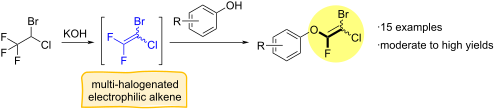
- highly halogenated carbon centers, which enable halothane to participate in various reactions such as homolysis of carbon–halogen bonds and deprotonation. Multi-fluorinated compounds such as HCFC-133a (CF3CH2Cl) and HFC-134a (CF3CH2F) have been widely used in reactions with a variety of nucleophiles to


Efficient synthesis of aziridinecyclooctanediol and 3-aminocyclooctanetriol
Beilstein J. Org. Chem. 2022, 18, 1539–1543, doi:10.3762/bjoc.18.163
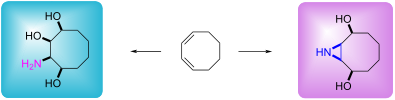
- antibiotic activities. Therefore, synthetic methodologies for the preparation of the aziridinyl system have attracted attention in recent decades. Opening of the aziridine ring by using different nucleophiles gives the corresponding amino alcohols, amino esters, azido amines, amines, and other derivatives [9


Mechanochemical synthesis of unsymmetrical salens for the preparation of Co–salen complexes and their evaluation as catalysts for the synthesis of α-aryloxy alcohols via asymmetric phenolic kinetic resolution of terminal epoxides
Beilstein J. Org. Chem. 2022, 18, 1416–1423, doi:10.3762/bjoc.18.147
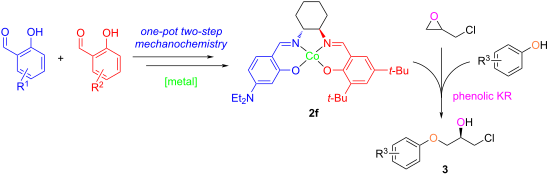
- metals have been explored to optimize the catalytic properties of chiral metal–salens, such as Cr [7], Co [8], Fe [9], Ti [10], Al [11], Y [12], and Mn [13] and investigated with numerous nucleophiles to afford chiral molecules. In addition to the variation of metals, salen ligands have also been studied
- ]. Since their discovery, researchers have investigated several Co–salen complexes for the KR of epoxides with phenols as nucleophiles (Figure 1) [18][19]. Kim et al. described a catalytic system of a chiral Co–salen immobilized on meso/macroporous silica monoliths for the ring opening of epoxides [20


Modular synthesis of 2-furyl carbinols from 3-benzyldimethylsilylfurfural platforms relying on oxygen-assisted C–Si bond functionalization
Beilstein J. Org. Chem. 2022, 18, 1256–1263, doi:10.3762/bjoc.18.131
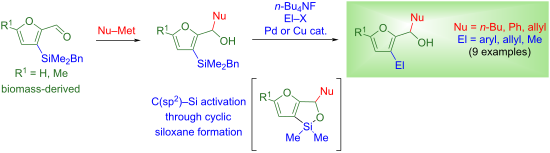
- Achmatowicz rearrangement [18]. Addition reactions of nucleophiles to the C–O double bond of furfurals represent an obvious synthetic approach to 2-furyl carbinols. We reasoned that for carbinols derived from C3-triorganosilyl-substituted furfurals, the OH unit could be exploited to assist C–Si bond


Reductive opening of a cyclopropane ring in the Ni(II) coordination environment: a route to functionalized dehydroalanine and cysteine derivatives
Beilstein J. Org. Chem. 2022, 18, 1166–1176, doi:10.3762/bjoc.18.121
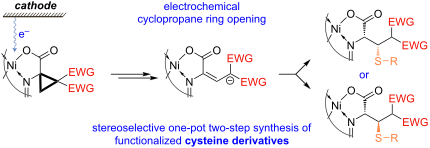
- cases, the targeted cysteine derivatives were isolated in practical yields. It should be noted that there is no need to separate the isomeric alkene complexes formed after the cyclopropane ring opening, they can be involved in the follow-up reaction with nucleophiles in the form of a mixture. This
- simplifies the synthetic procedure; the multistep process can be performed in an electrochemical cell, with the potential switching off prior to the addition of nucleophiles (thiols in our case). Complexes 10–12 were obtained as pure diastereomers (a set of signals corresponding to the individual compound is



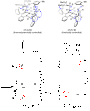
Experimental and theoretical studies on the synthesis of 1,4,5-trisubstituted pyrrolidine-2,3-diones
Beilstein J. Org. Chem. 2022, 18, 1140–1153, doi:10.3762/bjoc.18.118
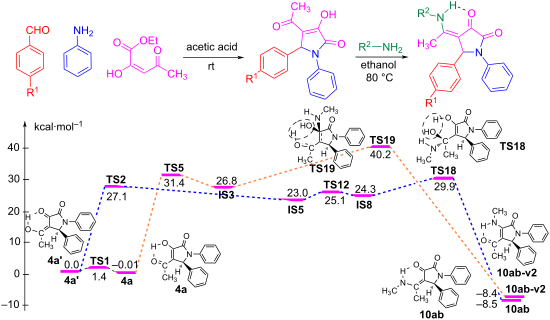
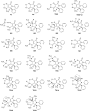
- dialkyl acetylenedicarboxylate or sodium diethyl oxalacetate [28][29][30][31][32][33][34]. The resulting products have the 4-position locked by the alkoxycarbonyl (–COOR) group and these 2-pyrrolidinone derivatives can be functionalized with amines as nucleophiles via the 3-position [10][35][36][37][38
- antibacterial and antifungal activities [39][40][41]. The presence of an acyl group at the 4-position enables these heterocycles to be functionalized via nucleophilic addition reactions between the carbonyl group and nucleophiles like hydroxylamine and semicarbazide [42]. Herein, we report the synthesis of 4


Electrochemical Friedel–Crafts-type amidomethylation of arenes by a novel electrochemical oxidation system using a quasi-divided cell and trialkylammonium tetrafluoroborate
Beilstein J. Org. Chem. 2022, 18, 1040–1046, doi:10.3762/bjoc.18.105
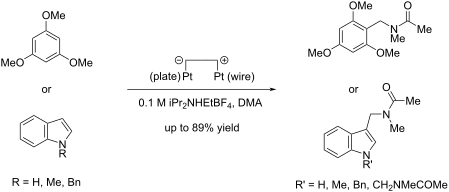
- has also been applied to organic synthesis [17][18][19][20]. However, when electrochemical oxidation of amides/carbamates in the presence of nucleophiles, such as electron-rich arenes or silyl enol ethers, is carried out for Friedel–Crafts-type amidomethylation, electrochemical oxidation of electron
- substrate 1 but DMA successfully proceeded at the anode. In other words, N-acyliminium ions of DMA would expectedly be formed. We speculated that the reason for the lower product yields of 2 and 3 was a side reaction of the produced N-acyliminium ions with other nucleophiles in the reaction medium. The most


Synthesis of α-(perfluoroalkylsulfonyl)propiophenones: a new set of reagents for the light-mediated perfluoroalkylation of aromatics
Beilstein J. Org. Chem. 2022, 18, 788–795, doi:10.3762/bjoc.18.79
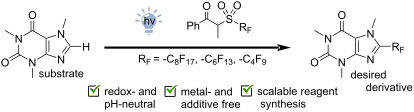
- secondary carbon atom at 40 °C (Scheme 2). Furthermore, increasing the temperature to 70 °C was not found to generate the product and instead resulted in slight decomposition of the starting materials. Attempting to trap the sulfinate nucleophiles with primary benzyl bromide (4) with catalytic sodium iodide


Cs2CO3-Promoted reaction of tertiary bromopropargylic alcohols and phenols in DMF: a novel approach to α-phenoxyketones
Beilstein J. Org. Chem. 2022, 18, 420–428, doi:10.3762/bjoc.18.44
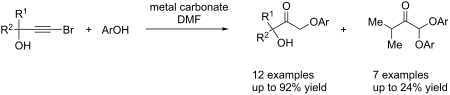
- phenol (2a, 1 equiv Cs2CO3, DMF, 50–55 °C, 3 h) to afford the corresponding product 4a in 29% isolated yield (Scheme 4). We tested aniline and 2-naphthylamine as nucleophiles (DMF, 50–55 °C) in the reaction of bromopropargylic alcohol 1a (Scheme 5). But such a protocol turned out to be ineffective


Menadione: a platform and a target to valuable compounds synthesis
Beilstein J. Org. Chem. 2022, 18, 381–419, doi:10.3762/bjoc.18.43
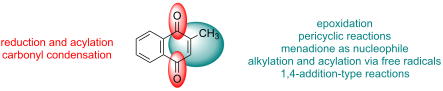
- mol % bismuth(III) triflate catalyst and compound 73 was obtained in 75% yield (Scheme 23). Carbonyl condensation Another possible derivatization involves transformations at the carbonyl groups in menadione that can be achieved through the addition of nucleophiles to the carbonyl group at position C-4
- isomers and trans-conformers. Menadione as a nucleophile Electron-rich 1,4-naphthoquinones, such as 2-hydroxy-, 2-amino-, and 2-alkylnaphtho-1,4-quinones may react as nucleophiles. Hence, menadione (10) can act as a nucleophile in, for example, bromination reactions [127] and aldol-type reactions with


A resorcin[4]arene hexameric capsule as a supramolecular catalyst in elimination and isomerization reactions
Beilstein J. Org. Chem. 2022, 18, 337–349, doi:10.3762/bjoc.18.38
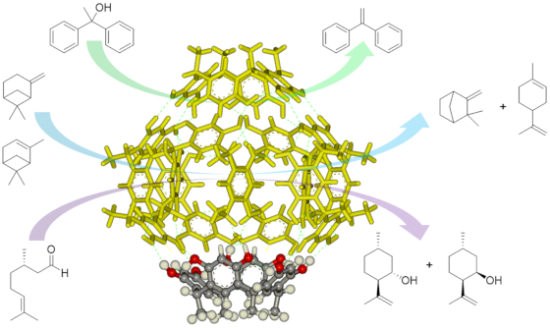
- capsule led to the formation of the intermediate carbocationic species that was stabilized within the cavity of the hexamer and converted to limonene as major product. We also tried to intercept the carbocationic intermediate using good nucleophiles in equimolar amounts such as N-methylindole or 2
- -mercaptoethanol but in all cases the reactions conducted in the presence of such nucleophiles proceeded forming only the isomerization products. It is worth to notice that the conversion observed with the capsule was comparable to that what was frequently observed with typical heterogeneous Lewis or Brønsted


New efficient synthesis of polysubstituted 3,4-dihydroquinazolines and 4H-3,1-benzothiazines through a Passerini/Staudinger/aza-Wittig/addition/nucleophilic substitution sequence
Beilstein J. Org. Chem. 2022, 18, 286–292, doi:10.3762/bjoc.18.32
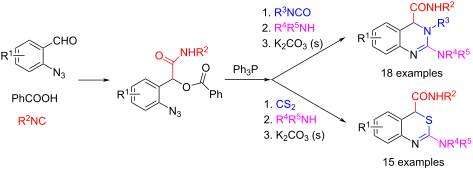
- –Spengler-like cyclization processes [12]. Some 4-substituted 3,4-dihydroquinazolines were prepared by copper-catalyzed oxidative cross coupling of hydroxy intermediates with various nucleophiles [13]. Other 3,4-dihydroquinazolines were also obtained efficiently by intramolecular aza-Wittig reactions [14




Synthesis of novel [1,2,4]triazolo[1,5-b][1,2,4,5]tetrazines and investigation of their fungistatic activity
Beilstein J. Org. Chem. 2022, 18, 243–250, doi:10.3762/bjoc.18.29
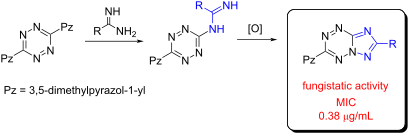
- ][1,2,4,5]tetrazines 3a,j, as well as triazolo[4,3-b][1,2,4,5]tetrazines [33][34][35], react with N- and O-nucleophiles to give the corresponding nucleophilic substitution products 4a–c, 5a–c, derived from the displacement of the azolyl group in the tetrazine ring (Scheme 3). These reactions can be used to
- reactions with nucleophiles known for annulated tetrazine systems. It has been revealed that the synthesized compounds exhibit a pronounced activity against dermatophyte fungal strains Trichophyton, Epidermophyton, Microsporum: Seven compounds with a high fungistatic activity (0.38 ≤ MIC ≤ 1.5 μg/mL) have
- ]triazolo[1,5-b][1,2,4,5]tetrazine (b), 7H-purine (c). Synthesis of [1,2,4]triazolo[1,5-b][1,2,4,5]tetrazines 3a–k. Reactions of triazolo[1,5-b][1,2,4,5]tetrazines 3a,j with N- and O-nucleophiles. Reactions of triazolo[1,5-b][1,2,4,5]tetrazines 3a,j with C-nucleophiles. Reactions of 6-(3,5-dimethyl-1H


New advances in asymmetric organocatalysis
Beilstein J. Org. Chem. 2022, 18, 240–242, doi:10.3762/bjoc.18.28
- asymmetric organocatalytic methods to assemble biologically relevant compounds is highlighted by a review article devoted to the syntheses of coumarin derivatives [16]. Conjugated additions of stabilized nucleophiles are the cornerstone of organocatalytic methodology. Recent advances in this area are covered
Multi-faceted reactivity of N-fluorobenzenesulfonimide (NFSI) under mechanochemical conditions: fluorination, fluorodemethylation, sulfonylation, and amidation reactions
Beilstein J. Org. Chem. 2022, 18, 182–189, doi:10.3762/bjoc.18.20
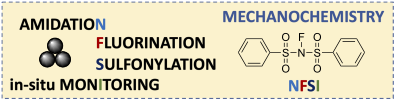
- spectroscopy (Scheme 3h). Formation of 4a could have occurred from the direct reaction of the N–H nitrogen of 3a with NFSI, which would agree with the propensity for NFSI to react with some hard oxygen and nitrogen nucleophiles at the sulfur atom instead of at the fluorine atom [39][40]. Similarly, NFSI has





