


Search results
Search for "Cleavage" in Full Text gives 984 result(s) in Beilstein Journal of Organic Chemistry. Showing first 200.
Non-noble metal-catalyzed cross-dehydrogenation coupling (CDC) involving ether α-C(sp3)–H to construct C–C bonds
Beilstein J. Org. Chem. 2023, 19, 1259–1288, doi:10.3762/bjoc.19.94
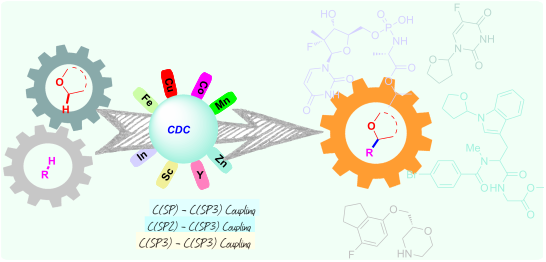
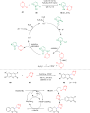
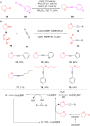
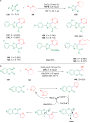
- , and the cleavage of the C(sp3)–H bond in the ether substrates which produces α-alkyl radicals is the rate-determining step. Fe-catalyzed reactions Iron is a transition metal with abundant reserves, low price, and non-toxicity, which shows many characteristics in catalytic processes, such as the
- of ethers to obtain symmetric and asymmetric 1,1-bis-indolylmethane derivatives (Scheme 23) [84]. The reaction proceeds through the tandem oxidative coupling of the C–O bond and cleavage of the C–H bond. Fe plays a dual role in catalysing the C–C bond coupling and C–O bond cleavage as Lewis acid
- the reaction mechanism supported by DFT calculations and concluded that FeF2 plays an important redox role in assisting the cleavage of oxidants and the oxidation of carbon radicals to cationic intermediates of oxygen. CDC reactions between C(sp3)–H/C(sp)–H bonds catalyzed by iron have been reported










Photoredox catalysis harvesting multiple photon or electrochemical energies
Beilstein J. Org. Chem. 2023, 19, 1055–1145, doi:10.3762/bjoc.19.81
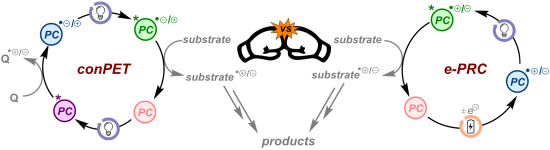
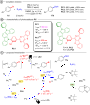
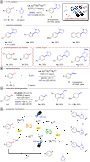
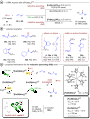
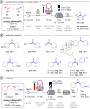
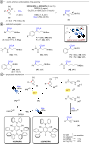
- ). Notably, the protocol was also applicable to 4-iodotoluene as a moderately deactivated aryl iodide and the C(sp2)–I bond cleavage occurred chemoselectively in the presence of a C(sp2)–Br bond. N-Methylpyrrole and various other substituted pyrroles could be applied as trapping agents for electron-poor aryl
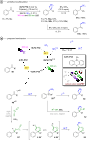
- the single electron reduction of aryl halides while simultaneously generating S4•−. Upon C(sp2)–X bond cleavage, an aryl radical is formed and trapped by a trapping reagent such as N-methylpyrrole, yielding the open-shell species 4•. Upon irradiation of S3•−, the excited species *[S3•−] oxidizes 4• to
- (PCET) from [Ir2]+ could not be ruled out. With no trapping reagents or further reactants present, the aryl radicals generated by C(sp2)–X bond cleavage yield hydrodehalogenated products 2 via HAT. Under irradiation with blue light, [Ir2]0 was found to reduce a variety of aryl halides to their

























Synthesis of imidazo[4,5-e][1,3]thiazino[2,3-c][1,2,4]triazines via a base-induced rearrangement of functionalized imidazo[4,5-e]thiazolo[2,3-c][1,2,4]triazines
Beilstein J. Org. Chem. 2023, 19, 1047–1054, doi:10.3762/bjoc.19.80
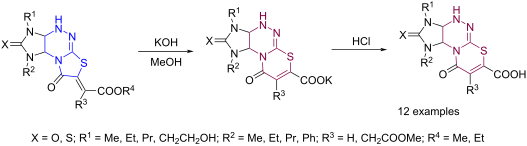
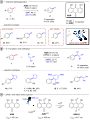
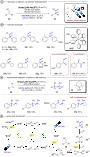
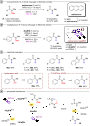
- in the thiazine ring leads to the cleavage of the triazine C–N bond. Further proton transfer gives product 9. The structures of the synthesized compounds 3a,b,j and 5a–k,m were confirmed by IR, 1H and 13C NMR spectroscopy, and high-resolution mass spectrometry. the potassium salts 3c–i,k,m were



Linker, loading, and reaction scale influence automated glycan assembly
Beilstein J. Org. Chem. 2023, 19, 1015–1020, doi:10.3762/bjoc.19.77
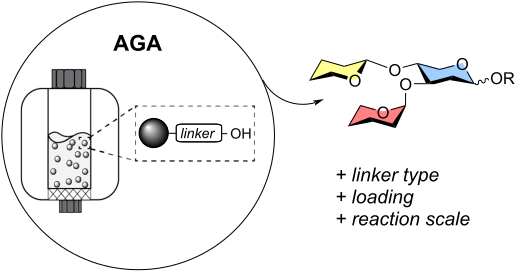
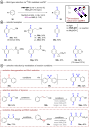
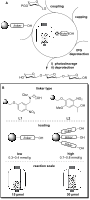
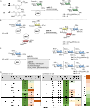
- glycan sequences. We showed that, while loading and reaction scale did not significantly influence the AGA outcome, the chemical nature of the linker dramatically altered the isolated yields. We identified that the major determinants of AGA yields are cleavage from the solid support and post-AGA
- light (λ = 360 nm), L1 releases the glycan equipped with an aminoalkyl spacer at the reducing end, whereas L2 affords the free reducing sugar (α/β mixture). Previous data suggested that UV cleavage of L1 and L2 was equally efficient, permitting the isolation of a tetramannoside in around 60% yield [3
- cleavage is probably influenced by glycan structure, solubility, and aggregation tendency [26]. Lastly, purification of the protected glycan upon cleavage could be affected by the presence or absence of a linker. L1 or L2 were conjugated to Merrifield resins with initial loadings of 0.5 mmol/g and 1.0 mmol

Aromatic C–H bond functionalization through organocatalyzed asymmetric intermolecular aza-Friedel–Crafts reaction: a recent update
Beilstein J. Org. Chem. 2023, 19, 956–981, doi:10.3762/bjoc.19.72

- stereoselectivity is also explained. Keywords: asymmetric; aza-Friedel–Crafts reaction; H-bonding; organocatalysis; stereoselectivity; Introduction The ease of a chemical transformation depends on the thermodynamic instability of a chemical bond owing to its fast cleavage under mild reaction conditions. A C–H
- different types of C–H bonds, an aromatic C–H bond is even more inert rendering this type of bond functionalization more difficult. Herewith the term “bond functionalization” is defined as the cleavage of an existing bond with substitution by another bond. Aromatic C–H bond functionalizations have gained
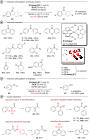
- reactivity of catalyst P5 initiated with the protonation of amidates 42 to generate intermediate 44 through ring cleavage. Then, the intermediate 44 was paired with the anionic conjugate base of catalyst P5 and acts as electrophile to facilitate the conjugate Friedel–Crafts reaction involving C3 of indole 4




Photoredox catalysis enabling decarboxylative radical cyclization of γ,γ-dimethylallyltryptophan (DMAT) derivatives: formal synthesis of 6,7-secoagroclavine
Beilstein J. Org. Chem. 2023, 19, 918–927, doi:10.3762/bjoc.19.70
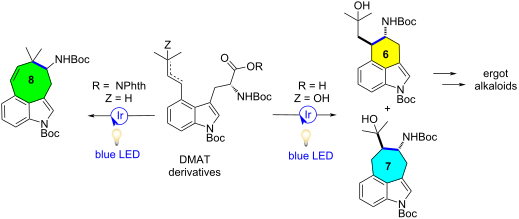
- easily generate reactive open-shell radical species and/or intermediates. The substrate is consequently activated for bond cleavage, atom abstraction, or nucleophilic or electrophilic attack. After quenching, the oxidized or reduced photocatalyst regains or loses an electron to return to the starting


Intermediates and shunt products of massiliachelin biosynthesis in Massilia sp. NR 4-1
Beilstein J. Org. Chem. 2023, 19, 909–917, doi:10.3762/bjoc.19.69
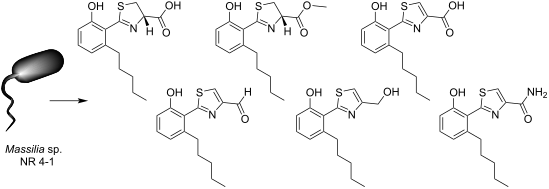
- formation of the terminal carboxamide in 6 might be due to a spontaneous C–N bond cleavage, which occurs in 1’’ prior to the cyclization, consistent with a mechanism recently proposed in photoxenobactin biosynthesis [34]. Despite the widespread occurrence of siderophores featuring a phenolic moiety with a


Synthesis of aliphatic nitriles from cyclobutanone oxime mediated by sulfuryl fluoride (SO2F2)
Beilstein J. Org. Chem. 2023, 19, 901–908, doi:10.3762/bjoc.19.68
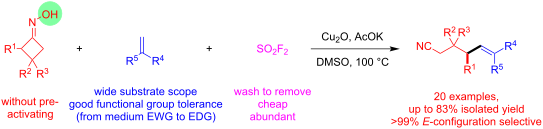
- ][26][27][28][29], a synthesis method for δ-olefin-containing aliphatic nitriles by the radical C–C bond cleavage of cycloketone oxime ester derivatives was developed by Shi’s group (Scheme 2a) [30], which emerged as an efficient strategy to construct C(sp2)–C(sp3) bonds [31][32][33]. Later, Xiao [34
- works, we contemplated that the N–O bond of cyclobutanone oxime derivatives could be activated by SO2F2 in situ to enable cleavage of the C–C bond, which could achieve this transformation without going through inefficient pre-introduction of electrophores. Herein, we describe how this concept has been
- translated into experimental reality, developing a new SO2F2-mediated C–C single bond cleavage method for constructing δ-olefin-containing aliphatic nitriles. Results and Discussion We started our investigation by selecting cyclobutanone oxime (1a) and 1,1-diphenylethylene (2a) as model starting materials to


First synthesis of acylated nitrocyclopropanes
Beilstein J. Org. Chem. 2023, 19, 892–900, doi:10.3762/bjoc.19.67
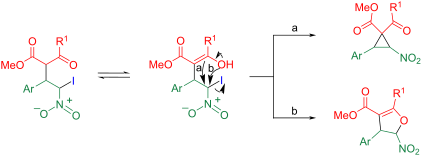
- reactive allenes (reaction e), which serve as synthetic intermediates for polyfunctionalized enynes [8]. The ring strain of the cyclopropane ring facilitates the cleavage of the C–C bond, and both cation and anion are stabilized by the adjacent phenyl group and ester functions, respectively (reaction f


Light-responsive rotaxane-based materials: inducing motion in the solid state
Beilstein J. Org. Chem. 2023, 19, 873–880, doi:10.3762/bjoc.19.64
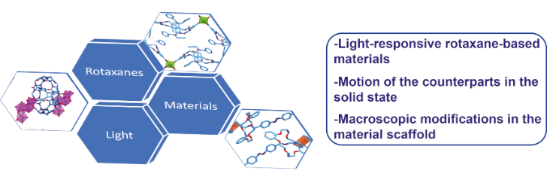
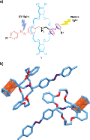
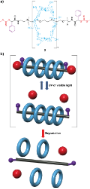
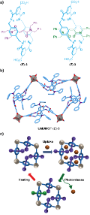
- supramolecular gels (Figure 2a) [52]. Upon irradiation using a UV-light-emitting diode (LED) and a visible LED as sources, the reversible cleavage of the trithiocarbonate stoppers was accomplished, thus allowing the dethreading [53] of the wheels to take place by the shuttling of the macrocycles along the thread

Pyridine C(sp2)–H bond functionalization under transition-metal and rare earth metal catalysis
Beilstein J. Org. Chem. 2023, 19, 820–863, doi:10.3762/bjoc.19.62
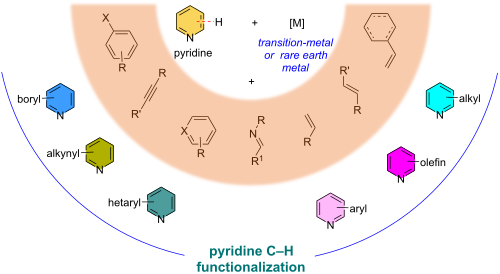
- . Review C–H Alkylation of pyridine The C–H bond is the backbone of an organic molecule and the conversion of a C–H bond to a C–X bond (X = carbon or heteroatom) forms the basis in organic synthesis. The functionalization of C–H bonds is challenging due to a large kinetic barrier for C–H bond cleavage and
- good yields. Based on the experimental findings the authors proposed a catalytic cycle (Scheme 14b) which commences with the coordination of Pd(II) with the pyridine nitrogen to provide intermediate 70. A strong trans-effect results in the C–H cleavage for the formation of Pd(II) species 71
- sterically bulky additive MAD coordinates to the pyridine nitrogen, which pushes the tethered alkene close to the nickel center subsequently providing the intermediate 201. Then, the C–D bond on cleavage via oxidative addition of Ni(0) forms the Ni–D species 202 which after anti-Markovnikov hydronickelation
















Eschenmoser coupling reactions starting from primary thioamides. When do they work and when not?
Beilstein J. Org. Chem. 2023, 19, 808–819, doi:10.3762/bjoc.19.61
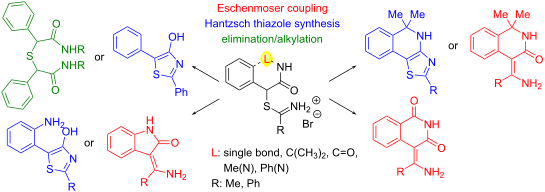
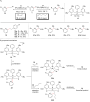
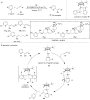
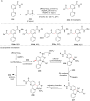
- appropriate acidifying group Z (Z: CN, COR, COOR) then a proton cleavage from the α-carbon (pKaC in Scheme 2) can occur (V) with a subsequent carbanion attack to the neighboring iminium group to form a three-membered thiirane ring (VIII). The thiirane then spontaneously decomposes into an ECR product (XIV
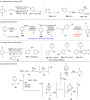
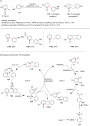
- lactams 1, 2b, and 3 (i.e., cleavage of Ar–N bond or removal of >C(CH3)2 or >C=O bridge) leads to secondary α-bromo(phenyl)acetamides 4a and 4b. When α-bromoamide 4a was treated with thiobenzamide without any base (entries 1 and 7 in Table 3), 2,5-diphenyl-1,3-thiazol-4-ol (13) was the only product
- (Scheme 6). This means that the cleavage of the amide group that evolves aniline (pKa = 4.6) occurred smoothly after the initial thiazole ring closure (through 12a’ in Scheme 6). The addition of a thiophile (trimethyl phosphite) does not turn the reaction toward ECR and only decreases the yield of 13


Sulfate radical anion-induced benzylic oxidation of N-(arylsulfonyl)benzylamines to N-arylsulfonylimines
Beilstein J. Org. Chem. 2023, 19, 771–777, doi:10.3762/bjoc.19.57
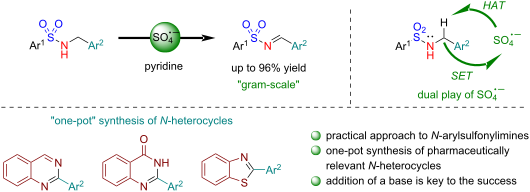
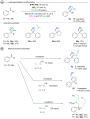
- cleavage of the peroxy linkage under heating conditions [17]. The hydrogen atom is abstracted from the benzylic position of 1 by SO4·−, generating benzylic radical 1aa [14][15][16]. A single electron transfer (SET) could subsequently occur from 1aa to form the reactive species 1ab. Finally, the base


Synthesis of medium and large phostams, phostones, and phostines
Beilstein J. Org. Chem. 2023, 19, 687–699, doi:10.3762/bjoc.19.50
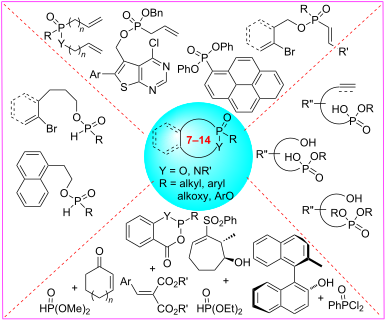
- )butyl)phosphonic acid (28) in 45% yield as a byproduct, which was generated from the Pd-catalyzed arylmethylic cleavage under hydrogenolysis conditions (Scheme 5) [22]. To avoid the formation of the acyclic byproduct, the same research group designed a new inhibitor with a reverse phosphonate bond


Photocatalytic sequential C–H functionalization expediting acetoxymalonylation of imidazo heterocycles
Beilstein J. Org. Chem. 2023, 19, 666–673, doi:10.3762/bjoc.19.48
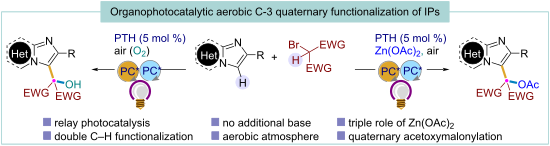
- isolated, further confirming the involvement of a malonyl radical generated by the cleavage of the C–Br bond of 2a [28]. Next, an attempt was made to identify the key intermediate of the reaction (Scheme 3B). When compound 5 was subjected to the acetylation reaction individually with Zn(OAc)2 and AcOH




Nucleophile-induced ring contraction in pyrrolo[2,1-c][1,4]benzothiazines: access to pyrrolo[2,1-b][1,3]benzothiazoles
Beilstein J. Org. Chem. 2023, 19, 646–657, doi:10.3762/bjoc.19.46
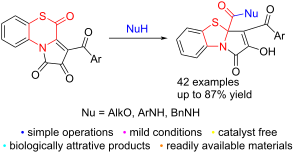
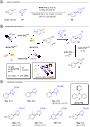
- to the plausible pathway shown in Scheme 6. As we expected, the nucleophile 2a attacked on the position C4 of the substrate 1a, which resulted in the cleavage of the S5–C4 bond and the formation of a thiol intermediate A (1-(2-thiophenyl)pyrrole derivative generated in situ as a precursor analog for
- the cleavage of the S–C bond of the 1,4-benzothiazine moiety under the action of the nucleophile to form in situ a 1-(2-thiophenyl)pyrrole derivative that undergoes an intramolecular cyclization to give the target pyrrolobenzothiazoles 3, 7, and 12. The developed approach works well with alkanols 2




Enolates ambushed – asymmetric tandem conjugate addition and subsequent enolate trapping with conventional and less traditional electrophiles
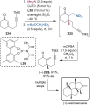
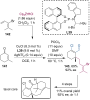
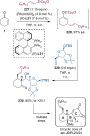
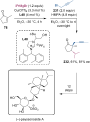
Beilstein J. Org. Chem. 2023, 19, 593–634, doi:10.3762/bjoc.19.44
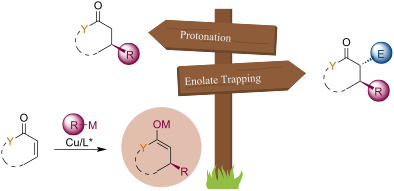
- array of organic synthetic transformations. Enolates are usually formed by deprotonation of the corresponding organic compound. However, other synthetic approaches for their generation exist, such as cleavage of enol ethers and esters, halogen–metal exchange, transmetalations, and conjugate additions to
- , transformation to potassium trifluoroborate salt, hydrolysis, C–C cross-coupling, base-mediated elimination, radical C–B cleavage) [72]. Therefore, enantioenriched boronates are commonly applied intermediates in organometallic, medicinal, and other fields of chemistry. At the same time, some organoboronic acid


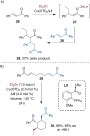


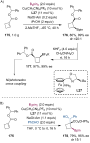


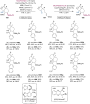


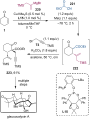
Transition-metal-catalyzed domino reactions of strained bicyclic alkenes
Beilstein J. Org. Chem. 2023, 19, 487–540, doi:10.3762/bjoc.19.38
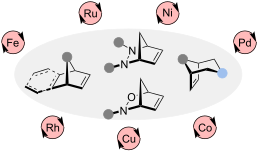
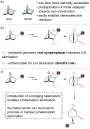
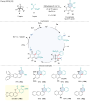
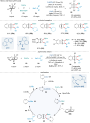
- salicylaldehydes with EWGs failed to react. The authors hypothesized the reaction mechanism begins with the association of the Rh(III) catalyst with the hydroxy group of salicylaldehyde (151a) resulting in a selective cleavage of the aldehyde C–H bond producing the rhodocycle 153 which side-on coordinates with the
- alkene of the azabicycle producing 154. A C–N bond cleavage occurs creating π-allylrhodium 155. Subsequently, the phenol oxygen then adds to the π–allyl species in a cis fashion, furnishing 156 which is proposed to be the enantiodetermining step. The carbonyl–rhodium species 156 inserts into the alkene
- forms 164. Next, cleavage of the N–O bond followed by an oxidative addition of the Rh(III) to the N–O bond forms intermediate 165 which can finally undergo reductive elimination giving the final product 160a. In 2013, Li reported the domino coupling reaction of 2-phenylpyridines 165 with oxa- and











Combretastatins D series and analogues: from isolation, synthetic challenges and biological activities
Beilstein J. Org. Chem. 2023, 19, 399–427, doi:10.3762/bjoc.19.31
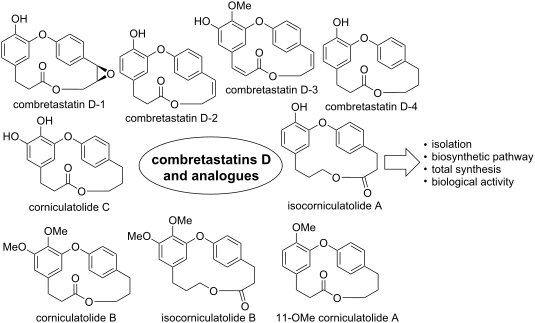
- ether moiety. The best result was obtained when phenol 101 was subjected to anodic oxidation, leading to the formation of spiro-dimer 102 in 61% yield. Protection of the alcohol using TBSOTf followed by cyclic ether cleavage and re-aromatization gave compound 104. Subsequent dehalogenation followed by
- protection with BnBr and oxidation led to the carboxylic acid 107. Esterification of the carboxylic acid followed by the cleavage of the silyl ether using TBAF and hydrolysis led to the seco-acid 108. Macrolactonization using the Mitsunobu conditions gave combretastatin D-4 (4) after cleavage of the benzyl
- proved to be important for the selectivity of the reaction, where significant cleavage of the benzyl group resulted when ethanol was the solvent of choice. Subsequent ester hydrolysis gave compound 112 (Scheme 22) [55]. In parallel, a Still–Gennari olefination using aldehyde 52 lead to the cis-alkene 113




CuAAC-inspired synthesis of 1,2,3-triazole-bridged porphyrin conjugates: an overview
Beilstein J. Org. Chem. 2023, 19, 349–379, doi:10.3762/bjoc.19.29
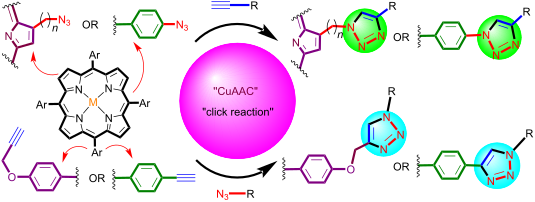
- 124 in the presence of copper bromide and tris((1-benzyl-4-triazolyl)methyl)amine (TBTA) in DMSO/H2O to give a porphyrin-lantern (PL)-DNA sequence in 45% yield after cleavage and deprotection. These PL-DNA sequences were further used to construct strong and fluorescent G-wires that could be useful for




Synthesis and reactivity of azole-based iodazinium salts
Beilstein J. Org. Chem. 2023, 19, 317–324, doi:10.3762/bjoc.19.27
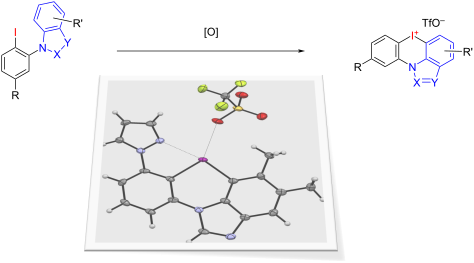
- underwent undesired ring openings. Treating 12 with BocNH2 resulted in the formation of protected guanidine 15 in 80% yield (Scheme 2c), which would not be possible to obtain via an oxidative cyclization of the corresponding iodine(I) species due to a carbamate cleavage with acid. The other dicationic salts
- cleavage of the Boc-group was possible in quantitative yield. Conclusion In this work, we prepared azoiodaziniums as a new class of six-membered heterocyclic iodonium salts with a wide range of substituents. Derivatizations of the reactive iodonium center allow for the formation of new heterocyclic




Synthesis, α-mannosidase inhibition studies and molecular modeling of 1,4-imino-ᴅ-lyxitols and their C-5-altered N-arylalkyl derivatives
Beilstein J. Org. Chem. 2023, 19, 282–293, doi:10.3762/bjoc.19.24
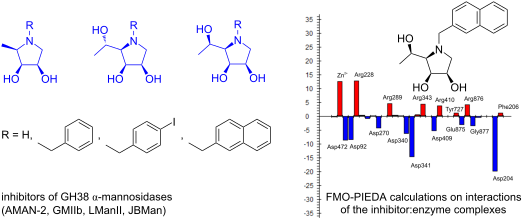
- in two steps from known ʟ-ribitol 1 [34] in good overall yield. Next, it was converted to the C-5 deoxygenated N-benzylpyrrolidine 6 via trityl ether cleavage, tosylation of the deprotected OH group, and reduction of the tosylate 5. Hydrogenolysis of the N-benzyl group in 6 followed by a removal of


1,4-Dithianes: attractive C2-building blocks for the synthesis of complex molecular architectures
Beilstein J. Org. Chem. 2023, 19, 115–132, doi:10.3762/bjoc.19.12
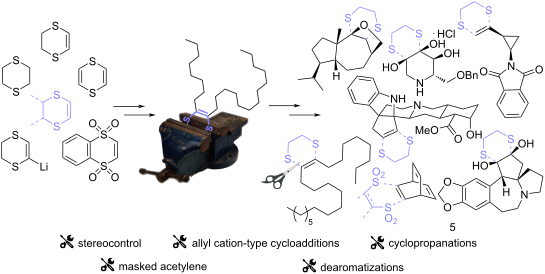
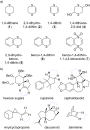
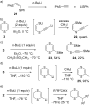
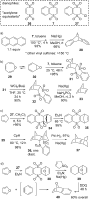
- Downstream chemistry and further applications: deprotection, cleavage or further functionalization of 1,4-dithianes In organic synthesis, the deprotection of 1,3-dithianes has a reputation of being a troublesome reaction. In the chemical literature, there are probably well over a hundred distinct procedures










Combining the best of both worlds: radical-based divergent total synthesis
Beilstein J. Org. Chem. 2023, 19, 1–26, doi:10.3762/bjoc.19.1
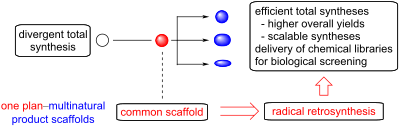
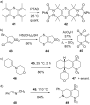
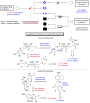
- –Giese coupling, followed by reductive cleavage of the lactone moiety with LiI. Enzymatic hydroxylation by the BM3 MERO1 variant worked equally well to provide the 3-hydroxylated product 46. Photochemical radical decarboxylation of the formed mercaptopyridine derivative and radical capture by iodoform
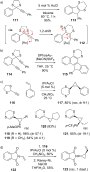
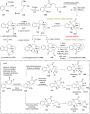
- cyclization (using Bu3SnH and AIBN) [46], led to the construction of the key bicyclo[3.2.1]octene carbocyclic core of jungermatrobrunin, which was further elaborated to 87 in up to 61% yield, after alkene cleavage by OsO4 and NaIO4. The described reductive radical cyclization can be scaled up to 2 g without
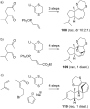
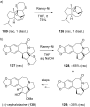
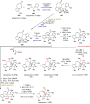
- rationale, 94 was diverted to produce 100 after basic deprotection of the nonisolated 95. The radical oxidation of the former in the presence of dioxygen and sunlight or a catalytic amount of Mn(OAc)3 led to the creation of the compounds 101 and 102. FGI, followed by the cleavage of the hydroperoxide bond








Synthetic study toward tridachiapyrone B
Beilstein J. Org. Chem. 2022, 18, 1741–1748, doi:10.3762/bjoc.18.183
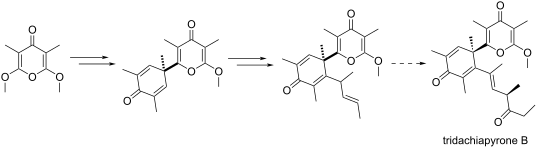
- was carried out through a two-step sequence including dihydroxylation (K2OsO4·H2O, 90% yield) of 8 and oxidative cleavage (NaIO4, 91% yield) of the diol intermediate. Note that both ozonolysis and the one-pot Lemieux–Johnson oxidative cleavage process of 8 led instead to methyl ketone 11 in a





