


Search results
Search for "aldehydes" in Full Text gives 760 result(s) in Beilstein Journal of Organic Chemistry. Showing first 200.
Experimental and theoretical studies on the synthesis of 1,4,5-trisubstituted pyrrolidine-2,3-diones
Beilstein J. Org. Chem. 2022, 18, 1140–1153, doi:10.3762/bjoc.18.118
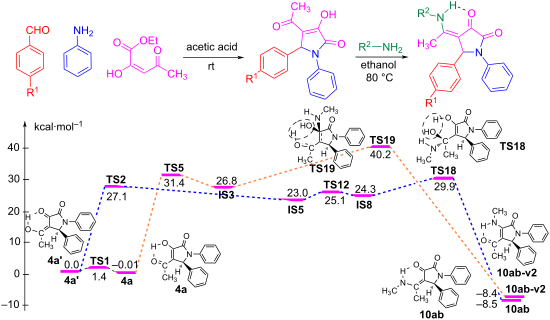
- to obtain structurally complicated and biologically active products containing substantial portions of all starting materials [27]. Recently, polysubstituted 3-hydroxy-1,5-dihydro-2H-pyrrol-2-ones have been synthesized via eco-friendly multicomponent reactions of aromatic aldehydes, amines, and
- ]. Acyl or aroyl groups can be introduced into the 4-position of 3-hydroxy-1,5-dihydro-2H-pyrrol-2-ones via three-component reactions of esters of acylpyruvic acid or of aroylpyruvic acid, respectively, with aromatic aldehydes, and amines. In addition, the resulting 2-pyrrolidinone derivatives also showed
- -acetyl-3-hydroxy-3-pyrroline-2-ones via multicomponent reactions of ethyl 2,4-dioxovalerate with aromatic aldehydes, and aniline in glacial acetic acid. These 2-pyrrolidinone derivatives were then reacted with aliphatic amines in ethanol to obtain a library of 1,4,5-trisubstituted pyrrolidine-2,3-dione


First example of organocatalysis by cathodic N-heterocyclic carbene generation and accumulation using a divided electrochemical flow cell
Beilstein J. Org. Chem. 2022, 18, 979–990, doi:10.3762/bjoc.18.98
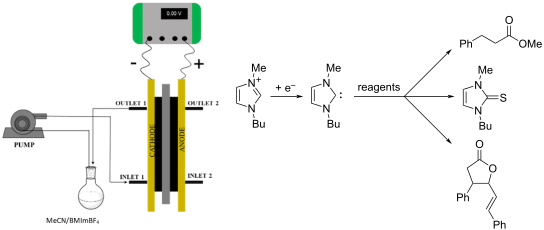
- conversion to the corresponding thione (Scheme 2) [12]. NHCs are used as organocatalysts in many reactions of aldehydes (mainly aromatic) [13][14]. In fact, the reaction of NHCs with aldehydes can lead to the formation of the “Breslow intermediate” [15], in which the reactive character of the carbonyl carbon
- electrochemistry, NHC instability (and anodic electroactivity) prevented its cathodic generation and subsequent use as catalyst or reagent. Instead, the NHC was generated by chemical deprotonation using a strong base (DBU) and then applied in anodic esterification [30][31][32], and amidation of aromatic aldehydes


Morita–Baylis–Hillman reaction of 3-formyl-9H-pyrido[3,4-b]indoles and fluorescence studies of the products
Beilstein J. Org. Chem. 2022, 18, 926–934, doi:10.3762/bjoc.18.92
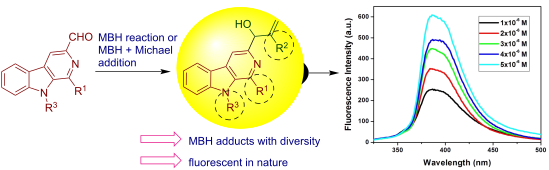
- ) condensation of ʟ-tryptophan (1) with different aldehydes (a–e) in dry DCM at room temperature yielded tetrahydro-β-carboline derivatives 2a–e, which were then oxidized with KMnO4 in anhydrous DMF for 45 minutes to yield β-carboline derivatives 3a–e. It was encouraging to observe that the P-S condensation with
- from the same aldehydes, a noticeable decrease in fluorescence intensity of product 8 (Morita–Baylis–Hilman + Michael adducts 8bA, 8eA and 8eB) was observed than in case of product 7 (Morita–Baylis–Hilman adducts 7bB, 7bC and 7eD) while their λemission was red-shifted in comparison to type 7 compounds


Synthetic strategies for the preparation of γ-phostams: 1,2-azaphospholidine 2-oxides and 1,2-azaphospholine 2-oxides
Beilstein J. Org. Chem. 2022, 18, 889–915, doi:10.3762/bjoc.18.90
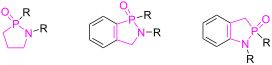
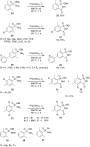
- ], the strategy is the dearomatizing anionic cyclization of diaryl-N-alkyl-N-benzylphosphinamides by treatment with sec-butyllithium followed by reactions with different electrophiles, such as water, alcohols, alkyl halides, aldehydes, etc. They first realized the dearomatizing anionic cyclization of
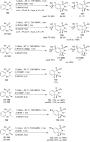
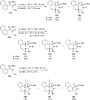
- as starting materials, realizing an unprecedented asymmetric induction in the synthesis of cyclohexadiene-fused γ-phosphinolactams 126–131, through the formation of configurationally stable lithium salts. When aldehydes 125 were applied as electrophiles, three new stereocenters were generated in the
- as methanol, phenolic DTBMP, benzyl bromide, aldehydes, and benzophenone. For both benzyl bromide and benzophenone, their alkylations occurred only at the γ-position of the phenyl group in phenylphosphonodiamides due to less bulkyness (Scheme 28) [54]. They finally extended their strategy to alkyl








Copper-catalyzed multicomponent reactions for the efficient synthesis of diverse spirotetrahydrocarbazoles
Beilstein J. Org. Chem. 2022, 18, 796–808, doi:10.3762/bjoc.18.80
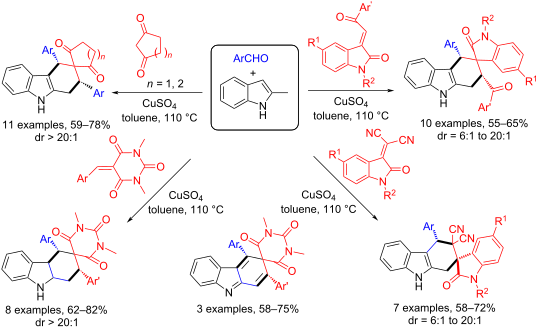
- Shao-Cong Zhan Ren-Jie Fang Jing Sun Chao-Guo Yan College of Chemistry & Chemical Engineering, Yangzhou University, Yangzhou 225002, China 10.3762/bjoc.18.80 Abstract In the presence of copper sulfate, three- or four-component reactions of 2-methylindole, aromatic aldehydes and various cyclic
- this respect, Lévy reported a copper-catalyzed three-component reaction of aromatic aldehydes, ethyl indole-2-acetate and N-alkylmaleimides for the efficient construction of polycyclic tetrahydrocarbazoles, in which indolo-2,3-quinodimethane intermediate was initially generated and sequentially
- chemistry. Recently, we have reported the efficient construction of a series of heterocyclic spiro compounds including tetrahydrospiro[carbazole-3,3’-indolines] by using the Levy three-component reaction of indole-2-acetate, aromatic aldehydes and various cyclic dienophiles such as 3-phenacylideneoxindoles



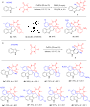


Synthesis of odorants in flow and their applications in perfumery
Beilstein J. Org. Chem. 2022, 18, 754–768, doi:10.3762/bjoc.18.76
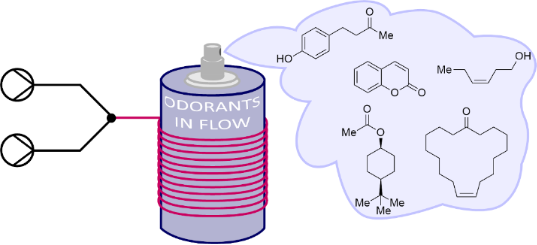
- ” and only “slightly fruity” [9]. Kappe and co-workers disclosed an access to both odorants in a two-step synthesis (Scheme 1) [24]. In the first step, 4-aryl-3-buten-2-ones 3 and 4 are prepared via aldol condensation of the corresponding aldehydes 1 and 2 and acetone in 78–90% yield with a productivity


Inductive heating and flow chemistry – a perfect synergy of emerging enabling technologies
Beilstein J. Org. Chem. 2022, 18, 688–706, doi:10.3762/bjoc.18.70
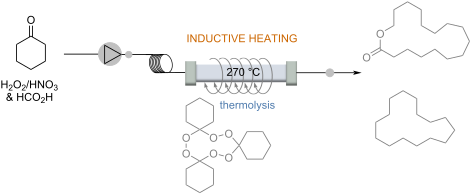
- inductive heating technology has also been used in multistep processes targeting drugs or important molecules in the fragrance industry. The first example deals with a metal-free carbon–carbon-bond formation process between tosylhydrazones generated from the corresponding aldehydes 74 and boronic acids 76
- fixed-bed materials serving as catalysts: A. with copper metal, B. with Au-doped MagSilicaTM, and C. with Pd-doped MagSilicaTM. Two step flow protocol for the preparation of 1,1'-diarylalkanes 77 from ketones and aldehydes 74, respectively, and boronic acids 76. O-Alkylation, the last step in the


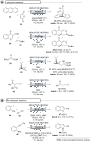


Rapid gas–liquid reaction in flow. Continuous synthesis and production of cyclohexene oxide
Beilstein J. Org. Chem. 2022, 18, 660–668, doi:10.3762/bjoc.18.67
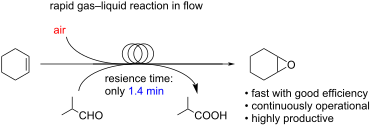
- oxidation, a combination of molecular oxygen and aldehydes as a sacrificial agent has been widely studied [9]. However, in general, such a reaction in batch is slow due to the difficulties of performing a gas–liquid reaction in a batch reactor [10]. In addition, even valuable catalysts could not accelerate


DDQ in mechanochemical C–N coupling reactions
Beilstein J. Org. Chem. 2022, 18, 639–646, doi:10.3762/bjoc.18.64
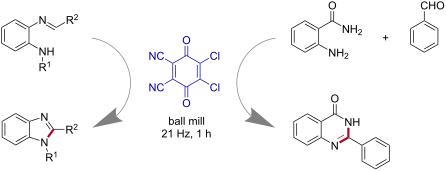
- the presence of DDQ, the intramolecular C(sp2)–H amidation of N-(2-(arylideneamino)phenyl)-p-toluenesulfonamides leads to 1,2-disubstituted benzimidazoles and the one-pot coupling of 2-aminobenzamides with aryl/alkyl aldehydes resulted in substituted quinazolin-4(3H)-one derivatives in high yields
- toward the synthesis of 1,2-disubstituted benzimidazoles [39] under mechanochemical (ball milling) conditions (Figure 1a). In addition, the one-pot coupling of 2-aminobenzamides with aryl/alkyl aldehydes in the presence of DDQ resulted in substituted quinazolin-4(3H)-one [40] derivatives (Figure 1b
- ][50], antimalarial [51], anti-inflammatory [52], etc. We therefore investigated the scope of the one-pot coupling of 2-aminobenzamides with aryl/alkyl aldehydes in the presence of DDQ under the optimized mechanochemical conditions and the results are shown in Figure 3. Unsubstituted anthranilamides


Heteroleptic metallosupramolecular aggregates/complexation for supramolecular catalysis
Beilstein J. Org. Chem. 2022, 18, 597–630, doi:10.3762/bjoc.18.62
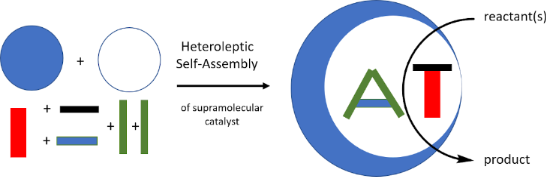
- molecules through π–π stacking with the hydrophobic aromatic wall of the host. Finally, the boat was investigated as a catalyst for the Knoevenagel condensation reaction (Figure 2) of a series of aromatic aldehydes with 1,3-dimethylbarbituric acid and Meldrum’s acid in aqueous media. One of the primary


Unusual highly diastereoselective Rh(II)-catalyzed dimerization of 3-diazo-2-arylidenesuccinimides provides access to a new dibenzazulene scaffold
Beilstein J. Org. Chem. 2022, 18, 533–538, doi:10.3762/bjoc.18.55
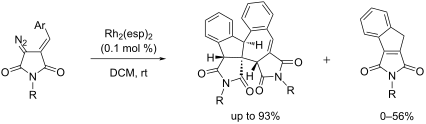
- other hand, their specific geometry enables intriguing transformations with simultaneous involvement of the diazo function and the benzylidene fragment. DAS were first described in 2020 and were involved in a [2 + 1] cycloaddition to aldehydes to give oxiranes [1]. Later on, we developed a convenient
- compounds (aldehydes and ketones) enable to obtain the products of formal [5 + 2] cycloaddition reactions ‒ 2-benzazepines [8] and 2-benzoxepines [9][10]. When studying the Rh(II)-catalyzed reaction of DAS with ketones [10], we attempted to involve poorly reactive fluorenone in the reaction. To our surprise


The asymmetric Henry reaction as synthetic tool for the preparation of the drugs linezolid and rivaroxaban
Beilstein J. Org. Chem. 2022, 18, 438–445, doi:10.3762/bjoc.18.46
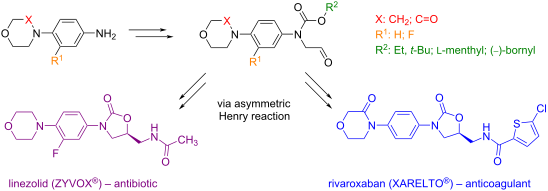
- of these drugs was studied in detail. Highly enantioselective catalysts were tested in the key step of the synthetic procedure, i.e., the asymmetric Henry reaction, under different reaction conditions, using several starting aldehydes. The corresponding nitroaldols as chiral intermediates in the
- chiral alkyl groups we considered tert-butyl, ʟ-menthyl, and (−)-bornyl in this study. Results and Discussion The aldehydes 15–20 were prepared by analogous methods, which were described previously [12][13]. The starting ʟ-menthyl (7) and (−)-bornyl chloroformate (8) were obtained according to the
- utilized, which consisted of alkylation of aniline 3 by methyl bromoacetate, followed by introduction of the Boc group into intermediate Int-17a, and final reduction of Int-17b with DIBAL-H (Scheme 1). For the study of the asymmetric Henry reaction aldehydes 15–20, nitromethane, and highly enantioselective


Menadione: a platform and a target to valuable compounds synthesis
Beilstein J. Org. Chem. 2022, 18, 381–419, doi:10.3762/bjoc.18.43
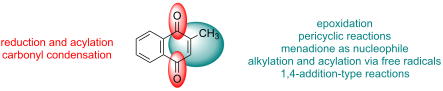
- aldehydes and ketones [128]. In this context, Fry and co-workers explored the electrophilic substitution reaction to synthesize 2-methyl-3-bromonaphthalene-1,4-dione (82), an important intermediate used for the synthesis of naphthoquinones functionalized with organochalcogens [127]. Compound 82 was obtained


Site-selective reactions mediated by molecular containers
Beilstein J. Org. Chem. 2022, 18, 309–324, doi:10.3762/bjoc.18.35
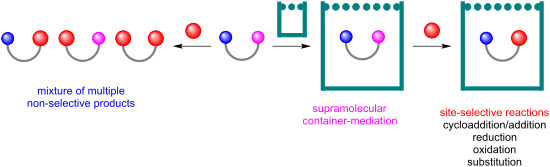
- containers. The emphasis is on those reactions that give different product distributions on the potential reactive sites inside the containers than they do outside, free in solution. Specific cases include site-selective cycloaddition and addition of arenes, reduction of epoxides, α,β-unsaturated aldehydes


Regioselectivity of the SEAr-based cyclizations and SEAr-terminated annulations of 3,5-unsubstituted, 4-substituted indoles
Beilstein J. Org. Chem. 2022, 18, 293–302, doi:10.3762/bjoc.18.33
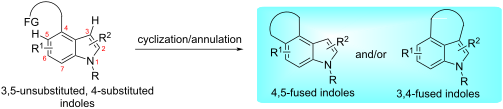
- reaction of 2-(1H-indol-4-yl)ethanamines 14 with various aldehydes/ketones 15, delivering a variety of azepino[3,4,5-cd]indoles 16 in a straightforward fashion in moderate to high yields (Scheme 5B) [15]. The reaction tolerated various alkyl and aryl aldehydes and dialkyl ketones, irrespective of their
- nine-membered rings 27 via triflic acid (TfOH)-catalyzed reaction of indole-derived phenylenediamine 25 with aldehydes 26 (Scheme 9) [19]. Mechanistically, the initially formed iminium ion I undergoes isomerization to iminium ion II through a 1,3-hydride shift process. Iminium ion III could then be


New efficient synthesis of polysubstituted 3,4-dihydroquinazolines and 4H-3,1-benzothiazines through a Passerini/Staudinger/aza-Wittig/addition/nucleophilic substitution sequence
Beilstein J. Org. Chem. 2022, 18, 286–292, doi:10.3762/bjoc.18.32
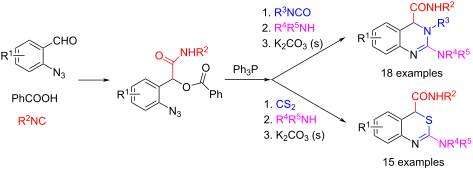
- from aldehydes, a carboxylic acid, and a isonitrile as the three components [23]. The sequences of Passerini reactions, followed by post-condensation reactions, constitute useful synthetic methods in the preparation of structurally diverse heterocyclic compounds [24][25][26][27][28][29]. The aza-Wittig




New advances in asymmetric organocatalysis
Beilstein J. Org. Chem. 2022, 18, 240–242, doi:10.3762/bjoc.18.28
- type of Brønsted acid catalyst that expanded the range of available acidities as well as molecular arrangements in acid-catalyzed reactions. Veselý and co-workers demonstrated that these catalysts are effective in the enantioselective aminalization of aldehydes with anthranilamides [24]. To explore new
- possibilities in combination of covalent and noncovalent activation, our group designed and synthesized N-sulfinylpyrrolidine-containing ureas and thioureas and applied them in Michael additions of aldehydes to heterocycle containing nitroalkenes [25]. Dubey and Chowdhury showed that 1,4-conjugate additions of
Flow synthesis of oxadiazoles coupled with sequential in-line extraction and chromatography
Beilstein J. Org. Chem. 2022, 18, 232–239, doi:10.3762/bjoc.18.27
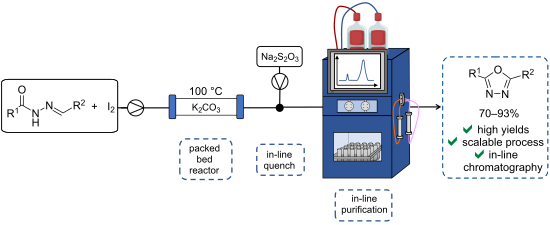
- aldehydes (Scheme 2) and subjected to the optimised flow conditions (Scheme 3). This resulted in full conversion of the substrate in all cases. Both thiophene and pyridine-containing substrates were well tolerated, with slightly higher yields observed in the case of the more electron-deficient CF3


Organocatalytic asymmetric nitroso aldol reaction of α-substituted malonamates
Beilstein J. Org. Chem. 2022, 18, 217–224, doi:10.3762/bjoc.18.25

- metal-catalyzed reactions [31][32][33][34][35][36]. The most successful among them are the ʟ-proline-catalyzed reactions of enolizable aldehydes with nitrosoarenes [37][38][39][40][41][42][43]. Besides ʟ-proline and its derivatives, various secondary amines derived from BINOL and cinchona alkaloids were




Asymmetric organocatalytic Michael addition of cyclopentane-1,2-dione to alkylidene oxindole
Beilstein J. Org. Chem. 2022, 18, 167–173, doi:10.3762/bjoc.18.18
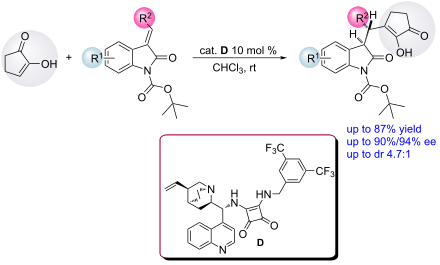
- molecular complexity. There are many examples of the organocatalytic synthesis of fused cycles starting from the cyclohexane-1,3-dione. For example, Rueping et al. demonstrated that the cyclohexane-1,3-dione undergoes a cascade reaction with α,β-unsaturated aldehydes [4] and they later employed the method
- substituted cyclopentane diones were uninvestigated until 2014 when we showed that CPD undergoes a Michael addition with nitrostyrenes [22]. Subsequently, different cascade reactions for CPD have been developed: with highly reactive (E)-2-oxobut-3-enoates [23], α,β-unsaturated aldehydes [24] and alkylidene


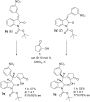
Green synthesis of C5–C6-unsubstituted 1,4-DHP scaffolds using an efficient Ni–chitosan nanocatalyst under ultrasonic conditions
Beilstein J. Org. Chem. 2022, 18, 133–142, doi:10.3762/bjoc.18.14
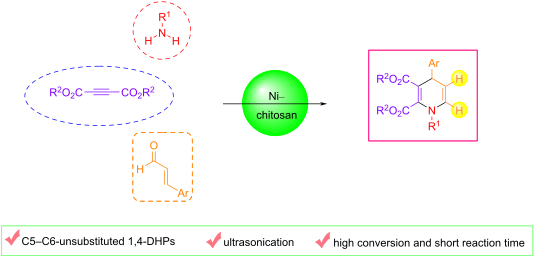
- same time, namely that of an aldehyde and that of one multiple bond. Generally, aldehydes and multiple bonds are very reactive in the presence of primary amines. However, since we used cinnamaldehyde derivatives 3, which are conjugated systems of a double bond and an aldehyde, the reactivity was rather
- low compared to other aldehydes. Thus, herein we had to use a metal catalyst to increase the reactivity of the carbonyl moiety. Moreover, the catalyst was thoroughly characterized by various methods and is easily recyclable. Results and Discussion Characterization of the catalyst An FTIR analysis of




Chemoselective N-acylation of indoles using thioesters as acyl source
Beilstein J. Org. Chem. 2022, 18, 89–94, doi:10.3762/bjoc.18.9
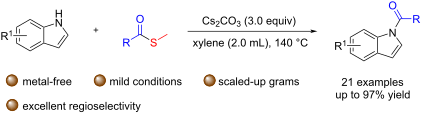
- of the N(sp2)–H bond by using a catalytic amount of DBU for the preparation of indoleamides [14] (Scheme 1, A2). Subsequently, Sundén reported an efficient chemoselective method for the synthesis of indoleamide by oxidative organocatalytic reaction of indole derivatives and conjugated aldehydes under


Efficient synthesis of ethyl 2-(oxazolin-2-yl)alkanoates via ethoxycarbonylketene-induced electrophilic ring expansion of aziridines
Beilstein J. Org. Chem. 2022, 18, 70–76, doi:10.3762/bjoc.18.6
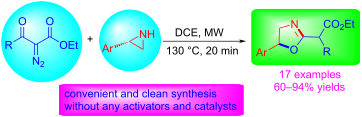
- alcohols [13][14][15] (Scheme 1a); (3) oxidative condensation of aldehydes with vicinal amino alcohols [16] (Scheme 1b); (4) cyclization of N-allylamides in the presence of electrophilic reagents or radical initiators or catalysts [17] (Scheme 1c); (5) direct synthesis from alkenes and amides or nitriles




1,2-Naphthoquinone-4-sulfonic acid salts in organic synthesis
Beilstein J. Org. Chem. 2022, 18, 53–69, doi:10.3762/bjoc.18.5
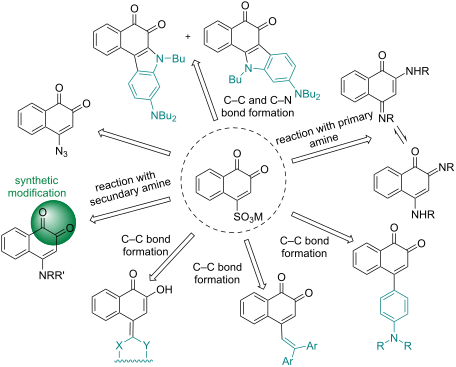
- intracellular ROS and includes inhibition of tubulin polymerization (Scheme 9). Semicarbazides and thiosemicarbazides are substances used to identify aldehydes and ketones, are very versatile in the synthesis of heterocycles, and have several applications in the preparation of important drugs. Nucleophilic


Recent advances and perspectives in ruthenium-catalyzed cyanation reactions
Beilstein J. Org. Chem. 2022, 18, 37–52, doi:10.3762/bjoc.18.4
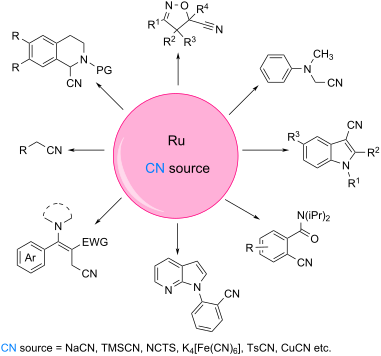
- , carboxylic acids, tetrazoles, aldehydes, amidines, and amides [7][8][9][10][11]. This has been suitably transformed into structurally diverse and complex molecules. In 1927, Pongratz reported a method towards cyanation reactions [12]. From then, onwards, cyanation gained prime focus and achieved much
- trimethylsilyl cyanide (TMSCN) in acetonitrile solvent under CFL light irradiation. 4 Miscellaneous An efficient methodology for the synthesis of α-aminonitriles via the one-pot coupling of aldehydes, amines and trimethylsilyl cyanide was reported [46]. This reaction was catalyzed by RuCl3 and used acetonitrile
- as solvent (Scheme 23). Both aromatic and aliphatic aldehydes performed well and gave the desired products in good yields. At the same time ketones were found less active in this strategy. The operational simplicity and high yield of products are the prominent characteristics of this reaction. In





