


Search results
Search for "fluorine" in Full Text gives 446 result(s) in Beilstein Journal of Organic Chemistry. Showing first 200.
Controlled decomposition of SF6 by electrochemical reduction
Beilstein J. Org. Chem. 2020, 16, 2948–2953, doi:10.3762/bjoc.16.244
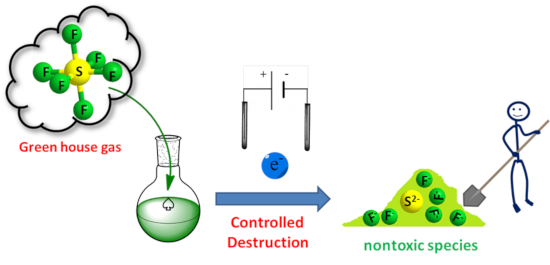
- hexafluoride; Introduction Sulfur hexafluoride (SF6) is a fluorinated gas firstly identified in 1900 by Henry Moissan [1]. The strategy applied at industrial level to obtain SF6 uses sulfur in the presence of molecular fluorine. Sulfur hexafluoride possesses the particularity of being an inert gas both
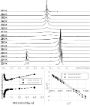
- potential of −2.3 V/SRE; (left). 19F NMR expansion of the final mixture. Funding S.B. thanks the French Ministry of Research for a Ph.D. grant. The Rhodia-Solvay company is gratefully acknowledged for the gift of sulfur hexafluoride. The French Fluorine Network (GIS Fluor) is acknowledged for financial


Fluorine effect in nucleophilic fluorination at C4 of 1,6-anhydro-2,3-dideoxy-2,3-difluoro-β-D-hexopyranose
Beilstein J. Org. Chem. 2020, 16, 2880–2887, doi:10.3762/bjoc.16.237
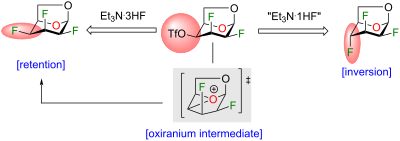
- approach using Et3N·3HF as an alternative to the DAST reagent. We controlled the stereochemistry of the nucleophilic fluorination at C4 of 1,6-anhydro-2,3-dideoxy-2,3-difluoro-4-O-triflate-β-ᴅ-talopyranose using Et3N·3HF or in situ generated Et3N·1HF. The influence of the fluorine atom at C2 on reactivity
- at C4 could contribute to a new fluorine effect in nucleophilic substitution. Finally, with the continuous objective of synthesizing novel multi-vicinal fluorosugars, we prepared one difluorinated and one trifluorinated alditol analogue. Keywords: deoxyfluorination; Et3N·3HF; fluorine effect
- groups by fluorine atoms arise from their similarities in term of polarity and isosteric relationship [3][8]. For a long time, fluorinated carbohydrates have been used as a method to stabilize glycosidic bonds [9][10][11] or for epitope mapping [12][13]. More recently, heavily fluorinated carbohydrates



Synthesis of purines and adenines containing the hexafluoroisopropyl group
Beilstein J. Org. Chem. 2020, 16, 2739–2748, doi:10.3762/bjoc.16.224
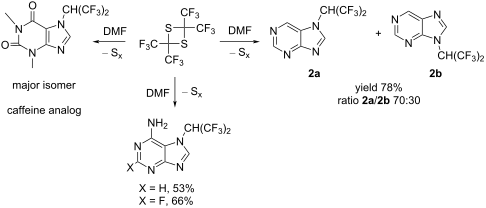
- fluorine and polyfluoroalkyl substituents into organic molecules remains a challenging problem in the synthesis of fluorinated biologically active compounds, especially larger moieties, such as C2F5, CF(CF3)2, and CH(CF3)2. With respect to the hexafluoroisopropyl group, the methods are limited to a
- investigational therapeutic agents, including antitumorals and antivirals […]” [8]. Interestingly, most fluorine-containing benzimidazoles contain the fluorinated substituent either on the aromatic ring or on a side chain connected to the aromatic ring; examples of benzimidazoles containing a fluoroalkyl group
- mentioned above, the broadening of the resonances corresponding to the CF3 group as observed in the 19F NMR spectra of derivatives 3a, 4a, and 4b at ambient temperature is likely to be related to a restricted rotation around the C–N bond as a result of the steric interaction between the fluorine atoms of



Asymmetric Mannich reactions of (S)-N-tert-butylsulfinyl-3,3,3-trifluoroacetaldimines with yne nucleophiles
Beilstein J. Org. Chem. 2020, 16, 2671–2678, doi:10.3762/bjoc.16.217
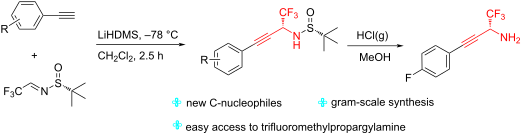
- -nucleophile; CF3-aldimine; fluorinated propargylamine; Introduction In recent years, substitution of hydrogen by fluorine atoms or fluorine-containing groups usually provides unexpected biological and physicochemical properties, which thus has become an established approach for the development of




Vicinal difluorination as a C=C surrogate: an analog of piperine with enhanced solubility, photostability, and acetylcholinesterase inhibitory activity
Beilstein J. Org. Chem. 2020, 16, 2663–2670, doi:10.3762/bjoc.16.216
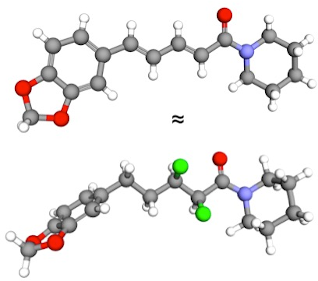
- which the C–F bonds align gauche (I and II, Figure 1) [22]. Separately, the presence of fluorine on the α-carbon of a tertiary amide is known to restrict the Cα–C(O) bond to a small set of low-energy rotamers (III–V, Figure 1) [23]. Intriguingly, studies of simple molecules containing either F–C–C–F or
- feature of structures 2a,b (Figure 2) is that both, the α-fluorine and the β-fluorine atoms of each structure make close contacts with the hydrogen atoms on the piperidine ring (2.08–2.34 Å). This manifests in the observation of a through-space coupling (J = 1.9 Hz) between the α-fluorine and a piperidine
- hydrogen in the experimental NMR spectrum of 2 (i.e., spins 6/7, Figure 2). The attractive F···H interactions might explain why the amide bond is twisted by 11–20° from planarity in 2a,b. In structure 2c, only the α-fluorine makes close contacts with hydrogens on the piperidine ring, and the amide is


Activation of pentafluoropropane isomers at a nanoscopic aluminum chlorofluoride: hydrodefluorination versus dehydrofluorination
Beilstein J. Org. Chem. 2020, 16, 2623–2635, doi:10.3762/bjoc.16.213
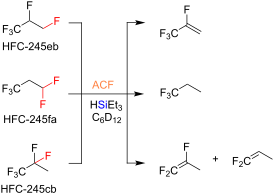
- reaction mixture [33]. It was demonstrated that starting from 2-chloro-3,3,3-trifluoropropene (HFO-1233xf) in the presence of fluorinated Cr2O3 as a catalyst and HF, 2,3,3,3-tetrafluoropropene (HFO-1234yf, 1) is generated by the replacement of the chlorine substituent with a fluorine atom, and is further
- has been added for the activation of C–F bonds at ACF [16][39][47]. Several patents cover the transformation of 10a by dehydrofluorination at chromia-based catalysts, but the reaction temperatures were above 200 °C [17][51][52]. Mechanistically, an abstraction of a fluorine from the CH2F group by the
- bond activation at the primary carbon–fluorine bond in 10a, generating FSiEt3, the corresponding carbenium-like species, and a surface-bound hydride. At this stage, either the hydrodefluorination product 13 can be generated, or dehydrofluorination occurs to furnish the olefin 1 and H2, both in the


Synthesis of novel fluorinated building blocks via halofluorination and related reactions
Beilstein J. Org. Chem. 2020, 16, 2562–2575, doi:10.3762/bjoc.16.208
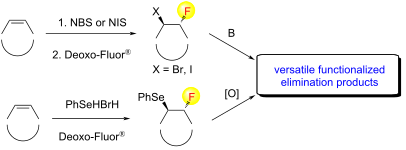
- Deoxo-Fluor®. The fluorine-containing products thus obtained were subjected to elimination reactions, yielding various fluorine-containing small-molecular entities. Keywords: fluorine; fluoroselenation; functionalization; halofluorination; stereocontrol; Introduction The effects of fluorine on
- discovering new reagents and conditions for the introduction of fluorine and fluorine-containing groups into a certain organic molecule [11][12][13][14][15][16][17][18], several known methods have been studied and improved over the past decade. One such long-known method is halofluorination. During this
- process, an alkene reacts with a halogen cation to form a halonium ion, which immediately undergoes ring opening by fluoride to form a vicinal halofluoride (see Scheme 1). The overall result is an anti-addition of the XF moiety (X = Cl, Br, I) across the double bond. Since many nucleophilic fluorine


Conformational preferences of fluorine-containing agrochemicals and their implications for lipophilicity prediction
Beilstein J. Org. Chem. 2020, 16, 2469–2476, doi:10.3762/bjoc.16.200
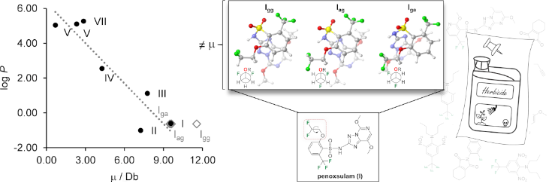
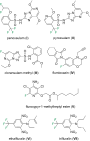
- soil sorption and bioconcentration of organic compounds. Since the C–F bond is the most polar in organic chemistry, the orientation of fluorine substituents originating from the rotation around C–C(F) bonds should affect the polarity and, consequently, the physicochemical and biological properties of
- fluorine-containing agrochemicals. Accordingly, this study aims to determine the most likely conformers of some fluorine-containing agrochemicals and to correlate their molecular dipole moments with the respective n-octanol/water partition coefficients (log P), in order to investigate the dependence of the
- helps in explaining the expressive amount of fluorine-containing agrochemical candidates (around 30%) as well as pharmaceuticals (around 20%) [5][6]. In this sense, the chemistry of fluorine-containing compounds has been extensively investigated in order to better understand the effects of fluorination




Catalytic trifluoromethylation of iodoarenes by use of 2-trifluoromethylated benzimidazoline as trifluoromethylating reagent
Beilstein J. Org. Chem. 2020, 16, 2442–2447, doi:10.3762/bjoc.16.198
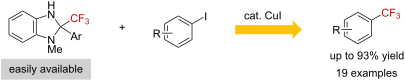
- ; catalysis; copper; fluorine chemistry; trifluoromethylation; Introduction The introduction of a trifluoromethyl group is one of the most attractive reactions in drug discovery [1][2]. In the past decade, trifluoromethylation reactions of aryl halides in the presence of transition-metal complexes were

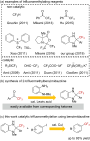


Chan–Evans–Lam N1-(het)arylation and N1-alkеnylation of 4-fluoroalkylpyrimidin-2(1H)-ones
Beilstein J. Org. Chem. 2020, 16, 2304–2313, doi:10.3762/bjoc.16.191

- conditions. There are a few thorough studies on this reaction with pyrimidine and purine nucleoside bases and their derivatives which are most closely related to fluorine-containing substrates 1 [40][41][42]. However, considering the high sensitivity and capricious nature of CEL reaction, we wish to report
- %, respectively. In contrast, the fluorine ortho-substituent drastically inhibited the reaction, which is evidently attributed more to electronic than to steric effects. The formation of alternative O-arylated products was ruled out by conducting a NOE NMR experiment with compound 3b as an example. Saturation of


Synthetic approaches to bowl-shaped π-conjugated sumanene and its congeners
Beilstein J. Org. Chem. 2020, 16, 2212–2259, doi:10.3762/bjoc.16.186

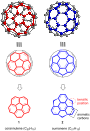
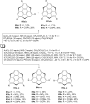
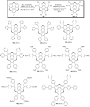
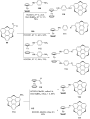
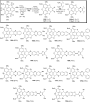
- glycol to afford monocyclic acetal 53 with less hindered keto-group in respectable yield. Since the introduction of powerful electron-withdrawing groups such as fluorine atom(s) in any material changes its behavior significantly, in this regard, Sakurai’s group installed six fluorine atoms at the
- precursors for the installation of fluorine atoms using appropriate fluorinating agents such as (difluoroiodo)benzene derivatives or elemental fluorine. In the second step, when they used para-iodotoluene difluoride the reaction conversion was very low, therefore, when using Olah’s reagent (pyridine











Regioselective cobalt(II)-catalyzed [2 + 3] cycloaddition reaction of fluoroalkylated alkynes with 2-formylphenylboronic acids: easy access to 2-fluoroalkylated indenols
Beilstein J. Org. Chem. 2020, 16, 2193–2200, doi:10.3762/bjoc.16.184
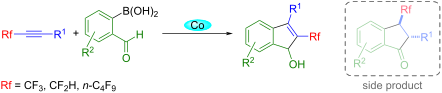
- -fluoroalkylated indenols, together with a very small amount of 3-fluoroalkylated indanones as side products. Keywords: [2 + 3] cycloaddition; cobalt catalyst; fluorine-containing; indenols; regioselective; Introduction 2,3-Disubstituted indenol derivatives are important compounds possessing high potential due
- to the insecticidal, myorelaxation, and antiproliferative properties (Figure 1) [1][2][3][4][5][6][7][8][9][10][11][12]. Thus, enormous attention has been paid to 2- or 3-fluoroalkylated indenol derivatives in the field of medicinal and agrochemical drug design since a fluorine atom can very often
- bring about an increasing effect on the pharmacological activity owing to the unique nature of the fluorine atom(s) [13][14][15][16][17][18]. However, reports on a synthetic protocol for 2- or 3-fluoroalkylated indenols are very limited [19][20][21][22]. Recently, Yamazaki et al. have reported the


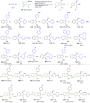


Photosensitized direct C–H fluorination and trifluoromethylation in organic synthesis
Beilstein J. Org. Chem. 2020, 16, 2151–2192, doi:10.3762/bjoc.16.183
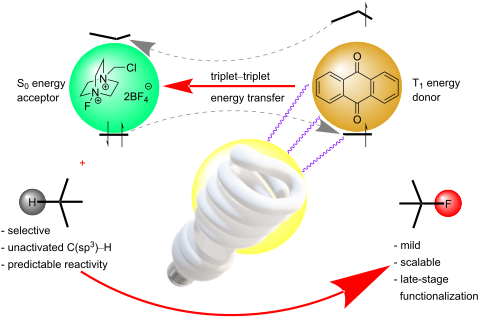
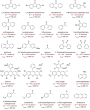
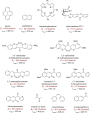
- reactions. Keywords: C–H activation; energy transfer; fluorination; photocatalysis; photosensitization; visible light; Review 1 Introduction 1.1 Importance of direct C–H fluorination/trifluoromethylation and photosensitization in organic synthesis 1.1.1 Importance of fluorine atoms in organic molecules
- : Here, we briefly summarize the importance of fluorine atoms in organic molecules in the context of medicinal chemistry, materials chemistry, analytical chemistry and in the mechanistic studies of synthetic reactions. The importance of fluorination reactions in organic synthesis is reviewed exhaustively
- elsewhere, and the readers are referred to the relevant reviews [1][2][3][4][5]. Over the last two decades, introducing fluorine atoms into molecules has become a crucial aspect in contemporary synthesis of pharmaceuticals. Extraordinarily, about half of the so-called “blockbuster drugs” contain fluorine




Lipophilicity trends upon fluorination of isopropyl, cyclopropyl and 3-oxetanyl groups
Beilstein J. Org. Chem. 2020, 16, 2141–2150, doi:10.3762/bjoc.16.182
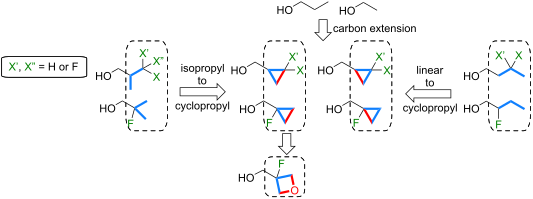
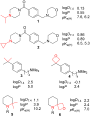
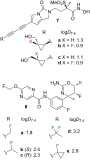
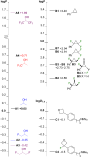
- polarizability of the oxygen lone pairs due to the fluorine electronegativity. However, while D2 is a β-fluorohydrin, its fluorine is substituted at a tertiary position, with the C–F bond able to polarize the six C–H bonds of the methyl groups, which has a lipophilicity lowering effect. The electron-withdrawing
- effect of the fluorine is evident from the 1H NMR chemical shift values of the CH3 groups in D1 (0.91 ppm) [29], D3 (0.98 ppm), and D2 (1.37 ppm) [30]. Compared to the monofluorinated D3, difluorination (D4) and trifluorination (D5) at the same carbon atom increases lipophilicity. There is a notable
- 6, with the bold red bond emphasizing the structural change (cf D1 vs E1). For completion, the change observed from the corresponding linear 1-butanol equivalents with equidistant alcohol and fluorine groups, by connecting C2 and C4 as shown (cf G1 to E1), is also considered (see Supporting



Synthesis of 6,13-difluoropentacene
Beilstein J. Org. Chem. 2020, 16, 2136–2140, doi:10.3762/bjoc.16.181
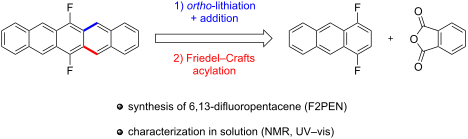
- two fluorine substituents was investigated. The retrosynthetic analysis for this strategy is shown in Scheme 1. The formation of the C5,5a-bond colored in red could be accomplished by an intramolecular Friedel–Crafts type acylation with the acylium-cation intermediate 6. The corresponding carboxylic
- phthalic anhydride in THF precooled to –100 °C [16]. Using these conditions, the carboxylic acid 12 was isolated in 82% yield. The subsequent Friedel–Crafts acylation proofed to be challenging. Using reagents like PCl5 resulted in a quantitative substitution of the fluorine substituents in the
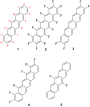
- . Comparison with the values of PEN (ΔE = 2.13 eV) [9] and PFP (ΔE = 1.99 eV) [9] shows that the electronic structure of F2PEN 5 lies in between these two. While fluorine substituents in 2,3,9,10-positions (F4PEN 3) result in a larger HOMO–LUMO gap compared to PEN [7][8], substitution in the 6,13-positions



Reactions of 3-aryl-1-(trifluoromethyl)prop-2-yn-1-iminium salts with 1,3-dienes and styrenes
Beilstein J. Org. Chem. 2020, 16, 2064–2072, doi:10.3762/bjoc.16.173
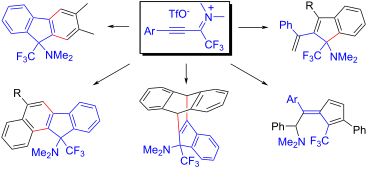
- reaction of propyn-1-iminium salt 1a with styrene in acetonitrile was considered first and was monitored by 19F NMR spectroscopy. Whereas no reaction appeared to occur at room temperature, a slow transformation into two fluorine-containing products was observed at 70 °C, which after neutralization and work
- signals. Assuming that some of the signals represented products that would easily undergo further thermal reactions, the solution was additionally heated at 70 °C for 40 hours. The resulting reaction mixture still contained several products, of which only the major fluorine-containing component (δF


Controlling the stereochemistry in 2-oxo-aldehyde-derived Ugi adducts through the cinchona alkaloid-promoted electrophilic fluorination
Beilstein J. Org. Chem. 2020, 16, 1963–1973, doi:10.3762/bjoc.16.163
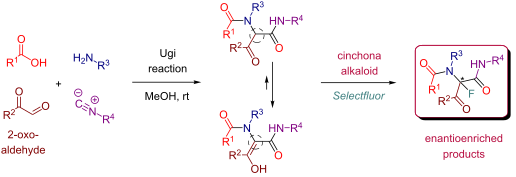
- was successfully utilized for the synthesis of several bioactive molecules [79][80][81]. Herein we present its adaptation for the enantioselective fluorination of 2-oxo-aldehyde-derived Ugi adducts 8 leading to the installment of a fluorine-bound quaternary stereocenter at the peptidyl position. It
- should be stressed that the exploration of methods for the enantioselective fluorination continues to be an important topic considering the ever-growing role of fluorine derivatives in drug design and development [82][83]. An alternative strategy to prepare related quaternary carbon-containing adducts
- bearing fluorine and nitrogen atoms involves the asymmetric addition of α-fluoro-β-ketoesters or α-fluoro-α-nitro esters to appropriate electrophiles [84][85][86][87][88][89]. Results and Discussion Initially, we prepared a series of Ugi adducts 8 by varying acid, 2-oxo-aldehyde, amine, and isocyanide


Selective preparation of tetrasubstituted fluoroalkenes by fluorine-directed oxetane ring-opening reactions
Beilstein J. Org. Chem. 2020, 16, 1936–1946, doi:10.3762/bjoc.16.160
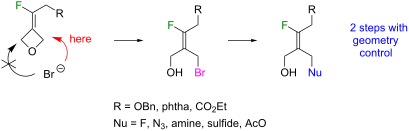
- reaction of fluoroalkylidene-oxetanes was directed by the presence of the fluorine atom, enabling a two-step access to tetrasubstituted fluoroalkenes with excellent geometry control. Despite its small van der Waals radii electronic, rather than steric influences of the fluorine atom governed the ring
- -opening reaction with bromide ions, even in the presence of bulky substituents. Keywords: acyclonucleotide; fluorine; monofluoroalkene; oxetane; selective ring-opening reaction; tetrasubstituted alkene; Introduction The introduction of fluorine atoms into organic compounds is known to modify their
- antiviral agents, respectively (Figure 1) [5][6]. The field of acyclonucleotides (ACN) has been explored less, however, the introduction of fluorine atoms showed remarkable effects. The most representative examples are phosphate analogues such as the nucleoside phosphorylase inhibitor III and acyclic


On the hydrolysis of diethyl 2-(perfluorophenyl)malonate
Beilstein J. Org. Chem. 2020, 16, 1863–1868, doi:10.3762/bjoc.16.153
- ., pharmacologically active substances [1][2][3][4][5], in asymmetric synthesis and catalysis [6][7][8], as precursors of heterocyclic compounds [9][10][11], as ligands in coordination chemistry [12][13][14][15][16] and for other applications [17][18]. Incorporation of fluorine atoms into an organic molecule is known
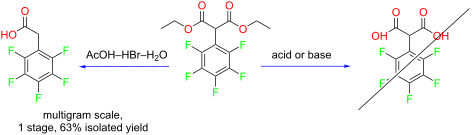
- -fluorophenyl)-2-methylmalonate (9) [32], diethyl 2-(3-fluorophenyl)-2-methylmalonate (10) [33], and diethyl 2-(4-fluorophenyl)malonate (11) [6][32] (Figure 2) with minor variations in the alkali concentration and temperature. No nucleophilic substitution of activated fluorine atoms or other side reactions were
- with the formation of acid 12. The nature of these byproducts was not analyzed. Probably, they are formed by nucleophilic substitution of fluorine atoms in the perfluorophenyl moiety. Acid 12 is fairly soluble in water and the separation of reaction products is cumbersome (see Supporting Information


Polarity effects in 4-fluoro- and 4-(trifluoromethyl)prolines
Beilstein J. Org. Chem. 2020, 16, 1837–1852, doi:10.3762/bjoc.16.151
- Vladimir Kubyshkin University of Manitoba, Dysart Rd. 144, Winnipeg, R3T 2N2, Canada 10.3762/bjoc.16.151 Abstract Fluorine-containing analogues of proline are valuable tools in engineering and NMR spectroscopic studies of peptides and proteins. Their use relies on the fundamental understanding of
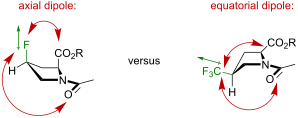
- isomerism were examined for diastereomeric 4-fluoroprolines, 4-(trifluoromethyl)prolines, and 1,1-difluoro-5-azaspiro[2.4]heptane-6-carboxylates. The preferred conformation on the proline ring originated from a preferential axial positioning for a single fluorine atom, and an equatorial positioning for a
- C4-exo conformation of the pyrrolidine ring. Keywords: amino acids; cis–trans isomerism; fluorine; polarity; proline; Introduction Polarity is among the key features essential for understanding the behavior of organic molecules of biological origin. In particular, there is a set of polarity-related


Pauson–Khand reaction of fluorinated compounds
Beilstein J. Org. Chem. 2020, 16, 1662–1682, doi:10.3762/bjoc.16.138
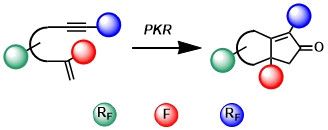
- transformations to yield more complex biologically active molecules. Despite the increasing availability of fluorinated building blocks and methodologies to incorporate fluorine in compounds with biological interest, there have been few significant advances focused on the fluoro-Pauson–Khand reaction, both in the
- the PKR of enynes containing a fluoride moiety. Keywords: alkene; alkyne; enyne; fluorine; Pauson–Khand; Introduction The prevalence of fluorine-containing molecules in drug-discovery programs is nowadays unquestionable [1][2][3]. The presence of fluorine atoms or fluorine-containing units at
- , preferred conformation or hydrogen bond forming ability, among others, may result in a dramatic effect in the therapeutic potential of a drug candidate [5][6]. All these properties may be fine-tuned by the selective incorporation of fluorine into the structure of the molecule [7]. In addition to therapeutic


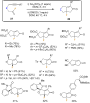


Fluorohydration of alkynes via I(I)/I(III) catalysis
Beilstein J. Org. Chem. 2020, 16, 1627–1635, doi:10.3762/bjoc.16.135
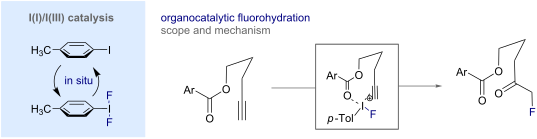
- fluorine as a powerful physicochemical modulator in small-molecule drug discovery is a compelling argument for the importance of sustained innovation to facilitate this form of structural editing [1][2][3][4]. Routinely employed as a bioisostere of hydrogen or hydroxy [5][6], substitution may enable
- C(sp3)–C(sp3) bond-forming reactions [16][17], and closely resembles one of the very few biological blueprints for the preparation of fluorine-containing materials [18][19][20][21]. However, in translating the fluoroacetate-like building blocks to a laboratory paradigm, the intrinsic toxicity of


One-pot synthesis of 1,3,5-triazine-2,4-dithione derivatives via three-component reactions
Beilstein J. Org. Chem. 2020, 16, 1447–1455, doi:10.3762/bjoc.16.120
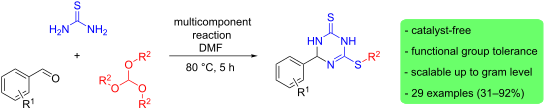
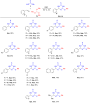
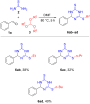
- , and trifluoromethyl they smoothly took part in the three-component reaction and provided the desired products 6ja–na in moderate yields. It is noteworthy that benzaldehydes containing a halogen atom such as fluorine, chlorine, bromine, and iodine in the para and meta-positions were also compatible




An overview on disulfide-catalyzed and -cocatalyzed photoreactions
Beilstein J. Org. Chem. 2020, 16, 1418–1435, doi:10.3762/bjoc.16.118
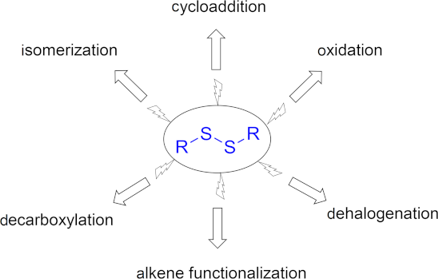
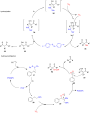
- fluorine-containing groups can effectively change the physical and chemical properties and biological activities of organic molecules [21][22]. The addition reaction using disulfide as the visible-light catalyst is an effective and atom-economic method for introducing fluorine-containing groups. In 2016
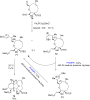
- . In 1996, Burton and co-workers reported the stereoselective synthesis of cis-1,2-difluorotriethylsilyethylene and its conversion to a variety of cis-1,2-difluoroethylene synthons, which are important building blocks in the preparation of fluorine-containing pharmaceuticals, polymers, and bioactive






Synthesis of new fluorescent molecules having an aggregation-induced emission property derived from 4-fluoroisoxazoles
Beilstein J. Org. Chem. 2020, 16, 1411–1417, doi:10.3762/bjoc.16.117
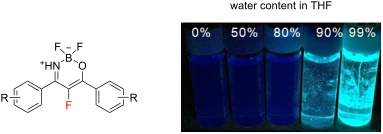
- synthesized and investigated for their photochemical properties. The introduction of a fluorine substituent into 3,5-diarylisoxazoles led to an increase of fluorescence intensity and exhibited a redshift in the emission intensity. α-Fluorinated boron ketoiminates (F-BKIs) were also synthesized via a ring
- fluorescent properties by irradiation with a UV lamp. Among the non-fluorinated isoxazoles, only 2c demonstrated fluorescent emission, although it was very weak. Thus, we decided to further investigate the photochemical properties and the results were summarized in Figure 1 and Table 1. Introducing a fluorine
- substituent into the isoxazole scaffold led to an increasing fluorescent intensity and exhibited a redshift in the emission intensity. Interestingly, the excitation maximum of 3 showed a redshift of approximately 20 nm with the incorporation of a single fluorine atom into the isoxazole scaffold in comparison





