Search for "DBU" in Full Text gives 314 result(s) in Beilstein Journal of Organic Chemistry. Showing first 200.
Beilstein J. Org. Chem. 2017, 13, 806–816, doi:10.3762/bjoc.13.81
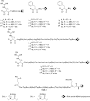
Graphical Abstract
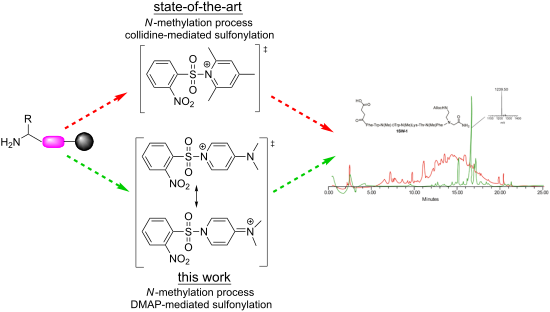
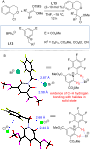
Figure 1: Collidine-assisted vs DMAP-assisted N-methylation process on solid support. (A) Collidine-assisted ...
Figure 2: Motifs 1–5 were used as models for the optimization of the N-methylation process. i) Introduction o...
Figure 3: Sulfonylation optimization study. HPLC trace overlay that shows the sulfonylation of motif 4 to yie...
Figure 4: DFT calculations for the reaction of o-NBS-Cl with a) collidine and b) DMAP. The structure of the r...
Figure 5: Methylation of motif 3a to 3b using various reaction conditions. HPLC trace overlay presents the ef...
Figure 6: Optimization of o-NBS removal reaction conditions demonstrated on motif 5b. HPLC trace overlay of i...
Figure 7: HPLC trace overlay and MS analysis of the somatostatin analogue, 1SW-1, which was Nα-methylated on ...
Beilstein J. Org. Chem. 2017, 13, 625–638, doi:10.3762/bjoc.13.61
Graphical Abstract
Figure 1: Selected examples of bioactive thiazole derivatives.
Figure 2: Some natural sources of thiazoles.
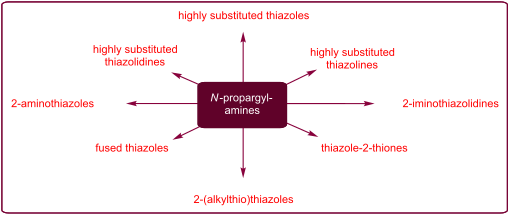
Figure 3: Some important thiazole-based compounds derived from N-propargylamines.
Scheme 1: The synthesis of thiazole-2-thiones 3 through the thermal cyclocondensation of N-propargylamines 1 ...
Scheme 2: (a) One-pot synthesis of 2-benzylthiazolo[3,2-a]benzimidazoles 6 through a base-catalyzed cascade r...
Scheme 3: (a) Synthesis of 2-iminothiazolidines 11 from N-propargylamines 9 and isothiocyanates 10. (b) Synth...
Scheme 4: (a) Synthesis of 2-aminothiazoles 17 through the reaction of ethyl 4-aminobut-2-ynoate salts 15 wit...
Scheme 5: Synthesis of 5-(iodomethylene)-3-methylthiazolidines 27 described by Zhou.
Scheme 6: Mechanism that accounts for the formation of 27.
Scheme 7: Clausen’s synthesis of fluorescein thiazolidines 30.
Scheme 8: Synthesis of multiply substituted thiazolidines 33 from N-propargylamines 32 and blocked N-isothioc...
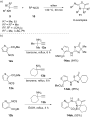
Scheme 9: (a) Microwave-assisted cyclization of N-propargyl thiocarbamate 34. (b) Synthesis of thiazoles 39 t...
Scheme 10: Synthesis of thiazolidines 42 (42’) from the reaction of β-oxodithioesters 40 (40’) with N-propargy...
Scheme 11: Synthesis of 5-(dibromomethyl)thiazoles 44 via halocyclization of N-propargylamines 43 described by...
Scheme 12: Synthesis of dihydrothiazoles 46 through the treatment of N-propargylamides 45 with Lawesson’s reag...
Scheme 13: Synthesis of thiazoles 49 by treatment of silyl-protected N-propargylamines 47 with benzotriazolylt...
Scheme 14: Mechanism proposed to explain the synthesis of 2,5-disubstituted thiazoles 49 developed by Sasmal.
Scheme 15: Mo-catalyzed cyclization of N-propargylthiocarbamate 50.
Scheme 16: (a) DABCO-mediated intramolecular cyclization of N-(propargylcarbamothioyl)amides 53 to the corresp...
Scheme 17: Proposed mechanism for the generation of the iodine-substituted 4H-1,3-thiazines 56 and 4,5-dihydro...
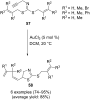
Scheme 18: Au(III)-catalyzed synthesis of 5-alkylidenedihydrothiazoles 58 developed by Stevens.
Beilstein J. Org. Chem. 2017, 13, 589–611, doi:10.3762/bjoc.13.58

Graphical Abstract
Figure 1: Examples of drugs bearing phenol or aryl thiol as central structural motifs.
Scheme 1: Hydroxylation of aryl halides using biphenylphosphine as ligand.
Scheme 2: Hydroxylation of aryl halides using tert-butylphosphine as ligand.
Scheme 3: Hydroxylation of aryl halides using imidazole typed phosphine ligands.
Scheme 4: [Pd(cod)(CH2SiMe3)2] catalyzed hydroxylation of aryl halides.
Scheme 5: Pd/PANI catalyzed hydroxylation of hydroxylation of aryl halides.
Scheme 6: MCM-41-dzt-Pd catalyzed hydroxylation of aryl halides.
Scheme 7: Hydroxylation of aryl halides using dibenzoylmethane as ligand.
Scheme 8: Hydroxylation of aryl halides using 2,2’-bipyridine as ligand.
Scheme 9: Hydroxylation of aryl bromides using imidazolyl pyridine as ligand.
Scheme 10: Hydroxylation of aryl halides using DMEDA as ligand.
Scheme 11: Hydroxylation of aryl halides using PAO as ligand.
Scheme 12: Hydroxylation of aryl halides using D-glucose as ligand.
Scheme 13: Hydroxylation of aryl halides using INDION-770 as ligand.
Scheme 14: PEG-400 mediated hydroxylation of aryl halides.
Scheme 15: Hydroxylation of aryl halides using glycolic acid as ligand.
Scheme 16: Hydroxylation of aryl halides using L-sodium ascorbate as ligand.
Scheme 17: Difunctionalized ethanes mediated hydroxylation of aryl iodides.
Scheme 18: Hydroxylation of aryl halides using 2-methyl-8-hydroxylquinoline as ligand.
Scheme 19: Hydroxylation of aryl halides using 8-hydroxyquinolin-N-oxide as ligand.
Scheme 20: Hydroxylation of aryl halides using lithium pipecolinate as ligand.
Scheme 21: Hydroxylation of aryl halides using L-lithium prolinate.
Scheme 22: Hydroxylation of aryl halides using triethanolamine as ligand.
Scheme 23: CuI-nanoparticle-catalyzed hydroxylation of aryl halides.
Scheme 24: Cu-g-C3N4-catalyzed hydroxylation of aryl bromides.
Scheme 25: Cu(OAc)2-mediated hydroxylation of (2-pyridyl)arenes.
Scheme 26: Removable pyridine moiety directed hydroxylation of arenes.
Scheme 27: Removable quinoline moiety directed hydroxylation of arenes.
Scheme 28: CuCl2 catalyzed hydroxylation of benzimidazoles and benzoxazoles.
Scheme 29: Disulfide-directed C–H hydroxylation.
Scheme 30: Pd(OAc)2-catalyzed hydroxylation of diarylpyridines.
Scheme 31: PdCl2-catalyzed hydroxylation of 2-arylpyridines.
Scheme 32: PdCl2-catalyzed hydroxylation of 2-arylpyridines.
Scheme 33: Pd(OAc)2-catalyzed hydroxylation of 2-arylpyridines.
Scheme 34: Pd(CH3CN)2Cl2-catalyzed hydroxylation of 2-arylpyridines.
Scheme 35: Pd(OAc)2-catalyzed hydroxylation of benzothiazolylarenes.
Scheme 36: Pd(OAc)2 catalyzed hydroxylation of benzimidazolylarenes.
Scheme 37: Dioxane mediated hydroxylation of 2-heteroarylarenes.
Scheme 38: Hydroxylation of oxime methyl ester.
Scheme 39: CN-directed meta-hydroxylation.
Scheme 40: Pd(OAc)2-catalyzed hydroxylation of benzoic acids.
Scheme 41: Pd(OAc)2-catalyzed hydroxylation of biaryl or aryl alkyl ketones.
Scheme 42: Pd(OAc)2 and Pd(TFA)2 catalyzed hydroxylation of aryl ketones.
Scheme 43: Pd(OAc)2 catalyzed hydroxylation of aryl ketones.
Scheme 44: Pd(TFA)2-catalyzed hydroxylation of aryl phosphonates.
Scheme 45: Hydroxy group directed hydroxylation.
Scheme 46: [Ru(O2CMes)2(p-cymene)] catalyzed hydroxylation of benzamides and aryl ketones.
Scheme 47: [RuCl2(p-cymene)]2-catalyzed hydroxylation of benzamides and carbamates.
Scheme 48: [RuCl2(p-cymene)]2 catalyzed hydroxylation of benzaldehydes.
Scheme 49: [RuCl2(p-cymene)]2 catalyzed hydroxylation of ethyl benzoates, benzamides and carbamates.
Scheme 50: Different regioselective ortho-hydroxylation.
Scheme 51: Ruthenium-complex-catalyzed hydroxylation of flavones.
Scheme 52: Vanadium-catalyzed hydroxylation of arenes.
Scheme 53: VOSiW-catalyzed hydroxylation of arenes.
Scheme 54: Synthesis of aryl thiols using thiourea as thiol source.
Scheme 55: Synthesis of aryl thiols using alkyl thiol as thiol source.
Scheme 56: Synthesis of 1-thionaphthol using HS-TIPS as thiol source.
Scheme 57: Synthesis of aryl thiols using sodium thiosulfate as thiol source.
Scheme 58: Synthesis of thiophenol using thiobenzoic acid as thiol source.
Scheme 59: Synthesis of aryl thiols using sulfur powder as thiol source.
Scheme 60: CuI-nanoparticles catalyzed synthesis of aryl thiols.
Scheme 61: Synthesis of aryl thiols using Na2S·5H2O as thiol source.
Scheme 62: Synthesis of aryl thiols using 1,2-ethanedithiol as thiol source.
Beilstein J. Org. Chem. 2017, 13, 564–570, doi:10.3762/bjoc.13.55
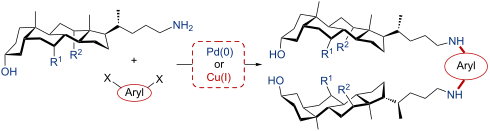
Graphical Abstract
Figure 1: A tripodal molecular pocket (a) [12] or jellyfish resembling receptors (b) [11,16].
Scheme 1: Example of Pd-catalyzed amination for modification of bile acid derivatives.
Scheme 2: Synthesis of 24-aminocholanols.
Scheme 3: Synthesis of 24-arylaminocholanols by Cu-catalyzed amination.
Scheme 4: Synthesis of 24-arylaminocholanols by Pd-catalyzed amination.
Figure 2: UV–vis spectra of 5c (50 μM solution in MeCN) before and after the addition of 5 equiv of metal per...
Beilstein J. Org. Chem. 2017, 13, 451–494, doi:10.3762/bjoc.13.48
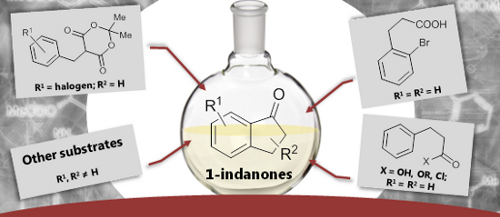
Graphical Abstract
Figure 1: Biologically active 1-indanones and their structural analogues.
Figure 2: Number of papers about (a) 1-indanones, (b) synthesis of 1-indanones.
Scheme 1: Synthesis of 1-indanone (2) from hydrocinnamic acid (1).
Scheme 2: Synthesis of 1-indanone (2) from 3-(2-bromophenyl)propionic acid (3).
Scheme 3: Synthesis of 1-indanones 5 from 3-arylpropionic acids 4.
Scheme 4: Synthesis of kinamycin (9a) and methylkinamycin C (9b).
Scheme 5: Synthesis of trifluoromethyl-substituted arylpropionic acids 12, 1-indanones 13 and dihydrocoumarin...
Scheme 6: Synthesis of 1-indanones 16 from benzoic acids 15.
Scheme 7: Synthesis of 1-indanones 18 from arylpropionic and 3-arylacrylic acids 17.
Scheme 8: The NbCl5-induced one-step synthesis of 1-indanones 22.
Scheme 9: Synthesis of biologically active 1-indanone derivatives 26.
Scheme 10: Synthesis of enantiomerically pure indatraline ((−)-29).
Scheme 11: Synthesis of 1-indanone (2) from the acyl chloride 30.
Scheme 12: Synthesis of the mechanism-based inhibitors 33 of coelenterazine.
Scheme 13: Synthesis of the indane 2-imidazole derivative 37.
Scheme 14: Synthesis of fluorinated PAHs 41.
Scheme 15: Synthesis of 1-indanones 43 via transition metal complexes-catalyzed carbonylative cyclization of m...
Scheme 16: Synthesis of 6-methyl-1-indanone (46).
Scheme 17: Synthesis of 1-indanone (2) from ester 48.
Scheme 18: Synthesis of benzopyronaphthoquinone 51 from the spiro-1-indanone 50.
Scheme 19: Synthesis of the selective endothelin A receptor antagonist 55.
Scheme 20: Synthesis of 1-indanones 60 from methyl vinyl ketone (57).
Scheme 21: Synthesis of 1-indanones 64 from diethyl phthalate 61.
Scheme 22: Synthesis of 1-indanone derivatives 66 from various Meldrum’s acids 65.
Scheme 23: Synthesis of halo 1-indanones 69.
Scheme 24: Synthesis of substituted 1-indanones 71.
Scheme 25: Synthesis of spiro- and fused 1-indanones 73 and 74.
Scheme 26: Synthesis of spiro-1,3-indanodiones 77.
Scheme 27: Mechanistic pathway for the NHC-catalyzed Stetter–Aldol–Michael reaction.
Scheme 28: Synthesis of 2-benzylidene-1-indanone derivatives 88a–d.
Scheme 29: Synthesis of 1-indanone derivatives 90a–i.
Scheme 30: Synthesis of 1-indanones 96 from o-bromobenzaldehydes 93 and alkynes 94.
Scheme 31: Synthesis of 3-hydroxy-1-indanones 99.
Scheme 32: Photochemical preparation of 1-indanones 103 from ketones 100.
Scheme 33: Synthesis of chiral 3-aryl-1-indanones 107.
Scheme 34: Photochemical isomerization of 2-methylbenzil 108.
Scheme 35: Synthesis of 2-hydroxy-1-indanones 111a–c.
Scheme 36: Synthesis of 1-indanone derivatives 113 and 114 from η6-1,2-dioxobenzocyclobutene complex 112.
Scheme 37: Synthesis of nakiterpiosin (117).
Scheme 38: Synthesis of 2-alkyl-1-indanones 120.
Scheme 39: Synthesis of fluorine-containing 1-indanone derivatives 123.
Scheme 40: Synthesis of 2-benzylidene and 2-benzyl-1-indanones 126, 127 from the chalcone 124.
Scheme 41: Synthesis of 2-bromo-6-methoxy-3-phenyl-1-indanone (130).
Scheme 42: Synthesis of combretastatin A-4-like indanones 132a–s.
Figure 3: Chemical structures of investigated dienones 133 and synthesized cyclic products 134–137.
Figure 4: Chemical structures of 1-indanones and their heteroatom analogues 138–142.
Scheme 43: Synthesis of 2-phosphorylated and 2-non-phosphorylated 1-indanones 147 and 148 from β-ketophosphona...
Scheme 44: Photochemical synthesis of 1-indanone derivatives 150, 153a, 153b.
Scheme 45: Synthesis of polysubstituted-1-indanones 155, 157.
Scheme 46: Synthesis of 1-indanones 159a–g from α-arylpropargyl alcohols 158 using RhCl(PPh3)3 as a catalyst.
Scheme 47: Synthesis of optically active 1-indanones 162 via the asymmetric Rh-catalyzed isomerization of race...
Scheme 48: Mechanism of the Rh-catalyzed isomerization of α-arylpropargyl alcohols 161 to 1-indanones 162.
Figure 5: Chemical structure of abicoviromycin (168) and its new benzo derivative 169.
Scheme 49: Synthesis of racemic benzoabicoviromycin 172.
Scheme 50: Synthesis of [14C]indene 176.
Scheme 51: Synthesis of indanone derivatives 178–180.
Scheme 52: Synthesis of racemic pterosin A 186.
Scheme 53: Synthesis of trans-2,3-disubstituted 1-indanones 189.
Scheme 54: Synthesis of 3-aryl-1-indanone derivatives 192.
Scheme 55: Synthesis of 1-indanone derivatives 194 from 3-(2-iodoaryl)propanonitriles 193.
Scheme 56: Synthesis of 1-indanones 200–204 by cyclization of aromatic nitriles.
Scheme 57: Synthesis of 1,1’-spirobi[indan-3,3’-dione] derivative 208.
Scheme 58: Total synthesis of atipamezole analogues 211.
Scheme 59: Synthesis of 3-[4-(1-piperidinoethoxy)phenyl]spiro[indene-1,1’-indan]-5,5’-diol hydrochloride 216.
Scheme 60: Synthesis of 3-arylindan-1-ones 219.
Scheme 61: Synthesis of 2-hydroxy-1-indanones 222.
Scheme 62: Synthesis of the 1-indanone 224 from the THP/MOM protected chalcone epoxide 223.
Scheme 63: Synthesis of 1-indanones 227 from γ,δ-epoxy ketones 226.
Scheme 64: Synthesis of 2-hydroxy-2-methylindanone (230).
Scheme 65: Synthesis of 1-indanone derivatives 234 from cyclopropanol derivatives 233.
Scheme 66: Synthesis of substituted 1-indanone derivatives 237.
Scheme 67: Synthesis of 7-methyl substituted 1-indanone 241 from 1,3-pentadiene (238) and 2-cyclopentenone (239...
Scheme 68: Synthesis of disubstituted 1-indanone 246 from the siloxydiene 244 and 2-cyclopentenone 239.
Scheme 69: Synthesis of 5-hydroxy-1-indanone (250) via the Diels–Alder reaction of 1,3-diene 248 with sulfoxid...
Scheme 70: Synthesis of halogenated 1-indanones 253a and 253b.
Scheme 71: Synthesis of 1-indanones 257 and 258 from 2-bromocyclopentenones 254.
Scheme 72: Synthesis of 1-indanone 261 from 2-bromo-4-acetoxy-2-cyclopenten-1-one (260) and 1,2-dihydro-4-viny...
Scheme 73: Synthesis of 1-indanone 265 from 1,2-dihydro-7-methoxy-4-vinylnaphthalene (262) and bromo-substitut...
Scheme 74: Synthesis of 1-indanone 268 from dihydro-3-vinylphenanthrene 266 and 4-acetoxy-2-cyclopenten-1-one (...
Scheme 75: Synthesis of 1-indanone 271 from phenylselenyl-substituted cyclopentenone 268.
Scheme 76: Synthesis of 1-indanone 272 from the trienone 270.
Scheme 77: Synthesis of the 1-indanone 276 from the aldehyde 273.
Scheme 78: Synthesis of 1-indanones 278 and 279.
Scheme 79: Synthesis of 1-indanone 285 from octa-1,7-diyne (282) and cyclopentenone 239.
Scheme 80: Synthesis of benz[f]indan-1-one (287) from cyclopentenone 239 and o-bis(dibromomethyl)benzene (286)....
Scheme 81: Synthesis of 3-methyl-substituted benz[f]indan-1-one 291 from o-bis(dibromomethyl)benzene (286) and...
Scheme 82: Synthesis of benz[f]indan-1-one (295) from the anthracene epidioxide 292.
Scheme 83: Synthesis of 1-indanone 299 from homophthalic anhydride 298 and cyclopentynone 297.
Scheme 84: Synthesis of cyano-substituted 1-indanone derivative 301 from 2-cyanomethylbenzaldehyde (300) and c...
Scheme 85: Synthesis of 1-indanone derivatives 303–305 from ketene dithioacetals 302.
Scheme 86: Synthesis of 1-indanones 309–316.
Scheme 87: Mechanism of the hexadehydro-Diels–Alder (HDDA) reaction.
Scheme 88: Synthesis of 1-indenone 318 and 1-indanones 320 and 321 from tetraynes 317 and 319.
Scheme 89: Synthesis of 1-indanone 320 from the triyn 319.
Scheme 90: Synthesis 1-indanone 328 from 2-methylfuran 324.
Scheme 91: Synthesis of 1-indanones 330 and 331 from furans 329.
Scheme 92: Synthesis of 1-indanone 333 from the cycloadduct 332.
Scheme 93: Synthesis of (S)-3-arylindan-1-ones 335.
Scheme 94: Synthesis of (R)-2-acetoxy-1-indanone 338.
Figure 6: Chemical structures of obtained cyclopenta[α]phenanthrenes 339.
Scheme 95: Synthesis of the benzoindanone 343 from arylacetaldehyde 340 with 1-trimethylsilyloxycyclopentene (...
Beilstein J. Org. Chem. 2017, 13, 267–284, doi:10.3762/bjoc.13.30
Graphical Abstract
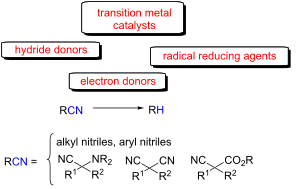
Scheme 1: Mechanism for the reduction under metal dissolving conditions.
Scheme 2: Example of decyanation in metal dissolving conditions coupled with deprotection [30]. TBDMS = tert-buty...
Scheme 3: Preparation of α,ω-dienes [18,33].
Scheme 4: Cyclization reaction using a radical probe [18].
Scheme 5: Synthesis of (±)-xanthorrhizol (8) [39].
Scheme 6: Mechanism for the reduction of α-aminonitriles by hydride donors.
Scheme 7: Synthesis of phenanthroindolizidines and phenanthroquinolizidines [71].
Scheme 8: Two-step synthesis of 5-unsubstituted pyrrolidines (25 examples and 1 synthetic application, see be...
Scheme 9: Synthesis of (±)-isoretronecanol 19. DBU = 1,8-diazabicyclo[5.4.0]undec-7-ene [74].
Scheme 10: Proposed mechanism with 14a for the NaBH4 induced decyanation reaction (“BH3” = BH3·THF) [74].
Scheme 11: Reductive decyanation by a sodium hydride–iodide composite (26 examples) [81].
Scheme 12: Proposed mechanism for the reduction by NaH [81].
Scheme 13: Reductive decyanation catalyzed by nickel nanoparticles. Yields are given in weight % from GC–MS da...
Scheme 14: Decyanation of 2-cyanobenzo[b]thiophene [87].
Scheme 15: Simplified pathways involved in transition-metal-promoted reductive decyanations [93,95].
Scheme 16: Fe-catalyzed reductive decyanation. Numbers in square brackets represent turnover numbers. The TONs...
Scheme 17: Rh-catalyzed reductive decyanation of aryl nitriles (18 examples, 2 synthetic applications) [103].
Scheme 18: Rh-catalyzed reductive decyanation of aliphatic nitriles (15 examples, one synthetic application) [103].
Scheme 19: Ni-catalyzed reductive decyanation (method A: 28 examples and 2 synthetic applications; method B: 3...
Scheme 20: Reductive decyanation catalyzed by the nickel complex 58 (method A, 14 examples, yield ≥ 20% and 1 ...
Scheme 21: Proposed catalytic cycle for the nickel complex 58 catalyzed decyanation (method A). Only the cycle...
Scheme 22: Synthesis of bicyclic lactones [119,120].
Scheme 23: Reductive decyanation of malononitriles and cyanoacetates using NHC-boryl radicals (9 examples). Fo...
Scheme 24: Proposed mechanism for the reduction by NHC-boryl radicals. The other possible pathway (addition of ...
Scheme 25: Structures of organic electron-donors. Only the major Z isomer of 80 is shown [125,127].
Scheme 26: Reductive decyanation of malononitriles and cyanoacetates using organic electron-donors (method A, ...
Scheme 27: Photoreaction of dibenzylmalononitrile with 81 [128].
Scheme 28: Examples of decyanation promoted in acid or basic media [129,131,134,135].
Scheme 29: Mechanism proposed for the base-induced reductive decyanation of diphenylacetonitriles [136].
Scheme 30: Reductive decyanation of triarylacetonitriles [140].
Beilstein J. Org. Chem. 2017, 13, 203–212, doi:10.3762/bjoc.13.23
Graphical Abstract
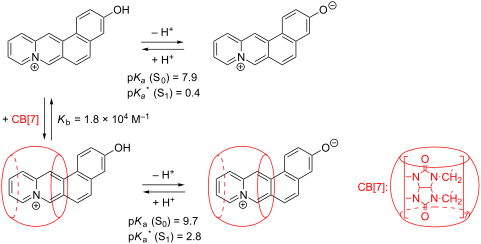
Figure 1: Structures of quinolizinium derivatives 1a–c and 2.
Scheme 1: Synthesis of 3-hydroxynaphtho[1,2-b]quinolizinium bromide (2).
Figure 2: Absorption (A, c = 100 µM) and normalized emission spectra (B, c = 10 µM or Abs. = 0.1 at λex) of d...
Figure 3: Photometric (A) and fluorimetric (B) acid–base titration (λex = 380 nm) of naphthoquinolizinium 2 (c...
Figure 4: Absorption spectra of 2 (c = 100 µM) in MeOH (A) and MeCN (B). Black lines: without additive, red: ...
Figure 5: Normalized emission spectra of 2 (c = 10 µM) in MeOH (A, λex = 400 nm) and MeCN (B, λex = 398 nm). ...
Figure 6: Photometric titration of CB[7] (c = 0.45 mM) to 2 (c = 15 µM) in BPE buffer (with 10% v/v DMSO) at ...
Figure 7: Photometric (A) and fluorimetric (B) acid–base titration (λex = 380 nm) of 2 (c = 15 µM) in the pre...
Scheme 2: Acid–base equilibrium of hydroxynaphthoquinolizinium 2.
Figure 8: Structures of quinolizinium derivatives 6–8.
Beilstein J. Org. Chem. 2017, 13, 164–173, doi:10.3762/bjoc.13.19
Graphical Abstract
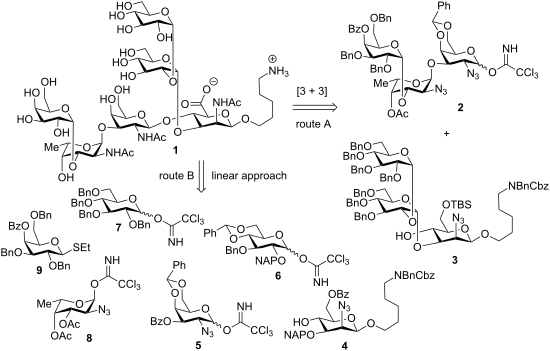
Figure 1: Structure of the S. pneumoniae serotype 12F capsular polysaccharide repeating unit [15].
Scheme 1: Retrosynthetic analyses of the S. pneumoniae hexasaccharide 1.
Scheme 2: Attempted synthesis of mannosazide building block 15. Reagents and conditions: (a) levulinic acid, ...
Scheme 3: Synthesis of mannosazide building block 18. Reagents and conditions: (a) TBSCl, imidazole, DCM, 0 °...
Scheme 4: Synthesis of the reducing-end trisaccharide 3. Reagents and conditions: (a) TMSOTf, (CH3CH2)2O/CH2Cl...
Scheme 5: Synthesis of monosaccharide building blocks 8, 9 and 26. Reagents and conditions: (a) acetic anhydr...
Scheme 6: Synthesis of the non-reducing end trisaccharide 2. Reagents and conditions: (a) TMSOTf, CH2Cl2, −30...
Scheme 7: Attempted synthesis of hexasaccharide repeating unit 36 via a convergent [3 + 3] glycosylation stra...
Scheme 8: Linear assembly of fully protected hexasaccharide 51. Reagents and conditions: (a) DDQ, CH2Cl2/MeOH...
Scheme 9: Global deprotection to furnish S. pneumonia serotype 12F repeating unit hexasaccharide 1. Reagents ...
Beilstein J. Org. Chem. 2017, 13, 76–86, doi:10.3762/bjoc.13.10
Graphical Abstract
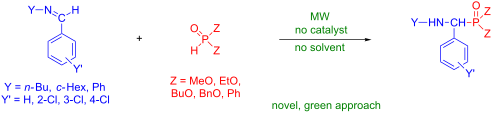
Scheme 1: Synthesis of starting N-benzylideneamines 1.
Scheme 2: Addition of diethyl phosphite to N-benzylidene(butyl)amine in acetonitrile.
Figure 1: IR spectra of the reaction components in acetonitrile solution.
Figure 2: A segment of the time-dependent IR spectrum for the addition of diethyl phosphite to N-benzylidene(...
Figure 3: Concentration profiles of the reaction components in the addition reaction at 80 °C in acetonitrile....
Figure 4: Atomic numbering with anisotropic displacements plot of 5b at −100 °C.
Figure 5: Atomic numbering with anisotropic displacements plot of 5d at −100 °C.
Figure 6: The energy diagram for the reaction with dimethyl phosphite.
Figure 7: The energy diagram for the reaction with diphenylphosphine oxide.
Beilstein J. Org. Chem. 2017, 13, 1–9, doi:10.3762/bjoc.13.1
Graphical Abstract
Figure 1: Icosahedral arrangement of functional addends for [60]fullerene hexakisadducts with dodecaacids C2 ...
Figure 2: a) Small cavities within the octahedral sites of HFF-1 filled with one CH2Cl2 molecule [57]; b) isolate...
Scheme 1: Synthesis of [60]fullerene dodecaacid C4.
Figure 3: Face centered cubic arrangement of [60]fullerene dodecaacids for frameworks a) HFF-1 [57], b) HFF-2 and...
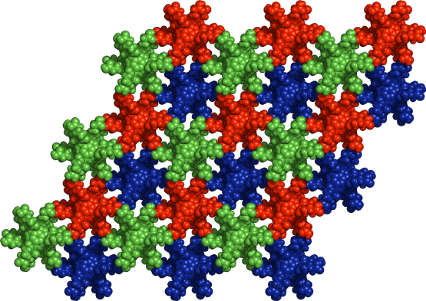
Figure 4: Hydrogen bonding network for HFF-3 (left, hydrogen bonds yellow) and porous channels along the c ax...
Figure 5: Interpenetration of two distinct hydrogen bonding networks for HFF-3: a) side view indicating the s...
Beilstein J. Org. Chem. 2016, 12, 2834–2848, doi:10.3762/bjoc.12.283
Graphical Abstract
Figure 1: Electrophile Activation by Hydrogen Bond Donors [1-16].
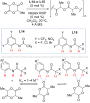
Figure 2: Early examples of C–H hydrogen bonds and their recent use in supramolecular chemistry [18,19,32-34].
Scheme 1: Design of 1,2,3-triazole-based catalysts for trityl group transfer through chloride anion binding b...
Scheme 2: Examples of chiral triazole-based catalysts for anion activation designed by Mancheno and co-worker...
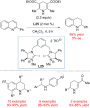
Scheme 3: Application of chiral triazole-based catalysts L3 and L4 for counterion activation of pyridinium, q...
Scheme 4: Ammonium salt anion binding via C–H hydrogen bonds in solid state [40-45,50,51].
Scheme 5: Early examples of ammonium salts being used for electrophilic activation of imines in aza-Diels–Ald...
Scheme 6: Ammonium salts as hydrogen bond-donor catalysts by Bibal and co-workers [53,54].
Scheme 7: Tetraalkylammonium catalyst (L6)-catalyzed dearomatization of isoquinolinium salts [50].
Scheme 8: Tetraalkylammonium catalyst L6 complexation to halogen-containing substrates [51].
Scheme 9: Tetraalkylammonium-catalyzed aza-Diels–Alder reaction by Maruoka and co-workers [52].
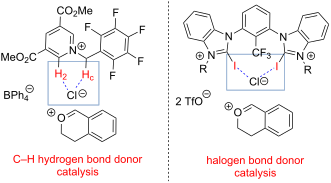
Scheme 10: (A) Alkylpyridinium catalysts L13-catalyzed reaction of 1-isochroman and silyl ketene acetals by Be...
Scheme 11: Mixed N–H/C–H two hydrogen bond donors L14 and L15 as organocatalysts for ROP of lactide by Bibal a...
Scheme 12: Examples of stable complexes based on halogen bonding [68,69].
Scheme 13: Interaction between (−)-sparteine hydrobromide and (S)-1,2-dibromohexafluoropropane in the cocrysta...
Scheme 14: Iodine-catalyzed reactions that are computationally proposed to proceed through halogen bond to car...
Scheme 15: Transfer hydrogenation of phenylquinolines catalyzed by haloperfluoroalkanes by Bolm and co-workers ...
Scheme 16: Halogen bond activation of benzhydryl bromides by Huber and co-workers [82].
Scheme 17: Halogen bond-donor-catalyzed addition to oxocarbenium ions by Huber and co-workers [89].
Scheme 18: Halogen bond-donor activation of α,β-unsaturated carbonyl compounds in the [2 + 4] cycloaddition re...
Scheme 19: Halogen bond donor activation of imines in the [2 + 4] cycloaddition reaction of imine and Danishef...
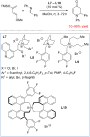
Scheme 20: Transfer hydrogenation catalyzed by a chiral halogen bond donor by Tan and co-workers [91].
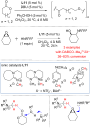
Scheme 21: Allylation of benzylic alcohols by Takemoto and co-workers [92].
Scheme 22: NIS induced semipinacol rearrangement via C–X bond cleavage [93].
Beilstein J. Org. Chem. 2016, 12, 2719–2730, doi:10.3762/bjoc.12.268
Graphical Abstract
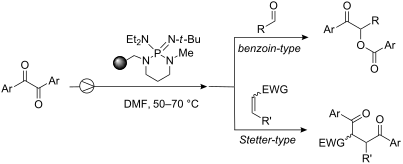
Figure 1: Electron-transfer initiated activation of α-diketones (background) and present study.
Scheme 1: Proposed dianionic pathway for the cross-benzoin-like reaction of benzils 1 with aldehydes 2 under ...
Scheme 2: Trapping experiment.
Figure 2: Conversion of the 1a/2a coupling in microreactor R5 operated for 150 h at 50 °C.
Beilstein J. Org. Chem. 2016, 12, 2511–2522, doi:10.3762/bjoc.12.246
Graphical Abstract
Scheme 1: Reaction pathways of α-thio-β-chloroacrylamides.
Scheme 2: Typical three-step batch preparation of α-thio-β-chloroacrylamide.
Scheme 3: Batch process for preparation of α-chloroamide 1.
Scheme 4: Process for the conversion of 2-chloropropionyl chloride and p-toluidine to α-chloroamide 1 under o...
Scheme 5: Conversion of 1 to 2 in continuous mode using MeOH as solvent.
Scheme 6: Optimized process for the conversion of α-chloroamide 1 to α-thioamide 2 under flow conditions.
Scheme 7: Mechanism of the β-chloroacrylamide cascade process [29].
Scheme 8: Optimized flow process for conversion of α-thioamide 2 to α-thio-β-chloroacrylamide Z-3.
Beilstein J. Org. Chem. 2016, 12, 2503–2510, doi:10.3762/bjoc.12.245
Graphical Abstract
Figure 1: Sydnone-pyrroloazines hybrids 1, indolizine (2), sydnone 3, indolizines attached directly to C-4 of...
Scheme 1: Synthesis of pyridinium bromides 8 and sydnone-indolizine hybrids 9 through the Chichibabin reactio...
Figure 2: The molecular structure of 9d with thermal ellipsoids drawn at the 50% probability level. (a) Inver...
Figure 3: Centrosymmetric C–H···O hydrogen bonded dimeric motif in the crystal of 9d.
Scheme 2: The synthesis and mechanism of formation of sydnone-indolizines 12.
Figure 4: Molecular structure of 12c with atoms represented as thermal ellipsoids at the 50% probability leve...
Figure 5: Intramolecular distortion in 12c.
Beilstein J. Org. Chem. 2016, 12, 2462–2470, doi:10.3762/bjoc.12.240
Graphical Abstract
Scheme 1: Helical wheel projection of two parallel helical strands and primary structure of KFM6. The recogni...
Figure 1: a) Time-dependent CD spectra and b) corresponding CD-minimum plot for random coil (black) and β-she...
Figure 2: ThT-binding assay of of 15 µM KFM6 in 50 mM Tris/HCl buffer with 10 mM MgCl2 at pH 7.5, 24 °C, and ...
Figure 3: a) TEM micrograph of 15 µM KFM6 in 50 mM Tris/HCl buffer with 10 mM MgCl2 at pH 7.5 and 24 °C. The ...
Figure 4: a) Enzymatic phosphorylation of 15 µM KFM6 in time-dependent CD-minimum plots. Addition of both 200...
Beilstein J. Org. Chem. 2016, 12, 2343–2350, doi:10.3762/bjoc.12.227
Graphical Abstract
Figure 1: Stereoisomeric inositols.
Scheme 1: Retrosynthetic approach to inositols from aldohexos-5-uloses.
Figure 2: Hypothesis of the preferred transition state.
Figure 3: Stereoselective reduction of inosose intermediate.
Scheme 2: Intramolecular cyclization of an orthogonally protected L-lyxo-aldohexos-5-ulose derivative.
Beilstein J. Org. Chem. 2016, 12, 2298–2314, doi:10.3762/bjoc.12.223
Graphical Abstract
Figure 1: Chemical structures of molecular materials with the following variations; BTxR, alkyl side chains o...
Scheme 1: Synthesis of the key intermediates TMS-Tx-BPin (3), i) diisopropylamine (DIA), THF, n-BuLi, −78 °C ...
Scheme 2: Oligothiophenes 4–11 synthesised through reaction of the commercially available 5-bromo-2-thiophene...
Scheme 3: Synthesis of the bithiophene through palladium catalyzed direct arylation, a) i) Pd(OAc)2, PCy3, Pi...
Scheme 4: Synthesis of the key bis-borylated BDT core 13, i) 1.5 equiv B2Pin2, 0.025 equiv [Ir(COD)OMe]2, 0.0...
Scheme 5: Synthesis of the BXR and BTXR series of materials, i) 5-bromothiophene carboxaldehyde, 5b, 7a–c, 9b...
Figure 2: BQR thermal and POM properties. a) DSC thermogram of BQR under nitrogen at a ramp rate of 10 °C min...
Figure 3: BT4R thermal and POM images. a) DSC thermogram of BT4R under nitrogen at a ramp rate of 10 °C min−1...
Figure 4: UV–vis absorption spectra of the BXXR series in CHCl3. An expansion of the peak area is shown in th...
Figure 5: Normalised thin film UV–vis absorption profiles for the BXxR series for, a) as-cast films (from CDCl...
Figure 6: Normalised thin film UV–vis absorption profiles for a) BBR, b) BTR and c) BQR showing as-cast (blac...
Figure 7: Normalised thin film fluorescence emission profiles for BXxR series after excitation at 580 nm, a) ...
Figure 8: Variable temperature thin film UV–vis absorption profiles for BQR, collected using the transmission...
Figure 9: Variable temperature thin-film fluorescence emission profiles for BQR, a) heating and b) cooling, c...
Figure 10: BQR thin film UV–vis (solid lines) and fluorescence emission spectra (dashed lines) collected at rt...
Figure 11: Optimized geometry and molecular orbital surfaces of HOMO (bottom) and LUMO (top) for the BXR serie...
Figure 12: J–V characteristics of BXR:PC71BM BHJ solar cells. (a) device structure, (b) J–V curves for as-cast...
Figure 13: J–V characteristics of BTxR:PC71BM ternary BHJ solar cells, a) device architecture, and b) J–V curv...
Figure 14: J–V characteristics of PTB7-Th:BQR:PC71BM ternary BHJ solar cells. (a) PTB7-Th chemical structure, ...
Beilstein J. Org. Chem. 2016, 12, 2256–2266, doi:10.3762/bjoc.12.218
Graphical Abstract
Figure 1: The DOE “Top 10” report [2].
Figure 2: Chemical structure of isosorbide and its epimers isomannide and isoidide.
Scheme 1: Conversion of D-sorbitol to isosorbide via twofold dehydration reaction.
Scheme 2: Possible reaction mechanism for the conversion of D-sorbitol to isosorbide.
Scheme 3: Methoxycarbonylation of isosorbide via DMC chemistry.
Scheme 4: Isosorbide homo- and co-polycarbonate via melt polycondensation.
Scheme 5: Synthesis of DMI via DMC chemistry.
Scheme 6: Comparison of the reactivity of isosorbide with other secondary alcohols in methylation reaction. R...
Figure 3: Chemical structure of isosorbide and its epimers isomannide and isoidide.
Beilstein J. Org. Chem. 2016, 12, 2104–2123, doi:10.3762/bjoc.12.200
Graphical Abstract
Scheme 1: Putative structures of geraniol 1a (R = H) or 1b (R = H) (in 1924), their expected dihydroxylation ...
Scheme 2: Correlation between the substrate double bond geometry and relative stereochemistry of the correspo...
Scheme 3: Mechanisms and classification for the metal-mediated oxidative cyclizations to form 2,5-disubstitut...
Scheme 4: Synthesis of (+)-anhydro-D-glucitol and (+)-D-chitaric acid using an OsO4-mediated oxidative cycliz...
Scheme 5: Total synthesis of neodysiherbaine A via a Ru(VIII)- and an Os(VI)-catalyzed oxidative cyclization,...
Scheme 6: Formal synthesis of ionomycin by Kocienski and co-workers.
Scheme 7: Total synthesis of amphidinolide F by Fürstner and co-workers.
Scheme 8: Brown`s and Donohoe`s oxidative cyclization approach to cis-solamin A.
Scheme 9: Total synthesis of cis-solamin A using a Ru(VIII)-catalyzed oxidative cyclization and enzymatic des...
Scheme 10: Donohoe´s double oxidative cyclization approach to cis-sylvaticin.
Scheme 11: Permanganate-mediated approach to cis-sylvaticin by Brown and co-workers.
Scheme 12: Total synthesis of membranacin using a KMnO4-mediated oxidative cyclization.
Scheme 13: Total synthesis of membrarollin and its analogue 21,22-diepi-membrarollin.
Scheme 14: Total synthesis of rollidecin C and D using a late stage Re(VII)-catalyzed oxidative polycyclizatio...
Scheme 15: Co(II)-catalyzed oxidative cyclization in the total synthesis of asimilobin and gigantetrocin A.
Scheme 16: Mn(VII)-catalyzed oxidative cyclization of a 1,5-diene in the synthesis of trans-(+)-linalool oxide....
Scheme 17: Re(VII)-catalyzed oxidative cyclization in the total synthesis of teurilene.
Scheme 18: Total synthesis of (+)-eurylene via Re(VII)- and Cr(VI)-mediated oxidative cyclizations.
Scheme 19: Synthesis of cis- and trans-THF Rings of eurylene via Mn(VII)-mediated oxidative cyclizations.
Scheme 20: Cr(VI)-catalyzed oxidative cyclization in the total synthesis of venustatriol by Corey et al.
Scheme 21: Ru(VIII)-catalyzed oxidative cyclization of a 1,5-diene in the synthesis and evaluation of its ster...
Scheme 22: Ru(VII)-catalyzed oxidative cyclization of a 5,6-dihydroxy alkene in the synthesis of the core stru...
Beilstein J. Org. Chem. 2016, 12, 2086–2092, doi:10.3762/bjoc.12.197
Graphical Abstract
Scheme 1: Reaction of DBU with p-nitrophenyl carbonate.
Scheme 2: Reaction of DBN with p-nitrophenyl carbonates.
Beilstein J. Org. Chem. 2016, 12, 2005–2011, doi:10.3762/bjoc.12.187
Graphical Abstract
Scheme 1: The Sonogashira reaction.
Figure 1: Cyrene vs. DMF – selected physical properties [31,32].
Figure 2: Aldol products 4a and 4b and single crystal X-ray structure of 4b.
Scheme 2: Cyrene-based Sonogashira cross-coupling: Substrate scope. Isolated yields. aYield using DMF as solv...
Scheme 3: Cacchi-type annulation of o-amino/hydroxy iodoarenes. Isolated yields. aYield using DMF as solvent.
Beilstein J. Org. Chem. 2016, 12, 1911–1924, doi:10.3762/bjoc.12.181
Graphical Abstract
Scheme 1: The transesterification of diethyl oxalate (DEO) with phenol catalyzed by MoO3/SiO2.
Scheme 2: Transesterification of a triglyceride (TG) with DMC for biodiesel production using KOH as the base ...
Scheme 3: Top: Green methylation of phosphines and amines by dimethyl carbonate (Q = N, P). Bottom: anion met...
Figure 1: Structures of some representative SILs and PILs systems. MCF is a silica-based mesostructured mater...
Scheme 4: Synthesis of the acid polymeric IL. EGDMA: ethylene glycol dimethacrylate.
Scheme 5: The transesterification of sec-butyl acetate with MeOH catalyzed by some acidic imidazolium ILs.
Figure 2: Representative examples of ionic liquids for biodiesel production.
Scheme 6: Top: phosgenation of methanol; middle: EniChem and Ube processes; bottom: Asahi process for the pro...
Scheme 7: The transesterification in the synthesis of organic carbonates.
Scheme 8: The transesterification of DMC with alcohols and diols.
Scheme 9: Transesterification of glycerol with DMC in the presence of 1-n-butyl-3-methylimidazolium-2-carboxy...
Scheme 10: Synthesis of the BMIM-2-CO2 catalyst from butylimidazole and DMC.
Scheme 11: Plausible cooperative (nucleophilic–electrophilic) mechanism for the transesterification of glycero...
Scheme 12: Synthesis of diazabicyclo[5.4.0]undec-7-ene-based ionic liquids.
Scheme 13: Synthesis of the DABCO–DMC ionic liquid.
Scheme 14: Cooperative mechanism of ionic liquid-catalyzed glycidol production.
Scheme 15: [TMA][OH]-catalyzed synthesis of glycidol (GD) from glycerol and dimethyl carbonate [46].
Scheme 16: [BMIM]OH-catalyzed synthesis of DPC from DMC and 1-pentanol.
Figure 3: Representative examples of ionic liquids for biodiesel production.
Figure 4: Acyclic non-symmetrical organic carbonates synthetized with 1-(trimethoxysilyl)propyl-3-methylimida...
Scheme 17: A simplified reaction mechanism for DMC production.
Scheme 18: [P8881][MeOCO2] metathesis with acetic acid and phenol.
Figure 5: Examples of carbonates obtained through transesterification using phosphonium salts as catalysts.
Scheme 19: Examples of carbonates obtained from different bio-based diols using [P8881][CH3OCO2] as catalyst.
Scheme 20: Ambiphilic catalysis for transesterification reactions in the presence of carbonate phosphonium sal...
Beilstein J. Org. Chem. 2016, 12, 1647–1748, doi:10.3762/bjoc.12.162
Graphical Abstract
Figure 1: The named transformations considered in this review.
Scheme 1: The Baeyer–Villiger oxidation.
Scheme 2: The general mechanism of the peracid-promoted Baeyer–Villiger oxidation.
Scheme 3: General mechanism of the Lewis acid-catalyzed Baeyer–Villiger rearrangement.
Scheme 4: The theoretically studied mechanism of the BV oxidation reaction promoted by H2O2 and the Lewis aci...
Scheme 5: Proton movements in the transition states of the Baeyer–Villiger oxidation.
Scheme 6: The dependence of the course of the Baeyer–Villiger oxidation on the type of O–O-bond cleavage in t...
Scheme 7: The acid-catalyzed Baeyer–Villiger oxidation of cyclic epoxy ketones 22.
Scheme 8: Oxidation of isophorone oxide 29.
Scheme 9: Synthesis of acyl phosphate 32 from acyl phosphonate 31.
Scheme 10: Synthesis of aflatoxin B2 (36).
Scheme 11: The Baeyer–Villiger rearrangement of ketones 37 to lactones 38.
Scheme 12: Synthesis of 3,4-dimethoxybenzoic acid (40) via Baeyer–Villiger oxidation.
Scheme 13: Oxone transforms α,β-unsaturated ketones 43 into vinyl acetates 44.
Scheme 14: The Baeyer–Villiger oxidation of ketones 45 using diaryl diselenide and hydrogen peroxide.
Scheme 15: Baeyer–Villiger oxidation of (E)-2-methylenecyclobutanones.
Scheme 16: Oxidation of β-ionone (56) by H2O2/(BnSe)2 with formation of (E)-2-(2,6,6-trimethylcyclohex-1-en-1-...
Scheme 17: The mechanism of oxidation of ketones 58a–f by hydrogen peroxide in the presence of arsonated polys...
Scheme 18: Oxidation of ketone (58b) by H2O2 to 6-methylcaprolactone (59b) catalyzed by Pt complex 66·BF4.
Scheme 19: Oxidation of ketones 67 with H2O2 in the presence of [(dppb}Pt(µ-OH)]22+.
Scheme 20: The mechanism of oxidation of ketones 67 in the presence of [(dppb}Pt(µ-OH)]22+ and H2O2.
Scheme 21: Oxidation of benzaldehydes 69 in the presence of the H2O2/MeReO3 system.
Scheme 22: Oxidation of acetophenones 72 in the presence of the H2O2/MeReO3 system.
Scheme 23: Baeyer–Villiger oxidation of 2-adamantanone (45c) in the presence of Sn-containing mesoporous silic...
Scheme 24: Aerobic Baeyer–Villiger oxidation of ketones 76 using metal-free carbon.
Scheme 25: A regioselective Baeyer-Villiger oxidation of functionalized cyclohexenones 78 into a dihydrooxepin...
Scheme 26: The oxidation of aldehydes and ketones 80 by H2O2 catalyzed by Co4HP2Mo15V3O62.
Scheme 27: The cleavage of ketones 82 with hydrogen peroxide in alkaline solution.
Scheme 28: Oxidation of ketones 85 to esters 86 with H2O2–urea in the presence of KHCO3.
Scheme 29: Mechanism of the asymmetric oxidation of cyclopentane-1,2-dione 87a with the Ti(OiPr)4/(+)DET/t-BuO...
Scheme 30: The oxidation of cis-4-tert-butyl-2-fluorocyclohexanone (93) with m-chloroperbenzoic acid.
Scheme 31: The mechanism of the asymmetric oxidation of 3-substituted cyclobutanone 96a in the presence of chi...
Scheme 32: Enantioselective Baeyer–Villiger oxidation of cyclic ketones 98.
Scheme 33: Regio- and enantioselective Baeyer–Villiger oxidation of cyclic ketones 101.
Scheme 34: The proposed mechanism of the Baeyer–Villiger oxidation of acetal 105f.
Scheme 35: Synthesis of hydroxy-10H-acridin-9-one 117 from tetramethoxyanthracene 114.
Scheme 36: The Baeyer–Villiger oxidation of the fully substituted pyrrole 120.
Scheme 37: The Criegee rearrangement.
Scheme 38: The mechanism of the Criegee reaction of a peracid with a tertiary alcohol 122.
Scheme 39: Criegee rearrangement of decaline ethylperoxoate 127 into ketal 128.
Scheme 40: The ionic cleavage of 2-methoxy-2-propyl perester 129.
Scheme 41: The Criegee rearrangement of α-methoxy hydroperoxide 136.
Scheme 42: Synthesis of enol esters and acetals via the Criegee rearrangement.
Scheme 43: Proposed mechanism of the transformation of 1-hydroperoxy-2-oxabicycloalkanones 147a–d.
Scheme 44: Transformation of 3-hydroxy-1,2-dioxolanes 151 into diketone derivatives 152.
Scheme 45: Criegee rearrangement of peroxide 153 with the mono-, di-, and tri-O-insertion.
Scheme 46: The sequential Criegee rearrangements of adamantanes 157a,b.
Scheme 47: Synthesis of diaryl carbonates 160a–d from triarylmethanols 159a–d through successive oxygen insert...
Scheme 48: The synthesis of sesquiterpenes 162 from ketone 161 with a Criegee rearrangement as one key step.
Scheme 49: Synthesis of trans-hydrindan derivatives 164, 165.
Scheme 50: The Hock rearrangement.
Scheme 51: The general scheme of the cumene process.
Scheme 52: The Hock rearrangement of aliphatic hydroperoxides.
Scheme 53: The mechanism of solvolysis of brosylates 174a–c and spiro cyclopropyl carbinols 175a–c in THF/H2O2....
Scheme 54: The fragmentation mechanism of hydroperoxy acetals 178 to esters 179.
Scheme 55: The acid-catalyzed rearrangement of phenylcyclopentyl hydroperoxide 181.
Scheme 56: The peroxidation of tertiary alcohols in the presence of a catalytic amount of acid.
Scheme 57: The acid-catalyzed reaction of bicyclic secondary alcohols 192 with hydrogen peroxide.
Scheme 58: The photooxidation of 5,6-disubstituted 3,4-dihydro-2H-pyrans 196.
Scheme 59: The oxidation of tertiary alcohols 200a–g, 203a,b, and 206.
Scheme 60: Transformation of functional peroxide 209 leading to 2,3-disubstitued furans 210 in one step.
Scheme 61: The synthesis of carbazoles 213 via peroxide rearrangement.
Scheme 62: The construction of C–N bonds using the Hock rearrangement.
Scheme 63: The synthesis of moiety 218 from 217 which is a structural motif in the antitumor–antibiotic of CC-...
Scheme 64: The in vivo oxidation steps of cholesterol (219) by singlet oxygen.
Scheme 65: The proposed mechanism of the rearrangement of cholesterol-5α-OOH 220.
Scheme 66: Photochemical route to artemisinin via Hock rearrangement of 223.
Scheme 67: The Kornblum–DeLaMare rearrangement.
Scheme 68: Kornblum–DeLaMare transformation of 1-phenylethyl tert-butyl peroxide (225).
Scheme 69: The synthesis 4-hydroxyenones 230 from peroxide 229.
Scheme 70: The Kornblum–DeLaMare rearrangement of peroxide 232.
Scheme 71: The reduction of peroxide 234.
Scheme 72: The Kornblum–DeLaMare rearrangement of endoperoxide 236.
Scheme 73: The rearrangement of peroxide 238 under Kornblum–DeLaMare conditions.
Scheme 74: The proposed mechanism of rearrangement of peroxide 238.
Scheme 75: The Kornblum–DeLaMare rearrangement of peroxides 242a,b.
Scheme 76: The base-catalyzed rearrangements of bicyclic endoperoxides having electron-withdrawing substituent...
Scheme 77: The base-catalyzed rearrangements of bicyclic endoperoxides 249a,b having electron-donating substit...
Scheme 78: The base-catalyzed rearrangements of bridge-head substituted bicyclic endoperoxides 251a,b.
Scheme 79: The Kornblum–DeLaMare rearrangement of hydroperoxide 253.
Scheme 80: Synthesis of β-hydroxy hydroperoxide 254 from endoperoxide 253.
Scheme 81: The amine-catalyzed rearrangement of bicyclic endoperoxide 263.
Scheme 82: The base-catalyzed rearrangement of meso-endoperoxide 268 into 269.
Scheme 83: The photooxidation of 271 and subsequent Kornblum–DeLaMare reaction.
Scheme 84: The Kornblum–DeLaMare rearrangement as one step in the oxidation reaction of enamines.
Scheme 85: The Kornblum–DeLaMare rearrangement of 3,5-dihydro-1,2-dioxenes 284, 1,2-dioxanes 286, and tert-but...
Scheme 86: The Kornblum–DeLaMare rearrangement of epoxy dioxanes 290a–d.
Scheme 87: Rearrangement of prostaglandin H2 292.
Scheme 88: The synthesis of epicoccin G (297).
Scheme 89: The Kornblum–DeLaMare rearrangement used in the synthesis of phomactin A.
Scheme 90: The Kornblum–DeLaMare rearrangement in the synthesis of 3H-quinazolin-4-one 303.
Scheme 91: The Kornblum–DeLaMare rearrangement in the synthesis of dolabriferol (308).
Scheme 92: Sequential transformation of 3-substituted 2-pyridones 309 into 3-hydroxypyridine-2,6-diones 311 in...
Scheme 93: The Kornblum–DeLaMare rearrangement of peroxide 312 into hydroxy enone 313.
Scheme 94: The Kornblum–DeLaMare rearrangement in the synthesis of polyfunctionalized carbonyl compounds 317.
Scheme 95: The Kornblum–DeLaMare rearrangement in the synthesis of (Z)-β-perfluoroalkylenaminones 320.
Scheme 96: The Kornblum–DeLaMare rearrangement in the synthesis of γ-ketoester 322.
Scheme 97: The Kornblum–DeLaMare rearrangement in the synthesis of diterpenoids 326 and 328.
Scheme 98: The synthesis of natural products hainanolidol (331) and harringtonolide (332) from peroxide 329.
Scheme 99: The synthesis of trans-fused butyrolactones 339 and 340.
Scheme 100: The synthesis of leucosceptroid C (343) and leucosceptroid P (344) via the Kornblum–DeLaMare rearra...
Scheme 101: The Dakin oxidation of arylaldehydes or acetophenones.
Scheme 102: The mechanism of the Dakin oxidation.
Scheme 103: A solvent-free Dakin reaction of aromatic aldehydes 356.
Scheme 104: The organocatalytic Dakin oxidation of electron-rich arylaldehydes 358.
Scheme 105: The Dakin oxidation of electron-rich arylaldehydes 361.
Scheme 106: The Dakin oxidation of arylaldehydes 358 in water extract of banana (WEB).
Scheme 107: A one-pot approach towards indolo[2,1-b]quinazolines 364 from indole-3-carbaldehydes 363 through th...
Scheme 108: The synthesis of phenols 367a–c from benzaldehydes 366a-c via acid-catalyzed Dakin oxidation.
Scheme 109: Possible transformation paths of the highly polarized boric acid coordinated H2O2–aldehyde adduct 3...
Scheme 110: The Elbs oxidation of phenols 375 to hydroquinones.
Scheme 111: The mechanism of the Elbs persulfate oxidation of phenols 375 affording p-hydroquinones 376.
Scheme 112: Oxidation of 2-pyridones 380 under Elbs persulfate oxidation conditions.
Scheme 113: Synthesis of 3-hydroxy-4-pyridone (384) via an Elbs oxidation of 4-pyridone (382).
Scheme 114: The Schenck rearrangement.
Scheme 115: The Smith rearrangement.
Scheme 116: Three main pathways of the Schenck rearrangement.
Scheme 117: The isomerization of hydroperoxides 388 and 389.
Scheme 118: Trapping of dioxacyclopentyl radical 392 by oxygen.
Scheme 119: The hypothetical mechanism of the Schenck rearrangement of peroxide 394.
Scheme 120: The autoxidation of oleic acid (397) with the use of labeled isotope 18O2.
Scheme 121: The rearrangement of 18O-labeled hydroperoxide 400 under an atmosphere of 16O2.
Scheme 122: The rearrangement of the oleate-derived allylic hydroperoxides (S)-421 and (R)-425.
Scheme 123: Mechanisms of Schenck and Smith rearrangements.
Scheme 124: The rearrangement and cyclization of 433.
Scheme 125: The Wieland rearrangement.
Scheme 126: The rearrangement of bis(triphenylsilyl) 439 or bis(triphenylgermyl) 441 peroxides.
Scheme 127: The oxidative transformation of cyclic ketones.
Scheme 128: The hydroxylation of cyclohexene (447) in the presence of tungstic acid.
Scheme 129: The oxidation of cyclohexene (447) under the action of hydrogen peroxide.
Scheme 130: The reaction of butenylacetylacetone 455 with hydrogen peroxide.
Scheme 131: The oxidation of bridged 1,2,4,5-tetraoxanes.
Scheme 132: The proposed mechanism for the oxidation of bridged 1,2,4,5-tetraoxanes.
Scheme 133: The rearrangement of ozonides.
Scheme 134: The acid-catalyzed oxidative rearrangement of malondialdehydes 462 under the action of H2O2.
Scheme 135: Pathways of the Lewis acid-catalyzed cleavage of dialkyl peroxides 465 and ozonides 466.
Scheme 136: The mechanism of the transformation of (tert-butyldioxy)cyclohexanedienones 472.
Scheme 137: The synthesis of Vitamin K3 from 472a.
Scheme 138: Proposed mechanism for the transformation of 478d into silylated endoperoxide 479d.
Scheme 139: The rearrangement of hydroperoxide 485 to form diketone 486.
Scheme 140: The base-catalyzed rearrangement of cyclic peroxides 488a–g.
Scheme 141: Synthesis of chiral epoxides and aldols from peroxy hemiketals 491.
Scheme 142: The multistep transformation of (R)-carvone (494) to endoperoxides 496a–e.
Scheme 143: The decomposition of anthracene endoperoxide 499.
Scheme 144: Synthesis of esters 503 from aldehydes 501 via rearrangement of peroxides 502.
Scheme 145: Two possible paths for the base-promoted decomposition of α-azidoperoxides 502.
Scheme 146: The Story decomposition of cyclic diperoxide 506a.
Scheme 147: The Story decomposition of cyclic triperoxide 506b.
Scheme 148: The thermal rearrangement of endoperoxides A into diepoxides B.
Scheme 149: The transformation of peroxide 510 in the synthesis of stemolide (511).
Scheme 150: The possible mechanism of the rearrangement of endoperoxide 261g.
Scheme 151: The photooxidation of indene 517.
Scheme 152: The isomerization of ascaridole (523).
Scheme 153: The isomerization of peroxide 525.
Scheme 154: The thermal transformation of endoperoxide 355.
Scheme 155: The photooxidation of cyclopentadiene (529) at a temperature higher than 0 °C.
Scheme 156: The thermal rearrangement of endoperoxides 538a,b.
Scheme 157: The transformation of peroxides 541.
Scheme 158: The thermal rearrangements of strained cyclic peroxides.
Scheme 159: The thermal rearrangement of diacyl peroxide 551 in the synthesis of C4-epi-lomaiviticin B core 553....
Scheme 160: The 1O2 oxidation of tryptophan (554) and rearrangement of dioxetane intermediate 555.
Scheme 161: The Fe(II)-promoted cleavage of aryl-substituted bicyclic peroxides.
Scheme 162: The proposed mechanism of the Fe(II)-promoted rearrangement of 557a–c.
Scheme 163: The reaction of dioxolane 563 with Fe(II) sulfate.
Scheme 164: Fe(II)-promoted rearrangement of 1,2-dioxane 565.
Scheme 165: Fe(II) cysteinate-promoted rearrangement of 1,2-dioxolane 568.
Scheme 166: The transformation of 1,2-dioxanes 572a–c under the action of FeCl2.
Scheme 167: Fe(II) cysteinate-promoted transformation of tetraoxane 574.
Scheme 168: The CoTPP-catalyzed transformation of bicyclic endoperoxides 600a–d.
Scheme 169: The CoTPP-catalyzed transformation of epoxy-1,2-dioxanes.
Scheme 170: The Ru(II)-catalyzed reactions of 1,4-endoperoxide 261g.
Scheme 171: The Ru(II)-catalyzed transformation as a key step in the synthesis of elyiapyrone A (610) from 1,4-...
Scheme 172: Peroxides with antimalarial activity.
Scheme 173: The interaction of iron ions with artemisinin (616).
Scheme 174: The interaction of FeCl2 with 1,2-dioxanes 623, 624.
Scheme 175: The mechanism of reaction 623 and 624 with Fe(II)Cl2.
Scheme 176: The reaction of bicyclic natural endoperoxides G3-factors 631–633 with FeSO4.
Scheme 177: The transformation of terpene cardamom peroxide 639.
Scheme 178: The different ways of the cleavage of tetraoxane 643.
Scheme 179: The LC–MS analysis of interaction of tetraoxane 646 with iron(II)heme 647.
Scheme 180: The rearrangement of 3,6-epidioxy-1,10-bisaboladiene (EDBD, 649).
Scheme 181: Easily oxidized substrates.
Scheme 182: Biopathway of synthesis of prostaglandins.
Scheme 183: The reduction and rearrangements of isoprostanes.
Scheme 184: The partial mechanism for linoleate 658 oxidation.
Scheme 185: The transformation of lipid hydroperoxide.
Scheme 186: The acid-catalyzed cleavage of the product from free-radical oxidation of cholesterol (667).
Scheme 187: Two pathways of catechols oxidation.
Scheme 188: Criegee-like or Hock-like rearrangement of the intermediate hydroperoxide 675 in dioxygenase enzyme...
Scheme 189: Carotinoides 679 cleavage by carotenoid cleavage dioxygenases.
Beilstein J. Org. Chem. 2016, 12, 1590–1597, doi:10.3762/bjoc.12.155
Graphical Abstract
Figure 1: Relative stability and nucleophilicity of non-stabilized (R = H, alkyl) diazo compounds (left) and ...
Scheme 1: Synthesis of ethyl halodiazoacetates [11].
Figure 2: a) The decay of 2b in toluene-d8 at 35 °C. b) The plot of log(Δ[2b]) vs time.
Scheme 2: Proposed rate determining step for the thermal decomposition of 2a–c.
Figure 3: Transition-state energies (kcal/mol) for the release of N2 and formation of the singlet carbenes. T...
Figure 4: Thermal stability of 1 and 2a–c, and the α-substituents’ contribution to π-donation.
Figure 5: NBO atomic charges and IR stretching frequencies calculated [21] and experimentally recorded for 1 and ...
Figure 6: NBO atomic charges of the singlet carbenes from 1 and 2a,b, and d.
Figure 7: Relative thermal stability of halodiazoacetates (red color).
Figure 8: Relative nucleophilicity of halodiazoacetates (red color).
Beilstein J. Org. Chem. 2016, 12, 1503–1511, doi:10.3762/bjoc.12.147
Graphical Abstract
Figure 1: Steric interactions of the carbon monoxide coordination to the aryl complex intermediate.
Figure 2: A) molecular structure of complex 1; B) ball and stick representation of X-ray structure; C) ball a...
Figure 3: Reverse “tube-in-tube” reactor.
Scheme 1: Comparison of plug flow reactor carbonylation (left) and “tube-in-tube” reactor carbonylation (righ...
Scheme 2: Schematic diagram of the flow process.
Figure 4: Phosphine ligands used for the ortho-carbonylation reaction.
Scheme 3: The batch carbonylation of 2-chloro-1-iodobenzene in conventional lab (top) and using a Parr autocl...
Scheme 4: Structures of ortho-substituted carboxylic acids prepared via a continuous flow hydroxy-carbonylati...
Scheme 5: Flow carbonylation of 2-iodonaphtalene.
Figure 5: X-ray structure of substrate 33.
Scheme 6: Scale up synthesis of 2-chloro-4-fluorobenzoic acid (20).