


Search results
Search for "carbonyl" in Full Text gives 1296 result(s) in Beilstein Journal of Organic Chemistry. Showing first 200.
Synthesis of indano[60]fullerene thioketone and its application in organic solar cells
Beilstein J. Org. Chem. 2024, 20, 1270–1277, doi:10.3762/bjoc.20.109
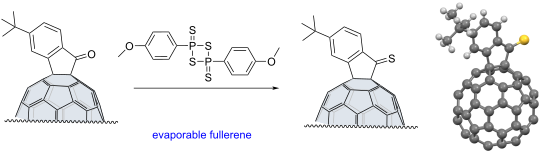
- of Lawesson's reagent and the reaction temperature. The transformation from ketone to thioketone was confirmed by 13C NMR, which showed a downfield shift from 198 ppm for the carbonyl carbon to 235 ppm for the thiocarbonyl carbon. With the optimized conditions (Table 1, entry 9) in hand, different
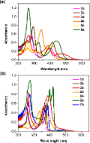
- -functionalized compound (t-Bu-FIDS) was chosen for further studies in this work. To identify the formation of the thiocarbonyl group, Fourier transform infrared spectroscopy (FTIR) was conducted as shown in Figure 1a. The carbonyl stretching vibration peak of t-Bu-FIDO at 1720 cm−1 disappeared, indicating all
- , however, the carbonyl group in FIDO showed a strong in-plane stretching vibration as shown in Figure S1 (Supporting Information File 1). Due to the direct connection between the five-membered ring and the fullerene cage, the out of plane bending vibration was easily affected by the fullerene cage


Domino reactions of chromones with activated carbonyl compounds
Beilstein J. Org. Chem. 2024, 20, 1256–1269, doi:10.3762/bjoc.20.108
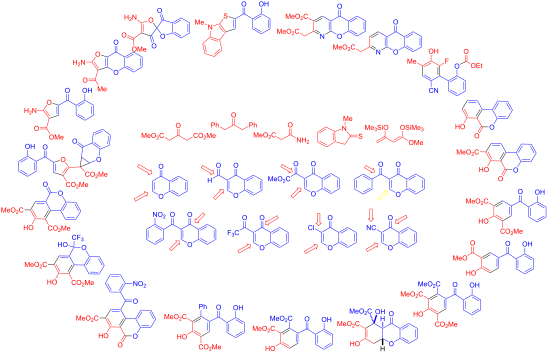
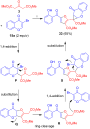
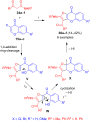
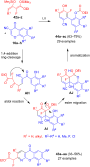
- carbonyl compounds, such as dimethyl acetone-1,3-dicarboxylate and 1,3-diphenylacetone, and with 1,3-bis(silyloxy)-1,3-butadienes, electroneutral equivalents of 1,3-dicarbonyl dianions, allow for a convenient synthesis of a great variety of products. The regioselectivity and course of the reaction depends
- , we studied also cyclization reactions of chromones with heterocyclic enamines [30][31]. The present review aims to provide a personalized account of our work related to domino reactions of various types of chromones with carbonyl compounds, such as 3 and 4, and with 1,3-bis(silyloxy)-1,3-butadienes
- the methylene carbon to the carbonyl group gave intermediate C which underwent lactonization to give the final product. 1,3-Bis(silyloxy)-1,3-butadienes The reaction of chromones 9a–j with 1,3-bis(silyloxy)-1,3-butadienes 6a–h, carried out in the presence of Me3SiOTf, and subsequent treatment with









Mechanistic investigations of polyaza[7]helicene in photoredox and energy transfer catalysis
Beilstein J. Org. Chem. 2024, 20, 1236–1245, doi:10.3762/bjoc.20.106
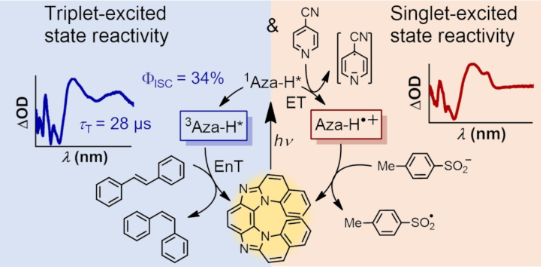
- ]. Prominent examples include: (i) carbonyl compounds such as benzophenone [31][32] and thioxanthone [33][34][35], (ii) TADF emitters with small singlet-triplet energy splitting [8][36], (iii) substitution with heavy atoms such as sulphur [37] and halides [38] for fast ISC, or a combination of the above




Competing electrophilic substitution and oxidative polymerization of arylamines with selenium dioxide
Beilstein J. Org. Chem. 2024, 20, 1221–1235, doi:10.3762/bjoc.20.105
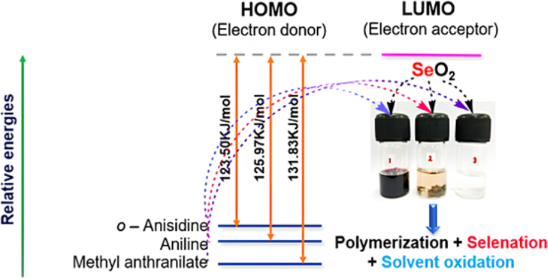
- . It crystallized in a triclinic crystal system in the space group P−1. It was structurally similar to the other oxamides 3 and 9. It showed an intramolecular hydrogen bonding between the NH and the carbonyl group of the methoxy ester. A layer-by-layer packing was observed in the crystal structure


The Ugi4CR as effective tool to access promising anticancer isatin-based α-acetamide carboxamide oxindole hybrids
Beilstein J. Org. Chem. 2024, 20, 1213–1220, doi:10.3762/bjoc.20.104
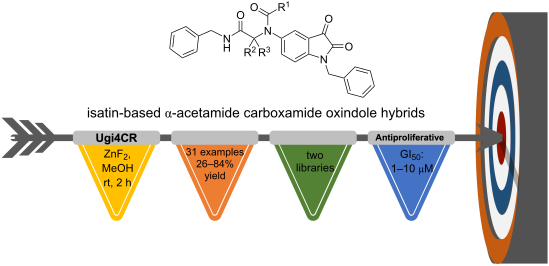
- (2e) were used. The corresponding products 5nb, 5ob and 5ec were achieved in 63, 51 and 49% yields, respectively. 1-Boc-azetidine-3-carboxylic acid (2i) also gave the corresponding product 5ib in 54% yield. Considering the carbonyl component, 1-chloropropan-2-one (3a) was used to access the
- efficient Ugi4CR approach. Easy access to isatin from the 3-protected oxindole scaffold was demonstrated using mild reaction conditions. Flexibility of the carboxylic acid component and also the carbonyl one (ketone/aldehyde) was exhibited in the library of Ugi adducts obtained in moderate to good yields




Manganese-catalyzed C–C and C–N bond formation with alcohols via borrowing hydrogen or hydrogen auto-transfer
Beilstein J. Org. Chem. 2024, 20, 1111–1166, doi:10.3762/bjoc.20.98
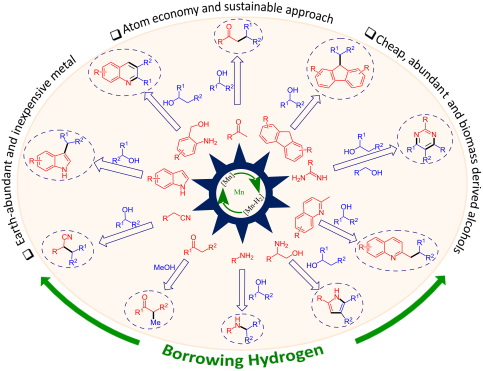
- , hydroaminomethylation, reduction of nitriles and nitro compounds or through reductive amination of carbonyl derivatives [26][27][28][29][30]. However, for example, cross-coupling reactions with alkyl or aryl halides generate considerable amounts of waste (Scheme 2A). Even though many different approaches exist for
- commonly used reaction in synthetic chemistry [50][51]. The selective α-functionalization of carbonyl compounds with organohalides in the presence of bases is one of the most fundamental reactions. This methodology usually suffers from the use of stoichiometric amounts of bases and the use of halides
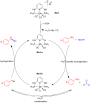
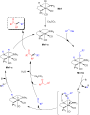
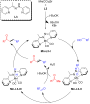
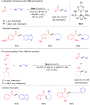
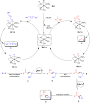
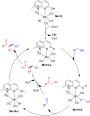
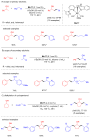
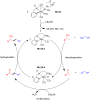
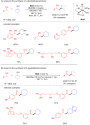
- corresponding alkylated ketones or alcohols. As depicted in the general Scheme 23, in the first step, the manganese-catalyzed dehydrogenation of alcohols delivers carbonyl compounds, which condense with other carbonyl compounds in the presence of a base to afford unsaturated intermediate compounds. In the final























Mild and efficient synthesis and base-promoted rearrangement of novel isoxazolo[4,5-b]pyridines
Beilstein J. Org. Chem. 2024, 20, 1069–1075, doi:10.3762/bjoc.20.94
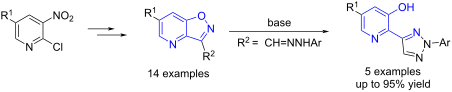
- -b]pyridine took place, followed by a base-promoted decarbonylation/isoxazole ring opening. Such transformations have been previously reported for benzo[d]isoxazoles with a carbonyl or carboxyl group in position 3 or 3-unsubstituted benzo[d]isoxazoles [25][26][27][28][29]. This means that the formyl


Novel route to enhance the thermo-optical performance of bicyclic diene photoswitches for solar thermal batteries
Beilstein J. Org. Chem. 2024, 20, 1053–1068, doi:10.3762/bjoc.20.93
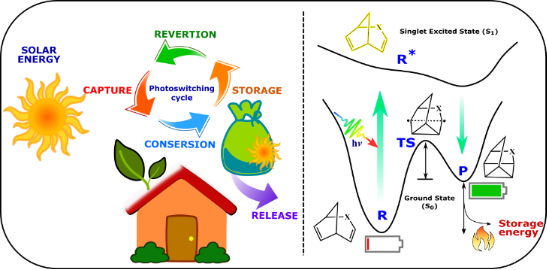
- back isomerization of the photoproduct of type-Id photoswitch to the corresponding diene have resulted in a TS that is associated with undesired thermal degradation (Figure 3). The obtained TS follows a conventional, synchronous and concerted dissociation mechanism to produce the undesired carbonyl
- pathway, however the energetic stability of the parent diene favours the reversible photoswitching. Extending the unsaturated bridge of the bicyclic diene with an –O– unit promotes the thermal degradation of the photoproduct to the carbonyl compounds. Among the studied systems, the bicyclic diene


Structure–property relationships in dicyanopyrazinoquinoxalines and their hydrogen-bonding-capable dihydropyrazinoquinoxalinedione derivatives
Beilstein J. Org. Chem. 2024, 20, 1037–1052, doi:10.3762/bjoc.20.92
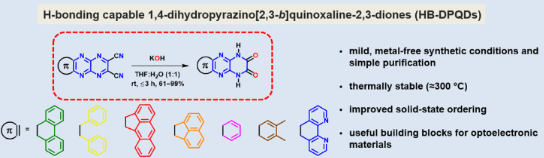
- Information File 1). The double substitution did not proceed presumably due to the strong electron-donating effect of -NH2, diminishing the electrophilicity of the π-system. However, the mono-aminated product 16f has the potential to serve as a useful building block for condensation with carbonyl
- -crystal X-ray analysis of 2b, and its important structural parameters were compared with that of 2a (#CCDC 227464) reported in the literature [25]. An improved 2D nanostructure through highly ordered organization facilitated by H-bonding is revealed. Notably, the C–C distance between two carbonyl groups
- respect to the carbonyl groups (Figure 6b) and 5.25° concerning peripheral rings 1 and 3 (Figure 6c). The unit cell is composed of a dimer of 2b held together by intermolecular N–H∙∙∙N and C–H∙∙∙O=C H-bonds with average distances of 2.30 Å and 2.28 Å, respectively (Figure 6d and 6e). The herringbone




Carbonylative synthesis and functionalization of indoles
Beilstein J. Org. Chem. 2024, 20, 973–1000, doi:10.3762/bjoc.20.87
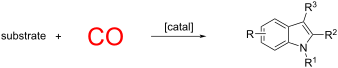
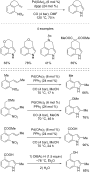
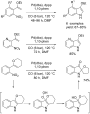
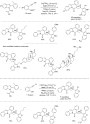
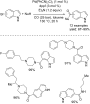
- , the metal-catalyzed direct C–H carbonylation of indoles is an effective and straightforward approach to synthesize indole derivatives containing a carbonyl function in position 3. On the other hand, only a few examples to synthesize indole-2-carbonyl derivatives have been realized. One example is the












Enantioselective synthesis of β-aryl-γ-lactam derivatives via Heck–Matsuda desymmetrization of N-protected 2,5-dihydro-1H-pyrroles
Beilstein J. Org. Chem. 2024, 20, 940–949, doi:10.3762/bjoc.20.84
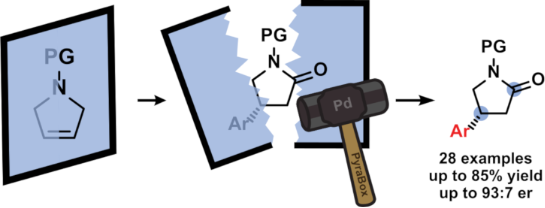
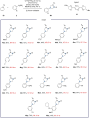
- very little influence in the enantiomeric ratios, although electron-donating groups performed slightly better in terms of yield, as observed before for the N-Boc-protected pyrrolines. Weak electron-donating groups such as the methyl group furnished compound 4bj in a higher yield and good er. Carbonyl




Direct synthesis of acyl fluorides from carboxylic acids using benzothiazolium reagents
Beilstein J. Org. Chem. 2024, 20, 921–930, doi:10.3762/bjoc.20.82
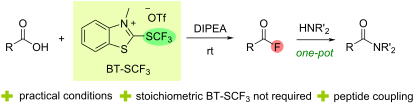
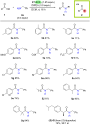
- fluoride 2, carbonyl sulfide and another fluoride ion. As a result of this pathway, each molecule of the BT-SCF3 reagent can in principle lead to the formation of two molecules of acyl fluoride 2. Indeed, a yield of 2a above 50% was observed during the optimisation studies using 0.5 equiv of BT-SCF3 (Table



Synthesis and properties of 6-alkynyl-5-aryluracils
Beilstein J. Org. Chem. 2024, 20, 898–911, doi:10.3762/bjoc.20.80
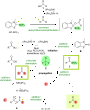
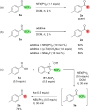
- intermediate. A second effect appears to play a more important role and could be related to the structure of the starting material. The 6-position is part of an enamine and an α,β-unsaturated carbonyl structure, as depicted in Scheme 3. According to the mesomeric structure of the enamine, the 6-position could




(Bio)isosteres of ortho- and meta-substituted benzenes
Beilstein J. Org. Chem. 2024, 20, 859–890, doi:10.3762/bjoc.20.78
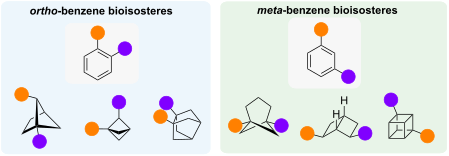
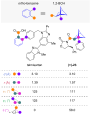
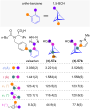
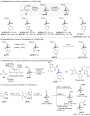
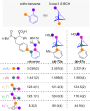
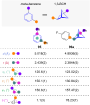
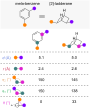
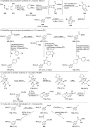
- . Fessard, Salomé and co-workers used this approach to synthesise a small collection of 2-oxo-BCHs including 42 and 44 (Scheme 4A) [40]. These could then be used as precursors for ortho-benzene isosteric 1,2-BCHs (Scheme 4B) [40]. Carbonyl reduction of 42a yielded alcohol (±)-45a. From 42b, Wittig














Discovery and biosynthesis of bacterial drimane-type sesquiterpenoids from Streptomyces clavuligerus
Beilstein J. Org. Chem. 2024, 20, 815–822, doi:10.3762/bjoc.20.73
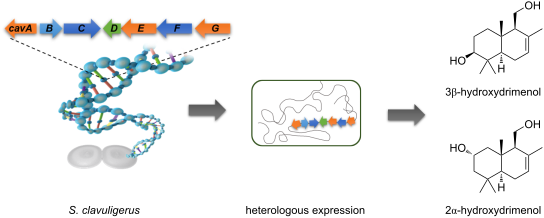
- that the only difference between compounds 3 and 2 is the position of the hydroxy group [28]. Analyses of the NMR data of compound 4 concluded that it is an analogue of 2. In comparison with 2, compound 4 has a ketone carbonyl signal at δC 219.1 and we finally confirmed its structure by comparing it


Research progress on the pharmacological activity, biosynthetic pathways, and biosynthesis of crocins
Beilstein J. Org. Chem. 2024, 20, 741–752, doi:10.3762/bjoc.20.68
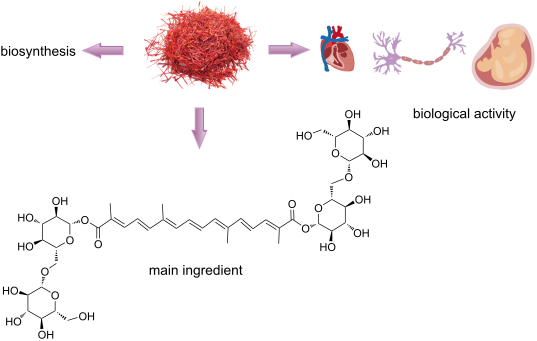
- enzymes in crocin biosynthetic pathways CCDs: Crocin biosynthesis initiates with the catalytic cleavage of the C‒C double bond by CCDs at various sites of the carotenoid skeleton. The cleavage generates a carbonyl group at the end of the formed carotenoid derivatives [88]. The CCD family can be


Substrate specificity of a ketosynthase domain involved in bacillaene biosynthesis
Beilstein J. Org. Chem. 2024, 20, 734–740, doi:10.3762/bjoc.20.67
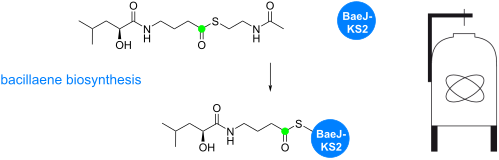
- performed to eliminate any unreacted free 11 in the reaction mixture. The resulting protein preparations were subsequently analysed by 13C NMR spectroscopy. While the signal for the thioester carbonyl group of free 11 dissolved in incubation buffer was observed at δ = 203.33 ppm (Figure 1A), for both
- sample was subsequently subjected to another round of centrifugation using an ultrafiltration centrifugal tube, resulting in the detection of a signal for a thioester carbonyl group in the filtrate for both samples derived from (S)- and (R)-11 at δ = 203.35 ppm (Figure 1E). This observation supports
- incubation buffer as described above was applied. No signal corresponding to a thioester carbonyl group was detected in the protein preparations (Figure 1F), while signals at δ = 203.33 ppm for free 11 were observed in the filtrates obtained after the first step (Figure 1G). Conclusion Taken together, we


Isolation and structure determination of a new analog of polycavernosides from marine Okeania sp. cyanobacterium
Beilstein J. Org. Chem. 2024, 20, 645–652, doi:10.3762/bjoc.20.57
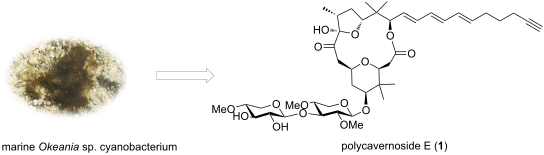
- )/δC 206.9 (C-9) connected C-11 and C-8 through a ketone carbonyl carbon at C-9 and hemiacetal carbon at C-10, revealing the 16-membered macrolide structure of 1. The HMBC, δH 4.27 (H-1’)/δC 85.3 (C-5), revealed that the disaccharide moiety was connected to C-5. Finally, considering the molecular


Production of non-natural 5-methylorsellinate-derived meroterpenoids in Aspergillus oryzae
Beilstein J. Org. Chem. 2024, 20, 638–644, doi:10.3762/bjoc.20.56
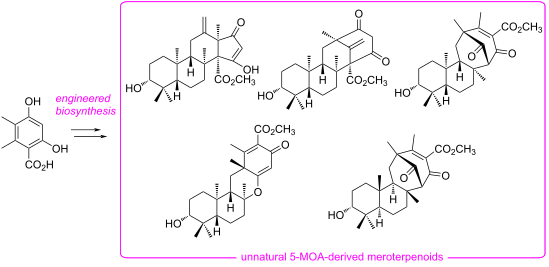
- instead of the C-4′ carbonyl group (Figure 2C). It is unlikely that 8 is the direct product of InsA7; thus, we hypothesized that an endogenous enzyme in A. oryzae is responsible for the reduction, with an enoylreductase first reducing the C-2′/C-3′ double bond of 7 and the resulting product undergoing



HPW-Catalyzed environmentally benign approach to imidazo[1,2-a]pyridines
Beilstein J. Org. Chem. 2024, 20, 628–637, doi:10.3762/bjoc.20.55
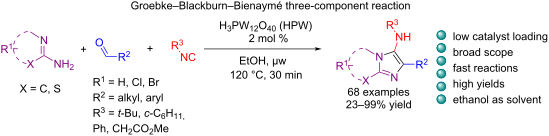
- report from the literature [24] a plausible reaction mechanism is shown in Scheme 6. It involves the nucleophilic attack of the aminopyridine 1 to the HPW-activated carbonyl compound 2, followed by iminium ion formation (iii) and [4 + 1] cycloaddition with the isocyanide. A 1,3-hydrogen shift yields the




Chemical and biosynthetic potential of Penicillium shentong XL-F41
Beilstein J. Org. Chem. 2024, 20, 597–606, doi:10.3762/bjoc.20.52
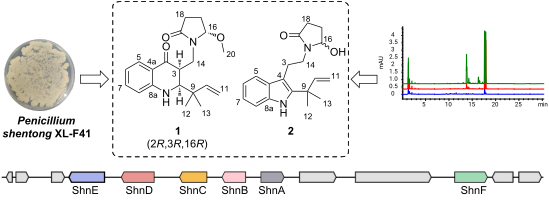
- enzymatic ring-expansion process in their respective fungi. Both shentonins A (1) and B (2) also feature a reduction of a carbonyl to a hydroxy group within the succinimide ring. All isolated compounds were subjected to antimicrobial evaluations, and compound 12 was found to have moderate inhibitory
- m/z 341.1862 [M − H]− (calcd for C20H25N2O3, 341.1870). Spectroscopic analysis, including 1H NMR, 13C NMR (Table 1), and DEPT, revealed that compound 1 contains three methyl groups, one of which is oxygenated, four methines, three saturated non-protonated carbons, and two ketone carbonyl carbons (δC
- carbonyl carbon (δC 174.6). Its NMR profile is similar to brocaeloid C [24], with the distinction of an added succinimide substructure at N-15, where the ketone carbonyl carbon at C-16 is replaced by a hydroxy carbon. The isoprene group is consistent with that in compound 1. HMBC cross-peaks from H-10 to C




Synthesis of photo- and ionochromic N-acylated 2-(aminomethylene)benzo[b]thiophene-3(2Н)-ones with a terminal phenanthroline group
Beilstein J. Org. Chem. 2024, 20, 552–560, doi:10.3762/bjoc.20.47
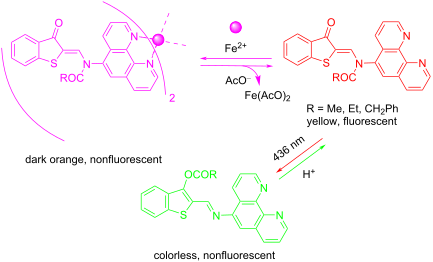
- vibrations of the thiophene and amide carbonyl groups were observed at 1663–1678 and 1705–1713 cm−1, respectively. The 1H NMR spectra contained signals of methine protons (=CH–) in the region 7.92–9.02 ppm, which corresponded to the Z-configuration of the C=C bond. According to data previously obtained [14


A new analog of dihydroxybenzoic acid from Saccharopolyspora sp. KR21-0001
Beilstein J. Org. Chem. 2024, 20, 497–503, doi:10.3762/bjoc.20.44
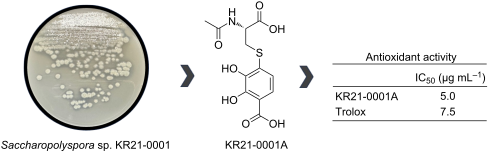
- sp2 methines, one sp3 methine, one sp3 methylene, and one methyl group. The 13C NMR data showed the resonances of twelve carbons, which were classified into six olefinic carbons (including two oxygenated carbons: δC 151.0 and 145.2), three carbonyl carbons, one sp3 methine carbon, one sp3 methylene



Ligand effects, solvent cooperation, and large kinetic solvent deuterium isotope effects in gold(I)-catalyzed intramolecular alkene hydroamination
Beilstein J. Org. Chem. 2024, 20, 479–496, doi:10.3762/bjoc.20.43
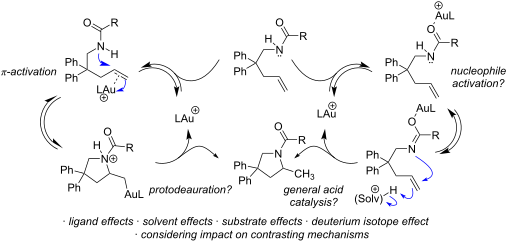
- localized due to the strong competitive carbonyl resonance donation of the non-attacking nitrogen. Weaker competitive donation from the more electronegative oxygen, and the less electron-donating phenyl, would lead to decreasing nucleophilicity, respectively, for the carbamate and benzamide attacking
- nitrogen. Thus, the rate of intramolecular hydroamination is enhanced by a more nucleophilic nitrogen. Another qualitative interpretation is that rates are enhanced by carbonyl basicity. Gas-phase basicity measurements indicate that ureas are more basic than amides [47][50], and here the most Lewis base
- with alkene but also the urea carbonyl. The Bronsted acidity of the urea would be increased by coordination to gold, and if such coordination is key to enabling reactivity, this would confirm the higher reactivity of urea 1a. The divergent behavior of sulfonamide 1d does not find an easy explanation







Synthesis of 2,2-difluoro-1,3-diketone and 2,2-difluoro-1,3-ketoester derivatives using fluorine gas
Beilstein J. Org. Chem. 2024, 20, 460–469, doi:10.3762/bjoc.20.41
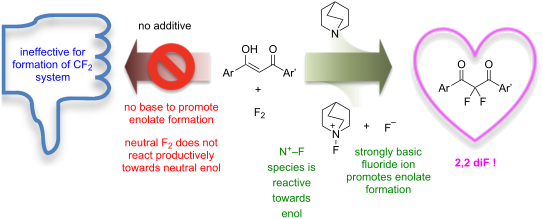
- of gem-dihalo groups to corresponding CF2 derivatives using silver tetrafluoroborate [5] or mercury(II) fluoride [6], deoxyfluorination of carbonyl derivatives using diethylaminosulfur trifluoride (DAST) or related Deoxo-Fluor and Xtalfluor reagents [7][8]. Alternatively, oxidative
- fluorodesulfurizations of carbonyl derivatives using a combination of sources of halonium and fluoride ions such as 1,3-dibromo-5,5-dimethylhydantoin (DBH) and tetrabutylammonium dihydrogen trifluoride have been achieved [9][10][11]. The transformation of methylene to difluoromethylene using electrophilic fluorinating





